A Plague Tale: Innocence Review

By all accounts, I should have hated A Plague Tale: Innocence. I’ve had the game about a young French noble and her even younger brother trying to survive both the Inquisition and a horrifying rat plague on my radar since its reveal, but I wasn’t quite aware of how much it relied on two specific gaming tropes: escort missions, and forced stealth.

Escort missions annoy me; forced stealth infuriates me.

Shortly into the game’s first chapter, the Inquisition attacks the de Rune manor, and the siblings—Amicia and Hugo—flee both the conquering forces of the Roman Catholic Church and the deaths of their parents. Amicia and Hugo, at this point, might as well be strangers. The young boy suffers from a mysterious disease, one which caused their mother Beatrice to keep him isolated from the world, along with herself as she cared for him. Amicia is burdened with taking care of a brother she barely knows and keeping the two of them alive when she herself is not yet an adult; Hugo suffers both emotionally and mentally due to being ripped from his home and his mother, as well as physically due to his illness.

Making their way across the French countryside in search of help quickly proves to be a daunting task. Not only has the Inquisition set up camps and roadblocks at seemingly every turn, but everything and everyone is being overrun by immense swarms of ferocious black rats. Both “sides” seem locked in a struggle for dominance, and the biggest victim of their clashes are the countless innocents whose bodies now litter the land.

Right from the start, A Plague Tale: Innocence forced me into both escort and stealth elements whether I wanted them or not. Hugo is never not by Amicia’s side, and even asking him to wait in a certain spot for a moment can cause him to panic if you get too far away. Meanwhile, our heroine’s only weapon is the sling she uses for hunting, which is poorly equipped to handle the heavily-armored soldiers of the Inquisition without some serious upgrades. So, stealth is the only choice in those early chapters, with relatively little in terms of gameplay beyond hiding behind objects and sneaking past foes while they’ve got their backs turned.

The swarms of rodents, meanwhile, didn’t care how sneaky you try to be. The only protection from them is getting to a higher point than they can climb, or staying in the glow of a nearby light source. As the hordes of rats make ungodly sounds and writhe around just outside the edge of the light, survival means figuring out how to get from well-lit area to well-lit area—which isn’t always a straightforward or easy process.

All of this was, at first, taxing. In many games, you know that once you get past that particular escort segment or finally clear that portion of a level where you need to be stealthy, you can get back to some faster-paced, more action-oriented gameplay. Here, I was pretty certain that swap to feeling more powerful and capable in situations was probably not coming. Hugo was going to be by his sister’s side for most of the trip, the rules for dealing with rats seemed pretty well set, and there wasn’t a chance that Amicia would suddenly become an action hero—at least if developer Asobo Studios wanted to maintain the spirit of the game it established in its first hours.

My assumptions were actually wrong in a few ways. However, the shift in my opinions on the game would not come at first from any particular gameplay advancements, but instead simply from the story and its participants. Neither Amicia nor Hugo are particularly compelling or likable in the early going, but that’s because they’re as unfamiliar to us as players as they are to each other. Amicia’s cold, almost distant attitude to a lot of what’s going on slowly gives way to moments of warmth and tenderness for both her brother and others. Hugo’s incessant crying about wanting to return to his home and his mother—which, to be fair, would be natural reactions for anyone his age—become interspersed by more and more moments of childlike amazement at an outside world he’s barely seen. Amicia and Hugo grew into characters I not only wanted to care about, but did care about, becoming heroes—each in their own right—while never betraying the more grounded selves they were at the start of the story.

Along the way, others come to join the siblings in their adventure, and each new friend is just as interesting and compelling as our main heroes. The team at Asobo did a fantastic job crafting characters that feel like people instead of video game tropes, and each brings something meaningful to the overall story. Better, it’s a story that only grew more emotional and engrossing as each chapter went by. Every now and then, the narrative will get bogged down slightly, but it doesn’t take long for it to get back up to speed. It also, at one point, seemed to threatened to sabotage itself when the story took a particular (spoiler-y) turn that I wasn’t at all expecting, but it was a thematic choice that actually worked out. To me, the true sign of a great solo-focused video game is one where you want to play “just one more segment” even through it’s 4 in the morning and you really should have been asleep hours ago—and once it gets going, A Plague Tale fits that to a tee.

By its end, I came to have an immense amount of respect for this game. I know at least a few others out there have made the comparison, but it reminded me of my time with Ninja Theory’s Hellblade: Senua’s Sacrifice. Both are smaller-scale games that do a whole lot with relatively little, both are incredibly personal stories that explore human emotions on a level many other games never touch, and both feel like labors of love from the teams that created them. Yes, I know—saying that one can “feel the passion and care of the developers” when playing a particular title is an overused cliche at this point, but it’s honestly the case here. Especially given its unique themes, settings, and narrative beats, this is a project that wouldn’t exist unless a lot of people had a huge amount of faith that it’d work, or determination to put in the effort to make sure it did.

(I guess I should also mention that it probably helped a bit that I played through the game with French voices. It can be easy to miss a particular line of dialog here or there when you’re unable to focus on the subtitles, but it makes the overall experience feel much more genuine. Also, turn off the UI.)

And, in the biggest compliment I could probably give, even A Plague Tale: Innocence’s gameplay won me over. I still don’t like escort missions, I still hate stealth, but I now can’t imagine this game without either. What makes everything work here is that Asobo Studios did a really commendable job of figuring out how to keep everything feeling fresh from chapter to chapter. Contradictory to my fears, it wasn’t just the same thing over and over, as it felt like every new segment provided some new element, upgrade for Amicia, twist on the gameplay, or otherwise. The game does stumble a bit near its end, when the team seemingly decided that there needed to be some more action-oriented segments to ramp up the stakes. I don’t miss the humor in realizing that moving away from escorting and sneaking into pure fighting was actually the weakest point of A Plague Tale, even though it’s initially what I would have wanted, but I’m big enough to admit it.

And, of course, I can’t forget the rats. If you let the more logical part of your brain take over, it’s easy to see the hundreds of thousands of little black vermin as simply a combination of polygons and programmed AI, with hard-set limits on what they can do, where they can go, or what threat they can actually pose. If you let yourself believe in the fantasy just a little, though, and see them how their world sees them, they’re an incredibly impressive and utterly terrifying foe that never stops being unsettling. Even when you know you’re safe, and you know they can’t get you, they’re still there, nipping at your heels, hungering for the chance to eat you alive, and the terror of that thought doesn’t go away.

A Plague Tale: Innocence is a perfect example of why I’m such a cheerleader for mid-tier games. Bigger in scope and production than most indie titles, but more daring and free to explore new ideas than costly triple-A projects, games such as these are where we see some of the most unique and compelling offers on the market. Even with my personal biases against two core parts of its gameplay, A Plague Tale completely won me over—and while it’s certainly not perfect, it’s pretty darn good.

World War Z Review

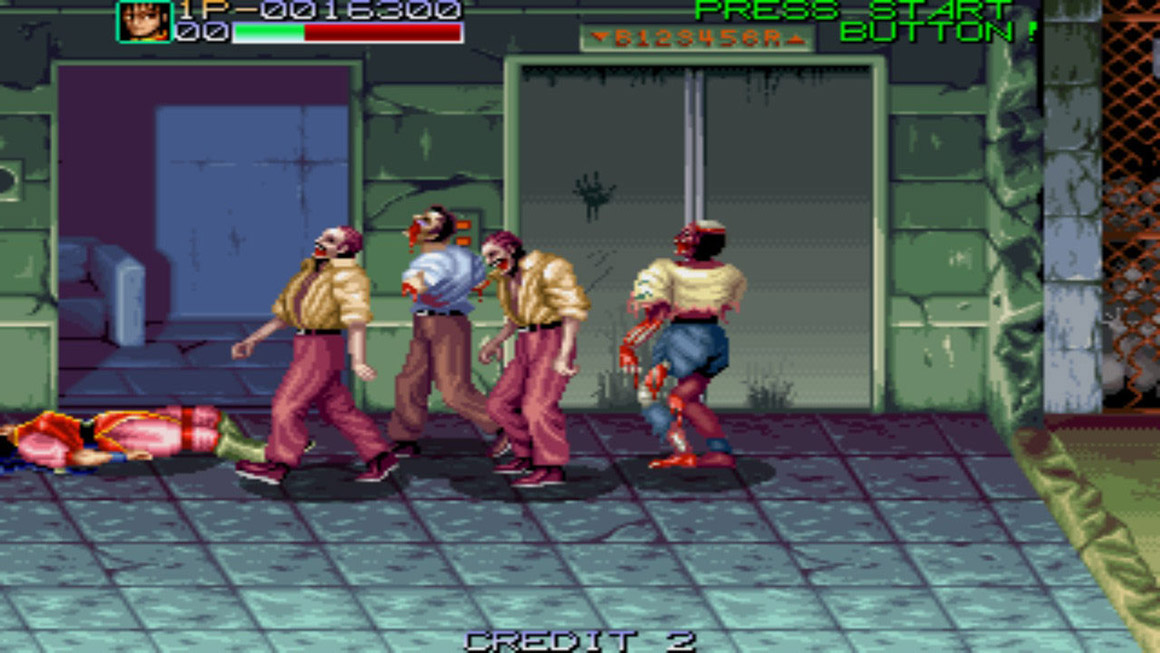
Sometimes, timing works out in the most interesting of ways—such as today, as my review for World War Z goes up a day after my colleague Josh published his thoughts on another zombie-focused game, Days Gone.

What makes that timing amusing is the contrast between the two releases. Days Gone was an absolutely mammoth project, put together by a team of hundreds with the intent to bring a triple-A level of polish and production to as many elements of surviving an undead-infested wasteland as possible. And then, unfortunately, we saw what happens when such an ambitious creation crushes itself under its own weight. World War Z certainly isn’t perfect, and it’s no competitor for that latest PlayStation 4 exclusive, but it does show us why keeping your ambitions small and your gameplan reasonable is a development direction that needs to become more of a norm again.

The smaller scope of World War Z is instantly evident once the game boots up, as there’s only two options to choose from: a co-op campaign where you team up with human or AI partners as you make your way through survival scenarios, or a competitive multiplayer mode featuring a smattering of team-based game types.

By now I’m sure you’ve heard that World War Z is incredibly reminiscent of the Left 4 Dead series, and there definitely are obvious similarities in the various special enemy types, equipment offerings, and overall structure of the campaign. That said, I do feel the need to point out that Left 4 Dead and its sequel never owned the idea of linear survival stories based around teams of four distinct characters, and Valve and Turtle Rock Studios’ ideas on gameplay and unique foes certainly weren’t original. Much like “Overwatch is just Team Fortress 2 reskinned” and other similar arguments, I think it’s a bit reductive to treat World War Z as little more than a third-person Left 4 Dead clone without looking at it deeper.

And if we do? Then we—or at least I—find that, clone or not, World War Z has what matters most: fun. Flawed fun, sure, but fun nonetheless. With the recent mess that was Overkill’s The Walking Dead still fresh in my mind, I can’t say I was holding out hope for another licensed zombie game—especially when the license was a middling Hollywood movie and not a beloved, award-winning comic/TV franchise. And yet, World War Z legitimately surprised me on numerous occasions, offering up situations and scenarios that were as enjoyable as they were varied. The story spans four locations around the globe—New York, Jerusalem, Moscow, and Tokyo—with each having its own distinct atmosphere, team of survivors, and challenges to overcome.

World War Z’s roster of weapons and equipment provide a nice variety of team possibilities, but the standout star is gameplay here are the zombie hordes. If you’ve seen anything about the game up until this point, no doubt you’ve seen a trailer or two showcases the immense number of zombies that can come flooding in as threats at any given moment. (Again, I can’t help but think of Days Gone, which itself promised huge swarms of undead as one of its calling cards.) World War Z’s hordes are absolutely a gimmick—but they’re a gimmick that works. At first, you’ll be in awe at the impact of seeing hundreds of zombies flooding into an area as if they were one gigantic, flowing lifeform, and a sense of panic will set in that’s been rarely seen in other similar games. Then, the hordes will lose some of their luster, as taking out clusters of ravenous undead becomes just another rote task along the way. Step away from the game for a bit—or be brave enough to crank up the difficulty—and the uneasiness returns. If Saber Interactive’s latest will forever be known strictly by this one gameplay element, then it’s a respectable point of infamy.

I do wish, though, that we could have seen similar creativity in other areas of the game as well. As an overall experience, World War Z’s co-op campaign is completely competent, but never truly great. This is where building upon Left 4 Dead as inspiration crops up as a true fault, as not enough was done from there to grow out unique ideas to make gameplay stronger. One big example of this is in the available classes. While each offers a diverse skill tree to unlock the more you play (similar to weapons), there’s a sense that a lot of that just doesn’t matter. As someone who always plays the healer, I found little tangible value to the Medic class. In theory, teammates should leave health packs for me to grab, as my healing others provides more benefits than someone healing themselves; in practice, I’ve yet to run into a single player online who didn’t just snatch up the items whenever they showed up to keep for themselves. At that point, calling me a “Medic” meant little and felt almost no different from every other class beyond my loadout of firearms.

Numerous other annoyances cropped up during my playtime, things that soured the experience to various degrees but which are all fixable in the future (if the devs so desire). There’s currently no way to make a room private, meaning that if you want AI partners to join you and your friend(s) rather than human ones, or simply don’t want random weirdos taking up slots, it’s a race to get a game started before another player finds their way into your room. Speaking of the AI, they’re thankfully competent when it comes to killing zombies, but with no way to give them more complicated commands (other than “follow me” or “go here”), any busywork you’ll need to do to complete tasks—such as picking up supply crates or flipping switches—will fall entirely on your shoulders. Also, while I really appreciate that each city is givens its own cast of locals to play as, I’ve always hated having to fight with other players over which character I get to use. Normally I stay away from DLC, but I’d actually pay to have an expanded roster here.

Ah, but let’s remember that there are two parts to World War Z, as the game does then also feature its competitive multiplayer mode—something I’ve seen get little mention elsewhere. Even though it at first seemed like a totally tacked-on, “we just need something” option, I fell in love with The Last of Us’ multiplayer, and I get some very similar vibes here. World War Z’s multiplayer probably exists because it had to in order to justify it being even a $40 title, but it’s a surprisingly great alternative when you don’t want to commit to going through an entire campaign chapter. The objectives will all be very familiar at this point—my favorite being Scavenger Hunt, where you need to collect more supplies than the opposing team—but matches have that “good enough” feeling that I’ve come to appreciate in recent years. World War Z certainly isn’t going to replace Fortnite, or Apex Legends, or PlayerUnknown’s Battlegrounds, or even The Last of Us, but I’ve found myself still booting it up every now and then to get in a few games.

When I think to all of the mid-tier games that I’ve enjoyed over the years, I think of experiences that could definitely have been better, but which always found ways to still be fun and interesting despite their weaknesses or lower-budget limitations—and World War Z belongs to that group. Yes, it’s flawed, and sometimes frustrating, and unashamedly unoriginal. As long as you still give me a game that’s worth playing, and which grabs me enough to keep me coming back, I can be okay with that.

Five Reasons Black Desert Has Become My Go-To MMORPG

Ever since I first delved into the strange world of MUDs (Multi-User Dungeons) back in my youth, I’ve had a fascination with video games that bring a large segment of players together into one singular, shared world. As MUDs evolved into deeper, more graphical-focused MMORPG experiences like Neverwinter Nights and Ultima Online, I could only watch with jealousy in my heart. My preference for consoles, and my dedication to Apple’s Macintosh platform, meant I was missing out on a lot of the advancement in the genre happening over on the PC.

That all changed when Sega released Phantasy Star Online for the Dreamcast. Yes, I know—it’s not technically an MMORPG due to how the game is structured and how players break up into small teams once missions begin. Still, for me, it was the first true taste of what an online virtual world built around exploring RPG landscapes could be like, and I was utterly hooked.

Since then, I’ve tried out a few other titles here and there depending on what came to Mac OS or consoles, from my eight-or-so months of World of Warcraft addiction to multiple flirtations with Final Fantasy XIV. Still, most of the choices available remained miles away on the PC, with various titles over the years making me wish I had access to a proper gaming rig.

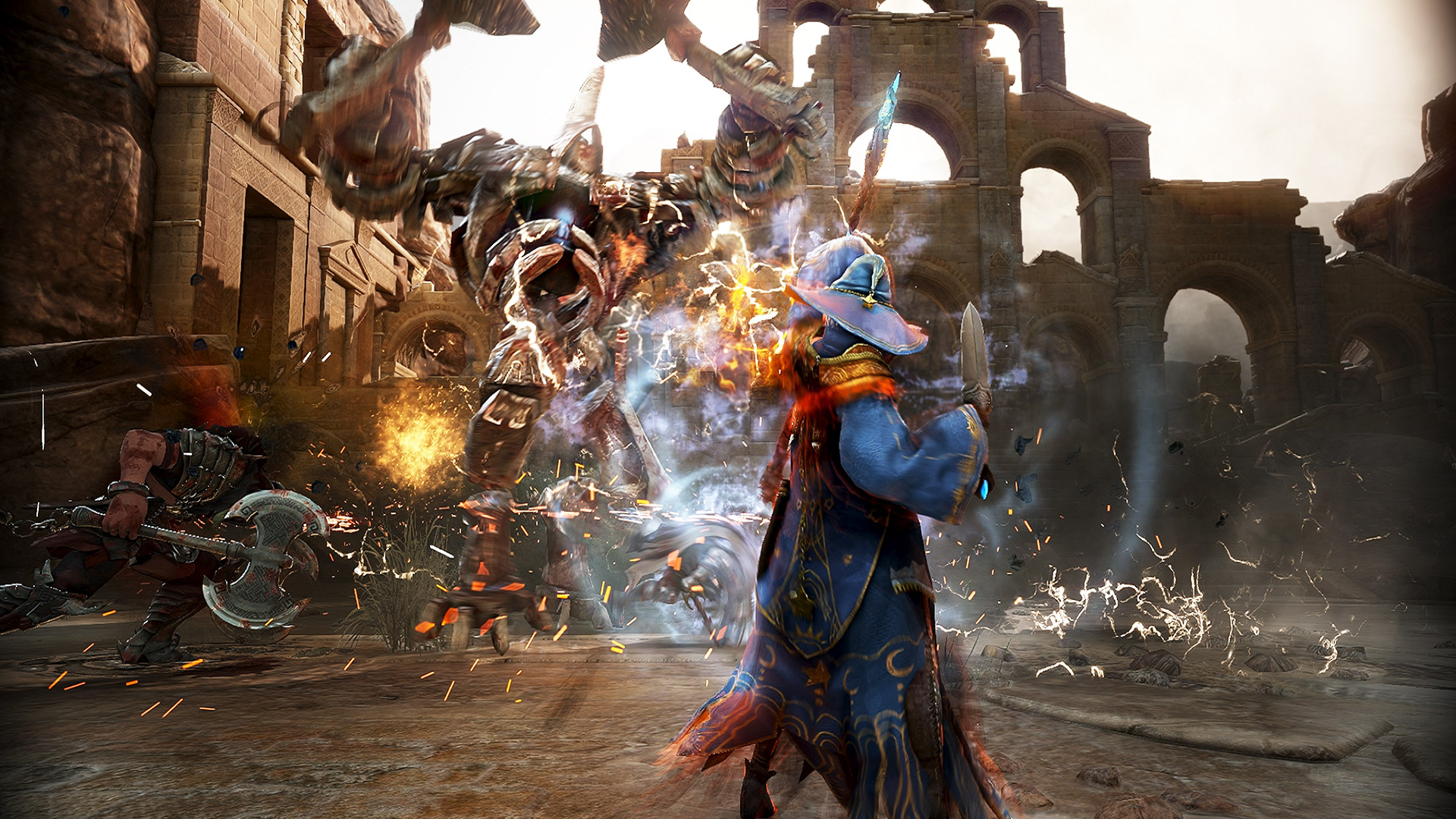
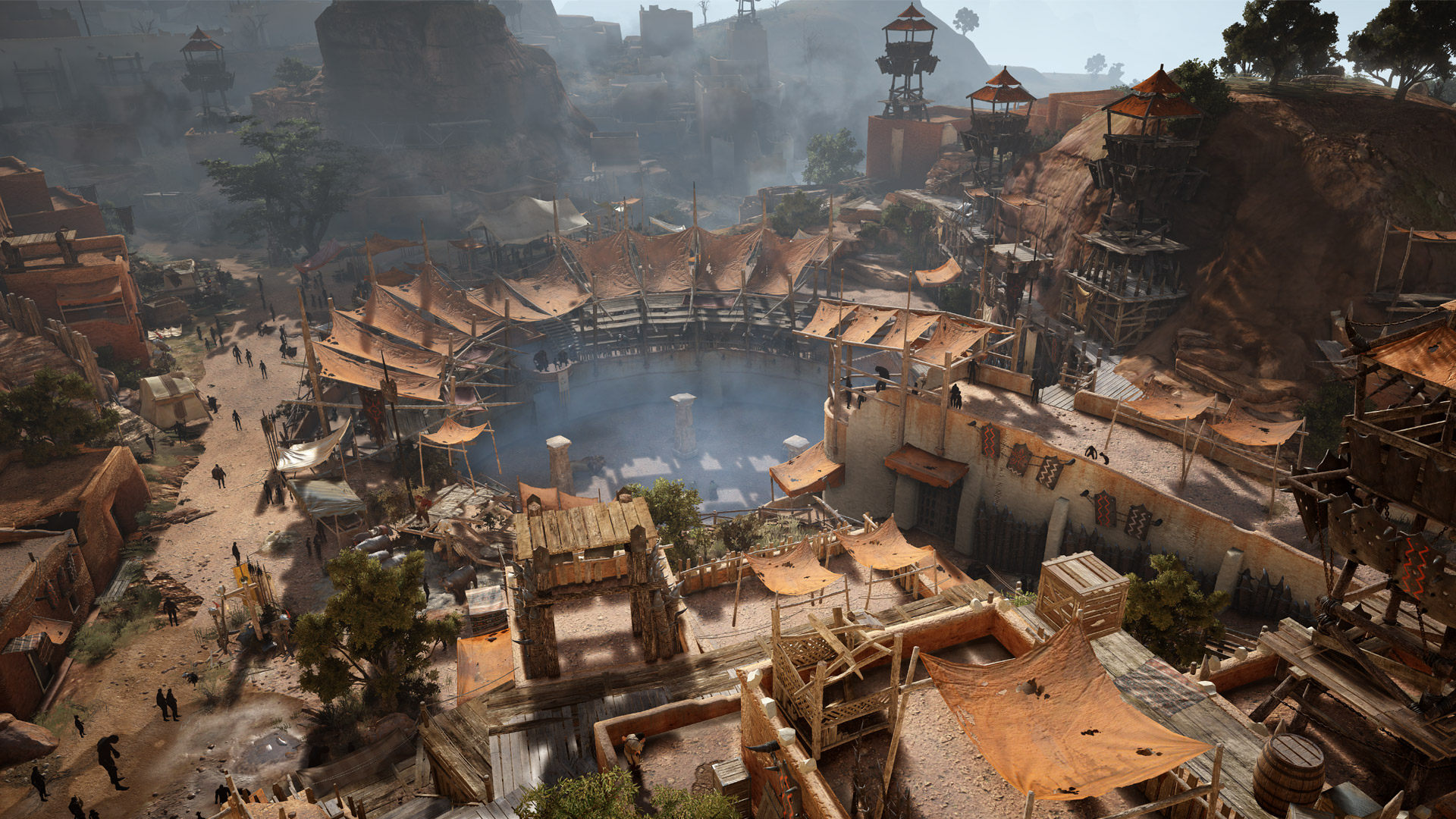
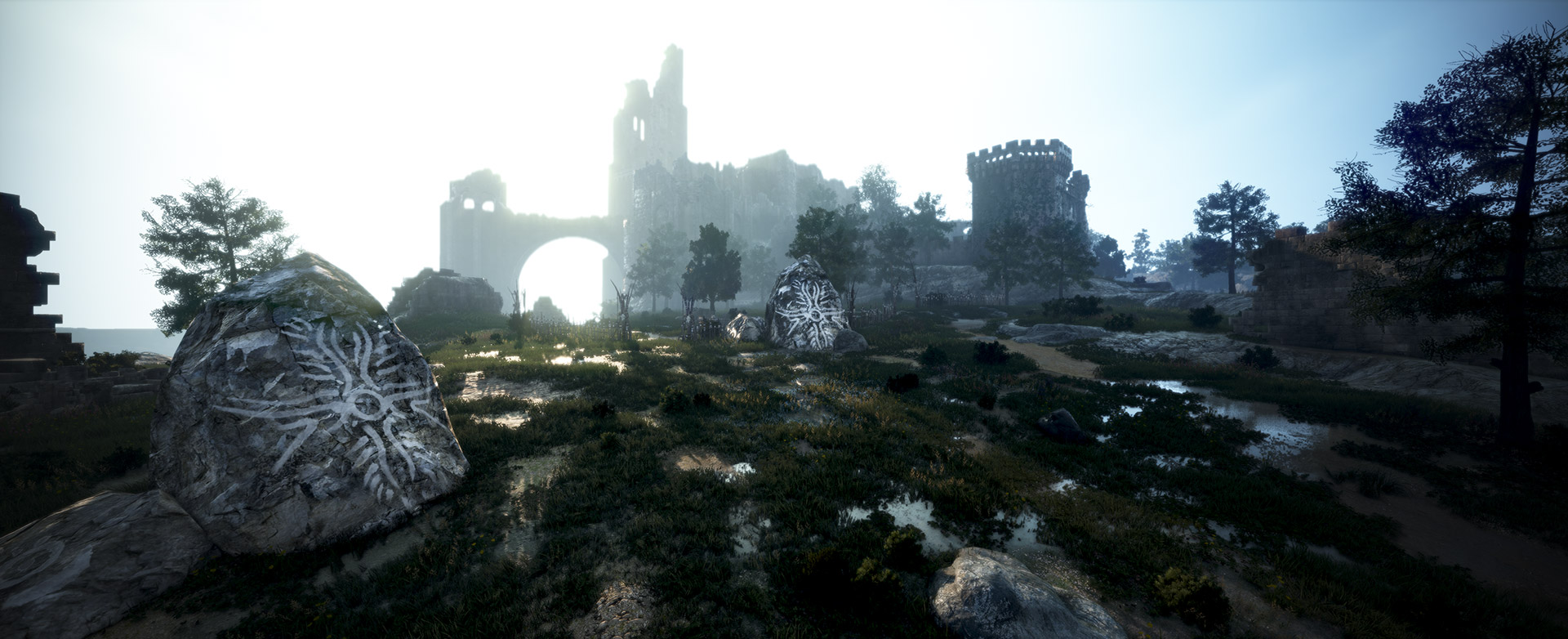
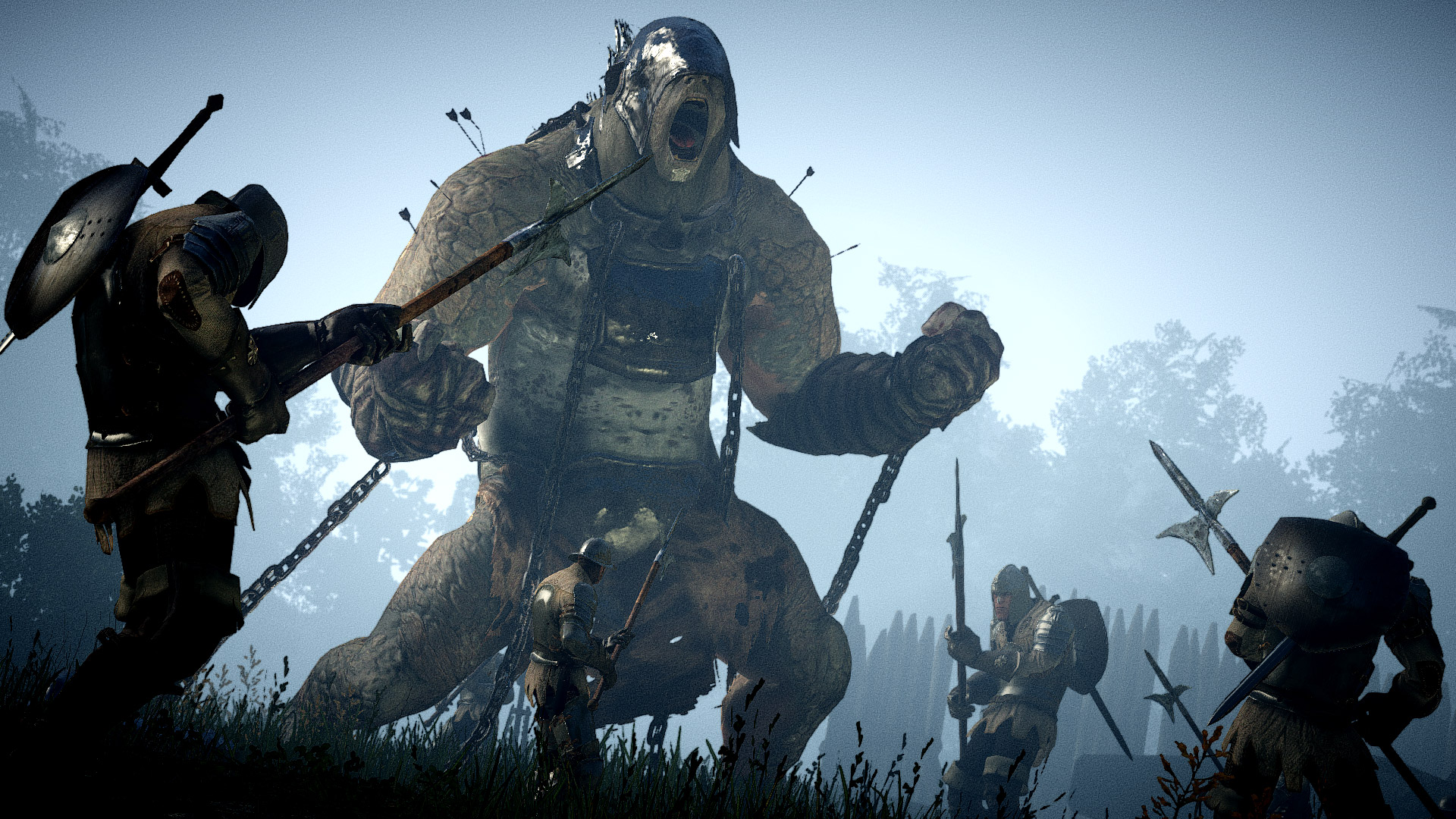
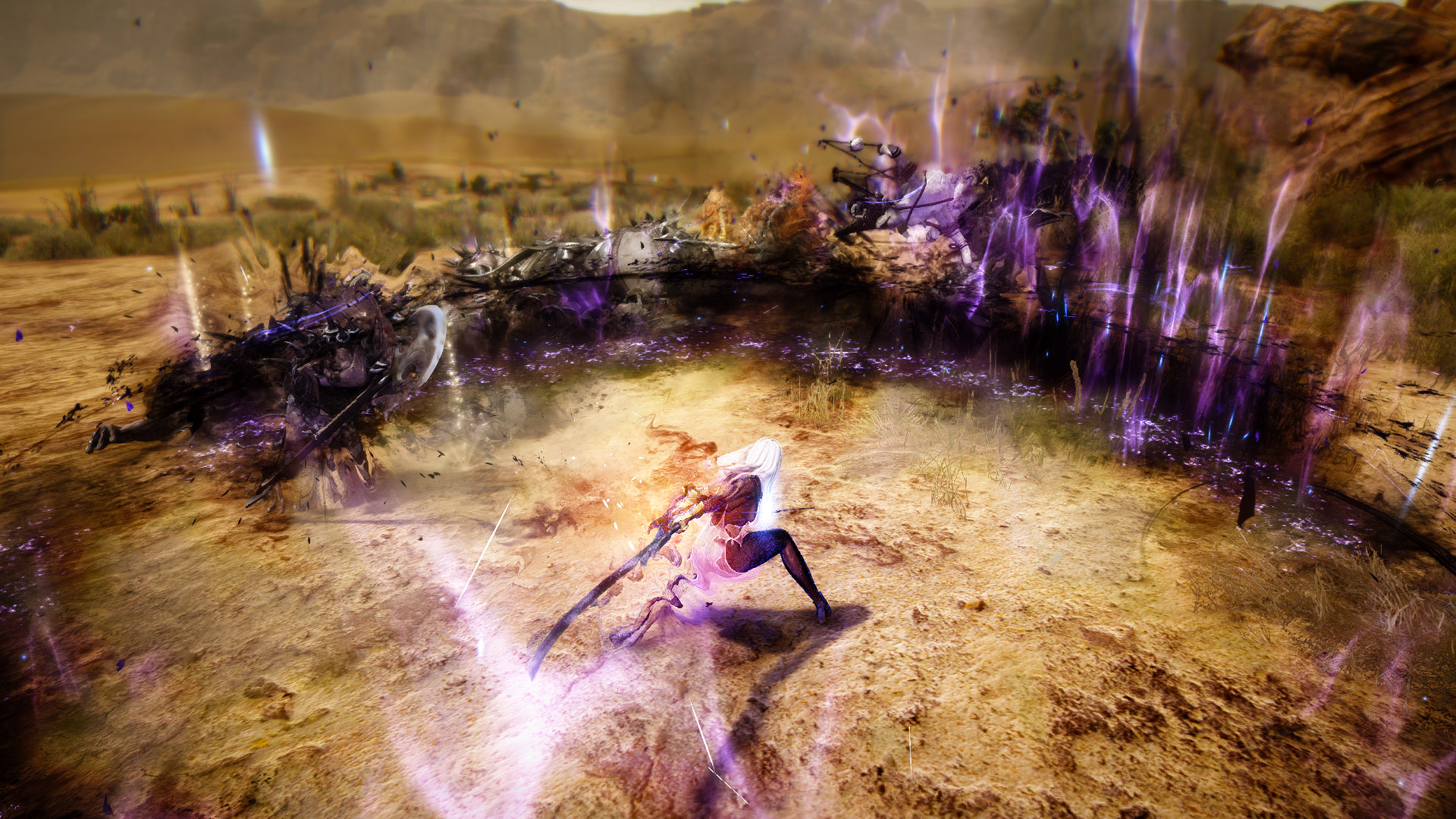
One of those games was Pearl Abyss’ Black Desert Online. With its gorgeous character models and more action-oriented gameplay, I desperately hoped that it might join the random other MMORPGs that were making the jump to consoles. In 2017, I finally got my wish, as the game—now simply called Black Desert—was revealed to be coming to the PlayStation 4 and Xbox One. With the latter’s arrival last Monday (the PS4 version still TBD), Pearl Abyss gave me the chance to both get some hands-on time with Black Desert pre-launch, and an account to continue playing once the floodgates fully opened.

I’m going to be honest here: I was expecting to play the game for a handful of hours, satisfy my long-standing curiosity about it, and then move on to other things. However, a funny thing has happened: I’ve come to like Black Desert far more than I was expecting. So, since I think other people out there might also potentially write the game off as “just another Asian MMORPG” like I might have, I wanted to talk about five elements to Black Desert that are going to have me coming back.

Gorgeous custom characters

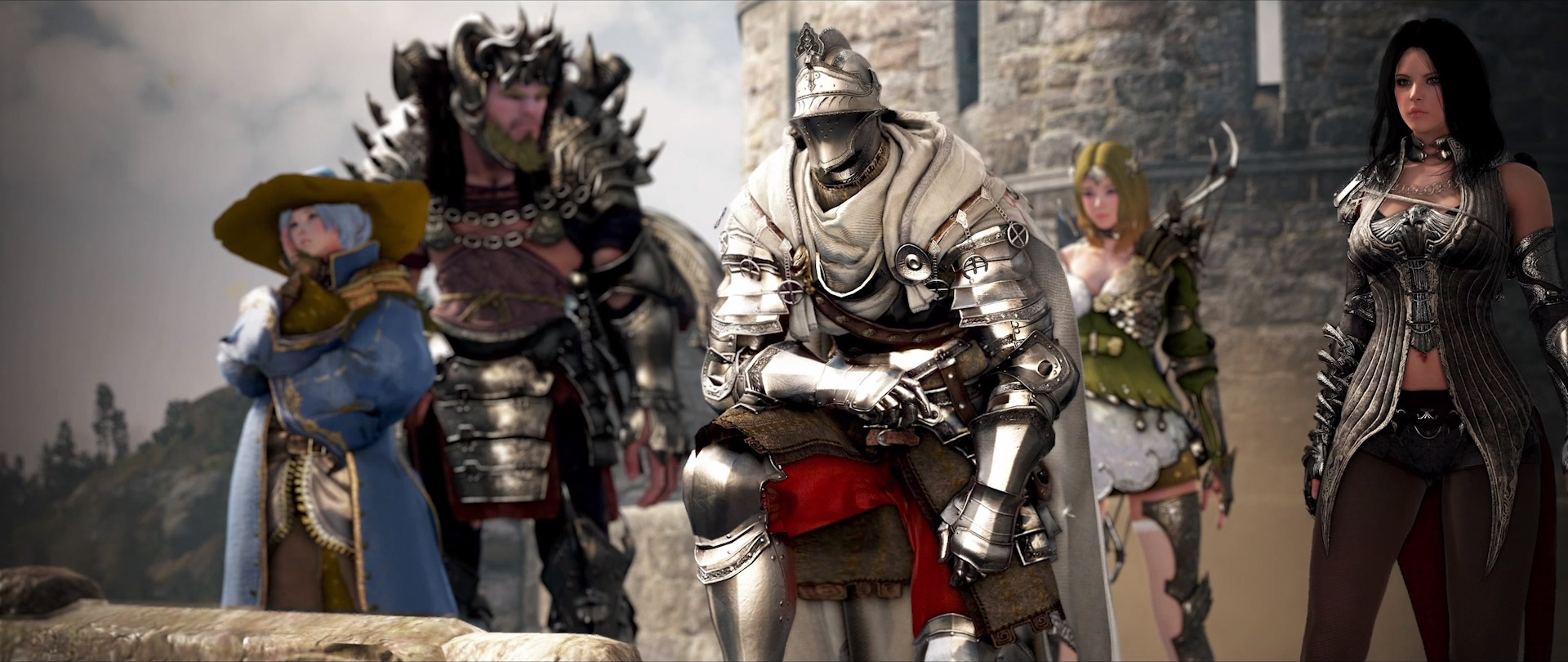
Really, there’s nothing that I can mention about Black Desert without first bringing up its much-touted character creator. Where plenty of other games from South Korean developers have caught my eye thanks to their beautiful, stylized character models, Black Desert felt like a whole other level to me from the moment I first saw it. Its cast of heroes just looked so good, and I desperately wanted to play the game for that reason alone.

Which, really, wasn’t surprising, giving my long-lasting love for custom characters. Whether it be my own stable of wrestlers or the poor soul I’m sending off to die in FromSoftware’s latest sadistic adventure, the first step in getting me addicted to your video game is offering up customization options that let me spend way too much time crafting the perfect avatar.

The visual quality of Black Desert‘s custom characters garnered the game a lot of attention years ago when it first hit, but what grabbed me playing it now on Xbox One is just how impressive they still are. In both technical quality and overall artistic design, there are brand-new games coming out that still don’t have playable characters that look nearly this good. While at times I did run into moments of “I wish there were a few more tattoo options” or “I wish I had greater control over body size,” there are other areas where I wasn’t expecting the level of flexibility that’s present, such as the fine-tuning players can do to the length or curliness of their avatar’s hair.

If you want me to commit to your MMORPG, you have to bring me into your world through a character that I can really become attached to. So far, Black Desert has done just that.

Oh, but I do have to ask: Given that players need to come up with a shared family name for all of their characters, why can I not then use the same first name someone else might have? Coming up with something other than obnoxious names like “VelvetKitten2177” is going to get very difficult very quickly.

More action-focused combat

Ahh, MMORPG combat. Some love it, some hate it. While the idea of clicking on an enemy and watching my character do most of the work for me has never been my preferred style of combat, I also don’t hate the concept when done right. In fact, that type of battle system played a big part in creating one of my favorite chapters of the Final Fantasy series, Final Fantasy XII. Still, I’ve always wished I could get back to something closer to Phantasy Star Online, where engaging with the various foes of a sprawling MMORPG world would come instead through direct button presses offering instant results.

Black Desert certainly isn’t the first MMORPG to feature more “actiony” action in its battles, but it’s my first time really getting to experience it not only done but done well. Black Desert’s combat isn’t completely divorced from classic genre traditions, as, for example, there is still some amount of auto-targeting when aiming at foes. And yet, you actually do have to aim, with attacks totally missing if an enemy strays too far away from where you’re targeting. Also, oh my lord, I can finally dodge projectiles and spells simply by moving far enough out of the way—do you know how long I’ve waited to be able to do that in a game like this?!

I’ve still got a long way to go in upgrading my character and really experiencing the full potential of Black Desert’s combat engine, but I’m already enjoying how different combat feels over the previous MMORPGs I’ve played. Especially as a console gamer, I feel much more at home using a controller to let loose a flurry of arrows, dodge out of the way of a counter-attack, and then run in to finish my target off with a few well-placed kicks. Black Desert drops an action-adventure hero into an MMORPG world, and it’s a heck of a combination.

It’s kinda sorta confusing

So, I know what you’re thinking: how in the world is a game being confusing something to bring up as a positive? Well, just hear me out on this one.

In my post-World of Warcraft adventures trying various rival MMORPGs, I’ve continually run into games that were a total slog to learn in their early hours. For some reason, developers really seem to struggle with dropping players into a starting area small enough to not be overwhelming, while at the same time introducing new or more complicated gameplay ideas and actually explaining them properly.

At first, I was feeling the same from Black Desert. Right as the game kicked off, I found myself in a base camp that was far too populated and active to be a good starting point. I was locating each next point of interest thanks to the on-screen navigation system, not because I was clear on where to go. The pop-ups when accepting or finishing quests weren’t presented in the clearest manner, and I was being introduced to new gameplay elements that were either poorly explained or not even touched upon.

So why am I giving Black Desert a pass on something I criticize other MMORPGs for? Because I also started learning about the deeper, far more compelling elements to its overwhelming depth. It began with something simple: enemy health. As I was fighting a mob of creatures, I noticed that their HP bars didn’t seem to be working. I’d shoot them with my ranger’s bow, and their health wouldn’t drop even an inch, until suddenly they’d fall over dead without any warning. Not only was I getting confused, but also frustrated, because I swore I’d just been fighting other enemy types where I was able to track their HP just fine. And then, it finally hit me: I hadn’t learned enough about that second enemy mob yet. The more I fought them, the more my knowledge of them grew, until I could finally see their real-time health as well.

Knowledge would then be the key to the next big mystery that baffled me: talking to NPCs. As I’d come across various villagers and other side characters, I was able to have brief chats with them, but the deeper “Conversation” option kept telling me I didn’t have enough knowledge to discuss further topics. I had no clue what that meant at first, but simply by continuing to play the game, it started to become clearer. The more characters I met, enemies I defeated, or other tasks I cleared, the more topics I had to talk to a particular NPC about, and the more I could win them over by having interesting conversations. In most other games I can think of, talking to NPCs consists of brief, shallow interactions, but here, it’s actually a minigame that can then unlock deeper pieces of the game.

Even at this point, I still feel lost playing Black Desert as I continue trying to fully understand things like Nodes, hiring workers, production, guild wars, investments, and much more. However, it’s the good kind of lost, the kind that makes you want to press on and find your way in the virtual world around you.

It’s got a price I can’t refuse

For this part of my list, I’ll get straight to the point: I like Black Desert because it’s a game that costs an initial set amount but then has no further subscription fee.

Now, I know that sounds like me just trying to be a cheapskate. In an era when a lot of games have gone free-to-play and smart device app stores have encouraged a race to the bottom for game prices, it’s easy to assume that some people just want something for nothing without proper compensation for the time and effort spent making said something.

In my case, however, I’m coming at this from a very different angle. It’s not that I simply don’t want to pay a subscription fee to play a game, but more that I can’t justify my doing so. Unlike my younger years, when I had free time to burn, I now find myself trying desperately to balance my life between playing the games I have to play for work, spending time with my wife and children, and attempting to be a responsible adult. While I’d love to go back to explore World of Warcraft post-Cataclysm, or finally dig into Final Fantasy XIV now that my one wish—the Viera being added as a race—is coming true, both games want $15 a month from me. One month, I might be able to sink in enough time to make that cost worth it; another, I’d be lucky to get a full 60 minutes of in-game adventuring across 30 days.

Subscriptions are an incredibly inflexible entry requirement to a genre that has grown to excel in flexibility. Maybe all I want to do is log on for 20 minutes or so and clear out a few quests. Or, maybe it’s a Saturday where I’ve got the time and desire to dig into hours of enemy slaughtering with other players. Or, heck, maybe I just want to log in and waste time exploring around or being social. No matter how I spend time with it, I can enjoy a game like Black Desert without stressing over how much value I’m getting for the money I’ve invested.

Simply put, it’s fun

Finally, beyond everything else, there’s one main reason I’m going to be sticking with Black Desert: because I’m having fun playing it.

Just to be clear, I’m not trying to ignore any of the game’s faults. As I mentioned before, some of its gameplay depth can be utterly baffling. For everything the team at Pearl Abyss has done that’s interesting, they’ve found other ways to just fall back on overused MMORPG traditions where more innovation could have been possible (such as the amount of “kill X number of Y enemy” grinding I’ve already had to endure). Although I’m pretty impressed with the effort made in bringing Black Desert to consoles, things can still get a bit rough at times, even when running on an Xbox One X. And, who knows, the further I travel into the sands of the Black Desert, the more I may find myself growing weary of what it’s got to offer.

All I know is, for now, Black Desert is the first time I’ve felt excited about playing a massively multiplayer online role-playing game in some years now. Even as recently as the middle of last year, I tried getting into one of its competitors (which I won’t name), and I’d already lost all interest by the 2-hour mark. With Black Desert, every session has left me wanting to play just a little bit longer, complete just one more quest, or see what’s over just one more hill.

So, good job, Pearl Abyss—you’ve won over at least one new player.

Devil May Cry V Review

My relationship to Capcom’s Devil May Cry series is admittedly a bit weird. When the original hit back on the PlayStation 2 in 2001, its gameplay ideas and scenarios blew me away, feeling unlike anything I’d ever seen before in the action adventure genre. Devil May Cry was completely badass, and I imagined all of the sequels (or knock-offs) that could come from what Hideki Kamiya and crew had given us. And then—I just didn’t play those sequels. Maybe I was busy, maybe I was playing other games, maybe the interest I thought had been there actually wasn’t. I sampled snippets of each here and there, but it wasn’t until DmC—a game that would split the fanbase in two with arguments over whether or not it had murdered the franchise—that I finally once again fully played and love an adventure starring Dante.

It was that history that lead me to be a bit mixed on Devil May Cry 5 in its early hours. In that time away from the series, I’d come instead to love one of its rivals in the “stylish action” category: Bayonetta. With my adoration for the Umbra Witch and her fast, frenetic battles, I couldn’t shake the feeling at first that combat here was—well, boring. Why aren’t these fights more flashy and exciting? Why aren’t the combo strings crazier? Why did it take 11 years to finally get a proper sequel to Devil May Cry 4 that then doesn’t work harder to trump all the competitors that have come along in that span of time?

Now, looking back at my time with Devil May Cry 5, I think this is going to be one of the biggest hurdles it’ll need to clear with some players out there. The truth is, the game’s combat is far from boring—it just isn’t going to hand you those feelings of excitement and accomplishment if you don’t put in the work for them. DMC5’s encounters are about finesse, about skill, about really understanding what tools you have at your disposal and how to use them. If you can dig deep into the game’s combat system and put in the time to get better at it, then encounters become this wonderful dances of blades and bullets as you try to dispatch foes with style. It’s won’t be easy for everyone to gel with all of the concepts at play here, though, and for those who don’t, it’s definitely possible that, instead, the entire experience may feel like a sequence of repetitive, shallow enemy encounters.

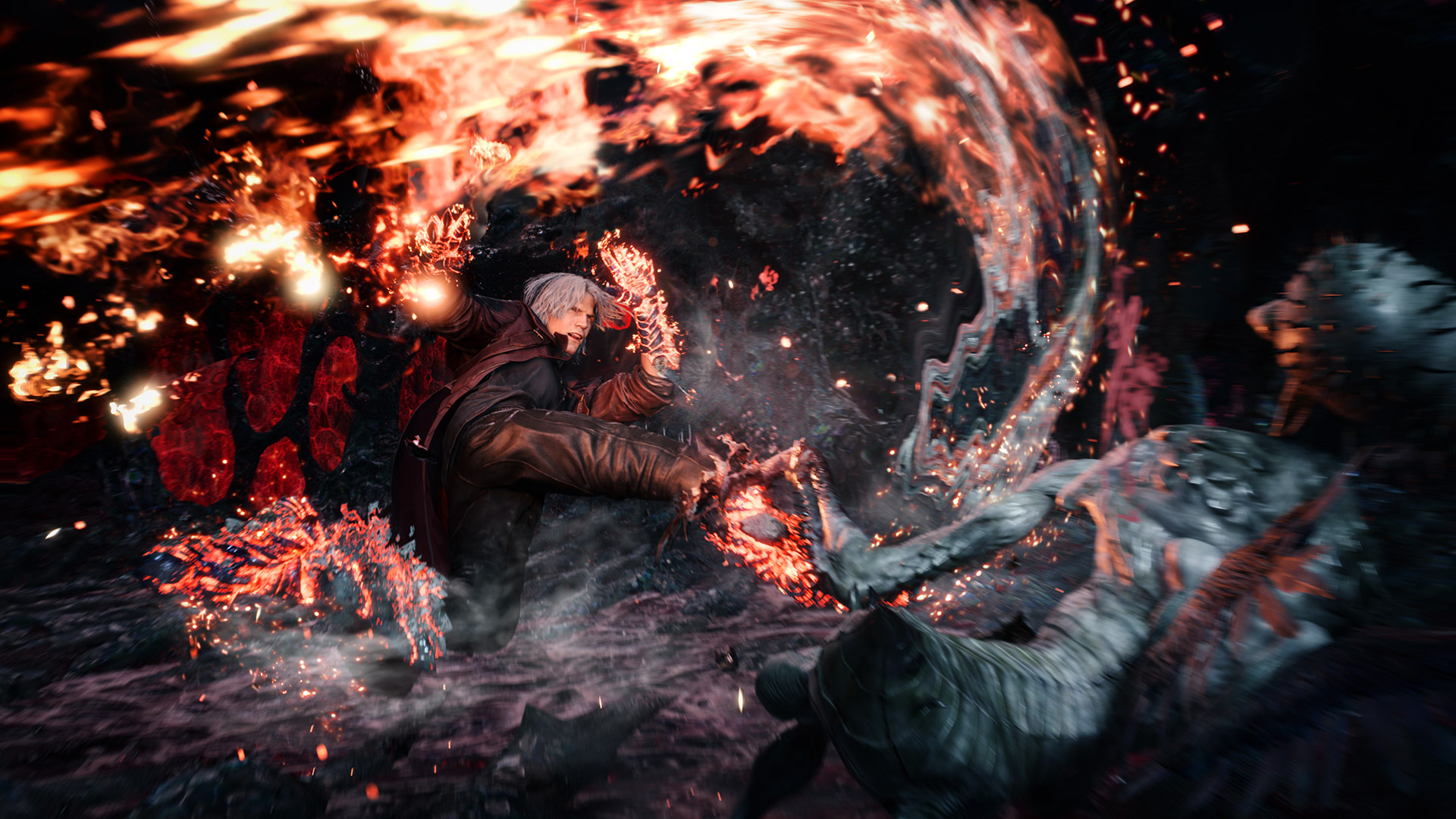
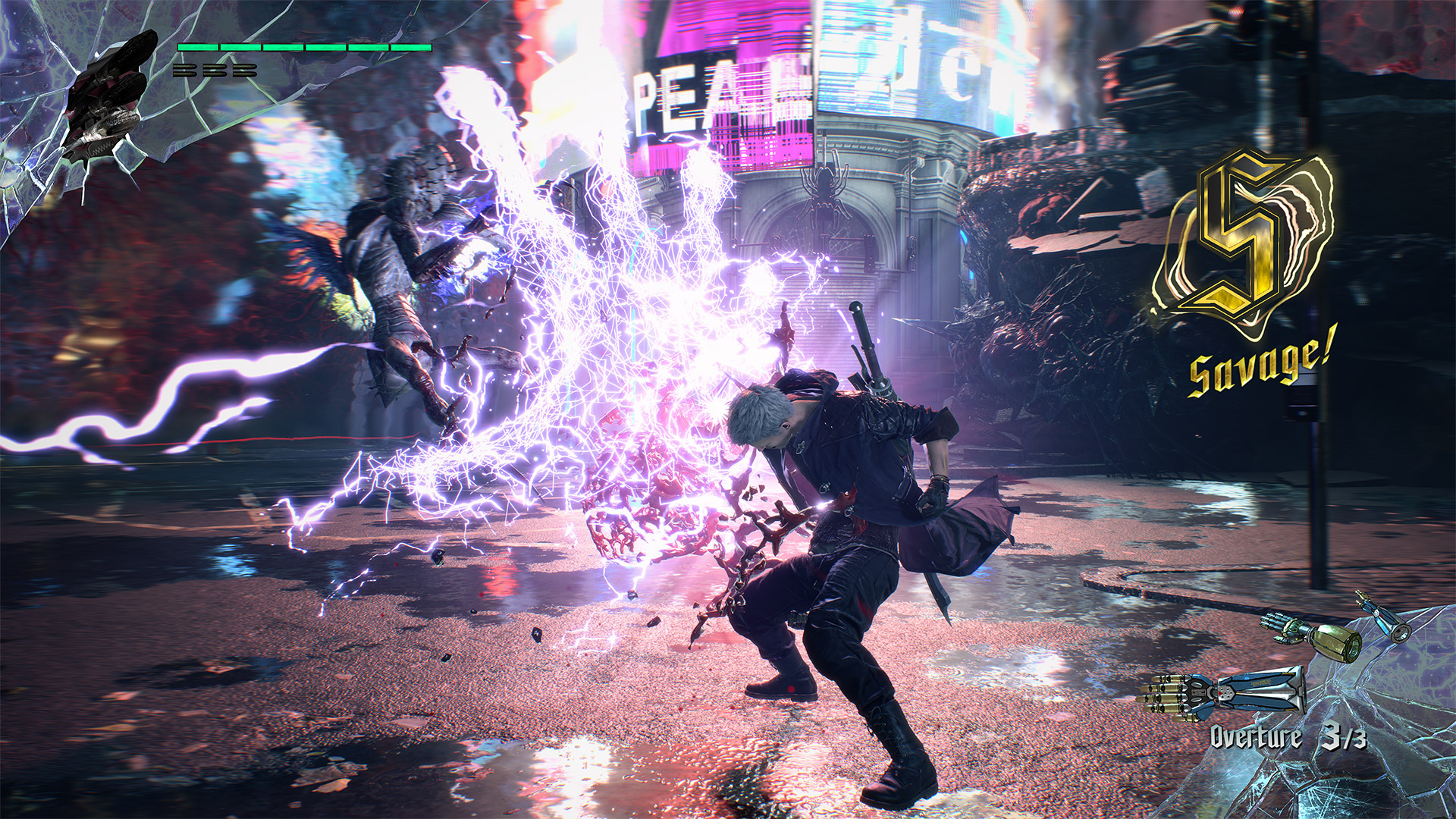
Part of what helps give Devil May Cry 5’s gameplay its incredible depth is its roster of three main heroes. It’s actually somewhat surprising how different each character feels to play, and the team at Capcom clearly put a lot of work into figuring out how to give each hero his own unique way to dispatch demonic foes. Granted, I don’t have working knowledge of how Devil May Cry 4 handled our infamous demon slayer, but even Dante—who I assumed would be the most basic gameplay-wise of the trio—has a host of tricks up his sleeve. Not only does he have access to various types of melee weapons and firearms, but he also has four different selectable styles that change up how he approaches combat, along with the ability to morph into his more powerful demon form through the Devil Trigger gauge. Nero’s biggest trick, meanwhile, is the much-touched selection of Devil Bringers, robotic arms that offer a variety of offensive, defensive, or support abilities depending on which is currently attached. It’s impressive to me how much thought went into this one aspect of one character in the game, and I especially wasn’t expecting that the Devil Bringers would be a finite resource. At any time, you can purposefully destroy the current arm you’re using in order to produce a high-powered explosive attack, but they can also break if you take damage from an enemy while using the Devil Bringer’s ability. On paper, both Dante and Nero might seem very similar —sword in one hand, firearm in the other—but they’re incredibly different in action.

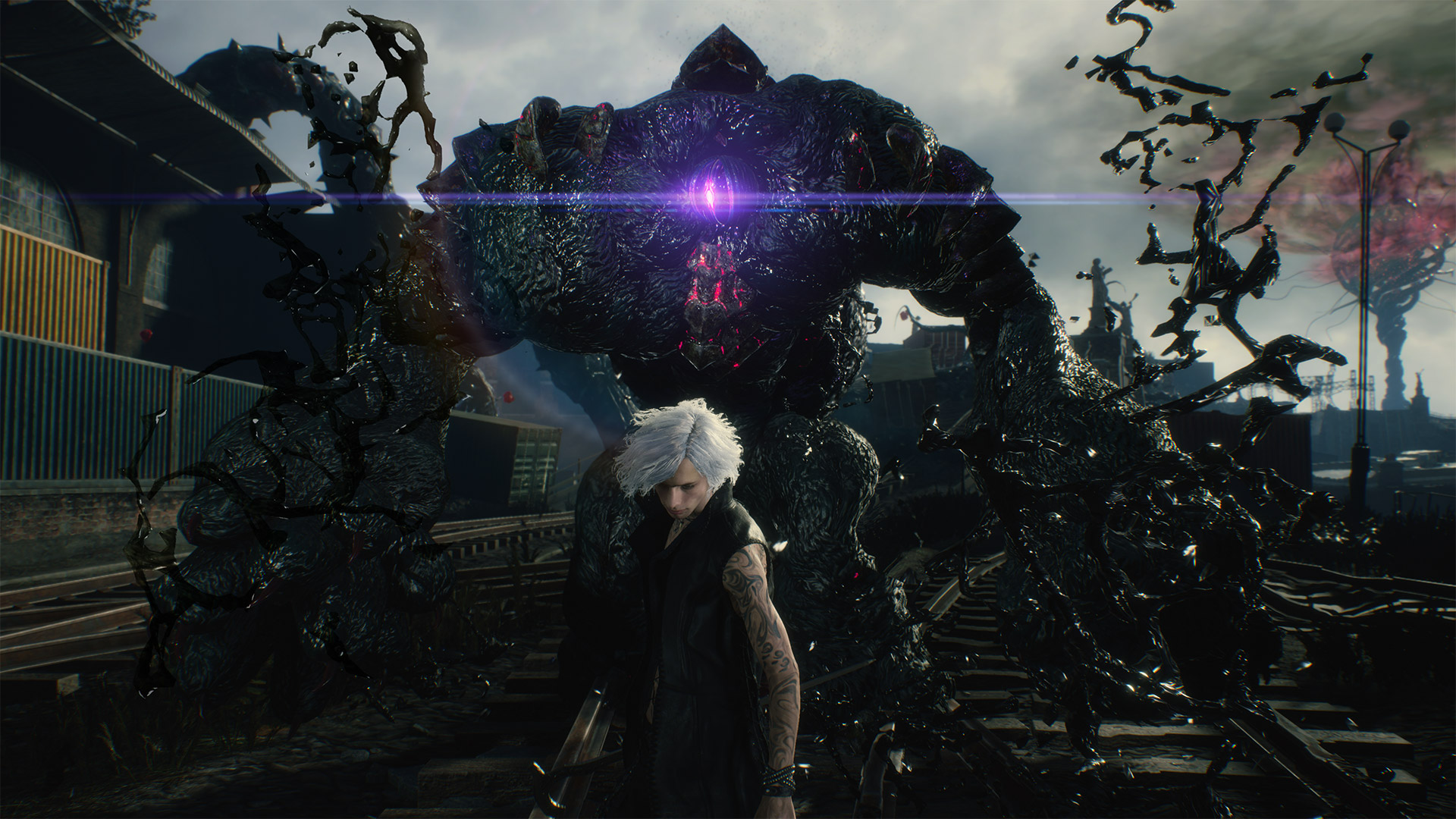
Then, we have V. The latest addition to the Devil May Cry mythos shakes things up to a far greater extent, as the character himself can’t actually hurt enemies 99 percent of the time. V dispatches foes by summoning two demonic familiars to do his dirty work for him: the bird-like Griffon and the black panther Shadow. Players control both of the demons at the same with, with Griffon’s ranged attacks using the button normally set to firearms for Dante and Nero, and Shadow’s close-up melee hits coming out with the sword button. Use either to do enough damage to a particular foe, and they’ll entered a weakened state, where V (and only V) can finally deliver the killing strike. V can be an incredibly hard character to get the hang of at first, since there’s such a disconnect between his more hands-off approach to combat and the way fast-action games like this are usually played. Once his style finally became more second nature, however, I found him to be a legitimately interesting alternative to his compatriots. In an adventure that already has two strong, extremely enjoyable playable characters, V carves out his own niche, totally justifying his existence as part of the crew.

And what a crew it is. I don’t know if they’ve been like this the entire time, or if Capcom just really nailed things here, but man did I fall in love with pretty much the entire cast. Sure, Dante is Dante, but he’s got such a fantastic charm and swagger here, always being cool without coming off as he’s trying to be cool. However, I came to actually like Nero even more, something I never could have expected given his character type (the “young brash hero,” basically). Meanwhile, V’s “dark brooding emo guy who read poetry and really needs to put on a shirt” design seemed like a recipe for disaster, but even he was great! How in the world did that happen? From there, I will say that the series’ two leading ladies—Trish and Lady—do get the shaft a bit, but they’re sidelining is made up for in Nico. Oh Nico. I’m sure there will be some out there that will find you completely obnoxious and unlikable, but not me. You won my heart, and made my world a brighter place. Devil May Cry 5’s story might not be the deepest or most compelling around, but I was totally invested in its twists and drama the entire way through, in part due to how fantastically done the interactions between the various characters are.

If there’s one point where I think Devil May Cry 5 falters in its quality, it’s in the design of some of its stages. I’m honestly a bit tired of dark, enclosed, claustrophobic locations games like these love to utilize, be them subway tunnels, sewers, or the ever-popular Gigeresque demon structures. My favorite moments were when the game opened up a bit and dropped me back into the world outside, and I wish we could see more creativity overall in the types of locations used. That said, even when I wasn’t enjoying the places themselves, I still appreciated how they looked. Devil May Cry 5 is a gorgeous game, especially in its character models, and once again I’m convinced that the RE Engine is one of the best technical efforts Capcom has made in years.

Finally, there are two quick points to touch on. There’s been some talk about the microtransactions in Devil May Cry 5, but I’ll tell you that I never once even thought about them until it came time to do this review. If you want to spend money to make unlocking skills or extra notches of your life bar quicker you can, and given there are three characters to do said skill unlocking for, that might be a tempting route to take. For me, though, I never hit a point where I felt hampered in the progress I was making, so I don’t think the microtransactions should be of any concern for those who don’t want to make use of them. As well, DMC5 features a new multiplayer option that told me I might run into other players at times in various stages, but I’ll be damned if I know how it all works. I never once encountered anything that seemed like co-op, even while the game was telling me onscreen that there were other human players in the same areas that I was. So, I’ve got no opinion on the multiplayer other than one of confusion.

For those fans who have been waiting years and years for a new “real” Devil May Cry game, I’d like to believe that you’ll find Devil May Cry 5 a great way to make up for all of that lost time. If, like me, you got separated from the series somewhere along the way, or if you’re someone who will be new to the franchise, then this is a fantastic and stylish new action adventure that is both legitimately impressive on a number of levels and a great reintroduction to Devil May Cry. Coming right on the heels of the equally excellent Resident Evil 2 remake, let’s hope this signals a bright new future for some of Capcom’s most beloved franchises—and not a brief moment of salvation for Dante and the gang before being tossed into a pit deep in the bowels of Hell to be forgotten about once more.

Dead or Alive 6 Review

I’ve been a Dead or Alive fan overall for the entirety of its life. My first experience with it was in a pizza parlor in Thousand Oaks, California, that just happened to have an original Dead or Alive cabinet as part of its small selection of arcade games. After that, I’d go on to compare differences between the PlayStation and Sega Saturn home ports, marvel at Dead or Alive 2 on the Dreamcast, own the Dead or Alive 3 / Ultimate combo box on Xbox, watch the series’ jump to next-gen with Dead or Alive 4 on the Xbox 360, and review the most recent release, Dead or Alive 5, before it ended up going free-to-play. Heck, I’ve even played and enjoyed every one of the Dead or Alive Xtreme games. So, when a new game in the franchise comes along, I want to be excited.

Excitement is something I’m not sure I feel over Dead or Alive 6, but getting to the reason why isn’t a straight, simple path.

The folks at Team Ninja seem to have found their groove when making new chapters of their fighter franchise, and at its core, Dead or Alive 6 builds upon what we got in its predecessor. Fights still play out in full 3D as players try to out-punch, kick, grab, and reverse their opponents to win the match. The big new twist this time around is the Break Gauge, which replaces Dead or Alive 5’s “Power” options. In addition to allowing for varied attacks while sidestepping, using half of your Break Gauge will perform a singular hold stance that can reverse any strike, which is a welcome crutch for when you’re getting frustrated by an opponent’s mix-ups or simply want a guaranteed way of opening them up for counterattack. Meanwhile, using the entire Break Gauge will unleash a powerful super-like Break Blow, which you can either pull off at a moment’s notice or automatically include at the end of a new type of four-hit combo string of strikes. It never quite does the damage I think it should, but the Break Blow is always satisfying to pull if, even if just for watching your chosen fighter smack the hell out of their opponent with such a hard-hitting blow. Overall, the Break Gauge doesn’t bring anything revolutionary to the series, but it does offer options that quickly become integral to the strategy of fights.

For those who love single-player content, there’s a story mode that follows every single character in the game through an adventure that intertwines the latest Dead or Alive tournament with an evil plot by the shadow organization M.I.S.T. and its genius scientist NiCO. While not every character gets equal time in the spotlight, and I wish more attention was shown to the tournament side of the narrative, there’s a lot of various story beats to unlock, so the mode will keep you busy for a nice chunk of time. Far more exciting to me is the new DOA Quest, a series of character-specific tests where players must accomplish three preset challenges. DOA Quest gives you the chance to sit down and beat up on some AI opponents while also working toward certain goals, and it features the incredibly helpful ability to instantly jump to the tutorial dealing with a particular challenge if you need to brush up on how to beat it.

Speaking of the tutorial, DOA6 has an almost ridiculously long list of options for teaching you how to play the game, going into pretty much every element of its fighting engine that you could think of. I found some of the tutorials to be not quite as clear as I would have liked, but I admittedly also didn’t have the patience to clear every single one of the near 200 missions, so maybe it was more my fault than the game’s. Arcade, Time Attack, and Survival round out the solo options on offer, which should all be self-explanatory at this point in the genre. In terms of content, they help add even more to do when not wanting to compete with other humans, but I found them strangely lacking in terms of presentation, with no visual elements telling you how many opponents you’ll be facing, who’s up next on your path to glory, and so on. Online is pretty anemic at the moment as well, with Ranked being the sole option for finding opponents to spar against, but Team Ninja is promising more additions to the online menu in the coming weeks. Still, that side of the game does feel incredibly rushed, almost mirroring the issues that Street Fighter V had at its launch.

And then, of course, there are the microtransactions. By now, we’ve all heard about the game’s first season pass, which costs $93 for a couple of additional fighters and a handful of new outfits—but anybody surprised by that announcement must have missed the fact that Dead or Alive 5 has over one thousand dollars of DLC available for purchase. The era of Koei Tecmo making a Dead or Alive game that isn’t overflowing with ways to spend money is long gone, yet DOA6 actually offers up a nice selection of unlockable outfits like in the good old days. In fact, through the game’s Wardrobe option, you can even customize a character’s hair style (nice) and give them glasses (double nice), all of which comes from earning credits and pattern parts during the course of the game. (Sadly though, in Dead or Alive tradition, the male fighters definitely get the short end of the stick in terms of customization options.)

Really, my biggest complaint here is knowing how to unlock what, because it’s a total mess. Completing the various challenges in DOA Quest is by far the quickest and easiest way to earn pattern parts, but those challengers never tell you which character you’ll be earning them for, nor do they always give you enough to open up a particular outfit. So, getting a specific alt for your favorite fighter to unlock tends to happen totally through luck or time spent grinding, and even then, you still have to spend points to actually use them. Playing other modes will earn you pattern parts as well, but prelaunch the payout amounts were downright insulting, with rewards often being in the single digits. Currently, the game is running under a “Release Celebration Campaign Boost” where said parts are being multiplied by 100, which is an increase over the 10x limited-time boost that was already in place. As well, Koei Tecmo have announced that a mid-March update to the game will make it so that pattern parts unlock for the character that you’re currently using instead of for a random roster member. Taking those both together, it does seem like the dev team is well aware of how terrible this system was as intended. Still, that update isn’t in place yet, and it remains to be seen where pattern part payouts will be once the “Campaign Boost” is over, so I’m not ready to call the problem fixed just yet.

In everything that Dead or Alive 6 is, it’s a decent-yet-sometimes-flawed new chapter of the series that most fans should be generally satisfied with–at least, once Team Ninja works out the outfit unlocks. And yet, at this moment in time, I just can’t shake the feeling that that isn’t enough.

Dead or Alive 5 is absolutely getting long in the tooth, having originally arrived way back in 2012 for the previous round of consoles, but Dead or Alive 6’s arrival to replace it feels totally unjustified. In an era when fighting games have really re-established themselves, as franchises new and old are putting out either content-heavy releases or getting ambitious revivals, the fresh coat of UI paint, two new roster additions (the decently interesting Diego and the oh-god-she’s-just-so-anime NiCO), and aforementioned features come off like the bare minimum that could have been done in DOA6. Even whatever spark of creativity and passion existed in DOA5 just isn’t here, causing the game to seem more like something launched to help boost a fiscal year release calendar and not because the team has exciting new ideas they wanted to put into place.

Starting with Dead or Alive 2, Team Ninja’s fighting games once stood as launch period titles that perfectly showcased the power and visual upgrades that new console generations could bring—and I think that’s exactly what Dead or Alive 6 should have been. Coming out now, the game feels like something nobody was really waiting for, especially as numerous other genre offers fight for their 15 minutes of fame. Having a visually stunning new Dead or Alive chapter that took advantage of the next PlayStation and Xbox systems would have been an incredibly exciting thing, and could also have helped make up for the lack of other included shake-ups to the series’ formula.

If we separate Dead or Alive 6 from everything else currently existing or going on in video games, and look at it as nothing but a singular release, it’s a solid fighting game core surrounded by an unambitious yet somewhat enjoyable outer coating. The reality, however, is that there’s so many situations under which this game could have been a more exciting, satisfying, or justifiable experience. It’s a shame that Koei Tecmo and Team Ninja have seemingly sent the project to die as we lead up to a next generation of consoles—or, at least, until we get a prettier and more robust version of Dead or Alive 6 on said consoles.

Judgment May Look Like Yet Another Yakuza Game, But It’s Much More

It was just around a year ago that I finally came to right one of my gaming wrongs: never having played a Yakuza game. After knowing the franchise, its creators, and even its characters since as far back as the PlayStation 2 era, I at last actually got the full experience of playing through one of the games via the then latest release, Yakuza 6. Sure, some might argue that starting with the final chapter of a sprawling epic isn’t the best introduction to said epic, but I was having too much fun and getting too attached to the unfolding drama to care about such details.

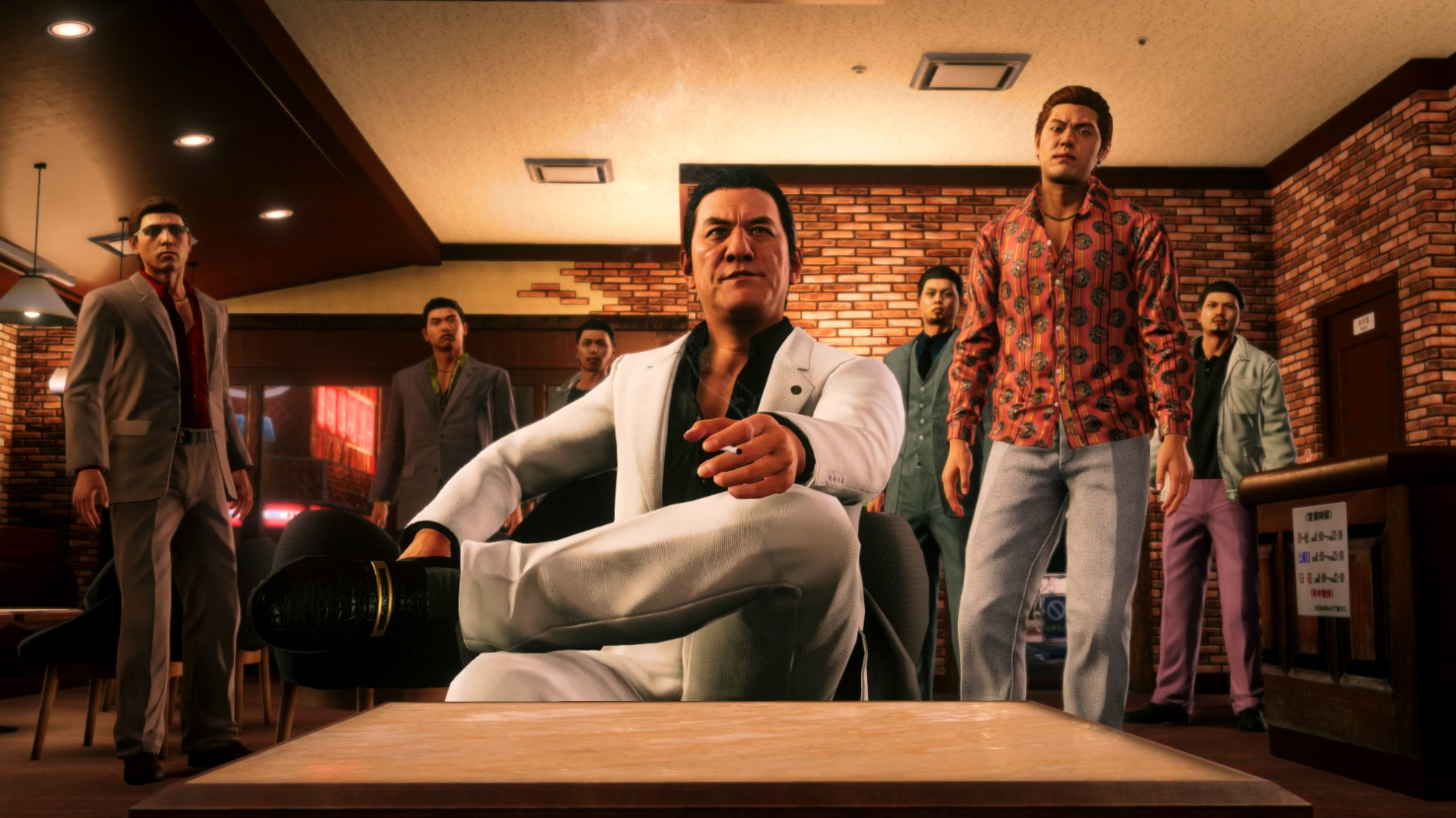
It’s interesting, then, the position I find myself in waiting for Sega CS1’s latest project Judgment. For dedicated Yakuza fans, this will be a game that still exists in the same universe while finally shifting the focus away from longtime protagonist Kazuma Kiryu—no matter if that’s a shift that they wanted or not. For me, I’ve got plenty of other Yakuza titles still waiting the moment I’m ready for more, so a totally fresh take on previous ideas led by an entirely new cast has no chance of betraying my hopes or expectations. Well, beyond what I’ve now come to expect from creator Toshihiro Nagoshi and his team in general, which would be amazing visuals, engrossing drama, and running around the streets of Japan partaking in a variety of side content while forgetting about the very important task I was in the middle of.

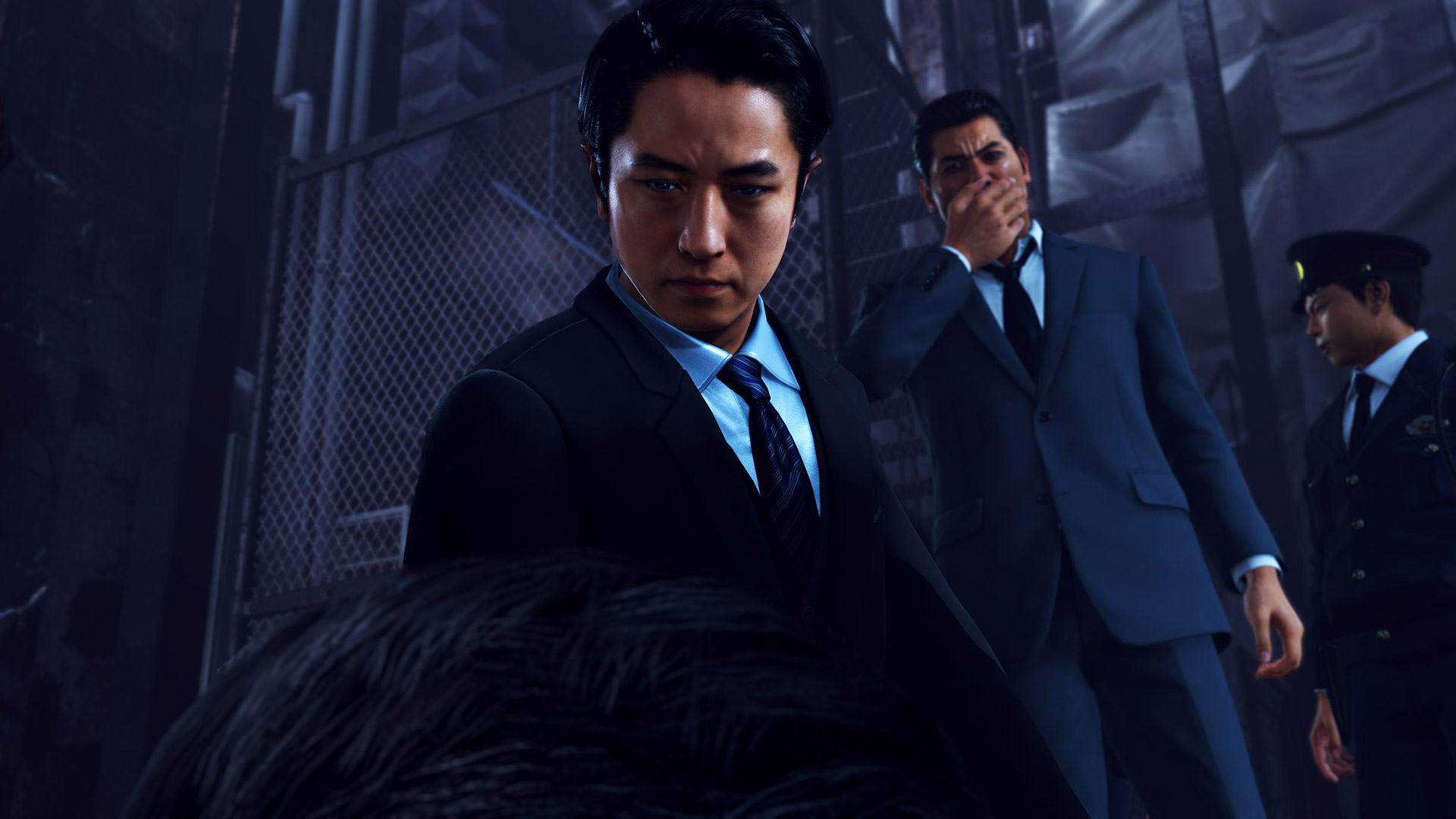
Though it may just be a case of “newer is obviously better,” after going hands-on with Judgment for around an hour and half recently, I came away feeling that it’s a noticeable visual upgrade over Yakuza 6. I mean, if that’s actually possible. The Yakuza team’s work is clearly in the running for winning the “most realistic character models in video games” award, but something about Judgment feels like an impressive step above an already impressive step above everything else. As to why, it’s hard to really nail down. Maybe it’s the lighting, or maybe it’s a series of slight tweaks to Yakuza’s art direction, or maybe it’s the team getting a better handle on its new Dragon Engine in this, its third outing. It could even be due to the fact that the game indeed features new characters doing new things—even if that might not make sense at first. My thought is, we’ve seen Kiryu and Goro Majima and the rest of the cast around for years, so it can be harder to appreciate their graphical growth over time. Here, in Judgment, we’re seeing these people for the first time at the underlying technology’s most impressive point.

How we hear the cast will also be different as well, as Sega is producing a full English dub for the game, something they haven’t done for the Yakuza series in a while. I played the first part of the demo in English, and the cast sounded pretty good. Honestly, though, I can’t imagine playing a game like this in anything but Japanese—but the push to offer both was a smart decision that’ll no doubt help Judgment appeal to a broader audience.

And what of that cast? I went into Judgment a bit bemused by its new protagonist Takayuki Yagami. Lending both his voice and his face to Yagami is Takuya Kimura, a famous Japanese singer-turned-actor sometimes known better by his nickname “KimuTaku.” While he’s many things to many people in his home country, to me, he will forever be an ex-member of SMAP, a J-pop group infamous for how immensely popular they became despise being terrible singers. (Seriously, look up “Smap sekai no hana live” and listen to everything outside of the harmonies.)

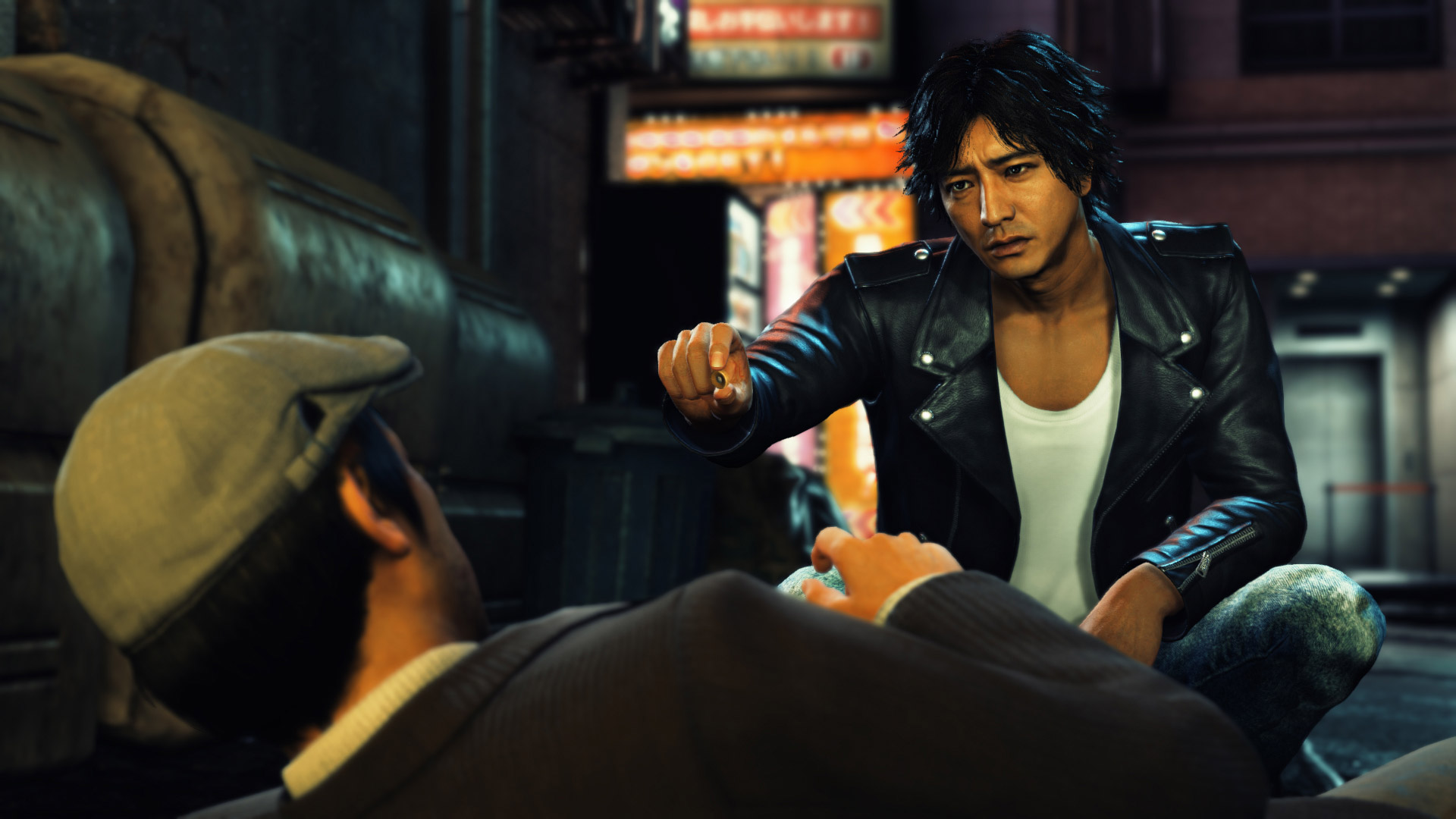
Yet, I will give KimuTaku his due here. His Yagami is no Kazuma Kiryu—really, who is—but the time I spent with the game was enough to convince me that I’m interested in seeing where this character goes. Yagami begins the story as a young hotshot lawyer who successfully gotten a client off of a murder rap in a country with an insanely high conviction rate. Unfortunately, shortly after being released from prison, that same client ends up arrested for killing his girlfriend. This devastates Yagami, the guilt of having freed a potential murderer weighing down upon him, and when we catch back up with our protagonist a few years later, he’s now given up that life of law. Instead, Yagami is slumming it around Kamurocho as a small-time detective, picking up work wherever he can. One day, fate brings him back to his old law office, when he’s asked by a former colleague to do grunt work on a murder case involving a member of a local yakuza family.

Even as Yagami’s tale takes place in the same area of Tokyo that most of the Yakuza series did, and the overall gameplay engine and visual direction are similar to what we’ve seen before, there’s just something about Judgment that feels different right off the bat. It’s the new cast, sure, but it’s also the fresh angle on the story. Instead of being part of a huge, well-established crime syndicate, we start off on the completely other end of the spectrum—as someone fighting to uphold the law—until we’re tossed into an in-between world that promises to cross back and forth through both sides. At first glance, you’d swear that Judgment could be just another chapter of the Yakuza saga, but it quickly comes to stand on its own (at least from what I saw of it). To all of the Yakuza fans out there, be excited for a new experience that plays out in the same spirit as its predecessors, but don’t come in just hoping for a surrogate Yakuza 7.

Helping to showcase that difference is a number of new gameplay elements integrated into the game. It only makes sense that Yagami—as both an ex-lawyer and an active private detective—would take a more cerebral approach to dealing with situations. In that regard, I got to try out a few examples of the game’s detective work. In one moment, I’d lost a subject I was following in a crowd, so I had to check out all of the male pedestrians in the area using a sketch of the man to compare physical features. Then, once I’d found him, I had to make sure to keep on his tail, darting around corners or hiding behind signs so he didn’t get too suspicious that someone was following him. I’m still not certain how deep these types of gameplay additions will be in the long run, and if they’ll be a legitimately interesting aspect of detective work or more of a glorified gimmick. At least for now, though, I’m hopeful.

That hope extends to another new element in Judgment: the ability to question people. Throughout my playtime, I encountered a few different people that I needed information from. At various moments while talking to them, the game would offer me a selection of questions to ask them, with bonus experience points awarded if I focused on asking those that would get me the best information the quickest. Again, I don’t know that we should be expecting visual novel–level dialog choices here, but it was another unique twist on the Yakuza formula that should help give the game an atmosphere of its own.

While Judgment seems to rely on a few legacy ideas that it maybe shouldn’t—like, I’m not sure Yagami really needs to have random battles with groups of punks when simply walking around the way Kiryu did—I came away really impressed by how a little went a long way in making the game not just feel like another chapter in the Yakuza saga. Right from the start, Judgment comes off as a fresh and exciting new gaming experience, and even with my admittedly limited knowledge of what Nagoshi and crew are capable of, I’ve already come to have some pretty high expectations that were only reinforced with my hands-on demo.

Jump Force Review

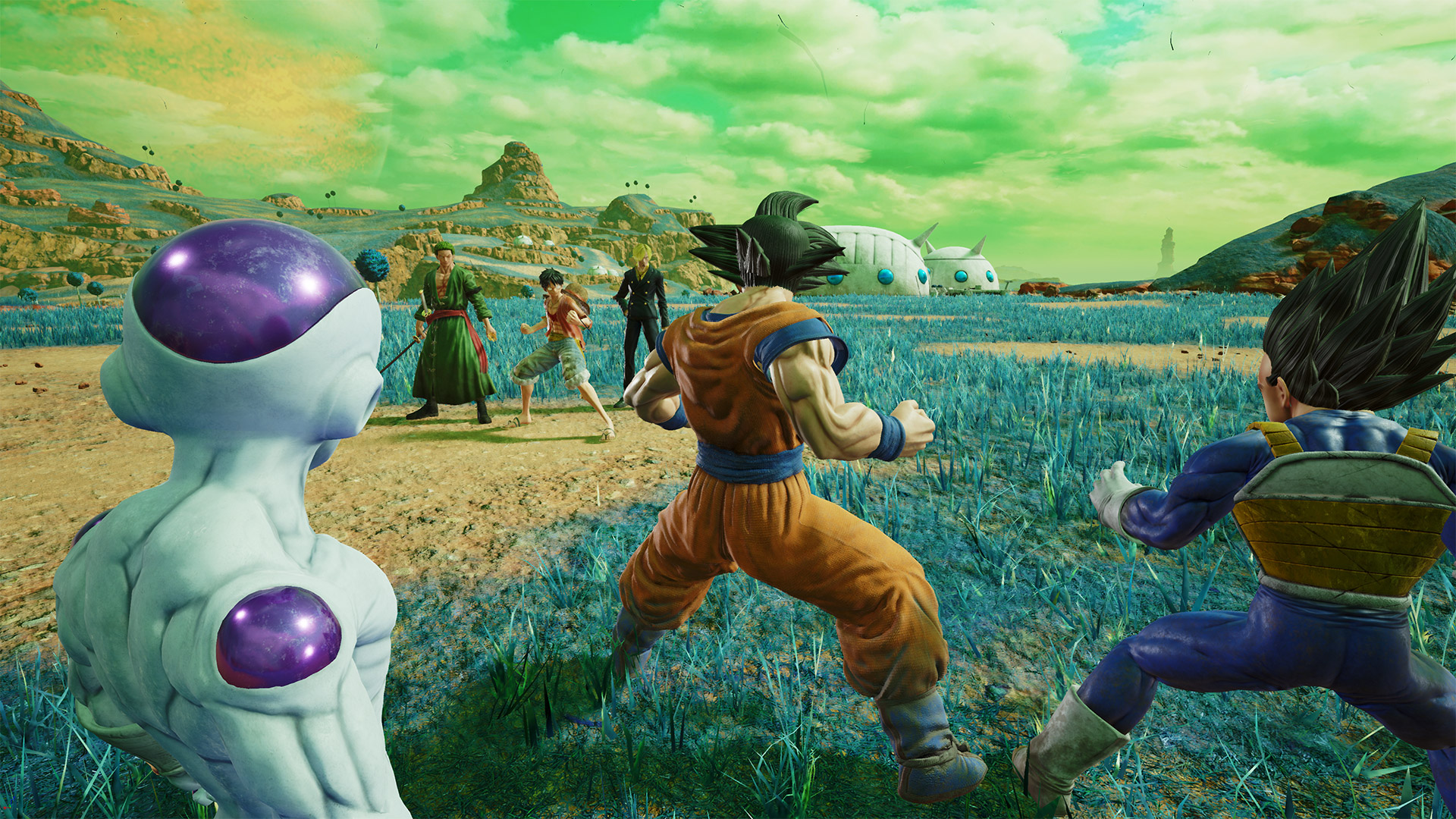
New York’s Times Square sits in near ruin, as buildings crumble and explosions burst below the crimson sky. High above, Frieza smiles as he and an army of red-eyed soldiers descend to lay waste to the city. Suddenly, a hero appears: Goku, who flies up to trade blows with his fearsome foe. When Goku dodges one of Frieza’s energy attacks, the beam continues on its path until it strikes down a regular human being. Specifically, me. As the legendary warrior reels in horror at seeing what’s happened, his ally Trunks rushes to my side, informing me that there’s only one thing that can save my life now. Trunks shoves a glowing cube into my body, which, along with saving me from death, also turns me into a hero.

If that seems like a rather abrupt and not-well-thought-out way to start a review, it’s also not the best way to start a game either. And yet, that is exactly how Jump Force kicks off, tossing players into a situation that really isn’t concerned with trivial things like setup or exposition. Typically, when a piece of entertainment starts in such a way, it’s to serve one of three goals: creating a mysterious occurrence where someone will try to figure out how or why it happened; being the first piece of a non-linear selection of scenes a la movies such as Pulp Fiction; or getting world building out of the way and admitting the “how” and “why” aren’t important, such as in zombie-based fiction. Are any of those the reason Jump Force starts the way it does? I dunno.

I give that answer because “I dunno” seems to be the mantra of this game. Why was it important that I, a seemingly random human being, survive? I dunno. What led up to the Earth being attacked? I dunno. How did Goku, Luffy, and Naruto end up meeting each other in the first place? Am I really supposed to assume that all of these beings I’m meeting are actually comic characters come to life? Why do the other members of the various franchises that appear in Jump Force never seem fazed one bit when recruited by a team of fighters from completely different fake universes? Who built the place where all of these beings converge to form the J-force, and did it exist before the recent outbreak of planetary attacks? I dunno. Eventually, the story does bring at least some answers, but they only came long after I’d gotten tired waiting for their arrival.

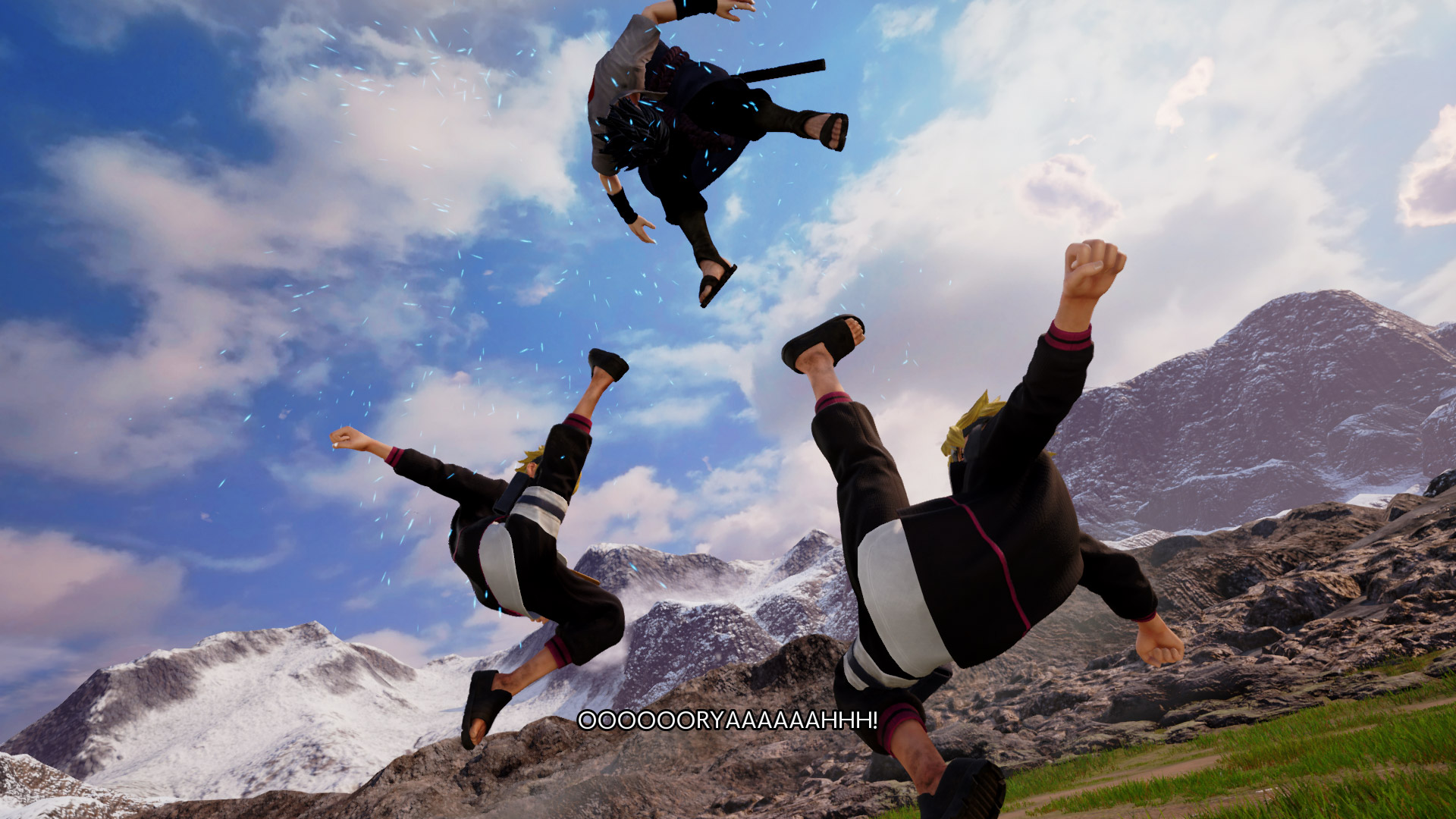
And, oh yeah, one other thing: Who are all of these people? Yes, most players venturing into Jump Force will undoubtedly be anime fans to varying degrees, but the game has no patience for those who don’t have full working knowledge of the full 50-year run of Japan’s weekly manga anthology Shonen Jump—where beloved series like Dragon Ball Z, One Piece, and Naruto were all born—has existed. Even as someone who doesn’t actively follow anime anymore, it’s hard not to know that Naruto had the gall to name his child Boruto, and the old-school fan in me loves seeing inclusions like City Hunter’s Ryo Saeba, but I’ll be damned if I know who Kaguya Otsutsuki or Sosuke Aizen or Gon Freecss or Killua Zoldyck are. Jump Force spends zero time introducing you to these characters, what worlds they come from, or what impact they could have on the story. Hell, it doesn’t even have any sort of in-game encyclopedia where you can learn about the various fighters and the franchise they come from, which seems like it would have been a great thing to have in a game released during Shonen Jump’s 50-year celebration.

Instead of taking the time to properly introduce and integrate the cast, players recruit new members to the team through selectable missions that consist of maybe 30 seconds of cutscenes and then a one-round fight. It’s par for the course in Jump Force, however, as the game seems to lack any sort of drive to create a complete, fulfilling narrative experience. When the game begins proper, you’re dropped into J-Force HQ and told to save the world. How do I do that, though? Where am I supposed to go? None of that was evident from the start, and even poking my nose around the various corners of the base turned up nothing at first. Everything in the game is quest-based, even the overarching story, but it isn’t always clear how to unlock the next “key” missions you’ll need to complete to keep the game rolling along. Jump Force is structured as one big lobby where you and other players can run around together minimally interacting between fights, but similar other games usually run players through a set amount of required progression first in order to get them fully versed in what to do once things open up more. Yet again, though, ain’t nobody got time for that.

And, oh yes, the jank. By now you’ve no doubt seen examples of Jump Force’s overall feeling of utter cheapness, and it’s all true. Character animations are half-assed both in and out of fights, cutscenes at times have unbelievably bad mouth flapping and character positioning, polish is missing from nearly every element of the game, and I’ve had numerous connection issues with the game’s servers, which—no matter what I was in the middle of doing—kicked me all of the way out to the main menu. There’s also that art style, man. I’ve seen some people say they actually like the game’s more “mature” visual style, but for a project centered around classic anime and manga franchises, it just feels heretical to remake everything with such generic, uninspired designs. Some characters, like Fist of the North Star’s Kenshiro, turn out mostly fine in the process, while others, such as the aforementioned Gon, are downright terrifying.

However, along the way, something happened: I started to like Jump Force in part because of how terrible it is. At first, I was furious at the game for being such a shameless waste of my time (and many players’ money), but then it legitimately reached “so bad it’s good” territory. The stupid way my character ran and jumped around J-Force HQ because weirdly charming; every time a cinematic was simply okay, I was disappointed knowing it could have been oh so much worse (in a good way). Everything I’ve said about the game still stands, and both Bandai Namco and Spike Chunsoft should be ashamed of this effort, because both can do better. Just because it’s a bad game, however, doesn’t mean it isn’t an enjoyable one—at least if you can learn to either forgive or cherish some of its flaws.

One of the things that lead to that turnaround is that Jump Force isn’t as bad in the one area that matters most: as a fighting game. Structured similarly to other arena-based fighters such as the Naruto Shippuden series, battles play out between two teams of three characters as players run around in 3D environments unleashing both short- and long-range attacks in an attempt to get the upper hand. Players throw normal punches and kicks through a two-button system—basically light and heavy hits—and each will produce an auto combo if mashed enough times in a row. Special moves are then called forth (if you’ve got enough meter) by holding the right trigger and hitting one of the four face buttons, with the usual assortment of other options such as throws, blocks, dodges, jumps, tagging teammates in and out, or sending your character into a more powerful “Awakened” state all also available.

Gameplay isn’t nearly as good as what CyberConnect 2 or other competitors have brought us over the years, and I’ve got a few legit frustrations with things like the shallowness of the game’s combo system and what feels like really wonky attack priorities at times. Still, I’ve had legitimate fun with Jump Force when pushing the story aside and focusing on the fighting. I’ve been iffy on the balance in some previous arena fighters—especially in those where projectiles were just too damned overpowered—but that was rarely the case here. Fights can turn into a real game of cat-and-mouse where brains can win out over brawn, and I have to give Jump Force credit for how much it does do with so little. I mean, I wish every element of combat was deeper—because they absolutely could have been—but beating up anime celebrities over and over never really got old.

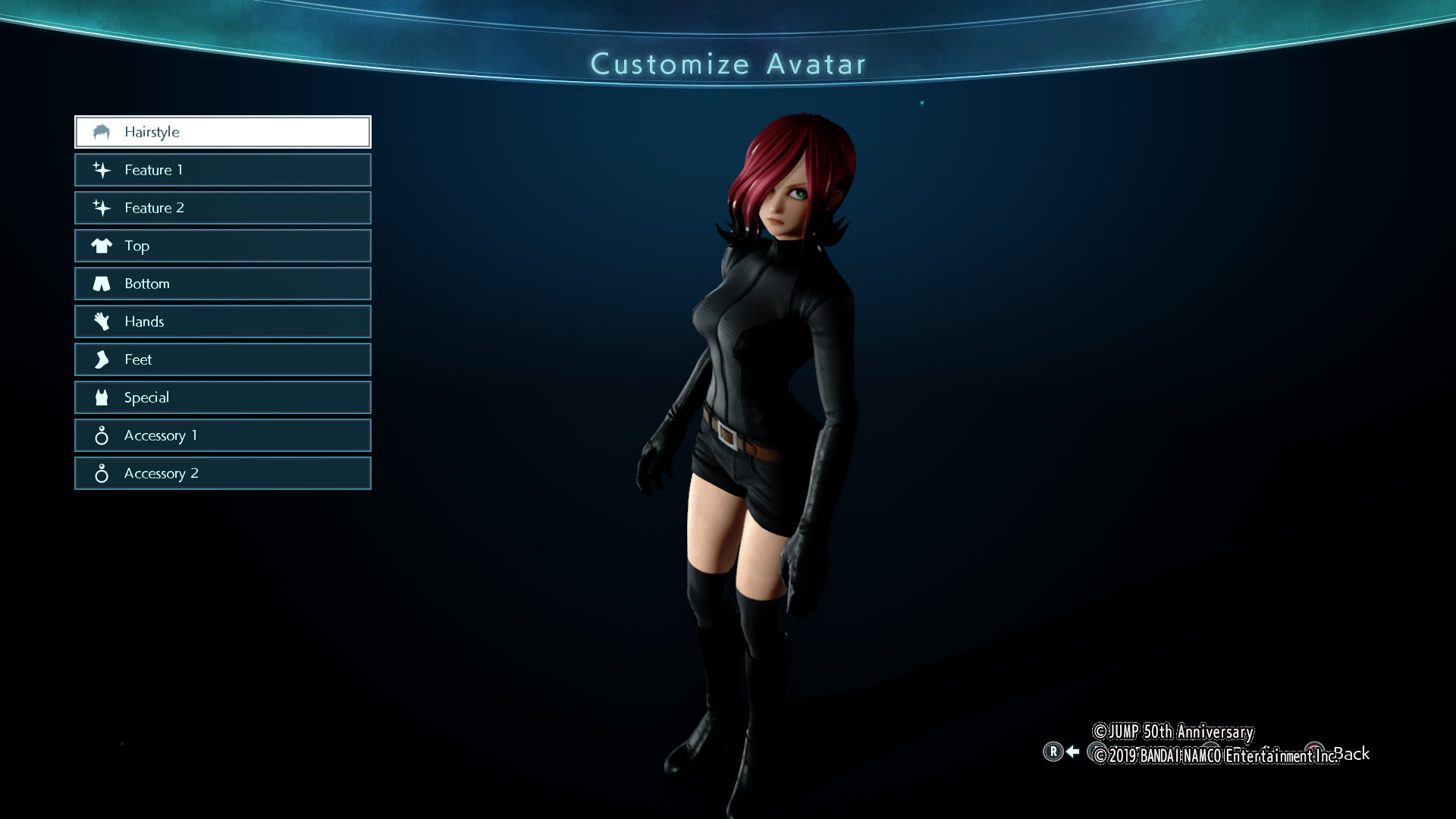
That might not be the case if I wasn’t doing so as my own custom character—which is ironic considering that was one of the features I thought sounded dumb going into Jump Force. To me, it seemed counterproductive to bring together a roster of legendary heroes and villains, only to then ask the player to make and control their own random schmuck. And yet, that option for a bit of self-insertion actually lead to me caring more about what was going on. Watching my ridiculous original anime character (do not steal) using Kenshiro’s Hundred Rending Fists against Zoro or punching Goku in the gut multiple times with the Delaware Detroit Smash from My Hero Academia made me smile way more than I was expecting. I’ve always been a sucker for custom characters, so working to build mine up both in terms of skill and wardrobe kept me motivated even in the moments when the story was hot trash. (But, come on—why can’t I preview new outfit items before I plunk down the huge amounts of gold some of them require? And why do you have to be so stingy with edit pieces?)

Jump Force’s custom heroes do lead into one final element to the game that totally puzzled me. As I said previously, fights are 3-vs-3, but in a completely odd twist, every member of your team shares the exact same health bar. While there can be strategic reasons to swap out one fighter for another, such as wanting to mix things up and keep your opponent on their toes, much of the time I found that I got along just fine having my gal Jun just solo every single encounter. The story will throw various fight balances at you—sometimes 2-vs-3, sometimes 1-vs-2, sometimes 1-vs-3, and more—but it never makes any difference in terms of difficulty. With only ever having to worry about knocking one health bar down to zero, it could be me versus the entire Jump Force roster for all I care, as I’d still have the same odds. Having the various Shonen Jump stars as teammates gives bonuses even if you never swap to them, as each can offer passive support or jump in for a quick assist, but it’s weird to me that the game put in so little effort to encourage players to have a strong, well-balanced team in the way something like The King of Fighters does.

Jump Force is a lazy, sloppy, uninspired mess of a game—but as much as I want to, I can’t hate it. It’s an experience I would only grudgingly recommend to anime fans, be totally non-committal on for fighting game fans, and recommend those who fall into neither camp stay away from. And yet, in my time at EGM, there are games I’ve given higher scores that I’d probably want to return to less than this. Jump Force asks a lot from players in forgiving its flaws that get in the way of the fun, but if you can laugh at its failings and not ask too much from its fights, jumping into the ring with friends or strangers and then beating them to a pulp with your cobbled-together protagonist and a few of their anime pals can offer some honest hours of fun.

So, in the end, am I recommending that you give Jump Force a chance despite its numerous failings? I dunno.

The Liar Princess and the Blind Prince Review

While the “beauty and the beast” set-up is one that’s long seen use in storytelling, Nippon Ichi Software’s The Liar Princess and the Blind Princegives us an interesting twist on that classic idea. Here, our beauty is a delicate, soft-spoken prince of a small kingdom, and our beast a hulking wolf monster who spends her nights singing in the moonlight atop a cliff.

When her beautiful voice captures the ear of the prince, she’s at first amused by the attention she’s receiving from the puny human, but soon ends up coming to enjoy having an audience. That is, until the day that the prince finally decides he wants to meet the voice’s owner, and climbs the rocky hill to do so. The wolf, knowing the prince would be horrified to find out she was in fact a monster, reaches out to cover the prince’s eyes—but, instead, accidentally scratches him across the face, leaving him blind.

Feeling guilt over what she’s done, the wolf visits a witch who holds the power to return the boy’s sight if he’s brought to her. To do so, the wolf receives a second favor: the ability to transform into a human princess so that she won’t frighten the prince. Under the guise of her new form, the wolf convinces the prince that she’s a princess from a nearby kingdom, and that she can help him regain his sight.

Thus kicks off The Liar Princess and the Blind Prince, which plays out as one long escort mission in which you must drag the prince along by the hand through a variety of locations filled with dangers and challenges. At any time, the wolf can transform back into her original self, useful for dispatching threats or getting places that a smaller, weaker human might not be able to access. Meanwhile, the prince will only go along with the wolf when she’s a human, and various elements such as smaller passageways or switches are only usable when in princess form.

While enemies will indeed get in the way at times, the game’s real challenge comes from the environmental puzzles that litter the landscape. At first, I was afraid they’d fall too far on the easier end of the spectrum, but there ended up being a good amount of legitimately enjoyable (though never brain-breaking, outside of one bizarre outlier) situations where I needed to move platforms, remove obstacles, and utilize other elements in just the right way to allow the duo to safely progress. As you get deeper into the forest on the way to the witch’s home, the game adds new gimmicks to help keep things feeling fresh—though I couldn’t shake the feeling that there really could, and should, have been more in that regard.

Really, that’s where The Liar Princess and the Blind Princemost disappoints: It seems content with being a good game versus striving to be a great one. It took me just under four-and-a-half hours to beat The Liar Princess, and while I enjoyed almost all of my time with it, I was also reaching the point where I wasn’t sure if I’d want it to go on for too much longer. Had there just been more variety in how each area of the forest feels, and in what you’re tasked with doing there, I think it could have had the strength to be either a longer, or more impactful, game. The gameplay itself could also have benefited from more polish, such as tighter controls, more chances to cancel out of animations should you do the wrong thing (such as attack as the wolf in the wrong direction), fewer moments of getting stuck on the environment, and clearer understanding of which falls would be lethal and which wouldn’t (by far my biggest annoyance). To be clear, most of the time, The Liar Princess and the Blind Prince works the way it needs to, and neither gameplay nor controlling the wolf ever feel broken or unenjoyable—it’s just a case of a game where some clear improvements could have been made.

I wish that had been the case, as The Liar Princess and the Blind Prince is a wonderful little game in nearly every way otherwise. The story is simple but enjoyable, adorably innocent in one moment, silly in another, before suddenly swinging into surprisingly emotional territory. Our main duo and the other characters you’ll meet along the way help bring life to the world through both their quirky personalities and fantastic designs, and the game’s presentation is visually and audibly top notch. The Liar Princess and the Blind Prince builds off the push for more creative art styles seen in previous Nippon Ichi titles such as htoL#NiQ, Yomawari Night Alone, and A Rose in the Twilight, and I especially liked the “children’s storybook” direction taken here.

I don’t want it to come across as if The Liar Princess and the Blind Prince is an “experience game,” where gameplay takes a backseat to storytelling or atmosphere, because it definitely isn’t that. Instead, it’s simply a game where not all of its elements end up reaching the same level of quality together. I really appreciate Nippon Ichi doing these smaller, more personal projects, as even in their lowest moments they still often offer something that many other titles never do. I just wish their potential could be better realized, because games like this have the potential to be more than just niche hits among pre-established fanbases.

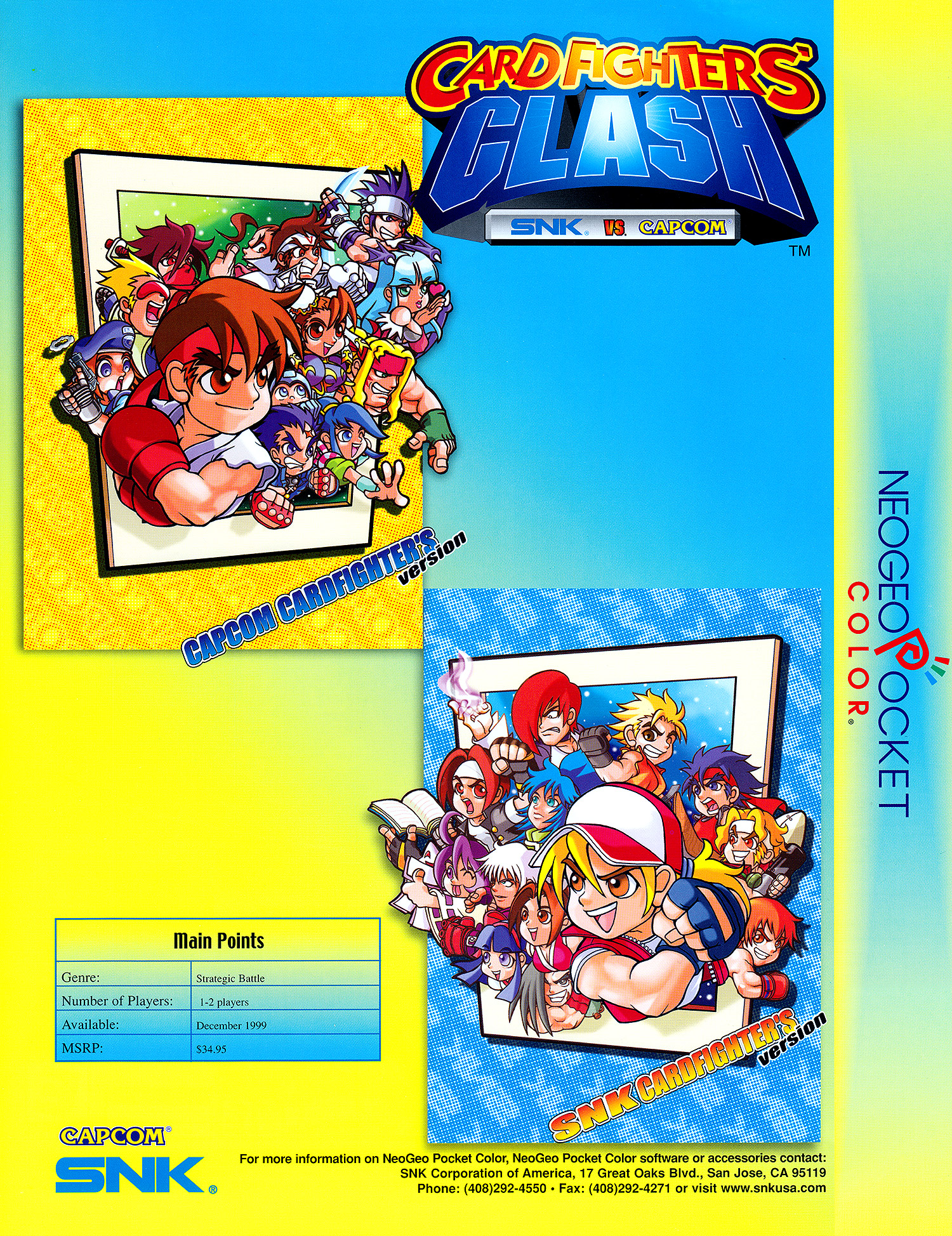
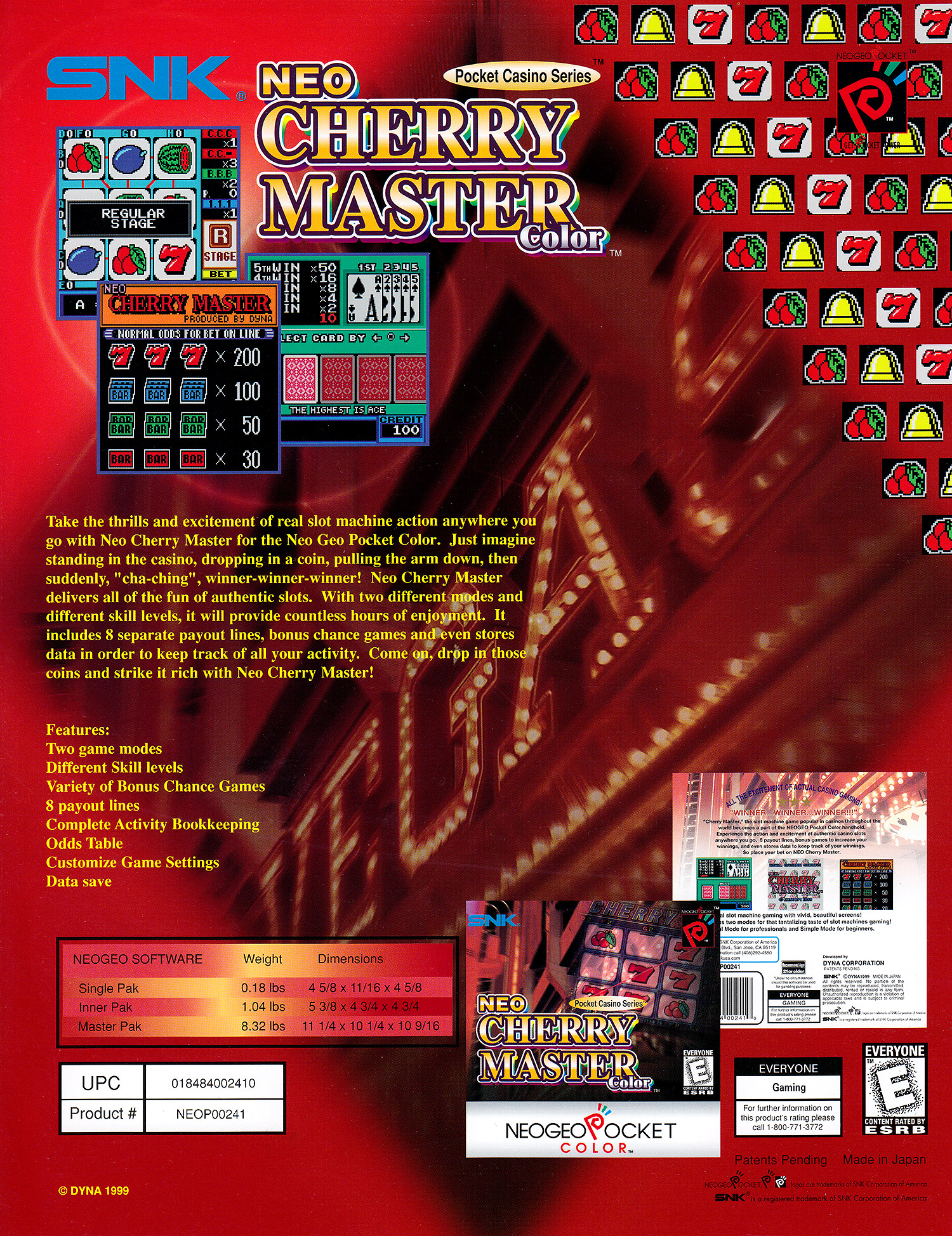
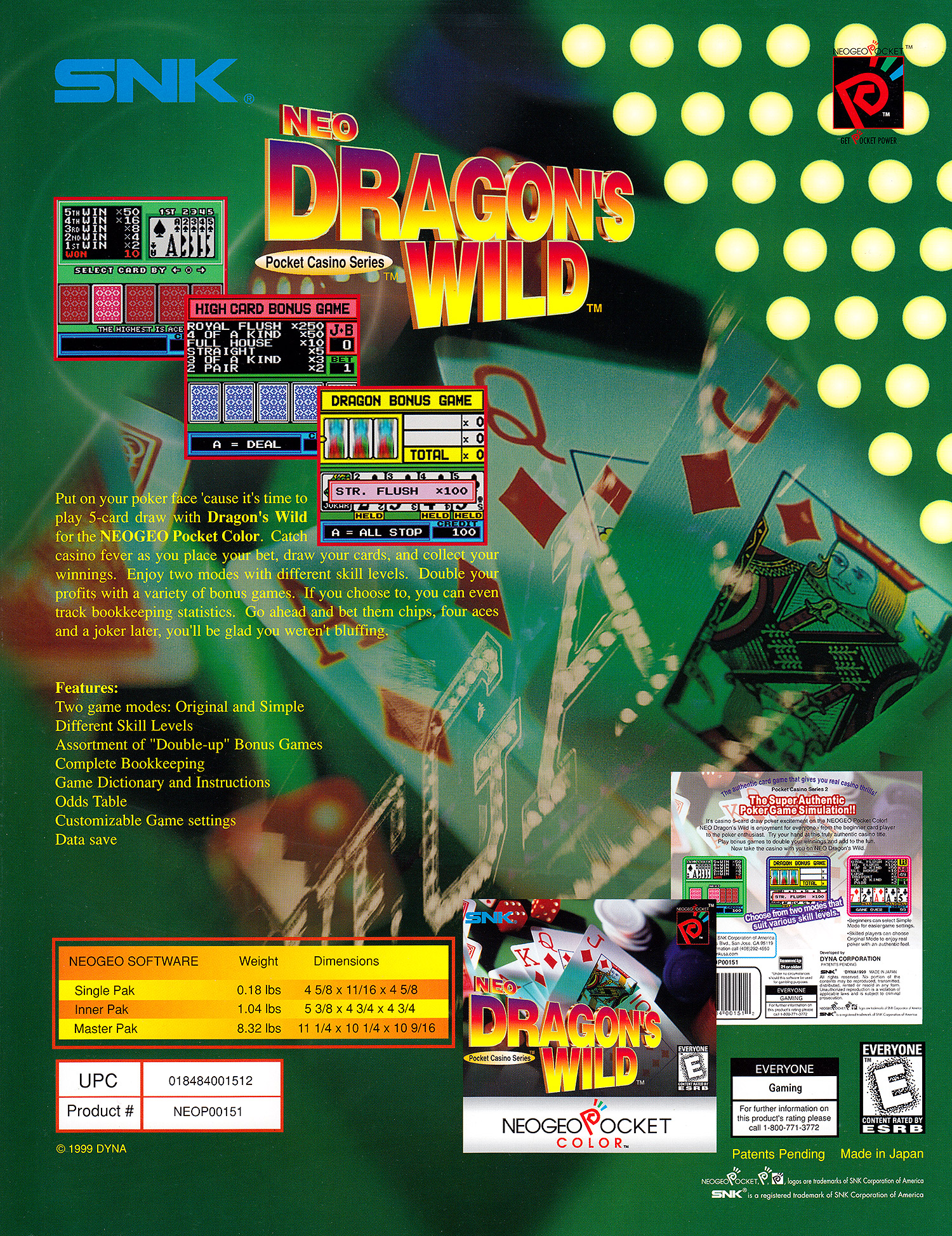
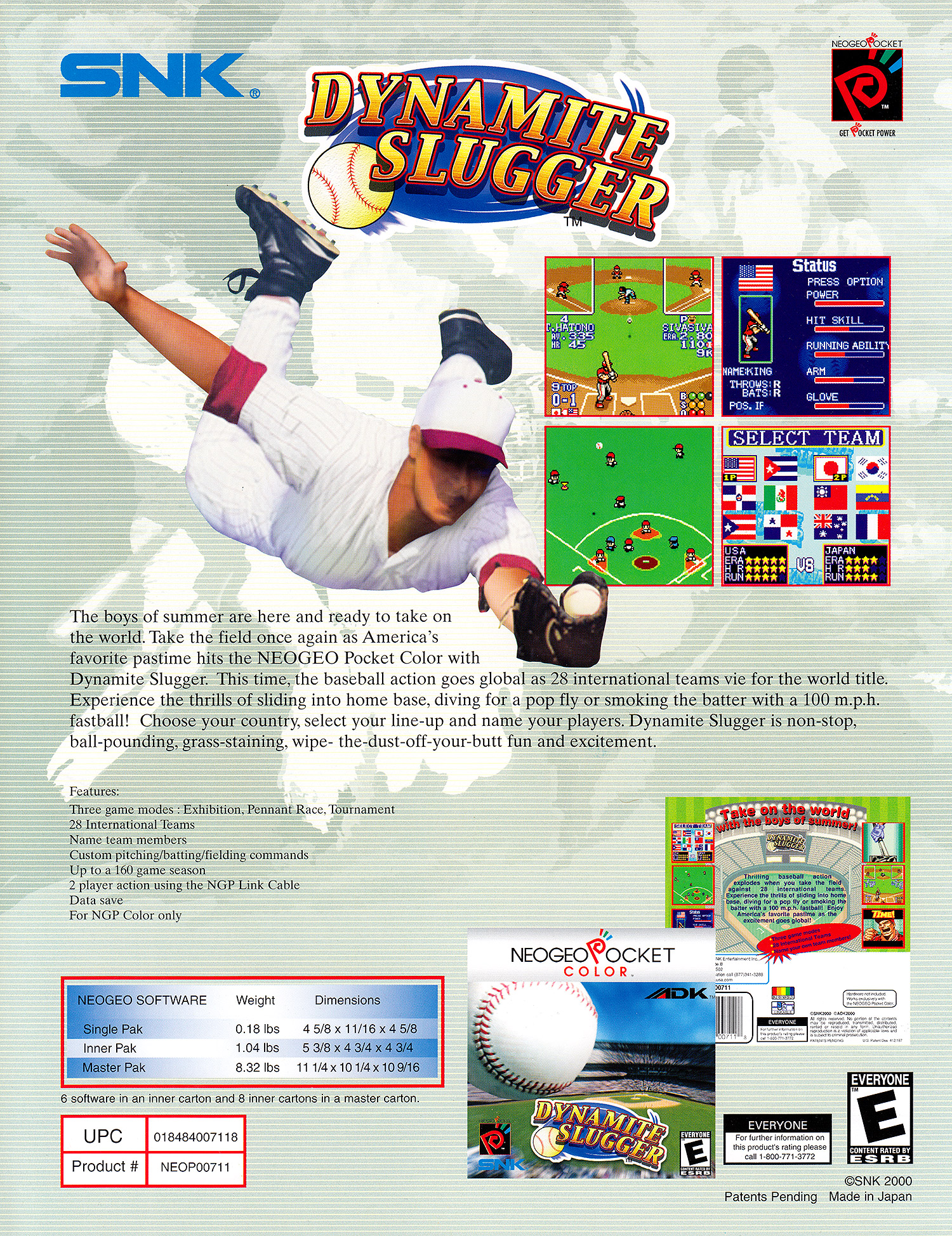
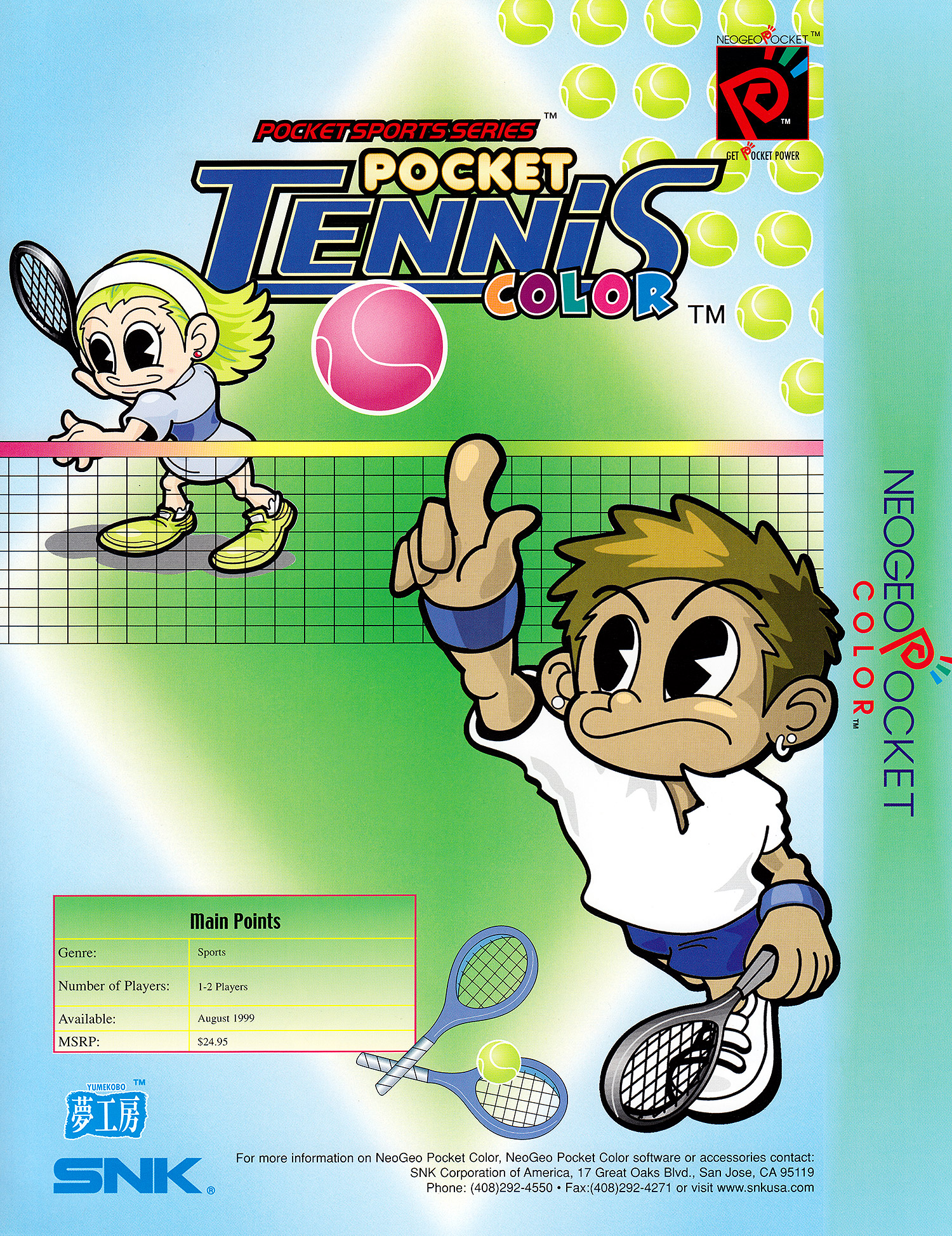
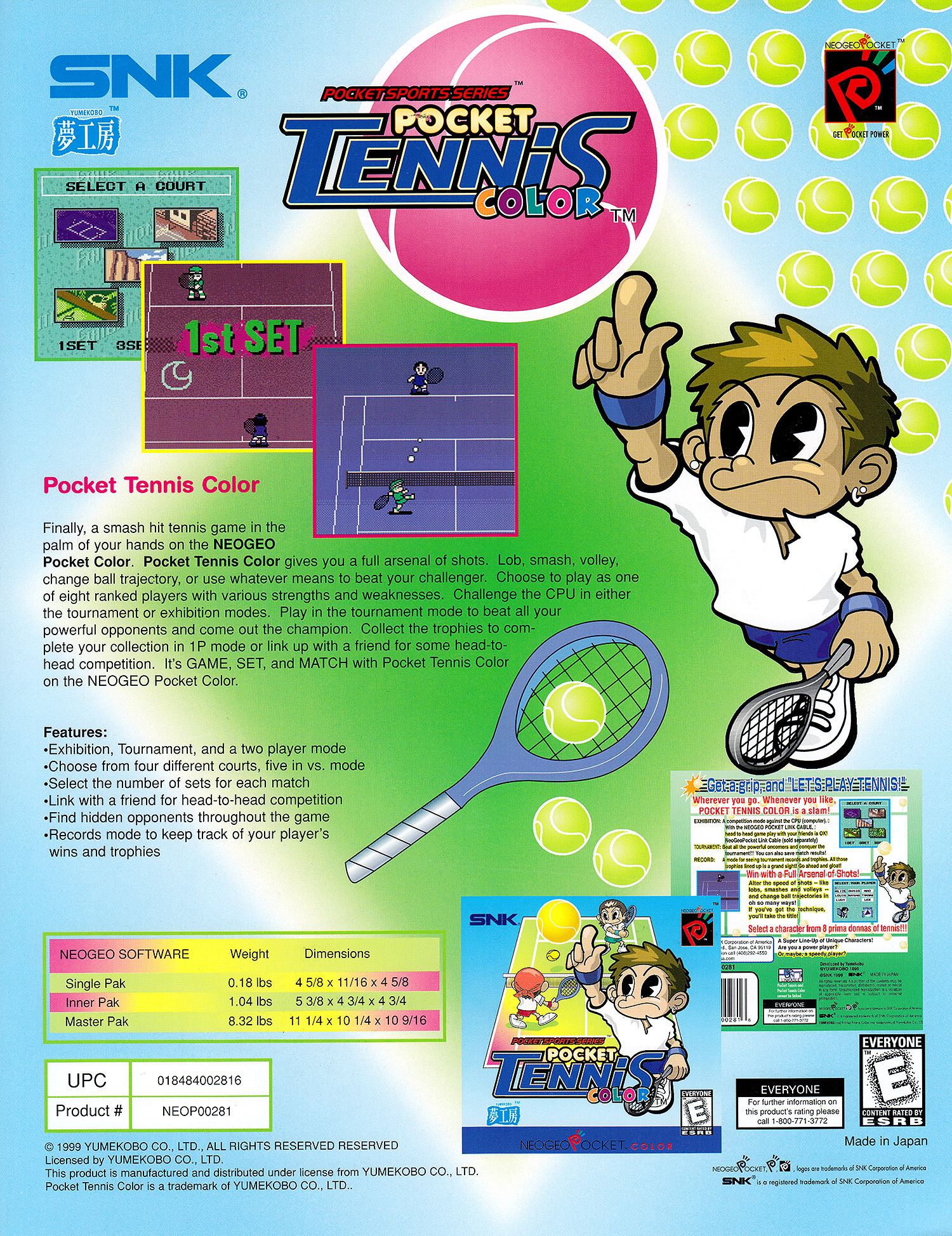
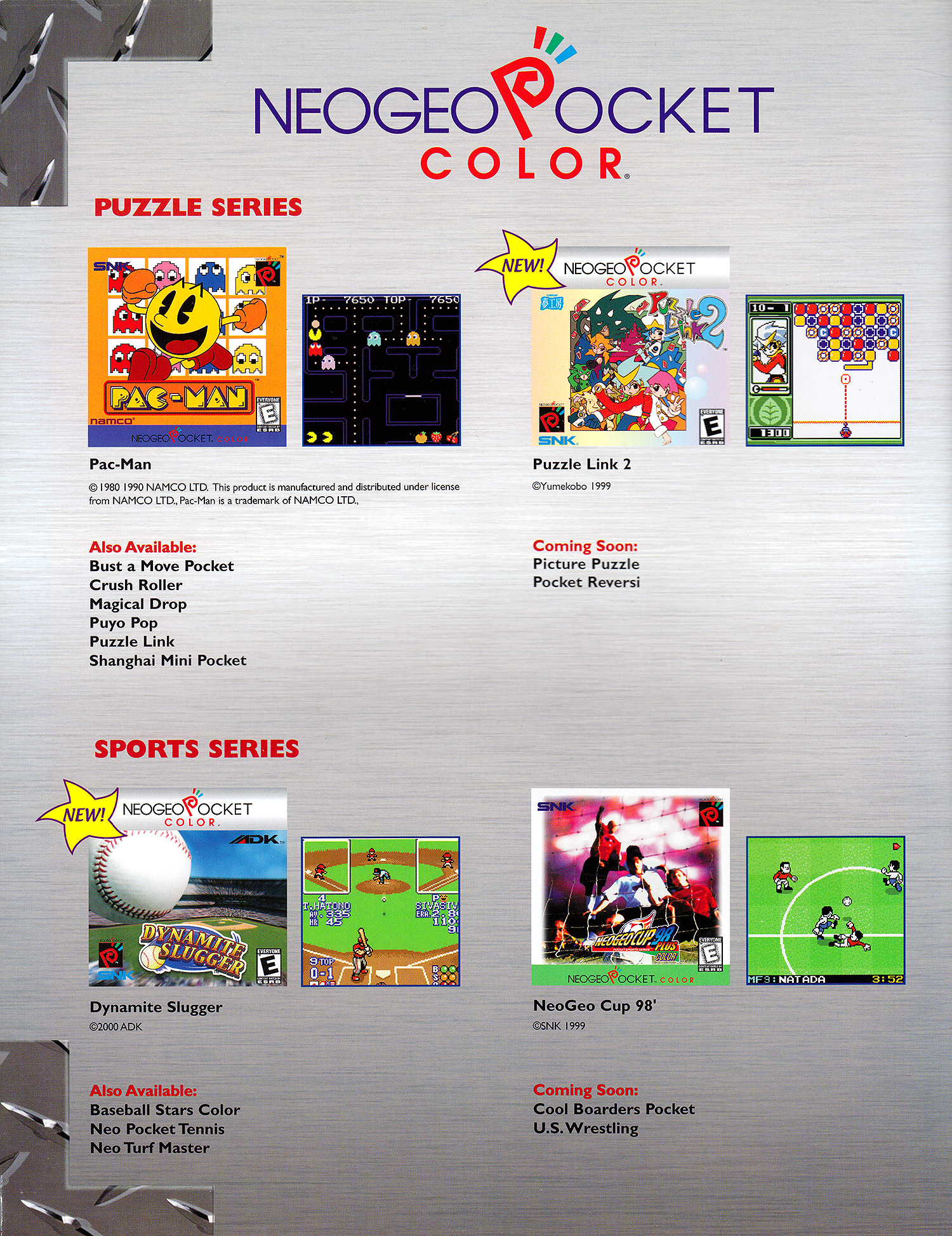
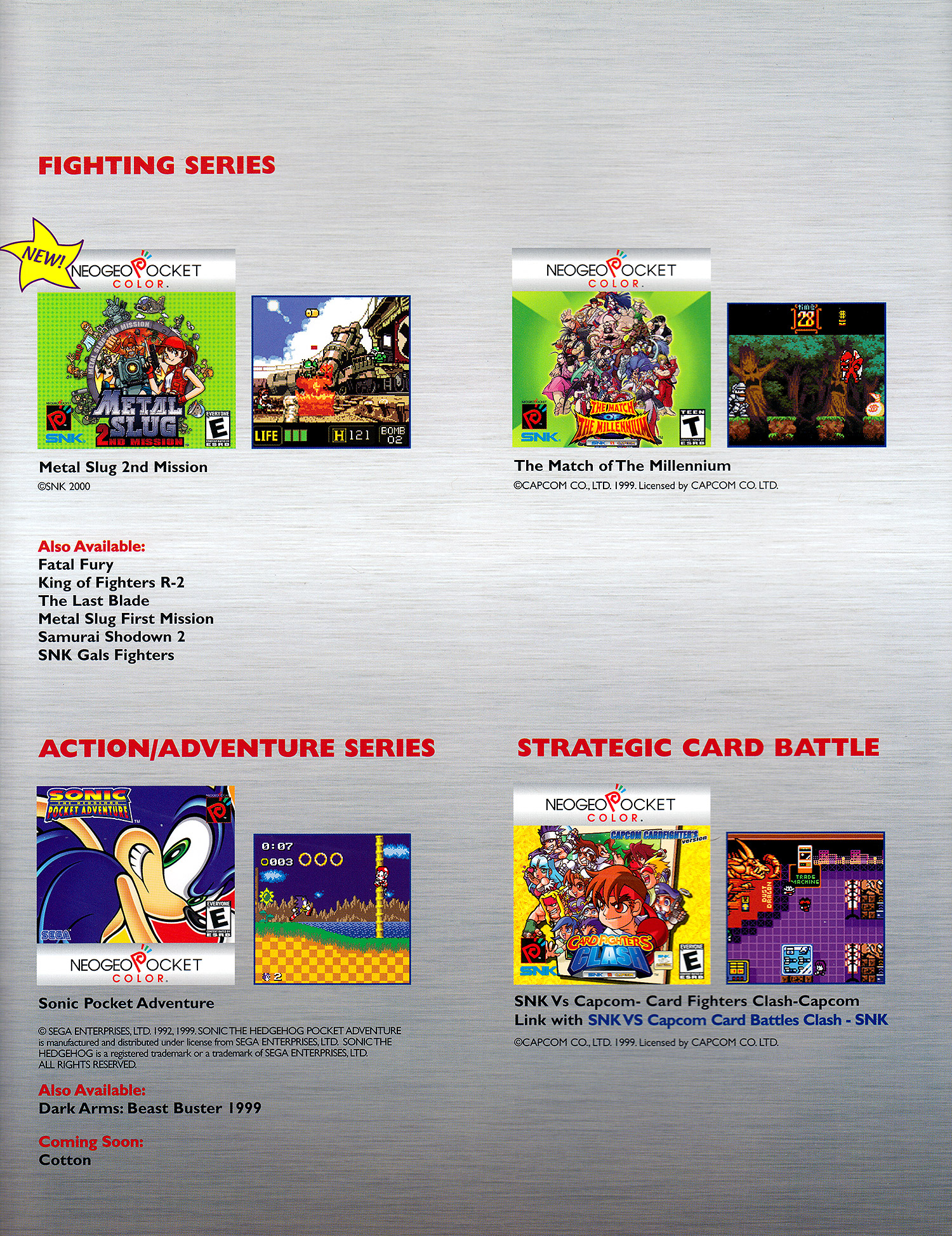
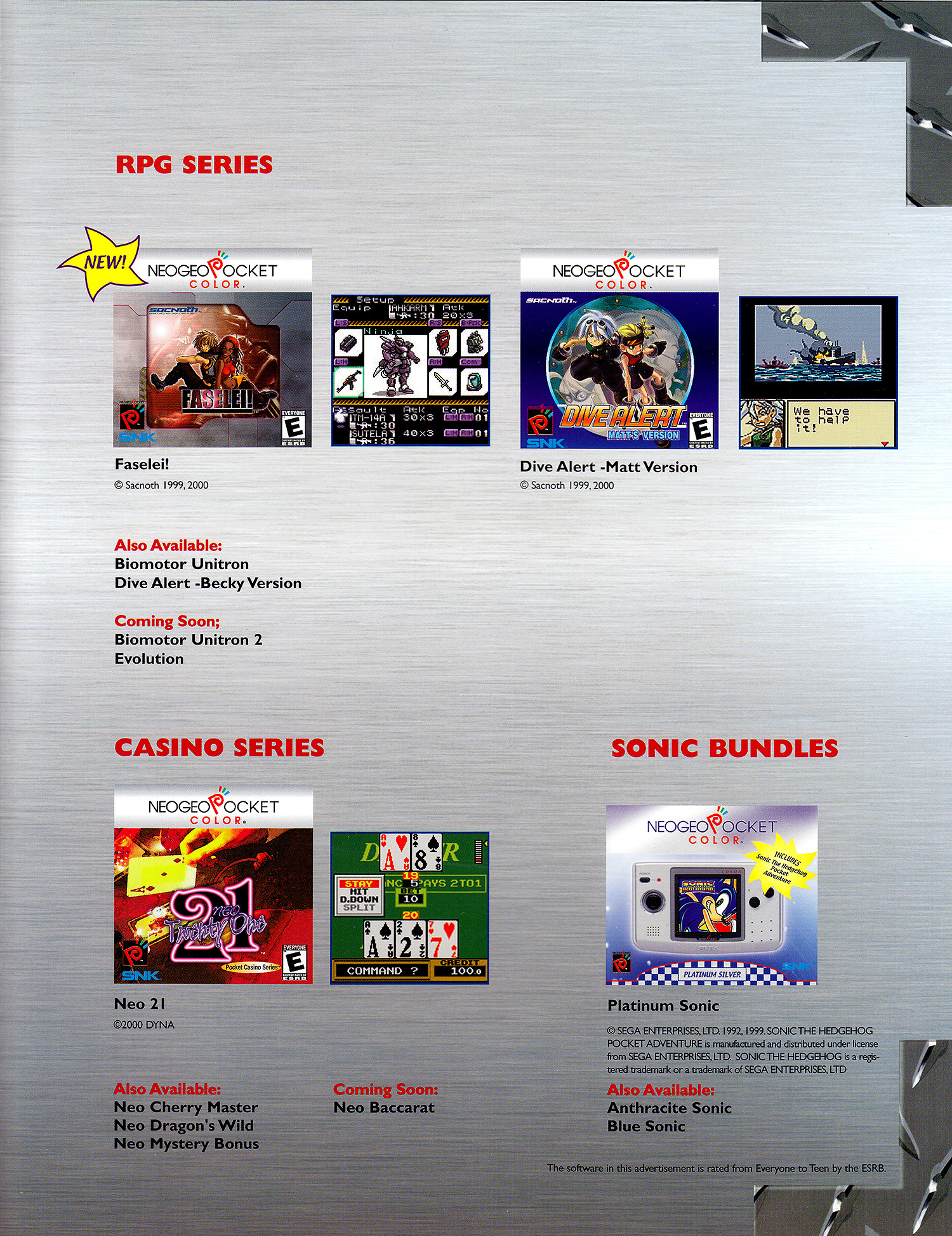
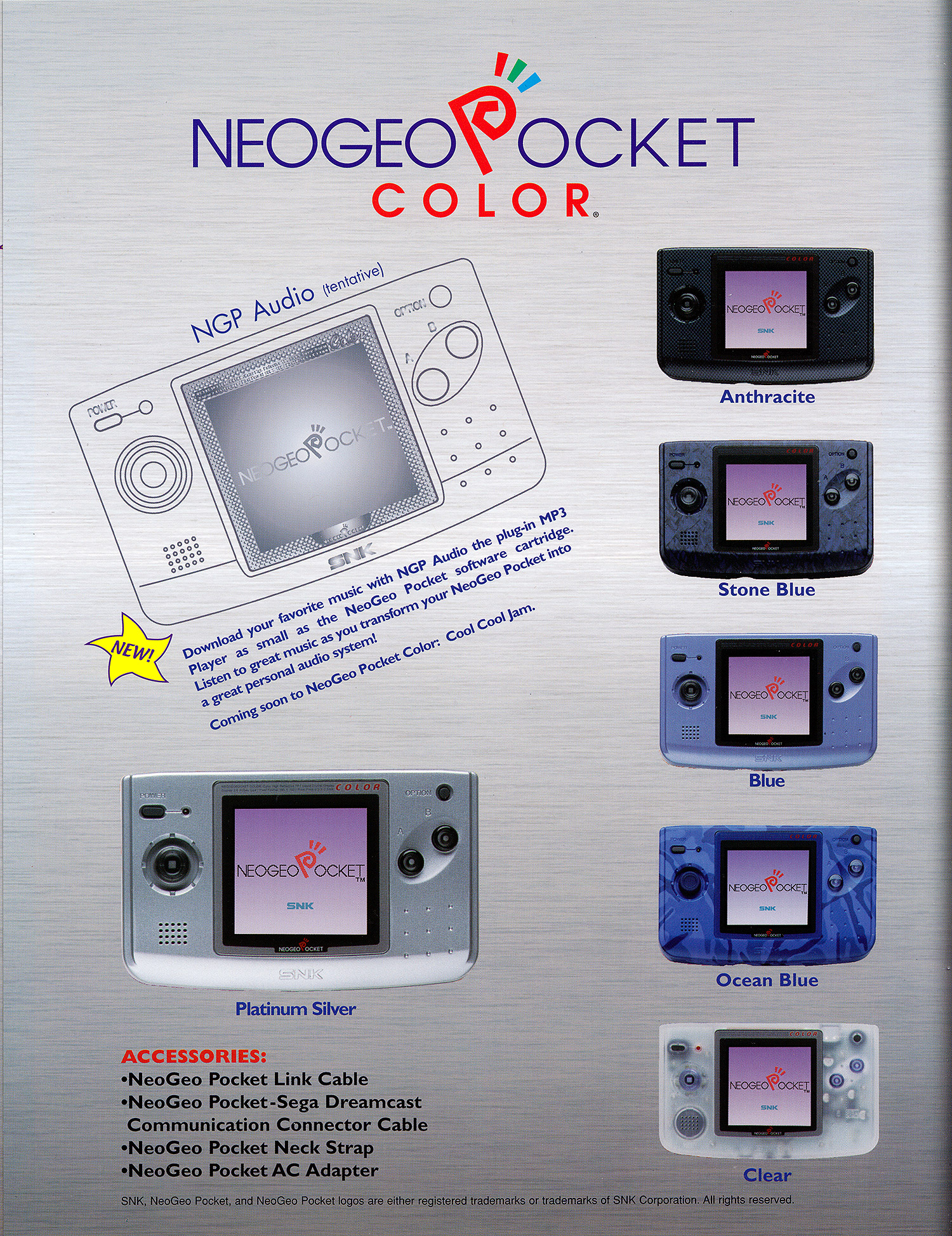
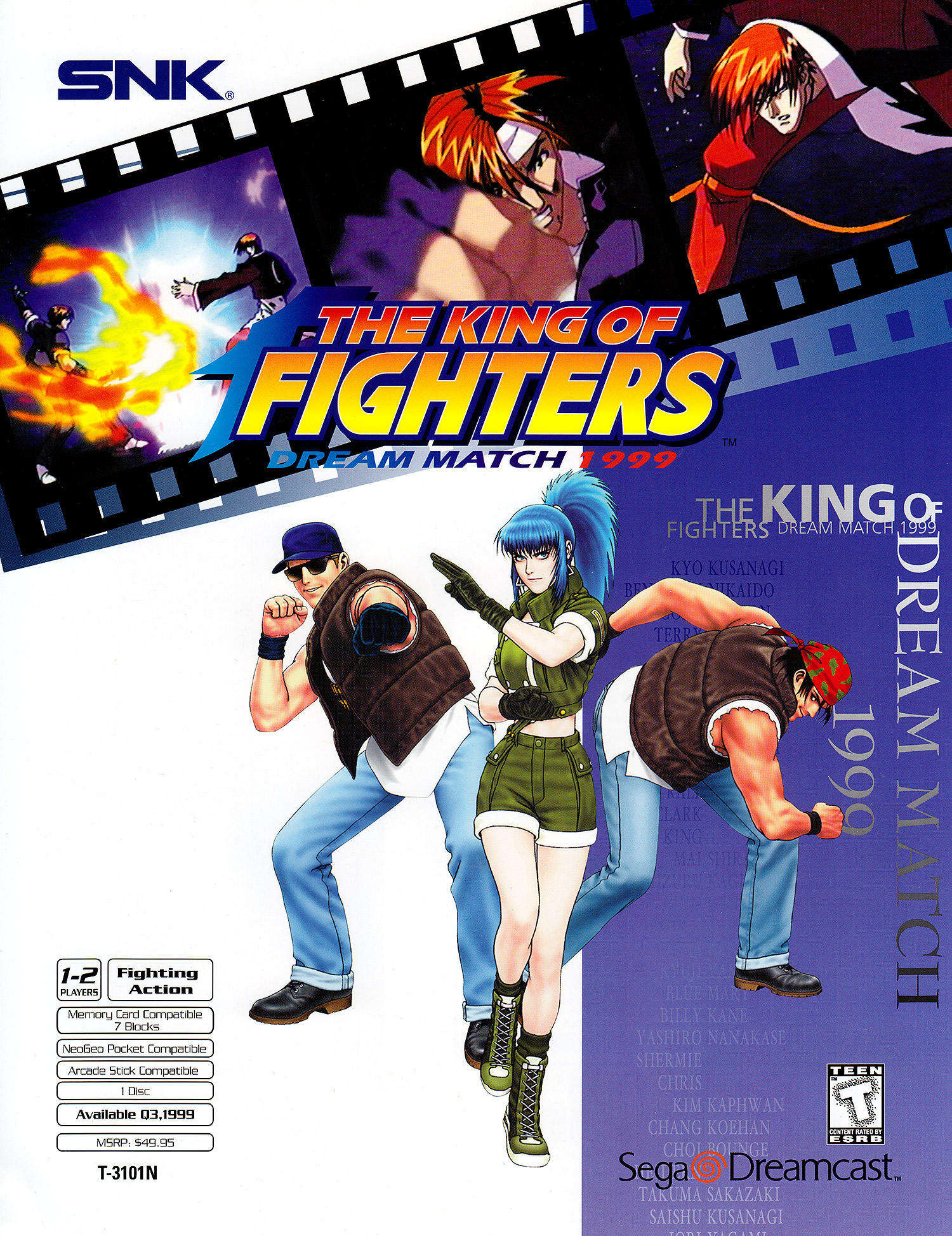
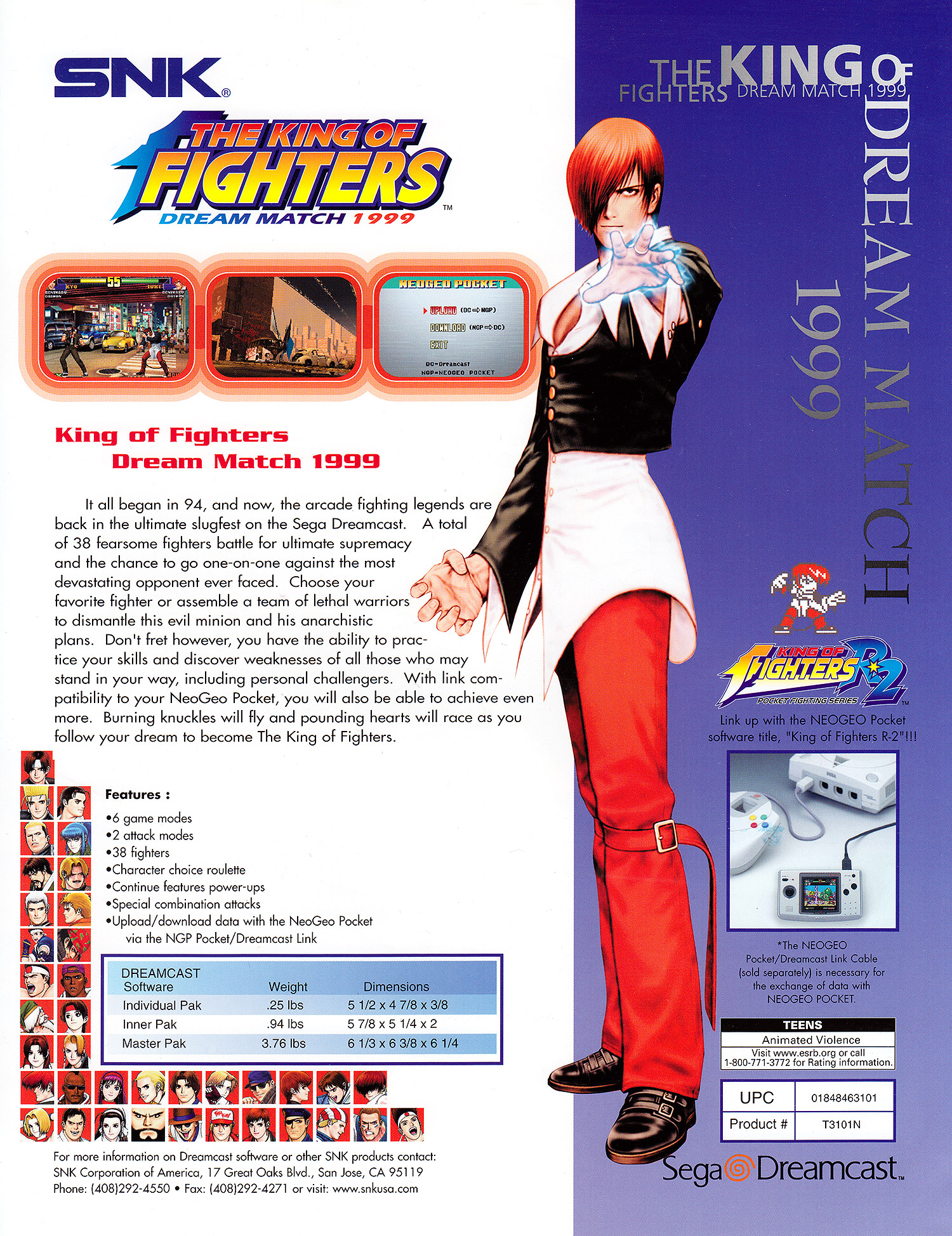
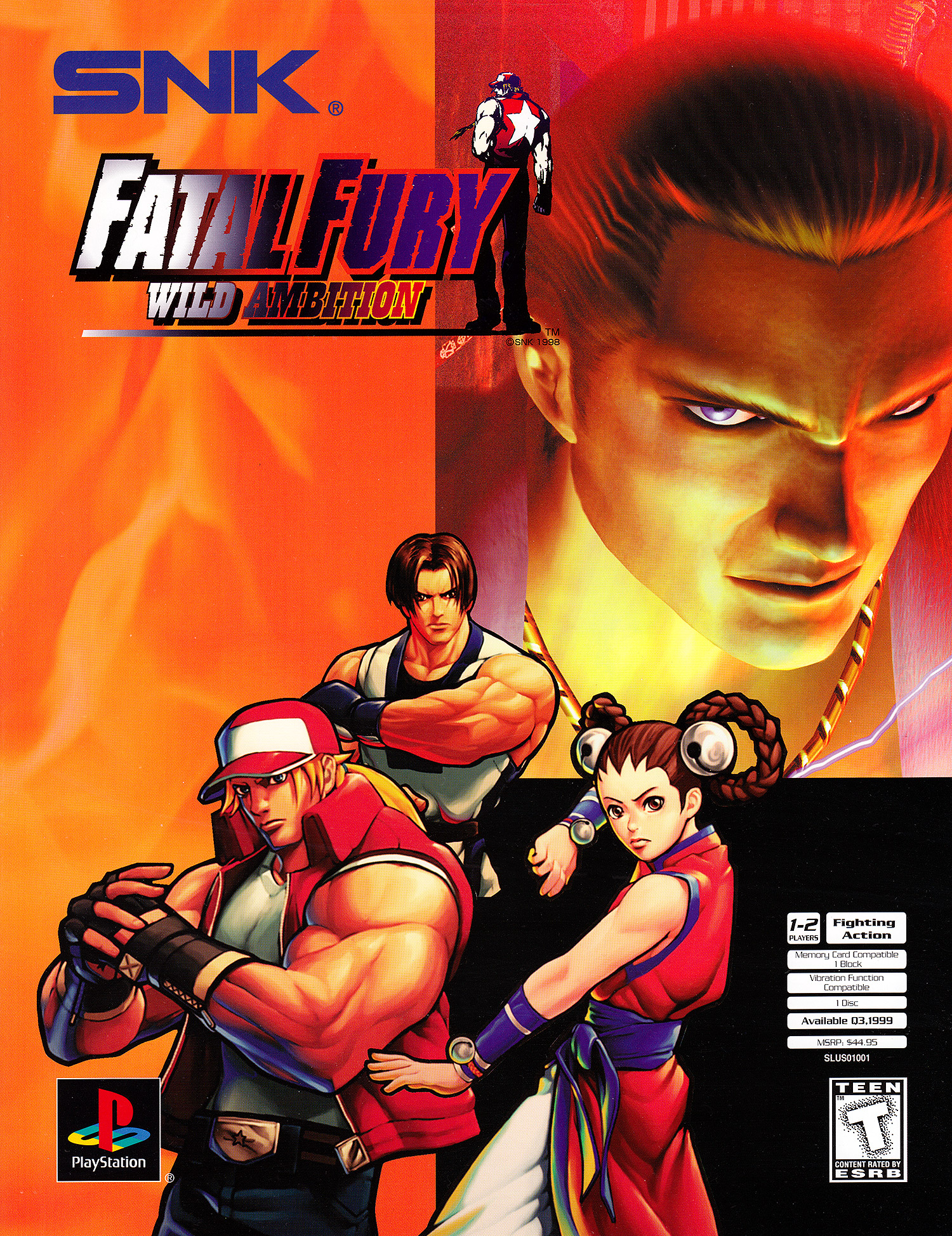
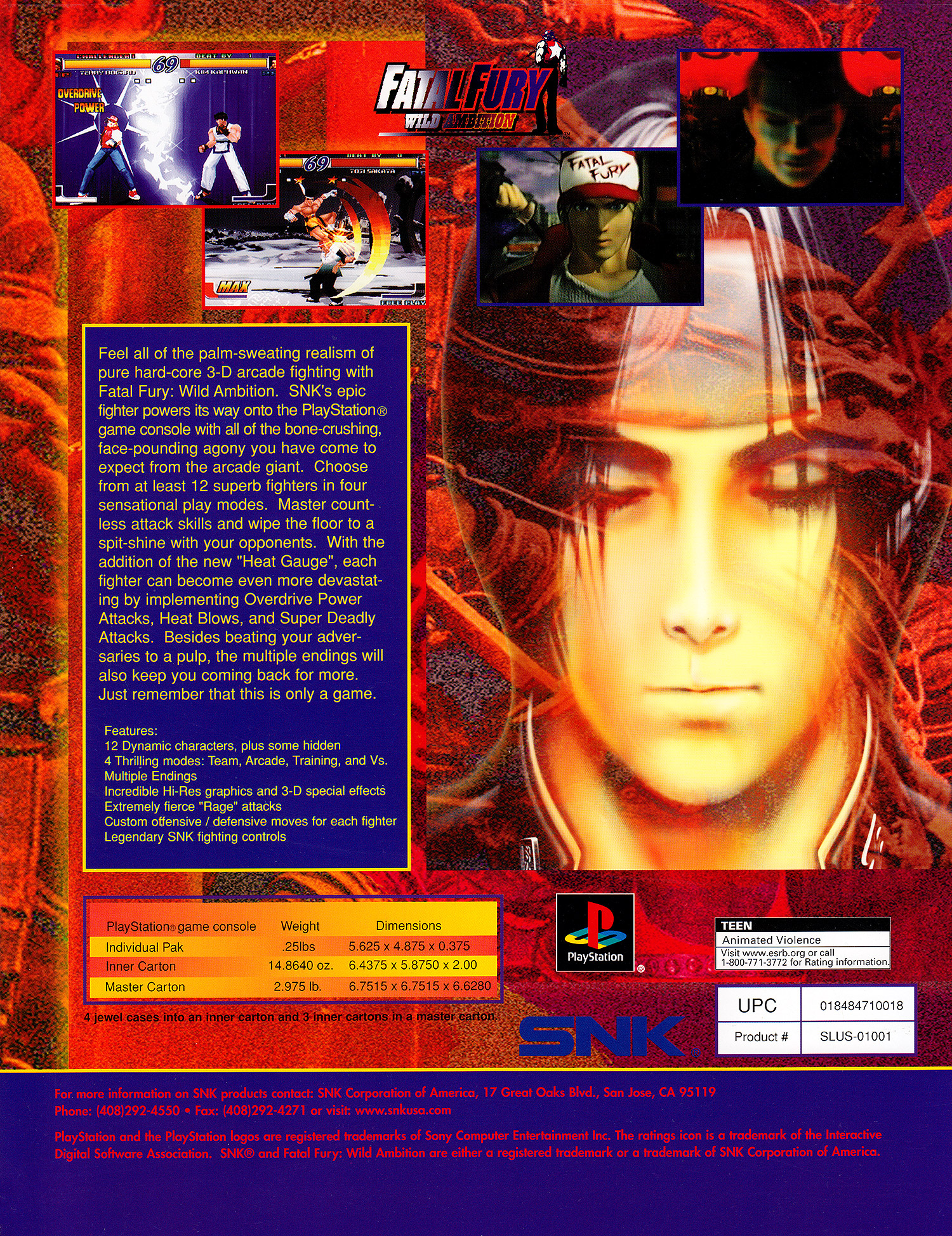
SNK Fliers from E3 1999

Resident Evil 2 Review

As a fan of Capcom’s Resident Evil series since the first game came out way back on the original PlayStation, I have two confessions to make. First: I hated Resident Evil 7. While it seemed like everyone under the sun was praising the “brave new direction” Capcom had taken the franchise in, all I saw was a project that aped the first-person always-being-chased style of gameplay that I think has been ruining the horror genre in recent years. And then, as Capcom seems ready to return us to a more classic era of Resident Evil, I have my second admission: I’ve always considered the original Resident Evil 2 to be far and away the most overrated chapter of the series.

I guess I could then also tell you that I quite enjoyed Resident Evil 6, but I’d like at least some of you to read the rest of this review.

Even if we don’t meet eye-to-eye opinion-wise, I’m sure we can at least all agree that Resident Evil has been having a bit of an identity crisis. As much as I loved (and still love) Resident Evil 4, it was the start of a shift to a more modern, action-focused formula that still kinda had zombies but also kinda didn’t. (And really, you could even see some of those shifts forming in Resident Evil 3.) The series would continue trying to find its footing until Resident Evil 6, which I totally admit was Capcom basically throwing their hands up in the air, giving us three different kinds of Resident Evil in one game, and then begging us to tell them which one we wanted. Side projects like Resident Evil Revelations at times felt like more nostalgic experiences, but they couldn’t shake that “less important side project” stigma that had once plagued Resident Evil: Code Veronica. And then, of course, we get to Resident Evil 7, which—no matter what I thought of it—undeniably threw a whole lot of tradition right out the window.

All of that history is important, because it leads up to one of the boldest statements I’ll probably make this year: This new Resident Evil 2remake may be the first real Resident Evil game we’ve ever gotten.

Resident Evil was a fantastic and incredibly groundbreaking game. Chris and Jill’s journey through an undead-infested mansion was as engrossing as it was exciting, and the game single-handedly made “survival horror” both an established genre and a household term. And yet, as brilliant as it was, you can’t convince me that it was the game the development team truly wanted to make. On a technical level, there were so many limitations hampering the storytelling and gameplay ideas. And, as much as some people obsess over the classic fixed camera positions and rendered backgrounds, moving around at awkward angles over flat JPEGs were compromises to put up with, not relish.

Every game since has either been hampered by technology, gameplay, or story, each missing the mark in one way or another from being a true expression of the soul of the Resident Evil series. At least, until now. Resident Evil 2started out as what I’d come to anticipate—a proper effort to bring a classic game into the modern era—but it didn’t take long before I started seeing it as something deeper. The more I played, the more I realized that I was playing the game my brain had always imagined those early PlayStation chapters to be. Nearly every single element here feels like beloved ingredients and modern technique mixed to a master level, leaving me assured that this is the Resident Evil 2we would have received 21 years ago had it only been possible.

It’s hard to decide where to even begin, but probably the thing that jumps out the most right away is the game’s visuals. There’s no denying that Resident Evil 2 looks good, and that its graphical improvements jointly boost the terror of roaming dark hallways or destroyed laboratories filled with the undead, but it’s far more than just polygon counts or texture quality. There’s a warmth and humanity to the graphics here that I don’t always see in other games, and I don’t know if that’s due to the RE Engine, the team’s choice in how to recreate those classic environments and enemies, the art style used, or all of the above.

I just adore how Resident Evil 2looks, especially when it comes to its cast. It’s funny that I wasn’t a bigger fan of the original back in the day, because both Leon and Claire would go on to be two of my favorite characters from the series (behind only Ms. Jill Valentine). The new character models bring the game’s heroes and villains to life like never before, and to my delight, Capcom continues the trend of giving its beloved characters wardrobe updates to fantastic results here. (Don’t you dare try to say Claire’s old outfit was better.) There’s other visual and audio bonuses as well, from a nice selection of unlockable and DLC costume changes (man, those Noir outfits) to a host of spoken language choices to the ability to swap out the remade sound effects and soundtrack for those from the original. That last option being a paid addition unless you’ve purchased the Deluxe Edition of Resident Evil 2 does admittedly sting a little, especially since it’s the only way you can hear “Resident Evil Two” announced on the starting screen like the lord above intended.

Gameplay-wise, Resident Evil 2 benefits from Capcom having had many years and numerous iterations to work out how Resident Evil games should play in the era of of third-person over-the-shoulder action games. Controlling both Leon and Claire feels responsive and gratifying, and for those times when combat is your only option, the game’s selection of weapons are now even more sadistically satisfying (with, surprisingly, my favorite now being the Spark Shot). There are two gameplay features I found myself missing, however: the option to head stomp zombies when they’re down on the floor, and the ability to dodge. Are they needed for what Resident Evil 2is trying to accomplish? Absolutely not. They’re still two modern-day niceties that I routinely wished I had, even if they may have made the game easier at times. There isan option that can take the place of dodging to some degree, however, and that’s subweapons. In addition to their trusty knives, Leon and Jill can pick up standard and flash grenades, and then spend one of their stock to escape from an enemy’s clutches when grabbed. While the knife is recoverable from zombies once they’re fully downed, it only has so many uses before it’ll break and need replacing. All of this results in a game that feels modern and fun to play, but which also never feels out of place when put side-by-side with elements that hark back to a more classic time for the series.

Borrowing an idea that first cropped up in the original version’s sequel, Resident Evil 2now also features the ability to mix different types of gunpowder to create more stock of a variety of ammo types. Speaking of picking up items, the trademark “zapping system” from the original game—where what you did playing through as Leon/Claire would then affect various things when running the second “B” playthrough as Claire/Leon—is no longer intact in the game. There’s still the push to see the story from both characters’ perspectives as one long experience though, and there will still be differences between both playthroughs depending on who you picked first—it’s just that those differences are no longer directly decided by your actions. If Resident Evil 2 loses a little something in that lessening of the game’s more dynamic elements, it then gains something back in its mapping system—which might legitimately be one of my favorite low-key upgrades in the game. Rooms are now color-coded to denote if you’re done with everything there is to do or get there, and when you’ve found but not picked up items, the map displays icons to tell you specifically what is still waiting where. Look, I’m too old and I play too many games to have to remember the locations of everything I’ve found, so every game should give me a mapping system like this.

The various changes and upgrades Resident Evil 2 offers brings us to its big sticking point, and that’s that you should consider it more of a reimagining than a remake. While it’s not quite 2004 Dawn of the Dead compared to 1978 Dawn of the Dead, locations, scenarios, and other elements aren’t always going to be how you remember them, and that could end up being disappointing for some of the more hardcore fans of the original. Where these changes have the most effect comes in the way of enemies, as some have undergone some reworking while others simply no longer exist. For me, I’m totally on board with making changes that better serve this update vision of Resident Evil 2 versus having a slavish commitment to keeping everything the way it was. And yet, I do admit that I felt the smaller enemy variety as I played. If those removed enemies really did go against the more “realistic” vision the team had for this project, then a few more new ideas would have gone a long way.

In the end, however, that—and the other minor complaints I had here and there—did nothing to lessen the unadulterated joy and emotional attachment I felt during my entire playthrough of Resident Evil 2. More than just a new chapter in Capcom’s legendary franchise, this is the culmination of said franchise’s 22 years of existence, and the near-perfect combination of retaining everything we once loved about Resident Evil while trying to figure out how to move those things into the future. With the stark contrast between Resident Evil 7 and Resident Evil 2, I now have absolutely no idea where Capcom is going to go next—but I do know that the world has just been shown how much life is still left in a series that many were saying had itself become a shambling corpse.

Eight Great Games I Missed in 2018—And You Probably Did Too

When I was a child, I bemoaned how few games companies were releasing, always feeling like I was burning through titles faster than they could be created. Nowadays, I’d describe my feelings more as being that of a person buried under a million pounds of snow, where it’s become frightening obvious that rescue will never come. For every game I play or even simply pay attention to at this point, nine more are waiting out there, desperate to win a moment of my attention before the next 10 come along to replace them in our collective consciousness.

So, now that the year is fully behind us, I wanted to take a moment to look back at eight of the games I missed in 2018—be it titles I simply didn’t have time to play, started but never properly went back to, or which I (and the rest of the staff here at EGM) weren’t able to have the chance to check out during the course of the year. And, given that I’m sure many of you out there also missed out on some of these releases, it’ll be a good chance for all of us to make sure we don’t forget about them.

#1 Monster Boy and the Cursed Kingdom

One of my biggest regrets of 2018 was not being able to do a review for Monster Boy and the Cursed Kingdom, which was the case due to the one-two punch of bad timing (right before we left for the holidays) and having another game I was already committed to. As a longtime fan of the Wonder Boy series, I was admittedly mixed on Monster Boyinitially. While it seemed to be a labor of love that included the assistance of Wonder Boy series creator Ryuichi Nishizawa and some top-name Japanese video game music talent, I really couldn’t get over its art style. Well, that art style was thankfully changed for the better due to fan feedback, and the rest of the game ended up pretty darn fantastic. In an era when the various elements of side-scrolling action adventures are so often credited to Metroid and Castlevania, it’s easy to forget just how much the Wonder Boy games contributed to the genre. Monster Boy and the Cursed Kingdom is a perfect reminder of the legacy of the franchise it acts as a spiritual sequel to, and it’s a fantastic game that I’m betting too many people ended up missing out on.

#2 428: Shibuya Scramble

When Spike Chunsoft announced 428: Shibuya Scramblefor Western release in early March 2017, it came as quite a shock, as it was one of those titles that I swore would forever stay stuck in its home country of Japan. And yet, in early September of last year, it arrived on our shores—and I missed out on it. Most of the blame for why actually rests on the shoulders of the game’s publisher and developer Spike Chunsoft, as it—just a week before—also released Fire Pro Wrestling World. When I finally had the time to sink some hours into the game months later, I quickly became enthralled with 428’s unique twist on visual novels. Existing as a niche title in an already niche genre, the game uses real-life actors and locations to dive into a detective drama seen through the eyes of a variety of protagonists. More than any other game on my list, I’m certain that 428: Shibuya Scrambleis the kind of experience that a whole lot of people will overlook—which is a shame, because it’s a gripping story told in a way most other games would never think to attempt.

#3 Fast Striker

I’m bending the rules slightly for Fast Striker, given its original release came before 2018. However, the big catch to its 2010 debut was that the game launched on both the NeoGeo and Sega Dreamcast, neither of which are really active systems for anyone but weirdos like myself. So, getting PlayStation 4 and PlayStation Vita ports last year meant that the game would now be available to a much wider audience, and I’m really hoping that a lot of you took advantage of that. NG:DEV.TEAM has built up a reputation for crafting stellar indie hits based on classic arcade concepts, and Fast Striker is no exception. The vertical-scrolling bullet hell shooter is a ton of fun to play, giving players a variety of difficulty levels and deep scoring mechanics across its six levels. I’ve never been a fan of the “rendered sprites” era of the NeoGeo that Fast Strikers attempts to emulate, but I can forgive that one pet peeve given the quality level of the rest of the game.

#4 Johnny Turbo’s Arcade: Night Slashers

Night Slashers is the second game on this list that isn’t technically a 2018 release, as Data East’s original arcade version first hit in 1993. The thing about this zombie-focused beat ‘em up, however, is that it would then take 25 years for it to see an eventual home console release. While Capcom’s Armored Warriors and Battle Circuit were the “lost” genre entries that got the most attention for finally coming home in 2018, Night Slashers still deserves some attention in its own right. Sure, it might not have the gameplay finesse of Capcom’s offerings, but its B-movie atmosphere and surprising high level of gore (for a 16-bit title) give it a wonderfully campy charm. Really, the only complaint I have about the game is the same I have for all of the Johnny Turbo’s Arcade releases: the stubborn refusal to give us any sort of option to play without any visual filters. Though I didn’t personally miss out on Night Slashers last year, it was a title that absolutely went under the radar, so I think it deserves another shot to get noticed.

#5 Omen of Sorrow

While it’s easy to love the Marvel vs Capcoms, Samurai Shodowns, Killer Instincts, or Guilty Gears of the world, there’s something to be said for the lesser-known, lower-popularity fighting games that have cropped up over the course of the genre’s life. Back in the days of the Sega Saturn, I came to love and appreciate stuff like Groove on Fightand Asuka 120% Burning Fest Limited, and that was the mindset I came into Omen of Sorrowwith. Let’s just get it out there: This isn’t a game that could ever compete with Street Fighter V, Mortal Kombat 11 or the other big-name fighters in any regard. And yet, it has the solid core aspects of a fighting game that has obviously come from a group of passionate fans. It’s easy to see the influence gained not only from the bigger fighting games but also the Japanese doujinscene, and while gameplay might feel a little rough at first, I found a surprising layer of fighting satisfaction when I took the time to dig a bit deeper. If I had to find an easy way to explain Omen of Sorrow, I’d say it feels like the kind of fighter a group of metalhead teenage guys would make—and I say that in the most complimentary way possible.

#6 The 25th Ward: The Silver Case

I have a weird relationship with developer Goichi “Suda51” Suda that could best be described as this: the more his games annoy me, the more I seem to like them. While I’ve been cold on his well-received efforts like Lollipop Chainsaw and No More Heroes, my absolute favorite release of his is the Nintendo DS version of Flower, Sun, and Rain—a game I’m not sure I’d ever actually recommend to another human being. So, when I see the 2018 remake of his 1999 PlayStation release The 25th Ward: The Silver Casecurrently sitting at a 68 on Metacritic, I’m not surprised it’s one of his games that ended up catching my interest. As part of Suda51’s “Kill the Past” universe, and the follow-up to the original The Silver CaseThe 25th Ward can be an incredibly weird adventure even by his standards, with story elements, exploration, and puzzles that are quite likely to either perplex or piss off a decent amount of players. That’s one of the things that makes the game so compelling though: a freedom in game design that most developers would never be brave enough to try. No matter if you end up loving, hating, or being completely ambivalent to The 25th Ward: The Silver Case, it can at least promise an experience you simply won’t get almost anywhere else.

#7 Nobunaga’s Ambition: Taishi

Long before it became known for pitting players against thousands of foes, or for its merger with Tecmo, Koei had a special place in my heart thanks to its line of historical simulators. First discovering them on the NES, it was then Romance of the Three Kingdoms II on Genesis where I really came to appreciate the complexity of trying to bring together the clans of ancient east Asia—and I’ve been a fan ever since. Thankfully, between the bouncing breasts and bountiful battles of its most popular modern-era releases, Koei Tecmo is still chugging away at some of its classic history-focused franchises. Nobunaga’s Ambition: Taishiis the latest in that line, tasking players with unifying all of Japan during some of its more turbulent times. Would-be rulers have a lot to juggle here, from improving the land and lives of people in their home territories, to forging treaties and alliances with other clans, to going to war when words simply aren’t enough. Nobunaga’s Ambition: Taishi isn’t my favorite release in the series from what I’ve had time to play of the game so far, as some of its elements feel a bit too simplified over previous chapters. That does, however, mean it could be one of the better places for new players to jump into the franchise. And honestly, as a longtime fan, I’m just glad we’re still getting the games in English—or at all—at this point.

#8 Jake Hunter: Ghost of the Dusk

For the final entry on my list, I wanted to pick a game that I truly missed in 2018. As in, something I didn’t review, or write about in some other way, or beat, or even touch. And, for that, the game that most came to mind was Jake Hunter: Ghost of the Dusk—in part because the series is a perfect example of something that nearly all of us have missed. Starting its life as the Data East release Tantei Jinguuji Saburo: Shinjuku Chuokouen Satsujin Jikenon the Famicom Disk System way back in 1987, the franchise has seen over 20 chapters across a variety of platforms during its existence. And here in the West? Prior to Ghost in the Dusk, we received one of the games: Inishie no Kioku, first released as the cut-down Jake Hunter: Detective Chronicles, and then later uncut as Jake Hunter Detective Story: Memories of the Past. In an era when visual novels have carved out a large niche audience, and “mystery adventures” like Phoenix Wright and Danganronpa are beloved by many, you’d think detective dramas featuring a mix of storytelling, investigation, and problem solving would be getting more attention. Mix in the fact that this was a 3DS-only release at a time when people won’t shut up about demanding everything be on the Switch, and Jake Hunter: Ghost of the Dusk is a game that went unplayed by way too many people—including myself.

Remembering the Big Sale

If there is one thread of mine that you read, make it this one—because you will hear no bigger tale of heartbreak and loss this year than what I am about to tell you. I’ve learned where all my missing games went, and it ain’t pretty.

In the early summer of 2001, I had the chance to attend a month-long exchange program at a university in Osaka, Japan. It was one of the best times I’d had in years, and I fell in love not only with the school and the area, but the entirety of Osaka. The next year, I decided that I wanted to try to do the exchange program again, just as an easier & cheaper way to get to spend another month in Osaka/Japan. So I, and a local friend who had also gone the previous year, both applied again, and crossed our fingers.

A few weeks later, my friend calls with some shocking news: we hadn’t been accepted for the month exchange, but instead were being offered scholarships through the school to actually attend longer-term. It was both a gigantic shock & one of the most exciting moments of my life.

There was but one problem: we were given this chance just over three months before we’d be having to leave. We had THREE MONTHS to not only work out moving to a new country, but to also figure out how to survive there monetarily.

While the scholarship would pay for school, our student apartments, health insurance, and then have just enough left over for a 2002-era cellphone, we had to figure out how we were going to pay for everything else while also not being allowed to work in the country.

CAN YOU SEE WHERE THIS IS GOING?

I’d started feeling some weird suspicions about the games I was missing, so last night I decided to dig through old emails I still have from that period—and started to piece together the answer. An answer that I’d completely deleted any memory of from my head.

In my desperation to have ANY money on-hand to add to my meager savings at the time, I wrote up a list of nearly every single video game I owned, and put the list up on the internet in order to sell off my history in gaming piece by piece.

There IS one thing I remembered about the sale: this was the point at which I sold the entirety of my Turbo and NeoGeo Pocket collections.

Turbo + CD + tap + 5 pads + TurboDuo + tap + 5 pads + a ton of games.

Amazing NGPC collection with tons of rare titles.

Both soon gone.

remember both of those, because they hurt. I always had a fondness for both, and I knew that getting rid of every single piece of both collections was a drastic step. My brain, however, COMPLETELY blocked out any recognition of the other pillaging I’d do of my collection.

If you’re curious, this is the actual, original sale list I put together, which I also came across. It’s not totally complete, though, as I broke off some of the more rarer titles and sold them separately. (See the list at the bottom of this post.)

So, let’s see some of the things I did!

Beloved SNES games? Meh! There goes—all complete in box—things like Chrono Trigger for $35, Final Fantasy 3 for $30, Super Metroid for $20, Harvest Moon for $50, and the original Lufia for $25.

My favorite RPG series Phantasy Star? Eh, sell 2 & 4 each for $20. Let’s then trash my Genesis collection—on of my favorite consoles ever—further by selling Thunder Force 3 for $10, Gunstar Heroes for $20, Wonder Boy in Monster World for $10, and Jpn Monster World IV for $35.

Now, as I begin to clean the gun that I’m going to use to shoot myself, let’s get to the fun stuff.

Starting lower, we’ve got Dragon Warrior 3 for $20 and Dragon Warrior 4 for $25. Eh, could have been worse.

Then, how about Guardian Heroes for Saturn for $50? Oh.

NeoGeo AES Last Blade for $170? Oh no.

NeoGeo AES Metal Slug 2 for $350? OH NO.

Magic Knight Rayearth US Saturn, bundled together with Panzer Dragoon II US Saturn, for $80. Ha haha.

Cotton US TurboCD for $35? Hehehe.

US Keio’s Flying Squadron for $70?!?

COMPLETE NES LITTLE SAMSON FOR FIVE GOD-DAMNED US DOLLARS?!?

(However, I still can’t account for everything, so a few things—like my copy of Snatcher, Metal Gear on NES, etc—have to be somewhere I just haven’t looked yet.)

Sure, the “what I could sell those for now” part hurts—more so now having money-eating twins—but more than that, it’s the fact that some games I dearly loved & really wanted to keep are now gone. Especially the Genesis stuff—that really hurts, definitely with the Mega SG coming.

Some games that meant a lot to me as a child I now don’t have, and some games I’d love to someday share with my children in the “proper” way I now won’t have. I was desperate for cash for an amazing opportunity, so I can’t be too harsh on that younger me—but it does make me sad.

Now, all I can do is just shrug my shoulders and laugh—because it’s really all I can do. Though, in the end, maybe it’s also a little freeing.

Maybe now I can let go of those “collections” mentally & emotionally, and just be happy with Hamster re-releases or classic consoles or Everdrives or whatever. None of those games are gone from the world—they’re still out there, waiting for me to return to them someday.

Still—you know? It stings. Some of those games had profound affects on me as a kid, shaping my tastes or giving me stories / characters I’d come to love. I wish I’d been a bit more selective in what I sold. Especially the Genesis games, man.

Don’t sell the Genesis stuff Mollie!

WAIT! I thought I was done, but let’s add a few more logs to the pain fire. Burning Rangers—I don’t even remember having that—I sold for $40. Unopened Herc’s Adventure for Saturn? $25. Then also on Saturn we had Enemy Zero for $15, and Shining the Holy Ark for $22.

Then, Zillion and Zillion 2 on Master System, each for $8. Those aren’t really all that expensive now, but those were games that were pretty near to my heart, and two more examples of games I was CERTAIN I’d have never sold.


Systems
----------------------------------------------------------------------------

Famicom ......................................................... Make Offer
Japanese Famicom (NES), Famicom Disk Drive, Game Doctor 64 (memory upgrade for 
FDD), misc. assortment of disc (don't promise that any of them work, as some 
didn't work when I got them, but I know at least one or two of them do), RF 
cable, original box and some manuals for both Famicom and FDD. Comes with cart 
games 211 in 1, Ice Climber, Elevator Action

NeoGeo Pocket Color ............................................. Make Offer
NeoGeo Pocket Color US unit, Worm light, official SNK A/C adapter, official SNK 
link cable, official NGPC vinyl carry case (gotten from E3), official SNK "Neo 
Geo" baseball cap (gotten from E3), original box and booklets.

NeoGeo Home Cart System ......................................... Make Offer
Comes with original box (so so condition), AC adapter, mono RCA video cord,
two NeoGeo joysticks, and two Neo-CD style controllers. I also have two
arcade-quality joysticks that can be part of this package - they are large,
so shipping will be quite a bit higher.

NeoGeo One-slot MVS Board ....................................... Make Offer
NeoGeo arcade system board, one slot model. No additional cables or hardware
other than the board. Includes: Fatal Fury 3, Real Bout Fatal Fury Special,
Art of Fighting 3, Samurai Shodown 4. I also have two arcade-quality joysticks 
that can be part of this package - they are large, so shipping will be quite a 
bit higher. 

TurboGrafx-16 + CD ............................................. Make Offer
TG-16, TurboCD, Original plastic TG16 + CD carry case (that came with the CD 
unit), TurboTap, 5 Turbo pads (one occasionally sticks when pushing left a bit), AC adapter, Y's Books I & II. No A/V cable included, but cable needed is 
standard RCA red/yellow/white cable. A/C plug on system end is sometimes a bit 
touchy to get positioned right, but unit works 100% fine. One of the hinges on 
the carry case is broken, but when closed the case still works fine.

Sega Genesis + SegaCD (front loader) ............................ Make Offer
Details coming March 26th

GameBoy Pocket .................................................. Make Offer
If interested, please write for details.

Sega GameGear ................................................... Make Offer
If interested, please write for details.

Sega Master System .............................................. Make Offer
Details coming March 26th. From memory, boxed set including 3D glasses and
light gun.


----------------------------------------------------------------------------


Import Dreamcast
----------------------------------------------------------------------------
Puyo Puyo Da! .......................................................... $40

 
Import Saturn ..................................... Make Offer Unless Priced
----------------------------------------------------------------------------
CG Portrait Series: Sarah Bryant ....................................... $25
Dead or Alive SE ....................................................... $55
Digital Dance Mix Featuring Amuro Namie (w/o spine) .................... $25
Fighters Megamix
Fighting Vipers
FirePro 6 Man Scramble (original version)
King of Fighters '95
King of Fighters '96
King of Fighters '97
King of Spirits 2
Puyo Puyo Tsu
Puyo Puyo Sun
Ragnagard (w/o spine)
Real Bout Fatal Fury (w/o RAM cart)
Steamgear Mash ......................................................... $35
Street Fighter Zero 2
Tenchi Muyo! Rensa Hitsuyou (puzzle game) .............................. $55
Tokimeki Memorial Taisen Pazurudarama (puzzle game) .................... $30
Virtua Fighter Kids
Virtua Fighter Remix (w/o spine)
Tokimeki Memorial Special Edition
comes in a big plastic binder which includes four "season" backgrounds, special 
edition of TokiMemo, and green TokiMemo Saturn memory card


US Saturn ......................................... Make Offer Unless Priced
----------------------------------------------------------------------------
Burning Rangers
Bust a Move 3 (unopened)
Clockwork Knight
Die Hard Arcade
Double Switch
Enemy Zero
Galaxy Fight
Gungriffon
Herc's Adventure (unopened)
High Velocity
Magic Knight Rayearth (Fuu disc)
Mr. Bones
Mystaria
Night Warriors
Panzer Dragoon II
Quake
Sega Rally
Shining the Holy Arc
SimCity 2000
Sonic Jam
Street Fighter Alpha
Street Fighter Collection
Ten Pin Alley
Toshinden Remix
Virtua Fighter + Remix
Virtua Fighter 2
Virtua Racing
Virtual Casino
Worldwide Soccer
Worldwide Soccer '97


US Sega CD ........................................ Make Offer Unless Priced
----------------------------------------------------------------------------
Lunar: the Silver Star (original rare non-foil version)
Samurai Shodown
Silpheed
WWF Rage in the Cage


US Turbo / TurboDuo (Card only unless noted) ........... $100 for Entire Lot
----------------------------------------------------------------------------
Bomberman '93 (w/ book) ................................................ $10
Cadash (w/ box, though has a nasty hole in the back) ................... $10
Double Dungeons (w/ book) ............................................... $8
Fantasy Zone ............................................................ $8
Ghost Manor ............................................................. $8
J.J. and Jeff ........................................................... $8
Neutopia II (w/ book) .................................................. $10
Power Golf .............................................................. $8
Shockman (w/ book) ..................................................... $12
Soldier Blade (w/ book) ................................................ $12
TV Sports Basketball .................................................... $8
World Class Baseball .................................................... $8


US Turbo w/ Case ............................ $12 each / $250 for Entire Lot
----------------------------------------------------------------------------
Alien Crush (w/ cardboard box)
Bomberman
Bonk's Adventure
Boxyboy
China Warrior
Dragon's Curse
Final Lap Twin
Keith Courage in the Alpha Zones
Klax
Legendary Axe
Moto Roader
Neutopia
Ninja Spirit (w/ cardboard box)
Ordyne (name ripped off of spine area)
Pac-land
Parasol Stars (w/ cardboard box)
Sidearms
Silent Debuggers (w/ cardboard box)
Space Harrier
Tiger Road
Tricky Kick (w/ cardboard box)
Vegues Tactical Gladiator
Vigilante
World Class Basketball
World Court Tennis (w/ cardboard box)
Yo' Bro


US Turbo CD Titles........................ $18 Each Unless Otherwise Priced
----------------------------------------------------------------------------
Buster Bros.
Cotton ................................................................. $35
Fighting Street
Final Zone II
John Madden Football
Loom
Magical Dinosaur Tour
Monster Lair
Sherlock Holmes
Sherlock Holmes 2
Splash Lake
The Addams Family
Ys Book I & II (multiple, one w/ cardboard box)
 

Import PC Engine / PC Duo - Card titles
----------------------------------------------------------------------------
Burning Angels (shooter) ............................................... $34
 

Import PC Engine / PC Duo - CD titles ........................... Make Offer
----------------------------------------------------------------------------
Burai II (CD only)
Far East of Eden II
Gates of Thunder
Legend of Fantasm Soldier Valis
Y's III
 

US NES (Cartridge only unless noted) ....... $5 Each Unless Otherwise Priced
----------------------------------------------------------------------------
Alien Syndrome (box)
Arkista's Ring (book)
Athena
Bionic Commando
Blaster Master
Bomberman .............................................................. $12
Castelvania III: Dracula's Curse ....................................... $10
Clash at Demonhead
Conquest at the Crystal Palace
Crystalis (boox + box)
Dance Aerobics (book)
Double Dragon II
Dragon Power
Dragon Warrior III .............................................. Make Offer
Dragon Warrior IV ............................................... Make Offer
Eggsplode / Short Order
Excitebike
Final Fantasy
Friday the 13th
Ghost Lion (book) ...................................................... $10
Golgo 13: the Mafat Conspiracy
Iron Tank
IronSword
Life Force
Little Samson (book + box)
Metroid (book + box)
Nightshade
Ninja Gaiden
Rescue Rangers
Section Z
Skykid
Spy vs. Spy
Strider
Super Sprint
Taboo: the Sixth Sense
Tengin Tetris ................................................... Make Offer
The Goonies II
The Guardian Legend (book, box)
Ultima: Quest of the Avatar
Vindicators
Willow
World Class Track Meet

US Genesis .............................. Make Offer Unless Otherwise Priced
----------------------------------------------------------------------------
Air Diver (just cart) .................................................. $10
Burning Force
Castle of Illusion starring Mickey Mouse
Dr. Robotnic's Mean Bean Machine
Dynamite Duke
Gaiares (just cart) .................................................... $10
Gauntlet IV
Ghouls N' Ghosts
Gunstar Heroes
Landstalker
Mystic Defender
Phantasy Star II
Phantasy Star IV
Rambo 3 (just cart)
Rolling Thunder 2
Romance of the Three Kingdoms II ....................................... $25
Sonic the Hedgehog
Sonic 2 (just cart) .................................................... $10
Streets of Rage II
Super Hydlide
Target Earth
Thunder Force III
Trouble Shooter
Valis
Warsong ................................................................ $30
Wonder Boy in Monster World
 

Import MegaDrive
----------------------------------------------------------------------------
Arrow Flash (US box, Japanese cart) .................................... $20


US Sega Master System
----------------------------------------------------------------------------
Coming March 26th


US Super NES ...................................... Make Offer Unless Priced
----------------------------------------------------------------------------
Bust-a-Move
Chrono Trigger
Final Fantasy III
Harvest Moon
Kendo Rage
Lufia & the Fortress of Doom
Mystical Ninja (cart only)
Nobunaga's Ambition
Pocky & Rocky
Ranma 1/2 Hard Battle (cart only)
Samurai Shodown
Super Baseball 2020
Super Mario All-Stars .................................................. $12
Super Mario World (cart only) .......................................... $12
Super Metroid
Super Ninja Boy (cart only) ............................................ $12
Super Street Figher II (cart only)
Zombies Ate My Neighbors


Import Super Famicom .............................. Make Offer Unless Priced
----------------------------------------------------------------------------
Ninja Warriors Again
Ranma 1/2 Fighting game


NeoGeo Pocket Color - US (cardboard cases) ........................ $25 Each
----------------------------------------------------------------------------
Pac-man
Puzzle Link 2
Sonic the Hedgehog
 

NeoGeo Pocket Color - UK & Asian (full english hardshell cases and manuals)
----------------------------------------------------------------------------
Card Fighter's Clash - SNK Version ..................................... $35
Crush Roller ........................................................... $25
Dynamite Slugger ....................................................... $40
Fatal Fury First Contact ............................................... $30
Neo Turf Masters ....................................................... $25
Picture Puzzle ......................................................... $35
Puyo Pop ............................................................... $35


NeoGeo Pocket - JP (hardshell case, case and instructions in Japanese)
----------------------------------------------------------------------------
King of Fighters R1 (black and white) .................................. $18


NeoGeo Home Cartridge ........................................... Make Offer
----------------------------------------------------------------------------
Blue's Journey
Fatal Fury
Last Blade 1
League Bowling
Magician Lord
Metal Slug 2
Samurai Shodown 2
Samurai Shodown 3
The Super Spy


VHS - Anime ("U" notes unopened) .................. Make Offer Unless Priced
----------------------------------------------------------------------------
List coming March 26th


DVD - Anime ("U" notes unopened) .................. Make Offer Unless Priced
----------------------------------------------------------------------------
3x3 Eyes Collector's Edition (U)

A Chinese Ghost Story (U)
Amazing Nurse Nanako - Volume 1 / Memories of You 
Amazing Nurse Nanako - Volume 2 / Fire Crackers
Amazing Nurse Nanako - Volume 3 / The Last Spiral (U)
Angel Cop Collection
Area 88
Armitage 3 (jewel case version)

Battle Angel Alita
Battle Arena Toshinden
Battle Athletes OVA - Ready (U) ........................................ $10
Battle Athletes OVA - Volume 1 / On Your Mark ........................... $8
Battle Athletes OVA - Volume 3 / Go! .................................... $8
Battle Athletes OVA - All 3 Volumes .................................... $24
Battle Athletes Victory - Vol 1 (U), 2 (U), 5 (U), 6 (U), 7 (U), 8 (U) . $10
Battle Athletes Victory - Volume 3, 4 ................................... $8
Battle Athletes Victory - All 8 Volumes ................................ $60
Burn-Up W - Volume 1

Captain Tylor TV Boxset ................................................ $90
Cardcaptors - Volume 1 / Test of Courage
Cardcaptors - Volume 2 / Power Match (U)
Card Captor Sakura - Volume 3 (U)

Darkside Blues
Demon City Shinjuku (U)
Devilman
DragonBall Z: the Movie - Dead Zone (jewel case version) ............... $14
DragonBall Z: the Movie - The Tree of Might (jewel case version) ....... $14
DragonBall Z: the Movie - The World's Strongest (jewel case version) ... $14
DragonBall Z: the Movie - All 3 ........................................ $40
Dual - Volume 1 / Visions (U) .......................................... $22
Dual - Volume 2 / Student Housing (U) .................................. $22
Dual - Volume 3 / Artifacts ............................................ $17
Dual - Volume 4 / One Vision (U) ....................................... $22
Dual - All 4 Volumes ................................................... $79

El Hazard the Alternative World - Volume 1 / The Priestess of Water .... $17
El Hazard the Alternative World - Volume 2 / The Spring of Life (U) .... $22
El Hazard the Alternative World - Volume 3 / Ruler of the Universe! (U). $22
El Hazard the Alternative World - Volume 4 / Dreams of Tomorrow (U) .... $22
El Hazard the Alternative World - All 4 Volumes ........................ $79
El Hazard the Magnificent World - DVD Box Set ......................... $100
Escaflowne - Volume 2 (U)

Fatal Fury - Double Impact (U)
Flint the Time Detective - Volume 1 (U)
Flint the Time Detective - Volume 3 (U)
Fushigi Yugi - Oni Box (U) ............................................. $55
Fushigi Yugi - Seiryu Box ............................................. $140
Fushigi Yugi - Suzaku Box ............................................. $120
Fushigi Yugi - All three boxes ........................................ $300

Gal Force: Eternal Story
Generator Gawl - Volume 1
Grappler Baki (U)
Green Legend Ran (jewel case version)

Haunted Junction Collection
Hyper Doll Perfect (U)

Irresponsible Captain Tylor: OVA Collection - Exceptional Episode (U) .. $18
Irresponsible Captain Tylor: OVA Collection - Here to Eternity (U) ..... $22
Irresponsible Captain Tylor: OVA Collection - #2 (U) ................... $22

Judge

Legend of Crystania: The Motion Picture
Lost Universe - Volume 2

Martian Successor Nadesico - Volume 1
Martian Successor Nadesico - Volume 2 (U)
Moldiver Perfect (U)
Monster Rancher - Volume 1 / Let the Games Begin 

Nazca - Volume 1 / Blades of Fate
Nazca - Volume 2 / Blood Rivals (U)
Nazca - Volume 3 / Betrayal of Humanity (U)
Nazca - Volume 4 / Eternal Power (U)
New Cutey Honey - Collection 1
New Cutey Honey - Collection 2
Night Warriors - Volume 1 / Alpha ...................................... $19
Night Warriors - Volume 2 / Omega ...................................... $19
Ninja Cadets
Ninja Scroll

Outlaw Star Collection Volume 1 ........................................ $30

Phantom Quest Corps Perfect (U)
Please Save My Earth
Pokemon - Friends & Rivals (U) ......................................... $14
Pokemon - I Choose You Pikachu ......................................... $10
Pokemon - Our Hero Meowth (U) .......................................... $14
Pokemon - Picture Perfect .............................................. $10
Pokemon - Poke-friends ................................................. $10
Pokemon - Psychic Surprise ............................................. $10
Pokemon - Round One (U) ................................................ $14
Pokemon - Seaside Pikachu .............................................. $10
Pokemon - The Final Badge (U) .......................................... $14
Pokemon - The Mystery of Mount Moon .................................... $10
Pokemon - The Sisters of Cerulean City ................................. $10
Pokemon - Thunder Shock! ............................................... $10
Pokemon - Water Blast! ................................................. $10
Pokemon: the Johto Journeys - A Brand New World (U) .................... $15
Pokemon: the Johto Journeys - Midnight Guardian (U) .................... $15
Pokemon - All 15 Volumes .............................................. $160

Queen Emeraldas

Ranma 1/2 the Movie: Big Trouble in Nekonron, China (jewel case version)
Ranma 1/2 the Movie 2: Nihao my Concubine
Ranma 1/2 - OVA DVD Box Set ............................................ $80
Record of Lodoss War OVA - The Complete Series ......................... $95

Sakura Diaries - Volume 1
Sakura Diaries - Volume 3 (U)
Sakura Wars
Slayers OVA - The Book of Spells (U)
Sonic the Hedgehog
Street Fighter IIV - Volumes 3 & 4 ..................................... $32

Tekkan: the Motion Picture
Tenamonya Voyagers - Volume 1
Tenchi Muyo OVA Collection
Tenchi Universe - On Earth I ........................................... $17
Tenchi Universe - On Earth II (U) ...................................... $20
Tenchi Universe - On Earth III (U) ..................................... $20
Tenchi Universe - Time and Space Adventures (U) ........................ $20
Tenchi Universe - Space I .............................................. $17
Tenchi Universe - Space II (U) ......................................... $20
Tenchi Universe - Space III (U) ........................................ $20
Tenchi Universe - The Last Battle (U) .................................. $20
Tenchi Universe - All 8 Volumes ....................................... $145
Tenchi Universe Box Set (U) ........................................... $155
The Dog of Flanders (U)
The Heroic Legend of Arslan Collection ................................. $55
The Venus Wars
Trigun Collection (not box set, but all eight DVDs) ................... $155

Wanderers: El Hazard TV - Volume 1 / The Adventure Begins (U) .......... $20
Wanderers: El Hazard TV - Volume 2 / The Ultimate Weapon (U) ........... $20
Wanderers: El Hazard TV - Volume 3 / The Winds of War (U) .............. $20
Wicked City: Special Edition (U)

Yamamoto Yohko (U)


DVD - Live Action ................................................. $10 Each
----------------------------------------------------------------------------
Best of Liquid Television
Bound
Ladyhawke
Pump Up the Volume
Suprieme Beings of Leisure (music videos)
True Romance


DVD - Live Action - Non Movie ..................... $15 Each / $50 for all 4
----------------------------------------------------------------------------
FMV Wrestling - King of the Death Match
FMV Wrestling - The Flying Assassin
FMV Wrestling - Torn Shreds
FMV Wrestling - Yokohama Deathmatch


Music CD - General ......................... $5 Each Unless Otherwise Priced
----------------------------------------------------------------------------
List coming March 26th


Music CD - Anime / Game .................... $5 Each Unless Otherwise Priced
----------------------------------------------------------------------------
List coming March 26th


Manga Graphic Novels ........................... $10 Unless Otherwise Priced
                                          $1 off each purchased beyond first
----------------------------------------------------------------------------
Possibly more to be posted on March 26th

Ashen Victor

Banana Fish - Vol. 1-3 ........................................ $26 Set of 3
Battle Angel Alita - Angel's Ascension
Black and White - Vol. 1-3 .................................... $26 Set of 3
Blackjack - Vol. 1-2 .......................................... $18 Set of 2

Dark Angel - Vol. 1
DragonBall - Vol. 1

Eagle - Vol. 1-4, 11-15
Eat-man - Vol. 1-2 ............................................ $18 Set of 2

Fist of the North Star - Vol. 4

Galaxy Express 999 - Vol. 1-3 ................................. $26 Set of 3
Geobreeders - Vol. 1-2 ........................................ $18 Set of 2

Inu-Yasha - Vol. 1-6 .......................................... $50 Set of 6

Legend of Kamui - Vol. 2

Maxion - Vol. 1
Mobile Suit Gundam 0079 - Vol. 1

Nadesico - Vol. 1
Nausicaa Perfect Collection - Vol. 4
Neon Genesis Evangelion - Vol. 1-4 ............................ $34 Set of 4
Nightwarriors: Darkstalker's Revenge
No Need for Tenchi! - Dream a Little Scheme
No Need for Tenchi! - Tenchi in Love
No Need for Tenchi! - Vol. 1-5
No Need for Tenchi! - All Six ......................................... $50

Ogre Slayer - Vol. 2
One-pound Gospel - Knuckle Sandwich

Patlabor - Vol. 1-2
Pokemon - Pikachu Shocks Back
Pokemon - Surf's up, Pikachu
Pokemon Adventures - Vol. 1

Ranma 1/2 - Vol. 10-15
Ranma 1/2 - All 5 ...................................................... $43
Record of Lodoss War - The Grey Witch 2-3
Record of Lodoss War - The Lady of Pharis
Return of Lum Urusei Yatsura - Feudal Furor
Return of Lum Urusei Yatsura - For Better of Curse
Return of Lum Urusei Yatsura - Ran Attacks!
Return of Lum - All 3 .................................................. $26
Rumic Theater - One or Double

Samurai Crusader - Sunrise over Shanghai
Sanctuary - Vol. 9
Silent Mobius - Vol. 1-4 ...................................... $34 Set of 4
Steam Detectives - Vol. 2-3 ................................... $18 Set of 2
Strain - Vol. 1-3
Super Manga Blast Volume 1-2, 5, 7-13, 15-16 ................. $42 Set of 12
Super Street Fighter 2: Cammy

Voyeur
Voyeurs, Inc. - Vol. 1


Magazines
----------------------------------------------------------------------------
I have a large collection of back issues of many gaming magazines. First 
couples years of EGM, EGM2, Video Game & Computer Entertainment, GamePro, 
Nintendo Power, original Nintendo Fun Club, Sega Vision, and other mags. 
If you are looking for specific ones, you can ask - I won't post the full list.

Personalized signed copy of GameFan #1 by Shidoshi .................... $100
No, I'm NOT seriously expecting this to sell. But hey, if someone is willing
to pay me for it, I'll take it. *laughs*