Google Stadia Review

If you had asked me a month ago if I’d be reviewing Google’s new game streaming service Stadia, I’d have laughed at the idea. As someone who’s played video games for most of her existence on this planet, I’ve legitimately feared the idea of a new platform that takes away our ability to own games while also compromising them in terms of visual quality and input lag. For the way I own, collect, and even play games, I saw nothing that Stadia could give me that would be a real benefit to either my life or the video game industry as a whole.

And yet, when I received the offer late last month to be part of the Google Stadia review program, I decided to sign up. As stubborn and set in my ways as I can be, I also like to entertain the idea that I might be wrong. And, like it or not, the streaming future is either already here or coming soon to every facet of entertainment. So, I decided to take the chance to find out what Stadia actually is, outside of all of the weird decisions and misguided marketing and internet arguments between those that have already decided the platform is amazing and those that are revelling in its failings.

Before we begin, I want to be very clear about the my intention behind this review. This is not a deep dive into all of the technical aspects of Google Stadia, nor is it a testing of the platform under every supported condition. Instead, I wanted to do a review as a regular person—someone possibly interested in the idea of streaming games, but who isn’t necessarily on the cutting edge of technology. So, I used the internet connection I currently have set up, which here in Omaha, Nebraska is Cox Communication’s “Preferred 150 Internet Service” that claims “up to 150MBPS downloads” and 1TB of monthly bandwidth. Running a quick speed test during a prime time of day, and with other devices also using our connection, Speedtest.net clocked me at 177.59 Mbps download, 10.85 Mbps upload, and a ping of 26 ms—not bad, but definitely not the highest-level package I could have.

For my testing, I played games via Google Stadia on the following devices:

  • Google Chromecast Ultra on 47” 1080p HDTV via 5GHz wifi connection
  • Google Chromecast Ultra on 19” 1080p HDTV via Ethernet connection straight to the modem
  • Google Chrome browser on 2016 MacBook Pro via 5GHz wifi connection
  • Stadia app on Google Pixel 3a XL via 5GHz wifi connection

There’s one other important facet of my review that I want to be clear on: I am reviewing the Google Stadia experience that Google gave me to review. In recent weeks—and recent days, and recent hours—there’s been a lot of conversation about what will or won’t be ready for Stadia’s “launch” on November 19th, which either is its real launch or its “early access” arrival depending on how you look at it. While I don’t want to get deep into the long list of what is supposedly arriving two days from when I write this, or later in the year, or delayed until next year, or may or may not be as promised, or all of the ever-changing confusion around those exact details, I definitely felt the negative repercussions of how incomplete Stadia currently is all across the experience. And yet, Google set the embargo for Stadia reviews for November 18th, and have provided us reviewers with the pieces of the platform they deemed important to give us access to (we’ll definitely get to that note in a bit). So, that’s what I’m reviewing. Not the promise of what might be, but what currently is.

Stadia’s home screen, and its single row of game icons, is going to get messy really quick once you have too many games.

Day 1

My Google Stadia adventure begins with a FedEx driver leaving a note on our door saying that I missed my package. Of course, this would happen on one of the coldest days we’ve had recently, meaning I had to make a journey across a frigid town in the dead of night—which, by this point in the year, had already come by 6:30 p.m..

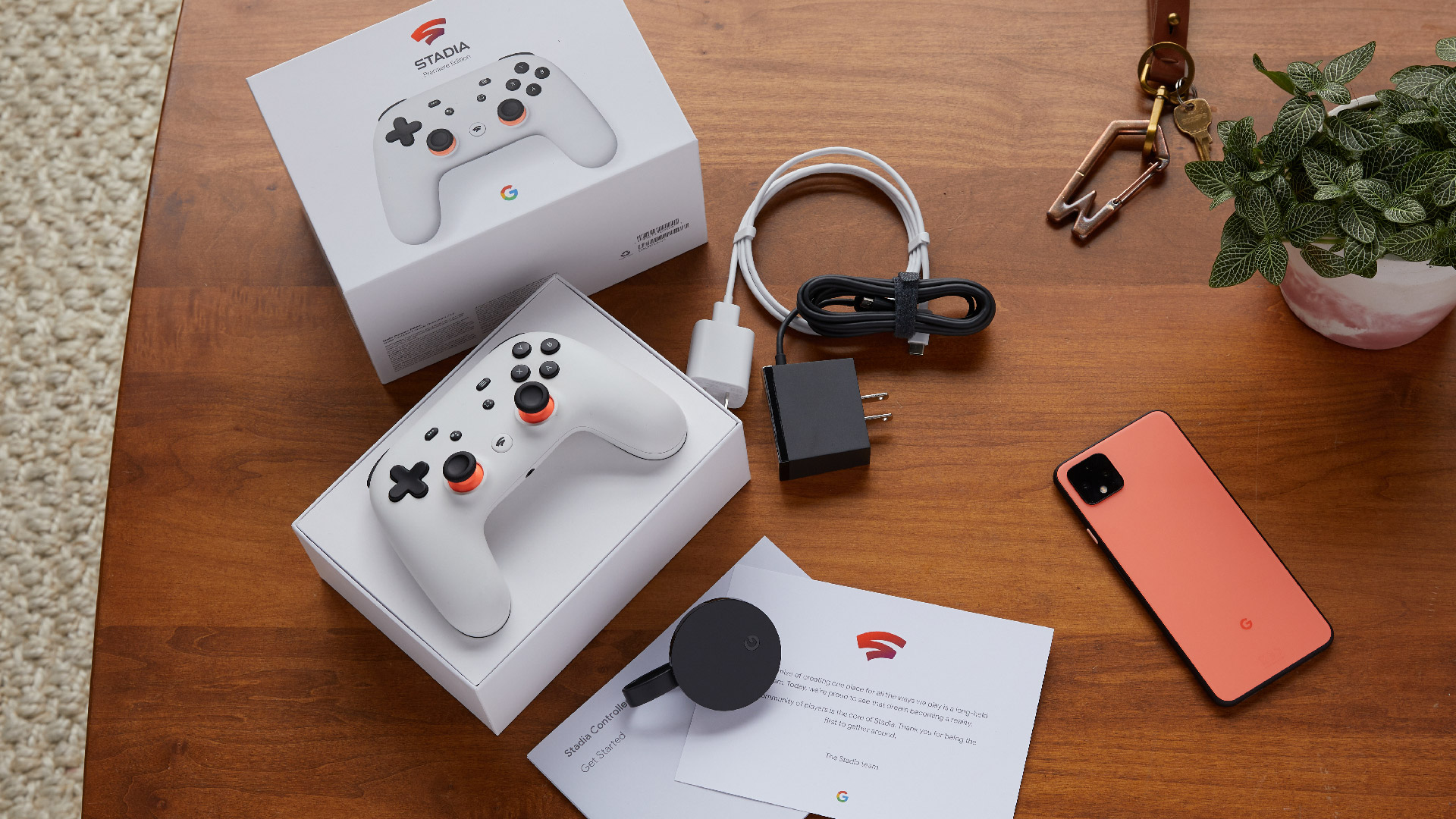
It wouldn’t be until later, once our daughters were in bed and food in our stomachs and things in the house a bit quieter, that I’d sit down to try to set up Google Stadia—with try being the key word. At least as of this moment, to get Stadia going on your television, you need a cellphone with both the Stadia app and Google Home installed, a Stadia controller, and a Chromecast Ultra (previous Chromecasts not yet supported). Being that everything is wireless, the goal is to have each piece find and talk to one another, yet no matter how much I read the reviewer’s guide I’d received from Google or the instructions presented on the Stadia app, the process just wasn’t working. I needed to get the Chromecast Ultra to show a Stadia controller pairing code, but ever with the Chromecast set (via Google Home) to show said code, it was refusing to. Then, when I at last got the code to appear, my controller wouldn’t sync. When my controller finally found my Chromecast Ultra, then the screen showing my pairing code wouldn’t go away. I’ll be honest: it was an awful first impression, and left me already appreciating game consoles where I can have everything connected together with cables to avoid worry over pairing nonsense.

Google had provided me (and other reviewers) a handful of codes in order to try some of the games available on Stadia, and that’s where the next hiccups arose. I went to redeem the codes on the Stadia app I’d been using to get everything else set up, but could find no option to do so. As of now, the app has three options—Store, Home, Explore—but picking store only let me buy games, no redeem codes. Under my account menu? Still nothing. It turned out that I could only enter product codes through the Stadia homepage, which only comes up if you specifically visit stadia.google.com through Chrome. (Trying in Safari, my preferred browser, only led to a promotional page.) However, I noticed something interesting while doing so: I couldn’t buy games through my computer, only on my smartphone. Complicating things further, you can’t do either of those tasks via Stadia on the Chromecast, and I found other options that were available through one access point, but not the other two. I wasn’t far into my time with Google’s new game streaming service, and it was already feeling like a patched-together, annoyingly inconsistent experience.

Finally, I had the six codes redeemed on my account, and was ready to jump into a game. So, I picked the first one listed in my library, Shadow of the Tomb Raider, and set off to adventure with Miss Croft. Five minutes in, the game froze, and I could do nothing but quit back to the home screen. So I did, and then shut Stadia down entirely and went to bed.
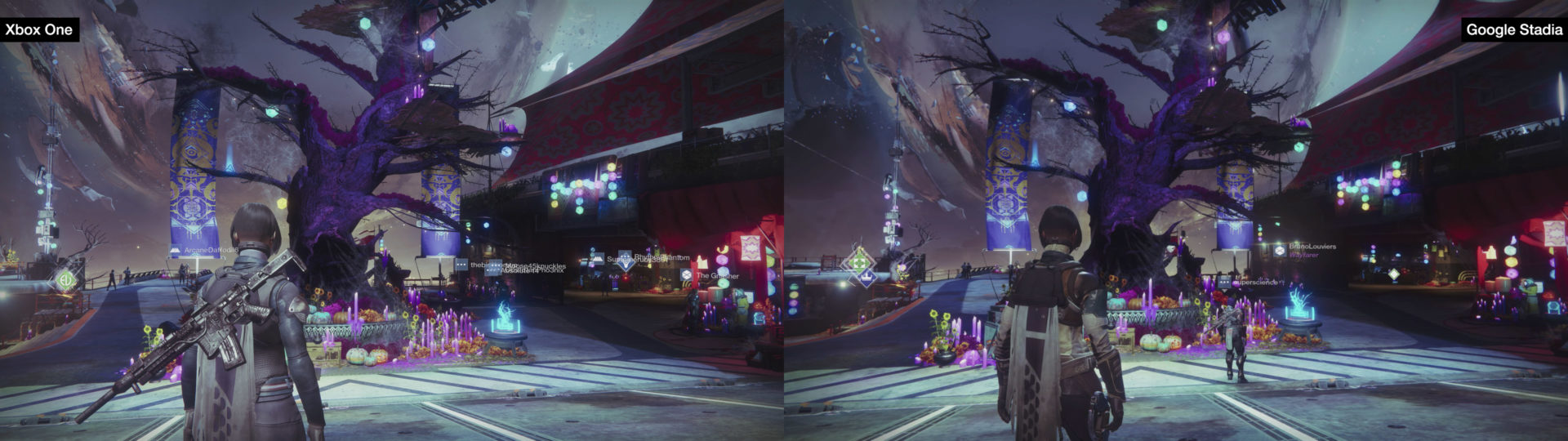
Destiny 2 running on an Xbox One X on the left, Google Stadia on the Right

Day 2

Admittedly, I wasn’t overly excited to jump back into Stadia after the previous night’s events. Having such a major error so soon into my experience made me worried that that was going to be the norm going forward. Things, however, would end up proving to be quite different.

This time, I decided to jump into Destiny 2. While it wasn’t one of the games Google had provided me with a code for, it’s the first free game offered with Stadia Pro, the $10 subscription service that you’ll need in order to play games in 4K, HDR, 5.1 surround, and up to 60fps. (If you only have a free Stadia account, you’ll be limited to 1080p streaming at up to 60fps.)

The first thing I noticed playing Destiny 2 was that the aiming felt kind of weird—but I wasn’t sure if it was lag, the game, or just me. To be fair, I hadn’t really played the series since the original game, and the bulk of my experience with first-person shooters lately has been with the faster twitch action of Apex Legends. Later, trying Destiny 2 though the free-to-play version on consoles, it definitely seemed like a lot of what I was feeling was just the natural style of its gameplay. Still, there was also something about the controller that I wasn’t fully gelling with, and I think it’s the fact that the analog sticks felt stiffer than those I’m used to on my go-to controllers. I don’t say that as a bad thing—I’m sure the sticks will loosen a bit with more use, and in-game settings can also help compensate for that—but it’s still something I had to get use to over the next few days. Otherwise, I was actually kind of impressed with the Stadia controller. I tend to find a lot of control options outside of the big three (Sony, Microsoft, Nintendo) to be pretty worthless, and the “DualShock/Xbox controller clone” market has seen no end of trash. The Stadia controller, meanwhile, has a really solid feel, fits nicely in my hands, and seemed pretty dependable for most of the gaming needs I’d end up having. (Jury is still out on the d-pad, though.)

Once I got more use to Destiny 2’s feel, I was zipping around to various locations, completing missions and blasting away at endless waves of enemies. Very early in the game, I’d run into a few other Guardians, but I wasn’t sure if they were actually players or perhaps bots. Traipsing around the European Dead Zone, however, I came to realize that I was indeed meeting other humans. The first was a Guardian with the very creative name “connor#3647” (number probably not correct), who was a welcome sight after thinking I’d have to complete the mission I was on alone. Before we reached the end, another player joined us, and the three of us worked together to beat the mission as a team. Once we were let loose into the EDZ proper, we went our separate ways, but ran into one another again at various times, along with a number of other players who were also—at least, I assume—part of the Stadia review process.

I was never able to figure out how to add more than one account to Stadia at this point, so sadly I won’t be having any pizza parties anytime soon.

There was a point while playing Destiny 2 that it hit me: I was playing a video game. That might sound like a weird statement to make, but what I mean is, I had come to actually forget that I was streaming video game. Worries about latency, or streaming bitrate, or bandwidth usage, or anything else I’d been concerned with in terms of Stadia, had all kind of faded away. Instead, my brain focused on wondering if the new weapon I’d picked up was worth switching to, or if I’d be able to solo the public event that was just breaking out, or where to run off to next. If Google Stadia is to be successful, it must provide gaming experiences that makes people forget they’re playing via streaming, and instead feel like they could have come from a local console or PC. For me, in those handful of hours I was starting to get lost in Destiny 2’s world, the platform was absolutely successful.

Well, mostly successful.

There was one issue I’d had, and when it happened, it completely broke the illusion that I was playing the game in a more traditional way. When I’d searched for that first real mission where I’d met connor#3647, he’d already progressed a short way through, meaning that I’d joined his instance of the mission (no doubt because it was the only one currently active). Around halfway through, the dreaded freeze I’d encountered the day before returned—and I was furious. I scrambled to quit the game and jump back in, and when I did, I was back in the Tower, far from where I’d just been. Thankfully, connor#3647’s instance was still active, and he (and our new friend) were still there, just deeper into the mission that we’d been before. So, I was able to join back up with them, and get credit for completion without having to do the entire thing from scratch.

What if that instance hadn’t still been there, though? And how much of my stuff did I lose in the crash? In my time with Stadia, there would never be a point that hammered home more emphatically just how fragile the entire experience could be. I’m not saying that online-based console games don’t ever disconnect suddenly, but at least many have some sort of failsafe to help mitigate progress loss. With Stadia, you’re not just getting booted offline—you’re getting booted out of the entire game. What about single-player games where auto saves don’t exist? Barring a power outage or the (typically rare) crash, I never have to worry about the game just suddenly going away. With Stadia, however, every game is an online game, where any random internet issue could potentially mean losing progress.

I ended day 2 far more impressed with Stadia than I had been the previous day, to the point that I was really surprised by how much I’d enjoyed playing streamed games. The little voice in the back of my mind that refused to think streaming is anything but a bad idea, however, now had more ammunition for its argument.
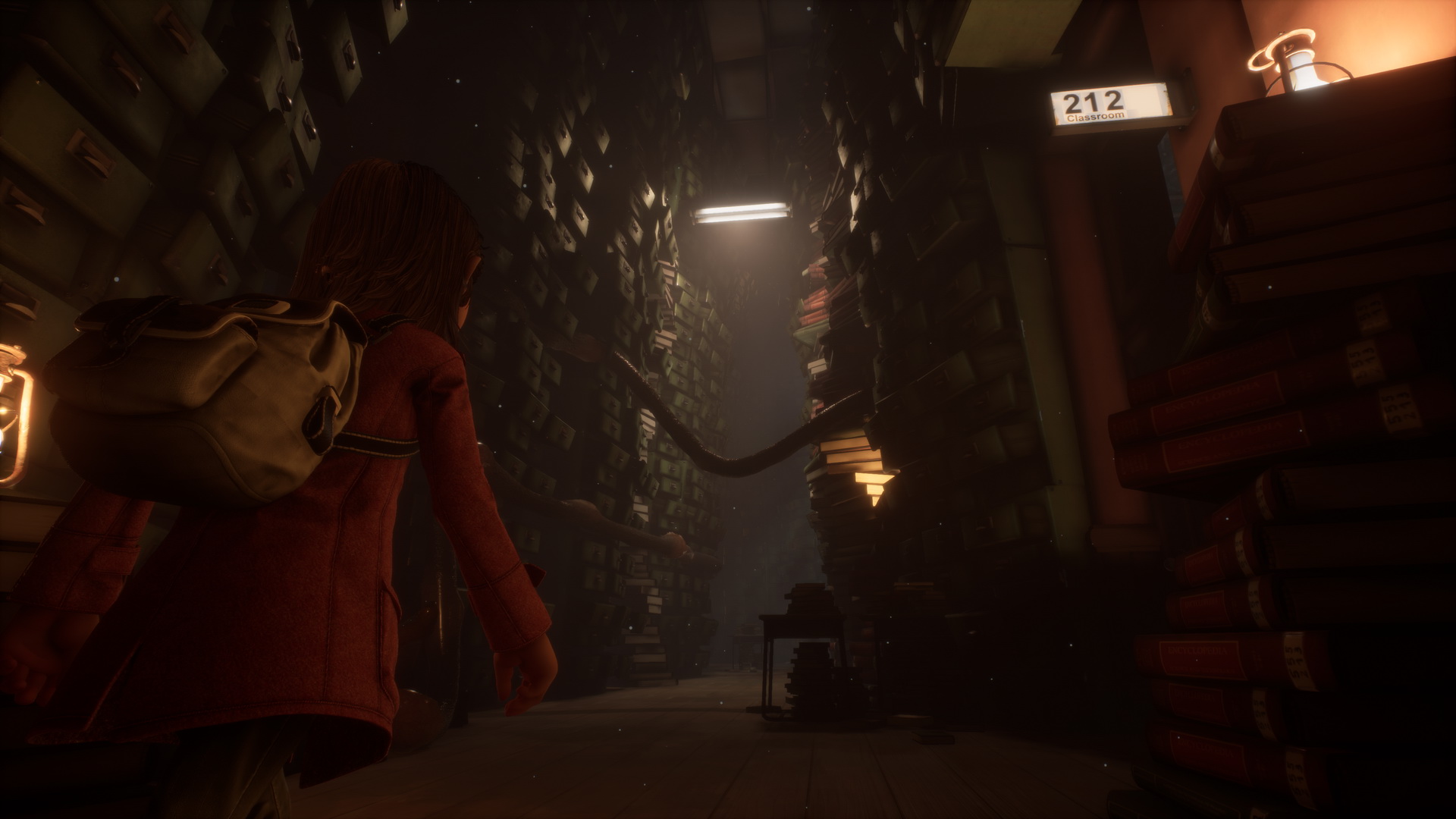
Gylt is a decent game in what it is, but it’s burdened with being the only Stadia exclusive at launch

Day 3

Of Google Stadia’s 12 games that’ll be available at launch, only one is exclusive to the system: Tequila Works’ Gylt. It’s… okay. I despise the trend of “stealth horror” games that have cropped up in recent years, so I was never going to love Gylt, but if that’s your kind of thing, then it doesn’t seem like a bad little effort from the studio.

The problem is that word “little.” Gylt is definitely smaller in scope and budget, and while that’s not at all a terrible thing, I do find it concerning that Stadia is coming out with this being its one exclusive. At launch, the platform will offer absolutely no games that are new to the market, with the closest being Red Dead Redemption 2—and that’s if you only consider the game’s PC release, and not it’s console launch over a year ago. For the moment, there’s just nothing compelling game-wise to help convince people to jump into Stadia in these early days—no big exclusives, no hot new releases to play via streaming instead of the usual methods. Gylt is the kind of title you offer up later when Stadia owners are looking for something new to play, not at launch with any thought of it being some sort of draw.

While playing Gylt, I ended up having to step away from the game for about 10 minutes to put one of my daughters back to bed after she’d woken up. When I sat back down to pick up the game again, a thought suddenly crossed my mind: how much bandwidth am I using when a game is just sitting there paused?

I made a note for myself, so I could be sure to check that later.

Day 4

On my fourth day with Google Stadia, I was starting to become a bit frustrated with the selection of games I had access to. Even with a meager 12 titles promised for launch, we’d only been given access to six of them for the purposes of our review: Destiny 2, Shadow of the Tomb Raider, Mortal Kombat 11, Kine, Gylt, and Just Dance 2020. None of the games I’d really wanted to use as tests for game streaming were there, especially Samurai Shodown. I still hadn’t gotten a full read on Stadia’s potential input lag, and I knew a fighting game would be the best way for me to test that—but I also knew that Mortal Kombat 11 is one of the fighter franchises I have the least experience with.

So, I sent off an email asking if there would be a chance that we’d get access to Samurai Shodown before the review embargo was up. A Stadia rep told me that we wouldn’t, and that the selection of games had been “specifically curated” to “test every facet of Stadia.”

I’m just going to be honest here: I have trouble believing that. When you’ve got a platform that’s had so much negative press as of late, has such an uphill climb to make in the market, and which is based on a technology that remains unproven to so many people, I don’t think you then purposely offer less access to the people who are going to be judging it. I absolutely believe that, even as I write this, Stadia’s entire launch line-up isn’t quite ready to go, and that’s why we weren’t given access to the full list.
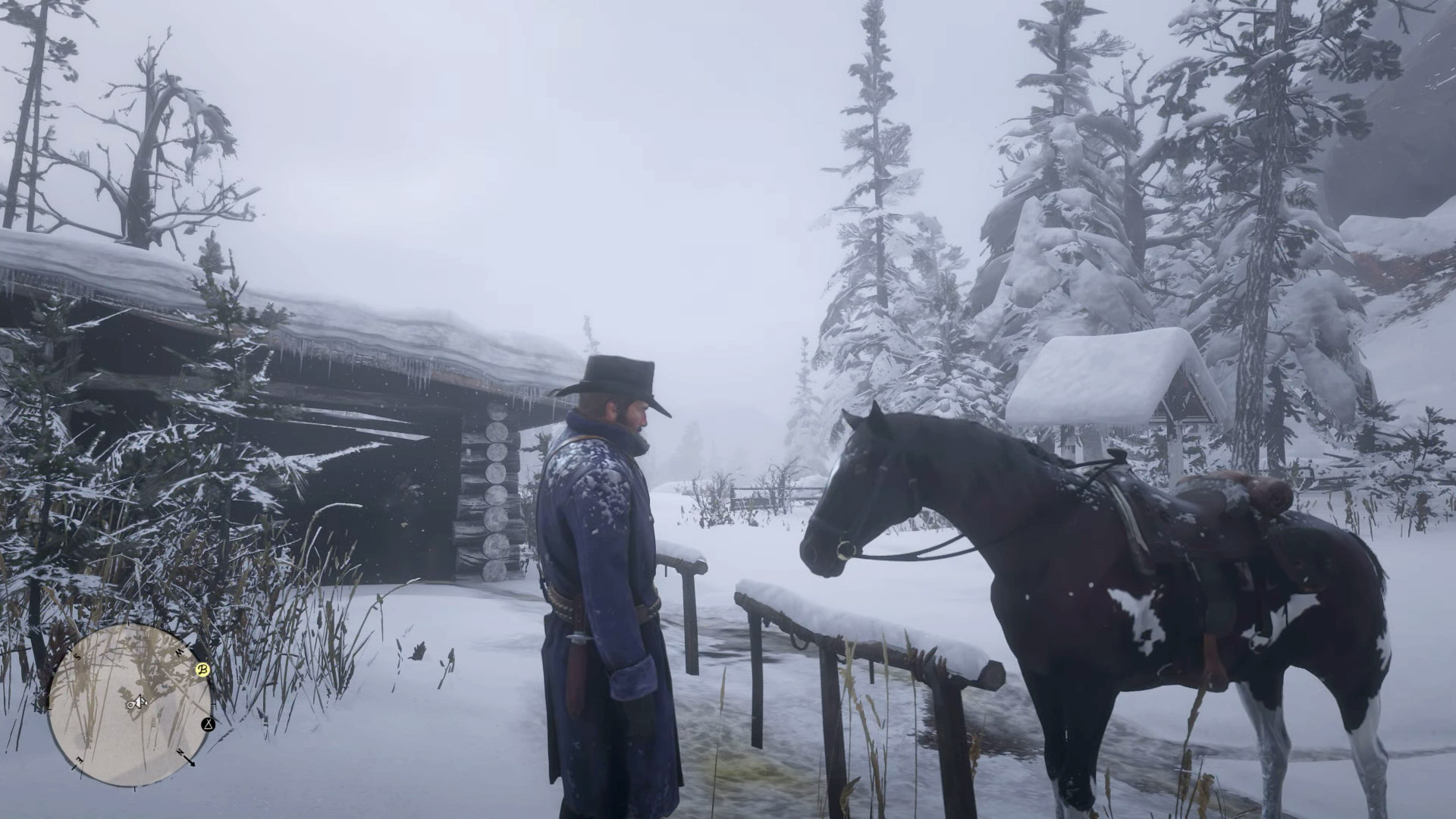
While trying to remember my buttons early in Red Dead Redemption 2, I accidentally punched my horse. I don’t think he liked that.

Part of the reason I stand behind that assumption is that, at 7:55 p.m. CT that night, I received an email with a code for Red Dead Redemption 2. If our list of games had been specifically chosen for us, why add RDR2 now? And if they’d always planned to get it to us later, why not say that sooner?

Let me then throw another monkey wrench into all of this: Literally as I was writing that last paragraph, I received an announcement from Google saying that Stadia’s launch line-up has now expanded from 12 games to 22, two days before launch. Is Google still this noncommittal to their huge new gaming initiative this close to its release? Is everything on the tech side still in flux to the point that they have no assurances on what’ll be ready when? Is it both?

Whatever mess we can say Google’s marketing and messaging around Stadia has been, none of it was on my mind as I played Red Dead Redemption 2. I’d only really dug into the online portion of the game before, so kicking off the story served as a second really good test for getting engrossed in the experience rather than the technology surrounding it.

This time around, I was playing on my smaller television, which has the benefit of being close to an Ethernet connection. On the Chromecast Ultra, the Ethernet port is built into the power adapter, which is either a convenience or an annoyance depending on how you’ve got everything set up. When I’d been playing Destiny 2 a few days before, I thought the visual quality had actually been pretty impressive, save for some instances in darker areas where macroblocking was evident. In contrast, I felt like I was having better results in Red Dead Redemption 2 over the more stable wired connection, both in scenes lighter and darker. I admittedly haven’t tried all of the other game streaming solutions that have been out there, but I can definitely say that Stadia has given me visual results far better than I’ve seen before. The overall image does appear softer than what you’d expect from local dedicated hardware (even with the games set to “best visual quality” through the app), but I don’t know if you’ll ever not have that when streaming games, even at 4K.

However—there’s a difference between the quality of the video feed, and the quality of the games themselves. On that point, I’m not sure I felt the “high end PC gaming without the high end PC price” promise we were told was coming with Stadia. Not that the games looked bad, don’t get me wrong, but I don’t know that they looked marginally better than what I could get from something like the Xbox One X, especially when for things like background elements or object aliasing. One of Stadia’s best selling points is the idea that we could continually see the benefits of new advancements in PC graphics cards without needing to spend extra money on hardware, but for now it feels like that might be a promise we’ll need to wait and see on. Which, honestly, could mean simply waiting for games that are more visually impressive to show up.

There was also one other thing that made me pause about Red Dead Redemption 2: the fact that, once I’d redeemed the download code for the game, it was available instantly. I mean, of course it was—but as someone who deals with downloading games on a regular basis for work purposes, it kinda feels futuristic to have a game available instantly, without having to wait the minutes (or hours) it’ll take to download, or worry if I’ve got enough storage space to even grab it in the first place.

So, point to you Stadia.

Please enjoy this random photo of vice president and general manager Phil Harrison watching you read my review.

Day 5

One of the promises of Google Stadia is a gaming platform that isn’t locked down to any particular screen or piece of hardware, so I decided to finally try playing games on my computer. By this point, my account was long squared away, and I had the benefit this time of being able to plug the controller it to sync it to my games, so the process went a lot smoother.

There’s not much to say about my gaming experience on day 5. I spent more time with Shadow of the Tomb Raider and Mortal Kombat 11, each running mostly fine save a few small issues. For Shadow, I had a handful of weird bouts of slowdown, as if the game had gotten out of sync and was trying to catch back up. For Mortal Kombat 11, I ran into the audio sync bug the regular PC version of the game can suffer from during cutscenes. Given that’s a fault with the game itself, and not the service, I won’t knock Google’s platform for that, but it’s a reminder that PC issues may now often be Stadia issues as well.

Switching to playing on my MacBook Pro did, however, give me the perfect opportunity to look into the bandwidth concerns I’d been having. Running Shadow of the Tomb Raider for a half-hour resulted in 5.39 GB of incoming bandwidth usage for my computer. Factoring in that some of that might be OS-related, let’s round it down to 5 GB for 30 minutes, or 10 GB per hour. If I were to dedicate the full 1024 GB of bandwidth allowance Cox gives me per month to playing Stadia games, that’s 102 hours of gaming, or right around 3.4 hours a day. Of course, I don’t know anyone who can dedicate their internet connection just to gaming; between using it for work, watching streaming content, VOIP, and other regular needs, I’m at around 400MB of bandwidth used for this billing cycle before Stadia. Personal opinions on the platform aside, the fact is that it’s going to use bandwidth, and a lot of it, even if you were to drop the quality down to 720p (which the Stadia app says limits data usage to 4.5 GB an hour).

While I was running the bandwidth monitors, I thought back to my time with Gylt. What happens when I pause the game? It’s easy to just assume that bandwidth usage would stop, but that couldn’t be the case. Even if video compression can crank way down while an image is remaining static, Google is still streaming something to us when a game is paused. After keeping Shadow paused for 10 minutes, I’d used 210 MB of download bandwidth, or 1.26 GB an hour.

As someone who’s really bad about leaving games running when I’m not playing them, I was left feeling some concern. I’m constantly keeping a game active between online matches as I turn my attention to something else, or pausing single-player campaigns for extended periods of time as I attend to other things. In my time with Stadia, I came to have to be very vigilant about not doing that, either through constantly quitting and restarting a game, or planning my play time around when I thought I’d have less interruptions. If you’re someone who has an internet plan where bandwidth usage isn’t a concern, then this will be a trivial worry. For many of us, though, every minute that we just let a game sit paused could literally be one less minute we’ll have to play that month.
Day 6

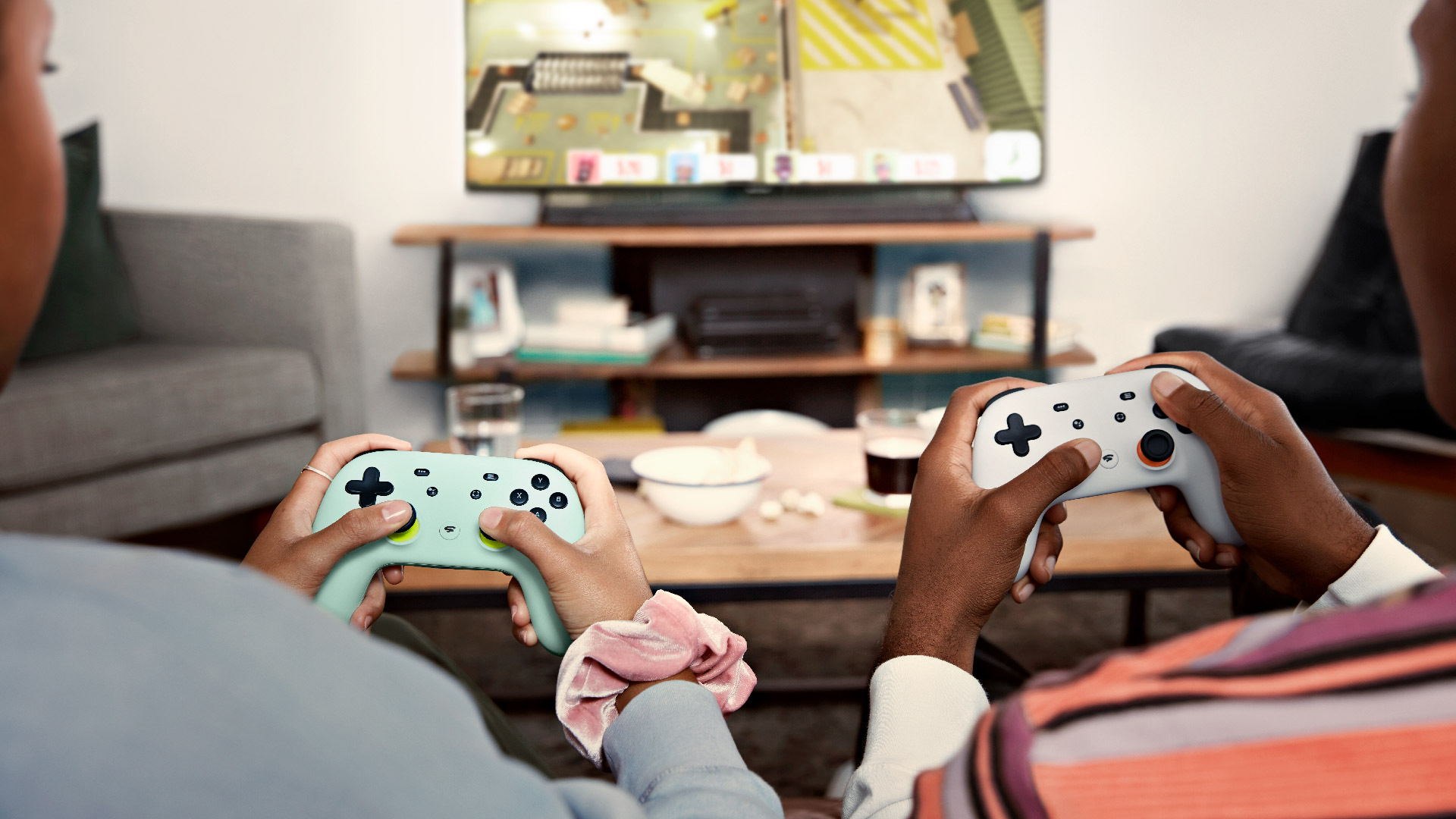
For my last day of giving Stadia a go before I had to write my review, there was one piece of the experience I had yet to try: playing on a smartphone.

There was also one game that I’d not yet touched, Ubisoft’s Just Dance 2020. I wondered if there was any mode that might help me finally give the overall input lag a test, since rhythm games may be the one genre where latency is even more noticeable than fighting games.

It turned out that, as I’d feared, to do anything in Just Dance 2020, you need to link a smartphone to the game to use as an input device—and I refused to sync a smartphone to a game I was playing on a different smartphone simply out of principle. However, there was one thing that I was able to do without following through with that step: log into my Ubisoft Club account. And it would be that step that’d end up giving me an answer I was seeking.

As part of the sign-in process, a virtual keyboard popped up on screen so that I could enter my account details. I’ve long been a master at navigating a keyboard with a d-pad, so I started rapidly moving from one key to the next—and that’s where I clearly saw the input lag. Outside of any game’s intentional (or unintentional) latency, moving the cursor around an on-screen keyboard should be a near instantaneous process, yet it wasn’t here. The lag was enough that it threw off my rhythm, and I had to put more care and consideration into what key I was on and when I’d moved to the next.

Now, here’s the thing: I didn’t deeply notice that lag in most of the games Stadia had to offer. Fighting games, rhythm games, and those that demand precise timing, I think they’ll always cause problems on some level. Still, I think the work Google has done to mitigate input lag—including having the Stadia controller itself connect to the internet, instead of having it communicate through another device first—has legitimately helped make for a better experience. Shadow of the Tomb Raider, Destiny 2, Red Dead Redemption 2, Gylt, Kine, all were totally playable for me after just a bit of adjusting. At this point, many of us have learned to recalibrate our brains due to the natural lag that playing online games requires, so I don’t think the experience is going to be broken for most players. That said, Stadia is never going to be able to complete with having local hardware, and if you’re someone who can notice even the slightest bit of input lag—and obviously, depending on your internet connection—your mileage may definitely vary.

Playing games like Destiny 2 on the Pixel 3a XL’s screen was probably the best visual experience I had from Stadia. That’s not a surprise—take any game and shrink it down to a much smaller display size, and it’ll almost always look fantastic. Beyond similar moments of slowdown like the ones I’d run into the day before, my one big complaint about playing that way had nothing to do with the service itself, and more to do with the fact that playing games on a smartphone that’s clipped onto a controller is not a setup I enjoy. If you do, then I think it’ll be a pretty good experience.

Well, except for the haphazard nature of Google Stadia that made an appearance yet again. After I had the phone attached to the controller, I realized that the Stadia app was only set up to display in portrait orientation, meaning I had to turn the entire contraption sideways in order to browse my games. Plus, you can’t navigate the interface using the controller, only the touchscreen. Once in a game, navigation swaps to being controller only. However, bring up the Stadia in-game menu, and you’re back to touch-only navigation. I understand why games can’t make use of the touchscreen, since we’re talking about console and PC titles that weren’t made with touch access in mind, but why have all of the stadia stuff inaccessible from the controller? The whole thing ends up feeling like two different contraptions taped together, not like a seamless new platform from one of the biggest names in the tech industry.
The Days Ahead

Google Stadia has been a lot of things in the time I’ve had to try it, all of which, good and bad, has made for an incredibly interesting experience. My personal opinion on game streaming still hasn’t changed, and I can’t see myself ever picking Stadia as my primary (or even secondary) platform for gaming—but my views on what can be done with the technology, and the potential that Google is offering, has definitely improved to some degree. However, there’s two worries about the new platform that I’ve been unable to shake over the course of the past week.

The first is that Stadia does nothing to quell my fears of a streaming-only future for games—and maybe there was nothing it could have done to do so. There’s nothing here that make me feel secure in the idea of paying $60 (or more) for a game where I receive absolutely nothing tangible for my money. Even with digital downloads on other systems, I have files that I can keep on my console’s internal storage, or back up onto external hard drives. With Microsoft saying that xCloud will be able to stream games you’ve already purchased otherwise, there’s the option to actually own the game and stream it, which offers me far more peace of mind than what Google can. There’s been exactly one time that I’ve put faith into a streaming-based entertainment platform enough to spend money for content on it—Vudu—and we’ve now learned that Walmart is looking to sell the platform, putting its future (and my purchases) in question.

Part of that hesitation in trusting that Google Stadia game purchases will be money well spent is, well, Google. No matter what some may have you believe, there are plenty of products and services that have come from Google that still live long, fruitful lives. Gmail is by far my email service of choice, I (and EGM as a whole) use Google Docs on a daily basis, Google Drive is my lifeline for keeping my files secure should anything happen to my computer, I’m constantly hitting up YouTube for the latest trailers or Red Letter Media reviews, and billions of people use Google Maps to know where they’re at in the world.

At the same time, Google absolutely has a terrible history with some of its other efforts once its seemingly grew bored of them. I used (and liked) Google’s URL shortener, Google Now, iGoogle, Google Talk, Google+, and Google Wave until the company killed each. Losing Google Reader hurt. The old, all-in-one iOS Google Docs app was amazing until Google broke it apart and turned it into the separate apps nonsense that it is today. I’m still incredibly bitter about Google murdering one of the best email apps to ever exist—Inbox—and their promises of bringing its best features to the Gmail app which remain unfulfilled. And, if you want to specifically look at gaming-related efforts, remember YouTube’s push for a dedicated video games section? That didn’t even make its fourth birthday. If I have almost no faith in a company like Apple to stick to gaming initiatives it starts, I think I have less faith in Google.

And that’s a shame because, as much as I’m surprised to hear myself say this, I think Google Stadia deserves a chance to grow into its full potential. In so many ways, from its user interface, to its setup, to its long list of delayed or missing features, to its chaotic launch, to the nonsensical statements that those inside Google have said about the platform at times, Stadia’s entire path from announcement to launch has been (pardon my language) a gigantic shitshow. Strip all of that away, though, and the one piece of Stadia that truly matters at the end of the day—its ability to allow people to play games streamed over the internet—is legitimately something to care about.

Part of that care might actually be fear of what the success of Stadia could mean for the future of video games, and the constant push by companies to take rights and ownership away from us consumers. Fear isn’t a good enough reason to try to stop technology from having the chance to exist as an option, however, and that’s one of the biggest things I’ve come to learn over this past week. Even if the idea never comes close to truly winning me over, if game streaming is going to be a reality, it deserves to be done right. While Google Stadia definitely isn’t there yet, I really do think it’s an impressive first step in the journey. The question now is if Google will actually walk alongside Stadia for long enough to see it grow into its full potential—or if players will even care if it does.

All Google Stadia-related hardware and software required for the purposes of this review were provided by Google.
Death Stranding Review

I’m afraid I have some bad news: Death Stranding is just a video game.

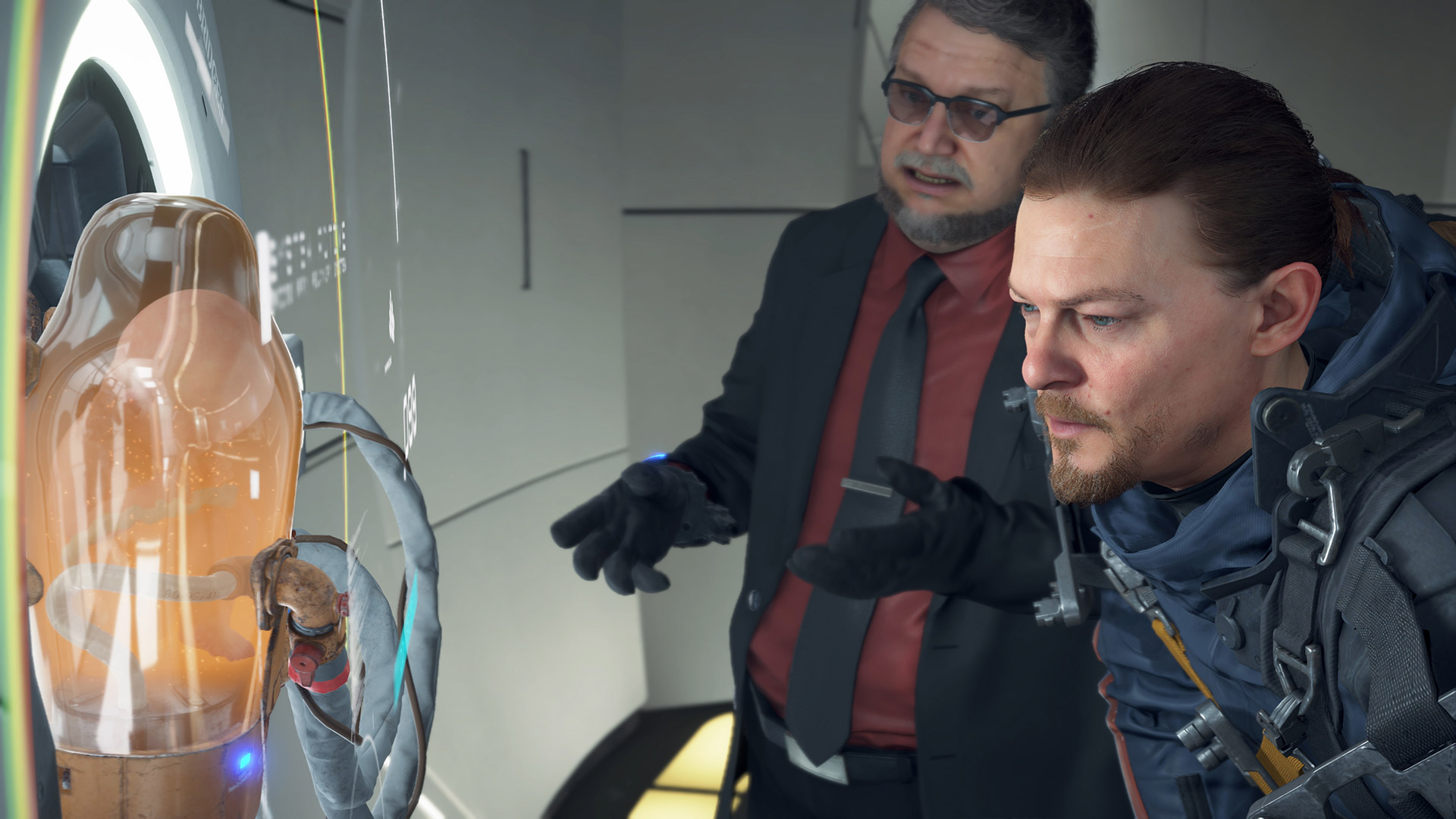
From the moment of its reveal at E3 2016, Hideo Kojima’s first post-Konami project has had an air of otherworldliness to it. Every new trailer was a mystery, every additional character an enigma, every scrap of story another hint of an experience that might just be beyond human comprehension. As more and more trailers for the game hit, I felt like I was watching the early seasons of Lost, when it still seemed like things were obviously leading up to one hell of a gigantic, reality-shifting revelation.

However, like Lost, Death Stranding’s truths are often sadly more mundane than the fictions our imaginations had dreamed up. One of the game’s most notable features, the shadowy figures that float in the air attached to ghostly umbilical cords known as BTs, are utterly unnerving when you first encounter them. Not much later—and especially once you begin to receive tools to deal with them—it’s hard to see them as much more than typical video game enemies. The babies encased in glass that we’re told are stuck between the worlds of the living and the dead? The beings floating in the sky? The constant tears, the handprints suddenly forming on the ground, the black goo, the beaches where countless creatures have stranded themselves, the bouts of bizarre time travel to past real-world conflicts? They too all make sense—well, as much sense as Kojima’s trademark tales of pseudoscience can make. At times, to a pretty straightforward degrees. Once Death Stranding’s unrelenting rainstorms wash away all of the cryptic build-up we’ve been subjected to over the last three years, this video game is, in so many ways, just a video game.

And yet, I can tell you with all sincerity that Death Stranding is also a video game unlike any other that I can remember.

“Hey Sam, remember when people were certain you totally got mpreg with BB?”

To be clear, I say that as someone who could go either way on Kojima’s gaming efforts. I’ve played less than half of the Metal Gear Solid series, and honestly, my favorite game of his remains the 1995 Sega CD release of Snatcher. While I appreciate his dedication to coming up with digital interactive insanity, the games Hideo Kojima has headed have ranged from groundbreaking (Metal Gear Solid) to almost masturbatory (Metal Gear Solid: Ground Zeroes). No matter what you think of him, it’s been hard to avoid the growing legend that’s built up around this man who broke free from the shackles of his old company so that he could deliver us his potential magnum opus. As we’ve heard author Peter Tieryas call Death Stranding “breathtaking” and “stunning,” and Norman Reedus peg Kojima as a “genius’ genius,” I think it’s been difficult for the game to escape the shadow of its creator—for both good and bad.

It was only Chapter 3 when Death Stranding started to lose me, and I wasn’t sure at first if it was going to be able to pull me back. In its earlier hours, the game had introduced me to its world, our protagonist Sam Porter Bridges (Reedus), the mission we’d be accompanying Sam on—reconnecting the remnants of a fallen America via a high-powered network—and given me a small taste of exploration. In Chapter 3, I was finally let loose in the proper open world where a good chunk of the rest of the game would take place, and it was kind of a slog. Most of what I was doing felt like busywork, and the promise of major narrative moments or the weirdness we’d seen in trailers was strangely absent. I was a glorified delivery boy running errands across harsh terrain for post-apocalyptic shut-ins, and it felt like a thankless job for both Sam and myself.

And then, I hit Chapter 4. While I’m not allowed to tell you anything tangible about the story from then on under the terms of the review embargo—and really, I wouldn’t want to spoil things anyhow—this is where the true Death Stranding begins. At that point, the deeper narrative elements began to emerge, and Sam started to have more interactions with other actual people (and not just the holographic projections of less-important NPCs). That was also when gameplay started to diversify, so it felt like I was doing more than making deliveries to the same small handful of people over and over.

The rivalry between UPS and FedEx gets ugly in the future

The problem is, in trying to explain why Death Stranding’s gameplay ends up feeling so unique, it might sound like anything but. Fetch quests, exploration, loot hunting, stealth, resource management, escort missions—lots of things we’ve seen and done countless times before. Death Stranding isn’t just a box of random tools duct-taped into a bundle of uselessness, though. Everything that’s gone into it melds together into one cohesive whole, at times to excessive detail.

For example, take the often-vilified “walking simulator” genre. Death Stranding laughs at the label, because it actually gets down to sim levels of complexity just to determine how you will walk around. Every inch of ground has a rating for how easy or hard it is to traverse. Sam can lose his balance if he’s carrying too much or going too fast, and momentum is important when going up or down steep slopes. You can use ladders or climbing anchors to get yourself pretty much everywhere. Footwear will break down after too much walking. Even smaller rivers can be treacherous depending on how fast or deep they run. Carrying items, too, requires legitimate thought. Containers come in different sizes and weights, so how you have Sam load them onto his back, or attach them to other body parts, can make movement easier or harder. Making sure your load is secure is such a big deal, in fact, that the DualShock 4’s left and right triggers are primarily used either to carry additional cargo or grab on to the straps of Sam’s backpack for extra reinforcement.

There was a groove that I got into when it came to making deliveries that became incredibly enjoyable after a while. In one moment, it might be my determination to not leave any lost packages behind. In another, it was pushing myself to see how many, or how big, of deliveries I could make at once. What made those end goals satisfying a lot of the time was actually the journey to get to them. Death Stranding’s world is beautiful. On a technical level, absolutely, as Guerrilla Games’ Decima engine helped produce some gorgeous results even on my original model PlayStation 4. More impressive, however, is the design of the world. The team at Kojima Productions has obviously put a lot of work into building their vision of after-the-fall America, with every location feeling visually rich, complex in design, and completely hand-crafted. Traversing the game’s landscape is never easy and often dangerous, but it’s always engrossing.

Once you recognize the secret reason for her name, you will feel ashamed of your words & deeds

It’s just, in proclaiming that Death Stranding becomes something that feels special, I’m actually uncertain how shared that experience will be. Casual players, longtime Kojima fans, Metal Gear Solid devotees, even my own colleagues out there in gaming media—I don’t know how any of them are going to judge that gameplay. Death Stranding could receive a review calling it a revolution in gaming, another could call it the most boring and pointless trash ever, and yet another could call it a middle-of-the-road effort that ends up being completely average, and all of those opinions might be right.

My final moments with Death Stranding left me feeling like I’d just played a pretty brilliant game, but maybe some of that brilliance comes because it speaks to things I love in gaming. (By the way, those final moments came after around 63 hours, which included me doing a good chunk of, but not all of, the side content.) Like, for example, the exploration. I’m the type who would spend hours finding ways to get my character in World of Warcraft over mountains that I was never expected to cross, just so I could see those typically unseen places without needing there to be something waiting to reward me for my effort (which there often isn’t in this game’s more remote areas). The parts of Death Stranding where you’re able to plan out and build devices to help speed up traversal? They spoke directly to the part of me that obsesses over games like SimCity. Or how about the game’s online elements, which allow you to help other players by sharing resources, equipment, and structures? Player support roles are a passion of mine!

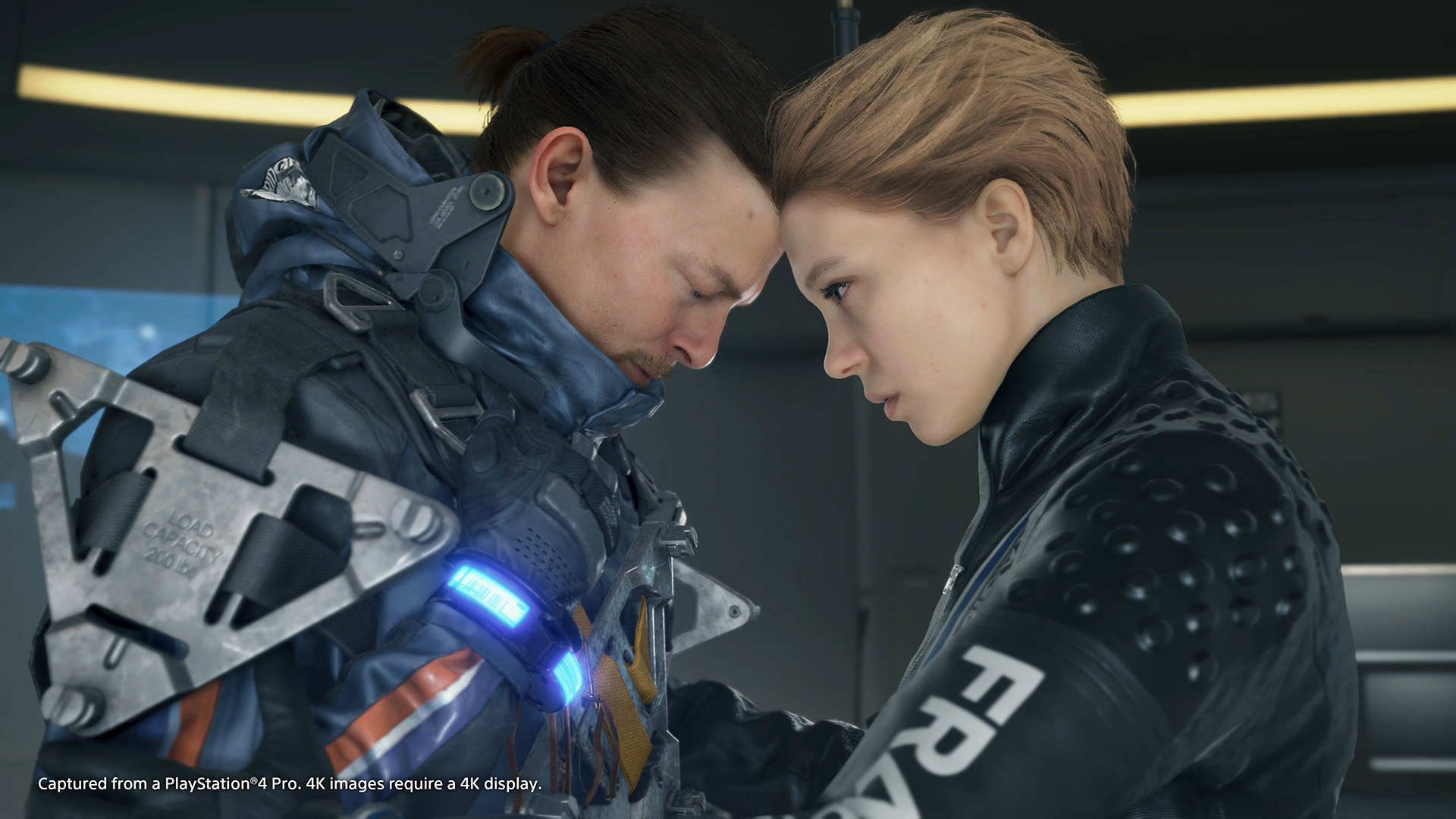
If there’s one part of Death Stranding that I feel has the best chance to work with the widest audience, it’s the game’s story. Yes, it’s deliciously ridiculous, built upon heaps of scientific and historic nonsense, and I wouldn’t have it any other way. What makes it so wonderful, though, are the characters that push the story along. Death Stranding’s cast is fantastic. There isn’t a single major character that I didn’t love, that doesn’t play an important part in the narrative, or who feels like a one-dimensional trope. And if I held any remaining reservations about Kojima’s obsession with Hollywood stars, the stellar acting on display here erased them. Seriously, this is such a great cast—and that definitely includes the women. Even though I haven’t played Metal Gear Solid V and don’t know the character well, I’m far too familiar with the arguments against how Kojima handled Quiet. I can’t tell you how Death Stranding’s women directly compare to her—but I can tell you that Fragile (Léa Seydoux) and Mama (Margaret Qualley) were far and away my favorite people in the game. They’re both incredibly badass, in very different ways.

Fragile gonna take Sam for a ride

There are two concerns I had with Death Stranding, and I’ve saved them for last because I’m mixed on how much these are legitimate complaints, versus how much they’re me wishing the game had been something it’s not. First, for a story surrounding the act of delivering things to people, that cargo feels far too unimportant far too often. Yes, the core of the story is the bringing together of people separated from one another, so what’s important most of the time is that you’re just taking somethingto them, not what that something is. However, in the moments when Sam is making a delivery of true importance to someone, and you see the effects of his efforts to get it there safely, the results were some incredibly powerful scenes. Death Stranding wouldn’t work if there was less stuff to carry from place to place, but I do think it could have worked better had more of that stuff held real emotional value.

The other—and I’m well aware that this would be absolutely game-breaking under the vision the development team had—is that I sometimes wished Death Stranding was a more linear experience. At various times, when the game knows where you’re heading and what general route you’ll be taking, one of a selection of songs (from what is a wonderful soundtrack) will kick in as Sam crosses the landscape. For me, those were far and away Death Stranding’s most powerful moments, giving that sense of truly being on an epic journey that so many other games just never seem to capture—and I wished they could go on for longer. I wanted, instead of a varied path across an open world, Sam’s trek to America’s West Coast to be one that was always going forward, constantly exploring new territory I’d not yet covered, never affording me the security of knowing I’d soon be back to an area I’d seen and—to at least some degree—tamed. Again, that would be a very different Death Stranding than what Kojima and crew wanted to give us, but I still long to know what might have been.

What I do know is that Death Stranding isn’t perfect. It isn’t without flaws, and rough edges, and missed opportunities, and ideas that didn’t always land as well as they could have. It isn’t a game that everyone will love, or maybe even like, or maybe even be able to tolerate. It also isn’t the next coming of a video game savior, sent down from the heavens by its creator to change digital entertainment forever.

What Death Stranding is, though, is a work that can truly claim to be something different in a time of overwhelming sameness. It’s a game that isn’t afraid to be unconventional at times and mundane at others, and which benefits from a willingness to be both. Death Stranding makes me glad that Hideo Kojima makes video games—because our hobby would be boring as hell without him.

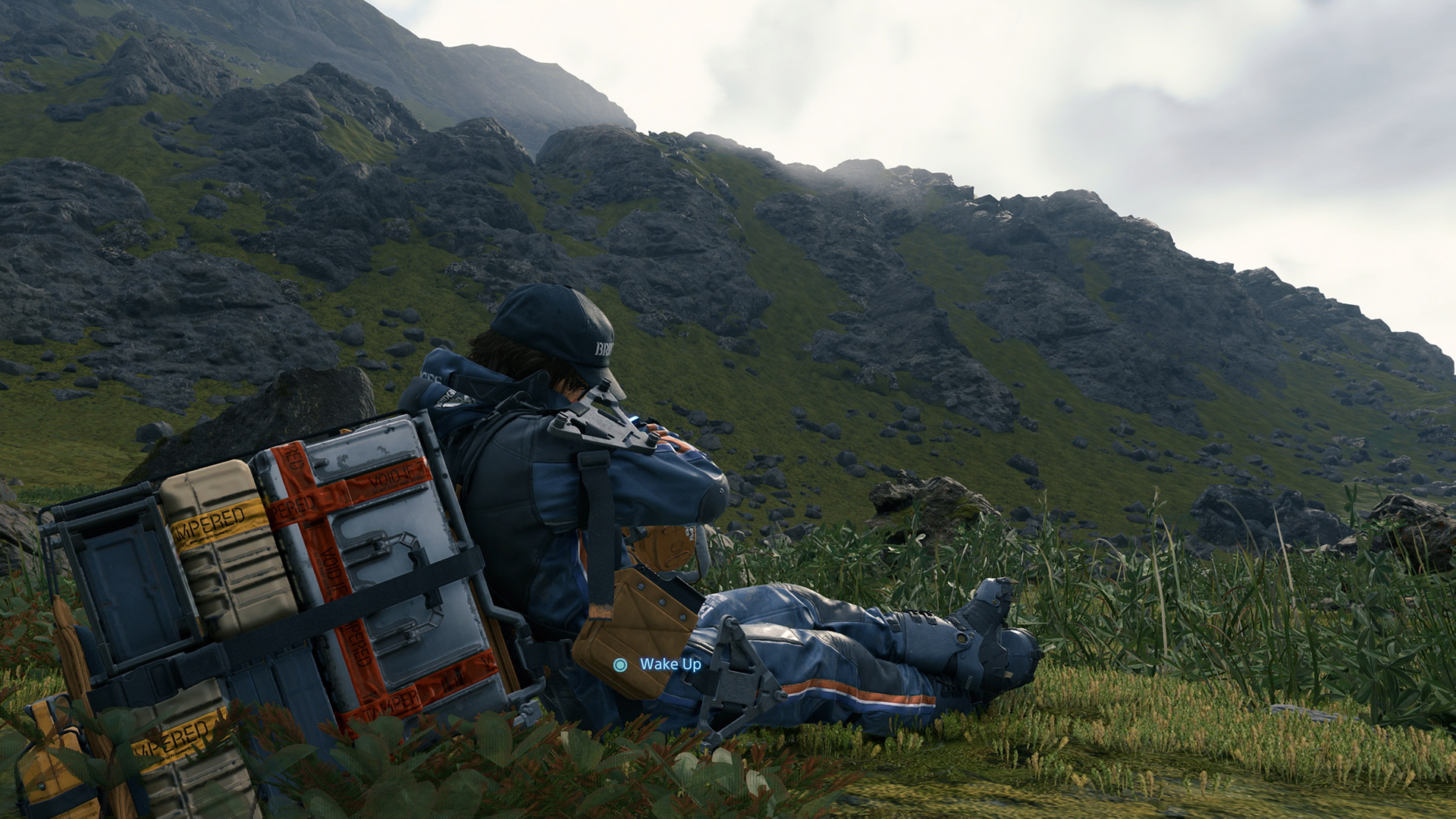
The worst part of waking up is Monster in your cup

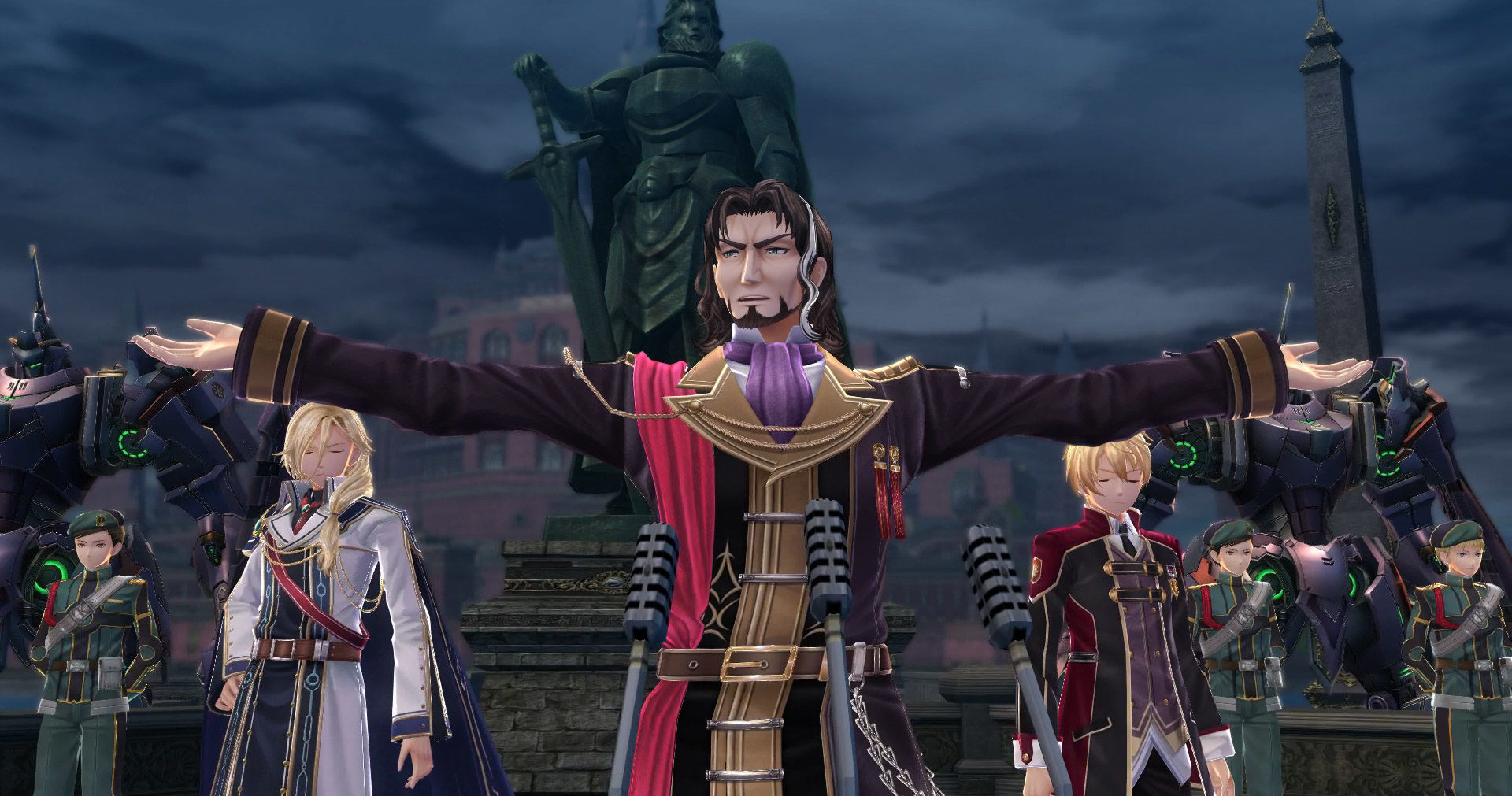
Toshihiro Kondo – Falcom, Trails of Cold Steel III

Having seen way too many Japanese developers close shop over the years, I’m always thankful for those studios that find a way to stay in business while also retaining the freedom to make the kinds of games that they want to make.

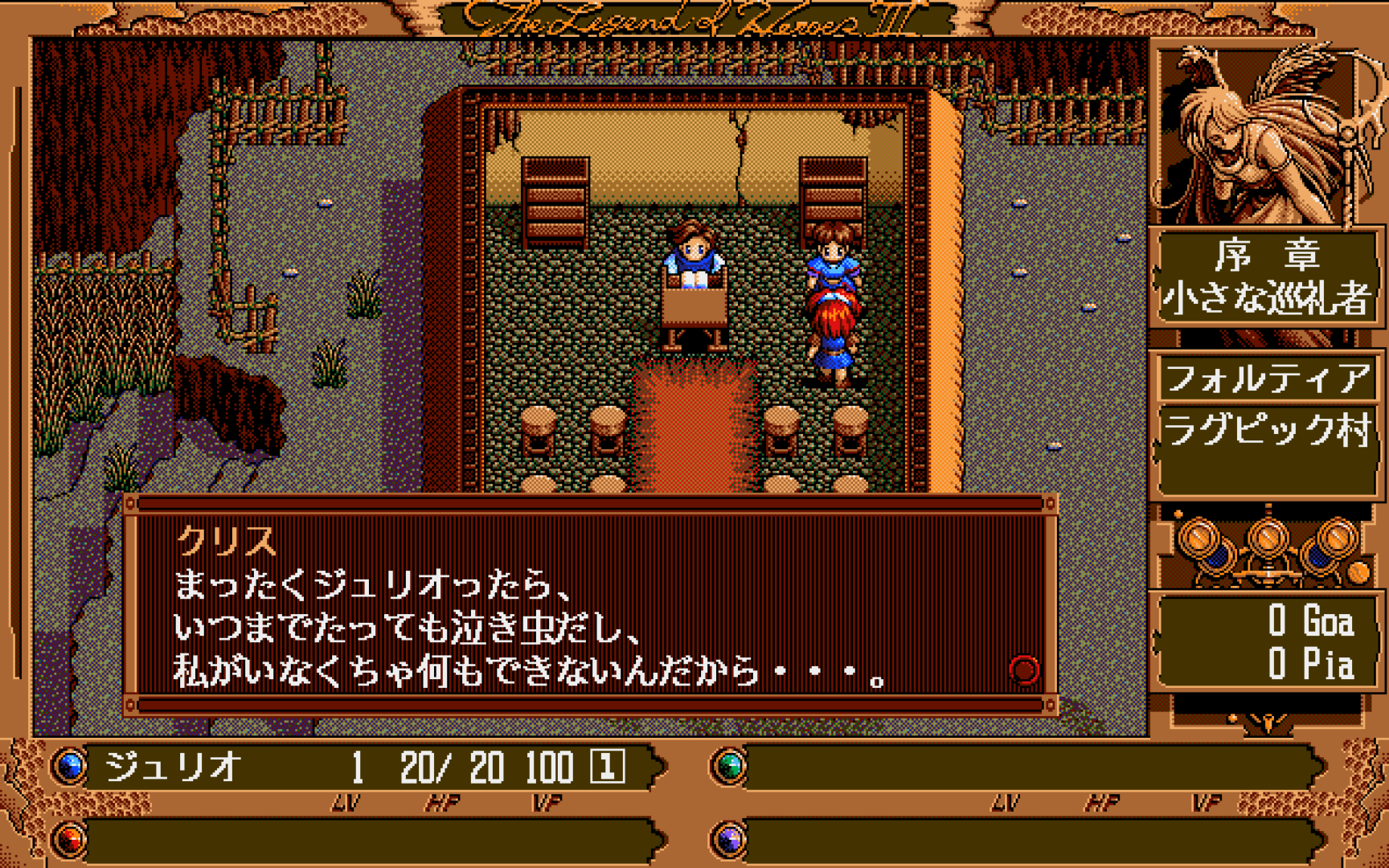
One such developer is Nihon Falcom. Founded in 1981, Falcom has had a huge impact on the gaming industry over the years, from its pioneering work on the RPG genre, to its part in growing the PC gaming market in Japan. From its days programming for the NEC PC-88 and Sharp X1, to its current work on the PlayStation 4, Nintendo Switch, PS Vita, and Windows, Falcom has crafted a long list of games that remain as beloved now as they were 30-plus years ago.

With the Western release of The Legend of Heroes: Trails of Cold Steel III now mere weeks away, I had the chance a while back to sit down and talk to the company’s president, Toshihiro Kondo, about the early days of the developer, Trails of Cold Steel III, and his days making Falcom fansites.


Mollie: Nihon Falcom has had a very long history as a developer, even before you were at the company. I remember that my first Falcom game was Sorcerian

Toshihiro Kondo: Wow!

Mollie: Yeah, I played it many, many years ago now. [Laughs] And in that, and other games, it always felt to me like Falcom was a Japanese company making Western RPGs. Because, you know, there was always this feeling of a divide in the genre, due to the different gameplay and core concepts used in Japan and in the West. And yet, I always saw your company as existing in a kind of middle position between the two. So, I’m curious, given you have a long history now with the company, where do you think Falcom was as a game developer, and where do the think the company is now at in 2019?

Kondo: I think, actually, it’s exactly as you say. When I entered the company, and before that when the company was first founded, there was a huge Western influence on the games that were being developed, particularly for games like—you’ve probably heard of Wizardry, and other games of that like. So, directly under the influence of those games, a lot of the projects that early Nihon Falcom made were in that style, and with that influence.

From there, you actually had things like Dragon Slayer and Dragon Slayer II: Xanadu where menus themselves were in English, or at least in Western letters. [Laughs] The turning point was kind of Ys. From Ys, we started to make games that were, first of all, actually in Japanese. [Laughs] And then we started to have characters more at the forefront. I think that for us as a company then going forward, we really started to come into our own, and started to make games that were more ours and more Japanese overall.

I heard from our founder that there was a period of time when, as long as you were releasing games, they sold. [Laughs] However, that was also a point at which several people in the company left. So, there was a period where Falcom was mainly focused on remakes. That’s when I entered the company. There weren’t too many new games being produced, but rather many remakes.

Sure enough, my first job for the company was working on the Windows 98 remakes of The Legend of Heroes II: Prophecy of the Moonlight Witch [Ed. note: The Legend of Heroes III: Shiroki Majo in Japan] as well as Sorcerian. But myself, and the people that joined the company at the same time as I did, we didn’t join the company to make remakes. [Laughs] We wanted to make games like Ys. We wanted to make new games. So we talked to our bosses, and really fought hard for that. From that, we were able to make Ys VI, and then move on to the Trails series.

So again, all those people that were my age, we all kind of joined under the influence of Ys I and II, and then The Legend of Heroes I through V. From that, we started to make new games, which were definitely in the Japanese taste. I guess you could say from that point on, we became more known as a Japanese RPG maker. [Laughs] There are still people, obviously, in the company who did and do like Western games. So maybe at some point, they’ll be able to make their own as well.

Sorcerian (MSX)

Mollie: Then if I asked you, is Falcom a Japanese RPG company, what would your answer to that question be?

Kondo: Well, I mean, given that current Ys and the Trails series are recognized as such, then I guess it follows that yeah, we are. There are still lots of people who love things like Brandish, Sorcerian, and Xanadu. But given that right now, the fanbase in Japan wants specifically kind of this Japanese-focused things, that’s what we’re making. [Laughs]

Actually, this is the first time I’ve ever had someone bring up these kinds of things to me during an interview, so it’s kind of got my heart racing. [Laughs] Because honestly, entering the company, I knew those games like Sorcerian and Xanadu and what they were, and so I think that was kind of what made Falcom great, too. There’s always been a part of me that wants to revisit that past and that history as well. When FromSoftware made Dark Souls, I think it had that kind of feeling, of going back more to your roots. There was many staff members in Falcom who were like, “Oh, they did it. They got to go back to that kind of classic style.” Whereas, we haven’t. [Laughs]

Mollie: Well, if you want to make a new Sorcerian, I’ll buy it. So there you go. [Laughs]

Kondo: Oh really? Well then, we’ll do our best. [Laughs]

Mollie: I started in Japanese RPGs, and then also began played some Western RPGs later, and one of those big divides that I came to notice was that JRPGs often wiped the slate clean. You’d have a game, and then in the next game, it might be sort of in the same universe, but it would be new characters, 1,000 years later, all these different situations that meant there wasn’t really continuity. One of the interesting parts of the Trails series, including in the Trails of Cold Steel group of games, has been that it’s this one long storyline that keeps going—which feels, at least to me, very anti-JRPG given the trends that have existed.

What are your feelings in terms of this being a continual series? Is that kind of a strange thing to do, or does it feel natural? And what are the challenges of not just wiping the slate clean for the next game and starting fresh?

Kondo: Hmm. You’re absolutely right, it is pretty common to see that kind of reset. The truth is that when you do something like that, essentially, as you said, the slate’s been wiped clean. But you also have to start from scratch from a development perspective as well. Maybe this is more based on how we develop games at Falcom, but in some ways, it’s easier to be able to continue off what was already there, because the universe has already been established and things like that.

It also increases productivity. If you look at the Trails series overall, you’ll see there’s nine games in this world in and of itself. In the time frame that we were able to put all these games out, I don’t believe there’s any other company that’s been able to have that level of efficiency to be able to do something like that. So, that’s another positive aspect of doing what we do.

When we were making The Legend of Heroes: Trails in the Sky SC, we were worried about this, too. Would it sell? I mean, essentially the map is the same. You’re visiting the same places. But we realized that within that, you have a familiarity with the characters, and going back to those same places is kind of a nostalgic experience. You get to meet characters who you’ve met prior, and see how they’ve grown, and what’s going on in their lives. That actually ends up becoming the charm overall of not resetting the story, in that there’s a familiarity there that you wouldn’t have otherwise.

Obviously, the fear within doing that too much, though, is that new players can’t just jump in at that point, because the worlds are so established. So, the way we’ve overcome that is, for example, if you look when we started with The Legend of Heroes: Zero no Kiseki, even though we’re set in the same world, you have new characters, it’s a new setting, and it’s a new part of the world. That’s kind of turned into how the series overall has progressed. Periodically, we’ll have a change of location, a change of characters, so that newcomers can also join in and start to experience this world as well.

The Legend of Heroes: Trails of Cold Steel III

Mollie: Yeah, that’s one of the questions I was going to ask. Even just looking at the Trails of Cold Steel series by itself, if you’re coming into it brand new, I would feel that I had to play Trails of Cold Steel first, and then Trails of Cold Steel II next, before I could even consider playing this latest game. These are RPGs known for being longer and dialogue-heavy, so that’s a heck of a commitment. This isn’t like a franchise such as Call of Duty, where I can just pick it up at any time. So how do you get over that, and how do you make it so that somebody coming in new can have almost as good of an experience as a player who’s been there the entire way?

Kondo: One of the hallmarks of the series in terms of getting new players interested is the fact that you have an overarching story or an overarching world, but then you have smaller pieces within that, which are the Trails in the Sky series, and then Zero no Kiseki/Ao no Kiseki, and then the Trails in Cold Steel series.

The interesting thing is that the player base for each one of these separate series can actually be broken up by age. We’ve noticed that many players who are playing the Trails of Cold Steel series are in their 20s. Players who started with Zero no Kiseki and Ao no Kiseki are in their early 30s, and the people who started way back in the day with Trails in the Sky are in their mid- to late-30s. One of the things that we try to do to create these clear divisions with people in terms of where they can begin is to follow along the lines of when new hardware comes out. Trails in the Sky was on PC, the two middle games Zero no Kiseki and Ao no Kiseki were on PSP, and then obviously moving into Trails of Cold Steel, you have PlayStation Vita and PlayStation 3, but then it goes on to PlayStation 4. So, that usually becomes a good place for people to feel like they can start.

Then a lot of times, the people who have started to play will talk to their friends and say, “Hey, this game is really fun and it’s really cool. You should play it.” And they’ll start where their friends tell them to start. But then, because of how deep the lore is and how interesting the characters are and the story is, it’s not uncommon to hear of people who, even though they might’ve started somewhere in the middle, then go back and start playing the earlier games as well.

When it comes to The Legend of Heroes: Trails of Cold Steel III specifically, yeah, it’s the direct sequel to Trails of Cold Steel II. There’s no excuses I can make about that aspect of it. [Laughs] But, taking it from a graphical perspective, this is the first one natively developed for PlayStation 4, and so it looks different. We’ve also made a lot of innovations and improvements to the game system, so that it plays a lot better. Thus, right off the bat, it looks kind of like a different game. The second, and probably more important thing, is the story aspect. Like you said, this is a game with a big history, and with a big story to follow. In order to make sure people were caught up, and they’re able to understand and really get into the world, we have a very comprehensive in-game library that not only explains what happened in the two previous games, but which then goes as far as to explain characters, locations, terminology, all these things that come up in the worlds. So the player, even if they’re new, can do a deep dive and learn about everything going on, so that they won’t feel completely lost, and will be able to be caught up to a degree as to what’s happened before.

Mollie: Aside from those obvious advancements, what is the biggest improvement that the team has put into Trails of Cold Steel III that most people aren’t asking you about, or wouldn’t think of right away? What’s one of the best advancements you’ve made in this game that may be the most under-appreciated?

Kondo: One thing we often hear from players that they would love to replay the game, because it was fun and interesting. But given that it’s a huge time commitment, it’s kind of a daunting task to do so. So what we’ve added for Trails of Cold Steel III, in the American version only, is a high-speed mode, which allows you to really go through things much more quickly. This was a feature that we first implemented in Trails of Cold Steel IV in Japan, but we realized that it wasn’t a difficult thing to add to the previous game, so we retroactively added it for the Western release. So, I think that’s something that I’d like to shine the spotlight on.

Mollie: I was reading an interview with you before, and the statement I believe you made was that because of how Falcom’s games are seen in the West, that the company is at a point where you can’t ignore, from a development angle, that Western side of the fandom. It’s always an interesting question to me for Japanese companies, because, I mean, it’s easy to say, “We know we have Western fans.” But once you actually acknowledge that and appreciate that, does that at all change the way development happens? Are there things where you’re like, “Maybe this is a little too Japanese,” and change it a little to be of broader appeal? Or are there moments where you might think, “Maybe we’ll make the story a bit different so that it has more universal appeal”?

Kondo: It’s a really good point. As companies, we do have a tendency to say, “Oh, there’s this fanbase that we have out there,” and then not really do anything to actually address whatever their concerns might be. [Laughs] Particularly in the case of the Trails series, one of the comments we often get is about player freedom, almost to the degree of wanting a more open world experience. That’s not something we can do, and the staff doesn’t really want to change that aspect of our games. It’s something we just can’t entertain, particularly because these games are so story focused, so there’s a certain order in which events need to be seen that can’t really be accommodated when you do an open world-style game.

On the other hand, though—and again, this is going back to combat—we did receive a lot of feedback from the West about combat being slow. [Laughs] Oftentimes, slower, turn-based combat is seen as kind of a weak point for Japanese RPGs. So, what we’ve done to address this for Trails of Cold Steel III is, given that the DualShock 4 has a lot of buttons, to allow players to assign commands to many different buttons so that you can move much more quickly through battle, and adjusted the tempo and the speed to be better. So, that’s one way we’ve addressed foreign feedback.

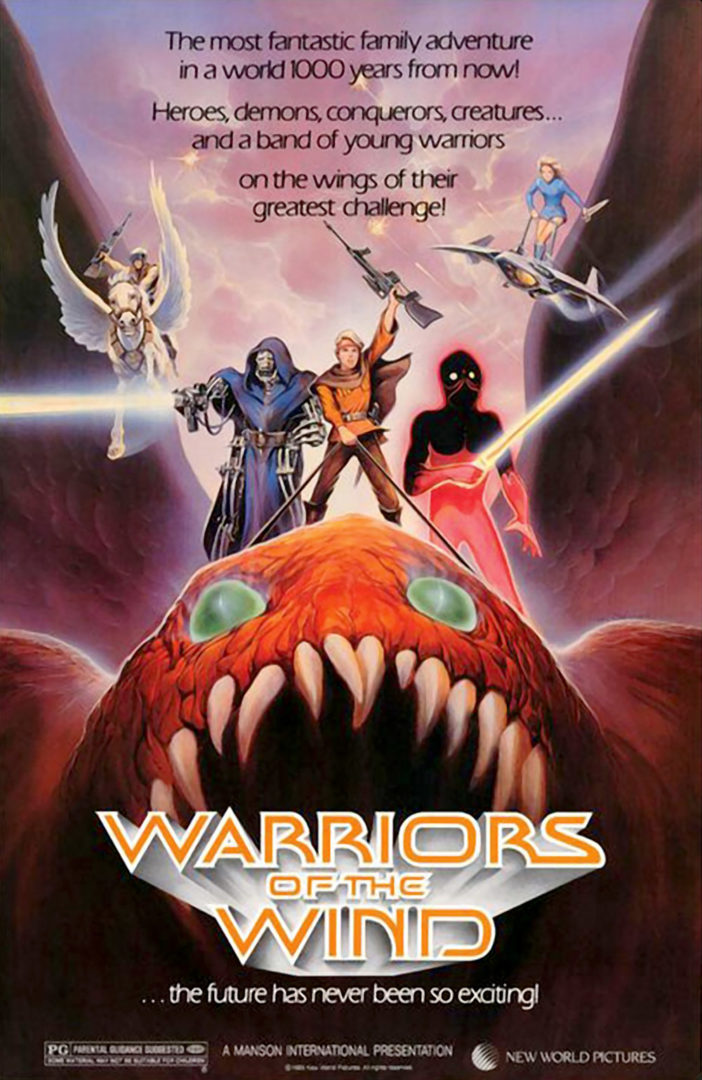
Warriors of the Wind, the heavily-edited
Western version of Nausicaä of the Valley of
the Wind.

Mollie: I don’t know that I want to get into the deeper details, because it’s a complex subject, especially for an interview like this. But with both the Trails games as a whole, localization and translation have always been very complicated things, due to how deep story-wise these games are, and how much text there is to translate. There has been endless amounts of conversation about the translation process recently, but even before with previous games and localization companies as well.

We’ve seen some companies be like, “We’re just going to hand our game off to the West and they can do what they want with it.” Meanwhile, we’ve seen situations like Studio Ghibli, where because Nausicaä of the Valley of the Wind was somewhat butchered when it was brought over as Warriors of the Wind, the studio then said, “We have to sign off on every single change that is made on the Western side.” So, I’m curious where your opinion is in terms of the Falcom side of things. Once the game is finished and a deal made for it to come to the West, do you want to be hands-off and let that company handle it the way it thinks the project should be handled? Or do you want to be more hands-on and have a say in the translation and localization process? What is both the company’s feelings, and your personal feelings?

Kondo: Unfortunately, the truth is at Falcom, not many people in the office speak English. There’s a few speakers, but not really to the level or the degree that we can check everything. So, as kind of a necessity, we have to leave it up to our partners to be able to make the decisions that they think are best, and we hope that they do a good job in doing so. I would imagine that the things that get changed, like character names, are for good reasons. So, changes like those are perfectly okay.

The area that I would take issue with, which was very similar to what you mentioned with Nausicaä—I mean, I don’t know what particularly was changed for Nausicaä, but I completely understand that feeling—is that if they’re going to start changing the actual content, they’d better be contacting us first to get our approval and talk through it. That’s kind of my personal opinion, then, at that point.

The actual story of how Falcom games came to be localized in the West is that there was a person over here who contacted us one day and said, “I would like to localize your games and get them out there, because I love your work.” And we said, “Whoa, whoa, whoa, whoa. Hold on a second. You can’t just do that.” [Laughs] “We don’t have distribution in America. We don’t know how that market works. We don’t know anything. If you really want to do this, then you should find a company and do it.” And he did. He entered a company, and they approached our company, and the rest is kind of history.

The key point, though, is that we want people who love Falcom games and love the brand to be the ones working on them and translating them. I think that’s what’s most important. I feel that if someone’s willing to go that far, then I kind of have to believe in them and trust them and what they want to do.

Mollie: It was interesting for me to learn that you made a fansite for The Legend of Heroes III: Shiroki Majo in your younger days, because in my younger days, before the Persona series was released in America, I made the first English-language Persona fansite.

Kondo: Oh!

Mollie: So I know how it feels to exist in that part of fandom that leads you to putting together something like that. I’m assuming that you made your site for the same reason I made mine, which was because there wasn’t much information out there in those early days of the internet, and you wanted to share that passion you had for a game with other people. But, to hear it from you, what was your motivation to do something like that back in those days, and how do you see gaming fandom today versus what it was back then?

Kondo: Yeah, I think it’s like you said. There’s that dearth of information that was a reality back then, and so I wanted to kind of fill that void. Particularly because, for Shiroki Majo, there was never an official strategy guide released for it. Then it was also the kind of game where, because the story was so good, you wanted to relive certain parts. But in order to do so, you would essentially have to replay the entire game. Furthermore, it was on PC only, and back then particularly, but even as it is today in Japan, PC gaming was a very niche market. It was kind of made of the hardcore of the hardcore. [Laughs]

So, wanting to provide all those things to people is kind of what motivated me to put that site together. I loved the sense of community, and from the site, the people who would visit it would then have fan gatherings. Those visitors would also research enemy stats on their own, and then would bring me their results so I could incorporate them and put them into the site. I loved that. That’s one aspect of community. I wouldn’t go as far as to say it’s lacking today, but I think that the community was so very, very strong back then.

My site eventually was something that, even though I started it, I had people contributing things like fan art, cool little CGI things for me to display on the site, and so on. [Laughs] People would help me out with the coding so that we could have things like character rankings and other ranking systems. So what originally started as a project that I made became something that was not just mine, but which also belonged to the community as well.

One thing that I remember specifically is that even though a lot of this communication was done through the internet, in a way, you knew who people were. There was this sense of not as much anonymity as you would have today. Whereas now, even though things have become much more convenient, easier, and obviously the amount of information out there is much greater than there was before, we’ve kind of lost that sense of at-homeness that you had back in the older days of the internet. As well, the sense of community that once existed, and knowing who people were specifically. It could just be because the number of users of the internet has increased, so it’s hard to have that, but that’s something that I definitely feel has changed.

Those people that helped on the website back then, I’m still in touch with some of them, and I still occasionally sees them from time to time. But when I ask if they want to help out at Falcom, they say no thanks, and that it looks like it’d be hard work. [Laughs] Because they’re all at certain levels in their own careers and things like that, they don’t want to come help us. For example, there’s somebody who now works at IBM and has a PhD, so. [Laughs]

The Legend of Heroes III: Shiroki Majo

Mollie: It’s funny to hear you say all that, because I went through the same kind of things. There were the certain people that you knew in the community that were like, “Oh, this is also the Persona person,” and so they would help out with the site. Everything you said, the fan art, the character rankings, all that kind of stuff, I remember all of that. And then you knew other people out there who specialized in other specific games or franchises. You knew you could go to them, and they would have their own little site or FAQ they’d written or at least be able to answer your question.

What’s interesting was that we didn’t have pictures of ourselves out there. We didn’t have YouTube videos. We didn’t have Twitter. But there was more connection between people, because there were so few out there that you knew who had their specialties. I knew I could go to that one guy, because he knew that one game back and forth, or other people knew they could come to me. So it’s interesting how that has changed over time, and that it’s more—you definitely have well-known people out there now, but it’s often more about the personality or the “brand,” and less about specializing in this particular game or this particular series.

Kondo: At least back then, I feel like a lot of people actually were interested in the internet itself, and worked hard to learn more about it. Now, it is what it is, right? It’s the internet. Everybody uses it. So that’s another big difference from the way it used to be.

Back then, people would literally make something called a “home page,” with their picture, their address, their phone number. And I said, “That’s kind of boring. Let me do something else.” [Laughs]But there was a sense of fun that only existed then, and I guess I can say that that era of the internet was more enjoyable for me.

Mollie: The biggest thing at that point was, of course, what nickname you picked on the internet. That was huge, because that was the way people knew you. Not by face, not by anything else, but your nickname. So I have to ask, what was your nickname?

Kondo: I just used my normal family name, Kondo, and then “ya.” Ah, and for some reason, I would often write “Limited Company” too. So I was often asked, “Are you guys actually a company?” But I have no clue now why I did that. [Laughs]

Nintendo Switch Lite Review

Years ago, I was talking to a friend about my dreams of a day when a singular video game system would exist that could be both a portable and a console. And then, in 2016, those dreams came true when Nintendo announced the Switch.

In the two years that I’ve owned my Switch, the device has cemented itself as one of my favorite pieces of gaming hardware perhaps ever. The ability to—at a moment’s notice—go from playing games on a television, to taking them with me in portable form, and then switching back again, fits perfectly with the way that I want to play. And yet, deep down, I’ve also felt like something was still missing. With Sony seemingly bowing out of the handheld race, the Switch became my biggest hope for a device that would take the place of my beloved PlayStation Vita. While the Switch does seem poised to be a replacement software-wise (as indie games and weirdo Japanese releases continue to find their way to Nintendo’s eShop), it simply can’t be that compact, lightweight portable that I can carry around with me wherever I go or play for long periods without feeling strain from its heft.

Enter the Nintendo Switch Lite. For as many people as there are hoping Nintendo might make a “Pro” Switch with beefier stats and more focus on being a console, an equal amount have been wishing we’d get a smaller model better suited for the handheld side of the Switch’s duality. As curious as I was to see how that second option would work out, I’m not sure I could have imagined how much difference a small set of changes would end up making.

Holding the Switch Lite in my hands, I know that it’s the Switch’s younger sibling, but it’s hard not to also feel like it might be a totally different gaming platform. The original Switch is like a big concrete government building, designed for function over form, never mistaken for anything other than what it is. The Switch Lite, meanwhile, is a more compact, self-contained Switch, but it could also be a PlayStation Portable 2, or Xbox Go, or any other number of potential devices. The Switch’s trademark “two controllers stuck to a screen” look is gone, and with it some of its identity, but in its place is a device that feels like it knows what it is and what it wants to be, rather than something trying to fill two very different roles at once.

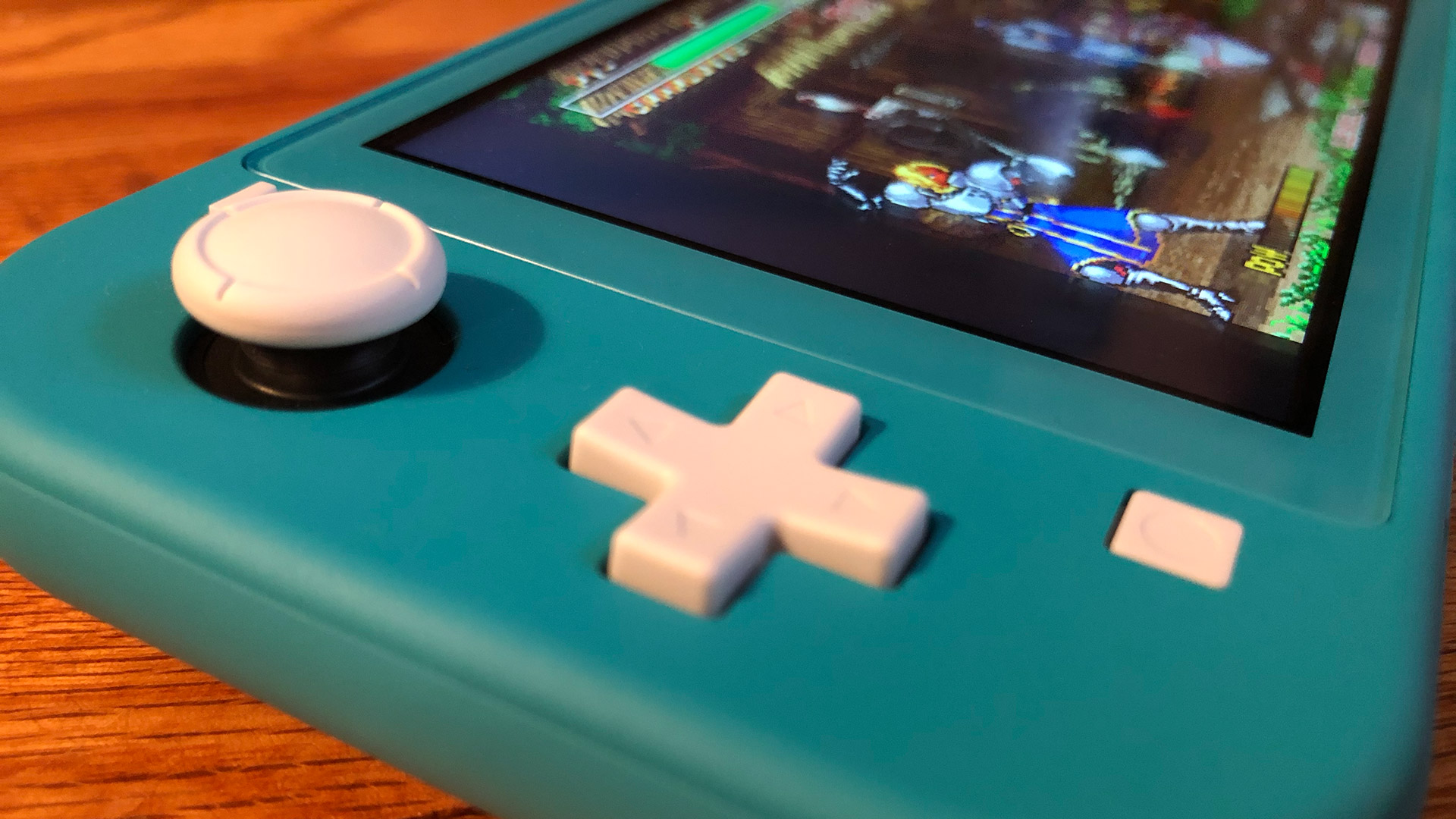
And, after a little over a week with the Switch Lite, it does indeed know how to be a handheld. The unit itself feels fantastic to hold and use, from its overall design, to its trigger placements, to its 5.5” display. I can’t say enough how much better the Switch Lite feels to play as a handheld due to its sturdiness, lighter weight, and smaller size. When I first got the Switch, I worried about its size when playing undocked, but I was able to finally get used to it. An hour after getting the Switch Lite, a lot of those memories came flooding back. To be clear, I wouldn’t go so far as to now call the original Switch “unplayable” or anything hyperbolic like that, but having both systems sitting here available to me, I can see myself picking up the Switch Lite over the original Switch at least 90 percent of the time (if not more).

And yes, I know it’s another part of handheld devices that we’ve all gotten used to by now, but I have to complement the Switch Lite’s screen. Sure, it’s no OLED Vita—not much is, really—but it’s still top notch. (At least, mine is, as I’ve avoided the yellow tinting that seems to plague so many LCD screens.) Giving the Switch Lite a 5.5” screen means it sits above all other handheld gaming systems out there, but below the original Switch (which came in at 6.5”), and I think that’s a great sweet spot to land in.

There’s also been an interesting reaction that I’ve had experiencing games on that not-too-big, not-too-small screen. Playing Deadly Premonition Origins or Bayonetta or Dark Souls on the standard Switch has never seemed weird, because the system is also a console, and they’re console games, right? With the Switch Lite, however, it’s consistently hard to rationalize that these kinds of games are running on something that my brain refuses to see as anything but a handheld. Yes, I know—with today’s high-powered smartphones, streaming services, and other tech, getting console-quality experiences on small screens is the norm now. As someone who has seen the growth of the portable market since the launch of the original Game Boy, however, I can still be amazed. Playing games on the Switch Lite reminds me of when I bought my PlayStation Portable and sat there on my floor of my apartment dumbfounded that something I could hold in my hands was able to play games like Ridge Racer (the PSP one, not the PS1 one).

In both idea and execution, I really like the Nintendo Switch Lite. And, as someone who wants the system to be as good as it can be on a personal, selfish level, I wish I could tell you everything about the system is as it should be. The problem is, there’s a number of “buts” that arise about the Switch Lite, some which will only be a negative depending on your personal use case, and others which give me far greater pause in recommending the system.

Going into the Switch Lite, there was one huge point of concern that I had for it: Nintendo’s reputation as a company who continually lags behind in its online and digital distribution services. I worried about how easy it was going to be to actively use two Switches at a time—if it’d even be possible at all. Surprisingly, Nintendo has provided options that are way more flexible than I was expecting. Describing all of this is going to get a bit messy, so let me set up an example situation. You and I are friends, and I own two Switches: my original that I’ve got registered as my primary system, and my Switch Lite that I’ve set up as a secondary. Both my account and yours are signed in on both, and all of my game library is digital, since physical copies don’t have to bother with any of this.

On my primary, both you and I can play my games just fine like before, but on my secondary, only I can play them—and only as long as I have an internet connection. Every time I launch a game, the secondary system needs to confirm that I’m authorized for that title, and once it’s launched, it can be open for about 3 hours before that check will happen again. From there, if I’m playing a game on my secondary, and you start up one of my games on my primary, things are fine. However, if my account starts any game on my primary Switch, my secondary gets blocked from playing any games. To get access to my library back, my account on my primary must totally quit out of the active game.

Given all of that, I think the most realistic set-up for anyone who wants to have both a Switch and Switch Lite will be to set the Lite as your primary console, have the Switch be your secondary, and keep it at home where it’ll always have a stable internet connection for checking in. Now, you could tether your Lite to your smartphone to fulfill those check-ins while on the go, but, at least to me, that seems like more trouble than it’s worth. So, too, would be getting locked out of your entire library while out and about, in the case that your primary Switch isn’t properly inactive.

Where all of this starts to become increasingly complicated is if you want to introduce a Switch Lite into a multi-person situation—which, you know, seems like one of the system’s biggest selling points. In my household, our daughters are too young to play games yet, so we could at least benefit from my being able to play on the Lite if my wife wants to use our original Switch at the same time. What if our daughters were older, though? Giving each their own Switch Lite seems like the best solution, and buying games digitally rather than physically makes too much sense in households where games can get lost, or misplaced, or “borrowed” by your children’s friends, or broken, or whatever else.

And yet, Nintendo provides no true solution for running the same digital games on multiple systems other than purchasing multiple copies on a variety of user accounts, all at full retail price. Sony’s PlayStation Portable—which launched 14 years ago—allowed the same game to be played on two different units without any concern for who was playing them. Apple, meanwhile, allows up to five iOS devices to play the same game under family app sharing. While it’s not totally fair to knock a piece of hardware for service issues that will only affect a certain percent of system owners, it has to be acknowledged that Nintendo’s habit of constantly lagging behind in this kind of technology is directly hampering the potential of the Switch Lite. The company needs to offer more solutions for all of this, even if that solution is letting you purchase additional digital copies of the same game for a reduced price.

There’s another catch you’ll need to keep in mind if you want to own (and actively use) multiple Switch units, but it’s a more manageable one: game saves. If you’re a Nintendo Switch Online subscriber, then most of your games will fall under the service’s cloud saves option. While you can automate uploading saves to the cloud, downloading them cannot be. So, every time you jump from one Switch to another, you’re going to need to confirm that your latest save is in the cloud, and then manually download it. Unfortunately, not every game supports cloud saves, so for those, you’ll need to do a wireless transfer from one system to the other every time you want to pick up progress on the unit you weren’t previously using. It’s a pain, but at least the option is there, and it works pretty quickly, all things considered. If you’re not a Nintendo Switch Online subscriber, though, prepare for that hassle every single time for every single game.

Juggling my digital library between two systems was a nuisance I expected to face. What I didn’t expect was to then have physical issues as well. For the most part, the Nintendo Switch Lite is a great piece of hardware. It’s great to hold, feels incredibly solid—unlike the regular Switch, where I’m always sure I’m going to snap off the Joy-Cons—and most of the buttons and inputs are in positions that don’t require you to contort your hands to use. (The right analog stick can bother me in games where I need to use it a lot, though.) However, one of the biggest physical selling points of the Switch Lite—its D-pad—is surprisingly bad. On the original Switch, Nintendo replaced the D-pad with four directional buttons, which I’ve found usable for certain games like Tetris 99 but not a lot else. Now, on the Switch Lite, we get a proper D-pad again, but the one on my unit doesn’t feel anywhere near the level of quality we’ve come to expect from the company that invented that style of input.

In general, the D-pad on my Switch Lite is kinda mushy, most noticeable when doing things like scrolling through the main menu or selecting letters on the virtual keyboard. Far worse, though, is its inability to read diagonals a majority of the time. I tried out four fighting games—Samurai Shodown II, The King of Fighters ’98, Street Fighter Alpha 2, and Street Fighter III: Third Strike—and was unable to pull off even the simplest of special moves in every one of them. If I really focused on my inputs, and put more pressure on the diagonals that I ever normally would, I was able to get fireball or dragon punch movements to read sometimes, but still far from consistently. While I’ve seen reports online of people buying Switch Lites with D-pads that read diagonals fine, I’ve also seen plenty of others having the same issue that I’m having. So, at least as of now, this seems like a problem with the hardware that is more than just bad luck. As someone who grew up gaming long before analog sticks make their big, post-Atari 5200 return on the Nintendo 64, it’s frustrating whenever I run into a bad D-pad. And yet, if I’m being honest, I use the analog stick for pretty much everything on my Switch, from precise platformers to those aforementioned fighters. Plus, for games that don’t rely on a lot of diagonal presses, the D-pad should still (hopefully) get the job done, especially if you end up with a unit that shows no issues. Still, I have to judge the system based on the unit that Nintendo sent me, which is a Switch Lite containing a D-pad that is obviously flawed.

We also have to address the elephant in the room: the joystick drift that has become a very real problem on the original Switch, to the point that Nintendo (in some regions) is providing free repairs even outside of warranty. Now, I won’t tell you that I’ve had joystick drift issues on my Switch Lite, because I haven’t—but I also can’t tell you that they won’t happen. At this point, we just don’t know yet if that will be a concern for the Switch Lite as it has become for the Switch, and unlike its older brother, you can’t just buy new Joy-Cons to replace faulty ones here. So, that’s something you’re going to want to keep in mind before purchasing a Switch Lite.

I know I’ve written a lot of words sounding harsh toward the Nintendo Switch Lite, which I think is one of the complexities of doing hardware reviews. While the system’s faults are much easier to dig deep into when looking at what exactly is wrong and why, there’s only so many ways I can say that I think the Lite is (mostly) well built, easy to hold, and seems like it’ll do a great job filling particular gaming needs.

It’s that one element—consumer need—where I’ve been the most hesitant about the Switch Lite, though. Nintendo lagging behind on digital game management I expected, the D-pad isn’t something I was holding my breath for anyhow, but beyond all of that is the question of who the Lite is for and in what situations you might own one as your second Switch—or potentially even your first.

What I know for certain is this: I would never own a Switch Lite as my only Switch. Even if the idea of a handheld that’s also a console that’s also a handheld isn’t hugely appealing to you, leaving that option off of the table, should you ever want it, is a big thing to give up. I can understand why Nintendo didn’t want to give the Lite the ability to dock with a television, but I also kinda don’t understand. Even if the Lite still wouldn’t have all of the versatility of the original Switch, if it was able to at least then play on a television for those times when you want or need to do so, then it could have been a legitimate option for anyone wanting to jump onto the platform. Not being able to move to playing on a bigger screen also brings up one of the inherent flaws of the Switch as a platform: that some developers don’t seem to appreciate their games need to work well in both configurations. We’ve seen too many titles at this point with text or UI elements that are hard to read on the original Switch’s built-in display, and games like Doom or River City Girls have elements that become even more indecipherable on a smaller screen. With no option for enlarging those experiences, having only a Switch Lite might mean simply giving up on some games that don’t scale well.

If you’re serious about only playing Switch games in handheld form and are really sure that you won’t ever want to also play those games on your television, then the Nintendo Switch Lite is a pretty decent new solution for doing so—as long as its shortcomings won’t get in the way of how you want to use it. If, instead, you’ve got your eye on the Lite as a second system, or want something that’ll help your family fight less over who gets to game when, then take everything I’ve laid out on the negative side into careful consideration. For me, I think the extra flexibility that owning both brings will make an already versatile gaming platform even better—but I’m also aware that $199 is a lot of money for a device that comes with so many asterisks on that promise of flexibility.

Code Vein Review

One of the fun side effects of the massive popularity of the original Dark Souls was the endless string of suggestions for potential offshoots. Samurai Souls. Cowboy Souls. Sci-Fi Souls. Dungeons & Dragonsouls. Anime Souls.

Especially for that last one, it was always a question of when, not if. Someday, somebody would make such a game, and it seemed that promise might finally be fulfilled when Bandai Namco announced Code Vein back in 2017. Calling the game “anime souls” is in no way an insult—as we’ll get to in a moment, it never shies away from that label—but the question of if it could live up to the idea lingered. In the days since the reveal trailer two years ago, I’d felt a looming sense of dread about how the game might turn out, which was then amplified when it faced a year-long delay from its original release date of last September.

Code Vein, in a lot of ways, is a surprise. The idea of playing a Dark Souls clone made by anyone other than FromSoftware itself has definitely lost its luster by this point, but I can’t deny that Bandai Namco has come up with a very competent copy. Combat isn’t quite as polished, but it’s still satisfying, with a variety of weapons and techniques available to let one find their own groove. (Though trying to focus on spell-like abilities can be tough due to a constant lack of MP.) Enemy encounters are surprisingly easy until they suddenly aren’t once you reach a certain location, but the variety of foes to face off against keeps things feeling fresh, and some of the bosses can definitely be a real bitch to bring down. There’s a wide selection of weapons and armor to find, each item loaded with stats to pay attention to depending on what kind of warrior you want your main character to be.

Speaking of characters, Code Vein—much like the Souls series—lets you customize your own hero, and I’ve got to give credit to how fun the presented options are here. While you can’t get into the nitty-gritty of tweaking every little physical detail of your avatar—and no, there’s no chest slider for those of you wondering—you can go crazy with clothing, color, and custom item options. What I take points away for, however, is the awful choice of a silent protagonist. Yes, it works for Dark Souls, but it does not here. Developers, there’s a simple rule: If you ever have your silent protagonist nodding their head, shrugging their shoulders, or making other gestures in order to respond to another character, just have them talk dammit. Finally, Code Vein apes Dark Souls’ idea of gaining one resource to spend on levelling up, buying items, and upgrading equipment, and which is dropped (but recoverable) every time you die. Given that the explanation for death and rebirth here is vampires instead of Souls’ more ghastly fates, that currency and much of the connecting elements are blood themed. Still, even if the names or terminology are different, if you’ve played even one Souls game, you’ll know exactly what to expect.

What I didn’t expect is the first of Code Vein’s biggest surprises, and that’s the Blood Code system. At the start of the game, you’re handed three Blood Codes, which are basically the game’s system for determining your class at any given moment. If you want to be more melee-focused, you can activate the Fighter; if you want to pick off enemies from afar, you can run with the Ranger; or if you want to practice in the dark (or light) arts, you can switch to being a Caster. At any point, you can swap from one Blood Code to another, and everything you’ve set up skills- and passive abilities-wise will remain intact.

Those three are only the tip of the iceberg, however. As you play, you’ll discover other Blood Codes, be them received from friends, found lost among the ruins of the world, or perhaps even taken by force. Switching to one will give you a new set of active and passive abilities, but the fun comes in from becoming proficient in those abilities. Many of them, if used enough, will then be available for use by other Blood Codes, meaning that with just a bit of effort, you can start to put together some highly customized character builds. While I’m the type who usually likes to pick one job and stick with it in most games, I became obsessed with using every Blood Code I came across in order to unlock its perks. The benefit to that approach is that you’ll also end up trying out some playstyles you otherwise wouldn’t, perhaps finding a favorite new alternative to try when things get tough (as I did with using heavy mace-type weapons).

Another aspect that won me over in Code Vein—and I cannot believe I’m saying this—is its story. Code Vein’s overarching narrative is anime as all hell, but it’s the fun kind of anime, the kind where you can happily drown in the utter ridiculousness. It is hard at times to appreciate the deeper story that’s woven throughout, either due to the cryptic-to-the-point-of-frustration way it reveals certain story beats, or the fact that the game itself doesn’t always seem to know how to express itself. Given that there’s a lot of human connections behind the world’s events and bosses, those elements should have more symbolism, crafting that bridge between what was and what now is. Instead, too often it felt like pieces of the game existed because something needed to exist there, not because they had specific reason to.

And yet, even with those downsides getting in the way, I was constantly wanting to find out what happens next in this tale of vampires fighting over trees that grow blood while surviving in a world nearly destroyed by a pissed-off lady with psychic powers. Throughout the game, you’re given options to see into the past to retrieve the forgotten memories of teammates and strangers, and every time I entered one of those flashbacks, I legitimately wanted to know what awaited. Your compatriots all fall into standard anime cliches, but I came to actually like almost all of them. There is, however, one element to those characters and their pasts that I’d be remiss to not bring up: Code Vein features an over-abundance of big-tittied girls who live tragic lives so that men can have motivation to go accomplish something. If that kind of thing bothers you, then boy will Code Vein drive you crazy. For me, though, this isn’t exactly the kind of game where I go in expecting gender equality and deeply-crafted character growth, so it didn’t bother me as much as it made me laugh.

The biggest criticism I can levy against Code Vein is one that feels both fair and unfair to knock it for—and that’s that it isn’t enough like Dark Souls. For me, more so than the finely-tuned combat and satisfying difficulty, one of the best parts of the Souls series is the fantastic world building FromSoftware puts into each title. Crumbling castles elicit feelings of both sadness and beauty, ashen lakes are deadly yet serene, bosses terrify but also hint at the good their hearts once contained. Code Vein sets up a world in ruin built upon an interesting premise, and then does so little with all of that potential artistically, be it through the game’s physical locations, emotional weight of what’s happened to the world and its inhabitants, or other points of inspiration both mental and spiritual.

Code Vein ended up being a complete surprise for me, both in how decent the game turned out, and how engrossed I ended up becoming in it. Ultimately, though, Code Vein’s attempts to capture the magic of the game that so obviously inspired it come up short, though I suppose it is thematically appropriate that it should do so: Vampires are great at purloining blood, but they don’t have much experience stealing souls.

Note: Given the nature of reviewing games before their launch, I was not able to try out Code Vein‘s multiplayer elements in a live, populated environment. Due to that, the multiplayer portion of the game was not taken into consideration when doing this review.

Sega Genesis Mini Review

In the 1980s, if you played games at home, you owned an NES; if you knew someone who played games at home, they owned an NES too. Everybody could share games and experiences with one another, and the world existed in peace and happiness. And then, in 1989, the Sega Genesis arrived—and war began. The line was drawn—Nintendo on one side, Sega on the other—and best friends you once gamed together with were now mortal foes flying the flag of the enemy as the “16-Bit Wars” raged on.

I never expected those old feelings of “us versus them” to come back as strongly as they have in recent years. Sega, you see, has had a bad habit of licensing out the rights to its back catalog of consoles and games to seemingly any company that asked, resulting in some absolutely awful Genesis reproductions and all-in-one units over the years. Nintendo, meanwhile, was smart to avoid sullying its historic library in those ways—and when it did finally enter the plug-and-play segment with its NES Classic Edition and SNES Classic Edition, they came directly from Nintendo itself.

So, imagine the horror of longtime Genesis fans like myself when Sega, a few years ago, announced its own Genesis Mini—along with the news that the system would yet again be hardware put together by an outside company. Thankfully, Sega heard the complaints, and put the project on hold to rethink its direction.

The result of that rethink is the Sega Genesis Mini. Right from the start, the care that’s gone into the project is clear from the physical unit itself. Sure, it looks like a Genesis hit with a shrink ray as you’d expect, but there are a number of little touches people might not appreciate right away. Along with functional power and reset buttons, there’s a mock headphone slider to replicate one of the Genesis’ more unique aspects, a cartridge slot that opens and closes, and an expansion port cover that you can actually remove (to reveal nothing). The “High Definition Graphics” label is even intact, just as it was on the original (and best) Genesis model. To show just how much thought was put into the Mini’s aesthetics, there’s even an accessory kit coming out in Japan that lets you add a replica Sega CD, 32X, Sonic & Knuckles expansion cart, and copy of Sonic 2 to the unit.

Really, though, it’s about the games inside that plastic shell, and the Sega Genesis Mini turned out fantastic in that regard. Mostly. Just to recap, here are the 42 games that come installed on the Genesis Mini:

  • Alex Kidd in the Enchanted Castle
  • Alisia Dragoon
  • Altered Beast
  • Beyond Oasis
  • Castle of Illusion Starring Mickey Mouse
  • Castlevania: Bloodlines
  • Columns
  • Comix Zone
  • Contra: Hard Corps
  • Darius
  • Dr. Robotnik’s Mean Bean Machine
  • Dynamite Headdy
  • Earthworm Jim
  • Ecco the Dolphin
  • Eternal Champions
  • Ghouls ‘n Ghosts
  • Golden Axe
  • Gunstar Heroes
  • Kid Chameleon
  • Landstalker
  • Light Crusader
  • Mega Man: The Wily Wars
  • Monster World IV
  • Phantasy Star IV: The End of the Millennium
  • Road Rash II
  • Shining Force
  • Shinobi III
  • Sonic The Hedgehog
  • Sonic The Hedgehog 2
  • Sonic The Hedgehog Spinball
  • Space Harrier 2
  • Street Fighter II’: Special Champion Edition
  • Streets of Rage 2
  • Strider
  • Super Fantasy Zone
  • Tetris
  • Thunder Force III
  • ToeJam & Earl
  • VectorMan
  • Virtua Fighter 2
  • Wonder Boy in Monster World
  • World of Illusion Starring Mickey Mouse and Donald Duck

Nobody is ever going to be completely happy with the game lists on devices such as this, and for me personally, the North American selection of titles isn’t quite as exciting as the incredibly eclectic Japanese list. Both of those things said, I’m genuinely impressed with the choices Sega made here. Given that the Genesis was a huge consumer hit here in the States, we could easily have seen a selection of games that was all about making the casual player happy. And yet, the Genesis Mini brings some nice surprises, including more hardcore (and now extremely costly) releases such as Contra Hard Corps and Castlevania Bloodlines, more niche hits like Alisia Dragoon and Light Crusader, and even games that never had a proper North American release in Monster World IV and Mega Man: The Wily Wars.

We then get two bonus goodies in Darius and Tetris. With Darius never actually having come out for the Genesis, the version included here comes from Hideki “hidecade” Konishi, a fan who basically set out to program his own version of the game. Tetris, meanwhile, is a very interesting story. The original arcade port of Tetris on the Sega Mega Drive (Japan’s equivalent of the Genesis) got caught up in a rights disagreement, and it’s thought that only 10 copies of the game ended up in people’s hands. The thing is, while those copies can now fetch tens of thousands of dollars, the port wasn’t actually all that great. So, the version of Tetris we get here is an all-new port of the game by M2 (more on them in a moment).

Really, there are only a few weak spots on the Genesis Mini’s library. Yes, I know Altered Beast was originally a pack-in for the Genesis, because that’s the game I got when my mom bought me the system at launch. It blew me away at the time; now, however, it’s mediocre at best. As much as I love the original Space Harrier, its sequel is far from a classic. And then we get to Virtua Fighter 2, whose value is little beyond the curiosity factor of this bizarre port. Looking at some of the games other regions are getting, had you kicked those three games off, and given us Alien Solider, MUSHA, and The Revenge of Shinobi instead, the system would have been a powerhouse of 16-bit goodness. (Or, let me really dream, and ask for Herzog Zwei or the M2-developed Gauntlet IV.) Still, don’t let me come off as negative here: A majority of the choices are good ones, and this is a fantastic selection of beloved classics, infamous hardcore hits, and titles that would otherwise be hard or costly to own.

Bringing all of those games to life are the skills and software of M2, a Japanese studio now legendary for its ability to revive or remake older video games. M2 was the company many like me hoped would end up heading up the Genesis Mini, and the reason why now shows when playing the system. The emulation quality is pretty fantastic, with games looking and sounding extremely close to what you’d remember from back in the day. (Or even better, given we can now play through HDMI, instead of the mess that was composite video.) For a lot of players, the experience will feel perfect, no matter if it’s during the fast action of Streets of Rage 2 and Sonic the Hedgehog, or when digging into adventures like Phantasy Star IV and Shining Force. Saying that the Genesis Mini is the best of these type of devices we’ve ever received for a Sega console is a no-brainer, but I’d go so far as saying that it also bests the efforts we saw in the NES and SNES Classic Editions—but it’s up to you to decide if that’s my bias talking.

You’ll notice that I keep shying away from saying that M2’s emulation for the Mini is perfect, and that’s because there’s one area where it isn’t: audio. The Genesis is notorious for having audio that can be a pain when trying to emulate either the hardware or software, and when playing games on the Mini, I noticed some slight lag between some actions and their corresponding audio. (A good example of this is audio cues associated with firing projectiles.) Yes, this is a blemish on the Genesis Mini’s attempt to fully replicate the experience of the original console, and there will be some people out there who will find the audio lag instantly noticeable. However, I can say with a lot of confidence that most will probably never notice. When I said the amount of lag is slight, it’s slight, and if you stop trying to find it, it’s easy to forget that it’s there.

From any other company, the audio lag issue would just be par for the course, but with M2, it’s easy to come in with high—potentially too high—expectations. The burden of the team’s reputation also affects the overall system and the work that’s gone into elements like UI and options. The Genesis Mini is a great experience, with a fast, easy to navigate main menu, proper sorting filters (by name, release date, genre, or number of players), three different wallpaper choices, the ability to switch between original or stretched aspect ratios, and a togglable CRT filter. It’s just, I’ve become spoiled by M2’s other efforts, such as their line of Sega Ages titles. As a more casual-focused consumer product, I really shouldn’t expect options like both 4:3 and pixel perfect resolution choices, a customizable CRT filter (the default one can be a bit strong), and other such advanced options. Still, they’d be nice to have, you know?

What is included, and is very nice to have, is the ability to switch all of the games to other regional versions just by changing the Genesis Mini’s language setting. Why would you do that? Well, beyond giving a lot of the games some interesting alternate cover art, there are actual gameplay differences that come along with the region switch—such as a very helpful lifebar in Contra Hard Corps or access to the original Puyo Puyo instead of the heavily-localized Dr. Robotnik’s Mean Bean Machine when set to Japanese, or the ability to play Probotector, the all-robot conversion of Contra that was made for Germany. This is the kind of feature I wouldn’t expect on a plug-and-play system like this, but it’s a legitimately cool one that adds real value to the system.

Thanks to M2, we’ve received a Genesis Mini that is probably the best we could have hoped for, where a few small issues exist but never truly detract from the overall experience. The problem is, all of that hard work is then sabotaged somewhat by the system’s controllers.

In Japan, the Mega Drive Mini includes either one or two replica 6-button controllers, depending on which bundle you buy. Here in North America, two controllers come standard, but each is based on the original 3-button pads. Nostalgia be damned: These controllers were terrible back in the day, and they’re still terrible now. Putting up with an out-of-date controller design would be one thing, but something seems to by physically wrong with the controllers produced for our run of the Mini. At E3 2019, while trying out the system at Sega’s booth, I noticed that when tapping in different directions on the homepage to look through the games, sometimes the system would read one tap as two. I wasn’t the only person to have noticed that phenomenon coming out of the show, and some wondered if there was an issue with how the main menu was reading button presses.

Unfortunately, the problem exists throughout the entire system. To test out the problem, I spent time playing both Tetris and Columns, two games where single directional presses are important for piece placement. Sure enough, sometimes the system would read me as having pressed left or right twice instead of once. I tested both controllers bundled in the unit that Sega sent me, and both gave the same results. Taking one of the controllers apart, and directly interacting with the contacts without the plastic d-pad between me and them, I still had the issue occur. At this point, I’m willing to believe that it’s an issue with the controllers itself. I don’t think it’s a problem with the actual system, but it’s hard to say for sure until I have the chance to get my hands on one of the 6-button pads sold separately by Retro-Bit (or until I get the Mega Drive Mini that I ordered from Japan).

Now, I want to be clear: Much like the audio lag issue, this will be a problem most may never notice. Playing a majority of the games on the system, where you’re pressing and holding the D-pad versus giving it quick taps, I never had a problem playing games. Even in something like Street Fighter II: Champion Edition, with its more precise input requirements, I didn’t notice any impact on gameplay. Where this is going to show up most in on the main menu, and in the two games I mentioned before, Tetris and Columns. Is it a problem big enough that you should avoid the Mini? Absolutely not. It is, however, another blemish on a device that could otherwise have been without hardware complaints.

The thing to remember about the two flaws in the Sega Genesis Mini that I’ve brought up is that they’re not really going to affect the main groups of people who are going to be picking up the system: casual gamers, lapsed gamers, or those who had a Genesis in their youths who now want to relive those memories. If you’re like me—someone who owns a library of Genesis titles and is picky about how you play them—we already have our original consoles still in working order or have moved on to the Analogue Mega Sg. For us, the Genesis Mini will be a fun—yet slightly flawed—device that I think is legitimately worth owning for the nostalgia factor. For everyone else, it’ll be the best way to go back and relive the true king of the 16-bit era. And for Sega, and for the Genesis itself, it’s some long-awaited respect for a system that truly deserves it.


The Japanese 6-Button Controller

After receiving my Japanese Mega Drive Mini, I can confirm that, when using the Japanese 6-button controller on my North American Sega Genesis Mini under initial testing, I’m finding no instances of the double-tap issue. When testing out both the main menu and games such as Tetris and Columns, all of my D-pad taps—beyond those where it was my fault for pressing too long—registered as only one controller input every time, both on the main menu and in games themselves.

At that point, my assumption was that the issue was clearly with the North American 3-button controllers, and that was the end of it. However, since earlier today, I’ve heard a few conflicting stories, such as people still having the double-tap issue with both the RetroBit 6-button controller, and the Japanese 6-button controller. There are also a lot of people who are reporting no issue at all with the North American 3-button controller.

So, at this point, I’m still at a loss as to what exactly the issue is, what may cause it, and if it’s a problem on the controller side or the system side.

Thoughts on the Dreamcast’s 20th Anniversary

As a Sega fangirl, the Dreamcast was bittersweet. It brought the end of Sega’s life as a console maker—and the realization that my favorite platform maker would make no more platforms. On the other side, the DC was Sega at possibly their most creative and daring.

The Master System was great, the Genesis in a class of its own, the Saturn a misunderstood workhorse. Each had their share of fantastic, groundbreaking, and engrossing Sega games.

Dreamcast-era Sega, however, was a whole different beast.

Sega, in those days, seemed to know their future was uncertain. If the Dreamcast was to be their final system, then it would be a system to remember, filled with games unchained from the restraints of either technological or game design restrictions of the past.

Of course, for me, no game stood out more than Phantasy Star Online. As someone who wasn’t into the world of PC gaming but was filled with envy by its MMORPGs, it was my first real experience adventuring in an online world filled with other real people.

My Dreamcast hooked up to my VGA monitor, controller and keyboard plugged in, broadband adapter keeping my connection solid, I ventured off into the unknown. My little HUnewearl Ayu Landale would go on to live an action-filled life across hundreds of hours.

There’s never been a game that destroyed my life like PSO did. It was the epitome of “I’ll play for a few hours after dinner,” then suddenly realizing the sun was coming up. It was a game that now seems so quaint & limited yet which, at the time, felt limitless.

One other memory that’s burned into my brain is for a game that doesn’t always get brought up: Metropolis Street Racer. There was nothing like it in that era. Driving around real cities, listing to an “actual” radio station—it felt like the future of racing games.

I know the argument: at this point, a decent chunk of the Dreamcast’s library has been ported or remade—to the point that some might think there’s no reason to still own a DC. And, sure, that’s probably true for some people. For me, though, there’s just this feeling when going back to play the originals on the Dreamcast that has yet to be matched. It’s like playing Neo games on non-Neo hardware: I know the experience is the same, but it doesn’t FEEL the same.

So, happy 20th anniversary to the Sega Dreamcast here in the West. You were a system that was never truly given the chance you deserved, and who had so much baggage weighing you down, and yet you shined brighter than anyone could have ever expected you to.

The Dark Pictures Anthology: Man of Medan Review

When Supermassive Games’ Until Dawn hit in 2015, it brought a fresh take on the horror genre that felt like a merger of slasher films and adventure games. In my review, I lamented the fact that the ambition the development team obviously had for its project wasn’t fully realized, but I still appreciated all of the ways in which Until Dawn did stand out from its peers.

I wasn’t the only one waiting to see what the folks at Supermassive might do next to evolve and advance those ideas, and that chance has now arrived in The Dark Pictures: Man of Medan. Unlike Until Dawn’s singular, self-contained story, Man of Medan is the first of what the team hopes will be an anthology of shorter episodic experiences.

For this first chapter, our story centers around the SS Ourang Medan, a real-life ghost story about a ship that, after sending out a strange distress call, was later found floating aimlessly with its entire crew dead. (I then caution you about reading any more on the Ourang Medan, as there may be deeper and more spoiler-y connections). In its virtual representation, we’re introduced to the ship after the Second World War, where we’re given a hint at what fate may have befell the crew. Then—in proper horror movie fashion—we jump to present day, as a group of young adults sets off on a beer-fueled weekend of diving and partying. As you might expect, they soon find themselves face-to-face with the SS Ourang Medan, and must reluctantly make their way through the military vessel in order to escape not only from the ship itself, but the strange men that have taken them hostage.

For those who never played Until Dawn, Man of Medan is heavily centered around its narrative, with numerous cutscenes telling the story interspersed with moments where you’ll need to make a quick decision or succeed at a quick-time event. Unlike a lot of games, however, the choices you make or button presses you fail can have dire consequences. Just like in Until Dawn, no one character is safe here, and once a member of your group dies, they’re gone for good. A decision you make can have major ramifications later on, or a short time after, or even instantly—and never knowing what fate you’re leading yourself toward is part of what makes the experience so compelling.

Slightly less exciting for some will be the other side of gameplay, which consists of walking around as one of the five characters in third person. And when I say walking, I mean a lot of walking. Man of Medan has little of what I would call genuine puzzles, as most answers come from finding the right room to enter, picking up and looking at items or written memos, and interacting with the right objects. As in Until Dawn, I’m not one to criticize this type of experience, because not every game has to be a “game” in the traditional sense—but I’d still give a warning to those out there who, for example, love complaining about “walking simulators”.

I do have criticisms about Man of Medan, however, and they ended up putting the game in a weird place for me. While Until Dawn certainly wasn’t without its own share of problems, it came together in the end in a way where its good greatly outweighed its bad. Man of Medan, on the other hand, is never fully able to escape from under the weight of its troubles. Scene direction and editing feels sloppier here, as moments roughly cut into others, or characters seem to just suddenly drop what they were doing because they know they have to move the game along to the next plot point. Some scenes feel like content is just straight-up missing, and there were times when it was confusing how my current character had gotten to where they now were—but more on that in a moment. In fact, it even ended up that the first time I beat Man of Medan, I had a character who had just vanished—they weren’t among the survivors who made it off the ship, yet they also weren’t shown among the dead. For a game based so heavily on trying to keep your group alive until the very end, being able to get myself into such a situation seems like a huge hiccup.

Man of Medan was also surprisingly rough at times on a technical level, at least on my original PlayStation 4. Both cutscenes and gameplay would have moments of stuttering and lag, to the point that—in my first playthrough—I actually got one of my characters killed late in the game because a pivotal QTE segment didn’t load until it was halfway over. Unlike Until Dawn, the dev team thankfully gave us the option to invert camera controls here; unfortunately, they didn’t then also offer a way to increase the font size for the ridiculously small subtitles. Given how many other much-appreciated accessibility options were included, that’s a strange (and disappointing) oversight.

The entire time I was playing Man of Medan, I just couldn’t shake the fact that it felt like the kind of project that Supermassive Games would have made before it released Until Dawn, maybe as a testbed to see if the core concepts and ideas could be fleshed out into a bigger game. One cause of that is the game’s length; unlike its predecessor’s 10-plus hour playtime, Man of Medan took me only around four hours, if even than long. I know the team wanted to shift its focus to making smaller, more episodic-style stories, but the problem with doing so is that the story ends up coming to an end right as it’s really getting good. The plus, however, is that it does get good. Not as good as Until Dawn, mind you, but when the big twist finally happened, it was something that I not only legitimately didn’t see coming, but thought was a brave route to take.

In a weird (at least for me) twist, the most interesting element of Man of Medan ended up being its multiplayer. I would never have imagined I’d care about anything other than solo play for a game like this, but both included multiplayer options offer actual value. When playing online co-op, you and your partner control different characters at any one point, with both players either seeing the same scene from their own angles, or separately having totally individual experiences. Now, there is a downside to this: whoever plays the secondary character will see story beats or situations that a solo player will never encounter on their own when playing through the game. It feels a bit weird to keep that content totally absent from the single-player storyline, and I can’t help but think that that’s why there’s weird jumps in the game at times—but it does offer incentive to play through Man of Medan again with a friend online. (This also may be part of the additional content in the upcoming “Curator’s Cut” free DLC, but that remains to be seen.)

A more interesting proposition (at least for me) is the “Movie Night” option, where two to five local players can experience the story together. Trying it with a friend, it was just okay, as we passed the controller to one another depending on whose character was the current focus. Get five players, each controlling the fate of one specific hero or heroine, however? That could potentially be a ton of fun.

I have no hesitation in saying that The Dark Pictures: Man of Medan is a far lesser experience than Until Dawn was, and that’s not really a statement I like saying about a game that really should have shown tangible progress over its predecessor. I also, however, want to be careful about making it sound like a failure. Man of Medan isn’t the game that I wished it had been, and its technical issues took me out of moments that could otherwise have been more engrossing or terrifying. And yet, in the end, I was not only glad that I’d played it, but am now wishing I’d have done so with a bit of five-person communal drinking and partying of our own. I don’t know that I’m totally onboard with Supermassive Games’ episodic plans, but I’m not ready to hope the entire idea gets killed off just yet.

SAVE YOUR WORK!

While launching a new site for EGM is exciting, the fact that we’re pruning a good chunk of the mess that was 8 years of previous content has given me a bit of an emotional crisis. So, if you are a “content creator,” please listen to a bit of advice!

SAVE WHAT YOU MAKE. SAVE THE WORKING MATERIALS YOU USE TO MAKE THAT FINALIZED STUFF YOU’RE SAVING.

We live in an era when safely and securely having back-ups of our writing or artwork is cheaper and easier than it’s ever been, so please make use of that.

I’ve been trying to get into the habit of saving my own copy of everything of value that I write, and yet I do get lazy about it sometimes—but I, and you, cannot. If it’s on somebody else’s website, it could be gone at any time. Even then, though, just having a straight text dump of your writing (for example) isn’t always enough. You forget to save final versions, publishing dates, extra elements that may have been posted along with the writing, etc.

I’m a huge proponent of having your own personal website for your work, but you may work somewhere that doesn’t want you to be able to put up your writing elsewhere, even on a personal site. Still, you can easily have your own WordPress install that’s locked down and private. Even then, though, remember that something could always happen to that too. A database could corrupt, a rogue plugin could make it hard for you to get back into your site, your web host could disappear overnight. So, never have that be your one and only back-up.

What this all leads to is this one main idea: Respect your work. Don’t just let it go out there and potentially disappear forever. And, don’t even think of counting on the company you’re working for to have proper archives. I’ve been working in this industry off and on since I was right out of high school, and it’s amazing how proper archiving and back-up procedures still don’t exist a lot of the time all those years later. And, in this mostly digital era, they may even be worse. Save everything and anything you can if it has any amount of value to you. Not just the finished articles, but the full interviews you pulled your quotes from, your research notes, whatever.

I’m trying to do all of this for myself on one level here on this site. I still have a long way to go with it—but I’m digging through my archives and putting up 20+ years of my writing. It can be a real struggle digging back into work you did for tiny sites, out-of-date word processing apps, print magazines, whatever. It can also be a lot of fun to rediscovered all of that stuff, however—even the pieces you might now be embarrassed by.

I’ve thought about this especially in the last few years thanks to our twins. Not that I think I’m an award-winning writer or anything, but I want our daughters to have the chance to read their mom’s work if they’re ever interested in doing so.

So, yeah: save your work. Save it, save it, save it. Recognize the value of your hard work and creative efforts. Even if it was one of 20 stories that went up on a click bate website on some random day, YOU should be the one to decide if it deserves to live on or not.

Samurai Shodown Review

SNK’s Samurai Shodown II is unquestionably my favorite fighting game of all time, and—for good or bad—the bar by which I judge all other genre entries to at least some degree. The recipient of my harshest judgment, however, has been the Samurai Shodown series itself. Since that groundbreaking sequel saw release in 1994, there hasn’t been any further chapter of the franchise that I’ve found to come close to SamSho II’s legacy, be it due to complaints over fighting engines, visual styles, character rosters, balance, or whatever else. If there’s one game I certainly didn’t expect to change that trend, it was the just-released Samurai Shodown, a modern-era soft reboot that would no doubt be as far away from SamSho II in spirit as it was in time.

And then, something happened—and it’s perhaps the strongest statement I can make about Samurai Shodown in this review. Prior to launch day, finding online opponents was a somewhat tricky proposition. Finally, I ended up getting paired up with another player, and we traded wins in a set of 15-or-so matches. Once we parted ways, I stopped for a moment to focused on one singular thought: I’d just played Samurai Shodown.

Now, I know that might sound like a weird thing to think, because of course I had. What I was feeling on a deeper level, however, was that I had had an experience that took me back to what I loved about the series without having to put any quantifiers on it. There was no “it was good for a modern game,” no “it was fun except for this or that,” no trying to convince myself that I had liked something I actually didn’t. As much as I knew that this was a game released in 2019 on the PlayStation 4 crafted with polygons and other modern development techniques, on a mental and emotional level, I could have been back at my local arcade in the ’90s, playing a new Samurai Shodown release on one of the many Neo Geo cabinets they had—and that shocked me.

What Samurai Shodown gets so right is a true understanding of the fundamentals that the series was originally based around. Some over the years have called the Samurai Shodown games “slow” or “boring” because, unlike the offerings of a lot of other fighter franchises, SamSho has always been more about defense instead of offence, strategy versus strength, fewer yet more calculated attacks rather than trying to overwhelm your opponent by throwing out as much as possible. That’s what has made the series great, and it’s what Samurai Shodown understands. I know other fans who think the series kept that core spirit alive in later releases, especially the beloved-in-some-circles Samurai Shodown V Special, but for me, this is the first time since Samurai Shodown II, so long ago, that I’ve truly had that kind of experience again. While no game on this level is made by one person alone, I can’t help but believe that fighting game veteran Hidetoshi “Neo_G” Ishizawa had some part in making sure Samurai Shodown properly felt like Samurai Shodown, so credit to him and the rest of the team.

That’s not to say that Samurai Shodown doesn’t bring some of its own ideas with it, of course. As opposed to the traditional two-punches, two-kicks, gameplay has moved to the more modern weak/medium/heavy slash plus single kick button layout, with all additional techniques coming out of combinations of those four inputs. One of the first new options is the counter, where—either with your weapon or bare-handed—you can parry an enemy’s attack, making them lose hold of their own blade. Breaking your Rage Gauge (Samurai Shodown’s take on the super meter) not only give you access to a temporary boost in power, but also the incredibly deadly Lightning Blade, a cinematic attack that burns the remnants of your Rage Gauge to do major damage to your opponent. Similar, there are also Super Special Moves, a once-per-match specials that are equally damaging if landed.

As nervous as I was about how new ideas might clash with the series’ classic gameplay, most of the additions to Samurai Shodown feel right at home, giving players new options in battle that don’t overshadow other, more traditional elements. I say most, however, because I’m really not happy about Lightning Blades. I’m sure people will tell me how they’re not broken, and how you can do this or that to avoid them, but the skill level required to pull them off is awfully low for how powerful they are. I’ve never been a huge fan of those “uber insta-kill” types of attacks, and I think they especially don’t belong in Samurai Shodown. The argument for Lightning Blades might be that they provide less-skilled players a way to come back against a stronger opponent, but in actual practice, I’ve seen them used far more by the dominant player to help keep their win secured. And, really, the game already has another option that provides the exact same tide-changer in Super Special Moves, which actually require skillful execution to reap their reward.

The other big piece to having a proper Samurai Shodown is the character roster, and Samurai Shodown pretty much gets it right. Along with most of the original cast, a few worthy later-era faces like Yoshitora and Shiki also come along for the ride. Then—in contrast to some of the nonsense Samurai Shodown V and VI forced upon us—we also get three new roster additions that justify their inclusion. Despite her questionable choice in attire, most exciting is Darli Dagger, a heavy hitter that can be brutal in the right hands. Meanwhile, Wu-Ruixiang seemed like total moe waifu fodder at first, but her elemental-based attacks give her a unique playstyle—and I’ll admit to warming up a bit to her silly animations. Finally, there’s Yashamaru Kurama, who—well, he’s there. To me, he’s inoffensive yet uninteresting, but he’s sure to find at least some fans out there.

No matter if it’s the characters themselves, stage backgrounds, or even the UI elements, I have to point out just how beautiful of a game Samurai Shodown is. Coming on the heels of fun-but-fugly The King of Fighters XIV, this is such a huge step up in every way. The game itself resembles traditional Japanese art, and while I think SNK could always go further in making future titles look more like paint than polygons, it’s still a fantastic style. Outside of battles, even the menus and other interface elements show off a real sense of passion and care in this project. As much as I came to love Samurai Shodown’s gameplay, it’s the complete package—taking into account all of its elements—that makes this release truly feel like a worthy successor to the series.

Well—I suppose that if I was the emotional type who takes changes to those characters I adore harshly and personally, I might tell you how much of a travesty Charlotte’s new outfit is, given her original design and what it represented. And how, outside of being offered her classic outfit in the near future as DLC, it’d be a point I’d endlessly bitch about to anybody that would listen. Thankfully, I’m not that type of person. Maybe.

The one real chink in Samurai Shodown’s armor is one that centers around an argument that’s raged for years in the fighting game community: the importance, or lack thereof, of single-player content. I know that I’m supposed to consider all sides when reviewing any particular video game, but I’m just going to be honest here: Samurai Shodown’s solo modes are quite anemic, and I couldn’t care less. I played the original Samurai Shodown, along with its sequels, in arcades, I bought Samurai Shodown II for the arcade-hardware-at-home Neo Geo, and I’ve spent all of my years since playing various ports or ROM dumps of those original arcade releases. This is, and will forever be, an arcade series to me, so as long as I have an arcade mode to play through—which Samurai Shodown indeed includes—then I’m happy. Not totally happy, as I wish the story segments here were more like the classic cutscenes from the old days, and the final foe is way too easy compared to the infamous SNK bosses of yore. Mostly happy, though. Beyond that, there’s standard options like Time Trial, Survival, and Gauntlet (take on every character in the game one by one), and I really think that’s almost all we need. If you have to have overly complex dramatic storylines, deep single-player adventure modes, or that other type of stuff, then games like Mortal Kombat 11 and Super Smash Bros. Ultimate will be happy to have you. Is a fighting game good at the fighting game part? That’s what really matters.

To be fair, SNK did try one other idea for those not looking to face human opponents, and it’s the one place where I’ll criticize this portion of the game. In theory, the Dojo is a mode where you can fight against AI “ghosts” of actual human players, which are supposed to learn from and mimic their owners’ playstyles. Sadly, that is definitely not what is currently happening in Samurai Shodown’s Dojo, unless 99 percent of players out there subscribe to the “jump in place while throwing out a lot of random attacks” school of fighting.

In telling you that Samurai Shodown has a few legitimate faults that keep it from being as good as it could be, I do so shocked that it even got anywhere near that position in the first place. There’s no way, in 2019, we should be getting a new Samurai Shodown release that even holds a candle to the best moments of the series, and yet here we are, being handed what might be one of the franchise’s strongest chapters. Sure, it’s still no Samurai Shodown II, but it’s good enough to be a second choice when I want to mix things up—and those are words I’d come to believe I might never write.

Judgment Review

“Weird as it feels to say, I have a lot of fondness for the characters of the Yakuza series. I only finally experienced the series to any real degree when I reviewed its most recent chapter last year, but I already appreciate that Kazuma Kiryu is nothing less than an institution at this point. The thought of carrying on Sega’s hard-boiled franchise without him seemed utterly blasphemous, even to me.”

After initial speculation, it turned out that Judgement wasn’t meant to be a replacement for Yakuza, nor was its protagonist Takayuki Yagami intended to replace Kiryu. Instead, “Project Judge” was to be a side story in the world of Yakuza, focusing on different characters, narrative beats, and gameplay elements—and that’s exactly what it’s ended up being.

As the game kicks off, we learn of Takayuki’s past as a lawyer, as well as his fall from grace due to a tragedy involving one of his former clients. Now, Tak is trying to make ends meet as a detective for hire, scouring the streets of Kamurocho for both clients and targets. When in need of some extra cash, Tak also plays the role of enforcer, bodyguard, or debt collector, which keeps him in constant contact (for good or bad) with the local yakuza gangs. It is through the yakuza—and specifically Kyohei Hamura, a higher-up in the Matsugane Family—that Tak finds himself directly involved in a string of gruesome murders that have all of Kamurocho on edge.

While Judgment still has connections to the various yakuza families and the wars that go on between them, coming at those events through Tak is a genuinely fascinating experience after having tried the main series. Where as Kiryu was a yakuza himself, and thus had personal ties to everything that unfolded, our hero here provides the chance to see things from the outside. Though Tak (and us players) will run into various mob officers around every corner, that’s far from the sole influence on his personal life or the primary force that ends up pulling him in different directions. Kiryu’s arc from young yakuza upstart to older, more mature man who just wants to get away from it all is still interesting to me, but I also ended up really appreciating Judgement’s alternate take on the Yakuza universe.

It’s a shame, then, that Tak’s actor isn’t nearly as compelling as his character is. For the lead role in Judgment, the team tapped ex–Japanese pop star and current actor Takuya “KimuTaku” Kimura, a household name in his home country for having been in the immensely popular boy band SMAP. As someone who adores Japanese television (and especially J-dramas), I’ve got a lot of tolerance for watching former pop stars and idols try to act—but I can’t give Kimura a pass here. Part of what makes Tak so interesting is how he contrasts Kiryu, as his more upbeat, smartass attitude is quite a change from Kiryu’s more stoic, serious nature. And yet, Kimura plays the character way too flat far too often. I came to genuinely like Tak due to his actions in the game and the way he was written, not because of his actor’s performance. Even my wife commented multiple times on how poor of a job she thought Kimura was doing—and as a native of Japan, she’s far more accepting of her country’s “talent” than I am.

In contrast, pretty much the rest of the cast (both in terms of characters and their voice actors) are great, feeling very much like people that would exist in the Yakuza universe without just being repeats of who we’ve seen before. I especially have to express my love for Tak’s partner Masaharu Kaito, who was probably my favorite character in the entire game due to his balance between suave badass and surprisingly soft-hearted nice guy. And, if you want to try a different take on all of the game’s characters, Judgment offers up both the original Japanese dialog as well as a full English dub. It’s near impossible for me to play a game like this in anything but Japanese, but Greg Chun’s portrayal of Takayuki might be just what you need should you happen to agree with me about Kimura’s efforts.

Kiryu and Tak may be very different people mentally and emotionally, but physically they both share the ability to throw a punch or twenty when the time comes. Much like the Yakuza games, there are plenty of street brawls waiting in Judgment, and the game’s combat system will be very familiar to series fans while simultaneously not just feeling like a repeat of what’s come before. Things get far more interesting, however, when our protagonist is far away from combat. Given that Tak is a detective, completing missions and progressing through the main storyline often requires more brains than brawn. At any one moment, Tak may need to change into a disguise, tail a suspect to see where they’re going, look for clues at a crime scene, find a particular person in a crowd, question a witness, or partake in other investigational activities.

It is in these moments when Judgment shines the brightest. Shifting away from the “fight your way through every problem” style of the mainline Yakuza games is a change of pace I ended up liking way more than I expected. To be clear, I still have a deep fondness for Kiryu and his adventures—but this is a great alternative to those more action-focused experiences. Judgment is absolutely at its most enjoyable when it is at its slowest, and nearly every moment of detective work had me awaiting the next.

Unfortunately, the game’s best element is also the source of its biggest disappointment. Judgment is just too Yakuza, and the team seems to have been hesitant to let it escape from the shadow of its parent franchise. At first, Tak doesn’t do a whole lot of fighting as he wanders the streets of Kamurocho, but as the game progresses, and he has more run-ins with both local yakuza families and various gangs of street punks, I just couldn’t help but wish I was off doing more detective work instead. What began as a curious side project is now the start of what I hope will be more releases, but if Judgment is to have any life beyond this first game, it should—no, must—be allowed to stand more on its own. Double down on the detective work. Have the mysteries in need of answers be more involving and detailed. Let Tak lean more into his mental prowess than his physical skill.

There’s one other point that I want to address about Judgment, and it was where some have found their biggest complaint about the game: the recycling of Kamurocho. Reusing the same portion of Tokyo we’ve seen numerous times now at first seems—to use a popular internet term—lazy. Now, having played the game for myself, I couldn’t disagree more. Admittedly, it may be because I haven’t gone through the bulk of the series at this point, but returning us to Kamurocho here seems to me like a very calculated decision. For the franchise, and its players, this is now a very familiar place, one that almost becomes a character of its own. Setting a spin-off project there makes Kamurocho feel less like a world created for any particular game and more like a real-life location where an endless amount of stories might be told. That point I mentioned earlier—seeing the world of Yakuza through a different lens—only works in part because we’re now seeing the actual world of those games in a different way as well.

It’s a bit ironic, of course, that I’m praising Judgment for one of its connections to the Yakuza series right after having derided others. That, however, is just the duality of this game. One one hand, it’s a side story no doubt meant to tide fans over until the next “proper” chapter, while on the other, it’s an experience that works hard to stand on its own. It’s a game about one man trading blows with countless gangsters and hoodlums, yet it’s also a game about that same man solving even the smallest of cases with some good old-fashioned detective work. At the end of the day, however, what Judgment is in all of its moments is enjoyable—and whatever wishes I have for what it could have been, or may become, never seriously tarnish what it actually is.

Thoughts on the Full Genesis Mini Line-up

So! We now have the final lists for the Genesis / Mega Drive Mini—and, shockingly, I have many thoughts.

In case you haven’t gotten the full details, here’s the full list of the final ten… er, twelve… games that were announced:

First, again, the turn-around of this project is nothing short of amazing—and I cannot give Sega enough credit (and thanks) for that. By all accounts this was going to be yet another throw-away half-assed clone project at first, but they heard the complaints of fans & fixed that. We’re now at a point where we’re getting a project overseen by the best in the business, M2, with a selection of games that shows actual thought and consideration, crafted to the point you can actually add on props to make the experience more “legit”.

Here’s the full line-up of titles on the North American Genesis Mini. We’ll get into my arguments in a moment, but overall this is a far better list than I could have hoped for. Are there some things I would have done differently? Absolutely—but this is darn fine line-up.

The good: there’s a lot of choices here I wouldn’t have expected or felt sure enough to hope for. Titles like Castlevania Bloodlines & Contra Hard Corps knock out some in-demand high-priced titles; inclusions like Mega Man: The Wily Wars & Monster World IV we never properly got before. And, as a general look back at what the Genesis was in its heyday, it’s a pretty good library! Missing some of the standards or requested games, but overall feels like a collection one could be happy with, and a bit more daring than some of the previous Genesis collections.

The bad: There’s a few “WTF?” choices here that are taking up space that could have been used far better. Altered Beast and Virtual Fighter 2 don’t belong anywhere near this thing; getting no MUSHA (which is on the JPN release) is an utter crime gives its price/rarity here. And, the bigger problem for me overall is that while the Genesis Mini has a pretty solid and slightly surprising library, it’s also incredibly safe. I can’t fault Sega of America for picking this list, because it makes more sense for consumer appeal—but, you know.

The problem is that the Japanese version exists, and just feels so daring in many ways. The Mega Drive Mini has some deep, deep cuts, feeling less like “let’s make something for casuals + hardcore alike” and more like “this is a crazy niche product and let’s embrace that”. I also really respect and appreciate the “only one game per franchise” decision on the Japanese side. I know it isn’t a popular decision for some fans, but I think it was the right choice to make for a better line-up.

At this point, I’m definitely leaning in the direction of picking up the Mega Drive Mini for that reason. Given that I already have my Analogue Mega Sg, I want something that both hits my nostalgia but which also feels totally unique—and the JPN vision is doing that more. And also, really, it’s the inclusion of two 6-button controllers—that goes a long way for me. I still think the one true mistake made with this whole project was giving any consideration to the original 3-button controller. They’re not good, and the “nostalgia” isn’t worth it.

Of course, there’s one other big point we need to get to: we’re getting 42 games, not 40! And it’s in these two games that we get no better look at the passion and care that’s going into the Mini.

First up is Darius—a game that never actually came out on the Mega Drive. It exists due to the work of one dedicated fan, , who (from my understanding) taught themselves how to program in order to port Darius to the system. So the inclusion of this port of Darius is, in essence, a fan game being given official blessing—and that’s crazy! I mean, allowing homebrew ports to exist is one thing, but going through the work to get the rights to include one on your commercially-available official product?

The other addition is equally crazy: Tetris. The Mega Drive version of Tetris is one of the rarest games in existence, as it’s thought that there are only 10 surviving “retail” copies in the world.

BUT—this isn’t quite that Tetris!

Tetris on the Mega Drive Mini is actually a brand-new, from scratch port of Sega’s arcade release of Tetris. The rare MD version wasn’t actually a great port in some ways, so this is seen as a sort of “what if that port had actually been good?” version of the game.

And then, of course, we have to mention the work that’s being put into the overall menus and user interface, Yuzo Koshiro’s sound work on the device, and all of the other small touches.

In the end, I have no hesitation in saying that I think the Genesis/Mega Drive Mini is going to be the best of these “mini retro” projects we’ll ever have gotten, and that it might stay that way for the foreseeable future. Even Nintendo’s efforts don’t compare to this. Now, I know—that’s influenced by my ride-or-die Gen/MD fangirl bias, but this truly feels like a legitimately special project, one that rationally should never have gotten this much time & care put into it.

Between this & the Analogue Mega Sg, 2019 has been a blessing for us Sega fans.

…though, okay, as one final thought, I do wish the JPN version of the Mega Drive Mini had Battle Mania II on it. That would have been another chance to give fans access to a grossly overpriced release. But hey.