Project Warlock Review

One of the biggest joys I experience working in video game media has been randomly coming across gems that I’d have otherwise never known about.

Such is the case with Project Warlock, a retro-inspired first-person shooter originally started as a Kickstarter project by then high school student Jakub Cislo. (After various setbacks, Cislo finally found enough success with early builds of his project that he was able to assemble a small team to increase the game’s scope and quality.) Project Warlock is the type of game I could easily have missed, given all the other releases I’ve been reviewing lately, the flood of news coming out from our industry, and my growing apathy for “new game pretending like it’s an old game” projects.

What made me pay more attention this time was the game’s trailer. Project Warlock’s visuals hit you instantly with a style I’m not sure I’ve seen before in a game like this. While the game’s design resembles one of its biggest sources of inspiration, Doom—in other words, 2D sprite enemies set atop 3D polygon-based worlds—its sprite work really stands out. There’s a level of detail and artistic flair to the sprites here that you don’t usually see in similar shooters, with sprites that almost remind me of those back on the SNES or maybe even the NeoGeo. The art direction here could easily have gone wrong were it either too detailed or not detailed enough, but the end result sits in a very happy medium.
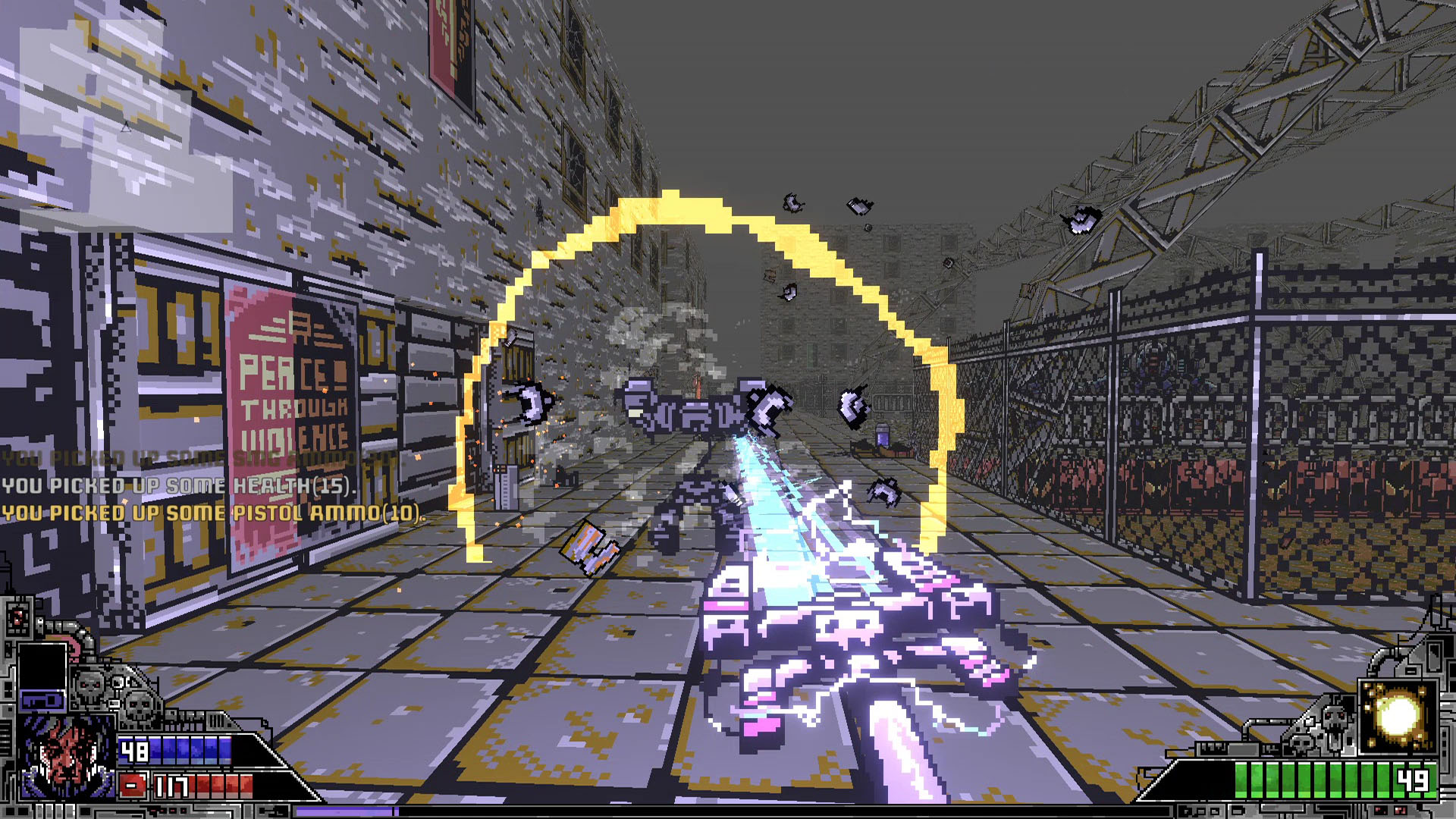
Thankfully, Project Warlock plays as good as it looks. As a shooter, it’s simple in a way that harks back to the earlier days of the genre, but it also has that depth of gameplay the best offerings from that era possessed. Even on its default difficulty, Project Warlock’s challenge can catch you off guard if you’re not ready for it, and each of its five worlds bring new enemy types with different attack abilities and tactics. While most of the game’s guns resemble weapons that have become commonplace in first-person shooters, almost all of them feel incredibly satisfying to shoot, especially once you start getting into the upgrades they offer (which we’ll get to shortly). Like all good shooters, there are a ton of secrets to find on each stage, some of which become especially important to your survival. Oh, and while you start off with full aiming movement on the right analog stick by default, turn on the “lock Y-axis” option so that it plays more like classic Doom—trust me.

I also have to give credit to the team for the work they put into Project Warlock’s maps. When I started my first playthrough and got to a point where I could preview the areas ahead, I worried things might quickly become a slog, as most of the five main worlds task you with completing 11 stages before facing off against their bosses. That seemed like a long time to be stuck in any one location with the same themes and enemies, but Project Warlock then twists the different locations in various ways. For example, in the game’s first world, Medieval, you start off in a prison area. From there, you escape through the sewers, make your way through the graveyards, and on to the castle, before facing off against the Sorcerer.

Each of those subareas feel incredibly different from the another, and that idea repeats throughout the game’s other four worlds. Credit is also due Cislo for the art team he brought on board (especially lead artist Dawid Konrad Korzekwa) as Project Warlock grew into a bigger project during its production. Even though all of these locations feel antiquated compared to modern-day shooters on a technical level, the artwork and themes used for creating those stages bring them to life to an impressive degree, keeping you eager to see what might come next. Even better, along with the aforementioned secrets, the maps themselves require exploration, problem solving, and yes, even the now-taboo b-word—backtracking.
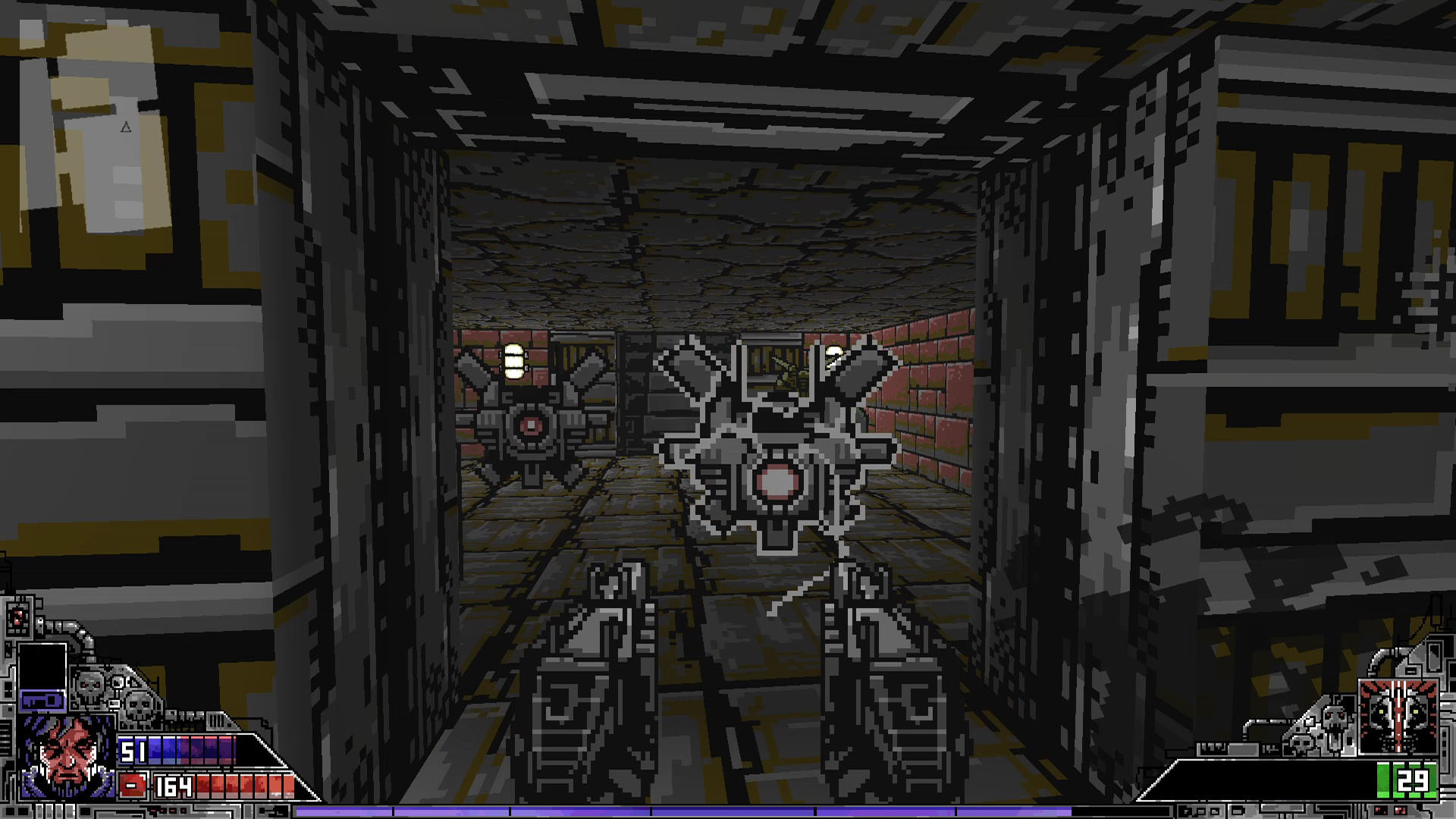
The cherry on top is that, even with the map count coming in at nearly 60, every single one has its own unique music. While not every track is a banger (as one might say), musicians Jerry Lehr and Luke Wilson have put an incredible amount of work into creating the game’s metal-inspired soundtrack. It is a shame, though, that the music wasn’t written in a way that it could seamlessly loop when playing.

Project Warlock finds a few ways to stand out from those classic games it pays homage to, the first of which becomes apparent the moment you select “new game.” In every difficulty level except for Casual, you have a set amount of lives, and once you’ve lost all of those lives, it’s game over. Like, totally over. I hadn’t fully appreciated what I’d been told when starting my first playthrough, so when the Sorcerer ate through the 11 lives I’d earned by that point, I figured I’d just have to go back to a set point or something. But no—if you use up all of your lives in Project Warlock, no matter how far you’ve made it, you’ll have to start again from the beginning. Once I got into the swing of things, making it through the entirety of the game wasn’t that bad on Standard difficulty, especially as it’s easy to earn a nice buffer of lives throughout the game. Although things did get a bit hairy for me on my second playthrough, when I finally beat the end boss with only five lives remaining—in part because, moron that I am, it was only then that I realized I’d gone nearly the entire game without finding the sprint button. I was terrified of losing all of my progress right at the end, but that terror makes for an exciting experience.

The one area where Project Warlock feels decidedly modern is in its upgrades system. While playing, you’ll earn XP, which earns you levels, which in turn earns you points to spend on increasing one of your four stats: strength, life, spirit, and capacity. For every five levels you earn, you receive Perk Points used to gain one of 12 passive perks. However, you’ll also find Upgrade Points along the way, which can either upgrade any of the 12 basic weapons you’ve found throughout the game or grant access to the various spells you’ll pick up in each world.

I know that all sounds a little complicated—especially for a game so focused on taking us back to a simpler era of first-person shooters—but it all results in a system that offers an incredible amount of player customization without sacrificing actual gameplay simplicity. The gun upgrades are especially fun choices to explore, as each weapon can evolve in one—but only one—of two ways. For example, once you find the chaingun, you can either make it more powerful and faster to start up, or turn it into a placeable sentry gun. Every Upgrade Point you spend on weapons, however, means one less to use unlocking spells, and that was one of the few areas of Project Warlock that disappointed me. Honestly, most of the spells didn’t seem to offer me worthwhile new abilities over the vast selection of weapons I already had—but I’m sure there will be players out there who prefer to go the magic route, and who do find those spells satisfying.


A Change of Scenery

I can’t forget to mention the graphical options included in Project Warlock. While the menu can be overwhelming at first, it offers up an incredible amount of customization, from turning on a variety of CRT shaders (with suboptions for changing the scanline static, movement, and screen distortion), to the ability to pick from a number of retro color palettes (such as C64, Amstrad CPC, ZX-Spectrum, and even Game Boy), to choices for bloom and motion blur post-processing, to even a full selection of color sliders. While I’m guessing most players will never touch anything from the graphics menu, it’s a treasure trove of extra effort that adds a special touch to the game.


Really, the only thing that truly tainted my time with Project Warlock was a smattering of technical complaints, and I’m not sure if they’re inherent to the game or just problems that might show up with the Xbox One port. At times, certain world textures glitch, and for some reason, switching to the melee axe from another weapon causes it to lag on its first swing. Speaking of weapon switching, Project Warlock uses the shoulder buttons to switch between the nine main weapon categories, after which you use a second button to toggle between that category’s two slots if they exist. (So, for example, switch to the shotguns category, and you can then choose between a single-barreled model in the first slot, and a double-barreled one in the second.) When you switch between categories, you stay in whatever slot you were just on. The problem is that, sometimes, my favorite weapon from one category was in slot one, while my go-to choice from its following category may have been in slot two. I wish that the game remembered my slot positions per-category, so that I could quickly rotate through a selection of personal choices, not just everything from one row or another.
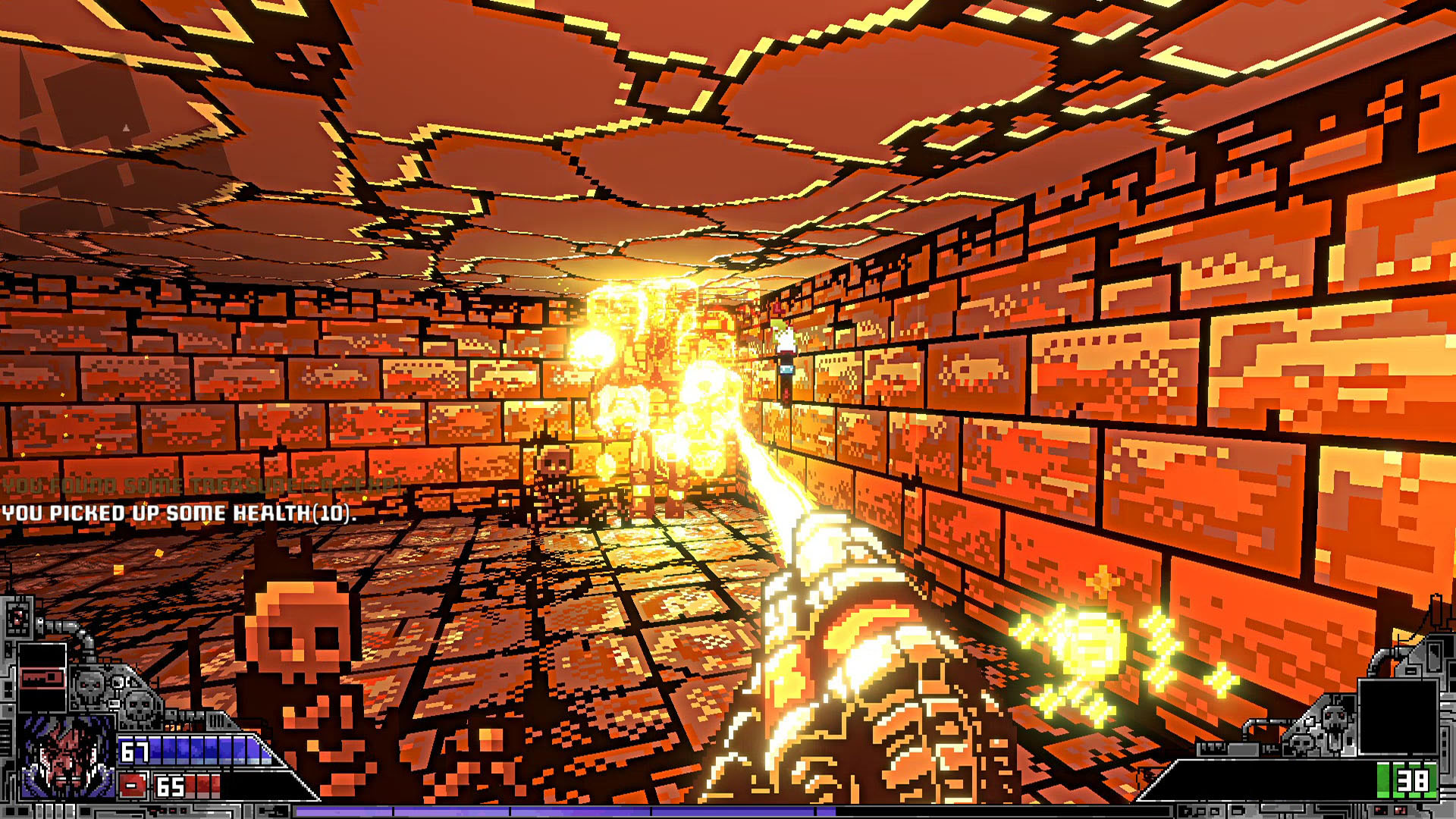
I also ran into a few bugs that affected the game on more than just a visual level. On one particular late-game stage, the door to a secret room caused my entire game to crash, and trying again after restarting had the same results. The problem was, I was losing a life every time that happened, so I had to just finally give up. And, again at least on Xbox One, I never got credit for a number of the Achievements I’d completed. According to the game, I only ever beat the fourth boss and no others. Not that I’m the type of person who usually cares about that stuff, but it still kinda sucks.

For as much as I love sitting down with a game I’ve been anticipating for months (or even years) and having it turn out to achieve or exceed my expectations, there’s just something extra special about finding pleasure from a title I didn’t even know existed a few weeks ago. Though I’m not sure it’ll win over younger players raised on more modern shooters, Project Warlock is a warm, comforting blanket for those of us who were around for the earlier days of the genre, and feels like a true labor of love in an industry that can leave us all feeling a little too cynical at times.

Update: It seems a patch may have gone out between the time that I would have earned the Achievements that I didn’t get credit for, and the time I finished writing this review. So, that may no longer be an issue.
Clubhouse Games: 51 Worldwide Classics Review

As a Nintendo DS collector with over 350 games in my collection, I’ve played a wide variety of offerings for Nintendo’s dual-screened handheld, from the big blockbusters, to the indie darlings, to the sleeper hits that most people have probably missed. And yet, one of my absolute favorite DS releases remains Clubhouse Games. Nintendo’s collection of card, board, and action games offered hours of entertainment across a selection of 42 choices, and was great for playing either solo or with friends.

So, when Nintendo revealed Clubhouse Games: 51 Worldwide Classics for the Switch during a recent Nintendo Direct, I was excited to say the least. This time around, the team has crammed even more games into the package, covering not only those classic card, board, and action game categories like before, but also a wider selection of sports, competitive games, and recreations of retro toys.

Before we go any further, here’s the full list of what’s included:

Same Screen
Multiplayer
Online
Multiplayer
Same Screen
Multiplayer
Online
Multiplayer
Mancala Dots and Boxes
Yacht Dice Four-in-a-Row
Hit and Blow Nine Men’s Morris
Hex Checkers
Hare and Hounds Gomoku
Dominoes Chinese Checkers
Ludo Backgammon
Renegade Chess
Shogi Mini Shogi
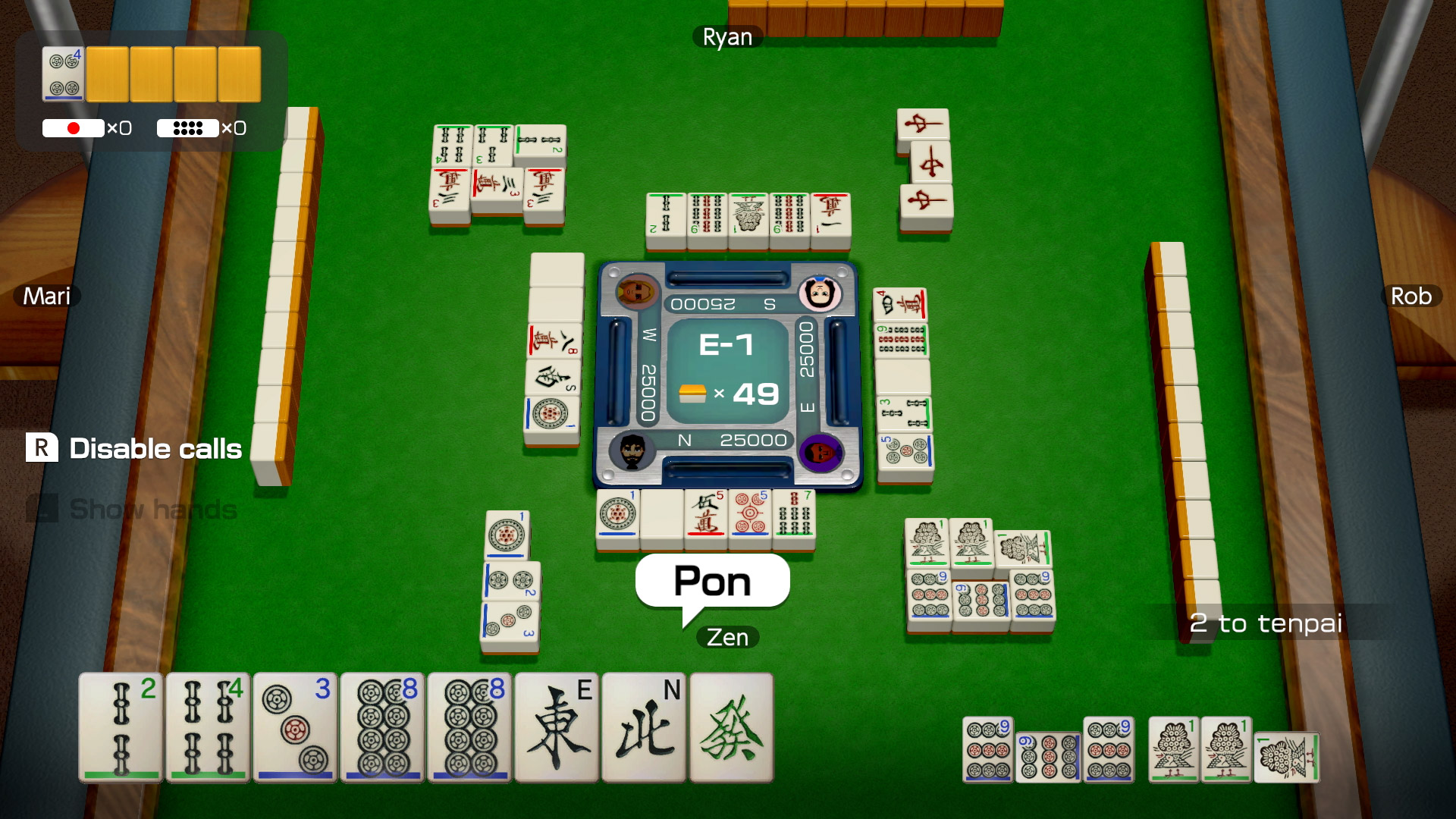
Hanafuda Riichi Mahjong
Last Card Blackjack
Texas Hold ’em President
Sevens Speed
Matching War
Takoyaki Pig’s Tail
Golf Billiards
Bowling Darts
Carrom Toy Tennis
Toy Soccer Toy Curling
Toy Boxing Toy Baseball
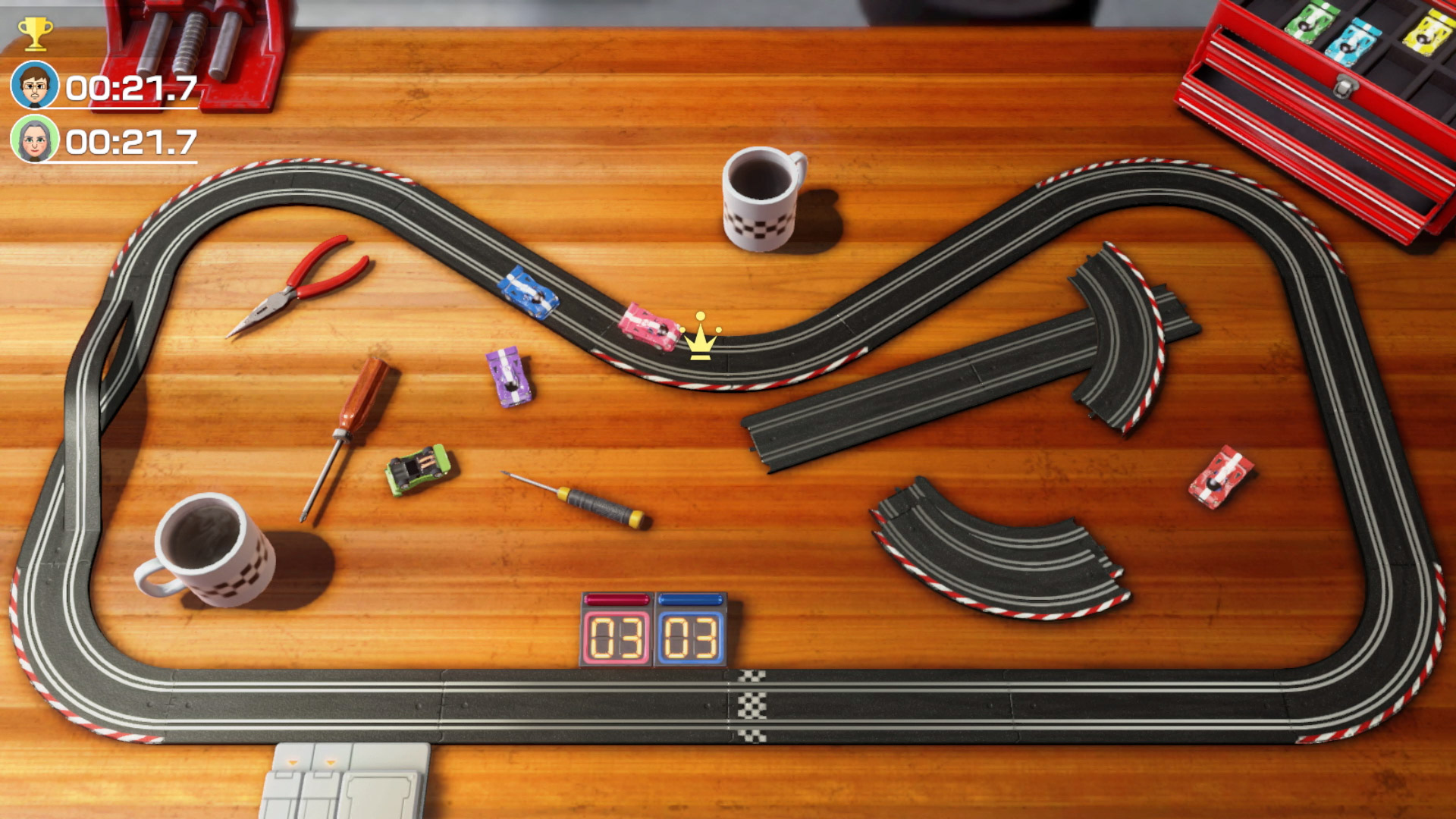
Air Hockey Slot Cars
Fishing Battle Tanks
Team Tanks Shooting Gallery
6-Ball Puzzle Sliding Puzzle
Mahjong Solitaire Klondike Solitaire
Spider Solitaire Piano

Please note: For the purposes of this review, online gameplay was not tested due to the pre-release nature of the game. As well, local play using multiple Switches could not be tested, as the free guest pass app is not yet available.

Not everything from the original Clubhouse Games made it over to the sequel, with games like Old Maid, Hearts, Rummy, Grid Attack (aka Battleship), and Field Tactics (aka Stratego) missing from the line-up. While there are a few that I’ll genuinely miss—I put way too much time into the sliding block puzzle Escape, and having no standard five-card draw poker is pretty surprising—most of what was removed would honestly be dead weight for a lot of players these days.

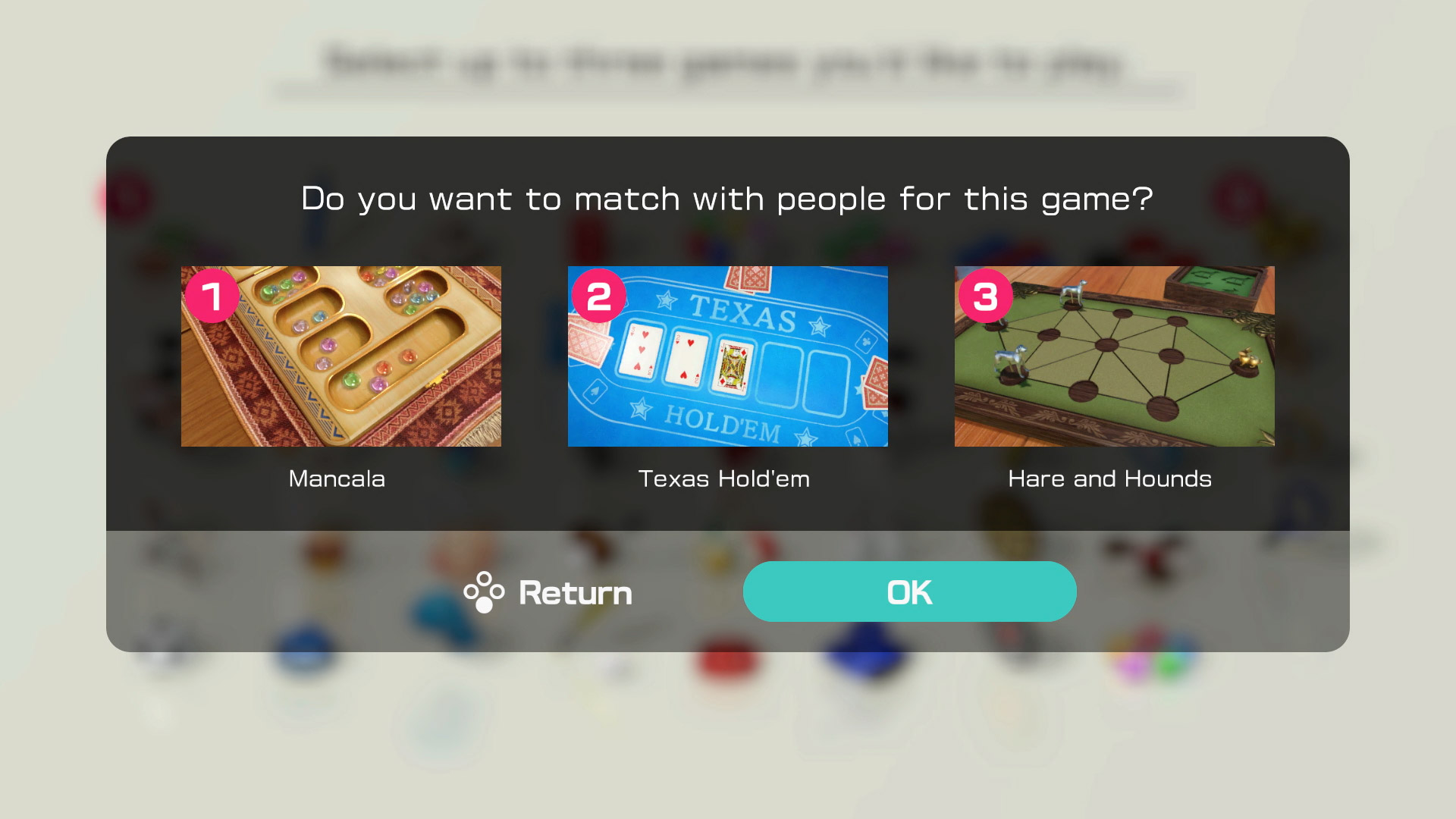
In their place, we get some really fantastic replacements. Games like Mancala, Carrom, and Hare & Hounds might seem like ancient history to younger players, but they’re timeless classics that are all still incredibly fun to play today. The selection of new “toy” games are by far the biggest addition by category, and while they aren’t the deepest experiences gameplay-wise, they’re a nice selection of new options for when you’re playing with people who prefer something simpler. Overall, the entire game list just feels so much smarter in its variety, providing a far better collection no matter if you’re playing alone or with others.

There is something really important to remember (or know) about Clubhouse Games: 51 Worldwide Classics’ library, though: Its games are all more casual-focused in design. You simply can’t expect the same level of depth here as you’d get from more specialized releases. For example, Texas Hold ’em is only playable for a set number of rounds, and the options presented in Golf aren’t anywhere close to what you’d get from something like HB Studios’ The Golf Club series. None of that is in any way a negative, to be clear. The Clubhouse Games series exists to offer a wide variety of choices for those times when you want to relax both your body and your brain with some video games, or when you want options to play with family and friends no matter what their skill levels might be. In those ways, and more, both titles have totally succeeded.

Throughout my time with Clubhouse Games: 51 Worldwide Classics, I only had a few minor complaints. While the limitations of what is playable in either local or online multiplayer make sense, I simply don’t get why Nintendo decided to have two outliers—Darts and Fishing—that are unplayable with a Pro Controller. There’s nothing special enough about either that they couldn’t have also provided more traditional control options. (And boy does it suck using my Joy-Cons when they’re both suffering from major drifting issues, but I suppose that goes for every Switch game that I own.) I also don’t understand Nintendo’s reluctance to offer both digital and analog movement for games like Dots and Boxes, Spider Solitaire, or Mahjong Solitaire. I kept wanting to just speed through possible move choices using the directional buttons, but was only ever given slower-moving analog controls. Finally, I wish Nintendo had rethought some of the games’ art assets for when they’re played on smaller screens. Given Clubhouse Games’ huge appeal to older gamers, certain elements like scores or numbers on cards can at times be harder to read—especially if you’re playing on a Switch Lite.

The other aspect to Clubhouse Games: 51 Worldwide Classics that I was sure would end up being a negative turned out to be a huge positive: the game’s user interface and overall style. When things kick off, you’re presented with talking board game pieces who provide an introduction to the overall collection before ushering you off to customize your own piece. Once I’d placed my little figure on the game’s virtual globe and saw a selection of other NPCs to talk to, I started getting flashbacks to Rhythm Heaven Megamix and its dreadful story mode that locks everything away behind seemingly endless cutscenes.

Thankfully, Clubhouse Games: 51 Worldwide Classics has no intention of locking away any of its games until you jump through a series of hoops. Its living board game pieces exist simply to help you focus on smaller curated collections of games (should you want them), or to provide a way to connect with other real-world players around the world through their own customized figures. Those pieces and their short pregame conversations are set atop an overall interface that’s incredibly clean and stylish, providing a humorous yet welcoming way to access all of the games and their options.

I know there will be some who think I’m totally crazy for saying this, but I truly believe that Clubhouse Games: 51 Worldwide Classics is easily one of Nintendo’s best releases on the Switch. Unlike games like Super Mario Odyssey or The Legend of Zelda: Breath of the Wild, it’s not a “beat it then sell it” kind of experience, nor is it something like Splatoon 2 or Super Smash Bros. Ultimate where constant updates are needed to keep things fresh. This latest chapter of the Clubhouse Games series legitimately has something for everyone in your household, and its collection of games will be just as relevant ten years from now as it is today. While the original Clubhouse Games will always have a special place in my heart, Nintendo really upped its effort in this sequel, and the result is something that stands apart from almost everything else on the Switch.

Turbografx-16 Mini Review

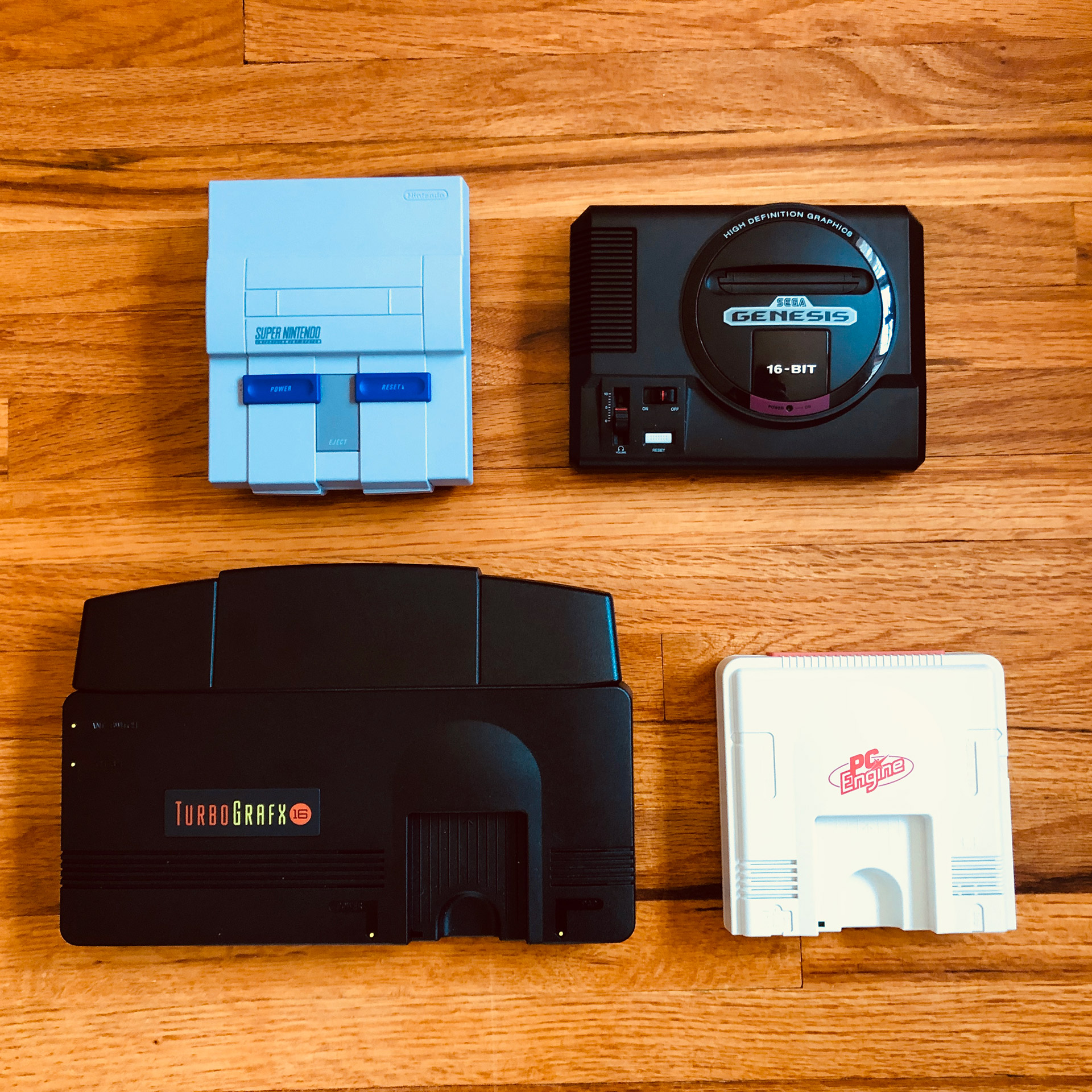
Of all of the retro consoles ripe for transformation into a miniaturized all-in-one device, NEC Home Electronics’ contribution to the world of gaming seemed like an incredibly unlikely choice to me. Known as the PC Engine in Japan, the system was quite popular in its home country back in the 16-bit era. However, here on our shores—and, really, around the rest of the world—the reputation of the renamed Turbografx-16 (or CoreGrafx in Europe) typically ranged from a strange curiosity to a non-contender, depending on who you spoke to. With NEC long gone from the console market, and the system’s designer and main software supporter Hudson Soft shut down back in 2012 and absorbed into Konami, I just never figured there’d be anyone out there to even contemplate making such a device.

The thing is, out of all of the consoles to bring back in “classic” form, I think the Turbografx-16 is possibly the most deserving. While the Super Nintendo and Sega Genesis were far more popular, there are numerous ways to buy games from those consoles digitally across a wide variety of platforms. As well, quality after-market options such as Analogue’s Super Nt and Mega Sg exist for those who no longer own or can’t afford original hardware. When it comes to affordability problems, the Turbo market has shot up in price for both hardware and software to ridiculous levels, now only second to SNK’s NeoGeo in some circumstances. And, outside of Nintendo’s once-great Virtual Console back on the Wii, and a smattering of releases on the PS3, the TG-16’s library hasn’t been available digitally in any legal way.

After a last-minute delay, we’re finally on the eve of the Turbografx-16 Mini’s release—and here are my thoughts after spending some time with the system.

Hardware

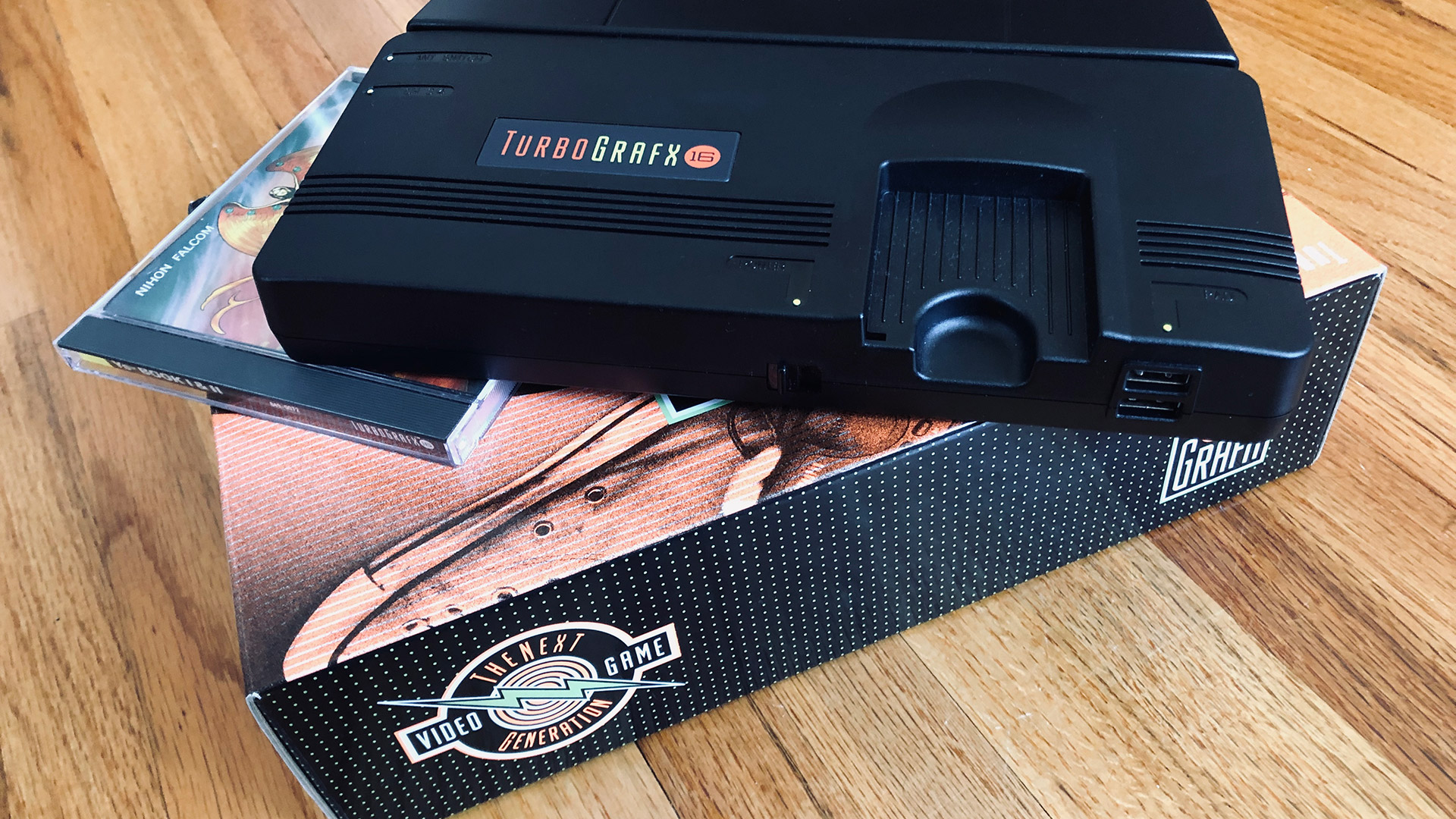
The original Turbografx-16 was notorious for taking the PC Engine—the smallest proper console to ever see release—and turning it into a hulking monstrosity of unbridled Americana. Still, as ugly and bulky as the system was, there was also something lovable about it, which I’m reminded of when looking at this shrunken-down replica. The Turbografx-16 Mini does a great job of capturing all of the physical details from the original, even down to the extended expansion port on the back of the system that you can hide with a snap-on plastic cover.

One aspect Konami thankfully didn’t keep was having the system feature only one controller port. Instead, here we get two USB ports, meaning that a lot of multiplayer games are now playable without the need of a separate 5-player TurboTap (which, coincidentally, Hori is making a version of for these Mini consoles). Really, the only physical downside for me is that Konami didn’t take a page from the Genesis Mini and offer the option to slot replica game cartridges into the system. Given how iconic the TG-16’s credit card-sized HuCards were, it would have been a neat—but unnecessary—bonus.

The Turbografx-16 Mini comes with one replica TurboPad controller crafted to emulate the size and design of the originals. Now, it’s been a long time since I’ve used a proper TurboPad, but from memory, these feel pretty darn close. An added bonus we get over the Japanese release is a pack-in controller with turbo switches. Due to what I assume is a sense of tradition, the PC Engine Mini’s controller is devoid of those trademark switches, as they weren’t part of the initial controller design. Since the TG-16 came with controllers that supported varying levels of rapid fire from the start, we get those switches here too, and you’ll certainly enjoy having them when playing some of the included games. Oh, and special mention goes out to the controller’s 9-foot cable, which dwarfs both that of the original controller and other mini systems.

Presentation

We’ve seen a mix of good and not-so-good user interfaces for classic consoles so far, but I might argue that none have been better than what the Turbografx-16 Mini sports. Developer M2 has put a lot of work into crafting a main menu that offers both functionality and fanservice, and it’s almost an overload of nostalgia for those like me who loved the platform back in the day. Cover art is beautifully presented, and it’s even accompanied by recreations of each game’s case spine. The entire interface rethemes itself depending on if you’re browsing the American or Japanese game lists (more on that in a moment), and the entire time, little anthropomorphized PC Engines walk around the screen doing cute things. (Though, you can always turn them off if you’re heartless.)

The absolute best part of the interface is also its most functionally pointless: the special animations that happen when you start up a game. If you pick a standard game, a sprite version of the HuCard appears, and slides itself into the cartridge slot on the top of the screen. Meanwhile, if you pick a CD-based game, a virtual TurboCD unit pops up, complete with the initial CD OS boot screen and disc loading sound. The noise of the disc drive seeking data from a CD is burned into my brain to this day, and including it here serves no practical purpose, yet adds so much on an emotional level.

Settings-wise, the Turbografx-16 Mini supports six different languages, four choices of wallpaper, an option for either PC Engine or CoreGrafx UI elements when browsing Japanese games, and a small selection of display settings. Without getting too technical, there are five options: two for emulating the 4:3 screen size you would have seen when playing games on older televisions, a “pixel perfect” mode that displays pixels perfectly square (but not authentic to how they were originally presented), one for stretching games to the full height and width of modern day HDTVs (don’t even think about it), and a curious final option that makes it look like you’re playing games on the Turbografx-16’s portable variant, the TurboExpress. I can’t help but love that final choice, but really, it’s not something you’ll ever use beyond the occasional bout of curiosity.

Software

Finally, we’re ready to talk about the games—but before we do, here’s a refresher on the Turbografx-16 Mini’s library:

Turbografx-16 Games

  • Air Zonk
  • Alien Crush
  • Blazing Lazers
  • Bomberman ‘93
  • Bonk’s Revenge
  • Cadash
  • Chew-Man-Fu
  • Dungeon Explorer
  • J.J. & Jeff
  • Lords Of Thunder
  • Military Madness
  • Moto Roader
  • Neutopia
  • Neutopia II
  • New Adventure Island
  • Ninja Spirit
  • Parasol Stars
  • Power Golf
  • Psychosis
  • R-Type
  • Soldier Blade
  • Space Harrier
  • Splatterhouse
  • Victory Run
  • Ys Book I & II
PC-Engine Games

  • Akumajou Dracula X Chi No Rondo
  • Aldynes
  • Appare! Gateball
  • Bomberman ’94
  • Bomberman Panic Bomber
  • Chō Aniki
  • Daimakaimura
  • Dragon Spirit
  • Dungeon Explorer
  • Fantasy Zone
  • Galaga ’88
  • Ginga Fukei Densetsu Sapphire
  • Gradius
  • Gradius II – Gofer No Yabou –
  • Jaseiken Necromancer
  • Nectaris
  • Neutopia
  • Neutopia II
  • Ninja Ryūkenden
  • PC Genjin
  • Salamander
  • Seirei Senshi Spriggan
  • Snatcher
  • Spriggan Mark 2
  • Star Parodier
  • Super Darius
  • Super Momotarou Dentetsu II
  • Super Star Soldier
  • The Genji and the Heike Clans
  • The Kung Fu
  • The Legend of Valkyrie
  • Ys I & II

The list of included games is almost the same no matter which region of hardware you buy—PC Engine Mini–only titles Tokimeki Memorial and Tengai Makyou II: Manji Maru are swapped for Gradius spin-off Salamander (aka Life Force) on our Mini—and there have been some mixed opinions on that choice. On one hand, it can feel weird swapping back and forth between two separate lists of games, and titles like Ys Book I & II, Neutopia, and Dungeon Explorer show up on both sides, which you might argue is a waste of slots. Also, as awesome as it is to have Japan-only releases like Super Momotarou Dentetsu II and Jaseiken Necromancer, they’re totally useless to anyone without proficiency in reading and understanding Japanese. That is especially frustrating in the case of Snatcher, as it feels like a cruel tease to give it to us untranslated. The English-language Sega CD release is now ridiculously expensive, and I really hoped that Konami would surprise us with a fully localized version of the game, but alas.

The other side of the argument is that I don’t know that Konami could have done anything but fill the Turbografx-16 Mini with titles from multiple regions—at least, for those of us here in the West. Far too many of the PC Engine’s trademark titles never left Japan, and relying on only North American-released games would have left the system’s library feeling horribly anemic. The trade-off to having a handful of repeats and foreigner-unfriendly inclusions is a selection of titles that’s far stronger in the end. There are a lot of great Japanese games on here, from beloved classics like Dracula X (still one of the best Castlevanias ever released), to major franchise titles we never got like Bomberman ‘94 or the PC Engine version of Ninja Gaiden, to cult classics like Cho Aniki and Seirei Senshi Spriggan.

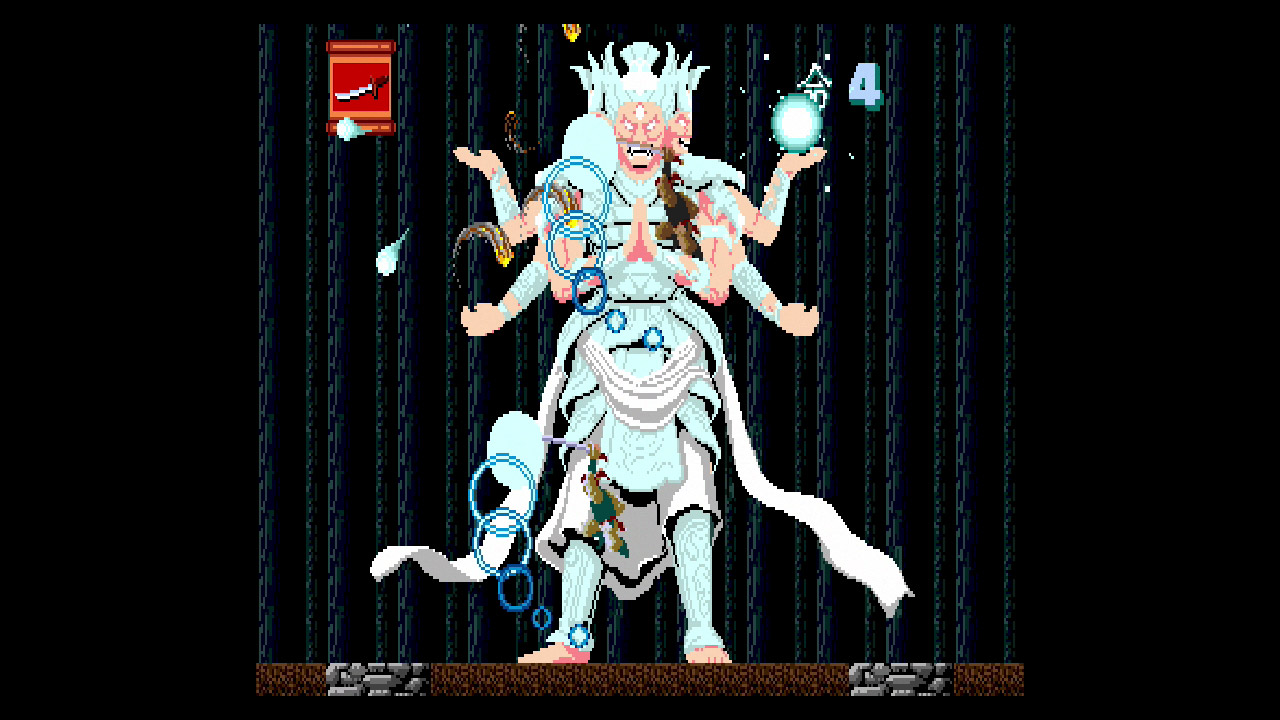
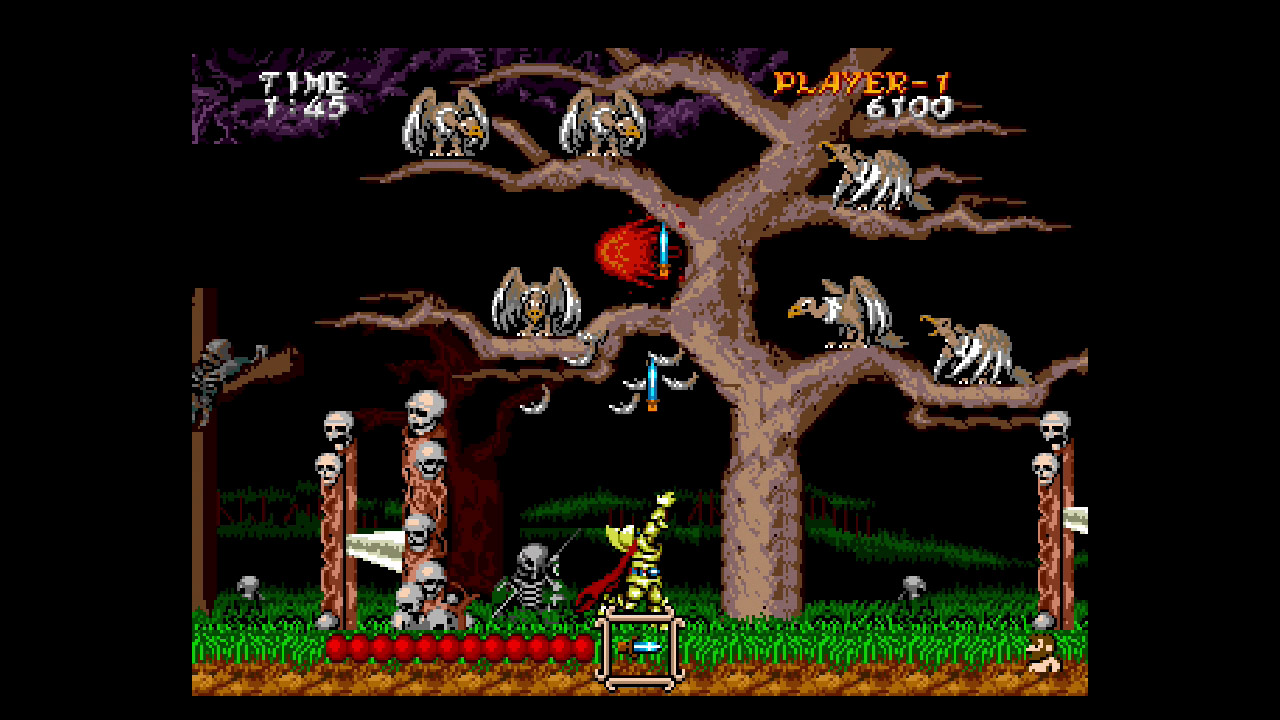
What most surprised me about the lineup is that, from there, Konami made a few choices that would end up hugely impacting how important the Turbografx-16 Mini is. There are a handful of titles on here whose physical copies are unobtainable for a majority of gamers, such as the fantastic shooter Ginga Fukei Densetsu Sapphire, which now often sells for $900 or more. Konami has even given us the two most important releases from the SuperGrafx, an ill-fated follow-up to the PC Engine that only sold around 75,000 units, and which received a scant five games. I’ve wanted to play its version of Daimakaimura (Ghouls ‘n Ghosts) since I first saw screenshots of it in the pages of EGM as a child, but there’s never been a real way for me—or nearly anybody—to play it or Aldynes outside of downloading ROMs.

For all of those reasons, and more, I can easily say that this is the best line-up of games a classic all-in-one console has ever featured when looking at the bigger picture. There were so many ways that the Turbografx-16 Mini could have gone wrong in terms of its library, but the choices Konami made were shockingly smart. Not perfect, mind you—there are a few obvious omissions here, such as the infamous North American pack-in Keith Courage in Alpha Zones, staples like Gates of Thunder and The Legendary Axe, or other out-of-reach releases like Magical Chase. Plus, there are a few of my personal favorites missing, such as Silent Debuggers and World Court Tennis (with its wonderfully bizarre tennis-based RPG mode). Still, it’s hard to complain given everything that we did get.

Although, there’s one thing that I really need to stress: This is a fabulous library of games for those who can appreciate it. Unlike the far more casual-friendly Sega Genesis and Super Nintendo, the Turbografx-16 was known in its time for playing host to an eclectic selection of games—many of which can now feel like bizarre relics of a bygone era. I’m genuinely excited by the idea of people who have never experienced the TG-16 now getting the chance to do so, but I’m also keenly aware that it’s absolutely not going to be for everyone.

Emulation

When Konami finally revealed that retro specialists M2 would be handling the software side of the Turbografx-16 Mini, I was incredibly relieved. If there was anyone who could give the system and its games the proper care that they deserve, it’s M2, and the studio’s work here is mostly up to the standards it’s known for.

I say mostly because, much like M2’s work on the Genesis Mini, the software emulation here is just far enough away from being spot on to be slightly disappointing.

Here at EGM, we try very hard not to read reviews or other sources of opinion for things we ourselves are reviewing, lest they influence our own opinions either consciously or subconsciously. Well, I’m going to be honest here: Between purchasing the Japanese PC Engine Mini on my own, and the delay of its Western release, it was hard to avoid talk of the system until my review unit arrived.

The three main issues people have brought up are the existence of some amount of input lag, some amount of audio lag, and a visual “shimmering” effect that can occur at times due to the way M2’s emulation upscales pixels. So, rather than pretend that I didn’t know about those common complaints going into this review, I’ll tell you how my experience has been as someone who hasn’t touched the original hardware or games in about 15 years.

I can definitely confirm that there’s a slight shimmer that occurs as certain background elements scroll by, most notable for me in games like R-Type, Ninja Gaiden, and J.J. & Jeff. Really, though, it was never something that tainted my experience when playing, as I found it mostly easy to ignore. When it came to the input and audio lag, while I could find examples of them if I paid attention to doing so, for a majority of the time they were honestly a non-issue. Especially for a console so heavily focused around old-school shooters, I was nervous about the potential for lag going in, but Lords of Thunder was the only game where I truly felt like gameplay was impacted. (And to be fair, I’d never played the game before now, so that might just be how it is.) Otherwise, while I don’t want to downplay the fact that emulation issues do exist, if you don’t have an original Turbografx-16 to compare the Mini to, I think that lag is going to be hard to notice for many. I’d say the same for audio lag as well. Beyond a few games like Bonk’s Adventure where it did seem more noticeable when I focused on the timing of sound effect, I just don’t think most people are going to pick up on slight audio delays when their attention is on actually playing a game instead of analyzing it.

Do I wish there were no emulation issues of any kind to speak of? Of course I do. However, as this is a $99 mass market item based fully on software emulation, and not a more serious collector-focused piece of tech running FPGA-powered hardware emulation, I’m willing to cut the Turbografx-16 Mini a bit of slack (as I do all similar devices). Even with those issues, I still think this is a very respectable effort when compared to some of the other options out there, and firmly believe that most people will never even notice any of these hiccups.

In closing

The Turbografx-16 Mini is unquestionably one of the most exciting all-in-one classic consoles that I’ve seen hit the market due to the work that’s gone into it, the stellar selection of games it features, the easy access it provides to a platform that’s often inaccessible, and the amount of money it can help save someone trying to build up a respectable Turbo library. This is in no way a product I could recommend to the everyone given how weird and unfamiliar the included games are, but for anyone who has ever pondered owning a Turbografx-16, or who is trying to replace a collection they once had (like me), the Turbografx-16 Mini is a great solution.

Disaster Report 4: Summer Memories Review

With everything going on in the world right now that can make us feel lost and hopeless, it’s important for each and every one of us to remember the good things in our lives—even if those things may seem trivial in the bigger picture.

In my case, one good thing I can say about 2020 is that it’s given me the two games I’ve spent the most time waiting for in my entire life. Earlier in the year, I finally got to play an official English release of Phantasy Star Online 2, something I’ve been longing for since it first launched in Japan nearly eight years ago. And now, with its American release mere days away, the nine years I’d spent hoping that Disaster Report 4: Summer Memories would see the light of day have now come to an end.

Even with all of its mistakes, there are still some emotional moments of humanity in Disaster Report 4.

Those of us who have been waiting for the game are, admittedly, a rather small bunch. When the first chapter of the Zettai Zetsumei Toshi series came west as Disaster Report (or SOS: The Final Escape in Europe) in 2003, the game—and later the entire series—gained a cult following. Disaster Report gave us a type of experience we rarely see even to this day: an adventure based on surviving a natural disaster that doesn’t then break down into a tale of aliens, zombies, or other fantastical elements. More disastrous to the series than its earthquakes or floods, though, have been levels of technical and gameplay quality that I could only describe as “jank.” Constantly fluctuating framerates, stiff controls, unpolished core concepts, and obscure campaign objectives have kept a lot of players away from the projects Kazuma Kujo and his team have offered the world. For those who could get past all of those flaws and appreciate the journeys on a deeper level, experiencing the uniqueness of what was being offered compared to most other adventure games on the market was worth the suffering.

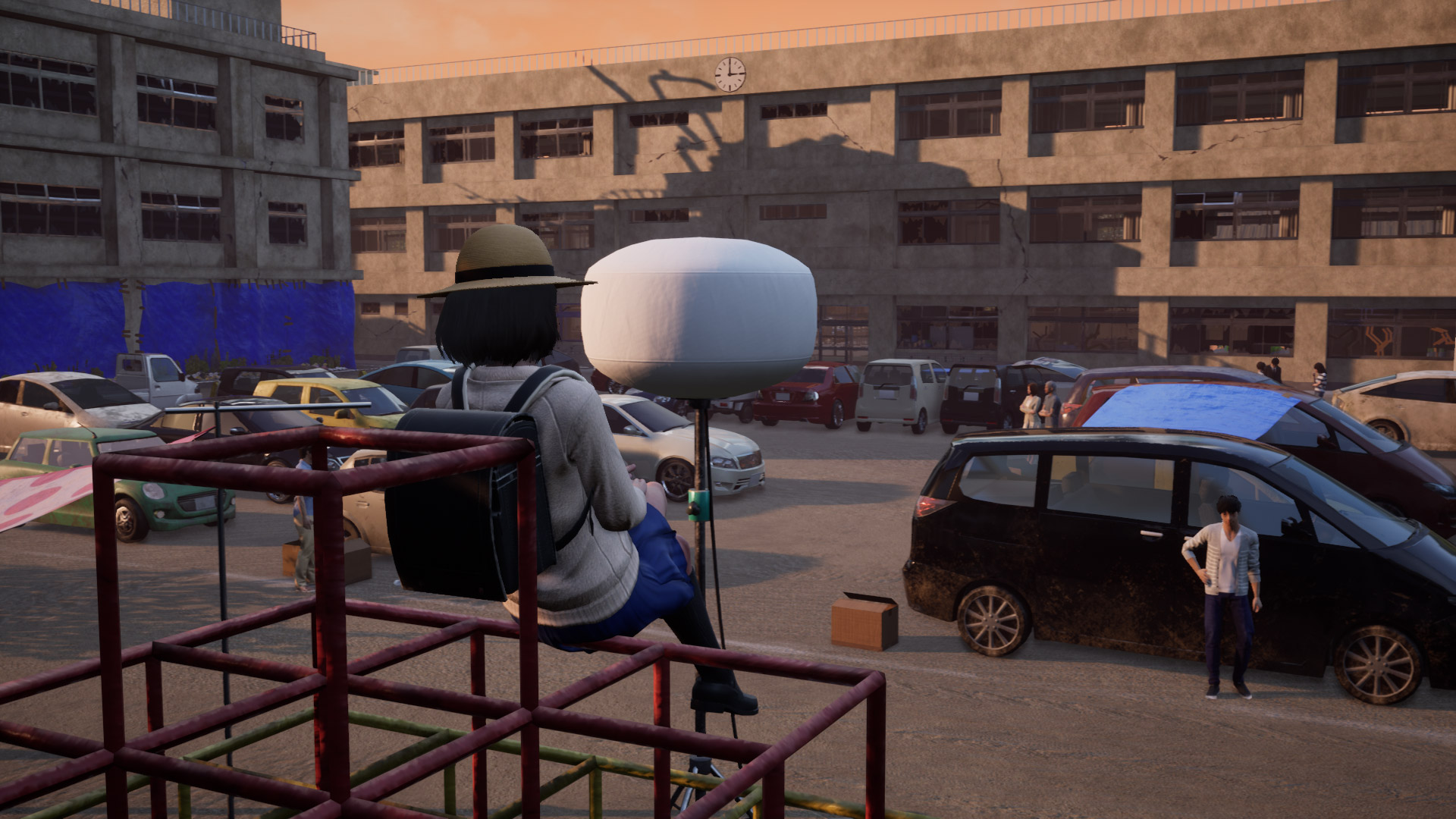
What I want to make very clear is that, progressing past the PlayStation 2 and PSP and onto far more powerful platforms (the PS4 and Switch) and a more modern game engine (Unreal Engine 4) has fixed none of this. Disaster Report 4 is still quite a mess, and even where things have improved, I don’t think it’s enough to win over a significant number of new players. Yet, it remains an endearing mess. The game’s technical roughness didn’t adversely affect my enjoyment most of the time, outside of a couple areas where the framerate, already usually sub-30, dropped to nauseating levels. I don’t know if Disaster Report would still be Disaster Report if its gameplay was smooth and framerate silky, and even if I really should knock the game for its lack of polish, I just can’t bring myself to.

In part, perhaps, because there’s already more than enough to knock it for.

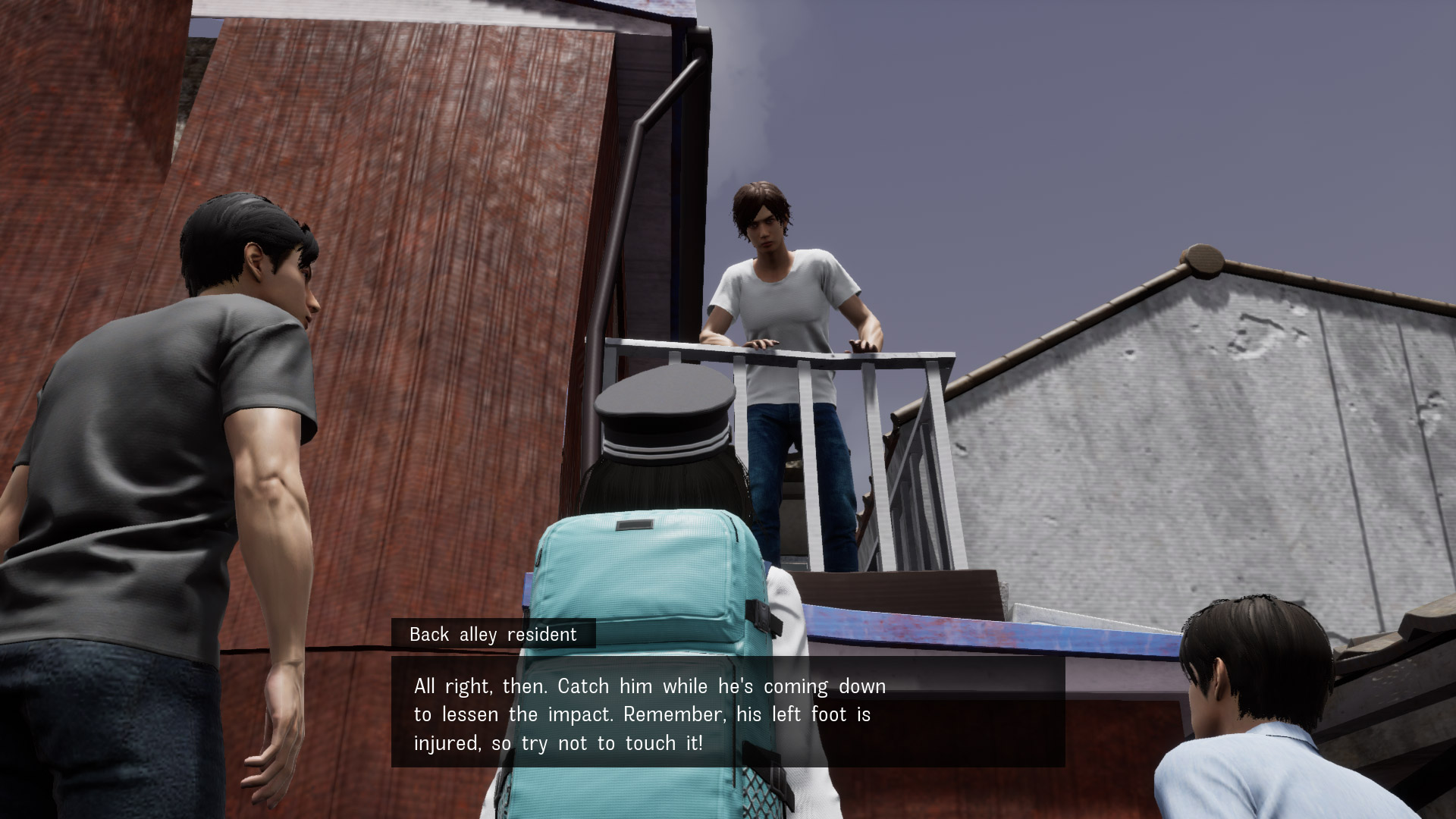
In one of the game’s most hilarious examples of expecting the main character to be a guy, these two men are asking me to be the one to catch the third man when he jumps.

The first hour or so of Disaster Report 4 was fascinating to me as a long-time fan, as it was something the other games have never been: boring. Now, I don’t mean that in a “fun factor” way, but in a storytelling one. Whether it was the rumbling earth of Disaster Report or the torrential rains of Raw Danger, previous chapters felt like Hollywood action movies, as your avatar’s life is routinely in danger and increasingly dramatic situations constantly unfolded. Here, after the bus my character was riding on crashed due to the earthquake, the aftermath was pretty mundane. As I explored the section of the city I’d become stranded in, I talked to a couple wondering what to do next, an older businessman who had dropped his lunch, and a teacher trying to find her students. (In ways both big and small, Disaster Report 4 lets you make decisions on who you talk to or what actions you take while progressing through the story, which can then change how later events transpire from player to player.) While aftershocks did occur, they were often inconsequential, except for when used to direct me where to go next.

Disaster Report 4 is a major shift in focus for the team at Granzella, away from that “surviving an action movie” style to one that instead takes a more grounded look at how we humans cope in the wake of disaster. As much as I loved the previous games, as someone who’s now older and more aware of how much I could lose in the blink of an eye, I was all in on this more mature twist to the series. In the early going, characters and plot points never reached their full potential, but I was still enjoying the game and hopeful for how it would develop.

About halfway through, things started to go very wrong. Up until that point, there had been random examples of the trademark wackiness of past Disaster Reports showing up here and there, and while they clashed with the more down-to-earth tone of other parts of the game, they didn’t ruin the overall experience. When Disaster Report 4’ later plot points start kicking in, however—oh boy. Some of what happened to or around my character felt soap opera-level or worse, at times dragging the narrative down so low that I was left both embarrassed and furious. In addition to that, the game ends up sticking you with an NPC who sidelines your goal of getting out of the city, all so you can reunite her with her fiancé. The problem is, if you don’t come to have some sort of emotional attachment to her—which I didn’t—then she’s a total annoyance whose only real contribution is negating every bit of progress you’ve made by dragging you back to the beginning area. That’s an issue a lot of the game has, in fact: asking you to invest in characters who have nothing to offer you but demands, setbacks, or suffering.

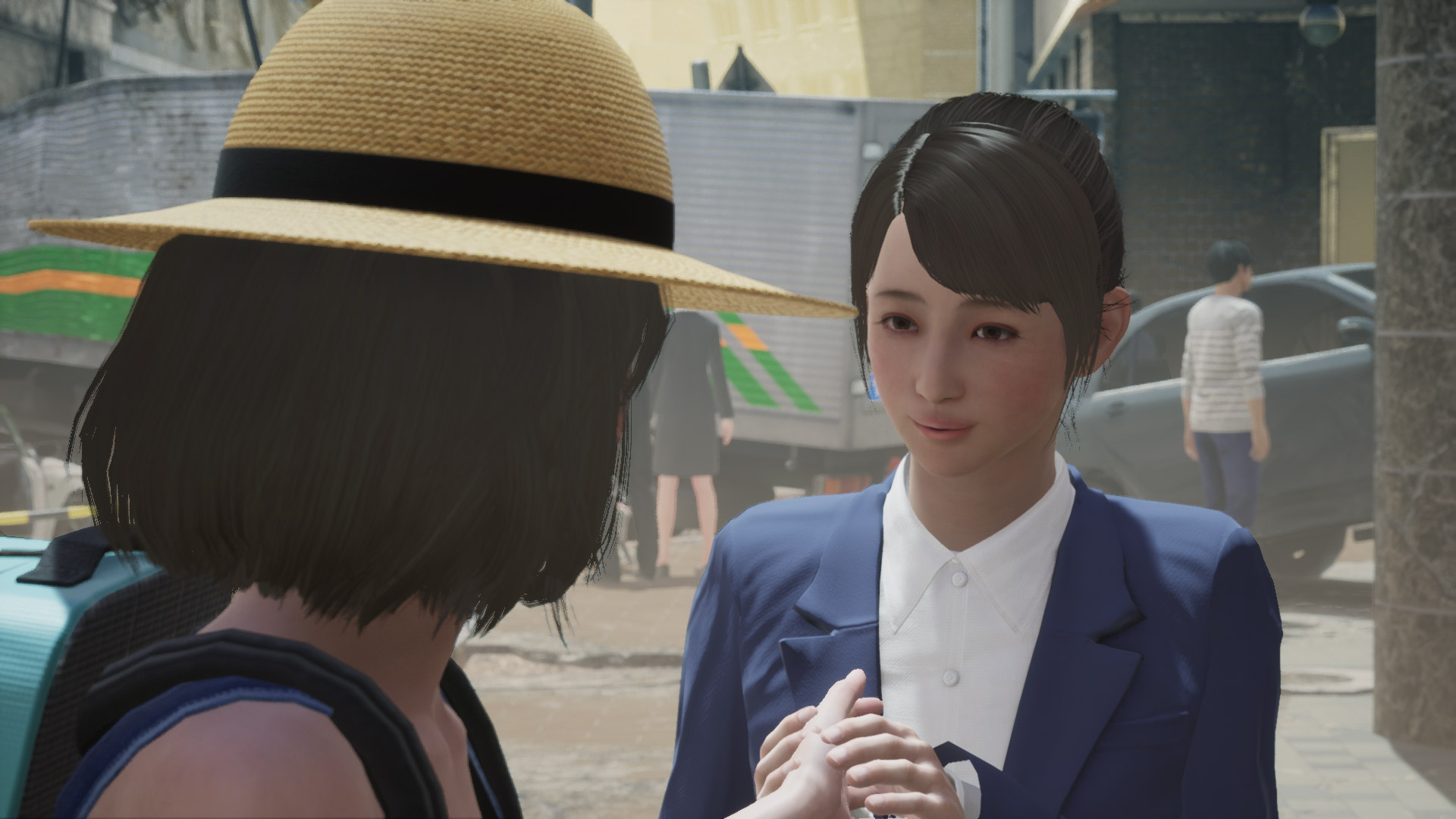
Sadly Yayoi, I can save you from the city, but not the game.

What’s funny is that the one relationship with a survivor that I came to genuinely care about—an office lady named Yayoi—unfolded due to a shortcut taken by the dev team. When starting up Disaster Report 4, you’re given the option to pick the gender and basic looks of your character, but it’s clear that Granzella crafted the entire game around you playing a guy. Numerous women I ran into through my journey provided me conversation options to flirt with them, and Yayoi was romanceable (to the degree the game offers “romance”) even though I was a woman. Meanwhile, I never found a single man I could show interest in, or even flirt with. While I’d like to think the surprisingly touching way things played out between Yayoi and my heroine came from Granzella being progressive, the truth is much more mundane.

If some utterly awful storylines were the worst of Disaster Report 4’s weaknesses, I could still have come out of playing it with a positive opinion. Yet more than its failings on technical, gameplay, or storytelling levels, the game lacks the one thing it needed most: catharsis. There’s a death that occurs that was one of the most emotionally horrific I’ve experienced in a video game in recent memory, and yet it’s brushed aside after a singular “choose your response” dialog box. When other characters both familiar and foreign befall tragedy, similar detachment awaits. A makeshift funeral for a group of children who had perished in a fire, for instance, is ruined by an act of cartoonish villainy.

Throughout my other encounters with awful people taking advantage of the disaster, I was never given any satisfying resolution—not even the chance to simply tell them off. While I legitimately believed in Granzella’s desire to explore the more human side of a disaster, rather than the disaster itself, the result is an experience that is lacking in humanity, one that so often leaves you emotionally vacant.

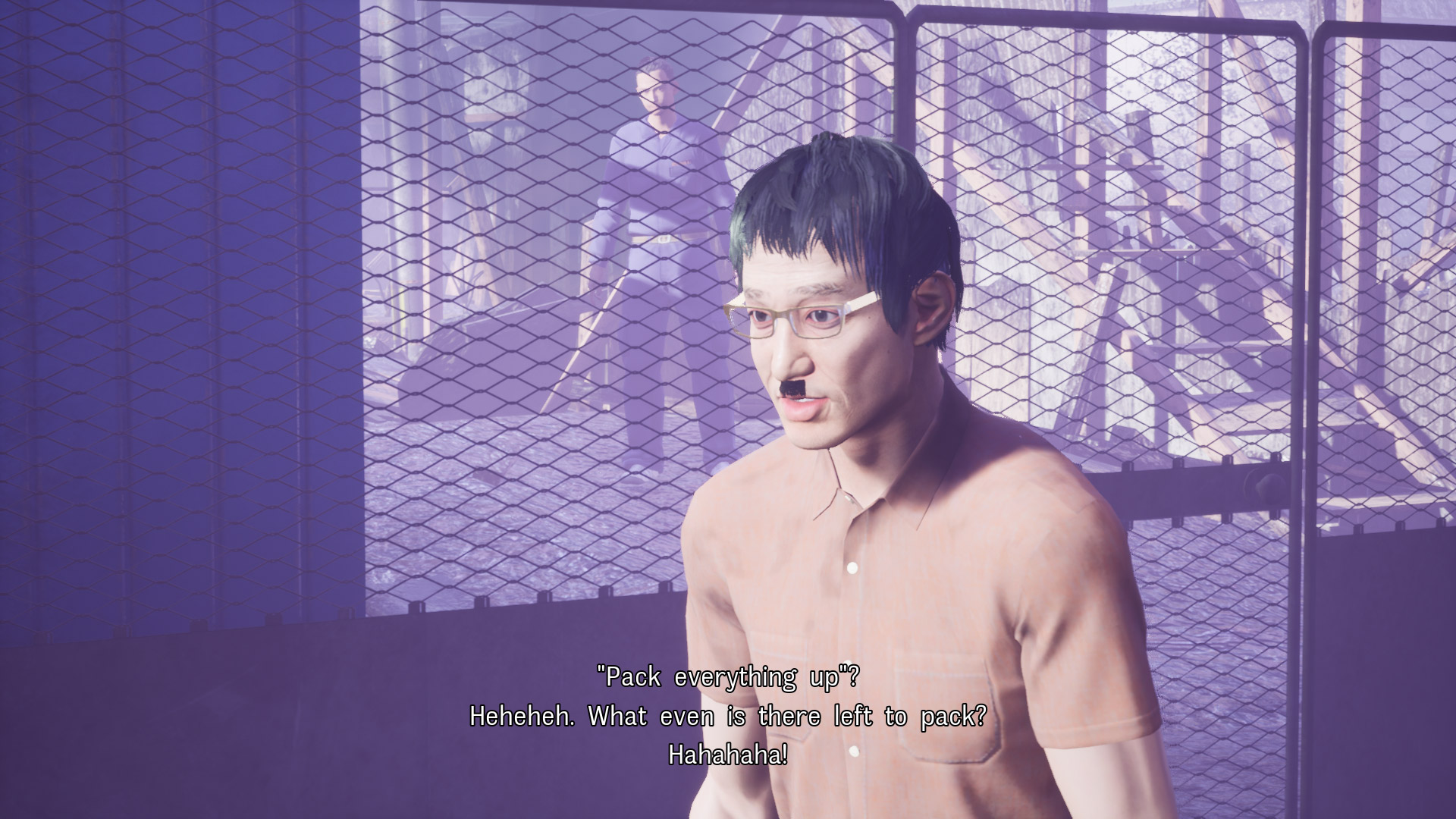
Insert joke here about the man who disrupted the funeral literally being Hitler.

Finally, where as the first two Disaster Report games were heavily built around the idea of managing your resources and body conditions—such as being too wet and/or cold for too long in Raw Danger—Disaster Report 4 seems to forget about those core mechanics much of the time. In theory, you need to manager your hunger, thirst, and bathroom usage; in practice, you’ll probably rarely remember to check those stats, except for the long stretch early on where the game refuses to let you find any food. In fact, it wasn’t until later in the game that I realized that there was another status effect in the game that I’d never seen before: being wet. It was applied to my character for a short time after a particular event, went away without any fanfare, and then I never saw it again. Like a lot of other aspects to the game, Disaster Report 4’s status management feels like an idea that was implemented and then just never fleshed out or finished.

In my time here at EGM, this is probably the hardest review I’ve ever had to do—because I so desperately wanted to like Disaster Report 4: Summer Memories. Even if their work will (assumedly) always be lacking in both programming prowess and budget, I want Kazuma Kujo and his team at Granzella to continue to be able to make Disaster Report games, because to me, the world would be less enjoyable without them. I’m thankful that, after nine years, the game now exists—in English no less—and that it wasn’t just lost to time. And, as a fan, I’m glad that I got to play another game featuring more of those moments of quirky brilliance that I fell in love with so many years ago. However, also as a fan, and as a reviewer, I’m just so disappointed in what we’ve received here.

At worst, I’d want to see the team go back to making silly, over-the-top disaster stories, where the depth of the human tragedy isn’t as important as making it out of endless ridiculous situations alive. In my heart, though, I’m now praying that Granzella takes a look at what it’s built here, throws away all of the B-movie garbage, and puts its full effort behind telling a simpler tale of human suffering and perseverance.

For good or bad, what’s going on in the world right now has made it clear just how powerful such a story can truly be.

Resident Evil 3 Review

When Resident Evil launched on PlayStation back in 1996, it introduced me to many things: the birth of a genre known as “survival horror,” a newfound love for scary games, a new franchise for me to become a longtime fan of, and one Miss Jill Valentine. Even though Capcom had already given me a long list of great video game heroines, Jill rocketed to the top of that list, and her reign as the queen of zombie killers seemed like it’d never end—until I met Resident Evil: Code Veronica’s take on the better child of the Redfield household, Claire. From that point on, the two became locked in an endless battle for my heart, which kicked into full gear once again just last year due to how incredible Claire turned out in the Resident Evil 2 remake.

Look, I know talking about my internal back-and-forth confliction between Jill and Claire is a weird way to start this review—but this is a weird review to write. It was only a year ago that I was giving my opinions on the Resident Evil 2 remake, and honestly, a lot of what I said there could just be directly repeated here. At the time of that game’s release, we were getting our first taste of Capcom’s plans for bringing past chapters of the franchise into the modern era, and the result was nothing less than mind-blowing. Now, only 14 months later, I’ve gotten over the shock of seeing what RE2 has become, but I also haven’t had enough time to develop a longing for Capcom to do it again. Don’t get me wrong—I much prefer not having to wait years to see the rebirth of Resident Evil 3. I just haven’t had the chance yet to feel the lack of some fresh survival horror in my life.

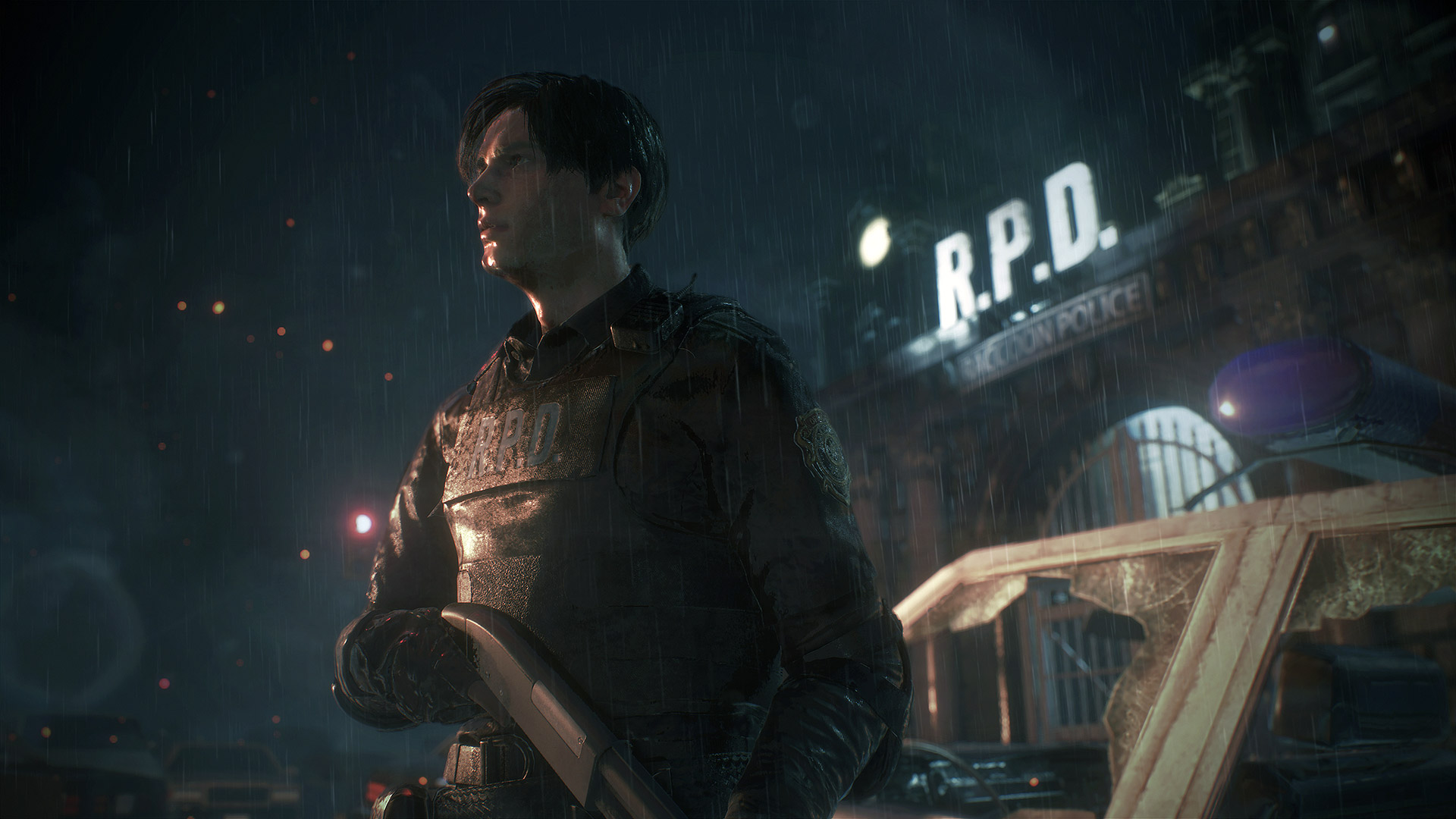
I don’t want to take away from what Capcom has given us here, however, because it’s (mostly) great. Once again, the company is redefining what it means to “remake” a game, and Jill’s struggle to survive the fall of Raccoon City is impressive on every technical level, from its visuals, to its audio, to its refined core gameplay and reworked story. I purposefully didn’t go back to play the original RE3, because I wanted this remake to stand on its own, but I do remember enough to say that this had to have been a pretty big effort—at times more so than even Resident Evil 2.

Thankfully, Resident Evil 3 isn’t doomed to live in the shadow of its predecessor. While they share numerous similarities in terms of how a remake can be built, RE3 retains a number of unique traits and gameplay concepts that help set it apart. The first is Raccoon City itself. As much as I loved Resident Evil 2, swapping the claustrophobia of spending half the game trapped in a singular location for getting out onto the streets of the city was a wonderful feeling. There’s just such an interesting shift in dynamics when you take these characters and creatures and put them out in the world (which was always true in the original version as well). And, man, does the city look beautiful here, as neon signs add color to the night sky and we get one final look at all of the architectural splendor of a city soon to be rubble.

Throughout my playthrough of Resident Evil 2, my brain couldn’t stop wishing the game had some sort of dodge, especially given that move’s prevalence in many modern third-person action titles. Well, like in the original, Jill can bob and weave her way through zombie hordes thanks to her dodge. It’s a small inclusion that can make a world of difference in certain scenarios, especially when facing off against Jill’s main nemesis, Nemesis. There was such a feeling of satisfaction every time I perfectly dodged a punch that could have flattened me, giving me the chance to not only avoid taking damage but also to retaliate against him. Jill’s dodge helps give Resident Evil 3 a more action-y feel, but it never makes the game too action-y or turns it into something it shouldn’t be. Don’t worry—Resident Evil 6 this is not.

Another of old-school Resident Evil 3’s big gimmicks, on the other hand, doesn’t quite feel as special anymore. The original game was known for its ammunition crafting system, giving Jill the ability to combine various gunpowders and explosive canisters to create specific types of ammo. It was an interesting idea, as instead of just handing you all of that ammo, the game let you decide what you needed when, with all of the benefits or downfalls that might bring (such as misjudging the type of weapon you’d be using in the near future). The problem is, all of that made its way into the Resident Evil 2 remake, which was cool—but it also kinda stepped on this game’s toes. Still, it’s a nice feature to have, and it joins a number of other smaller area-specific gimmicks that retain Resident Evil 3’s status as one of the more experimental chapters of the series.

Finally, we get to the remaining twist presented in the original game: predetermined moments when you’d be able to pick between two paths to take, each of which would then affect the story in different ways. How is that choice system here? Totally absent. I know there’s been disappointment over the removal of those scenes, but to be honest, I didn’t miss them. Crafting even one main scenario for current-era games is far more complicated than it used to be, so I’m able to accept that we often have to leave such features behind.

Who isn’t ready to be left behind (in Raccoon City or otherwise) is Jill Valentine, the star of the show here. Capcom is really firing on all cylinders in its push to bring all of Resident Evil’s famous faces into the future, and man did Jill turn out fantastic. She’s tough, confident, and resourceful, but far from just falling into the “badass bitch” trope or losing those traits that made her great in the first place. Going back to the Jill versus Claire argument for a moment, comparing the two is a perfect way to show how fleshed-out these characters have become. When Claire jumped down onto the platform to face off against Birkin’s final form in Resident Evil 2, you could tell she was doing so as a woman pushed to her limits in a situation she was never prepared to be in. In contrast, when Jill reaches her most emotional moment here, it’s because she’s simply done dealing with Nemesis’ bullshit, moving in like a predator ready to finish off its prey.

Speaking of the game’s other main character, Nemmy is one of the aspects of Resident Evil 3 where I expect to see mixed opinions. He’s a stellar antagonist for Jill, filled to the brim with both badassery and new tricks for bringing the remaining members of S.T.A.R.S. down. At the same time, I do have to admit that his new look isn’t as good as his original, and his iconic cries of “staaaaaars” just don’t have that certain something they used to. On a more gameplay-impacting level, I was kind of surprised to find that he’s not as big of a factor as I was expecting. Every time he shows up, he’s a force to reckon with, but after the relentlessness of Resident Evil 2’s modern-era Tyrant, Nemesis doesn’t seem as threatening (at least on standard difficulty). If you found yourself far too stressed out by his predecessor, this new Nemesis may help you enjoy Resident Evil 3 a lot more. If, instead, you were hoping for him to dial up the danger, you may feel some disappointment.

That word—disappointment—is something I’m expecting to see tossed around about Resident Evil 3, because I think Resident Evil 2 simply set the bar too high. Whereas I beat RE2 in just over nine hours on my Claire run, here I finished in only a few minutes over six. (The clear time requirements for receiving an A ranking in RE3, by the way, are exactly half of RE2.) Between its shorter development time and start as a side project to the series, the scope of the original Resident Evil 3 was always smaller than both its predecessors and successor Code Veronica. Still, I think that fact is going to take a lot of players by surprise, especially—again—as we come off of one of the biggest and most ambitious Resident Evil releases of all time.

As a reviewer, I can’t deny that Resident Evil 3 was a little underwhelming, from its shorter length, to Nemesis not reaching his full potential, to the removal of some of the original game’s locations and features. And yet, as a player, and a longtime Resident Evil fan, I still love this game. As with Resident Evil 2, it feels like a lot of love and care has gone into the game, and at times I actually preferred RE3’s pacing, area choices, and gameplay tweaks. I absolutely think that RE2 remains the quintessential representative of Capcom’s survival horror series, while this remains the quirky sibling who isn’t always as ambitious as their big brother but who can also be more fun to be around. That’s okay, though—not every game has to raise the bar, or attempt to replace those that came before it. I’ve gone back and forth for days on which I like better on a personal level, and the truth is, I’m still nowhere close to coming up with an answer.

It’s almost as if there were two characters from the same series that I both adored, and I was trying to pick which one I liked best…

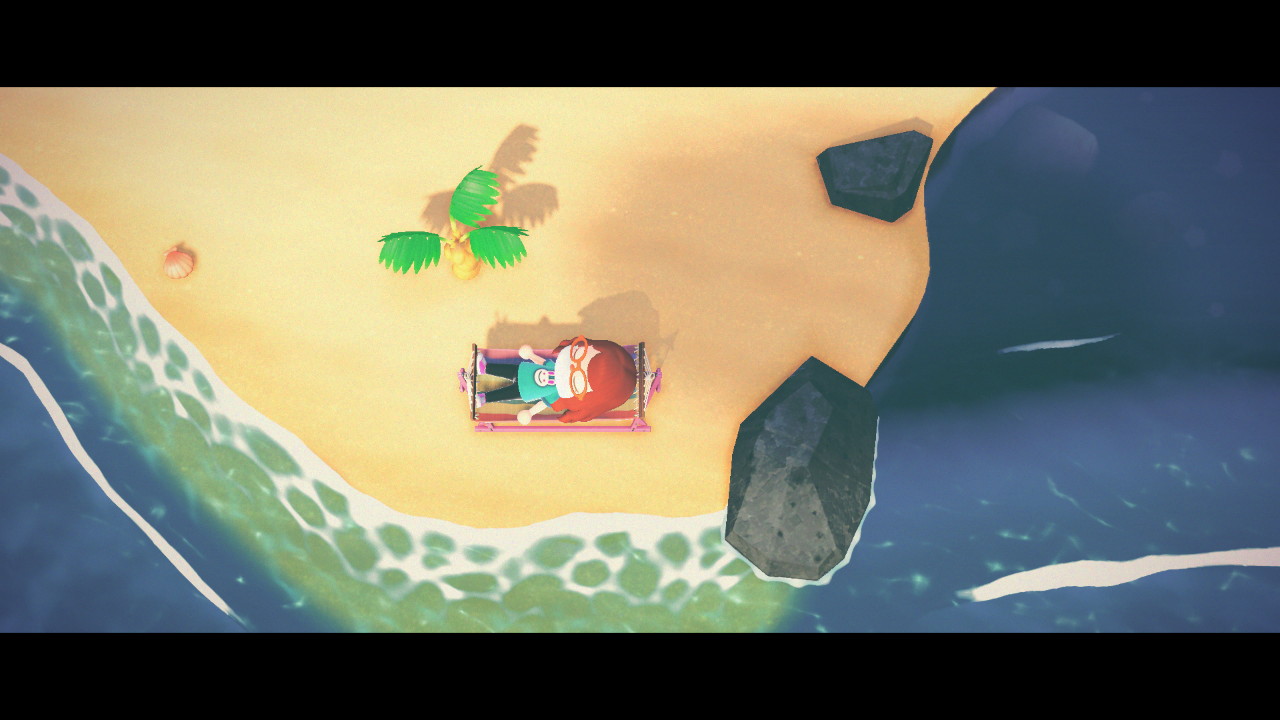
Animal Crossing: New Horizons Partial Review

In the world of modern game reviews, having just over two weeks to play and judge any one title can feel like a lifetime compared to the few days we often get.

And yet, when that game is Animal Crossing: New Horizons, the 15 days I’ve put into it seem like almost nothing. When I first started playing, I worried it’d be hard to form a proper opinion of this latest chapter of Nintendo’s social sim series by the time the review embargo was up. Now, I’m certain that I can’t.

Instead, my plan is to come back in a month (or so) to finalize this review once I’ve actually seen more of the big promised features and had some of my concerns assuaged (or not). So, for now, let’s have a more casual chat about how things have gone for me so far—and why I’m hopeful, yet a little frustrated, for how this latest Animal Crossing is looking in the long run.

Making the Switch

My first exposure to Animal Crossing came thanks to North America’s first experience with the series: 2002’s enhanced GameCube port of the original Japan-only N64 game Doubutsu no Mori. I’d come to Nintendo’s console late, and Animal Crossing was one of the few titles I’d end up really digging into on the system.

It was 2005’s Animal Crossing: Wild World on the Nintendo DS that shifted how I saw the franchise. Having my little village portable and playable anywhere became a big deal for me, and seven years later, Animal Crossing: New Leaf on 3DS cemented my belief that the series was better suited to handhelds.

Animal Crossing: New Horizons, however, has made me realize that I’ve missed having the option to run around my town and interact with my animal neighbors on a bigger screen. As many times as I’ve praised the Switch’s hybrid nature, I have to do so again here. Sometimes, I find myself wanting to just pick up my Switch, get comfortable somewhere, and jump in on its embedded screen. Other times, I want to have New Horizon big and beautiful on my television, especially when my twins are excited to sit with me and watch cartoon mama run around doing silly things. My heart still sees Animal Crossing as a handheld experience, but it’s also a console game at the same time—and no longer having to make a hard choice between those two playstyles has markedly increased my enjoyment with the game.

Filling the potholes

What else has improved my time with Animal Crossing: New Horizons is the obvious amount of work Nintendo has put into a host of quality-of-life improvements both big and small. And, let’s be honest: Some of these are things the series has desperately needed for years.

A perfect example of this comes from an anecdote born out of sheer frustration. A few days into playing, I hit a rock with my shovel, and a bug jumped out. Desperate to catch it, I began mashing the right directional button to cycle through my tools, because I figured that would be quicker than bringing up my inventory and locating my net amongst all the junk I was carrying. Before I could fumble through everything I had on me, though, the bug was gone.

I was furious that Nintendo still hadn’t given us a pop-up radial menu for selecting tools, which would be the most no-brainer thing it could have done in 2020. And then, literally five minutes later, I unlocked one.

A shockingly modern way to select your current tool in New Horizons isn’t the only sign that the dev team was willing to get rid of some of the out-of-date ideas that have been junking up the Animal Crossing series. You know the excitement over finding out we were getting a whopping four additional slots to our personal inventories? It can be expanded beyond that. Now, when you’ve found the daily money rock, the Bells it drops automatically go into your money pool, not your pockets. Your house as a whole now offers a decent amount of storage without needing any specific furniture in it, though items like dressers and mirrors do provide other benefits (such as the really slick new clothing and accessories interface). Oh, and remember how you had 10 mailbox slots in New Leaf? Now you have 300.

Part of what has made me so hesitant to even consider reviewing New Horizons at this point is that a number of those solutions to long-standing complaints weren’t evident right away. Who’s to say that the game won’t go on to address some of my other pet peeves in the near future as well? Now, I want to be clear: I don’t have faith that Nintendo will have totally scrubbed the game of the needless annoyances that have long plagued the series. For example, why do tools still use up inventory space? Sure, it’s less of an issue now that we’re given more room in our pockets, but there’s just no player-focused reason to keep with that tradition—especially now that you’ll need more room for collecting crafting materials. Still, I appreciate the changes that have come, and remain hopeful that more are waiting.

Creating a better future

Speaking of materials, I can’t talk about Animal Crossing: New Horizons without getting into its new crafting system. Being able to learn new recipes and then create a wide assortment of items just feels so natural to the Animal Crossing experience, legitimately amplifying the fun of not only decking out your own personal house, but also the entire island. It’s hard to believe that we’re only now getting a crafting system in a proper Animal Crossing game after 18 years, and I really hope it expands even more in the future to things like cooking. (Unless that also awaits me later in the game?)

There’s still joy in that neat new item popping up for sale or getting it as a gift from a neighbor, but there’s an equally satisfying sense of pride in filling your home with things made by your own virtual hands. Even better, the ability to customize items has been expanded, with more patterns to choose from for fabrics, wood types for furniture, and so on. Crafting legitimately is one of the best new features in New Horizons, and is one of the biggest shifts the franchise has felt in years—but it doeshave a bit of a downside.

Six years ago, I wrote this while reviewing Harvest Moon: The Lost Valley:

“Cooking is an activity you’ll regularly take part in, but you can’t directly access any of the produce that’s stored in your refrigerator while doing so (even when it sits directly next to your kitchen unit). All of it has to be in your backpack in order to be usable—a real inconvenience, given how often you’ll hit the limit of what you can carry due to the array of seeds, minerals, tools, harvested crops, and other items you’ll be lugging around.”

Even at that point in time, The Lost Valley felt out of date by having a crafting system where you couldn’t use the needed materials directly from your main storage. Here we are, six years later, and the same issue plagues New Horizons. Right from the beginning, the game throws a lot of materials at you, with sticks, rocks, clay, iron, weeds, and three different types of wood all necessary for even the earliest of recipes.

And yet, while any clothing items you put into your home’s storage are then directly accessible from clothing-related furniture, none of your crafting materials gain that ability, even if you’ve got a crafting bench right there in your house. You’ll have far too much to pick up or carry around to constantly have all of those materials on hand at all times, so crafting becomes a game of checking the recipe for what you want to make, swapping in materials, building it, swapping out materials, and repeating. I’m really hopeful that, like the radial tool menu, I’ll get the option in the coming days to unlock either a better method for accessing materials or some sort of special furniture which can feed them to the work bench. If that isn’t the case, then it’s maddening that developers still get this wrong.

Making the island your own

With that out of my system, I want to move on to the other biggest advancement Animal Crossing: New Horizons offers: a deeper sense of player agency.

Now, the Animal Crossing series has always been about letting us have a lot of say over the towns our avatars move to, but the improvements made to that sense of choice here make an incredible impact. Going into the game, the idea of finally being able to place items outside our homes sounded like a great addition; in practice, it completely changed the way I approached my village both mentally and emotionally. I’ve yet to unlock the ability to create paths, reshape rivers, or modify cliffs, but even just being able to decorate the area surrounding my home feels like a gigantic step forward in itself. Returning to New Leaf to remind myself of various elements, it was pretty surprising how barren and lifeless that game now feels in comparison. Like with crafting, I’m now not sure I could ever go back to a world where we didn’t have this option.

Oh, and thank the lord for New Horizons’ character creator. I’m sure you’ve all heard the basics by now, like how we can finally pick our skin color after years of begging for the ability, and how all of the standard features for things like hairstyles are available right from the start (other than the additional styles you can purchase later). The fact that I can then go back and change anythingabout my avatar at any time—and for free no less—just seems so anti-Nintendo. Do you know how wonderful it is to decide I want to freshen up my hairstyle and color, and be able to do so without needing both Bells and a damned FAQ like I did in New Leaf? It’s very wonderful!

The beauty of island life

It’s easy—and also correct—to prop up gameplay changes as the big advancements New Horizons offers over its predecessors. However, all of those things wouldn’t then be complete without its audio and visual presentation. I still hold a certain fondness for the Nintendo 3DS, and for its time, Animal Crossing: New Leaf was all I needed. Looking back at it now, it’s hard to accept just how much outdated hardware held back the game, and how easily New Horizons completely blows it away.

The thing, though, isn’t just that New Horizons is prettier, or flashier, or pushing tens of thousands more polygons. It’s the work that’s gone into the game by the team into presenting Animal Crossing in a way we’ve never seen before. One of the moments that hit me the most was a surprisingly small one: when I booted the game up one day to find a spring storm hitting the island. As the winds howled, and the trees shook and swayed, it gave the game a sense of life that I’m not sure it’s ever had before. There’s other smaller examples you’ll notice, like the rich skin textures your animal pals now sport, or bigger ones like the new museum, which is almost shocking to see the first time you wander its halls.

The elephant in the village

So far, I’ve had an enjoyable time with Animal Crossing: New Horizons. Going back to the series through a chapter that sports some legitimate improvements and can’t-live-without additions has helped rekindle my feelings for the franchise. There are definitely some parts I’m still hesitant about—including Nook Miles, the new point-rewarding quest system which are worrying me a tad in how much they shift my priorities when playing—but I remain hopeful that more of those complaints will see a resolution of some fashion the further I go.

There does, however, then loom a large dark cloud over all that positivity.

Sitting here with my both a regular Nintendo Switch and a Switch Lite, I can’t play New Horizons on both of those systems. Well, okay, I can—but not if I actually want to play as my character on my island. Because I initially started on the Switch, that’s where my village now exists, and there’s nothing I can do to move it over to the Lite. Cloud saves, one of the few real features I get from Nintendo’s paid online service, simply don’t work here, either for moving my save file back and forth, or even for protecting it from deletion. (Yes, I know that Nintendo is offering some side recovery service, one that may only work once or may work numerous times if the company ends up changing its mind. Can we talk about how ridiculous it is to have a second solution for a problem when a first solution already exists?)

There are two main arguments for why this restriction is in place. The first is that, since up to eight people can live on the same island together on the same Switch, it gets messy trying to figure out how to keep the island consistent across multiple systems. I totally get that—except for all of us out here who won’t be in that situation. With my wife uninterested in most games that aren’t Dr. Mario or Chrono Trigger, and my children not yet old enough to play games themselves, I’m the only one from my household who will be living the island life. Why, then, punish people like me? Being able to play across both my Switch and Switch Lite is far more important to me than a feature I’ll never use, but I get no choice or say in the matter.

The other explanation that keeps getting thrown around is that Nintendo’s strictness over save files is to prevent cheating. To that, I say this: Who cares if I cheat? If we were talking about a title like Splatoon 2, where cheating can directly damage a game’s competitive online component, I fully support working to block such problems. Animal Crossing, however, is a single player-focused experience where Nintendo loses no money if you find sneaky ways to unlock content. Really, the biggest potential threat to its multiplayer component would be my friends ending up with cool new stuff they wouldn’t have otherwise. Concern over my time with New Horizons being “ruined” is annoying, especially since I’m not the kind of player to use save file exploits for the most part anyhow—but I am the type who fumes over the features I lose due to such needless panic.

We’ll meet again soon

This isn’t the first time I’ve found Nintendo’s requirements to play its games the way it wants me to play them exhausting, and it certainly won’t be the last.

Once I let myself get away from the business decisions and back to the game itself, Animal Crossing: New Horizons is easily one of the most exciting chapters of the franchise I’ve played due to its overall potential. As much as I’ve enjoyed previous titles like Wild World or New Leaf, much of what they brought was either natural evolution, underdeveloped concepts, or more gimmicky additions. New Horizons, however, feels like a genuine step forward, thanks to its mix of improvements for older elements and new core gameplay ideas that could change the series forever.

After I’ve had more time with the game, gotten a proper look at the rest of its key new features, and better solidified my opinion on various factors I’m still on the fence about, I’ll be back with final thoughts and a proper score. For now, Animal Crossing: New Horizons feels like a no-brainer for fans of the franchise, and a perfect place to start for newcomers—with the exception of ruining every other previous Animal Crossing game, should you ever want to go back to them.

Disaster Report 4: Summer Memories Preview

“It was a relief to have been able to fulfill our promise toward the fans who’ve been waiting for this game for over seven years,” Kazuma Kujo told me when I asked how it felt to see his latest gaming project finally released.

That project? Disaster Report 4: Summer Memories, the new survival adventure that Kujo serves as producer on. Planned as the fourth release in Kujo’s string of underappreciated games about natural disasters, Disaster Report 4 was to be a deeper and more dramatic experience, one that would task players with trying to survive on the streets of Japan in the aftermath of a devastating earthquake.

And then, in March of 2011, as the game was getting close to release, the Tōhoku earthquake hit off of the east coast of Japan—resulting in, among other side effects, the failure of the Fukushima nuclear power plant.

Kujo, his team, and publisher Irem were all no doubt hesitant to release a video game about an earthquake hitting Japan as their home country struggled to cope with the real-life equivalent. A few days after the event, they officially canceled Disaster Report 4’s impending release. Over the next few years, Kujo would end up breaking off from Irem to start his own development studio named Granzella, putting together a new team, and obtaining the rights to the Disaster Report series from Irem, with the goal of one day finally releasing the game.

“Looking back now, we’ve had a lot of luck on our side,” Kujo admitted. “I don’t think we’d be able to pull off something like that again.”

Years removed from that terrible disaster, it’s hard not to be thankful that luck was indeed on Granzella’s side. Disaster Report 4 is an incredibly unique experience, existing in a landscape where so many other games based on similar themes somehow feel required to bring in aliens, zombies, or other fantastical elements.

While Disaster Report 4 could have been a sort of digital catharsis in the aftermath of events like the Tōhoku earthquake, Kujo cautioned me, surprisingly, about reading too much into his reasons for creating the series.

“There were books, movies, and other works that had disaster themes, but no video games that dealt with the topic—especially with earthquakes. I thought there’d be a certain demand for games where you could experience these things during play,” he explained.

It may sound imprudent, but I made this game strictly as a form of entertainment.”


The Weight of the Real World

While series creator Kazuma Kujo insists that the Disaster Report games are first and foremost designed to be fun, he has also had to face the impact that those games were having on some players.

“As the [series] started to grow, I was concerned to hear players say that the games would be helpful in the event of a real disaster,” Kujo said. “The attitude of developing these games as purely a form of entertainment remains the same, but I felt the need to approach this through a more professional lens.”

One example of this is the team’s cooperation with the Kobe City Fire Department. During development of Disaster Report 4, the group contacted Granzella with the hope of potentially communicating more in-game information on what players should do if they encounter similar disasters in the real world.

We wanted to emphasize the game’s enjoyment, [yet] we still had to pay attention to its core theme and realism,” explained Kujo. “This is always a concern when working on the series, and I don’t believe a clear answer has been found yet.”

Still, as much weight as there might be on the shoulders of Kujo and his team to find that middle ground, this challenge is part of what makes the Disaster Report series so special.

“Every time I make adjustments to this balance, I find myself thinking that this is what forms the personality of [these games],” said Kujo.


Nioh 2 Review

I’ve really missed Nioh.

It was during the first hour of playing Nioh 2 that the realization fully hit me, and it wasn’t something I’d anticipated. I mean, I greatly enjoyed the original—as you can remind yourself of by going back to my review—but I hadn’t been sitting around thinking that there was a Nioh-shaped hole in my heart needing to be filled.

It quickly came back to me just how wonderful Team Ninja’s take on the world of Dark Souls clones is, however. Tired comparisons to FromSoftware’s work must be made, like it or not, because when Nioh released after 13 years of development hell, that was the path that finally got the project to market. Thankfully, while the inspiration was undeniable, the game was very much its own thing, with a level of combat aggressiveness that wouldn’t be seen on the Souls side until Bloodborne. With an option for gaining your stamina (Ki) back from a well-times Ki Pulse, an incredibly deep loot system, and its world steeped in Japanese history and folklore, Nioh really was something special, and many (including myself) wondered what might be next.

One of the biggest answers to that question comes right at the outset of Nioh 2: the ability to create your own protagonist. The original Nioh was notorious for its decision to give players a predefined hero. Some liked the Irish sailor William and his journey to the foreign land of Japan, some definitely didn’t, and some—like yours truly—ended up incredibly conflicted. The fact that I couldn’t make my own character upset me when I first started up the game, but after a while, I’d come to actually grow a bit fond of William.

Now, look: I’d never give up the sword-swinging Japanese lass that’s served as my avatar in Nioh 2 to have William back. (And thank you for letting me fully adjust her looks at any time.) Custom characters are what we should have, and Team Ninja was absolutely correct in listening to this request when putting together a sequel. Still, I do at times miss the big lug—especially whenever a cutscene breaks out. One of my biggest pet peeves of Japanese game developers is that they seem to be on a crusade against giving custom characters an actual voice, and that approach is frustratingly present here. Going back to watch some of the original Nioh’s cinematics, William felt like a bigger part of the overall story simply by occasionally opening his mouth and having some say on what was going on around him. Here, like in Dragon Quest XI and countless other games with mute protagonists, the warrior I’d put so much time into crafting felt more like someone tagging along with the true heroes of the story.

Nobody plays Nioh 2 for the cutscenes, though—or even the story, let’s be honest. This is a series about fast action mixed with strategic decisions, exploring complexly designed locations, and facing off against brutal bosses. The original Nioh had a ton of depth to its combat, and everything that was good before remains in the sequel. From there, Nioh 2‘s focus is then about giving you more options than ever before, so that you can come at any particular situation from a wider variety of angles.

Throughout your adventure, you’re joined by an ever-growing roster of Guardian Spirits, entities that can boost your stats in different ways, provide you with different bonuses, and offer you additional support. Previously, that “additional support” came mainly in the way of becoming a Living Weapon, where you’d enter a powered-up form that both boosted your attack and made you temporarily invincible.

Guardian Spirits are where Nioh 2 sees some of its biggest gameplay changes, as now, instead of becoming Living Weapons, they help to bring out the demonic half of your bloodline through the Yokai Shift. Your yokai self comes in one of three forms depending on the Guardian Spirit you’re currently using—Brute, Feral, or Phantom—each of which has its own strengths, weaknesses, and special abilities. As well, you can also now give those spirits Yokai Abilities, special attacks earned by collecting the Soul Cores from fallen foes. (Think Mega Man, and how you can steal a specific and unique skill from each of the robots you defeat.) The Yokai Abilities replace the Guardian Spirits’ previous special attacks and—like many parts of Nioh 2—offer the player a more satisfying sense of personalization.

No matter which you prefer, your yokai form is a pretty major shift to the gameplay in Nioh 2, as they give you an additional option for dispatching a particularly tough foe, enable a wider array of options when taking on a boss, or simply help keep you alive  in hairy situations. At first, I was afraid that Yokai Shifts were too much of a game changer, because in the early going, they can help you just slaughter enemies. (For example, I beat the game’s first boss so quickly it took me a moment to even realize the fight was over.) The further you get into the game, however, the more you realize they aren’t the Get Out of Jail Free card they first seem to be.

I also quickly stopped caring whether those Guardian Spirit changes gave me too much of an advantage, because the game’s enemies have gained their own set of advantages, too. One is the Burst Attack, an insanely powerful move that can easily one-hit kill you if it lands. Thankfully, Burst Attacks have a specific animation to telegraph that they’re coming, and you can then unleash a Burst Counter to not only negate the move, but also do additional Ki damage to that foe. Each Yokai Shift form has its own timing on the counter, so you’ll need to figure out which gives you the best success—but, again, screw up, and you’re in for plenty of pain.

The other—and far more frustrating, as I’ll get into in a moment—boost to your foes’ repertoires is the Dark Realm. If you played the original Nioh, you’ll long be familiar with Yokai Realms, fields that enemies can create which strengthen any yokai that enter them while also slowing your Ki regeneration. While Yokai Realms are still very much around, Dark Realms are a greatly expanded version of the idea, blanketing entire areas of the landscape in dark corruption until a particular enemy is killed or objective completed.

Throughout my playthrough of Nioh 2, I’ve constantly gone back and forth on the Dark Realms. On one hand, they’re visually neat (looking almost like an old black & white samurai movie), they provide a real bump in the overall challenge of stages, and permanently clearing them out offers an addictive sense of satisfaction. At the same time, they also point to one of the few real complaints I have about Nioh 2: It seems Team Ninja feels especially proud of exhausting us players this time around. From those Dark Realms, to some of the utterly stressful enemy groupings placed liberally throughout the game, to the lengthening of enemy lifebars that I swear is going on, getting through Nioh 2  can just feel hopeless at times—even for those who are old pros at these types of games, and especially for those who want to call in help as little as possible. (Which, by the way, is even easier now thanks to Benevolent Graves, markers you can place to allow your character to aid another player as an NPC teammate.)

Maybe I’m wrong. Maybe Nioh 2 isn’t any harder or more stressful than the original Nioh, and maybe it’s more the fact that I’m rusty, or that I’m getting older, or whatever. I swear that the game can absolutely feel like more of an arduous marathon this time around, though, which caused me to constantly swing from sheer elation when getting past those points of frustration, to utter despair when trying to get through a particular section for the 80th time. By the end, I came to appreciate Nioh 2‘s challenge, because it does offer a true sense of accomplishment in an era where it’s easy to grow apathetic to overcoming the challenges of Soulslikes. If you’ve barely scraped by in the previous games you’ve played, though, this one is going to enjoy beating you into the ground.

One thing that I think helps fuel those feelings of exhaustion is that some of Nioh 2‘s stages are bigger than I remember from the original. Other than being sick-to-death of underground caves, I liked most of the locations here, and their lengths allow for some interesting transitions in visuals and themes the deeper you get—but at times you might find yourself wishing you could just find the boss and move on. Continuing with that theme of expansion, Nioh 2’s skill trees also see a huge upgrade, as now every weapon type has its own set of skills and XP, letting you freely try out options like the new dual hatches and scythe-like Switchglaive without taking progression away from your go-to weaponry. (The previously DLC-only weapons from Nioh are also here, and having never tried them before, hot damn do I love the tonfa.)

Let me be clear: Nioh 2 is in no way Nioh 1.5 as some have suggested based on the various betas. However, it’s also not a huge readjustment that will please people who didn’t care for the original—and, honestly, I’m glad that’s the case. Nioh was its own thing, far from the shadow of other Dark Souls clones, and Nioh 2 brings an extra amount of polish and depth to those ideas that provides but a better overall experience.

It’s just—part of me misses the simpler nature of the original Nioh, even if some of the additions its sequel brings with it will now be features I probably can’t live without. I can’t say that Nioh 2 is a better game; instead, it’s a game that’s equal to the original, with each bringing its own share of positive qualities. In a way, I think I prefer that outcome in the end, as it means we now have a great sequel which can sit next to its predecessor instead of trying to replace it. And, if nothing else, Nioh 2 may have shown me that I do have a particularly shaped hole in my heart after all.

I Waited 18 Years for the Phantasy Star Online 2 Beta

In the summer of 2000 (if my memory is correct), I got to play a special 4-player local version of Phantasy Star Online at Sega’s E3 booth. I was still very young, early in my career, and the thrill of going to E3 was alive and well in me. (It still is to some degree, but it’s also complicated.) Getting to see PSO, however, was one of the most exciting moments of that show. I’d never been a PC gamer, so when I’d seen the birth of MMORPGs happen over on that platform, I’d been jealous. Having never really had the chance to play one, though, all my knowledge of what it’d be like to run around a world filled with other human players was still mostly from my imagination.

I know that, to a lot of people, the original PSO was never truly an MMORPG, because it wasn’t technically in the “massively” category. You never could have told me that that was the case, however. Seeing the avatars of other real human beings running around Pioneer 2, grouping up for adventures, trading items, showing off their new Symbol Chats, or just lounging around together felt like an evolution in video games that I almost couldn’t believe. I lost hundreds of hours of my life to the game across a selection of characters—but mostly with my little HUnewearl Ayu Landale—helped in part by having both the Dreamcast keyboard and the illusive DC Broadband Adapter.

I’d end up going to do a short exchange program in Japan shortly before Ver. 2 came out, and when I returned to the States, and to PSO, the game already felt different. While it was still the same game at its heart, the community just wasn’t the same, we now had to pay subscription fees, and you were starting to see some serious hacks threaten the peace the game used to exist under. I’d then end up going back to Japan to go to school full time, and during that period, PSO—and the Dreamcast itself—would come to an end.

In the years to follow, I’d make multiple attempts to recapture that experience I’d had back with the original PSO. Many of my friends had moved on to Xbox, so once I picked one up, we got some fun out of the version of the game that came to Microsoft’s console. There were the DC PSO fan servers, which I’m thankful for, but most of the people I’d played with had now moved on. I tried my hardest to get into Phantasy Star Universe, but those games just never felt right with me for some reason. I did end up liking the Phantasy Star Portable series, but it obviously could never be what the original PSO was. Phantasy Stat Zero was cute, and neat for what it was, but… yeah.

I first played Phantasy Star Online 2 back at Tokyo Game Show 2011. Trying to jump into a game that deep in a booth at a trade show where you’ll get maybe 15~20 minutes with it (if you’re lucky) isn’t the best scenario, so it was hard for me to get a full grasp on how I felt about this long-awaited “true” sequel. That’s okay, I thought: it’ll launch in Japan, and then hit the US in like a year or so, and I’ll play it then.

Whoops.

I still remember the emails from Sega of America, telling me (as media) that the PSO English beta would be coming soon—years and years and years ago. Everything seemed on track. And then, suddenly, it wasn’t. Mentions of the English release started vanishing. SOA went silent about the game. And we waited. And waited. And waited. At first, I was frustrated. Then, amused. Then angry. Then, just sad. I, like so many others, simply gave up on the game. I still had no proper gaming PC, so trying to go that route with the fan translations wasn’t possible. I thought about maybe trying the Japanese Vita version, but I needed my Vita for work reasons, so swapping profiles back and forth constantly didn’t sound fun. As much as I had loved the original PSO, Sega had put me in a position where it was feeling really hard to care anymore.

And then, E3 2019 hit, and like many, I sat in stunned silence as the Phantasy Star Online 2 promo video played during the Xbox press conference. Given just how much time had passed, it almost seemed like a joke at first, because there was no way Sega would be bringing us the game this late, was there? But, they actually were. It was real.

Going into the weekend closed beta, I tried very hard to keep my expectations in check. It’s a free-to-play game, and I’ve seen franchises I’ve loved bastardized with F2P garbage far too many times now. It’s a game that’s almost 8 years old now, which is ancient in terms of “live service” projects. I’d heard very mixed opinions from people I know about how PSO2 had turned out. And, as the old saying goes, you can never go home again—and I knew that it would be very possible that I’d jump in, realize those glory days of PSO were just gone for good, and leave even more heartbroken.

I sat there Friday night, trying over and over to get in, wondering what was going on, making jokes about Sega still thinking we didn’t want the game—yet also feeling a small wave of excitement start to build inside of me. I finally got in, and while recreating Ayu for a whole new generation of PSO, suddenly realized I was meeting an old friend again that I’d really missed. The game proper kicked off, I started to make my way around the gate and shopping area, and it all just hit me like a ton of bricks. So many memories, so much passion, such strong emotions I’d long put away, they all came flooding back. Everything about the experience was so far removed from those older days, from the controller, to the system, to the underlying technologies, to the kind of TV I used, to so many other things—but on a mental and emotional level, I was back in my younger self, there in front of a VGA monitor at 2AM in the morning, doing “just one more” run in the mines as the real world faded away around her.

Part of me is now scared to play more of PSO2, because I’m afraid of getting deeper into the game and having something happen that makes the nostalgia all fall apart. I’m equally afraid the game might be amazing, and I’ll get addicted again at a point when my real life doesn’t afford such addictions. For now, though, I’m incredibly excited, and feeling things as a gamer that I haven’t felt in years.

Maybe you really can’t go home again, but at least for a few the hours that I played over the weekend, I was home—and I hadn’t fully appreciated just how much I’d missed being there.

After the Storm: How Life Is Strange 2 Overcame the Pressures of Popularity

If there’s one thing that can drive fear into the hearts of those who create entertainment, it’s the curse of the sequel. As wonderful as it may be to see something you’ve helped bring to life find huge success, that popularity can then give rise to an incredible amount of anticipation for a follow-up—and that stress has weighed heavily on countless video games, movies, albums, and books that have come in the wake of a popular predecessor.

Such pressure was still looming far out on the horizon for the team at Dontnod Entertainment as they worked on the original Life is Strange. As the follow-up to 2013’s underappreciated Remember Me, Life is Strange was set to be a very different project, one that eschewed the ambitions of a big, action-packed epic for a smaller, more intimate episodic story.

When I recently had the chance to ask Life is Strange co-director Michel Koch about those early days of the game’s development, he told me it was more about playing to the whims of its creators than pleasing fans.

“We were a really small team at the time,” Koch explained. “We had just started to work on this project, which was like a small storytelling game that I would say we wanted to play as players. It was the kind of story we wanted to create, but we had no idea if it would resonate with the players, work as an experience, or find an audience.”

Of course, to both the delight and terror of the team, Life is Strange indeed found an audience—one beyond the studio’s dreams. The tale of a time-travelling teenage girl named Max and her estranged best friend Chloe struck a chord with gamers all around the world, and both the story and its characters quickly became beloved by a wide segment of players.

One part of Life is Strange that made it so special was that it not only touched on how hard it can be to be a teenager, but also on some of the more personal challenges people can face during that point in their lives, especially in the modern era.

“We received a lot of letters from players saying that the game helped them to better understand something about themselves, or maybe just accept some issue that they were facing,” Koch said. “Or, even just knowing that someone out there might be living the same thing, that helped them. So, it was really touching for us to read all that, to know that our game could have done that for players. When you create a game, of course we want the players to experience it, but if it then brings something to their lives or helps them in a way, that’s even better.”

As the success of the original Life is Strange grew, so too did those dark clouds on the horizon. With every great review score, piece of fanart, or enthusiastic Let’s Play that hit the internet, the rumblings for a sequel grew a little louder, and the expectations for said sequel rose a little higher.

The folks at Dontnod held initial conversations on the idea of producing a true sequel with publisher Square Enix, and then sat down to come up with some initial ideas on what exactly to do. Koch recalled that one of the questions the team asked itself was a simple—yet potentially complicated—one: What is the DNA of Life is Strange? What exactly was it that the studio wanted to create, what did they want to do in a game, and how would that lead into a design goal for a second title?

One of the big decisions the team came to during those discussions was also one of the most controversial ones that it could make.

“We realized that, for us, it wasn’t really about the story of Max and Chloe,” Koch said. “It also wasn’t just about rewind powers. It was more about trying to tell a story surrounding relatable characters anchored in reality who will be facing some real-world issues. And, on top of that, with a hint of supernatural elements that we can use as a way to strengthen and put more emphasis on the themes of the story.”

As someone who dearly loves the original <I, I was legitimately surprised when Dontnod announced that Life is Strange 2 would have nothing to do with the duo. But—I was also happy. Complaints about how the “Bae over Bay” ending didn’t feel as fleshed out as the other potential outcome aside, I felt like we’d seen everything of Max and Chloe’s story that we needed to. In my eyes, dragging them back out for another crazy adventure would have tainted what they’d been through (not to mention the ending I’d chosen), even if that wasn’t an opinion shared by a decent number of other fans in the community.

That split between those who wanted Max and Chloe back and those who wanted the girls’ story to stay finished brought me to one of the questions I’d most wanted to ask Koch during our conversation: if the team had ever thought they’d made a mistake by moving on from the pair.

“There was a lot of anxiety about that, because we knew that some players really just wanted to have Max and Chloe back. Yet, on the opposite side, we knew that we would never be able to give them something that would be satisfying,” he told me. “I mean—by the end of the first game, Max and Chloe, if you ask me, the players have come to own them. They have their own ideas of what would happen next in the lives of the girls. We’ve seen so many fan fictions that are really great, where the players have gone in every direction with Max and Chloe. And we know that if you start to make a direct follow-up that sets their future in stone, you are making tons of players unhappy, because it’s not what they want.”

I had expected that I might hear of some point in the development process of Life is Strange 2 when the studio suddenly panicked about leaving Max and Chloe behind, but I didn’t feel any wavering in Koch’s answer as he continued on. He told me that the team definitely wanted to drop some hints about how the pair’s lives might have turned out, and those who have played through all of the sequel’s chapters may have indeed come across those hints. Still, what we got was just that: hints. Koch told me it was important to find a balance in what the developer did, something that could give that connection for those players who needed it, while also giving other players a lot of space to imagine how Max and Chloe’s lives might now be.

There was one part of that decision that did continue to frighten the team, however. Would players be able to put Max and Chloe aside for long enough to care just as much for the new main characters, Sean and Daniel Diaz?

It’s an understatement to say that the Diaz brothers had big shoes to fill, especially given that the side project created to tide fans over until Life is Strange 2 kicked off—Deck Nine’s Life is Strange: Beyond the Storm—only gave fans more of the characters and locations they’d come to love in the original game. Breaking away from Arcadia Bay and its inhabitants was something Dontnod definitely wanted, but doing so would mean asking players to invest in a whole new set of characters. Still, Koch explained that it was something the team had to figure out how to do, so that their drive to tell a new story and bring a new point of view to players could be successful.

With everything that stood in the way of Life is Strange 2 being a success, part of me wondered if there was an even bigger hurdle that needed crossing beyond moving on from Max and Chloe. The original Life is Strange was about those two, sure, but it was also about crafting a game based around “choice and consequence” (as Koch would put it) that was unlike anything else out there.

As I talked about in my review of the game, Max’s ability in Life is Strange to rewind time and rethink her decisions was absolutely brilliant. At first, you might expect getting a do-over when it comes to making an important choice to take away all threat of making a mistake, but Life is Strange was sneaky in that it never really let you know which choice was the right one until much later—if there was even a “right one” at all. Having the freedom to change a decision I’d just made ended up making those decisions even more stressful and terrifying, as I’d second- and third- and fourth-guess myself in a way that never came from other games and their “once and done” decision-making.

There’s no doubt going back to a much more traditional approach brought added risks.

“It’s something we talked a lot about together,” Koch said. “We loved the rewind mechanic because, you’re right, it was a completely different way to approach a ‘choice and consequence’ game. It was something that worked really well. But, we also like to create our powers and gameplay mechanics based on the story of our character—and the ability to rewind was completely linked to the story of Max.”

Koch emphasized that Max’s powers tied into who she was as a person: an “insecure teenager that has a lot of issues before her in her life.” Her shy, indecisive nature mixed together with her inability to move on with certain events from her past, all of which fed into her desire to both have more control over her present, and also the chance to potentially change her past. So, as big of a part of Life is Strange as that rewind power was, it was Max’s power, something tied to her and her alone.

In that same way, Daniel’s telekinetic abilities in Life is Strange 2 center around one of the key themes of the story: education. The team at Dontnod wanted the sequel to push players into a position of having to help teach and guide a secondary character, and the rewind power just wasn’t working for that idea. As opposed to the original’s bigger, more meaningful choices, Life is Strange 2 was instead poised as an aggregation of a lot of smaller choices, each of which might nudge Daniel in a number of different directions.

“So, it was a sort of compromise that we made, accepting that we would lose that more unique gameplay mechanic,” Koch admitted. “But, we would change it to a fun and interesting new choice mechanic, where instead of making polarizing important choices for your main character, you’d have a lot of smaller choices, dialogue options, and ethical decisions that you are showing to your brother, which all help to shape him over the course of the game.”

All of that, of course, speaks to another of the big ways in which Life is Strange 2 deviated from fan expectations:his time, you’re not actually controlling as the character with powers.

I had somehow gone into Life is Strange 2 with no knowledge of that shift. When I discovered that older brother Sean—the protagonist no special abilities of his own, and that it was only his younger brother Daniel with powers, it came as something of a shock. At first, it’s easy to feel a bit let down by that situation, especially after the rush that had come from playing as Max. The deeper I got into the game’s episodes, however, the more Dontnod’s theme of “education” began to make sense. It’s one thing to control a character who can do superhuman things—it’s another to stand by and watch someone else either use or abuse such abilities depending on how you’ve treated them.

That separation of the player from the power didn’t come instantly, though. Koch told me that the studio knew it wanted to tell a story about brotherhood, and family as a whole, but that the decision to make the non-playable Daniel special came shortly after. Once those deeper ideas of how power should be distributed among the game’s characters started to form, they definitely proved interesting.

“Educating a kid is already really complicated,” Koch said, laughing. “But, if this kid has a superpower, and can become really violent or really angry, it causes much more anxiety to you as a player. You have to make sure that you’re trying to raise this kid in the right way, because he’s powerful. And, as a secondary subtext in the game, we also ended up talking a lot about characters that are facing oppression, and who are somehow powerless. So, it was interesting to have the main character himself be powerless in his own way, at least in a gameplay sense.”

My conversation with Koch had come not too long after I’d played the final episode of Life is Strange 2, and after seeing the sequel play out in its entirety, there was still one thing that I really wanted to know about its journey. After all of the pressure, all of the expectations, the worry over if fans would accept Sean and Daniel, the rocky release schedule, and everything else—how did he, and the team, think Life is Strange 2 turned out in the end?

“That’s a really good question, one that I’m not sure I’ve thought about,” Koch said with a chuckle. Letting his guard down a little, he admitted that the game may have been too ambitious at times, both in its length and in the events that happened with the brothers. Unlike the original’s consistent two months between chapters, Life is Strange 2’s episodes took far longer to arrive, and when they did, the wait between them wasn’t always even. Koch explained that the game’s content simply took far longer to create than the team had originally expected, and that the side effect of an extended schedule was that players had a harder time staying invested in the characters and their stories. He also talked about how he wished there had been more time to develop some of the secondary elements, such as Lisbeth and her cult, who ended up feeling a bit too one-dimensional without a deeper look into how she truly cared about the people in her community.

Still, while there may have been pieces of Life is Strange 2 that could have been better at the end of the day, the game turned out to be something the team can take pride in when viewed as a full experience.

“Looking at the reception of the players and the press with the final episode, and now the season as a whole, I think I’m really proud of the journey, as well as its end,” Koch said. “I think that we see that players are really—I wouldn’t say happy, because it’s not really a good word—accepting and content with the endings they’re getting. Looking at the reactions of most of our players, they understand now that it’s all their journey, all their choices with Daniel that shape their ending.”

Indeed, one of the biggest answers to fan complaints following the original Life is Strange was giving players a game with endings that were not only more fleshed out, but also more personalized to the experience. As our conversation neared its end, Koch talked about how the team had managed to make four endings that were neither black nor white, where instead of “good” or “bad” resolutions, players instead would find endings that reflected their choices, especially surrounding how they had dealt with Daniel.

“That was very important for us—to show that there couldn’t in any way be a perfect solution for Sean and Daniel, because that’s not how things work in life,” Koch said wistfully. “You have no free get out of jail card when facing our society.”

My Favorite Games of 2019

If 2018 was a year in which I had games that I liked but maybe didn’t exactly love, 2019 has provided me way too many choices when nailing down my top five. From major big-budget releases, to smaller indie hits, to plenty of stuff in between, there were just so many titles that caught my attention in the last 12 months, and that’s not counting the games I haven’t had a chance to boot up (or even unwrap) yet. It was easy to think that 2019 might be quiet as we count down to the release of next-generation systems, but it seems like the current platforms are bound and determined to go out with a bang.

05 A Plague Tale: Innocence

As I’ll get into deeper further down my list, this was a heck of a year for mid-tier, double-A games, and none captured my attention (nor my heart) the way A Plague Tale: Innocence did. As I said in my review, I should have hated it, given my utter contempt for both stealth and escort missions in games. And yet, the adventure of siblings Amicia and Hugo was just so touching and enthralling, keeping my entertained as it wove an emotional story together with ever-changing gameplay. A Plague Tale: Innocence is the perfect example of why we need more options between high-cost triple-A titles and small indie projects—there are just so many unique ideas you can explore when you’ve got a budget big enough to build out your ideas, but small enough to not mean financial ruin if you take risks.

04 Samurai Shodown

There is no logical reason that a modern-era Samurai Shodown game should be on my list of the top five games of the year—and yet, here we are. After Samurai Shodown II worked its way into my heart as my favorite fighting game of all time, I went on to nitpick every following title in the franchise to hell, with none of them ever living up to the high standards I’d set. So, I had no reason to believe that SNK could ever recapture the spirit of its earlier samurai fighters, but Samurai Shodown brings back that feeling of those slower-paced, more strategic fighting games we hardly see anymore these days. While it doesn’t make me completely happy—seriously, where is my classic Charlotte skin you jerks—it’s still so far beyond what I could have ever hoped for.

03 Death Stranding

Death Stranding is the kind of game where, a month or so after playing it, I’m not actually sure I did play it. The entire experience feels like something I could totally have just imagined, or perhaps dreamt one day when under the influence of a particularly nasty illness. Hideo Kojima’s first post-Konami project was just so different in so many ways, and that leaves it as a game that’s hard to directly compare to everything else on my list. As a video game, I probably played a number of other titles this year that I enjoyed more in the traditional definition of what we think of as games. As an experience, however, nothing at all compared to Sam Porter Bridges’ journey across post-apocalyptic America. Honestly, I could have put Death Stranding at #1, or #5, or nowhere near my list—and that’s part of what makes it so damn intriguing.

02 Apex Legends

I still remember the day Respawn revealed Apex Legends, because boy was I pissed off. Respawn had won my heart with Titanfall 2 in a way that no competitive shooter has done since the original Unreal Tournament, so to see a franchise I adore whored out as a free-to-play battle royale bandwagon-rider drove me into a frenzy. And then, I begrudgingly tried Apex Legends—and fell in love. No, it’s not Titanfall 3, but I can be okay with that for now. What it is is a shooter better than almost everything else out there, mixing the spirit (and silky smooth gunplay) of its predecessor with some new ideas and tricks. Sure, I still wish it had that perfect movement of Titanfall 2, I remain disappointed in Pathfinder’s grappling hook compared to its inspiration, and I cannot understand why the game doesn’t have cross-platform progression yet. Even so, Apex Legends’ legitimately interesting cast of character, fantastic gunfights, and constantly-changing gameplay elements have kept me playing as the last thing I do almost every night before bed.

01 Resident Evil 2

I find it more than a little funny that my least-favorite chapter of the original Resident Evil saga would be remade into an experience that feels like the perfection of 23-plus years of survival horror attempts. Even with its launch coming at almost the very beginning of 2019, I never once forgot about Resident Evil 2, or wavered on it being my favorite gaming experience of this year. It’s just so, so good—a type of good that a lot of people didn’t think Capcom had in it anymore. But I knew you did, Capcom. I still believed. The only thing I’m unsure of now is if Capcom can once again reach that high water mark with next year’s Resident Evil 3 remake—and how long it’s going to take for me to get what I really want: a proper reworking of Resident Evil: Code Veronica.

EX My Favorite Trend of 2019
The Resurgence of Mid-Tier Games

A few years ago, when reviewing Hellblade: Senua’s Sacrifice, I talked about how much I’d missed double-A games, and how glad I was to see them coming back as an alternative middle ground to the triple-A and indie ends of the gaming spectrum. This year, however, felt almost as if some sort of good-but-not-great floodgates opened. Before 2019, I had almost no reason to care about publisher Focus Home Interactive on a personal level, and then, in the last 12 months, they’ve given me A Plague Tale: Innocence, The Surge 2, Greedfall, and World War Z—all games that I’ve legitimately enjoyed in my time with them. Bigben Interactive had interesting releases like Warhammer: Chaosbane, The Sinking City, and the wonderfully bizarre Bee Simulator. Then, there were a variety of other releases out there, from newcomers like Remnant: From the Ashes to longer-running franchise entries such as Sniper Ghost Warrior: Contracts. Honestly, I’ve always preferred to have more creative, daring games that have too little polish and too much jank over perfectly-polished-yet-soulless major studio releases, and this year had more than I could have ever asked for.

EX The “I Love You, I Hate You” Award
Apex Legends Players

While Apex Legends absolutely, positively deserves the spot it got on my list, there’s something we’ve got to be honest about here: some of the people playing the game might possibly have been spawned from Hell. Part of what I love about Apex is the feeling of fighting as a team, watching each other’s backs and pulling out the win as a squad, but then players will betray that promise in a way that bugs me more than almost any other cooperative multiplayer game. Maybe it’s the guy who drops far away from his team, only to bitch when he doesn’t have backup. Or it’s the a-hole teammate who quits the moment they’re downed in a game with numerous options for reviving your allies. Or those two teammates who won’t stop running off without you while never signaling their next destination. Or the people who drop in the exact spot you do and snatch up loot even though you clearly put a marker that you were going there. All of those kinds of players, and more, would absolutely drive me to quit the game if there then weren’t constantly rounds where I end up with two fabulous teammates, and the three of us gel perfectly as a squad. Every time I feel like I just want to walk away and never come back, I get a team like that, and I remember why I love Apex Legends as much as I do.

EX The “Wait, You Have New Games Too?” Award
Nintendo Switch

I’ve come to absolutely love the Switch, and could easily see myself choosing it over the PlayStation 4 and Xbox One were I forced to only own one piece of hardware. And yet, at this point, I think I’m using the system the wrong way. While the Switch continues to receive major new Nintendo releases, a mix of big-name multiplatform titles like Doom Eternal and Alien Isolation, and a fantastic selection of indie hits, a majority of the money I spent this year on eShop and physical purchases has been going toward retro titles. For those who haven’t noticed, the Switch has quickly become a major platform for rereleasing classic games. There’s Hamster’s work on reviving obscure Japanese arcade games, Johnny Turbo’s numerous (though in need of better visual filters) Data East archives, Psikyo’s great earlier-era shooters, M2’s first Shot Triggers project hitting the system, Sega’s fantastic Sega Ages line, and a wide array of speciality collections. For whatever reason, developers and publishers in Japan have gone hog wild releasing games from years gone by on the Switch, making me at times forget that the system has new games on it too.

Bee Simulator Impressions

One of the great parts of working at EGM is getting the chance to play a lot of video games that I might not have the chance (or cash) to try otherwise. The downside to that, however, is that spending time with one game might mean I miss out on another.

With my time recently consumed by the one-two punch of Death Stranding and Google Stadia, I didn’t have the chance to check out a few smaller releases that I was also curious about—most notably, Bigben Interactive and Varsav Game Studios’ Bee Simulator. After growing up rather terrified of the little yellow and black flying insects—and, specifically, their stingers—I’ve grown quite interested in them in recent years. Part of it has been worry over the issue of colony collapse that has continued to get worse, but another part has been an attempt to swap my fear of certain things in life with understanding.

So, even if I’d be coming to it quite late, the idea of a game that would let me live the life of a bee sounded like an intriguing experience—especially one that focused more on the “simulation” side of life in the hive. That’s where Bee Simulator’s first problem instantly crops up, however. In the running for “Worst Game Title of 2019,” Bee Simulator is absolutely not a simulator. There’s no deep hive management, no complex balancing of resources, no ability to swap between different roles such as worker, forager, or even queen, nor any complex mechanic for heading out into the world to collect pollen.

Instead, Bee Simulator is a game skewed to a far younger audience, one where your bee—”Beescuit” as mine ended up called thanks to the game’s random name generator—heads out into the world to have adventures, complete minigames, stockpile honey (simply by flying through markers atop flowers), and progress through an admittedly simple story. Nothing in Bee Simulator is ever too complex, the controls are nowhere near polished enough, and the whole thing isn’t particularly well written narrative-wise. It’s all a pretty basic experience, one that was clearly made on a smaller budget for the lower tier of the video game market.

The thing is, where I might be tempted to write off a lot of other similar games as “shovelware”—and a number of reviewers out there definitely have given this one some very low scores—there’s something kind of endearing in Bee Simulator’s jankiness. It feels like there’s a genuine earnestness in what the dev team tried to do here, even if some of those efforts turned out mediocre or even terrible at times. And, I mean, how many other games are even attempting to give players a look into something like the life of your average bee, building gameplay around the mundaneness that comes along with that? As many knocks as it has against it, Bee Simulator is a unique, kid-friendly experience that also tries to teach a bit of a lesson at the same time. I feel like I’d honestly rather have my daughters play a game like this than some of the other total schlock that’s dumped into the children’s market every year—and it’d be a good lesson for them in appreciating that games don’t always have to be incredible to be interesting.

But—there’s a small part of me that wants to recommend the game to brave adult gamers out there as well, because Bee Simulator morphs into a completely insane fever dream at times.

During the time I spent with the game, I:

  • had conversations with other bees that have some of the weirdest voice acting I’ve heard in a while
  • had one-on-one turn-based fights with wasps
  • participated in waggle dance minigames to learn the location of things
  • spoke to a conspiracy-obsessed squirrel
  • terrorized balloons
  • was hit with a Game of Thrones reference
  • was threatened by humans with chainsaws
  • found out that I can unlock skins—for my bee

It’s hard for me to explain just how strange playing Bee Simulator can be, especially as it flew further and further away from the expectations I had going in. It’s not a game I can necessarily recommend to a lot of players in any age group, as it’s definitely not as good as it could or should have been in nearly every category.  And yet, I have to give it credit for daring to be different in a market of sameness, asking me to play a bee trying to save her world from destruction by heading out into the wilderness, collecting and delivering materials while a story filled with unusual characters unfolds.

I guess what I’m saying is, Bee Simulator is the Death Stranding of children’s video games. If only I’d thought of naming my bee “Norman Beetus” sooner.