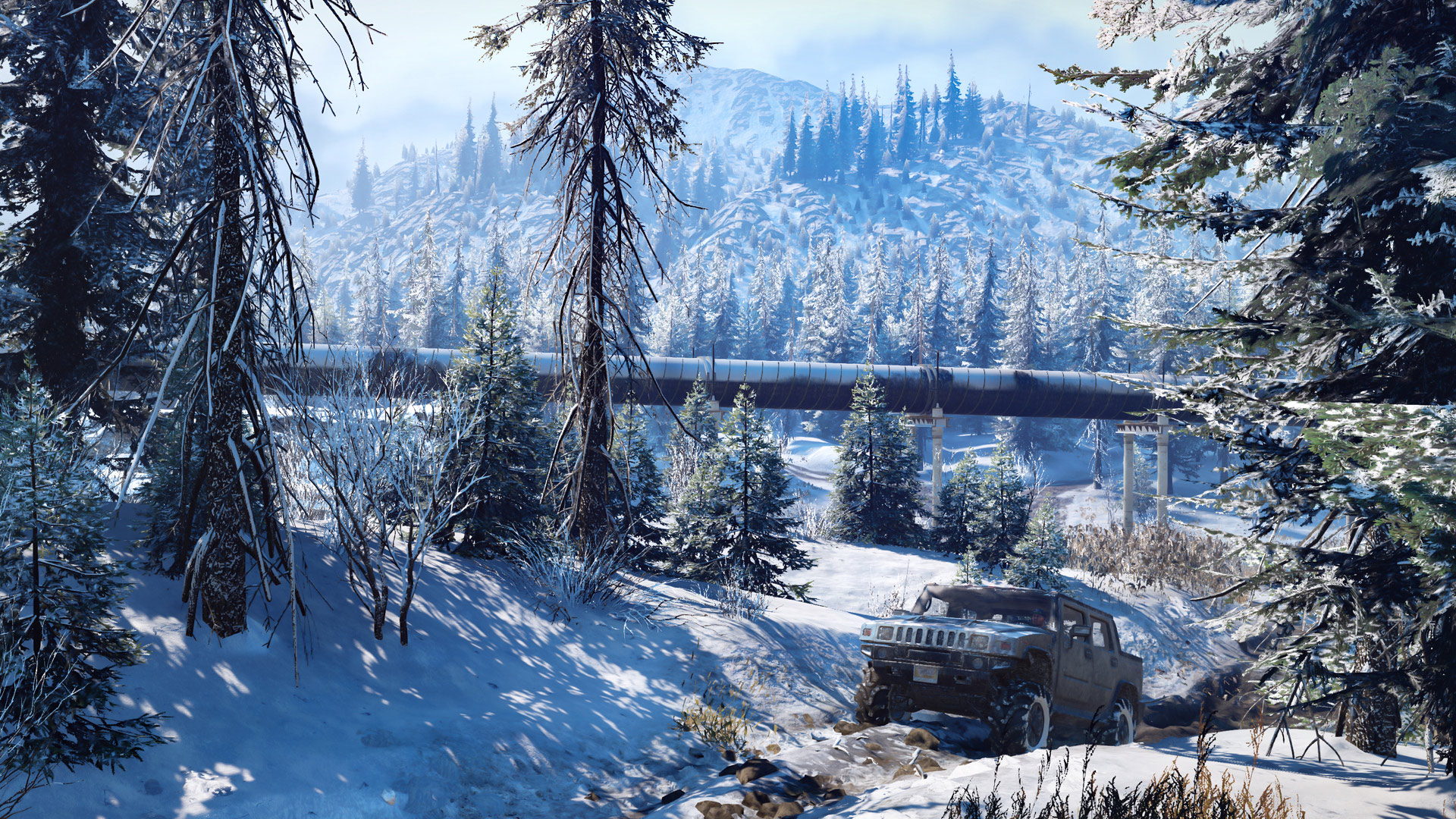
Shin Megami Tensei III: Nocturne HD Remaster Review

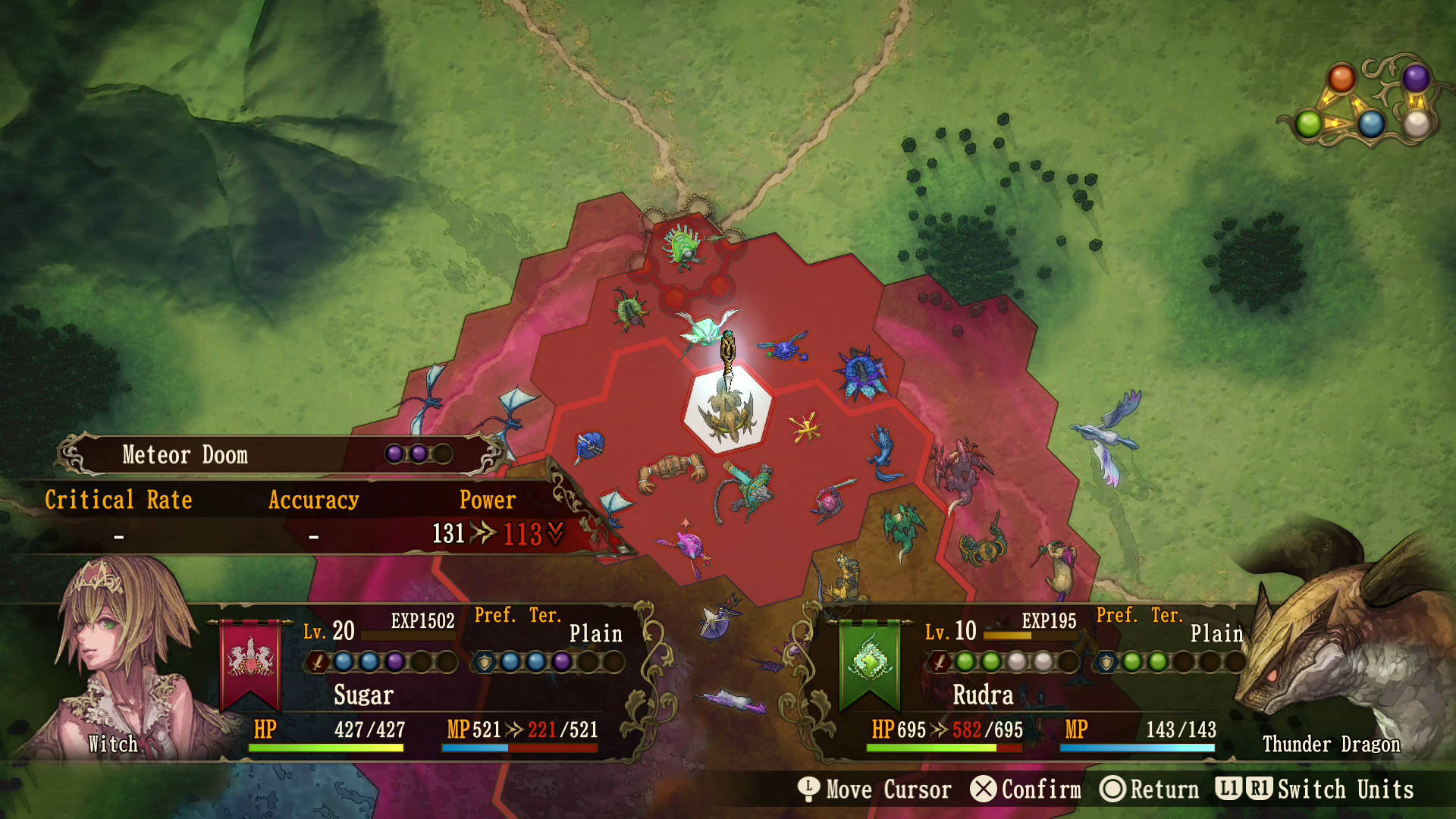
Even though I’ve been a fan of Atlus’ groundbreaking Megami Tensei series since before it existed on our shores, I’d never before played the original Nocturne, one of the highest-rated and most beloved titles of the franchise. At long last, I’ve righted that wrong thanks to Shin Megami Tensei III: Nocturne HD Remaster—and it sure has been an interesting experience.

From reviews, to awards, to message board chatter, to now infamous memes, Shin Megami Tensei III: Nocturne has grown to be this nearly mythical title over time. Now that I’ve finally played the reality behind the hype, it’s an unquestionably great game—but maybe not my favorite of the series. Still, what I was quickly reminded of is just how much I adore any classic MegaTen. Nocturne HD Remaster is like an old blanket I’ve had since my childhood: a little dirty, a bit worse for wear, but still comforting and reassuring.
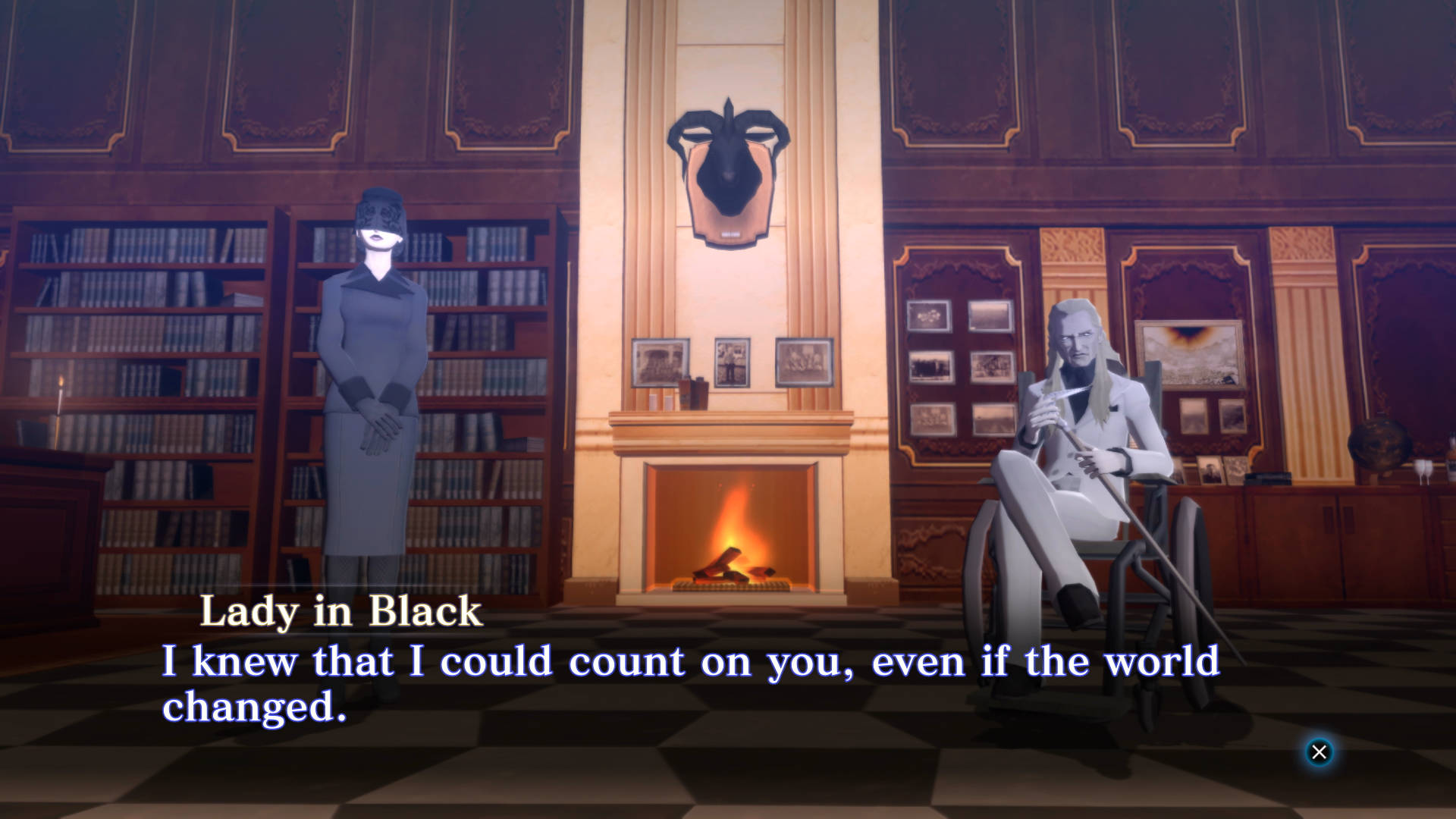
For those who have come to Atlus’s RPGs through the new era of Persona releases, Nocturne HD Remaster may feel cold, cruel, and confusing. Fights are difficult, especially when enemies can one-hit kill your entire party. Stretches of gameplay between save and healing points can feel impossibly long. Knowing where to go or who to talk to next isn’t always easy when compared to more modern offerings in the genre. And yet, all of those elements can work together wonderfully with just a bit of effort on your part, with each point of progression feeling genuinely rewarding. Meanwhile, if you’re a longtime fan, this is just like going home again (even if you’ve never set foot in this particular home).

For those who have avoided not only playing the original, but also any knowledge of it, Shin Megami Tensei III: Nocturne tells the story of a male high school student who gets caught up in an apocalyptic event. After shadowy figures hell-bent on reshaping the world in their own image transform Tokyo into a twisted landscape, our protagonist becomes a demonic being known as the Demi-Fiend. Using his newfound powers, the Demi-Fiend must recruit other demons to his cause, find those who have set in motion the current events, and decide who is friend and who is foe in the fight for the future of humanity.

Gameplay is generally broken up into one of three activities: moving around the world map, exploring buildings and dungeons, and fighting demons and bosses. Nocturne’s combat will feel familiar to anyone who has played almost any of the other MegaTen games, as you and your foes take turns unleashing attacks, utilizing skills, or actually using the items you’re carrying instead of just stockpiling them for “later” like in other RPGs. One of the things I honestly hadn’t realized before going into Nocturne HD Remaster is that this is where the franchise’s trademark “Press Turn” feature first came into play. Each side gets a set amount of actions during each turn, but if you can hit your opponent (or if they hit you) with an attack or spell that targets a particular weakness, you can earn more actions. It’s a system that has offered up a great amount of depth in the combat of later games, and it’s a bit surprising to see how polished the idea already was here in its very first outing.

Of course, killing every demon you come across will get you nowhere, as you’ll need to recruit some of them to aid you in battle. Swaying demons to your side requires a few kind words or (far more often) a hefty bribe, and at any point you can control three demons in your active party with a set amount more waiting in storage. If you know MegaTen, then you know how all of this works, but for those that are new, it’s an engrossing-yet-never-ending circle of recruiting demons, using them for a while as teammates, and then fusing them together to create even more powerful and capable demons. The menagerie of monsters that Atlus has come up with over the years are a fun and lovable bunch, and they especially get to showcase their trademark personality here given so many of the NPCs you’ll run into are demons instead of humans.

(Oh, and let me just say this: Digital Devil Story: Megami Tensei, the first game in the franchise to feature demon recruitment, debuted in 1987. The first Pokémon game, Pocket Monsters Red/Green, wasn’t until 1996. Everyone who calls Nocturne, or any other MegaTen game, “Pokémon-like” is a heretic. )

It’s those demon fusions where Shin Megami Tensei III: Nocturne HD Remaster brings its first big upgrade. Unlike in the game’s original releases, here you can specifically select which skills the demons you’re fusing together will transfer over to their offspring, which was one of the greatest quality of life upgrades to ever come to later games. The visuals are cleaner, higher resolution, and expanded into widescreen, and, man, is it a delight seeing the legendary Kazuma Kaneko’s character designs and art style presented in this nicer format. Nocturne HD Remaster also features some other very welcome additions and improvements, such as both Japanese and English vocal tracks, a revised translation, a Suspend Save option (for when you need to quit but aren’t near a save point), Merciful difficulty for those whose focus is on experiencing the story but not the challenge, and the ability to pick between regular or Maniax versions of the game—which sets the guest character to either Devil May Cry’s Dante, or (the clearly superior) Raidou Kuzunoha from the PS2 Devil Summoner games.
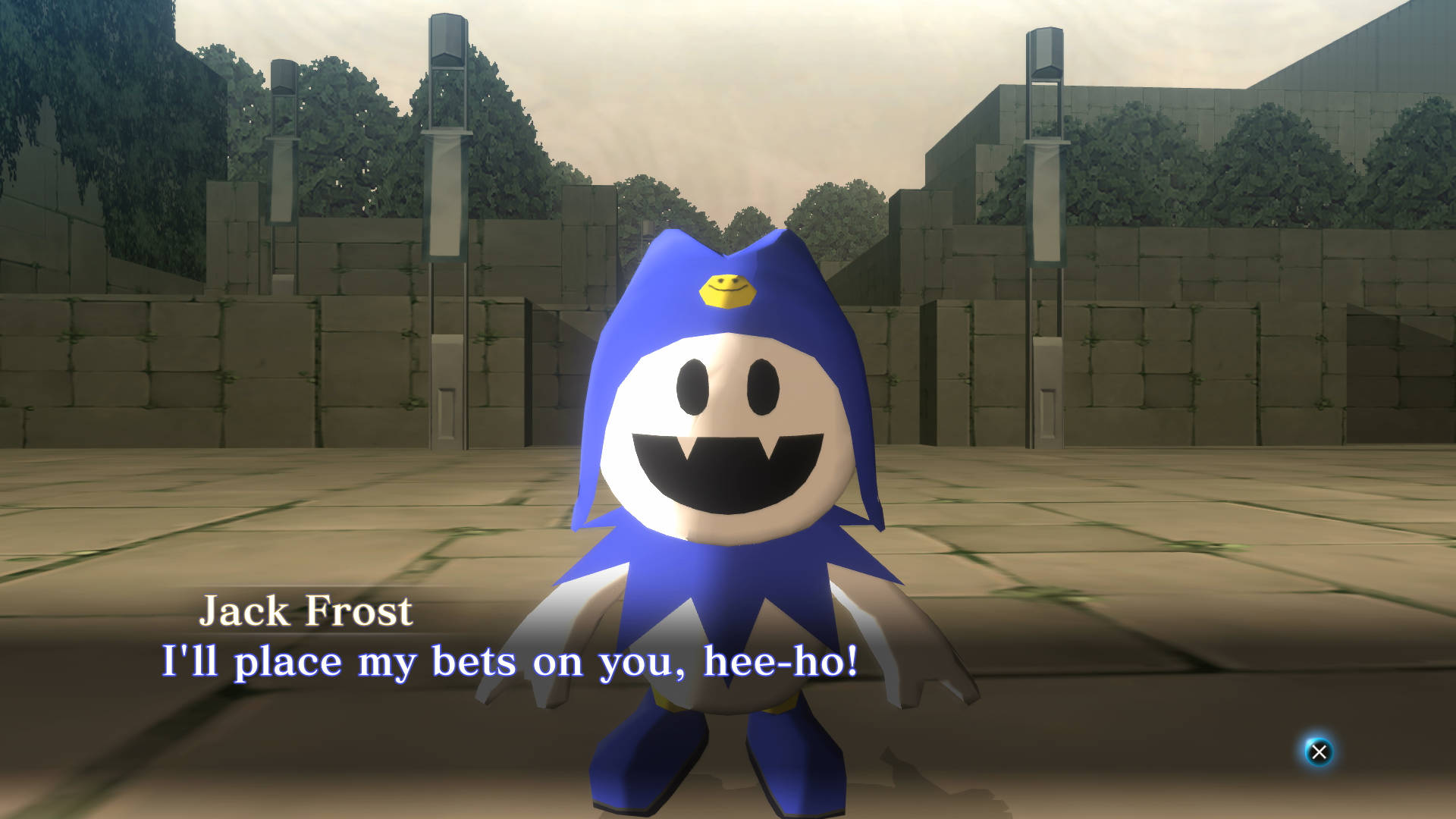
The problem is, I think Nocturne deserved more. On a general level, there are areas of the game the remaster doesn’t touch that it really should have. Exploring the various dungeons can be frustrating because of both the limited movement of the Demi-Fiend (even using the analog stick, he can only move in eight directions) and a camera that is aggressive in resetting itself to certain positions. There’s some weird flickering at times throughout the game, and while skill selection during fusion is definitely nice, you’ll miss out on some other modern features like clearer labelling of enemy weaknesses.

Deeper than that, though, it’s kind of sad seeing the easier remaster route that Atlus took in an era when we’re getting projects like Final Fantasy VII Remake. The company has released five different games based on Persona 4, and four (so far) for Persona 5. I really wish Atlus would have put some of that effort into a full, proper remake for Nocturne. Look, I’m happy that Atlus remembers this game exists and gave us something, and I’d happily snatch up similar remasters for every other PS2 MegaTen release. It’s just, if any game in the franchise deserves some extra care and attention at this point, Nocturne does.

Shin Megami Tensei III: Nocturne HD Remaster is a good remaster for a great classic Japanese RPG, and it’s helped me finally mark off one of the bigger gaming items on my bucket list. While the original Nocturne really could have done with a far more ambitious remake, this is still an admirable effort that helps make the game more playable for a modern era.

My human side worries that Nocturne HD Remaster will still be too unfriendly to new players to attract a sizably larger following, but my demon side says screw ‘em—if it benefits me, then that’s enough.
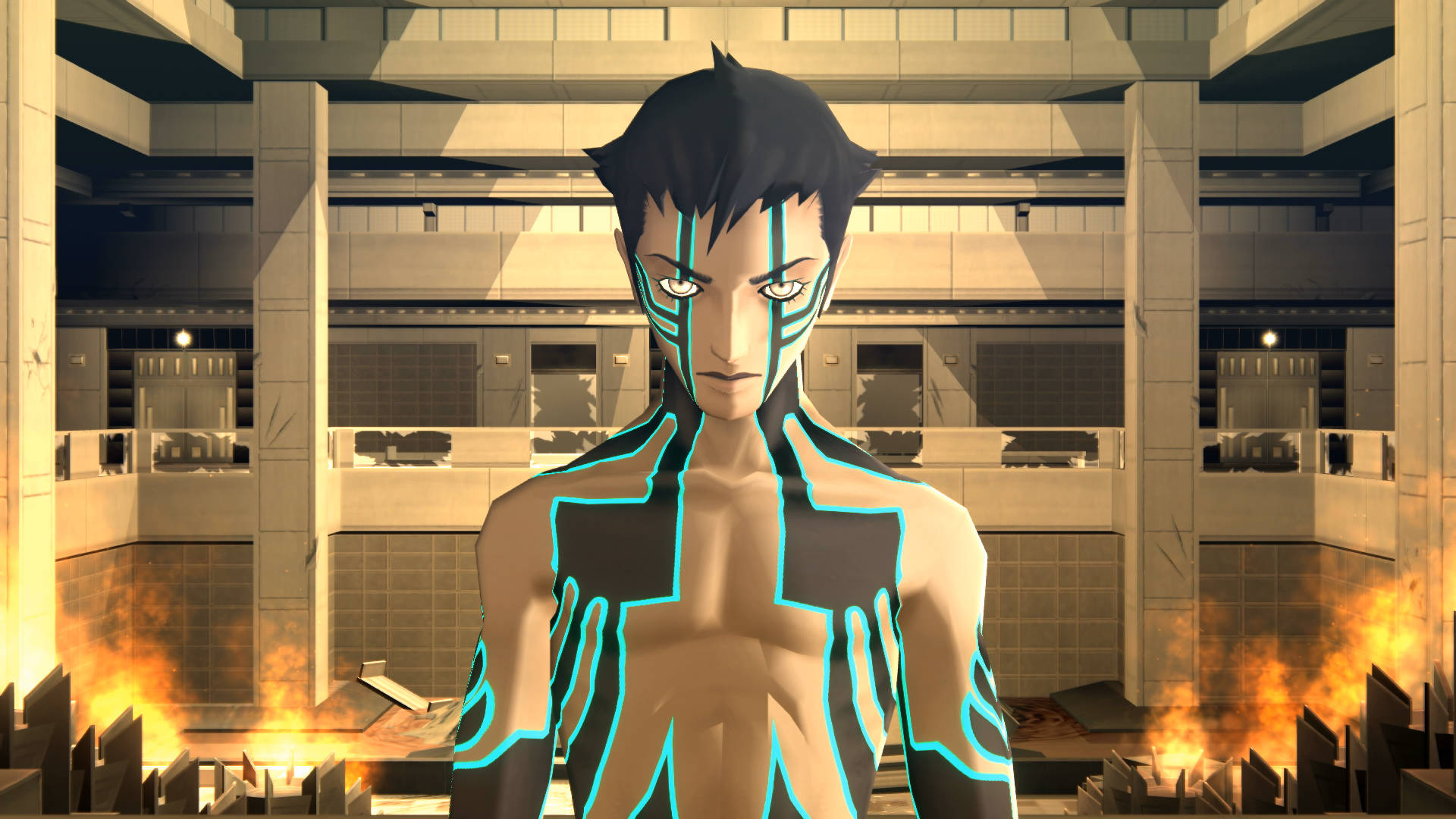
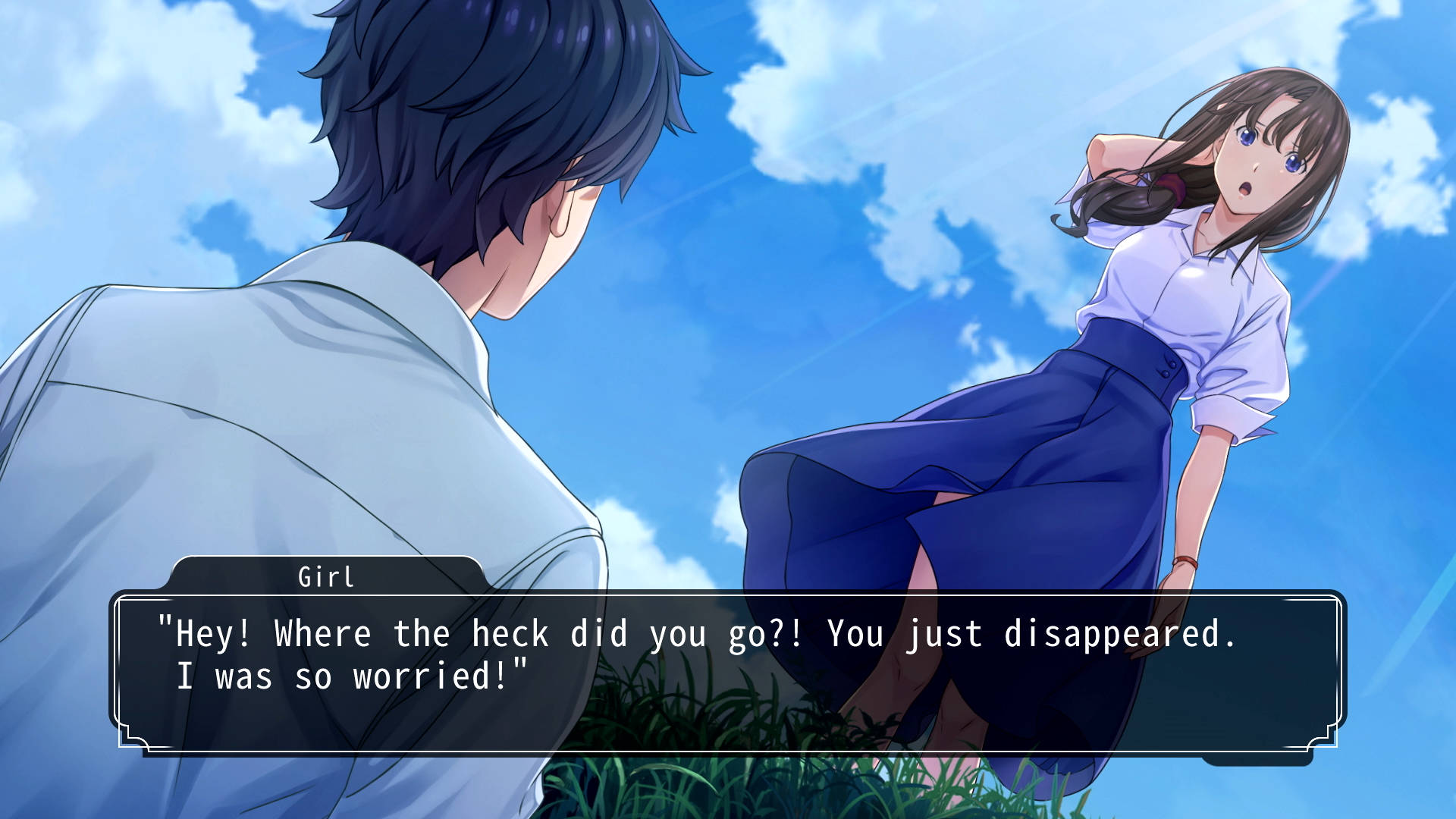
Famicom Detective Club: The Missing Heir Review

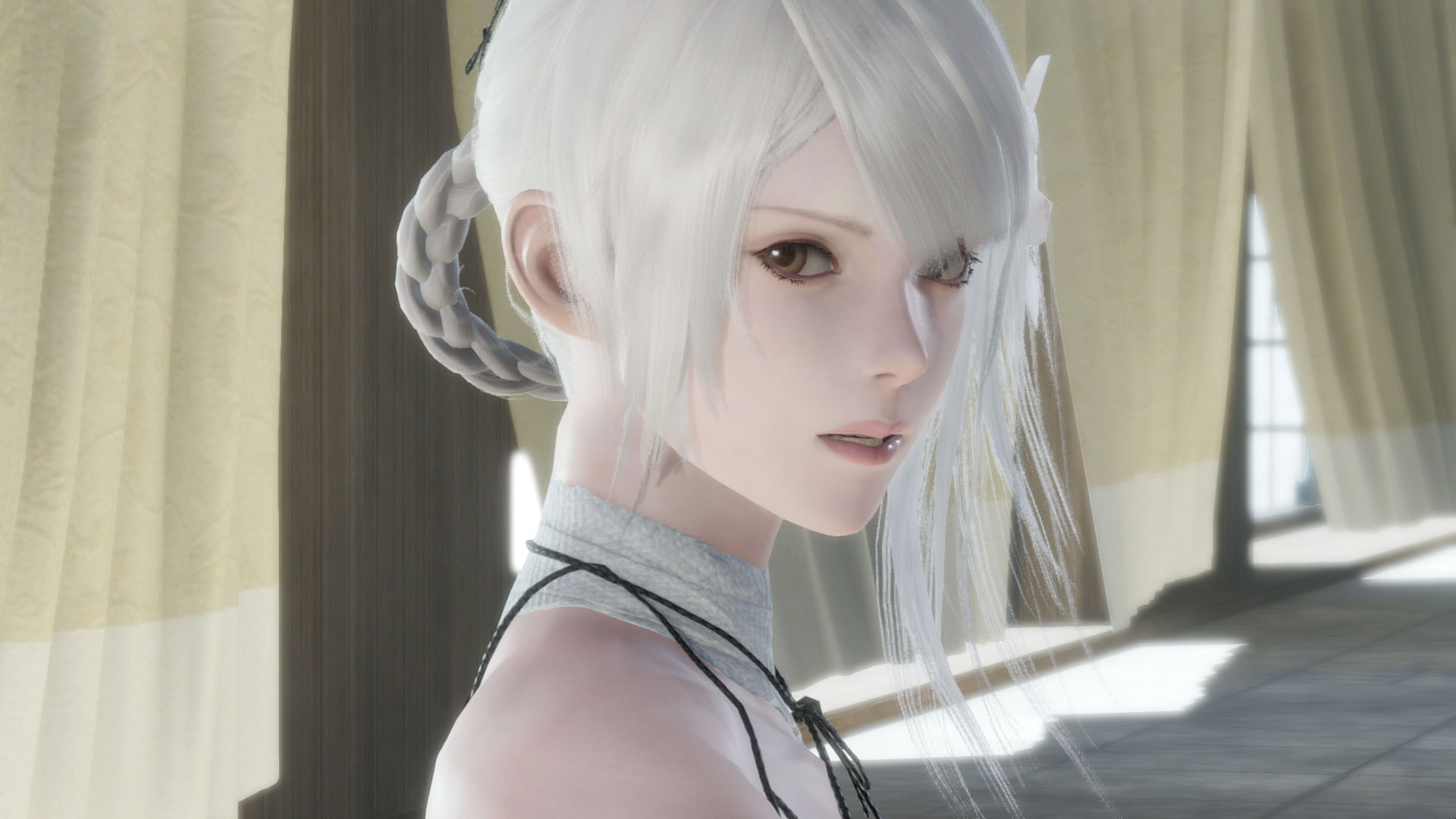
It was only a few weeks ago that I was reviewing Nier Replicant Ver.1.22474487129…, a new remaster of Yoko Taro’s cult classic that righted a certain wrong in the game’s history. We English speakers never had the chance to play as the original main character, Yonah’s brother, and now he was finally given a ticket to the West 11 years and 1 day after his original Japanese debut.

While certainly a long wait, 11 years is nothing compared to the journey of Famicom Detective Club. A rather obscure Nintendo series outside of the company’s home country, neither the original game, Famicom Detective Club: The Missing Heir, nor its sequel, Famicom Detective Club: The Girl Who Stands Behind, ever made it our way. Part of that may be because they were Famicom Disk System releases, and their file sizes could have made it harder to port the games over to cartridges, unlike other smaller FDS titles such as The Legend of Zelda or Metroid. A potentially larger cause may have been Nintendo of America assuming owners of its first home console would have little interest in a slow, complex graphic adventure murder mystery.

As I sit here now writing my review of the Switch remake of Famicom Detective Club: The Missing Heir, I speak of a game that has taken 33 years to come our way. That’s three times the wait for NieR Replicant, and possibly the longest span of time it’s ever taken for a Japanese game to get an official English localization.

So—was it worth the wait?

The answer to that is going to depend on your personal tastes, and potentially your age. The Missing Heir still feels very much like other first-person, menu-driven adventure games from its original era, where you’re tasked with going from location to location in order to progress the next step of the story. With all actions initiated via a pop-up menu, that might mean talking to a specific character about the right topic, moving a cursor around a 2D environment to pick out a particular object to examine, or choosing more situational actions from the menu. Some more new-school players might lump the Famicom Detective Club titles into the visual novel genre, but they really are very different kinds of experiences, more reminiscent of other early examples like Shadowgate or Uninvited. Story and dialog are of course important in The Missing Heir, but unlike visual novels, they’re given equal or even less time in relation to interacting with the game to make your next move.

From my admittedly limited experience with the original 8-bit Famicom Detective Club releases, Nintendo seems to have taken a “conservative and faithful” approach to bringing both games into the modern era on a gameplay level. Part of me appreciates that, especially since we never got to play either game as originally intended. Another part of me, however, thinks that decision may have been a mistake.

For good or bad, old-school graphic adventures could be notoriously frustrating to figure out, and The Missing Heir is no exception. In general, making progress isn’t too difficult. As a detective tasked with trying to find answers surrounding the sudden death of Kiku Ayashiro, the head of a wealthy and powerful family, interviewing potential witnesses and searching for clues can at times be totally straightforward. Talking to the butler the day after the matron of the family died? Ask about what he saw, what the woman’s children have been up to, if anything strange had happened recently—things like that. Looking around Kiku’s room? Check for anything that might seem out of place or suspicious, or perhaps scrutinize seemingly innocent elements that could point to deeper secrets within the family. In those moments, every option presented as a conversation or examination choice is worth exploring, so you’re bound to trigger the requirement for advancing anyhow.

As you get further into the game, conversations naturally become more narrow in focus as you’re investigating a particular person or chasing a certain theory—and in those moments, knowing what the game wants from you isn’t always easy. Sometimes, it might be asking again about a couple key topics in a certain order. It might simply be choosing to “look” at the person you’re talking to in order to pick up on some particular clue. It might be having to jump back and forth between two different locations (that, in terms of the game’s world, are miles apart) to perform specific actions at each. Or, in the game’s lowest moment, it might be having to somehow know that you need to go pixel hunting around a specific environment—which is then complicated by the game breaking its own rule of always having your cursor note when you’ve moved it over an item you can interact with.

In the interest of full disclosure, there were a couple times while playing Famicom Detective Club: The Missing Heir that I broke down and referenced an FAQ for the game’s original release. (Which wasn’t always easy, given Nintendo has added, reworked, or expanded elements of the game here and there.) For anyone who has played other graphic adventures of that era, you’ll know far too well that nearly every game in the genre could be this demanding at times. The problem is, 33 years removed from The Missing Heir’s original release, we now live in a very different world. There are plenty of players who aren’t going to be used to this type of experience, and I think a chunk of the people who pick up either of the Famicom Detective Club games will either constantly hit up YouTube walkthrough videos or just give up entirely.

I know it’s always a potentially dangerous role to step into when doing a review, but I have to play armchair developer here for a moment. I think Nintendo could have kept both games faithful to what they were originally, but made them far friendlier to modern players by introducing a variety of assistance features. If nothing else, at least offer the option to have an icon on screen to let you know which location you need to be at to find the next point of progression, because not knowing where I should be focusing my attention was easily my most common annoyance. Next, have an option that grays out any menu choices that are now dead ends at your current location. That way, while not outright telling you what to do next, the game could at least let you know what to not bother doing next. Finally, at times, The Missing Heir will highlight menu choices in yellow to denote that you should be focusing on them. For those who just want to experience the game’s story, have an option that highlights the next step in yellow every time.

I wish Nintendo would have implemented ideas like those, because The Missing Heir’s story is pretty captivating throughout its entirety. Even as the story kicks off with one of the most overused tropes in Japanese gaming—the main character having amnesia—things quickly pick up from there. There are definitely questionable situations going on in the Ayashiro family (and the company they own), and the twists and turns that await always left me wanting to see what was next as a fan of both Japanese and crime dramas. Even after guessing one of the game’s big secrets around halfway through, I was still excited for the reveal when it happened, as it felt like a justifiable payoff to the events that had been building, rather than a surprise out of nowhere to catch me off guard.While I know not everyone may find it as interesting or riveting as I did, The Missing Heir’s narrative was the thing that always pulled me back in whenever I was feeling frustrated over a particular segment of its gameplay.

What should get more universal praise, on the other hand, are the remake’s visual and aural upgrades. I really like the art style that Nintendo chose here, and characters have enough animation to bring them to life on a level that static art couldn’t. The game is fully voice acted, which I always appreciate for these types of experiences, but do be aware that the only language option in that regard is Japanese. And while graphic adventures aren’t always what you think of when you think of game soundtracks, The Missing Heir’s music is not only both fitting and catchy, but also presented as either modern remixes or their original 8-bit chiptune versions.

It’s hard not to appreciate just how amazing of releases Famicom Detective Club: The Missing Heir and its sequel are on a basic level. Not only did Nintendo remake two extremely niche games from its early days for the Switch, but it also then brought them to the West for the first time in 33 years. While I certainly wish The Missing Heir would have been a game more people could appreciate after such a journey, it’s still both a genuinely enjoyable tale of murder and deceit, and a fascinating look into an era of gaming that’s now mostly gone—even when it gets bogged down in keeping faithful to that legacy.

So, while I do think the wait was worth it in the end, Famicom Detective Club: The Missing Heir’s biggest mystery may end up being just how many others out there end up feeling the same way.

NieR Replicant ver.1.22474487129… Review

For days, I was certain I’d open this review by saying that NieR was one of the games that I’m ashamed to have missed the first time around, and that it shouldn’t have taken me 11 years to finally, properly play it.

The thing is, in sitting down with the remake of Yoko Taro’s cult classic, I came to actually appreciate why I’d given up on it the first time around. Like the original PlayStation 3 and Xbox 360 release it refreshes for a new era, NieR Replicant ver.1.22474487129… (henceforth NieR Replicant) starts off incredibly pedestrian. Put aside any knowledge you have of any of Taro’s other games, style of storytelling, or simply his personality, and it can feel like a generic, low-budget, by-the-numbers Japanese action RPG.

Much like its sequel NieR Automata, NieR Replicant takes a couple of hours to really kick into gear—but once it does, oh boy. I’ve come to dislike the “just give it X amount of time and it’ll get good, honest” argument, but it legitimately is true here. The game does have signs of the depth and weirdness that are to come, but they’re small at first, and easy to miss unless you already know to be looking for them.

Everything kicks off with a teenage boy—technically named Nier, but his in-game name is up to you as the player—and his younger sister Yonah. Yonah’s physical health is deteriorating due to an illness called the Black Scrawl, and Nier is desperate to find a cure. A potential solution finally arises after a fateful meeting with a floating, talking book named Grimoire Weiss. It seems that Weiss is not only destined to put an end to the Black Scrawl, but also the monsters called Shades that have been invading the land in increasing numbers.

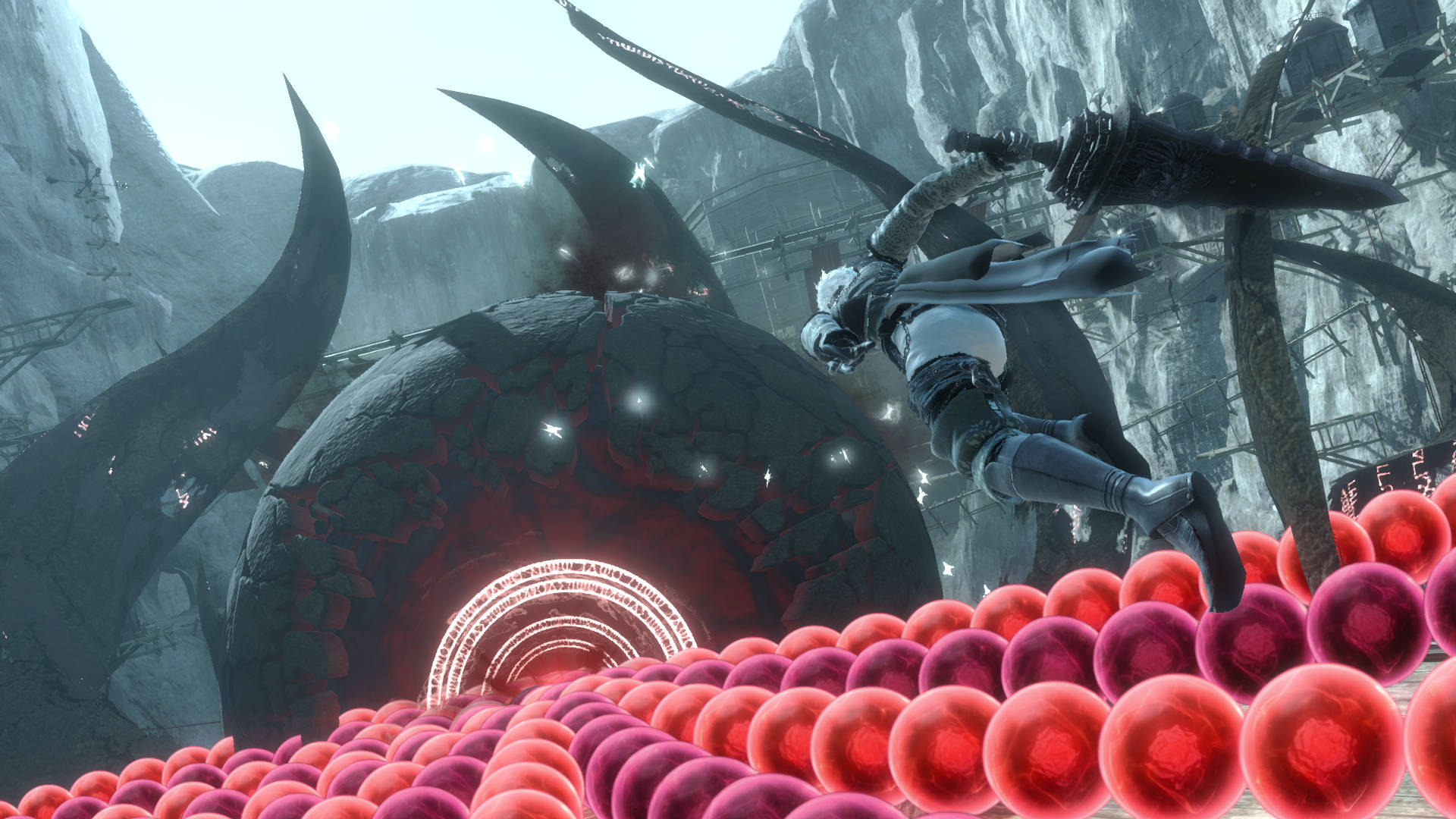
Nier and Weiss set off on an adventure across the land searching for the Sacred Verses, a collection of pages that will hopefully give the pair the power they need to defeat the Shades, put an end to the Black Scrawl, and save Yonah. In gameplay terms, the Sacred Verses are a series of new abilities that unlock for Weiss, letting him fire off magical lances, conjure up a protective wall, or unleash other offensive and defensive capabilities. (While Weiss is not directly controllable, he follows you around wherever you go, and you fire off his abilities using the shoulder buttons.) These combine with Nier’s control over human weaponry, starting with a selection of swords before moving on to other melee options. While Nier’s attack power is mostly dependent on which weapon he has equipped, you can modify each weapon with “words” you’ve collected throughout the world. For example, I modified the name of my favorite one-handed sword with words that boosted its attack power and the XP I gained from using it, while I customized my go-to spear to better break enemy armor and reduce the MP cost of Weiss’ spells.

Though I cannot speak as an expert on all of the changes we’ve gotten going from the original NieR to NieR Replicant, I can say that probably the biggest upgrade comes when fighting enemies. NieR’s combat was serviceable, but after PlatinumGames infused its trademark blend of “stylish action” into NieR Automata, “serviceable” wouldn’t have cut it for all of those coming to Replicant as new players. While the game is no Automata—and Nier certainly no 2B—I enjoyed the action here way more than I had expected to. Juggling Nier’s skills as a swordsman, Weiss’ various abilities, the different weapon selections, parries, and the other elements of the combat system is a lot of fun, and keeps fights with the game’s enemies fresh the entire way through. I did at times long for Automata’s mid-combo weapon switching, but I have no hesitation in saying that Replicant is never relegated to simply existing in its sibling’s shadow.
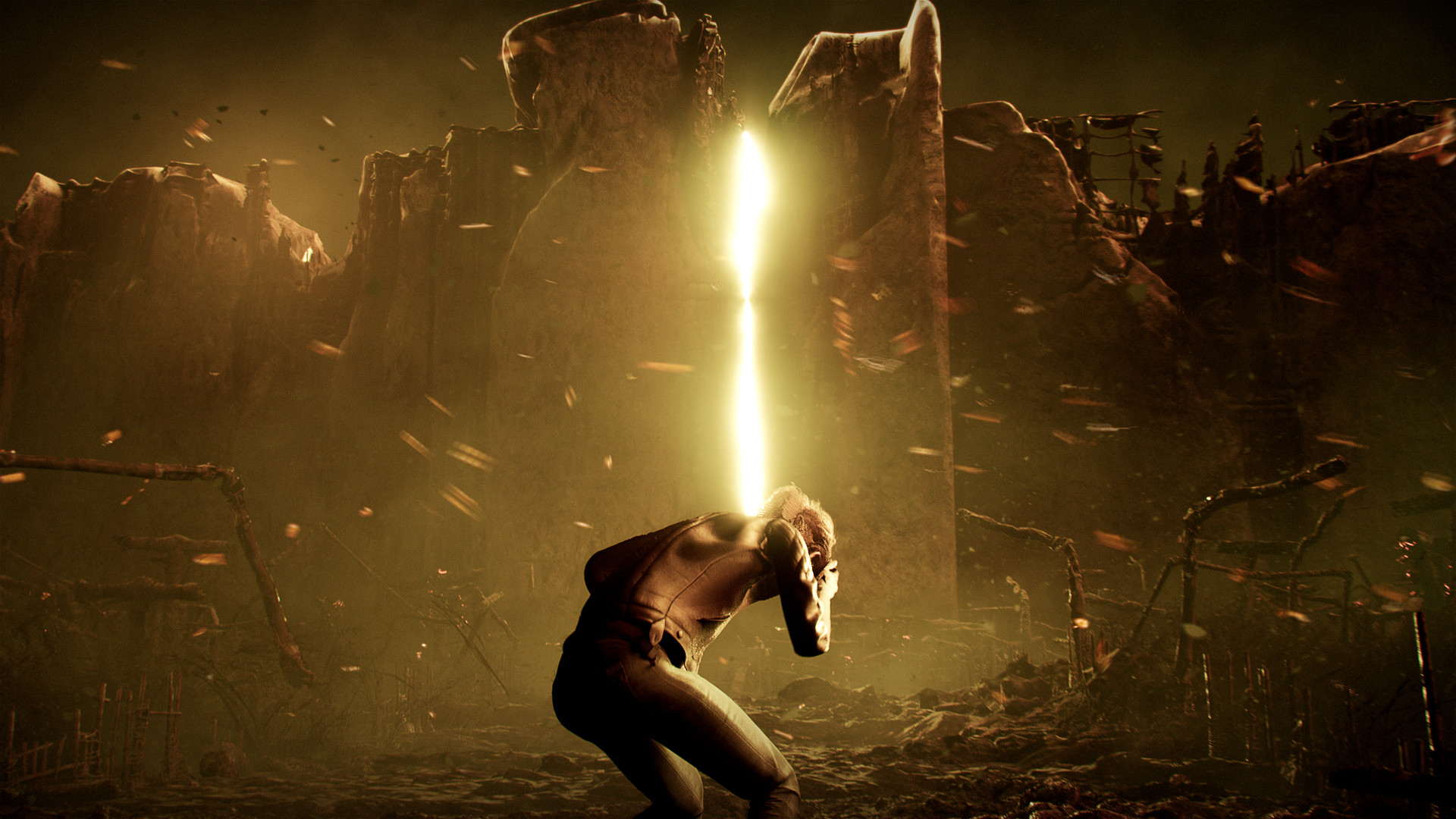
Another area in which NieR Replicant improves on its predecessor is in the way of visuals and performance—and this may or may not be a source of disappointment for some. I want to be clear that I’ve got no personal complaints with the graphics in Replicant. I think the game looks good, the upgraded character models are great, and performance was totally solid for me other than two, maybe three, times where the framerate seemed to hitch momentarily due to very specific battle situations.

That being said, some people put a lot of expectations on what a “remake” should be. This is nowhere near the level of a Final Fantasy VII Remake or Demon’s Souls, but it also isn’t always as impressive as other less-ambitious projects in terms of world complexity, object geometry, or textures. Replicantreminds me a lot of Automata in those areas, and for me, that’s perfectly fine. If you were one of the people who thought Automata looked “cheap,” then you’re probably going to have the same complaint here. I would like to see the game get a next-gen upgrade though, as even when running on the PlayStation 5, load times can still run longer than I expected.

While this is an area I have trouble commenting directly on, it’s impossible to review NieR Replicantwithout mentioning its soundtrack. Much like its younger sibling NieR Automata, the music here is heavenly, composed by the incredibly talented Keiichi Okabe. However, my understanding is that the remake’s soundtrack has also gotten some upgrades, and I’ve seen comments from a few fans who prefer the original mixes of the songs where they’ve been able to directly compare between the two releases. So, while newcomers won’t know the difference, longtime fans definitely might.

There’s one other major aspect NieR Replicant offers over the original NieR, and it ties in to what is unquestionably the most important point of this—or any of Yoko Taro’s—games: story.

This gets a little complicated, but in Japan, the original NieR came out in two versions: NieR Replicant, the PlayStation 3 release which had players control Yonah’s brother, and NieR Gestalt, the Xbox 360 version which changed the main character to Yonah’s father. As the story goes, the American branch of Square Enix wanted the game to feature a more “Western-friendly” protagonist, so the team created Papa Nier (as his fans call him). And then, when the game launched outside of Japan, not only was he the main character for the Xbox 360 release, but he was also edited into the PS3 build as well.

I’m just going to be honest: Papa Nier was part of the reason I never connected with the original Nier. I know some of you out there love him, but Papa Nier was ugly—his design was dumb, his voice weird, and his personality completely unappealing as a character I’d be controlling for 20-plus hours. Finally getting to play as the originally intended main character was a big reason I got excited for NieRReplicant, and I now absolutely think he’s the way to go. Throughout the game, Nier comes to have two main allies—Kainé and Emil—and I think the growth he goes through, both on a physical and emotional level, directly reflects the growth his teammates go through as well. Maybe I’m wrong, but I just cannot imagine the story hitting as hard as it does when you put an older father figure into that slot, and I say that as someone who desperately wants more older protagonists in Japanese games.

No matter which side of the argument you fall on, one thing all fans will agree on is just how engrossing and emotional the story is. NieR Automata had taken hold of my heart by the time its (legitimate) credits rolled, and Replicant easily did the same. While I still prefer Automata’s overall world, cast, and story arc—possibly because it was simply the game I played first—I almost think that, as a whole, I may prefer Replicant’s main heroes a tad more. I’m not shocked that I liked foul-mouthed bad girl Kainé, but the big surprise was just how attached I also became to the mysterious magic-wielding boy, Emil. Along with Weiss, they make a fantastic team to have at Nier’s side while trying to save Yonah, and I especially loved how they all supported one another on a personal level. Yoko Taro is a man who knows how to craft tales about the highs and lows of humanity, leaving a game that starts off as a “generic, low-budget, by-the-numbers Japanese action RPG” as an experience that’s truly special and touching by its end—not just in terms of its narrative, but also in the depth and uniqueness of its gameplay.

There’s just one catch, and it’s a catch that I know is unfair to bring up on some level. There are going to be a lot of people who, like me, are coming to NieR Replicant off the back of NieR Automata, and from that vantage point, the former constantly feels like a prototype for the latter. Weiss comes off as an early version of the Pods, while the weapon-altering words seem like a less complex take on Plug-in Chips. Then there are the similarities in storytelling and sidequest design. The shared animal-riding aspect and gameplay gimmicks. The weapon switching. The way new perspectives unlock through multiple playthroughs. The overall world design. I could go on.

NieR Replicant feels like a less polished, less ambitious, lower-budget NieR Automata—but of course it does. Even though a lot of us are now getting to finally play it after Automata, it was originally designed and developed seven years prior for less money, using lower-level tech, and on a far less capable console. It’s not fair to expect Replicant to best Automata in most categories, but I just know at least some portion of players out there won’t understand that.

Even if we were to relegate NieR Replicant ver.1.22474487129… to “prototype” status, it’d be one heck of a prototype. This is a game that absolutely deserved to get another chance, and while I’m not sure it’ll become the sleeper hit that NieR Automata did, it’s a fascinating, captivating, and exhilarating game in its own right. If you want to finally play the first chapter of the saga, if you want to deepen your appreciation for all the little callbacks that appeared along 2B’s journey, or if you’re just looking for something different from the norm, then NieR Replicant may not be a perfect game, but it’s certainly a perfect way to spend 30-some hours—you dumbass!


A Near-ly Replicant Soundtrack

While this is an area I have trouble commenting directly on, it’s impossible to review NieRReplicant without mentioning its soundtrack. Much like its younger sibling NieR Automata, the music here is heavenly, composed by the incredibly talented Keiichi Okabe. However, my understanding is that the remake’s soundtrack has also gotten some upgrades, and I’ve seen comments from a few fans who prefer the original mixes of the songs where they’ve been able to directly compare between the two releases. So, while newcomers won’t know the difference, longtime fans definitely might.

Samurai Shodown May Have Already Ruined Next-gen Consoles for Me

Coming into the next-generation consoles, I held tight onto one dream above all others: 60 frames per second. It’s not that games on the PlayStation 4 and Xbox One couldn’t hit that mark, but too many times they did so by making major compromises—and even then, getting a stable 60 FPS was another question entirely.

I’m not naive when it comes to the realities of game development. Amazing visuals and fancy effects are still going to win out over rock-solid framerates far more often than I’d like, because that’s what players want. Still, we now live in a world where giving players the option to choose between graphics and performance is more and more common for console games, and the technology powering both the PlayStation 5 and Xbox Series X means that 4K resolutions and 60 FPS framerates don’t have to be mutually exclusive.

So, even beyond the huge decreases in loading times thanks to SSDs, or the benefits of better development engines, the excitement I’ve felt most as we’ve started transitioning from one console era to the next has been in finally seeing games running at a constant, stable 60 FPS. Older games that were once a mess can now run beautifully thanks to unlocked framerates, titles are seeing additional benefits such as FPS Boost on Xbox, and even those projects that are starting to push the new hardware are giving us the chance to dial the graphics back a bit in the name of keeping performance solid.

Four months into the lifespans of my PlayStation 5 and Xbox Series X, I’ve been feeling genuinely hopeful that I’d finally be happy with the framerates my video games run at—until Koei Tecmo came along and set me down a dangerous path.
Japanese people with swords are really mucking up my enjoyment of the new consoles

During Black Friday last year, my household finally upgraded to a 4K television. After exhaustive research, we settled on a Series 6 television from TCL. So far, I’ve got nothing but great things to say about the set, and it’s a huge step up from the decent but now horribly dated 1080p Sharp HDTV we’d purchased years before. The TCL model we chose seemed like a great pick for gaming, as it boasts features like mini LED backlighting, HDR, a THX certified game mode, and Variable Refresh Rate. The one caveat was that the TV can only do 60 FPS at 4K, although it can bump up to 120 FPS if I drop the resolution down to 1440p. But, I mean, when would I ever care about playing games at 120 FPS at this point?
At least, that’s what I thought until Nioh 2. As a lifelong console gamer, triple-digit framerates are something I’ve never experienced, but I was admittedly curious when the upgraded version of Koei Tecmo’s Souls-like offered me the chance. Playing Nioh 2 on a PS5 was an eye opener, even with the game’s 120 FPS mode being unquestionably uneven. I started to worry a little about the taste I’d just gotten of a life of pure framerate decadence, while simultaneously wanting to try another game that would have an easier time keeping things stable.

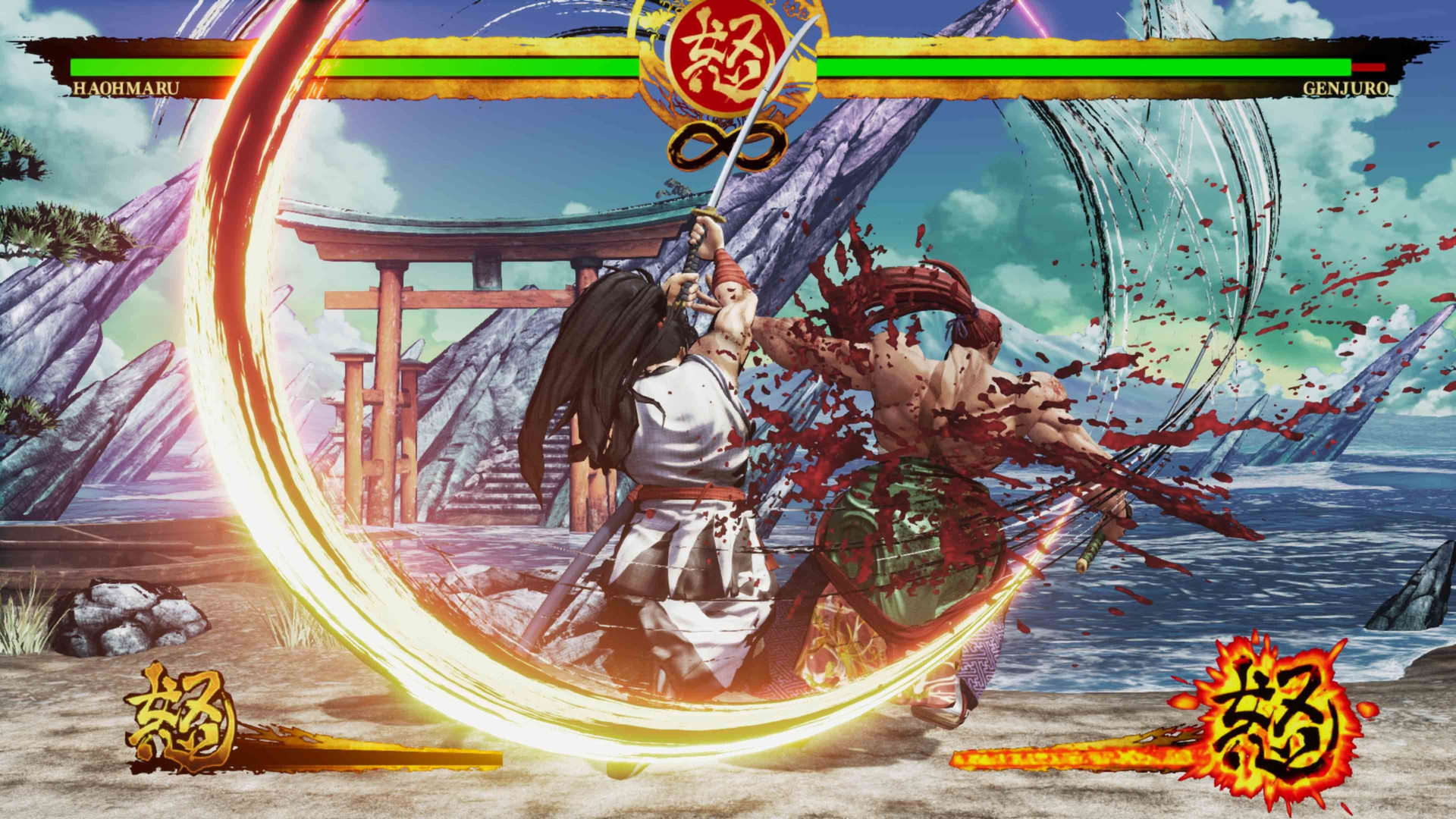
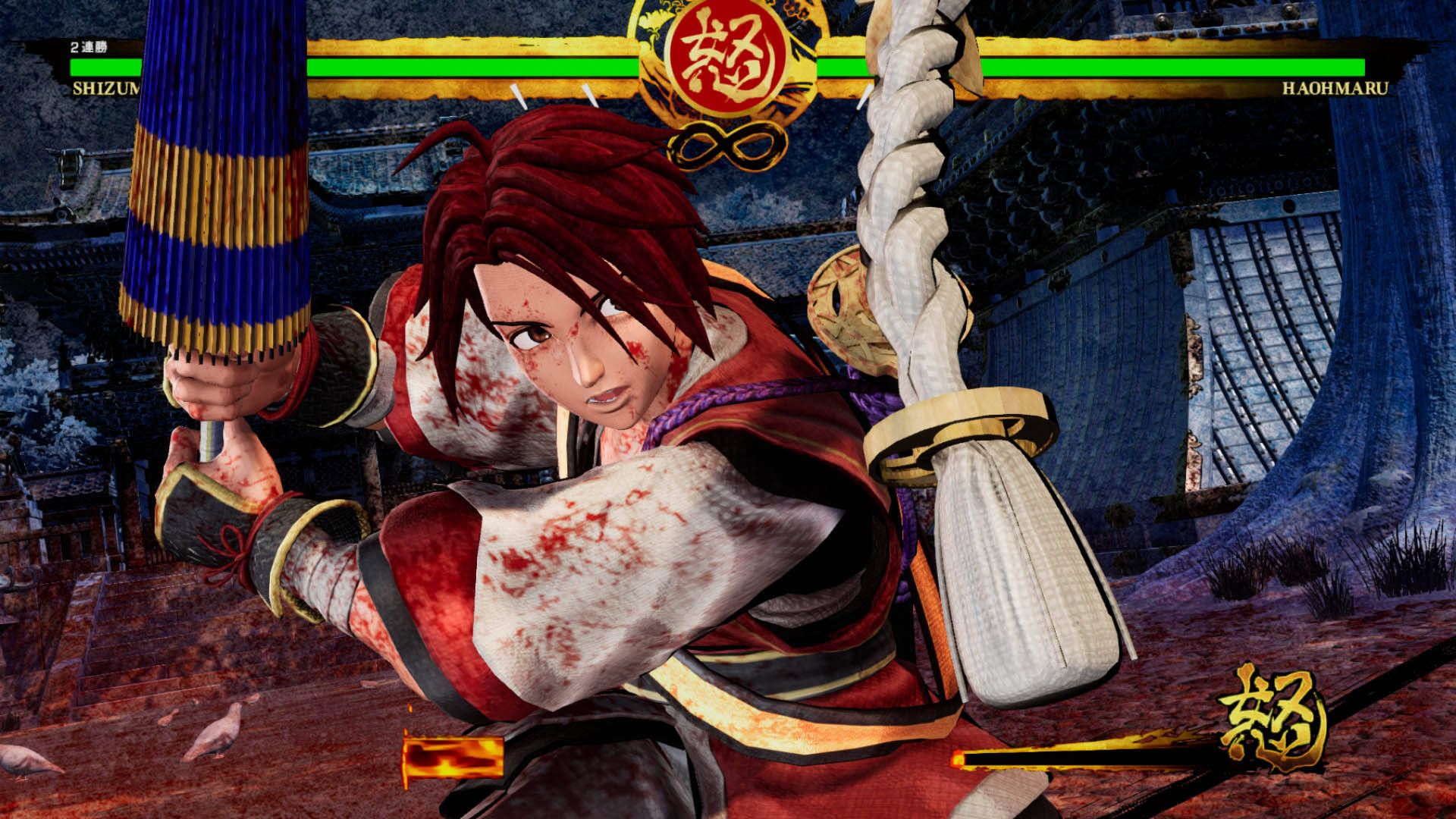
And that’s where Samurai Shodown comes in. SNK’s sword-swinging fighter franchise has long held a special place in my heart, and I was pleasantly shocked at just how good the latest chapter of the series turned out upon its 2019 release. When an upgraded Xbox Series X version of the game was first announced, I wasn’t quite sure what it’d offer me that the PlayStation 4 copy I already owned couldn’t. And then, I played Nioh 2—and Samurai Shodown’s advertised 120 FPS on Microsoft’s next-gen console suddenly sounded very enticing.

I’ve decided not to do a full breakdown of this upgraded version of the game, because really, there’s not a huge amount to say that I didn’t already cover in my review of the PS4 release. I will say that the enhanced next-gen version of the game is free for anyone who already owns an Xbox One copy, which is good, and the physical release includes the first season of DLC characters plus Cham Cham, which is also good. I have come across a few glitches and screen tearing issues that I never noticed before, which is not good, but I’m not sure if they also existed back on Xbox One, or cropped up when making the jump to next-gen. Thankfully, none of these problems occur during gameplay, so their impact is minor. (I’ll also use this as a chance to say that I approve of the revised D-pad Microsoft has built into the new Xbox controllers, especially when it comes to fighting games. It’s still no Sega Saturn D-pad, let’s be clear, but it’s fared surprisingly well so far.)

Image this, but at 120 FPS

As the first fighting game (that I know of) to offer an official 120 FPS option, almost everything I want to express about Samurai Shodown on Xbox Series X relates to its framerate—even if putting those feelings into words isn’t easy. What also isn’t easy is fully appreciating the jump in quality at first. Here’s the problem: Going from 60 FPS to 120 FPS is not the same thing as going from 30 FPS to 60 FPS. The latter is a huge jump in quality, one that can completely change your experience while playing. When 60 FPS is your compromise framerate, however, that’s not a choice that can literally compromise the game like 30 FPS can.

Much like with Nioh 2, playing Samurai Shodown at 120 FPS felt good, but my brain at first wasn’t really sure how good. After a handful of fights, I backed out to the Xbox dashboard, switched to 4K/60 FPS, and gave the game another go. Now, after around a week and a half of making those back-and-forth comparisons, I’ve come to a conclusion: Every fighting game, from this point forward, needs to give me the option to play it at 120 frames per second.

Playing Samurai Shodown under those conditions, there’s just a silkiness to everything that’s wonderful to feel in a fighting game. It took a while to get used to pulling off moves or timing combos due to the framerate differences, even though my understanding is that the actual execution of moves still functions at a 60 FPS level. But once I did, controlling my main Charlotte was as smooth as butter. Sure, there could definitely be some placebo effect taking place, but my brain swears that the visual differences in attack transitions, recoveries, and even basic movement have at least some impact on gameplay. Not necessarily competitive impact, such as fewer recovery frames or other distinct gameplay advantages, but in that the character movement is more natural and, thus, easier for me to read.

Still, the question of any potential advantage for those playing at higher framerates versus those who aren’t is an important one. Unfortunately, I’ve not yet been able to experience 120 FPS Samurai Shodown against another human player—and not for a lack of trying. On one level, it’s totally possible that those players who can read the attacks of their opponents on a per-frame level could be totally thrown off by the differences, to the point of possibly needing to relearn the game to some degree. On another level, I have to believe that even the perception of a character being more reactive could be a benefit in itself. We’ve seen in plenty of genres how increased framerates can give a competitive advantage, and I have to think the difference in readability in both your character and your opponent’s at 120 FPS could be more than a boost in aesthetics.

The same amount of blood, 100% more butter

After deciding that I wanted to write an article about how exciting it is to play Samurai Shodown at 120 frames per second, and how much I now want that option for all fighting games, it quickly hit me how hard writing about framerates actually is. It’s one thing for the Digital Foundry folks to show off games via video with trackers displaying the second-by-second frame count, and another to try to express something that is entirely visual merely through words. And heck, I barely just got the ability to even play games at 120 FPS, nevermind trying to capture footage of what playing them is like.

However, I simply cannot emphasize this enough: Samurai Shodown has helped convince me that the 120 FPS hype is real, and if you have the chance to play it on an Xbox Series X at that framerate, I encourage you to do so. All of those times my PC-playing friends wouldn’t shut up about how great their triple-digit framerates were, maybe they were actually right. It’s like finally making enough money where you can consistently splurge on the $8 burger instead of always going for the $4 option, and then someone giving you a taste of a $30 burger. Sure, maybe you don’t need such sinful luxury in your life—but damn if you don’t want it.

I now can’t stop thinking how other future fighting games would feel at this same level, and that 120 FPS may be the next step in the long journey of improving animation for titles in the genre. We’ve come a long way from the days when bringing 2D sprites to life was labor intensive and cost prohibitive, and my eyes have opened to the potential of a future even brighter than I’ve imagined.

A digital copy of Samurai Shodown was provided by Koch Media to assist in these impressions.

The extra characters you’ll get with the physical version of Samurai Shodown on Xbox Series X


Gnosia Review

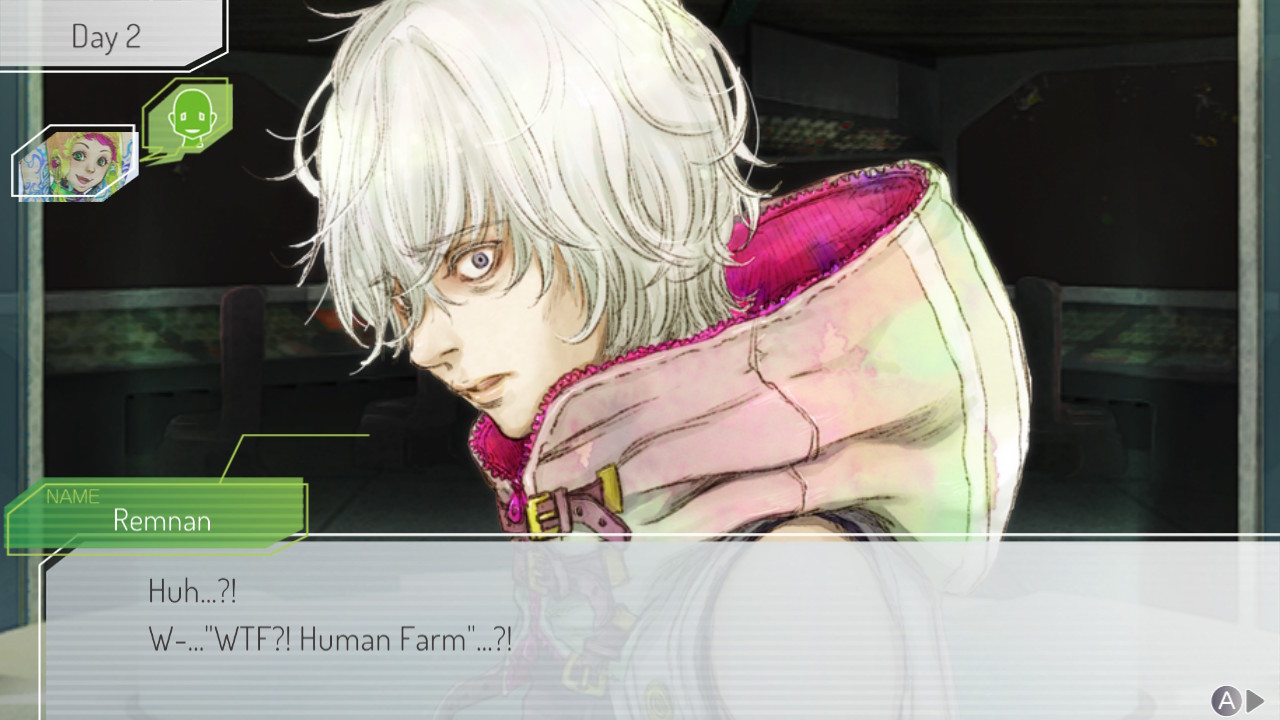
When discussing video games, making some amount of comparisons is unavoidable. While it can get complicated to explain all of the intricacies of any particular game, if I instead tell you it’s a “Souls-like,” a “Metroidvania,” or “like MLB The Show and Robot Wars had a baby,” you’re likely to get a general idea of the experience.

However, there’s one comparison making the rounds as of late that’s gotten under my skin: explaining Petit Depotto’s graphical adventure Gnosia by referencing Among Us. I’ve seen both players and media make the connection countless times now, and while I know it shouldn’t bug me, it gives credit to a game that’s far from having created the style of experience in question.

Sure, Among Us did beat Gnosia to release by a year or so, but both take inspiration from Mafia/Werewolf, a social game created by Dimitri Davidoff back in 1986. Its premise is simple: A group of people is infiltrated by a smaller group of “others” who mean the majority harm, and it’s the job of the innocents to deduce who those threats are and deal with them. Of course, in terms of general storytelling, Davidoff based his game on even older ideas of hidden threats lurking amongst the unaware. While my coworkers have stressed that I mention movies like Invasion of the Body Snatchersand The Thing, one of the earliest examples in media I personally remember encountering was the 1996 localization of They Were Eleven. A Japanese science fiction manga series from 1975, They Were Eleven tells the story of 10 young space cadets who must survive a final test aboard a decommissioned spacecraft. The problem is, when they wake up aboard the ship, there are now 11 members instead of ten, and none of them are able to initially recognize who the imposter is.

I bring They Were Eleven up because Gnosia showcases more than a few similarities to Moto Hagio’s classic manga. When the game begins, you’re given no tutorial, no explanation of what’s going on, nor any real introduction to your current situation and its participants. All you know is that you’re suddenly woken up from cryosleep aboard some sort of spacecraft, and told that there’s an alien lifeform called Gnosia on the ship that means to do everyone harm. Identifying the imposter is an incredibly difficult task, given your lack of any real knowledge both in-game and as a player, and there’s no precedent set yet for how exactly you go about figuring out who is Gnosia and who isn’t.

The thing is, you aren’t really supposed to properly deal with the Gnosia in your first encounter with them—nor your second, nor third, nor fourth. In addition to the overarching Werewolf-based gameplay, Gnosia adds the twist of being stuck in some sort of time loop. No matter the outcome of your first steps into the game’s world, everything ends up resetting, starting you off again in a fresh loop. There, you get another shot at weeding out the Gnosia, putting them into cold storage so they can’t kill anyone, and keeping the rest of the crew safe.

Except—it quickly becomes clear that what’s going on isn’t actually a repetition of the same moment in time. On your second loop, there’s suddenly a new crew member who didn’t exist before. The person who was Gnosia is now just a regular human. The events that played out previously no longer occur. The next loop, things shift again. The roster changes. Friends are no longer friends, enemies no longer enemies. New details and options for discovering who is a threat become available. This happens over numerous loops until all of Gnosia’s core mechanics fall into place, and serve as an initially confusing, but quickly compelling introduction to what awaits in the rest of the game.

Soon, the game settles into a proper rhythm. Every loop plays out across a series of days, during each of which you’ll need to put someone into cold sleep. Digging deeper into who may be the enemy plays out through visual novel-esque conversations, where both you and the NPC crew members can suggest someone seems suspicious, throw your support behind another person’s opinions, or use a variety of other unlockable tactics to shift the discussion in various directions. One of Gnosia’s most impressive aspects is just how dynamic and unscripted these meetings between the crew can feel. While there’s only a set amount of dialog crafted for the game—meaning you’ll see the same statements of innocence, accusation, or otherwise over and over—the path to deciding who’s next for cold sleep never feels pre-determined. While some problems with this core mechanic crop up that I’ll get to shortly, there’s a genuine sense of excitement that grows from never knowing when your well-laid plans may take a right turn at a moment’s notice.

Complicating things even further is that not only are the number and identity of the Gnosia in each loop random, but so are the roles the other crew members hold. The first introduced is the Engineer, who can, at the end of each day, scan one other person to determine if they’re human or alien. That’s followed by the Doctor, who can answer the same question for the member who went into cold sleep the previous day; two people assigned Guard Duty, which story-wise means they can’t be anything but human; the Guardian Angel, who can protect one member of the crew from dying per night; the AC Follower, a normal human who will lie to support the Gnosia; and the Bug, a glitch in the fabric of the universe that will kill everyone, human or otherwise, if they’re left alive at the end of a loop.

While each of those roles work to help or hinder the search for Gnosia, the twist is that any crew member—including yourself—can lie about being an Engineer or Doctor. As the game progresses, it’s not uncommon to have two or even three different people claiming to be either of those roles, making the information they provide potentially useless (or even harmful) until it’s determined who is lying. Between the ways you can shift conversations and the impact those roles can have on allegiances, Gnosia’s debates can become incredibly complex on a gameplay level, especially given the fact that you’re the only actual human playing the game—as opposed to completely human-driven social games such as Among Us.

Once a final vote is cast and someone is sent to cold sleep, you’re given the ability to level up your personal stats, and then talk to one of the remaining crew members if you’d like. At the end of each loop, you’ll gain XP depending on how successful that loop was, and boosting your stats improves your ability to do things like detect lies, convince the others to trust you, or not seem suspicious in those loops where you yourself are Gnosia. Meanwhile, talking to crew members is where the bulk of the narrative moments take place. While generally meeting up with others will just result in a quick throw-away line of dialog, key events will unlock depending on how the current loop is progressing. These can be everything from another crew member asking for your help in convincing the others to vote for someone specific, unlocking more of the backstory of those you’re stuck on the ship with, or even fulfilling certain requirements for moving the main story along.

As a concept, and in terms of its core gameplay, Gnosia is a fascinating game, one that presents situations and narrative possibilities I’ve not really encountered before in many of its peers. At the same time, it’s also a frustrating game. While how long it’ll take to beat depends on how well you play and how quickly you can accomplish certain goals, getting through Gnosia will easily require between 100 to 150 loops, with each lasting anywhere from 5 to 15 minutes. In the first 10 loops, I was finding the game absolutely enthralling, but as I hit 30, it was feeling like the game’s wheels were just spinning without going anywhere. Soon after that point, however, I opened up the ability to configure each individual loop, from how many humans and Gnosia there’d be, to if roles like the Doctor and Guardian Angel were present or not, to specifying my specific role (including Gnosia and Bug). That definitely helped freshen things up, and gave me the chance to experience loop types I’d seen less of up until that point.

It was even further into the game, though, when the most important option finally unlocked. At that point, I gained the ability to shuffle the loop settings to specifically search for points of progression I hadn’t found yet. In order to beat the game, there’s a long list of “right place at the right time” loops you’ll need to hit, which depend on anything from who specifically is Gnosia, to who lasts through until the end of the loop, to who you team up with, and so on. The problem is, knowing what to do and actually being able to do it are two different things. There were times when, for example, I had to protect a specific crew member from getting taken out early, but it was incredibly difficult because they were someone who was already disliked by a lot of the rest of the crew.

Gnosia’s AI logic for determining who each member will vote for doesn’t feel like just a simple set of logic equations, which I appreciate, but it also doesn’t always feel logical either. As one example, I was playing a loop where the group realized I was the true Engineer, and I found out that one of the crew was Gnosia. The next day, I outed them, and the Doctor (who was also confirmed to be legit) agreed with my assessment. And yet, I was still accused of being suspicious and voted out. Sometimes, decisions the NPCs make will feel like shrewd tactics to get someone to overplay their hand and expose themselves, but at other times, they’ll just feel like chaos devoid of any basis in logic. This can make those loops where you’re trying to protect someone incredibly difficult, and I sometimes found myself just mashing buttons to get a loop over with when I’d realized I’d failed the entire purpose of said loop. Early on, Gnosia can feel tedious because nothing is happening; later, it can feel that way because the game seems determined to foil your plans.

I genuinely try not to play “armchair game developer” whenever doing reviews, but it’s hard for me not to believe Gnosia would have been a better game had it focused on far fewer but more important loops. Even in those times when you’re working toward a certain goal, when you’ve got 100-plus loops, each of which may have up to four or five voting sessions, it can be easy to just not care if you get the less important rounds right. I especially wish Petit Depotto had given Gnosia a tighter focus because the cast is just so utterly enjoyable. Every crew member brings something worthwhile to the story while simultaneously oozing character, even those that you’re sure you’re going to hate in the early going. The game is absolutely at its strongest in those loops when the story shines through, and even though I know I’ve run into a lot of the same story beats countless times before, there’s still something special about how they all come together here. Part of what gives Gnosia its charm is its art style, whose qualities reflect the game as a whole: rough and at times amateurish, yet also beautiful and full of personality.

In nearly every case, I’ll always prefer when a game tries something daring and then botches its execution, rather than having it end up polished and perfected yet taking no risks. Gnosia is a total mess at times, and could absolutely have benefited from more refinement and tightening of its core ideas and storytelling style. And yet, it is a game that simultaneously feels so different than most everything else out there. Even while I was cursing at the game’s AI or bitching about how many loops I had to play, I never stopped wanting to push forward to see what was next. It wasn’t that long ago that Western publishers would have passed Gnosia up for localization due to being too weird or niche, so I’m glad we now live in a world where it can get a proper chance—even if there were times when I wanted to toss it into cold sleep for its crimes.

Thoughts on the Closure of Fry’s

After moving to Los Angeles in 1996, I still remember my first trip to a Fry’s. I needed a new TV, so fellow GameFan staffers Mike Griffin, Michael Hobbs, and I took a trip to the location in Woodland Hills (Alice in Wonderland theme). I was blown away by the place.

We have a place here in Omaha called Mega Mart (electronics sub-store for Neb Furniture Mart) that’s kinda similar, but I’d never seen a store so large that was dedicated solely to computers, electronics, and media. As someone who loves all those things, it was like heaven.

Every trip that I had the chance to make to a Fry’s was magical. I remember going there when DVDs were first coming out. I remember going there for Mac OS 8 launch day.

When I moved again to LA in 2008, the first place we lived was Woodland Hills—two blocks over from that same Fry’s I’d originally visited. I mostly worked from home, and my wife needed our car to go to her job, so for a while much of my life was what was near us. Such as Fry’s.

Even 12 years later, the store felt like something special. I’d walk over whenever I needed something for my computer, wanted to hunt for cheap games (the deals I got on NDS games from Fry’s, oh lord), or was just bored and wanted something to do.

It may sound silly, but it was fun to check out a Fry’s we’d never been to if we were in the area, since each had its own theme. There was the alien invasion in Burbank, the forest one I went to one day before visiting Konami, the technology one out in the San Gabriel valley.

When our twins were born, I didn’t have the chance to really go all that often. Once ever now and then, when I had a bit of free time, or we needed someone new to get out of the house. I remember one trip our local one (Burbank) when it felt like the games section wasn’t as stocked as it usually was. A few shelves were low, but it wasn’t all that bad.

The next time I went, things were really different.

Those last couple trips were sad. It was clear the store was dying a slow, ugly death, but it wasn’t just that store. I’ve long worried about the death of local retail, but Fry’s was especially sad—came after losing numerous other electronics shops like CompUSA and Circuit City.

Fry’s was the type of place you always thought would just be there. Until it wasn’t. (Just like Sears. Just like Toys R Us.) And it sucks knowing the chance of having a new chain come in to fill that hole will be slim to none. I’m sad that I’ll never get the chance to go to a Fry’s again, or be able to take my children to one so they can possibly feel the same sense of wonder I once did. But I’m also kinda glad to not be around to see the body finally go cold.

Yeah, they’re just stores. But they were also stores that broke up the reputation of the same handful of chains that dot the landscape with something fun and different.

Ghosts ‘n Goblins Resurrection Review

Before we begin: While I’ve tried my best to not spoil some of Ghosts ‘n Goblins Resurrection’s gameplay twists, it’s impossible to review the game without discussing the biggest secret that’s been a part of all games from the franchise, and how that secret comes into play in this latest chapter.

Dark Souls is the Ghosts ‘n Goblins of 3D action RPGs.

Long before FromSoftware was inflicting its trademark brand of punishment upon willing audiences, Capcom’s side-scrolling action platformers belonged to one of the most notoriously hard franchises in gaming. With its roots in the arcade scene—where the more you die, the more you spend—the series became infamous for offering an intense level of challenge, a requirement to hone your skills, and harsh punishments should you fail. In more than a few ways, just like Dark Souls.

While it was a staple brand for Capcom during the 8- and 16-bit eras, Ghosts ‘n Goblins has had trouble finding its place in more modern years. The last proper chapter in the series was 2006’s Ultimate Ghosts ‘n Goblins on PSP, and attempts to shift those core gameplay ideas to 3D have either fizzled out or never even made it to market. When Capcom announced that it would be reviving the series with Ghosts ‘n Goblins Resurrection on the Switch, I was cautiously hopeful. The idea that we’d be getting a new, proper 2D title sounded great, but I’ve seen way too many examples of long-dormant IPs returning, only to produce games that definitely weren’t worth the wait.

Is Ghosts ‘n Goblins Resurrection the best entry the series has ever seen, or some huge new evolution that will propel the franchise back to stardom? Definitely not, and probably not. What it is, however, is a pretty darn good game, one that’s worthy of the name it sports. Having played numerous clones and homages in recent years has made me really appreciate the gameplay and stage design of Capcom’s efforts, and I do think Resurrection harks back to that classic level of craftsmanship. These types of games are nothing if the basic controls aren’t right, so thankfully protagonist Sir Arthur has a proper level of precision no matter if he’s throwing weapons, jumping, or simply trying to maneuver through the landscape. There’s a wide variety of enemies that each present their own unique threat, and every one of the game’s stages shifts its environmental hazards and layouts at a pace that (mostly) keeps you from getting bored. For those reasons, and more, the Ghosts ‘n Goblins series was one of the true pioneers in the action platformer subgenre, and Capcom hasn’t forgotten the rules it once created.

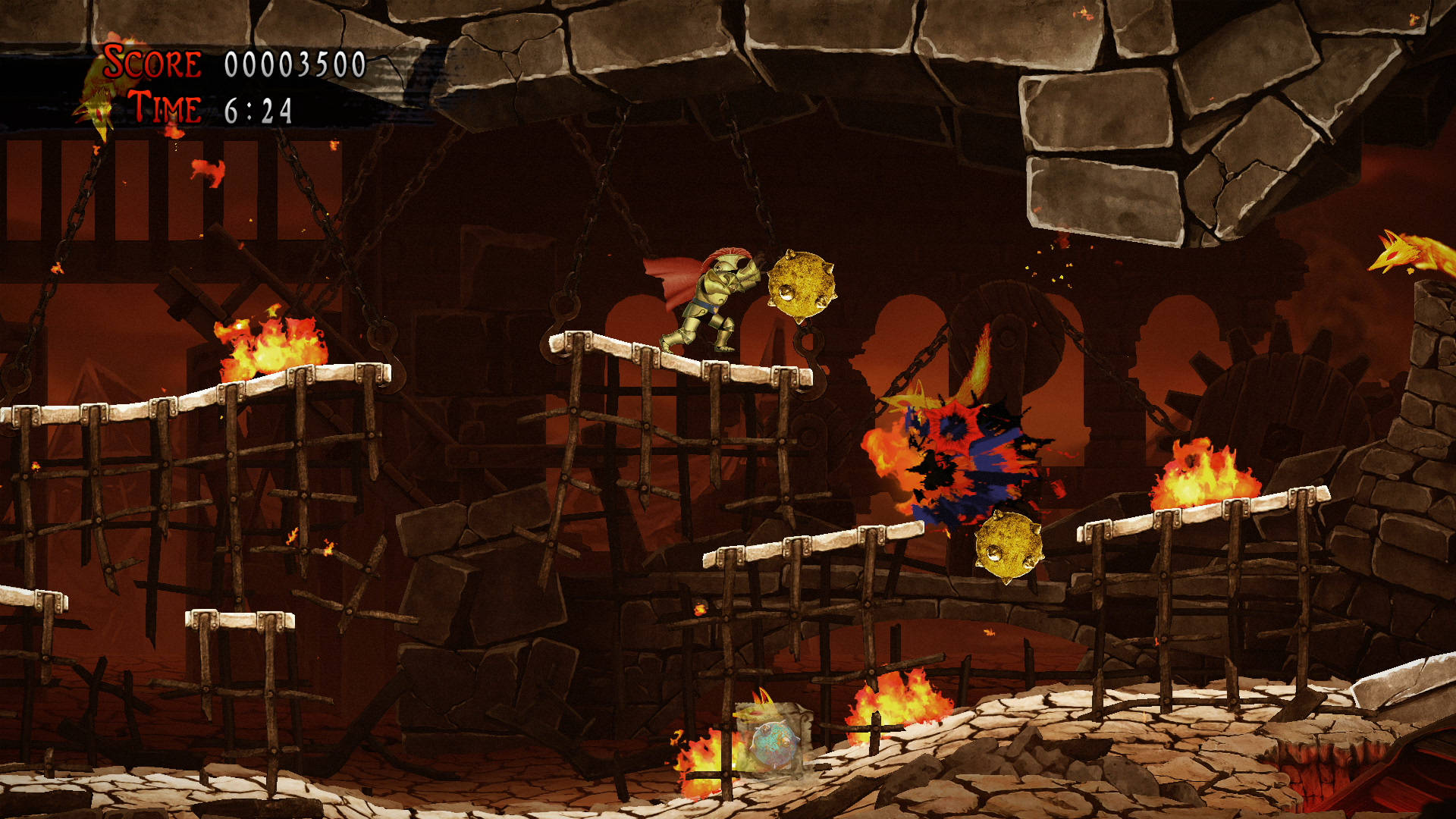
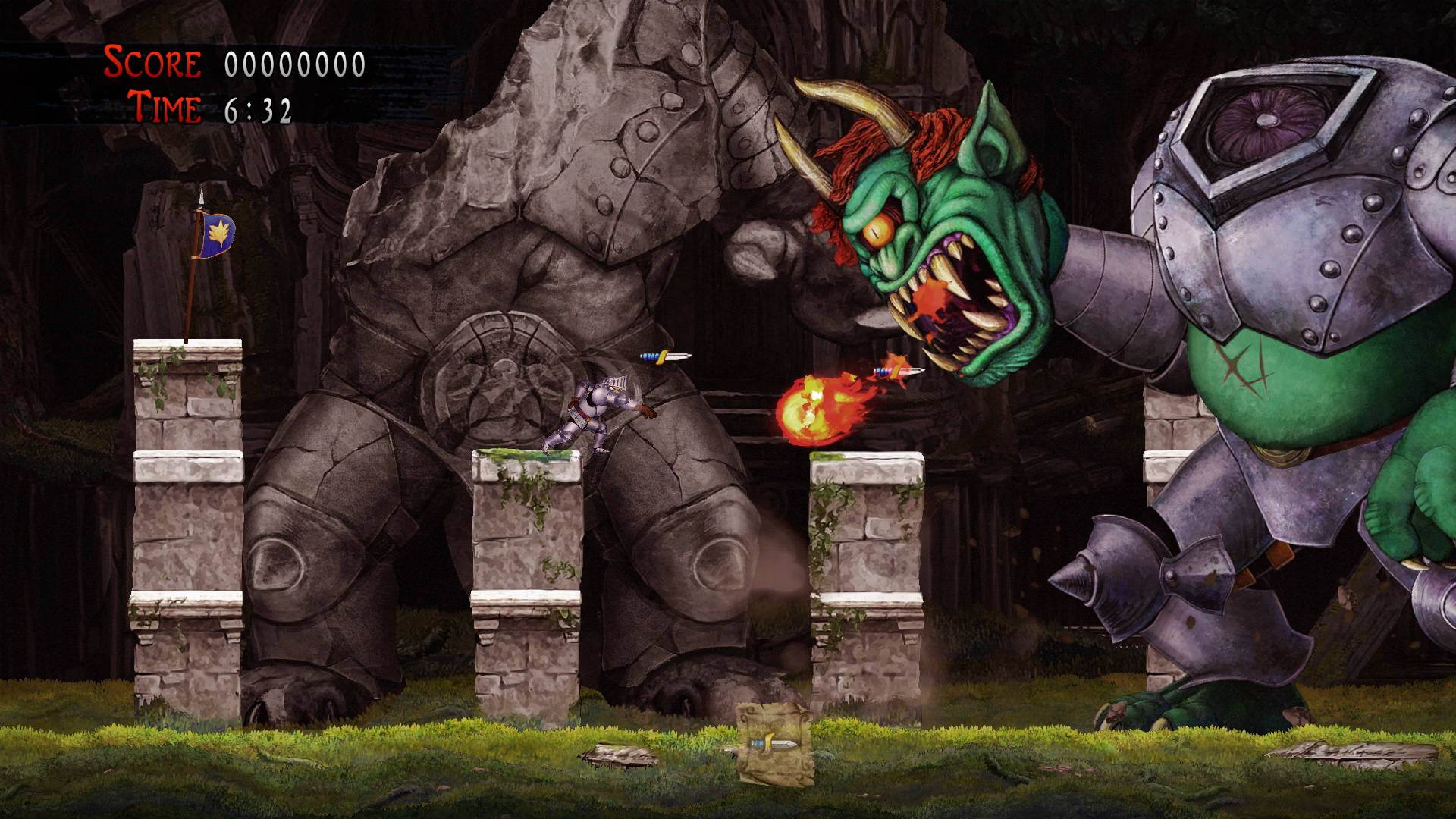
Tradition is broken somewhat in Resurrection’s Umbral Tree. By collecting Umbral Bees hidden throughout each stage, you can unlock new magic, skills, or passive abilities that will be helpful in your journey. Some of the magic has existed before via armor upgrades, such as the lighting bolts or Arthur clones from Ghouls ‘n Ghosts. Others are new to the game, like the peculiar ability to change into a boulder, or the lifesaving option for regenerating Arthur’s armor if he’s damaged down to his boxers. By far the upgrade with the biggest impact is that you can now unlock the ability to carry (and swap between) two or even three weapons. Fans of the series will know all too well the struggle of having the right weapon at the right time—and the horror of accidentally replacing the one you wanted with the one you don’t. (We’re all looking at you, Torch.)

Resurrection also includes a co-op mode, which is a nice addition, but not really my thing (at least until my children are old enough to potentially care about such games). Like with a number of other platformers with similar modes, player one controls Arthur, while player two takes charge of a helper character. In this case, that’s the ghost of an old man, who can fly around the screen to shoot projectiles, protect Arthur in a bubble shield, or even build platforms. If you’re the type who does like playing games co-op, this mode will probably be a nice addition, and can provide you with an extra bit of help getting through the challenges that await—or some amount of devilish glee if you’re player two and use those platforms to hinder instead of help.

Most surprising of all, I even came to kinda like Ghosts ‘n Goblins Resurrection’s visual style, which initially came off like the cheap “Flash animation” look that has unfortunately become popular in some circles of gaming. Capcom wanted the game to have a sort of storybook look, though I don’t think that always comes across outside of the biggest enemies and stage elements (where it’s easier to see the full detail of the art). There’s a moment in the intro when the game is being “drawn,” and the in-between style is gorgeous. I would have loved to see Capcom attempt that style instead, but maybe they did, and it just didn’t worked for the full game in practice. Still, the visuals grew on me the more I played, even if I remain a bit hesitant on the type of animation the team employed. I think Resurrection definitely could have looked better, but it could also have looked far, far worse.

In fact, against all of my expectations, the art style isn’t where we see the game’s biggest mistakes. I think the team at Capcom let some newer-era gameplay trends (that I’m not fond of) influence them, as there are times when Resurrection extends certain stage sections out way too long, trading challenge for tedium. The worst examples are some of the gimmicks that get introduced, such as riding around on dragons, or having to move through an environment restricted by deadly spikes that have closed in on all sides. Sure, we’ve seen those kinds of ideas in the series before, but it’s how they’re implemented here that’s the problem. Those two I mentioned in particular go on way too long, killing a pace that’s otherwise quick, tense, and exciting. The game’s boss fights drag on at times as well. Owing to its arcade roots, Ghosts ‘n Goblins bosses are at their best when you can quickly fell them through skill and experience. Some of Resurrection’s boss fights are pretty great—but others overstay their welcome, and become especially annoying if you don’t have the right weapon (more so than usual) or aren’t attacking your foe in the way the game wants you to.

Then there’s a major element that’s core to Ghosts ‘n Goblins Resurrection that is a positive, or a negative, or a total non-factor depending on who you are and what you’re looking for. “Resurrection” is a very apt subtitle, because the game is essentially a selection of newer elements mixed in with an array of callbacks to previous games. The first two stages are basically reimaginings of the first stages from Ghosts ‘n Goblins and Ghouls ‘n Ghosts; familiar enemies await all throughout the game, as do returning bosses; weapon and armor options are almost completely pulled from the pre-Ultimate chapters; and many of the obstacles you’ll face will be very familiar if you’re a longtime fan of the franchise.

It’s funny just how different Ghosts ‘n Goblins Resurrection is from its immediate predecessor. Resurrection leans heavily into nostalgia and keeping things “authentic,” while Ultimate Ghosts ‘n Goblins ripped the series apart down to its foundation and attempted to rebuild it into something new. While you could see what Capcom has done here as lazy or uninspired, I came away feeling differently. Nearly 30 years out from the last classic title (Super Ghouls ‘n Ghosts), Resurrection’s trip down memory lane is a welcome dose of nostalgia for a series that deserves revisiting, and which has been lost to time for a lot of players. I loved Ultimate for what it attempted to do, but I can also appreciate that this latest chapter is more about remembering the past rather than defining the future.

At this point in the review, however, I do have to make an admission: I have not beaten Ghosts ‘n Goblins Resurrection. Well, I mean, I have beaten it. Twice. It’s just that, there’s a catch this time around that I absolutely wasn’t expecting.

One of the most infamous elements to the series is that in order to see the true ending, you have to play every game through in its entirety twice, with the added requirement of also needing a certain weapon (which typically doesn’t show up until the second loop), or collecting enough of a particular item, before facing the final boss. Resurrection tweaks that by having the second playthrough unfold in “Shadow” versions of the stages. Even beyond the game’s four difficulty settings, these altered stages increase the challenge in additional ways, while also changing the visuals to a darker, moodier twist on the original landscapes.

Determined to properly beat the game before reviewing it, I set out for a second time after my first completion. In previous games, if you haven’t satisfied the requirements for facing the true final boss on the second loop, the game tells you so, and kicks you back (either to a previous stage, or back to stage selection in Ultimate) so you can get what you’re missing. I reached Resurrection’s final boss without any such notification, so I assumed I was good. After achieving victory, the game revealed that I had missed something—and instead of dropping me out to the stage selection map I’d fully unlocked, I was all of the way back at the beginning of a third loop, with only the first stage available to me.

Now look, part of this is on me. If I had paid more attention, and if I had listened to the completionist part of my brain, this might not have happened. However, at the same time, I was also feeling secure in my knowledge of 35 years of Ghosts ‘n Goblins tradition—and that tradition betrayed me. I felt upset, heartbroken, and totally defeated. Most of all, I just wasn’t up for tackling the game for a third time without some sort of break, nor was I willing to drop the difficulty so I could rush through the stages. And yet, now that I’ve had time to calm down, I’m not mad. In fact, I’m actually amused. Just as I was certain that Resurrection was more familiar than it was fresh, it did something to totally shake up that feeling of comfort. I know some people are going to hate what Capcom has done here, especially if they go into the game not knowing the catch, but I don’t.

And I will beat Ghosts ‘n Goblins Resurrection. Just as I pressed on when I so badly wanted to give up in the previous chapters of the series, I’ll do so here as well—and the fact that I’m ready to do so for a third time tells me something about the game. While my favorite classic chapter remains Ghouls ‘n Ghosts, and I still adore Ultimate for how it shook things up, Resurrection cements itself as a worthy continuation of the franchise even as it does little to push that franchise forward. If we go another 14 years without a new Ghosts ‘n Goblins, I’ll be somewhat disappointed that Capcom didn’t attempt more here. But given it didn’t have to attempt anything, and that said attempt could have gone terribly, Ghosts ‘n Goblins Resurrection is a welcome return for a series that’s still as punishingly fun as it was 30-plus years ago when it debuted.

How a Small Portable Fighter Forever Changed Gaming’s Biggest Rivalries

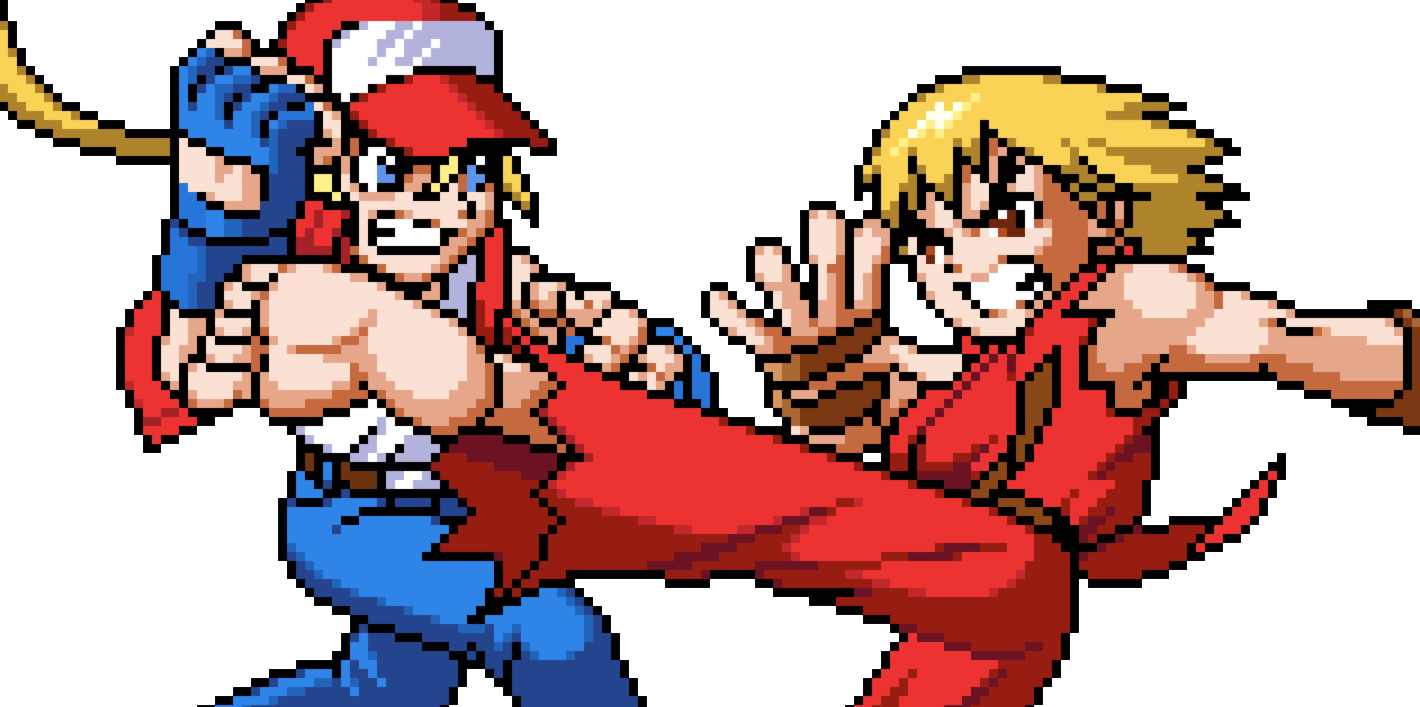
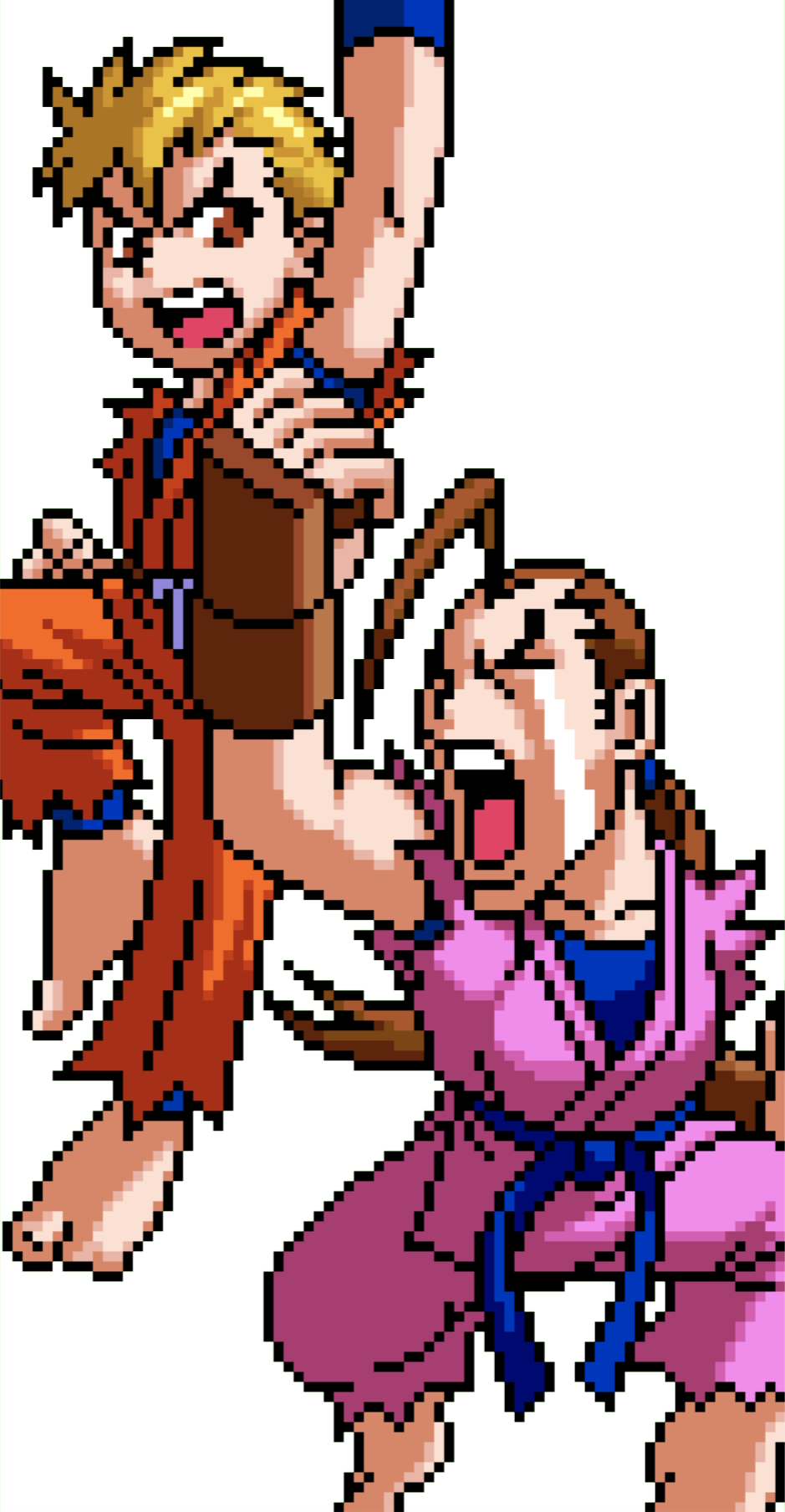
By 1999, video game crossovers weren’t an alien idea, especially in the fighting game genre. Five years prior, SNK had released The King of Fighters ‘94, a new team-based fighter that featured a mix of characters from the company’s popular franchises such as Fatal Fury, Art of Fighting, and Ikari Warriors. Then, in 1996, Japanese arcades would get X-Men vs. Street Fighter, where Capcom had its beloved brawlers like Ryu, Ken, and Chun-Li battle against the Marvel heroes it’d previously featured in X-Men: Children of the Atom and Marvel Super Heroes.

There was, however, still a very taboo idea in the world of crossover games in that era: rival versus rival. SNK’s characters may be rivals on a narrative level, but not a business one. Capcom and Marvel were two separate companies, but ones from different industries that never competed with one another.

At that point in time, competition between gaming companies was definitely common. Sega and Namco had a long back-and-forth competition in arcades around the world, while at home, Sega versus Nintendo was the biggest question of loyalty many children faced when it came to consoles. The war between SNK and Capcom, however, always felt extra special to me. Beyond hardware, or single games, the feud between those two was on a genre level. The pair of Osaka-based developers were both masters in crafting 2D sprite-based fighters, and their rivalry got surprisingly personal at times. The original game in SNK’s Samurai Shodown series came to exist in part thanks to ex-Capcom staffers who used the knowledge they’d gained from working on Street Fighter II. A few years later, Street Fighter Alpha would introduce the character of Dan Hibiki, a cocky-yet-ineffective martial artist who existed specifically to poke fun at SNK mainstays like Ryo, Robert, and Yuri.

As someone who loved fighting games of all types, Capcom and SNK were two companies near and dear to me. My heart always belonged to SNK at the end of the day, but both publishers were major factors in my gaming life, as were their fighting games and the characters that filled out their rosters. In those moments when I allowed myself to dream the most daring of dreams, I imagined a fighting game where members from each side could duke it out together. Sadly, such things were impossible. Rival game companies almost never worked together on anything (rare exceptions like Chrono Triggeraside), let alone a game where representatives from each would end up sharing the same stage together. There would be no Sonic vs. Mario. No Sega vs. Namco. And especially no SNK vs. Capcom. That dream would simply never exist.

Until, in 1999, it finally did.

I still remember where I was when I found out that there would be a game bringing together the worlds of SNK and Capcom. It’s impossible for me to fully emphasize just how utterly shocking of an announcement that was at the time, or how big the rivalry between those two companies had grown. When Mario and Sonic would finally happen years later, that crossover seemed crazy as someone who’d lived through the bitter battles between Nintendo and Sega, but also kinda inevitable. SNK and Capcom coming together, on the other hand, just defied all logic.

Possibly even more illogical—especially to my modern self—is that one of the biggest events to happen in video games up to that point would kick off with a fighting game developed for a low-powered, two-button handheld.

Now, to be fair, that isn’t exactly where the SNK vs. Capcom saga starts. Instead, the very first game to come from the deal between the two was SNK vs. Capcom: Card Fighters Clash, a digital card battle game released for the NeoGeo Pocket Color. Taking a cue from the Pokémon games, Card Fighters Clash came in two versions, “SNK” and “Capcom,” with each offering different starter decks and their own unique sets of exclusive cards. While it wasn’t really the game we fans wanted as the start of the epic battle between the two companies, Card Fighters Clash was surprisingly fantastic, and actually ended up serving as a satisfying appetizer before the main course.

Looking back on what was to transpire, the clear winner in the clash between the two companies was Capcom. Its two projects, Capcom vs. SNK and Capcom vs. SNK 2, were by far the better fighting games. SNK would finally make its own crossover fighter for the NeoGeo in 2003, SNK vs. Capcom: SVC Chaos, but it was a rushed project released to fulfill contractual obligations as the developer battled with its financial woes. However, it was the second project released for the Neo Geo Pocket Color, SNK vs. Capcom: The Match of the Millennium, that would truly serve as the initial fulfillment of a dream that had been years in the making.

This week, SNK re-released SNK vs. Capcom: The Match of the Millennium as part of its initiative to bring NeoGeo Pocket Color games to the Nintendo Switch, and playing the game again has been an interesting experience. To say that the first true fighting game match-up between the two companies being a handheld title was a disappointment would be an understatement. And yet, it ended up a game that punched (and kicked) way above its weight. Despite running on hardware that “boasted” a 6.144MHz CPU, 2.7” 160×152 display, and only two action buttons, The Match of the Millennium was a surprisingly robust and complex fighter. SNK had chosen to make the game to help promote the upgraded color model of its one-year-old NeoGeo Pocket, and it was evident how much effort had gone into that goal.

Even now, twenty-some years removed from its release, SNK vs. Capcom: The Match of the Millenniumstill impresses me. I was quickly reminded of just how much the dev team had accomplished under such limitations, and the game is still legitimately fun as a fighting game, and not just as a gimmick. Even as four-color sprites with trimmed-down movesets, the 26 characters here actually feel like their big-screen counterparts. Know how to play Guile in Street Fighter Alpha 3, or Mai Shiranui in The King of Fighters ‘99? You’ll know how to play them here, although you can tweak their playstyle through three selectable “style” choices (similar to what Capcom would go on to do in its own games). You can jump into fights solo, as a duo under tag rules, or as a three-man team a la KOF, where you need to defeat all of your opponent’s characters individually to win. Gameplay is smooth and responsive, the backgrounds surprisingly detailed and colorful for a portable game of that era, and the soundtrack overflows with classic themes from both companies.

I’ve watched SNK’s “NeoGeo Pocket Color Selection” efforts on the Switch with nostalgic but amused curiosity. As much as I loved the company’s numerous handheld fighting games, they were a product of their time, experiences that I wasn’t really sure I needed to—or should—go back to. SNK vs. Capcom: The Match of the Millennium, however, has struck a different chord with me as I’ve been playing it. Part of it is that Match of the Millennium is arguably the best of the company’s output in the genre on the NeoGeo Pocket, but another part is remembering how much the game meant to so many of us when it came out. Even as we live in an era when epic gaming crossovers like Super Smash Bros. Ultimate can exist without needing to make a deal with the devil, all of the emotions a younger me felt as she saw her favorite fighting game worlds colliding still exist deep within my heart. Match of the Millennium was—and still is—an impressive feat of video game development, but it’s also an important piece of history that’s worth remembering.

Unfortunately, I think that’s also why the game will be harder to appreciate for younger audiences. For those who weren’t around when the world changed, all they’ve ever known is a post-change world. Games that pit SNK against Capcom have always existed for them, and that’s if they even care about what’s becoming an increasingly older rivalry by the day. For them, SNK vs. Capcom: The Match of the Millennium might simply be an obscure, outdated curiosity from a bygone era—one that also doesn’t play nearly as well on the the Switch’s analog and digital control options compared to the glory that was the NeoGeo Pocket’s clicky stick.

I think it’s actually going to be the rivalry’s first official representation, SNK vs. Capcom: Card Fighters Clash, that will be able to win over the most current-era fans when it comes to these NeoGeo Pocket Color revivals. It’s low-tech nature won’t matter nearly as much given its gameplay style, and it’s the kind of experience where newer releases don’t threaten to instantly make it feel obsolete (like you can have with fighting games).

Still, I’m really glad that SNK vs. Capcom: The Match of the Millennium exists again in a way that more people can legally get a hold of, and I hope that those who love delving into the history of gaming will give it a try. It remains a fantastic fighting game if you’re willing to look past its limitations—but, more than that, it also stands as a symbol that dreams really can come true.


Looking Past the Nostalgia of Scott Pilgrim vs. The World: The Game

Having been a fan of video games for nearly all of my life, I’ve witnessed countless grassroots efforts to get games released, re-released, or translated. Even back in the earlier days of our hobby, there were examples like Nintendo fans asking for the “real” Super Mario Bros. sequel, owners of the original PlayStation begging for more Japanese RPGs to come to our shores, the push to get Capcom to release an uncensored version of Resident Evil in English (which then went hilariously awry), and the immense—and ultimately successful—Operation Rainfall. Heck, even I got involved a few times myself, from supporting the call to get Seiken Densetsu 3 (aka Trials of Mana) released in the West in the pages of the fanzines I used to make as a teenager, to the petition website I launched asking Atlus to localize Persona 2 and Soul Hackers.

Across all such efforts throughout the years, however, there’s always been one ugly, underlying truth: Some of the games we’ve fought so hard to get released actually weren’t worth it. In my younger years, I refused to ever believe such a notion. Every game was worth the effort, and every release that finally happened was cause for celebration. Of course, in those earlier days, games simply didn’t come out in the numbers they do today. Titles from Japan getting stuck in their home country was the norm, and older games getting re-released on newer platforms was often unheard of outside of a select group. So, any victory was a major victory back then, as it was one more game that potentially had the power to show publishers and developers that such releases could be worth their time.

As both I and the video game market have matured, I’ve come to be much more selective in what I ask for—in part because I’ve fought for numerous games that ended up turning out terrible, and that’s a great way to convince their publishers to take less chances in the future.

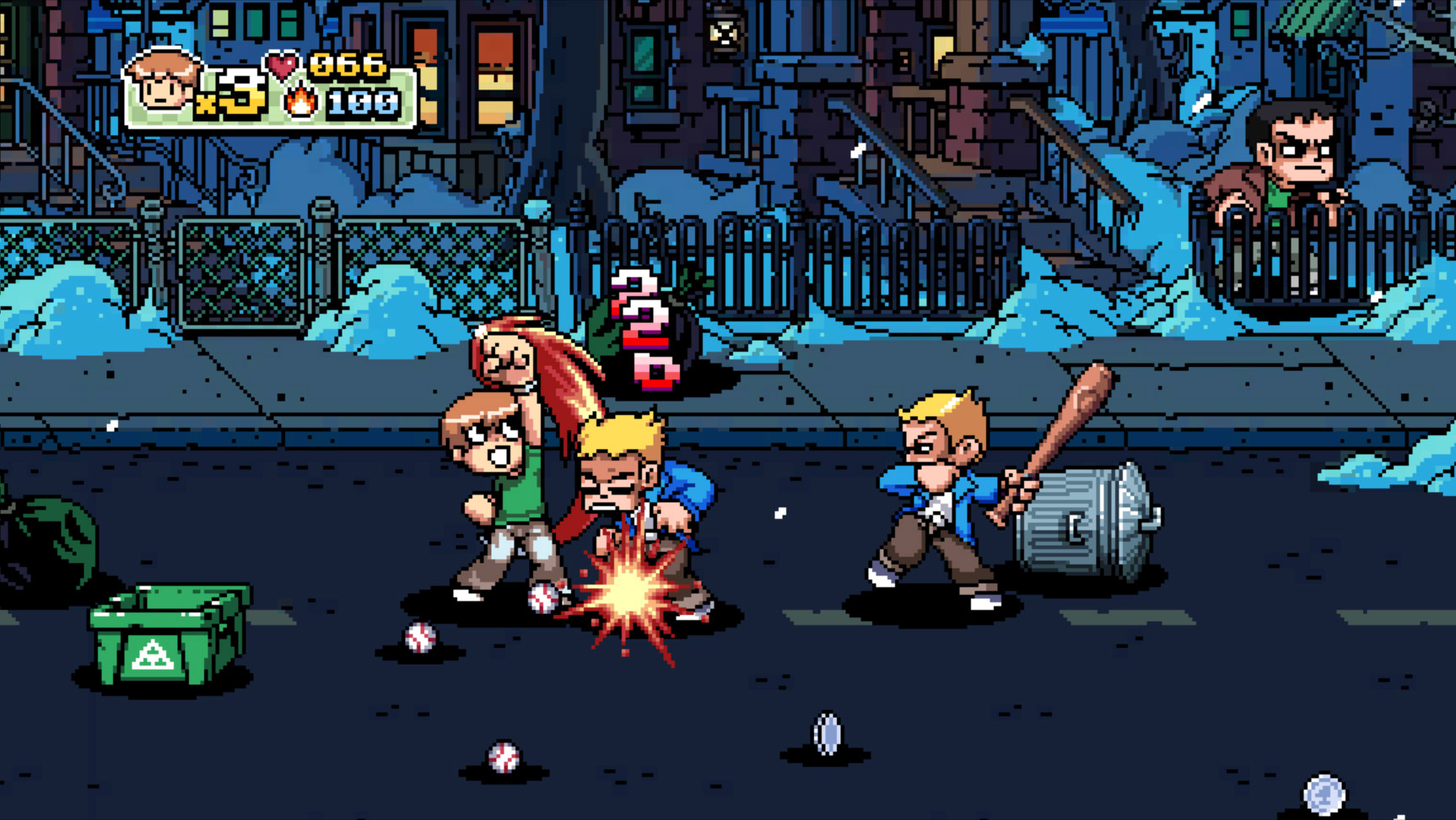
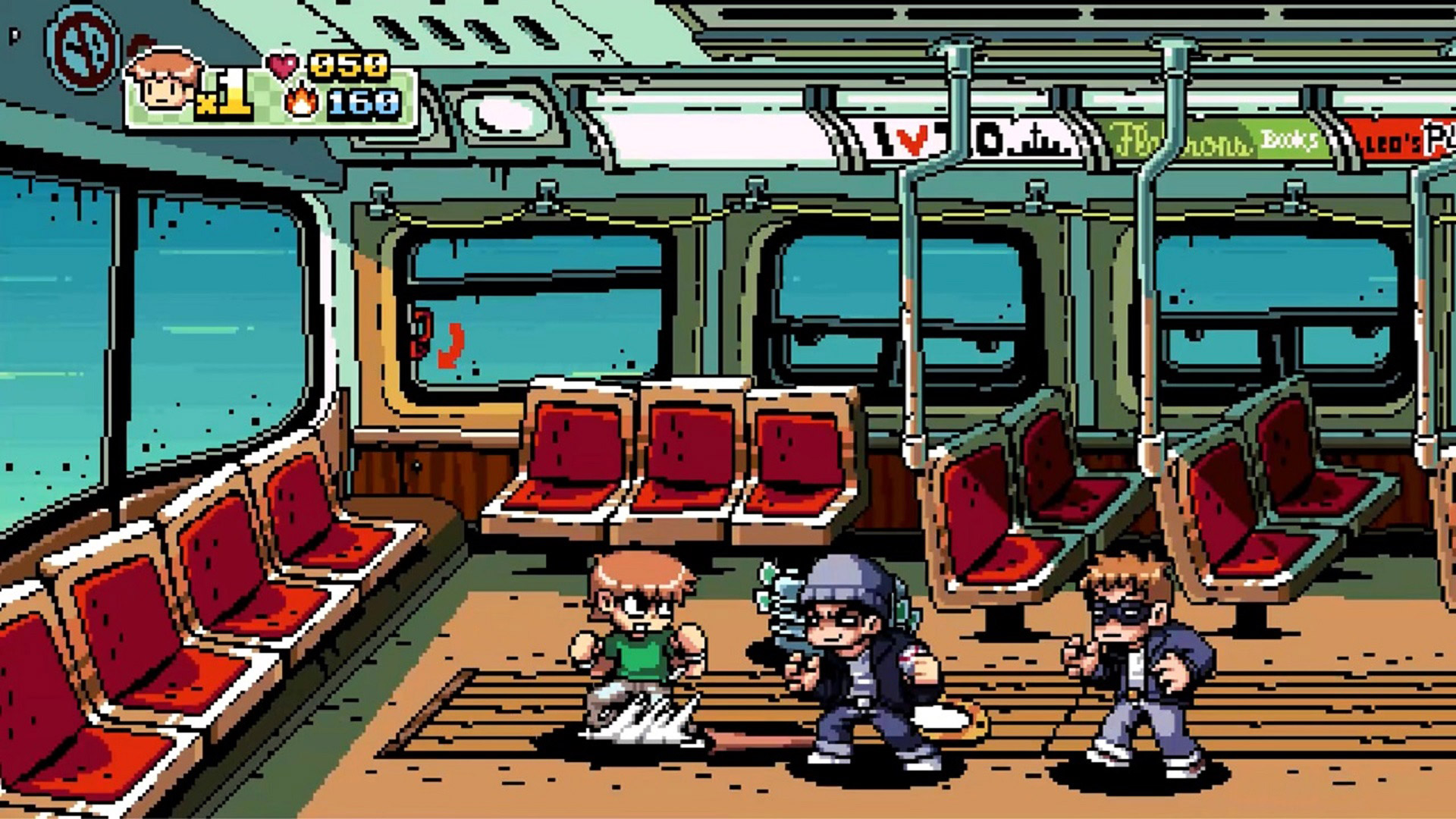
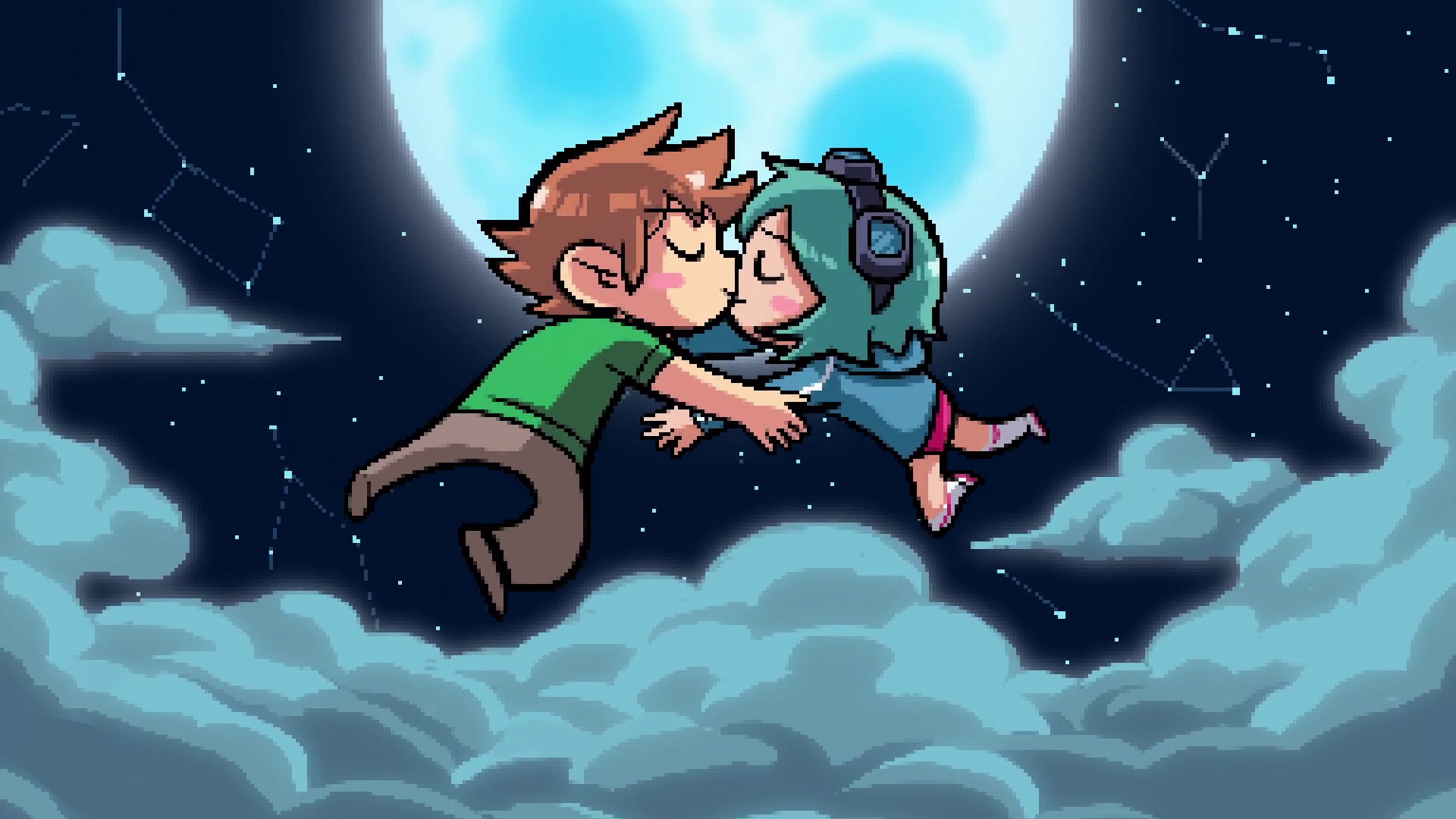
All of this was in my mind as I went into playing the re-release of Scott Pilgrim vs. The World: The Game. After originally launching on PlayStation 3 and Xbox 360 in 2010, Scott Pilgrim vs. The World: The Gamedisappeared from both digital stores four years later. And, with no physical version of the title ever produced, when it was gone, it was gone. Outside of the E3 2015 Sony press conference trio of The Last Guardian, Shenmue III, and Final Fantasy VII Remake, it’s hard for me to think of another game that’s had so many fans begging, pleading, and praying for it in recent years.

In the years since, people have inundated developer and publisher Ubisoft, licenser Universal Pictures, and Scott Pilgrim creator Bryan Lee O’Malley with requests for some sort of re-release. Given the complicated nature of the game’s original existence—as a tie-in product to the movie Scott Pilgrim vs. The World—it seemed like one heck of a longshot. Well, it was a longshot that paid off. Six years of efforts by fans to make sure the game wasn’t forgotten paid off last September when Ubisoft announced Scott Pilgrim vs. the World: The Game – Complete Edition, a remaster of the original game for PlayStation 4, Xbox One, Nintendo Switch, PC, Google Stadia, and Amazon Luna. The long wait was finally over, and only one question remained.

Has all of that effort been worth it?

Scott Pilgrim vs. The World: The Game is an interesting title to go back to for me, because it’s something I never actually lost access to. I purchased it during its original release period back on the PS3, so I’ve been able to replay it anytime I wanted. I haven’t, though, so this is probably the first time in almost nine years that I’ve given it another go.

And, in doing so, I remembered why it had felt so special in the first place. In a world where games based on media licenses have been terrible more often than not, Scott Pilgrim vs. The World: The Gamewas a project where nearly every aspect of its creation genuinely felt special. As a side-scrolling beat ‘em up reminiscent of the days of Double Dragon, it was a mash-up of classic ideas and modern sensibilities that offered a wonderful level of depth and enjoyment either solo or with friends. The visuals, and especially the character sprite work, were fantastic, the work of artist Paul Robertson (someone I’ve been a fan of for years). And, we can’t forget the stellar soundtrack, which came thanks to chiptune punk band Anamanaguchi.

For me, there’s no question that Scott Pilgrim vs. The World: The Game deserved to be re-released. It was a game beloved by a whole lot of people for very good reason. With the ever-growing danger of games both becoming harder to purchase and harder to keep alive even by not-quite-legal means—especially when it comes to digital releases—we need to make sure as many good games as possible continue to be accessible for generations to come. This re-release of Scott Pilgrim vs. The World: The Game will now help keep it available for three main reasons: the growing push to have consoles offer better backward compatibility from generation to generation, its release on a platform (PC) where keeping legacy titles alive is much easier, and the fact that it’s finally getting a physical release.

So, yes, all of the blood, sweat, and tears that have culminated in Scott Pilgrim vs. the World: The Game – Complete Edition were all worth it—but that doesn’t mean the game is as good as we’d like to remember.

Now, let me be clear here: It’s a good game. It is! But an older and wiser me is also able to admit that time has unfortunately taken some toll on the game. For some people, it won’t be a big toll, or one that matters in any way. Scott Pilgrim vs. the World: The Game certainly isn’t a game that should now only exist in our memories, but you may very well be seeing those memories through rose-tinted glasses.

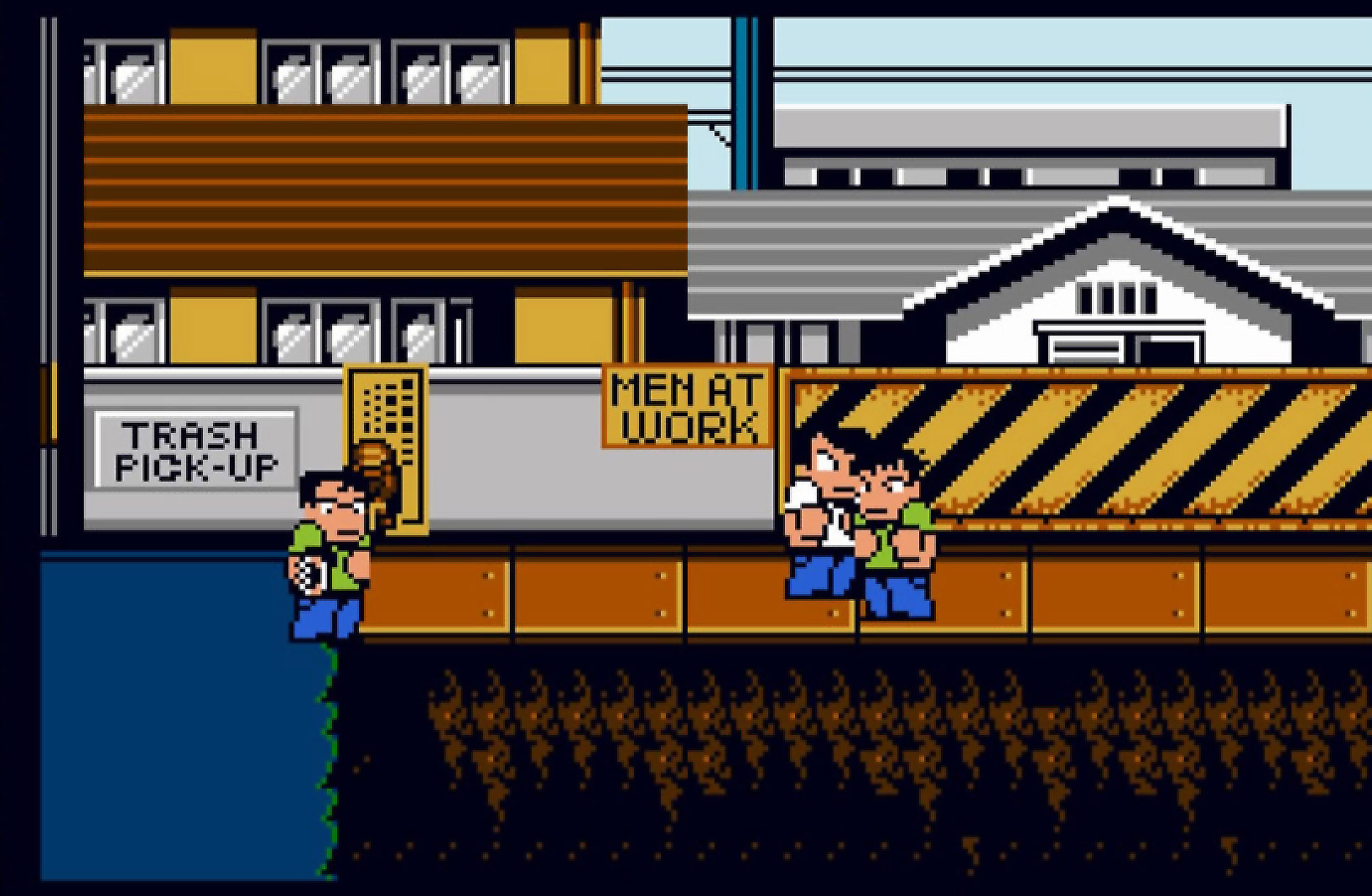
To explain, I need to go back to the year 1990, when Technos Japan released the game that would heavily inspire Scott Pilgrim vs. the World: The Game: River City Ransom. As a child, playing River City Ransom was an experience beyond explanation, because no game like it had ever existed on the NES, or really anything. It’s hard to imagine now, but Technos’ brawler was almost like an early manifestation of ideas that would grow into open-world sandboxes such as Grand Theft Auto 3. The game, at least to the mind of a child, held a lofty promise: go anywhere, do anything.

For its time, River City Ransom was groundbreaking in so many ways, and its influence on both the genre and video games as a whole is still felt today. I have my NES cartridge sitting on the shelf behind me, and I go back to it every few years whenever I want to spend some time messing around and reminiscing. When I do, however, I’m faced with the reality that the game just isn’t as good as I remember it being—in part because it can’t be. River City Ransom was one of those games that was in the right place at the right time, and which succeeded in part because its flaws were things we didn’t yet fully appreciate as flaws. Its janky collision detection. Its somewhat stiff controls. Its at times cryptic requirements for story progression. At the time, none of those things mattered that much, because the game was so far beyond its peers in so many other ways. Now, even as someone who will always cherish River City Ransom, I can’t ignore those flaws.

It isn’t that Scott Pilgrim vs. the World: The Game was anywhere near as revolutionary or groundbreaking as River City Ransom was—but it definitely shares some of the same faults as its idol. While 10 years of gameplay advancements separate the two titles, it’s hard not to compare the game to more modern takes on the genre like Streets of Rage 4. Like River City, Scott Pilgrim’s controls and hit detection are off enough to make certain situations with enemies frustrating. Combat can feel repetitive until you’ve unlocked more moves, which you must do per character—meaning that if you only focus on your favorite, your friends are left with far less capable choices to pick from. The first stage feels overly long as an introduction to the game, while better later stages can feel like they’re over too quickly.

Scott Pilgrim vs. the World: The Game absolutely deserved to make a return, and hopefully, it’ll now stick around for good. At the same time, I think we need to be honest about what it is, and not let nostalgia cloud our judgment of its faults. In asking for the game’s re-release, I’ve at times seen the attitude that it was one of the greatest beat ‘em ups ever created. That’s definitely giving it too much credit—but also putting too much pressure on a game that genuinely does do a lot of things right, and which deserves at least some of the legacy that’s built up around it over the last 10 years.

So, Scott Pilgrim vs. the World: The Game, I’m glad that you’re back—but don’t let all of the hype that’s built up around you in your absence go to your head.

The Medium Review

Gameplay gimmicks have long been a staple of the horror genre, either as a way to add something new to the experience, or to help hide that the game they exist in aren’t all that interesting otherwise. Just off the top of my head, there’s the hide-and-seek system of Clock Tower 3, Fatal Frame’s photography-based combat, Rule of Rose and Haunting Ground’s dog companions, and even the original Silent Hill’s switching between multiple realities.

It’s that last gimmick—and heck, franchise as a whole—that helped inspire Bloober Team’s The Medium. If you’ve seen anything about the game at any point in the last few years, you should at least know a little about how it lets players explore both the human world and the spirit world—sometimes at the exact same time. The concept sits upon the shoulders of protagonist Marianne, a woman who has the power to not only travel between those two realities, but also to put to rest any lost souls she finds on the other side. At the point that we meet her, visions of a murdered young girl plague Marianne, and a seemingly random phone call promises to give her answers about that vision—and why she has her powers in the first place.

The Medium’s split realities manifest in a variety of ways. At times—much like in the Silent Hill series—the game forces Marianne to the other side, where the world becomes a twisted, horrific version of the location she was just at. At other times, the screen splits in two either horizontally or vertically, giving players the chance to interact with both worlds at the exact same time. Sometimes, these shifts happen strictly for narrative reasons, but in others, navigating both is crucial to solving a puzzle or discovering the truth of what’s taken place in that particular area.

Having seen discussion on the internet leading up to the game’s release, I know opinions have been mixed on The Medium’s core mechanic. I wasn’t totally sure myself how it would all work out before playing the game, but now that I have, I can tell you that I think it ended up being a fantastic idea. While it isn’t always used to its full potential—and we’ll definitely be talking more about wasted potential in a moment—it adds something special and game-changing to the experience. There was only once or twice when having to juggle the two worlds at once annoyed me; otherwise, every other encounter with the mechanic felt purposeful and enjoyable. As someone who has suffered through plenty of bad horror gimmicks, I genuinely like what Bloober Team has come up with here, and think it’s an idea the studio should explore more in future games—even if that does go against my belief that most games don’t need sequels. Travelling between the two dimensions feels great thanks to the speed of the Xbox Series X’s SSD, as there was never a hint of load times throughout those transitions. The Medium as a concept originally started around 2012, and I can’t imagine how tainted everything would have been if we’d have had to sit through the load times of previous generations.

Wondering what The Medium might have been like in its earlier incarnations led me to also question how developmental changes over the years could have affected what we’ve now received. The Medium is a good game—but it also feels like an incomplete one. Along with the shifting realities, numerous other gameplay mechanics are also introduced, from Marianne’s spirit abilities, to being able to have out-of-body experiences, to reconstructing memories from the past, to even the way that what players do in one reality can cause changes in the other. At the same time, The Medium also introduces various story ideas that it has trouble building upon, from the characters we meet, to historical events that have shaped the present, to even the “character” of the location itself, the abandoned communist resort the Hotel Niwa. In pretty much every single one of those things I’ve listed, something seems unfinished, or under-realized, or not used to its full potential.

Now, I want to be clear: For most of its runtime, all that wasted possibility doesn’t do real damage to the overall experience. Rather, as I played through The Medium, I would find moment after moment that seemed to hint at a bigger, longer, and potentially better game that either could have existed, or which maybe once did exist. This is a situation that’s common not just for a lot of mid-tier horror games, but a lot of mid-tier games period. So, your appreciation for The Medium may come in part from how friendly you are to those kinds of games—the ones that are so often daring, and creative, but also kinda janky, and obviously lower budget.

Much more than that, The Medium has another thing working against it: I think at least some segment of players are going to find it utterly boring. While this is far from a “walking simulator” (though one of its Achievements makes a joke to that nature), it’s also not a Resident Evil 2 where you’re fighting strange monstrosities, nor an Outlast where you’re running and hiding from foes. The Medium, for a surprising amount of the time, is far more subdued, giving players the chance to actually take in the atmosphere, explore the locations, and scare themselves with anticipation of what might be around the next corner. I’ve played numerous horror games, such as the aforementioned Rule of Rose and Silent Hill: Shattered Memories, that I believe would have been noticeably better games by either reducing the amount of enemies there were to fight or run away from, or removing those kinds of threats completely. So, I’m glad that Bloober Team felt confident enough to avoid such pitfalls.

Exploring The Medium’s world, learning more about its characters, and delving deeper in the secrets of Hotel Niwa just isn’t going to be enough for some players, but boy was it right up my alley. Though the game’s final location felt like a huge drop off, a good chunk of this world was beautiful in its design. When the story hits its stride, there are some great character moments, and I ended the game caring more about its cast than I thought I would. I also appreciate how heavily connected the game is to Polish developer Bloober Team’s home country. Even if I couldn’t understand every reference, I wish more horror games would embrace their teams’ heritage rather than centering around some “random city in America.” Although, while I’m giving the game praise in this area, let me also call out some of its flaws. The Medium has way too many examples of the “rule of threes,” to the point that I was predicting what would happen next in a number of situations. The story teases that things are coming to a close when they aren’t too many times for my liking, and there’s one location that feels like it exists simply to beef up the game’s length.

Now, there are things that threaten Marianne’s life in The Medium, but even when they do appear, the dev team showed an incredible amount of restraint. The game features a creature that is the manifestation of all of my biggest pet peeves from the horror genre, as it constantly pursues you, and forces you into stealth segments in a non-stealth game, and cannot be killed, and is almost always invisible. The first time I ran into it, I dreaded playing through the rest of the game. And yet, it was almost always used in the right way, sticking around just long enough to be scary without becoming annoying, and at times introducing other types of gameplay beyond stealth.

Finally, there’s a few random things that I’d like to mention about The Medium that I have no smooth way of injecting into any other part of this review—so let me have this one messy paragraph. The game features an auto-save system, and I absolutely hate it. There’s no way to save manually, nor is there a way to consistently know what’s going to trigger an auto save, so it’s easy to get stuck at a point where you can’t quit out of fear of losing progress. There was one point where my game hadn’t saved for 21 minutes—and that’s unacceptable. On the other side, Bloober Team has built a robust subtitle system into The Medium that’s a huge help no matter your accessibility level. Players can resize subtitles, give them backgrounds, adorn them with speaker names, and even color-code them for different speakers. Finally, I expected to have more to say about the game’s soundtrack, given it features tracks from the god of horror music, Akira Yamaoka. But, I realized near the end that almost none of the music was even really registering with me, outside of the few Silent Hill-y tracks featuring the vocals of series stample Melissa Williamson (aka Mary Elizabeth McGlynn).

Having played more than my share of good, bad, and in-between horror games, I can safely say The Medium is a good—if flawed—new addition to the genre. While they didn’t accomplish everything they set out to do, the folks at Bloober Team have come up with some interesting and unique ideas that are ripe for exploring more in the future. As for this first chapter, it reminds me in a lot of ways of The Evil Within 2—a game that had similar problems and missed opportunities, but which ended up standing out more and more as time went on. I still don’t know how the world is going to accept The Medium, or if its strength will show more in the months and years ahead, but I can’t wait to find the answers.

Eight Games I Missed in 2020 Due to the Next-Gen Consoles—And You Probably Did Too

Working at a media outlet like EGM means having the chance to play games that I might have totally missed otherwise. However, it also means sometimes missing games that I did have on my radar due to being busy with other commitments. With the release of two new video game consoles last November, our attention was on digging deep into the hardware and their launch titles—leaving some of the numerous current-generation releases to inevitably get lost in the shuffle.

As I’ve often done in previous years, I’ve now spent the first few weeks of the new year going back to play a handful of the games I missed in the months prior. So now, let’s take a look back at some of the games that I—and quite likely you as well—missed in the final days of 2020.

#1 Sakuna: Of Rice and Ruin

Of all the games I was frustrated over not getting a proper chance to play when they first hit last year, Sakuna: Of Rice and Ruin has to be near the top of the list. Having seen or demoed it in various states of development for years at XSEED’s E3 booths, Sakuna looked to be a side-scrolling action platformer that promised a nice amount of gameplay depth.

What I hadn’t fully appreciated until I recently spent some time playing it post-launch, however, was that the game has a whole second side to it. When not out in the world fighting enemies or hunting down materials, grumpy goddess Princess Sakuna has to teach a group of hapless mortals how to farm. Sakuna’s action-oriented growth throughout the game depends on the simultaneous growth of crops, so the more bountiful and higher quality her yields, the more capable she’ll be when facing foes.

Sakuna: Of Rice and Ruin seems to have turned into something of a cult hit for Edelweiss and Marvelous since its release, and I can now understand why.

#2 Pac-Man Mega Tunnel Battle

There’s humor in the fact that, in 2011, Bandai Namco released a game called Pac-Man Battle Royale—and then, nine years later, released a Pac-Man game chasing the battle royale trend not using that name.

Pac-Man Mega Tunnel Battle is an ambitious twist on the old formula, as 64 players are all brought together in a competition to see whose round, yellow dot-muncher can be the last to survive. As a longtime Pac-fan, Mega Tunnel Battle is an interesting idea, one that has more complexity than you’d originally expect. Do you stay in your own maze and advance that way? Or do you invade the mazes of other players? If you do, do you help them or hunt them?

Pac-Man Mega Tunnel Battle is the type of game I’d be spending more time with if it didn’t have one major flaw: It’s currently only on Stadia. Unfortunately, the random bouts of lag, image degradation, and other common streaming issues can seriously drag down games like this that require a deep level of precision. Pac-Man Mega Tunnel Battle is set to hit other platforms this year, so for now, waiting might be the best option.

#3 WRC 9

I first became interested in rally games back in the days of Sega Rally on the Saturn and Power Drive Rally on the Atari Jaguar, but as the complexity of the genre continually increased, my tried-and-true racing technique of “gun it then powerslide through the curves” wasn’t cutting it anymore. So, while I still dabble in the subgenre here and there, there’s plenty I’ve missed out on.

WRC9 is the first title I’ve ever played in the franchise, and coming into it, I’d assumed it would be similar to rivals such as the Dirt series. On some levels it is, as completing each track takes a careful balance of terrain consideration, a keen eye for controlling your speed, and paying proper attention to your navigator. What I hadn’t expected is WRC 9’s extensive simulation core, as you have to manage your team’s funds, crew members, sponsors, vehicle upkeep, racing schedule, and so on.

It’s all fascinating as someone new to the series, but now presents me with a problem: Because of those elements, I actively want to play more of WRC 9, but also because of those elements, I know that’ll require a much larger time commitment.

#4 Pretty Princess Party

When I heard that a game called “Pretty Princess Party” was on its way to our shores from Japan, I knew I had to play it. Visions of a Mario Party–style collection of minigames where rowdy princesses battle one another for ultimate royal supremacy danced through my head.

In reality, Pretty Princess Party isn’t that—but it’s still appealing in its own way. After your personalized princess gets whisked away to a magical fantasy world, she’s tasked with helping a handful of past princesses revive their castle’s magic by bringing its empty rooms back to life. Pretty Princess Partytakes on something of an Animal Crossing feel at that point, as you unlock new recipes for furniture pieces and objects, character customization items, and more. There are also a handful of minigames that I’ve found so far, and while none of them are the deepest things around, they’re still enjoyable.

The problem? For whatever reason, Pretty Princess Party refuses to work with a Pro controller, a headache for me given my Joy-Cons are drifting something fierce. Instead, I’ve been playing it on my Switch Lite, but a lot of the game’s text is frustratingly small—making it a game I’ve had to play in short doses.

#5 Planet Coaster

I’ve always had a love for games based around roller coasters, and while there’s been plenty of such offerings over the years, I’ve tended to prefer the ones more about building and riding the coasters, and less those about managing the park that exists around them.

While I’m sure it’s not the only game to do so, I found out that Frontier’s Planet Coaster offers both of those aspects in one package, so I decided to give it a shot. And, you know, given my love for plenty of other types of management sims (like SimCity), maybe I should have broadened my horizons sooner. Planet Coaster is pretty darn neat, mixing the thrill of ride creation and the strategy of park planning with a cheeky British sense of humor that helps ease you into the complexities of what awaits.

Sadly, the experience isn’t without flaws, as even running the next-gen version on Xbox Series X, I’m still having moments of frame drops and technical hitches. Still, Planet Coaster is a game I’m glad to finally have tried, and even if it’s not the kind of thing you’d be looking to buy, it’s one of those perfect titles for trying out via Xbox Game Pass.

#6 Bubble Bobble 4 Friends

I’m always incredibly weary when popular retro games get modern reinterpretations, but Bubble Bobble 4 Friends was a pleasant surprise.

While I still prefer the look of the classic titles, the updated visuals actually retain a lot of the charm of Bob, Bub, and the rest of the Bubble Bobble cast. The way ININ Games handles the power-ups that would randomly appear in the older games here is also a fun twist, as they’re now earned by beating bosses and usable at any time, so long as you’ve got charges left on the item.

The biggest thing holding Bubble Bobble 4 Friends back is that while it’s good, it isn’t quite great. Many of the stages feel more like puzzles to solve than the more tense action setpieces of the game’s arcade predecessors, which comes in part due to the stages being in widescreen (and thus less cramped).

However, to be fair, I do think the “4 Friends” part of its name is where Bubble Bubble 4 Friends will truly shine—yet sadly, I couldn’t give multiplayer a proper try due to it being local co-op only. Hopefully I can rectify that once COVID-19 has gone away and I can actually be around other human beings again.

#7 Kingdom Hearts: Melody of Memory

Of all of the games I’ve included on this list, this is the one you should trust my opinion on the least. I am incapable of being a Kingdom Hearts fan, and have never understood the love and adoration the series has garnered from so many around the world.

I am, however, a fan of rhythm games, and that’s where my interest in Kingdom Hearts: Melody of Memory came in. On that end, I don’t think it’s quite as good as Square Enix’s brilliant Theatrhythm series. As one example, the Field Battles—where your party of heroes battle foes to the beat while walking along a path—in that franchise are much more compelling than the ones found here.

And yet, I do think that Melody of Memory is probably the better game for more casual players, as its gameplay is easier to get the hang of, and the overall presentation is more exciting. Kingdom Hearts: Melody of Memory—at least from what I can tell—serves as a fairly decent recap of the events of the series, which longtime fans will appreciate on a nostalgia level and newer players will be able to use as a primer to the narrative chaos of the Kingdom Hearts series.

#8 Brigandine: The Legend of Runersia

My inclusion of Brigandine: The Legend of Runersia is not without controversy. It actually originally came out in June on Switch, the version that I’ve been playing—the PS4 release—hit in December, not November, and I’ve still only scratched the surface of the game so far.

So why is it here? Because this, more than any other title I’ve mentioned, is the type of game that will get nowhere near the attention that it deserves. As a sequel to the original PlayStation release Brigandine: The Legend of Forsena, The Legend of Runersia is one of those Strategy RPGs that’s incredibly intimidating at first but enjoyably deep once you get the hang of its rules and systems.

In a similar vein to Koei Tecmo’s historical sims, you pick one of six nations to rule, and then go to war to conquer—and unite—the rest. The game’s turn-based battles play out using your Rune Knights and the monsters they control, and when away from the battlefield, you’ll need to train your troops, adjust your country’s resources, and otherwise properly manage your kingdom to keep it prosperous. All of this is enhanced by the game’s beautiful art style, especially in the portrait art of each of the main characters.

As I said, I’ve still got a long way to go, but if you’re an SRPG fan searching for something new, definitely look into Brigandine: The Legend of Runersia.

My Favorite Games of 2020

I know this might come as a surprise to most of the people reading this, but 2020 was kind of a weird year. In trying to determine what my top games of the last 12 months would be, it was hard to shift my brain from the fears of a global pandemic, the chaos of one of the messiest presidential elections during my lifetime, and more personal matters like buying my first house and trying to give my children a semi-normal childhood. On a video game level, we had two new console launches, countless game delays, and my realization that Resident Evil 3 in fact did come out this year, and not three years ago, which is when I would have sworn January 2020 took place. So, for all those reasons, and the fact that I’ve purposely avoided playing certain games until their inevitable next-generation versions come along, this will probably be a weird list for a weird year.

05 Project Warlock

In going back over what I’d played this year, and contemplating what deserved to be in my top five, Buckshot Software’s Project Warlock wasn’t initially in my thoughts. The more I looked over my list, however, the more that name kept catching my eye—and rightly so.

Thinking back to my time with the game, every moment I’d spent with it was a moment I’d enjoyed. I looked forward to every new stage and the foes that awaited there. I pushed myself to find every secret on every map. I thrilled at earning enough points to upgrade another weapon or unlock an additional spell. So, in asking myself which video games I’d enjoyed this year, it was hard to deny that Project Warlock had given me joy from start to finish.

04 Streets of Rage 4

Despite it having come out in April—and despite plenty of people I know and trust telling me I needed to play it—I still hadn’t given Streets of Rage 4 a go as of two weeks ago. What took me so long? I think, in part, I was scared of what Streets of Rage 4 might be, given some of the absolutely awful attempts made over the years to craft a fourth chapter in Sega’s brawler series.

This time, however, Dotemu, Lizardcube, and Guard Crush Games nailed it. This is classic Streets of Rage beat ‘em up satisfaction with some more modern twists and an utterly gorgeous new coat of paint. If you know nothing of the series it connects to, this is still a fun game either with friends or solo, but if you’re a Streets of Rage fan, this is about as good as we could have hoped for.

After Sonic Mania, Wonder Boy: The Dragon’s Trap, and now Streets of Rage 4, Sega’s older properties are finally being reimagined for a new era with care and consideration—and it’s a shocking, yet wonderful, thing to see.

03 Phantasy Star Online 2

Nearly 20 years ago, Sega released Phantasy Star Online for the Dreamcast, a title that would open my eyes to the wonders of MMORPGs. A few years later, as the game was clinging to life via expansions on the GameCube and original Xbox, I wondered what the future might be for the series. Finally, after so-so side projects like Phantasy Star Universe and Phantasy Star Portable, Phantasy Star Online 2 launched in Japan in summer of 2012—and then would take eight years to finally come our way.

And you know what? It was worth it.

All of the years of hoping and begging and pleading and waiting washed away the first time I booted up the game’s early release on Xbox One, and it finally felt like I’d gone home again. Honestly, PSO2 could have been higher on this list had I had more time to devote to it since its release—but even with what I have played, there’s no doubt that the me from 17 years ago has finally had one of her dreams come true.

02 Ghost of Tsushima

Ghost of Tsushima is one of those games that sneaks up on you and captures your attention in a way you were never expecting. Going into reviewing the game, I was honestly having mixed feelings, and just wasn’t sure I was looking forward to a Western studio’s open-world take on historic Japan. Not long into playing, however, I was totally sold. Protagonist Jin Sakai is one of my favorite original characters of the year, and his struggle between the ways of the samurai and the path of the ghost was far more compelling than I anticipated.

Just, please do me a favor, Sucker Punch and Sony: Don’t make a sequel to Ghost of Tsushima. It doesn’t need one.

01 Demon’s Souls

There’s a certain amount of humor in the fact that, for two years in a row now, my favorite game of the year has been a remake of an older game. Last year, it was Capcom finally crafting a game that perfectly captured the spirit of its survival horror series in Resident Evil 2; this year, it’s Bluepoint finally giving FromSoftware’s legendary PlayStation 3 exclusive the chance to shine in the way it always deserved to.

Demon’s Souls on the PlayStation 5 is an utter treat for the eyes and the ears, but much more than that, it’s a chance to finally (or once again) appreciate just how groundbreaking and engrossing its original incarnation was. There are few other games I can think of that deserved a remake on this level as much as Demon’s Souls did, and boy did I love returning to the world of Boletaria again these 11 years later. It’s kinda like 2020 America, just a little more pleasant and cheery.

EX My Favorite Gaming Thing I Paid For in 2020
Xbox Game Pass

Look, I know—we’re all sick to death of hearing about Xbox Game Pass at this point. The thing is, I’ve come to realize just how perfectly tailored it is to someone like me, as Game Pass has become a treasure trove for mid-tier games. I can now take a chance on titles like GreedFall, Dead by Daylight, Frostpunk, Pillars of Eternity, Remnant: From the Ashes, Warhammer: Vermintide 2, The Surge 2, SnowRunner, and many other releases that often get lost in the shuffle between big blockbusters and the latest hot indie titles.

Plus, it’s thanks to Game Pass that I finally got to play what became one of my favorite (but ineligible for my Top 5) games this year: No Man’s Sky.

EX The “I Love You, I Hate You” Award
Pac-Man Championship Edition NES Version

When Bandai Namco announced that Namco Museum Archive Vol. 1 would include a fan-created NES demake of one of my favorite games of all time, Pac-Man Championship Edition, I was excited and intrigued. This 8-bit reworking of Toru Iwatani’s stunning reimagining of his classic arcade hit Pac-Man is far better than it has any right to be.

The NES version is close enough to the original Xbox 360 release that I really want to love it, but unfortunately, it’s just different enough to throw me off. Both the game’s timing and difficulty are slightly off, and there’s random moments when subtle changes can totally break my flow—like how, right at the beginning, two pellets had their positions shifted up just a hair. And, I know why they aren’t there, but not having online leaderboards makes chasing a high score feel somewhat hollow.

EX In Memoriam
PlayStation 4 + Xbox One

Upon their release back in 2013, both the PlayStation 4 and Xbox One brought new video game experiences never before possible. They changed the face of gaming forever, and played host to a fantastic crop of video games that we’ll remember for years to come. As their successors are now taking the stage, I would just like to say, from the bottom of my heart: Shut the f up and get in the ground you useless pieces of garbage.

From your CPUs that were worthless the moment both of you launched, to your feeble attempts at 4K visuals and proper framerates, you were trash, your mid-gen updates were trash, and your successors humiliate you in every way possible. Well, okay, the DualShock 4 is still a better controller than the DualSense, but that’s a small price to pay in the end. If I never again play a game on either of you, it’ll be too soon.