Blue Reflection: Second Light Review

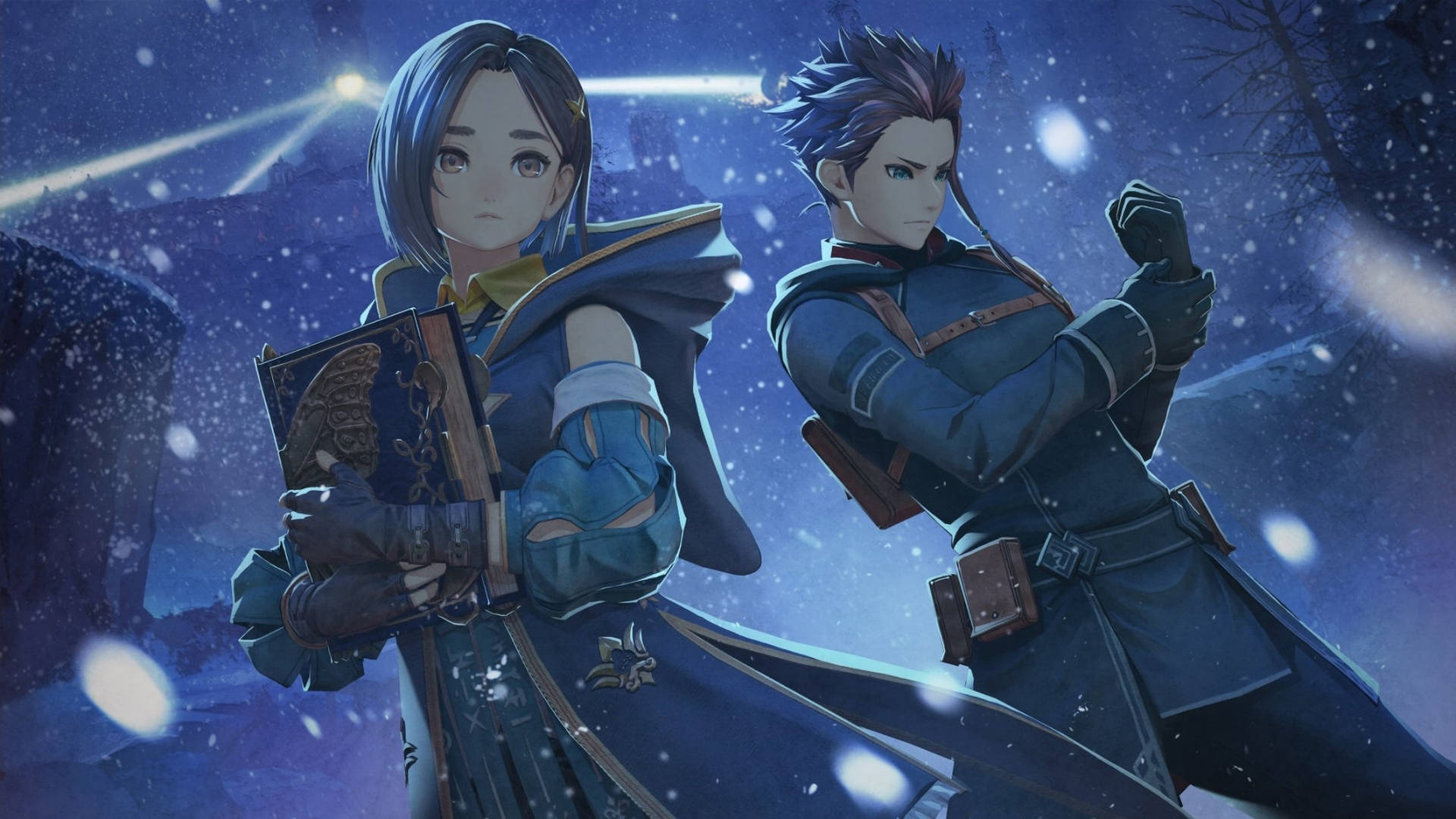
Normally, reviewing two RPGs in a row is something I actively try to avoid, as marathoning games heavy in both story and runtime can really become a struggle. However, following up my playthrough of Shin Megami Tensei V with Blue Reflection: Second Light has been an interesting experience, as I’m not sure if you could find two Japanese RPGs that are such polar opposites. With SMTV, we get a brutally difficult game that was light on story and characters but heavy on complex gameplay; with Second Light, we get an incredibly easy game with more shallow gameplay but hugely fleshed out cast members and narrative.

Unlike Altus’ long-awaited Switch release, Blue Reflection: Second Light is a game without a huge following, and one which will no doubt fly under the radar for a whole lot of people. For me, though, it was something I absolutely wanted to play after stumbling upon its predecessor, 2017’s Blue Reflection. Surprisingly released in the West by Koei Tecmo—and released physically, at that—the game centered around the story of a young girl’s failings in her everyday life, and the second chance she got after becoming a magical girl tasked with saving the world. Blue Reflection certainly had its share of awkward moments and unpolished gameplay, but it was a tale of friendship, teenage awkwardness, and girls supporting one another that so often had its heart in the right place.

Whereas the original fits into the more traditional formula of “magical girls save their city from the monster of the week,” Second Light almost instantly takes things in a very different direction. I can’t actually tell you much about the story without massive spoilers, and I want to be careful not to oversell it too much, but I genuinely loved the direction this game takes. I’m a sucker for stories about people finding themselves in a mysterious place where nothing makes sense, and Second Light brings up story beats that took me back to my days of religiously watching Lost to see what craziness would happen next. (Though, I know that comparison might not exactly be a positive one for some.)

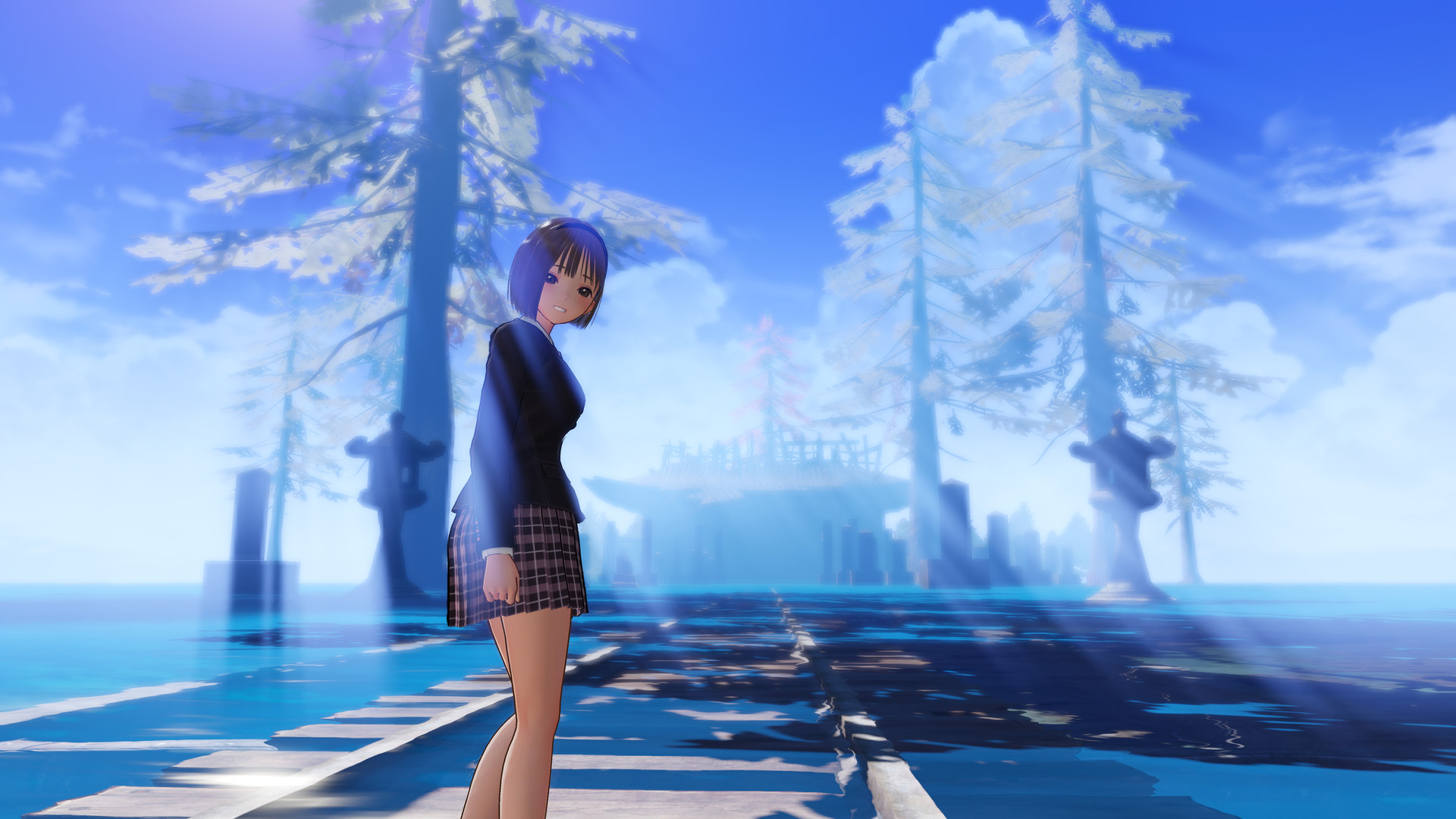
What I will say is that part of the game’s focus is on uncovering the lost memories of the main cast, and to do so, players must send protagonist Ao Hoshizaki and her teammates into a variety of fantastical locations. For anyone familiar with the work of developer Gust, there’s only a certain level of expectation that one can put onto the ambition, polish, and budget of the studio’s RPG worlds. That said, the lands of Second Light have a surprising amount of beauty in both their art design and technical production. As someone who still remembers years of woefully unimpressive Atelier games on the PlayStation 3, I’ve got to give credit to Gust for how far it’s come in that area.

More important than those worlds or the enemies that await in them are the memories you’re trying to unlock. What I like about Second Light is that there’s no push to connect those memories to big, dramatic revelations in order to crank up the excitement factor. Here, those lost moments from the past might seem mundane, but they’re important to the specific character who lived them. Memories of friendships, or one’s fleeting childhood, or decisions that would later help shape them as a person. The backstories Second Light gives its heroines feel grounded and relatable, which in turn provides those girls more depth as characters. Sure, it’s more kiddie pool depth than lake or ocean depth, and none of the main roster can escape the trappings of typical anime tropes. Still, I think the game does more with its cast at times than plenty of other similar games out there, including its own predecessor.

Blue Reflection: Second Light caught me by surprise in its story and characters, because both feel like a legitimate step up from the original game—yet those were qualities I already expected to appreciate. What I wasn’t ready for is how interesting Second Light’s battle system turned out. Gust has long felt like a developer on the verge of coming up with a pretty darn good RPG battle system, but there’s almost always been something that ended up holding its games back in that regard. While combat here still isn’t groundbreaking, some of the ideas the team came up with are decent concepts that I don’t recall seeing before.
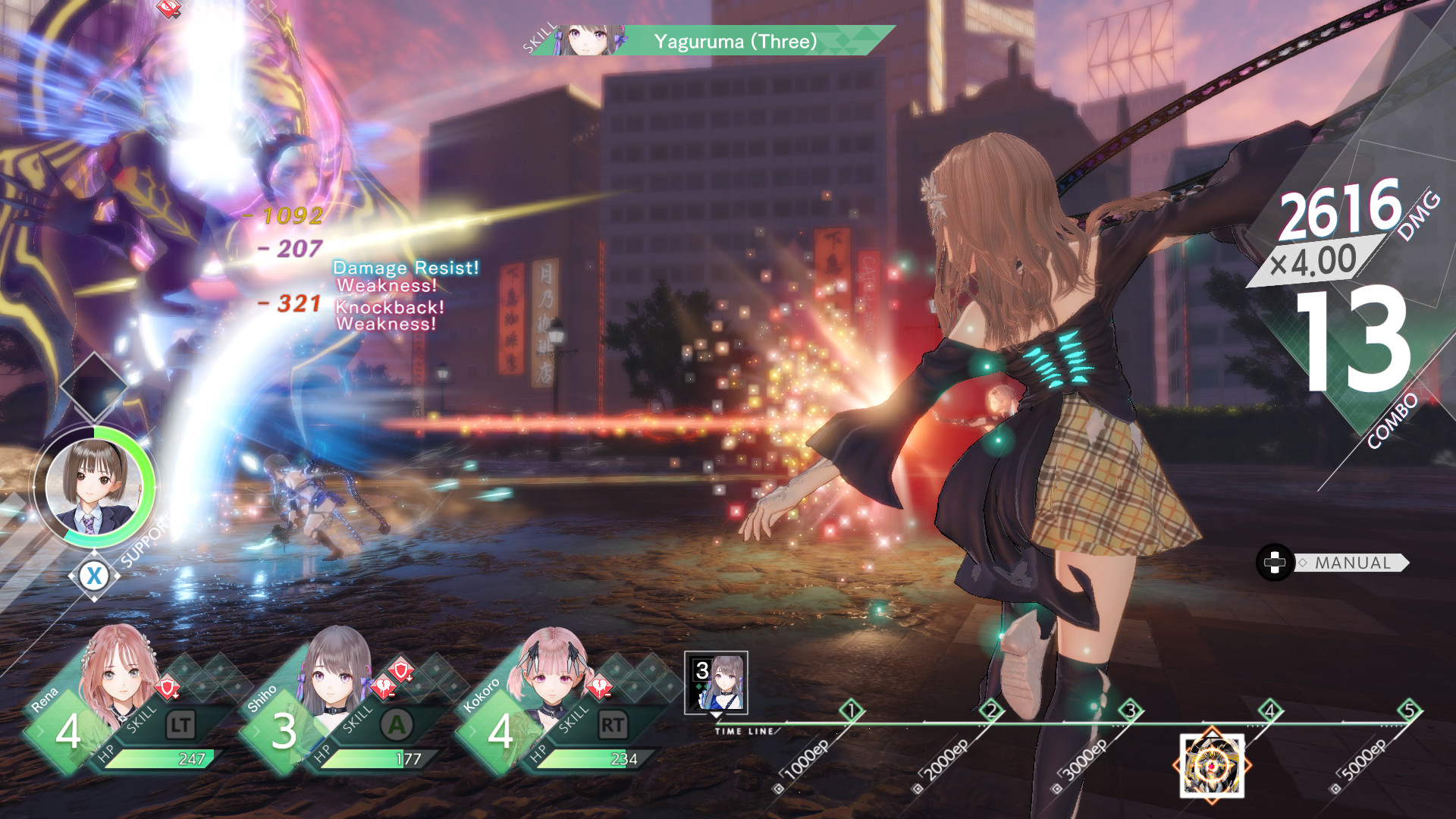
Like many other RPGs, Second Light’s battles center around a timeline. Both your party members and all enemies have icons representing them on that timeline, and icon positioning determines who takes their turn when. For the player, the line gets divided into chunks of 1,000 “Ether,” the point stock that powers all abilities. At the start of a fight, all three of your party members begin to progress along the timeline, and once each hits the first marker, they can spend those points to use any skill that costs 1,000 Ether. Initially, the farthest your characters can progress is to that first marker, but once they spend Ether to attack their opponents (either through your manual commands, or via AI for party members beyond the one you’re directly controlling), they’ll shift Gears to level two. A character being at Gears 2 means they can reach the second timeline marker, which grants them 2,000 Ether to spend. The more Ether someone has, the higher-powered skills you can use, or the more lower-level skills you can chain together during a turn. As well, the more you use Ether, the faster you’ll travel along the timeline to recover it. Once a character reaches Gears 3, they transform into their magical girl-inspired Reflector form, giving them more power to defeat foes.

Blue Reflector: Second Light’s battle system is a mix of fast action and turn-based tactics, and I wasn’t expecting how aggressive it would encourage players to be. It only makes sense to use up every bit of Ether you earn, as doing so will push you into higher Gears and increase your Ether regen even more. The question becomes one of waiting to earn bigger Ether pools to do more on your turn, or spending it as quickly as possible to get out more lower-level attacks to try to disrupt your enemies.

Combat in Second Light is far more fun than it has any right to be, but that fun does suffer from some weak production during fights—the camera is often placed far too close to characters to get the full effect of what they’re doing, and most attacks lack either a proper sense of weight or that satisfying oomph—and a low overall level of difficulty in the game. Look, when I come to a game like Blue Reflection, I want to play it to relax and experience the story, so I’m actually fine with it being on the easier side. Some out there will no doubt wish it were more of a challenge, though.

Curiously, Blue Reflect: Second Light then introduces another gameplay idea that feels totally out of place: stealth. When exploring around the world, you can go into stealth mode, which darkens background details but highlights the line of sight of all enemies roaming around the area. Generally, you’ll use this to help get an advantage by hitting a monster from behind to initiate combat (versus approaching them from the front), but it’s also used in a number of side quests where getting spotted by a monster means restarting the task from the beginning.

I think Gust added the stealth elements to Second Light to give it that “something” more in terms of gameplay, but it doesn’t at all fit with the themes of the game. While the stealth never truly drags things down, I can’t help but think of other ideas that would have been far more appropriate and beneficial to gameplay, such as puzzles, deeper world exploration, or character-specific abilities that could affect the landscape.

Gust also gives Second Light an additional gameplay gimmick, and this one fares much better. While crafting is an important part of the game overall, as that’s where all of your support and healing items will come from for the most part, you can also build new attractions on the grounds of the school that serves as the game’s main hub area. These can be anything from a snow cone stand to a small patch of sand meant to represent a beach getaway, with all serving to both enhance your party’s stats in different ways, and to offer more locations for you to take your party members out on dates. (That’s the exact word the game uses for spending time with the other girls, but definitely temper your expectations.)
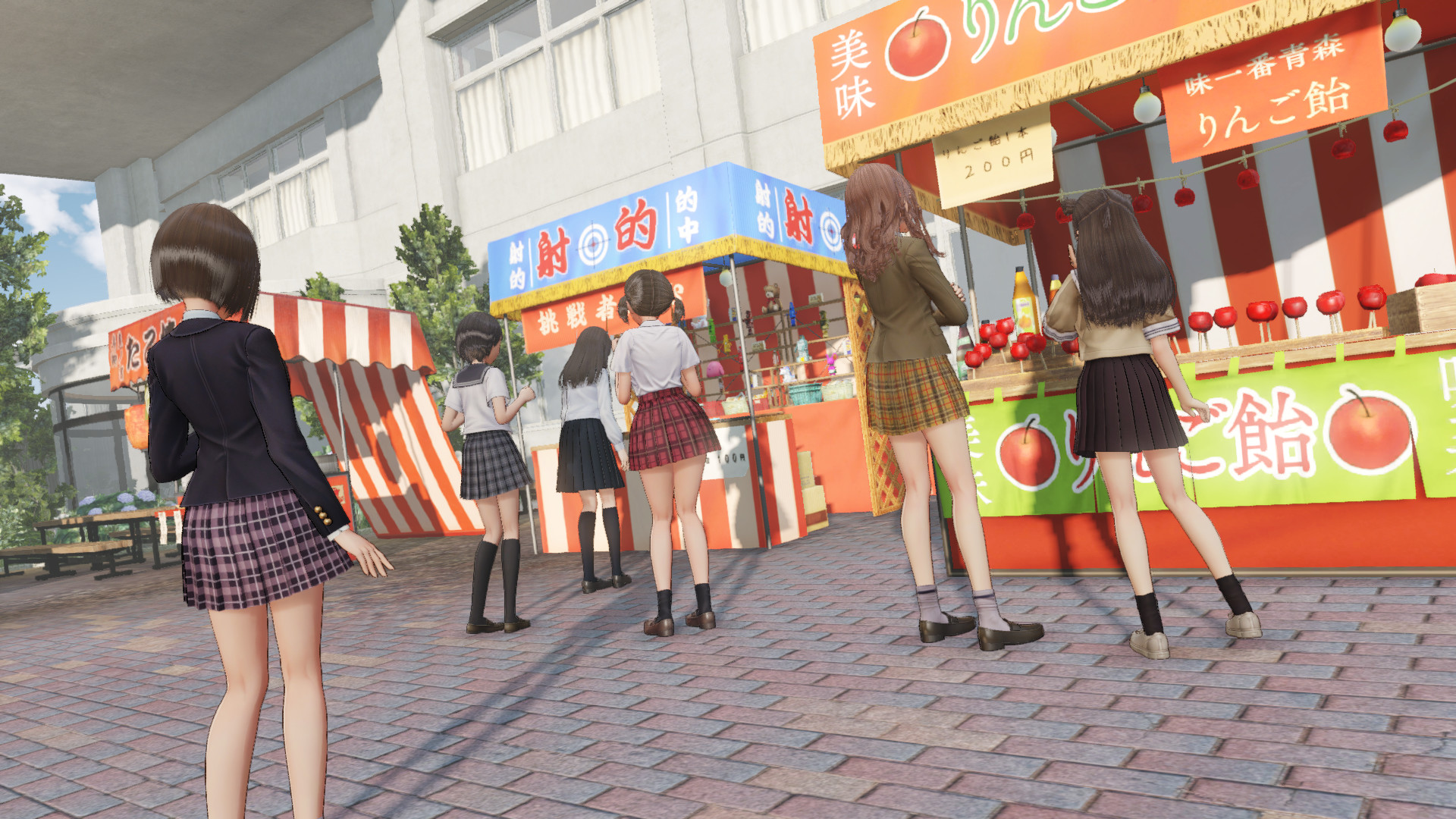
There’s one other aspect of Blue Reflection: Second Light that I want to address, but it involves a topic that I tend to stay away from in my reviews: fan service. The reality is that, in a lot of Japanese games, there are moments where female characters are shown or represented in a way to specifically appeal to a male audience. Calling out every Japanese game that has some level of fan service would be a never-ending task, and there’s a lot you have to keep in mind when considering a game’s level of fan service—including the context in which it shows up. For example, I’ve got no problem with the over-the-top nature of the Dead or Alive series, because that’s the direction it’s taken since its start. Meanwhile, I found the optional bikini outfits in Fatal Frame 2 incredibly inappropriate, as they in no way fit the themes of the game or the personalities of its twin sister heroines.

While Blue Reflection was never overflowing with fan service, it did have scenes that felt out of place in the context of the game. I never really mentioned them in my review, because I felt like they were a minor aspect of the game, and because—for good or bad—that’s just what I’ve come to expect from Gust. However, I did wish those moments didn’t exist, because they stood out like a sore thumb in a game that was otherwise so friendly to female players.

This brings us to an interview that TheGamer did with Japanese illustrator Mel Kishida, who worked on both the original game and its sequel. In the interview, he states:

“I think focusing on fan service and making it the main aspect [of games and anime] is really starting to change,” he tells me. “Not just myself, but the dev team are really feeling that. Compared to the first game, we’re taking a different approach in terms of showing how appealing these characters are without having to rely on fan service. For Blue Reflection and other titles I’ve worked on, I’m seeing a change in how things are being perceived and the attitudes towards them. If you asked me, ‘Well, you’ve drawn a lot of sexy illustrations’ I would have to say that it isn’t because I like or dislike them, it’s that I’m creating things that fans and consumers enjoy looking at.”

Mel Kishida, TheGamer interview
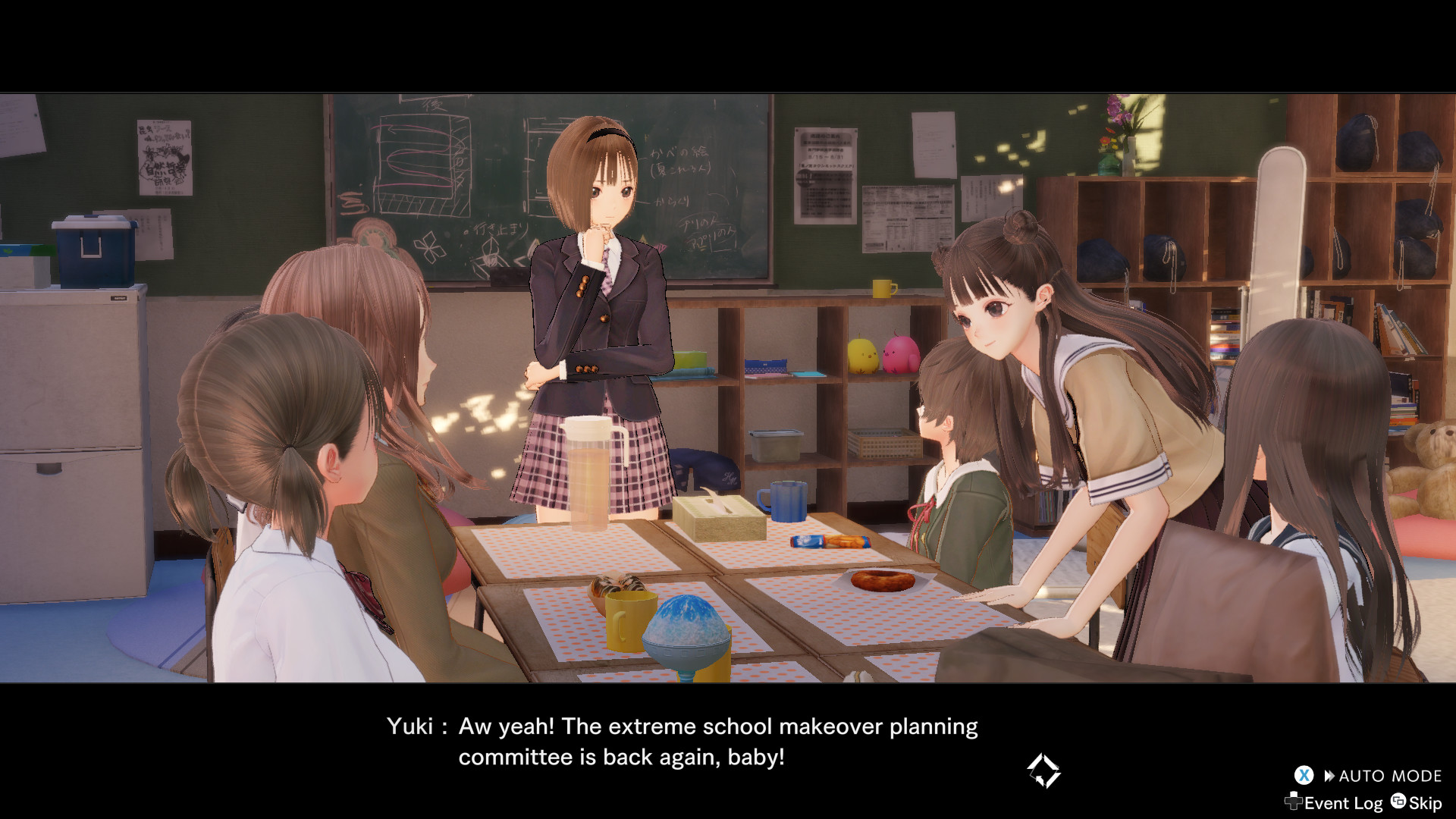
I’ve seen this interview brought up as yet another example of how “social justice warriors” are ruining Japanese gaming, including by people who—hilariously—at the same time admit they’ve never touched a Blue Reflection game or know anything about them. I have my own concerns over the sanitization of certain Japanese PlayStation games in recent years, but I find using Blue Reflection as an example of “woke censorship” completely infuriating. Second Light and its predecessor are not sexy games having their sexiness stripped out; they’re games where the creators are now giving more thought to how they portray women in their women-driven games. Arguing for more panty shots or bath scenes of girls that clearly look like high schoolers might not be the argument you want to be making, nor should you help perpetuate the idea that all video games are first and foremost for a male audience.

I’ve been frustrated for years at how Gust won’t make its Atelier titles friendlier to the one audience that most needs games like that—young girls—and yet Blue Reflection may be an even better option for that audience. There are an endless amount of RPGs for guys looking for fan service, so I cheer the idea that this series might be shifting away from any potential creepiness and more towards something that all players can embrace.

And, I hope that more people do embrace Blue Reflection: Second Light. It, like its predecessor, cannot escape the trappings of its developer, nor can it compare to the big names of the JRPG industry. But, also like its predecessor, Second Light rises above its issues to become something special. While elements like the stealth system are a clear step back from what we had before, so much of the rest of the game feels like tangible steps forward. Blue Reflection: Second Light has been one of the pleasant gaming surprises of the year for me, and I now have more faith in a potential third game in the series than I do in a lot of other sequels that are soon to come our way. Gust’s superheroines might not be saving the RPG genre just yet, but they certainly are making it a more magical place.
Shin Megami Tensei V Review

While it was the original Persona that drew me into the overarching world of Megami Tensei, it was the core Shin Megami Tensei titles themselves that have most fueled my fandom for Atlus’ RPGs over the years. While Persona has gotten stuck in a bit of a rut in terms of storylines and characters in recent years, SMT has continually experimented with a variety of subject, locations, and even time periods. And, as the Persona series became more casual-friendly in response to skyrocketing popularity, its sibling has seemed unwilling to budge.

And that, really, has been the biggest shock for me playing Shin Megami Tensei V. I was certain that Atlus would use the game as a means to bring in new blood by making it easier and more straightforward to play while simultaneously filling it with more narrative drama and market-friendly characters. I mean, why wouldn’t they? With the Switch the blockbuster success that it is, and the Persona series winning over all of those new fans, it only made sense that this would be the point when you give Shin Megami Tensei a makeover to appeal more to the masses.

Atlus absolutely did not do that, though. Shin Megami Tensei V is hard, and weird, and obtuse, and noisy (which I say as a compliment to its more industrial soundtrack), and “boring” at times—and that just makes me so happy. Beyond some elements that wouldn’t have been possible on a technical level, you could tell me that this game was originally meant to be part of Atlus’ now-legendary line of PlayStation 2 SMT releases and I wouldn’t question that statement. There was a part of me that truly didn’t think that we would see a new project like this come from modern-era Altus anymore, yet this is a game that proudly wears the legacy and traditions of its series on its fashionable sleeve.

That’s not to say that Shin Megami Tensei V feels outdated as a game, however. Atlus has always done a good job of carrying over the quality-of-life changes it makes to one MegaTen game into future releases, and that continues here. From fighting demons to fusing them into more powerful allies, the interface is friendlier, more helpful, and more informative than it’s ever been.

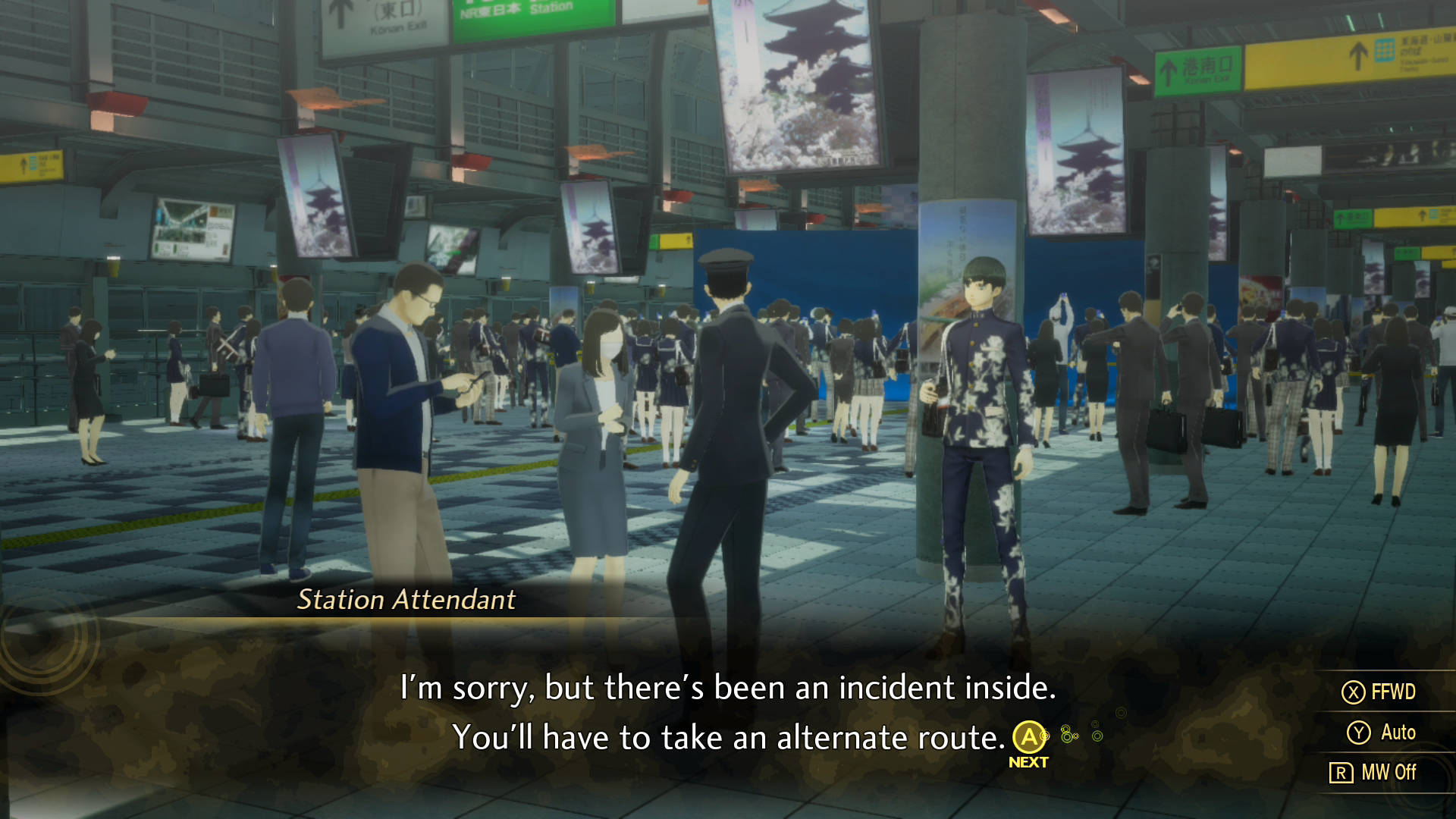
One of the biggest twists in Shin Megami Tensei V is that much of the game plays out in large open-world areas that link important locations or events together. They aren’t “large” compared to other games out there like, say, Red Dead Redemption 2 or Assassin’s Creed Valhalla, but certainly when you look at past MegaTen titles. From the original Persona to Shin Megami Tensei III: Nocturne, the overworld has typically been the means through which you travel from one place to another—and, really, not much more than that. Here, the focus has shifted away from dungeons and similar enclosed spaces, and it’s a welcome—if not a bit weird, at least at first—change. Not only does it help provide a fresh new take on the franchise, but it also helps sell the idea of walking amongst the ruins of a once-great human civilization. It hasn’t always been easy to truly appreciate the doomsday situations past SMT games have promised, given so much time was spent indoors. That isn’t the case here, and it’s a move that could mean big things for future chapters of the series.

Much more traditional is Shin Megami Tensei V’s combat, but even that showcases moments of genuine growth. At its core, things remain mostly the same. Get into fights with demons, and then either try to kill said demons before they kill you, or attempt to convince them to join your team. If you go for the former, battles are a ballet of unleashing elemental spells to exploit enemy weaknesses and earn additional turns, trying to properly time the use of support skills and consumables, and praying that things don’t all fall apart on your opponent’s next turn. For long-time SMT fans, fear not: Shin Megami Tensei V is a legitimate challenge, with even the early-area bosses having no concern for how prepared you are to fight them.

By default, you can pick between three difficulty levels: Casual, Normal, and Hard. The first two are swappable at any time, while you can drop down from Hard mid-game but not return back up. You might think that Casual would be that more friendly jumping-in point for the Persona crowd, but having swapped back and forth between it and Normal to test each one out, I can tell you that calling the lowest difficulty “Casual” is definitely a misnomer. (Through free DLC, the game is set to get a fourth difficulty called “Safety,” which is said to “allow anyone to play through the game easily.” I do not have access to the DLC at this point, so I cannot speak to how easy that mode might be.)

It’s the elements outside of combat that directly affect your battle capability where Shin Megami Tensei V gets especially interesting. Building off of Shin Megami Tensei IV: Apocalypse’s Apps concept, you can earn Glory through completing various tasks to unlock Miracles. Miracles make adjustments to various pre-set parameters of the game, such as allowing demons to use items on their turn during battle (which they can’t initially), increasing the number of demons you can have active on your team at any given point, or increasing the base damage the main character’s elemental attacks do.

Then, new to Shin Megami Tensei V are Essences, which are essentially the souls of demons that you collect separate from actively recruiting them as allies. Essences contain the base skills and resistances of the demon they belong to, and through a special process, you can transfer their skills and resistances over to either the main character, or transfer their skills (but not resistances) to one of your demons. So, let’s say you’re going up against a boss that loves firing off dark attacks but who is weak to light. Now, you can swap your resistances to those of a demon that’s strong against Mudo, and then give one of your demons Hama if you don’t already have someone that’s sporting it.

Finally, on top of both Miracles and Essences, there are Talismans to find, which are special non-consumable items that open up a special new skill for the demon type they’re associated with. Combining all those options, there’s incredible depth in the party customization Shin Megami Tensei V offers, allowing you to constantly shift strategies depending on the enemies or boss you’re about to face. Or, perhaps, simply the playstyle you most prefer. Between the years of polish shown in the game’s battle system, and all of that personalization potential, I’m not sure if combat has ever been as satisfying in any previous chapter of the series as it is here.

This does, however, bring us to the part of this (in progress) review where I’m probably going to make some enemies. Simply put, Shin Megami Tensei V suffers from being a Switch exclusive.

Now, I want to be clear here: I love the Switch as a gaming platform. I’d wanted a hybrid console-meets-handheld for years before Nintendo revealed the system, and I currently own almost as many physical games for the Switch as I do for the PlayStation 4 and Xbox One combined. However, it is painfully clear that the Shin Megami Tensei V that Atlus wanted to give us—and did give us—is too ambitious for the hardware. In all the hours I’ve put into the game so far, I would never once call the experience awful or unplayable, but there have been countless times when resolution and/or framerate has clearly suffered. That’s a shame, because it’s obvious how much work Atlus has put into everything from the game’s overall visual design, to the intricacy of its open world areas, to the beautiful 3D models for all of the franchise’s trademark demons. And, one of the biggest selling points for SMTV being on the Switch—the ability to play it portably—is rendered useless for me given how small so much of the text and details are on the hardware’s built-in screen. (I love that the Switch allows me to play the same games in two totally different ways, but I’m getting frustrated by the amount of those games that were clearly only designed with one screen type in mind.)

Shin Megami Tensei V is the latest example of how exclusivity actively harms our ability to play games in the way we want to play them. I’m happy that Switch owners aren’t missing out on such a fantastic new game, but I’m simultaneously frustrated that I can’t just play it on my Xbox Series X at the graphical fidelity and performance that it truly deserves. I was never upset at previous SMT releases being on the Nintendo 3DS, because they were either games that could be perfectly ported from older consoles (Soul Hackers) or newer projects designed with the 3DS’s limitations specifically in mind (Shin Megami Tensei IV). With SMTV, though? Man, it’s clear that this is a game that wants to be something much more than what it can be. Nintendo Switch Pro, you cannot come soon enough.

I’ve still got more to get through before I’ve finished the story, so for now, I’m not quite ready to give a score just yet. What I can say for now is that Shin Megami Tensei V is one hell of a game. No, I don’t love everything about it. And sure, it’s hard not to see it as a soft reboot of Nocturne on some level. But, more than any of that, it’s a sign that the Atlus I once came to love does still exist, and—more importantly—isn’t ready to soften the rough edges of the Shin Megami Tensei series just yet.

Update: In trying to finish up this review, there’s been something that’s kept giving me pause about Shin Megami Tensei V: I’m not sure that I’ll have an emotional attachment to it in the years ahead. When I think back to the MegaTen titles that I’ve loved, I think of things like the original Persona, or Soul Hackers, or even the Raidou Kuzunoha duology. With SMTV, there hasn’t been one climatic moment that’s truly won me over, the supporting cast do their jobs but rarely stand out, and our hero, the Nahobino himself, serves as another example of how I wish Japanese RPG developers would either give their main characters proper personalities or truly make them self-insert protagonists (i.e. fully customizable).

I also think that it didn’t help to have Shin Megami Tensei III: Nocturne HD Remaster hit less than six months before this did. With both games having such similar themes and gameplay styles, it’s hard not to directly compare SMTV to Nocturne and not have the former lose out on the narrative side—especially when factoring in the nostalgia so many have for the latter.

The thing is, I have so much respect for Shin Megami Tensei V as a game, and have no doubt that it’ll be fondly remembered for everything it does in the other 95 percent of the experience that isn’t about telling a story. I can’t help but think back to another release I reviewed this year, NieR Replicant ver.1.22474487129…, as the original NieR became beloved for its story and characters in spite of its janky gameplay. Here, in SMTV, we get the exact opposite.

Whereas in other games I might push forward to see what big twists happen next or to advance the relationships of my party members, progress here always came because I didn’t want to stop playing. Narrative motivation in video games used to be little more than window dressing, because who cared why Mario was running through each level, or why invaders from space had chosen our planet to invade? These days, it’s easy to believe that every game needs to have a deep, gripping story, but they actually don’t so long as the gameplay remains compelling the entire way through. In SMTV, angels and demons are fighting. Mankind is caught in the crossfire. We get to control a badass uber-being who can change the balance of that war in whichever way he wants. Maybe I don’t need more than that.

Well, there is something I might want more of: dungeons. Earlier in this review, I praised Atlus for the new direction it took the game in world design-wise, and I still stand by that statement. Man, though, I do miss those dungeons. Shin Megami Tensei V never feels like it’s a lesser game for its shift to having nearly all of its adventuring happen out in the open fields of apocalyptic otherworld Da’at, but I now might need to pull back a little from suggesting that this should be the template upon which Atlus builds the future of the series. Keep giving me these more open-world areas, but with a handful of dungeons and explorable locations tossed around the landscape. Find that happy medium.

The very fact that Shin Megami Tensei V has me pondering the possibilities of future games while simultaneously reminding me of the franchise’s classic chapters is a testament to its success. Atlus was somehow both ambitious and safe in the direction it took this game, and yet not safe in the way I feared the company might go given the breakout success of the Persona games. While it may not always satisfy as a story, SMTV excels as a game—and I need to remember that, sometimes, that’s what matters most.

Metroid Dread Review

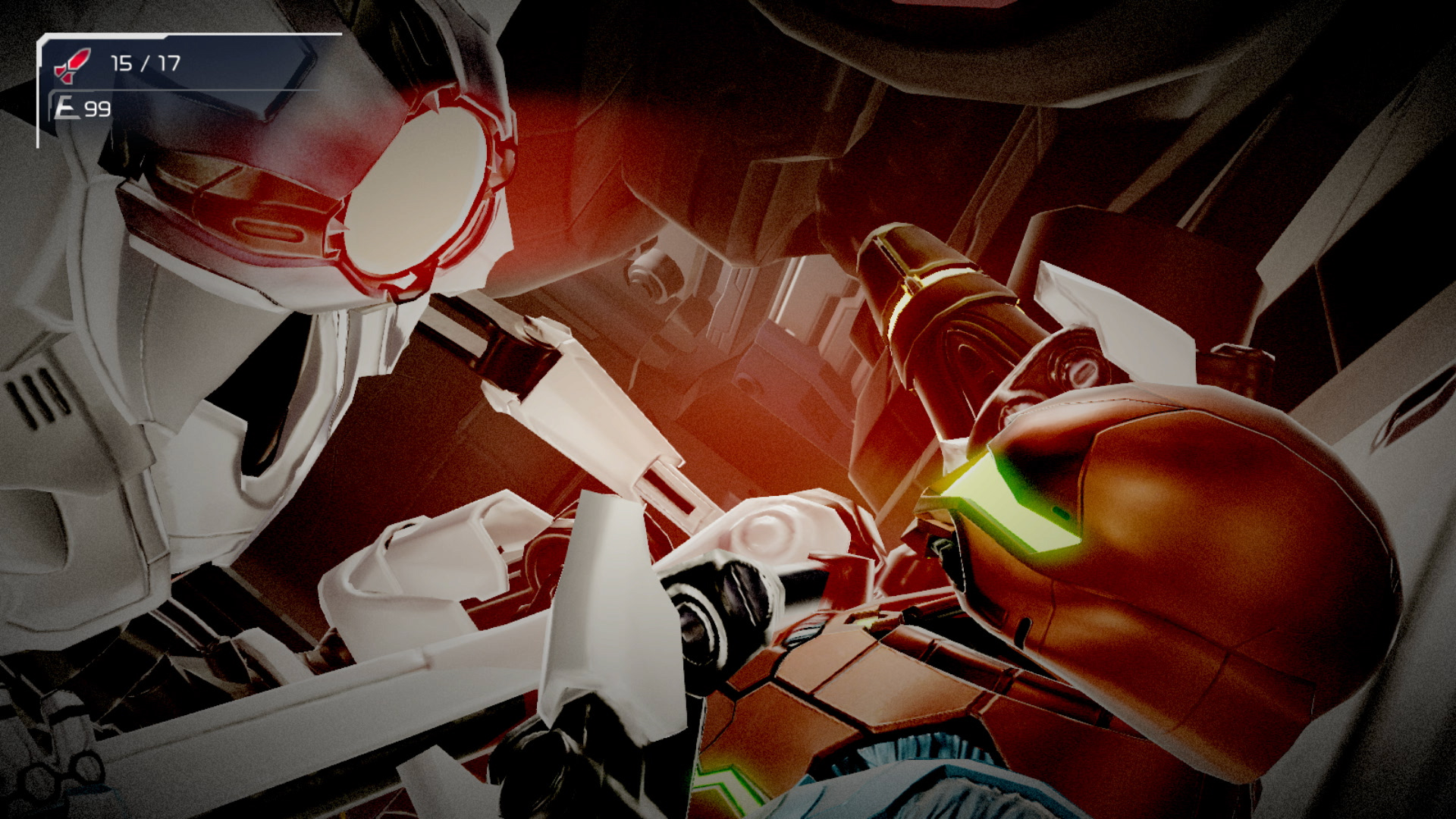
As I’m writing this review, Metroid Dread has now been out for exactly two weeks. Normally at EGM, we try to have all of our reviews be a bit more timely, and I’m well aware that telling you about Samus’ latest adventure at this point is anything but. In my defense, Metroid Dread would end up being the game that’s kept me entertained as I’ve recovered from surgery, so I wasn’t in a position to marathon it. However, also in my defense, it’s taken Metroid Dread 18-plus years to finally become a proper, finished game that we can hold in our hands. So, you know, in comparison, my lateness doesn’t look so bad.

Given I’ve been a fan of Metroid since the franchise first kicked off back in 1986, that this game actually now exists brings up some mixed emotions. Knowing that Dread is the final chapter of Samus’ original saga is kinda sad, but also kinda not, because it’s hard to be upset over nearly any entertainment ending after 35 years. And, really, what does it even mean to have a particular video game story arc come to a close? Not only is Metroid not going anywhere, but I’m pretty sure 2D Metroid isn’t going anywhere either.

Honestly, for the build up it had as the “fifth and final” chapter of that original series, Metroid Dreaddoesn’t much feel like a final chapter. I mean, it does in a few particular spoiler-y storyline beats, and in how certain elements from previous games come together again, but it’s not like it’s some gripping, dramatic conclusion to the journey Samus has taken from Zebes to SR388 to this new planet, ZDR. For good or bad, our armor-clad heroine has never been that type of character, nor have her games ever focused on those kinds of stories. (Outside of a certain side project that shall remain unnamed.) This is, for the most part, merely a new Metroid chapter in my eyes, and if you told me multiple sequels were already planned for it, it wouldn’t surprise me.

What’s important is that it’s a good new Metroid chapter—putting a slight asterisk on that statement for later. Before it worked with Nintendo on the 3DS Metroid II remake Metroid: Samus Returns, developer MercurySteam’s main experience with the Metroidvania subgenre was 2013’s Castlevania: Lords of Shadow – Mirror of Fate. Which, you know, was okay. Whereas that game felt more like a store-brand knock-off product, Metroid Dread comes off as the real deal, with a level of quality and polish that you’d expect from something Nintendo’s own teams might have created in-house.

We all know how these games start—Samus heads to a strange new planet, and something happens that strips her of all of the upgrades she’s earned since the last time that happened—but right off the bat, Dread provides a new twist on that idea. Samus (and the player) quickly run into an E.M.M.I., a federation science robot gone rogue whose only weakness is a specific power-up that goes away once it’s used. The various E.M.M.I. robots scattered across ZDR are the big gimmick that Nintendo has sold the game on, and thankfully they’re used just enough to be effective but not enough to be annoying. Unkillable enemies that stalk you can be incredibly easy to get wrong, but the more high-tech areas of the planet that play home to the robots don’t encompass as much of the overall map as I’d originally feared they might. More often than not, you’ll be exploring alien landscapes and fighting enemies you can actually kill (even if some of them are bullet sponges), only facing down the local E.M.M.I. when you need to cross over to a different sector or put a stop to them for good.

For the rest of its playtime, I’d describe Metroid Dread as classic Metroid on overdrive. The map feels more expansive, with a wider variety of exploration options hidden behind to-be-obtained-later special abilities. There’s more back-and-forth movement between the planet’s different sectors than we’ve seen before as well. On one hand, that helps keep things fresh and avoids getting stuck in any one area type for too long. Unfortunately, on the other hand, the game dumps you to a loading screen every time you make that jump, which can get tiresome when you’re moving back and forth so often.

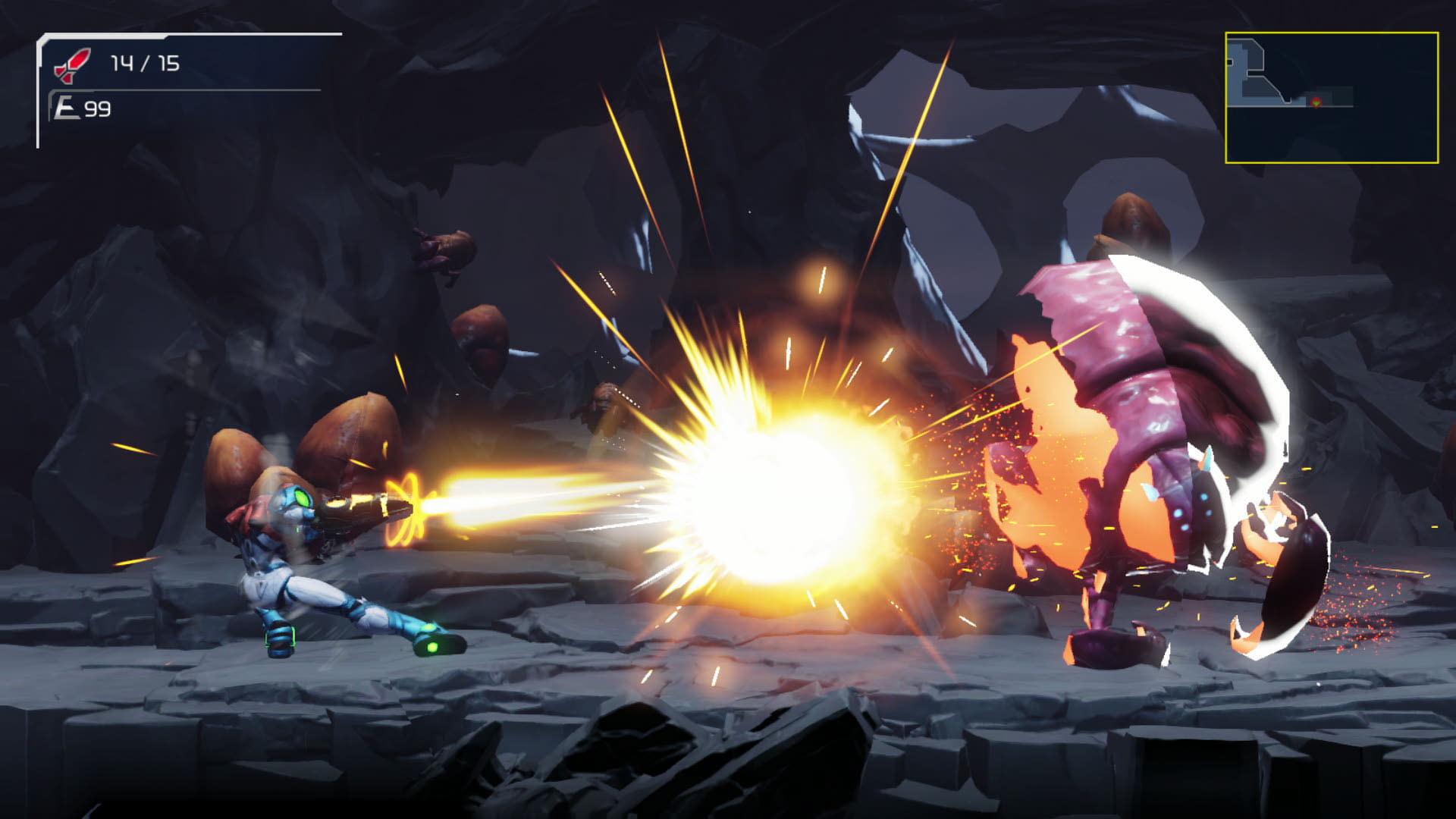
Another aspect that certainly feels supersized is the roster of weapons and abilities Samus unlocks in Metroid Dread. Sure, there are classics like the Screw Attack, Varia Suit, and—yes, no matter what you’ve heard, it does exist—the Morph Ball, but there are also multiple beam, missile, and bomb types, various other suit upgrades, and a variety of completely new Aeion abilities (such as the Phantom Cloak, which can hide you from E.M.M.I. detection). Even with the sizable world map, it does sometimes feel like some of the upgrades struggle to justify their use outside of a few specific locations where they’re required to open new progression paths. Still, fully decked-out Samus is a joy to play in Dread, and a lot of those upgrades—such as the various missile types—basically just stack on top of one another, so it’s not like managing them is ever a headache.

Unlike most previous Metroids, reaching that decked-out status is almost more about improving Samus’ combat capability over her exploration potential. This is by far the most combat-heavy and action-oriented Metroid yet in my opinion, as you’ll need to put all of those upgrades to Samus’ kit to good use when battling ZDR’s menagerie of creatures (native or otherwise). This is especially the case for boss battles, which are not only more plentiful than before, but more intense, challenging, and lengthy. Without a doubt, Metroid Dread feels like a chapter of the series crafted for the modern generation, where old concepts and trademarks have merged together with the higher intensity and constant challenge of the flashier newer-era action adventure games.

As I experienced all of those things I’ve just described, I came to a realization that shook me a little both mentally and emotionally: Maybe this isn’t my Metroid anymore.

I want to be very clear that, both as a professional and a player, I think Metroid Dread is a genuinely fantastic game. Metroid fan or not, I would enjoy almost everything Nintendo and MercurySteam have crafted here, and I have to give them credit for creating something that feels so fresh and enjoyable, even as it competes against countless clones and subgenre competitors and simultaneously builds upon 35 years of legacy. But, maybe this isn’t my Metroid anymore.

The Metroid I fell in love with was slow, and sometimes kinda boring, and its exploration was often convoluted, and it lacked any real narrative drama. My Metroid didn’t have multi-stage bosses, or the ability to parry attacks, or much importance placed on combat at all. And, my Samus wasn’t the crazy awesome superhero action star she is here—she was just a woman, alone and isolated, quietly getting the job done so she could get the hell out.

In the end, Metroid Dread is taking the series in a direction that it needs to go, and probably really should go, but not one that I necessarily would have wanted it to go. Still, I’ve come to be okay with that. Times change, and game franchises must too. Nintendo and MercurySteam have written a final chapter to Samus’ original storyline that also serves as a launchpad toward a long and bright future, and that’s the best that I could hope for for my favorite intergalactic bounty hunter.

And, who knows—maybe Dread will not only serve as a reboot of the 2D line of Metroid games, but also my fandom as well.

Tales of Arise Review

When developer Gust revealed Atelier Ayesha: The Alchemist of Dusk, it marked the start of a new storyline for the Atelier series. It also, at least initially, seemed like it might be a new start in other ways as well. Main character Ayesha was noticeably older than all of the heroines of the previous arc, and Gust was working to improve the visual quality of the game’s characters and landscapes. As someone who was increasingly (and frustratingly) outgrowing the franchise, I held out hope that Atelier Ayesha might be that reworking it’d desperately needed. In some ways, the game was indeed evolution—but it fell far short of revolution.

A few years later, I’d find myself in a similar situation with the unveiling of the latest chapter of another Japanese RPG franchise: Tales of Arise. “Now is the time for change,” the announcement trailer promised, and it looked as if the dev team might be skewing the characters older and putting more work into modernizing the game’s graphics. I knew I’d been there before, and yet I once again let myself get excited at the idea of what might be possible.

Now that the end credits have rolled and I’ve cleared out all of the side content I felt necessary for doing a review, I can tell you that Tales of Arise still falls into some of the trappings that JRPGs have either struggled to escape, or fully embraced to the detriment of gaining a wider audience. Its story at times is incredibly silly and overly convoluted. Its main characters never fully push beyond standard tropes, while minor ones often have little depth to them. Conversations can be repetitive and lacking in substance, while more emotional moments aren’t always given the weight or time to breathe that they deserve.

And yet, in so many ways, Tales of Arise filled me with a joy that I haven’t felt from more traditional JRPGs in years. It’s impossible to not come off as hyperbolic in talking about just how enamored I became with this game, and how it single-handedly renewed some of the faith I used to have in a genre I once dearly loved. As a player, not as a reviewer, I have so much to say about the game, so much excitement to share with others when I’m allowed to just indulge in the positive side of video games while glossing over the flaws.

As a reviewer, there’s a lot I could tell you about Tales of Arise, but I want to focus specifically on four major aspects that I thought the game did really well—and one that it did not.

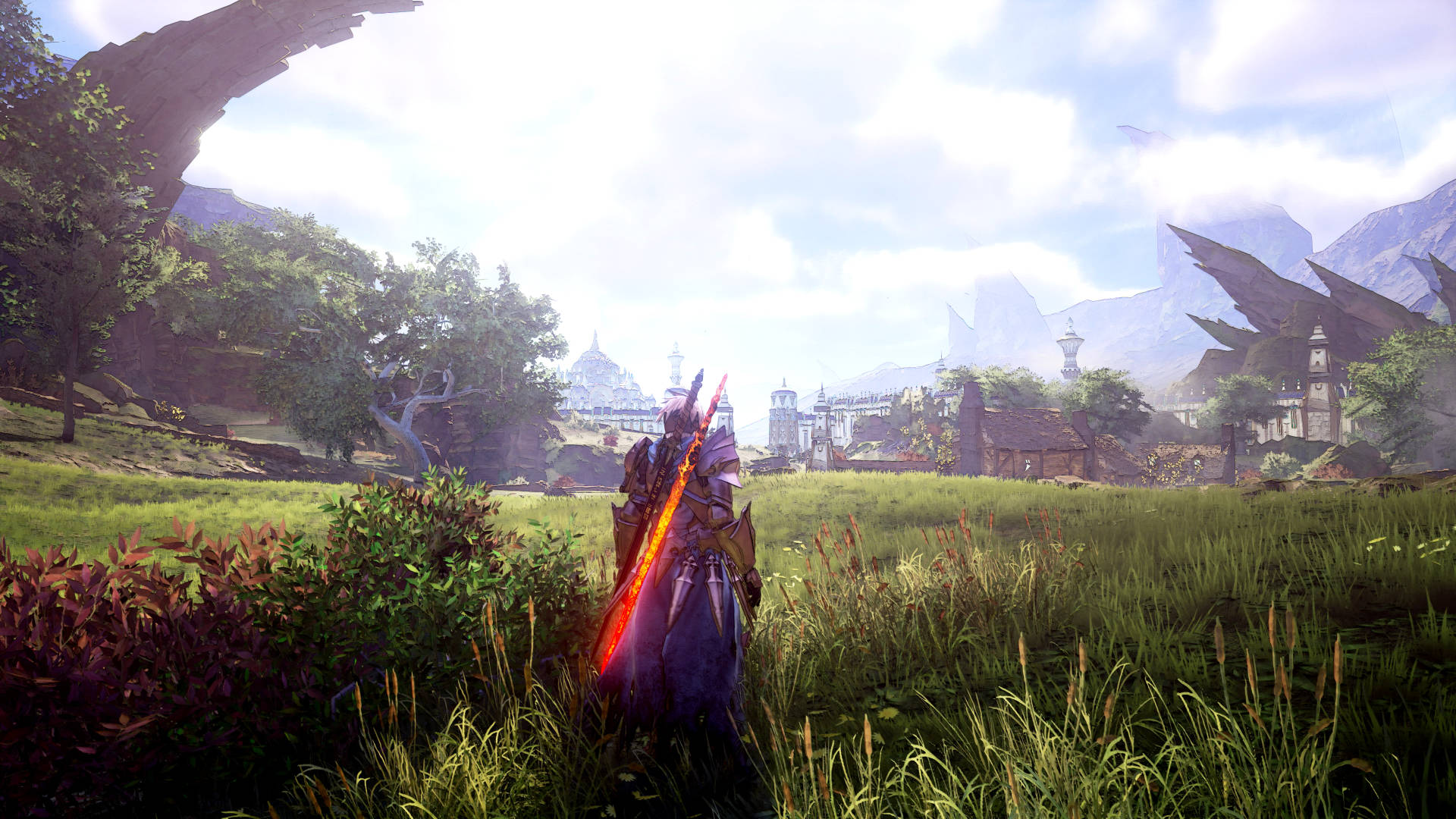
One can’t discuss Tales of Arise without talking about its visual style, and the team really did a fantastic job here. Plenty of games have done the “interactive Japanese animation” look well at this point, but saying that this game “looks like anime” really does it a disservice. Could I name various TV shows or movies that Tales of Arise resembles on some level? Sure. But instead of simply trying to emulate a particular style, I think the team’s artists were instead working to craft something of their own, with smaller details and artistic decisions that give the game more of a unique look. This ain’t your granddaddy’s Tales games, and fan of manga artist (and Tales character designer) Kousuke Fujishima that I am, boy am I glad for that.

While certain aspects don’t completely sell the look—third-tier characters clearly didn’t get the attention that more important NPCs and our heroes did, for example—the visuals really help set the stage for the more mature shift the narrative takes. Yes, everything from the cast to the world itself still looks more colorful and cartoony than many more serious games, but it’s a style that’s capable of supporting its own serious moments without feeling off.

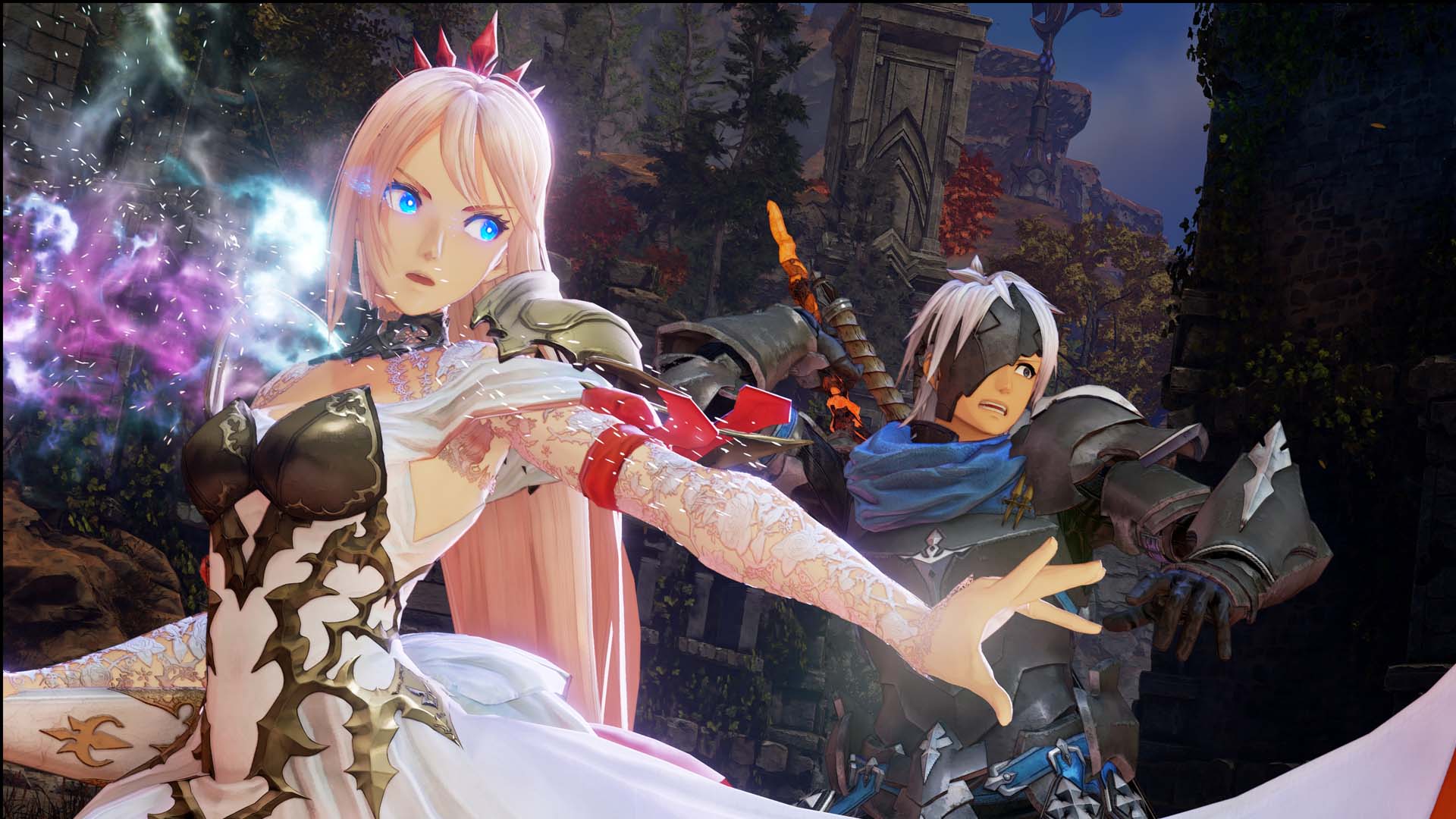
This leads us to what may be the strongest element of Tales of Arise for me, which is its cast of characters. I’m just going to be honest: Characters have been the specific reason why I’ve avoided playing so many previous Tales games. When I see a 14-year-old girl who looks like a 10-year-old girl, and who is supposedly a pirate and a melee fighter, you’ve lost me. Going into Tales of Arise, my biggest concern was a relatively minor one: how silly protagonist Alphen looks with a half-destroyed helmet stuck to his face. And yet, when we find out how he came to look like that, it’s a genuinely awesome—and earned—moment.

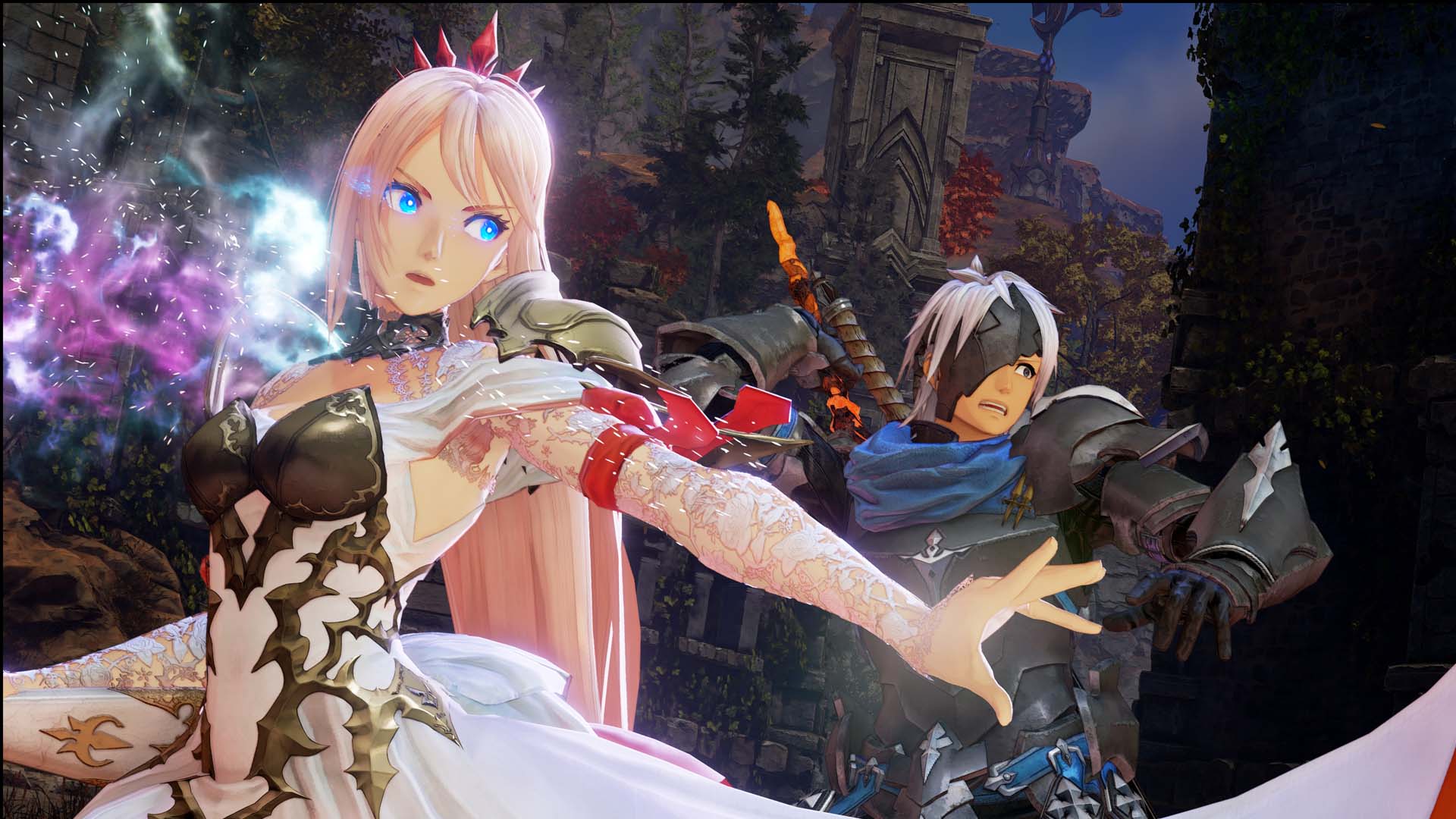
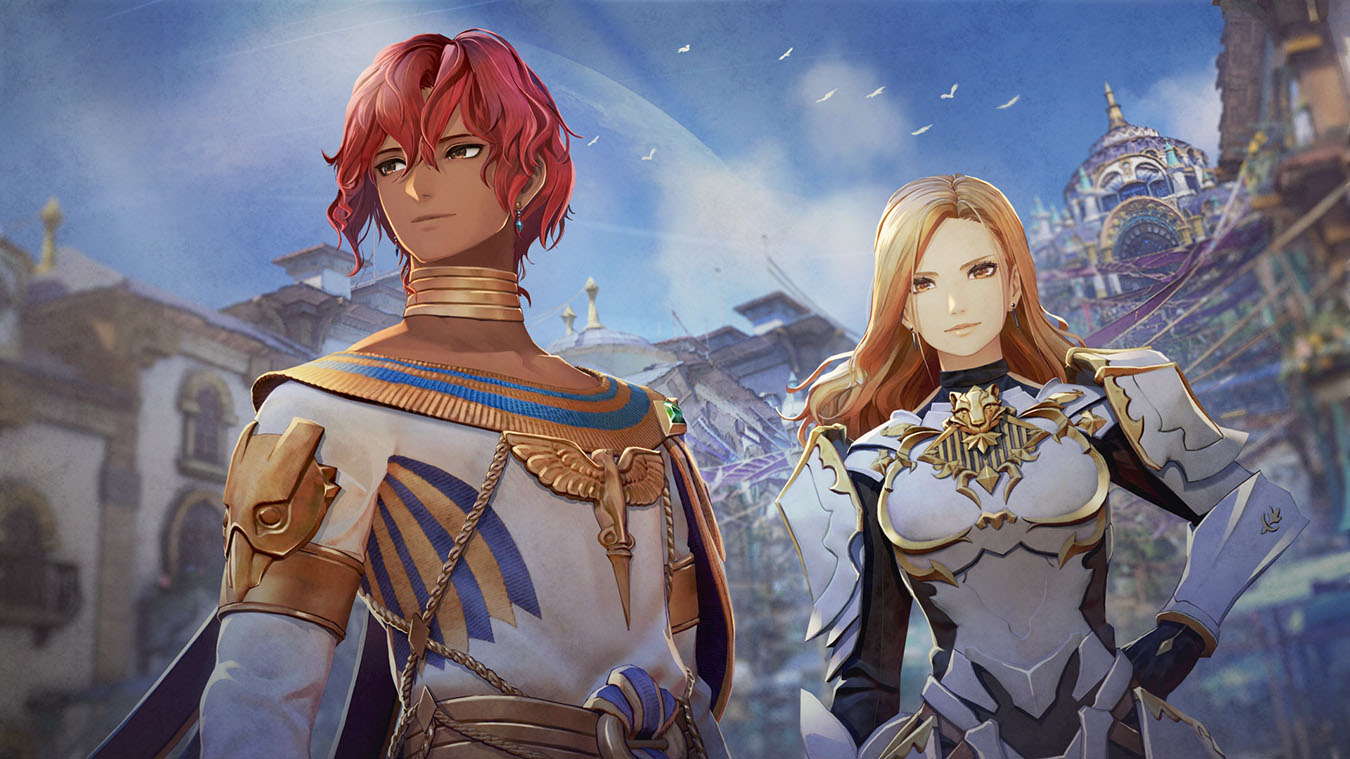
I came to love every other main cast member as well, without ever feeling like the game was desperately trying to convince me that I should. There’s Shionne, the sniper/healer whose curse has driven her to a life fueled by revenge; Law, the young traitor to his people who must escape his father’s shadow; Kisara, the royal guardswoman who has forgotten what she’s fighting for; Dohalim, the ruler whose utopia sits upon a base of lies; and Rinwell, the token young female magic user whose hatred for her oppressors burns hotter than her fire spells.

I think Rinwell provides the best example of the quality of the game’s main cast. Young JRPG teammates always make me nervous, because they’re such an easy thing to get wrong—or worse, creepy—but for the most part, Rinwell is a shockingly good character. Like the above-mentioned pirate Patty, she too is 14, but unlike Patty, she actually looks it. She doesn’t act unnaturally cutesy or child-like, yet she does have the type of immaturity when looking at larger life issues that a girl her age would have. Once she finally comes face-to-face with the cause of her tragic past, she’s incapable of dealing with the situation either emotionally or mentally—because of course she wouldn’t be able to. However, through that event, and everything else that happens over the course of the story, Rinwell grows as a person, and ends up transcending the “token young female magic user” trope she seems to initially represent.

For all of its six main characters, Tales of Arise is a journey of growth, one that leads them far from the places they were when we first met them. Again, I’m compelled to point out that, if you break the game’s story down to its core elements, we’ve seen all of this before. Hero guy with amnesia, female companion with mysterious powers, world that needs saving where nothing is ever as straightforward as it seems. It’s what Tales of Arise does with those ideas from moment to moment that makes the experience engrossing.

The setting for what unfolds is Dahna, a planet enslaved by the inhabitants of its sister world Rena for over 300 years. The Renan lords that rule over the land treat the planet, its people, and their enslavement as one big game, where the lord who can harvest the most spiritual energy from their territory’s slaves gets promoted to rule over both planets. After all those years of oppression, the Dahnan people have given up hope of ever being free. However, a chance meeting between Alphen and Shionne, and the immense power they’re mysteriously able to draw out of one another, finally sets things in motion.

Tales of Arise’s story works as well as it does thanks to interesting yet down-to-earth characters, a more restrained (well, mostly) manner of storytelling, and an atmosphere that can be surprisingly dark at times. It’s hard not to root for both Alphen and Shionne as the spark for a revolution, even if their reasons for lighting that fire come from very different places. Dahna’s five main kingdoms stand apart not only in style, but also substance, letting the game keep the adventure fresh without ever getting bogged down in one place for too long. There’s some amount of buying into the narrative you’ll have to do, and if you’re unable to do so, this will likely be a story that’s hard to appreciate. For me, I became fully invested from the opening hour, and was always eager to find out what would happen next.

The final piece of the Tales of Arise puzzle that I really want to highlight is its combat—but let me warn you, things are going to get a little complicated.

Like most previous Tales games, when you encounter a monster out on the field, the game switches to a contained arena where the fight plays out. Combat is fully real time, so all basic attacks, Artes (the game’s name for skills and spells), dodges, blocks, or jumps come out at the press of a button. You can have up to four characters on the field with two in reserve, and at any time, you can both swap out active teammates for reserve ones, or switch to control a different character. Any roster members you aren’t controlling or who aren’t in reserve fight via AI, and you can not only select between a variety of preset tactics types for the AI to follow, but even dig into those choices to further tailor the AI conditions to your liking. I’ve long been a fan of AI-controlled teammates in RPGs, because I like the sense of fighting together with my teammates instead of them just being puppets for me to control. While I know not everybody shares my opinion, I think Tales of Arise’s team AI is pretty darn good. I had numerous fights where the character I was controlling died, and instead of just switching to someone else, I waited to see if my team could still pull off a win. Most of the time, they did.

From there, Tales of Arise stacks on combat system after combat system. First off, every character has their own Artes Gauge, from which you spend points to use Artes. (The gauge refills automatically, so it’s there mostly to keep you from spamming attacks over and over.) However, if the Artes you want to use are healing or support skills, they also require Cure Points, which come from a pool shared by the entire team. Cure Points don’t refill automatically, so you’ll need to use items, stay at an inn, or find other methods for replenishing them. Every character then also has a Boost Gauge, which fills while fighting. When someone’s Boost Gauge is full, you can command them to use their personal special skill known as a Boost Attack via the D-pad. Shionne, for example, can knock flying enemies out of the air, while Law can break through a shielded enemy’s defenses.

Then we add into the mix Boost Strikes, Counter Edges, Over Limits, Mystic Artes, combo counters (together with diminishing returns for combos), Critical Hits, Weak Points, Battle Chain Bonuses, and cooking buffs—all of which come into play in combat by opening up additional special techniques, team-up attacks, bonuses both in and outside battles, and more. Oh, and that’s not to mention that every one of the six characters on your team has their own unique gameplay twist when you’re controlling them, and their own special Map Actions that cost Cure Points when out exploring the world.

It’s a lot to take in, and I don’t blame anyone who finds Tales of Arise’s combat to be intimidating. The thing is, if you look at the game as you would something like Street Fighter V or Guilty Gear Strive, your perspective can shift a bit. Fighting games are notorious for their complexity, but they’re also still totally playable without learning all of a character’s abilities. Tales of Arise features a whole lot of technique in its combat, but it’s okay to just focus on those options that best fit your personal tastes. If you do dig into the full battle system and use it to your advantage, then combat is both incredibly enjoyable and hugely empowering. This is one of those RPGs where I never—well, mostly never—tired of squaring off against foes, and stringing regular attacks into Artes into Counter Edges while using Boost Strikes and the temporary unlimited Artes Gauge that Over Limits offer was endlessly satisfying.

For much of my time with Tales of Arise, I was sure of the score I’d be giving it. It was an ambitious, well-crafted masterpiece of a JRPG that maybe didn’t get everything right, but sure did its best to try. And then, I hit the last 1/6th of the game, and things started to fall apart. I’ll need to be vague due to massive spoilers, but a certain location was set up as incredibly important only to have the payoff botched. The expansive, detailed areas I’d once explored gave way to meager setpieces. Dungeons became long slogs of identical-looking hallways and rooms, where previous ones had displayed far better design and creativity. Enemy encounters grew so numerous that I was finally getting tired of fighting. And, worst of all, a lot of the emotional power and smart direction of previous story moments seemed to fall to the wayside. I kept pressing on because I wanted to see what awaited at the end of my journey, but I was no longer enjoying getting there like I once had.

The failure of the game’s final act also emphasized the one way in which Tales of Arise remains shackled to the past: relying on a constant rotation of exploring a new location, talking to people, finding out what’s going on, entering a dungeon, and fighting a boss. Yeah, I know—that’s a lot of RPGs, Japanese or otherwise. But does it have to be? Break up the cycle. Don’t have every boss await at the end of a dungeon, and let some dungeons have no fighting period. The final section of the game would have held far more meaning had there not been a single enemy, and instead focused on letting us fully take in what had happened there.

Tales of Arise is incredibly ambitious, daring, and perhaps even risky for a franchise that has 26 years of fandom behind it. Even with its faults, this is a fantastic gaming experience that I would easily recommend to even those who are only casual JRPG fans. I’m thankful I took a chance on it, and cannot believe how excited I am for where Tales may now go from here.

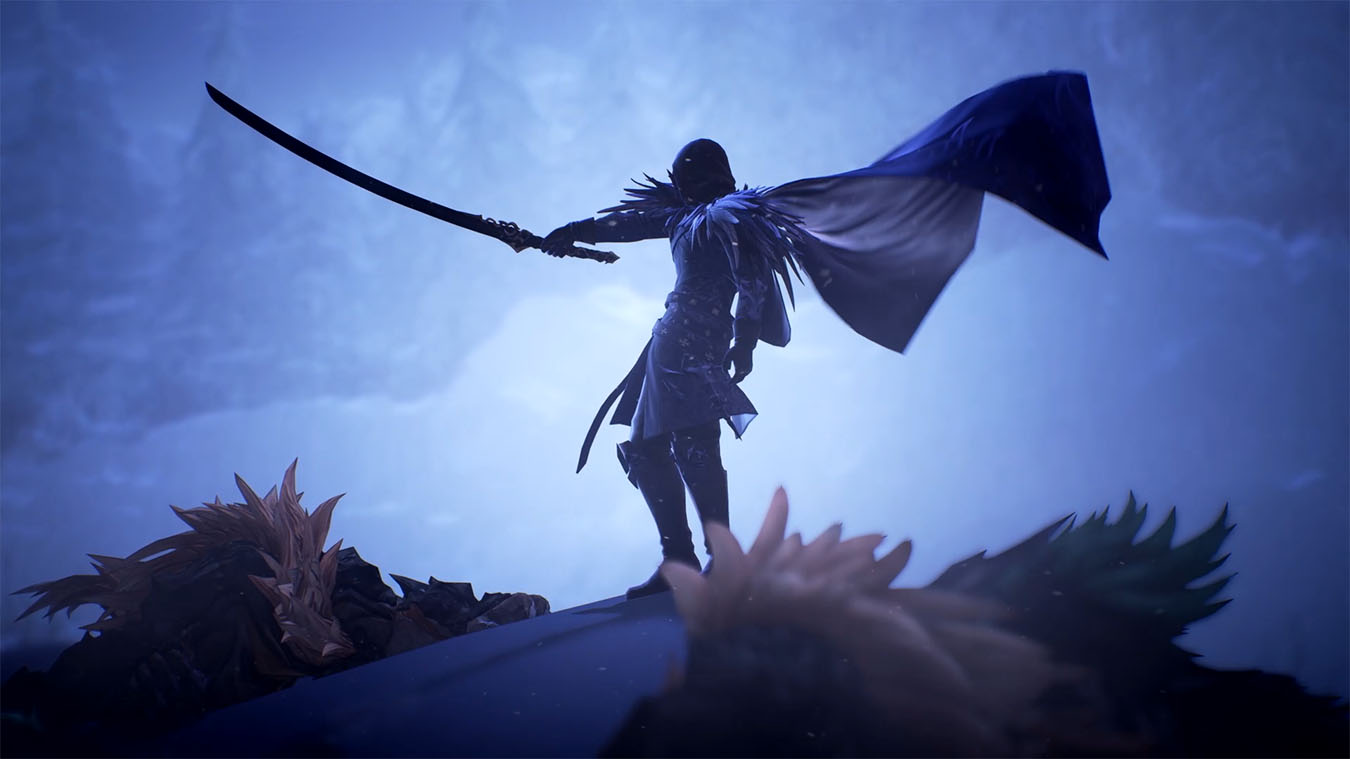
As a wise man once said, “Let the past die. Kill it, if you have to. That’s the only way to become what you are meant to be.” You had the decrepit, decaying manifestation of Japanese RPGs of old almost killed, Tales of Arise—if only you could have finished the job and stabbed the blazing sword deep into the monster’s heart.

Space Invaders Invincible Collection Review

While the Switch has become immensely popular due to its strong line-up of Nintendo titles, third-party releases, and countless indie hits, my appreciation for the system comes from a slightly different place. For me, the Switch’s biggest selling point is its incredibly deep library of retro re-releases. Although most consoles see plenty of older games come back as solo purchases or multi-game compilations, the efforts to resurrect older Japanese home and arcade releases on the Switch have been at a level that I’m not sure we’ve ever seen before.

Space Invaders Invincible Collection is yet another Switch retro compilation that I’ve had my eyes on for a while now. The problem is, Taito’s efforts in this category have been something of a mess. Its Darius Cozmic Collection has seen no less than six different releases, with each containing a different line-up depending on where, when, or how you purchased it. Though going back to the Space Invaders series hasn’t been quite as complicated, this is the second time in less than a year we’ve gotten this collection (in a way) in the West. Last December, both the Switch and the PlayStation 4 received Space Invaders Forever, which contained a measly three games from the line-up of 11 we now get here on Invincible Collection. (Which, by the way, still doesn’t include the Mega Drive’s Space Invaders ‘90 that served as an Amazon pre-order bonus in Japan.)

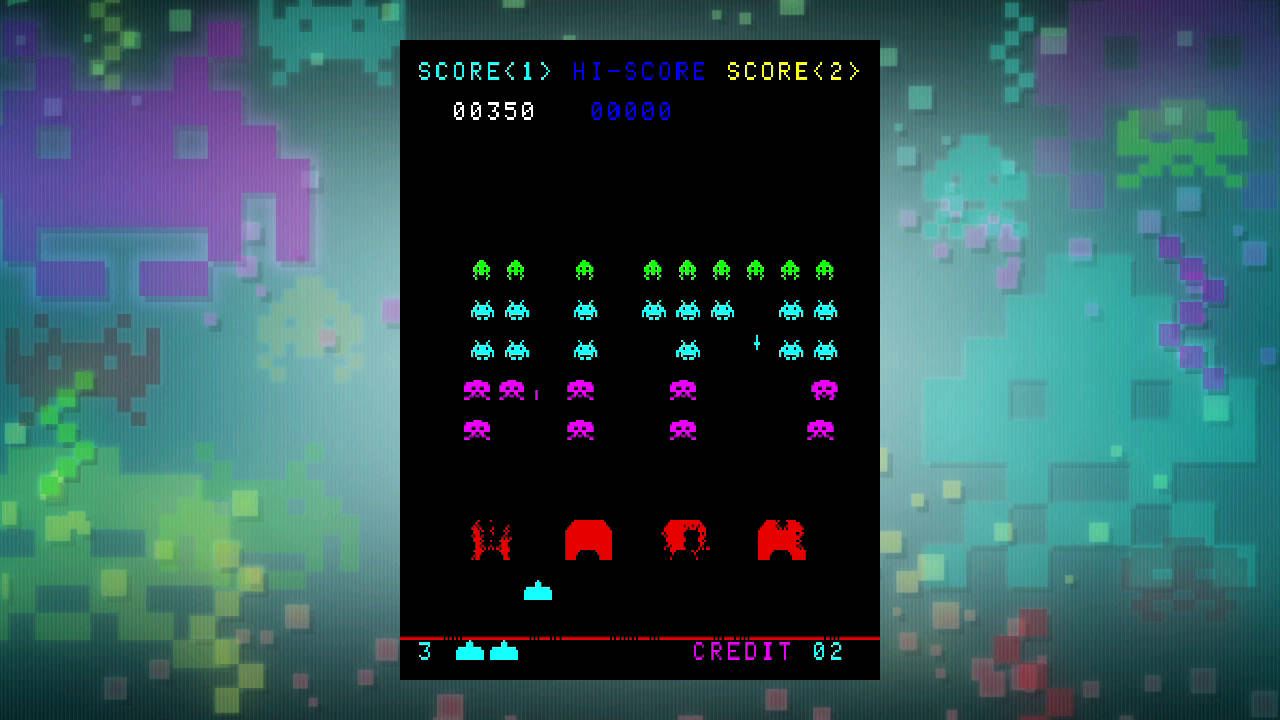
The first three games in this collection are really, at their cores, twists on the same game. That game, of course, is the original Space Invaders, one of the most important and influential video games ever to exist. I hadn’t gone back to it in a long time, but in doing so here, it’s interesting how much of an emotional reaction the game can still elicit. At first, it might now seem slow and boring, but as the invaders get lower, and faster, and closer, I was surprised by how stressful and panic-inducing their descent, and its accompanying sound effects, remain.

Following that is Space Invaders Color Version, which added a fifth digit to the scoring system and color visuals (that, initially, were the same original black-and-white visuals displayed behind a multicolor screen filter). Last in the trio is Space Invaders Part II, a sequel to the original that doesn’t stray too far from the formula beyond a more advanced scoring system (including the ability to enter your initials), simple cutscenes, and some more complex enemy tactics. The advancements that came from game to game in this trio were incredibly important for the time, but may now feel extremely minimal—especially when considering Part II as a sequel. I think if you’re going to pick from one of these three games to play, Space Invaders Part II is the best one to go with. (Series creator Tomohiro Nishikado supposedly agrees.)

Up next are Lunar Rescue and Space Cyclone, two games created to run on Space Invaders arcade hardware. That was important because, after the popularity boom of the original release, there was a lot of that hardware out there in the world, and cabinet owners wanted new ways to make money with those machines. I’d never played either before, but I’ve come to have a soft spot for Lunar Rescue. It’s a very different style of game, where players must maneuver their spaceship to the bottom of the screen, rescue a human, and then fight their way back up the screen to dock with the mothership. Lunar Rescue is one of my favorite games of the entire collection, and its simple concept remains fun to this day. However, I can’t say the same for Space Cyclone. While the idea of defeating aliens before they can craft a deadly robot is neat in concept, it’s utter frustration in execution. The aliens are small in size and have very obnoxious rotating movement patterns, making them hard to hit, and the fully constructed robot (along with other special enemies such as UFOs) love to get in cheap hits on the player. I appreciate the inclusion of Space Cyclone for its historic value, as the game was rare even back in the day, and it’s received no home release before now. As something to actually play, though, it’s easily the weakest point of the collection.

That leads us into Majestic Twelve: The Space Invaders Part IV and Super Space Invaders ‘91, two sides of the same quarter. Presenting a number of advancements over its predecessors, Majestic Twelvefeatured far more modern graphics, a two-player mode, power-ups, shields so your ship can take multiple hits, the ability to continue on if an invader reaches the bottom of the screen, and even a bonus game where you have to protect cows from abduction by flying saucers. I prefer the game in its Majestic Twelve self, which was the Japanese release where players could select which stage they’d visit next. Really, though, Super Space Invaders ‘91 is 98 percent the same game, just more streamlined and linear for Western markets. Whichever you pick, both versions offer up a good time.

The final three games directly included in Invincible Collection are each unique in their own ways. Space Invaders DX may initially feel a bit redundant, as its main mode focuses on playing the early Space Invaders games that are already part of the collection. From there, though, it offers “Parody Game Mode,” which presents the classic experience remixed with characters from other Taito games, along with “VS Game Mode,” a really neat option where two players battle head-to-head to see who is the better invader exterminator.

And then, we get to Space Invaders Extreme, easily the star of this collection. Originally released on Nintendo DS and PlayStation Portable, Extreme came as part of a wave of retro reboots that—at least from my memory—started with Pac-Man Championship Edition. Much like that release, the idea behind Extreme was to reimagine the core ideas of the original Space Invaders for a new generation, and it was a resounding success. Each successive stage offers new challenges and enemy patterns mixed in with a great selection of special weapons. As well, additional gameplay depth comes through focusing on chaining kills for higher scores and shooting down invaders in particular color combinations. I think Space Invaders Extreme is easily the best way to experience the franchise’s classic gameplay in a more modern and friendly way. Its inclusion here is only marred by the fact that the previously existing multiplayer modes are missing.

The final—at least, technically—piece of the puzzle is Space Invaders Gigamax 4SE. The original Gigamax was a special event-only version of Space Invaders created in honor of the franchise’s 40th anniversary. While that build of the game allowed for up to 10 players to take down aliens together simultaneously, this home port (under the moniker “4SE”) caps that player limit at four. Still, it’s an enjoyable experience if you’ve got others to team up with, and remixes the original with fancier colors, more stage variations, boss battles, and a new soundtrack from legendary Taito in-house band Zuntata. Gigamax 4SE isn’t Extreme levels of fun, and it’s nowhere near as appealing if you’re playing it solo, but it’s a genuinely entertaining special inclusion that adds something fresh to this collection.

Space Invaders Invincible Collection then comes with one additional game, but it’s technically a bonus offered as a separate download. Arkanoid vs. Space Invaders originally launched on mobile devices in 2017, and it combines the Space Invaders series with Taito’s classic brick-breaking franchise. As an Arkanoid fan, the crossover is more enjoyable than I would ever have expected. I don’t know that it’s ever quite as good as a proper Arkanoid title, but using your Vaus to bounce the projectiles of invaders back at them is an idea that’s so simple yet so brilliant. Unfortunately, Arkanoid vs. Space Invaders suffers a peculiar flaw in its Switch debut. Unlike its inclusion in the PlayStation 4’s Space Invaders Forever, where it worked just fine on a TV using a controller, the game is only playable here by holding the main component of the Switch vertically like a smartphone and controlling everything via touch.

Beyond that frustration, Space Invaders Invincible Collection’s overall feature set is mostly satisfying. You can turn scanlines on or off, tweak various game settings, configure your controls, and—thank goodness—rotate the screen to play games in their proper vertical orientation. However, at the same time, there’s no option for turning off the border art when playing in standard orientation, which is a strange oversight. Additionally, all games except Gigamax 4SE have leaderboards, and about half the titles feature bonus Challenge modes offering score competitions under specific parameters.

The big question is if this is a good collection or not, and to answer that, I have to start with what Space Invaders Invincible Collection isn’t. Some companies have been stingy with the number of retro releases included in particular compilations, but we’ve received a pretty decent line-up here. However, Invincible Collection absolutely could have offered more than it does, leading to one absolutely glaring omission in my eyes: Space Invaders Infinity Gene. Space Invaders Extreme was the game that tried to reboot the franchise for a new generation, but it was Infinity Gene a year later that accomplished that goal on a level that I never could have imagined. If Taito had to pick between the two, they definitely made the right choice with Extreme, as it’s the safer and more traditional choice. They didn’t have to make that choice, though. We could have had both, and not getting the groundbreaking Infinity Gene on a compilation that’s not shy about adding in newer-era releases is simply disappointing.

If I judge it on what it is, and not what it isn’t, then Space Invaders Invincible Collection is a satisfying trip through the history of one of the truly pioneering franchises in our hobby. This is unquestionably a niche release, as many players (both young and old) just aren’t going to be able to connect with most of the games included here like they might be able to with some other retro franchises. And yet, for those like me who are enjoying the trip through the history of gaming that the Switch provides, I think this is a collection that deserves to be in your library due to the importance of the experiences it contains.

Microsoft Flight Simulator Console Impressions

Ever since I was a little kid, I’ve been enamored with air travel. To me, airplanes and airports weren’t simply vehicles and structures to facilitate the moving of people from one place to another, they were the keys to endless possibilities. Even in recent years, as I’ve travelled more for work or to see family halfway across the globe, no amount of stress, hassle, or financial burden has been able to temper my passion.

However, in all of that, the actual “traveling in the air” part of air travel has been a challenge for me in part because I’m afraid of heights—and especially terrified at the idea of being high up in the air with no solid ground to escape to should a problem arise. I’ve found ways over the years to try to get over that fear, including one unexpected method: piloting a plane. Back in high school, we took a group of elementary school students to the local airport as part of a summer engineering program I was helping to teach. While most of the participants simply got quick rides around the nearby airspace in a Cessna, the pilot let me take off, fly, and then land the plane all on my own on our second trip up into the air.

Although having less than a car door’s worth of metal and plastic between me and falling to my doom did not help my fear of flying, getting the chance to be in control of my own destiny kinda did. One of the terrifying things about flying in a plane is knowing you have absolutely no control over what happens during the entire ride, so even though I was technically in more danger when I was piloting that plane myself versus having a professional do so, the fear disappeared in a way I hadn’t expected.

I know it might seem like I’m just rambling on about random moments in my life, but all of this begins to paint a picture for why I’ve been so excited to try Microsoft Flight Simulator. Even if it can’t replicate the romance of real-life air travel, the game still taps into that desire to feel like anywhere and everywhere in the world is waiting for us, with our destinies in our own hands. And sure, flight sims are by no means a new thing, but Microsoft’s resurrection of its classic brand is important because it’s the first time we console players have gotten a taste at this level of what’s typically been a PC-only experience.

Microsoft gave me the chance to get into Microsoft Flight Simulator early for review purposes, but how in the world do I review a game this complex and expansive after only five or so days of playtime? I wouldn’t know where to start with passing judgment on it yet, but then again, I had similar trouble knowing where to even start with the game itself.

The obvious place is with the selection of tutorials, but let’s be real: When you pick up something like Microsoft Flight Simulator for the first time, what you really want to do is hop into a plane and go have fun. Still, I definitely recommend you bite the bullet and do some studying first, even if it’s nothing more than the initial set of tutorials for basic controls. The good part is, you can be up in the air pretty quickly, as the team at Asobo Studio has done a respectable job of adapting the game to the standard Xbox controller. It’s definitely not perfect, and can certainly get complicated at times, but Microsoft Flight Simulator is far easier to play on consoles than I had expected. I promise you, you don’t need to have experience with flight sims, or even standard PC control schemes, to be able to get into the game—so don’t let that be something that scares you off.

In fact, the barrier of entry is even lower thanks to another factor: Xbox Game Pass. I’m not sure if there’s ever been a more perfect game for the service than Microsoft Flight Simulator. Bringing the series back was already a risk given its niche appeal outside of a core group of hardcore flight sim fans, but taking such risks is part of what I think a service like Game Pass can encourage. For subscribers, there’s no reason not to try the game, outside of the hassle of clearing off space on your internal drive, and the potential concern for bandwidth caps. When you have to stress over every dollar spent on buying games, something like Microsoft Flight Simulator is going to be one of the farthest choices from a safe bet that most people could find. Through Game Pass, though, there’s no risk—and if the game is indeed too complicated or boring for you, then all you’ve lost is a bit of your time.

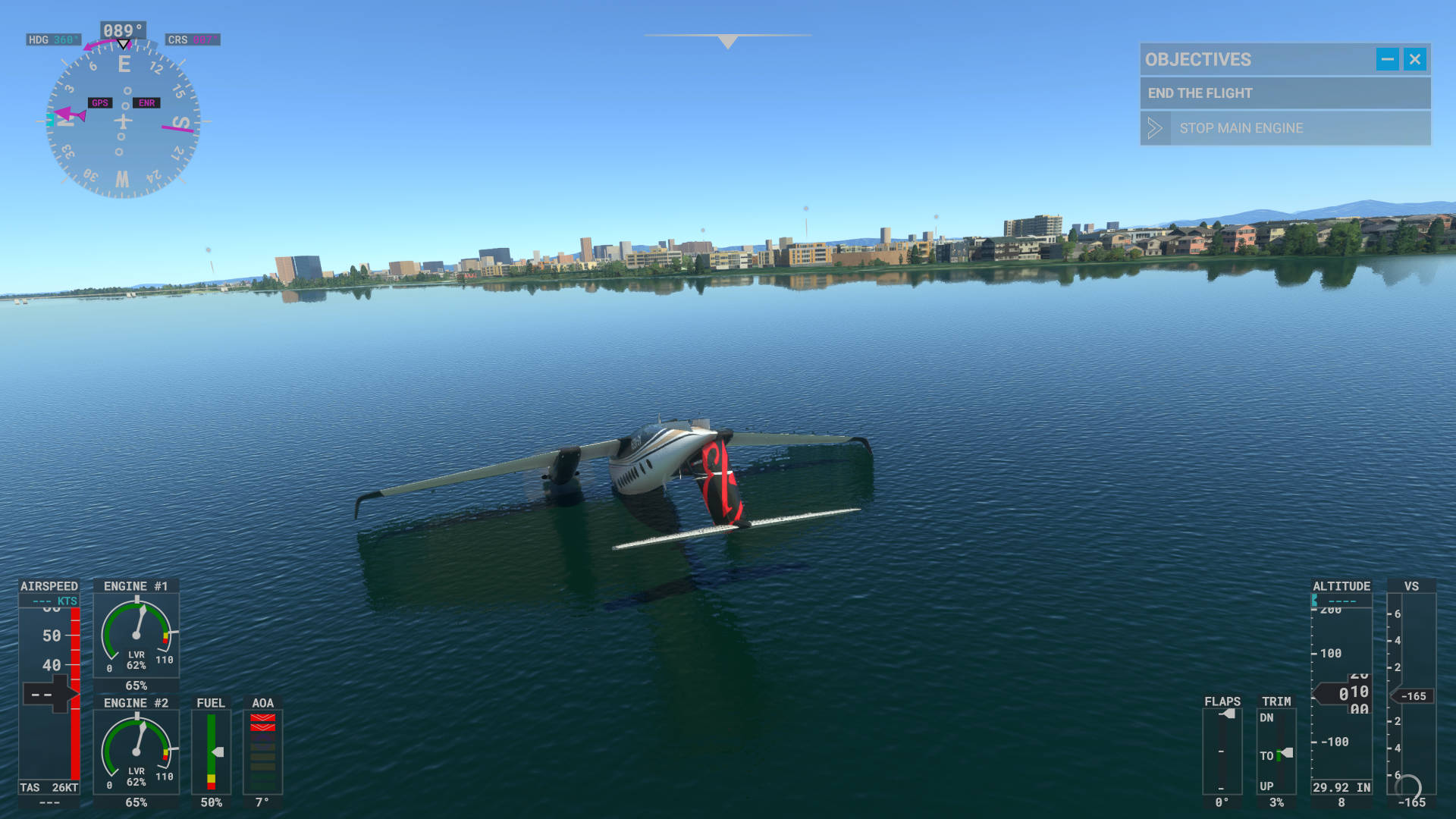
Whoops

And, being totally honest, I might actually use “boring” to describe Microsoft Flight Simulator—but not necessarily in a bad way. Playing over these past few days has really made it clear how long it’s been since I’ve experienced a game where I feel no pressure to do anything. My go-to for relaxing at night is Apex Legends, but “relaxing” in that case means trying to get wins, helping my teammates, completing challenges, finishing up prize trackers, maxing out battle passes, or many other activities that are far from calming. Even when I hop into less demanding games such as Minecraft, I’m still keeping track of goals for my building projects, the materials I need, new locations I want to scout, and so on.

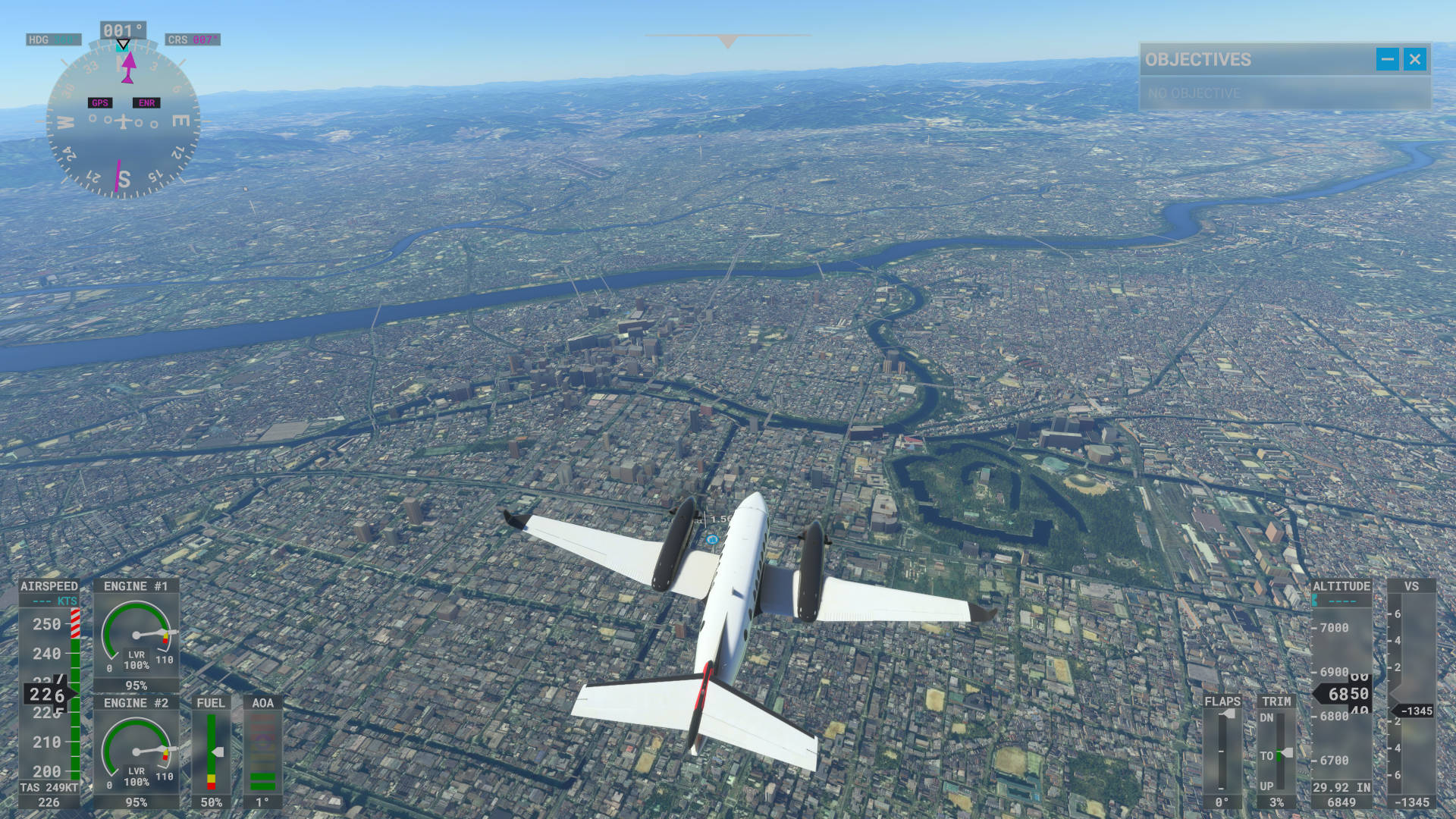
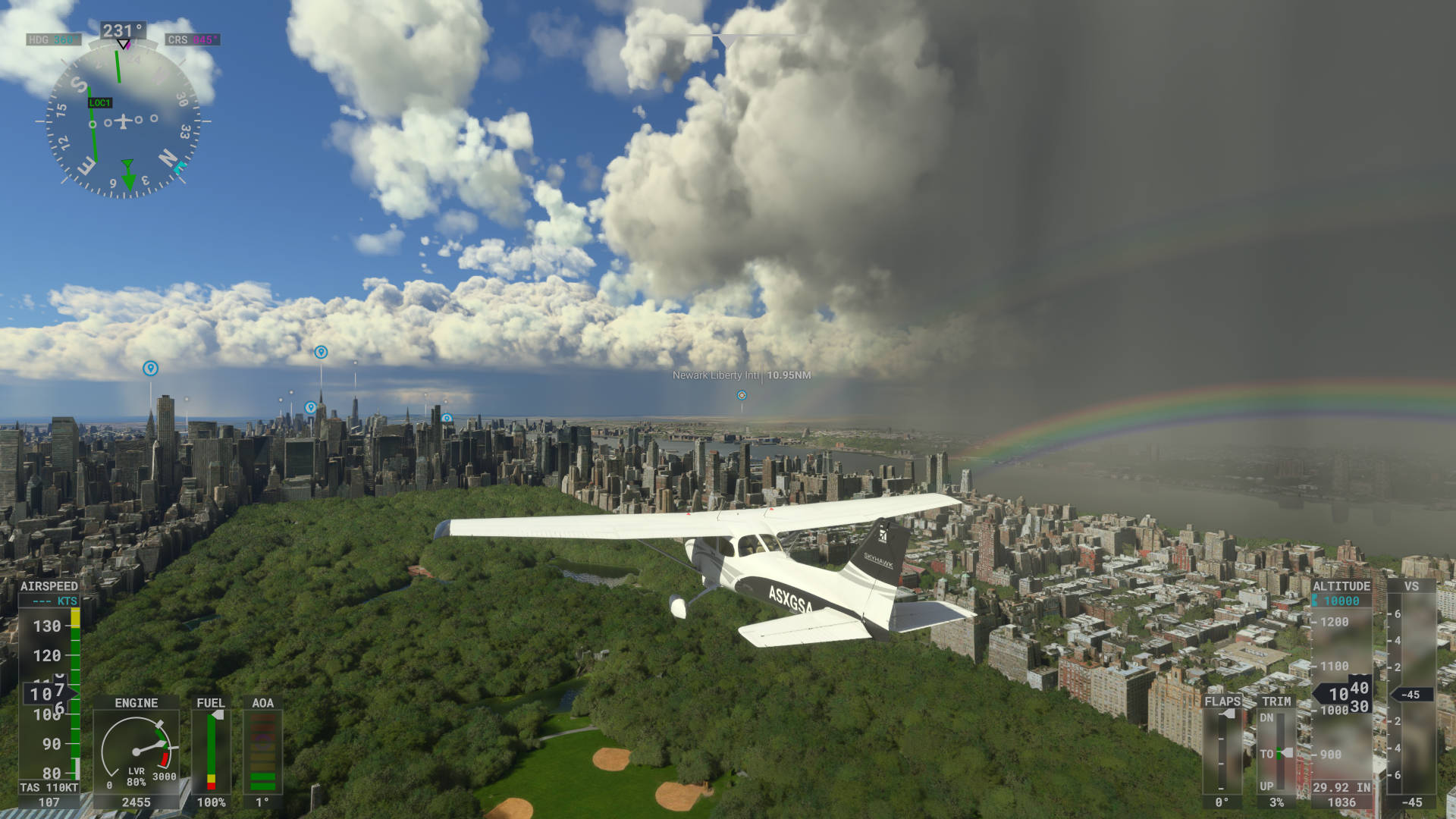
Microsoft Flight Simulator, in at least the ways I’ve played it so far, demands nothing from me. It wants nothing, other than to bring to life a recreation of the Earth to explore in whatever ways we see fit. With some of the more casual-play settings checked, once my plane is up in the air, the freedom the game affords is almost a little unnerving at first. Our brains get so trained by other video games to focus on checklists and progression milestones that, when all of those things are gone, we can feel lost. There’s one thing we will all inevitably do at first—try to find where we live, and then maybe crash into that spot—but past that, I’ve just been going wherever felt right at the moment. Maybe it’s heading to Japan without having to pay those high international flight fees. Maybe it’s flying over New York City during a rainstorm to see how much I can push the game’s engine. Maybe it’s picking a city I’ve never been to (or possibly even heard of) just to find out what I find. Microsoft Flight Simulator is a mix of that spirit of exploring every nook and cranny of video games that some of us have, with that passion for seeing the wonder and beauty of our planet that many of us have.

In all of those moments, and all of those flights, I’ve come away incredibly impressed with how the game is running on my Xbox Series X. I’m sure it’s not as good as the PC version, but I also don’t really know what I’m missing. (Although, having friends who play the PC build, I do know it isn’t perfect there either.) Sometimes—like my aforementioned flight around the Big Apple—you can feel the game engine strain, as the architectural complexity of the city and the weather effects meet. For the most part, however, I’ve got few complaints about how the game runs. I worried that it would be clear that we console players were getting the lesser experience, but I honestly don’t feel like that’s the case. (Of course, I can’t speak to how Microsoft Flight Simulator runs on an Xbox Series S, but I’ve heard good things.)

In fact, my biggest complaints are about the technology used to build out the game’s recreation of the Earth. I feel bad even saying that, because boy is it impressive what the team has accomplished here. There’s no question that this is a flight sim beyond anything our industry has seen before, and the technology used to build three-dimensional cities and landscapes from two-dimensional satellite imagery does an amazing job that could never have happened even just a handful of years ago. And yet, when that technology does fail, it can really stand out. One of my favorite airports is Kansai International Airport, aka KIX, aka RJBB. KIX sits upon an artificial island out in Osaka Bay, connected to land by the 12,300-foot-long Sky Gate Bridge R. The problem? The bridge, for whatever reason, doesn’t render visually in the game, even though traffic pathing knows it’s there. So, when taking off from KIX and circling around to the North, you can see cars traveling between land and the airport across open water.

There’s also the varying level of importance placed on different airports. KIX, for example, is a simpler construction using AI and/or automated techniques which pull data from Bing Maps. When you then compare that to a “hand crafted” airport like Los Angeles’ LAX, the difference between the two is instantly noticeable.

Now, I get it. There are 37,000 airports accessible in Microsoft Flight Simulator—it is impossible for every airport to get the care and attention places like LAX have. Still, it’s inevitable that some of your favorite airports (for those of us who have favorite airports) are going to be on the lower end of the detail scale, and that can be a bummer. At the very least, as the game gets more of those hand-crafted locales, KIX at least has a decent chance of joining that list someday—unlike my hometown airport OMA.

I don’t think I’m being unfair at all to Microsoft Flight Simulator to say that suggesting a purchase for those outside of the flight sim fanatic crowd is complicated. If you’re an Xbox Game Pass subscriber, however, this is one of the easiest recommendations I can make, even if I’m still a ways out from being able to formulate any sort of final opinion. This is an exciting and enthralling video game experience the likes of which rarely come around, and if you’re already paying Microsoft a subscription fee, there should be nothing stopping you from giving it a try.

Who cares if you usually don’t typically like or ever even play flight sims. Put aside any fears of control complexity or knowledge requirements. Download the game, hop into a plane, and see the world from a new perspective.

Three Recent Releases That Bring New Life to Old Classics

Thanks to E3, Summer Games Fest, and a variety of new releases, the gaming world’s attention lately has been on the exciting next-generation gaming experiences we’re either getting during these hot summer months, or will have in our hands in the near future.

And yet, there have been some rather interesting new retro revivals lately that you might have missed. Three in particular—Super Bomberman R Online, Wonder Boy: Asha in Monster World, and Alex Kidd in Miracle World DX—all take very different approaches to bringing their predecessors forward into the year 2021.

Now that I’ve had the chance to spend some quality time with all three, I’ve got some thoughts on what each offers, in case you’re looking for something a little different between triple-A blockbuster spectaculars.

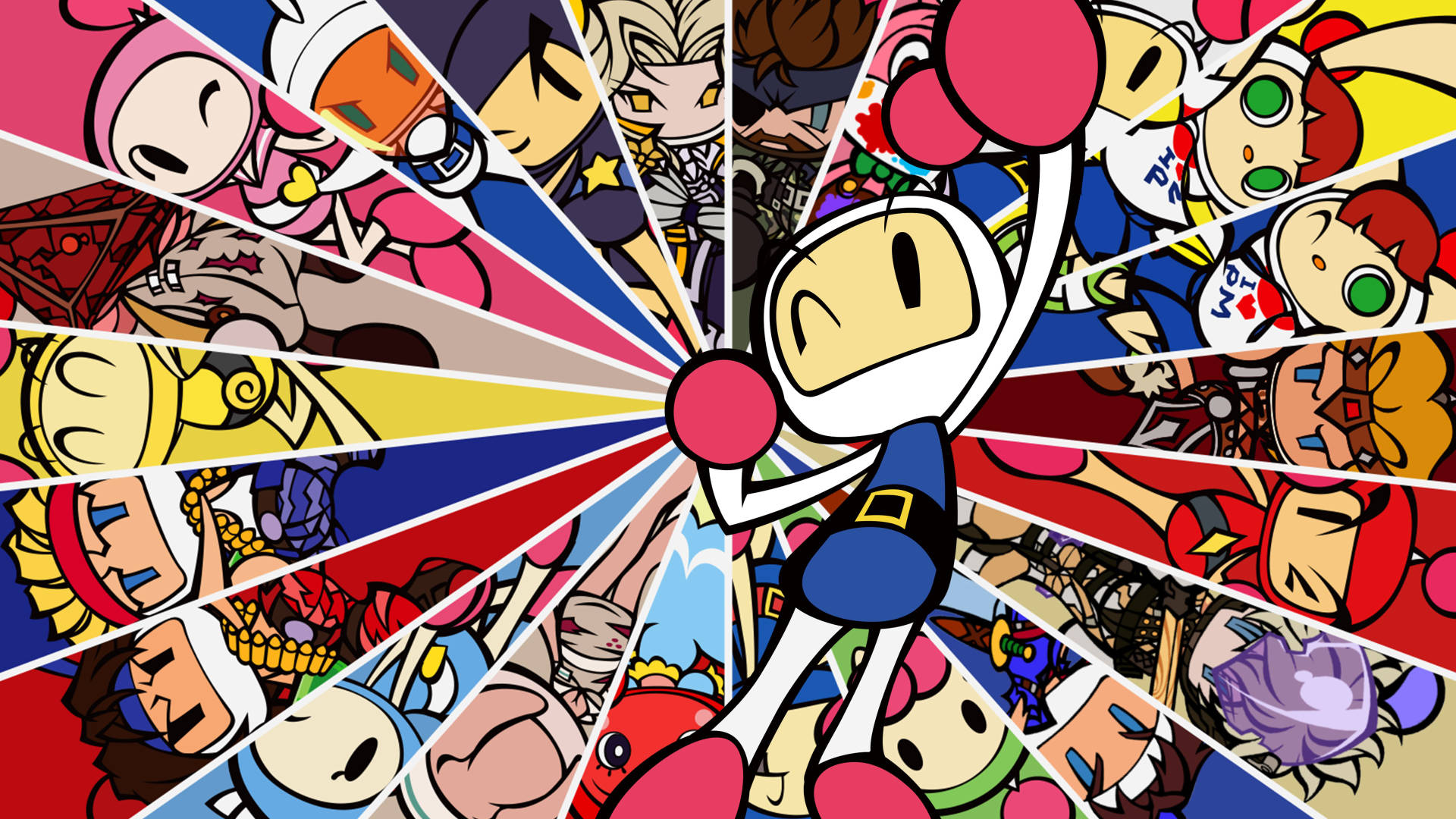
Super Bomberman R Online

One of the bright spots for me in the battle royale craze has been the various attempts to fit classic franchises into the genre. We’ve seen examples like the fantastic Tetris 99, the kinda okay (but now gone) Super Mario Bros. 35, and the originally exciting but ultimately disappointing Pac-Man 99.

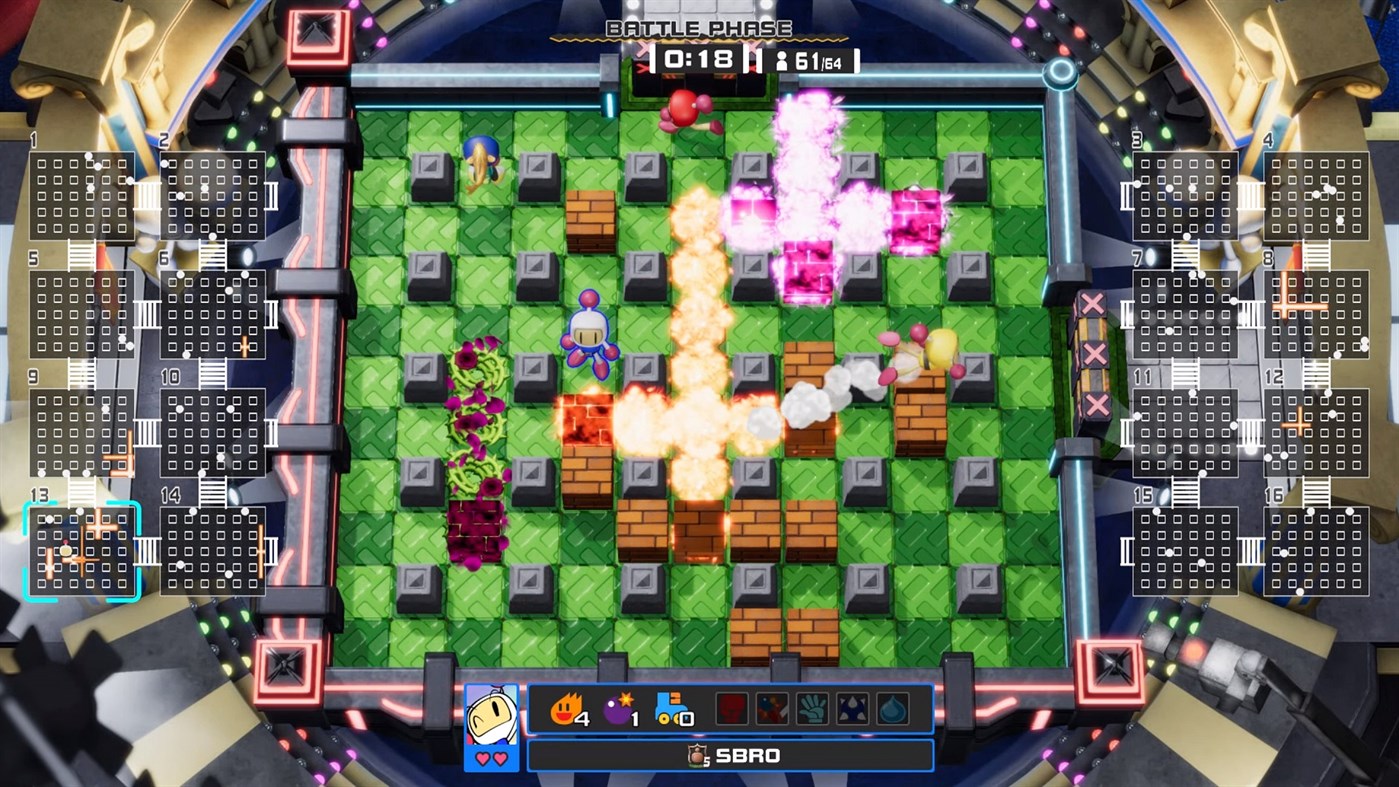
Konami jumped into the fray last year with the Stadia-only Super Bomberman R Online, which finally made its way to other platforms last month. Funny enough, Super BRO—yes, damnit, I’m going with that—reminds me of another Stadia-only, retro-inspired battle royale: Pac-Man Mega Tunnel Battle. In both games, the action initially takes place with players broken up into smaller groups across a series of interconnected screens. As participants die off and the clock runs down, the amount of safe screens reduces, forcing the remaining players to come together to continue the battle.

Really, if there’s a series that deserves a battle royale spin-off, it’s Bomberman, and I think Super BRO is a decently good attempt. The main mode in the game pits you against 63 other Bomberpeople, where you drop bombs, destroy walls, collect power-ups, then try your best to blow up an opponent or two. Unlike most Bomberman games, you get two lives here, which is thankful given how quickly death can come. Then, at various intervals, you’ll need to flee to a different screen that could have fewer—or more—opponents waiting to incinerate you in return.

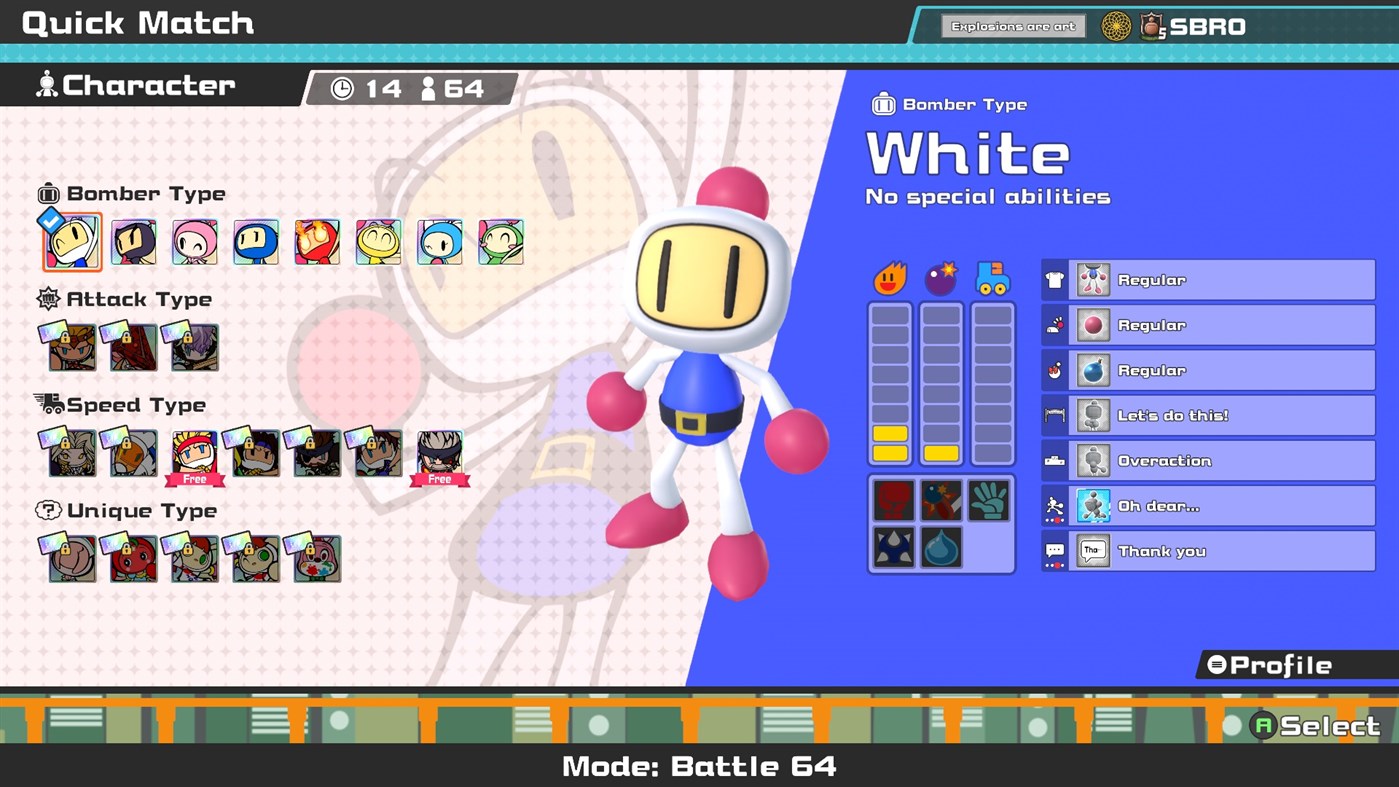
Super Bomberman R Online’s biggest difference from other entries in the series is also its most divisive. The game features a variety of characters—some from past Bomberman titles, others from various Konami games—and you must purchase almost all of them. That would be no big deal if they were just skins, but they’re not, as each character has its own set of maximum stats, skill options, and special moves. Some, like Classic Bomberman, can power up all of his stats and use all special items, but wields no special ability of his own. Pyramid Head Bomber, meanwhile, has very limited stat and item potential, but does have a rather powerful special ability: He kills any players he comes into contact with.

I’m not at the point where I consider Super BRO’s characters to be a “pay to win” situation, because winning still comes down to your skill as a player. And, you know, I can understand why Konami felt the need to spice up the game with special abilities. However, Bomberman as a series remains intensely fun and exciting to this day, so those characters complicate things in a way that simply wasn’t needed. At the least, I wish Konami had given us the option to play without character abilities outside of private matches.

And that, really, is where I’m somewhat disappointed in Super BRO: its lack of options. With our high-definition widescreen televisions, why not offer the chance to have 16 players at once all on the same screen? Or, heck, go crazy and make one giant, scrolling maze where all 64 players are together at once. And where’s the option for teams outside of private matches? In fact, where are most of the settings that you can select from in private matches? I appreciate that those features do exist in that mode, but getting more than a few players into a private match is incredibly difficult.

Putting aside wishes and wants and what-ifs, I enjoy Super Bomberman R Online for what it is: a scaled-down, but still enjoyable, free-to-play battle royale that bridges a timeless classic series with a current-era popular genre. It absolutely could have been more than it strives to be, and the whole character system still doesn’t sit right with me, but it’s one of the retro-inspired battle royales that I’ll actually come back to on a regular basis.

Super Bomberman R Online is currently available to download for free on PlayStation 5, Xbox Series X/S, Switch, PlayStation 4, Xbox One, PC, and Stadia.


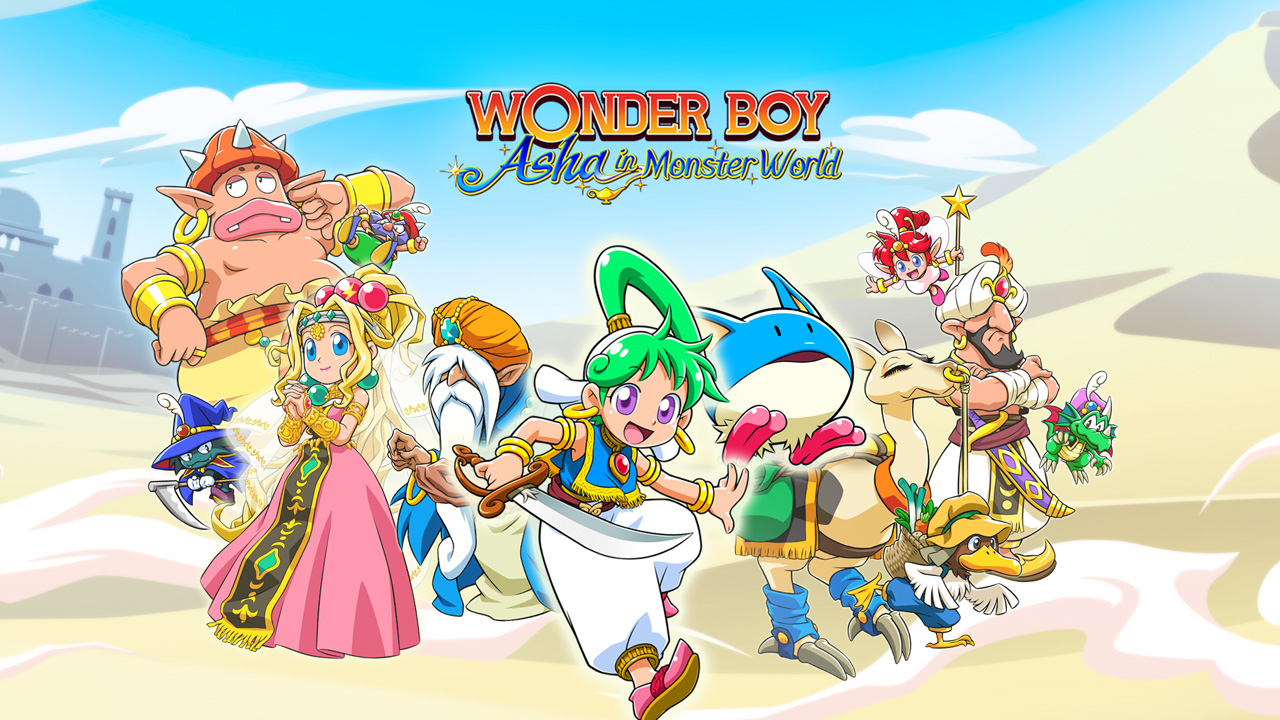
Wonder Boy: Asha in Monster World

I owe Wonder Boy: Asha in Monster World an apology. I made fun of its looks, and that was mean, and wrong.

In my defense, I think some of the media released during the game’s reveal were bad choices—especially the point in the initial trailer when publisher ININ directly compared the updated 3D remake to the original 2D game. The thing is, the Wonder Boy/Monster World series produced some beautiful experiences on the Sega Genesis. Not only in terms of Asha’s original adventure, then known as Monster World IV, but also its direct predecessor, Wonder Boy in Monster World. …which, in Japan, had the title Wonder Boy V: Monster World III. Look, the Wonder Boy series is a total mess naming-wise.

What’s important is, the original 16-bit game that would become Wonder Boy: Asha in Monster Worldwas, at least in my mind, one of the most visually impressive releases on Sega’s home console, and the scene used to compare that original release to this modern remake was one of the worst possible choices one could make.

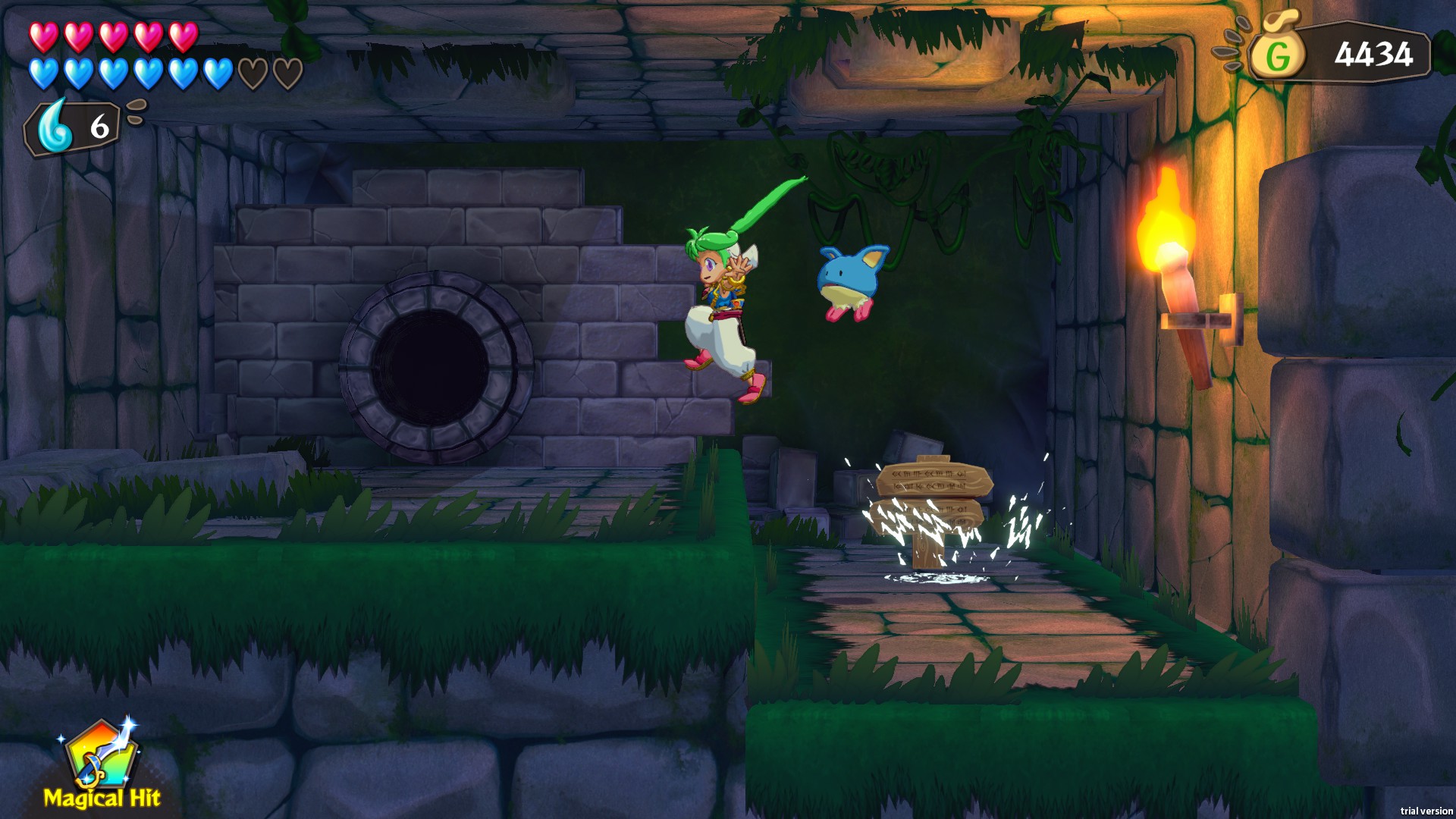
Now that I’ve actually played the remake for myself, though, it’s visual style is admittedly charming and artistically pleasing. Is it on the same level of graphical execution as its sprite-based prior self? Definitely not. But it’s far better than I was expecting, and some aspects of the game—such as character models—are especially good. Developer Studioartdink has also put some new spins on the original’s multi-layer locations that work really well. For example, in Monster World IV, the hub town’s castle was a series of flat layers that you would travel between through doorways. Here, main heroine Asha still mostly traverses the castle on various horizontal planes, but she can also travel into and out from those layers at key points, with the entire 3D-rendered castle shifting forward and backward as she does.

Probably more importantly, Asha brings with it some welcome quality of life improvements. By far the biggest is that you can now save anywhere, whereas Monster World IV had scattered save points that could result in a lot of lost progress on your journey if you hit a tough spot. (However, you’ll need to actually remember to save, as it’s easy to forget, and the game offers no autosave.) Purchased equipment is now selectable, rather than just replacing the current item you owned in that category, you can now revisit previous areas, and there’s a new easy mode for those who wish to use it.

Unfortunately, the reality of Wonder Boy: Asha in Monster World isn’t all positive. Back when Monster World IV first hit, it was a standout title on the Mega Drive, and a popular import for those outside Japan (as it never initially left its home country). Now, in the modern era, there are plenty of releases like Asha, some with far more name recognition or notoriety. It’s not really the game’s fault, because I think almost everything here has stood the test of time. It’s just that players now have higher expectations for action platformers, and Asha can come off a bit quaint and simplistic as a result.

For longtime fans who want to experience a new take on the classic, or more adventurous gamers who enjoy hunting down unique experiences, Wonder Boy: Asha in Monster World offers a fresh new take on what is still a charming and challenging action platformer. It also remains difficult to figure out at times, and overall short in length, which could turn off players who don’t know the history behind either the game or the franchise it comes from. If you’re willing to give it a chance, though, Asha’s trip through Monster World can be a Wonder-ous one.

Wonder Boy: Asha in Monster World is currently available for PlayStation 4, Switch, and PC.


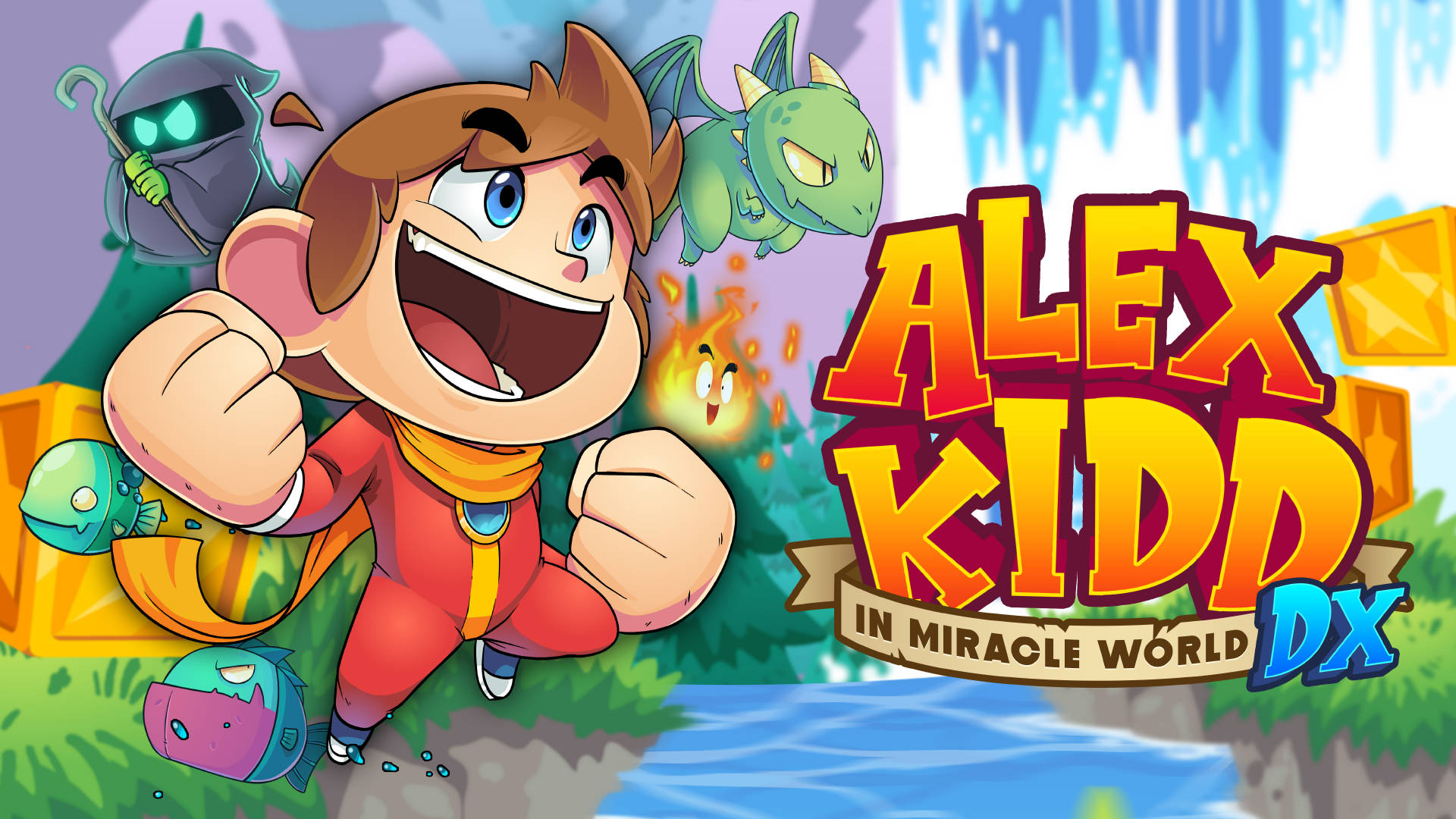
Alex Kidd in Miracle World DX

While Wonder Boy: Asha in Monster World decided to eschew sprites for polygons in its jump to the modern era, Sega’s classic mascot Alex Kidd has instead taken inspiration from the other recent Wonder Boy remake, Wonder Boy: The Dragon’s Trap, in keeping things two dimensional.

Wait a minute, I hear you say. Isn’t Sonic Sega’s mascot? Well, sure, he is now, but he hasn’t always been. Although Alex Kidd in Miracle World technically started development a year before the release of Super Mario Bros., it quickly became clear that Sega needed its own answer to the growing Mario madness, and the company—along with its fans—put that responsibility straight on Alex’s shoulders.

The problem? Coming at it as a Sega Master System–loving child, Miracle World was miserable. Unlike Nintendo’s groundbreaking platformer, Sega’s offering was brutally hard and felt completely unfair, and its controls never seemed quite right. Miracle World had an air of something a group of sadistic Sega employees crafted in order to torture children, and I have to believe that those who loved the game in their youth suffered from Stockholm Syndrome.

Coming back to it as an adult through Alex Kidd in Miracle World DX, I stand behind everything I’ve just said. And yet, I’ve also grown to have some appreciation for the game. Unlike so many older titles from my youth, I’ve actually gotten better at Miracle World over time—and every stage I clear is like another punch to the face of a school bully who tormented me for years. I now relish overcoming every questionably designed stage, every cheap hit, every annoying enemy placement. I’ve gotten to the point of legitimately having fun when playing Miracle World DX, because I’m now playing it with a stubbornness and passion that can only come through years of being defeated one too many times.

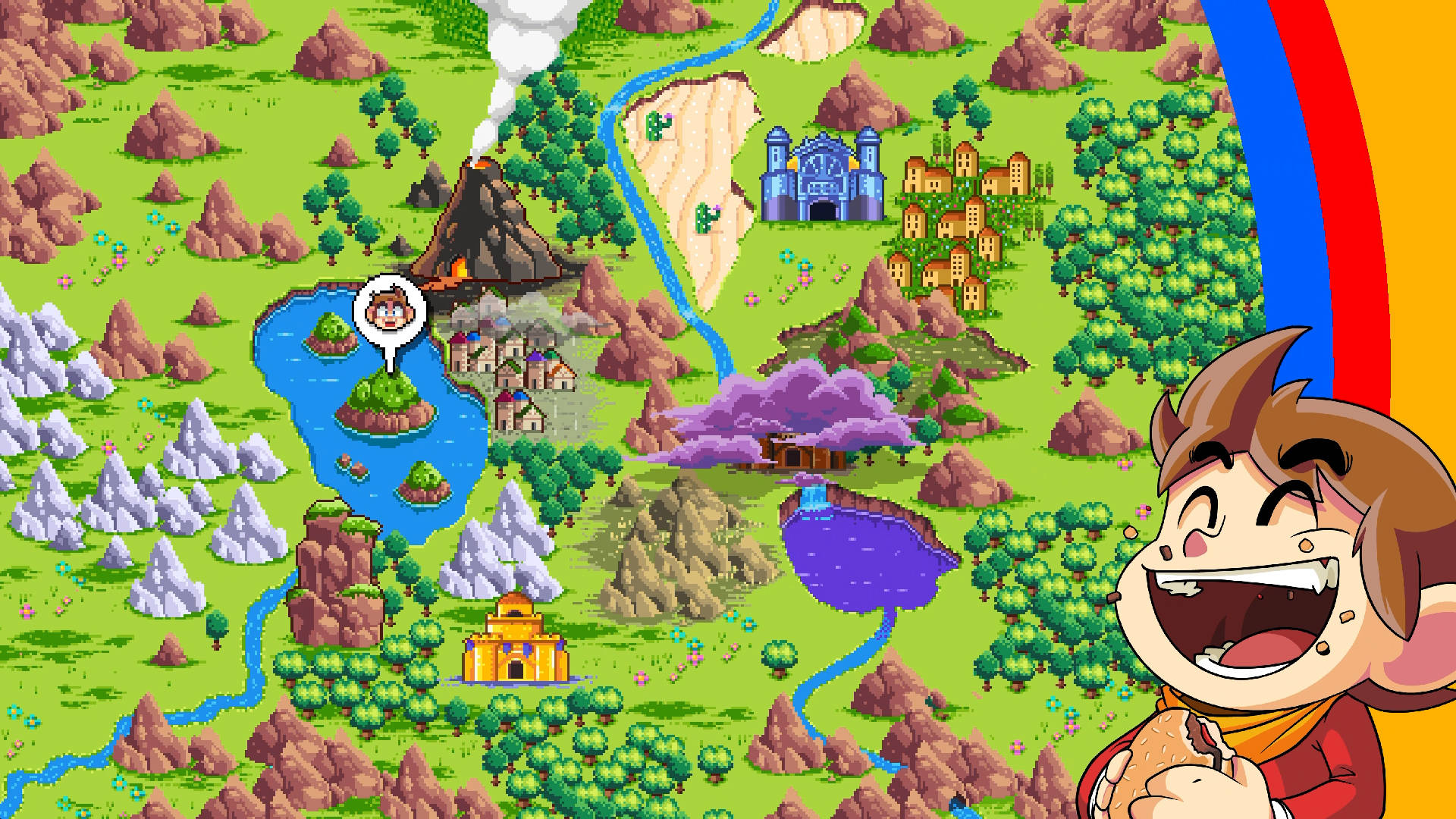
What’s funny is that I might have given up (again) on Miracle World had it not been for the care Merge Games, Jankenteam, and the rest of the dev team have put into the remake. The art style and pixel-based sprite work is downright gorgeous—to the point that it may be one of my favorite 2D remakes ever on a graphical level. I’m not sure if I’ve ever seen this much effort put into remaking a game that didn’t deserve it, which is both a testament to the dedication of all of those who worked on this release, and cause for frustration as a Sega fan knowing how many other titles are far more worthy of that effort.

Alex Kidd in Miracle World DX brings a few other examples of DX-ness to the original game as well, such as some nice interface and menu improvements, new content and characters, an infinite lives option, and—in a nod to its various localizations—the ability to pick which food Alex chows down on between stages. Miracle World DX also offers the option to instantly switch to the original 8-bit Miracle World, but this is the remake’s main area of disappointment. While it (mostly) looks like its predecessor, it doesn’t always feel like it, which will probably disappoint the Alex Kidd purists weirdos out there.

I cannot in good conscience recommend Alex Kidd in Miracle World DX to anyone who doesn’t fully understand what they’d be getting themselves into. And yet, I’ve enjoyed it far more than I had expected to. The beautiful visuals can’t hide the messy controls and game design of Alex’s original adventure, but they do give you something pleasing to look at as you’re yelling every obscenity in the book during your quest to show the game who’s boss.

Alex Kidd in Miracle World is currently available for PlayStation 5, Xbox Series X/S, Switch, PlayStation 4, Xbox One, and PC.

After 20-some Years, Tales of Arise Has Me Excited for Bandai Namco’s JRPG Series Again

My introduction to Bandai Namco’s Tales series came thanks to 1998’s Tales of Destiny on the original PlayStation. While it wasn’t the first game in the franchise, it was the first to come to the West, and when it launched, it caught my interest pretty quickly. Although Japanese RPGs were finally coming in large numbers to our shores, Destiny brought a fresh take on the subgenre with its more action-oriented battles. And, as a plus, the game’s character designs came from Kousuke Fujishima, whose work I’d come to love thanks to his Oh My Goddess! manga series.

The problem is, unlike other franchises like Phantasy Star, Final Fantasy, or Shin Megami Tensei, Tales and I grew apart just as quickly as we’d come together. By the time Bandai Namco was pumping out Tales games on a consistent schedule in the PlayStation 2 era, I had moved on to other options.

It was never one specific thing that cooled my interest in playing a Tales game. Instead, it was more my changing preferences when it came to Japanese RPGs in general, my growing dislike for certain types of storylines and main characters, and an ever-expanding selection of other genre offerings that catered more to my tastes. And, while I’ve been the main editor to focus on covering Japanese games in my tenure here at EGM, I’ve had multiple coworkers who actually enjoyed the Tales series, so it’s been easy to just pass the games along and not give their quality any further thought.

I’m telling you all of this because it helps me to emphasize just how big of a deal it is when I say that, for the first time in over 20 years, Tales of Arise has me genuinely excited for a Tales game.

I know I’m stepping into some potentially delicate territory here, but as a fan of JRPGs since my childhood, I’ve grown concerned with the lack of progress too many of them seem to be facing. I mean, sure, you’ve got Final Fantasy, which has morphed into a hybrid of Japanese gaming, Western RPGs, and Hollywood movies, or Dragon Quest, which has perfected the balance between old-school themes and new-era gameplay. Beyond big names like those, though, too many other examples feel like they’ve been treading water for years—and it’s been hard to watch franchises I legitimately love stagnate so badly.

When Bandai Namco first unveiled Tales of Arise, something instantly felt different about it. It’s not that other recent Tales games have been cheap, or lazy, or any of those other buzzwords people will pull out when they don’t like something. It’s just that, in its debut, Arise seemed to promise a true next-generation JRPG experience—not in terms of the consoles it was on, but the effort and ambition that was being put into it.

There is no singular element of the game that has caught the attention of people more than its visuals, and that’s for good reason. The graphical style and artistic flair the team at Bandai Namco is putting into the game make it feel like something we’ve never seen before, at least for those who can appreciate what’s going on here beyond “looking anime.” Visuals have long been a weak point for many JRPGs as technology—and expectations—have advanced, so the work that’s going into Arise is incredibly important and impactful, even if it doesn’t affect gameplay in the slightest.

I recently got to spend around 45 minutes going hands-on with Tales of Arise over the streaming gaming platform Parsec, and even as video compression and bandwidth hiccups did the game no favors, it remained a sight to behold. One of the dreams of Japanese-developed projects has been reaching the point where games could look like an anime or manga come to life. In examples like Dragon Ball FighterZ, we’re getting there when it comes to anime; now, in Arise, we’re closer to the higher line detail and artistic complexity of Japan’s comics industry than most attempts I’ve seen before. In the time that I was playing, I always knew it was still just a game—but even while suffering from the visual degradation of streaming, it was easy to almost forget that sometimes.

If I had high expectations for its visuals going in, one aspect of Tales of Arise I pinned no hopes on was its cast of characters. Now, we still don’t have a lot of details on either the main duo nor the teammates they’ll meet along the way, so I know I risk jinxing everything with what I’m about to say. But—I think I might have zero complaints with the cast so far. Sure, co-main character Shionne’s outfit is a little silly compared to her heavily-armored male counterpart, Alphen. Beyond that, though, many of these characters actually look like adults, in that they might at least have a “2” as the first digit in their age. The two who seem the youngest, Rinwell and Law, look to me as if they’re in their mid to late teens—which is often the older end of the scale for a lot of JRPG protagonists. My two favorites so far are the badass (and actually fully armored) female shield knight Kisara, and the “oh, lord, why is he so hot” magic-wielding Dohalim. I like everything I’ve seen up to this point about every main cast member of a Tales game, and I don’t know how to feel about that.

The one constant of the Tales games (at least from my knowledge) is that they all typically have great—if not at least good—battle engines, and Tales of Arise seems to be no exception. It’s hard for me to say too much about combat coming out of my demo, given that I was streaming the game (and thus there was some latency in the action), and that jumping into RPG combat without all of the cumulative gameplay knowledge you’d typically have up until that point is always difficult. Still, my anticipation for Arise was only heightened from what I got to play. Not only is the action fast and frenetic, and the special team-up moves satisfyingly flashy, but there seemed to be some real depth in the difference between characters. I initially chose to control Kisara in combat, the tank of the group who is more about close-quarters melee attacks, digging in defensively, and slower, more methodical tactics. Shionne, meanwhile, is her polar opposite, unleashing a flurry of fast, long-ranged attacks with her gun, while trying her best not to get anywhere close to the enemy.

I got but a taste of a completely random segment of Tales of Arise in my hands-on session with it, and it was nowhere near enough to give you a deeper analysis of where all of the gameplay, world, and story pieces are at at this point, nor what exactly you should expect when the game launches this September. What I can say, in absolute honesty, is that I am looking forward to Tales of Arise with an enthusiasm and excitement I have felt for few other JRPGs in recent years.

May that enthusiasm and excitement be misplaced? Sure. Could the game still fall into many of the subgenre trappings that I hate? Absolutely. I truly do not know what kind of experience this’ll be in the end, or if it’s the game that’ll get me back into the Tales series—but I am unquestionably eager to find out.

Lemnis Gate Promises a Unique 4D Twist on Shooters—if Players Will Give It the Time

When I took part in Frontier Developments’ special showcase in August of last year, one game stood out above everything else I got to see that day: Lemnis Gate.

In development for consoles and PC by Ratloop Games Canada, one press announcement describes Lemnis Gate as “[suffusing] the cerebral intricacies of chess into a heart-pounding, 4D first-person shooter.” In layman’s terms, it’s an FPS based around time. Lemnis Gate asks a simple yet complex question: What would happen if you took one singular match of a competitive shooter, and then constructed that match character-by-character in a turn-based fashion?

I know that’s still potentially a hard concept to wrap one’s brain around, so here are the basics of how it works. Let’s start with the idea of a first-person shooter where two teams of five players are facing off to accomplish some sort of objective. Then, let’s change it so that we only have two human players, Red and Blue, each controlling their entire team of five characters. Now, for the moment, let’s strip things away so that each team only has one character. If we let one of those two players go first—let’s say Red—what would they do with their one chance at completing the objective? Then, we let Blue go second, but restart the match so that they’re beginning at the same point in gameplay that Red did, able to see and interfere with every action Red took with their character in real time. What would Blue do to try to stop Red from winning?

That’s how matches kick off in Lemnis Gate, and from there, they build into contests of actions and reactions. On that initial turn of a match, the first player can pick from one of seven hero-type characters, each complete with their own unique sets of weapons and abilities. That player then gets 25 seconds to do what they can to complete the objective, which might be trying to collect more of a certain resource than their opponent, or trying to destroy (or defend) key objects on the battlefield. A second loop of those 25 seconds then begins, as the other player picks their own character and then tries to decide what to do. Should they attempt to negate the first player’s initial turn, set up offense or defense for future turns to come, or take another route? Once finished, the loop resets yet again, the first player gets to add a second character (from their remaining roster) to the match. Repeat until each player has introduced five characters of their own onto the battlefield, one at a time, until a full 5-vs-5 match emerges.

I know it might still be a complicated concept to fully grasp, so imagine how I felt when I got the chance to go hands-on with Lemnis Gate recently. After a quick tutorial of basic gameplay and an introduction to the seven characters, I moved on to a practice match against a CPU opponent. In those early moments, it was easy to just be totally lost on what to do, because the game is unlike almost any other first-person shooter I’ve ever personally tried. The CPU went first, and it set to work trying to capture the three territory markers that were on the map. When it came to my first turn, it was easy to have a plan: Do what I need to do to either kill, or at least hamper, my opponent’s characters.

The problem that I had in those early moments of Lemnis Gate—and I think one of the big hurdles a lot of players are going to have—is that it’s incredibly easy to fall into a pattern of playing almost totally defensively. While your opponent is taking each of their turns, you’re given a drone to fly around the map, so that you can see exactly how the match is being altered. Every time, I would watch what the CPU was doing, and think about which character and tactic I needed to introduce next to counter my opponent. Of course, that’s definitely part of the game, but I found myself being too reactive and nowhere near proactive enough. Instead of working toward setting up better situations for myself (and worse for my opponent) in the future, I was always responding to the past. One of the downfalls of doing that is, if you screw something up, miss a shot, or make some other type of misstep, that entire turn could end up being worthless.

I wasn’t feeling incredibly confident when we moved on from the tutorial into playing proper games against other human opponents. During our preview session, we were able to select between three gameplay types: 1v1 Turn Based, 2v2 Turn Based, and 2v2 Teammates Play Together. For our first match, we did 1v1 implementing the Retrieve XM mission type, where each player tries to collect and return more resources to their spawn point than the other player.

Let me tell you: I got creamed. That first match was totally embarrassing for me, because I fell into the exact trap I explained above. Every turn I took, I was only trying to negate my opponent’s previous turn, and with every mistake I made, that gameplan got more and more useless. Honestly, I wasn’t liking Lemnis Gate in that first match, because it all just felt so hopeless and unfair. With the other player going first, of course they were going to have the advantage! The only thing I could ever do was play catch-up to them. How was I supposed to get XM of my own when I had to devote every turn to stopping my opponent from getting their own?

Once that match was over, we played a second on that same map and mission type. I lost yet again—but things were finally starting to click a little. I forced myself to stop always playing defensively, and in doing so, had more chances to make plays while also finding opportunities to shut down those of my opponent. I still wasn’t happy with how I was performing, but I was starting to understand the intricacies of Lemnis Gate slightly more with each round.

By the time we got to our final match of the preview event, my partner and I completely destroyed the other team in a game of 2v2 Teammates Play Together. Now, it’s hard to brag too much about winning at a game that everybody’s still new to, but I was really proud of how far I’d come in my understanding of Lemnis Gate. I also liked that mode much more than the others, as I found it to be by far the most fun of the options available to us during the demo. 2v2 Turn Based works much like the standard 1v1 Turn Based, except that each time your side gets a turn, who gets to play alternates between you and your partner. In 2v2 Teammates Play Together, however, both players on a team head out onto the map together for each turn. It was in that mode specifically where I felt the push to always play defensively really fade away. My partner and I could swap between being more active or reactive, and one particularly good turn could set us up well to really amp up our aggression in trying to win on the next.

Lemnis Gate is an incredibly interesting gaming experience, one that’s unlike any other first-person shooter that I can think of. What began for me as a spark of curiosity born out of a reveal trailer has now grown into a genuine eagerness and excitement for playing more once the game launches on August 3rd. Shooters with gimmicks can always be hit or miss, and I’m not promising that Lemnis Gate will have all of the elements it needs to both find a proper audience while also having staying power. Still, I think the dev team has really come up with something special here, creating an idea that’s got a lot of potential at its core.

Unfortunately, “finding an audience” is where I’m concerned. I’m sure this is a comparison the team at Ratloop Games would hate to see me make, but Lemnis Gate reminds me of Turtle Rock Studios’ ill-fated Evolve. I loved Evolve. It was a project that attempted to bring something new to the shooter genre, focusing on employing different kinds of strategies and teamwork requirements than most players were used to. Of course, all of that resulted in an experience that could be incredibly intimidating to new players, and hard to enjoy past that initial learning curve until you truly understood the ins and outs of the game.

I don’t want to make the argument that Lemnis Gate should be free-to-play, because I hate the idea of just forcing everything into that category, as well as the potential gameplay compromises that can come from such a decision. And, in what I think is an incredibly smart move, Frontier and Ratloop Games have priced Lemnis Gate at $19.99 on all platforms, with it currently even cheaper thanks to a 20-percent discount for pre-orders in the lead up to its release. Still, I just can’t shake the feeling that at least some players are going to get frustrated and give up early into playing (much like Evolve), and even $20 is a lot of money if you hear someone you know and trust giving a negative opinion of the game. If nothing else, this is the perfect kind of release to come to Xbox Game Pass day one.

I hope that Lemnis Gate can fulfill the promise it’s shown so far after going hands-on with it. And, if it does, I also hope that the world will give it the chance it then properly deserves. There’s still a lot I don’t know about the game even after playing it, such as its potential longevity, if the seven included characters will be enough to keep the game feeling fresh, or if people are even going to want such a novel twist on a genre with so many already established options. What I do know is that Ratloop Games Canada is attempting to give us something genuinely unlike other shooters out there, and at the point in my life I’m now at, an attempt to be different goes a long way in my book.

Game Builder Garage Impressions

Game Builder Garage is the kind of release that you think you want to review, but you probably don’twant to review.

How do you review a game that’s about making games? I mean, there are of course the core elements you can talk about, such as the overall tools provided, the user interface, the limitations on objects or functions, those sorts of things. But can one truly pass judgement on such a piece of software before fully utilizing it to make their own “complete” game? And, if that is a requirement, it’s easy to forget just how hard building a game—especially from scratch—really is. I remember running into many of these concerns when reviewing RPG Maker Fes, but that was a toolset focused on one specific genre, which was more about putting all of the pieces together and crafting a storyline, and less about needing to know how things worked underneath the hood.

As of this moment, I’m a long way away from having anything I would consider to be a completed game in Game Builder Garage. In fact, I’m not even finished with the included tutorials.

As a way to help players down the path of game creation, Game Builder Garage tasks you with fully creating seven different smaller-sized projects planned out by the team at Nintendo. This starts with Tag Showdown, where two players run around a single-screen environment, one the chaser and the other the chased. Given you’ll have zero knowledge of how to do much of anything going into Tag Showdown, a friendly cursor named Bob takes you step-by-step through the process of making the game. That can mean placing a character into the world and setting up their controls, crafting platforms and walls of various sizes and colors, or simply determining what the screen shows at any given moment.

Once you finish the seven steps of Tag Showdown’s interactive lesson, you end up with a simple, but fully playable, game. A second cursor, Alice, then steps in to make sure you’ve actually learned what you’re supposed to have, asking you to pass a few tests before moving on to building the next project. Each successive game you put together focuses on teaching you specific elements. On a Roll, for example, includes how to make top-down games that also utilize gyro controls; Alien Blaster, meanwhile, teaches you how to set up auto-scrolling screens, how gravity can affect objects, and more.

The problem with Game Builder Garage’s interactive lessons is that they remind me of being back in school, constantly teetering back and forth between excitement and tedium. In one moment, I’m feeling the thrill of learning something new that greatly expands my understanding and capabilities. In another, I’m having to repeat basic steps again and again, when all I really want is to get to the fun stuff.

The thing is, you absolutely, positively should not rush those interactive lessons, and that’s why I’ve been taking my time instead of blowing through them in order to do a review. There’s a real concern in coming out of any one of them having not truly learned what was being taught, as lacking knowledge on even one simple function can mean the difference between being able to add something to your own creations that you really want to include, or feeling totally lost. Much like classes and homework, there really is no magic shortcut to those interactive lessons other than putting in the time and effort.

My personality also gets in the way, because I’m the type who wants to instantly put into practice what I’ve just learned. Working through Game Builder Garage reminds me of my younger days learning how to code HTML, where I’d have to drop everything and go integrate the function or technique I’d just learned into one of my websites. Countless times now while going through the lessons, I’ve discovered a new Nodon—Game Builder Garage’s personifications of all of the pieces that go into making games—that I then had to instantly put into practice in my own efforts.

A lot of my time has also gone into trying to jump ahead in my range of knowledge. Honestly, throwing out various Nodon that I have no idea how to use, and fiddling with them to see if I can stumble upon their proper usage, has been one of the joys of Game Builder Garage for me. A great deal of my learning how to make websites was just downloading code and making changes to see what code did what, and that same sense of self discovery also exists here. Yes, I know Nintendo wants us to go through all of those seven interactive lessons first before truly trying to make our own games, but where’s the fun in that? If you’re the adventurous type, I definitely recommend pushing your programming boundaries at times just to see what you can discover. And then, like me, in those moments when you get frustrated or are feeling stuck, you can go back to the lessons and learn something new.

That back and forth, in fact, was how one of my most exciting moments in Game Builder Garage so far came about. In between making Nintendo’s games, my main personal project started as a singular screen with a robot on it. Around him, I built a floor and two walls. Then, I added a Launch Objects Nodon, which sent a ball hurling from the right side of the screen to the left. If the ball hit the robot, it was game over. However, I had two problems: the game was way too easy, and the screen would quickly fill up with balls. So, I added a few more launchers that would shoot additional balls from other angles, and I made the walls destructive to both the player and the projectiles. I also worked out how to add a score counter, so that for every ball that got destroyed, the player would get a point.

Things were getting better, but gameplay was pretty predictable. I then worked out that if I added a Random Nodon (and numerous other supporting Nodon) to constantly come up with a random value, and then told each of those Launch Object Nodon to only fire if the value they received matched a particular number, I could randomize which balls would launch when. That change brought a much higher level of excitement and skill requirement to my game, but things were now starting to feel a bit unfair to the player. So, I decided that I wanted a platform in the middle of the screen that would automatically move back and forth. The idea was that it would help shield the player from some of the shots depending on their positioning, while simultaneously being a detriment if used too much, as the platform was low enough that players couldn’t jump over the two horizontally-firing balls when hiding under it.

I tried and tried to figure out how to make that platform, but simply couldn’t work it out, and was getting incredibly frustrated. How in the world do I make a platform that moves on its own? My attempts ranged from disappointing, as the platform just sat there stationary, to hilarious, as the platform would hurl itself off into oblivion the moment the game started. Heading back to the lessons was providing no help, as nothing I was being taught had anything to do with what I needed. And then, it finally happened—moving platforms! I learned how to make them! I raced back to my game, and a few minutes (and one simple mistake) later, I had a platform behaving just as I wanted it to.

The joy I felt in that moment, having accomplished something so insignificant yet so important to my personal goals, was beyond explanation.

In getting deeper into Game Builder Garage and learning more of its techniques, I do have some concerns. The overall interface Nintendo has come up with for building and programming games is colorful, charming, and friendly, but it can also get pretty messy pretty quickly given how many Nodon you need to power even simple tasks. And, while I’m still far from reaching the limits of how many Nodon or connections between them you can have running at once, I can already envision hitting those limits. In talking with Nintendo about the software a few weeks back, I learned that you can link separate games together (though I’ve yet to learn the exact procedure for doing so). What is the realistic scope we should have for our projects, though? This is a creation tool that dares us to dream big—but maybe not too big.

There remains a lot I don’t know about Game Builder Garage, but what I do know is that, for me, this is one of the most exciting titles Nintendo has given us in years. Even with its limitations and simplifications of certain elements of game creation, this is still a piece of software with a level of complexity and ambition that I’d never expect from the company. I remain skeptical over how many people will end up building games with their copy of Game Builder Garage, or heck, how many will even make it through all seven of those tutorial lessons. Kudos to Nintendo for even taking the chance on the idea in the first place, though—and for building out that idea enough to make it possible for some of our own ideas to become reality.

And really, achieving that reality is the catch to any plans I would have for writing a proper review. I wouldn’t feel comfortable giving Game Builder Garage a score or full evaluation until I’ve made a game of my own that I consider to be complete and finished, but I’m still far from having any clue what that actually means. One of my personal goals is to make a multiplayer party game that my friends will legitimately enjoy, but I still need to come up with a concept and plan out its design, let alone start building it to see if it’ll all come together. How do I put a timeframe on that, when the very first step is reliant on creativity and inspiration? And then, how much time will I need for coding, testing, bug fixing, focus testing, and so on?

I guess what I’m saying is that I now owe a lot of developers apology letters for the criticisms I’ve had over fluctuating release dates over the years.

Game Builder Garage Is Even More Powerful than You Might Expect

Maybe it’s just me, but I feel like anyone who plays enough video games reaches  a point where they  start believing they could also make games—possibly even better than a team of professional developers. Over the years, companies have launched numerous projects built specifically around the idea of offering suites of tools and programming assistance for amateurs to try their hands at game creation. No matter your genre or platform passion, there are numerous choices out there, from the Game Boy-specific drag-and-drop software GB Studio, to the long line of RPG Maker releases from ASCII and Enterbrain, to “build a game within a game” titles such as Roblox.

One company who’s no stranger to offering its players some level of creation tools is Nintendo. In the days of the NES, releases like Excitebike and Mach Rider featured the ability to come up with your own track designs. In more recent years, we’ve had options like the immensely popular Super Mario Maker series.

Something Nintendo has never done, however, is give players the ability to craft their own full games from scratch. That’s about to change with Game Builder Garage, a new release for the Nintendo Switch where the limits to what you can build may come down more to the time you’re willing to invest and your skill at figuring out solutions to design problems.

When I watched the reveal trailer for Game Builder Garage, I got excited, because it seemed to promise a mix between ease of use, game genre diversity, and the typical polish that Nintendo gives all its products. However, given that the game is coming from Nintendo, I was admittedly not expecting the creation tools to get too low-level or complex. And yet, after I had the chance to do a Zoom call with a member of Nintendo’s fabled Treehouse last week to get a deeper look at the game, I’ve come away both more impressed and excited.

Before I explain why, let me at least give some of the basics of Game Builder Garage. When first starting the game, you’re tasked with fully building seven games designed by staff at Nintendo, which you’ll do by going through step-by-step instructions. Working on a large sheet of virtual blueprint paper, you create every element of a game using Nodon, little digital beings that represent a certain task, action, command, or more. By connecting Nodon together, you can craft the different functions of your game, such as the movement of your character, computer-controlled enemies, stage obstacles, or the scrolling of the screen.

It’s that final function where I really started to get a sense of just how deep Game Builder Garage is going to be. My assumption going in was that there’d probably be a Nodon that would determine if the camera remained locked to a certain position, if it scrolled horizontally or vertically, or if it could move freely in all directions as your character does.

That is definitely not how it works, though. In the example I saw, we were building the playfield for a horizontally scrolling shooter. First, we set down a Game Screen Nodon to designate what players would see at the start of the game. Then, we added a Constant Nodon, which provides a value of “1.” Hook the Constant up to the Game Screen’s X value, and the screen moves on the X axis at a positive speed of “1.” That gave us a screen that automatically scrolled to the right, but at an incredibly slow pace.

So, between the Constant and Game Screen Nodon, we added a Counter Nodon, which can increase, decrease, or reset the value it’s given. With that, our screen started scrolling faster—and faster, and faster, exponentially. That too would obviously be unplayable, so before the Counter’s modified value moved to Game Screen, we inserted a Map. With that Nodon, we were able to adjust the range of the final value sent to Game Screen, which we locked at “60.” With that, our screen was auto-scrolling to the right at a pace fast enough to be challenging but still playable.

I had not expected Game Builder Garage to have such a complicated method for simply making a screen scroll—but I’m now thrilled by the fact that it does. Even with its cutesy visuals and Nintendo-ized interface, this is a piece of software that the team hopes will teach all of us the real fundamentals of game programming, and it shows. Even if that entire process above seems overly complicated for just getting a screen to scroll, it gives us a peek into the situations actual programmers and developers have to consider when making their own games. While I obviously can’t vouch to the fulfillment of that goal until I get to fully try it out for myself, rather than just being a watered-down toy for casual game creation, Game Builder Garage could potentially give future developers a heads-up on the knowledge and problem solving they’d need for bigger projects coded from the ground up.

I can at least say that one of my other fears—the limitations on resources and game size—have been dashed for now. One of the issues with many of the game creation suites I’ve tried before has been running into the hard limits on map size, action triggers, amount of sprites, and so on. When I asked about those limits for the blueprint area the game gives you, the Treehouse rep showed me a rather ingenious solution: You can freely resize the Game Screen Nodon to take up more or less space on your work area. (Thus, the smaller you make it, the more room you have to work with.) Each program you make can have “hundreds” of Nodon and “thousands” of connections between them, and if that’s not enough, you can always link one program to another to craft a bigger game.

The real limitation of Game Builder Garage may be more a “you” problem than a “software” problem. While you’ll exit those seven tutorials with all the knowledge you need to build games, knowing how to do something and knowing what to do with that knowledge are two very different things. Sometimes, the more limitations you have on what you can make, the easier it is to make something—which I expect may conflict with a piece of software where, simply by attaching a camera Nodon to various locations or objects, you can make everything from top-down action games, to side-scrolling platforms, to even first-person shooters.

Much like rival options such as Media Molecule’s Dreams, Game Builder Garage may see a huge divide between the creators and the players. Thankfully, Nintendo is okay with that, and didn’t use that divide as an excuse to dumb down or limit the potential for creation here. (In fact, you can even plug a USB mouse into your Switch’s dock and it’ll work natively with the software.) I’m not sure that Game Builder Garage will finally crack that glass ceiling that limits so many of us from truly fulfilling our dreams of game development, but I’m now even more excited to take a crack at it to find out.

ConnecTank Connects Action, Puzzles, and Humor Into an Interesting New Indie Project

While Natsume is a name you probably associate with Harvest Moon, the Kunio-Kun series, retro classics like Pocky & Rocky and Wild Guns, or other unique games from Japan, ConnecTank is something a little different for the publisher. First revealed in March, the game is a partnership with developer YummyYummyTummy as part of the Natsume Indie Program.

ConnecTank is a procedurally-generated humorous tactical adventure game that drops players into a world ruled by a gig economy. There, three barons—Finneas Fat Cat XV, Lord Lewis Longneck of Lewingford, and Emperor Pontius Penguin—fight for control of New Pangea via tank-wielding shipping companies. As a worker for such a company, your job is to, well, take jobs from any of the three barons, while using your tank to fight off other shippers trying to get in the way of you making your deliveries or pickups.

Those tank battles are the core of ConnecTank, and they promise a mixture of fast-action and puzzle solving. Inside your tank, you’ll need to connect conveyor belts between ammo distributors and your main weaponry, and then craft that ammo using a variety of materials and a selection of blueprints. The faster you can get your automated line going and stocked with ammo, the better position you’ll be in for defeating your foes. Of course, battles won’t be so simple, as you’ll need to take care of broken conveyor belt pieces, fix damaged parts of your tank, fight off invaders, and more.

During a recent preview event for the game, I asked ConnecTank’s director and producer Spencer Yip what he’s most worried about new players having a problem with—and he directly mentioned that gameplay loop.

“I think one of the things is that there’s just so much to learn from a mechanics standpoint, because it’s pretty different from other games out there,” said Yip. “Things like trying to figure out the flow of the game, being able to connect your conveyor belts in a speedy manner, and then working out how to craft your ammo. That’s why the first missions are pretty easy in one sense, so you can get a chance to really learn the mechanics.”

Even if that initial learning curve may be a tad steep, the gameplay I got to see for ConnecTank looked like a lot of fun once you get the hang of it and get into a good groove. Initial complexity will only go so far, though, so I asked Yip about how gameplay will progress the further you get into the campaign. Part of ConnecTank’s long-term enjoyment, according to him, will come from the effects the barons have on gameplay depending on their influence. The more jobs you take for a certain one of the three tycoons, the more it’ll shift the balance of power in their favor, which will in turn unlock new tanks, unique munitions, and stage types.

However, as unique as some of ConnecTank’s elements seem to be, there was also something very—familiar—about the game. With a laugh, Yip confirmed my suspicions that he had indeed taken influence from Square Enix’s Dragon Quest Heroes: Rocket Slime, a 2005 Nintendo DS game that tasked players with running around inside a tank to manage its systems while in combat with other tanks. He also confirmed another source of inspiration that didn’t surprise me: Pipe Dream.
“I love the idea of connecting things together in [that game],” said Yip.

One thing neither Rocket Slime nor Pipe Dream had, however, was Patrick Baker. One of the writers from Cartoon Network’s hit series Regular Show, Baker serves as the narrative director for ConnecTank. His contributions are quickly apparent, as the game is dripping with a unique style of humor and character development that could really help set ConnecTank apart.

What was also interesting to me was the impact that writing for the game might have had on Baker, given story and character needs writing-wise are very different between an interactive piece of entertainment like a video game, and a more passive form of media like a television show.

“Having to create games where the player is always the person in the driver’s seat means there’s only so much control we get to have over how the narrative unfolds,” explained Baker. “So, I think a lot of it is playing with the idea of what these characters want at their core, and then how would that change or not change depending on the balance of power?”

Baker gave the example of Fat Cat, the “hyper-capitalist straight out of the gilded age.” If Fat Cat’s world domination level is at 95-percent, his missions are going to be very different than if his power is, say, hovering around the 5-percent mark.

“You get to see different sides of that character depending on which situations he’s put in,” Baker continued. “But those will only be unlocked if the player makes it their goal to weaken Fat Cat, or to strengthen him for that matter.”

Those comments lead me to something else I was curious to ask Baker about: the difference in narrative exposure. In a television series, stories always unfold linearly (as produced), and the creators know exactly what every viewer will or won’t see. That isn’t the case with video games, and certainly not with a more open-ended, procedurally-generated game like ConnecTank. So, does he feel any sadness knowing there are parts of his contributions that most players will never see?

“I don’t,” Baker replied. “I think that’s one of the coolest things about video games in general. My hope would be that the game is fun enough for people to want to, for example, be like, ‘Hold on, did I learn everything I could have learned about Emperor Penguin?’”

With the preview event nearing its end, I was legitimately interested to see more of ConnecTankin the days ahead. Is it some magical new indie title that will become the darling of the industry? Maybe not. But it’s definitely a fun idea that incorporates some gameplay elements that I’ve always been a fan of, and I can see it especially shining when playing with up to three other players in co-op, where each person commits to filling a different role in keeping their tank ready to survive the challenges that await in New Pangea.

Speaking of teams and survival, though, I couldn’t help but ask one final light-hearted question to Yip: Might we one day see a free-to-play battle royale version of ConnecTank?

“I would love to make a battle royale game out of this,” he said laughing. “That would be really cool. I hope one day.”

ConnecTank will be released on Xbox One, PlayStation 4, Nintendo Switch, and PC this fall.