Taito Egret II Mini – Limited Blue Edition Review

In November of 2016, I reviewed the NES Classic, a product Nintendo released seemingly to have something to sell for the holidays as the Wii U languished and the Switch was still preparing for launch. In the five-and-a-half years that have passed since, a new generation of all-in-one hardware has taken us on a crazy ride through retro gaming.

While products meant to emulate the experience of vintage consoles have waned in recent years, a new trend has emerged: replica arcade cabinets. 2018 saw two important milestones in this regard, as Arcade1Up began its business of selling 3/4-scale home arcade machines, and SNK released the NeoGeo Mini. As much of an SNK fan as I am, it’s almost hard to look back on the company’s efforts given how much better similar products have gotten as of late. One great example is Sega’s Astro City Mini, with another being the reason we’re here today: Taito’s Egret II Mini, specifically the Limited Blue Edition put together for customers outside Japan.

Hardware

If you’re a fan of Japanese arcade games—or simply arcades in general—then you’re probably familiar with “candy cabinets,” even if that term means nothing to you at first. Candy cabinets are a traditional style of arcade housing that rose to popularity in Japan, notable for their white bodies and sit-down design. One of Taito’s most well known brands of candy cabs is the Egret II, so it’s no surprise that the company used that design as the inspiration for their new foray into the all-in-one market.

I say the following without any hesitation: The Egret II Mini is easily the most impressive piece of miniaturized home hardware that I’ve had the chance to use since the higher-quality all-in-one trend began. It might be a tad unfair to compare the more “boring” console replicas to something that has a screen, speakers, and built-in controls, but it’s also hard not to be instantly impressed by this device the moment you take it out of the box.

It’s somewhat heartbreaking how much the Egret II Mini shames the NeoGeo Mini, and while I’ve not used it myself, Taito’s machine also seems to have a size advantage over Sega’s Astro City Mini, especially when it comes to the screen. The Egret II Mini features a 5” LCD display that looks great no matter what game you’re playing, built-in stereo speakers that won’t blow you away but which definitely get the job done, and a decently-sized joystick and set of buttons that, while slightly cramped, are perfectly usable for all of the included games. The joystick is microswitch-style and works great, and the buttons are nice and click-y. On the back, you get two USB-A ports for plugging in external controllers, a standard-sized HDMI port for playing on a television, a headphone jack, and a USB-C port for power—which, unexpectedly, we’ll need to come back to in this review. The unit also features an SD card slot for expanding the default game library, and a light-up instruction card stand and marquee, which are small but appreciated touches.
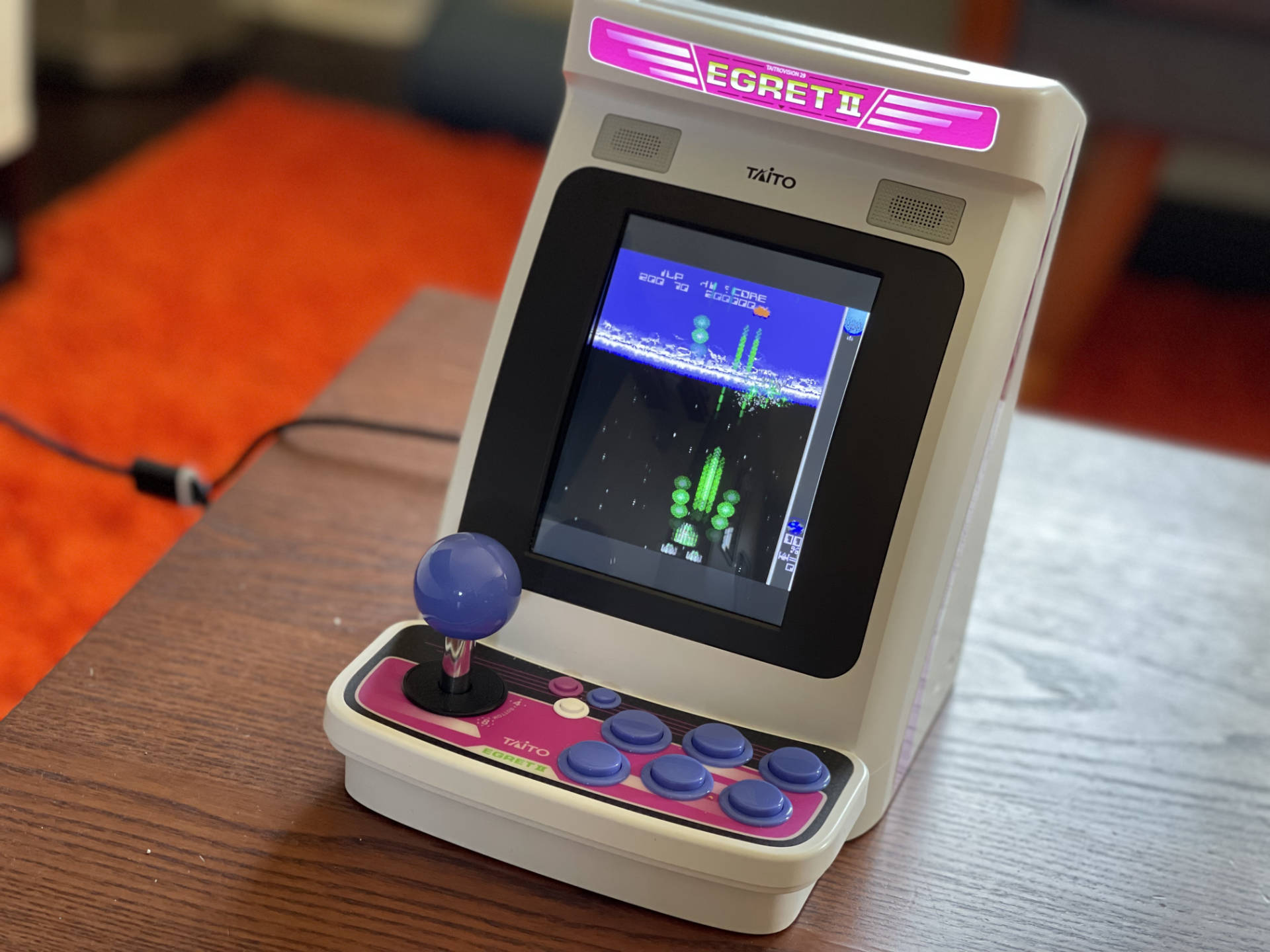
One of the most unique features of the Egret II Mini is also one of my favorite elements of the device: a rotating display. Being able to easily switch the monitor between yoko (horizontal) and tate (vertical) orientations was one of the trademarks of the actual Egret II, and seeing that feature preserved here is legitimately exciting as someone who often plays classic arcade titles on a rotatable monitor. Here on the Egret II Mini, gently pushing in on the bezels of the display causes the entire piece to pop forward, where you can then rotate it to suit the game you’re about to play. Thankfully, Taito has included a good mix of horizontally- and vertically-scrolling games on the system, so being able to adjust the screen goes from potential gimmick to legitimate feature I’ve used constantly.

Unfortunately, the other special detail on the Egret II Mini that I was looking forward to hasn’t worked out so well for me. Much like the screen itself, the restrictor gate on the joystick can rotate, so that instead of being moveable in the typical eight directions, you can lock it to only be usable in four. This is usually done to provide more precise control in games where quicker movements in only those four directions are important, such as something like Pac-Man. The problem is, there’s just something about how the stick on the Egret II Mini travels when locked into 4-way mode that I don’t like. Switching between the four cardinal directions isn’t smooth enough for my tastes, as I found myself having to fight too often to move between adjacent positions, such as from up to left, or right to down.

Finally, I should probably also give a quick mention to what makes the unit I received a “Limited Blue Edition.” In a partnership with United Games Entertainment, Taito has produced a variant of the Egret II Mini that has blue buttons and joystick toppers instead of the traditional pink versions. Only 5,000 of these units were created for the Western market, but the differences between what we’re getting and what Japan received really only comes down to that alternate hardware color—which causes a bit of a problem once we get to talking about the included games.
Accessories

While options like the rotating screen and joystick gate adjustment show the thought Taito put into the Egret II Mini, so too does the selection of accessories the company has made for the hardware. The most interesting to me is the Paddle and Trackball Game Expansion Set, which boasts a helfy controller deck featuring both a trackball and spinner paddle to help replicate the specialized controls of some of Taito’s arcade releases. The set comes with an SD card offering 10 additional games specifically tailored to those input devices, from the arcade classic brick-breaker Arkanoid to the company’s first golf game, Birdie King.

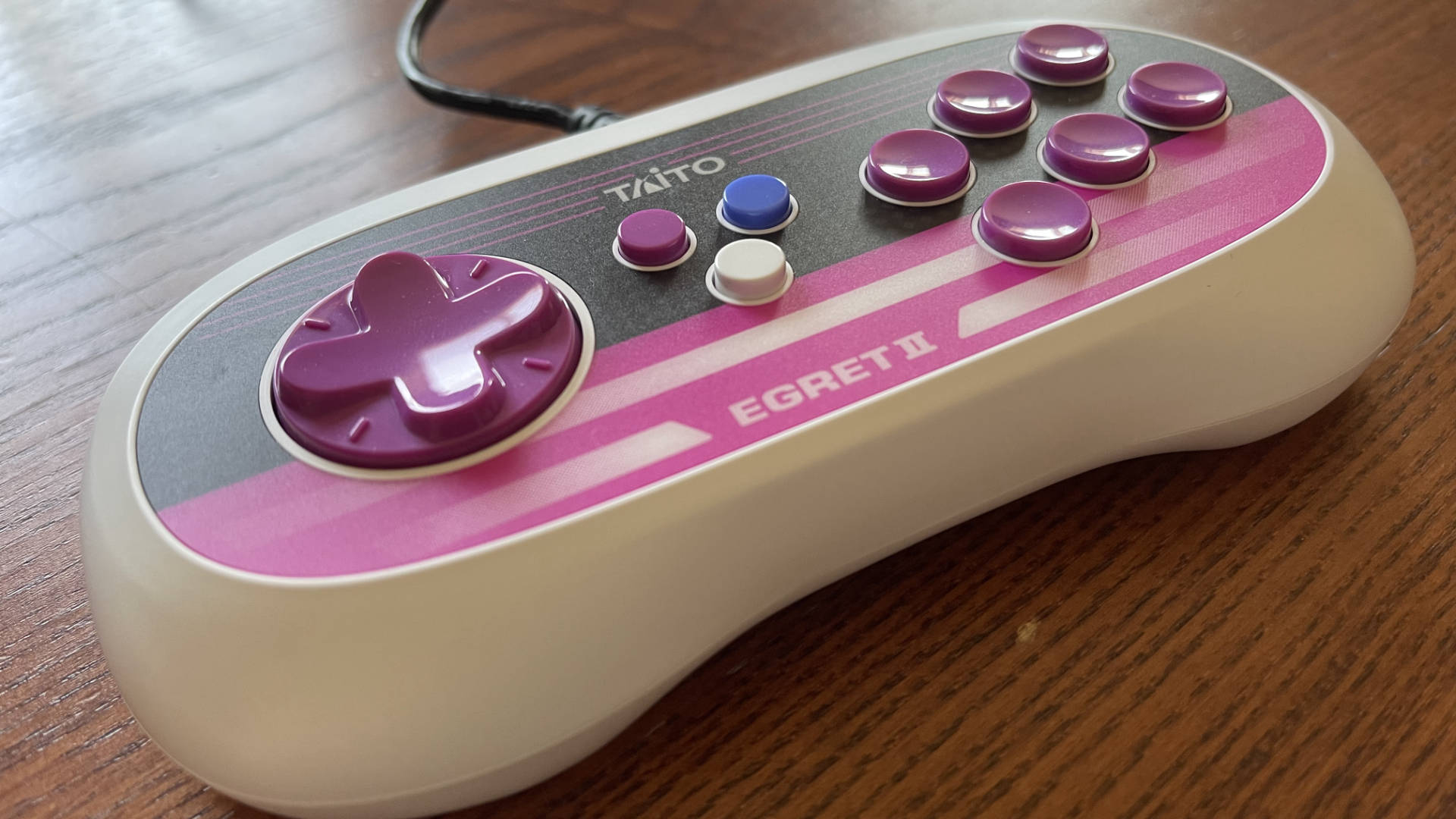
I’d love to tell you about the Paddle and Trackball controller, but alas I cannot, as the review unit I received did not come with one. What it did come with, however, was the Egret II Mini Control Pad—and boy did it leave me unimpressed. Additional controllers are going to be very important if you want to play multiplayer on the main unit itself, or play any of the games comfortably on a television, but the Control Pad is not the solution you’re going to want to go for. The overall shape of the controller feels weird in my hands, all of the face buttons are concave (whereas one row should be concave, and one convex), and worst of all, the D-pad is mushy mediocrity. The good news is that at least some other controllers do work with the Egret II Mini. I tried one of the 6-button pads from my Japanese Mega Drive Mini, and it was maginudes better than the official Taito offering. So, if you do go for this system and are needing external controllers, absolutely look into other options.
Presentation

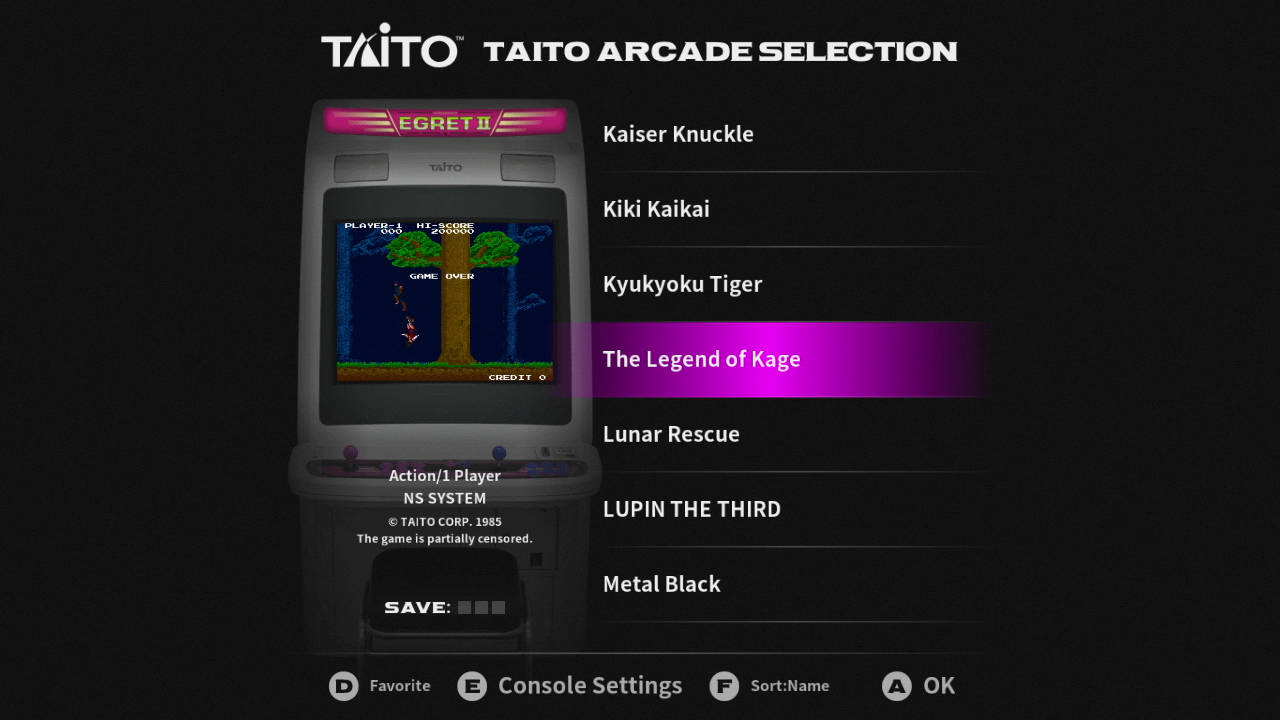
The menus and main interface on the Egret II Mini exist between the “functional but lifeless” UI we got on the NeoGeo Mini, and the lavish homage to history we saw on the Turbografx-16 Mini. The main screen offers a simple list of the 40 included games, with a virtual Egret sitting to the left that shows preview video for whichever game is currently selected. Every title offers up to three save state slots, and you can tell how many saves you have for a particular game right from that main list. There’s absolutely nothing wrong with the interface we get here, but it’s also hard to get too excited about it either.

In terms of options, from the main menu you can adjust the unit’s screen brightness and speaker volume; stretch and/or rotate the image when playing on a television; change the menu background music, language, or demo (attract mode) settings; and turn off and on pixel filtering. Or, should I say, turn on and off. In a bizarre bug, turning filtering “on” actually turns it off, and vice versa. One nice touch is that, after selecting a game but before actually booting it, you can adjust some of its virtual DIP switches, such as number of lives, game difficulty, and other relevant settings.

While most of the experience in regards to presentation is pretty solid on the Egret II Mini, I do have a few complaints. While I’m not particularly a fan of them, I can find no scanline options of any kind—even when playing via HDMI out—which is a pretty big oversight. There also isn’t a way to adjust for overscan, which can be an issue if you want the play area increased to fill more of your screen’s size. Finally, when playing games that don’t fill the entirety of the screen, and when not using the built-in wallpapers to show visuals in those empty areas, the unused parts of the display are a dull gray instead of black. (Play any game that at some point shows a black screen, and you can instantly tell the difference.) It always drives me crazy when that’s the case, and there really should be the option to pick what color we want those unused portions of the screen to be.
Software

In a way, the Egret II Mini might be a bit of a tough sell for those of us in the West when it comes to its library. Taito’s back catalog doesn’t have the universal appeal of Nintendo or Sega, the hardcore fandom of SNK, the home computing nostalgia of the Amiga 500 Mini or C64 Mini, or the niche collectability of the Turbografx-16 Mini. Still, there’s a lot to like here, so let’s get to the list of games and then delve deeper into the topic.

  • Adventure Canoe
  • Bubble Bobble
  • Bubble Memories
  • Bubble Symphony (Bubble Bobble II)
  • Cadash
  • Chack’n Pop
  • Dan Ku Ga
  • Darius Gaiden
  • Don Doko Don
  • Elevator Action
  • Elevator Action Returns (Elevator Action II)
  • Gun Frontier (Gun & Frontier)
  • Halley’s Comet
  • Hat Trick Hero (Football Champ)
  • Kaiser Knuckle (Global Champion)
  • Kiki Kaikai
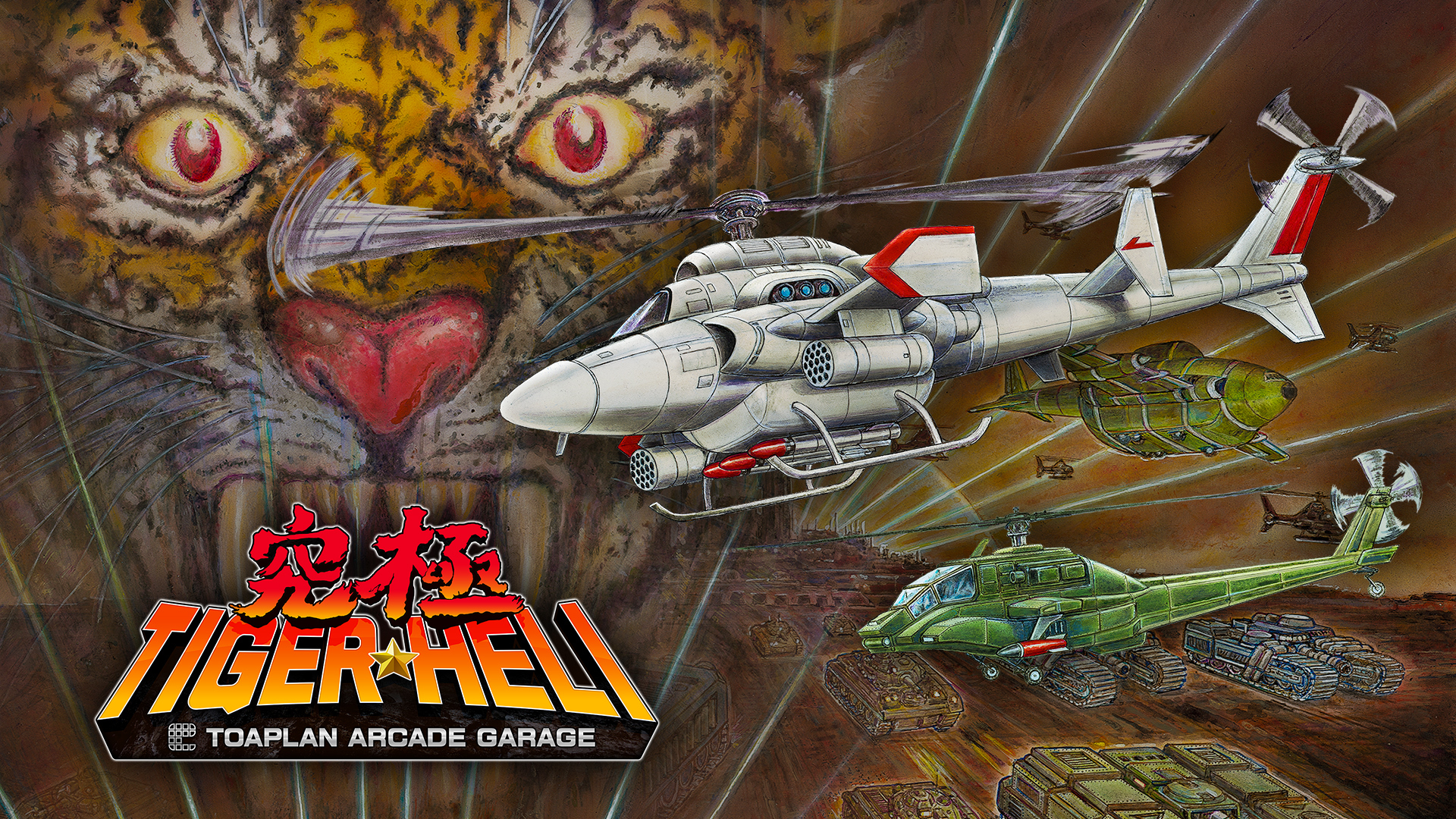
  • Kyukyoku Tiger (Twin Cobra)
  • Lunar Rescue
  • Lupin the Third
  • Metal Black
  • Mizubaku Adventure (Liquid Kids)
  • Outer Zone
  • Pirate Pete
  • Puzzle Bobble 2X (Bust-a-Move Again)
  • QIX
  • Rainbow Islands Extra
  • Raimais
  • Rastan Saga (Rastan)
  • RayForce (Layer Section/Galactic Attack/Gunlock)
  • Runark (Growl)
  • Scramble Formation (Tokio)
  • Space Invaders
  • Steel Worker
  • Tatsujin (Truxton)
  • The FairyLand Story
  • The Legend of Kage
  • The NewZealand Story
  • The Ninja Kids
  • Violence Fight
  • Volfied

If you’re strictly coming at that list in terms of what has name recognition in the West—especially today—then it’s easy to be disappointed with what’s offered. However, if you love delving into the history of the medium, or if, like me, you grew up in the heyday of arcades, then that’s an interesting and worthwhile list. Taito’s titles were incredibly important in the evolution of video games, and a lot of what’s included here remains enjoyable to this day if you take those games for what they are without modern-era expectations.

What I personally appreciate about the system’s library is the importance of some of its inclusions. Three games in particular—Elevator Action Returns, Metal Black, and RayForce (aka Layer Section, aka Galactic Attack)—especially speak to me because they were fantastic games that, for a long time, were infamous for being stuck on the Sega Saturn until the release of Taito Legends 2. (And with that compilation not hitting the PS2 and original Xbox until after their successors launched, it was easy to miss.) Outer Zone, meanwhile, never got a home port at all that I can remember, and Dan Ku Ga is an especially awesome addition, as it’s a previously unreleased sequel to Taito’s 1994 fighting game Kaiser Knuckle.

There’s two other interesting titles to note on that list: Kyukyoku Tiger, the Japanese version of my beloved Twin Cobra, and Tatsujin, aka the infamous top-down shooter we know on these shores as Truxton. While Taito published both, they were developed by Toaplan, which leads to a very interesting question. We already know that Taito is willing to add new games to the hardware via SD cards, so could the company not only potentially add more first-party games in the future, but perhaps titles from other developers as well? My mind races at the idea that the Egret II Mini could grow into a modern device that lets us reconnect with a wider swath of Japan’s arcade history, a task it’s perfectly set up for.

If I were to have one main complaint about the Egret II Mini’s library, it’s that there are some titles that I would love to have seen included that are missing—games such as Zoo Keeper, Front Line, The Ninja Warriors, Night Striker, and Cleopatra’s Fortune. Realistically, though, if Taito is planning to release any more game expansion packs in the future, they were obviously going to hold something back

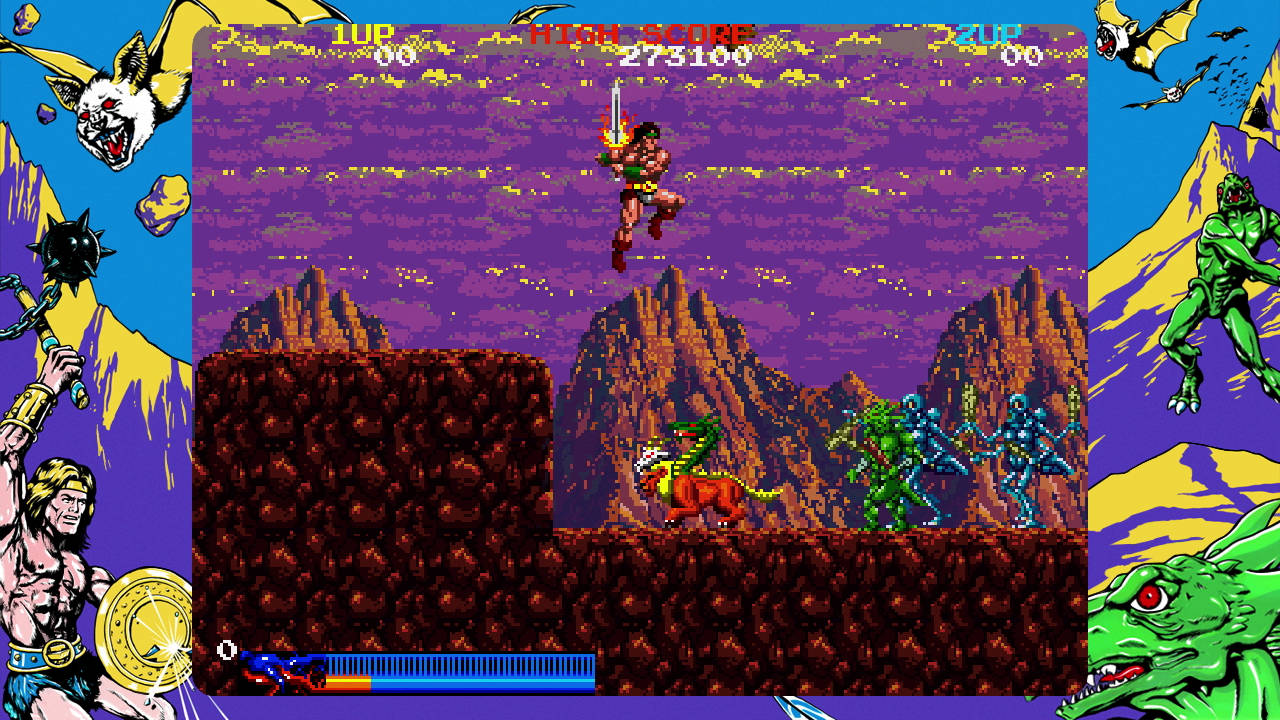
…oh, wait, there is something else that I should probably mention: These are all the Japanese arcade versions of the games, even here on the unit specifically produced for us gaijin. For the most part, that doesn’t matter. The game you’ll remember as Growl now has the nonsensical name Runark, RayForce has a few tutorial pop-ups that you won’t be able to read (but you won’t really need to), and navigating Puzzle Bobble 2x’s menus might take a slight bit of trial and error. That is, until we get to Cadash. Cadash is a sort of side-scrolling arcade take on Dungeons & Dragons, and all of the important dialog boxes and mission instructions that pop up are all in Japanese. For some, this could make the game pretty much unplayable. It’s not as bad (or as cruel) as putting untranslated Snatcher on the Turbografx-16 Mini, but given an English-language arcade version of the game does exist, it’s kind of ridiculous that it wasn’t swapped in on a unit intended for English speakers.
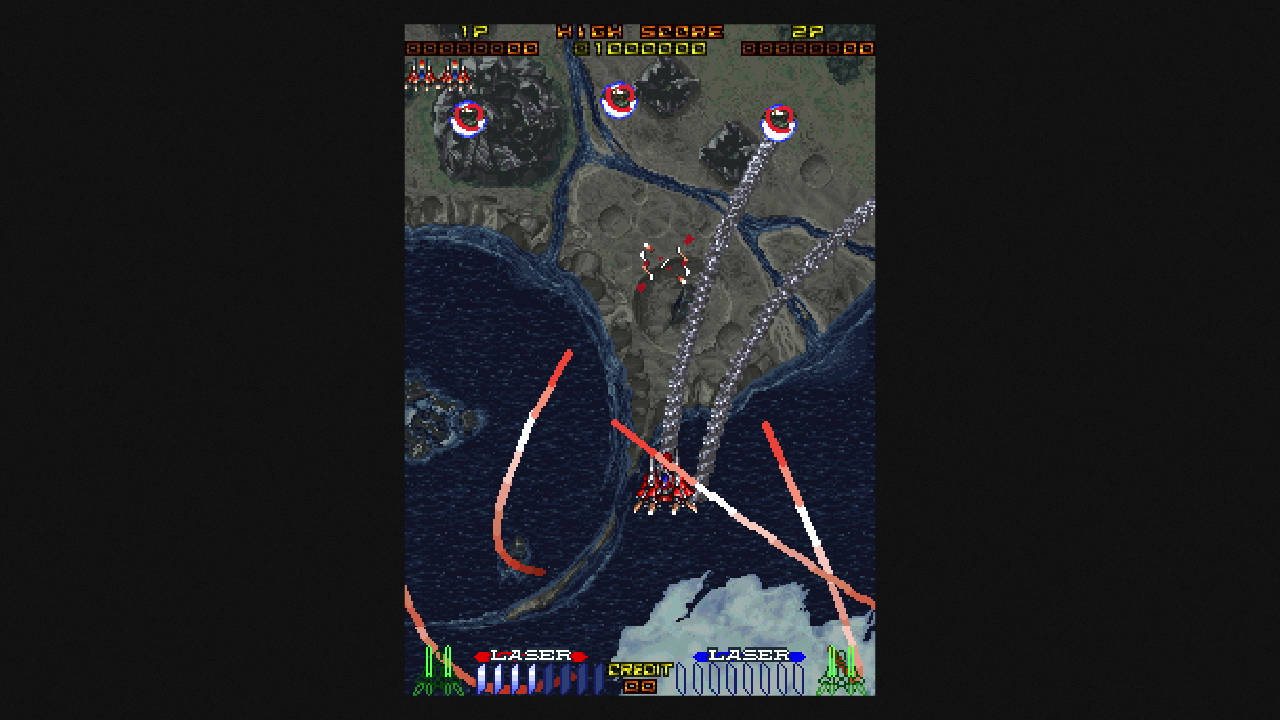
Emulation

The easiest way to discuss the emulation quality of the Egret II Mini is to simply say this: If you’ve used any similar devices before, then you probably know what to expect.

For most, the games will run and play totally fine. Yes, there is input lag, but it’s not enough to ruin the experience of any of the games, even the shmups. There is occasionally some slight visual distortion due to trying to fit a wide variety of resolution on a LCD screen with a hard-set number of pixels, and you may experience things like shimmering when playing on a television due to a locked 720p output. You may also experience other occasional issues common with such emulation, such as audio hiccups or the random weirdness.

We’ve been through all this before by this point. Nintendo couldn’t get the emulation on either the NES or SNES Classics perfect, and Sega seeking help from M2, the masters of getting old games running again, still resulted in a Genesis Mini that didn’t fully nail the execution. The fact is, you’re never going to be able to perfectly run older games with software emulation and fixed-pixel displays, and least not with modern hardware at these price points. Unless you’re a stickler for emulation perfection, then you probably aren’t going to have any problem with how this hardware plays games, and even if you are, the issues it does have might still not be a dealbreaker. And so far, I’ve found no real dealbreakers with the Egret II Mini.

Well—that isn’t exactly true. See, there’s a very interesting hiccup with this hardware, and to discuss it, we need to go back to that USB-C power port. While the system comes with both an HDMI cable and USB-C to USB-A cable, it doesn’t include the power adapter itself, which may have been a mistake. Plenty of similar devices don’t come with them either, so typically people will just use one they have sitting around, or plug into their television’s USB port for power. The problem is, if the Egret II Mini isn’t getting enough power, not only can the input lag actually increase, but other issues with the system may also occur. Twitter user @takaflo posted an example video showing how the lag got worse in RayForce as the unit was getting less power. While it can easy to miss, the Egret II Mini’s packaging and instruction manual recommend a 5V/2.4A (12W) power adapter, but it should be safe to go higher. When I switched from a lower-powered adapter to an iPad one at that level, I did notice games seemingly playing better. So, if you do pick up an Egret II Mini, you’ll need to make sure you’re plugging it in with the proper adapter.

In Closing

The Egret II Mini – Limited Blue Edition is an undeniably cool piece of technology, and one of the most overall exciting all-in-one video game devices that we’ve received in recent years. Not only does it make for an awesome showpiece when sitting on a table or desk, but it’s also a great experience when playing as well. It’s just a shame that, in everything it does—from its hardware, to its games library, to its presentation—it doesn’t completely nail the execution. While none of its mistakes harm the system in any serious way, we do also have to keep in mind that just the main unit itself costs $229.99. I have no problem recommending the Egret II Mini to anyone who’s interested in it, but given both its price and its less casual-friendly library of games, I also have to recognize that that group of potential customers will probably be sizably smaller than for the other all-in-ones we’ve received.
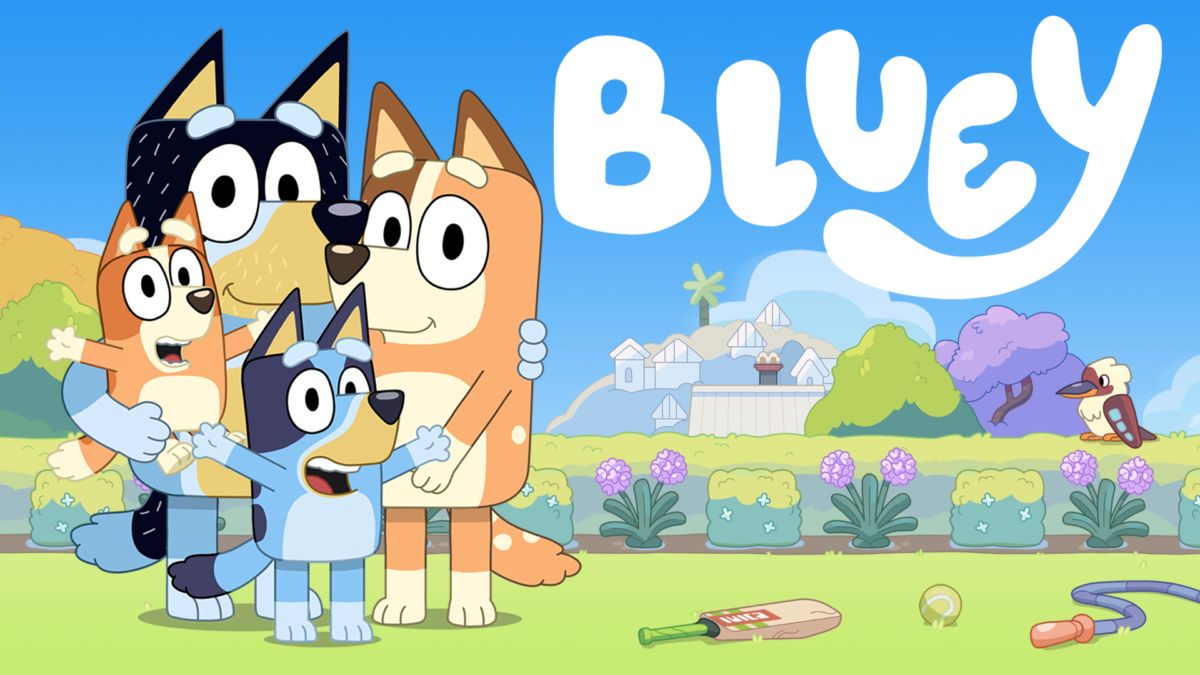
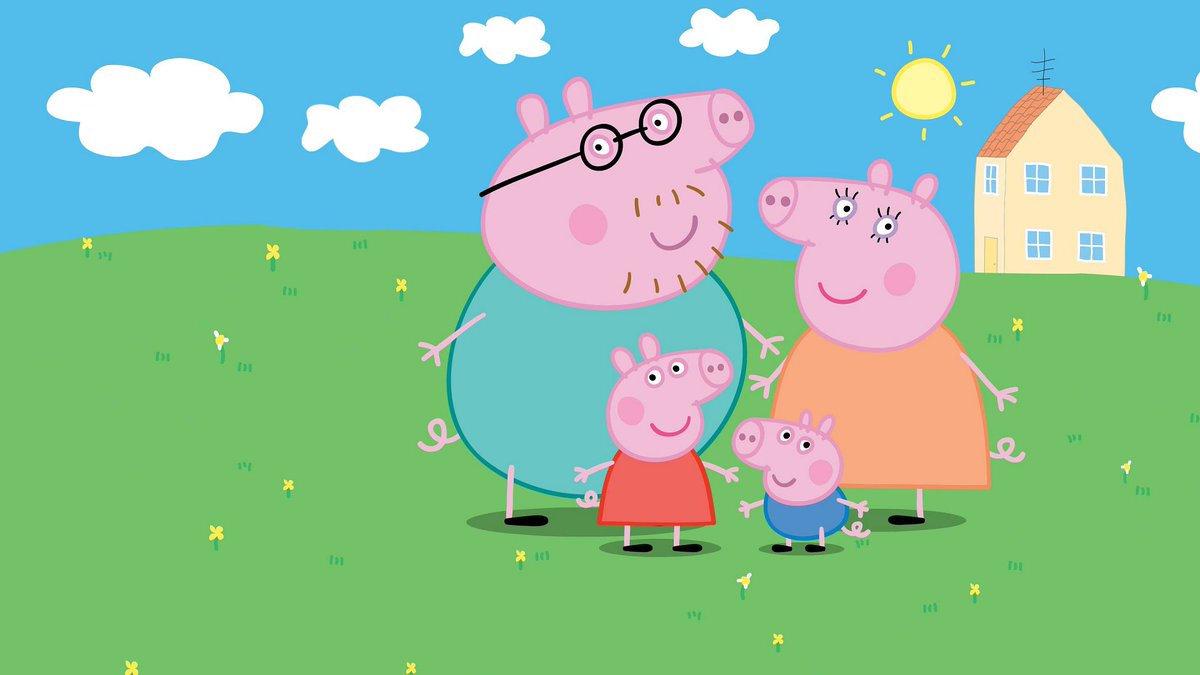
Mollie’s Reviews of Kids Shows

For all who follow me for my reviews, here’s what you’ve been waiting for: Mollie reviews kids shows she’s watched due to her daughters!

Bluey

Fantastic. A stunningly great, consistent show. Lots to appreciate as an adult. Dad is too good a parent—makes you feel bad.

Peppa Pig

Enough to appreciate as an adult while also being great for kids. Has some surprising sass to it. Was one of my top picks until Bluey came along.

Mickey Mouse + The Wonderful World of Mickey Mouse

So, so good. Make me actually like the Mickey characters, which is shocking. The Donald and Daisy we get here are the GOATs. I love the shows, my twins love them, my wife thinks they’re disgusting and inappropriate.

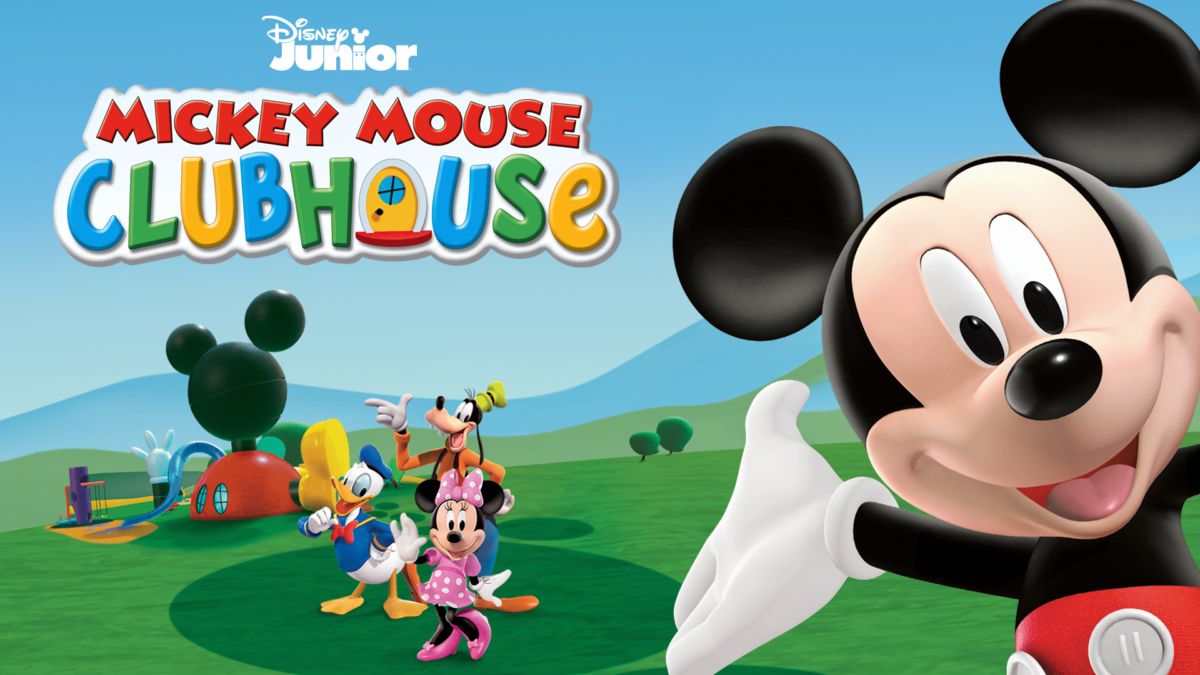
Mickey Mouse Clubhouse

Trash. Disney, the company that helped define and pioneer animation, should be embarrassed to put out such cheap garbage. Hot Dog song is great though.

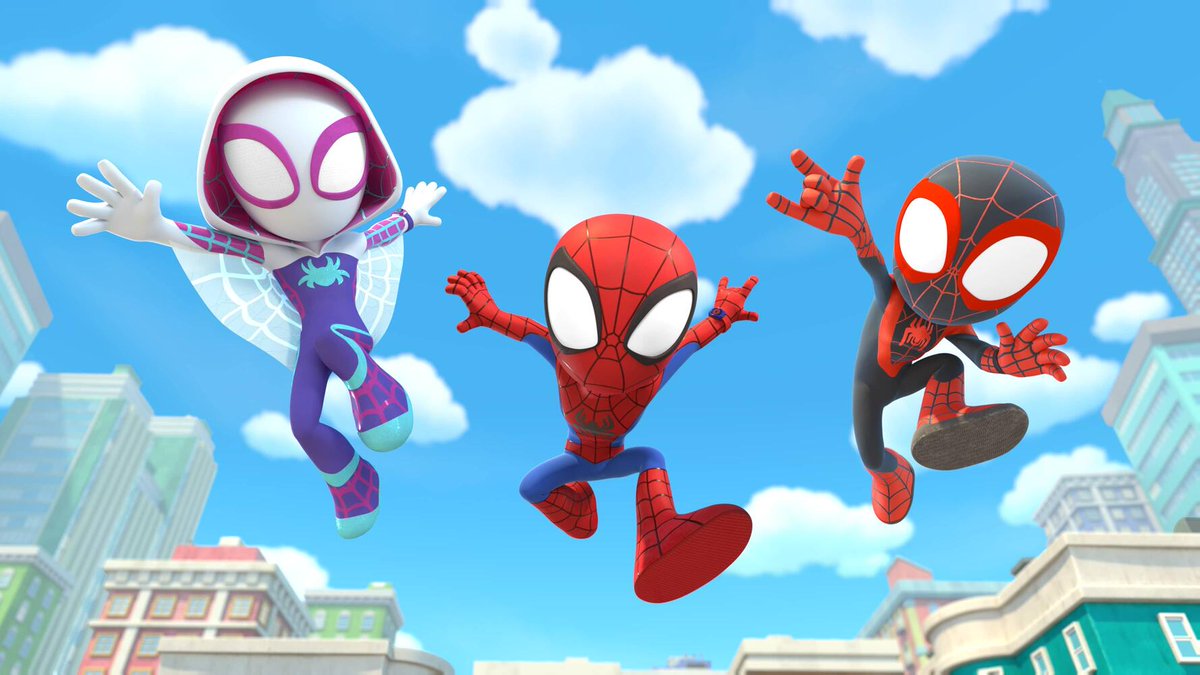
Spidey and his Amazing Friends

My twins’ current obsession. Nothing really wrong with it, looks okay, and I like that it gives all three Spiders equal footing. Man though, are the three heroes utterly inept when it comes to stopping the bad guys.

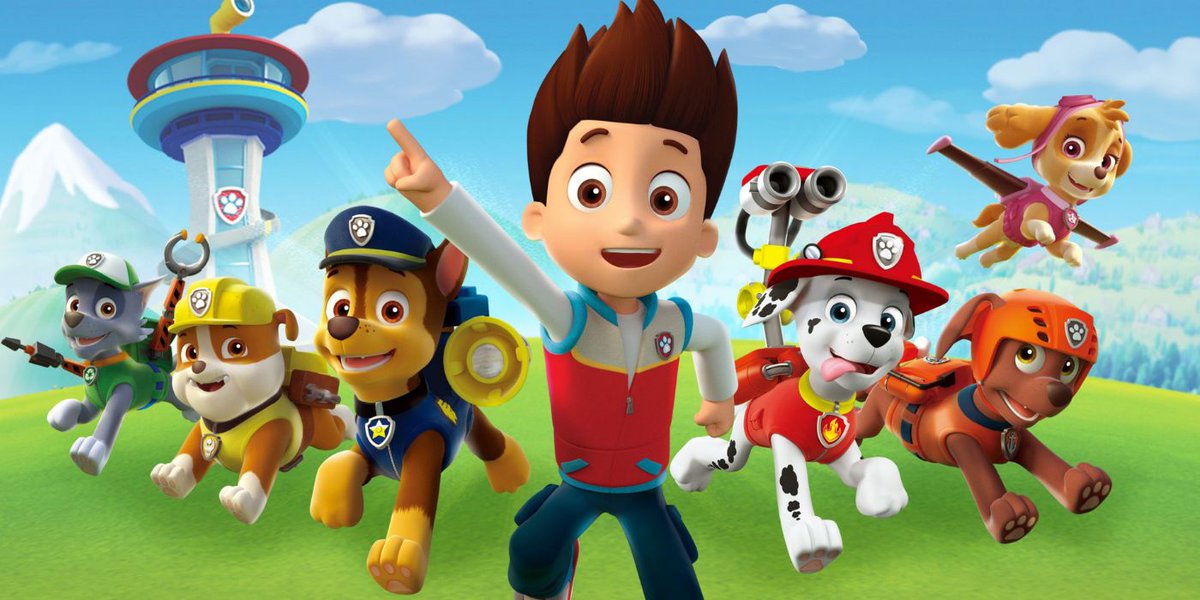
Paw Patrol

A guilty pleasure for me. I don’t know why I like this show, especially given it’s about dogs and not the superior cats, but I do. Rubble is clearly best pup.

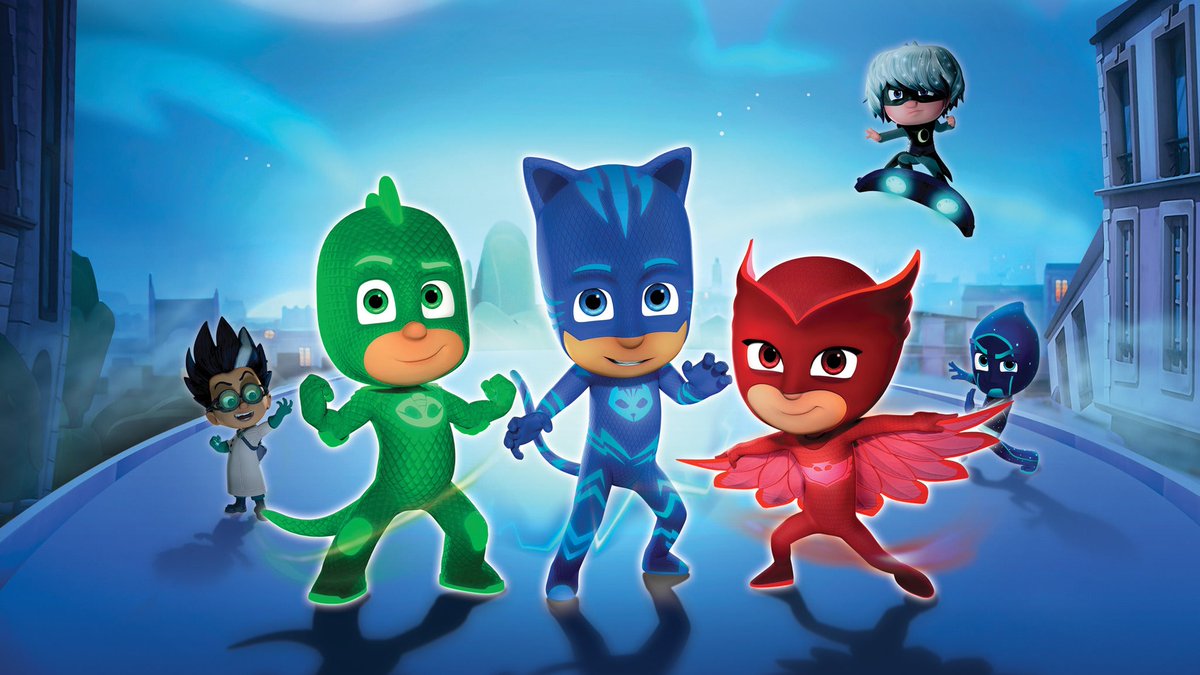
PJ Masks

Similar level to Paw Patrol, but not as good. Also suffers from “inept superheroes” syndrome. And where are these kids’ parents, letting them go out to fight crime when they should be sleeping?

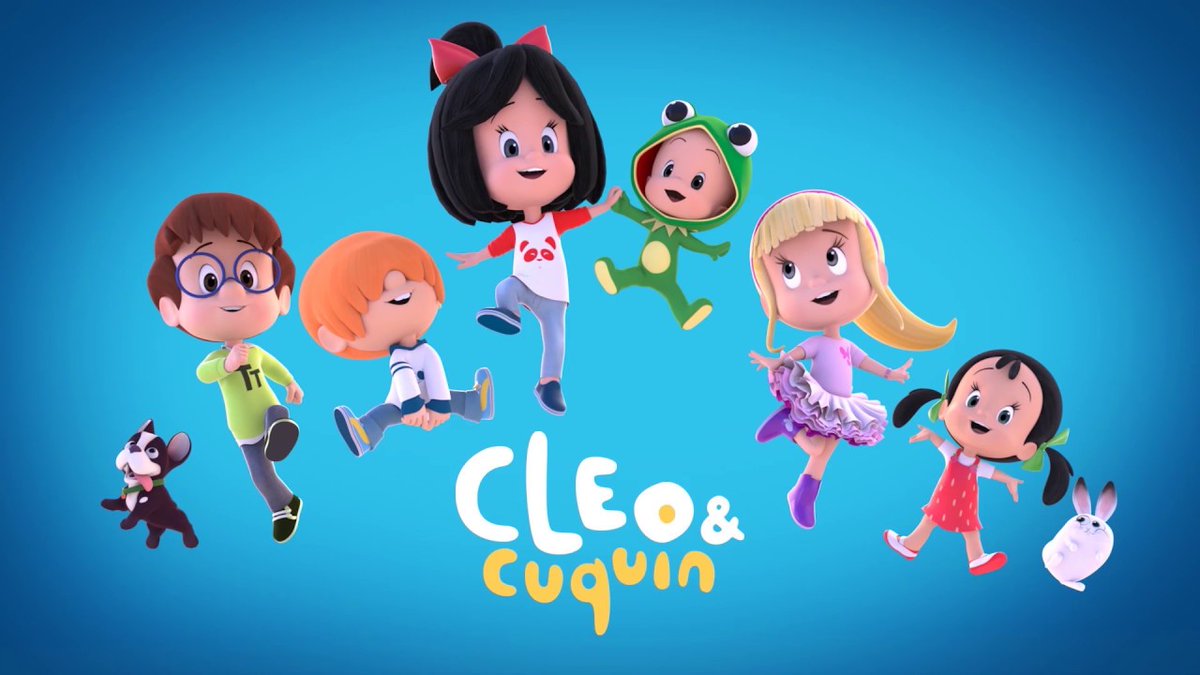
Cleo & Cuquin

Twins don’t watch much anymore, but I typically liked the show. However, Cuquin is a total asshole, like many very young characters in these kinds of shows. He ruins everything and then Cleo has to fix it all.

Cocomelon

Obviously some sort of brainwashing indoctrination system for our children. Everything in this world just seems off, and the adults creep me out. And man the melody reuse is totally shameless.

Blippi

Watching Blippi makes you feel like you’re defecating all over you friend while he’s lying on a bathroom floor naked in a desperate attempt to go viral.

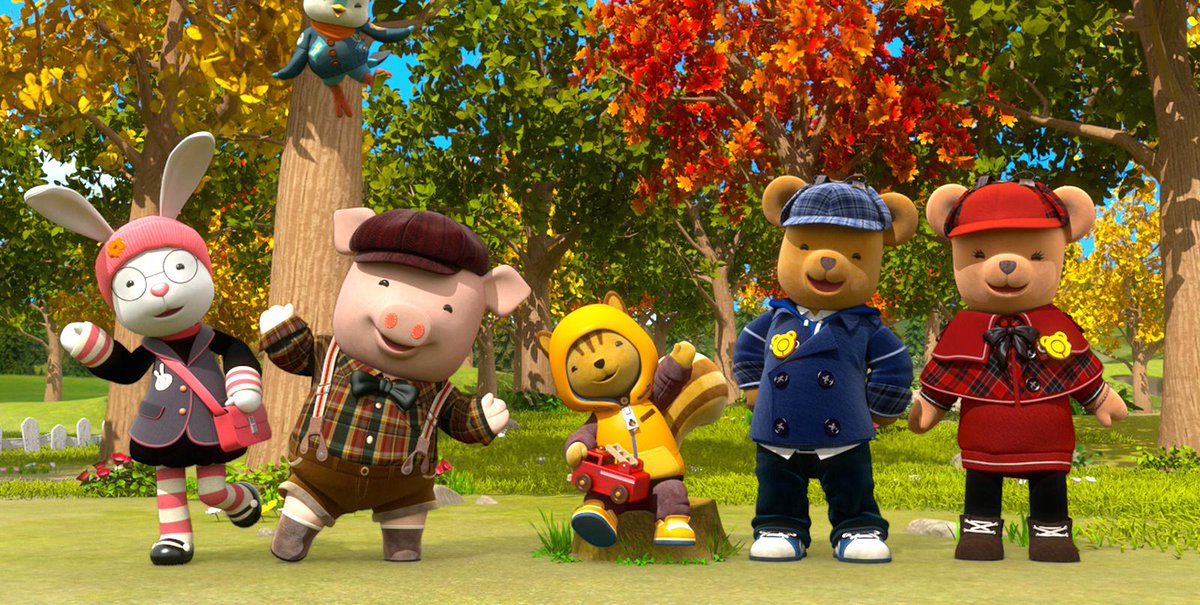
Treehouse Detectives

I don’t know that I have a lot to say about this show, but if it’s on and I have the time, I’ll sit and watch. So I guess that says something.

Masha and the Bear

This feels like a show you’d find on a dusty old VHS tape that came from 1950’s Eastern Europe, where all of the basics of what you’re watching make sense, and yet none of it does.

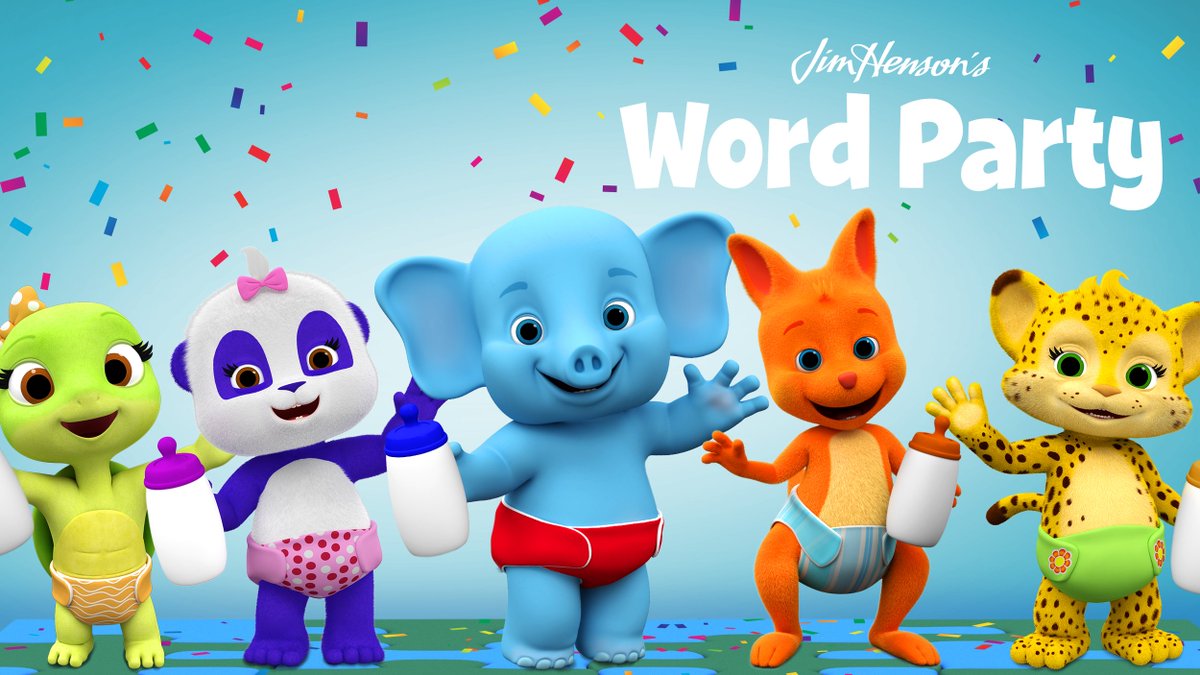
Word Party

Thanks, now I need to go rinse my eyes out with bleach.

Sofia the First

Twins have long since given up on this one, but I always liked it. It’s fun, and Sofia is a pretty decent character, considering how a lot of the other princess stuff often turns out.

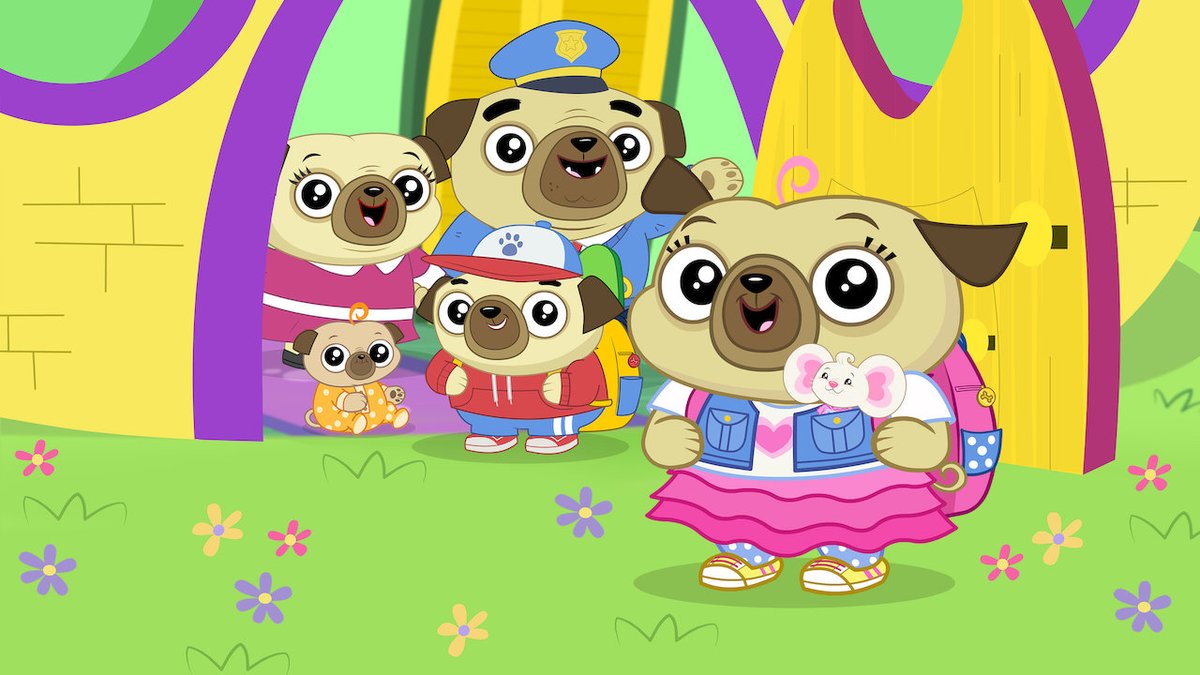
Chip & Potato

Awful. The writing in this show is like nails on a chalkboard to me, and pugs are an affront to God’s glory.

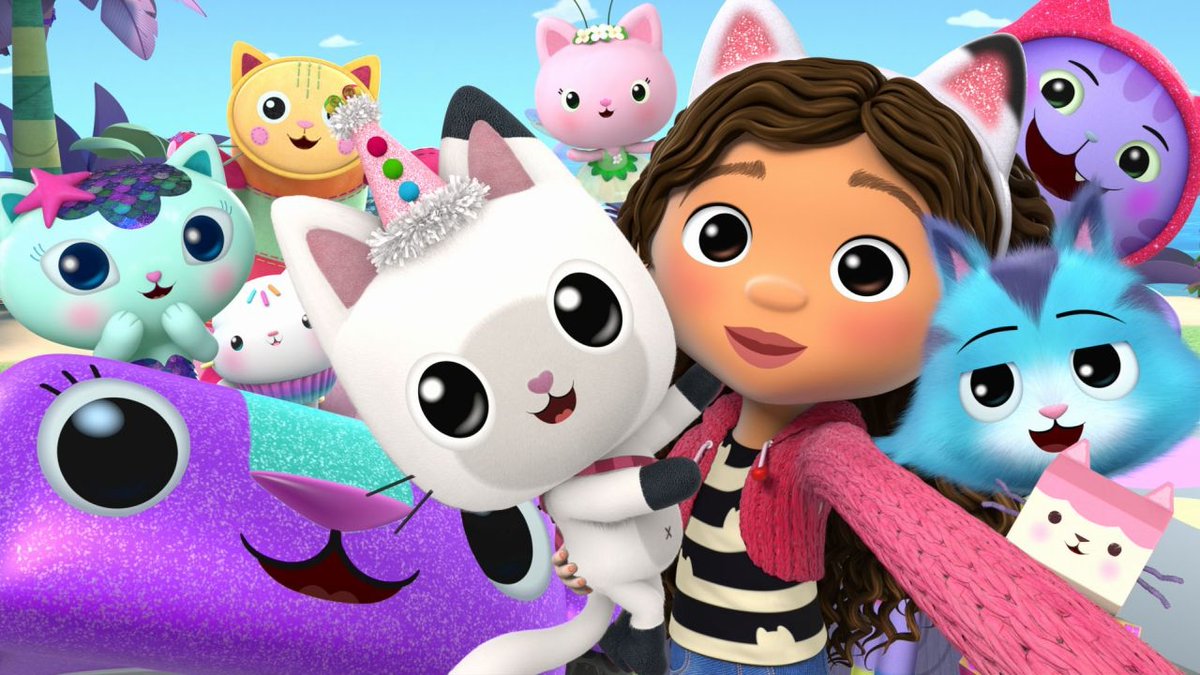
Gabby’s Dollhouse

Anything focusing on cats over those dumb-ass dogs is always cool in my book, and I love how Lovecraftian some of the cats in this show get at times.

Doraemon

Nobody will want to hear this, but it’s the truth: Doraemon sucks. Nobita is a piece of crap, and deserves to get his ass beat by Gian on a daily basis.

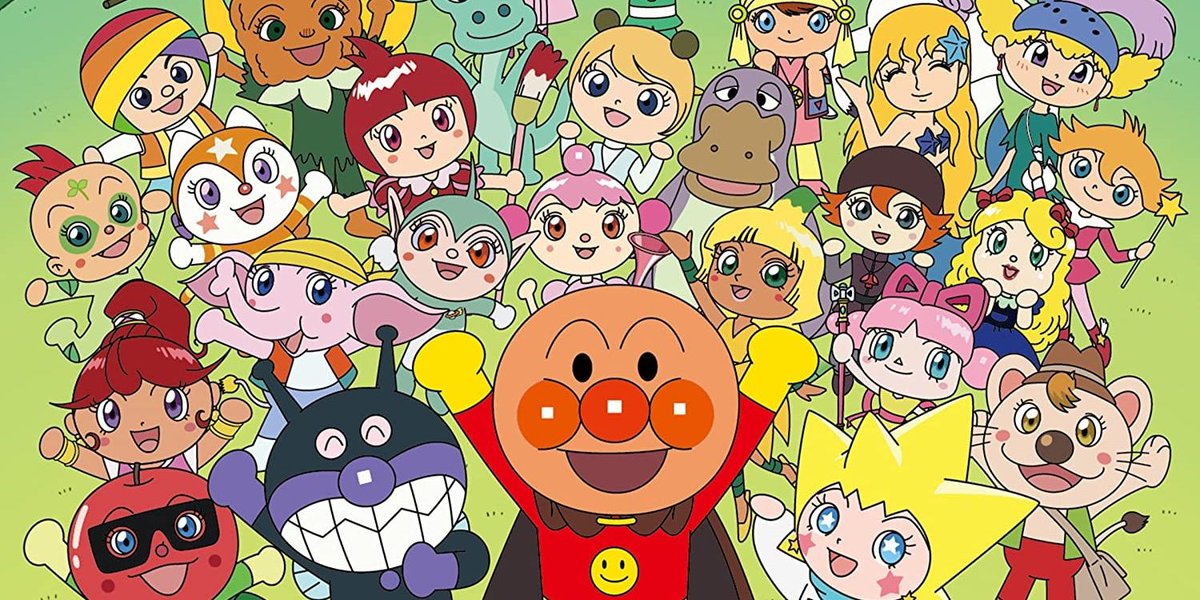
Anpanman

Anpanman is better than it has any right to be. I mean, its titular character is completely uninteresting, but there are so many fun (and funny) side characters in the show.

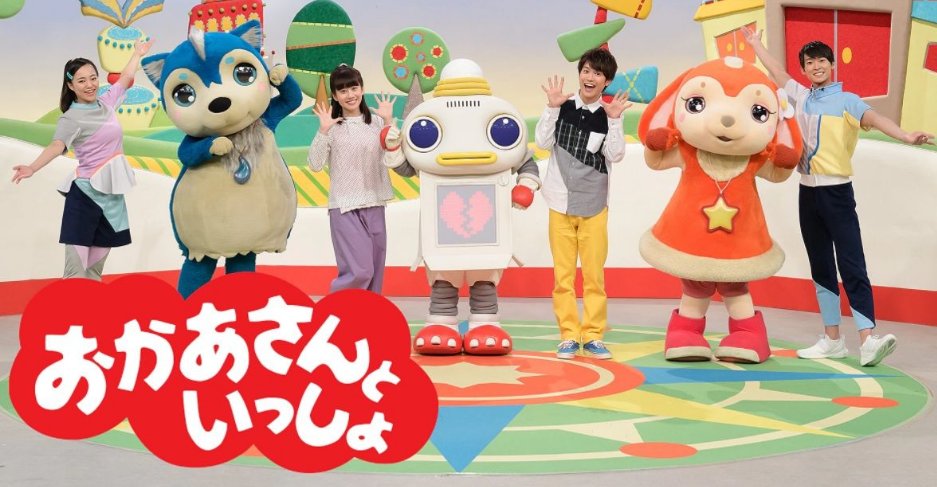
Okaasan to Issho (With Mom)

A variety show for young children might seem like a weird thing for an adult to like, but there’s a lot of original music written for the episodes, and some of the songs are absolute bangers.

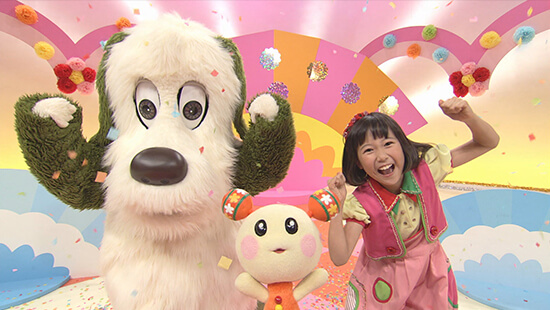
Innai Innai Ba (Peek a Boo)

Some similarities to Okaasan to Issho, but then benefits from having some weirder segments, and—with me once again praising a mutt—Wanwan has some IDGAF moments that make me laugh.

Pitagora Suitchi (PythagoraSwitch)

The best damn Japanese kid’s show you could ever hope to watch.

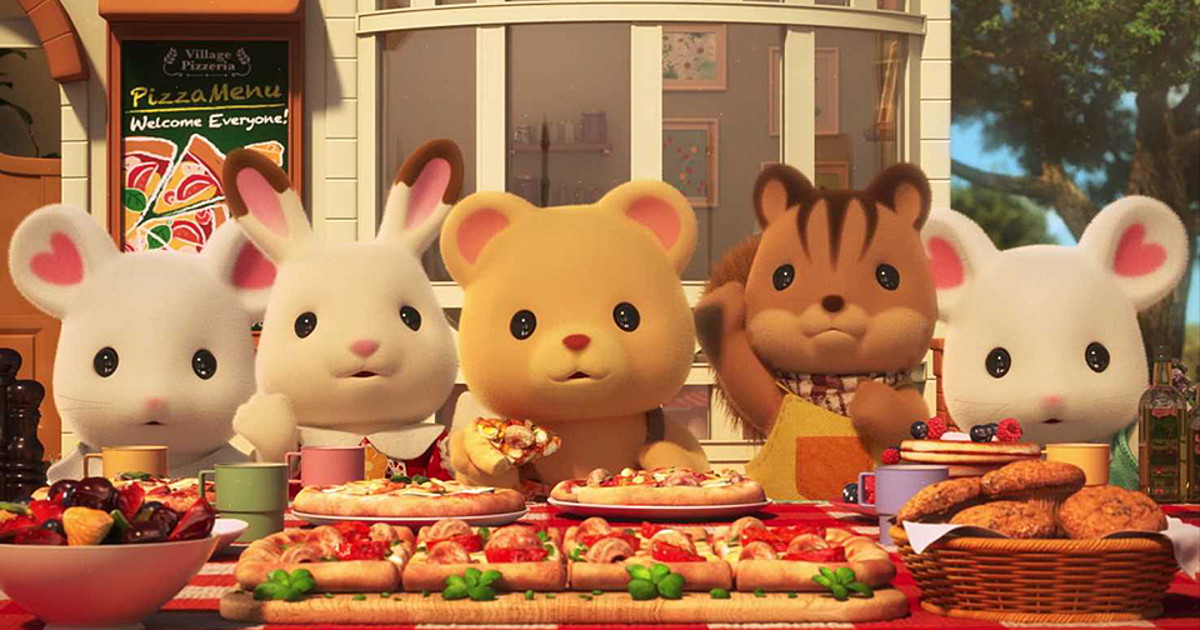
Calico Critters

Our daughters “watch” this. In other words, my wife is actually the one watching it, while our daughters pretend to watch to make her feel better.

Rilakkuma and Kaoru

If you have Netflix and haven’t watched this yet, what the hell are you doing with your life?

Ghostwire: Tokyo Review

After being incredibly excited to see where Shinji Mikami and his new studio would take us, I was thoroughly disappointed with The Evil Within. And then, after having zero expectations for it, The Evil Within 2 ended up being a wonderful surprise. Tango’s latest project, Ghostwire: Tokyo, seemed mildly interesting to me at first, but the closer we got to its launch, the more my anticipation built.

Now that I’ve (mostly) completed Ghostwire: Tokyo, I can say that it’s a win for Tango Gameworks—but not an easy win. This is one of those games that you’d describe as a “love it or hate it” kind of experience, except in this case, it’d be more “like it or hate it.” I think a decent amount of people are going to accuse Ghostwire of being boring, and it kinda is, especially if what it’s trying to do doesn’t click with you.

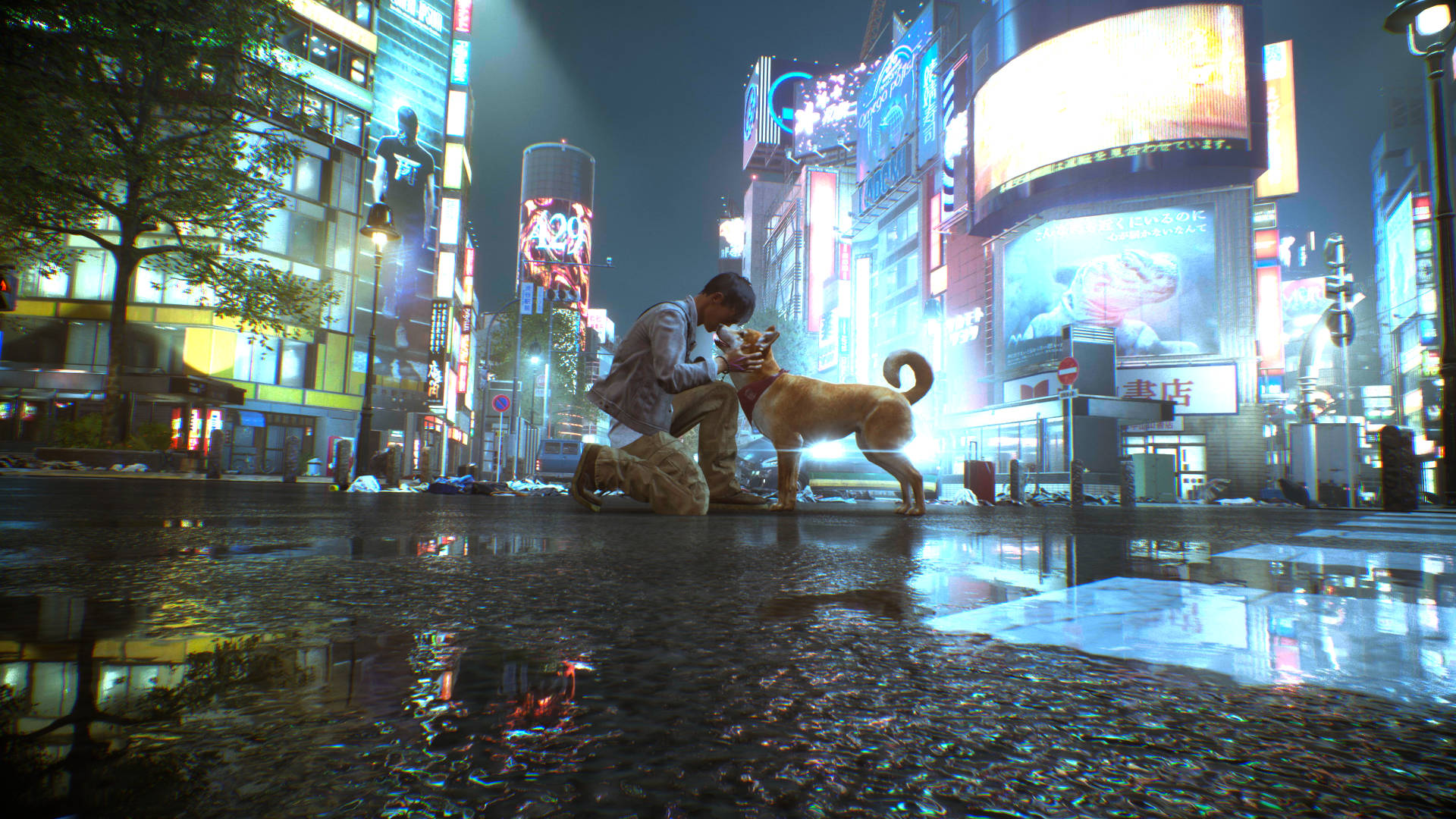
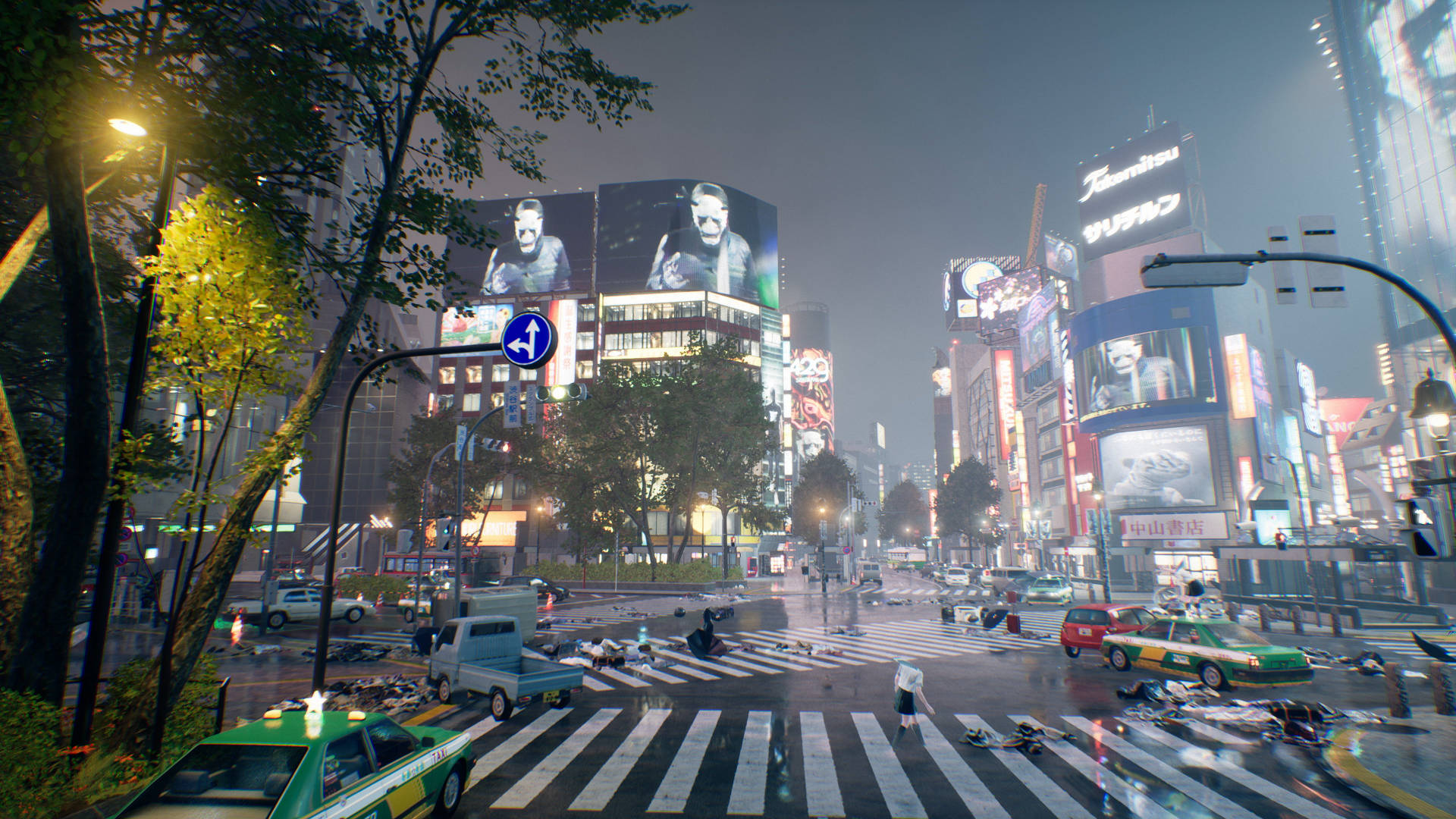
One of the areas where I foresee those mixed reactions the most is in the game’s exploration. A lot of the focus in Ghostwire: Tokyo is in investigating Tokyo’s Shibuya district and its surrounding streets, and some of the thrill of that exploration rests on enjoying the scenery without always expecting to find something where you’re going. As someone who loves poking around the back streets of Japan in real life, and who has been to many of the game’s locations in person, wandering the streets of Tango’s virtual Shibuya was a lot of fun. This is a beautiful and interesting playground we’re let loose into, and if you’re the type who likes to take the time to appreciate the work that goes into making virtual worlds, this is a great place to get stuck for 15-plus hours. If you aren’t, then it may feel like a lot of the streets and alleys lead nowhere.

The other side of that is that Tango has been experimenting more with open worlds, and I don’t think they’ve quite nailed the execution just yet. Whereas The Evil Within was a mostly linear experience (at least from memory), The Evil Within 2 went back and forth between more focused and more expansive locations. Here, Ghostwire: Tokyo is fully open world, although much of the area remains blocked off until you purify torii gates that correspond to a particular segment of the deadly fog that has covered the city. In comparison to most other open-world games out there—excluding a certain one I’m trying hard not to mention—what we get here feels pretty standard. Each torii gate tells you how many items, power-ups, or collectables are still in the area they cover, and your map gets filled with plenty of objective icons. Nothing’s really wrong with what Tango did in this regard, and the hunt to clear out those icons can indeed be satisfying, but the game also never really attempts to break the mold in ways it could have given the setting and themes. There was a lot of potential for taking the game outside the norms, yet it often seems surprisingly conservative, especially when compared to The Evil Within 2.

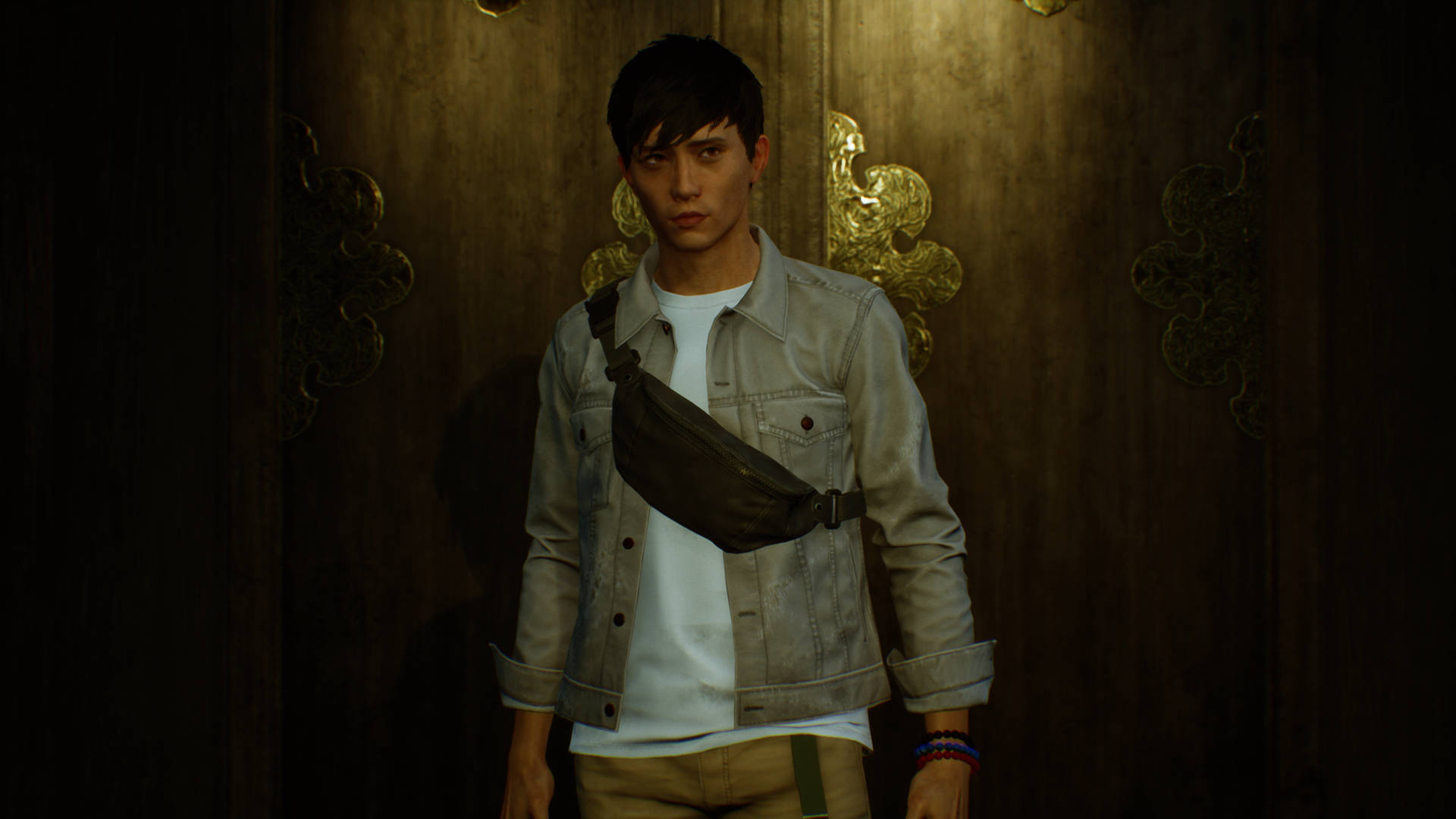
The stand-out change to the open world formula is that scattered across the city are the souls of the people who mysteriously vanished when the fog rolled into town. In order to help usher those souls to the afterlife, Akito must collect them using traditional Japanese talismans and send them on their way via public phone. There are just over 240,000 souls to save, and after beating the game and putting a handful of hours specifically into sidequests, I’m only at around 84,000 or so. The amount of work that’ll have to go into completing that task is almost comedic, and I’ve no clue if it’ll be worth it in the end. At the same time, I do want to give credit to the sidequests that Tango has come up with. While some of them are pretty standard, others are genuinely interesting, involving tasks or situations that lean into Ghostwire’s weirder side. Even better, all of those quests are over rather quickly, never getting bogged down for the sake of padding the game’s runtime.

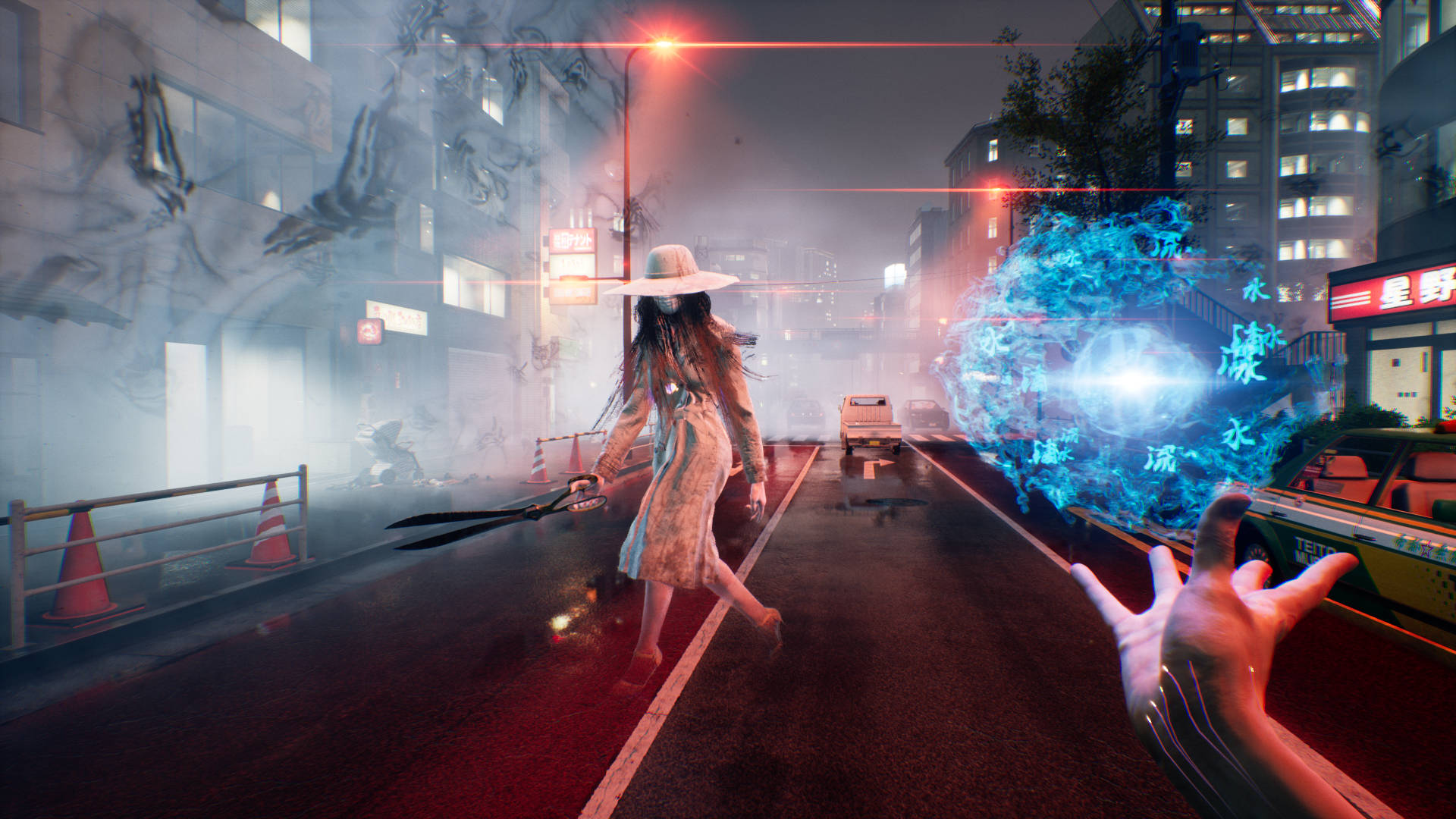
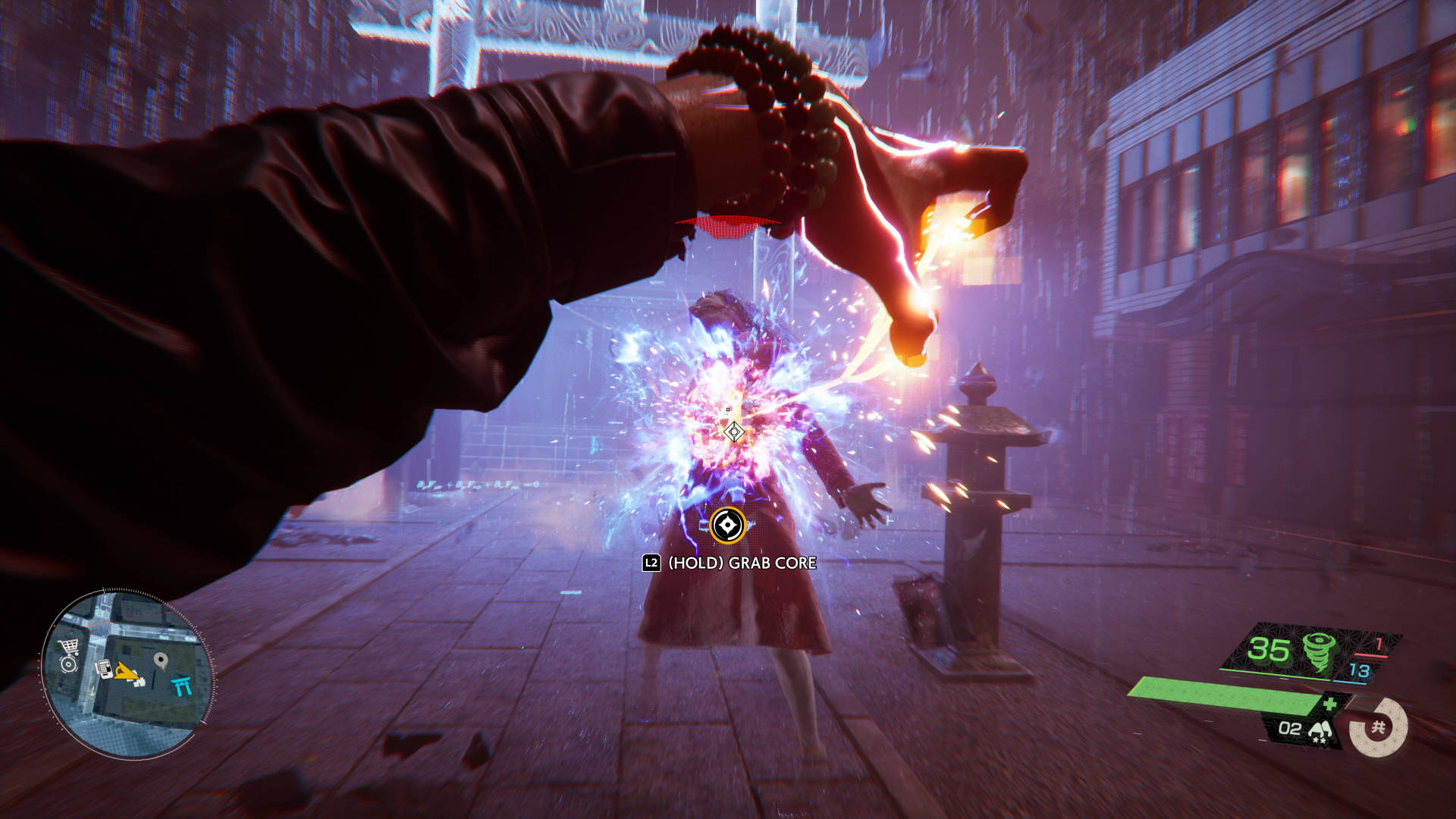
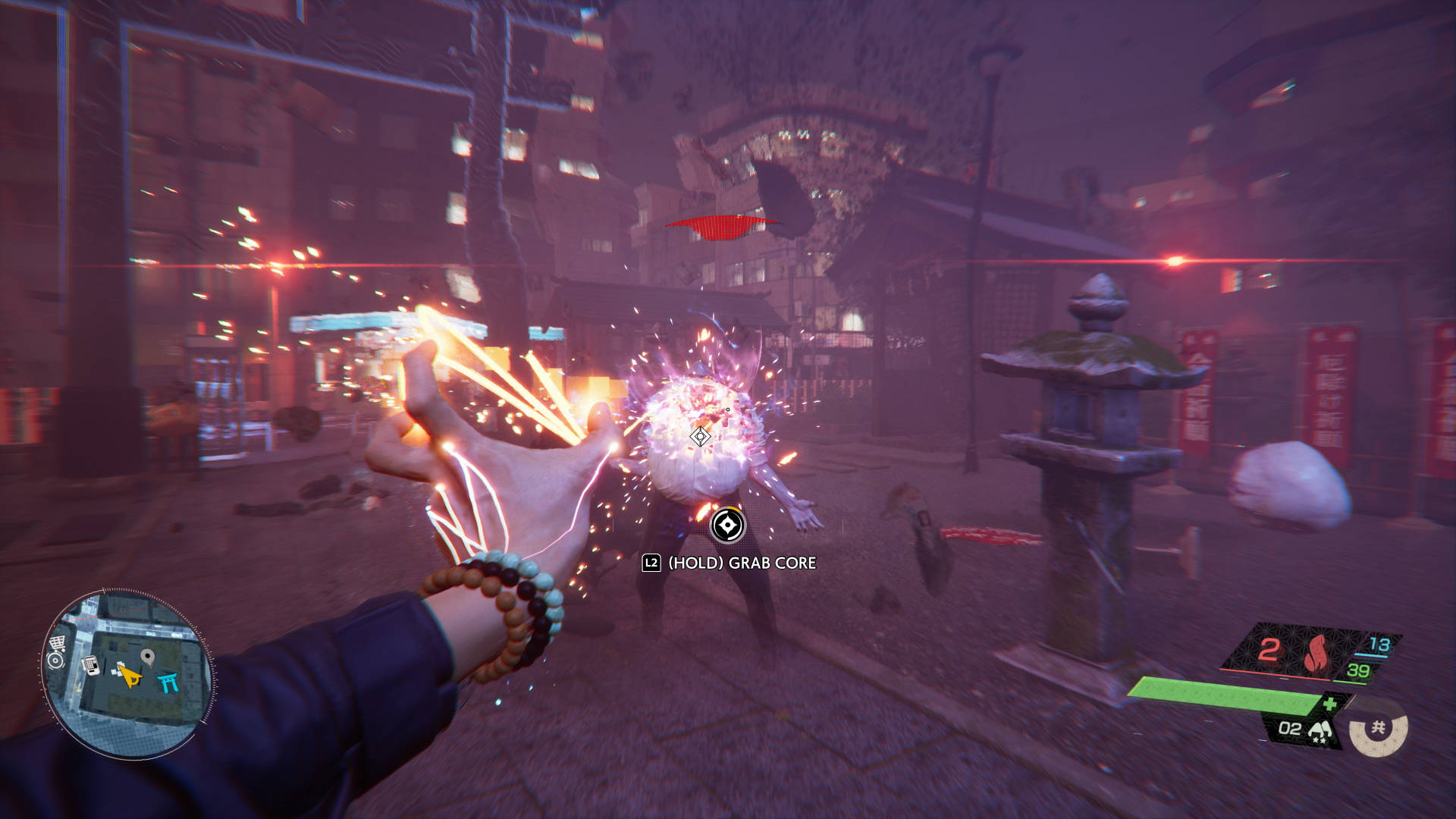
Another element to Ghostwire: Tokyo that is sure to get mixed reactions is its combat, which ends up being not as big of a focus as I expected. In the opening cinematic, main character Akito has his body invaded by a mysterious being calling himself KK, and the merger of the two gives Akito the ability to use elemental attacks that mix martial arts and magic. With all of the citizens of Shibuya having vanished into the fog, the streets are now filled with strange demons known as the Visitors. To defeat them, Akito must rely on his newfound powers, which manifest in gameplay that feels like a simpler take on the first-person shooter genre—just, you know, with you shooting projectiles out of your hand instead of a gun. Each elemental type offers a different style of attack, from faster but weaker wind projectiles, to water shots meant to hit multiple enemies at the same time, to fireballs that can be charged up to do area of effect damage. Using either those mystical attacks, or a special bow that comes in handy at those times Akito loses his powers, you need to either kill off enemies completely, or attack them enough to stagger them, at which point you can pull out and destroy their “cores.” If you’ve watched my preview for Ghostwire, you’ll know that I wasn’t enjoying its combat as much as I had hoped to. While I definitely still have problems with the overall execution of fighting the Visitors—I do now think there should be some sort of lock-on, and fights can feel clunky far too often both in aiming and movement options—I actually ended up liking the core combat system more than I thought I would.
Ghostwire’s skill tree feels strangely limited in what it offers in terms of power-ups, but once you’ve pumped points into boosting Akito’s abilities and found certain stat-buffing items, the combat system Tango put together gets much more enjoyable. What also increases that engagement is that later-game enemies offer up much more of a challenge than those you run into early on. Sure, they at times reach the point of feeling like cheating bastards, but they offer a thrill that the slower-moving and less-dangerous enemies can’t—at least until you’re dealing with bigger groups of them.
By late in the game, I was constantly running around, swapping between elemental attack types, pulling out the cores of staggered foes right before one of the big baddies could hit me, parrying their attacks when they tried to, and getting into a surprisingly satisfying rhythm. There’s plenty that Tango could improve about the combat in Ghostwire: Tokyo, and it doesn’t have the most satisfying of bosses (the end boss especially goes down way too quickly), but an area of the game that I went in with legitimate concerns over ended up being better than I expected.

However, it was another expectation that I had going in that would lead to the game’s weakest point: the story. The journey that Akito and KK go on is an interesting one, as they try to stop the mysterious masked man called Hannya from completing his sinister plans. It’s just, when I beat the game at the 18-hour mark, I felt like I could have used another 4~5 hours of narrative. There are characters I was sure I’d meet that I never did. Near the end, we get a giant exposition dump that should instead have come as pieces woven throughout the game. We do learn more about KK and his past, but spend very little time reflecting on any of it. We get flashes of both the Japanese mythological and darker spiritual territory Ghostwire was set up to head into, but never anywhere near enough of it. I know nothing about the game’s development history other than the few glimpses we’ve seen publicly, but I can’t help but feel like we’re playing something that had decent chunks of its story cut due to time, costs, or a change in overall direction.

I’ve long said that I’d rather have an ambitious but flawed game over a perfectly polished yet totally safe one, and in that, I appreciate what Tango Gameworks tried to do here. And yet, Ghostwire: Tokyois simply not as ambitious as the studio’s earlier games, either on a gameplay or narrative level, and that’s a disappointment. I think this is a good game, but it’s sadly never great—and if you play it and feel it falls more into “average” territory, I wouldn’t blame you one bit. There are some parts of Ghostwire that I genuinely enjoyed, and which I’d love to see expanded and enhanced in a sequel, but there are also so many hints that we’re about to jump into a deep dark lake of intrigue and imagination, only to end up sitting in a wading pool.

Seven Questions About Superlative Night Dreams: Cotton Fantasy

If you were a fan of shoot ‘em ups—or, as we called them back before a certain other segment of games stole the name, shooters—in the 16- and 32-bit era, then you’ll no doubt be familiar with the name Cotton. Originally released in Japanese arcades in 1991, Cotton: Fantastic Night Dreams kicked off developer Success’ new side-scrolling shooter series with a game so enjoyable and beloved that it just received a rework last year on PlayStation 4 and Switch.

I became a fan of the franchise thanks to the game’s 1993 TurboGrafx-CD port, and would go on to also play later releases such as Panorama Cotton (Mega Drive), Rainbow Cotton(Dreamcast), and the Neo Geo Pocket Color port of Fantastic Night Dreams.

And then, the series that helped define the “cute ‘em up” subgenre of shooters just disappeared, its final release not being one last fantastic dose of frenetic action, but instead 2003’s Magical Pachinko Cotton.

Now, however, on the heels of Cotton Reboot! and the re-release of many of the classic Cotton games through Inin Games, Success and Japanese indie developer Studio Saizensen offer fans the all-new project Superlative Night Dreams: Cotton Fantasy. Known as Cotton Rock ’n’ Roll in Japan, Cotton Fantasy is a modern take on the franchise that mixes classic Cotton gameplay with current-era widescreen HD visuals.

In order to learn more about Cotton Fantasy, I asked seven questions to the game’s producer, Shinya Nagatomo from Success Corporation, and game director Toshinobu Kondo of Studio Saizensen.

Mollie: Why is now the right time to bring Cotton back? I know last year was the 30th anniversary, but it could have come back at any anniversary, or in any year. Why did you feel now is the right time to revive the series?

Shinya Nagatomo: At Success, we were not actively planning with the Cotton series. But there was a change in the way Success planned and budgeted, and we managed to launch the project in a window where we could move, and the project was finally evaluated. I think the milestone of the 30th anniversary also encouraged us to do this project.

Mollie: Throughout the years, the Cotton games have changed their gameplay style, from the 2D side scrolling style of the original games, to the 3D style seen in games such as Panorama Cotton and Rainbow Cotton. When coming up with the initial ideas for Cotton Fantasy, how did the team decide which types of gameplay to pull from those older games?

Nagatomo: Collecting all the Cotton games was the basis of the project. Also, since this is the sixth game in the series, we decided on the characters based on the number 6. There are not many new side-scrolling games anymore, so we went back to basics for beginners in many areas. I also had the [opinion] that Cotton 2 and Boomerang added too many systems to the basics.

Mollie: On the other side of that question, top-down and side-scrolling shooters have changed quite a bit over the years. In what ways did the core gameplay ideas of the Cotton series need updating for the modern era?

Nagatomo: We want people to play it again and again. The idea behind it is that anyone can complete the game, but only advanced players can aim for a proper high score.

Mollie: Cotton Fantasy isn’t the first game in the series to let you play characters other than Cotton, but it does feature a larger cast than any previous title. Why did the team want to include a larger selection of characters to play as, versus simply focusing on Cotton? And might we ever see Izuna as a DLC character?

Nagatomo: It’s the 30th anniversary of the series, so I wanted to make it a Success STG all-star—that’s the reason. (But I forgot about Guardian Force.) For our business rivals, it’s also about digging up IP. It’s my hobby as a producer and planner to like all-star games, as well as Umiharakawase BaZooKa!.

I honestly don’t think there’s any chance of Izuna being a DLC character, but if we’re going to make Cotton Fantasy 2, we’ll do it Japanese style, so I’d love to have her as a playable character!

Mollie: Classic-style shooters have come back in a big way in recent years, from M2’s Shot triggers series, to retro arcade collections, to new indie projects. What were the pressures of trying to create a new Cotton game at a time when competition in the genre has grown strong again?

Nagatomo: I don’t feel too much pressure, because I think it’s different. It is often said that you can’t beat memories, but I’m confident that if people actually play it, they’ll find this one more interesting and adapted to the present.

Toshinobu Kondo: Rather than the pressure of comparing it to other works, I was under a lot of pressure to make Cotton Fantasy something that would satisfy Cotton fans.

Mollie: So what were the challenges of trying to create a new Cotton game that could both satisfy long-time fans while also being easy enough for newer players?

Nagatomo: The challenges were the rules of Cotton. There are a lot of rules for Cotton and the developers, who are fans of Cotton, and I, being more in touch with the present, had some conflicts over the direction of the game. We fought a lot about the difficulty of levels and the boss pattern.

Kondo: The last one was made a long time ago, so in order to recreate the Cotton of my memories in the present day, I had to do a lot of power-ups, but it was fundamental to keep the original Cotton [feel].

Mollie: Finally, do you have any message to our readers on why they should play Cotton Fantasy?

Nagatomo: This is a side-scrolling STG that can be played over and over again and is adapted to the present. Please enjoy it along with the cuteness of the characters.

Kondo: The music, the story, the characters, the voices, and the game system all come together to make this new Cotton. Please enjoy the Cotton world.

Superlative Night Dreams: Cotton Fantasy hits this Spring for PlayStation 4 and Nintendo Switch. The game will be available in standard physical editions and digital downloads at launch, and pre-orders are currently open for a limited edition through Strictly Limited Games.

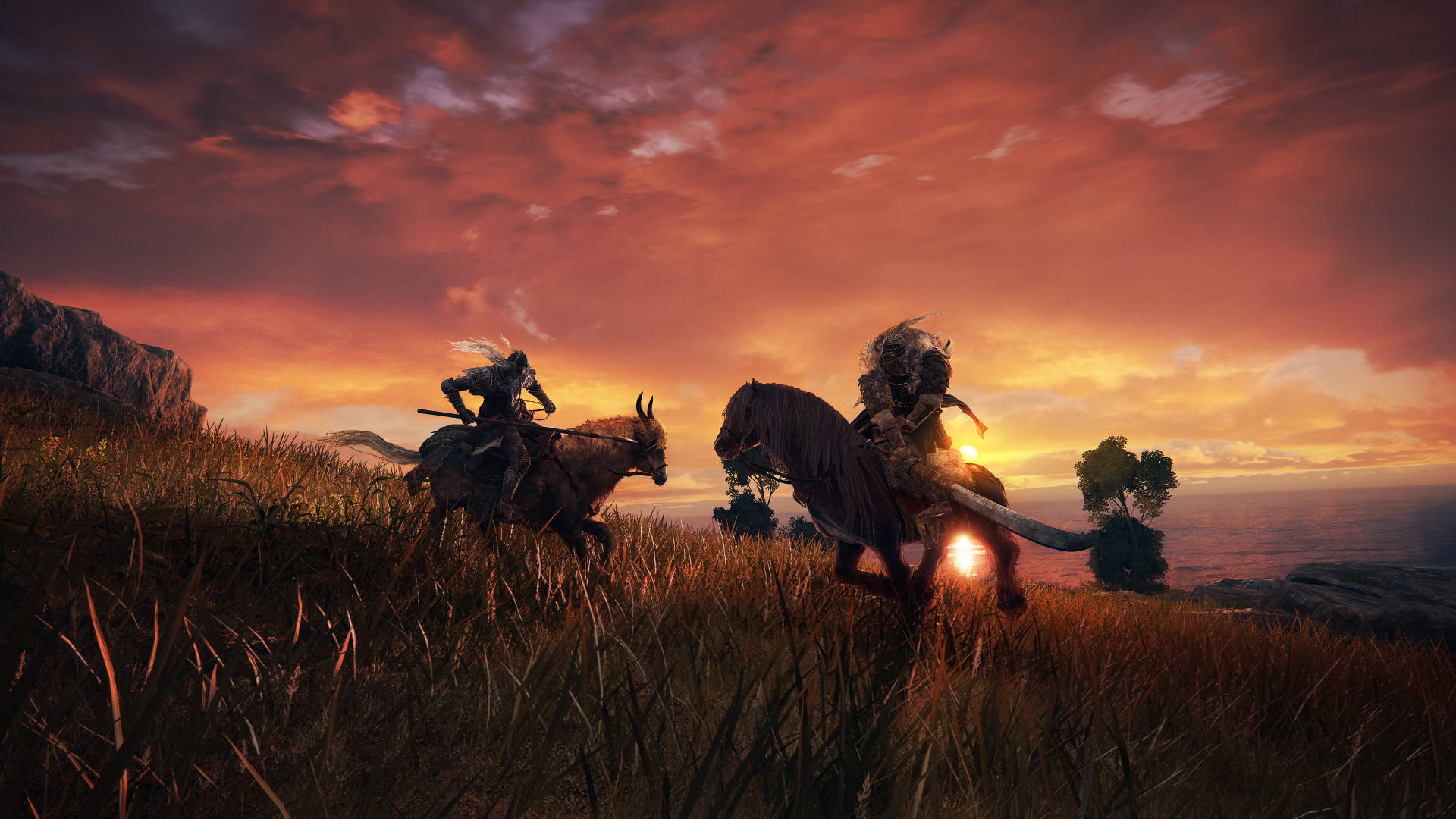
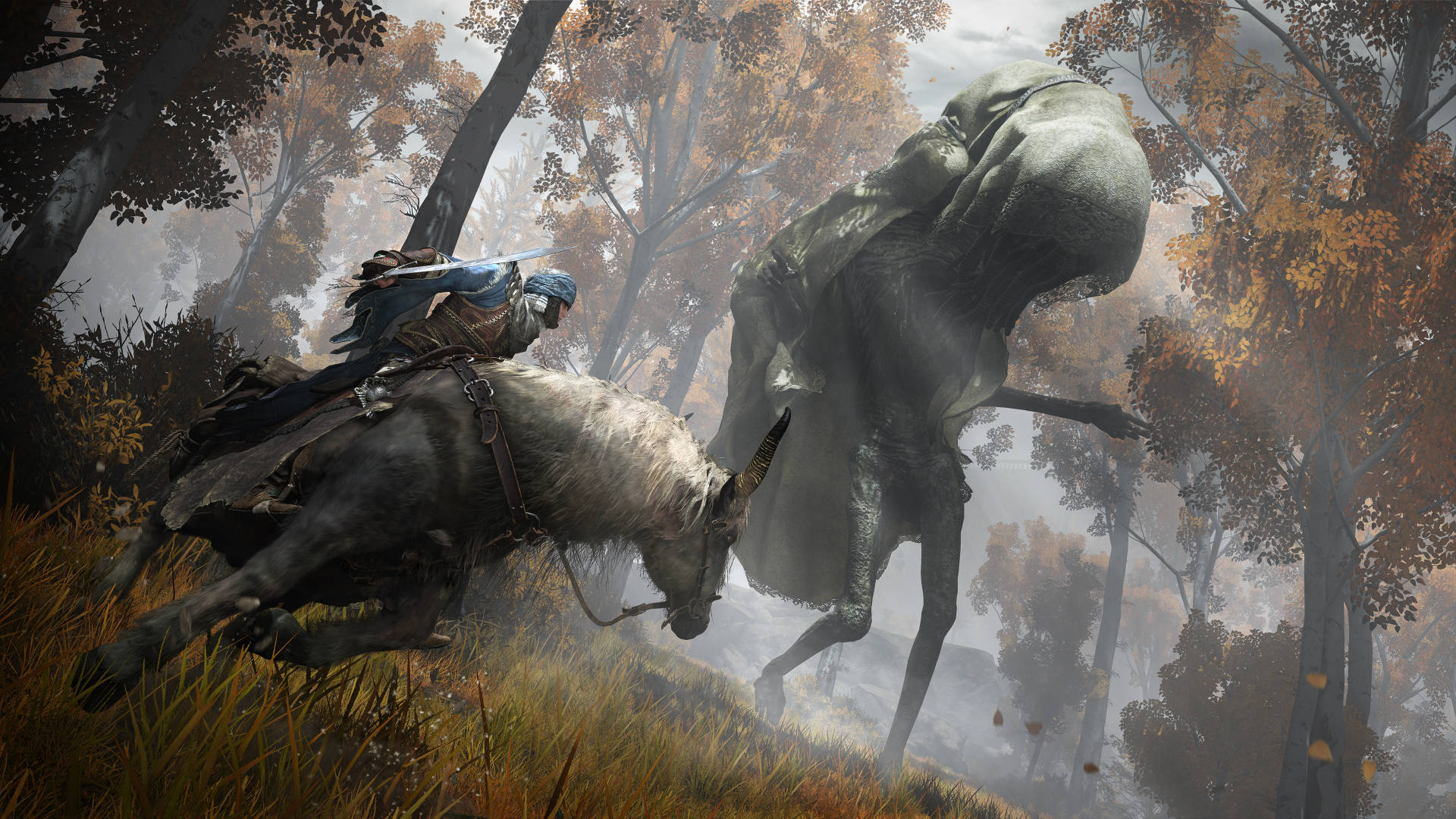
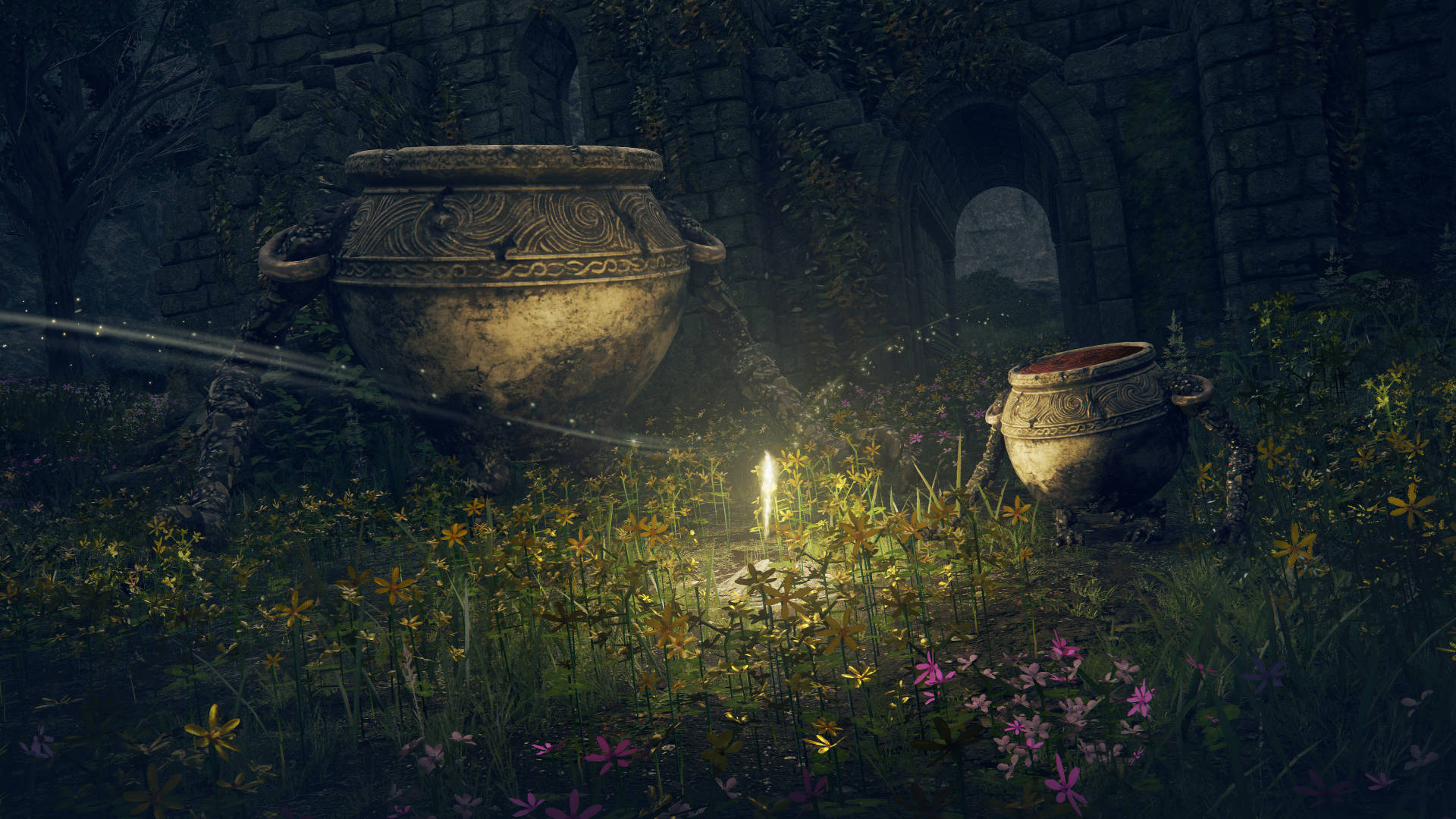
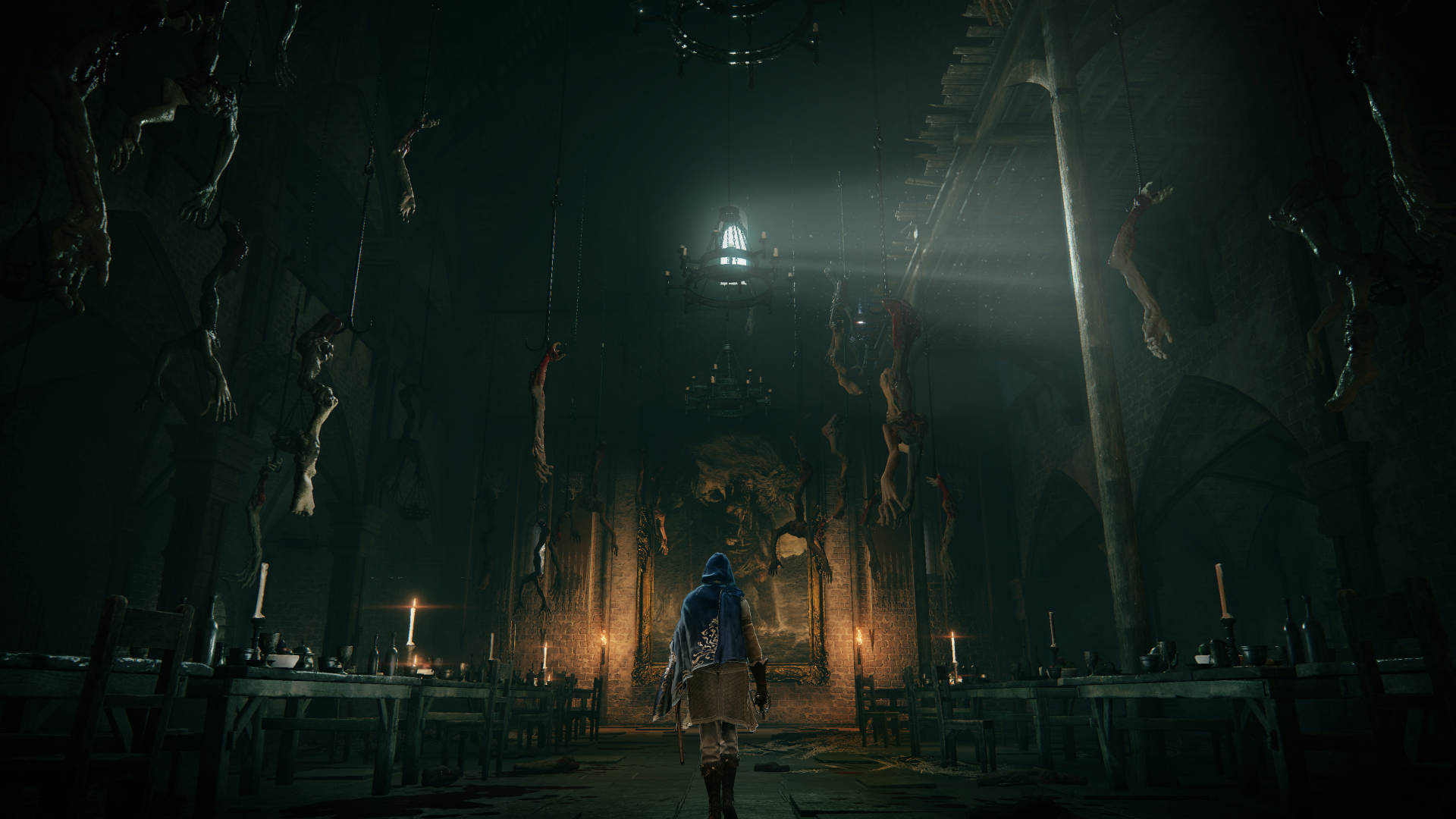
Elden Ring Review

Hashing out which games will officially be a part of EGM’s overall top five list every year is always a battle, but I’m not sure any year was quite the war that 2011 was. On one side, you had those that were certain that The Elder Scrolls V: Skyrim was the best game of the year. On the other, I led a band of rebels who refused to back down on the idea that Dark Souls deserved that top spot. Sure, Skyrim’s vast open world might have made it the bigger experience, but—at least in my mind—it sure wasn’t the better one.

And now, 11 years later, here I am reviewing Elden Ring—the Skyrim of Souls games.

Well, “reviewing” isn’t quite the right word at this point, because this won’t be a full review just yet. As I’m writing these words, I’ve had my console copy of Elden Ring for just around five full days, nowhere near enough time to come close to beating the game. I’ve played enough Souls to say that the 35-or-so hours I’ve spent in the Lands Between are probably a good indicator of what awaits during the rest of my adventure, but that still wouldn’t make it right to just slap a score onto this and call it a day.

Especially because there’s one little problem with that rationale: Elden Ring isn’t a Souls game.

Now, before I explain that statement, I don’t want you to misunderstand: Elden Ring absolutely shares plenty of DNA with its Souls siblings, the most important of which is its combat. If you’ve become a fan of From’s brainy yet brutal battles, then you’re going to love what awaits here. The advancements between what we’ve had before and what we get in Elden Ring aren’t always dramatic, but they are appreciated. One of the biggest new features in my mind are Guard Counters, where you can instantly counterattack after blocking an enemy’s attack. Parries have always been an important part of the Souls series, but they’ve also been incredibly hard to pull off for some players. While Guard Counters certainly aren’t as powerful as parries—and they can get you in trouble if you rely too heavily on them—they do open up a lot of enemies for a riposte, and give a wider array of players the chance to feel cool.

Another addition that I’m loving is the Spirit Calling Bell, an item that lets you summon the spirit of fallen enemies to aid you in battle. While the Souls series has long offered the ability to summon other players or certain NPCs into your game, summoning spirits is both more flexible, as it’s available anywhere where the ability is allowed (I know that’s vague, but it’s also kinda vague in-game too), and at your own pace, as you don’t have to worry about guest players getting bored and going home. Much like I was saying with Guard Counters, spirits aren’t nearly as powerful as the real thing, but they’re a welcome option to give the game flexibility. Flexibility is also the name of the game with the new crafting system, which lets you use materials you’ve found across the Lands Between to make items instead of always having to buy them. It seemed like such a strange inclusion to me at first, but it genuinely is nice to have a means through which you can have the items you need while also saving your runes (aka souls) for more important uses—even if getting those items for only the cost of your time does feel a bit like cheating. An endless amount of free arrows? In my Souls game?

Also, if you thought things went crazy in Dark Souls III with the introduction of the Ashen Estus Flask, Elden Ring now gives us a third flask, the Flask of Wondrous Physick. Along your journey, you’ll find various crystalized tears, each of which offers a certain buff (like gradual HP recovery, stamina boosts, etc.). You can mix any two buffs together in the Wondrous Physick, which then becomes usable and refillable like your other flasks. Even with sorceries and incantations and items and trinkets and plenty of other options for buffs, the Flask of Wondrous Physick is a nice additional option thanks to that customizability. Speaking of Dark Souls III, Weapon Arts make a return, but this time they’re found separately from weapons. By going to a blacksmith, you can embed those arts—now known as Ashes of War—onto any weapon you own, so long as that weapon type is supported. I haven’t messed around with the Ashes of War as much as I have the Wondrous Physick, but both options point to one of the overarching themes that seems to run all throughout the game: giving you a lot more choice in how you play.

And it’s choice that sits at the heart of what sets Elden Ring far apart from the rest of the Souls series.

When Dark Souls came as a successor to Demon’s Souls, the progression from one to the other made perfect sense. You could feel FromSoftware playing with intricately designed world areas in the first game, but it wouldn’t be until the second when those ideas would come together in one interconnected, cohesive world. Other elements—like the core combat system, death penalties, overall difficulty, NPC interactions, storytelling style, boss design, item scarcity, and the general pacing of the journey from beginning to end—would all definitely see evolution, but rarely revolution. Even in From’s two big side projects, Bloodborne and Sekiro: Shadows Die Twice, the legacy of the Souls series could still be felt. It was never that the men and women of FromSoftware were lazy or uncreative. They’d just hit on a winning formula, and fans were always happy to have more.

Elden Ring doesn’t feel like more to me. It has many of those same elements, like combat, bosses, NPCs, and general atmosphere, but the areas in which it differs makes this game, and From’s other recent releases, feel miles apart. My head knows that classifying Elden Ring as a Souls game really isn’t wrong, but my heart can see this as nothing but a new, separate entity that stands on its own. By far the biggest factor in that is the open world, which is a seismic shift not just on a direct in-game physical level, but also a mental and emotional one for the player. This isn’t just Dark Souls but bigger—it’s a complete rethink in how to approach all of those encounters we’ve spent the last 10-plus years encountering.

If the previous games were a 2,000 piece Lego set, with every piece dedicated to building one elaborate and detailed structure, Elden Ring is those same pieces spread out across a table to craft a variety of buildings. Every moment of Dark Souls, or Bloodborne, or Sekiro was purposeful. Every square inch of the terrain felt planned, every enemy placement carefully considered, every action intended. Hidetaka Miyazaki and his team had a pretty good idea of what you’d be doing at any given moment, even if you yourself didn’t know. There was very little wasted space, few meaningless inclusions, and a sense of pacing and progression that always pushed you as a player forward. In contrast, Elden Ring is big. It’s wasteful. It’s directionless. It’s confusing. It’s cumbersome. It’s even, at times, boring.

And I’ve loved every minute of it.

Elden Ring is going to be incredibly divisive amongst Souls fans. Some are going to absolutely hate it, or at least remain constantly annoyed by it, for those reasons and more. While examples of that level of meticulous FromSoftware design definitely still show up here, they’ll be too few and far between for many. For me, though, I never knew how much I wanted or needed a game like this until now. I still love everything done with the Souls series over the years, and I absolutely do not want those types of games to go away. But I’m also ready to get a break from that style of game design while keeping the aspects that can and do work in other types of games. This is the good parts of open world games mixed with the steller parts of Souls, and man is that a potent concoction.

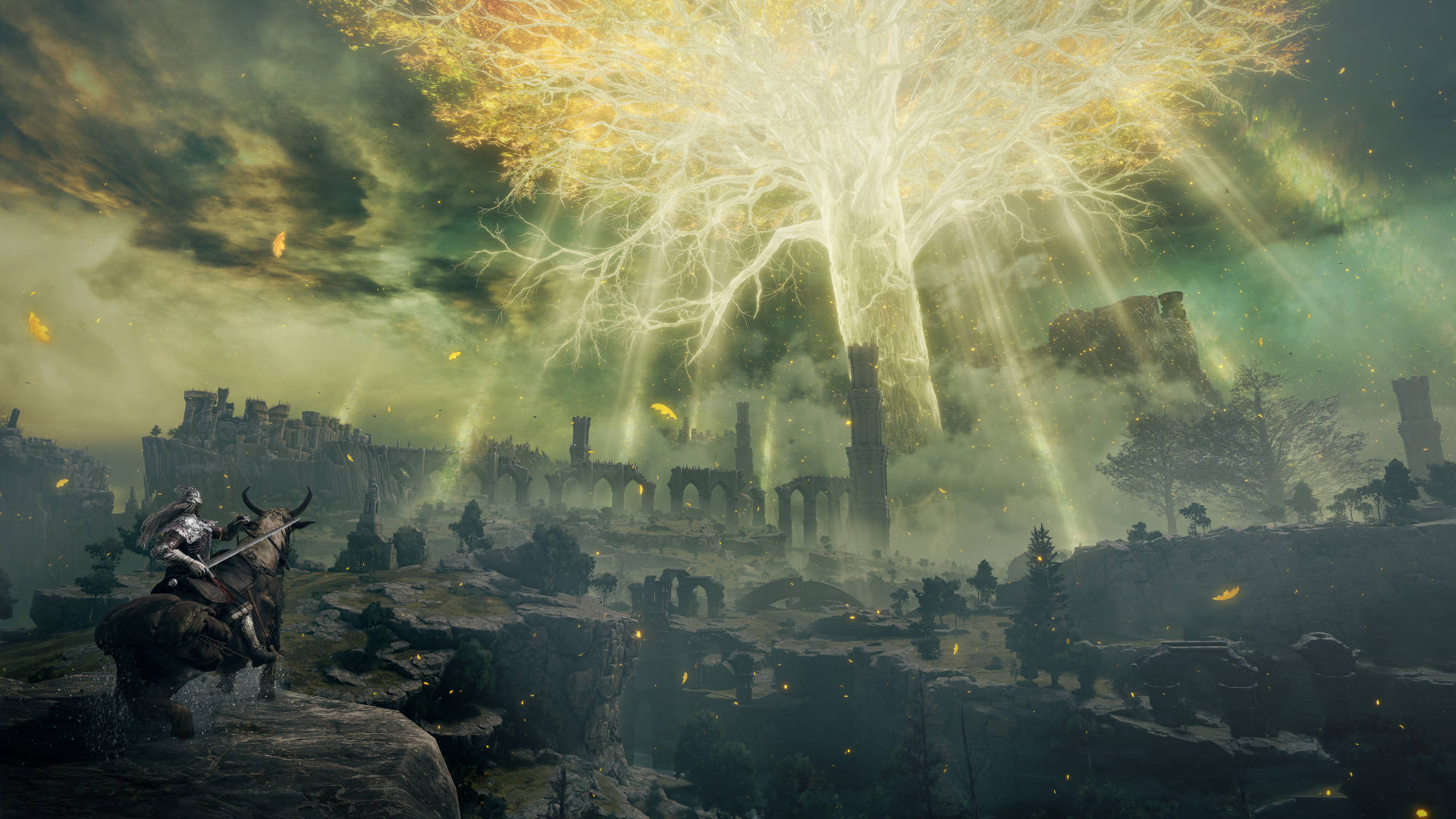
As someone who’s long loved exploration in games simply for the sake of exploration, riding my spectral steed Torrent around the Lands Between has been so exhilarating. Everywhere I’ve gone, there’s been something interesting to see—even if there hasn’t been something interesting to do there. While Elden Ring can be even more cryptic in letting you know what you should be doing or where you should be going next, I’ve savored that freedom from being stuck on any given path. Typically in Souls games, if I’m stuck on a particularly infuriating boss, my choices are either to keep banging my head against that wall, or scrounge around for some other task I could be completing instead. When I got stuck on Elden Ring’s first major boss, Margit the Fell Omen, I left and didn’t return for hours. There were so many other things available for me to do, from fighting other bosses, to clearing out caves, to farming materials, to simply filling in more of my map. I’ve yet to feel like I have to do something specific at any given point, whether I want to or not. We get the challenge, the lore, and the creativity of Souls games, with the freedom to experience all of them when we’re ready to. And I love it. I love it.

I don’t love everything, though, even when playing with the patch that Bandai Namco recommended we be on when doing our reviews. I’ve been going back and forth between playing on the 1080p monitor at my desk and our living room 4K TV, and even when at lower resolution and running in performance mode, Elden Ring still can’t maintain a steady 60 FPS. It’s FromSoftware, right? Framerate and frame pacing are always going to be some of the studio’s weaknesses. But, maybe at this point, they shouldn’t be.

There’s also elements that I simply don’t understand, like why I can’t always use my map even when not in a fight, and why I can’t always summon spirits even after activating the summoning idols. There are some parts of FromSoftware’s obsession with obscurity that I still appreciate, but others that I’ve long grown tired of. If I’m trying to use some basic game function, and I can’t, tell me why. Don’t just have my character shrug, and that’s it.

Any gripes I have at this point, though, are very minor in the grand scheme of things. Every time I think I might be growing tired of FromSoftware’s modern-era releases, the studio does something to rekindle my interest again—and Elden Ring has me feeling like the Bed of Chaos. Given my current knowledge of and expectations for what still lies ahead, I’ve probably got at least another 40 hours until I see the end credits. Could something happen in that time to make me change my feelings on the game? Absolutely. For now, though, I will be shocked if Elden Ring does not end up being one of my favorite games of the year—if not my #1 spot, just like Dark Souls once was.


Update: March 11, 2022

When I was writing the first half of this review, my plan was to come back once I had fully finished Elden Ring to give some final thoughts and slap on a score.

Now, as I’ve crossed the 100-hour mark in the game, those plans have changed. To be fair, I’m not all that far from being able to beat Elden Ring. I’ve got a good handle on where to go and what to do to finish up those final required tasks and bosses. I’ve been to all of the map’s late-game areas. The end credits haven’t rolled yet, but I can see them queuing up over the horizon.

So why not just beat the game before finishing this review?

Two reasons, really. The first is that I don’t think I have to in order to properly judge Elden Ring. While that goes against our policy here at EGM to always make an honest attempt to beat any game we’re reviewing, I can unequivocally tell you that there is nothing at this point that is going to change my mind on FromSoftware’s latest release. Back when I was still only 30 hours in, I gave consideration to the idea that something could happen past that point to make me like the game less. With every hour that’s gone by, however, my appreciation for and love of what Hidetaka Miyazaki and his team have done here has only grown. Elden Ring is the culmination of everything FromSoftware has been building toward since the release of Demon’s Souls. While I still argue it isn’t technically a Souls game, it is the Souls experience in its most refined, enhanced, and approachable state. I still cannot bring myself to say that I like Elden Ring more than Dark Souls—because that game just affected me so deeply at the time—but it is clearly the best game the studio has ever produced. (Sorry, The Adventures of Cookies and Cream.)

Just as Dark Souls once changed how I saw other video games, so too does Elden Ring. I dread playing an open-world game from another company after this, at least not for a while. Exploring the Lands Between—devoid of any hard-set goals, a map crowded with icons, mundane quests from NPCs, or often even any idea where I might end up—was always such a joy. No matter where I went, there was something worth seeing, and nothing that I found ever felt like it existed just so I’d have something to do or so that area wouldn’t look so barren. I honestly never expected FromSoftware could expand its style of world design out to the size of an actual world, but they did, to a degree that I can’t believe this game didn’t take years longer to develop. Every time I thought I’d hit the edges of the map, it grew in size, and no matter where I went, I discovered areas that felt rich in detail, beautiful in aesthetics, and alive with their own enemy types and unique landmarks. Elden Ring is definitely not the most visually impressive game you’ll see on a technical level, but few other releases can match it in terms of its artistry, complexity, or meticulous design.

Elden Ring is also just so utterly enjoyable when it comes to its gameplay. Taking the carefully crafted enemy encounters and slower, more thoughtful combat of the Souls games and moving it all to wide-open fields and less-cramped locations also shouldn’t have worked as well as it does. Not only does it work, but all of those moments of battle now feel even better. It’s the smaller things, like jump attacks actually being useful, or shields being far more powerful for those who love defending. It’s horseback combat while riding Torrent, which becomes an important tactic for certain fights. It’s the Ashes of War, which offer an impressive amount of depth for both adding new skills to your favorite weapon or changing their elemental affinity. It’s in how, in a shocking twist, stealth has become a legitimate strategy option, and that I don’t hate that fact. Or it’s the selection of spells and incantations that feel so much deeper now, which has been especially welcome to me as someone who loves Faith-based builds.

None of my opinions on those elements will change at this point—nor will my thoughts on Elden Ring’s weaknesses. Even though I’ve long stopped caring about the game’s framerate, it remains frustrating that FromSoftware continues to struggle with game performance, especially on the newer consoles. (I know PC players have had some bigger issues, and that there have been specific problems on both Xbox and PlayStation, but I’ve personally experienced none of what others have reported.) Speaking of new-gen hardware, load times can get annoying even when running on SSD, and environmental details–especially grass—often pop into view far later than they should. There are a few areas of the world where asset reuse is especially noticeable (such as the catacombs), and some of the impact of bosses can be lost when you first stumble across and defeat their clones before meeting the real deals. There is an unforgivable lack of spider women, and a surprising shortage of spiders period for a FromSoftware game. Even in listing off these negatives, though, I’m struggling to find things to say. Elden Ring absolutely isn’t perfect—no game is—but none of its weaknesses have hurt my opinion of the experience in any meaningful way.

Much more than feeling like I don’t have to beat Elden Ring to give it a proper review, however, is that I don’t want to beat it. Not yet, anyway. I want to be selfish, and give myself as much time as I need in order to finish it my way, instead of just rushing through to the end so I can allow myself to form a final opinion. More than anything else I’ve said in this review, I think that is the strongest argument I can make for how good I believe Elden Ring is. I’m the type to find most games too long, even if being “too long” means lasting 12 hours instead of 8 to 10. And yet, even at 100 hours in, I want to keep going. I want to see all I can see and do all I can do before I close the book on this playthrough.

That’s in large part to my final piece of praise for Elden Ring: its storytelling. George R.R. Martin supposedly helped craft the mythos that fuels the Lands Between. Maybe he did, maybe he didn’t—I can’t really tell. These feel like traditional FromSoftware characters and stories to me. Unlike in so many other games, where I’m forced to play the good guy because I don’t have the stomach for being bad when lines are more clearly drawn, I adore the moral ambiguity of the Souls series. Everyone is a scheming asshole. Every action you take is the wrong one. If every path will lead to chaos anyhow, then I don’t have to feel bad about choosing the one I truly want to walk. And, unlike the fence-sitting I’ve often done in the Souls games, here in Elden Ring, I’m all in on a scheme of my own. I’ve formed bonds with a small group of co-conspirators. We’ve set the wheels in motion. I’m probably going to still need another 20 to 30 hours in order to both beat the game and do all of the required side content necessary to make happen what I’m hoping is going to happen. If I beat the game now, I won’t get the chance to see things through to the end my way.

For now, I can’t tell you about which ending I got, or what strategy I used against the end boss, or what level my character was at once those credits finally rolled. What I can tell you is that, even with its flaws, Elden Ring is the most impressive, exhilarating, and engrossing adventure Miyazaki and his team have ever given us, and it shows just how much life the Souls series still has left in it. When I ended this review the first time, I expected that Elden Ring would most likely show up on my top five list for this year. Now, I’m left wondering if it isn’t going to end up as one of my favorite games of all time.

And God help me if, come December, I find myself having to argue why it should take the top spot over Starfield.

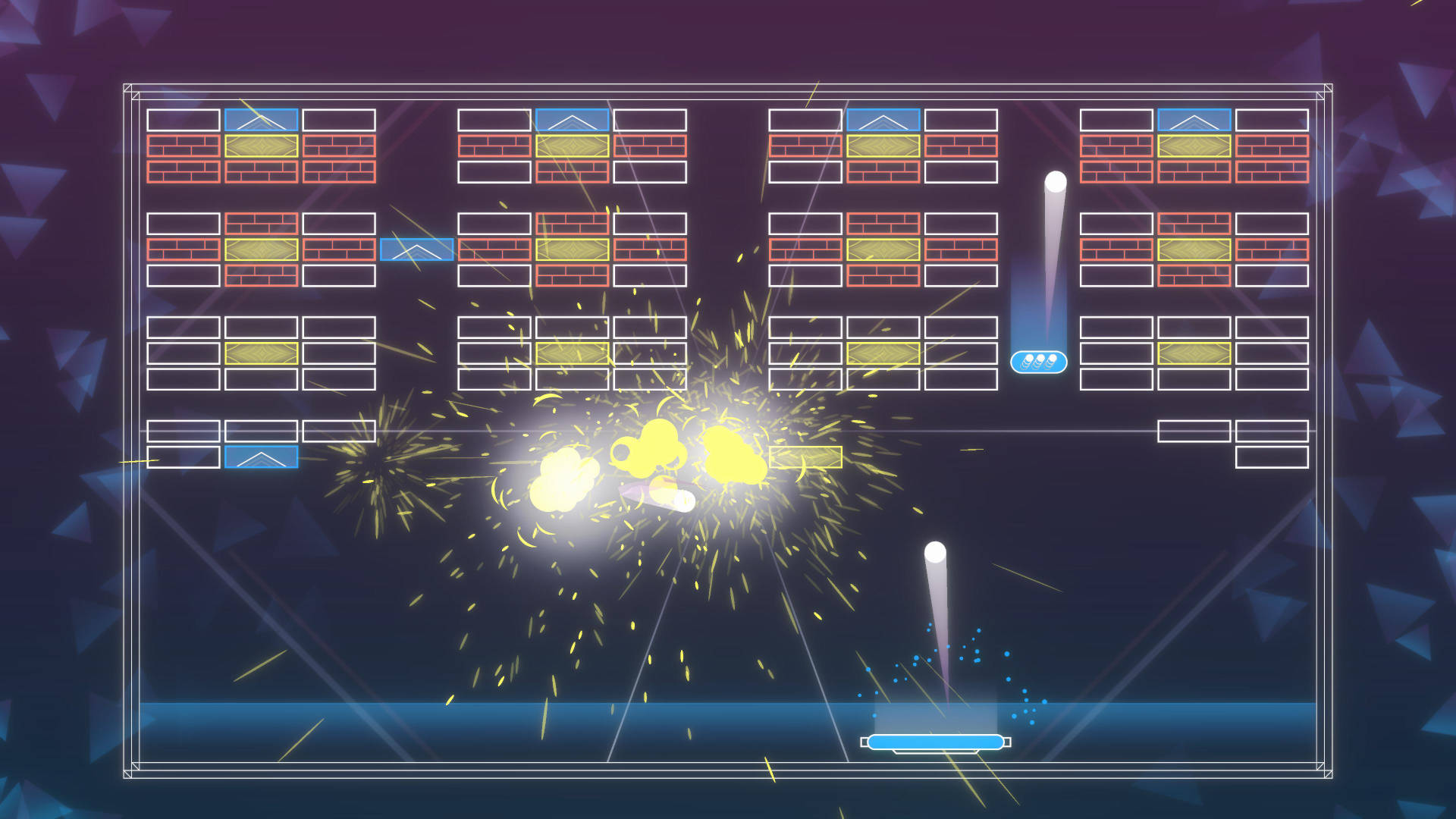
Breakout Recharged Review

When I first got into video games as a child, Nintendo and Sega weren’t even a blip on the radar for most people yet. The name of the game was Atari, and it really was the name in games—well, unless you were one of those unfortunate kids whose parents stuck them with a Colecovision or Intellivision. For a time, Atari was so big a player that even movies like Blade Runner referenced the company being alive and well far into the future.

Yet now, here in that future, Atari is a name that I’m willing to bet far more people don’t know than do, unless it’s from a t-shirt randomly found at Target or a pleather wallet sitting in a dark corner of Hot Topic. Atari does exist today, but it’s not the real Atari once formed by scrappy upstarts in Sunnyvale, California. The new Atari, in an attempt to see some return on the brands and properties it picked up the rights to, has released some incredibly ill-conceived, or at least misguided, products and software across its lifetime.

One incredibly large exception to that, however, has been the company’s line of games released under the “Recharged” banner. The series kicked off in the summer of 2020 with Missile Command Recharged, a beautiful and well-designed modern update to the classic 1980 arcade hit. Following that, we received Asteroids Recharged, Black Widow Recharged, and now this week, Breakout Recharged. I’ve been incredibly impressed with the line-up until now, as the developers working on these remakes—AdamVision Studios and Sneakybox—seem determined to put a lot of work into maintaining the core simplicity and addictiveness of the classic versions while crafting an updated visual and aural design language shared across all of the titles. The result has been experiences that not only feel both familiar and fresh, but which also feel like part of the same family, rather than random remakes tossed out by a variety of studios that all have different ideas for how to accomplish those goals. (I won’t name names, but there’s a particularly infamous retro-inspired undertaking currently going on that could really learn from what Atari is doing here.)

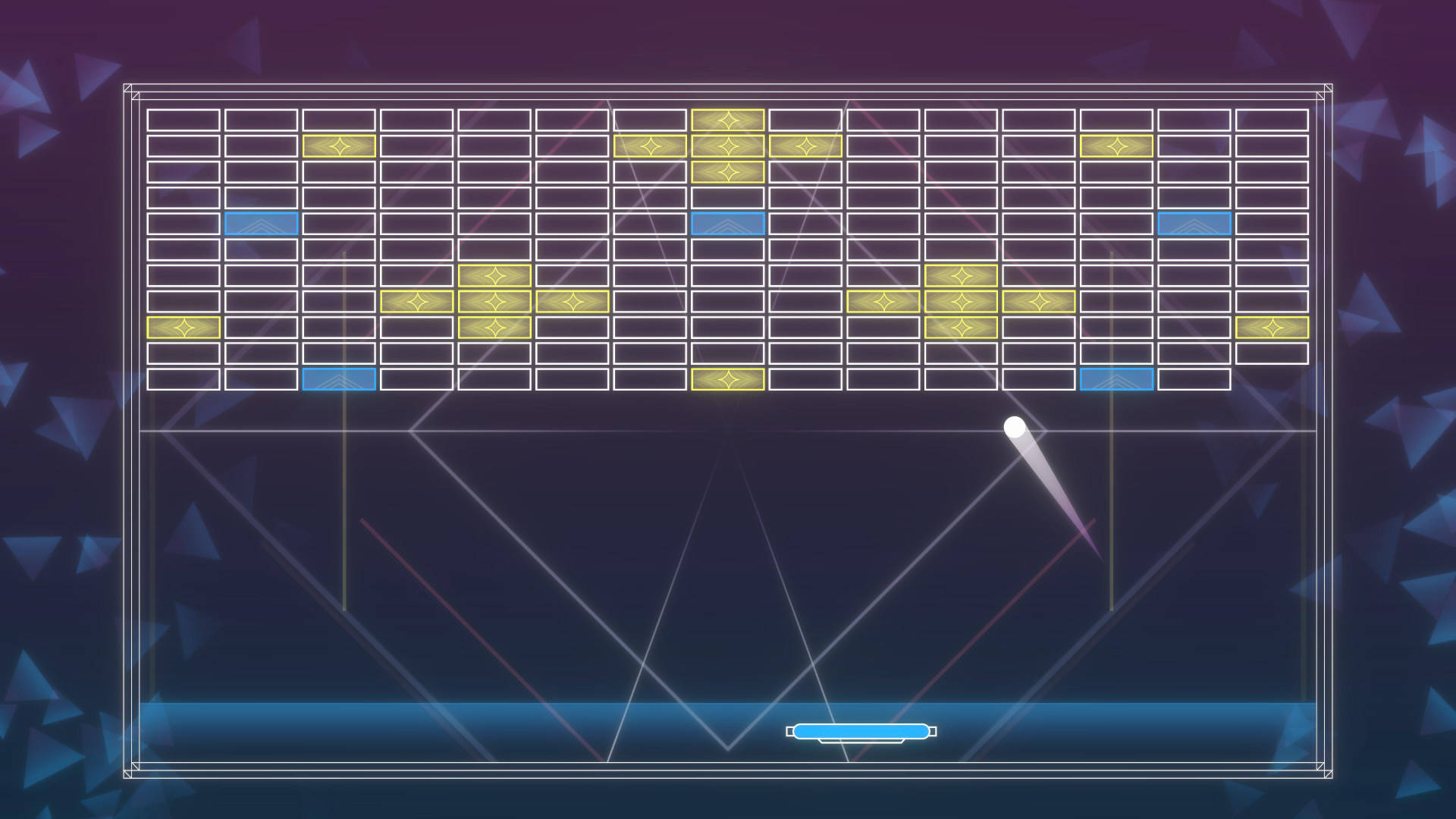
Unfortunately, while Breakout Recharged is the newest release in the series, I also think it’s easily the weakest. The problem is, Breakout is a really hard sell in this modern era given its incredibly simplistic gameplay, and has long been replaced by far more compelling offerings such as classics like Arkanoidor more modern genre entries like Wizorb. Whereas I’d argue the original versions of Missile Command, Black Widow, and Asteroids can still be enjoyable today, I can’t say the same for Breakout. The devs have certainly tried to make things more interesting here, but I don’t know if that effort went far enough.

Breakout Recharged’s main mode is Arcade, which you can play either solo or in local co-op. Before you begin, you select from one of three modes: Recharged, where you only have one life and have access to power-ups; Classic, which offers three lives but no power-ups; and Classic Recharged, which gives you both the life bump and the special items. Arcade is always the same series of brick patterns, with the goal being to see how long you can last, and how high of a score you can achieve, before losing all your lives. I’ve had plenty of fun in my time playing the Arcade mode, as I always enjoy a good score chase, but the lack of both graphical and brick pattern variety can definitely wear thin after a while.

The game’s other mode is Challenges, which has a lot to sink your teeth into when you get bored of attempts at high scores. The long list of challenges feature their own unique brick patterns, and while some are about reaching a particular score, others focus on clearing out all of the bricks, surviving for a set amount of time, or achieving other specific win conditions. The challenges are a lot of fun, some of them are definitely tough to complete, and every one of them offers a leaderboard of some sort, which I always appreciate. Overall, the mode is a great addition to the game, but I do wish it’d get more tweaks to its interface, as it’d be nice to be able to actually see how many locked challenges remain as you play. As it is now, you’re just kind of completing missions without knowing how much progress you’ve made or what awaits beyond the next few stages.

I don’t really enjoy coming across as negative about Breakout Recharged, because there’s nothing deeply wrong in anything it does. It’s a quality effort from teams who seem to genuinely care about making good games, and it does try to push the Breakout formula forward in some areas—such as a roster of power-ups that feature abilities I’m not sure I’ve ever seen in other brick-breaker games before.

It’s just, as I said before, Breakout has always suffered as a series due to its simplicity, and more couldhave been done here. The bricks can take an incredibly long time to travel down the screen, and once you clear one set out, there’s a break in the action when nothing happens until the next set arrives. Why not give me the ability to adjust the overall game speed and brick spawn rate, without just cranking up the speed on everything (such as the ball)? There are some really intense patterns in the Challenges mode, where things get hairy as bricks continually get close to the fail line. It’d be nice to also feel that higher intensity in the Arcade mode should I want to.

Why not go the Japanese “caravan” route and have a mode specifically focused around a crazy amount of bricks descending where I’m trying to see how high a score I can get in a set interval of time? Or what about a mode where the brick patterns are totally random, so I never know what to expect? The argument might be that such a level of extra effort wasn’t put into the previous Recharged games, so it might feel weird to do so here—but again, I worry that Breakout, even updated, is simply going to feel too simplistic for a lot of people out there, even when compared to other “simplistic” classic games like Asteroids or Missile Command.

There are then a few other areas where Breakout Recharged misses the mark. While it does have a lot in common with its siblings, the game’s artistic design just doesn’t have the same impact as those other releases, resulting in it being the least impressive on a graphical level. At least on Switch, there’s some occasional slowdown when a lot of visual effects are going on, which can be rough, as any delay in knowing where the ball is can mean quick death. (Oh, and absolutely turn off screen shake right from the start.) Finally, and weirdly, you can’t use the directional buttons to move your paddle, or even for navigating menus.

When I say that Breakout Recharged is the weakest of the Recharged series, I do so more from adoration for the work that’s gone into these projects, and less as condemnation for this particular game. I’ve legitimately enjoyed my time with this latest offering, but I also must acknowledge that my experience may be the exception, not the norm. If you’ve been curious about Atari’s line of reworked classic arcade hits, then start with any of the other options already available. If you get through those three and still want more, or if you’re a big enough fan of Breakout clones to want to try a new take on the game that started it all, then I’d suggest you consider breaking out your wallet for a copy of Breakout Recharged.

Getting an Extended Look at Ghostwire: Tokyo Spooked Me—but in a Good Way

Over the years, I’ve had many chances to get a deeper look at games before their release. Sometimes, those previews don’t end so well, as seeing the game outside of carefully crafted trailers exposes the game’s shortcomings or misguided ideas. Other times, the project might look and play okay, but not live up to expectations built up from all of the pre-launch hype.

Thankfully, for me, Ghostwire: Tokyo falls into yet another category: the early look that leaves me more excited for a game than I had been the day before.

It’s not that I didn’t think Ghostwire would serve as an interesting next project from Shinji Mikami’s Tango Gameworks following the release of The Evil Within 2. First-person games of any type remain a rare direction for Japanese developers to take, and when we do get such releases, they often offer a unique twist on the genre. And, on a personal level, I can’t help but think back to Atlus’ Maken X when seeing Ghostwire, which was another first-person closer-combat title that infused its fast action gameplay with a mix of modern technology and mythological Japanese themes.

The concern I had for Ghostwire: Tokyo was if its particular blend of combat and atmosphere would gel together to give us a compelling gaming experience. While I haven’t had the chance to go hands-on yet, I did get to check out about 45 minutes of uninterrupted gameplay footage—which was much longer and showcased different segments than what you might have caught yesterday during the game’s February 2022 Official Showcase. Getting that proper look at the game, I’m now much more convinced that the ideas being put into Ghostwire will indeed come together in the end.

Sure, some of what I saw feels familiar to other open-world games—as, yes, this is not the focused, linear experience I had once assumed it would be—but there’s also plenty here that genuinely feels fresh.

To kick things off, Tango Gameworks’ Kenji Kimura appeared onscreen, and offered up the following statement: “Hi, I’m the director of Ghostwire Tokyo, Kenji Kimura. Next spring, everyone will disappear from Tokyo. Please look forward to it.”

That line admittedly made me laugh a little, given the alternate context you could give to “looking forward” to everyone in Tokyo disappearing. However, that is exactly the situation that kicks off Ghostwire: Tokyo’s narrative. Almost everyone in Tokyo has mysteriously vanished, and it’s up to our main protagonist Akito to try to find out why—while simultaneously battling the bizarre monsters that have taken the place of those inhabitants.

In the gameplay preview yesterday, viewers were briefly introduced to KK, a man who will play an important part in Akito’s journey. While I don’t yet know his full backstory, I did learn from that showcase that KK somehow enter’s Akito’s body, and is the reason we see black smoke emanating from our hero. Beyond that, from our extended media preview, we got another clue, as KK explained that he “was one of this country’s guard dogs, but I ran with a pack of strays.”

The knowledge—not to mention resources—he acquired during that part of his life will be a big help to Akito throughout the course of the game. For example, the bow that we got a glimpse of yesterday came from KK’s apartment, and it looked like more goodies may await there as well. KK will also act as a voice in Akito’s head, helping to guide him (and us) through the streets of Tokyo while advising on the matters of yokai.

(If you tend to dislike games where a lot of conversation goes on between the main character and some sort of partner character, then I’ll warn you that I heard a lot of chatter between the two men during our preview.)

Many of your encounters in Ghostwire: Tokyo, at least from what we saw, will fall into one of two types of beings: those yokai, aka spirits from Japanese folklore, and The Visitors, which come across as twisted manifestations of former humans. One of the interesting elements of The Visitors for me is that, rather than being grotesque monsters or bizarre beings of horror, all of the ones we saw resembled average, everyday people from Japan—just with something not quite right about them. Umbrella-wielding salarymen with no faces. Seifuku-sporting schoolgirls with no heads. Children in yellow raincoats with glowing red eyes looking out from under their hoods. I almost find these kinds of normal-but-not enemies more unnerving than if the team had simply tried to come up with a bunch of creepy monsters. Not that there aren’t creepy things waiting for you in the game, of course.

There’s a lot going on in terms of gameplay in Ghostwire: Tokyo, but there’s two specific things I want to point out. The first—and maybe this was something that was already announced, but I myself hadn’t picked up on yet—is that simply attacking enemies isn’t enough. After doing enough damage to them through his supernatural abilities, Akito must use the Ethereal Weaving technique he gains from KK to pull out their spirit cores. If he doesn’t, the spirit can continue to fight. It certainly isn’t a new concept amongst action games, but I think it’ll help give Ghostwire’s combat an extra layer of depth beyond what it would otherwise have.

The other is the use of katashiro, human-shaped dolls made out of paper that you’ll no doubt have seen before in other games or anime that deal with Japanese spirits. After you take down Visitors, you can use a katashiro to absorb the spirits of humans that those foes held captive. Each doll can only hold a set amount of spirits at any one time, so you and Akito will need to find a phone booth—yes, they do still exist both in this Tokyo and the real-life one—and transfer the spirits to safety through the phone lines. (Let’s be fair: Cell phone reception is too inconsistent to trust with trying to save human spirits.)

Another of Ghostwire: Tokyo’s elements that I really appreciated during our preview was the overall art direction of the game. On a more grounded level, the recreation of Tokyo we’re let loose is both aesthetically and technically beautiful. When things start to get weird, the visual effects and world-warping techniques the team at Tango are building into the game produce some legitimately cool moments—though that artistic flair shouldn’t come as a surprise for those who have played either Evil Within release.

At one point during our preview, main antagonist Hannya trapped Akito inside a spiritual barrier, leaving our hero to scour an apartment complex for a set of barrier stones. While the mission was simple—destroy all the stones, and the barrier will fall—getting to them wasn’t easy. The closer Akito got to each stone, and the deeper into the complex he ascended, the more reality became corrupted. In a series like Silent Hill, you know what to expect in those moments: darkness, horrifying sounds, and a whole lot of rusty metal. In Ghostwire, on the other hand, the team seems to be putting a lot of work into coming up with a wide assortment of unique, visually interesting ways to mentally or emotionally put players off balance.

One other thing I do want to address is Ghostwire: Tokyo’s open-world nature, as I know some people have gotten burnt out on those types of games in recent years. Unfortunately, I can’t speak to how that world structure will work here, as we only saw a small section of the full map, with other parts clearly still needing to be unlocked. As well, we also saw very little of the sidequests that await, so I don’t know how prevalent—or required—they’ll be. The main one we did see had Akito tasked with saving an old woman’s yokai friend, and it was thematically appropriate, interesting in execution, and surprisingly short. Given I tend to not play a ton of games with sprawling maps littered with objectives, if that’s what Ghostwire: Tokyo ends up being, it won’t bother me. If, on the other hand, you’re one of those people tired of such games, definitely keep an eye out on the additional details we’ll no doubt get in the lead up to launch.

There’s a lot more I could say about what I saw in the extended gameplay preview for Ghostwire: Tokyo, but there’s also still a lot that I don’t know at this point. What I do know, though, is that everything that I saw only made me more excited to play the game when it hits PlayStation 5 and PC on March 25th. There are factors that some people might not like to see, like how it is indeed a more open-world experience, or that gameplay looks to be slower and more methodical, but those elements totally work for me here. And sure, I’m tired of Tokyo always getting the attention—really guys, can’t we set more games in Osaka—but the virtual representation of it we’re getting here looks to be a fantastic playground for an adventure that blends the modern and the macabre.

And whatI’m not at all tired of is Japanese developers bringing original ideas and creative twists to first-person games—and I’m now feeling more confident that that’s exactly what Ghostwire: Tokyo is going to provide.

About An Elf Review

I’m not sure I can remember the last time a game trailer excited me as much as About An Elf’s announcement trailer did. Every second of that video seemed crafted in a way meant to appeal directly to me. The visuals. The music. The humor. The characters. The overall concept. Everything just seemed so perfectly tuned to my tastes that I was genuinely afraid to request review code, because what if the actual game couldn’t live up to the fantasy one I was already playing in my head?

It is also that trailer that serves as the single most useful piece of this review of About An Elf. Honestly, almost everything I’m going to say past this point will be fluff, because I am very confident in the idea that you can base your entire purchasing/playing decision by watching the video I’ve embedded below. Does the trailer speak to you in a similar way as it spoke to me? Then you’ll probably enjoy About An Elf. Do you think it looks like absolute artsy garbage? Then you’ll probably be in the majority, and you should stay far away.

Every story needs a hero, and our hero here is Princess Dam, the best damn princess the elves could ever ask for. Every hero needs a quest, and Dam’s quest is to bring about the elftopia. What is the elftopia, you ask? Well, it’s the most important anything ever. The elftopia means everything. Or, perhaps it doesn’t mean anything? It’s the day and night, the solid and sublime. It may last an eon and an age, or it may be a blink in time. It’s that instance, or place, or circumstance, or whatever, when all just happens to be… elf-ok.

Unfortunately, the elftopia can’t become reality until Princess Dam drives all the monsters out of the ancient elven homeland. That’s a tall order for one little elf, so thankfully Dam meets Roland, a friendly cat who’s convinced to help the princess instead of eating her. The duo sets out to rid the land of evil and bring down the King of Terrors so that the elftopia might commence.

Whereas most of About An Elf unfolds as a visual novel, with a lot of text-based dialog and a smattering of choices, battles are where we get most of our gameplay. To fell her foes, Princess Dam breaks out her collection of crystallized chunks of pure magic known as Magiballs. Each Magiball represents a particular element, and when encountering an enemy, a clue to their weakness flashes on screen. As the player, you need to help Dam decipher those crystal visions, and then pick the right Magiball to employ. If you make the correct choice, Dam vanquishes the monster, clearing the way for her and Roland to continue on their quest. Choose wrong, and Dam (and you) can try again so long as she still has a stock of gummy bears left.

Look, okay, I know some of you probably aren’t even reading this sentence because you’ve already left this page to go browse TikTok or something. About An Elf is an incredibly difficult game to sell—or heck, even properly convey—in text, because so much of the experience is, well, the experience, rather than what you’re doing or why you’re doing it or how you’re doing it. As a game, it’s better than some visual novels I’ve played, but certainly can’t compare with many of the higher-tier offerings of the genre. And, unquestionably, its humor and characters will not be for everyone.

For me, though, there’s just so much to About An Elf that comes across as creative, interesting, and utterly charming. Take the game’s visual style, for example. Even beyond the actual graphical elements that make up the characters or the backgrounds, everything has an animation style that is very limited in frames yet incredibly energetic in movement. Meringue Interactive does a whole lot with only a little here, and it leaves About An Elf looking like few other games you’ll have seen before. In the same way, the game’s music clips are short and repetitive, yet they’re also exquisite, quickly giving the adventure just as much audible personality as it has visual.

And then, there’s Princess Dam herself, along with Roland, fellow elf Dido, and the rest of the weirdos that await along the way. Even at those times when the game’s humor doesn’t land, the characters continue to carry the load. I now genuinely love Dam as a character, and Sakurai should come out of retirement so she can be added to Smash. Also, spread throughout the constant undercurrent of bizarre humor are some dark and emotional moments, which only got me more invested in every player in the unfolding story.

Sadly, as much as I wish I could say differently, About An Elf is neither utopia nor elftopia. Its writing is weak at times, such as the poetry-style interstitials we often get between scenes. Sometimes they worked, while other times they left me completely lost on what I was supposed to be feeling. The game also makes a cardinal sin that no RPG or visual novel should be committing at this point: There’s no button (that I could find) to advance text that won’t then also answer questions. Some of the choices you’ll need to make are important, and yet it’s easy to be speedily progressing through a conversation then accidentally register an answer before you realize it. And, in terms of the overall gameplay loop in general, it can start to wear thin even if you love all of the game’s narrative and atmospheric elements. I think it took me somewhere under six hours to beat About An Elf, but I did so in three different sessions so that I wouldn’t suffer burnout.

The biggest thing, though, is that About An Elf feels like it’s missing something—yet as much as I love playing armchair developer, I don’t know what that something is. It just seems like there’s a hole in that gameplay loop where more should be, but it’s not clear where that hole is and thus hard to decide what that “more” is. Initially, I thought maybe Dam’s battles with the monsters needed to be beefier, like a QTE, or a puzzle segment, or maybe even a rhythm-based battle system.

It didn’t take me long to realize how awkward and atmosphere-breaking such a decision would be, though. Maybe it’d work if, say, the first time she gets into a fight, Dam has to solve this hyper-complicated Sudoku puzzle or something, but then decides it’s too much work, so they’re all just removed from the game. I don’t know. All I know is it feels as if, for example, Thanos snapped Dark Souls’ rolls, and our memories of them, out of existence. Going back to play the Souls games, they’d feel like complete projects, but there’d be that inescapable sense of something being missing.

I warned you paragraphs ago that most of what I was going to say in this review was probably going to be of no help to you in deciding if you should play About An Elf or not, and I’m feeling pretty confident in having proven myself right.

This is a game that’s interesting, and funny, and weird, and adorable, and stupid, and short, and repetitive, and incomplete. It’s the kind of game that makes you say you’re glad we have indie games that can take such chances, while also making you find people who say that kind of thing to be obnoxious hipsters. It’s a game that has something meaningful to say about the very notion of gameplay, but which also might not be saying anything meaningful at all.

Watch the video I’ve embedded above. Does the trailer speak to you in a similar way as it spoke to me? Then you’ll probably enjoy About An Elf. Do you think it looks like absolute artsy garbage? Then you’ll probably be in the majority, and you should stay far away.

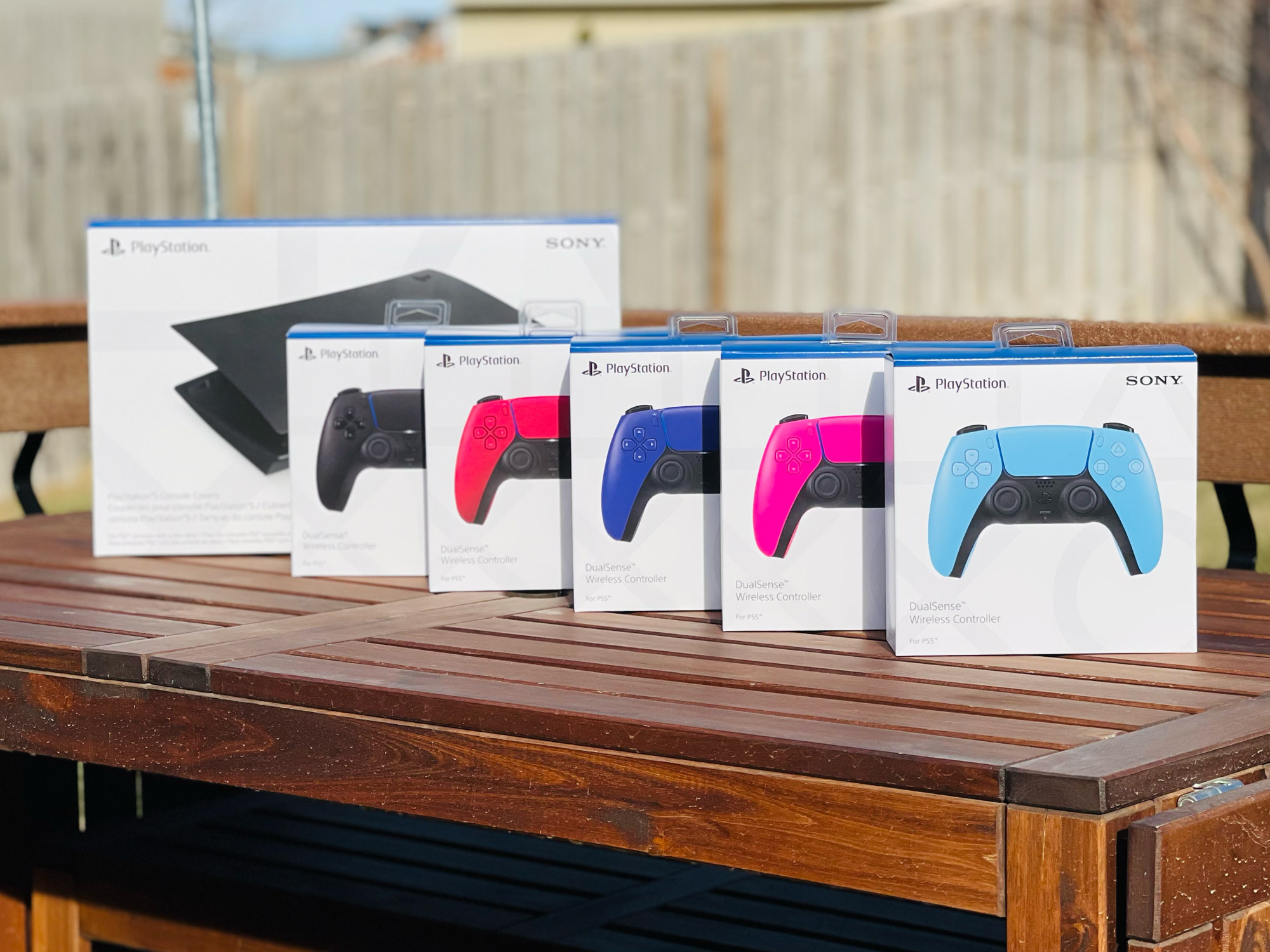
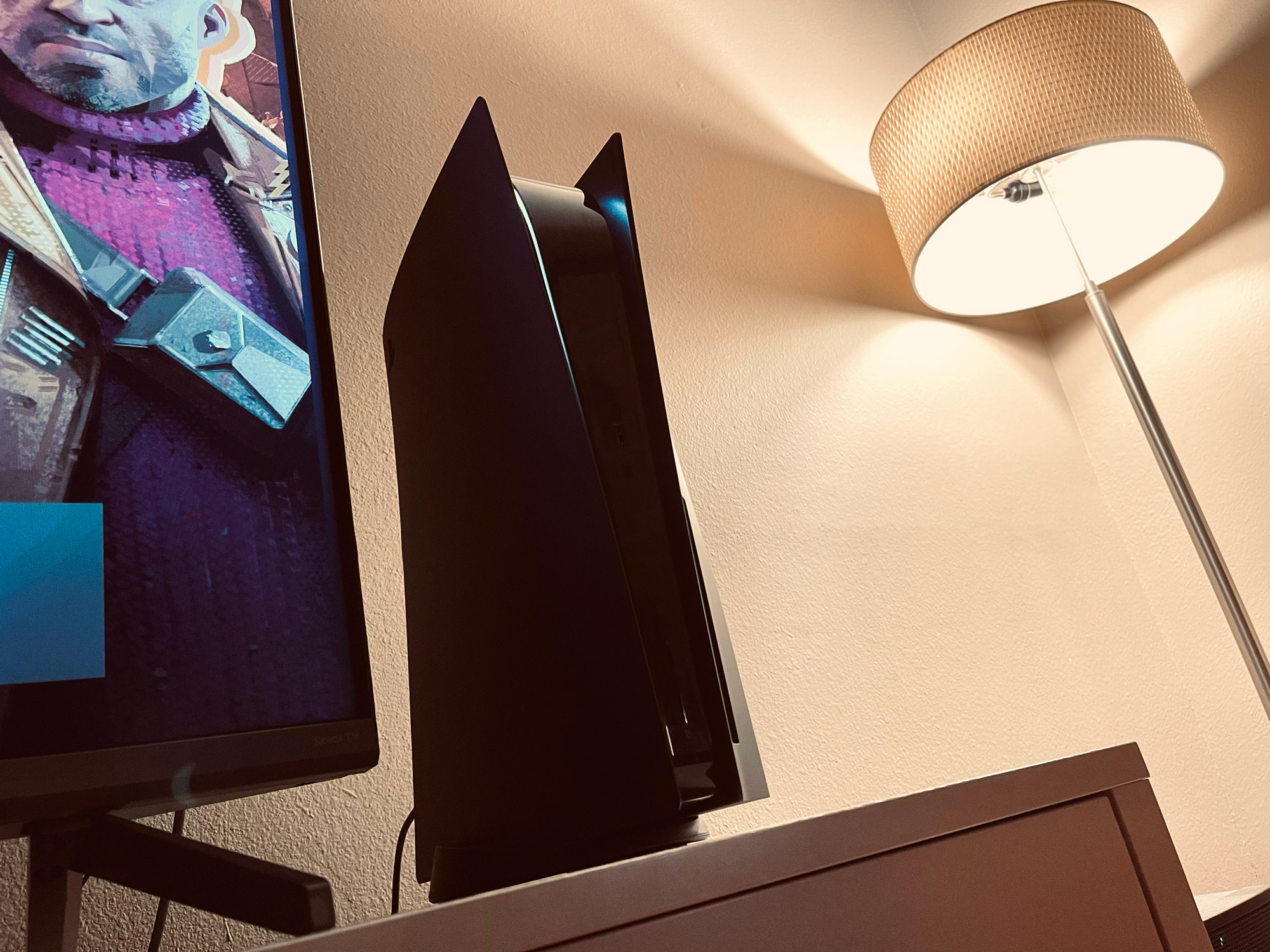
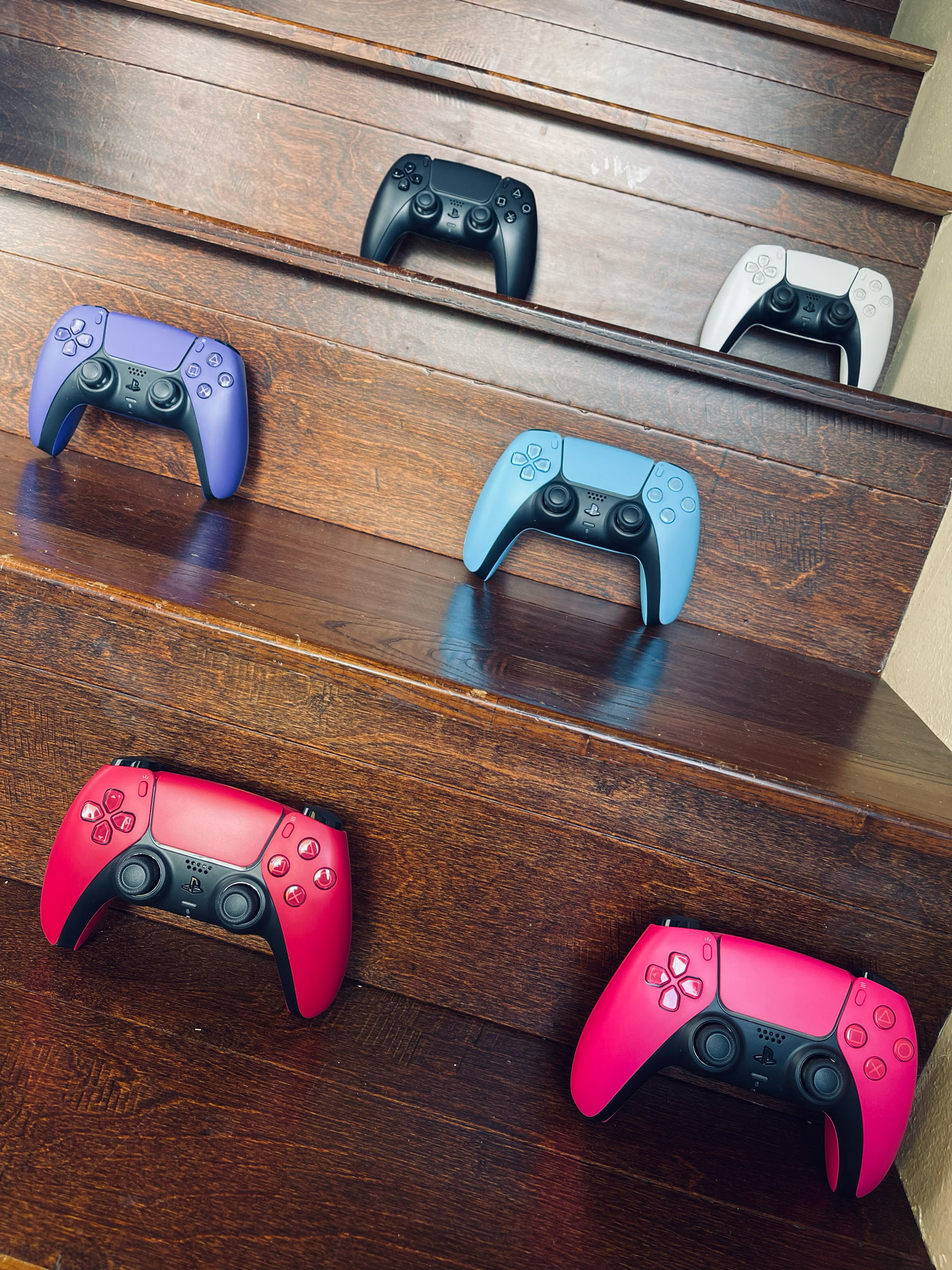
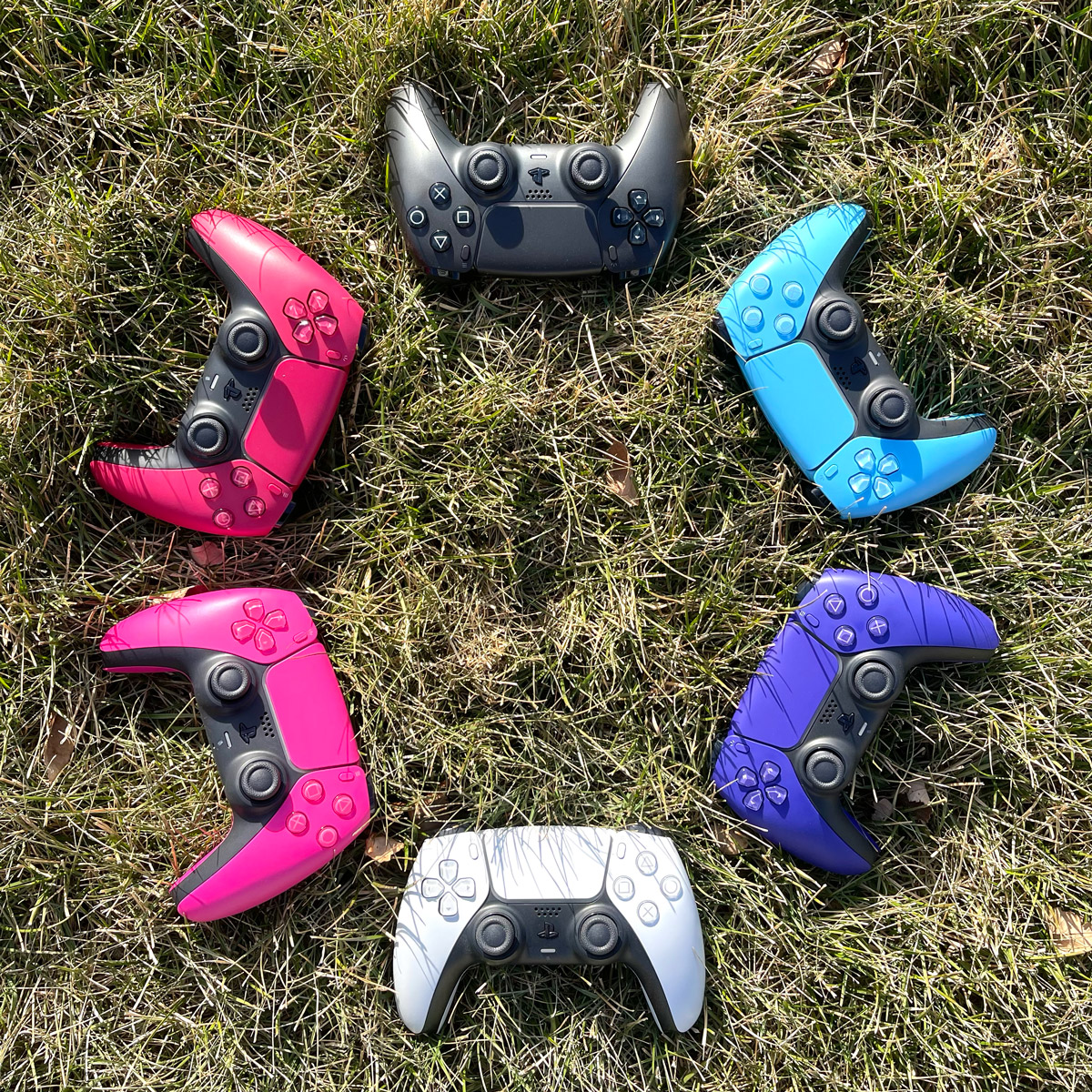
Hands on with Sony’s New Playstation 5 and Dualsense Color Choices

This week, Sony gave us the chance to check out the new batch of color choices for the PlayStation 5’s DualSense controller, as well as one of the new color options for the console itself. So, what better thing to do with all these fancy accessories than take some obnoxiously artsy photos?

In addition to the already-existing DualSense color options of standard white, Midnight Black, and Cosmic Red, this month brings three new choices: Nova Pink, Starlight Blue, and Galactic Purple.

As a purveyor of pink electronics and gaming hardware, I was the most excited for Nova Pink, even if it isn’t one of the shades I typically like for controllers. Seeing it in person, it’s actually not bad, but it’s a little darker and less sparkly than I’d typically wish for. The biggest surprise for me is Starlight Blue, which I think turned out pretty great in person. Purple isn’t typically a color I go for, but I do have to admit that the Galactic Purple DualSense is nice as well.

Overall, I’m pretty happy with the three new color options—even if they can’t compare to the awesomeness that were the Rose Gold and Berry Blue DualShock 4 color variants.

While I’ve got complicated feelings about the legal argument that went down between Sony and Dbrand over third-party replacement plates for the PlayStation 5, I am glad that Sony is at least following up by making a line of color options of its own. Much like the DualSense, we’re getting black, pink, red, purple, and blue choices for the console itself, although I’ve only been able to check out the black option at this point.

Getting the original white side plates off of my PlayStation 5 was more of a challenge than I was expecting, and in doing so, I marked up the inside of the console a tad as the plates scratched against the inside hardware. (Not a huge deal, and nothing anyone will ever see.) Getting the new black plates on was far easier, and it’s hard to argue that the PS5 doesn’t look stylish as heck in its all black form.

Still, I’ve got to be honest: black really isn’t for me. I’ve always been more of a fan of white consoles, or a nice brushed steel and woodgrain if I actually had my way. I tend to find black electronics boring, and over the past year, I’ve actually come to better appreciate the PlayStation 5 in its default look. If putting my personal feelings aside, though, I think a lot of people are going to find the console far more visually appealing with the black side plates over the white, as it really does look slick this way. So, I think this will be a popular upgrade option for many PS5 owners.

I am curious, though, to see how the console would look when going with two different plate colors. One white, one pink might not look too shabby, and would be a callback to my PlayStation 4 with its official Sony Japan pink replacement drive cover attached.

Anyway, those are my initial thoughts after a day with the new PlayStation 5 color options. I’m always a fan of companies giving us more ways to brighten up or customize our consoles and controllers, so good on Sony for getting us so many choices so quickly—especially when it comes to the PS5 itself. While we did get a limited-time run of replacement drive colors for the PS4, they were only officially released in Japan, and became hard to find after not too long if you didn’t import right away (like I did).

If you’re curious to give your own PlayStation 5 an extra bit of color, the Midnight Black and Cosmic Red replacement console colors are available this month for $55 per set, with the remaining colors set for sometime in the first half of this year. The Nova Pink, Starlight Blue, and Galactic Purple DualSense controllers should be available in the United States starting today, with other countries set to get them next month.

And now, on to some photos. (Due to the unpredictability of winter daylight, the Galactic Purple DualSense looks more like Violet Beauregarde Violet in a few of these photos. Trust me, it’s definitely purple.)

My Favorite Games of 2021

Hey, remember when we were all like “2020 has sucked, but at least we’ll be past this whole pandemic thing by next year and everything will be back to normal, including for video games!”

Yeah, whoops.

I don’t even know what 2021 was at this point. I look back on reviews I did earlier in the year and swear that I wrote them eons ago. As I’m writing this intro, I don’t even know all five games that are going to be on this list. What I do know, however, is that I’ve come to a decision: This year, I’m voting strictly with my heart. There are games that really should be on here, like Shin Megami Tensei V, or Metroid Dread, or NieR Replicant, or Microsoft Flight Simulator, but so much of what I’ve played in the last 12 months have been games that I think are good and know are good but which didn’t have that extra something to truly capture my heart.

So, these five games might not be the best that this year had to offer, but each of them made me feel excited in a way that no others did.

05 Lemnis Gate

I first discovered Lemnis Gate as part of a streaming event that Frontier had for press last summer, and its concept of taking turns bending time to defeat an opposing team was an incredibly fascinating one. Getting the hang of the game can be hard—frustratingly so when facing off against a foe who knows what they’re doing—but there’s just something to the mix of shooting and strategy present in Lemnis Gate that triggers my excitement.

In an industry full of first- and third-person shooters all vying for attention, this is a game that grabbed mine without any effort at all. The problem is, it’s a very niche, intimidating experience—and having taken a bit of a break from the game, I’m kind of scared to go back and see how its population numbers are.

(If you’re curious at all, Lemnis Gate is part of Game Pass on Xbox, so you can try it for yourself having only spent the time it takes to download if you’re a subscriber.)

04 Blue Reflection: Second Light

Blue Reflection: Second Light is the perfect example of what my personal top five represents this year. Its gameplay can be rough, its ambitions rarely realized, its budget clearly tight. And yet, while it couldn’t compete with most of this year’s other RPGs in all of those ways and more, it won me over in a way that few of them could. It’s a small, personal story about friends helping one another, and how we can’t save the world without saving ourselves first.

Second Light is the kind of game that’s tough to recommend to the majority of you out there, especially if you’re not the kind of person who can tolerate all of the nonsense that tends to come along with JRPGs.

That’s fine, though—what mattered is that it resonated with me, and gave me something this year that so many other releases could not.

03 Chorus

As many games as I play for the purposes of reviews or previews, sometimes there are titles I check out that I never really get the chance to talk about. I got a copy of Deep Silver and Fishlabs’ Chorus to help out with an article I was working on, and it came at a time when doing a full review would have been tough.

Which is a shame, because Chorus was a total surprise for me, and more people should know just how special the game is. It’s part outer space flight sim, part open-world action adventure, part gothic horror, all wrapped up in a package that can be a joy to play even if you aren’t particularly interested in one or more of those parts. Darting around asteroids in the sentient ship Forsaken while using pilot Nara’s otherworldly abilities to take out enemies never gets old—nor does the humor of seeing two spacecraft hovering near each other, looking at one another as their pilots talk, as if the ships themselves are the characters.

02 Tales of Arise

How is a Tales game on my personal list of top games of the year? How does this happen? And how do I feel okay with it?

There was no bigger gaming surprise for me this year than how much I came to love Tales of Arise, and how excited I now am to see where the franchise goes in the future. Even if things do totally go to hell as the game nears its end, everything leading up to that point had a hold on me and wouldn’t let go. There’s perhaps no bigger compliment I can give Arise than to say I came to adore every one of its main cast members, something I almost never say about modern-era JRPGs outside of Atlus releases. Upon them was then built an adventure that shines in so many other areas as well, giving us a game that truly fulfilled Bandai Namco’s promise of “change” for the series.

I still cannot fathom calling myself a Tales fan, but I amabsolutely a Tales of Arise fan—and even saying that is something I still can’t get over.

01 Returnal

I literally only started playing Returnal in early December. As of this moment, I haven’t even beaten it yet. And for both of those points, I don’t care.

There may be no more consistent game studio in the world for me than Housemarque, as I’ve loved every single one of its releases that I’ve played—and Returnal is no exception. Returnal is like the heavier drug that you chase after once your body is so used to the lower-level drug that it has no real effect anymore. Dying in Dark Souls? Whatever. Dying in Returnal? Now that’s scary.

The rush of nerves and adrenaline as I keep pushing Selene deeper and deeper into Atropos, and knowing how much I’ll lose if she succumbs to its dangers, is just blissful torture. It’s funny that I started playing Returnal right around the time I received my copy of Toaplan Arcade Garage: Kyukyoku Tiger-Heli (which I’ll talk about more below), as both result in me desperately seeing how far I can build up my firepower before everything falls apart.

And, in both, I’ve yet to stop being excited to start again from scratch once that happens.

EX The “This Game Should Really Be On My List But Can’t Be” Award
Toaplan Arcade Garage: Kyukyoku Tiger-Heli

The most excited I was for a video game this year was for a video game that came out just over 34 years ago—and I say that without any intended insult meant to the games up there on my list.

As a child, getting proper home ports of arcade games was something that almost never happened, leaving so many of the cabinets that I loved as experiences that I could only ever have by plunking down quarters. One of my most treasured favorites that never got a full and proper home release* is Twin Cobra, but this year, finally, it happened. And, even better, it came at the hands of M2, the Japanese studio known for its mastery of porting retro releases.

Through a special physical ShotTriggers two-pack, I can now not only play Twin Cobra (and, to a lesser extent, Tiger-Heli) whenever I want, but now records of my high scores are out there for the world to see, instead of erased every night when Ames Bowl cut the power to its arcade area. Unfortunately, given it’s a Japan-only release for now, and technically might fall under our “it’s not a new game so it doesn’t count” rule, Toaplan Arcade Garage: Kyukyoku Tiger-Heli has no place on my top 5 list—but it absolutely has one in my heart.

*So, okay, supposedly the PS1 release is arcade perfect if you turn off the terrible remixed soundtrack, but trusting the original PlayStation with 2D games was something many of us became weary of doing during that era.

EX The “I Love You, I Hate You” Award
Nintendo Switch

Years ago, on a podcast I was doing with a friend, I talked about my dream for the perfect video game console. My idea was simple: a device that would function as a standard handheld, but which could then be plugged into some sort of dock to turn it into a more powerful console. (Kinda like the old MacBook Duo, just a wee bit more portable.)

And then, Nintendo announced the Switch and my dream came true. The problem is, on some days, the system is less dream and more nightmare.

I don’t expect (or even want) the Switch to try to compete with the 4K consoles, and I love that smaller Japanese devs have somewhere they can create their games in peace. But man, is it too much to ask for games that run at a stable framerate at 720p handheld and 1080p docked? That’s all I want, and yet even getting that feels so far away—and things are going to get even rougher if the Switch continues to get more exclusives due to its utter dominance in Japan.

I know many are pinning their hopes on the rumored Switch Pro, but there’s a small problem with that…

EX Biggest Loser of 2021 Award
Hardware

Look, if you’re reading this, then you’re well aware of the total clusterfrack that is trying to get a PlayStation 5 or Xbox Series X at this moment in time. The thing is, as bad as 2021 was for games, holy lord was it even worse for the hardware we play them on.

To my knowledge, there wasn’t a single platform that was scheduled to hit this year that didn’t see its plans completely set on fire. Steam Deck? Delayed until next year. Evercade VS? Stuck in shipping containers. Playdate? Had to be sent back overseas due to bad batteries. Analogue Pocket? Delayed multiple times, and even jumping into the new round of pre-orders the second they launched, and being within the first 5,000 orders, still means waiting until Q4 2022 for a unit even though you’ve already paid the full $220. (I mean, not that I would know or anything.) Analogue Duo? We’ll probably all be flying off to Mars by the time it arrives. Intellivision Amico? Oh boy.

And the best part? Some of this isn’t set to get better until at least 2023.

Danganronpa Decadence Review

While the PlayStation Vita is often derided or outright forgotten these days, the system was important for the fact that it finally offered a home to numerous PlayStation Portable games that had previously never left Japan. Among those titles was Danganronpa: Trigger Happy Havoc, a deliciously dark tale of 15 high school students forced to kill one another at the whim of a sadistic stuffed bear.

Danganronpa expertly wove together an engrossing story, interesting characters, unique gameplay elements, and some genuinely fun puzzles as you tried to deduce who the latest killer was. The mainline series would see two sequels, Danganronpa 2: Goodbye Despair and Danganronpa V3: Killing Harmony; while they both followed the same basic principles in gameplay and narrative structure, each offered new twists that gave them an identity of their own.

Unfortunately, as much as some of us—including the Danganronpa dev team—loved the Vita, the series would have faded into niche cult classic status had the games not seen ports on other platforms. Fortunately, that has happened, but in each port we’ve received, something’s been missing. Namely, the ability to play the games on a portable device that isn’t a smartphone. Danganronpa was born a handheld experience, and the world deserved to play the franchise that way on a far larger scale.

Enter Danganronpa Decadence, a new collection that brings lovable lunatic Monokuma and his evil schemes to the Switch. Nintendo’s hybrid hardware has become something of a new-era Vita since its launch, as it’s seen ports of many of that platform’s titles and become one of the best places to play visual novels and indie games. Among the Vita releases I’ve wanted to see make their way over to the Switch, Danganronpa was near the top of my list, so getting Decadence has been a long time coming for me.

If you aren’t familiar with the Danganronpa games, trying to properly introduce you to each is too big a task for this review. If you’d like deeper looks at what they are on a core gameplay level, I suggest you go read my individual reviews of both Danganronpa and Danganronpa V3. But let me at least try to quickly summarize the series.

In each game, you’re paired up with 14 other high school students, each of whom has a special talent or personality trait that makes them an “Ultimate” of some sort (such as the Ultimate Baseball Star, Ultimate Detective, or Ultimate Cook). Each group of students think they’re the new freshman class for a prestigious government-sanctioned private school named Hope’s Peak Academy; instead, they’re the latest participants in a deadly game run by a half-white, half-black bear named Monokuma. In order to escape the game, a student not only needs to kill another student, but also get away with it. As murders happen, you must work together with the remaining participants to figure out who the latest killer is, all while having no idea who to trust. If you fail, not only will the killer go free, but the rest of the class will meet their maker as well.

Above anything else, the best part of Danganronpa Decadence is that all three of the games remain amazing experiences to this day. Back when they were freshly released, it was easy to find nitpicks with each or feel that the series might be losing steam, but as the years have passed, I’ve found myself appreciating just how timeless these games remain. While we’ve seen a handful of other releases try to emulate the Danganronpa formula, none have had the same impact as the real deals, and they’re just as exciting to go back to now as they were to play for the first time so many years ago.

In a perfect world, I would tell you that Danganronpa Decadence brings together those three mainline games at their best, and that this is a release no gamer should be without. The problem is, there are two factors with the collection that keep it from being everything it could, or should, have been.

The first is that there’s a glaring omission in Danganronpa Decadence’s line-up: Danganronpa Another Episode: Ultra Despair Girls. The black—or, given the nature of the franchise, perhaps I should say white—sheep of the family, Ultra Despair Girls is an action-adventure spin-off that plays very differently from its siblings. While it’s not necessarily a game you need to play to get the proper Danganronpa experience, it is canon, and its exclusion here makes the collection feel incomplete. I’m pretty confident I know why it’s missing, but we’re not there just yet.

In its stead, we get Danganronpa S: Ultimate Summer Camp, a board game-meets-RPG that builds off of the Ultimate Talent Development Plan minigame from Danganronpa V3. In this non-canonical side story, all of the main characters from across the franchise (including Ultra Despair Girls) come together on a tropical archipelago to have some fun in the sun, get to know each other better, and maybe even develop their Ultimate talents more while searching for Hope Shards.

While Monokuma’s children, the Monokubs, want to help everyone have a good time, daddy has other plans, infecting the islands with a horde of powerful Monobeasts. By rolling a virtual die and traversing the various spaces on the board, you’ll work to make the character you’ve chosen stronger, defeat bosses, interact with other Ultimates, and collect key items. When meeting up with bosses or landing on combat squares, the game switches to first-person battles reminiscent of old-school RPGs.

Danganronpa S: Ultimate Summer Camp is honestly pretty fun if you take it for what it is: a lighthearted adventure added to the collection as a bonus. The board game portion is interesting, the battles are surprisingly challenging, and I can think of worse games to spend 15 or so minutes with. However, if you expect it to be something spectacular, if you put any demands on its totally fluff (and sometimes out of character) story, or if you buy it digitally as a standalone $20 release—which you should absolutely not do—then Ultimate Summer Camp may disappoint.

You also might be in the camp that isn’t happy about Ultimate Summer Camp having microtransactions and gacha mechanics. I can understand that, but I’ve given up on trying to fight that fight a lot of the time, and I never found myself having any desire to spend money to unlock anything here. Well, I mean, I also couldn’t if I had wanted to, as I found no way to get to the real-money options in the prerelease build I played.

According to materials I got from Spike Chunsoft, “All content such as characters, character upgrade cards, and items can be unlocked by playing the game. All characters and character upgrade cards can also be purchased through the MonoMono Machines at the School Store with real-world money.” So long as that is the case, then I’m fine with how things work here, even if it means grinding to earn credits to randomly unlock characters or other cards. Ultimate Summer Camp is something to play when you’ve got time to kill, not something to stress over or sink extensive energy into—and especially not something where you should be thinking about spending real money to get swimsuit unlocks.

I’m less fine with the occasional technical issues I encountered, such as the time my game totally locked up (thankfully after saving). A rep for Spike Chunsoft told me that Ultimate Summer Camp will be getting a patch, so I have to hope those technical issues won’t be a factor soon.

Now, I didn’t forget—I promised you two problems with Danganronpa Decadence, and we’re finally getting to the second one.

I don’t know if Spike Chunsoft has talked about this publicly—in my looking around the internet, I’ve seen no real discussion on the topic—but the versions of the games we get in Danganronpa Decadence seem to be based on the mobile ports. I can say that with confidence for Danganronpa 2, I feel the same is the case for the original game, but I can only assume that for Danganronpa V3, as its mobile port has yet to launch after its delay earlier this year. I also think this is why we missed out on Ultra Despair Girls, as it has no mobile equivalent.

Why do I think this, and why does it matter? Answering the first question will lead into the second, so let’s start there. I’d like to present two screenshots I took from early in Danganronpa 2:

The one on the left is from the Vita, and the one on the right is from the Switch. Against everything I would expect, the Vita version has more world detail (the foreground flowers), while the Switch port strangely lacks textures in the stone arches. Checking that exact same scene on other platforms, both the PlayStation 4 and PC releases mirror the Vita version, while on iOS, both the flowers and those textures are also missing.

There are also some minor performance hiccups that seem inherent to those Unity ports. These issues never really negatively affected my playing of the games, but at times, it felt like camera or movement speed was a tad slower than they should be. Going back to that early area in Danganronpa 2 (since it was an easy place to get to on multiple platforms), I did some very unscientific testing. If I manually walked between gates 1 and 2, it took me 20 seconds on Vita, but 28 seconds on Switch. Meanwhile, if I used the fast movement option, it took 1.16 seconds on Vita, and 1.48 seconds on Switch. Again, this is not concrete proof of anything, but does hint at the idea that the overall games themselves might be running slower than they originally did—all while not giving us the benefit of the touch controls of the mobile ports.

What does this all mean? It means that, both on a technical and graphical level, there are some areas where Danganronpa Decadence isn’t even as good as the original Vita releases, which I can’t help but think really shouldn’t be the case. The bigger question, though, is if that’ll matter in the long run—and the answer might be “probably not.”

Look, as a matter of principle, it sucks that the Switch seems to be getting smartphone hand-me-downs. With the importance of the Danganronpa series and the market share of the Switch, this collection should have been a bigger priority. But, if I honestly ask myself how many people this is going to affect, I can’t imagine it’ll be a lot. For those who haven’t played these games since the Vita days, they’ll probably never notice the occasional downgrade—heck, I almost didn’t. For anyone coming in fresh, they’ll never know what they’re missing. For Switch owners, or anybody who just wants these games on a portable machine with proper controls and buttons, the downgrades won’t get in the way of everything that’s otherwise fantastic about the Danganronpa trilogy. And, if you’re someone who does care, and wants the best versions possible, then stick to the PS4 or PC ports and don’t look back.

In a year when we’ve seen just how wrong using mobile ports as the basis for new console releases of beloved games can go, Danganronpa Decadence comes off looking pretty darn good. Still, though, it could have looked great. My dream of the Danganronpa series coming to Switch is finally fulfilled, and the pure enjoyment those games still offer trumps any minor technical issues they may suffer—but my hope for this collection is now overshadowed by the despair of lingering thoughts of what truly could have been.

Date Night Bowling Review

From my recollection, we’ve never had a video game that combined dating and bowling until this week’s release of Date Night Bowling, and I have no idea how that’s possible. Pairing those two activities together just makes so much sense. Heck, I remember when my future wife and I went bowling as one of the activities we did during our first day out together. Bowling is fun, it offers a lot of chances to talk with your date, and it can provide that thrilling mix of rooting for each other while also trying to best each other.

So, when I received review code for Serenity Forge’s Date Night Bowling, I jumped at the chance to check it out. Unfortunately, the game ended up being a turkey—and not in the coveted bowling way.

Date Night Bowling offers players the chance to pick from one of 10 characters—five men, five women—and then choose someone from the remaining roster to go out on a date with. Initially, only two characters are playable, and at first I felt stupid for not being able to figure out how to unlock the rest. Turns out, you need to take each of the remaining eight people bowling on their own, and after playing a game, they’ll make some comment about wishing they could have had company, which then unlocks them under the main dating option. This seems like a weird decision to me, as it might have made more sense to either just have everyone unlocked from the start, or to have unlocks come from doing particularly well on a date with bowlers you already have.

Once you’ve made your character and outfit selections, you choose from two different bowling alleys, your ball weight, which hand you bowl with, amount of lane oil, and difficulty level (which alters the speed of the meters when bowling). The game then kicks off with the two characters paired up in what seems to be some sort of singles meetup, and then it’s off to the lanes for some bowling. Controls are your basic stuff, as you adjust your initial standing position, the pin you’re aiming at, and then use proper timing on two meters to determine your throw power and ball spin. As both you and your date take your turns, there’s a slight bit of banter based on how each bowler did.

After each frame, the dating part of Date Night Bowling kicks in. Your success or failure at wooing your date comes through playing nine different minigames (inserted after the 1st through 9th frames), which get randomized every time. Most of the minigames have themes related to things you might do while at a bowling alley, such as getting shoes for your date (though, if they’re asking for shoes eight frames in, they might be too stupid to date), refilling their drink, engaging in conversations, or winning them a stuffed animal from the claw machine. A few feel a little forced, such as properly timing multiple high-fives or tossing popcorn into your date’s mouth, while I found one—fixing a mechanical malfunction on the lane—hilariously bizarre. The better you do at a minigame, the more your Connection Meter fills; the more the meter has filled, the better the date went.

And, really, that’s it. Date Night Bowling isn’t an incredibly deep game, meant to be more of a quick, arcade-y experience. When taken as that, the game is enjoyable. The bowling portion isn’t as exciting or interesting as other games we’ve gotten before (especially one we’ll talk about shortly), but there’s also nothing really wrong or broken on a gameplay level. The dating aspect feels shallow, but with so many different combinations of people to pair up, you can do plenty of loops and still see something new. And, above everything else, Date Night Bowling has gorgeous visuals, highlighted in its stellar character sprites.

The problem is, to my genuine dismay, nearly every decision the development team made in building upon that core was misguided or under-developed. I cannot remember the last time I disliked so many different things about such a simple game as I did with Date Night Bowling, and I’m frustrated by how good of a game we could have gotten had things gone differently.

On a gameplay level, as I said, there’s nothing wrong about the bowling in Date Night Bowling. What is wrong, though, is the energy level. In short, there is none. As the ball travels down the lane, your character and your date stand there emotionless, looking as if they’re bored by their own game. Once pins do (or don’t) get knocked down, the person that was the observer will make a mostly generic statement about what happened, with those statements shared across every character. There’s just no emotion or personality to what’s going on. You never see your character nervous, or excited, or disappointed, or angry about how they did. You have two people who are said to be on a date who never cheer for one another, or build any sense of rivalry or camaraderie. And, your skill (or lack thereof) at bowling does nothing to increase or decrease the Connection Meter.

Contrast how Date Night Bowling represents the actual bowling versus something like SNK’s 1990 NeoGeo release League Bowling. Once you throw the ball down the lane in that game, the screen comes alive with movement, and excitement, and then reaction to what happened. As compared to the slower, more drawn out journey down the lane, League Bowling is quick and kinetic. I’m not saying that Date Night Bowling should be over-the-top and goofy like SNK’s offering, but it needs to have some energy and display of emotion in what’s happening. And, it really should also have had more impact on the date overall, because of course the better two people bowl, the more they’re going to enjoy the date. (Or, conversely, if both totally suck, that could be a source for bonding as well.)

With that element lacking, the dating part of Date Night Bowling only comes in between frames, and yet here too it feels like much is missing. Why couldn’t there have been more relationship building here outside of the minigames? Why not, at times, let us see the two characters sitting down for a break, and insert some actual dating game elements like a conversation system? A few quick and scattered chats do happen, but they’re all preset, and if you play that same pairing twice, you’ll get the exact same chats every time, at the same time. (Speaking of that, why does the one redhead have to be such an obnoxious influencer gremlin?) There’s nothing to change up how a date goes beyond your performance in the minigames, which means there’s little sense of growth or advancement for playing as the same couple more than once.

Look, I get it: With so many potential pairings, even adding some variety would mean a greatly increased amount of text to write. As it stands now, though, there’s no reason to have any attachment to any of the pairings you can put together. Even if, say, the game had featured something like a couple’s tournament or some other chance to play against other teams as your favorite pairing, that would have given more depth to the relationship aspect.

As mentioned, the depth we do get all comes from the minigames, and they just aren’t good enough to carry all that weight. If the rest of Date Night Bowling was better, the selection of minigames here would be fine, but at the least they could really use some tweaking. There’s one game type that’s repeated in three different minigames, where you need to hit the buttons in time to markers along a timeline. The problem is, if you hit a marker dead on, some extra visual flair pops up to denote that, but that effect can block your view if the next note is nearby.

In another, where you give your date a backrub, there are five points in a horizontal line, and you need to hit each spot as it lights up. Even when using the D-pad, though, the game isn’t tap accurate. So, for example, if I’m in the leftmost spot, and the second from the right spot lights up, that should be three right taps on the D-pad to get to that spot. But, the accuracy in that minigame is off, so sometimes that’ll get me to the spot after the one I want, or to the spot before it—and that’s really annoying.

It’s easy to screw up in Date Night Bowling’s minigames, but in order to nail a date by totally filling your Connection Meter, you have to get nearly every one of them perfect. In the four days I’ve been playing the game, I’ve never fully maxed that meter, because even just getting one “OK” can totally blow your chance. For some people, this won’t be a big deal, but it caused me a never-ending amount of stress every time I was about to play a minigame—which, I suppose, could represent the stress we all feel to get a date just right.

Date Night Bowling is a fantastic idea brought to life in an average gaming experience weighed down by a number of questionable decisions. If you’re looking for a simple bowling game with a unique twist, that’s what you’ll get here, and it might be enough to keep you satisfied for however many playthroughs you’ll be looking to get out of it. However, if you hear the name “Date Night Bowling” and put any expectations on how that concept could turn out in an era when we’ve received plenty of top-notch games that blend dating elements into other genres, you’re going to end up sorely disappointed. Date Night Bowling might not be a gutterball, but it’s bowling granny style while using gutter guards and still can’t even hit the spare.