Five Ways Japanese Gaming Still Rules: Dragon’s Crown

This article was part of a five-part feature on the continuing influence of Japanese gaming—click here for the rest.

The Japanese gaming industry has taken a bit of a beating lately in the press, with many eager to write off its efforts in exchange for heaping praise upon the growing power of Western game development. Yes, it’s true—in some ways, what was once little more than a hobby that many in Japan worked long and hard to foster has now become a gargantuan beast of multi-million dollar entertainment that the country isn’t always prepared to tame.

And yet, reports of the death of Japanese videogaming have been greatly exaggerated. In so many ways, Japanese developers are still paving roads into territories their counterparts in the West still dare to tread. Japanese games are still alive, and as fresh as ever—it’s just that many times their softer-spoken voices are being drowned out by the screams of space marines, the roar of high-caliber weapons, and the symphony of Hollywood-style explosions coming from the titles that now dominate the shelves of your local retailer.

So, all this week, I’ll be giving examples of the ways in which Japanese game developers are still crafting some of the best experiences around, told each day through a different Japanese-produced title that’s either hit our shores recently, or which will be doing so in the near future.

Today’s pick is the upcoming Vanillaware side-scrolling action game Dragon’s Crown—a title which shows off the beautiful 2D visuals that Japan continues to excel at.

One of the biggest champions for keeping the tradition of lush hand-drawn visual in gaming alive is George Kamitani. Even if you don’t recognize his name, you’re sure to know some of the games he’s been a big part of. After having worked at Capcom on the development of games such as Dungeons & Dragons: Tower of Doom, Kamitani called upon his love for fantasy settings and rich character design once again when he helped craft the Sega Saturn release Princess Crown for Atlus. Even for its time, Princess Crown stood out thanks to its unique visuals and incredibly detailed sprites. Kamitani’s art style was unforgettable the moment you saw it—and it was a style that would later go on to be the cornerstone of a number of future releases.

While doing work for Square Enix in 2002, Kamitani re-united with some of his former teammates from Atlus who had worked with him on Princess Crown, and the group went on to form a studio titled Puraguru. That name wouldn’t last long—two years later, the company renamed itself Vanillaware. Vanillaware’s goal was simple—be a company dedicated to continuing to support the idea of games with finely-crafted 2D graphics in a time when so many other companies were switching over to rendering everything in 3D.

That trademark art style that George Kamitani had originally displayed in Princess Crown would now be allowed to fully bloom under Vanillaware, and the company’s first release came with 2007’s Odin Sphere. (Though another of the company’s projects—GrimGrimoire—was released first, it had actually started development after Odin Sphere was complete.) I still remember being at E3 when Atlus USA showed off a first glimpse of Odin Sphere behind closed doors, and seeing the game for the first time honestly left me in awe. While games crafted from hand-drawn sprites still existed in the era of the PlayStation 2, what Vanillaware was creating felt to me like a return to a level of dedication that hadn’t been seen in years. I had witnessed the transition from the 16-bit era—where beyond a few exceptions every game still existed in a two-dimensional world—to the 32-bit era, where the rise of the polygon had completely changed the landscape of gaming. Standing there at E3, watching the video clips of Odin Sphere unfolding before me, it felt like I had stepped into a world where polygons had never come to exist, and instead I was seeing where the future would have gone if powerful new hardware had still fully dedicated itself instead to sprites.

It feels only proper, then, that Vanillaware’s upcoming release Dragon’s Crown should fill me with a similar sense of wonderment. In the generational switch that brought us the PlayStation, Saturn, and N64, developers wondered if there was still a place in this world for games based around hand-drawn sprites. In the most recent advancements of platforms—the one to take us from standard-definition games to ones making full use of our beautiful new HDTVs—the question seems less if such games still have a place, but if companies can even afford to make them anymore. The companies who look to keep the art of art alive in gaming are often the smaller, more niche development houses and publishers—for them, the vast amount of effort that must now go into crafting assets proper for high-definition can often simply be too much for the company to bear.

This was a concern many had for Vanillaware’s efforts. As beautiful as games such as Muramasa: The Demon Blade or their recent PSP release Grand Knights History (to see release in North America next year courtesy of XSEED) may be, would such games even be possible on hardware like the PlayStation 3 or Xbox 360? Those fears were squashed at E3 2011, when Ignition Entertainment revealed Dragon’s Crown, their next joint project with Vanillaware.

The history of Dragon’s Crown is interesting. The game was originally conceived by Kamitani over thirteen years ago, existing in his mind as a follow-up he wanted to create for Sega’s newest hardware—the Dreamcast—after the development of Princess Crown. Dragon’s Crown would serve as Kamitani taking the experience he had working on Tower of Doom, and advancing gameplay to the next obvious level.

As somebody who loves games from the player/consumer side, it isn’t hard to be thankful to some degree that Kamitani didn’t get to see that vision through to completion until now. As a Dreamcast title, Dragon’s Crown no doubt would have been as enjoyable as it was beautiful. Now, however, we get to see the project fully realized thanks to the many opportunities our current hardware selections offer. Even if your gaming visuals of choice lean more towards the side of realism games like Call of Duty: Modern Warfare 3 or Battlefield 3 present, it’s hard not to still appreciate what a game like Dragon’s Crown brings to the table. This is Kamitani’s artwork the way it’s always meant to be seen—and it’s gorgeous. The characters look like they’ve come to life right off of the pages of Kamitani’s canvas, and even when doing nothing but standing idle they still display an immense level richly animated and crafted elements.

What is most important about any game we play is just that—our experience playing it. No matter how lovingly developed any of its other parts are, a game must first draw us into it and provide something that we actively want to spend more time with. And yet, elements such as visuals are important—they are one of the factors that help us connect with a game and understand what it is presenting us. Dragon’s Crown goes back to some of the earliest means of presenting players with those visual cues—flat objects presented on top (or behind) other flat objects—but it does so with an artistic beauty that can be more expressive and emotional than even the best high-end 3D graphics engines.

Vanillaware isn’t the only company out there who is still determined to keep 2D gaming alive. Not so long ago, when you thought about the masters of graphical detail and prowess, SNK was a name that quickly came to mind. In the era of sprites, their work often sat unmatched—to a point where the company even created its own console, the Neo Geo, in order to properly bring their high-end 2D experiences home to consumers.

Times have changed, however, and hardware has advanced. SNK Playmore’s bread and butter—their beloved fighting franchises like The King of Fighters, Samurai Shodown, and Fatal Fury—once were high water marks of craftsmanship in 2D artistry. Now, those same games look old and dated when displayed on today’s higher-resolution displays. It’s even gotten to the point where their long-time rival Capcom—the company who used to sit beside SNK in terms of status as a legendary creator of 2D brawlers—has long abandoned the craft for the polygon’s promise of cheaper and easier game development.

The men and women of SNK Playmore, however, have decided that they’re going to continue the tradition of making 2D fighters even if it kills them—and unfortunately, it just might. The company made its first big steps into the HD era with The King of Fighters XII, the new flagship title that would serve as a rebirth of sorts not only for the series, but also SNK itself. The road to that rebirth, however, has been rocky, as public reaction to KoFXII was mixed. While many praised the company for the effort they had put into the game—and the promise it offered—KoFXII also felt like a rushed, incomplete game that had been put out simply because SNK Playmore needed to release something after all the time they had spent working on the game. (And according to many reports, that was indeed the case.) One of the biggest problems with bringing SNK’s approach to sprite development into the world of higher-resolution visuals is just how long it takes to create those visuals—even when keeping in mind that the sprite graphics for KoFXII aren’t even fully HD. Remaking the game’s assets takes 16~17 months—and that’s just for one character. The final King of Fighters release of the SD era—The King of Fighters XI—featured 47 different characters.  Even with considering the 10 artists SNK Playmore had in-house for the creation of The King of Fighters XII, it would still take the company over six years to get back to that kind of level. Fighting game fans can be notoriously fickle—even as SNK’s most loyal followers loved seeing the series finally being remade in HD, many soon found the game missing some of their most beloved roster choices.

SNK Playmore’s dedication to continuing the art style that made them famous could now also be their downfall—but it could also be their salvation. While The King of Fighters XII was both a commercial and critical disappointment, the company’s follow-up—The King of Fighters XII—has made up for many of its predecessor’s shortcomings. This time, the game has been thoroughly fleshed out, with all of the modes, options, and polish players were expected from KoFXII. The previously-paltry roster of 20 character choices has been beefed up to over 30—which includes the return of much-demanded staples like Mai Shiranui and K’.

Beyond additional character, expanded modes, or improved online, possibly the strongest feature of The King of Fighters XIII is also the one that has caused SNK Playmore the most headaches: The game’s visuals. As much as they may cost the company financially and in terms of man power, they also stand as one of the game’s top selling points. In a world where so many video games are starting to look the same, and graphics engines struggle to squeeze the last remaining bits of extra oomph from the available hardware choices, The King of Fighters XIII looks strikingly unique and beautiful. For some of us, it’s a return to a world that has now become all too forgotten; for others, it’s a window into a world of gaming graphics that defies what they’ve been taught via the West’s love for hyper-realism.

Games like Dragon’s Crown and The King of Fighters XIII tell us this: not only can 2D still survive in 2011, but it can also continue to bring us experiences unlike anything we’ve seen before. What once seemed like an outdated technique for game development whose days were number now shines with the promise of a future that’s bright—a dream kept alive thanks to the work of dedicated Japanese game developers who never stopped believing.
Five Ways Japanese Gaming Still Rules: Hakuoki

This article was part of a five-part feature on the continuing influence of Japanese gaming—click here for the rest.

The Japanese gaming industry has taken a bit of a beating lately in the press, with many eager to write off its efforts in exchange for heaping praise upon the growing power of Western game development. Yes, it’s true—in some ways, what was once little more than a hobby that many in Japan worked long and hard to foster has now become a gargantuan beast of multi-million dollar entertainment that the country isn’t always prepared to tame.

And yet, reports of the death of Japanese videogaming have been greatly exaggerated. In so many ways, Japanese developers are still paving roads into territories their counterparts in the West still dare to tread. Japanese games are still alive, and as fresh as ever—it’s just that many times their softer-spoken voices are being drowned out by the screams of space marines, the roar of high-caliber weapons, and the symphony of Hollywood-style explosions coming from the titles that now dominate the shelves of your local retailer.

So, all this week, I’ll be giving examples of the ways in which Japanese game developers are still crafting some of the best experiences around, told each day through a different Japanese-produced title that’s either hit our shores recently, or which will be doing so in the near future.

Today I take a look at Idea Factory’s Hakuoki: Demon of the Fleeting Blossom—and Japan’s love for a diverse range of gaming genres that helps birth titles such as this.

As somebody who has long been interested in the various aspects of Japan’s entertainment industry, one of the points I’ve always found fascinating is the country’s love for niche targeting. Here in America, we tend to look at things like movies, music, or videogames by genre, and often use that as the determination for who a particular new product will be most appealing to. Sure, we do at times get more focused—say the latest “chick flick” or a game that’s “for the kids”—but even if a new project is specifically focused on a narrow age range, gender, or ethnic make-up, those plans typically aren’t openly expressed.

In contract, Japan at times seems to almost have an obsession in doing just that. Take, for example, Japan’s massive manga market. In Western comics, publishers typically stay away from drawing hard demographic lines. The latest adventures of Superman or Spider-Man are to be enjoyed by everyone, and when a series does in fact aim itself to a certain segment of readers, the goal isn’t to turn away other potential consumers by telling them they aren’t the proper type of reader. Manga creators, on the other hand, are often not only more than happy to tell you who their intended audience is, but careful to create stories and characters tailored to appeal to that group. Look at a few of manga’s basic demographic categories: you’ve got shounen manga (young boys 10-18) shoujo manga (young girls of the same age range), seinen manga (“young men’s” titles appealing to those 20 and older), and josei manga (the “ladies’ comics” counterbalance to seinen titles). Then, of course, manga further breaks itself down by some surprisingly specific genres, with everything from “magical girl” to “boy’s love”.

It brings up a very interesting question: Have those efforts to precisely target Japanese comics to particular groups of people—sometimes to the point of being outrageously niche—been the catalyst for manga becoming as popular as it is for so many different types of Japanese consumers, or has that careful separation of manga’s constant releases come about as an attempt to satisfy a marketplace that naturally became diverse in readership?

No matter the answer to that question, we can also see a similar approach to marketing in Japan’s equally interesting videogames industry. Get past major releases like Mario, Monster Hunter, and Pokemon, and you’ll find a smaller, more focused group of lesser-known publishers working hard to satisfy the niche markets they’ve carved out for themselves.

A perfect example of this is Hakuoki: Demon of the Fleeting Blossom, the latest chapter of Idea Factory’s Hakuoki series that Aksys Games is currently prepping for its English debut. Hakuoki could be classified in a number of ways—as an adventure game, a dating sim, or a visual novel—but another category it belongs to is that of the “otome game”. Otome games—literally “Maiden games” when translated from Japanese—are a decidedly Japanese genre which targets female players, where the main character herself is always female and one of her objectives is the pursuit of love.

Set in Edo-era Japan, Hakuoki follows a young woman named Chizuru Yukimura. Chizuru has set out in search of her father, and that search leads her to the bustling city of Kyoto. There she finds her fate intertwined with the Shinsengumi, a legendary special police force of samurai brought together to help calm outbreaks of violence in Kyoto during the late shogunate period. As it seem the Shinsengumi themselves are also searching for her father, Chizuru decides to join forces with them—and soon finds herself no only being protected by some of the Shinsengumi’s members, but also falling in love with them.

The fate of Hakuoki: Demon of the Fleeting Blossom will be of interest to many, as this is the first time an otome game has seen official release in North America. The game targets a segment of the population that very rarely gets serious attention on our shores, but the gamble Aksys is taking on the title of course raises the question: While the fanbase may be there to support such niche releases in Hakuoki’s home territory of Japan, does a similar fanbase even exist here in the West?

While Aksys is no doubt hoping the answer to that question is a positive one, what may be bigger than the eventual success of Hakuoki is that game releases like these are even being tried in the first place. It wasn’t so long ago that most Western publishers believes that Japanese RPGs simply didn’t have what it took to find real success outside of Japan—a “fact” that Final Fantasy VII soundly disproved. Of course, at the end of the day, the tale of Cloud Strife was still an RPG—a genre easily understood no matter your race or nationality. Can the same be said for a sub-type of gaming that specifically targets a segment of the population often assumed to have little to no interest in such hobbies?

And why the importance in crafting games that specifically target particular demographics of the gaming popular in the first place? It isn’t just a case of giving an audience what they want—it can also be a powerful way to tell a certain segment of the population that they’re welcome in a hobby that they might not always feel they belong to. Some may see titles like Hakuoki as the “chick flicks” of the gaming world, but in reality, they’re offerings that help show that the medium can be more than just a hangout for boys.

“As an otome game, Hakuoki helps give women a place in the industry that is all too often not afforded them,” says Ben Bateman, the game’s lead editor at Aksys Games. “This isn’t to say that Hakuoki is a girls-only club. Nor is it saying that women have no interest in more ‘traditional’ games, or that the only way to interest women in video games is to make games about dating. The point here is two-fold: The protagonist is a woman, and she is not presented as a sex object for men to fawn over.”

Some may be tempted to look at a game like Hakuoki and make the easy joke: men want fast-action games where you kill people, women want games where you spent the entire time just talking to them. That’s one of the uplifting parts of the Japanese gaming industry however—that so many developers and publishers do have faith in games that let us explore what we can do beyond just shooting a gun. Games like Hakuoki have their own deep, engrossing levels of drama, it’s just that that drama is created in entirely different ways—instead of from end-of-the-world scenarios, or death-defying battles with hordes of aliens, or princesses to be rescued by an “everyman” hero who must rise up to become more than he’s ever been. Chizuru’s journey isn’t across fantastic landscapes or strange aliens worlds, but the treacherous minefield we call falling in love. Hakuoki doesn’t ask you to meet a cast of characters and then take them out one-by-one; it asks you to find out who they actually are.

“I think part of the appeal of games like Hakuoki and 999 (9 Hours, 9 Persons, 9 Doors, a visual novel / adventure title also published by Aksys Games) is character,” Bateman explains. “More action-oriented games usually rely on initial impressions and calls to established character archetypes we’re already familiar with: Although Gears of War does examine Marcus’s history some, the moment you see his scarred and grizzled mug, you know all you need to know. The more lengthy, word-heavy nature of Hakuoki and 999, however, allows a player to understand its characters on a deeper level, and examine their personalities on a deeper level.”

Japan’s love for experimentation in gaming genres beyond those already firmly established isn’t just limited to character-driven stories about mushy stuff like kissing and holding hands. Long before people in North America were buying plastic guitars or virtual drum sets for Guitar Hero and Rock Band, Konami was paving the way for those efforts with arcade projects like Guitar Freaks and Drum Mania. Japan’s love for music-based entertainment goes far beyond replica instruments, however: The genre has long been a staple of the Japanese gaming scene, and even today arcades from Hokkaido to Okinawa have entire floors dedicated to the latest and greatest rhythm-infused projects. It’s also a genre that continues to push forward with new concepts and technology. Take, for example, JUBEAT—a Konami-produced arcade machine where the entire game is played via the cabinet’s 4×4 grid of 16 buttons, each of which contains its own full-color LCD screen that communicates when button presses should occur via stylish graphics.

This push for innovation hasn’t just been limited to high-end arcade hardware, as evident by releases such as Vib-Ribbon on the original PlayStation. The game’s Japanese production house—NanaOn-Sha—had already established a pattern for creating music-based games that tried new things with their previous two releases, Parappa the Rapper and UmJammer Lammy. For Vib-Ribbon, designer Masaya Matsuura presented a strange world of white vector graphics presented on a stark black background. As Vibri—the game’s main character—walked along a set of five seemingly random stages, obstacles would appear in time with the music, requiring the player to hit one of four buttons (or combinations of buttons) in order to traverse the obstacle. The catch was, the stages were generated, and Vib-Ribbon players could swap in own music CD, where the game (still loaded in the PlayStation’s RAM) would generate all new stages based on any particular track of audio.

Though experiences even as unusual as Vib-Ribbon can usually be understood—at least on some level—by consumers in the West, games such as Hakuoki: Demon of the Fleeting Blossom will no doubt continue to be a tougher experience to explain. And yet, as different as the two games are terms of what they try to bring to the player, they both share the honor of being examples of the wide diversity that Japan’s videogames market continues to display. With so many of us now constantly fixated on the latest triple-A blockbuster million-dollar project, we should try to remember the lesson that Japan learned long ago: Good things sometimes come in small (and far more niche) packages.

My Favorite Games of 2011

Year-end “best of” lists are always a little strange for me, because my interests typically lie more in the smaller, niche releases in gaming—often to the detriment of the time I get to spend with the blockbusters everyone else is raving over.

In that, 2011 was a mixture of good and bad. In the previous year, the downloadable space saw a wide variety of games I adored or couldn’t wait to try. This year, what had before seemed like a flowing river of excellent gaming now felt more like a creek running far below its banks.

And yet, something wonderful happened this year—Japanese gaming provided us with a wide variety of wonderful experiences and enjoyable games, even as some proclaim the West’s dominance of the market to be unstoppable. Four of my five favorite offerings this year came from Japan—so, you know, I’m not ready to count the country and its content out just yet.

05 LaserCat

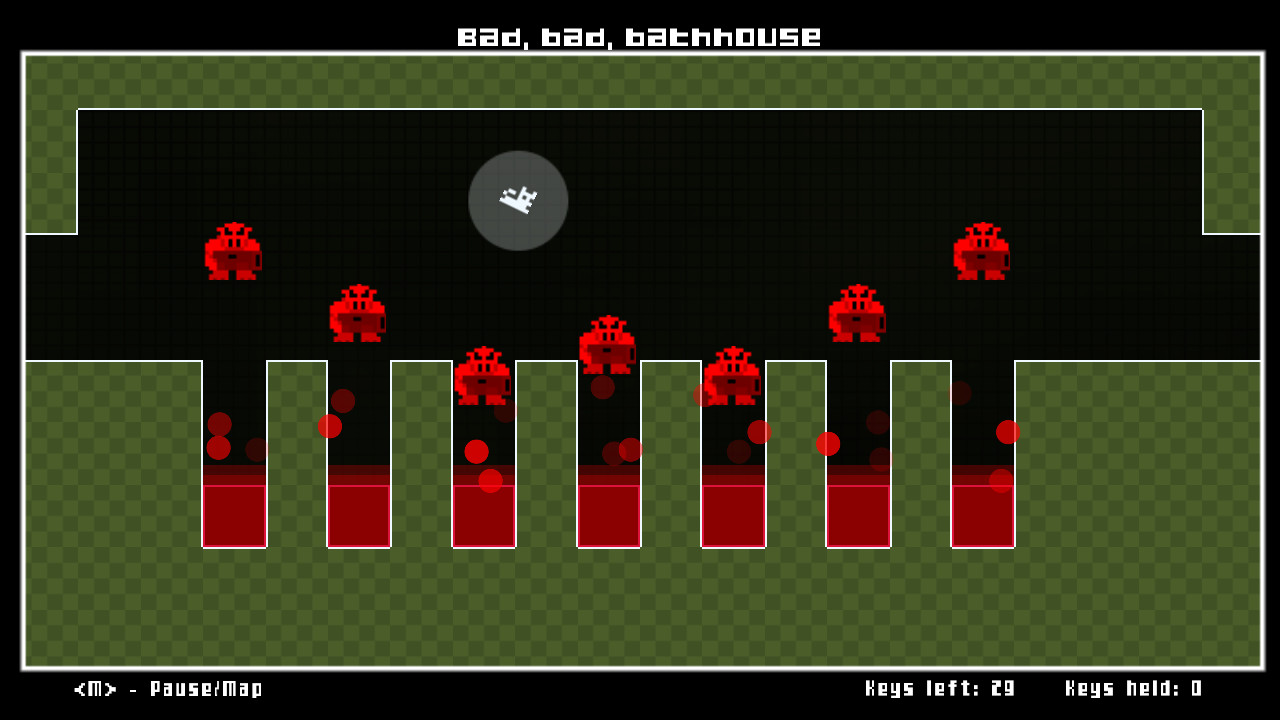
While utterly simple in design and concept, LaserCat took me back to the days when I first fell in love with videogames—yet did so in a package that felt polished and perfected in every moment of its adventure. LaserCat’s a perfect example of the fact that, if you put in the effort to look, the Xbox Indies section can provide you with some fantastic experiences for equally fantastic prices.

04 Persona 2: Innocent Sin

The “lost” Persona game finally gets an official English-language release, and the world is a better place for that fact. Even though its old-school design now feels rough at times, Persona 2: Innocent Sin’s characters, storyline, and drama still feel as fresh as they did 12-plus years ago.

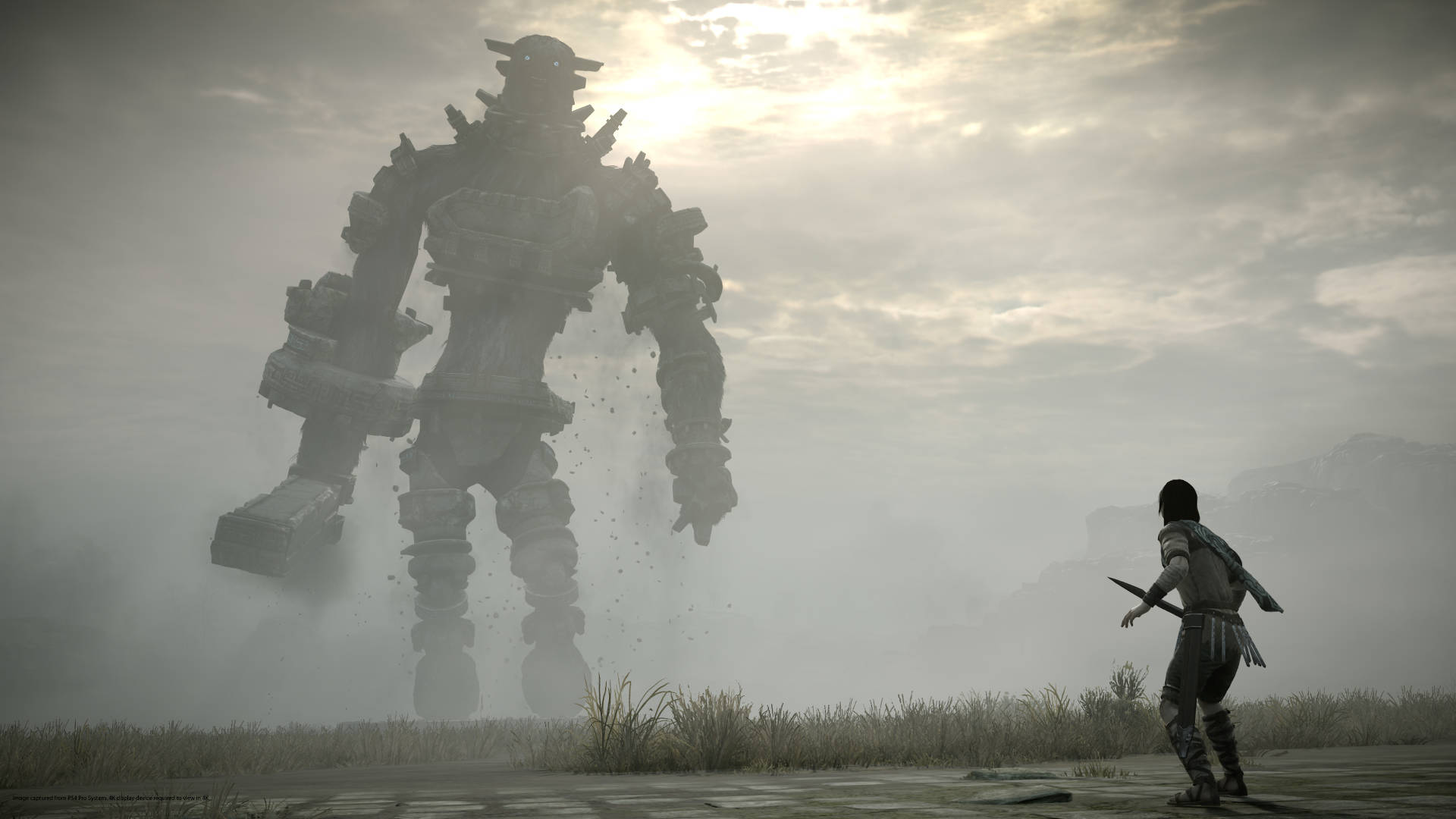
03 The Ico & Shadow of the Colossus Collection

In almost any other case, I’d feel hesitant to list a remake or “HD upgrade” of a previous game as one of my picks of the year. These aren’t just rereleases of ICO and Shadow of the Colossus, though—these are the games reborn, finally playable in the way they were always meant to be experienced.

02 Corpse Party

I had such low expectations going into Corpse Party—and then came away being absolutely blown away by the experience. Its retro visuals hide a dark, sinister scenario of hopelessness and brutality that I simply couldn’t have imagined from a game like this. Supported by a surprisingly engaging cast, Corpse Party sits as one of the most impactful experiences I’ve had in gaming in 2011.

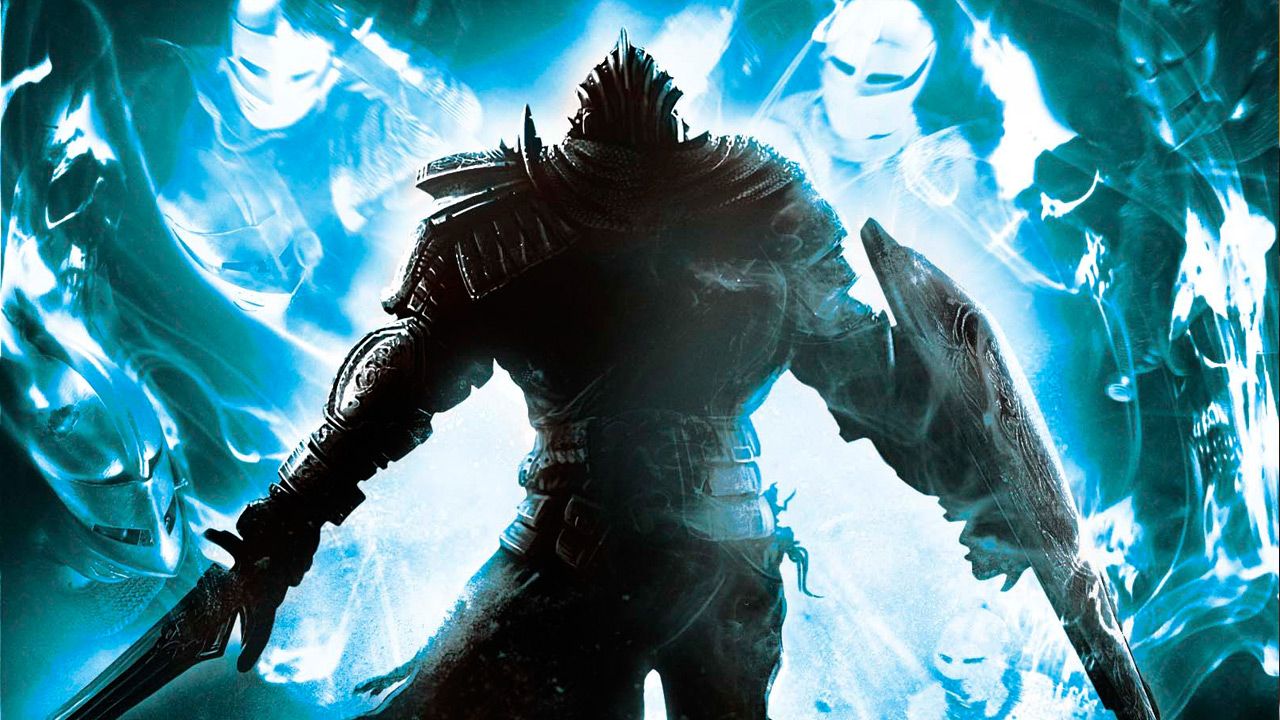
01 Dark Souls

I put 100-plus hours into my first playthrough of Dark Souls, and yet still found myself feeling like it was over far too soon. So deep, so engrossing, and just so fantastically wonderful; Dark Souls is a perfect example of why I play videogames. And, for one of the first times in my life, I actually wish a developer would now give me more content via DLC.

EX Topic of the Year
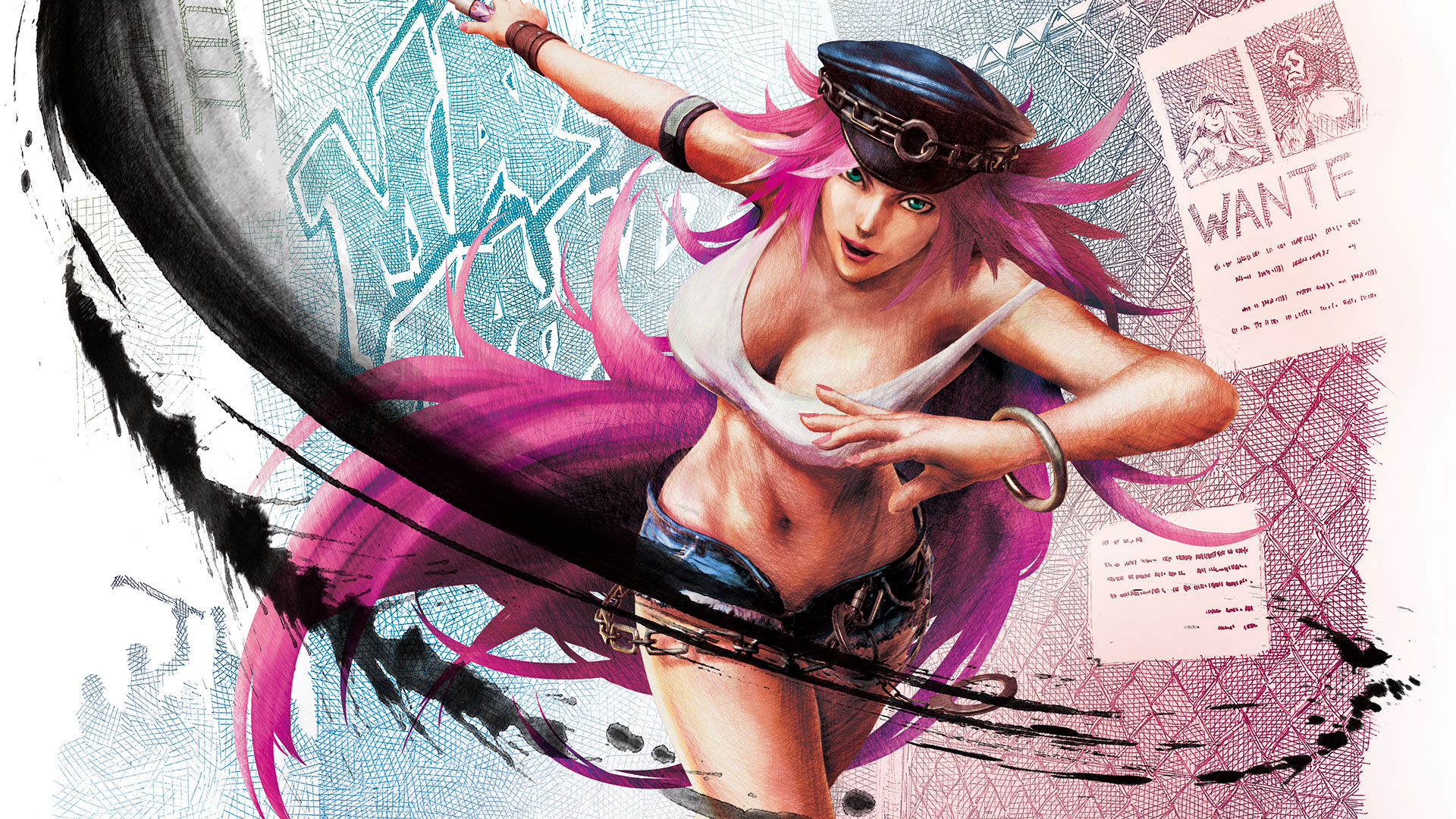
Poison

Loads of topics were discussed this year, but for me, by far the most fascinating were the conversations that came up about Poison and her status as a transgender gaming symbol, long a back-and-forth argument on the Internet—and her inclusion in Street Fighter X Tekken put those conversations into overdrive. And then, of course, there was my interview with Street Fighter X Tekken director Yoshinori Ono…

EX Biggest Crushing of My Hopes
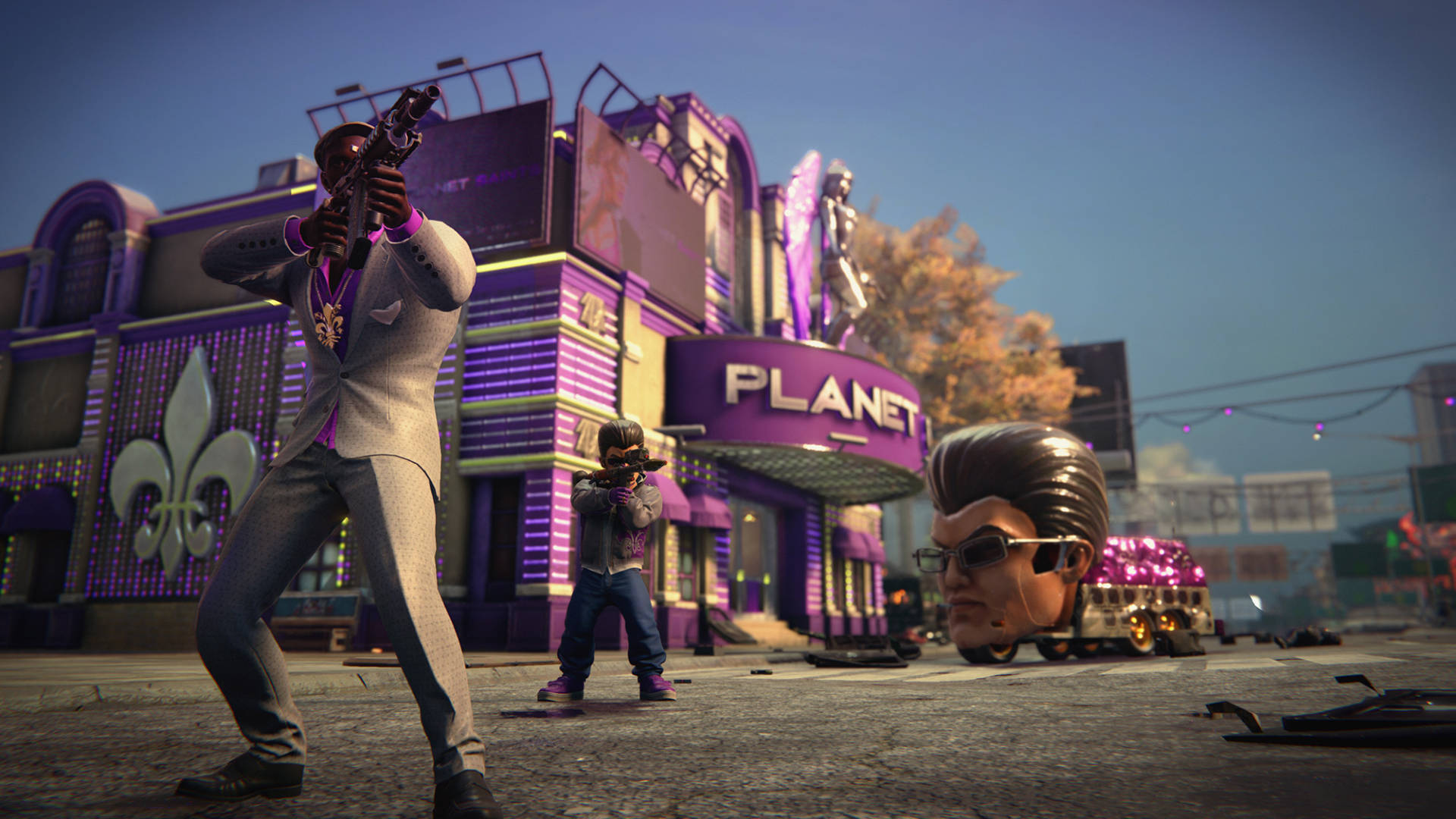
Saints Row: The Third

One of the games that had me the most excited as the year came to an end was Saints Row: The Third. I had so much ridiculous fun with the multiplayer in Grand Theft Auto IV, and the idea of doing that in the cracked-out world of Saints Row will all of its new toys and customer character options had me salivating. And then—I find out it has no competitive multiplayer. My heart, she was broken.

(Honorable mention in this category goes to Resistance 3 losing the server browser Resistance 2 had, making certain games types a pain in the ass to find.)

EX Best Game for Wives to Buy Their Husbands
Catherine

The classic stereotype when it comes to videogames and marriage is that the husband wants to spend his time lost in fantastical virtual adventures, while his wife would rather he stop wasting time and instead do things around the house. Well, wives of the world, here’s a game you’ll want your husband to play—because it’ll teach him the horrors of infidelity.

Five Ways Japanese Gaming Still Rules: Atelier Totori

This article was part of a five-part feature on the continuing influence of Japanese gaming—click here for the rest.

The Japanese gaming industry has taken a bit of a beating lately in the press, with many eager to write off its efforts in exchange for heaping praise upon the growing power of Western game development. Yes, it’s true—in some ways, what was once little more than a hobby that many in Japan worked long and hard to foster has now become a gargantuan beast of multi-million dollar entertainment that the country isn’t always prepared to tame.

And yet, reports of the death of Japanese videogaming have been greatly exaggerated. In so many ways, Japanese developers are still paving roads into territories their counterparts in the West still dare to tread. Japanese games are still alive, and as fresh as ever—it’s just that many times their softer-spoken voices are being drowned out by the screams of space marines, the roar of high-caliber weapons, and the symphony of Hollywood-style explosions coming from the titles that now dominate the shelves of your local retailer.

So, all this week, I’ll be giving examples of the ways in which Japanese game developers are still crafting some of the best experiences around, told each day through a different Japanese-produced title that’s either hit our shores recently, or which will be doing so in the near future.

Today I take a look at the latest chapter of Gust’s Atelier franchise—Atelier Totori—and how it’s an example of Japanese developers building games around seemingly everyday ideas that expand the concepts of traditional gameplay.

I still remember the first encounter I had with the Atelier series. It was my first serious experience as a staff member of a major video game publication, and at the time part of my daily duties was finding interesting information to be posted on our website. Being that we had more of an import gaming-focused slant, every week we’d sit down and go through the latest Japanese game-related magazines scouring for interesting tidbits of information.

It was in one of those magazines that I came across a new PlayStation project titled Atelier Marie ~The Alchemist of Salburg~. Right from the very start, something about the game intrigued me. A new RPG based around alchemy? What would it be like? How would it work? Why make a game focusing on such a seemingly normal concept, instead of, say, saving the world or defeating all of the evil in the land?

It wasn’t that I was surprised to see alchemy—one of Japan’s beloved terms for what is basically item creation—in a Japanese RPG. That concept of item creation has long been a close companion to the genre, and over the years, the complexity and diversity some titles have offered in this regard has been quite impressive. With Atelier Marie, however, it was the focus of the game, not a simple side project players could invest time in whenever they felt like it.

Yet it’s that focus that stared with Atelier Marie and continues on to this day in the franchise’s latest chapter—Atelier Totori—that has caused the series to stand out as much as it has over the years. It’s also one of the ways in which Japanese game developers continue to push genre boundaries and endure their releases with fans around the world.

As somebody new to the series, it would be easy for you to look at Atelier Totori and expect it to be a typical Japanese RPG. It certainly has all of the required elements: Cute characters, bright colors, unusual creatures, and traditional turn-based combat. Play Totori, and you’ll start to realize that the game allows itself and its character to be something many games don’t have the courage to be: average. Not in quality of gameplay or ambitions, but in who we’re presented and what they’re expected to be.

The game’s leading lady Totori Helmold isn’t born with a foretold destiny, or in the middle of a war-torn land, or with the expectation that she’s supposed to run off and protect her world from utter destruction. Instead, she’s a young girl whose biggest concern is her dream to follow in her mother’s footsteps of adventuring and to become a skilled alchemist. While Totori features standards like exploration and battles, it is Totori’s studies in alchemy that are the real core of the game. Fighting, killing, conquering—these aren’t the traits that we’re told are what makes a person great. Creation, imagination, dedication to studies and one’s craft—those are the things that make us better as we progress through the game.

“I think just killing monsters and bad guys in games is definitely fun and nothing is wrong with those things—I personally enjoy that kind of game too,” NIS America’s PR Manager Nao Zook told me when I asked her about Totori’s focus on creation instead of destruction. “The Atelier series, however, does emphasize emotions, humanity, self-growth, and the development of relationships with family, friends, and teammates. This engages the players and helps them connect with the characters.”

It’s a very Japanese philosophy for game creation: Start with an idea that may be simple in concept or scope, but then build around that idea a fleshed-out world of characters and story elements. Western developers have long created games based on similar examples, but their approach has often been very different. Maxis’ Sim City put all of its effort into giving players the chance to design and run a virtual metropolis; Quintet’s Actraiser also provided a similar opportunity, but one wrapped in an action-adventure based around the gods.

Where games like Atelier Totori—and the entire Atelier series—shine is in understanding how to use core concepts like alchemy, but weave them into those story elements in a way that keep gameplay compelling the entire way through. In fact, another chapter of the Atelier series—Atelier Annie on the Nintendo DS—so slanted the focus to item creation and quest completion that the few occasional battles that popped up almost didn’t need to be included. And, in my mind, it was this element of Annie that made it one of my favorite Atelier chapters.

Games that challenge us to re-think what a game really is, and what we should expect from gameplay as a whole, aren’t just important in terms of providing us with new experiences. They’re also vital in expanding and enriching what videogames have to offer the market as a whole—which, in turn, allows more people who typically wouldn’t find videogames appealing to potentially come across something that they’ll discover is meaningful to them.

“Players will find a more relaxing plot [in Atelier Totori] that focuses more on the characters and item creation rather than trying to thwart some incarnation of doomsday,” Zook continued. “Whether it appeals to a broader audience of players would depend on the players’ style preference. However, if players who are looking for something different go into a game like Atelier Totori with an open mind, and are ready to experience something truly different, I believe they will find a whole new, wonderful gaming experience waiting for them.”

Another example of this diversity of gameplay concepts is Marvelous Interactive’s Harvest Moon series. At the time that the original Harvest Moon was released for the Super Nintendo, the concept of mixing real-world jobs or activities with Japan’s love for the RPG genre was nothing new. (I remember years before getting a kick out of World Court Tennis on the Turbografx-16, with its bonus tennis-centric RPG mode.) Still, the entire concept sounded quite odd. A role-playing game based around farming? Would you be fighting off rabbit and crows instead of slimes and dragons, and would the spoils of victory be seeds instead of gold? Of course, the game itself was never quite as fantastical as I enjoyed imagining it might be before release. What Harvest Moon was, however, was an amazingly engrossing experience that took an unusual concept—running a farm—and skillfully managed to build a game around it.

And yet, creating games like Harvest Moon or Atelier Totori around these everyday concepts isn’t easy. Though Zynga hooked the world on its Harvest Moon-inspired Farmville, it doesn’t take long to see the vast difference between the two games. Farmville—either due to developer intention or a lack of understanding in regards to what made Harvest Moon so enjoyable—is a game about addiction, not about excitement. One doesn’t play Farmville because the experience itself is enriching, but because the game’s idea of “fun” is in providing just enough imagined accomplishment to make the player want to reach the next level of options.

Five Ways Japanese Gaming Still Rules: Dark Souls

This article was part of a five-part feature on the continuing influence of Japanese gaming—click here for the rest.

The Japanese gaming industry has taken a bit of a beating lately in the press, with many eager to write off its efforts in exchange for heaping praise upon the growing power of Western game development. Yes, it’s true—in some ways, what was once little more than a hobby that many in Japan worked long and hard to foster has now become a gargantuan beast of multi-million dollar entertainment that the country isn’t always prepared to tame.

And yet, reports of the death of Japanese videogaming have been greatly exaggerated. In so many ways, Japanese developers are still paving roads into territories their counterparts in the West yet dare to tread. Japanese games are still alive, and as fresh as ever—it’s just that many times their softer-spoken voices are being drowned out by the screams of space marines, the roar of high-caliber weapons, and the symphony of Hollywood-style explosions coming from the titles that now dominate the shelves of your local retailer.

So, all this week, I’ll be giving examples of the ways in which Japanese game developers are still crafting some of the best experiences around, told each day through a different Japanese-produced title that’s either hit our shores recently, or which will be doing so in the near future.

Today I take a look at From Software’s newest release Dark Souls—and the way in which the game shows Japan’s long-standing tradition for insane depth in gameplay.

Sony Computer Entertainment—the original publisher of Demon’s Souls in Japan—decided to pass on the game for release in North America. The latest from Kings Field creators From Software, Demon’s Souls was brutally difficult, outrageously complex, and at times completely obscure. Because of this, Sony’s American division figured it would be too hard of a sell to a consumer base not used to such games.

Atlus USA, however, decided to take a chance on the game—and it went on to be one of the company’s best-selling releases ever. (Meanwhile, Sony Computer Entertainment VP of international software Yeonkyung Kim would later state that the company had made a mistake in passing on the publishing of Demon’s Souls outside of Japan.)

While much was made about how challenging Demon’s Souls was, it wasn’t the difficulty that caused it to go on to become a breakout success on our shores. It was the deep, finely-tuned gameplay that set it apart from so many other games—and the same is true for From Software’s like-minded follow-up title Dark Souls.

Some have been eager to proclaim a war being waged between the Namco Bandai-published Dark Souls and the latest chapter of Bethesda’s Elder Scrolls series, The Elder Scrolls V: Skyrim. While it’s a fun discussion to have—the two games are, after all, adventures in fantasy settings with custom-crafted characters—the pair couldn’t be more different in spirit. Skyrim is the product of the Western world’s current style of game creation: Big, epic productions that offer gameplay that just needs to be good enough to engross the player in the world’s cinematic elements, extensively-voiced characters, and sprawling landscapes.

Meanwhile, Dark Souls and its older sibling Demon’s Souls couldn’t be more Japanese. At first glance, they look decidedly Western; dig deeper, however, and they both show a classic level of obsession over gameplay elements that Japan has long been known for. Games such as Skyrim love to bog the player down in numbers and notations. Gaining an experience level is about increase a few select numbers in a couple particular columns; a new sword is about adding +3 to one stat and +1 to another.

Sure, Dark Souls has some of that: You can raise your level, you can find a new weapon, you can boost your stats here and there. The catch is, those are all extra components there to assist the player if they so choose to make use of them. The beauty of an adventure like Dark Souls—and the very Japanese gaming concepts that it is crafted from—is that the real key to improving your skill at the game isn’t in the programming, but the players themselves. The game can’t make you get better—you must want to do so for yourself. In taking that challenge, we find that the true roadblocks aren’t artificial difficulty or imposed limits crafted by the developers, but our own failings and frustrations. Should we want to be better at the game, we can—and that choice is something at the core of many of Japan’s greatest releases. Shortly after Dark Souls’ release in Japan, one dedicated player posted a video of himself besting the game’s first boss utilizing no weapons or armor. A difficult talk, but one that is absolutely doable—and in fact, it’s theoretically possible the full extent of the game could be completely in such a fashion. Difficult? Absolutely—but not impossible.

Dark Souls also employs another important gaming concept: Death. You can die in plenty of games, right? While true, it’s somewhat amazing when you really pay attention to the games you play, and look at how many these days don’t actually feature death as a legitimate threat like it used to be. Many of this generation’s big titles will be happy to serve you up a “Game Over” if you make a stupid mistake, but even then death often means just a re-start at a recent checkpoint or an automatic second chance at now doing things right. Older gamers want to use their precious free time to see more of a game—not struggle to beat it—while younger gamers just aren’t used to the high levels of difficulty that previously existed as the norm. In contrast, both developers and consumers in Japan still seem to have an appreciation for the idea of having to practice something until you get it right. Dark Souls understands how to give players real reward—that feeling of accomplishment when an enemy or challenge was beaten not out of sheer luck or a chance happening, but because the player has truly improved at the task to the point where they can now conquer it.

Even beyond those core gameplay concepts, Demon’s Souls existed as the antithesis of games such as Skyrim and their grandiose aspirations. Stages were small, compact, focused, where every step was carefully designed and every element existed as a part of the landscape for a reason. The journey wasn’t about traveling wide open plains or towering mountains—it was about the journey of the player themselves. Combat was refined to a level of immense depth, where skill and mastery over attacks were of far more importance than any weapon statistics or experience levels. Players were expected to figure out the game’s many cryptic systems and requirements—even if it meant alienating the more casual consumers who would have no concept of where to begin in figuring them out. With its move to a more open-world feel, one might think that Dark Souls has moved away from those core tenants of Demon’s Souls, and gained a focus more Western in style. And yet, it hasn’t. That Japanese dedication to design is still evident in every nook and cranny of the game’s world—there’s just more of it now to explore.

Games are about the experience—but what exactly creating that “experience” entails is a debate that East and West continue to wage via their games. Platinum Games’ Bayonetta is another fine example of the love Japanese developers show for that intense depth of gameplay. Some of its elements do feel more Western inspired—not surprising given its designer Hideki Kamiya’s appreciation for mixing elements from various cultures—but its unashamed complexity in maneuvers and combat options for its titular character were a trademark of its country of origin (or those games that look to emulate that slice of Japanese gaming). Bayonetta’s stages and settings could really be anything at the end of the day; in fact, the entire journey could even be reworked using a completely different concept. Bayonetta—much like Dark Souls—is the player’s adventure through bettering themselves, not seeing a storyline to its earth-shattering climax.

Of course, this complexity and depth of gameplay isn’t owned by Japan—but it’s one of the ways in which the Japanese development community still shines. Here in the West, we want bigger, louder, and more fantastical. We want our epic adventures across vast worlds that rival the latest Hollywood blockbuster. Meanwhile, Japanese gamers also long for large—but large in gameplay design and depth, not dramatic wonderment.

Five Ways Japanese Gaming Still Rules: Catherine

This article was part of a five-part feature on the continuing influence of Japanese gaming—click here for the rest.

The Japanese gaming industry has taken a bit of a beating lately in the press, with many eager to write off its efforts in exchange for heaping praise upon the growing power of Western game development. Yes, it’s true—in some ways, what was once little more than a hobby that many in Japan worked long and hard to foster has now become a gargantuan beast of multi-million dollar entertainment that the country isn’t always prepared to tame.

And yet, reports of the death of Japanese videogaming have been greatly exaggerated. In so many ways, Japanese developers are still paving roads into territories their counterparts in the West still dare to tread. Japanese games are still alive, and as fresh as ever—it’s just that many times their softer-spoken voices are being drowned out by the screams of space marines, the roar of high-caliber weapons, and the symphony of Hollywood-style explosions coming from the titles that now dominate the shelves of your local retailer.

So, all this week, I’ll be giving examples of the ways in which Japanese game developers are still crafting some of the best experiences around, told each day through a different Japanese-produced title that’s either hit our shores recently, or which will be doing so in the near future.

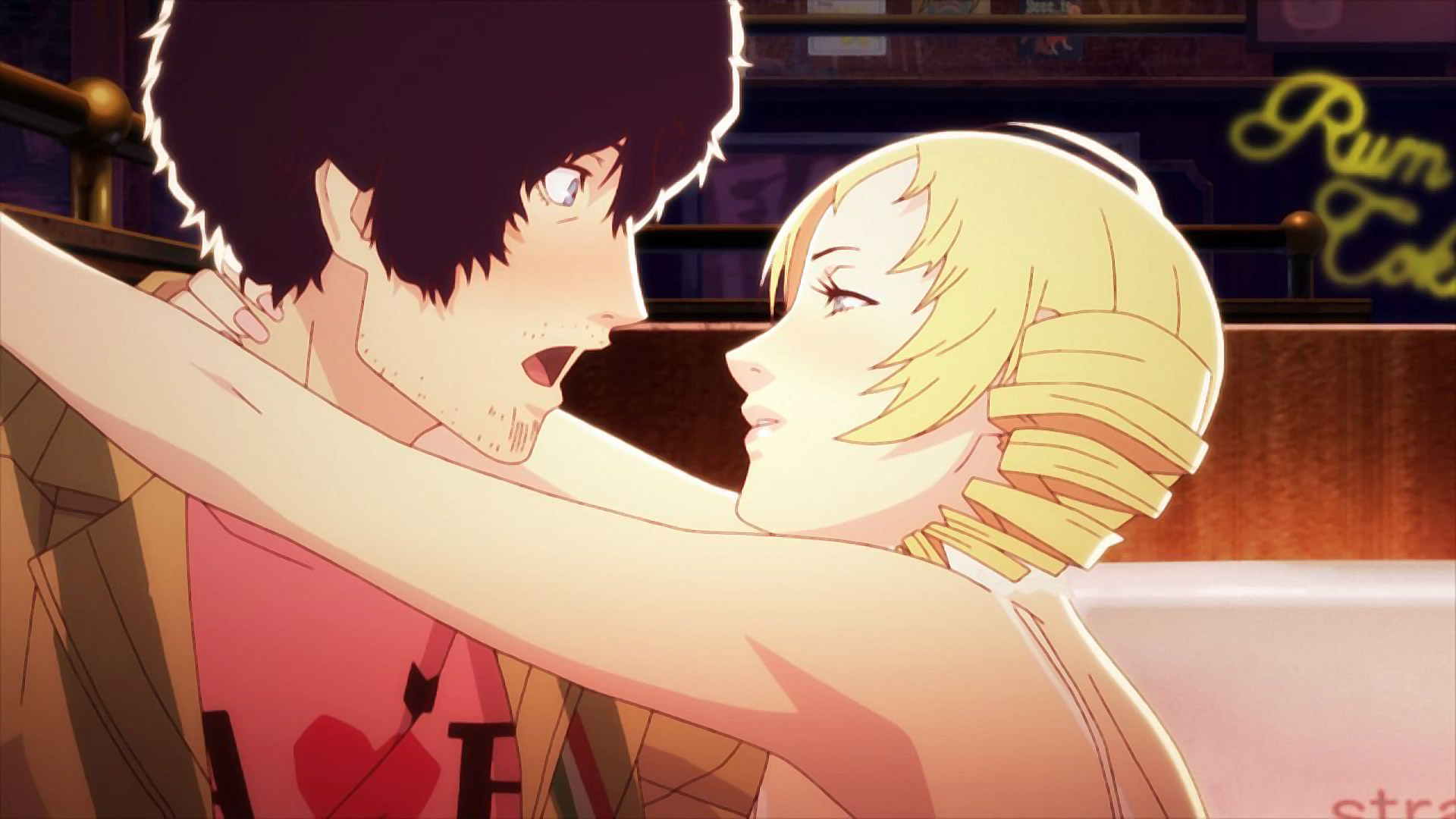
Today’s pick is Atlus’ look at life, love, and lust in Catherine, a game which reveals the depth Japanese gaming can present in terms of character development.

No rationale fan of video gaming would attempt to argue that Western developers aren’t good at crafting memorable heroes and heroines—I’m certainly not here to do that. However, there is an interesting divide that has existed between East and West in terms of how those characters are presented to us players, one which has existed for nearly as long as video games have been around.

The first serious video game RPG that I experience was the original Phantasy Star. The sweeping epic about a young girl, a tyrant king, and a galaxy in peril pulled me in from the moment I hit start, and I fell in love not only with the adventures of Alis, Odin, Myau, and Noah, but also with the characters themselves. Even as simple as the concepts put forth in RPGs were in those days, those four characters still had such depth and meaning to me. I cared about Alis, and her struggle to keep the dying wish her brother had placed upon her shoulders. Even without finely-crafted cutscenes, extended amounts of dialog, or detailed backstory, the elements of who she was and what she was going through were woven throughout Phantasy Star in a way few games I had played before had done.

As time moved on, and I found myself becoming more and more enamored with Japanese RPGs, I started to notice an interesting difference between them and the RPGs created in the West. Friends who played titles such as SSI’s “gold box” Dungeons & Dragons releases or the latest chapter of Wizardry had an unexpected (to me) complaint about Japan’s RPG efforts: They had characters. For them, the “role-playing” part of the RPG acronym meant role-playing as knights or clerics or thieves of your own personal creation, not those the game’s developers had dreamed up. An RPG where you couldn’t create an entire party of custom-crafted adventurers? The idea was preposterous!

It’s a trend that still lives on to this day. Think of some of Japan’s recent crop of RPGs, with titles like Final Fantasy XIII-2, Xenoblade, Atelier Totori, Final Fantasy Type-0, Kingdom Hearts Birth By Sleep, Hyperdimension Neptunia—all of them have pre-determined main characters. Meanwhile, look to the West, where we’ve received releases such as The Elder Scrolls V: Skyrim, Mass Effect 2, Fallout: New Vegas, and Dragon Age II—where each of those choices either allows for full character customization, or at least gives the player a high level of decision over who the hero is and how they make their way through the story.

This is a situation where both sides of the coin have their own unique offerings and special benefits. Yet as much as the West’s determination to blend storytelling and player preference together has produced some fantastic results, Japan continues to give us projects such as Catherine—a game which shows just how powerful character-driven drama can be.

The fact that Catherine comes from Atlus’ Persona team should come as no surprise. Though the Persona series was always known for offering up diverse casts of characters who broke away from RPG traditions, with Persona 3 the team kicked the idea of character interaction into high gear. While some labelled the game as “an RPG meets a dating sim”, that statement wasn’t totally fair. Yes, there were some elements of romance to be found between the main character and his various female friends—but Persona 3’s true goal was to give the player a chance to explore that building of social connections with a wide array of characters, potential girlfriend or otherwise. So important was the idea of building bonds with the people you’d be meeting over the course of the game’s year-long timespan that that aspect stood as an equal half of Persona 3, right there alongside its dungeon-crawling and demon-killing other self.

Persona 4 felt like the Persona team taking what they had first attempted in Persona 3 and refining the idea for that model; Catherine feels like them taking the core concept and seeing to what extents they could run with it. Again, we’re given something which seems to have two halves to it: A “gameplay” side, and a “social interaction” side. However, while Catherine’s puzzle-solving elements do provide for enjoyment—to the point that the multiplayer version of those block-pushing segments has now even seen itself become popular at gaming tournaments—it could be argued that they’re clearly the weaker and less important portion of the game. Before playing Catherine, the game may come off as some strange new brain teaser with copious amounts of storyline thrown in to pad its length; once you come to meet Vincent, the beautiful blonde temptress Catherine, Vincent’s frustrated but faithful girlfriend Katherine, and the rest of the cast, you quickly come to realize that the reason you keep going isn’t for the next segment of that “gameplay”—it’s for the next cutscene or chance to interact with the world you’re now inhabiting.

In Western cinema, we love our drama. Action movies pit hero versus villain, romantic films must always see a couple split up or have a falling out before finally reaching their happy ending, and even comedies can’t help but involve some sort of protagonist or other challenge that must be overcome. In comparison, Japanese films often work on another understanding—that real drama doesn’t come from that sort of clear-cut “win or lose” type of scenario, but simply from how events unfold and what their resolution ends up being.

While Catherine does have that clearer level of drama—Vincent is plagued by horrific nightmares that he must survive, and every night he struggles in an attempt to see them out to the end—so much of the game is simply about how he handles his life outside of those do-or-die scenarios. Who is Vincent as a man? How has he gotten to where he’s now at? How does he handle his relationship to a woman who wants to get married (while he’s not quite ready)? What should he do about this new, younger women who asks for nothing from him but lust-filled romps in the bedroom?

Looking back to Western cinema, there are a few specific examples where Catherine could find itself feeling at home: The films of Quentin Tarantino or Kevin Smith. For both of those storytellers, the exact details of the the plot and what is unfolding in that regard are often of secondary importance. Instead, what is important are the characters and their interactions with one another. Conversations between people aren’t used simply to connect more “interesting” scenes—they’re the meat of the film, and where we get the most enjoyment from what we’re being presented. Catherine exists on that same kind of level. Much of the game takes place at the Stray Sheep, a local bar / pizza joint. Here, Vincent contemplates how to fix the mess he’s gotten himself into, he talks about his problems with his close-knit group of friends, or he communicates with one (or both) of the game’s leading ladies via player-written text messages. As an experience, Catherine would have fallen flat on its face had these scenes not worked—but they do, because of how expertly developed not only Vincent himself is, but everyone around him are as well.

So well crafted and deeply infused with personality are the characters in Catherine that the team at Atlus could have ripped out the puzzle portions of the game and it would still have been just as enjoyable. In fact—had the game only been about that character drama, and not felt the need to include fast-action segments to justify itself to players, there’s the possibility that it could have been even more enjoyable. As far as Western developers have come in creating protagonists and those who surround them, they still far too often feel like vehicles which exists to carry us from one thrilling moment to the next. Even if Japan’s efforts may, at times, feel silly and sophmoric in terms of the characters we’re presented in games, those developers still often seem to hold a deeper understand of just how much of our experience can be affected—positively or negatively—simply due to the cast we’re paired with.

Corpse Party, on the other hand, is another perfect example of the polar opposite. As a game, Corpse Party is honestly not all that remarkable; its horror often little more than pixelated shades of red brought together to represent a pool of blood or a mutilated body. So why have I been unable to shut up about the game since its release? Because Corpse Party is all about its characters and what happens to them. It’s that perfect contrast of Western horror versus Japanese horror, where the prior revels in the physicality of fear while the latter delves more into the mental and emotional aspects. At the end of the day, the actual events of Corpse Party aren’t important—what matters is what the characters went through while those events played out.

Once aspect of this centralization around characters that I came to really notice was in how games allow their characters to deal with tragedy. While playing, we may encounter a horrific scene, and when we do we look to our digital avatar to see how we should react. So often, their reaction is brief—if it even exists at all. To them, the horror isn’t real—it’s, well, almost like a video game. If our character isn’t scared, then we aren’t either, because the ability for a game to build fear will always be surrounded around how those events will affect our character.

Yet in Corpse Party, something very rare happens—the characters are truly allowed to have emotional reactions to what’s going on around them. At one point early in the game, a character comes across the freshly-deceased corpse of someone who just minutes ago they were having a conversation with. At first, it doesn’t seem real to our character—and then the gravity of the situation hits, and they break down sobbing. No cut away, no fade to black, no implied tears—we witness an actual, heartfelt expression and outpouring of emotion, one which we can’t help but start to be affected by. The rest of Corpse Party plays out in similar fashion, as we come to know and care about these ill-fated teenagers and then are forced to watch as they’re brutally traumatized.

Corpse Party works not because we get to fight against monsters, or solve complex puzzles to outrun ghosts, or any other such concepts. It works because it has an understand of the importance of deep, well-crafted characters, and how—more than almost any other piece of a work of fiction—it’s those characters who will ultimately pull us into (or push us away from) the narrative we’re being presented.

Corpse Party Review

It was just shy of 1am when I finally finished Corpse Party—or, should I say, finished it with an ending I could be satisfied with, versus the one I had received a few hours earlier that left me starting over the game’s final chapter. Having put off a necessary trip to the supermarket in order to correct my prior mistakes, I let the credits play until their end and then rushed out to my car to brave nighttime L.A. for milk and bread.

As I sat there in the driver’s seat, guiding my car along the nearly deserted road that lead to my closest shopping option that was still open, my mind drifted back to the game. I thought about its characters—who they were, what they had experienced, what horrors they had endured in trying (and, for some, failing) to survive what the game had put them through. Or, more precisely, what I had been forced to put them through.

I then realized something—this small wave of panic and despair was welling in my chest, all for some characters in some video game.

While I don’t know the exacts of the mindset of the original creators of Corpse Party—a small group of Japanese grassroot programmers known as Team GrisGris—I can imagine they wanted what so many of us want: To make a video game. Corpse Party was born thanks to RPG Maker, a software tool allowing amateur game designers to try their hand at making their own creations without the need for technical programming knowledge. Two remakes later, Corpse Party still very much looks and feels like a game cobbled together with random bits and pieces of pre-created elements.

In the first hour of the game, I was trying to figure out why XSEED would take a chance on such a project. Everything felt so—so so. Corpse Party introduces us to a who’s who of Japanese anime stereotypes: the kind but shy leading male, the short-haired tomboy girl, the hyper-peppy girl, the serious bespectacled guy, the pretty young teacher, the pigtailed “mystic” girl, the cute younger-sister type, the actual younger sister, and the blond-haired rebel guy.

Cute younger-sister type Mayu is set to move to a different town, so on her last day at Kisaragi Academy, her circle of friends—the bunch mentioned above—stay after school to say their goodbyes. Just as everyone is about to part, pigtailed Ayumi makes a suggestion: Sachiko Ever After. A ritual found on a popular occult site, Ayumi explains that by making a wish to the spirit of Sachiko using a paper doll, the group will be friends forever no matter what happens. Standing in a circle, each person takes a section of the Sachiko doll in their hand, chants an incantation the required number of times, and pulls on the paper to break off their own personal piece.

And thus, we are thrown into Corpse Party, being there as the various characters wake up to find themselves in a strange, decaying school building. At first, we are as confused as they are. What is going on? How did we get here? Why are there bodies of other students strewn everywhere, bloody and beaten and mutilated in a variety of ways?

Uncovering those secrets—and discovering the key to surviving what awaits you in the halls of Heavenly Host Elementary School—plays out in what could best be described as an adventure game. Gameplay is unremarkably basic: Search every room, find an item, figure out where it needs to be used, search for the next means of progression. Every now and then, Corpse Party will introduce elements to break that monotony, such as having to accomplish a task in a set amount of time, using two characters to solve a puzzle, or playing cat-and-mouse games with a variety of malicious spirits. On its surface, Corpse Party often feels less like a game, and more like a required level of interaction in order to get from one storyline segment to the next.

That point is where Corpse Party provides its one real level of gameplay challenge—traversing its plot. The path to the game’s ending is a minefield of dead ends, and avoiding them ranges from making the right decision when asked a question to accomplishing specific tasks before performing others. Sometimes, knowing how to not screw up can be totally obscure, but that feeling of uncertainty in your actions and decisions goes perfectly with the game’s themes.

When you’re at that early point in Corpse Party, you’ll no doubt be where I was—playing the game, finding this or that interesting, but expecting the rest of the ride to be little more than uneventful. And then, something happens. Events occur that you weren’t expecting. Characters being to show a depth that betray their initial air of shallowness. The story starts to pick up—and when it does, it smacks you over the head with a shovel, grabs you by the ankles, and drags you kicking and screaming through a nightmarish tale that never lets up.

Those graphics that make Corpse Party look like a budget release from the 16-bit era? You come to have a deep appreciation for them. On one hand, had the game been your typical big-budget high-definition Western release, its gore could have felt like every other game that overloads us with virtual violence. On the other, the simplicity of what you’re seeing on screen helps the developers craft better and more impactful scares via other methods.

Nowhere does Corpse Party excel at this more than its audio. In one of the game’s most memorable scenes, we experience firsthand the brutal murder of three victims. On screen, we are shown very little. Typically, it’s nothing but solid black with a few lines of white text; every now and then, a fullscreen piece of art shows us a first-person view of the killer, looking at us with a sadistic smile on their face. We don’t see the suffering, we hear it—and it’s shockingly brutal. We hear the sound of metal slicing through delicate tissue. It starts as a puncture, and an accompanying scream of pain. But the killer, and the sound, doesn’t stop. They stab the person again. And again. And again. As the blade enters the body over and over, the sound changes—it’s now the sound of flesh and muscle being ground into mush. The screams we heard before continue, but they too have changed. The sound coming from the victim is a desperate gurgle, a mixture of the primal cries of pain and the struggle to avoid suffocating on the blood that now pools in their throat.

The player character bearing witness to all of this begs the killer to stop—and I, as the player, did too. I’ve played a wide array of horror games, from ones that beat us over the head with brutality, to ones which try instead to attack us with mental torture. And yet, in all of my years of playing such titles, little can I remember a time when I felt so emotionally or mentally overwhelmed by what I encountered.

Going into Corpse Party, I never expected to actually be affected by something I’d encounter. Then again, I never expected a lot of things about the game. I never thought I’d become as attached to its characters as I did; I never thought its storyline could be as engrossing as it was; and I certainly never expected such a simple-looking game could provide such a level of unsettling situations. But I did come to love its characters, I did become lost in its story, and I did find myself being legitimately bothered by much of what it presented to me.

Many will no doubt write off Corpse Party before they even play it, and I understand why. Still others will play it, and write it off as a goofy Japanese horror title filled with too much text and too little gameplay–and I understand why on that point as well. For those who do try it, and do come to appreciate what it attempts to do, Corpse Party is an okay game but an utterly fantastic experience—an experience that I consider to be one of the most captivating I’ve had in gaming this year.

2011 Had Games, and I Played Some

I hate that point in time when, as we’ve reached the end of a year, we’re asked to look back and give an overview of our favorite (and possibly least-favorite) moments. Don’t get me wrong—I always love giving my opinions on anything and everything, assured that people out there are desperately waiting to hear such things!

The problem is that I take these kinds of things far too seriously. Most normal people, I’m sure, throw together a rundown based on what comes to their head, or maybe they go back over a short list of titles they’ve written down over the months, and they see it as just another piece of work to be done. Not me. I obsess. I stress. I panic. What if I forget that one game that came out in, er—spring, I think it was! What if I don’t realize until the issue’s gone to print that I totally didn’t mention that other game that I absolutely loved! This isn’t just a simple end-of-the-year write-up—it’s a cataloged piece of history that will forever exist as what I unequivocally stated were the finest moments for me in the year of video gaming 2011!

That’s why I’m thankful Dark Souls released when it did. It’s fresh in my mind; it’s still clear in my head. It isn’t just the best game I’ve played recently—it’s also the best game I’ve played this year. How convenient that is! Other years, I might sit here and ask myself if it isn’t just a case of liking best what I remember best. This year, I have no doubt that isn’t the case. Dark Souls satisfies me on a level so few other games can, a fact I became more and more distressed by as the minutes flew by lost in its world. How am I supposed to go on to other games after this?

While I’m still trying to get over the euphoric high that the game’s placed me in, there’s one thing I do know for certain—Dark Souls is fantastic, and I’m so thankful we still have games like it. Without question, it’s one of my top three games of this generation, and a new addition to my list of all-time favorites.

This was more than just the year of Dark Souls for me, of course. It was also the year that one of my favorite gaming platforms was also easily the most overlooked. The popularity—or, should I say, lack thereof—of the PSP in North America is downright criminal. As somebody who still has love and passion for Japanese-developed gaming, there were so many good experiences on the PSP that went under-appreciated by anybody other than the hardcore this year. Of course, there was my personal pick for PSP release of the year—Persona 2: Innocent Sin—but there was also The 3rd BirthdayThe Legend of Heroes: Trails in the Sky, ClaDun X2Dissidia 012: Final FantasyGod Eater BurstYs I & II ChroniclesPrinny 2: Dawn of Operation Panties, Dood!, and Tactics Ogre: Let Us Cling Together. So, so much quality gaming on the system. I just hope that once Sony’s next handheld comes out and players are looking for fun things to download while waiting for more proper Vita releases, at least some of those titles will get the attention that they deserved.

Another segment of gaming also brought me a lot of joy in 2011—one that also typically goes without proper mention or recognition. While Microsoft’s Xbox Indies project may flood the 360 with an ever-growing list of games that make your average throwaway iOS game look like the next great masterpiece, hidden among its farting Xbox Avatars and “massage games” are some wonderful hidden treasures that most gamers will, sadly, never find. This year, the one Xbox Indies release I couldn’t stop recommending was LaserCat—and that’s because it’s an homage to the super- old-school days of platformers that was crafted with fantastic control and gameplay. For me, LaserCat’s quite similar to Dark Souls in the way that it takes me back to those core gameplay elements that matter far more than million-dollar budgets or hardware- pushing graphics. Then there were Mimi in the SkyNyan-TechWizorb, and The Tempura of the Dead—just some of the other Xbox Indies games that captured my attention and received my money in the course of the year.

More so than any definitive list that I could present, the thing I most want to say about 2011 was that there were a lot of great games that I enjoyed. I know that sounds like such a simple statement to make—but sometimes, in the craziness of what we do, and in the flood of games we’re exposed to month after month, that can also be something very easy to forget.

2011 had games. I played some. And, thankfully, in doing so, I found many that I loved.

Japan vs. Digital Distribution

Coming to Japan makes me hate my position on digital distribution.

That position? I love it, and have argued for and supported the idea of digital distribution for a long time now. Not just the concept of getting our games digitally, mind you—the concept of only getting our games that way.

That isn’t to say that I’m some cruel monster who wants to break into your home at night in order to steal away all of your cartridges and optical discs or anything like that. I am a lover of choice, and the ability of all of us to have that choice. Myself, however, I’ve been switching more and more to the digital side of the media revolution, and boy has it been sweet. Music? Sure, I still own CDs, but they sit in a box in my closet, their only usefulness to me being as back-up should my digital rips meet some unfortunate fate. (And really, I can’t even tell you the last time I purchased a CD.) Movies? I used to shudder in annoyance if my DVDs were anything less than presented on a shelf in their full, pristine original case. Now? The DVDs are stacked one on top of the other on CD spindled, hidden away as I—again—make use of digital versions of those movies streamed to my PS3.

Then, of course, we have video games. Ahh, what a love/hate relationship that one is. I love games, I hate the ownership of their physical manifestations. Okay, so that isn’t fair—I don’t hate it. I grew up as somebody who loved collections, and for years and years I proudly displayed (or kept tucked away yet easily accessible) collections for a wide variety of systems. At some point, however, my collections just became too much. The things I owned, as the saying goes, ended up owning me. Every time I moved, every time I re-decorated, every time I simply wanted a little extra space, there they were, so wonderful and awesome and full of gaming history yet just so there.

Not being much of a PC gamer, I never had much experience with Steam, nor with the “fantabulous digital experience” it supposedly promises. My digital tipping point, instead, came with the PSP—an interesting situation given that its rival, the Nintendo DS, is the one system I now allow myself to have a hardcore collection for.

With more and more PSP games coming out both as a standard physical UMD release and a digital version via PlayStation Network, it was the perfect opportunity to get my feet wet in the digital pool. It felt strange at first; after so many years of buying physical versions of games, spending the same money to get a digital file that’s essentially copied from one place to another didn’t seem right. With that tangible item no longer there to be held in my hands, it was sometimes a little hard to fully appreciate where my money had just gone.

Once I had a few PSP games in that digital form, however, things started to make more sense. With back-up copies safely tucked away on my PS3’s hard drive, I could transfer over as many PSP games as my Memory Stick of choice could carry, giving me a library of titles to choose from and enjoy while no longer needing to also carry an assortment of little disc thingies. It was to gaming as my iPod was to music, and the convenience outweighed any strange internal need to see a case sitting on a shelf collecting dust.

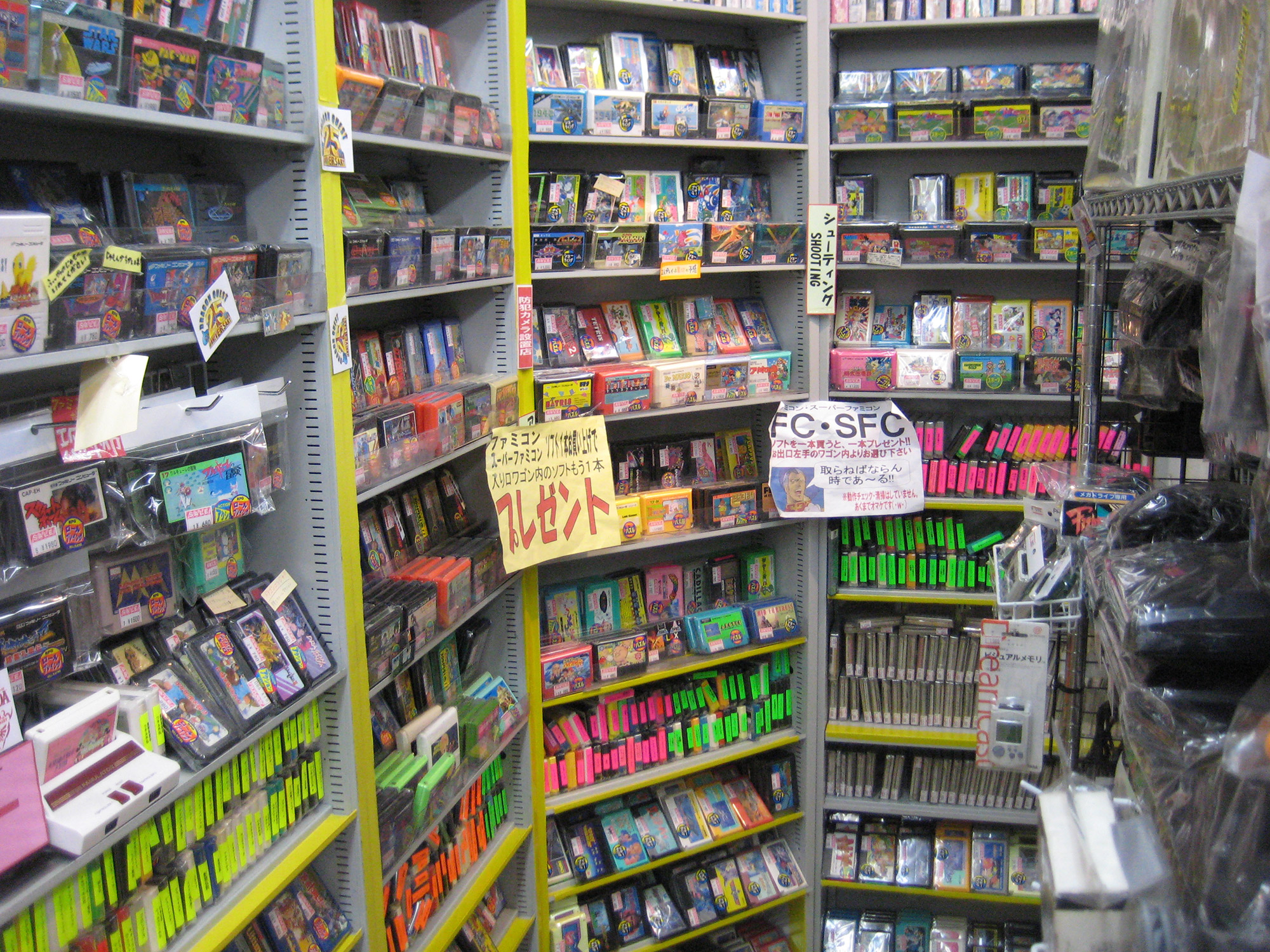
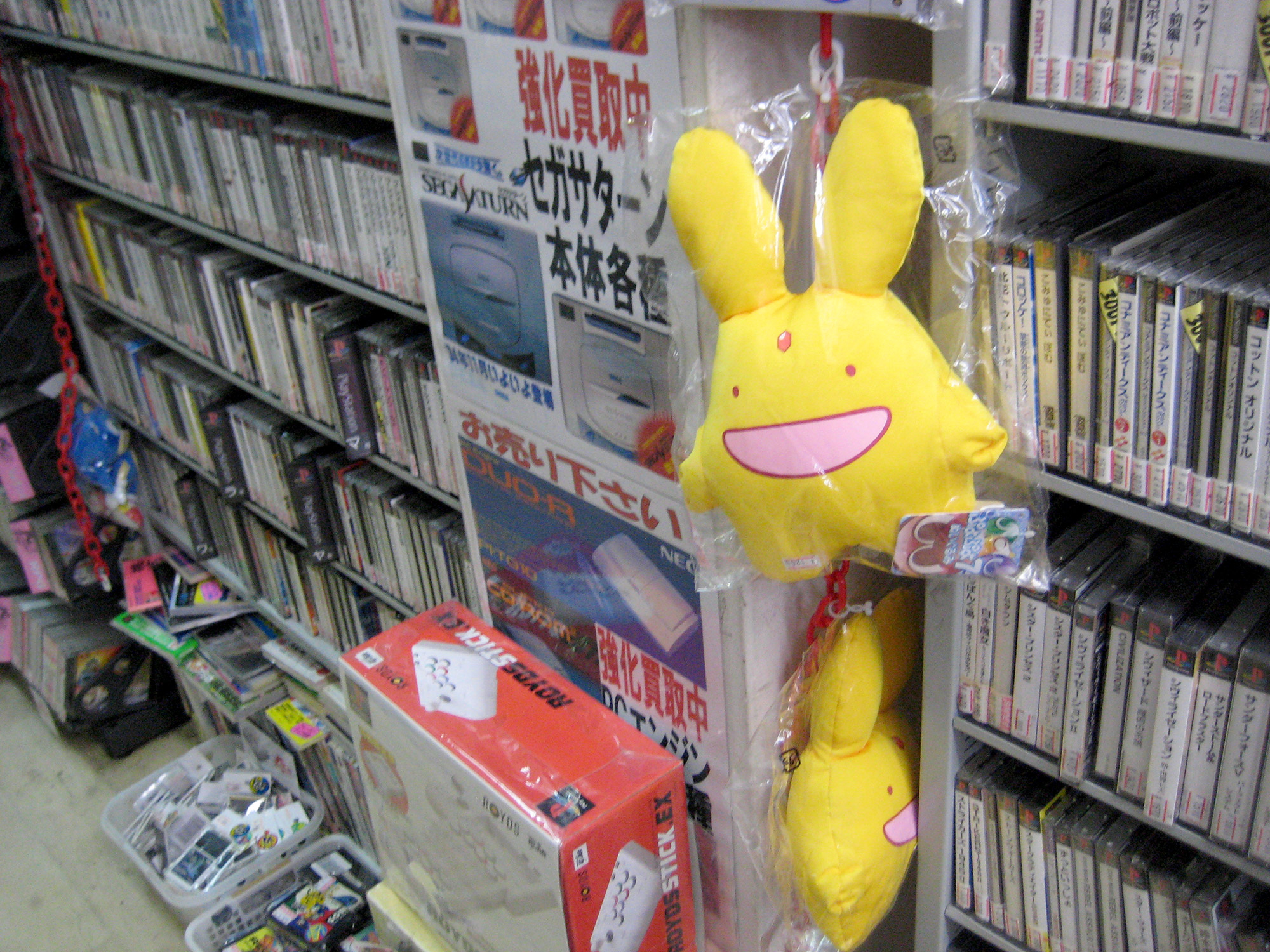
Yet, there I was today in Akihabara, browsing the retro game stores and their wares. I explored shelf upon shelf of cartridges and discs—all belonging to some particular platform now past its prime—and the feeling I felt was… comfort. Indeed, there was a comfort in it all. The games were real, they were tangible, they had existed years ago and they still existed now. Their usefulness had been used up by one gamer, but soon they might be purchased by another, providing that new owner with just as much enjoyment as they had provided to their last. Going into a GameStop back in my home country, it’s hard to look past the store and really see the games. Here, their history and legacy is fully on display, and as somebody who loved video gaming, it’s hard not to be swept up in it all. These stores aren’t selling you a product that will save you $5 versus buying the same game brand new—these stores are selling you the keys to worlds you haven’t explored yet, or tickets to return to the ones you long to visit again.

Being there in Akihabara, visiting those stores, existing among all of those old games and accessories and consoles, it didn’t take long for a thought to crop up: My love for digital distribution means the end to all of this. Not today, not tomorrow, maybe not even a few years from now. At some point with digital distribution, however, gaming’s past ceases to exist in any real way, and the legacy of a particular title or series is reduced to a file sitting on a hard drive somewhere. I can’t go to a store and explore files. I can’t come across files I’ve never heard of before, pick them up, and try to imagine what they might be like from the screenshots on the back of their package. When more and more of our must-have games go digital only, stores like the ones I visited today become a relic of the past, their games and platforms potentially becoming more and more niche as those who grew up with them grow old and move on.

Looking to my right, I can see the stack of seven DS games I purchased today. Sure, they’re a little bulky, and yes, I know that when I get home, my already-overflowing DS shelf will have absolutely no room for them. Had I just booted up my DSi, clicked on the Nintendo Shop, and downloaded those same games (if they were available), it would have been quicker, easier, and more convenient. It also wouldn’t have been nearly as much fun, not felt as rewarding when I found each particular game for a great price.

So yes, I love digital distribution, and all of the positives it can bring us. At the same time, that love makes me feel like a traitor to something I love even more: Video games.

Yoshinori Ono – Poison

You may or may not be familiar with the character of Posion. Little more than one of many enemies crafted for Capcom’s beat-em-up Final Fight—and mirror image of her partner in crime Roxy—typically she would have come and gone with not much thought or consideration given to her by the average gamer. Well, other than, of course, the fact that she was the enemy who—if you attacked her and paused the game at just the right moment—would give you a scandalous look at the underside of her breasts as her much-too-short shirt flew up.

However—and while the exacts of the decision are still a little hazy—before Final Fight was released in the West, Capcom decided that players outside of their home territory wouldn’t take too kindly to beating up a girl. So, a decision was made: The character of Poison would now be considered transgender. Though the logic seems rather unfortunate, it’s said that the idea was that punching a woman wouldn’t be acceptable, but punch a woman who used to be a man would be.

Now 20 some odd years later, Poison has grown into this fascinating and divisive piece of the world of video gaming, and the character has grown in popularity and notoriety far beyond anything Capcom could have ever imagined. A battle over Poison’s classification still rages between two camps: Those that see the character as being transgender, and who want others to accept that fact, and those that argue that the change made to Poison was ridiculous and that she is, and always will be, 100% woman.

I’ve long had a deep interest in the question of equality when it comes to video games, and how it seems that so many titles still feel so awkward when it comes to knowing how to deal with characters who aren’t white, male, and heterosexual. Poison, more so than almost any other gaming-related character I can think of, stands as a perfect example of this issue. Almost as a mirror of real-world events, discussions and arguments over gay and lesbian characters in video games—and how they are presented—is a hot topic currently. And yet—also much like real life—those same discussions unfortunately occur less when it comes to the transgender issue, but when they do, they can be far more divisive and taboo.

My opinion on the topic is simple: with so many female video game characters out there for male fans to fawn over, the character of Poison should be allowed to exist in the role she’s now found herself in—that as a symbol for a segment of people who are given so little positive representation in video gaming. The argument of her origins, and staying “true” to the character, are a valid one—but an argument lessened by the fact that so much character ret-conning goes on in gaming, including Capcom’s own Street Fighter character of Birdie. (You know, the British punk who was white until the release of Street Fighter Alpha, when suddenly he was black.) What she was twenty years ago is no longer important; it’s what she can be now that is.

As interesting as this conversation is, there’s been so little actual discussion about it with Capcom out there by the media beyond questions such as, “So… is she a dude or a chick?” At Tokyo Game Show 2011, I had the chance to sit down with Street Fighter IV and Street Fighter X Tekken producer Yoshinori Ono, a man who has (probably unwillingly) found himself smack in the middle of the fan community’s opinions on all things Poison. With her first major game inclusion now set to happen with the announcement that she’ll be part of the SFxT cast, I thought it would be the perfect opportunity to delve deeper into the topic of Poison with Ono-san.

So, I present to you that full conversation between myself and Yoshinori Ono. After reading the interview, I’d love to hear your thoughts on the topic, no matter which side you stand on. Should Poison be allowed to be a proud symbol of the transgender community? Is it more important to honor who the character actually was at the beginning, versus what she is now? Even beyond that, do you feel that topics like this should be touched upon in video games, or is there no place for this discussion in gaming? Please join the discussion by posting your opinions below. If you feel especially passionate one way or another on the topic, I’ll no doubt also be having this conversation over on Twitter.

Finally, of course, thanks go out to Yoshinori Ono for his time and willingness to converse about Poison.


Mollie: So, instead of just coming in here and asking the same kinds of questions as everybody else in regards to Street Fighter X Tekken, there was another subject that I wanted to talk to you about if you don’t mind.

Yoshinori Ono: Sure, absolutely.

Mollie: I’d like to talk to you about Poison.

Ono: [laughs]

Mollie: This whole big conversation now exists about Poison, a character who, really, was little more than an insignificant enemy character in her original appearance. Then, over the years since Final Fight first appeared, she’s taken on this huge life of her own, especially among the online community. How do you feel about now being in the middle of the discussion on who she really is? Do you enjoy the topic, or have all of the questions come to annoy you?

Ono: Well, as you said, it’s a character that has been around for a while, and initially—as you probably know—the initial intent for Final Fight was that she was just a regular woman. Over the next 20 years, there’s been some changes, and Capcom’s official stance has and will continue to be that we don’t have a stance technically. It’s supposed to be mysterious; if people want to talk about it on forums or what not they’re welcome to, but we’re not going to give you a straight answer because, well, there isn’t one. We deliberately want to make it a mysterious thing—that question of what’s at the core of this character. At the end of the day, we don’t have an actual canonical answer to that.

It’s interesting, because it almost takes on a sort of Rorschach test. If you go into it with the pre-conceived notion that she’s a woman, the way she talks, the way she moves, you’ll see all of that as being very feminine. If you go in with the pre-conceived notion that she’s not, her actions and mannerisms will seem the other way to you. So, it’s very open-ended.

From my point of view, I’m very happy to have fans continue to discuss that, but once again we’re not going to give an official answer. We’re happy to leave that open and up to individual fans.

Mollie: The problem with that situation is that, no matter what Capcom intended for Poison to be at the beginning, she has become this character that many see as transgender. For the transgender community, there are very few characters in video games that they can look up to. If such characters do appear in games, often times they’re used only as comedy relief, or only exist to play jokes off of.

On the other hand, no matter if she’s the perfect character for the role or not, the trans community often sees Poison as a strong character and someone they can feel proud to call their own. As much as I can respect Capcom’s hesitation to get into the discussion of her being trans, the company has gotten into that discussion. Do you think there’s any responsibility on Capcom’s part to make a decision? If Capcom makes the statement that Poison is whatever each individual wants her to be, it’s very easy to ignore the important discussion that come up because of what she has become.

Ono: I absolutely get what you’re saying, and I understand that there’s not a lot of transgender or transsexual characters in games at all. Certainly, I can see the need for that community to have a character to look up to in a game like this. At the same time, there’s a lot of Poison fans that see her as a standard woman, and want her to be a woman, so by our stance of not giving a canonical answer, I think—at least, it’s my intent—that we’re trying to please both groups. We’re trying to have our cake, and eat it too basically.

We want both groups of fans to be satisfied in seeing the character the way they want to see her. I think we have a responsibility to support both sides; we can’t give you a 100% answer. I can give you, maybe, an 85% answer. [laughs] You’re more than welcome to look at it either way. As you say, it’s kind of a pickle we’ve gotten ourselves into on accident, so it’s a very complicated issue. You do raise a good point, however, and I’m very proud and happy that people can see this character as their representative in the game world, due to there not being a lot of characters like that.

Mollie: In talking to members of the trans community who have an investment or general interest in the character of Poison, one major concern I’ve heard has come from some of the videos shown for Street Fighter X Tekken in regards to win quotes. For example, in one video that was shown, both Ryu and Chun-Li made statements toward Poison regarding her not being a “real” woman in one way or another.

Capcom rep: Can I jump in really quick on this one? Those win quotes came from an earlier point in the game’s development, and while we haven’t publicized it too much, we’re actually working very closely with GLAAD. We’re very sensitive as far as not wanting to alienate anybody as Ono-san said, so we’re trying to be careful in that regard. It’s been an education process for us, but we do want people to know that we’re now working with GLAAD to make sure that anything that might be offensive has been very tailored to not be.

Mollie: Ah—I’m really glad to hear that.

Ono: At the end of the day, in the entertainment industry, you can’t go about willy-nilly and not be sensitive to these sort of things. Our goal here is to make sure we’re caring for all of our audience members, and make sure we’re not stepping on any toes. We want to make sure that the Poison fans out there—no matter which way they see her—are satisfied that the character is being portrayed in a way that suits their idea of the character, but also in a way that isn’t insensitive or demeaning in any way. So, we do take our responsibility in matters like this very seriously, and want to make sure we’re as inclusive as possible.

The thing about fighting games that’s kind of unique—compared to other genres—is that, more than any other kind of game, it’s all about the characters. We’re closing in on the 25th anniversary of Street Fighter, so we have characters like Guile—who have been around for almost 23 years thanks to Street Fighter II—who have been out there for so long, who have fans from all over the world who love him, and the same with characters like King from the Tekken series, who has been around for like 16 years. People have been following and enjoying these characters for so long, so we have to treat them with the utmost respect, and keep in mind what their fans are expecting from them.

Part of our job, of course, is to design a fighting game that’s fun and balanced, yet another equally important part is to make sure that these characters are being treated properly, because of how beloved they are throughout the world.

Mollie: I think part of that with Poison is that—even though she’s been around for so long—technically she’s still such a new character due to not having had much actual in-game development.

Ono: Right.

Mollie: That’s one of the reasons Poison’s fanbase is so interesting. Speaking of that, the online community—especially on Twitter—was very vocal in asking you for Poison. Did that outcry from the community have any influence on Capcom’s decision to include her as a character in Street Fighter X Tekken?

Ono: It’s a little bit of both. The online community helped to push us over the edge, but Poison had actually been in consideration for the line-up since the days of Street Fighter IV.

So, she was always under consideration and on our short list, and when we announced Street Fighter X Tekken and people started getting really vocal as far as wanting her in there, that was the encouragement we needed to go ahead and push ourselves into that direction. So, she’d been considered from an early stage, and when we saw the online community, Twitter followers, and fans in general asking for her, we decided it was time to include her. It was one of those situations where the planets aligned just right, and it was a good chance for us to do it. So, it wasn’t just the online community—as we’d already been thinking about it—but they certainly helped re-enforce that we were making the right decision.

On the Tekken side as well, almost the entire line-up is partially that. [laughs] We had the entire list of characters, and people were making their voices very clear, so it was easy for us to whittle that list down and decide who was going to make it in.

Mollie: My last question—and this might be a strange one—comes as a demand from another of her fans. Poison, currently, has no bangs.

Ono: [laughs]

Mollie: Could you give her bangs? [laughs] Why does she not have bangs?

Ono: I actually didn’t even notice the difference and that her bangs were missing until people started talking about it on Twitter. I took that information over to the person in charge of her character model, and was like, “Did you change this?” He said that he did, but he’s still not technically finished; every build, she looks slightly different because he really likes the character and wants her to look perfect.

So, until he’s satisfied with her character model, her look will probably continue to change—which, of course, has just lead to people on Twitter saying to hurry up and make a decision. [laughs] Their ire has kind of shifted gears a bit and is coming from a different angle, but I don’t think we’re going to have a final design still for a while yet. The designer is a very persnickety and fastidious designer, so until he’s perfectly satisfied, there’s still some room to change. She could end up with bangs, she might not.

With more iconic characters that have been around for a long time and that have been in a lot of games like Chun-Li or Nina, their design has already been firmed up and everybody knows exactly what they look like on any given platform or in any given engine. Poison—and you referenced this earlier—it’s almost kind of her first official time in a game, even thought she’s been in other games. It’s certainly her first time in HD. It’s almost like we’re starting from scratch. And, of course, fighting games have their own unique challenges—she needs to look good from the left, she needs to look good from the right. So, we’re definitely putting a lot of thought into what she should look like, but once again it’s an interesting challenge as she doesn’t have that same long history and pedigree of being in a lot of games up to this point like many of the other characters do.

[pointing at the Guile poster near us]

We went through the same thing with Guile when we first released early revs of Street Fighter IV. People thought his hair was too short, but if we go too long he’ll look just like Paul from Tekken, and we went through this whole thing. [laughs] All of the characters have to go through this to a degree, but she’s a special case as again she hasn’t been in as many games as the other characters, and we don’t have as much reference to go by.

Mollie: Then, before I leave, since everybody is always telling you on Twitter or wherever else what they want from you and Capcom… I want Capcom vs. SNK 3.

Ono: Ahhhh. [laughs] I wasn’t necessarily sold on that idea until I played The King of Fighters XIII. I’m actually really impressed with it, and think they did a great job with it. So, you know, I’m open to the idea, at least more than I was before.

Dark Souls Review

My Dark Souls character—Gwendolyn—cannot speak. If she could, at one particular moment in time, I know exactly what she’d have said.

“Please, just let me quit. I want to go home.”

As she stood there silent in the tall grass of the game’s starting area, her true reason for not soldiering on was that I had put down my controller in a much-needed moment of rest and reflection. As she looked out upon the craggy mountains that rose ominously in the distance—her body bruised and broken from the countless deaths that had befallen her that day—her resistance to delving deeper into the lands of Lordran came from physical exhaustion. Mine, though, came from a deeper, more mental and emotional place.

Demon’s Souls is hard!”

We’ve all heard that, right? Even if you’ve never touched the game yourself, I’m sure you’ve come across that statement made somewhere in some way. The thing is, for those of us who became engrossed in all it had to offer, it wasn’t the difficulty of the game that we loved. Difficulty is a simple variable; it determines how many hit points a boss has or how much damage a sword does when stuck in your back. Demon’s Souls wasn’t difficult—it was threatening. Progression required players to actually improve and expand their skills. Death—so often little more than a stumbling block in other games—brought serious, dire consequences. It was a game where the very first foe you encountered could eviscerate you in seconds if you weren’t careful. Demon’s Souls wasn’t a game that wanted to provide you a challenge; it was a game that wanted nothing more than to make you give up.

Even more so than Demon’s Souls, Dark Souls is going to make many people want to do just that—a feeling I myself was awash in as Gwendolyn stood there in that rare moment of peace. For everything that Demon’s Souls threw at us as players, it still had structure, order. The Nexus was a sanctuary where we could take respite from the countless amounts of entities that wanted to provide us our end—and then, once we’d regained our composure, we could venture back out into battle where we wanted, how we wanted. In that small way, we still felt as if we had some control over our destinies.

In all that can and will be said about Dark Souls by both players and pundits, nothing about the game has so profoundly changed or evolved over its predecessor than the switch from that hub-based world to an open, interconnected one. That small sense of control we desperately grasped to is now gone, and the feeling we’re left with is one of utter despair. I didn’t want to quit because I wasn’t having fun; I wanted to quit because I just couldn’t take the terror that filled me at being dropped into this world, lost and alone, with not a single clue as to what I should be doing next. All that I’d learned in Demon’s Souls, all that I’d experienced—I thought those things had readied me for Dark Souls. And yet, here I was, feeling totally helpless and defeated.

But I didn’t quit. I took a deep breath, picked my controller back up, and led Gwendolyn on to her next victory. She’d die again—and again and again—but every time she did, she learned from her mistakes, as did I. We got stronger together—her physically, me emotionally and mentally. At times, we’d still succumb to fear or panic—yet at others, we’d feel stronger and braver as we stood triumphant over the monstrosity we’d just slain.

And that—more than bullet points or new combat abilities or framerates or voice acting—is what Dark Souls is about. It’s about being pushed to your breaking point, and losing what you’ve worked so hard to gain, and wanting to throw your controller in rage at your mistakes. And then, it’s about picking yourself back up, trying again, and tasting the sweet taste of victory that has truly been earned. It’s why Demon’s Souls was so beloved, and why Dark Souls will be even more so.

Seth Killian – Fight Club

Last Thursday night, I attended Capcom’s latest Fight Club, a continuing event the company puts on (in part through their Capcom Unity efforts) to help bring together and strengthen the fighting game community. At this latest event—held in not-so-beautiful downtown Los Angeles—many fans were given a first chance to get their hands on Capcom’s two upcoming brawlers: Street Fighter X Tekken, and Ultimate Marvel vs. Capcom 3. (Being the spoiled media type that I am, I’d already played both of these a number of times already, and had forgotten that most players out there hadn’t had such a chance.)

Wandering around the event was Capcom’s Online & Community Strategic Marketing Director Seth Killian—aka s-kill, a long-time fighting game guru who is now living the dream by working at Capcom and helping to craft their new generation of fighting games. I’d known of Seth before this night, and had run into him many times here and there (the latest being Tokyo Game Show), but this was the first time I’d actually had the chance to sit down and have a talk with him.


Mollie: Gaming media, websites, forums, for a few years they’ve all been proclaiming that “fighting games are back!” You’ve got Street Fighter IV, the rebirth of Mortal Kombat, SNK is trying to rejuvenate themselves through the new King of Fighters games, Arc System Works launched BlazBlue, you guys now also have Marvel vs. Capcom 3, all of these games point to that statement being true.

My feeling, however, is it’s sort of like that old LL Cool J statement: “Don’t call it a comeback / I’ve been here for years.” I think fighting games never really left; they’ve always been here.

Seth Killian: It’s interesting, because I’ve been playing since basically the beginning of Street Fighter II, and have even travelled around the world to play fighting games. So I’ve been playing and organizing events all of the way through what we call the “dark ages” of fighting games. After the Street Fighter boom had sort of cooled off—and by the end of the Street Fighter III 3rd Strike era around 2000~2002—fighting games had really slowed down. There were a lot less releases, they were less successful—overall a lot of companies moved away from the business in some respects. Namco was still releasing fighting games and having some success, but Capcom was releasing far fewer titles basically up until Street Fighter IV.

For me, they not only never went away—they certainly never went away—but we were still playing older games competitively as well as some of the newer ones. But on the Capcom side, there’s no question that they had sort of cooled. So, what was interesting was on the competitive side, there were actually more and more players showing up to the tournaments all of the time, but in terms of their wider public profile and their overall impact on gaming, it wasn’t until Street Fighter IV that they really exploded again into the popular consciousness. I think that you’re right in the sense that they definitely never went away, competition stayed hot, and there were always awesome games, but the thing that changed for me was not just SFIV being the right kind of game at the right time, it’s also that the internet sort of caught up with us.

There are a lot of great games that you can play online, but fighting games provide a better experience than what we had, even in the early 2000’s. I think when the internet finally caught up with Street Fighter and let it be played online, that really helped spark things. Also, fighting games are tricky, and can be hard, so I’d also credit the birth of things like YouTube with having a massive impact on them. You didn’t have to do what I did and grind it out in arcades around the world trying to learn these arcane things, or order VHS tapes from Japan that were 8th generation dubs of some combos and stuff like that. Now you can just go on YouTube.

That’s not to say that that doesn’t count or that’s not legitimate—that’s awesome. You can now understand some of the magic, some of the challenge, and some of the difficulty much more easily, so I think technology really caught up with fighting games. And then, Street Fighter IV was the right game to push it back into the popular consciousness. So, I think there’s some truth on both sides—but for me, they certainly never went away, and we’ve now got the chance to remind everybody what’s so awesome about them.

Mollie: It’s interesting that you talk about online, because I remember having my import Saturn, and having games like Groove on Fight and Asuka 120%, and as much as I loved those games, I knew almost nobody locally who played them. It was a lot of playing CPU opponents and never really getting the full enjoyment that I could be. The same was true when I picked up my NeoGeo AES. Online has really been the rebirth of fighting games—at least to me—because now I can get online and have that competition that’s so hard to find, especially with arcades dying out as much as they have here.

Seth: I think you’re right. All of these things sort of wrap up in the birth of the internet, and the internet really saved fighting games. Even before arcades went away, you only ever had your local scene. That was enough for a lot of people, and that was an amazing place, but it took a lot to find competition beyond that. Traveling around to other locals was kind of weird.

The internet has now come along, and whether its online training videos, or its actually playing online against one another, it expands your world. You’re not trapped, and it’s a legitimate way to play. Some of the best players in the world—certainly in the country—basically got most of their training online. There’s analogies to things like poker, if you follow that professionally. It used to be all home games, and then you saw the birth of online poker—which, obviously, is in some trouble right now—which gave a lot of random players the chance to go out and play so many hands of poker that they were able to catch up with seasoned pros who had been playing for 30 years. Those guys were able to get that same kind of experience, and I think online for fighting games is a similar thing, where you can get that good experience online and then take it to a tournament. You’re ready for it, because you’ve been putting in the time.

Mollie: So are games like Street Fighter IV, Mortal Kombat, and Street Fighter X Tekken expanding the consumer base for fighting games, are they re-invigorating the fighting game fans who had sort of gone dormant for a while, or do you think it’s both?

Seth: I definitely think it’s both. There’s a lot of people that I know who said they hadn’t played a game in forever, and then they saw Street Fighter was coming back and they had to pick it up. And now, I’ll see some of those same guys out at events like we’re at tonight, out at tournaments and things like that, so there’s no question that they’ve re-ignited some dormant passions.

But then I also look at a lot of the people who will be here tonight, and at other events, and they’re younger players; they’re players who weren’t part of the Street Fighter II generation, and that’s fantastic. What’s so special about this is that games like Street Fighter are such generational games. There are guys I’ve met at tournaments who are bringing their sons to play, and the kids are good—they’re good at these games, and it’s something their father or their parents introduced them to as a part of their lives. Even if it’s not your actual parents, it’s people who loved these games before who are able to pass on some of their knowledge and understand of the overall strategy, joy, and history of fighting games to a newer generation.

Mollie: Then I guess what you’re saying is that Street Fighter IV is the Wii of the fighting game genre.

Seth: [laughs]

Yeah, maybe. It was just sort of at the right place at the right time, you know? Something that nobody was really expecting when it happened, with no special reason for it, but it was a beautiful-looking game that directly harkened back to the Street Fighter II roots.

Even though it had new characters and new mechanics, it didn’t try to re-invent the wheel, and was very close to the original Street Fighter II in spirit. It also had a great new look that was eye-catching, which was enough to draw in the people who were there for that eye candy. It was like, “Come for the eye candy, stay for the actual mechanics and the gameplay.”

So, there’s no question that there are more difficult Street Fighter games to play than Street Fighter IV, but that sort of pushing of the reset button—in terms of trying to draw more people in—really paid off. Fighting games get richer when more people play them, because they invest more and there are different techniques that are discovered. Like you said, a fighting game is only so fun if you only have a small group to play against. The more people that play, not only is there more on the line emotionally, but you’ll discover more techniques and put more into the game.

Mollie: A lot of the conversation has been that Street Fighter III was an awesome game, but it was a really difficult game to get into. Not that I want to get you in trouble or anything, but do you think SFIII was a mistake for the Street Fighter franchise? At the time, was it a good idea, or did they try to cater too much to the more hardcore market?

Seth: I think it was a difficult question for the company at that point, because basically they were catering to a smaller and smaller player base.

Look at the original Street Fighter II—I mean, the real start was the original Street Fighter, but that game was so different that we’ll start with SFII. It was already a pretty hard game, right? There’s a lot to learn, there are six buttons, all of these different special techniques and strategies. So even good old SFII is a relatively complicated game even now, and all of the iterations of Street Fighter layered on new stuff, be it more characters or new mechanics or so on. Almost every version progressively gives you more and more to learn, and Street Fighter III I think had gone really far down that road. For parrying—which is simple in terms of actually inputting the parry, you just tap down or towards—to make it efective you have to know what you’re up against for every character in the entire game, which is really a big challenge. I think the designers were trying to create a new challenge for the hardcore players, and increase that challenge every time, but at the same time, anybody who hadn’t been playing since the beginning or very near the beginning were presented with an incredibly high hurdle to jump.

I think Street Fighter III had reached its logical conclusion. It’s a great game in all sorts of ways, but if I had to to tell somebody where to start with Street Fighter, I would never wish that on them; it’s a tough game to learn from the ground up. There are people who did it and love that game—it’s not impossible—but it’s a tough place to start. I think with Street Fighter IV, and getting back to the roots of the game, it opened the door for more people to come in. That’s been one of the challenges we’ve tried to do going forward. We’ll add characters and whatnot to Arcade Edition, but what we’ve tried not to do with the Street Fighter brand is add a lot more mechanics or confusing elements that are going to throw people off of where they were before.

Mollie: Capcom was one of the companies known for their 2D fighting games, especially with CPS III games like Street Fighter 3 or Jojo’s Bizarre Adventure—games which really pushed the idea of 2D fighters. Now you’ve got SNK—who even if it’s going to kill them, and it might—trying to stick with and continue to push 2D, and you’ve got Arc System Works doing all of their 2D projects, and yet Capcom has split off and decided that they’re going to only use 3D assets for their fighting games. As a fighting game fan—and not as a Capcom rep—is there any part of you that misses that older Capcom that used to be so heavily invested in 2D fighting games? Or do you think that that change in attitude has benefitted the company and its games?

Seth: I definitely think it’s been a benefit in so far as it’s pretty eye candy that helps draw in a new audience. However, as I said before, I think what keeps people there isn’t the eye candy, but the mechanics.

The thing I always say about this question is basically, what was so exciting about those 2D fighters was the level of detail and the little animations and things like that. It was all really beautifully done. I think if you look at the Capcom 3D games, you’ll still find that level of care, detail, and precision—and I think that’s ultimately what people react to more than a 3D model versus a 2D sprite.

Another thing I’ll say about Capcom is that we’ve not only got the technology to do this, but we felt that we had the technology to do it right. We’re really careful with the animations, and try to be careful to the characters. It also helps us to create new moves on the fly, because it’s much easier to animate a new super or ultra combo. If you have a character model, you can have them go through all of those new motions; you trace out the new moves, and have the model follow them without having to draw every frame. So I think, developmentally, it gives us a lot more flexibility as we go along.

Back in the 2D sprite days, we had to cheat sometimes. It’s like, okay, if this guy’s on fire, everybody’s going to have the same flaming body, and we’re going to reuse the animation. Or Guile’s spinning overhead kick will just be the same frames as his low-forward kick flipped upside down. You had to cheat a lot, and they did a great job at it, but you had things like that. Or Sagat’s eyepatch will switch eyes depending on which way he’s facing, because it’s just flipping the sprite. We don’t have to cheat anymore, so I think it’s given us a lot more flexibility, yet I think the care and precision you saw historically in Capcom 2D fighting games is still there with the 3D models. It’s just a 3D model versus a 2D sprite, which is how I think we’ve not had to lose any of that audience.

I still like playing 2D fighters; I still play old Capcom 2D fighters, and I play the other 2D fighters out there. I think if you asked those guys if they had the tech engine to do 3D fighters—even in the sort of style that we’ve gone with 3D models—they might want to try that. There’s some magic and nostalgia in 2D sprites, and really, games like The King of Fighters XIII and BlazBlue look really nice. It’s just a different approach, and I think the 3D model method is more flexible from a development standpoint. So that’s why I’ve really been won over by the idea, and you don’t have to make any apologies about the way the games look because they look sharp.

Mollie: When you’re laying in bed, and there’s that point right before you go to sleep that your mind thinks of really weird things…

Seth: [laughs]

Mollie: …one of those thoughts I’ve had is about Persona. I’m a huge Persona fan, and I’ve laid there and thought, “They should make a 2D Persona fighting game. That would be rad! But man, it’ll never, ever happen.” And then one day I wake up, and they’re making it, and it’s like the craziest thing in the world.

Killian: I got to play it at Tokyo Game Show.

Mollie: As did I. So what did you think of it, before I get to my question?

Seth: It looks interesting to me. I don’t know if I’ll play it seriously, but it’s interesting to me. The characters are what really drive Persona, but in terms of gameplay mechanics, it’s what I call —and this isn’t to be a Capcom fanboy or anything—but it’s like the “children of Marvel”. You’ve got your chain combos, you’ve got your jump in the air dash, you’ve got your assist kind of moves, so in that sense it’s familiar. And it uses the four-button layout like a BlazBlue, which also borrows a lot of mechanics from Capcom’s Vs. series, with the super jumps and the air dashing and that kind of stuff. So it looks interesting to me, and really, I only got to play it for a couple of games. I need to follow up more to see what’s going to jump out at me about it, but as a fan of Persona, I’m guessing you’re pretty happy.

Mollie: Well, so I never, ever would have expected that game to exist, and now it does. So putting aside obvious, easy answers like a new Darkstalkers or whatever, if you could go to the higher ups in Capcom and say, “This is our next fighting game,” and it could be any property, what would it be?

Seth: My problem—and you can laugh about this if you want—is that I did that. I went to Capcom five years ago, and the dream games that I always wanted to see are now here. You’re looking at them. So I actually joined Capcom to work on Street Fighter IV—that was my chance to try and see some of the things I’ve wanted to see happen, and we’ve been iterating on that since. Marvel vs. Capcom 3 was obviously one as well. I have a couple of other ideas right now, but I’m not sure if I should say them because I want to make them a reality. I’ve been a very lucky boy in that sense, though. The dream games I’ve always wanted to see are the games we actually have now, and that’s no BS. Maybe I’m dreaming too small, just wanting another Marvel vs. Capcom or a new Street Fighter, but.

Mollie: If you can sit here and say that the games you really wanted to exist now do, though, that’s a great thing.

Seth: That’s really, honestly it. I was born and bred with the Capcom fighters. I’ve played a lot of fighting games all throughout my entire life, but the Capcom fighters were always at the center of the universe for me. So if you’d ask me that question six years ago, before I ever worked at Capcom, I would have given you answers that are now reality. I feel pretty stoked about that, and just happy to be around and play a small part in that.

Mollie: Then for my last question—and give me a chance to explain where I’m going with it before you think you know where I’m going with it—at Tokyo Game Show I sat down with [Street Fighter IV and Street Fighter X Tekken producer] Yoshinori Ono and for 25 minutes we discussed Poison. There’s been a lot of discussion out there about the character, and I know that one of the things that came up recently—and if I’m wrong about this, please correct me, but I think it came from you—was this whole idea about how Capcom was thinking about doing a poll so people could decide the exact details about her gender, which caused a huge negative reaction among the online community. The first question I asked Ono-san was if he was surprised that a character who had been so insignificant in Final Fight now has such a huge aura about her, or that she has these two hugely divided fanbases who are so passionate and vocal about their side’s belief. I’d ask you the same thing—are you surprised about how much conversation and discussion there now is about Poison, and do you find it interesting or baffling?

Seth: I do find it interesting, but I’m not super surprised by it. I think the whole level of gender discussion in the country in general has moved a long way. Not only is the internet helpful for fans trading information in general, but the conversation about gender has moved far beyond what it was when Poison was originally born. For the record, the comment about the poll was not mine, it was Ono-san’s at EVO—but I think it was a tongue-in-cheek comment, and was not an actual plan.

Mollie: That’s kind of what I wondered. I understand why it blew up the way it did, and I was aghast at the idea, but I’m not sure I ever truly believed—or at least wanted to believe—that it was a serious plan that Capcom was contemplating. It’s a comment that could be very easy to take out of context.

Seth: Yeah, and the other thing about that is that it was a comment made and then translated into English, so I don’t know if his comment maybe had just been if Capcom should run a poll asking what fans thought Poison’s gender may be, rather than the idea of determining that element via a poll.

Personally, for me, I actually think it’s a pretty healthy discussion. I like that people have strong opinions about it. I don’t know that it’s up to us to arbitrate those discussions, so I like to let Poison sort of stand on her own and make her own determination, whatever that means. I know that’s sort of dodging it as the company that created the character, but there are things we don’t have to know about the character, and the character can have truths of their own.

But I think the fact that the conversations are happening is a good thing, as long as people are careful. It’s very easy to delve into stupidity on these questions—especially in the sort of cheap joke kind of way that the internet tends to lean toward—but the fact that those discussions are happening makes me really happy. I don’t know that a fighting game is necessarily the best way to have the discussions, because these are real discussions about real people in the world, and those are the people who should be having the discussions. But in the world of video games, this is obviously a flash point, and hopefully that will lead to some healthy real world conversations.