D.I.C.E. Red Carpet 2014

It’s rare to get a collection of some of the best and brightest names in gaming under one roof, but that’s exactly what happened at the 2014 D.I.C.E. Summit this year in Las Vegas.

One of the themes of this year’s Summit was how many game developers feel we are in a Golden Age of Gaming now, especially with the launch of new-gen hardware. So, taking advantage of this rare opportunity, I decided to ask these gaming personalities to use this time to reflect back and let me know their favorite part of the last generation of consoles.


Freddie Wong (Founder, Rocketjump)
Not doing social integration into everything. Also, I appreciate the fact that you could get a harddrive for your Xbox 360 and just plug it in. None of this weird, hacky, SSD crap. Just pop in a harddrive or USB stick. Oh! And an interface that made sense! I have no idea what’s going on with the Xbox One interface.

Richard Hilleman (Chief Creative Director, Electronic Arts)
The Wii. What I love about the Wii, and it represented a small moment in time, but what it did was it got people playing on couches together again and I think that’s gaming at its absolute best—when there are four of us playing something on a couch together. The game is actually between us, the screen is a wonderful thing and if I do a great game I’m very proud of it, but what you’re going to remember most is the interaction you had with the person next to you on that couch and it’ll be a part of your context forever. Pretty rich stuff.

Ted Price (President, Insomniac Games)
The experimentation with online was one of my favorite aspects. I’ll just give an example. PlayStation Plus was a really, really cool idea. I also think that what Xbox Live continued to do, expanding their service to players really made a big difference and sort of educated all of us, both in the development world and in the player world, about how fast online was changing the gaming environment.

Rami Ismail (Business Development, Vlambeer)
The general expanding of the devices that we play games on. Just look at mobile. It wasn’t even a thing when the Xbox 360 launched, there was no iPad, and there was no iPhone. This was all last gen essentially. So, just the diversification of the devices we play games on was exciting. But if I had to choose a game, Earth Defense Force 2017 because it’s a game about shooting buildings and giant ants and is just such a pure, weird game. It’s the B-movies of video games and we need more of that.

Warren Spector (Director, Denius-Sams Gaming Academy, University of Texas at Austin)
My favorite thing, to be honest, was the Wii. Just having a new controller to play with, the new gameplay opportunities that offered us. I mean, I got to make a game with Mickey Mouse that took advantage of that controller and just having a new challenge like that with new opportunities was my favorite thing about the last gen.

Jean Guesdon (Creative Director, Assassin’s Creed IV: Black Flag, Ubisoft)
The realism. The graphic capacity for the last generation is something that really made a difference over the last seven years. Also, the online connectivity was just starting in the beginning of the generation. But the graphics and the power really unleashed the creativity.

Mark Turmell (Senior Creative Director, Zynga)
For me it has to be the rise of free-to-play. To actually have a game that you can download and install and test out for no cost to you was a game changer.

Neil Druckmann (Creative Director, Naughty Dog)
With the PS3, it felt like for the first time the technology wasn’t limiting us in creating the experience we wanted to create. More memory was awesome.

Bruce Straley (Game Director, Naughty Dog)
The Last of Us was pretty good. [Laughs] Actually, Neil [Druckmann] and I worked pretty close together on Uncharted 2 with the team at Naughty Dog and that was a really special moment and taking what we learned from that and then trying to build off of what we learned and applying it to The Last of Us, so my own personal evolution really.

Steve Gaynor (Co-Founder, Fullbright Company)
What makes this question difficult is the last generation was so long. The Xbox 360 came out in 2005. I bought one for the first Dead Rising. Now the third one has come out. But even just very recently, The Last of Us amazed me. And the first Bioshock was one of my favorite games of the generation. This was before I started working on Bioshock 2 and Infinite. I came into the franchise as a fan. As a fan it was one of the most incredible experiences I had in a game, period, never mind just the last generation. I feel like we’ve lived through some of the most immersive, surprising experiences games could deliver in the last generation. And I think we’ll be hard pressed to top it.

Matias Myllyrinne (CEO, Remedy Entertainment)
Honestly, for me, there are two contenders and this might sound a little silly, but just having Minecraft on the Xbox 360 was awesome. It was a family thing, playing with the kids and seeing them build these massive worlds. Sure, we had played on other platforms, but playing on the big screen and being able to share it with everyone was great. The second one for me has to be Battlefield 3. That was my multiplayer gaming obsession. There are other really great games, not least of which is GTAV, which finished off the generation with a bang with its scope and depth and fidelity.

Rex Crowle (Creative Lead, Media Molecule)
The PS3 for me, definitely. It was a really connected console and for the first time you could really play together whether it was on the couch or with everyone else around the world. It gave us the opportunity to make LittleBigPlanet and give everyone the chance to play and mess around.

Randy Pitchford (President/CEO, Gearbox Software)
This was such a long generation, so many great games. One of the things I loved was that franchises that existed before in the prior generation or even earlier reached new heights, like Grand Theft Auto. We also saw some great new franchises appear. The lifespan of the generation brought Gears of War and several iterations for example. And with Nintendo, I don’t think there was a swing that missed when it came to their first party franchises. Mobile entered the market. PC had a resurgence. The Indie scene has gotten huge with Papers, Please, Gone Home, and even Ridiculous Fishing, which I love. It’s so hard to sum up the generation. I think Ni No Kuni for the PS3 was my favorite game of 2013. And, of course, we had a good time with Borderlands, and a Brothers in Arms game, we made sure the world experienced Duke Nukem Forever, and we finally delivered our Aliens game. Man, what a time for us. I think we shipped like five or six titles last generation so what a time for Gearbox, right? 

Palmer Luckey (Founder, Oculus VR)
User generated content has been amazing. You’ve never really seen that outside of niche things like Second Life before. I also loved Super Smash Bros. Brawl for the Wii, as lame as that is. You know what happened? I didn’t buy a Wii. I didn’t want a Wii. Then Brawl came out and I drove to the store and immediately bought a Wii and four Wiimotes and the game. I said to myself that I have to play it with all my friends, so that was the most excited I probably got over something.

Patrick Hudson (President, Robot Entertainment)
It has to be the iPhone. It changed everything in gaming. So many of my peers who were making AAA-games forever are now all off in mobile games studios. Guys who worked on Age of Empires and Halo Wars are now making Words with Friends and are in the pockets of tens of millions of people worldwide and it’s unbelievable.

Lucas Pope (Developer, 3909 LLC)
Digital distribution because before that you used to have to find a publisher to sell your game. You had a developer and then you had to have a huge stack of money to press discs and put them in stores and in the last seven to eight years, digital distribution changed that whole dynamic so that I can make a game, by myself, in my room, and sell it to people and make money off of it. It also let the Indie scene blossom because you don’t need to find a buyer for your game before its done.

Nina Kristensen (Co-Founder & Chief Development Ninja, Ninja Theory)
I’m addicted to the mobile games that have emerged. I play on my phone all the time. Tower defense games are the bomb.

Tameem Antoniades (Co-Founder & Chief Creative Director, Ninja Theory)
For me, it was the maturity seen in games and game genres. The quality of games has improved more over the course of this generation than in previous generations. The quality of art, gameplay, and then with things like Steam, just opening it up to a whole new generation of gamers and new ways of playing games. It’s been awesome.

Todd Howard (Game Director, Bethesda Softworks)
I think we’d have to go back in time and realize that the last generation of consoles was coming out just as HD TVs were becoming popular. So, we can look back and say that was the HD generation, when things got really, really crisp and people started to look at games beyond them being a toy. They started looking more real to a general audience. You’d walk by someone playing FIFA and do a double-take to see if it was a real soccer game or not. All of those things that help bring the industry out of the notion that it was a toy-ish hobby to mass entertainment for lots of people. Then combine that mass entertainment with being on smartphones and the web, making it easy to obtain via price point or avenues of distribution, that’s what my memory of it is now.

Troy Baker (Voice Actor)
It’s hard, not only because it’s still fresh, but I really believe that what we did with The Last of Us was special. From a graphics standpoint, from a gameplay standpoint, they sucked every bit of juice out of it. I mean, we were eight years into the hardware cycle and the fact we were still able to surprise people is really impressive. If there was a swansong for the last gen, I think The Last of Us was a worthy one. 

Danganronpa: Trigger Happy Havoc Review

Being a fan of both the PlayStation Portable and Japanese gaming has never been easy. While Monster Hunter gave Sony’s first serious attempt at handheld gaming a new lease on life in their home country, things didn’t go so well here in the West.

On the plus side, the system turned into a treasure trove of niche Japanese titles that felt like a continuation of the PS2 era sandwiched between the bigger-budget fare of the HD consoles and the quaint simplicity of the DS. The downside? The crazier, more obscure, or more Japanese text–heavy those games became, the harder it was to justify the costs of bringing them to us Westerners.

Danganronpa had been on my radar for some time. Unfortunately, two problems stood in the way: its large amount of text that would need translation, and its theme of students being locked inside a high school, forced to kill one another for freedom. The exploration of teenagers fighting to the death has been a common Japanese theme for years, and the fear that media companies outside of Japan have held over touching these products has existed for just as long. (One of the most famous examples of this idea—the cult classic Japanese film Battle Royale—wasn’t released on home video in the United States until 12 years after its Japanese theatrical launch.)

So, while I received North American editions of other Japanese PSP games such as Persona 2: Innocent SinHakuokiSweet Fuse, and Corpse Party, I had come to accept the fact that Danganronpa would always stay just out of reach.

When I had the chance to sit down with Danganronpa producer Yoshinori Terasawa at last year’s Tokyo Game Show and talk about the game’s upcoming English-language release through NIS America, to say I was excited would be putting it mildly.

(If you’d like to read that interview, by the way, you can do so right here. Just, you know, do it after you read this review, if you would.)

My excitement wasn’t necessarily for the game itself. I was eager to play it—don’t get me wrong—but it was more the thrill of seeing another game that I’d been certain would never make it out of Japan and given a chance to reach a broader audience. When our gaming choices are more diverse, we all win—even if we’re not the target market. To be fair, though, I also had a tinge of disappointment. We’d be getting Danganronpa via its Vita re-release, instead of the original PSP version. It made perfect sense as a business and economic decision, but I can’t deny the desire to have another crazy-obscure PSP game to place upon my shelf.

There does, of course, come a potential problem whenever you’ve spent any amount of time hopeful of its release: the chance that you’ll end up hating it and feeling silly for having investing any emotional or mental effort to its benefit.

Being honest, I had some concern going into Danganronpa. I knew I was a fan of its gameplay style—that Japanese staple of text-heavy visual-novel segments mixed with character-relationship building and puzzle-solving in 3D-rendered environments. It wasn’t so long ago that I played through the very-similar-in-concept Zero Escape: Virtue’s Last Reward, and its execution of that mixture of elements and strength of its characters solidified my enjoyment of the genre.

It was that last part that caused me concern with Danganronpa: characters. I’m well aware that you can’t judge a book by its cover, but the cast Spike Chunsoft had come up with here seemed, to me, horribly stereotypical. Before knowing one single detail about them, I felt like I could place exactly what other games or anime they could have come from, and what particular character tropes they’d be there to represent. When you first start the game, the story seems to do nothing but solidify those expectations. The perfectly pretty pop idol, the sports sensation, the hoity-toity heir to an empire, the brash-and-boastful street punk. I’d met these characters before—not these exact people under these exact names, but the parts they’d play in what was about to unfold.

If Danganronpa were a living entity capable of expressing emotions, then I’d say that it no doubt took glee from how quickly it set about crushing those expectations.

The stage was set by Monokuma—the game’s half-white, half-black mascot bear who we believe to be the mastermind behind locking our 15 students into Hope’s Peak Academy. Monokuma wants the students—and the whole world—to be filled with despair instead of hope, and as a way to show how low the best of us will sink when faced with despair, he challenges his prisoners to a little game. In order to escape, a student must kill one of his or her fellow students; well, not just kill, but get away with it. After a murder, a short period of investigation time will take place, followed by a court trial held by all remaining students. If the group can correctly determine the killer—referred to as the “blackened”—then that student will be punished to death. If, instead, the group places blame upon the wrong person, then the blackened will be set free—and the entire group will be killed instead.

I knew, in my gut, how things would begin. I knew—well, had a good suspicion—who would be first to go and who would be the cause. Having met my 14 fellow students, I knew who would snap first, who couldn’t be trusted. As the pieces began to fall into place, however, they weren’t falling in the right way. Things I expected to happen didn’t, and things I didn’t expect to happen did.

The game set me up for expectations on how this story of survival would play out—who I’d side with, who I’d trust the most, who I’d know to stay away from. By the time we hit the first class trials, I was already starting to feel betrayed. This wasn’t how things were supposed to happen. Things weren’t going to go so wrong, so quick. It was only the first step down the journey of Danganronpa’s narrative, but it was a clear sign that the game was ready to pull no punches.

Those trial scenes are where Danganronpa gets closest to being considered a “game.” Things start simple: The students begin discussing their thoughts on the case, what could have happened, and who the killer may be. During this discussion, inconsistencies may show up, highlighted by orange onscreen text (instead of the usual white). Evidence you’ve collected can be used as “Truth Bullets,” and if you’ve got a particular Truth Bullet that can prove a contradiction or incorrect assumption, you literally shoot down the inconsistent text using crosshairs.

That mechanic serves as the main means of getting to the truth, but other, lesser-used concepts soon come into play. One involves having to hunt down letters in a Hangman-esque minigame; another is a take on the music/rhythm genre where hitting the proper buttons in time to the beat help shut up someone who’s gone on a tirade. On some levels, I couldn’t help but be reminded of Phoenix Wright while playing Danganronpa’s class trials, but I felt like Spike Chunsoft’s ideas were actually better accomplished at times.

The problem with any game where players are asked to play detective still exists here: There’s only one correct path; it’s too easy to figure out exactly what evidence to use; quite often, you might know what to do but not what exact order the game wants you to do it in; and it can be frustrating when you know exactly what’s going on but still have to go through the paces of getting to the reveal. Still, Danganronpa sets up some gameplay situations that really require quick thinking and mental gymnastics. At those moments, there’s a real sense of accomplishment.

Yet it’s when Danganronpa is least like a game that it is the most rewarding. While I’m somebody who has to be forced to read books, I’m a sucker for Japanese visual novels—well, at least when they’re done right. That’s the hook, and so many games can lose players not so enamored with this unique genre of entertainment. If a game includes characters that aren’t interesting or a storyline that doesn’t grip you, every block of dialog ueis just one more painful needle stuck into your face as part of some sadistic means of torture.

Remember earlier in this review when I was saying how generic and stereotypical I expected Danganronpa’s cast to be? In a way, and at times, they are—and yet they’re so much more. As I got to know each of them—either through the natural storyline progression or through the “Free Time” segments where I could pick who to hang out with in order to strengthen our bond of friendship—they changed from characters into people. People I wanted to get to know, to befriend, to survive with. As I got to see deeper parts of them beyond who I just assumed they were, I feared for their safety. Every time the next inevitable murder creeped closer, I’d actually become worried about who would be involved. Not just over a fear for who would die—but who wewould be putting to death soon after for having been the perpetrator. I felt betrayed when certain characters weren’t who I thought they were, or when somebody ended up dead before I was ready to say goodbye.

Above anything else, games like Danganronpa live or die based on how much they can make us care about their characters, and how much they can make us want to find out their fate. I cared. For the 25 hours I put in from start to finish, there was never one time where I wasn’t wanting to play “just 15 more minutes” in order to see what would happen to me and my fellow survivors. Danganronpa had me enthralled and enraptured in a way few games have been able to in the past year, and when its end came, it was bittersweet. (Well, part of that was because its ending is a point of frustrating wishy-washiness.)

And, let me point out that all of that works as well as it does because the game’s writing is backed up by a fantastic translation job. We don’t always give translation teams the credit they deserve—but, without them, all of the quality writing in the world wouldn’t have meant anything if it had been butchered when making the jump from Japanese to English.

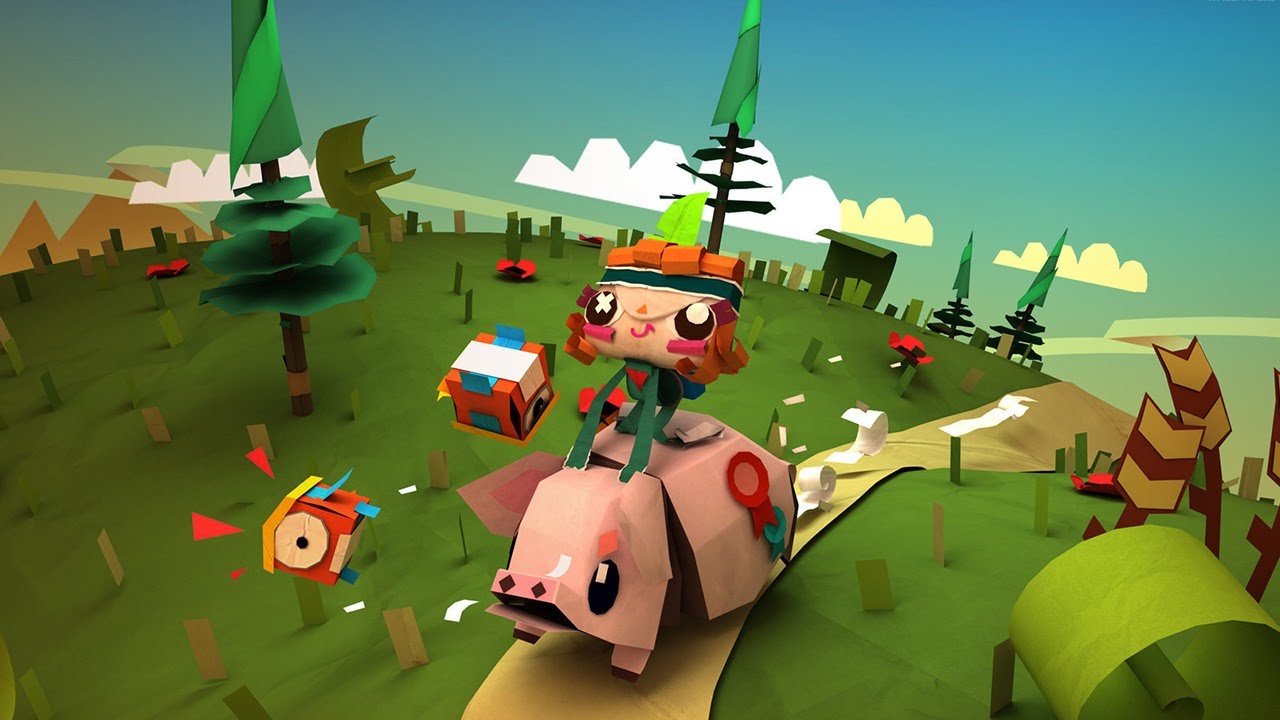
Danganronpa isn’t without flaws: It desperately needs an option to turn off the back touchpad during the trial scenes, panning around a room can at times be awkward due to the set camera angle, and with as much voice acting is present in the game, I would love to have had every line of dialogue voiced. Yet those are small bumps along what’s otherwise a fantastic (and fantastically twisted) trip through a tale of despair and hope. If titles like Gravity Rush and Tearaway are reasons to own a Vita for any standard gamer, then Danganronpa is a must-have for those of us fueled by a love for experiences a little less ordinary.

I no longer have to hope that Danganronpa will get an English-language release—or that I’ll actually like it when it does. Now, I have to sit here hoping that its sequel will also be booking a flight over here soon.

No matter what adorably evil lengths Monokuma went to in order to try to make me believe otherwise, however, I will hold on to hope—and I won’t be afraid to do so.

Trip Hawkins – His Life & Career

When looking toward the world of video games, one might be able to say the same of Trip Hawkins. He was there at Apple, in those early days, working alongside Jobs and Steve Wozniak to help bring about the home-computing revolution. Later, he founded The 3DO Company, one of the pioneers in the gaming hardware market, and pushed the idea of a home console that could bring consumers a wide array of multimedia options just as easily as it could play games. He launched Digital Chocolate, a development group focused on pushing mobile gaming forward long before every man, woman, and child played bird-based entertainment on their smartphones and tablet devices.

Oh, and then there was another little company that Hawkins can claim responsibility for: Electronic Arts.

“I think the thing I’m best known for is being the founder of Electronic Arts, and I’m happy for that, because EA is like one of my children,” Hawkins says when asked what will be most remembered of his legacy. “It’s important, to me, to have people remember that I did that.”

Without Hawkins’ love for sports-themed tabletop games as a child, there may never have been NBA Live. NHL Hockey. Madden NFL. Hawkins’ drive to one day making a proper football videogame helped create the biggest player in the sports genre.

Like Apple, his claims to fame are many, his contributions to our hobby far-reaching and impactful. Over the years, however, while Hawkins’ passion for video games hasn’t waned, he’s set his sights on a new goal: not just making gaming better, but making humanity better through gaming.

Mollie: You’ve said that you’ve had a passion for board, card, and tabletop games since an early age, mentioning things such as Strat-O-Matic and Dungeons & Dragons. What’s interesting is that two people I’ve interviewed, Hideo Kojima and Keiji Inafune, both listed very similar ways of getting into gaming.

Trip Hawkins: Huh. Interesting.

Mollie: What is it that makes some people play board games and say, “You know what? I want to take this somewhere else. I want to be making the rules instead of just playing them.”

Trip: I think what you’re talking about here is people that have proven, in the game industry, to be creative and imaginative. For someone who has a lot of imagination, if they encounter a game like D&D in their childhood, they’re going to notice the incredibly powerful fantasies that you can have with a game like that, and they’re also going to notice the feeling of authenticity. You just can’t get away from the power of those two elements, in that you get a chance to be an epic hero in an epic situation.

For me, sports games were a bigger deal, but I don’t think, as a child, I really objectively thought I was going to be Willie Mays. [laughs] I think the power of authenticity was equally valuable, because I felt like I was doing something really sophisticated that only adults had access to—and I got to do it as a child. I got to make adult decisions in a situation that seemed like an authentic, adult situation.

Mollie: Were board games the sole reason you got into video games? Or were they just the first of many steps?

Trip: No, that was it for me. I think somebody today could start out playing video games, but frankly, those devices and games weren’t available to me when I was a child. The big media choices available then were television, radio, reading, and board games. I was playing board games, and I realized that my friends wanted to watch TV.

Then I heard about computers. At that point, computers weren’t yet available to consumers, but I was thinking, “Oh, that’s how we’re going to do this. We’re going to basically take the administrative burden of playing a complex game like D&D, and we’re going to put it in a computer. And then we’re going to put pretty pictures on the screen and make it look and feel like television.” I was just imaginative enough that I could see that before it existed. And I saw it, what, at least a decade before it existed? I knew it was going to be good, and I knew it was going to be worthwhile. It was pretty easy, at the time, for me to say, “Yeah, that’s what I’m going to do.”

Mollie: Can you ever really make the true Dungeons & Dragons experience through a videogame, or does that always have to be an in-person, at-a-table kind of experience?

Trip: Well, I bet you can, but nobody’s done it yet. What I would say is that the best thing about D&D is the social community from the group of players sitting around the same table and acting out their characters. I still play it, by the way. [laughs] Mostly, now, I play the Dungeon Master for one of my children who wants me to help when he’s playing with his friends.

Frankly, to me, the most entertaining part of D&D is when the party first comes together in the town or in an inn. There are all kinds of fun little subplots you can invent, so the social interaction, sitting around the same table, and the humor of the way that the characters are creatively expressing themselves, that’s the most precious part of it.

Now, if you look at how it migrated into computers, I certainly enjoyed playing games like The Bard’s Tale and that early generation of RPGs like Ultima. And then when it went online, it went back to being multiplayer, so today’s games, like Lord of the Rings Online or D&D or various other brands of it, my friends that I grew up with, the ones who never had children are really avid players of those games. [laughs]

But those games are, in my opinion, too frenetic. It’s all about the battling that’s going on. And, yeah, players have their headsets on, and they’re talking to each other, so there’s that social dimension. They’re doing it together. And there’s some humor in that, but they don’t have the quieter, more contemplative, more creative moments that, I think, you have in a genuine game of D&D.

Mollie: At what point did you experience your first videogame? How did you make that jump between knowing what gaming is, in terms of tables and books and dice and things like that, and suddenly saying, “Wow, there’s this whole other universe of gaming that’s about to begin”?

Trip: I was in high school in the early 1970s, and my father had worked with the guy who turned out to be one of the technical titans of the first generation of the videogame industry. His name is Lane Hauck, and he’s a really brilliant guy. When I first met him, he was developing an interest in computers as a hobby. Lane had a KSR-33 [Note: An electromechanical teleprinter from Teletype] and hooked it up to a PDP-8 kit [Note: A commercially available minicomputer from Digital Equipment Corporation in the 1960s], and then he invented a game that he called MOO, where you could tap in four-number digits on the KSR-33, and then it would spit back an answer. You’d try to guess a four-digit number, and it would tell you which numbers you had right and which numbers you had in the right slots.

Mollie: Kind of like the old Mastermind board game.

Trip: Exactly. Mastermind came along later, but yes, same concept. He was probably the first guy to program that kind of game on a computer, and I’d already heard a little bit about computers and was imagining these possibilities, so it was an important stepping-stone for me to have faith and belief that this was the future.

And then, of course, I go off to college a year or two after that, and I had access to a mini-computer for the first time. I remember, in one of the computer centers—the Aiken Computer Lab at Harvard, where Bill Gates and I probably crossed paths without knowing each other at the time—there was a big cabinet with a display in it that could run a game kind of like Computer Space, the first product from [Pong co-creator] Nolan Bushnell. I think some guys had basically copied it and made it run there. That was enough for me. I didn’t have to see very much to have faith that, yeah, we can do this. This is going to happen. It’s just a question of exactly what form it’s going to be and when the technology’s going to steadily get better.

Mollie: How were video games accepted in those early days?

Trip: I think when something new shows up, you have a group of hobbyists that adopt it, and then you have the mainstream, which is likely to have a rejecting attitude about it. Every new medium has gone through a hazing period. Still, to this day, I don’t think the medium is really that well understood, and I think it gets picked on a lot more than it should.

I remember in the very early days of EA in 1983, we made a game, Hard Hat Mack, where you had a character that was working on a construction site. It was kind of a platformer, and one of the characters that chased him around was an OSHA inspector. It was just a little joke, but [California state senator Dan McCorquodale] here in the San Francisco Bay Area thought, “Hey, I’m gonna get some publicity by making a stink out of this.” And the next thing you know, I’ve got the media calling me, saying an Emporium-Capwell store had decided not to sell the game because of pressure from this politician.

Mollie: Wow.

Trip: I know it’s kind of shocking to even imagine a department store like Emporium-Capwell selling video games, but they’d been one of the first mainstream retailers to carry Apple, and then, for a period of time, they were pretty focused on it before the specialty-store business really took off. It was one of the meaningful retailers that you could sell an Apple II game through. And then, they’re going to drop a game for no good reason, just because they’re feeling intimidated by this politician that might be able to generate bad publicity?

The politician claimed that our game was going to encourage children to have a disrespectful attitude about the government. [laughs] I mean, it was pretty ridiculous. What was funny about it was, the negative publicity did hurt the sales of the game. What’s sometimes said about publicity is that there’s no such thing as bad publicity. It’s not true. It was bad publicity. It was unfounded. It hurt the sales of the game. It was just a political ploy to get some attention to his own name, and we were all pretty happy when he was eventually voted out of office. [laughs a long time]

Mollie: Speaking of Apple, could the Trip Hawkins of today have stayed at Apple and still be working there, or was it just an inevitable thing that, at some point, you would have left?

Trip: We’re talking about today’s Trip Hawkins if I went back in a time machine?

Mollie: The person you are now versus the person you were when you actually worked at Apple.

Trip: Based on what I know and the maturity and wisdom that I’ve grown into—having now had plenty of years to figure things out—I can absolutely imagine that I could’ve stayed at Apple my whole career. I can also absolutely imagine that I could’ve stayed at Electronic Arts my whole career, and I know that I would’ve done some very interesting things in both of those cases. I’m just a restless kind of guy, so when I was younger and less mature, it was going to be likely that I was going to feel like I needed to change companies or start a new company, in order to service some passionate desire.

Mollie: You were at Apple at such an early point in the company’s life. Did you have any sense of what it could become and what do you feel about Apple as it is now versus how it was then?

Trip: I totally saw the whole thing. You have to realize, before I joined Apple, I wrote and published through a market research firm the first comprehensive and complete study of the personal computing industry—and this is at a time when most people didn’t know what a personal computer was. So, I had a chance to get to know companies in the space, and I had job offers from several of them, and I could tell that Apple was the pick of the litter. So, this was at a point where Apple had only sold a few hundred computers. This is maybe what a lot of people don’t know: The original Apple product was a hobby kit and it was just called “The Apple” and only a couple hundred of those were made. The truly first commercial product was introduced in April 1977 at the first west coast computer fair, and I was there because I was working on this study of the personal computer space and that was the Apple II’s introduction. And I was basically looking for a job in that time frame along with working on the study and basically pretty quickly realized that Apple by far was the most interesting company in the space. Even though they really hadn’t done anything yet. And for what it’s worth, they had some very large competitors. Radio Shack was of course a very large corporation already at that time and had a gigantic lead in terms of how many TRS-80s they had sold, but you could tell just by looking at it that it was a pile of crap. I would never have wanted to have one of those. And I knew I didn’t want to work for a big corporation. I actually did interview with IBM. And I was most interested in the end of their product line, which was the smallest computer and the cheapest computer, but it still cost somewhere between five and fifteen thousand dollars. I think it was closer to fifteen. And it wasn’t really personal. And so I just kind of flirted with interviewing with them, and said to myself that was not where I wanted to go do this. And I also had an offer from Commodore and Commodore was another early leader from the Commodore PET. And they were a much more established company, but they certainly weren’t an enormous company. And then I had offers from other companies, more at the start-up end of things.

When I started at Apple, the company had about 50 employees. Half of those were literally the assembly line putting the Apple IIs together. So, in terms of the office environment, there were only about 25 office workers. Pretty small and so I worked very closely with the founders the whole time I was there, but then four years later when I left, we had 4,000 employees and we were doing about a billion dollars a year in revenue. So, I saw it as a big company, so when you ask me if I knew it was going to be big, the answer is yeah because I was there when it was big. 4,000 people and a billion dollars, that’s big and you also knew that it was only going to get bigger. Most of my time there was spent on identifying the office market, the desktop market as the primary market to develop and that was a change because until I kind of pushed Apple down that path, the common perception in the industry was that the best business use for personal computers was going to be an accounting system for small businesses. Because up until that point in time, pretty much computers used in business were used as accounting systems and they were just used by big companies. Enormous companies had mainframes doing it and then medium sized companies had mini-computers doing it, so now there was going to be small, personal computers and you’re going to be able to have a small business like a mom and pop retail store or a plumber or a this and a that. And of course, when I first arrived at Apple, literally on my second day on the job, the chairman of the board Mike Markkula who was the adult supervision in the company, he said to me “Hey Trip, you know something about business,” which was kind of laughable, but he said that because I had written that study and I had a business degree, and I was always being straddled by a bunch of geeky engineers. Pretty much every other office worker had an engineering degree, even if they were assigned to sales or marketing and it was just the typical sort of Silicon Valley culture of the time. Then I come in and not only am I not an engineer, I have a MBA and one of the slogans at business school was “Don’t ever be the first person at a company to have an MBA,” because everyone else will pull out the knives and use you as proof as to why they don’t need to have an MBA, they’ll make sure you fail. But for what it was worth Apple was like “Hey Trip, go figure out how we can sell these to businesses,” and after I studied that I realized that a plumber is not sophisticated enough to know how to run an accounting system. So that was not going to turn out to be the be all end all.

We didn’t ignore that market. I helped develop that market segment, but I identified office desktops as a far more relevant opportunity. And I didn’t invent the spreadsheet, but I did bring the first spreadsheet apps into Apple and I did identify the fact that’s a linchpin application to build around in the office market along with word processing. And there was a word processor market at that time and they were like $20,000 per workstation and I thought we could really revolutionize this because we can do lots of different applications on the same machine and have it be a much cheaper machine. I built out a product line to do that with the Apple II, but the Apple II was not ideally designed for desktop use. And so we had kind of planned to move it forward with the product thinking that we would start it in the Lisa group and migrate it into the Macintosh group and so all of that was percolating along and it had not yet come to market when I left Apple, but I knew that was going to be a big deal.

Mollie: Do you think it will ever be in Apple’s culture to be a gaming company or a company that really pushes gaming? Because it feels to me that even though gaming has become big on iOS, that Apple still kind of feels like it’s just there and we’ll do some thing to support it, but we don’t really want to get into gaming stuff. And I know that’s partially a Steve Jobs thing, but it also feels like it’s just part of Apple.

Trip: Yeah, I agree with you. I mean, you and I care about games so it’s been a pretty continuous source of sadness that Apple doesn’t love games the way gamers love games. At least now, they embrace it and they support it, so they recognize they have a lot of customers that want to play games, but Apple just doesn’t think like a game company.

Mollie: So say Apple gives you a call out of the blue and says they’re finally going to make Apple TV be a gaming platform and they’re going to make a controller and they want you to go back to them and help them launch it. To head up their game console initiative. Do you go back? Do you do it?

Trip: Well, I’m pretty excited about the job I have right now, but that would certainly be an interesting thing to do if I didn’t have a job.

Mollie: One of the companies you went off to start was Electronic Arts.

Trip: Before I left Apple, I knew for years that I was going to start a game company. In fact, I had made the decision back in 1975 that I would start my game company in 1982, which is exactly what I did. Not too many people were planning that far ahead, but I was thinking pretty far out. Being at Apple was a deliberate part of that strategy, because I felt that I needed to work someplace that is selling computers into homes, and where I can learn how to run my own company someday. I realized that any new company needed to have a big idea, and as 1982 started to get closer, I didn’t yet have the big idea. I was thinking to myself that I needed to have that big idea that I could build a company around, and the more I worked with guys like Bill Atkinson and Larry Tesler and various other, really creative software developers at Apple, I began to realize that these guys were artists. Nobody thinks of engineering as an art form, and yet it is.

So, I really figured that out in the last two years that I was at Apple, and once that big idea kind of took hold in my mind, then it was very easy to flesh out the strategy for the company. Among other things, you’re going to have a diversified portfolio of products, and if you want to have more of your products available in a retail store, you need to have direct relationships with the retailers and expand how much shelf space you have. I decided we would go direct, even at a time when nobody else was doing it in the computer software category. There was no software of any kind where anybody sold direct—they all sold through distributors. And I knew that everybody in Hollywood does it direct and they have more control over their fate and they get broader shelf space and know more about what’s going on at the point of sale with the customers.

So, that’s an example of a strategy that became kind of obvious to me once I had that big idea and another example was if these guys are artists, I need to study how artists are treated in music, moviemaking, and book making and I started reading all these books, biographies, autobiographies, documentary type films and books, to explain how those industries worked and I made some contacts. I was able to obtain a sample of a music recording contract so the EA game developer contract was basically a fusion where I went back to my Silicon Valley lawyer that I always worked with at Apple and said to him we were accustomed to doing software developer agreements, and I had done plenty of those at Apple, and here’s a recording artist agreement and here’s some principals I want followed and I want to create a new contract form that blends these two areas of need together. And then, of course, that contract got ripped off by well over 100 competitors.

There were a number of things that EA did that poured the foundation for the industry and became the standard practices that everybody else copies. The same thing with the record album packaging. That was originally my idea, coming straight out of the big idea that this is a software artist, so why not present their work and have their name on it and have a picture of them and a bio about them like you would if it was a book or music album.

And then it occurred to me that yeah we can have it be like an album and it’ll be very cost effective because obviously if the record industry can afford to do it therefore we can afford to do it. So that led to that album type format that we developed and designed with the printer that was the largest manufacturer of record albums. And I kept track and eventually there were 22 competitors that copied exactly that paper format as we created that new paper format here where this is where you’ll put in the floppy disk and here’s a slot where you can insert the manual and there will be a three-fold deal. But yeah, 22 competitors that just literally copied it.

Mollie: Japan was a huge force in game development at that time, but they were almost the complete opposite, where they made so many of their programmers and developers use nicknames and things like that so that talent couldn’t be poached by other companies. Here you were, pushing those creators to the forefront and directly naming them. Was there ever the fear that a different company might poach some of your team if you push them to the forefront?

Trip: Sure, that was a concern. I think, at the time, we were really confident that we were going to offer the best services, support, and financial opportunity compared to anybody else. We knew we were going to have the best tools, we knew we were going to make financial commitments. Paying cash in advance, for example—nobody else had done cash advancements. It was common in Hollywood, but no one in the games industry had done it. And then, in the end, we knew we were going to offer the most powerful distribution because we were going to invest in going direct and having more shelf space.

Mollie: One of the early EA games I think back to is One-on-One: Dr. J vs. Larry Bird. It was a sports game, but it had a quality that non-sports fans could also enjoy. Was the idea for going in that direction due to technical limitations, was it a design choice, or was it both?

Trip: You have to go back to my childhood, because growing up, the most important heroes to me as a child were professional athletes playing in sports like football, baseball, and basketball. And, playing sports simulation games like Strat-o-matic became my favorite hobby. So, a lot of my motivation to start Electronic Arts had to do with my desire to make computerized simulations of those sports. When I became interested in being a game designer, it was motivated by the fact that I was playing Strat-o-matic Football, and felt that I knew more about football than whoever had designed the game. I thought I could make a better, more authentic football game than this. And I was a big football player at the time and had read a lot of books about football and coaching and strategy and play design so it was a very deep hobby and interest. So that was the first game that I ever published, it was a board game football game that I designed with cards and charts and dice. It was kind of in the same tradition of games like D&D and Strat-o-matic, it was that type of game. And that’s when I realized this is a hell of a lot of fun and I really like doing this and of course it didn’t do well financially because I was a teenager and didn’t know how to run a business and that’s when I realized that I was going to do it again, but it’d be computer games and I’m going to wait until I know a lot more about business before I do it.

And then’s when you get to the next decade of planning that gets to the foundation of Electronic Arts. So, by the time Electronic Arts gets founded, of course, as soon as I have a company, I’m going to be figuring out how to get the sports games made because those are the games I want to play. And it wasn’t really practical to take the first step by doing a really ambitious team sport. So when you look at the first games that we did, the very first game was the Dr. J vs. Larry Bird game and the next game that followed that was World Tour Golf and if you think about those games, basically you’re making a golf game and I’m going to have a flat golf course with a couple of different colors to differentiate grass and sand and I’m going to have to animate one golf swing, so that won’t be terribly demanding. And then with Dr. J vs. Larry Bird I only had two basketball players to animate and I had as a child seen these Vitalis commercials on TV that had done the Home Run Derby that doubled as an advertisement. Actually I don’t think I saw them as a kid, they might have preceded me and aired sometime in the 50’s, but the Home Run Derby was invented as a way of promoting some product on television and then by the 60’s Vitalis, this hair cream company did it, and I decided that we would do something like that but we’ll do it with basketball players doing a short game of one-on-one and we could edit it into a short 1-minute TV commercial. I just kind of instinctually recognized from my time with Apple II to not try to animate too many characters, let’s do something simpler as a starting point.

Since I was actually more of a football fan, I figured first how about a simpler football game that is basically a quarterback throwing passes to a receiver and how about I bring Joe Montana and Dwight Clark into that because the 49ers had just won the Super Bowl and they were the local team and suddenly had a national reputation and that was really the first idea that I had and then I found out that Montana had a promotional relationship with Atari. He wasn’t used in any software or appeared in any games, he was just a spokesperson to sell the Atari hardware product line, but that blew that out of the water. So, I thought about it and I wasn’t sure then if the game idea worked because it wasn’t real football and I couldn’t have Montana, so then I went to basketball. And I personally was a huge fan of Julius Irving, Dr. J, and I knew he had this great rivalry with Larry Bird and they’re both very different kinds of players. They’re both great, but one is a classic guy who penetrates and is dramatic around the hoop and the other was a well known outside shooter. And there was an intense rivalry between their teams on top of everything else, so there was great drama and story between these two guys. And when I was playing Strat-o-matic or even the football game I had created, it meant a great deal to me to play with the real players. So, always for me it was about the authentic experience. And with the basketball game idea I figured I wanted these real players to be in the game. Up until that point in time, nobody had brought in an expert, of any kind, to help design a video game or appear in a video game as themselves. It just had not been done. So, Dr. J was the first such person to sign a contract to do it and we were able to get a hold of his agent through a local lawyer that we knew that knew the agent and he was able to convince [Dr. J] to consider it and one of the arguments that I made to Julius was that he was going to be retiring within a few years and this would be a way for him to extend his brand and to continue to be an ambassador for basketball. And this was the medium that his kids were going to grow up on and these are the kinds of things his kids would love to see him doing. So those were the arguments that appealed to him and got him on board and, of course, one we got him on board, you just have his agent tell Larry Bird’s agent to do it. And you can say the rest is history.

Basically, I kind of pulled everything together about this. It was my idea, I put the team together, I was the Executive Producer throughout the project, basically it was my game design down to nitty-gritty details like you could shatter the backboard glass and have a janitor come out and sweep it up. I was inspired to do that because Darryl Dawkins had become well known for shattering backboards and so I figured we could have a little fun with this idea. But even the little details, I learned a lot about user experience back when I was at Apple and helped pioneer that field and I was always in the room whenever we made these really epic decisions about how human beings were going to use computers. In fact, it was a friend of mine at my request who brought the first mouse into the company. So, again, I was in at the ground floor of all that and became a pretty good expert at user-interface and user-interface design and so I understood the difference between pressing down on a button and lifting up and releasing the button. Those are actually two different actions and you can say you just hit the button, or you could say to hold the button, because then we’ll do a second thing depending on the release of the button. So, in Dr. J vs. Larry Bird the things that I worked out and lined up with basketball is that the correct technique when shooting a jump shot in basketball is you’re supposed to release the ball at the height of the jump. So that’s in that game because I said your shooting is optimized if there are no defender hands in your face and you release the ball at the height of the jump. So if the shot is uncontested and you time the release of the button perfectly that’s your greatest chance of making the shot.

Meanwhile, you can actually release the button on your way up, or on your way down and that led to one of the more fun things you could do in the game, which was be way outside the 3-point range and you could jump up in the air like you’re going to do a jump shot, but then wait until you’re coming back down and your feet almost back on the ground and then you release the ball so now you’re back on the ground just as the ball is releasing from your hand and you can run to the basket and get there about the same time as the ball is hitting the rim and you could basically alley-oop yourself. That’s still one of my favorite things to do in any video game, to lure the defender out and make it look like I’m doing this 3-pointer and then come back down, run around the guy, beat him to the hoop, and then do a slam dunk off my own rebound. Anyway, you can imagine by the way I’m talking about it how fun it was to design that and why I still think of it as one of the best game designs because of the elegant simplicity of it. Because there really wasn’t much you had to do. In fact, it’s one of the few games where in the entire history of Electronic Arts, even to this day, the retailers that buy the games almost never play the games. And even if you go out to show them the games, because I’ve made loads of sales calls with retailers and shown them video games that I want them to order lots of copies of and you’ll be showing them a game and say “Here, you try” and pretty much the only game where you could actually get them to try it and where they would light up with joy because no matter what they did they felt successful at it, was Dr. J vs. Larry Bird. Because, basically, no matter what you did with the joystick, the guy runs around in some correct part of the court, it may be incoherent but, you couldn’t run out of bounds, you couldn’t do it wrong, and then if you hit the button the ball was flying towards the hoop. And it didn’t matter exactly how you timed it, you felt good because you took a shot.

Mollie: Have we lost some of that elegant simplicity in gaming? Can you still have as much fun developing games today given how much you need in terms of programming and art assets and audio assets and staff and things like that?

Trip: Oh, absolutely, and I think one of the things about mobile devices and the Internet is that it’s a more mainstream market. You have billions of people playing games now and a lot of them are casual gamers. As a result, if you’re designing for a casual gamer who is also, no doubt, a social gamer, you don’t have to build Grand Theft Auto. You don’t have to build something with the depth and sophistication of Madden. And there are plenty of good games, Angry Birds comes to mind, that have 2D graphics and that didn’t require enormous budgets, they just required a sense of humor and good, clean design. I think there’s more and more opportunity like that all the time because there are so many devices and so many access points. And certain things have gotten a lot simpler. So you no longer have to build a company to get a product into distribution. You can basically just have a link in the cloud and people can get to your game and they can try it for free. So, it easier for an unknown developer to come out of nowhere and make something that turns out to be the next Angry Birds. It’s a somewhat misleading proposition in that a lot of people get caught up thinking that the odds of that are good. “Of course I’ll make the next Angry Birds.” Actually the odds of that are probably closer to 1 in 100,000. Obviously a lot of creative people get disappointed but I think if you think about the creative spirit and it’s true for musicians, writers, and people who make games, they are so enjoying the process and they’re so passionate about the creation that in the end the journey is worthwhile, even if you don’t have the commercial success. And I’m sure other people in the industry feel the way I do. I love my failures just as much as I love my successes because I know what I was trying to create and I what was good in that creation. So, you go back to a game like M.U.L.E. that I was very intimately involved in helping create. I can’t say that I’m the creator, but I was one of the lieutenants assisting with the creation.

And, to this day, I think that’s one of the most remarkable games made by the industry. And Danny Bunten [now known as Danielle Bunten] is partly in the Hall of Fame because of that game, but it was a commercial flop. People still talk about it. It’s got an enormous cult following, but it was a flop. It was just kind of ironic, because they made another game, The Seven Cities of Gold, that was much more of a commercial success. I love that game too, but I’m much fonder of M.U.L.E. And to this day, I’m fond of other games, you know, like the Army Men brand. I’m still fond of it. It got a lot of ridicule from other people in the industry who didn’t yet understand what it meant to make a casual or a game that had a sense of humor. They were trying to basically compare it to hardcore games, and that was not really a fair comparison.

But yeah, at some point, as a creative person, you separate your point of view from the critics and you separate it from what happens commercially with the public and you take whatever public success you have with a grain of salt.

Mollie: EA starts working with sports figures, and at some point, John Madden comes in for football. What was it like working with him, and is there any truth to the idea that he wasn’t willing to put his name on the game if there weren’t 11 players on each side?

Trip: First of all, John Madden is a great entertainer. If you hang out with him personally, every third word is the F-word. The fact that he’s never said that on the air tells you what a consummate professional he is. So, you’re dealing with a very professional entertainer, and he’s enjoyed cultivating the mythology of the story you just mentioned.

The truth of the matter is that, in order to bring John on board, he made me fly into New York City, meet with his agent, and convince his agent that he had to make the deal. We made the deal, and at that point I had not met John—I had only met the agent. We made the first payments associated with the deal, and then we made arrangements to have a meeting. I had written an enormous design document, probably about 80-pages, that was, in fact, a design document for an 11-on-11 football game. The first thing I needed to do was take him through the document. I had a ton of questions for him to clarify. Am I doing this right? Here’s a detailed question about how, say, bump and run coverage works or how a linebacker reading a run versus a pass, what are they doing. I had stored up a whole bunch of questions I needed to ask him because I was then going to go on to design how the computer did AI and how the computer chose plays and how the computer would choose which personnel to put on the field, which formations to run, how to set up a play by… Just every little detail. What am I going to do based on down and distance, time in game, score? There was a lot that had to be done. I knew I had this two-day period with him, so I had to go through that, and that was going to be the first thing. One of the questions I had was just a little bit of a risk management thing. Since I had played football, I was familiar with skeleton. Skeleton is something you do in football practice where you don’t need the guards and the tackles, because you’re not doing running plays. In skeleton, you’re basically practicing passing plays, so there’s seven guys on offense, which includes the passing play and all of the eligible receivers, and the center, who’s going to snap the ball. And then on the defensive side, you would have, again, everyone except the defensive ends and the defensive tackles. You’d have the other seven guys, all the linebackers and the defensive backs. There was still a little bit of a pass rush, because the linebackers could come in, and your receivers were all running pass patterns and you were throwing the ball. Of course, this is a real thing that comes from real football. One of my questions was, hey, maybe in one of our practice modes, we’ll offer skeleton as a practice mode so that when you’re drawing up your own plays in the play editor, you can then basically practice them with the skeleton method like you do in real life. At any rate, I still had some question marks about how well we would be able to animate 22 players on an Apple II, which was our first hardware platform. So I did, in fact, take him through this question about, hey, what about skeleton? Should we have that as a practice feature? And then I did just ask him this one question, which was, hey, what do you think about if we have trouble animating 22 players, what do you think about the idea of, as our fallback, just having it be seven on seven. He then had sort of a one-liner, said, Well, that wouldn’t be real football. I nodded my head and said, Yeah, you’re right. That’s not real football. And then we moved on.

So it wasn’t really that we couldn’t do it. It wasn’t that I wanted to do it. It was just one of these risk management questions, and it was among literally hundreds and hundreds of other questions that he was being asked while I’m kind of clarifying my thinking. I’ll tell you right now, if in the end, we couldn’t animate 22 guys and we’d decided to make it seven on seven, he would’ve still been on board. Now, by the way, it took longer to make the game than any of us expected, and he and his agent both got pretty upset about it, because there were some progress payments that we ended up delaying. That they really got upset about. There was one point in one of our follow-up design meetings where we were talking about something and something being correct or not correct. I think there was a play formation where the developer had kind of carelessly had a halfback that lined up behind a guard, which never happens in football. They always line up either behind the center or behind the tackle, and he got upset when he saw that. Then the F-word was every other word. There was one point in a conversation where he did, in fact, express—for like maybe 30 seconds—he said, You know, I do have to be a little careful about what you guys do to make sure I protect my reputation. I’ll tell you right now, there’s a notable difference, and right now I’m working with experts right now that are master teachers of social and emotional learning, which is known as SEL. And they’re extremely worried about their reputation. They don’t care about money. They really care about their reputation and the academic and teaching community. So it’s kind of funny, because I work with this one expert where she’s known me for more than 15 years because the way I learned about SEL was my children went to one of the schools that was at the foundation of it, and so I started hearing about it through what my children were doing in that school, and she taught in that school for like 30 years. So when I got the idea to do this thing, I was like, Yeah, I want to work with her, because I know she’s like the world’s leading authority on this. And, in fact, that school was the featured school in the famous book by the New York Times science writer Daniel Goleman that came out twenty years ago called Emotional Intelligence [full title: Emotional Intelligence: Why It Can Matter More Than IQ]. The school my kids went to was the featured school. Anyway, to make a long story short, it took me six months to convince her to help me make this game that we’re making today, the game IF…, because of her concern about reputation. It was never a concern about money. Never. Now, on the other hand, I compare that to all of the contract negotiations with athletes and coaches, it was always about the money. It was never about the reputation. [laughs] Indeed, that Jerry Maguire movie line, “Show me the money,” it’s pretty valid. It’s actually one of the things I really respect about John Madden, that he had faith in us. I think right from the beginning he could tell that we were as serious about football as he was, and that we wanted to do it right. Again, this has just always been, for me, the really essential thing about my experience as a gamer, is that I wanted it to be authentic. And that’s why I was willing to work on it for years to get it right. And by the way, I’m taking exactly the same approach with what I’m doing now.

Mollie: Obviously you’re not at EA, and you’re not working on Madden anymore, but do you miss the days when John Madden was on the cover, or do you think going the cover athlete route was the right direction for the series?

Trip: I think they’ve had a lot fun with athletes on the covers—it’s become a cultural thing. Athletes are really thrilled when they get chosen, and they love to trash talk each other about it, whether they’re chosen or not. We had that going on with High Heat Baseball back at 3DO. Although, I think John Madden as a brand name could be a bigger and broader brand today than just a football simulation game. I think that was a lost opportunity. You look at how huge fantasy sports is, and I cannot think of a better human being than John Madden to be the brand name for fantasy sports. That’s just something that was never pursued or considered. I think it’s an example of how product disruption works. The Internet came along and the game industry did not understand it. Even something like fantasy sports came along and the game industry did not understand it. Fantasy sports is an extremely enormous industry, but it’s not really an industry that the traditional game industry participates in. And yet fantasy sports are the most scaled example of what I think a modern videogame will be, which is a cloud-based game service that’s available, that can be accessed from every screen size and every device and you’re always able to kind of pick up where you left off and you’re always able to communicate social, and it’s truly interoperable cross-platform. Of course, the reason it’s that way is with fantasy sports you’re generally just checking into a website. You’re trying to find out, did my guy hit a home run or not. Hey, there aren’t that many video games that have audiences as large as fantasy sports.

Mollie: Another thing that stands out about EA, for me, is the era of your Genesis releases. Your clamshells were different, your cartridges were different—it was almost like you guys were like this rogue company that was saying, “Well, we’re going to do things our own way, and we don’t care what anyone else thinks, and we’re going to have our own cartridges and our own cases and everything.”

Trip: We absolutely were rogue. I didn’t like the Nintendo licensing program—I thought it was draconian, confining, and extremely un-American, and that’s pretty much how all the other American game companies felt. That’s why none of us supported the 8-bit Nintendo when it came to the U.S., and basically why the American game industry hoped that it would fail.

There was only one exception—one America startup, Acclaim. Pretty much the rest of America was thinking, “Man, we don’t like this business model, I hope this doesn’t fly.” [laughs] Needless to say, everybody was kind of left flat-footed when it succeeded, and as it did, it started to kill off the market for, say, Commodore 64 or IBM PC games. Everybody was scratching their heads and wondering, “What the heck are we going to do about it?” As I started thinking about that, I said, “Well, we’ve kind of missed the 8-bit boat, but there’s going to be 16-bit.” We’d made all these great games on the Amiga, we put them on the ST, the 16-bit Mac, the 16-bit PC. We’d even ported 16-bit coin-op cabinet games like Marble Madness from higher-powered 16-bit cabinet games into the consumer market. We had tons and tons of 16-bit experience, particularly with the Motorola MC6800 processor.

So, when I heard that Sega was planning to introduce a 16-bit machine based on the 6800 processor, I thought, “Oh! Well, that’s a different kettle of fish.” Sega had 1-percent market share in 8-bit, and they had no third-party program. I was thinking, “Oh, you know what? I bet Sega’s going to come in, and they’re going to have a good 16-bit product before anybody else. But you know what? Either they’re not going to have a third-party program, or they’re just going to copy Nintendo’s, and that’s not good. All right, we’ll reverse-engineer it, and we’ll do our own thing.” At that point, we’re going rogue, and we’re preparing for the fact that, yeah, these guys are probably going to sue us, claiming that we’ve infringed on the copyrights.

But what happened is that, after spending about a year and a half reverse-engineering the Genesis and developing products and planning to come to market without a license, at the 11th hour, I thought, “You know, I’ve got to at least go tell Sega what we’re doing and see if we can make peace. I’m sure as heck not going to do a Nintendo-type license with them,” but I basically went to them just before the CES show in 1990 and said, “Here’s what we’re doing. We’re going to announce it at CES, it’s perfectly legal, we did a clean room, you’d be wasting your time if you decided to sue us, we can basically publish games without needing a license from you, and we’re not infringing on any of your intellectual-property rights. But, by the way, we’d be happy to consider being partners with you in building up this 16-bit market.”

I’ll tell you why we went public at the time we did [in 1989], because this’ll make you laugh: We’d been profitable every quarter for five years. We didn’t really need the cash from going public. In fact, we only netted $8 million from the public offering. But I wanted to go public and get the $8 million so that I had a little bit of a cash war chest for the likely Sega lawsuit. I was prepared to fight it; I didn’t have a problem fighting to prove that it was OK for us to do what we’d done. But we ended up making peace, and it turned out that I was able to get a really good deal partly because they were pretty convinced that I was going to do it anyway, and that they couldn’t stop me.

Mollie: You then went from reverse-engineering someone else’s console to making your own, the 3DO. Was 3DO a case of a right idea at the wrong time, or do you think the path you went down just wouldn’t have worked out?

Trip: It’s a really interesting “what if” case, because when you look at it in hindsight, it looks like it was a complete waste of time. When you see the success of the Sony PlayStation a couple years after 3DO, you think, and see, that there was no need for 3DO because Sony’s PlayStation was going to do everything that we set out to do. The funny thing about what actually happened is that Sony, in fact, almost joined forces with 3DO, and Sony copied a lot of the things 3DO was doing. I’ve had Sony executives tell me that. So, it’s just kind of ironic. I think the problem with 3DO is that there were a lot of the right ideas, but the timing wasn’t quite right. There were a couple of fundamental flaws in the approach that was taken. I think 3DO was a trailblazer, and it was a consciousness-raising event that helped the industry and the public figure out that there was some benefit to multimedia technology and that there was a future for things like digital video and the Internet and 3D graphics and the use of optical disc storage and even elements of social and casual games.

Mollie: So when you see Microsoft unveiling the Xbox One, and they’re talking about gaming and multimedia and all these things together, are you sitting there thinking, “I did that! I did that years and years ago!”?

Trip: My ego doesn’t need to go there; I think that would be kind of silly. Until something’s commercial successful, there are probably a lot of people that have ideas in their head that maybe don’t get very far, but maybe they get further but they’re not commercially successful. You have to give credit, in the end, to the things that genuinely get scale.

Mollie: 3DO often gets quoted as the most expensive console of all time when, to be fair, from memory, its retail price was $599, and the Neo Geo actually came out retail at $649. Will you at least say you got a raw deal in that regard?

Trip: Yeah, and I have to say, I appreciate you remembering what you just said correctly, because there are so many people that think that 3DO cost $700, and virtually nobody ever paid that. The way Panasonic operated at that time, as a consumer-electronics manufacturer, they’d establish a list price for something, and it was fairly common practice that they would fatten up that number and then tell the dealer what a fabulous discount they were giving him, and everybody—wink, wink, nod, nod—would know that the retailer was going to be able to then profitably sell it at a lower price.

From day one, the street price was $599. There have been plenty of other game platforms that have been more expensive. When I started at Apple, the Apple II had 4,000 bytes of RAM, no storage, no display, no nothing, and that thing cost $2,000. You didn’t get a whole lot for $2,000. In fact, the first DVD players cost $1,000. It just didn’t seem like it was that crazy if there was a reasonable value proposition to think that we could make a higher price point. But that was wrong. That was a mistake.

Mollie: One of the things that was most interesting for the 3DO was that, up until that point on the console side, you had a company who made a console. You had a Nintendo platform, a Sega platform, whatever. But the 3DO idea was that you could have these different companies making their own versions of the 3DO. You could have the Samsung version or the Panasonic version or whatever. It’s an idea that kind of came out and went with the 3DO, but it seems like we’re getting back to that with the Steam Box and what Valve is trying to do with it. Having gone through that with the 3DO, do you think that idea can work or is there a strength in having one company, one piece of hardware, one organization pushing it?

Trip: Obviously, in most of media history—and you’re seeing this today with Android tablets and smartphones—a model where there’s a standard that’s supported by a group of manufacturers is more likely to be successful, and there’s a variety of reasons why it will be more successful. Generally, when it doesn’t work out that way, there’s usually been a really good reason for it. I think in Apple’s case, Apple got to be so good at user experience that they were able to benefit from having complete control over the experience. In the case of video games, because it’s a razor blade model, you kind of have to have a brave lead manufacturer, as you saw with Sony and the PlayStation, where they were willing to lose money on the hardware. Sony basically put down a $2 billion bet. They invested $2 billion to start the PlayStation business, and that included fab facilities for custom chips and being willing to lose money on the manufacturing costs of CD players and memory and everything else. I remember when Sony came to the US and it was at the June CES. And this would probably have been ’94. So, June of 1994, and there’s a panel… Wow, what was his name. The Caucasian guy who was head of Sony PlayStation US at this time. [It was actually E3 ’95 (Sony Computer Entertainment America didn’t even exist in ’94). The man’s name was Steve Race, formerly of Atari.] He announces that it’s going to be $299, and I think pretty much everybody in the room gasped, because everybody was assuming it was going to be $399. And then Howard Lincoln was on the stage and said, “Well, I hope Sony shareholders like that.” Or, it was something like, “I don’t know how Sony shareholders are going to feel about that.” It was such a money-losing proposition. Literally, Howard Lincoln was mocking it. And, of course, the irony is that by January— Obviously, it’s not going to kill them financially for Christmas of ’94 because quantities are limited. Back in those days, if you could build and ship a million hardware units for your first Christmas season you did pretty well. But in January of 1995, the price of RAM plummeted. That was one of the things that made $299 such a risky choice for them, is that RAM was really expensive in the early 1990s because of growth in the PC market, and it was sucking up all of the supply of these computer chips. And it takes a while for the semiconductor industry to build new factories to catch up with demand, and they finally caught up by the end of 1994 and they had excess manufacturing capacity and they wanted to use it and get rid of their memory chips, so there was a dramatic reduction in the cost of RAM. Sony had 3 megabytes of RAM in a PlayStation, and basically the semiconductor industry said, “Hey, we’re going to give you this enormous refund. We’re going to make you look smarter for saying $299.” Sony, obviously, they manufactured chips as well and maybe they could see it coming and maybe they knew they wouldn’t have to get burned for too long at $299.

Mollie: I remember for years reading magazines like EGM, Game Fan, and Next Generation, and reading about the M2. The M2 is going to be the follow-up to the 3DO. It’s going to be this super-powerful system. It’s going to be an add-on. It’s going to be its own system. There’s mock-ups and everything. Looking back on it now, do you think there would have been a place for the M2 at that point, or is it maybe better that it didn’t end up seeing the light of day?

Trip: Oh, there was a place for it—the problem was in terms of learning curve. Again, you have to give Sony credit, because at a corporate level, they had been very active in the music business for more than a decade because of their joint venture with CBS Music in Japan. They had developed a pretty decent understanding of software and the dynamics between software and hardware compared to other hardware manufacturers. Plus, they’re Japanese, and they had a front-row seat watching what Nintendo had been doing. You might recall that there were a few time periods where Sony and Nintendo snuggled up to each other and tried to figure out how to be partners, and it never worked out, because you couldn’t have two kings.

Sony had really done their homework, and they had really been paying attention, and they were much more culturally open to embracing the kind of needs and issues you have if you’re going to be involved in software. For a company that had a hardware history, they executed really well in entering the game business and addressing a lot of the needs and issues on the software side of the equation. Frankly, Matsushita—which was a better hardware company than Sony, and had beaten Sony on the VCR and would later beat them again on DVD—really never got a feel for software or a feel for games. It was somewhat antithetical and difficult for Matsushita to get into the kinda thinking that was required. And, it was a little disjointed, because I had assumed that we would be able to achieve higher hardware prices. I was not convicted that we had to use the razor blade model, where the hardware had to lose money and there had to be software license fees that would repatriate that money. 3DO started out with a much lower license fee, believing that we could get that to work, and we didn’t really have the ability to then offer a hardware company essentially a kickback on software that would’ve allowed them to lose money on hardware.

Obviously, in hindsight, that just didn’t work at that particular point in time. But I think if you look at it now, people are happy to pay whatever they have to pay for their next iPhone, and they’re not paying really high prices for software because there’s a big license fee tacked onto it. For whatever reason, there was a period of a couple decades where video games had to be on the razor blade model. It wasn’t true with media before that, and it’s not true about media now, but during that time period, that’s the way the public operated—and the public would not pay to buy a videogame console above a certain price point. But they would pay $50 or $60 per game—go figure. Good luck trying to get them to do that now.

Mollie: That kind of thinking seems to lead into what you were doing with Digital Chocolate, and there were some people who were kind of like, “Why is someone like Trip Hawkins going to mobile gaming? Why is he lowering himself to those kind of levels?” Did you take any of that personally? Do you think that our industry still has a problem really giving proper credit to the mobile gaming space?

Trip: Well, I think everybody respects mobile games now. Companies like Jamdat are kind of a distant memory, and there was a whole battleground around feature phones that Digital Chocolate came into kind of late. Since the channels of distribution were controlled by the telecom companies, it never really went anywhere, because those companies didn’t really understand media and didn’t know how to develop media merchandising and promotion. Obviously, they didn’t have much feel for the device experience, either. It was frustrating, because despite the network being poor in terms of performance, and the devices being pretty limited, companies like Docomo had in fact built a huge successful business with feature phones in Japan—including the fact that they invented the idea of the app store and microtransactions and virtual good for mobile and social features in mobile. Then, there was also their enlightened thinking about the value chain and the supply chain and recognizing that, hey, we’ll only take 10% of the money, we’re going to make a lot of money on data plans. We only need 10% as a fee for doing billing and settlement on the phone content that gets purchased.

So, basically, Docomo created an enormously successful model before anybody else. The Koreans copied it, so it became a big deal there. What got built in Japan and Korea, eventually that understanding radiated out to other markets, and when then pushed further by Apple and their disruptive intervention—not only around the device experience, but shifting the distribution model outside of the telecoms and into the App Store.

But, you know, it was unfortunate for Digital Chocolate, because the company started too late to be Jamdat. When the whole Docomo thing didn’t spread beyond Japan and Korea, there was a limited opportunity with feature phones, and yet we made that work anyway—and it became a profitable company. As a result, by the time the iPhone and Facebook came along, we were trying to grow and protect a profitable business. You don’t spend years to get to a profitable business to then just throw it away overnight for a few magic beans like Jack and the Beanstalk. So, we could look at these emerging new phenomena like Facebook and iPhone and say, well, OK, we’ve got this big successful product line, these award-winning mobile games—you know, let’s bring them over to the iPhone, but we couldn’t make the same kind of disruptive commitment as a new company like Zynga. And, as a result, we missed that wave too.

So, Digital Chocolate kind of got caught in between. We proceeded to make a bunch of successful pivots and we became a successful Facebook publisher—just in time for Facebook to drain all the water out of the bathtub. It was a frustrating experience. And, of course, I think the biggest challenge in the industry in the last five years—as it’s gone to free-to-play—is figuring out how to get the discipline of game design to do a more effective job at causing virtual goods economies to be vibrant enough that they monetize well. Unfortunately, the game industry right now is kind of one-dimensional, because there’s this expectation that everything should be free, but then there are very few games that monetize well, and then only those games can buy traffic and do marketing. And so you end up with all the revenue going to a handful of games that are at the very top of the chart like Candy Crush Saga, and it seems a little arbitrary and it’s not really scalable. You’re only ever going to have a few games on the screen of your phone at a time, and they’re going to be the ones who are at the top of the free chart.

And companies are paying a big price to get there—they can only stay there if they happen to have a game that monetizes well. You know, obviously there are developers that had to have several shots at this before they finally figured out how to get one right, and in some cases those companies don’t even ever get a second one right, so in some cases it turns out it’s kind of like a hit song—a one-hit wonder band. But that was my biggest disappointment with Digital Chocolate, was that we figured out everything else, but we didn’t crack the code on monetization. And a lot of the same people left Digital Chocolate, went somewhere else, and eventually figured it out. We just didn’t have enough time.

Mollie: On the other side of things, instead of looking back, what gets you excited about games these days? What fills you with hope about gaming?

Trip: I’m really excited about the time being right to bring what we know about games and technology into the field of education. There’s this polarization now, where what goes on in the classroom is a big challenge, because [too many] Americans that enter the public school system fail to graduate from high school. That’s a disaster, considering how much money we spend on it and how much we care about it. And then, on top of that, we have these issues with school climate, where so many kids feel bullied or cyber-bullied, and we have school shootings, youth suicide, and just a lot of challenges with kids coping in these particularly large, urban public schools.

I think that there’s a legitimate crisis where the game industry can actually help deal with all of these issues, and what it boils down to is recognizing that and learning that you need to meet people where they’re at. Learning has to start with getting someone’s attention and having them be motivated. If nothing else, that’s something the game industry knows really, really well. Children’s attention today is going to video games, and they’re motivated to perform well in the game. If that’s where their attention is, that’s where learning has to go.

Mollie: The long-standing thought is that games can either be fun, or they can be educational—it’s exceptionally tough to make them both.

Trip: Well, the reason it’s worked out that way is that most of the game industry is young men who want to make games that they want to play. They don’t really know very much about kids, because they’ve not yet been a parent, and they don’t know much about girls, or women in particular. They don’t understand mothers or teachers.

Mollie: So that was the motivation for starting your new company, If You Can, and its first game, IF…

Trip: Right. In fact, this is the whole company. It’s called “If” after the Kippling poem, the poem that start out, “If you can keep your head when all about you…”

What I like about what we’re doing is that it’s on the softer side of academics—it’s not hard science, it’s not math. It’s about social science. It’s basically characters in a story that you care about that have classic human situations and relationship situations and conversations and choices that they’re making in the game, and we can use that as a platform to teach all kinds of social science. The focus for us, right now, is teaching this emerging curriculum that’s become known as SEL—Social and Emotional Learning—and this is something that kind of burst into prominence after the publication of the famous bestseller Emotional Intelligence. After that book came out, it galvanized that community and research that first was able to prove that the schools that were starting to teach SEL, the pioneers in it, had research evidence that school climate improved, that discipline problems reduced, that bullying reduced, that student function and well-being that that got better, that incidents of depression was reduced. So there’s a lot of research findings around the climate and the well-being of a student, and then following that, a bunch of additional research learning that schools that were teaching SEL, the kids had higher academic achievement scores in subjects like math and English, that are part of common core.

This is all really good support for the benefit of this kind of teaching, and so it started to get more government attention and it’s only been in recent years that the first government teaching standards have come out for SEL, and it’s pretty much like you would expect in a subject like math, where the teaching standards will say what they want a first grader in September to know about math, and when it is later on that they’re supposed to know everything about algebra or everything about calculus. And curriculum is spread out over a continuum of several years, and the assessment of it and the testing of it has to confirm what’s supposed to be known at different times, right? So these teaching standards have begun now to emerge from the government for SEL, and just in the last couple of years the government has started putting muscle behind it, starting to fund it and starting to make policy decisions to support it. And a lot of it has happened just in the last couple of years. So it was kind of a crescendo, where it feels like the time is right, and there’s a very critical need for it, so we’re excited because we have figured out how to do those three things successfully in a game that pre-teen children that are school children, between the ages of six and 12—so these are kids that have left home and started school, that are dealing with school climate, that are learning to read, and eventually are moving into middle school and high school, so it’s a fairly critical developmental period in terms of their social and emotional skills—and we’ve come up with a very good formula, again following the same kind of methods as I did with EA Sports of bringing in experts and using government standards and going according to the rulebook of how it needs to work, and we’ve wrapped that into a very clever videogame design that’s got a great story and great characters and fun gameplay.

Mollie: Why does it matter if games teach us something?

Trip: I think it’ll be a big letdown if the medium of games only ended up being used for entertainment. It just fails to exploit its inherent potential. When I was a kid, I kind of discovered on my own that I was more mentally engaged playing board games than when I was watching TV, so I figured out that this was better for me than that. Obviously, a lot of games kind of dumb that down. What I noticed as a child was, hey, if you’re simulating something real, that involves real human situations, either real or fantasy, you know like with D&D, they’re pretty real human situations, but yeah you’ve got magic and dragons, which makes it more fun. You could just tell that you’re learning stuff that’s more potent, that can be applied to real relationships in real life. Same thing if you’re playing a flight simulator or, you know, learning how to be an NFL football player or call NFL plays. So it can be done, and it should be done. There’s a crying need for it.

School systems, you know the didactic learning model that’s been around for about 500 years, it had a good run. [laughs] It had a good run. But the idea that everyone is paying attention to what the teacher is saying in the classroom, or doing a lot of supplemental reading at home, it’s not happening. A lot of money’s being spent and going to waste, and almost half of American children that enter the public school system don’t even graduate from high school. I mean, that’s a pretty serious problem. Of course, we’re focused on social and emotional learning, because there’s now also psychological issues that kids have, because they’re not learning this stuff by the means they would have used a couple hundred years ago in a tribe or a village, where they’re growing up alongside your parents and their modeling, and you’re going to religious services. It’s just kind of fallen in a crack. I didn’t learn anything when I was growing up about how to manage my emotions. In fact, my father was setting a really bad example about that, and you’re just kind of picking up his bad habits. So, this is really necessary stuff, and school climate has become a big issue with bullying, cyber bullying, youth suicide, school shootings—it’s a real crisis.

Mollie: Will people say that Trip Hawkins had a “good run” when the end of your career comes? How do you think you’ll be remembered, and what do you hope you’re remembered for? 

Trip: [laughs] That’s a good question. I think the thing I’m best known for is being the founder of Electronic Arts, and I’m happy for that, because EA is like one of my children. It’s important, to me, to have people remember that I did that. The other thing I think that I am known for is that I did innovate a lot of business practices, and practices around how to do game development and how to manage game development. What is more precious to me, personally, is what I did creatively. Personally, I would rather be remembered for what I did as a designer. That includes the very central role that I played on the EA Sports games, and later High Heat Baseball, but also what I’m doing now with IF… and what I did early at EA with games that had educational value like Mule. Again, this is maybe something you don’t know about Mule, but at my direction, we had the game bottle several critical economic principles that were straight out of a first year of college economics, and it meant a lot to me that we had a game that legitimately simulated these economic principles. And, in fact, I wrote the manual for the game. Because, of course, everybody knew that I had to write the manual because I was the only one who could describe the stuff. [laughs]

Mollie: So, from here, I’d like to ask you some more light-hearted questions. To start, what Dungeons & Dragons class is Trip Hawkins in real life?

Trip: I might be a Paladin. I’ve played a Paladin before, and that’s fun. But I also notice that it’s fun to be a Thief, and it’s fun to be chaotic. [laughs] Those are somehow characteristics that I think I can relate to.

Mollie: If you were to show up in one of the Steve Jobs bio films, who would play you?

Trip: Boy, that’s a good one. You know, there’s an actor that I’ve always related to really well who’s similar to me in age. I adore some of his movies—particularly his baseball movies Bull Durham and Field of Dreams—and that’s Kevin Costner. I think I’d enjoy watching him play me. Of course, if you’re talking about going back to when I was much younger, then it’s a tougher question. [laughs]

Mollie: If you had some free time and were allowed to do nothing with it but play a videogame, would you go back to a classic title that you’ve played before or something new that shows what gaming is today?

Trip: You know, for me, it’s never been about the degree of high performance or production values. The games I’ve always liked the best are the ones that I can play with other people, so they’re social. For that reason, they often need to be more casual, so you can make it more accessible to more people—including, say, your own children. I always look for classic gameplay, in my mind, that’s simulating something interesting or that has a little bit of humor value to it.

I’m thinking back on simple games like One on One: Dr. J vs. Larry Bird or a game like M.U.L.E. or Return Fire—that was one of my favorite games on the 3DO platform. And, of course, my personal favorite sports game ended up being High Heat Baseball 2000. I worked on that for a number of years and got a lot of gritty details into it that made it a lot of fun to play it, because it was so much like the real thing.

Mollie: On the flip side, what favorite board/card/tabletop games do you have these days?

Trip: There’s a game called Munchkin that’s a parody of D&D, and I love to play that with my 9-year-old son. There’s another, a parody of war games called Snit’s Revenge. It’s a really old, funny game with a great sense of humor—again, I tend to like games that have a sense of humor. Another one that’s a family favorite is called Fist of Dragonstones. I think I have a collection of well over 1,000 board games, so there’s a lot to pick from.

Mollie: Are you surprised or not surprised that board games have maintained their popularity even with the coming of the digital age?

Trip: I’m not surprised, because they’re so much more social. There’s something about a group of people, around the same table, being fully present, having table talk or trash-talking, being able to recognize body language and facial expressions, and having other kinds of casual and social interactions.

Mollie: If your son’s school, instead of having a Sadie Hawkins dance, had a Trip Hawkins dance, what would that be like?

Trip: It’s funny. I have an aunt whose nickname was Sadie, because of the Sadie Hawkins dance. [laughs] I suppose the Trip Hawkins dance would have to have a lot of Dance Dance Revolution units and definitely some competition around some of the dancing-game mechanics.

Mollie: What flavor of chocolate is Digital Chocolate?

Trip: You know, it’s actually probably dark chocolate, because there was such a strong European influence throughout the history of the company.

Mollie: What was one point in your life where you failed the real-life equivalent Dungeons & Dragons saving throw, and you wish you could go back and re-roll?

Trip: I think it’d be the moment where, in the early days of 3DO, I talked to Sony when they weren’t really far along at all [on the development of the PlayStation]. We hadn’t built our machine yet, but we had a design, we had a prototype, and we were going to be in production with our chips well ahead of Sony; that was a moment where nobody really knew if Sony was serious or not about games. I guess I would’ve liked to have either asked Sony to join forces and be partners with what we were doing—just do it together, instead of later finding out that you’re going to be competing—or I would’ve liked to have understood at that moment enough to realize, “Wow, Sony’s really serious about this, and they’re going to do a much better job, and I should just stop trying to do it with 3DO. There’s no point.” [laughs] That would’ve saved a good decade of my life.

Photography credit: David Calvert
Why Nigoro Wants Fans, Not Investors, to Fund La-mulana 2

Talking to Playism’s Josh Weatherford about the recent launch of the La-Mulana 2 Kickstarter, the new game from a small Japanese development team called Nigoro that Playism is publishing, the first thing I had to ask was: Why Kickstarter?

The answer turned out to be a simple one. While there were initially thoughts about going the direct funding route, the team at Nigoro worried about how that might affect the game. Having had some bad experiences with funding in the past, they knew that if they dealt with angel investors or monetary partners in the development of La-Mulana 2, ideas and plans could be compromised. It’s not hard to imagine the requests that might be made: make it easier, make it harder, give players a male lead protagonist instead of one that’s female.

So, what about Nigoro funding the product directly themselves? They felt like they wouldn’t be able to do it properly, Weatherford said. Steam sales have been good, but that period of around four years where they were trying to get the original La-Mulana onto the Wii didn’t make things easy for the developer. Recent Steam sales have been strong, and have helped make up for those lean years, but it would be tough for Nigoro to fund the project on their own to the extent they want.

If the trio at Nigoro were willing to wait for another year or so, it might have been possible for them to fund the game on their own. But according to Weatherford, they really wanted to work on something sooner, and there had originally been thought of going with a different project. A while back, Nigoro teased a smaller-scale, shoot ’em up project, one which very well could have been their next game instead of La-Mulana 2.

Then came a meeting with members of Discord Games at GDC. They were the makers of Chasm, a 2D action-RPG platformer that had been inspired in part by the original La-Mulana. While talking, they convinced the Nigoro team that Kickstarter was the way to go. A lot of other developers had been going that route—and the fans really wanted a new La-Mulana, not something else.

Fans wanted a way to be able to play La-Mulana with amnesia basically, Weatherford said with a laugh. That meant a new game. Besides, the idea of doing a La-Mulana 2 wasn’t a new concept—the idea had been floating around since the days of the original game.

At this point, I couldn’t help but bring up the shadow hanging over so many games that hit Kickstarter: The worry over an ability to deliver on promise. Even after breaking its funding goal by over $2.5 million, Broken Age still found itself split in half when Double Fine announced they would run out of funds if they tried to release the entire intended experience as one chunk.

When I asked Weatherford if La-Mulana 2 can really be finished and released as intended if it hits its asking price of $200,000, he assures me the team “definitely” can. They’ve run the numbers and estimates, and are trying to be careful to avoid the feature creep that can bring down projects like Broken Age. In fact, Nigoro has taken some flack online for how conservative the stretch goals are for the Kickstarter. They’re expensive, but realistic, Weatherford explained. Nigoro could have easily gone much crazier with the potential added content, but instead they wanted to focus on putting their effort into inclusions that would directly benefit the core game—such as journals from main heroine Lumisa’s father, Lemeza (star of the original La-Mulana).

In fact, that dedication to the core gameplay of La-Mulana 2 explains two of the most talked about stretch goals: porting the game to home consoles and handhelds and the inclusion of mod tools.

Both, of course, are things that fans and backers want to see, so having them sit at such high monetary levels—$1.15 million for handheld ports, $1.65 million for next-gen ports, $2.35 million for last-gen ports, and $2.7 million for the mod tools—seems unreasonable. But if you understand Nigoro’s thinking on pricing, it really isn’t that absurd . Ports are simply something that the team cannot do—or, perhaps more correctly, know they don’t want to attempt on their own, after the struggle to get La-Mulana on the Wii. Getting the custom engine that La-Mulana 2 (and its predecessor) runs off of won’t be an easy task, so the stretch goal amount simply comes down to what the cost would be to have an outside team make it happen.

For the mod tools, the engine that Nigoro plans to use to build the game is something that works fine for them, but that would be a nightmare for those not long familiar with it. In order to get it to a point that it would be friendly enough for players to utilize, it would need both a lot of reworking and a totally revised user interface (something that, unfortunately, is not a strong suit of the team). Were the La-Mulana 2 Kickstarter able to reach $2.7 million, Josh says that Nigoro will probably build the mod tools first, and then use those tools themselves to build the finished game.

(Shortly after this piece was written, I was informed that Playism and NIGORO had decided to rework La-Mulana 2‘s stretch goals due to feedback they’d received from the community—so I held off on publishing until that had been clarified. As of now, Father’s Diary dropped from $300,000 to $230,000; the Monster Guide from $400,000 to $260,000; the Evil Stages were dropped a number of rungs from $800,000 to $300,000; Character Stories were reduced from $700,000 to $350,000; and Mac and Linux ports saw a drop from $500,000 to $400,000. The other stretch goals have had their positions tweaked a bit, but now also come with as-yet-undetermined price tags. According to Nayan Ramachandran from Playism, this is because the company has received “a variety of offers from interested parties”, and Playism/NIGORO are currently negotiating with them to come up with reworked estimates.)

When our conversation turned back to the idea of porting the game to other platforms for a moment, there’s a footnote that Weatherford wanted to make sure I’m clear on: La-Mulana 2 is, first and foremost, a PC game. Before anything else, the game being pitched via the Kickstarter is the PC version. Because of this, Nigoro’s primary goal is to make the PC version the best it can be with whatever money is raised. If nothing else, then that one version of the game will be as good as possible, without money having been diverted to other activities, such as porting. Once all of the elements go into the game that the team wants in, then talk of bringing it to other platforms can happen.

As someone who’s far more a console gamer, it’s a statement I may not want to hear—but it’s one that I both totally agree with and support. Plus, there’s nothing saying that another publisher won’t come along and show interest in La-Mulana 2, offering up help for Nigoro to get one (or more) console ports underway.

I posed one last question to Weatherford: What could go wrong? If there’s going to be a failing point in the La-Mulana 2 Kickstarter, what would it be?

Weatherford thinks for a moment before answering. No need to put it through Greenlight on Steam—that’s already cleared. The game’s director, Takumi Naramura, is somebody who tries hard to please everyone, so he may be too willing to listen to every opinion from those supporting the Kickstarter. If funding is slow, the game may not hit $500,000, meaning no Mac or Linux versions.

Outside of that, the man sitting across the table from me is brimming with confidence, both in the game that his company is helping to bring to market, and in the team that’s helping to give it life. Back at last year’s Tokyo Game Show when I spoke to Naramura while playing the promo build of La-Mulana 2, he too was filled with confidence. While the road of an indie developer isn’t easy, the three men who call themselves NIGORO are determined to keep their dream alive—all thanks to a website and its power to bring fans and developers together.

Yoshinori Terasawa – Danganronpa

As I said when reviewing Danganronpa: Trigger Happy Havoc, I was quite shocked when it was announced that the game would be getting an English-language release in the West. Some time after the announcement, I had the chance to sit down with the game’s producer, Yoshinori Terasawa, and ask him a few questions in honor of the day I had thought would never come.

Mollie: While it might not be a super mainstream title, there were still PSP owners in the West who knew of Danganronpa, and who wanted the chance to play it in English. How did you feel when you heard from those fans asking for the chance to play the game, but not being sure that you could answer their request?

Yoshinori Terasawa, producer: I did see a lot of messages, such as comments from the internet, or from fans, saying, “Please bring the game over here!” Every time I saw such things, it made me really want to bring Danganronpa out in other countries. But, I wasn’t sure if the game would be accepted, or if it would work so well outside of Japan.

Mollie: Now that players outside of Japan will be able to try Danganronpa, if they end up enjoying it, might that cause you to change your attitude toward how games should be designed, and if they can be made friendlier to translation? Or should companies such as yours stick to what they’re doing, even if you don’t know if your projects are friendly for exporting?

Terasawa: Things are pretty much decided on a title-by-title basis. When Danganronpa came around, we talked about it, and it didn’t really seem like the kind of title that would be accepted in the West. However, generally speaking, when I approach a title, I like to approach it from as great an audience as possible. Going forward, I’ll try to think the same way, I believe. Each title I’ll approach as itself, starting with a broad base, and maybe if during the process the focus seems to get more and more narrow, that’ll be what has to be done.

Mollie: Danganronpa is one of many games that belong to a very Japanese style of adventure game. Why have players in Japan embraced this genre so much?

Terasawa: At least, in Japan, there’s no negative feelings toward reading. Players don’t mind reading. [laughs] And the whole draw of an adventure game is the story, so that combination makes games like these quite successful, and a genre that people really like.

Yusuke Katagata, assistant producer: The Game Boy and other handhelds have a long history of popularity in Japan. Like, when you’re riding a train, and you’re reading a book, it’s kind of that same feeling as holding a portable system. Therefore, the roots of this kind of adventure game, and especially adventure games on portables, were there from the very beginning—at least in Japan.

Mollie: Maybe players in the West just don’t like reading.

Terasawa: [laughs]

Mollie: There’s one other question I wanted to ask, and it’s something else that’s also very Japanese: the mascot character. A lot of Japanese games have mascot characters. Why the mascot character? Why do Japanese developers love the mascot?

Terasawa: I think Americans like more serious or realistic type of characters, but in Japan, we really like cute things. Even when you’re an older man like myself, I can still find things cute, and still want to make cute things. [laughs] So, I guess our love for mascot characters developed from that enjoyment of cuteness. Things that are ‘cool’ have a sort of cold feeling to them, while things that are ‘cute’ have a warm feeling.

Japan Service – January 15th 2014

Welcome, everyone, to Japan Service—a new column where I’ll be taking a look at some of my favorite finds when it comes to news, announcements, or interesting tidbits from the world of Japanese gaming.

Throughout my years of playing video games, I’ve long had a love for the weird and wonderful creations of those talented developers living on the other side of the Pacific ocean from me. While the Japanese industry has changed quite a bit over the years—and not always in a good way—it’s still a source for some of the most interesting, creative, or downright bizarre experiences you can have with our favorite form of digital entertainment.

The rules for what I’ll be covering in Japan Service are simple: it has to be developed in Japan*, it has to be based around or focused on a title or franchise of Japanese origin, and/or it has to be something that wouldn’t be big enough for us to write a dedicated news posting to it.

* I reserve the right to be a liar and break this rule at times in order to talk about other Asian-developed games.


The Wonderous Return of Momo?

This week, Namco Bandai put up a very interesting new teaser site for a series most of us hadn’t given much thought in a long time: Wonder Momo. Released to Japanese arcades in 1987, Wonder Momo told the story of a young girl who could transform into a futuristic superhero in order to fight off hordes of space aliens.

Well, that’s the idea, anyway. One of Wonder Momo‘s interesting twists it that, in fact, everything that happens in the game plays out as a stage performance, similar to live Ultraman or Power Rangers shows that are a staple of Japanese fandom.

Wonder Momo was given a PC Engine (Japan’s TurboGrafx-16) port in 1989, but other than the release of both that and the arcade game for the Wii Virtual Console a number of years ago, it seemed that the series was one that would end up as a bit of gaming nostalgia and little more.

That’s not to say that Wonder Momo was totally forgotten, however. It was just one of many classic Namco Bandai titles to be revived via the company’s recently ShiftyLook portal, where Momo and her adventures are alive again in comic form.

And now, there’s another new twist in the story. While I don’t know anything more than the quick tease that’s being presented, Namco Bandai has launched a new Wonder Momo site—http://www.wondermomo.jp—proclaiming that “Momo is Back”.

My hope? We get some awesome (but smartly-budgeted) project that feels like a mix of old-school retro Wonder Momo and new-era gameplay polish. There’s a ton of fun ideas you can do with the concepts of the original arcade release, and you could go in the direction of anything from an adventure game to a side-scrolling beat ’em up to a more arcade-y score attack kind of experience.

My fear? This will either be some sort of throw-away smartphone game, or it’ll be a licensed pachinko machine. Because, unfortunately, that’s what I’ve come to expect at this point from Japan anytime an older property is brought back.

Please Namco Bandai—prove me wrong!


More Rump-Shaking Rhythm Games Coming to the Vita

Hopefully you’ll be reading this before you click play on the above video. If so, then a warning: what you’ll see in that video is overflowing with fan service to levels you might not normally think possible.

The game being teased is Dekamori Senran Kagura, a new rhythm/cooking game hybrid spin-off of the Senran Kagura series coming from Marvelous AQL. Hitting Japan as a digital download for the PlayStation Vita on March 22, Dekamori will pit familiar faces from the Senran Kagura games against one another in a cooking contest—one that can only be won by showing your skills in its fast-action rhythm-based gameplay. Because, of course, that makes perfect sense.

Also making perfect sense for a Senran Kagura game? The inability of its leading ladies to stay properly dressed, as doing poorly at matching your button presses to the music will result in your character of choices gradually losing her clothes. Think Iron Chef, except the production team is nothing but 13-year-old boys.

The funny thing is, that isn’t the only rhythm game coming to the Vita with some sort of Senran Kagura tie. Also recently announced was IA/VT Colorful, a new project from Senran producer Kenichiro Takaki.

IA/VT Colorful seems far more up my alley. The game is based on IA, one of a number of virtual singers known as Vocaloids. Now, anyone who knows me knows that I’m huge into the Vocaloid scene, but my area of fandom typically revolves around those coming from Crypton Future Media (Hatsune Miku, Megurine Luka, etc.). IA comes from a different group—1st Place Co., Ltd.—so not only will I be getting a stylish-looking new rhythm game, but a whole new Vocaloid singer to discover! How could I not be excited?

IA/VT Colorful will also be coming from Marveous AQL, and is slated for a July 31st release in Japan.


What In The Name Of?!

If there’s one thing you can always count of from Japan’s gaming scene, it’s releases with names that confuse, baffle, or amuse us Westerners.

This week, I bring you a new PS3 adventure game from Nippon Ichi: If You Thought It Was a Harem Paradise, It Was Yandere Hell.

So, what’s up with this name? Well, of course, we’ve got the fun “harem” trope that is so beloved in Japanese media. Take one male character, a gaggle of girls who all fall head over heels for him, and you’ve got a recipe for wacky hijinks! (Especially for those lonely male fans who want to put themselves in the place of the protagonist.)

Then we’ve got a Japanese word you may or may not be well familiar with: Yandere. Yandere, basically, is a term used for characters who may initially seem nice and sweet, but whose expression of their romantic interest can turn to extreme levels of possessiveness, obsession, or even violence.

Thus, we are painted the possible picture of a young, strapping male hero who walks into a world of presumed bliss where a number of fertile young lasses seem ripe for the pickings—only to find out that those ladies are ready to compete for his affections far more than he could ever have bargained for.

At least, for now, that’s my best guess.

Looking Back at the Seventh Generation of Video Game Consoles

Last generation started off horribly. Massive hardware problems plagued the Xbox 360 and made the system worryingly unreliable, the PlayStation 3 was overpriced and difficult to tame, and the Wii—while bringing some unique, refreshing ideas—was stuck in a resolution that was quickly becoming extinct.

Now, almost nine years later, all those things seem so long ago. I knew that, once the systems really got going, I’d have experiences that weren’t possible previously—but we ended up with a library of games so good, so diverse, and so satisfying that I was left legitimately surprised. That’s not to mention all the things that came along—such as digital distribution—that forever changed our hobby for the better. Unfortunately, it wasn’t all good: Development costs rose, publishers decided to take fewer risks, and so many great teams and companies are now gone forever.

For a while, I was glad the generation had lasted longer than normal—we got a maturation in games that we don’t always get to see, and being able to keep the expensive hardware I’d purchased for longer than a handful of years was a nice change. Now, however, I’m truly ready to move on.

Favorite Last-Generation Game: Dark Souls

Dark Souls forever changed me as a gamer. It made me realize I wanted things from games I never knew I wanted—and also taught me what I no longer want. Because of Dark Souls, I now expect more from games, and more from myself as a player.

Great Games You Probably Missed

It had huge, glaring, inexcusable problems, but Silent Hill: Downpour also had some of the most original and compelling moments the franchise has seen since Silent Hill 2. Meanwhile, Chiebura was a fantastic Japanese Xbox Indies shooter that later hit the Vita via PlayStation Mobile, and—in case you’ve somehow missed my endless cheerleading for it—go play Corpse Party on the PSP now.

Top Five Things I’ll Miss From Last Generation

01: The Nintendo DS and the PlayStation Portable

Much as I love the Nintendo 3DS and the PlayStation Vita, they aren’t the DS or the PSP. Nintendo’s first dual-screen handheld reminded me of my childhood with the NES, and Sony’s portable powerhouse was a niche Japanese gaming juggernaut. I never wanted either to go away.

02: The DualShock 3

Yeah, I know: Everyone’s in love with the redesigned DualShock 4, and with good reason. But Sony’s previous controller design lasted for 20-plus years, evolving from a blatant SNES knockoff to one of my favorite input devices. DualShock 3, I’m going to miss you.

03: Xbox Indies

Indie games now have a bright future, but Microsoft’s initiative to open up the Xbox 360 to any XNA programmer was an unprecedented move at the time. The section served up plenty of garbage, but it also played home to some amazing hidden gems.

04: Hudson Soft

We lost many fantastic developers during the seventh console generation, but none shocked me more than Hudson Soft. Around since 1973, they were responsible for countless popular franchises and were instrumental in the existence of the TurboGrafx-16.

05: Physical Discs

Physical games obviously aren’t gone. I can still go to a store, buy a copy of a game, go home, and put the disc in my system. However, that’s history for me—I’m going all-digital going forward. And yet, I’ll miss those hunks of plastic and their colorful cases.

My Favorite Games of 2013

The problem with looking back at the year in gaming that was 2013 can be summed up in two names: the PlayStation 4 and the Xbox One. As much happened over the course of the year, as many fabulous games came out, as many news stories broke, 2013 is the year that Sony and Microsoft not only unveiled their next-gen consoles, but also released them.

Because of that, my personal top five (and bonus categories) were especially tough this year. I feel like I’m missing something. Forgetting something big, something that I know I’ll regret later. In my brain, all I can remember from 2013 were those two shiny new pieces of highly anticipated hardware.

And remember: This is simply a list of the five games that had the biggest effect on me this year in one way or another. This is not my attempt to make any sort of definite list of what the absolute five best games of the year were. And, in case you’re just meeting me for the first time—hello, by the way!—my tastes tend to skew more toward the nichier side of things. I gave this warning in my list last year, and people still bitched at me for not including Call of Duty or Battlefield or Batman or whatever else. So, I’m trying to make that warning very clear again. If you choose to listen to it or not, that’s on you.

05Gone Home

When a few people I know tell me that there’s a game I absolutely have to play, I get curious. When it’s countless people saying that, I get worried. With how hyped up Gone Home had become in gaming circles both online and off, I went in ready to be let down by the experience. I wasn’t. If Saints Row IV proved that games can still be games, Gone Home proved that games as experiences are just as valuable and needed. In an industry where it’s hard to write worthwhile characters, I came to deeply care about the members of “my” family—even without ever once actually meeting them. Gone Home won’t resonate with everyone—but when it does, boy, does it ever.

04Resident Evil Revelations

For our picks for the top 25 games of the year, one of the rules we put upon ourselves is that we can’t vote for anything that’s a remake or a re-release. So, games like Resident Evil Revelations aren’t even considered as part of the voting process. This is my list, however, so damn those rules! While I enjoyed what I played of Revelations on the 3DS, I found a whole new appreciation for the game when it hit consoles. It had an old-school Resident Evil flair mixed with some of the newer-era ideas, I loved the way the game played out almost as a serialized TV show, and it gave me my favorite zombie hunter—Miss Jill Valentine—before Resident Evil 5 took her down a path of ruination.

03Saints Row IV

I’ve enjoyed what I played of previous Saints Row games, but—fair or unfair—there was always that “it’s the game that’s not Grand Theft Auto” thought rattling around in my brain. Saints Row IV was the moment that changed all of that. This was where I finally appreciated the effort Volition has put into this series, and into making us players feel empowered. Even if it wasn’t the most visually impressive or technologically polished title of 2013, Saints Row IV was probably the most concentrated form of fun I played this year—and it reminded me that it’s OK for games to want to be games (and not “cinematic interactive experiences”).

02Tearaway

Nothing could have prepared me for Tearaway. In hands-on sessions or brief previews of work-in-progress builds of the game, it seemed cute and charming, but also more than a little gimmicky. You can’t put all of the Vita’s hardware features to use and make a fantastic game, I was certain. And yet, that’s exactly what Media Molecule did. Tearaway touched me on an emotional level in a way no other game this year was able to, and I loved the world and its characters so much that I was heartbroken when my time with them came to an end. If Sony is smart, Tearaway will become a Vita pack-in at some point next year.

01The Last of Us

OK, so my burning desire that The Last of Us would be a game that deemphasized combat and instead emphasized simply trying to survive the fallout of a modern-day apocalypse—something like, say, I Am Alive, only much better developed—wasn’t satisfied. What was left feeling happy and fulfilled, however, was my love for video games. Much as I adore the Uncharted franchise, it was wonderful to see Naughty Dog not only tackle something much different, but also something so close to my heart (I’m one of those weird people obsessed with “the fall of man” stories). While it was a joy to play, technologically impressive, and visually stunning, the true strength of The Last of Us came down to two simple things: Joel and Ellie. It was nearly impossible to not fall in love with both of them—or want to see their story out to its bitter conclusion.

EXAnarchy Reigns
The Best Example of a Game Sabotaging Itself

Games that don’t have the player populations of Call of Duty or Battlefield need to have focused, concentrated online modes to help avoid splintering the players that do find their way to that title’s online modes. Platinum’s Anarchy Reigns was already hampered by being released way later in North America than initially planned, and when it did come, its online interface was nothing short of terrible. Eleven different online modes were offered up—doubled to 22 when duplicated between Ranked and Player matches. Even when enough players did find their way into the same mode, a full game about to launch could be stopped cold if one person dropped out. When you could find a full game, Anarchy Reigns was amazing fun—but with how much it took to be in that position, it wasn’t long before its online modes became a ghost town.

EXTomb Raider
The “I Love You, I Hate You” Award

Last year, I gave this award to Silent Hill Downpour, a game that both upset me in its terribleness and endeared me to its wonderfulness. This year, no experience made me feel as conflicted as Tomb Raider did. I deeply enjoyed Crystal Dynamics’ reboot of Lara Croft’s origins as a game, but at the same time, was crushed at how it wasted the chance to really give depth to a major gaming heroine coming into her own. Instead of a young, inexperienced girl desperately struggling to survive, I got a Lara who was popping caps in foes like a pro in quick order. Tomb Raider, I loved you as a third-person action shooter—but wish you had aspired to reach your true potential.

EXAdvancements in Character Customization
The Best Trend of 2013

While 2013 was in no way the year that character customization came into its own in gaming, it was a year that saw incredible strides in the idea of letting players have a choice in how they’re represented in their favorite games. I’ve already mentioned the fantastic lengths that Volition went to in Saints Row above, but how about the Call of Duty series finally providing the option for female soldiers? Or Nintendo and Game Freak doing the unthinkable and offering character customization in Pokémon? There was one tragedy (for me) in terms of personalized in-game personifications this year, however: Microsoft’s move away from Xbox Avatars for the Xbox One. While I know many aren’t, I’m sad to see their role become so diminished.

Small in Japan

It’s the week of GDC 2013, and I’m sitting in the lobby of a hotel in the heart of San Francisco’s Chinatown district. Across from me, leaning forward in his chair so that I can get a better look at the tablet device he’s holding, is Japanese developer Takumi Naramura. On the display are two drawings: one of a fully combined Voltron-esque giant robot, and another where the five pieces of that robot are in disarray.

“Together, they could be strong—but they often separate themselves,” Naramura says to me. “That’s why I think they haven’t done much on the world stage.”

Those robotic felines are what Naramura sees as the five distinct pieces of the non-professional Japanese development scene: doujin games, Flash games, smartphone games, indie games, and free games. The problem, he explains, is that the situation in Japan far too often resembles that second image—and not the first.

Naramura should know, because he belongs to that very scene. As part of Japanese development house Nigoro, he’s the director, artist, and composer for La-Mulana, a retro-styled adventure game that was originally released for PCs back in 2005. Naramura also knows something about finding success in the West, as a remade version of La-Mulana became the first Japanese game to successful get approved via Steam’s Greenlight service this April.

The problem is, the rise in popularity and attention that indie developers have seen in the West hasn’t fully been felt in Japan. Even back in its home territory, the Japanese indie gaming scene hasn’t established itself in the way that other entertainment mediums such as comics or anime have. In March, Japan did finally have its first indie game-focused event, BitSummit. The footnote? It took a foreigner to get it going: Q-Games producer and former EGM editor-in-chief James Mielke.

Naramura tells me that one reason for that could be that Japanese indie developers don’t really see themselves as part of a “scene”—they’re just people who want to make and release games. 

“Among the people that I know, there’s quite a few who, for example, quit their company and decide to start making a game on their own,” he explains to me. “They’re craftsmen. They just make their game, and they’re not worried about the rest.”

A few weeks later, while sitting in a cafe back in Los Angeles’ Korea Town, that sentiment is echoed to me by Enrique Galvez, CEO of Rockin’ Android–a company started back in 2008 with the intent of helping get Japanese indie games published in the West.

“When we started working with some of these developers, they didn’t see it as a business—they saw it as a hobby,” Galvez remarks. “These guys have day jobs. They get together on the weekends, or at night, and they code. And they make these wonderful games, but they aren’t looking at it from that perspective of marketing, or how many units they’re going to sell. They just want people to play it and have a great time playing these games.”

Galvez thinks that mentality is changing, slowly but surely; unfortunately, there’s still another hurdle in place. It’s one I can’t help but ask about: the attitude I’ve often sensed isn’t that many Japanese indie developers aren’t able to release their games in the West, it’s just that they don’t care about doing so. The topic of Touhou Project comes up, an immensely popular “bullet hell” shooter series created by a man known as ZUN. With so many games and so huge a fanbase in Japan, why have we seen so little official English-language representation for the Touhou series?

“Often, Japanese indie developers don’t care about the outside market; it was never an issue to a lot of these companies,” Galvez explains. “They’re content just being in Japan a lot of times. That is changing though, and we see it changing especially with the developers that we’re working with right now. ZUN himself is making some serious strides; he will be coming to America this year for conventions. He wants to see firsthand himself how this market is accepting his types of games—and I think he’s going to be shocked.”

Back in San Francisco, my hour with Naramura is coming to a close. I ask him about that tendency Japanese gaming has at times to want to cut itself off from the rest of the world, caring only to focus on itself and Japanese players.

“It’s a danger,” he replies. “Part of it comes from the language barrier; we’re a culture where we feel more comfortable with people that we can directly speak with. With games like La-Mulana, I think people like us at Nigoro are showing other Japanese developers that it’s not that hard, that it’s possible to do. Things will change—but it’ll take time.”


If You Build It, Will They Come? 

“The first couple of weeks, we probably had under 15 confirmed developers at most. It was a little worrying, because I was trying to coordinate sponsors at the same time—and, of course, they wanted to know who was coming.”

BitSummit director James Mielke admits that there was a bit of nervousness in the days leading up to the event. In addition to the biggest question—would Japanese indie developers even attend, and if so, would they socialize with one another?—concerns raced over how the event would look, how crowded the location at Kyoto’s FANJ Hall would feel, and whether those who did show up would feel like it had been worth their time.

“The reality of the show was actually better than we imagined in the planning stages,” Mielke says. “During and after the show, a lot of developers started to approach me and tell me how happy they were to be part of this event, and that there had been nothing like it before in Japan—which was incredibly gratifying to hear. Now some of the developers who were initially reluctant to take part in the first BitSummit have already said they want to join us for BitSummit II.”

With Mielke’s desire for BitSummit to increase the visibility of Japan’s indie gaming scene and pave the way for new collaborations, the question isn’t whether there’ll be a BitSummit II—but how it will evolve from the event’s first outing.

“The next event won’t be a rehash of the first one,” Mielke declares. “I’ve got a lot more tricks up my sleeve.”

James Mielke – BitSummit


James Mielke: The reality of the show was actually better than we imagined in the planning stages. Before the show, it was difficult to visualize how everything was going to look, how crowded the place would feel, whether the developers would mingle and interact with each other (Japanese developers are notoriously secretive), and whether the attendees would walk away satisfied. Even though I work for Q-Games in Kyoto, and in the past Q Entertainment, there was still a lot of trepidation from some developers (they’d ask a LOT of questions), partly and probably because I’m a foreigner, and partly because groups have unsuccessfully attempted things like this in the past.

But BitSummit was very successful. We didn’t make any money from it, but that was the plan anyway, as we put every yen we had into the event. Result: the turnout was huge, the coverage was substantial, and the feedback we received from everyone was phenomenal. The sponsors, developers, and media all wanted to know when BitSummit II was coming, and it is definitely in the works, so that’s the ultimate validation.

James: At first it was very slow. We’d gotten more traction out of the Western media based on the sheer potential of the show, so we were able to dangle that in front of developers here, which seemed to move the needle a little. But the first couple of weeks we probably had under 15 confirmed developers at most. It was a little worrying because I was trying to coordinate sponsors at the same time, and of course they wanted to know who was coming. But then we started working with some indie organizations and publishers in Japan, and the roster started to fill up.

When we first started, every developer had the same laundry list of questions: “Who else is attending? Where are they sitting? Can you supply a PC monitor for me?” Eventually, though, it began to snowball, and we then had to shut down reservations about a week ahead of schedule because we couldn’t fit any more people in.

During and after the show, a lot of developers started to approach me and tell me how happy they were to be part of this event, and that there had been nothing like it before in Japan, which was incredibly gratifying to hear. I worked really hard to put on an event that would be beneficial to the Japanese indie scene, so to see the coverage on Famitsu and other gaming-focused Japanese business sites, it really helped spread the word post-event. Now, some of the developers who were initially reluctant to take part in the first BitSummit have already said they wanted to join us for BitSummit II. But the next event won’t be a rehash of the first one. I’ve got a lot more tricks up my sleeve.

James: I think the most positive thing, for the developers specifically, was that they were able to see themselves as a group. So many independent developers admitted that they didn’t even realize that there was a legitimate ‘indie scene’ in Japan, until they saw each other standing in the same room together. And the messaging that guests like Swery-san (Access Games) and Kataoka-san (Crispy’s) conveyed to the audience—which was that we should all stay true to our inspirations and ideas and creativity—served to enhance the newly-discovered sense of indie pride that these guys had. I think it was a nice feeling for a lot of these guys to discover that they belonged to something bigger than any individual.

James: My wish is that BitSummit would be able to not only introduce these developers to a Western audience, but to also stimulate them to go wild and create some amazing new things that they might not have before BitSummit. I’d like to see some International collaborations happen, and I’d like to see some of these games garner the same level of attention as something like Fez or Braid. If we can help elevate a developer into the spotlight and he or she receives that kind of success, globally, then that’d be a dream come true.

Time and Eternity Review

As the first volume of Quentin Tarantino’s Kill Bill opens, the entirety of what is to follow is kicked off by the murder of a main character during her wedding ceremony. Well, OK—attempted murder, if you want to be picky.

The same is true for Imageepoch’s Time and Eternity. As Princess Toki and her fiancé, Zack, stand at the altar trading their vows, a band of assassins suddenly appears in the chapel. Moments later, the princess is on the floor, her beautiful gown stained with blood, her dying lover in her arms. Toki vows to seek revenge on those who have done this to her man; Zack smiles as he quips about how cool he must look in his final moments.

If the folks at Imageepoch had the same talent for storytelling that Tarantino does, we’d be in for one heck of a ride in the game. Unfortunately, they don’t—and Time and Eternity is certainly no Kill Bill.

What it is, really, is the making of a stereotypical JRPG. As it turns out, Toki has another soul inside her body—the blonde-haired Towa—and one can take over for the other at any moment. Toki is, of course, the quiet, demure type, while Towa’s the brash, reckless one. Sharing a body isn’t the only power that the two have, however, as they also possess some level of control over time.

So, Toki and Towa hatch a plan: travel six months into the past in order to try and stop the murder of their fiancé. The jump in time works, but a curious side effect results that neither of the girls are aware of. Zack’s soul also goes along for the ride, and he ends up in the body of Toki’s pet baby dragon, Drake, where he’s unable to communicate beyond growls and grunts that are unintelligible to humans.

It’s an interesting setup, but one that gets stuck in the rut of stereotypical anime and JRPG trappings. Toki, Towa, and the girls’ gaggle of friends are all your typical female tropes, yet we’re asked to care enough to build relationships with them. Meanwhile, Zack is the trademark creepy horny male character, yet we’re expected to care about him enough to want to prevent his death.

Time and Eternity walks an awkward line between trying to be serious and trying to be funny, and it could have been a much better game had it gone for one instead of both. The premise is legitimately interesting, and I wish ImageEpoch had cared less about pandering and more about exploring that potential. Or—conversely—go totally overboard with the characters and situations, taking them into the realm of ridiculous comedy and self-parody.

Combat and gameplay are also a mixed bag. At their core, battles are actually pretty fun. Depending on which character you’re currently playing as—you switch between Toki and Towa every time you level up—you’ll have a mixture of long-range, close melee, and spell-based attacks available. Which of those attacks you’ll use when is determined, in part, by battles taking place on two planes. Sometimes, getting off shots from afar is the best choice; other times, you’ll want to jump in for some up-close-and-personal beatings.

Even after unlocking skills and spells, combat is never nearly as complex as I’d like it to be. What causes that simplicity to become an actual problem is the fact that all random battles end up becoming long, drawn-out affairs. Due to the core nature of how Time and Eternity was crafted, you’ll only ever fight one enemy at a time—and with how slow the back-and-forth of killing of each foe one by one can take, a pack of four enemies that appear suddenly can become a major ordeal.

Adding to the sense of sluggishness that can plague Time and Eternity’s combat is that—due to the game’s graphical style, which I’ll get to in a moment—there’s a slight delay to every action. Button presses aren’t instantaneous, and they often won’t register if your character’s still in the middle of animation frames from a previous action. So, whether you’re mashing a button to unleash a melee combo with Towa’s pocket knife or you’re trying to dodge an enemy fireball, you have to constantly think a few seconds ahead in order to plan for taking those actions.

A good way to describe how Time and Eternity feels—and this might be lost on some of our younger readers—is like a more advanced version of Dragon’s Lair. Instead of the more standard fast action of real-time RPG combat, your main focus is on waiting for the right moment to act or react. It’s a question of timing—and I felt, at times, as if I was more inputting commands to guide what appeared onscreen than directly controlling those characters and situations.

Of course, there’s another major reason my brain wants to compare Time and Eternity to that LaserDisc classic: the game’s visuals. Here’s where the game impressed me the most—and where its concepts are at their strongest.

Without trying to rely on the crutch of overindulged hyperbole, what Imageepoch has crafted in Time and Eternity genuinely feels different than anything else I’ve played in recent memory. At this point in the world of game development, when a Japanese developer wants to make their new game project “look like anime,” they create polygonal models that feature specific coloring techniques and cel-shading and other tricks to look like a drawing brought to life. In Time and Eternity, Imageepoch has instead taken hand-drawn animation frames and used them as 2D spites overlaid on a 3D world.

The effect isn’t perfect—and, in fact, it can sometimes create awkward moments in gameplay (such as the previously mentioned combat issues, or when you’re moving your 2D character around in fully 3D spaces). And yet, no matter how much they may have stumbled in other areas, I give credit to the Time and Eternity team for what they’ve accomplished here. I was continually stunned by how unique my experience with the game felt; from being in the heat of battle to progressing through cutscenes as the story unfolded, I felt closer to being in a living, breathing anime-inspired world than I think I’ve ever been before. (If my younger, hardcore-anime-otaku self had been able to see this game, I’m sure he would’ve been awestruck.)

As much as I love games that get everything right and give me a fantastic experience, in my heart, I’d rather see a developer try something new and utterly fail than do nothing but play it safe. And, for that reason, I can’t hate Time and Eternity. There’s no question that it does fail in some regards, or that it’s mediocre to average in others. Not only could have this been a better game, but it should have been a better game, and the folks at ImageEpoch should feel ashamed of the overall quality level of this project. At the same time, I also thank them for trying.

Time and Eternity will be a game I remember for a long time, because it gave me the chance to witness a slice of gaming that few are even attempting to serve up. I’m sure it’ll take me a long time to forget about all of its negative elements—but some day, down the road, maybe I’ll be able to look back at my time with Toki and Towa and have a fondness for what it got right.

Shin Megami Tensei IV Review

Just to get this out of the way before we dive into the review: Shin Megami Tensei IV has no Social Links. You won’t be dating classmates, you won’t be forming bonds with little old ladies, and you won’t be having intimate moments with others on your team that then upgrade their abilities in battle.

I say this because there’s some confusion these days on what a “Shin Megami Tensei” game is for those who are newer to Atlus’ franchise. And, to be fair, part of that is the fault of Atlus USA. In order to create an easy way for Western fans to follow the company’s various games about demon summoning and devil combating, every game at this point is tagged with the Shin Megami Tensei moniker. In Japan, however, Shin Megami Tensei is a very specific series of games that exists as part of the bigger Megami Tensei brand; the Persona games, meanwhile, are a sort of side spin-off that once fell under the Megami Ibunroku banner.

For us English speakers who don’t know our new Goddess rebirths from our records of a Goddess’ mysterious tales, Atlus USA’s move makes sense. It’s just, with the popularity that the Persona series has now found outside of Japan, sometimes people come to expect every Shin Megami Tensei game to play similar to them. They don’t—especially Shin Megami Tensei IV.

The last time we got a true Shin Megami Tensei title was back in 2003/2004, as Sony’s PlayStation 2 played host to Shin Megami Tensei III—better known on our shores as Nocturne. When its official follow-up was announced nearly a decade later for the 3DS, there was some surprise that such a major title in the franchise would be released on a portable system.

Yet, at the same time, it also wasn’t surprising. Atlus had made the DS the target platform for Strange Journey, Devil Survivor, and Devil Survivor 2, and we also can’t forget the remake of Soul Hackers that later came out for Nintendo’s 3D handheld. While the various Megami Tensei titles have their devoted followers, games like these just aren’t projects that will sell millions of copies to both the casual and the hardcore alike. So, outside of Persona—which, at least for now, seems like a brand loyal to the kingdom of PlayStation—launching Shin Megami Tensei IV on a system that has a decent install base yet offers less-costly development just makes sense.

To be fair, though, I also had some concerns in terms of what the platform would mean for the potential scope of the game. No offense intended to Strange Journey, but that was a dungeon crawler that could play out similar to Atlus’ efforts with Etrian Odyssey and be completely satisfying. With a release on the level of SMTIV, I hoped that the team could create their vision for what the game should be without needing to make any major compromises.

That’s one of the first real questions that I went into SMTIV with, and it’s one of the things that will linger in your mind while you’re playing—especially as the answer to that question can, at times, be a bit mixed.

In fact, mixed is the best way to describe the overall design of Shin Megami Tensei IV, as it exists as a sort of hybrid of Atlus’ efforts in the demon-befriending RPG genre both past and present.

All of its dungeons and major locations are fully rendered in 3D, and while it’s obvious that none of them have the scope of what you might find on the PlayStation 3 or Xbox 360, they also don’t feel hampered by the small screen. As the story kicks off, you’re pushed into the training dungeon of Naraku; while the dimly lit cave may lead you to believe you know what kinds of labyrinths you’ll be exploring for the rest of the game, that couldn’t be further from the truth. It doesn’t take long before your adventure opens up to a whole variety of locations scattered throughout SMTIV’s world, balancing between those that play on familiar themes in the franchise and others that feel unique compared to what’s come before.

Then comes battle—and, suddenly, you may feel as if you’ve been whisked away to a completely different game. Gone are the polygonal dungeons, and along with them your player character (whose model is updated every time you make an equipment change). In their place are static 2D artwork and interfaces, as fights play out in first-person interactions and demons are represented onscreen by sprites that feature no animation.

This contrast—modern-era 3D exploration versus old-school 2D combat—isn’t a bad thing, gameplay-wise. Instead, it’s on a stylistic level where the cohesion doesn’t always seem to manifest. I appreciate SMTIV as a game that bridges the gap between the new era of MegaTen and its classic days, but I also couldn’t help but wish that the entire package had felt more like one big whole instead of a variety of pieces sewn together. As a perfect example, I offer up another Atlus 3DS dungeon-crawler: Etrian Odyssey IV. While that game kept much of the series’ retro feel and design, moving combat and monsters to 3D felt like a logical step of progression. We’ve seen many of the various demons from SMTIV fully modeled in games such as Persona 3/4 and the Raidou Kuzunoha titles, and not having similar representations of those classic demons here feels like a wasted opportunity.

I know the argument: There’s such a wide variety of demons available here—new, old, and in between—that it would’ve taken a lot of work to craft the 3D models. That’s a fair statement, but I also think it’s fair to expect Atlus to do exactly that. Sure, I feel a bit guilty making such demands of money expenditure at a point when the entire company isn’t exactly on solid ground, but those demons are the bread and butter of the MegaTen games, so if anything deserved the attention, it’s them.

And, really, all of this wouldn’t be as big of an issue if it weren’t for one of my main personal gripes with Shin Megami Tensei IV: the 2D artwork used for the demons.

On the character-design side, I’m totally happy with the work of Masayuki Doi—I really like his style, his designs are great, and his work fits in well with other games in the series. On the demon side, the unfortunate reality of just how much effort would be needed to produce portrait art for every single demon means that there’s a wild mixture of art from older games, newer games, games in between those games, and brand-new monstrosities created not only by Doi himself, but also various guest artists from the world of tokusatsu media (Japanese live-action fare like Godzilla, Kamen Rider, and Ultraman). The result is a hodgepodge of demon design sensibilities and art styles, some of which greatly clash with one another. For some, the complaint about this aspect of SMTIV may seem trivial, but given how iconic the demons are and how big of a role they play in the game, that inconsistency never sat well with me.

It’s a good thing, then, that the gameplay those demons are involved in is so enjoyable. Shin Megami Tensei IV builds upon a long history of Atlus fine-tuning combat, and survival comes from being smart about which demons to befriend and team up with, what skills to make use of, and how to best utilize the options gameplay provides for getting the upper hand. I’d expect the teams at Atlus to know how to do thrilling demon encounters at this point, and they certainly do—but I also wonder if there isn’t too much of the expected here. As polished and refined as many of the game’s systems and combat options are, we’ve seen (and played) a lot of this before. I can’t help but wish that something a bit grander had been done with the gameplay of SMTIV—something more unexpected compared to what’s come before. I know some of the die-hard MegaTen fans look down at the recent-era “casualization” of the Persona series, but why those games have taken off as much as they have is because they integrate classic elements of the brand with new concepts and experiences. I wish more of that drive to take chances had been seen here, because as fun as SMTIV‘s gameplay is, it can also feel a bit too safe at times.

To be fair, there are ways in which SMTIV breaks away from previous iterations, and one of those options is a pretty fascinating new addition that makes a huge impact: demon whispering. As your demons level up and learn new skills, they’ll sometimes offer up their roster of tricks for the taking. Without any penalty, you can replace one or more of the skills you currently have available to your main character with the skills that demon has. It’s definitely an interesting way to offer up the learning of new abilities, and you can use this option to help fill in the technique gaps among your go-to lineup.

Another feature introduced here for the first time (to my knowledge) is talking to bosses mid-battle. Demon conversations have long been an important part of the MegaTen series, and SMTIV puts plenty of emphasis on negotiating with your foes in order to sway them to your side or con some extra cash and items out of them. Now, however, the game provides you with the opportunity to converse with some of the boss monsters that you’ll face off against. How you answer can gain you an advantage in the fight—or it can invigorate the demon to boost its attacks if the answer you provide isn’t to their liking. In the grand scheme of things, it isn’t a super-huge aspect of the experience, but it’s one of many examples of what Atlus puts into these games that make them so special.

In fact, Shin Megami Tensei IV is packed with elements that remind me of why I because a fan of the franchise in the first place. Even as Dragon Quest goes online and Final Fantasy splits into an endless amount of different projects, Atlus continues to use their MegaTen games as a platform for showing what can (and should) be done with the Japanese RPG.

While SMTIV’s cast isn’t the strongest the series has seen, its members—to me—still display more personality and charm than many other non-Atlus RPG rosters I’ve gotten to know over the years. As for the adventure those characters are subjected to, I’m rather hesitant to even say much about it, lest I spoil anything. I knew enough about the plot going in to know that I wasn’t exactly sure what was going on, what time period the game took place in, or how the different settings I’d seen were even going to come together. Unsurprisingly, not knowing those answers was a good thing, as I got to enjoy every twist and turn as they popped up during my journey—and I hope that’s how you can go in as well. Though the game may feature some narrative elements that won’t be a total surprise to longtime MegaTen fans, it’ll still sink its hooks into you pretty quickly and refuse to let go.

I also can’t move on without making quick mention of the atmosphere and setting in Shin Megami Tensei IV. After playing plenty of games in the franchise over the years—and Soul Hackersnot all that long ago—it can be easy to take what’s going on in those regards for granted. When I stopped to fully appreciate those elements at various times throughout the game, I was really reminded just how different Atlus’ efforts feel from the other offerings out there. I have no idea how they can keep going back to the same kinds of concepts yet make the trip seem fresh and new every single time. Sure, part of it’s the mixture of fantasy, future, and the modern era, a concoction few others RPGs seem to attempt—but it’s also how they present that mix that provides such fantastic results.

Unfortunately, Shin Megami Tensei IV also falls into one of the trappings of Atlus’ MegaTen efforts: difficulty. Or, more specifically, the trouble with getting difficulty properly balanced. The first couple of hours of SMTIV can be downright cruel, and not in that good “difficult but meant to teach you how to survive in the world” kind of way. Those early goings are hard without true purpose, to the point where I could see players giving up on the game before they make it out of the first dungeon.

That tendency—punishing players for what seems like sadistic satisfaction—is one of the few true complaints I have with Atlus when it comes to MegaTen titles. Games can be difficult, but they also have to offer proper learning curves, and developers need to always ask themselves if what they’re doing is true difficulty or if they’re making something hard by making that portion of the game cruel. That issue of proper difficulty balance is even more pronounced once you get further into the game. For longtime fans, what unfolds from there might actually be on the easier side of what you’d expect. Get the right roster of demons under your control, make full use of the Press Turn system in battle, and you may find yourself not having as much trouble downing bosses as you’d like. Of course, if you’re not a veteran of games such as SMTIV, you might think I’m crazy for saying the game gets too easy the further you get in, and you may still feel like too much of the game is just too hardcore to be friendly. (But hey, people also think I’m crazy for believing that Dark Souls is too easy.)

Atlus’ struggles to find that perfect blend of challenge and fairness is like a high school student who can always get a score above 90 percent on a test, but who can just never seem to ace those tests without missing a question or two. And, really, that’s Shin Megami Tensei IV in a nutshell. There’s so much fun, enjoyment, and entertainment to be had in your journey through the Eastern Kingdom of Mikado, but there are also plenty of ways in which the team failed to ace what they were trying to accomplish.

With more overall consistency in style and design, a bit of improvement to the characters, some more innovation to its gameplay, and some actual use of the 3DS’ touchscreen for interface navigation, Shin Megami Tensei IV could have been an amazingly strong new major chapter in the Shin Megami Tensei saga. Instead, we’ve gotten a game that’s really, really good—but which also, for me, just misses the mark in what I’d hoped to see from such a prominent new release in the franchise.