Corpse Party: Blood Drive Review

If it hadn’t have been for Dark Souls coming along, the first Corpse Party would have been my game of the year for 2011. The weird little PSP horror title originally crafted with an RPG Maker captured my attention—not to mention my heart—with its rich character development, compelling story, freakishly disturbing audio, and utterly gruesome tale of pain and suffering.

Its sequel Corpse Party: Book of Shadows, however, was another story. The game switched from being a mix of exploration and narrative to a text-heavy visual novel, and while I usually dig that niche Japanese genre, the weird blending of prequel, sequel, and “what if” scenarios made the whole thing something of a chaotic mess. When I saw that Corpse Party: Blood Drive—the final chapter of the first saga before we move on to Corpse Party 2 proper—was looking more like the original game in design, it was hard to contain my excitement.

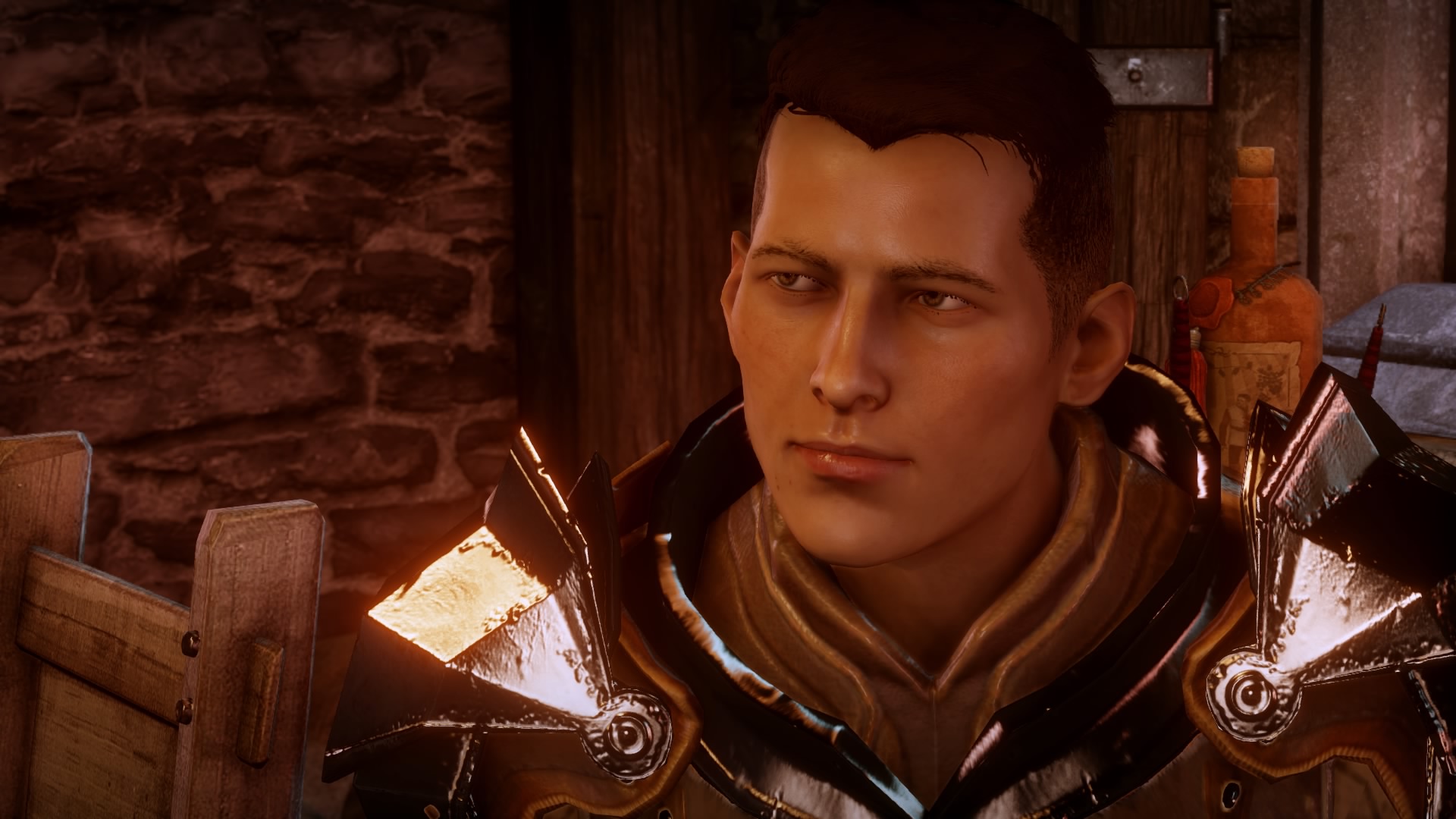
Indeed, Corpse Party: Blood Drive feels like a return to the experience that made this series a cult classic in the first place. More traditional gameplay returns as you navigate the story’s characters around a world filled with traps, secrets, and wandering spirits looking for revenge against the living. This time around, though, the old 16-bit-esque graphics have been replaced with a 3D world build upon the Unity engine. For any other game out there, Blood Drive’s visuals would seem extremely outdated and quaint; for the Corpse Party series, this is a pretty huge step, bringing more dimension—pun both intentional and not—to the horrific halls of Heavenly Host elementary school.

Developer Team GrisGris did a great job of making the technological jump while still keeping true to the style of the original. Environments offer more detail—both of the normal and grotesque kind—but never look too realistic or out of place. Meanwhile, the characters are cute and almost always have a smile on their faces, adding an extra layer of creepiness when they’re witnessing horrors or get threatened themselves.

Unfortunately, the team’s understanding of Unity itself wasn’t nearly as good. For a game that’s so simple in design, Blood Drive chugs too much of the time, with framerate being lower than it should and load times lasting far longer than they have any right to. Neither breaks the adventure, but this inability to optimize the game gives people another reason to potentially write off Team GrisGris’ efforts. While it, too, was never technically impressive, Corpse Party was renowned for its amazing audio, which did far more to make the game unnerving and emotionally oppressive than the visuals could ever have done. Blood Drive has some equally stellar audio at times—but those times are surprisingly scarce given how important sound has been for the series.

When not hunting down items or trying to figure out where to go next, Blood Drive will pull you deep into a story that’s bigger and far more complex than the original Corpse Party. Building off the resolutions of both that game and Book of Shadows, the survivors of the events at Heavenly Host are trying—but failing—to move on with their lives after the horrors they lived through and the friends they lost. Things are made worse when they find out that the evil alternate dimension, and its sadistic host Sachiko, may not have been destroyed after all. One by one, the remaining friends—along with a handful of new characters—make the jump back to the world of Heavenly Host, in pursuit of tying up loose ends, trying to save loved ones, searching for answers to why that dark place still exists, or their own selfish gains. This time around, however, the danger isn’t just in what could happen to the students within the walls of that school—but what evil could leak out into the real world itself.

As Blood Drive kicked off, what lied in wait seemed pretty promising. I had some mixed emotions about playing a second sequel to a horror game that never really even needed a first one, but it was nice to see these characters that I’d grown so fond of again. And, after being disappointed in Book of Shadows, I was legitimately excited to play something that might live up to all of the wonderful memories I had of the first game again.

It wasn’t long, however, until the cracks in Blood Drive’s decaying walls began to show. The original game was so engrossing due to how developed its characters were, how emotional their struggles for survival became, and how grounded they all felt beyond the anime stereotypes they first seemed like they might fill. Even though it was a tale of going to a corrupted recreation of a grade school where unspeakable horrors played out, the first Corpse Partystill felt well-balanced and focused. In contrast, Blood Drive very quickly starts bringing in new cast members that look like they’re straight out of a teen-focused anime, and the twists and turns the game throws at the player seem more dedicated to being epic than they do emotional. Once you reach its halfway point, Blood Drive is already heading off the rails; by the time it ends, the train is at the bottom of a ravine on fire with a rockslide crashing down upon it.

To make things worse, that feeling of needing to turn thing up to 11 bleeds into the gameplay as well, and it’s one kind of blood that isn’t welcome in this tale of terror. While Corpse Party required players to escape from wandering spirits at times else they get one of the game’s many “Wrong Ends,” Blood Drive jumps on that gameplay idea early on and then never lets up. In simple terms, it isn’t fun. Running away from foes in horror games is an idea that can be hard to get right, as the difference between “scary” and “annoying” is an easy line to cross. When you’re trying to escape from a ghost and using the provided hiding spaces doesn’t work a majority of the time, it’s frustrating; when fleeing is complicated by having a harsh fatigue system, traps everywhere on the floor, limited flashlight batteries, and enemies that not only don’t give up when you move between sections of the schools, but will even often still be there at times after cutscenes, it’s madness. This is a complaint I bring up over and over when it comes to horror projects—knowing the difference between scaring the player and pissing them off—and I’m amazed at how often developers still get that wrong.

Beyond story, beyond gameplay, the most important factor the original Corpse Party had was the connection it created between player and character—and this is the worst of Blood Drive’s failings. In the first game, there were so many things that happened that existed just to reveal more about the people we were living through these horrors with. We got to feel the fear of a brother who was desperately trying to keep his younger sister safe; share in the growing emotions between a guy and a girl who never would have seemed like a match; and suffer through the heartbreak as the touching friendship shared by two schoolgirls is torn apart by the world they’re trapped in. Corpse Party allowed the game’s momentum—and threats—to come to a gentle stop whenever needed in order to let us experience those kinds of moments. Here, in Blood Drive, too much of what happens feels like it’s trying to continually push us on to the next big plot point or reveal, giving us less time to breath and connect with the characters—even in an overall runtime that’s almost twice its predecessor.

With all of that said, you’d think I’d be ready to write off Blood Drive completely—but I’m not. Yes, it screws up in numerous ways, and it feels like a victim of its success that has trouble recollecting what made it famous in the first place. Sometimes, though, it does remember. Sometimes, that old Corpse Party shines through, and in those moments, I was thankful that Blood Drive exists. Even though the story is crazy, it’s also interesting at times. The new characters don’t always gel with the old cast, but they still have their compelling aspects. Running from ghosts is a pain, but when all is quiet, Heavenly Host remains a joy to explore.

And while I stand by my complaints about Blood Drive’s emotional depth, when it does show up, you’re right back on that rollercoaster, going up and down between hope and despair and loving every minute of it. At one point, I was getting more than a little exasperated by how the game was going—and then something happened that had tears falling from my eyes. In that moment, I was reminded of just how powerful even the simplest of visuals, technology, and dialog boxes can be in the right hands, and how rarely I get to feel such waves of emotions in so many other releases.

Times like those are why, despite all of its faults, I’d still recommend Corpse Party: Blood Drive on some level. This isn’t the game that I wanted, either in terms of what I thought I wanted before I started playing, or what I actually wanted as I reached its conclusion. I could write another 1500 words on what Team GrisGris could (and should) have done here, and I’m frustrated that they wasted the final chapter of their first horror series with the direction they decided to go in. Still, for Corpse Party fans, I think there’s enough good to experience here to make putting up with the bad worth it, and I don’t at all regret the time I spent with the game.

More casual or inexperienced fans, however, should probably stay away. Blood Drive’s level of annoyance and ridiculousness will be hard to survive by all but the bravest souls—and you absolutely, positively should not play this game if you haven’t at least fully cleared the original Corpse Party. You will miss many of Blood Drive’s better elements if you don’t have that familiarity, and really—if I’m talking you into playing any of the Corpse Party games, it had better be the first (and best) one.
Persona 4: Dancing All Night Review

If you really think about it, rhythm games are weird. As music plays in the background, you hit buttons in time with the beat. And—well, that’s it, really. Why is that fun? I don’t know that I can truly explain, but it is, and when you mix a genre I love with Persona, a series that I quite adore, my interest is doubly piqued.

As fun as the idea sounded, however, I was worried about the execution. The single most important part of games like Persona 4: Dancing All Night are their track list, and having a project like this fully based on the soundtrack from one singular game seemed like an incredibly hard concept to get right. And yet, it completely works here. Persona 4’s music was always stellar, but it’s surprising how well it works as the basis for a rhythm game, offering up songs that you’ll want to play many times over while also providing a proper level of challenge. Those original tracks are then joined by remixes by artists such as Towa Tei, Lotus Juice, and Silent Hill veteran Akira Yamaoka—and these additions are pretty darn incredible in their own right.

The second requirement for a good rhythm game is making sure the “game” part of the equation is up to snuff, and Dancing All Night also works impressively well here. While it doesn’t replace my favorite offerings in the genre, the set-up is easy enough to get the hang of, but complex enough to provide a proper level of depth. On each side of the screen, you’ve got three hit marker options: Up, Left, and Down on the left, Triangle, Circle, and X on the right. Notes appear in the center, and then travel outward toward either side, requiring you to hit the proper button or d-pad direction when note and marker overlap. Then, as an extra step, circles will also extend out from the center, and when they reach the outline on the sides of the screen, pushing either analog stick in any direction will trigger them.

What’s interesting about these additional notes is that they’re completely optional when playing, but going for them will boost your score even further and provide for “Fever Time” dances at certain points in the song (where another member of the cast joins your character on stage). When you combine those two elements, you’ve got a game with a nice amount of challenge—but longtime fans of the genre might not feel particularly stressed until they get past the initial trio of difficulty levels.

The unsung hero of Dancing All Night, however, is its visuals. During each track, one of the cast of Persona 4 will be on a Shadow-surrounded stage busting a groove, and it’s not how ridiculous—but ridiculously awesome—that whole idea is. From Rise to Yosuke to Chie to Naoto, each character dances with their own style and flair with routines obviously aided by real-world choreographers. (If you want to die from cuteness, wait until you see Nanako hit the dance floor.)

And man, the character models. With the relatively simple scenes that had to be rendered, the team at Atlus put a lot of effort and power into the character that’s on stage. These models look simply fantastic, and are better than plenty of examples that I’ve seen on more powerful consoles. Of course, being an Atlus game, menus are no slouch either, though they can’t compete with the super-slick design of mainline Persona titles.

Getting into the groove of those dance battles comes in one of two ways: Story Mode or Free Dance. The first we’ll get to in a moment; the latter will be familiar to anyone who has played similar rhythm games. Here, you’re given a track list, which grows longer as you pass songs and unlock more choices. Expectedly, things start out simple, but by putting in playtime and spending earned in-game cash on bonus items or extra outfits, the full Dancing All Night experience opens up.

Story Mode is an interesting beast in and of itself. This is an inclusion one doesn’t necessarily expect to find in games of the genre, but I suppose it wouldn’t be a Persona title without one. Taking place after the events of Persona 4, protagonist Yu Narukami and the rest of the investigation team have offered to help pop icon Rise Kujikawa with an upcoming live event as her backup dancers. Also set to take the stage are rival idol group Kanamin Kitchen, who—shortly before the show—suddenly go missing. Another parallel reality called the “Midnight Stage” appears, and the team soon find themselves jumping head first into this strange alternate universe to battle Shadows and save the girls.

The problem? The cast’s Personas can’t use any of their special abilities or attacks in Midnight Stage. Instead, the Shadows and the boss creatures that await must be defeated in a different way—with the power of dance. As a longtime Macross fan, music used as a weapon is no strange concept to me, but I can’t help but feel a little unsure of Atlus’ insistence that Dancing All Night be considered part of the official canon of Persona 4. I also think the team missed out on having characters falter and look distressed when the player misses too many notes in a row. I think back to games like Bust a Groove that did that, and it would have been so much more fitting for the overall story than just having the characters continue on with their routines uninterrupted no matter how good or bad you’re doing.

Those are small little dings, but there is something bigger than bothered me about Story Mode: it’s so damn wordy. Mainline Persona games are known for their overflowing amounts of text, but that works in the confines of a 90-plus hour RPG. Here, in Dancing All Night, I think Atlus went a little overboard in the chattiness of the cast and the time it takes to get to the dancing, which ends up being only a sliver of the overall experience. If you take one piece of advice away from this review, it’s to dig deep into Free Dance before even thinking about Story Mode. I did the opposite at first, and was getting frustrated waiting for my first moments of actual gameplay. Once I made the switch and returned later, I could appreciate the narrative and additional time spent with these old friends far better.

Oh, and I’d also be remiss if I didn’t make a quick mention of a particular moment of concern I had during Story Mode. At a certain point, a character shows up that—unfortunately—hints back to the problem a lot of Japanese media has with particular portions of society and their difficulty getting away from obnoxious stereotypes. The character ends up being one that’s rather positive, so thankfully, their existence didn’t bother me beyond a bit of disappointment in seeing yet another botched example of this particular minority—especially since I expect a lot more from a company known for its strong characters like Atlus is.

Persona 4: Dancing All Night really shouldn’t have worked. A rhythm game based on an RPG series focusing on an extremely narrow selection of music seems ripe for a game that’s more gimmick than gratification, but I was extremely surprised at how much joy I got from most of the time I spent with it. Dancing All Night isn’t the best example of the genre that I’ve ever played, and it could be a hard sell to anyone not a fan of the franchise, but it’s far, far better than it has any right to be. And, now that I’ve gotten both a fighting game and a music game based on Persona, I’m left wondering which of my favorite genres are going to surprisingly get knocked out by Atlus next.

Tearaway Unfolded Review

Generally, the more systems a game is available for, the better it is for everyone. Sometimes, however, it’s easy to feel a little selfish about how far a game’s travels take it.

When I first heard that plans were underway to bring Media Molecule’s brilliant PlayStation Vita release Tearaway to the PlayStation 4, I’ll be honest: I was a little disappointed. As much as I’ve fallen in love with the handheld, it has struggled to gain ground in most countries outside of Japan, and taking away one of its truly great exclusives would only give people less reason to need to own one. At the same time, however, the reality of the situation was thatTearaway was a fantastic game that didn’t get the chance to be appreciated by the audience it deserved, and that was never going to happen so long as it stayed lock to the life of a Vita exclusive.

So, it’s now time for the game to shine as it’s reborn for the PlayStation 4, and shine Tearaway: Unfoldedabsolutely does. As wonderful as the game was on the Vita, the papercraft-inspired world is all the more gorgeous now that it’s on big high-definition screens and been given a noticeable bump in framerate due to the power of Sony’s latest console. I still argue that what Media Molecule created in the original game is one of the most inviting and personality-infused video game universes I’ve seen in years, but you really gain a new appreciation for that when so much more detail and scenery can be represented on-screen at any one moment. I think Unfolded is at its best in its quieter moments, when green construction paper cut to form grass and trees gently sways in the wind in an open field, or as waves of paper and glue crash hard against the docks of a meticulously-built seaport. When the action kicks in and things really come to life, the papercraft concept still impresses, however, as enemies called Scraps form themselves from corrupted pieces of paper, or obstacles appear and disappear from the landscape like scenes in a pop-up book.

Tearaway: Unfolded is visually stunning on the PS4, but that was never in doubt for me given how much effort Media Molecule had put into those elements in its original portable form. The bigger question, then, was how the game would turn out given it was planned to be a mix of elements from the original Tearaway blended with completely new scenarios and situations—not to mention the obvious need to replace most of the Vita version’s touch gimmicks.

As much as I may love the world of Tearaway, it was the story and its characters that had the biggest impact on me. If you’ve not read it, this is where I really advise you to go check out my original review for Tearaway on the Vita, which you can do so by clicking here. It’ll help hammer home just how magical and special I felt the game was, and I still feel that way coming into the game again.

The story behind Tearaway is that of a young messenger—Iota or Atoi, depending on which gender you pick—and their journey to deliver a special message to a mystical, overseeing being known as the “You.” Which, of course, is you the player. That idea of an adventure, you and your messenger together, is core to everything the game does, both in a traditional travel-through-worlds-and-defeat-foes-while-helping-inhabitants style of gameplay, and in the emotional voyage you’ll find yourself being taken on by the narrative the team has lovingly created. If it’s a journey you’ve already taken before, then you’ll know a good deal of what to expect along the way—though you won’t always know the exacts of when and how they’ll now show up. Even with that knowledge, I still loved going through the game again, seeing old friends and favorite areas while enjoying those elements that were added to Unfolded. I think Tearaway is the kind of game where any good excuse to replay it will be welcomed by fans, but for those expecting more new than old, you might be disappointed by the results. Those who have never touched the game before, of course, are in for a treat—you’ll get to play an expanded and refined version of Tearaway with completely fresh eyes.

The only point at which Unfolded stumbles is in the changes made to how you’ll interact with the game’s world beyond traditional controls. The original Tearaway had players virtually poke their fingers into the screen to help the messenger, blow into the microphones to cause winds to gust up to affect items or enemies, or take photos of objects to bring new colors and patters to the game’s inhabitants. These were all actions that seemed like they existed mainly to show off the Vita’s hardware options, but they worked surprisingly well in practice, adding an extra level of intimacy to the game than would not have existed without them. While Media Molecule have done the best they could to come up with similar PlayStation 4-supporting ideas—centered around the DualShock 4’s touchpad and motion tracking—here they do at times end up feeling more like gimmicks that exist to tick off additional boxes on an “immersion” checklist.

Thankfully, those actions are a small part of Tearaway: Unfolded, ones that do little to taint everything else that’s been built up around them. In nearly every other way, this is an experience that showcases the power and beauty games can hold when crafted by a development team who’s been given the freedom and support to work on a project that comes straight from the heart. As sad as I may be that Tearaway, and the system that offered it a home, didn’t do better than they did the first time around, Unfolded has given an absolutely deserving game a second chance at life—and given a far wider audience the chance to play one of the most heartwarming and enjoyable adventures gaming has seen in years.

Until Dawn Review

For a genre that’s been around for only about half of the time the gaming industry itself has at this point, horror games have done a lot during their relatively short lifetime. From jump-scare zombie survival to nightmarish psychological torture to studies in the darkest depravities of mankind, horror-themed video games have touched on a wide variety of topics and put players in a whole host of do-or-die situations.

It’s impressive, then, that Supermassive Games’ Until Dawn can give me an experience unlike anything else I’ve played up until this point. As much ground as the genre has indeed covered, gaming has shown little effort in tapping into an idea that’s been a cornerstone of the movie industry for at least as long as I’ve been alive: the B-grade teen slasher flick.

The premise that’s set up as the game kicks off is perfect: after twin sisters disappear (and are presumed dead) due to a trick their friends played on them during a winter retreat, the eight remaining co-eds return to the girl’s family getaway home one year later, where their surviving brother is holding a party to honor his sisters’ memory and reunite the group of friends. Unfortunately, the girls found their fate at the hands of something sinister that lives in those dark, snowy, northern Canada mountains, and whatever it is, it now has eight more victims to set its sights upon.

Until Dawn was originally conceived as a first-person PlayStation 3 release entirely based around Sony’s somewhat-forgotten Move controller, but after its own disappearing act, the game re-emerged as a third-person PS4 project with only a minimal amount of optional movement-based controls remaining. Though I’ve never played any portion of the game in its original intended form, I have to imagine that we ended up getting the far better possible outcome.

That’s because, as it stands now, Until Dawn is indeed a love letter of sorts to horror movies, and that idea plays out better when the entire experience can have more of a cinematic feel to it. Though at times the game’s last-gen origins seem to shine through in scenes or visuals that look noticeably worse graphically, this is usually an extremely beautiful game. The snow-covered surroundings and mountaintop locations are as stunning as they are scary, and the legitimately impressive character models help you buy into the idea of them being real 20-something guys and gals stuck in an ever-worsening situation—as does the game’s impressive motion capture and the fantastic job done by the Hollywood talent lending their voices to the cast. (Has Peter Stormare ever found a role he couldn’t make awesome?)

As the group comes together at the mountain lodge and then—conveniently—continually gets split apart, the game’s focus constantly changes, giving us a chance to see snippets of what each of the eight characters has to go through as they try to survive the night. Who you’re playing at any given time isn’t about any sort of special abilities or skills that each has, so outside of a few brief segments where you’re given a weapon, gameplay stays relatively similar no matter who you’re controlling.

For the most part, Until Dawn is about exploration, and even in the mundane of those moments, the overall atmosphere can make progression tense and nerve-wracking. There are few puzzles to speak of throughout the game’s eight to nine hours of playtime, so you’ll need to be invested in the story, uncovering the mystery of what happened to the twins, and the fate of the cast as they try to survive until dawn. Even without many of what would be considered traditional gameplay inclusions, Until Dawn’s narrative carried me most of the way through. Admittedly, things do drag a bit around the halfway mark, primarily when one particular character overstays their welcome as they travel through a location that also ends up feeling like somewhat of a drag.

When something does finally jump out of the shadows, the main result is a harrowing escape or attempt to fight back via that love-them-or-hate-them concept known as the Quick Time Event. At times, that means your traditional “hit the proper button before time runs out” requirements; at others, you’ll be forced to make a split-second decision between two choices for what your character should do next.

The good part of all of this is that, for Until Dawn, that gameplay direction works surprisingly well. Horror movies of this style aren’t about constant battles or knock-down, drag-out fights. They’re about quick moments of chaos and terror, and usually the best course of action is running away. You’ll also be given a choice in the quieter moments of the story, and how you decide to act (or react) to another character can be very important for how things turn out later. On the whole, I never felt like I was missing the “game” portion of Until Dawn, as everything else was compelling and interesting enough to keep me invested in the overall concept. Plus, as much as we may decry them in other situations, QTEs work perfectly here. Players are kept on their toes and always need to be ready to react at a moment’s notice, and the cinematic feeling of the game’s more dramatic moments is kept intact.

On the other hand, though, there could—and should—have been more here than what we got. The frenzied fleeing of Hayden Panettiere’s character Sam that’s been shown off as a demo for Until Dawn is a great scene—but it’s also far and away one of the best and most developed use of the game’s decision-making engine that you’ll run into. If only there were more moments like those.

Far and away, that concept of player choice is one of the biggest draws for Until Dawn, and even if it never reaches the full potential that could have been injected into a project like this, it’s still a fantastic option that really gives the storyline—and how you choose to travel along it—a real sense of weight and consequence. Obviously, any particular member of the cast can’t actually die at any time, but you can absolutely make choices and start sequences of events that’ll leave your group far smaller at the end than it was at the beginning. It’s hard to appreciate the repercussions a simple decision can have, even when going back and replaying the chapters to change your choices.

They’re definitely there, though, and they help set up a big question that’s often brought up in games that build themselves around letting players decide how to handle a particular situation. Will you go back and re-play a game until you’ve seen every potential outcome there is? Or will you have your one “true” playthrough, and use the game’s branching paths to create a more personalized experience? I’m definitely in the latter category of players—and I think taking that route makes the best of what Supermassive’s efforts have to offer. (Though, for the benefit of this review, I did go back and explore some of the results of alternate choices.)

The one other major ding that I’d give Until Dawn’s gameplay are the handful of elements that were obvious carry-overs from its days as a Move-focused game. Throughout the ten chapters, you’ll run into moments where interaction is way more complicated than it needs to be. For example, if you spot a mysterious photo lying on a table, you need to walk up to it, press X to interact, then hold R2 to pick up the photo, then use the right analog stick to turn it over to read whatever might be written on the back. Doorknobs, gate locks, switches—a variety of things all require these kinds of actions. Back when everything was using Move, the team no doubt thought it a neat novelty to give players “real-world interaction” with items in the game; now, they seem like an unnecessarily extra amount of steps. Also, having a game that features any level of making your character look around, and including no option to invert the vertical controls, is something I can’t forgive in the year 2015. Thankfully, there’s very little of that kind of camera manipulation throughout most of the game—but, again, I blame this as a holdover from when such movement control was all done by manipulating the Move controller like a flashlight.

Looking back at the history of horror games that I’ve loved over the years, most have existed in a world of what one might call “flawed brilliance.” Until Dawn, for me, very much finds itself in that kind of category. While it has some awkward controls, rough patches here and there, and doesn’t make full use of the ideas it’s brought to the table, it does all of those things while legitimately trying to inject something fresh and different into the genre in which it belongs. I think there’s going to be a lot of people for whom Until Dawn doesn’t click—especially those who require more “game” from their games. For those fans of horror who can still focus on the light in any unfortunate moments of darkness, then this is one gorey getaway trip I’d recommend you take.

Splatoon Review

If you’re someone familiar at all with my comments about Nintendo over the years, you might fall under the assumption that I’m not a fan of the company’s games—but that’s not at all the case. I like plenty of the games the Kyoto-based publisher has put out over the years—just, usually, not its bread-and-butter releases like Mario or Zelda or Donkey Kong or Pokemon. No, my interest in the company is in its more niche, out-there stuff, things like Rhythm Heaven, or Style Savvy, or Ouendan (the pre-Westernization version of Elite Beat Agents).

Nintendo has this amazing skill for making even its lowest-profile games look and feel special, and that’s especially true with Splatoon. From the moment I saw its reveal last year, I was enthralled with the House of Mario’s take on the third-person shooter genre, and the bizarre paintball-meets-sea-life aspect at the heart of the concept. At a point when we’re now inundated by similarly styled shooters that can sometimes be hard to tell apart, Splatoon looked completely stylish and different.

After now experiencing the full game, Splatoon doesn’t just look the part—it is fresh and unique. Sure, at its core, you’ll find ideas that are pretty familiar in the genre: two teams of four players facing off against one another with customized characters, with the goal to defeat the other team by earning the most points. Except, here, success won’t come thanks to your kill/death ratio—it’s completely centered around how much of the playfield is covered by your team’s paint color versus that of your opponent’s once the round ends.

When I first played the Splatoon open beta, I worried if the concept would stay interesting and enjoyable for the long haul. Ten solid hours of pre-release multiplayer later, I’m still wishing I were playing the game instead of writing about it. The whole “cover the world in paint-like ink” idea is such a simple one on paper, but it’s an utterly fantastic setup for some real competition when executed. When it’s not about taking or defending a few random points on a map, but instead fighting back and forth for control over the entire map, each and every battle can get seriously intense.

There aren’t any gimmies in Splatoon—no one point you can camp to get the job done, no one main tactic you can always employ to constantly ensure victory. Strategy really has to be considered here, and that’s especially important when picking which main and sub-weapons you’ll be running with. While not all of the options are as creative as they could be—a few too many of them are essentially ink-shooting guns differing in range or damage but feeling quite similar otherwise—some hugely change not only your own personal techniques but also the overall match flow. By far the most interesting inclusion at this point is the Splat Roller, a paint rolleresque device that’s especially good at covering a lot of ground with your team’s color as fast as possible. It’s a weapon that wouldn’t really work in any other game out there—and it’s a perfect example of how Nintendo’s trademark style of development can produce some standout ideas.

Really, for a publisher that’s had so little experience in this genre, Nintendo absolutely nailed everything that was needed to have a game that’s as cutthroat as it is cute. And, oh my, is it ever cute. Even given my bias for anything that comes out of Nintendo that isn’t a portly Italian plumber, Splatoon’s Inklings are easily one of the company’s best cast of characters since Animal Crossing’s introduction. They’re a great balance of adorable, iconic, and slightly sinister, and while humanoid-creatures-that-can-transform-into-squids-and-then-swim through-or-up-trails-of-paint seems like it should make no sense at all, they make perfect sense while playing. Of course my Inkling girl can become a squid and disappear into my team’s paint splotches. And somehow swim through said paint, even though it’s only a thin liquid coating on the ground. While also refilling her weapon’s ink reserves while doing so, even though I’m sucking up the exact same paint I just laid down. That all makes perfect sense.

Splatoon’s visuals really help sell the entire package in so many ways, but while I can’t get over how adorable the Inklings (and their enemies) are, the true star here is something many people might not give much notice: the multi-colored paint itself. The way the ink covers the landscape and mixes with other colors is impressively realistic at times. Nintendo has put a lot of time into making the ink look like far more than a flat texture, and how it stains bricks after the excess drips off is far different than the results on metal, or wood, or the other building materials in the Inkling’s world.

Man, though, the blue ink. It’s so blue. And so thick-looking. And so…weirdly ominous. It legitimately makes me feel anxious enough whenever it’s one of the two colors in a match that I wish I could somehow take it out of the color rotation.

Speaking of matches, the real meat to Splatoon—the reason you’re going to want to play and continue playing—is indeed its 4-vs-4 competitive matches. However, the game does also feature a full single-player component, and this is where the game’s main foes—the sinister octopus army—come into play. Here, you’ll travel across a wide variety of worlds, each of which focuses on a certain gameplay concept, or gimmick, or set challenge. And, for those players who have any of the three Splatoon amiibo, you can connect them to the game to unlock variants on all of these stages, with exclusive Inkling gear the reward for their completion.

The single-player portion of the game certainly isn’t bad, but for me, it was something to do when there weren’t enough players online to battle. I’d look at Splatoon as I would, say, a fighting game: Yeah, there’s content for those who really want something to play solo, but don’t feel bad if you spend most of your time on the multiplayer side of things. (Though, to be fair, you will miss out on one heck of a weird backstory for the game if you don’t venture into that mode.)

As I turn to my disappointments with the game, things get really complicated. As a full-priced, standard retail release coming out here in the month of May, Splatoon feels unfinished and rushed to market—an absolutely strange thing to say for a product coming from Nintendo. However, it has already outlined specific plans for a free update to Splatoon that’ll be coming in August, one that’ll bring with it features and expansions that directly address a number of the criticisms that I have.

It’s a tough position to be in, because while I need to review the game as it is now, this isn’t an “I hope they fix these things” situation—it’s an “I know they’re being fixed; I just have to wait a few months” one. While I’m going to trust that that is indeed the case, it’s still my job to let you know what’s blatantly missing at this point.

Splatoon’s matchmaking is many kinds of awful as of now. That’s not to say it doesn’t work, because it does—across all the competitive matches I took part in when I was lucky enough to find seven other members of the game media online, only once was the lag between players obvious. The problem is that the game feels as if it were created in a void where none of the development team had ever bothered to play another online game, leaving them lacking in the knowledge of what to do—or not—when it comes to bringing players together.

At launch, you’ll only have three matchmaking options available: Regular Battle (which serves as your basic quick match), Regular Battle with friends (an option of questionable use where, if someone on your friends list is in a lobby that hasn’t filled up yet, you can join them), and Ranked Battle (which unlocks once you reach level 10 ranking and provides a different match type than Turf War).

In one of the strangest oversights I’ve seen in a while, if you jump into Regular Battle, you have no way to back out from searching for other players—even if you’re the only person in the room. You have to sit there until the timer runs out, which can be frustrating if it’s obvious the eight slots needed to get a game going won’t be filled, because every time somebody hops in, the timer gets extended. You also have absolutely no access to switching out equipment while you’re waiting for a game to kick off—so if you jumped into Splatoon’s quick match without changing weapons as you’d meant to do, you’ll either have to play an entire match with whatever you already had equipped or just sit there waiting for the search to time out.

As of now, there’s no word on anything being done to fix that particular situation—but there isgood news coming in terms of the overall matchmaking system. Come August, you’ll gain the ability to team up with three other friends and search for games together as a set squad. Even better, players will also be able to make their own private rooms at that point—an option that really should already exist, but one that thankfully won’t be a red mark on the game for too long. The current roster of maps is rather anemic, but that, too, will be improved in the weeks ahead as new battlegrounds get released in regular content updates, along with additional weapons and game modes.

Speaking of maps, though, I’d love for Nintendo to reconsider its decision to only have a small handful of the game’s maps available at any one time—it’s a peculiar choice that may cause some players to get burned out on particular stages after playing them over and over in quick succession. Also, while having a pop idol duo called the Squid Sisters announce when map rotation sets are refreshed at set intervals is a neat little element of world-building, having those virtual TV broadcasts kick you out of the matchmaking lobby every time they occur is such a bizarre decision.

That leaves one major complaint that many have leveled against Splatoon: its lack of voice chat. To be honest, I’m mixed on this one. On one hand, yeah, it would be nice, especially given how important strategy and teamwork are. On the other hand, though, it’s totally possible to play smart and support your teammates given only what the game offers. As disappointed as I was at first to learn of the lack of Pro Controller support in Splatoon (outside of the game’s local-only 1-vs-1 mode), keeping an eye on the map displayed on the GamePad often imparts enough information to let you know exactly where you need to attack or defend—and which members of your squad could potentially use some backup at any given moment.

I know that’s a lot of time spent on the negatives of Splatoon. Some of them will absolutely be addressed not only by the larger August content expansion but also in the smaller updates that come between now and them—though it’s totally reasonable to wonder why so many of them are missing from the game right now, when it’s being burned to a disc and boxed up and sold on store shelves. And yet, I nitpick certain portions of Nintendo’s latest release because of just how much I enjoyed it otherwise. It’s frustrating to have to say that Splatoon will be better in a few months or to once again put up with Nintendo’s lack of understanding about robust online options. There are so many fantastic moments to be had now, so much potential for this idea, this world, and these characters if players are willing to give Splatoon’s weaker moments a pass until some of them get better.

Most of the time, my recommendation at this point would be to wait until the game matures into what its developer promises it’ll be, and I’m not sure that isn’t still the smartest route to take here. And yet, given the Wii U’s lack of fresh, constant releases, I don’t know that you should wait to pick this one up. Splatoon is one of the most unique, satisfying, and enjoyable games I’ve played lately—either on or off Nintendo’s current console—and having a good-but-incomplete game now is sometimes better than having a great game later.

Oh, but one last thing before I go: Just say no to gyro aiming. Only those slimy Octolings play that way, and you don’t want to be a slimy Octoling—do you?

Shin Megami Tensei: Devil Survivor 2 – Record Breaker Review

Throughout my life, I’ve had something of a complicated relationship with strategy-RPGs. In concept, the idea of an epic storyline told through a series of meaningful, challenging battles (instead of a flood of mindless random encounters) seems right up my alley. In practice, too many examples of the genre end up boring me with their overdeveloped narratives, bloated character rosters, and combat engines that can negate 20-plus minutes of effort after one tiny mistake on the part of the player. To get me into these games, I need something more—some hook, some quality I simply can’t ignore.

When Atlus decided to try its hand at crafting a new SRPG series set in its Shin Megami Tensei world, it found my weakness, and I was forced to pay attention. The result of the developer’s efforts—Devil Survivor—still very much followed in the footsteps of previous genre entries, as grid-based battles broke up conversations between characters, ones where the player would move all of their teammates and perform planned-out action, then wait as whatever was left of the enemy forces would take turns of their own. Of course, everything was then infused with that trademark Atlus flair, as everyday teenagers gained the power to communicate with and summon demons, square off against rogue monsters in first-person battles, and try to survive as the real world around them slipped into the surreal.

Shin Megami Tensei: Devil Survivor 2 continued that tradition of trying to offer a twist on the SRPG genre when it released on the DS back in 2012, and now, we receive that continuation of the series refreshed and renewed for the 3DS in Record Breaker. Much like the previous DS-to-3DS conversion Atlus put together in Devil Survivor: Overclocked, this is the original game brought to Nintendo’s current handheld, given a few additional features such as selectable difficulty, a vast amount of voice acting throughout the adventure, some revised UI, and a bonus chunk of content.

Unfortunately, it’s hard not to be a bit underwhelmed by the effort put into this re-release. What we’ve been given beyond Devil Survivor 2’s original contents are definitely nice, but—much like Overclocked—there’s always the feeling that Atlus could’ve put more effort into the presentation. For example, most of the game takes places on the 3DS’ lower screen, a perfectly sensible decision back on the original DS (with its two screens of equal size and shape), but one that seems awkward here as the bigger, 3D-capable main screen so often goes underutilized. Sure, it probably would’ve been considerably more effort for the team to rework the game to properly run on the 3DS’ top screen, but even if that change had only come during conversation segments, it would’ve gone a long way to make this re-release feel more modern.

Devil Survivor 2 – Record Breaker still has a lot to offer, however, due to its most important offering: the game itself. After the original game found success among both longtime MegaTen fans and newcomers alike, the team at Atlus produced a follow-up that improved on its predecessor while also adding in new ideas. This was, and still is, an engrossing and satisfying SRPG experience from beginning to end—one that’s challenging but never unfair, rich in gameplay but never overwhelming, and complex in story without ever being too hard to follow. Returning concepts like Extra Turn (the ability for party members to gain additional actions during a single round of attacks, similar in concept to Atlus’ long-running Press Turn mechanic), Skill Crack (gaining new skills by stealing them from demons during combat), and demon auctions continue to help Devil Survivor 2 stand out from its competition, while new features like the Fate System—where you can build up your relationship with other characters to improve and expand their abilities—bring in a touch of the MegaTen brand’s most popular offering, Persona.

An SPRG has to be more than just a series of well-crafted fights, of course, and while Devil Survivor 2 definitely has the combat thing down, it also does a bang-up job in its quieter, more narrative-driven moments. The cast of characters here is even better than that of the first game (once they find their footing), and you want to see what happens to those guys and gals next as you try to figure out what exactly is going on around them. In many ways, Record Breaker is the superior to Overclocked in this regard—but it also, at times, feels like a game that can never escape the shadow of its predecessor. (Once again, we venture along with a cast of high schoolers who have suddenly, and mysteriously, been trapped in a half-destroyed Tokyo, and many of the faces we meet along the way feel strangely similar to those we encountered in the first Devil Survivor.)

Storyline is also the place where Record Breaker justifies itself over its previous DS release. For this reworked version of Devil Survivor 2, Atlus has included a new scenario called “The Triangulum.” This builds off one of the original story’s endings, and players get what amounts to a direct pseudo-sequel to the main scenario, continuing the game and adding an impressive amount of gameplay, new content, additional twists, and length (around half the runtime of the main storyline, dependent, of course, on your personal playstyle). Even better, you can jump directly into The Triangulum right from the very beginning, a most welcome option for those who’ve already experienced the main portion of Devil Survivor 2.

Is this new chunk of content enough to give players reason to double dip if the original Devil Survivor 2 currently sits on their game shelf? Quite possibly—especially if you’re eager for more of Atlus’ take on SRPGs and don’t want to wait however long it might take for us to get a third chapter in the franchise. I think this release’s true value, though, comes for those who have never played the original game, something that’s quite possible given how late in the DS’ life it appeared. If that’s you, then Devil Survivor 2–Record Breaker is a better and far bigger version of what was already a pretty fantastic strategy RPG.

State of Decay: Year-One Survival Edition Review

Even after you’ve long learned not to come to snap judgements about games, it’s still possible to write a particular release off due to faults it contained or assumptions made on your part. Such was the case with my attitude toward the original Xbox 360 release of State of Decay. As much as I love zombie games—and am still searching for the perfect one that gets surviving a world filled with the undead just right—I walked away from my brief experience with Undead Labs’ first effort thinking it was a rough, undercooked, glitchy mess of good intentions and bad executions.

Countless positive stories from the player community about what truly awaited in State of Decay if you just gave it a chance made me wonder if my initial judgements about the game had been unfair—and finally giving it a full, proper play thanks to its Xbox One reworking proves that I was, indeed, wrong.

State of Decay: Year-One Survival Edition has faults—some of which I’ll definitely call out—but along with those flaws comes some legitimately fun zombie-survival gameplay. Across the main game and its two included expansion modes, Breakdown and Lifeline, you begin the game as a singular character, who—along with an AI-controlled companion or two—tries to make sense of the chaos in the world around them. Everywhere you turn, the living dead walk the earth, and since you have a limited amount of supplies and a weak melee weapon that gets closer to breaking with every hit, your first goal is to find someplace safer in order to take stock of your situation and plan your next move.

In the original State of Decay, that means making it to the refuge of a church on the outskirts of a rural town nestled in the fictional Trumbull Valley. There, a group of survivors have set up a shelter, and as its newest resident, you’re tasked with proving your worth to the community by scavenging for supplies, clearing out zombie infestations, and helping recruit other survivors who are in the midst of danger out on their own.

With so many zombie-apocalypse games—both linear and open world—focusing on the “lone-wolf survivor” concept, State of Decay’s emphasis on growing and securing a community is definitely an interesting one. The colony won’t improve unless you put actual effort into it, and the others living there can get sick, leave, or even die depending on your management of resources and planning of facility improvements. Yes, members can indeed bite it in a variety of situations—even when, say, you’re miles away digging through the shelves of an abandoned supermarket and have no hope of making it back in time to help fend off the zombie horde that suddenly attacked your camp.

On more than one occasion, the sudden twists State of Decay threw at me felt utterly unfair—but they also helped build the idea of this truly being a world where I had to work hard to survive. As you rotate through the list of playable characters from your community, one misjudgement about your ability to deal with a large group of zombies could get that character killed. And, in State of Decay, once they’re gone, they’re gone for good, which can be an especially painful situation if they’re one of your favorite characters or somebody who played an important role in your community.

State of Decay’s deep focus on the building up and management of your colony of survivors really is a fresh twist on the genre, but it’s also one that can get in the way at times. I went into the game expecting to be let loose upon this hostile open world now almost completely devoid of its humanity, but between necessary storyline progression and the endless array of unexpected objectives that crop up, you’re constantly kept busy. Which, really, isn’t necessarily a negative thing overall, but the more I played, the most I wanted the chance to just go out and try to survive on my own—no pressure on what I needed to do or where I was directed to go next beyond whatever imminent threat I might find myself in.

That’s where I hoped the game’s first expansion, Breakdown, might satisfy my wants. Here, players are offered a more storyline-free sandbox version of State of Decay, where your movements and goals aren’t tied to the progression of a pre-set narrative. That promise sounded like a great counterbalance to the more rigid structure of the main game, but really, you’ll have almost as much pressure constantly bearing down on you to complete menial tasks or come to the aid of a group of survivors that you really have no choice but to join. The sense of true freedom to just see how long you can last on your own never comes into play, and that’s kind of a shame.

The second expansion to State of Decay, however, does a much better job of validating its existence. Lifeline is the tale of an army team trying to secure a military base and its surrounding area. With the shift to a new location, Danforth City, we’re given a much larger, complex, metropolitan playground in which to have fun. In terms of the location and atmosphere of making it through a zombie infestation, Lifeline was the more exciting option for me—even while the difficulty and pressures to run back and forth to knock out objectives cranked up noticeably.

Throughout my time with State of Decay: Year-One Survival Edition, it was impossible to ignore the fact that the game has some pretty large faults—many of which I can’t help but blame on this being Undead Labs’ first project. Unstable framerate, zombies clipping into walls, and other technical issues or bugs still abound, even with the jump to the Xbox One and the improvements over what came before. Nearly everything about the community aspect feels underdeveloped, and while I know it’s the job of the player to accomplish most of what needs doing, in a game that’s so focused on you not being a lone hero, I couldn’t help but wish the other colony members felt more alive and useful when they weren’t under my direct control. And, yeah, combat is clunky at times, especially when you’re trying to deal with being surrounding by more than a couple of zombies—a situation you’ll, unsurprisingly, often find yourself getting into.

And yet—much like the undead hordes it contains as its villains—this is a game that refuses to lie down and die. For all of its faults, State of Decay also has awesome, thrilling, heart-wrenching, and engrossing moments. This is the epitome of the middle ground in gaming that’s become so lost in recent years, where it’s OK for a title to not be polished and perfect in every way as long as it can entertain. The game’s engine may not compete with the bigger-name releases out there, but its shortcomings never render it unplayable or unacceptable. Yeah, the community stuff could absolutely be better, but it’s also quite impressive at times in terms of the depth and thought that it does contain for a studio’s freshman project. And, sure, State of Decay’s combat can’t compete with the better-crafted beat-em-ups out there, but it’s also not bad once you get out of the mindset of just mashing the attack button until every zombie around you is on the ground dead (again).

The best part of State of Decay: Year-One Survival Edition is how excited I am to see Undead Labs’ next zombie game. That may seem like a knock against what they’ve already got to show, but really, I feel that way because of how much promise they’ve woven throughout what’s here. While that promise isn’t always executed properly or given a full chance to shine, this is still a game I’d absolutely recommend to those who love the “what if?” scenarios of hellish undead outbreaks that video games can immerse us in—especially if, like me, you can be more forgiving of games that may not get everything right but at least show a lot of heart in their attempt.

Takashi Morinaka – Toukiden: Kiwami

When Toukiden: The Age of Demons first launched in Japan for the PlayStation Portable and PlayStation Vita back in June 2013, it entered a genre of games that already had plenty of stiff competition. Squaring off against the likes of such titles as Monster Hunter, Gods Eater, Ragnarok Odyssey, and Phantasy Star Portable, Koei Tecmo’s addition to Japan’s multiplayer hunting game craze really needed to stand out—and one way it did so was by eschewing the traditional fantasy or sci-fi settings of other games and instead steeping itself in Japanese history and mythology.

Now, Koei Tecmo is set to bring the next step in the Toukiden series to North America. At its core, Toukiden: Kiwami contains everything that the original Toukiden did—but it then goes beyond being a simple upgrade to that game by offering twice the content the first release included, more technical weapon options, better control over your AI partners, and an overall push to address the concerns and complaints fans had the first time around. Plus, players will now be able to hop into the adventure on both the PlayStation Vita and the PlayStation 4—a first for this previously portable-only series.

Ahead of Toukiden: Kiwami’s launch, I had the chance to sit down with the game’s producer, Takashi Morinaka, and get his thoughts on the franchise’s historical connections, the challenges of bringing such a Japan-focused game to the West, and what mythological Japanese beast he’d least like to face off against.

Mollie: Why is Japanese history interesting?

Takashi Morinaka: That’s a big question. [laughs] I think Japan’s history is very unique and interesting, in a sense, because Japan is an island country, so it’s a smaller, more regionally focused country. If you look back at, say, its last 3,000 years of history, being an island country, we haven’t really faced many invasions, nor seen a huge mix of cultures or people from outside of Japan. So, I think our history has unfolded in interesting ways due to that isolation.

Mollie: Was the focus on taking elements from Japanese history always part of the plan for Toukiden? Given how many other competing games of a similar nature there are, that was one of the elements that made Toukiden stand out for me when I first saw it.

Morinaka: There were, of course, varying factors around the game’s development, but we knew a few things going in. One was that we wanted to come up with a “constantly attacking” style of game design, and another was to include some sort of historical context. Those ideas started to blend together, and the connection to history was pushed on once the Mitama [spirits of characters from Japanese mythology that are collected and equipped by players to boost stats or unlock abilities] came into play as well. Combining all of those factors together led to what became Toukiden, and since then, that’s the direction we’ve been taking.

At Koei Tecmo, we’re known for games that are based in history, and putting historical facts into the games themselves. And, obviously, one of our prime objectives is to create games that are entertaining, making things that are enjoyable and interesting for players. We always try to remember that philosophy—to add value to the entertainment, make it something that’s more accessible to players, and also, hopefully, help teach people things at the same time. That’s the approach that we take on any projects we work on, and where we still are in terms of our mindset as a developer.

Mollie: Personally, I’m able to come into a game like Toukiden with some knowledge and understanding of things like those historical connections, but there are plenty of potential players in the West that won’t have any pre-existing knowledge. Are the historical elements lost on Western players? Do you ever worry that they won’t get the value out of a game that Japanese players would?

Morinaka: Obviously, people might not understand 100 percent of what we put into the game itself. We recognize that. At the same time, though, the principles of the team, the main goal they have is to come up with something that everyone can enjoy, even if they don’t understand all of the real concepts or the real meaning behind those things.

In Toukiden: Kiwami, we have oni appearing—that’s one of the key aspects of the game, of course—but, if you think about it, they’re very similar to what would be considered “monsters” in the West. If Western players just want to see them as monsters, that’s OK, because the team is quite confident that we’ve worked hard on the excitement and enjoyment of the game itself, even if concepts like the oni can’t be understood. So, maybe all players won’t understand every small detail, but we hope was that there’s a balance, one that keeps the game understandable and enjoyable for all.

Plus, if you look at the Mitama, there’s over 300 variations that appear in the game. Even for your average Japanese player, there’s no way that one person is going to understand all of their names and the meaning behind those Mitama! The first step to understanding them could come from simple things—the characters being portrayed are cool or beautiful. Maybe they have a dedicated skill that sounds interesting to you or they’re strong at a particular thing you need. From there, that knowledge could shift to the next step, where now you’re asking, “Who is this character?” And perhaps you go onto the Internet, to Wikipedia or other sites, and look them up. It’s a step-by-step process, and we’re trying to lay the foundation for our players to hopefully learn something.

Mollie: When I was young, two games I loved were Romance of the Three Kingdoms and Nobunaga’s Ambition…

Morinaka: Me too! [laughs]

Mollie: Of course, I was playing them for the gameplay, but I was also learning about the history of China and Japan. So, it’s interesting how, with Koei Tecmo’s games, you’ve been successful at finding that line between entertainment and education.

Morinaka: I’ve been with the company for over 20 years now, and when I was young, I of course played those games you mentioned. At the time, I didn’t know the full history or facts behind those stories or scenarios, but they were still fun to experience and sparked some interest in me to learn more. It’s a learning process, to an extent. You play the games, and you learn other things afterward. So, I definitely know what you mean—and, hopefully, that’s an idea that we continue to pursue.

Mollie: Why bring Toukiden: Kiwami to the PlayStation 4, after it’s existed, up until this point, as a portable-only game?

Morinaka: If we look back to when the Toukiden series started, at that point, games like Monster Hunter and Gods Eater were out there already. We knew we wanted to take the approach of coming up with something similar in terms of a hunting game, and that’s where the concept ideas for the series started. At that point, mobile devices were becoming a more popular way to play games, and you had players getting together, in person, bringing their own handhelds with them, and teaming up to play games  together.

Looking at the Japanese market, though—as well as those overseas, really—we then saw an increase in the amount of interest people had in playing over the Internet through networked gaming. So, we don’t see people actually gathering together in one area as much anymore; they were instead making that connection over the Internet. That’s definitely a change that we’ve seen. Because of that, for Kiwami, consoles seemed like a logical next step to take, but we also needed to make sure that those on the Vita wouldn’t be left out, and that the two groups could play with each other. We want to make sure that everyone who wants to play, who wants to connect with others, has an option for doing so in the way they want to.

Mollie: Has the concept or direction for the series changed between the original Toukiden and Kiwami, either due to fan reaction or the changing tastes of the team? Or does the new content stick pretty close to what the original game’s concepts were?

Morinaka: We haven’t changed the concept one bit. We always wanted to make a game that was based off of historical and mythical Japan, and combine that with fun action-based gameplay that could incorporate things like destructible elements on the bosses. Those ideas haven’t changed.

In terms of the storyline, for the original Toukiden, and this expansion, we’ve tried to keep the story as straightforward as possible. To a certain extent, people might think that the story was light in the first game, because the storyline was as deep as it could have been.

For Kiwami, our goal was to keep the concept the same, while also adding more depth and length to the experience and increasing the content volume of the game itself. There was a lot of feedback from fans and players that the first game was quite light—not just in terms of storyline, but also in terms of the enemies you see in-game, the items you can use, the weapons and armor available, those kinds of things. We’d heard that complaint over the lack of content, so the team really wanted to make sure that the volume of the game was increased—especially considering the fact that Toukiden is a title that came out after those other hunting games. We wanted our fans and players to be more satisfied with Kiwami, so that’s why you’ll see a huge increase in terms of the amount of content. And, you know, we really want to establish Toukiden as a franchise in the long run, so part of that comes in making sure that, in Kiwami, we increase that content drastically.

Mollie: When you were getting that feedback from fans about the original Toukiden, what had the most impact on you?

Morinaka: There’s been a lot of feedback from fans over the course of development, but the ones that had the most impact, I think, go back to the early days of the original Toukiden. We released an “action demo” for the game—sort of a pre-launch demo for players to get their hands on Toukiden before it was released so that we could get some feedback from the players directly—and the response we got was that the game was too slow, almost boring in a sense, and not so fun. That was the feedback we were getting. The direction the team wanted to take the project at that time was quite similar to maybe the Monster Hunter series or From Software’s Souls series—something really physical, really tactical. Unfortunately, it was a direction that also could be seen as being a bit slow, in terms of the overall gameplay, as well as things like attacks and animations. So, we decided to change direction and moved to a faster-tempo style of game.

Having said that, though, the team made sure that we didn’t lose the core of what we wanted to make it Toukiden. Really, it’s a balancing act between what we wanted to make and what the fans wanted. I think that shows how important feedback is, from not just fans, but all players in general. Ever since that point, the team has been open to listening to new ideas from the outside, and not just from inside the team itself. I think we’ve done an even better job of finding that balance in Kiwami.

Mollie: I love Dark Souls’ combat, so I’m a little sad to hear that. [laughs]

Morinaka: I think maybe we have similar tastes in games. [laughs] I liked the slower, more tactical approach to combat that we’d implemented at the time, but of course, it goes back to that balancing act. You’ve got to listen to the voices of the majority as well, not just your own. Especially given that Toukiden was a brand-new IP, we had to make sure that we were able to capture a wider audience, and not just a core audience. So, that’s why we took the approach we did and decided that we needed to reduce that original idea of creating a slower, more tactical game and give more consideration to the concepts that players wanted. That’s why Toukiden became the Toukiden we know now.

Dark Souls is one of my favorite games, but some of the concepts it’s built around—such as dying over and over in the pursuit of making process—are more geared to a core group of players, I think. If you look at those core players in terms of markets—and comparing Japan to the U.S., for example—there’s a bigger core fan base in the U.S. than Japan. I think, in Japan, players take a more relaxed approach to games, rather than the more dedicated side of gaming in the States. When we were working on Toukiden, of course we had to first consider the Japanese market and take the approach of making some of the more core elements a bit more casual.

I feel like we’ve made Toukiden more light-ended at the end of the day—but, having said that, since Toukiden has now been established as a brand thanks to that previous installment, we’ve been able to make Kiwami more technical. For example, the addition of the rifle as a weapon—that’s somewhere we feel we can provide a more technical approach to combat for players. So, now that the first installment is out of the way and we’ve established the brand, we have a bit more freedom in balancing the game back to the ideas we originally had.

Mollie: If Japanese oni were real, which would you be most afraid of?

Morinaka: That’s a difficult question! [laughs] It might make for a complicated answer, but if you go back to the roots of oni itself, it used to come from the word “onu,” which referred to anything that didn’t exist or which people feared. Anything unknown was referred to as onu in Japan, and that term, gradually, turned into oni. So, going from that, I consider anything that I haven’t met or seen before as the oni I fear—those creatures that I can’t expect or have any knowledge of before seeing them.

This is kind of becoming a discussion on Japanese as a language, but back before oni came to exist as a term, “mono” was used to refer to such things—as in, for example, the mono part of the title for the Japanese animated film Mononoke Hime. That’s why, actually, we decided to use the name “Mononofu” for the oni-hunting units in Toukiden—for that connection back to the older words for those things which are unseen or unknown.

My Favorite Games of 2014

2014 was…hmm. It was a year filled with some terrific releases and long-awaited promises of future games, but taking a moment now to look back on the last 12 months, I notice “transition” written in big, bold letters across every calendar page. This was that awkward year when the old systems were packing their bags and preparing to head off into the sunset, but their replacements weren’t quite ready to take over the reins just yet. Really, so much of 2014 was spent asking why it couldn’t just be 2015 already, because—at least given how things are looking now—that’s when the real next-gen party begins. (So help me, I refuse to call it “new-gen,” at least this once.) Still, some games and announcements and happenings did put a smile on my face, and here’s a handful of them.

05 Deception IV: Blood Ties

When taking part in the voting for our Top 25 games of the year, there were plenty of titles I put before or voted higher than Deception IV: Blood Ties. In coming up with my own personal fave five, however, Tecmo Koei’s return to their cult classic trap-based strategy series kept calling out to me. In an era when it feels as if we’ve lost so much of the past and have seen so many smaller, more unusual projects and franchises disappear one by one, Deception IV is a rebellious voice crying out that those mid-tier games can still exist in 2014. While it tried to bring in some new ideas and more modern-era polish, it never felt the need to betray what it had been or morph into something else that might be better suited to capturing the attention of the masses. Sure, part of my love for Deception IV comes from unadulterated nostalgia—but there’s some comfort to be taken from knowing that not every game I once loved has to die or reinvent itself in order to survive.

04 Guilty Gear Xrd Sign

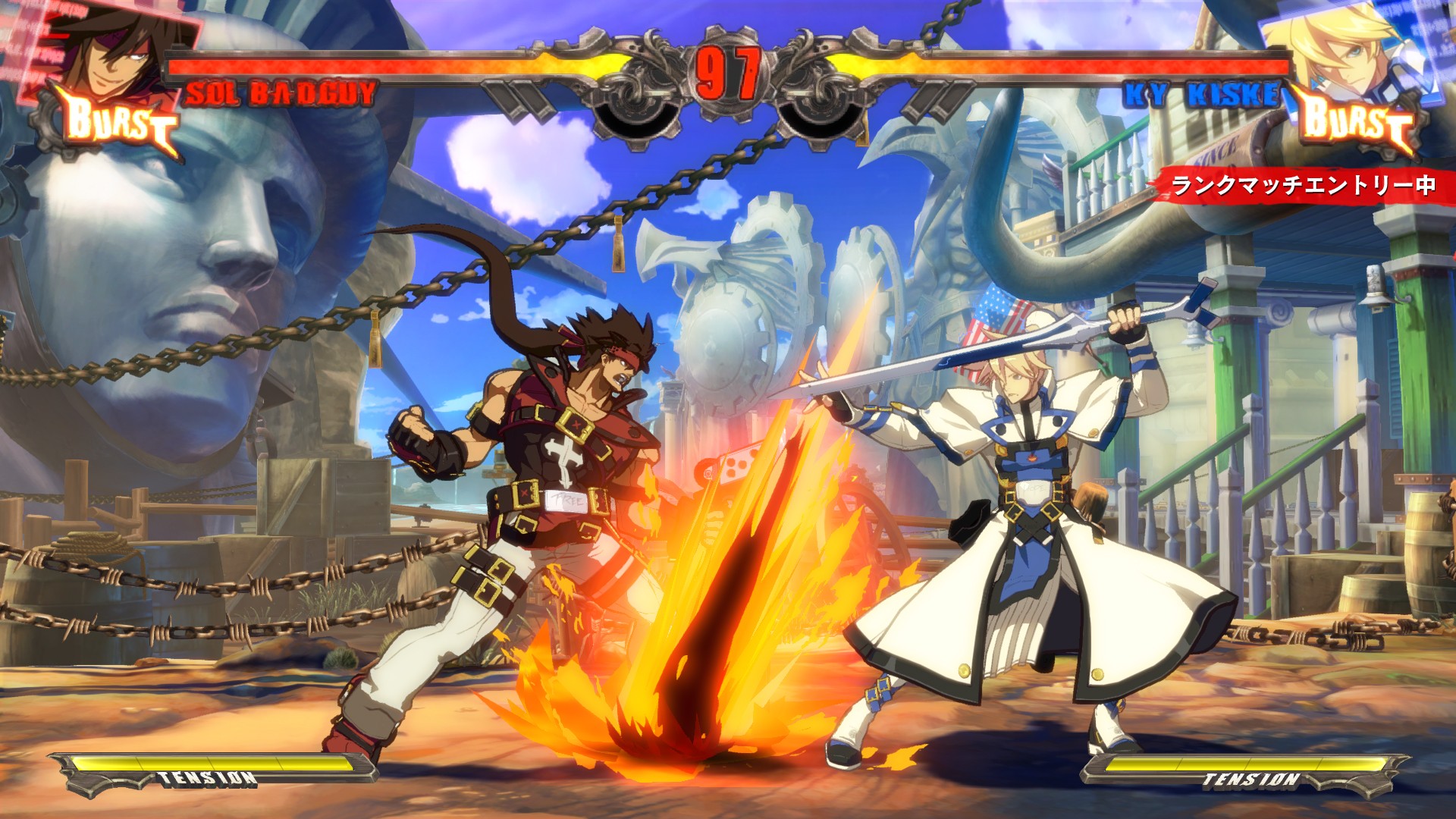
I knew Guilty Gear Xrd Sign had to be on my list somewhere, and there’s one specific reason for that: its visuals. Some of you may not think that’s enough reason to include it in a “favorite games of 2014” rundown, but you have to understand—this is a day I’ve longed to see for more than 15 years now. I loved (and still do love) the hand-drawn sprites of 2D fighting games more than I can express, and as time has passed, I’ve become more and more afraid that they’d go away forever, replaced by nowhere-near-as-charming 3D character models. What Arc has done in Guilty Gear Xrd Sign is show me that 3D truly can look like 2D, and that we can live in a world where the benefits of both visual mediums can come together to make each other stronger. So, for me, this may be one of the most graphically important games to ever come along, and it gives me something for the future of fighting games that I was really starting to lose: hope.

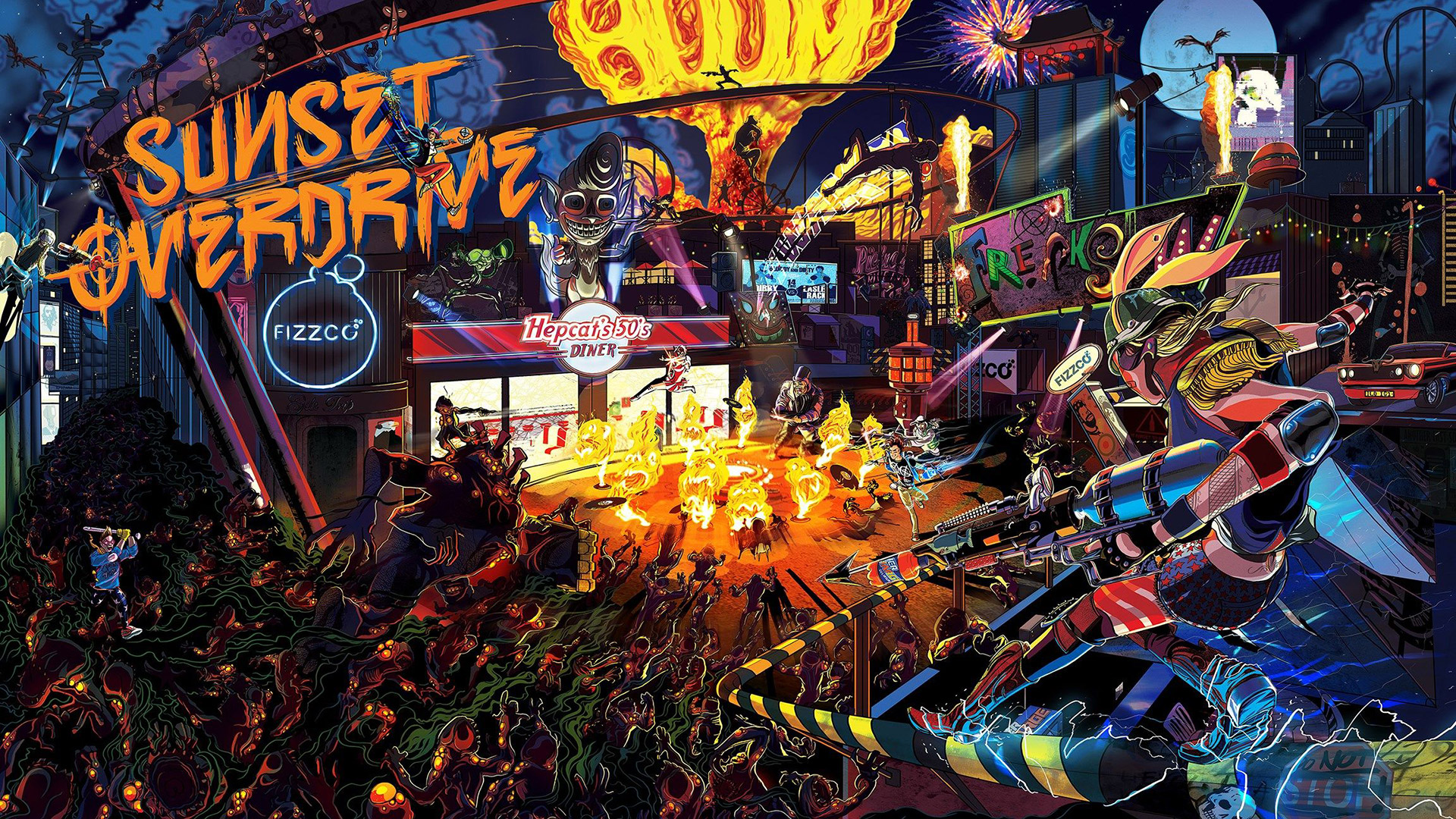
03 Sunset Overdrive

Sunset Overdrive made me happy. That may seems like a simplistic statement to make, and—to be fair—plenty of games make me happy in one way or another. Sunset Overdrive, though, kept me happy its entire way through. OK, well, it started out a bit rough, but the pieces soon fell into place, and once they did, I never wanted to leave Sunset City. Insomniac stuffed plenty of good into the game—the characters, the levity, the weapons, the liberal use of colors and brightness, the fantastic character creator—but, most of all, it was the traversal system that truly won my heart. I’m not sure we’ll ever get another Jet Set Radio at this point, and while Sunset Overdrive may not be the perfect series to take its place, it’s darn well good enough for me. Oh, and, the game gave me my absolutely favorite new characters of 2014: Las Catrinas.

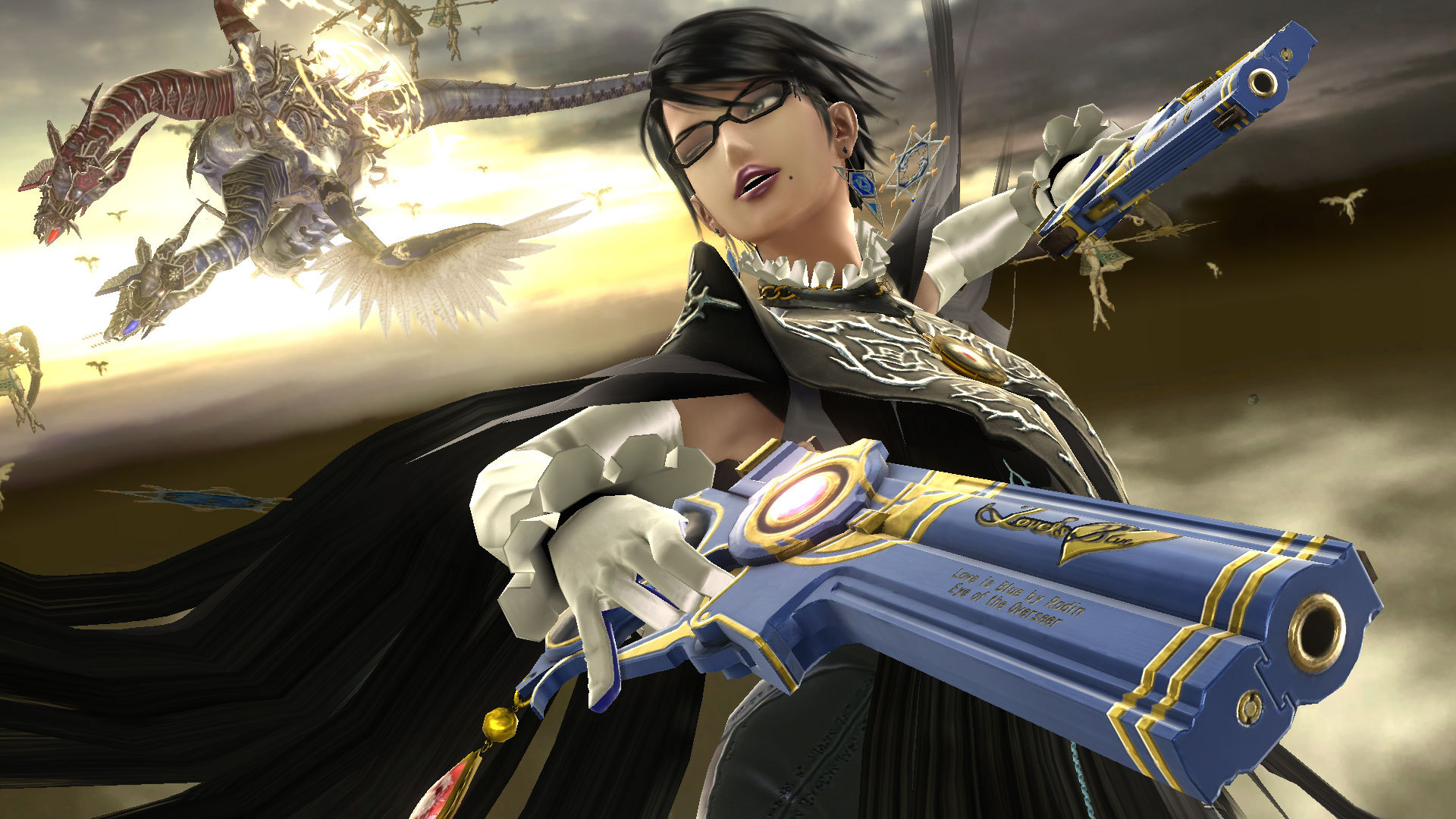
02 Bayonetta 2

“Out of sight, out of mind” is an easy state to fall into, especially when it comes to videogames. I know that I loved the original Bayonetta—but I’d forgotten just how much joy it brought me until I dived into its sequel. In my mind, there’s simply no fast-action game out there that can do it better than this, and Bayonetta 2 shows that Platinum Games can always make even the best of games even better. I simply can’t get over how enjoyable, perfected, and technically sound the gameplay is here, producing an experience that’s a fantastic mix of feeling like a total badass while being challenged enough to want to do better the next time around. Though I know some aren’t so keen on her, I adore Platinum’s sassy Umbran Witch just as much as the game she stars in—Bayonetta, and the rest of her female friends and foes, carry the story with strength and style without ever needing a man to help them in that task.

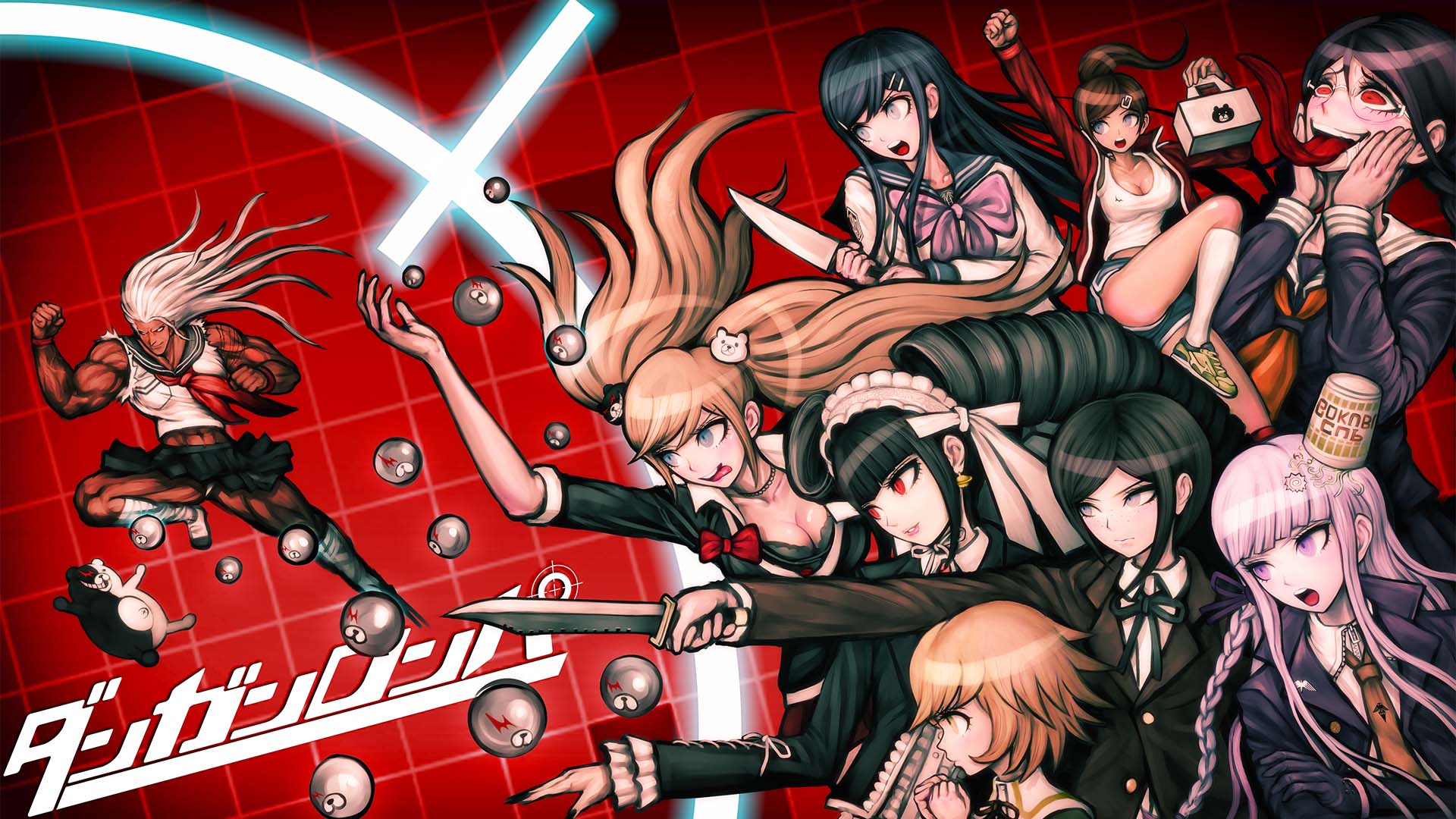
01 Danganronpa: Trigger Happy Havoc

I’ve talked about and tracked plenty of games that I thought looked interesting and hoped would make it outside of Japan, but back when I was curious about Spike Chunsoft’s strange little PSP graphical adventure, I never could have anticipated what I’d be in store for. In 2011, I fell madly in love with a strange little Japanese export known as Corpse Party, and that sense of discovering something wonderful and unique and unlike anything else came rushing back with Danganronpa: Trigger Happy Havoc. Rarely will I claim that one particular game is good enough that it’s worth buying an entire system for—but Danganronpa alone would totally justify the purchase of a PlayStation Vita for me.

EX My Biggest Shame of 2014
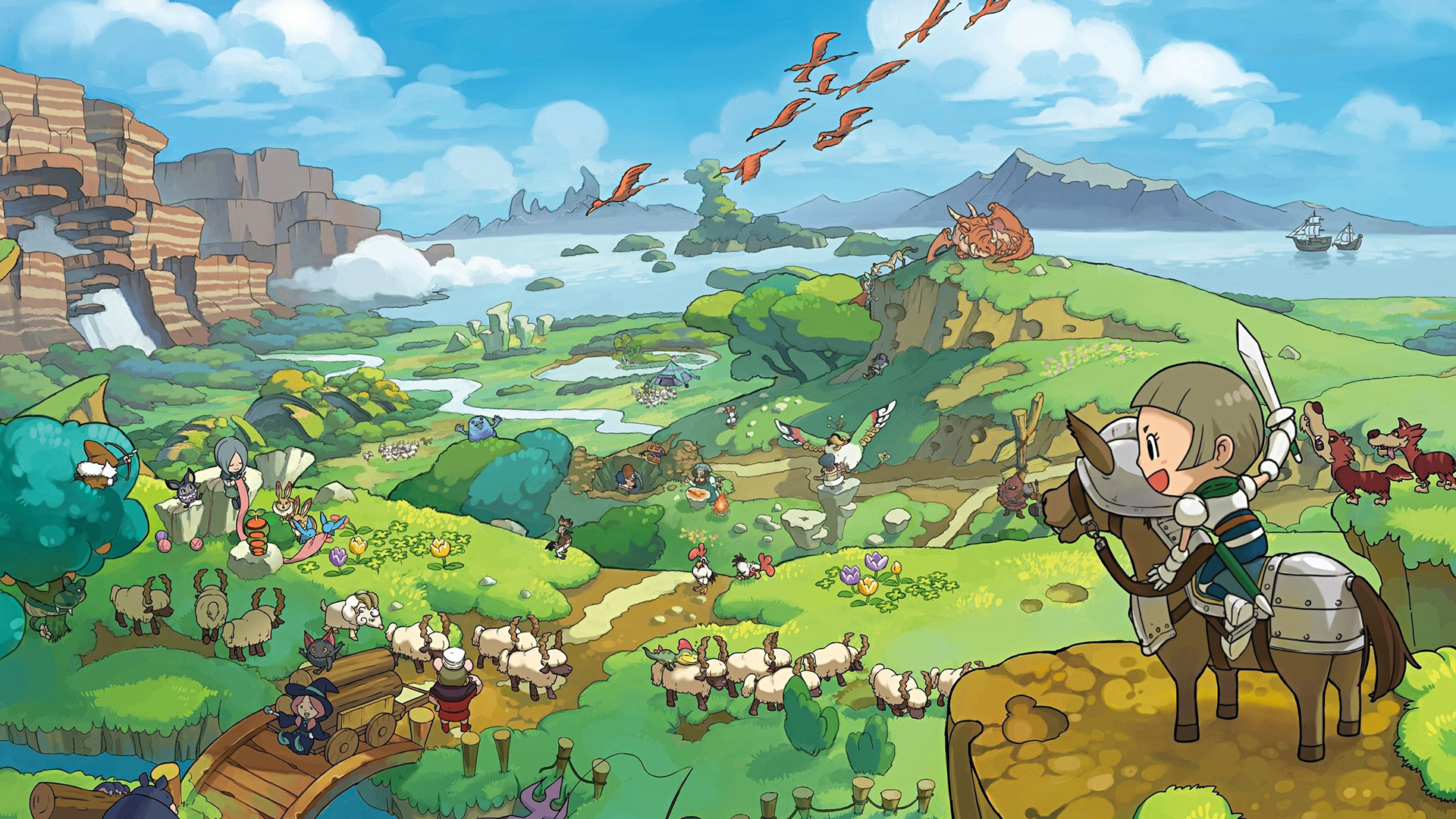
Fantasy Life

Even when you work for a videogame media outlet, you can never play every game that comes out. There’s simply not enough time in your life to do so, and personal preferences negate certain genres or types of games from logically being on your radar anyhow. Even so, sometimes a game that you should have played totally falls through the cracks, and for me, that game was Fantasy Life. Level-5’s ridiculously overstuffed 3DS RPG has become a monster hit among many of my friends and some of my colleagues, but while they were ranting and raving about how much they were loving the game, I was doing everything but playing it. I really meant to—especially in time to see if I’d consider it for one of my personal games of the year—but I was simply never able to get further than an hour into it. I do plan on putting time into Fantasy Life the next chance I get, but for now, I must live with the shame that I’ve let what is supposedly a game near and dear to the types of things I love in our world of digital entertainment go unloved.

EX The “I Love You, I Hate You” Award
Console Firmware

“Firmware” really isn’t the proper term in the case, but I figured it’d be the easiest way to convey the overall experience with game consoles, their features, operating systems, user interfaces, and whatnot. How new consoles are launched without features that long ago became standard on the previous generation of hardware I’ll never know, and 2014 was proof positive of just how undercooked the new machines still are. The PlayStation 4 received only two major updates through the entire year, a terrible thing given how in need of some TLC its interface was. Sony’s done a good job of adding features that give us unique experiences—built-in livestreaming, Share Play, PlayStation Now, and so on—but, man, are so many little elements of the PS4’s interface still hella busted (as the kids say). Even after doing a major revision to the main content bar, it remains annoying and frustrating; Sony, please, just let me make folders and organize things the way I want. Microsoft, meanwhile, got into the habit of releasing monthly firmware updates. They can be a nuisance when you don’t turn on your system as often as you should, but the progress the Xbox One’s interface made over the course of the year was absolutely impressive. And then, oh boy, don’t get me started on the Wii U. Fifteen seconds of careless thinking, and my Nintendo ID is now permanently stuck on our office console…

EX The Good, The Bad, and The Ugly
Transgender Representation in Gaming in 2014

The Good: Dragon Age: Inquisition featured Krem, a higher-up in Iron Bull’s mercenary group, Bull’s Chargers, who just happened to be transgender. While not the first trans character in Dragon Age’s lore, Krem is one of the few female-to-male characters in gaming—not to mention one of the best handlings of a trans character, period.

The Bad: Poison was finally added to Street Fighter IV in 2014—where she belonged—thanks to the Ultra update, but Capcom continues to commit to their backslide of non-commital to her 20-plus years of being one of gaming’s small handful of trans characters.

The Ugly: The lightgun-style shooter Blue Estate, which offered up a joke directed at a transgender stripper whose punchline was nothing more than making fun of the woman for being trans. Similar punchlines that the game’s creators would no doubt find funny? “Haha, this person is fat” or “Haha, this person is [enter ethnicity here].”

Drink From The Capcom Cup, and Fight Forever!

Last weekend, I had the chance to attend the Capcom Cup finals in San Francisco—the place where this year’s Capcom-sponsored Street Fighter IV tournament would be coming to an end.

It was an interesting experience, really. While my involvement has never been to a serious degree, I’ve been a part of the fighting-game community for as long as I can remember. As a teenager back in my hometown of Omaha, Nebraska, I came to know a number of  the members of a local fighting-game crew, with a few of them becoming my good friends. I’d run into them at the local arcade and marvel at their talents in whatever the latest Capcom or SNK joint was. My ability to play was typically nowhere near enough to really give them some serious competition, but knowing them, seeing their skills, and talking to them about the genre, I really came to appreciate fighting games far more than I ever would had I not met them.

At this point in my life, I always eagerly look forward to the return of Evolution, probably the largest fighting-game tournament event in the world. However, every year that I’ve experienced EVO, I’ve done so in the comfort of my own home, watching the matches unfold streamed over Twitch (or whatever other service). I’d never actually attended such an event live until last Saturday—and being there in person now makes me want to finally head to Las Vegas one of these years.

Attending a fighting-game tournament event is, for me, sort of like going to see a live wrestling show. While watching from home lets you avoid succumbing to overpriced snacks and the overall fatigue of spending hours and hours crowded in a room full of other people, those people—and their energy—can really raise your hype levels for what’s going on. Seeing major competitors like Daigo taken out sooner than expected was more shocking when I was surrounded by others feeling the same surprise; at the same time, as Ryan Hart battled against seemingly impossible odds and overcame time and time again, the excitement shown for his victories was so much more tangible and emotional when experienced in person. Plus, seriously—you just can’t appreciate how gorgeous Ricky Ortiz’s hair is until you see it with your own two eyes.

By the way, if you haven’t seen the PR Balrog vs. Daigo match (where Daigo finally dropped out), I definitely recommend that you do—if for nothing else than the amazing use of the under-appreciated Red Focus addition to Ultra SFIV.

There’s been a lot of arguments and accusations levied against the fighting-game community over the years, and I won’t shy away from saying that some of that has—at times—come from me. Saturday’s Capcom Cup finale, though, was the kind of thing that we all wish for: proof that we can all come together in our love for gaming as one, with everyone welcome so long as they’re there to share in that love and have a good time.

Of course, the day wasn’t just about pleasure—there was also a little business to attend to. First, Capcom announced that, thanks to their partnership with Sony Computer Entertainment, next year’s Capcom Pro Tour will see a bump in total winnings from $50,000 to $500,000. As SFIV producer Yoshinori Ono stood onstage revealing that number, it felt like another victory for eSports, and for videogames in general. (It also made me wish I had the time and ability to commit to playing Street Fighter professionally.)

Then came Street Fighter V. It’s still likely not to come until at least 2016—Ono admitted this week that the game is only 20 percent finished currently—but it was kind of crazy to see a few actual matches played in a game as early as it is. Legendary FGC faces Peter “Combofiend” Rosas and Mike Ross came to the stage to compete in a few rounds of SFV, and it was interesting just how different the game seemed to feel from SFIV. To me, it was almost Street Fighter III–esque—no doubt thanks to elements such as what looks to be a much higher level of character animation. The pace seemed slower, the attacks meatier—again, as I’d equate with Capcom’s previous Street Fighter series.

We need to remember, though, that there’s still a lot of time and work that’ll be going into Street Fighter V, and it’s going to be a long wait for more tangible information on the game—not to mention more proper judgments on how it’ll play in the end.

…Well, except that we did get one final reveal about the next generation of Street Fighter. A quick trailer teased the game’s third roster addition: Charlie (or Nash, for you Japanese players), Guile’s military pal and stand-in for the Alpha series. In the quick tease, we got the hint that Charlie is under Shadaloo control, but there’s really a bigger question to be asked (and answered): How is he alive? Seeing as how he’s canonically dead by the time Street Fighter II happens, does that give us a hint as to when this game will be taking place in the Street Fighter timeline? Or, perhaps, it’s not actually Charlie—but a clone or some other explanation, instead.

Given that I’d gotten up at 5 a.m. that morning to catch my flight to San Francisco, by the time Capcom Cup was over, I was really ready for it to be over. Still, I had a whole heck of a lot of fun at the event—and not only have I indeed decided that I need to try to attend EVO live next year, but some of my initial hesitations about Street Fighter V have softened.

Just, really—can some of the characters finally get a change of clothing? If Sakura shows up and she’s dressed as a schoolgirl yet again, I just won’t be able to take it.

Persona Q: Shadow of the Labyrinth Review

For me, playing Persona Q: Shadow of the Labyrinth is like going home again.

It’s also a good litmus test for how long someone has been a fan of Atlus’ beloved RPG franchise. There are those who will tell you that this marriage of the series with another of its developer’s properties—Etrian Odyssey—has resulted in some core gameplay aspects that fans may not be ready for: hardcore first-person dungeon crawling, the requirement of mapping out those labyrinths, the ability for any party members to wield different Personas, or the lack of downtime activities, such as Social Links.

The thing is, when the original Persona was released almost 20 years ago, all of those ideas were at the heart of what the game was. Shadow of the Labyrinth doesn’t feel like Atlus taking the Persona series in a bold, new direction due to the influence of another series—it feels like Atlus taking the series back to where it came from after a long journey away from home.

That isn’t to say that this is just a retread of what came at the start all those years ago, or that Atlus hasn’t learned a thing or two along the way. While I’m far more a follower of Persona than I am of Etrian Odyssey—I own all of the mainline Etrian games except the first but have only put a smattering of hours into each—I can still appreciate the dungeon-crawling polish that series has brought to Shadow of the Labyrinth.

One of the biggest of those Etrian Odyssey influences is something more recent Persona fans may not initially appreciate: having a true reason to care about searching every nook and cranny of every floor a particular dungeon has to offer. Much as I love Persona 3 and 4, both feature labyrinths that are extremely disposable. When playing, I’d make a mad dash through each level until I reached the next escape point, and then I’d go back in to beef up my party, hunt down Shadows I needed to dispatch to complete a quest, or peck around for the random treasure chest that would show up before continuing my journey to the upcoming boss.

Because my colleague Andrew Fitch has been the go-to guy for the Etrian series at EGM, it’s been a long while since I’ve seriously taken plastic pen to digital paper in order to graph out every twist and turn I came across in my adventures. If you’re not used to it, it can feel like a daunting task at first—and I can see why newer Persona fans may find that task more than a little tedious. There’s something just so satisfying about the process, though, as if you’re the first person to step into that world, and it’s your job to keep a record of what you find there. While that sense of exploring the unknown is so central to what Etrian Odyssey is about as a series—at least, what I feel it’s about—here in Shadow of the Labyrinth, it’s one of many elements that make up the true goal of the game (which is why I think its easier to embrace here). Still, it’s important, meaningful, and absolutely feels at home in a Persona game.

And yet, I don’t know that that makes Shadow of the Labyrinth a must-have for Etrian Odyssey fans. Somewhat contrary to what I expected to find here, this really doesn’t come across as the even blending of two different tastes; it’s more coffee with a dash of vanilla mixed in for accent, and less Reese’s Peanut Butter Cup. Had the Etrian series never existed, nothing would seem unusual or out of place here when looked upon as a Persona side project.

One of the things that may hold back fans of the 3DS dungeon-crawling staple is the amount of conversation woven throughout Shadow of the Labyrinth. Mid-dungeon, the large cast of characters will stop to discuss battle strategies, ponder the events they’ve found themselves in, or get to know one another as they take a momentary break from their adventuring. Outside of the game’s labyrinths, using the “Stroll” command leads to cutscenes and scenarios that add even more to the relationships of your teammates, and some of the available sidequests offered will be completed solely through similar interactions. Even though the trademark Social Link aspect of one-on-one relationship building isn’t featured, there’s still a huge amount of learning more about one another conveyed through text to read or spoken dialogue to listen to (an impressive amount, given the platform). This is, through and through, a Persona game—and the hardcore Etrian faithful may find themselves constantly wishing the cast would just shut up and get back to the dungeon-crawling.

All that is music to the ears of a Persona addict like myself, but even we had reason to be weary. Shadow of the Labyrinth is unashamed, unadulterated fanservice—and for a franchise that some worry has gotten a bit too mainstream in recent years, that set off alarm bells in many players’ heads. Right from the start, the concept seems iffy: The casts of Persona 3 and Persona 4 are brought together from their respective cities and time periods through mysterious means, and the two groups must collaborate in order to figure out why they’re stuck there and how to return to their homes. (From the beginning, you’ll pick which side you want to focus on—the cast of Persona 3 or that of Persona 4—and that choice will change how some of the game’s segments play out.) It’s a premise that you’ll no doubt find covered countless times on fanfiction.net, and it’s one that I was sure belonged there—not as the building blocks of an Atlus-produced game that’s considered canonical.

Though I’m still not completely happy that this is indeed now part of the official storyline, Shadow of the Labyrinth ended up far more interesting and entertaining than I’d expected it to be. Yes, on some level, it’s the satisfaction of fanservice—that guilty pleasure of indulging in something you know maybe you shouldn’t enjoy or encourage. Deeper than that for me, however, was the fascinating look at each of the casts of characters—both individually and as a whole—through a new set of eyes.

When compared to the friendship and camaraderie of the Persona 4 squad, Persona 3’s S.E.E.S. members seem cold and distant to one another, people who work together because they must, not because they want to. Flip the view around, and Chie, Yosuke, Yukiko, and the rest of the P4 crew seem almost childish and flippant about their place in the world, whereas Yukari, Junpei, Mitsuru, and the others are obviously teenagers weighed down by an almost unbearable amount of responsibility and obligation resting on their shoulders. Sure, this is often a fun, lighthearted “what if” tale that lets us see characters interacting together in situations that never would’ve been possible before, but it’s also a deeper look into a roster of heroes and heroines that perhaps we didn’t know quite as well as we thought we did. (And, to be clear, you won’t spoil major elements of either of their respective Persona games—Shadow of the Labyrinth takes place midway between both.)

Reintroductions will also need to be made to the game’s combat, no matter if you’re coming in from the Persona side or the Etrian Odyssey side. The groundwork for battles here comes straight from Etrian: Pick five team members (out of the full roster of P3 and P4 playable characters), put them into one of the three slots in either the front or back row of your formation (depending on what range their attacks are and if they should be taking the brunt of the hits or trying to avoid them), and then do your best to survive the various first-person, turn-based encounters you’ll face at random times while exploring. Etrian’s FOEs—challenging miniboss-like entities that can be seen wandering the mazes, and who should be avoided until your party is stronger and more skilled—also show up here, twisted and tweaked to feel more unique to Persona’s style and overall universe.

Of course, all of that is then given the required amount of Persona flair in a mixture that feels totally natural and completely at home with other titles in the Shin Megami Tensei line. All of the typical Personaskills are here—Agi, Bufu, Garu, Zio, and so on—and what skills you’ll have access to at any one time will depend on which Personas your party members have equipped at the moment. The one team choice that can’t make use of Personas is the two-for-one combination of newcomers Zen and Rei, original characters created for the game who have also ended up trapped in this strange world of labyrinths (without any memory of who they really are or how they got there). Working together in one character slot, Zen and Rei support the Persona cast through more traditional means—ones that don’t involve mythical beings exploding forth from people’s bodies. The game’s various monsters (known as Shadows) all have weaknesses of some sort, just like they do in the main Persona releases, and also like in those games, your navigator—either P3’s timid Fuuka or P4’s J-pop starlet Rise, depending on who you want—can help you keep track of enemy weaknesses after you hit a foe with a particular skill at least once.

What happens when you take advantage of a Shadow’s weakness is somewhat different here compared to recent Persona games, however. Hitting a foe that’s weak to the fire-based Agi, for example, will send that party member into Boost mode, which gives them two major advantages: the chance to act before any of the Shadows are able to on the next turn, and the ability to cast any skill in their repertoire for free. (How many of your characters enter Boost mode during an encounter, and how many are in that state when the fight is over, also plays a part in your chances of earning a new Persona card at the end of the round—the prime currency for the Velvet Room’s Persona–fusion services). It’s a powerful advantage—one that feels right at home alongside the main series’ similar Press Turn system—but it also has two weaknesses to help keep battles balanced. If a character gets hit while in Boost mode before their next turn, they’ll be knocked back down to normal status. And, unlike Press Turn, Shadows aren’t temporarily put out of action when they’re hit with a skill that exploits their weakness.

That second point means that larger groups of Shadows are harder to handle with just one Persona who specializes in a particular elemental or skill type, which is why Shadow of the Labyrinth allows you to give every character (including Fuuka and Rise) a sub-Persona in addition to their main trademark one. The game explains why this is possible, important because in P3 and P4, only the protagonist—and their connection to the tarot card The Fool and its “limitless potential”—allowed for such an ability. As I mentioned earlier, though, this really goes back to the way Persona used to be at the start, and it’s a change made to make sure that players can construct a team that’s built around who they want to use the most—not who the game dictates at any one moment. Characters can utilize the skills of the sub-Persona they have equipped in the same way they have access to those of their own personal Persona, but those subs also bring with them HP and SP stat boosts that are activated during battle.

At first, you’ll appreciate the extra points in each meter that those boosts bring, but they end up being one of the biggest (and potentially under appreciated) keys to success in Shadow of the Labyrinth. See, the added HP and SP points you get from these sub-Personas refill at the start of every combat encounter—meaning that whatever you use (and lose) from each will be refilled for free the next time you’re thrown into battle. Given how long your treks into the game’s dungeons can be at times, and given how stingy the Persona series is about letting you refill your Skill Points when out adventuring, making smart use of those refillable points and the Boost system will be what separates repeated retries and XP-grinding, and making real progress through the game.

That, of course, leads to the big question I’m sure both sides of the fence are wondering: How hard is Shadow of the Labyrinth? Going off of my experience with the Etrian series, Persona Q isn’t as hard as those games it borrows some of its personality and traditions from when played on equal difficulty levels. Persona-wise, I found it a little bit easier than I expected, at least in the early going—but I’ll also chalk some of that up to being the kind of player who finds things like crafting more powerful Personas through fusion, and being smart about balancing out the roles of each of my party members, to be second nature by this point. Even so, combat is still extremely satisfying here, offering up the depth in strategy and threat of “oh s***” situations that continually keeps Persona’s (and Etrian Odyssey’s) combat thrilling long after many other RPGs’ enemy encounters grow tedious or boring. And, if you do find things too easy or too hard at any point, five difficulty levels are available, with all but the hardest allowing you to switch out to a different selection at any time. Speaking of options, there’s also a handful of menu items that can tone down some of the Persona-ness, should your preferences skew heavier toward Etrian’s more utilitarian design—such as the ability to speed up battles by turning off attack animations.

There’s one last thing that I really want to mention, something that often gets overlooked in games by both players and critics: the little touches. Watch a movie by acclaimed anime director Hayao Miyazaki, and you’ll notice countless bits of personality put into each and every one of his featured films, even in moments where such care isn’t required. That attention to detail is one of the reasons I’ve long been a fan of Atlus’ work, and why I think they often care about the smaller things far more than so many other developers. While it might be easy for some to see the grid-based dungeons as looking similar or even a bit dull, there’s a level of finesse and artistry to them that really stands out if you stop to fully appreciate their design. More so than any Etrian Odyssey game I’ve seen, I think the dungeon art style just feels so polished and developed, with beautiful uses of colors, layoring, and atmospheric touches. Even elements such as the screen for selecting which section of the game to head off to next come to life with personality and flair, as a variety of scenes play out between the two casts of characters as they get to know one another better. All of this is done through some of the best (and most stylish) use of 3D that I’ve ever seen in a 3DS release. Instead of bold, brash contrasts between foreground and background elements, cranking the 3D slider all the way up produces scenes that have numerous levels of perspective, yet are still easy on the eyes.

How Atlus handled the 3D effect in Persona Q: Shadow of the Labyrinth is a great example of how it handled the entirety of the game’s depth: through small, controlled, thoughtful brush strokes over time, rather than larger, bolder, more chaotic  swipes of paint across the canvas. What could so easily have turned into a cash-in on the runaway success of the Persona series instead feels like a reunion with old friends we didn’t realize we missed as much as we did; what could have been the duct-taping together of two franchises turned out to be an adventure worthy of the name Persona, just one that took some advice from a friend.

While Etrian Odyssey fans may not truly find what they’d be looking for here, Persona players both new and old absolutely shouldn’t miss this. And, if you’ve been trying to find a way to dip your toe into the hardcore world of crawling and mapping dungeons, this just might be the perfect first steps to take to lead you into that grandiose, life-consuming, cartography-crazed world.

Escape Dead Island Review

Cliff Calo just wanted to impress his father.

As the son of a high-profile media mogul, Cliff’s spent his life living in the shadow of his sister, constantly told that she—not he—would be inheriting the empire. In order to prove his worth in the field of photojournalism, he takes his friends Linda and Devan sailing into tropical waters to find out what’s really happening on the island of Banoi.

Of course, traveling to a restricted area to uncover a zombie conspiracy is already a questionable plan in and of itself, but—as things are wont to do in these kinds of stories—our hero’s situation quickly goes south. Thus kicks off Escape Dead Island, a side story created to bridge the events of the original Dead Island and the upcoming Dead Island 2.

Even though Escape Dead Island connects to the other games of the series, that doesn’t mean that being a fan of the franchise is a requirement for playing. While you’ll miss out on some of the little references and cameos if you’ve never played the previous releases, you’ll still be able to enjoy what Escape Dead Island has to offer. Gameplay, as well, makes an attempt to stand on its own, eschewing the typical first-person survival-action style that’s a Dead Island trademark, instead moving the camera to a third-person perspective and centering more around exploration and adventure elements.

Really, side projects like this can often be more interesting than the major series they’re connected to, because more risks can be taken and more unexpected ideas integrated. That’s definitely what’s on display here, especially when it comes to that element: what’s on display. Escape Dead Island features comic-book-style visuals, where characters, enemies, and the environment have all be crafted with brighter colors, simpler textures, and solid black outlines. You might not normally think of going this route for the tale of an outbreak of the undead on a tropical island research base, but it absolutely works.

Even more attention-grabbing, however, is what happens when Cliff’s mental state starts breaking down into madness (one of many puzzling narrative elements that push players forward in order to find out the truth of what’s going on). In those moments, the game’s world is washed in a variety of visual effects. Contrast levels flux, environmental objects grow and shrink, or the sky turns blood red as everything else takes on the look of black-and-white sketches. Some of the graphical styles are so striking that you’ll wish you could play more of the game with them turned on—and all of this happens in a game engine that stays solid in framerate without slowdown or screen tearing.

If Escape Dead Island’s looks are pushing the hardware of the last generation of consoles, its gameplay is almost old-school in many ways. Even though your adventures will have you criss-crossing Narapela (a sister island to Banoi) constantly as you visit and revisit locations, the action and enemy styles bring to mind 8- and 16-bit side-scrollers. Cliff himself controls like one of those classic characters: clunky and stiff at first, but enjoyable in a slightly masochistic way once you’ve gotten the hang of him. Enemies, meanwhile, never have any hesitation in abusing Cliff’s shortcomings (such as his limited stamina gauge or ineffectiveness at running away), and some of the foes you’ll face will have you swearing over how “cheap” they are. This is also a game that doesn’t just lead you by the hand through everything it has to offer, something many modern games are pretty terrible at. Sure, there’s an option for tracking where your next objective point is, but along the way you’ll notice numerous things about the island that are shrouded in mystery—and that remain so even after you’ve conquered Escape for the first time.

Having grown up with those earlier games, I was able to accept and almost appreciate those sides of Escape Dead Island—with the exception of its death penalties. Collectables or special photography moments are scattered across Narapela, but anything you’ve found or done since the last time the game autosaved is totally lost the moment you die. Most modern games typically track those kinds of finds even if you have to replay a segment again, so playing one that doesn’t do that is somewhat shocking. The same goes for unskippable cutscenes—in an action game where you can easily die multiple times in certain segments, having to wait through the same conversation over and over isn’t fun. (Also, seriously, developers: Don’t give us autosave systems where we can never confirm when our last save was or manually save upon quitting. Such an awful trend that’s been cropping up more and more.)

Talking about how old-school Escape Dead Island feels might come off as rather negative, but it isn’t meant to. Yes, some of its aspects feel peculiarly outdated, but there’s also something to be said for an adventure that’s smaller in scope and ambition, one that tries to keep everything that it does feeling interesting and fresh. In this era when it seems like so many games are either huge triple-A productions or tiny indie projects, seeing releases that are content to live in the constantly shrinking middle ground is rather refreshing.

One of the things I’ve learned most in my time reviewing video games is that it’s often those releases you expect the least from that end up catching your attention the most. It’s very likely that Escape Dead Island may get lost among the sea of major releases that have flooded shelves this fall, but it’ll be a shame if that happens. Sure, it frustrated me at times and made me want to throw my controller at others, but from beginning to end, it also kept me entertained and engrossed in its own special ways.

I want more games like Escape Dead Island—games that don’t have to be perfect or gigantic blockbusters and can just be fun experiences that understand what their place in the world should be.