Michel Koch + Raoul Barbet – Life is Strange

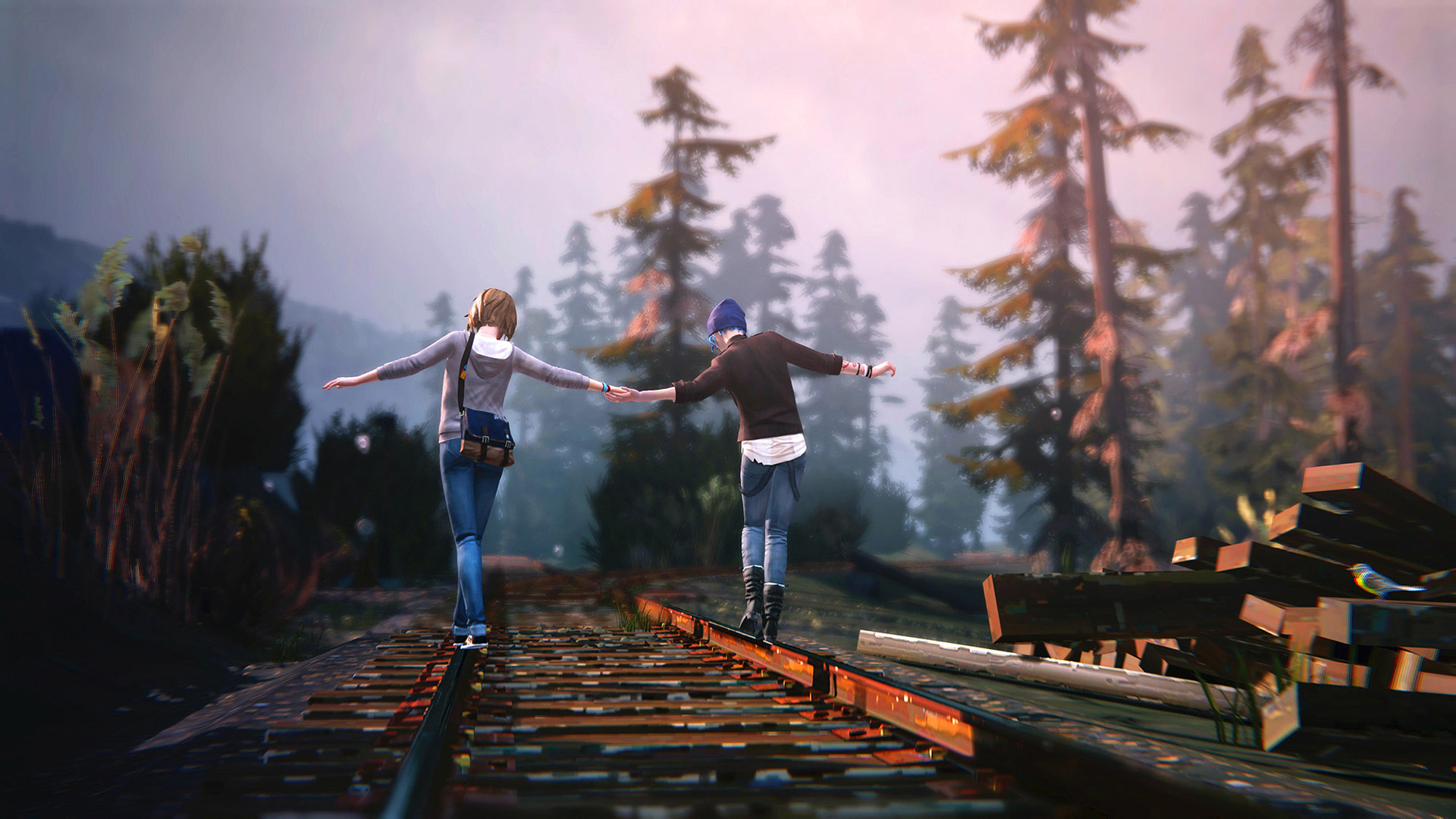
Few games gripped me last year—or in the last handful of years–as Dontnot Entertainment’s episodic adventure game Life is Strange. Like many others out there, I fell in love with the game’s protagonist Max Caulfield, her wild child best friend Chloe Price, their hometown of Arcadia Bay, and all of the other people we’re introduced to there.  Life is Strange mixed the trials of being a teen with unexplained superpowers, all wrapped up into an experience that forced players to make choices where there often wasn’t a “right” path to take.

In the past week, two different but important pieces of news came out about the game: that it’s first piece, Episode One, would be offered for free on all platforms, and that it would serve as inspiration for a new live-action digital series. In honor of the announcements, I had the chance to spend a short time talking to Life is Strange‘s co-directors, Michel Koch and Raoul Barbet from Dontnod.

Mollie: Life is Strange came out to both critical and fan acclaim, and was my top pick for the best game of 2015, so I’m curious how it feels as part of the development team to see the reactions the game received and the fanbase it still has.

Michel Koch: It’s quite fantastic. We have to admit, when we began the project, we didn’t quite expect what’s happened. Seeing how active the community still is these days, working on art, drawings, cosplay, sending us messages every day, it’s really fantastic. We wanted to talk about what it’s like to be a teenager these days in Life is Strange, and tell the story of Max. To see that the story has resinated for so many players is quite fantastic for us.

Mollie: Square Enix announced last week that the first episode of Life is Strange will be permanently free on all platforms. Why make that move at this point, after both the digital and physical versions of the game have come out?

Michel: We think it’s still good timing. We know we’ve reached a big audience with the game, but we also still know that there are players who haven’t tried the game yet, who maybe heard about it but were unsure if it’d be for them. We think it’s a great way to reach a bigger audience and try to bring Life is Strange to more players. We had a demo before, which was the first 15 minutes or so, but now all of the first episode—with two to three hours of gameplay—will be free. We are extremely eager to see new players come in and help expand the reach of Life is Strange, and maybe be drawn in enough to want to play the rest of the season. Also, maybe some fans will now then tell their friends that they can play the first episode for free, and maybe those players who have been resistant to just buying the game without trying it will try it now. We think it’s a good moment to try this. We might have reached the total number of players who knew for sure that they wanted to play Life is Strange, so we can now open it up to a broader audience.

Raoul Barbet: We wanted to create a different game from other things out there with certain aspects. If you really want to feel what we wanted to achieve in Life is Strange, with the music, and pacing, and its slice-of-life style story, it’s important to be able to play one full episode. So I think it’s a unique possibility to be able to give the first episode for free, and we’re quite happy at the idea of reaching, like Michel said, new players.

Mollie: As someone who loved Life is Strange, one concern I do have is if the first episode stands as a strong enough introduction to the game. Having played all five episodes, I think it isn’t until the second when you start to really become invested in the story. Do you think the first episode can stand on its own that’ll be able to pull in new players?

Michel: That’s a very good question, and a good point. Personally, I would give the whole season for free. [laughs] But, I don’t think Square Enix would be happy about that. When we began the project, and were putting together the first episode, we had a lot of things to figure out. It was the first time we had to design the game’s puzzles, the first time we had to think about the evolution of the characters, and so on. So, it was quite hard to do that episode. Personally I don’t think it’s the best episode of the game, but I think it’s for sure a good introduction. But you’re right, it takes time to become completely involved in this story, and  its characters, but I think this will be a good start. If you manage to finish Episode One, you’ll have a better feeling of what it’s like to play Life is Strange.

Raoul: To counter-balance what Michel said a bit, I think we purposefully wanted to make this episode softer and slower, focusing more on the introduction to the world of Max and Chloe. You get a bit of a taste of what’s to come at the end of the episode, and it does start getting darker by that point. And it was maybe a challenge, a risk that we took to have a different tone over the course of the different episodes, to end up with something quite dark by the end. But it was also a great contrast, and great to surprise the player about what happens in the next episode. So, maybe sometimes, some players might think the first episode is a bit slow, and maybe there’s no big cliffhanger at the end, but there are a lot of strong themes in what happens in it, and we think it’s enough to catch the attention of the player. So, hopefully, they’ll want to continue. Sure, it’s not that huge cliffhanger like you have at the end of episodes three or four, but still, it was really the mood and feeling that we wanted to create in order to contrast later with the darker nature of the adult world versus the teenage world of Max.

Mollie: There are so many choices that players must make in Life is Strange that can cause divided opinions, or emotional stress, or legitimate anxiety, and I remember coming at one—the decision to either pick up Kate’s call in the cafe or avoid it—where 100% of my friends didn’t answer, but I couldn’t imagine making that choice. How do you come at those choices as someone who created those situations?

Michel: That part is interesting when you’re creating the game, and working on the story, and everything. You have to sometimes try to get out of your mind as the creator, and try to put yourself into the mind of the player, to see how people would react to the choice you’re presenting them, or the situation. That’s also why we do play tests when we work on our games, to sometimes see the genuine reactions from players—because, as game designers or creators, we are sometimes not completely fresh in our reactions.

Mollie: It’s been interesting for me to watch YouTube reactions of certain moments of the game, especially the ending, to see people react to those same moments that I reacted to, and the thought process they had in why they made certain choices versus others compared to what I did and why. When you mention trying to get into the mindset of players, have you spent any time watching videos like that?

Michel: Yeah, that’s what’s amazing. We watched a lot of playthroughs with the team. It’s sometimes amazing to see the reactions of the players and all of the different reactions they have. It’s great, because we see that we managed, for a lot of choices, to make some very polarizing decisions, where players act differently based on their morality, their approach of their own lives and personalities, but also based on how they played the beginning of the game, and the version of Max they created in their head. That’s why I think, for the final choice, even if there is not a lot of variations based on what you did before that choice, the moment of that last choice is based on how you played your entire game mentally and emotionally, and this is what allows you to make that difficult final choice.

Mollie: Now that the team is busy working on your next project, going back now to think about Life is Strange again thanks to these new announcements, are there any feelings in you wishing that you could fix or change this or that in the game, maybe do something differently? Or are you happy with how Life is Strange turned out?

Raoul: I think, like on every project, we had some constraints, and we had to work with them. I think in the end, though, those limitations pushed us to come up with some good ideas and solutions. You always wish you had more time to figure out certain things, or to make particular scenes better, but I’m quite happy with how things turned out. Though, I would give my past clone some advice on how development would go. [laughs]

Michel: We could always change and polish and try to adjust and do things better, but in the end, I think we managed to create a story about two characters that we like—that we love. I think it’s the game that we wanted to do, and it’s not perfect, but there always comes a point when you need to stop and tell yourself to finish it up and move forward. That’s basically what Max learns at the end of the game.

Mollie: So, I have to ask. Michel, you’re using a piece of Pricefield art—the term fans use for romantically shipping Max and Chloe—as your twitter icon. There are two very dedicated camps in who Max should end up with, so does your icon mean that you’ve made your choice?

Michel: [laughs] It’s been really cool to look at all the posts of the social networks, and see all of those debates, and the passion that the community has about the character relationships, about what they think is canon for them or not. To be fair, I have also used an avatar with Max and Warren [Graham] in it before.

Mollie: Booooo. [laughs]

Michel: [laughs]

It didn’t stay nearly as long as the one with Max and Chloe, I have to admit. And, I know that the Pricefield team is bigger and stronger than Grahamfield. To be clear, there is no canon version of the story—what the player wants to do with it is fine. Like, the way people are talking on Twitter, you can be “Bae over Bay,” or whichever choice you want. [laughs] It’s just awesome to see the community is so active and such fans of the game, and it’s great to interact with them and be a part of that community.

Mollie: So, of course, even bigger than the announcement of Episode One going free is that there’s a live-action digital series based on Life is Strange in the works. I guess my first question is also the simplest: Why?

Michel: There was recent news that Square Enix was in talks with various production companies, I think a few months ago. After the success of the game, production companies started hearing about Life is Strange and found that it had great stories and characters. So, a few of those studios approached Square Enix, and the deal has now been signed with Legendary Digital Studios, which is quite exciting, because it’ll be a new way for another kind of audience to learn about these characters, this story, this setting—and, also, maybe want to play the game after that. So, we’re really excited to see how things will turn out. It’s really the beginning of the creative process right now, and we don’t know yet exactly how it all will happen. We aren’t quite sure how they’ll want to approach it, but we do know that there’s a lot of great possibilities, because you’ve got the right material and characters there to build a great digital series off of. It’ll be a chance to expand the universe in a different way, and to have another kind of storytelling  to bring those characters to another audience.

Mollie: As members of the team, while they’re no decisions yet, do you think it’d be more interesting to tell a story with characters like Max and Chloe and others we already know, or would it be better to focus on other characters and stories we haven’t experienced yet?

Michel: Hmm, that’s a really good question. I think, speaking for myself, that every possibility can be really interesting—depending on the way they’re approaching the writing process. How you do things in a TV show is different than a game. For example, if Max is the main character of a series, you could also see other offscreen moments for other characters, where as in the game, you’re always controlling Max, and focusing on what she’s experiencing. So, the digital series gives the chance to show other parts of the world and other characters. It could be great to maybe even switch and tell the story from the point of view of Chloe—that could be awesome. I don’t want to think too much about what I’d prefer, because there are a lot of talented people who will be able to take a creative look at the material, the universe, and the characters, and I’m really excited to see what they’ll propose. I guess we’ll see what happens next.

Mollie: One of the biggest elements of Life is Strange was its focus on player choice. Is that something you think can be expressed in a live-action series, where the narrative is passive instead of interactive?

Michel: I think there’s the possibility for a lot of discussion about that. We’re making video games, and we decided to make games because of the interactivity and the player control, so that’s what we know how to do. We’re not filmmakers. Of course, there won’t be any interactivity in the series. Or, at least, I don’t think there will—there could always be a way. So it’ll definitely be different, but I think it can really be a great stand-alone story, or perhaps something that works with the game. There’s a lot of creative possibilities. The idea of choice might be harder to show in a project like this, but if you look at a movie like The Butterfly Effect, it worked well. You, as a viewer, aren’t in control of the choices and consequences, but you’re still seeing a lot of the possibilities. Too be honest, we took a lot of inspiration from that movie when we were working on Life is Strange. So I think that it’s possible to find a way to show the idea of choice.

Mollie: I feel like, because Life is Strange was such an emotional and personal game, it had to have been something near and dear to your hearts when you were making it. Now that we know there will be a live-action digital series of some sort based on it, do you get the sort of overprotective parent feeling, where you’re very concerned about how that will be handled? And, if Max and Chloe do show up, are you going to be protective of them and worried about how they’ll be represented? Or, will you be the parent that is ready to send their child out into the world and let them have their own experiences, and you’re excited to see what they’ll make of themselves without worrying too much?

Michel: [laughs]

I think that we’ll really need to be that second kind of parent that you mentioned, and we are. Of course, there will be some part of us that’s worried to see how the series will turn out, but it’s also really exciting, because those creative people will be able to bring something new and different and—perhaps—something better to our material. It’s like when you’re watching a movie adapted from a book that you love: sometimes if you read the book first, you might have issues with the movie, but you might also find the movie being better, or maybe the movie is different but equally great. It’s like how Steven King hates the original adaptation of The Shining from Stanley Kubrick. As a reader and a viewer, I love both. The book is one of my favorite books from Steven King, and Kubrick’s movie adaptation is great. I think it’s awesome. It’s very different, but it works great. But, I know Steven King doesn’t like that movie as much, and I get it, because it’s really different.

I think that we should try, and need to try, to not be over-protective, because different is great. Plus, it won’t change the game in any way—the game will still be there, the characters are still there in the game, you played your version of Life is Strange, you have your ending, your way of how Max was. If there is another version of Max and the other characters in the series, I think as long as it’s good storytelling and good characters and good emotions, even if it’s a bit different, it’ll be another great creation. We’re quite excited to see that, and I’m really eager to see where it goes.
How I learned Battlefield 1 and Overwatch aren’t the same game

As E3 2016 kicked off and the world started to be introduced to this year’s edition of gaming Christmas in June, I learned a very important lesson: Battlefield 1and Overwatchare, in fact, not the same game.

Well, okay, I already knew that, and I’m just saying that I didn’t for dramatic effect. Before you think I’m insane or stupid, however, hear me out on this one.

Since Overwatch‘s release, I’ve become terribly addicted to Blizzard’s attempt at making an online multiplayer, competitive, team-based first-person shooter. Lost in that world, I’ve fallen in love with its roster of characters and found a deep appreciation for its more light-hearted visual style and attitude.

When I sat down with Battlefield 1 to go hands-on with DICE’s next big thing, I needed a few moments to get over just how un-Overwatch the game is. Bright, colorful cities gave way to war-torn, almost depressing countrysides; lively confrontations between opponents turned into fierce, all-out struggles for survival between opposing armies; and the optimistic hope of pulling off a good win for the round turned into panicked prayers that I could just live long enough to be of some good to my side.

I make the comparison between Overwatch and Battlefield 1because I can’t think of the last time I played two games that were so vastly different while also being similar. After playing both games in close time, it really hit home for me just how diverse and special the games industry can be.

There’s been renewed talk recently of violence in gaming. Battlefield 1entered that conversation the moment it was revealed, as questions were asked on if it was even morally right to make a video game about The War to End All Wars. Playing it for myself, it did sink in on an emotional and mental level just how overwhelming and terrifying that war must have been. The Battlefield series has long excelled at making war look and sound almost tooreal, but I’m not sure that’s ever hit home as hard as it does here. I’d never claim that any video game could truly teach someone what it was like to have experienced such a tragic time in human history, but I also walked away from Battlefield 1with newfound appreciation for what everyone on both sides must have gone through.

Of course, Battlefield 1 is still a video game, and playing it was often an awe-inspiring experience. While it was easy to worry initially if World War I would even work for a major first-person shooter, DICE seems to have hit that portion of the game out of the park. Yes, the setting works, and it works beautifully. This is a brutal battle for survival, in which a momentary lack of clarity or mistaken tactic can leave you waiting for your next respawn. On a personal level, I was excited for the idea of a new Battlefieldset so far in the past, and I’m even more excited after having spent some time with it.

Time also gave me a deeper appreciation for Overwatch. These truly are two very different games, and each, in an unexpected way, strengthens the other. Battlefield 1makes me glad that I can have happier, more colorful shooters to go to if things are feeling too bleak, while Overwatchreminds us that we still also crave hyper-realism and violence that can’t hide behind a comical exterior.

And, really, that’s the beauty of video games: We’ve got more choice in what we can play (and how) than ever before. For those who don’t care for a particular genre, game-design style, developer or whatever else, you should embrace those things instead of shunning them, as I’ve come to do on both sides of this particular coin. The more choice we have, the stronger and more full of life the industry as a whole will be. And when the industry is stronger, the things you personally like the most will also benefit.

Donald & Laura Mustard – Shadow Complex Remastered

In 2009, Utah-based Chair Entertainment released Shadow Complex for the Xbox 360, and the game quickly became one of the most popular and beloved titles on Microsoft’s Xbox Live Arcade service. Last month, director Donald Mustard and his team brought the game to a whole new generation of players (and Xbox hardware) in Shadow Complex Remastered, an update that included improved graphics, new gameplay options, and more. Now, the studio is looking to break more ground with its side-scrolling action exploration title, as not only will Remastered be hitting Steam and other Windows services on May 3rd, but it’ll also be launching for the PlayStation 4—the first time it’s arrived for a Sony platform.

In honor of Shadow Complex Remastered‘s wider release, I had the chance to sit down and chat with Mr. Mustard, who is not only the game’s director, but also the co-founder and creative director of Chair.

Mollie: So, before I started recording, we were talking about older Epic games, and I used to be a huge Unreal Tournament player.

Donald Mustard: So tell me, as a back in the day player, if you had to distill your memories and what you loved about Unreal Tournament down to like a sentence or two, what to you was the core of UT?

Mollie: The thing for me, because I was always a Mac person—

Donald: You mean when you were growing up?

Mollie: Mac Plus was my first computer, yeah.

Donald: Gotcha.

Mollie: We got very few games, so I never got hardcore into the PC gaming side of things. And I think, for me, Unreal Tournament was the first time I played a first-person shooter where there was a team aspect to it. You had Doom or Quake or whatnot, and those were fun in the “I’m just going to go in and kill everybody that’s there” way, but as my gaming tastes matured, I became way more of a Team Deathmatch player instead of a Deathmatch player. I like that team aspect. And there we’d be, running Capture The Flag in Facing Worlds, where I could kinda hang out and be the sniper and focus on defending our flag while my teammates were going to get the other team’s flag.

Donald: You could actually kind of play a role, right?

Mollie: Yeah, I think what you just said, it was the “playing a role” aspect. I’ve found that playing a role is my favorite thing, that’s why in MMORPGs I’ll be the healer. Or even when I play a game like The Last Of Us, that has that kind of online component, I’ll spec my character to be a healer as well, so that I can kind of play that role, versus just being the mindless person who’s shooting people, and that’s the entirety of the game.

Donald: Got it.

Mollie: So I think, for me, Unreal Tournament was one of the big first experiences for getting to feel that “I’m part of a team” feeling versus just doing the lone wolf thing.

Donald: That’s interesting, that’s awesome. I think that’s funny, because I’m a big UT guy, even before we were part of Epic Games. I can remember when I was first starting out in the game industry, like 1999-2000, around when Unreal Tournament came out, and some of the guys and some of the team members that eventually became part of Chair, we had this early job in the industry. Every day, we would get to work at 6AM so we could play UT from six until eight in the morning. And it was funny, because we’d do the same as you, because it was one of the only games out there where you could specialize a little bit. You could be like, “No, I’m gonna do this, you do this.” We were playing in the same office, and it was an amazing teamwork co-op kind of thing.

Mollie: I got my start at GameFan magazine—

Donald: Oh, you did?

Mollie: Yeah, and at the end of the day, it was around when I think Quake came out, and everybody at 5 o’clock would just shut down, and the whole office would just become this kind of like Quake LAN party every single day, and I was unconvinced of the idea of using a keyboard and mouse to play first-person shooters. Because I was a console person my entire life, so I was like, “that doesn’t make sense to me.” But everybody was like, “you have to try this mouse and keyboard thing,” and I’d tell them, “that’s never gonna work, never gonna work.” Finally, though, I tried it, and was like, “all right, there’s something to this.”

Donald: Same with me, because I thought a mouse/keyboard can never be as good as a controller. Then you start playing mouse and you’re like, “oh my gosh, this is amazing.” But then, in the last couple of years or so, first-person shooters have gotten pretty damn good with a controller. Do you have a preference?

Mollie: Well, I’ve always stayed Mac.

Donald: Even now, if you game on a computer, you’re more Mac?

Mollie: This is such a girly thing to say, but I don’t want that big, gigantic rig with the neon lights and the red trim and stuff on it.

Donald: I agree. I want elegance, yea.

Mollie: It’s always been like “Okay, if I want the little Dell with the bamboo wrap on it, it’s going to cost me another thousand dollars,” and so I’ll just stick with my PlayStations and my Xboxes and things like that.

Donald: Awesome. Sorry, I’m asking all the questions.

Mollie: You’re interviewing me. We’ll just do it this way.

Donald: Anyway.

Mollie: No, so, I want to ask you, because I’ve talked to a lot of developers over time, and there’s always been this “we’re done with the game, our mentality shifts to moving on” situation. You hate to say you’re just forgetting your previous work, but you have to do that at some level because, mentally, you have to move on to the next project. You can’t be stuck on what you did previously, unless it’s a services game or something similar. So, for you to come back to Shadow Complex at this point, all these years later, what were your feelings in doing that? Was it something that you enjoyed, like seeing an old friend you haven’t seen for a long time? Or was it weird to revisit the game again at this point?

Donald: Yes. Yes to all of that. No, it’s—you’re so right. It’s like the old saying, “no art is finished, art’s only abandoned,” right? At some point, you have to shift your game. In gaming today, many games are more games of service, and they live longer. We got to have some of that experience with Infinity Blade. Even though we had released Infinity Blade 1, 2 and 3, for us it was just all this continual development with the same code base. We had to live with it, and through that process, ultimately by the end of Infinity Blade 3, we looked at it and were like, “yes, this embodies the absolute completeness of our vision and what this could be.” That was an amazing thing to go through.

With Shadow Complex, by the end of its development, I was very proud of the game. Super happy with it. But still, many things were left open by the end of it. Like, now finally, here at the end of making the game, I feel like I now actually know how to build this type of game. Now I could actually go build it for real.

We needed to abandon it, and even though we abandoned it initially to begin work on Shadow Complex 2, that quickly changed and evolved into us making Infinity Blade. So, it’s interesting you ask that, because for me, I loved Shadow Complex. I desperately wanted to return to it, but I was also so scared to do so.

To me, I’m so close to it, I can’t spend a lot of time playing my games after I’ve released them, just because they’re too hard to look at. This is my life’s work. It’s too hard for me to look back like that, and so I hadn’t really played Shadow Complex for a couple of years. I was very nervous to look back at it and go, “What will I find?” Will I find that I don’t like it? Will I find that it’s so full of mistakes and problems? Or, has my thinking evolved now, from where I was at that point? So I was scared.

When I sat down to play it again, when we were like, “Okay, let’s start bringing the code base back up,” I played through the whole game again. It’d probably been 5 years since I played it. A couple of things that happened. I never get to experience a game we made fresh, because I make it, right? I still am so intimate with Shadow Complex, it’s not like it could ever be that far from me, but it was enough that I had started to forget where some of the stuff was. I didn’t know where everything was, and it gave me just a hint of what it would be like to play one of our games without having made it.

I don’t know how to say this in a non-bad sounding way, but I was so pleased with what was there. I was playing it like, “Oh my gosh, this game is awesome, it’s so good.” And it holds up. There’s so many design ideas and choices that were so unorthodox at the time that still felt relevant, to me at least, today. Going into it, we were asking ourselves what we needed to change. But playing through it, I’m like, we have to change almost nothing. In fact, we shouldn’t, because we need to preserve some of the purity that somehow we stumbled into in making this.

It was interesting because I was able to look back at it with somewhat fresh eyes, and be happy with what we’d done, yet also experience the game kind of for the first time and be happy with that. And then, from a way more objective viewpoint, be like, “You know, we could take that, that, that, and that, and change that, and it would be even better.” It was amusing.

I hope more people get the chance to revisit their work years later.

Laura Mustard: Even to further revisit it. Gives you a whole new fresh perspective.

Donald: I think there’s a special relationship you have to have with old stuff. We tried really hard not to—like I’m a huge fan of George Lucas—

Mollie: I was going to ask you the George Lucas situation.

Donald: I’m not a huge fan though of some of the changes he made to Star Wars, right? Because I’m sure, for him, who is so close to his work, he’s like, “That thing always bothered me and I must tweak that.” It never bothered us, because all we experienced was the film that was on the screen, and so to us, it was this deep love that we’d formed for it.

With Shadow Complex, we tried desperately to have that approach. We were like, just because there might be something in there that bothers us, we don’t really get to have ownership of that anymore.

The second I released Shadow Complex in 2009, it became part of everyone’s experience. So, I don’t feel like we necessarily even have the right to change fundamental things about it. Again, looking at it like a Star Wars film, I don’t think anyone’s out there complaining if they’re like, we remixed the music to be in 7.1 surround and we re-color corrected everything to bring it to a nice digital quality. Refining those kind of edges is fine. It’s when you change the heart itself, it’s dicey and sticky. So, I don’t know, it’s a careful balance.

It’s interesting, because—I think film is even starting to see this more than we have, but we’re still so young in the game industry—how do we preserve the history of games? There are games, like ones that you probably played on your Mac when you were a kid. There was games I was playing and my friend played, and I’m gonna forget some of their names, but did you ever play Captain Goodnight on your Mac?

Mollie: Hmm. I don’t think so.

Donald: It was like this teeny little black-and-white side-scroller where you had this agent and you’re flying into little bases. It was amazing, and had a huge impact on me when I was like 8. Where’s the historical preservation of these things? I think this is going to be a huge problem for us as an industry, as how do we preserve …

Laura: Digital entertainment?

Donald: Digital entertainment in a way as formats keep changing. Maybe a hundred years from now, all the games we’re making now will be lost if we don’t do something to keep bringing them forward, and so to us this is our first attempt at that, asking how do we preserve our work?

Laura: Shadow Complex was originally released for Xbox Live Arcade. And then, with the onset of Xbox One, the Xbox 360—still as amazing as it is—was starting to age out. So was Shadow Complex, because it was the only system you could play it on. Backwards compatibility was our first step, but really, what we’re excited about is being able to bring it to not only Xbox One, but PlayStation 4, PC, Steam, our own platform, so that the game has a path to live. Because there’s so much more we want to do in that universe, that we need to continue to let people play it in order to do that.

We spend a lot of time thinking about the preservation of digital entertainment and how will we do that. I know there’s a big effort with, I think it’s UNICEF, right?

Donald: It is UNICEF.

Laura: Cataloging old, ancient games like table games.

Donald: Yeah, like what’s the historical foundation of Othello and chess and stuff like that?

Laura: And preserving it so that it lives on, it doesn’t just become something that didn’t exist because it no longer exists. So, that’s something we think a lot about with our games too, in making sure they’re preserved. Even Infinity Blade, it’s been amazing to have it on iOS. And we update it. There’s a new iOS every year, and new devices, and so we’ve been careful to update it to make sure it functions. But as those newer devices come, the older original iPhone is gone, and so you’re kind of chasing time.

Even still, I think we have many, many years, but at some point, where’s Infinity Blade going to live? Maybe it has to follow the same path as Shadow Complex, where we have to put it elsewhere.

Donald: Yeah, who knows.

Mollie: I went to an elementary school that had Apple IIs, and there was this series called Microzine that came out for students that were educational, but they had some games on them. Every volume came out on those big old-school floppy disks, and had a game or two on them. I was thinking that, if I wanted to go back to those games from my childhood, they’re just gone at this point for the most part.

Donald: Gone. Yeah.

Mollie: You saying this, it almost sounds to me like that moment when you realize, as a human being, that your life’s going to end at some point. You’ve lived through life thinking “I’m indestructible, I’m going to live forever,” and all of a sudden you wake up one day like, “Oh my God, I’m gonna die.” So was there a moment where you—

Donald: Yes, I’m going to start crying, yes. [laughs] I turned 40 this year, and yes this is my midlife crisis.

Mollie: I just mean, as a creator, was there a moment where you realized that your works could just be gone in the ether at one point, and was that a soul-searching kind of revelation for you? Or, I feel like in a lot of examples, these games come out and they make money and they’re gone, and sometimes we don’t care. What was your revelation in that?

Donald: I think you hit it right on the head. We definitely talk about it, and know we need to do something. Because we love Shadow Complex and we need to find a way to bring it to more people, but that conversation went from “yeah, yeah, yeah, someday” to “we need to act, now.”

When we did see the Xbox One came out and it’s not backwards compatible, we’re like ‘that’s it. This thing that we worked so hard on, we care so deeply about, that took years of our lives, and has entertained millions of people is gone if we do nothing about it’, and so that was a huge moment for us. We were like ‘we must act, we need to act now’ because every day we wait the code that encapsulates that is getting older and older and even more out of date even though we’re moving from Unreal Engine 3 to Unreal Engine 4 and it’s just becoming antiquated so fast by the rapid change of technology.

Yeah, I think it maybe had a little bit to do with getting older. I’m turning 40 in a few months and I am, I every day I wake up—

Laura: There’s like a whole story of when game designers are turning 40. What’s gonna happen?

Donald: It’s like, how do we preserve our work? We decided, even in the midst of Spyjinx, and all of this work we’re doing on all of these other games, we have to do it and we have to act now. We went, we’re going to Microsoft, and we have to bring this forward—and, again, they’ve just been such great partners, allowing us to do that and helping us to do that and allowing us to bring it to a wider audience, so I’m really happy we could do it.

Laura: We would die if we let any of our properties just die on a system. This taught us a lot, we will have to keep preserving our stuff, because it got really close. Especially when we found this stack of digital download cards for Shadow Complex. They don’t make them for every game that Microsoft made…

Donald: Yeah, you could buy them in a store or whatever.

Laura: We had burrowed those away for safe-keeping, and just a few weeks ago, found the whole stack. I was all “ooh, what am I going to do with these?” For posterity, I was going to hand them out to all the team, but then realized that we can’t even do anything with them at this point.

Mollie: I’m not sure if you’re familiar with them, there’s a company called Limited Run Games, and their current goal is to make physical copies of games that have only been digital.

Donald: Really?

Mollie: Yeah. They’re starting with like a thousand copies for this game, a thousand copies for that one, but they’re reaching out to all these developers who have had digital-only games, and they’re like, “Let us help you make a physical version.”

Donald: Huh.

Mollie: Would you ever want to see that for Shadow Complex? Have that security that, no matter what happens, maybe the Apocalypse comes, there’s still a thousand Shadow Complex discs out there somewhere that would still run generations from now.

Donald: I think that’s a good idea, and we would totally explore that. But even beyond that. I still have disks of Advent Rising, the first game I ever made, and even Soul Reaver and other early stuff that I worked on, and I could theoretically go and plug in my original Xbox or go plug in my PlayStation 2 or whatever and play those games. Even a hundred years from now, though, will we even still have those inputs?

We won’t have HDMI a hundred years from now, we’ll have something totally different, and those consoles won’t work. Maybe there’ll be some museum that can preserve them, but the film industry has begun to say no, we have to actually bring these films away from being physical and bring them digital so they can live forever. We need to transfer them off film, we need to restore them, we need to make it so they live. It’s an interesting problem for games, because games are not a linear file that you can just play—they require a specific input. They require certain codes, certain operating systems, and so if we’re not actively bringing that stuff forward, it’s going to be lost. Problem, right?

I absolutely want a physical preservation, but we want to try and instill practices in our code base that we can just start moving stuff along. We haven’t thought about a smarter way to do it.

Mollie: Five years from now, will I be sitting here talking to you about Shadow Complex Ultra High Definition Remastered? At what point do you think there is value in continually bringing a game back to the new platforms? Or is there a point where you’re like, “we need to just stop and not look back any more?”

Donald: Well, maybe. The truth is, I don’t know yet. I suspect it wouldn’t be Shadow Complex Ultra High Mastered, it would be more like now that we’ve brought the Shadow Complex code base up to our current code base with Spyjinx and Infinity Blade, that with minimal effort we can just keep those code bases current. There has been enough evolution now that I could, theoretically—especially on PC and Mac-type platforms—I could just keep putting out updates. A lot like Infinity Blade. As hardware changes and expands, we can just put out an update, and I’m talking code, so you can continue using those on your systems and they continue to work. I hope there would be no need to put out an ultra, uber-duber version, because the existing version is going to just keep pushing forward.

Mollie: If you have one sales pitch to give to people as to why they should play Shadow Complex if they never have, why should they play it?

Donald: Here’s why you should play Shadow Complex. There was this game that came out in 1994 called Super Metroid, and in my opinion, as a professional game designer, that game is one of the most beautifully-designed games of all time. In my opinion, along with some entries in the Zelda series, that kind of defined a genre that hasn’t been explored that much. That was a genre that, in my opinion, was completely abandoned because Super Metroid comes out in 1994 and then the next year, PlayStation comes out, and 3D becomes everything we care about. Doom comes out and Quake comes out and Unreal Tournament comes out. Awesome, right? But it kind of changed the way we looked at design for almost a decade.

Us, Chair in 2007-2008, were asking, “How come this genre has been abandoned?” This beautiful, elegant genre, and what if we created a game in that genre that was very exploration-heavy, something all about discovery. It was all about how the more you explore the world and uncover its secrets, the more empowered you’d become as a player, and it’d give you access to tools that open up this non-linear space.

I think if you’re a fan of games, you should play a non-linear, exploration-based game like Shadow Complex. If you going to play Shadow Complex, go play Super Metroid or go play Metroid way back.

For me, our real hope from Shadow Complex was to show the viability of that genre. In 2009, Shadow Complex was a huge critical success, a huge commercial success, and since then, you’ve seen several games that I would consider in that genre come out. Games like Ori and The Blind Forest, Guacamelee, Insanely Twisted Shadow Planet, Axiom Verge. There’s these other games now that were kind of in that wheelhouse that are also excellent, but I still think Shadow Complex totally holds up. If you’re a fan of games, you should be playing it because it’s awesome, and it’s only 15 dollars.

Laura: That’s true.

Donald: Like, come on.

Laura: And it’s like 10 or so hours.

Donald: That’d be my pitch. If you love games, this is a genre that you have to experience.

Mollie: Have you ever played Raiders Of The Lost Ark on 2600?

Donald: Wait, what?

Mollie: Raiders Of The Lost Ark.

Donald: On what?

Mollie: On 2600. Atari.

Donald: No. What? How do I not even know this was a thing?

Mollie: One of the things of that game when I played it, it was the early days when there was just—

Donald: It was out on 2600? I don’t even know this!

Mollie: There was no explanation of what games were. Booklets were cryptic. There was no internet, there was no hundreds of people understanding what to do. That was a game where I felt I was playing something that was much bigger than what I was seeing. I was feeling like there’s all these secrets and hidden things, and it felt like a game that I would never fully understand, and that was really compelling to me.

When I got to Metroid, a friend of mine and I figured out if you shut a door that’s open and you let a door close on you, there was this thing called the wall climb, and what you were—

Donald: You actually figured that out?

Mollie: Yeah. What you would end up doing was you were just getting into a scrambling of the ROM banks, but we felt like we were finding these entirely new sections of the game that nobody had ever seen before. Things like that come to mind for me when you’re talking about that interesting element of the genre, where it feels like you’re playing something bigger than other games.

Donald: Exactly. We tried to really emulate that in the design of Shadow Complex, and some of our hardest-core players have found a lot of that. It was interesting. Ken Lobb, who is now at Microsoft, but he was at Nintendo during the development of Super Metroid, and he would have these long conversations with the designers and with Miyamoto, and that was very deliberate on their part to allow these emergent tools, that if a player happened to do this on the wall or do this thing, that non-planned for elements could emerge from that.

Probably about 8 or 9 months before Shadow Complex came out, in talking with Ken, he gave us advice on things we could start doing. Like, especially since we already had the foam gun, and we had some of these things where you could break the world. You could do these things, and he was like, most developers nowadays would try really hard to limit that, to give limits to the tools and limits to the things. Don’t do that. In fact, bend the rules more to allow players to do crazy stuff like that.

If you look at speed runs of Shadow Complex, they’re doing these crazy, crazy techniques, and we could have easily fixed the bugs that allow that to happen. Instead, we embraced that and said no, this is part of the world for you to explore, for you to imprint yourselves upon. We’re going to give you tools and we’re going to get out of the way and let you just do it. I think it taps into that natural desire we have to explore our world.

Shuichi Kobayashi – Star Ocean: Integrity and Faithlessness

Once you get past all of the hype and excitement for upcoming releases like Final Fantasy XV, the Final Fantasy VII remake, and Dragon Quest XI, one can’t forget that Square Enix also has other RPG franchises and projects to be excited about—such as the fifth official release of the Star Ocean series. As a fan of its earlier chapters, I was excited to get a quick hands-on demo with Star Ocean: Integrity and Faithlessness at a recent even—and even more excited to sit down and talk with its producer, Shuichi Kobayashi.

Like my beloved Star Ocean: Till the End of Time, my interview with Kobayashi-san offered up a few unexpected twists—such as him turning the tables to ask me the first question.

Shuichi Kobayashi: If you don’t mind my asking, what did you think of Star Ocean: Integrity and Faithlessness (Star Ocean 5) after trying it for a while?

Mollie: I’ve played the first three Star Oceans, and I was a huge fan of Star Ocean: Till the End of Time (Star Ocean 3). I guess, one point about this game I’m a little concerned about—maybe not necessarily concerned, but I don’t know how to feel yet—is the combat. I didn’t enjoy the combat as much as I was hoping to. I’m looking forward to seeing if, as I play the game more, those feelings change. Because, being fair, I only had a short time getting to play it.

Kobayashi: I personally like Star Ocean 3 the most as well. Its battle system was really different from Star Ocean 5, where there are big attacks, smaller attacks, and then the guard. They all are in a relationship with each other in a rock, paper, scissors type of harmony. The guard itself works differently from Star Ocean 3 to Star Ocean 5, so that would probably make you feel like it’s a completely different game, and a completely different system in itself. At least this time, because battles involve such a large party, we had to figure out how to make that work, how to incorporate that idea.

Also, I think that the battle systems for Star Ocean 3 and Star Ocean 4 had become a little bit too difficult, especially for newcomers. They were really hard to get into. I wanted to lower that kind of difficulty level so that anyone could get into the game. In Star Ocean 5, we wanted to create a title that’s like a reboot of the Star Ocean series, and make combat a little simpler, a little easier than the previous recent chapters. So, I think it makes sense that you might feel that way coming from Star Ocean 3.

Mollie: Part of it, too, is that I come in both as an RPG fan and a fighting game fan. I think I felt some of that fighting game mentality in Star Ocean 3, where you could pull off these combos or strings of attacks. I completely understand where you’re coming from, and I think going a different route from that probably makes more sense for the hardcore RPG fanbase. For someone like me, though, who has that fighting game background, I really loved that element. That’s why, when I played today’s demo of Star Ocean 5, I did have that initial reaction of, “Oh. This wasn’t quite what I was hoping it was going to be.”

Kobayashi: Thank you very much for being honest—I really appreciates that. For Star Ocean 3, that kind of battle system was possible because it was a three-character party. Because the director was the same with Star Ocean 3 with Star Ocean 5, we actually talked about trying to do something similar with our new seven-character party, but the hardware just didn’t hold up. We tried a number of different ways of pulling them off, but it just didn’t work out. Still, we tried to figure out a way to keep that kind of essence, while also building a new combat system that’d be fun to play.

We did also consider making a battle system with speed and momentum like Star Ocean 4, actually. However, I wanted to create a game where everything blends together seamlessly, from the battles, to story events, to anything that happens on the map. I didn’t want players to have their experience interrupted while playing. In Star Ocean 4, for instance, you had to stop and put your controller down to watch the cutscenes or the movie scenes, and I didn’t want to do that in Star Ocean 5.

So, I think that this battle system is the best way to achieve all of that. I understand people who like Star Ocean 3— I also think that it was a great battle system—but because the battle system was so good, some of the other parts of the game maybe couldn’t be. With Star Ocean 5, we’ve found a nice balance to the entire game, and I think that’s one of its strong points.

I understands why you feel the way you do right now, but I do feel that the game itself has a balanced of quality, in part because of the changes we’ve made to combat. I think the battle system of Star Ocean 5 will probably click with you once you start to set the roles for the characters. Now, you actually go into the settings and determine what roles every one of the seven main characters fills to your own liking. Also, by switching through your party members during combat, you can link the special attacks of different characters to create big combos. At that moment, I think you might feel that you finally understand the strong points of Star Ocean 5’s battle system.

At first, I think it’s fine to just focus on the sort of “refreshing” feeling that the new combat system offers you. While you’re getting used to the game’s battles, you can still feel the exhilaration of doing some big attacks with just easy button presses. But, once you do spend more time defining the roles of each character, and trying out the kinds of combos you can do with them, that’s when you’ll start to get a different kind of enjoyment from Star Ocean 5’s battles.

Although, I’m not sure how many people will actually achieve higher-skilled techniques while playing the game. [laughs] There’s actually not that many of Square Enix’s own staff that can show off that level of skill. So, I’m really excited to see how many players there will be that end up being able to use some of the combat system’s harder-to-perform techniques. If players can’t reach that point, though, I want to know that they can still feel satisfied from Star Ocean 5’s combat as well.

Mollie: It’s interesting that you said that last part, because one of the things about this new generation of gaming is that there’s YouTube, there’s Twitch, there’s all these different ways for us to go online and watch players experience games, when the only way to do that before was to be in the same room as them and watch over their shoulder. Once Star Ocean 5 is out everywhere, are you excited to watch players from around the world delve into the game, and maybe see some things done with the combat system that even you didn’t expect?

Kobayashi: In general, event scenes in RPGs are always the same, no matter who is playing. I feel one of the only places players can really bring out their individuality or uniqueness is the battle—but a lot of battles in games are just button mashing, or grinding to get stronger, or taking down a boss. For Star Ocean 5, I also wanted to incorporate dynamic cut scenes, where you could move around, perform emotes—things to do other than just standing in one place as the cutscene unfolds. So, I’m also really excited to see what kinds of things players end up doing during those cutscenes, to find different ways to enjoy the game.

But, I think battles in Star Ocean 5 will also offer that same kind of freedom, as there will be no one real way to accomplish every fight. So, I think players will also be able to do some cool things with showing off their battle styles. I haven’t seen any videos like that yet, but I can’t wait until they start showing up.

Mollie: It’s funny, because while I was playing, during those conversation scenes, I kept moving the camera around. At times, I’d constantly reposition it to face the person who was talking at that moment, or just angle it in ways that made for an interesting shot as the scene played out. There was a moment where I thought, “If somebody was watching me do this, they might think I’m crazy, because of how much I’m moving this camera during this cutscene.” It’s interesting that, like you’re saying, once you give players something like that that they often don’t have—even if it’s just a small thing, like me repositioning the camera—it can create a deeper connection to what you’re doing than if you just sat the controller down to watch the latest story scene unfold.

Kobayashi: For typical game cutscenes, you only see them from one angle. You only see that story. We created Star Ocean 5’s dynamic cutscenes in a way that something might be happening on-camera, but at the same time, there might be something else going on in the background. For example, you might not know that there’s someone scheming in the background until you move yourself or you move the camera in a way to see them talking, or move to hear them talking. We created a lot of moments where you’ll be able to make those kinds of discoveries within the dynamic cutscenes, which I think will definitely add to the enjoyment of the game.

Of course, letting players do that during cutscenes does kind of diminish the movie feeling that we had in previous games in the series, or other RPGs, but it also added more ways to look at the emotions of the characters, to feel their emotions. I feel like if we can expand upon the idea of dynamic cutscenes even more maybe in the future, we’ll probably be able to create moments that are more emotionally compelling or appealing for the audience, things we maybe haven’t seen before in RPGs.

To be honest, it would have been easier to just create standard cutscenes, rather than take this dynamic approach. It was tricky, because we’d have to think about the facial expressions of the characters, their bodily movement, and other details we might not otherwise consider usually. Especially if the player is moving around while in those dynamic cutscenes, everything happening has to feel natural in the environment. So, there was an increased difficulty in taking this route, rather than having be the regular cutscenes you’re used to in RPGs, where all we have to do is create what’s happening within that frame.

Though, at the same time, the approach we took in Star Ocean 5 did deteriorate from the more emotional style of normal RPG cutscenes. But, I’m optimistic about the choice we made. Trying the dynamic approach was a good experience for us, and I think we’ve found ways to improve on the idea in the future.

Mollie: So, there’s another element to the idea of camera movement that’s become something of a hot topic when it comes to Star Ocean 5, and I have to be honest here—I snuck a peak at Miki’s panties. [laughs]

Kobayashi: What’s interesting is that, instead of uploading videos of the game, it feels like everyone right now is just uploading screenshots of panties. [laughs] There’s this element to the game called Emotes, which are something you learn way later in the story when your party skills are high enough. I think, once players reach the end of the game, or are playing through again, and they have those Emotes available to use during the dynamic cutscenes, that’ll be more of what we see. At that point, I’m sure players will see what they can do with the Emotes during those moments, and what funny kinds of situations they can create through them. For now, though, the funniest—and perhaps funnest—thing players have found is taking screenshots of panties. [laughs] But I do look forward to what people will upload to the internet once they’ve unlocked those Emotes and have more options for expression during cutscenes.

But, just to be clear: Star Ocean 5 is not a game about looking at panties. [laughs]

Mollie: I do have to ask, because this has become, unfortunately, one of the big talking points about the game. You had supposed examples of Japanese people saying how much they hate foreigners now, because the panties have been changed in Star Ocean 5. Personally, I don’t think this all would have been that big of a deal had the game just come out with Miki’s undergarments left alone.

Kobayashi: When creating 3D character models, it looks kind of cheap if the area under a character’s skirt is just blacked out. Miki’s panties are just there because that’s what would be there naturally, and we didn’t see them as a thing to actually look at or focus on. Players are probably just picking up on this whole thing right now because it’s easy to make fun of, and easy to buzz about. I think it’s okay if people get interested in Star Ocean 5 because they’ve come across all of this talk, but I do feel a little bit sad if that’s all people are just focusing on, because that’s not what the game is about. It’s just a part of the game that was just there and unfortunately people picked it up—but it was just there to be there.

Mollie: It’s funny to me, because I remember Final Fantasy Type-0. Back when it was …

Kobayashi: Oh, on the PSP?

Mollie: Yup. Every female character had different types of panties…

Kobayashi: On the Japanese version, right?

Mollie: Yeah. And I remember there was this big fan-created grid of images showing each girl and the type she was wearing. You had something like that that came out, and it was just this silly little aspect of the game, but now with Star Ocean 5, one pair of white panties have become this huge topic.

Kobayashi: It’s just that players are picking that up and having fun with it. I’d rather have players talk about the elements we’ve put so much effort into rather than just the panties that was just there just to be there. Japanese players are saying that we changed Miki so much, but it’s actually not that different. It’s a really small change. People are spreading the story around, and it kind of grows as it gets passed along, which is unfortunate. Star Ocean 5 of course doesn’t offer the variation Type-0 did, as you mentioned, so I’m really surprised it’s become a story.

Mollie: I think the bigger topic of discussion—and you might disagree with my opinion on this—is that I feel Star Ocean 4 received a mixed reaction because of its characters, the story, the overall design, or other elements. Playing the small portion of Star Ocean 5 that I did, it definitely feels like it’s gone back to more of a Star Ocean 3 kind of feel in various ways. I’m curious, coming out of Star Ocean 4, what were the team’s thoughts on how the player base reacted to the game? Was any of that reaction cause for any changes of direction in Star Ocean 5, or inspiration for what you wanted to do in this game versus what was done in Star Ocean 4?

Kobayashi: I was actually the marketing producer for Star Ocean 4, so I’m definitely aware of how it was received. When we were making it for the Xbox 360 and PlayStation 3, which were the newest consoles at the time, we were thinking about what direction we wanted to take the visuals in, what would create a beautiful experience on those systems. Plus, Square Enix as a whole was trying to create games that would appeal to and sell well in the Western market. Those were some of the reasons we went in the direction that we did with the game, but that direction was wrong.

Star Ocean 4’s battle system, I think, had a nice fast-paced style, especially when you compare it to the different Star Ocean titles that have been released. So, I do think the game had its good points. But, taking all the feedback we received into consideration when creating Star Ocean 5, I wanted to really re-think what the term “JRPG” means, and what games in that genre are.

From a graphical point of view, I agree that Star Ocean 5 is more in line with Star Ocean 3. We actually considered giving the game a cell-shaded look, but that was something other companies had already done, and we found it hard to create the kind of depth and sense of epicness in the world and its characters when going that route. So, instead, we went with more of a “CG” type of approach to the visuals.

Also, I want to say, Star Ocean 4’s battles were a lot of fun, but I think they were too skewed toward the “core” players. Instead of that, we wanted Star Ocean 5 to be a game that anyone could pick up and play. That’s why we incorporated the seamless change between the world and battles, and why we have a seven-character party involved in combat. At the same time, those more hardcore players can still have fun with the more traditional elements of the game, putting time into the different combat options and trying various plans for how to set the AI for your teammates.

I want players to feel like Star Ocean 5 has a traditional JRPG feel—and I’m okay if they don’t end up thinking it’s “new” or “modern.” It’s even okay if they feel like it might be a little out-of-date compared to modern RPGs. What’s important is that I’m satisfied we were able to create something that’s more modern on a deeper level, at the core of the gameplay and in the background, even if it might not appear that way to players. That’s what was really satisfying about working on Star Ocean 5.

Mollie: Fair or unfair, when I think of Square Enix, and I think of RPG, what comes to mind are Final Fantasy and Dragon Quest. A lot of players, I’ll bet, instantly go to those two names, and see them as the “big two” brands for the company. These days, I feel like Star Ocean kind of exists in the shadows, having to fight for attention against its more popular siblings. Do you see Star Ocean as a scrappy underdog, or do you think it’s made enough of a name for itself over the years?

Kobayashi: It’s definitely a much smaller fanbase compared to Final Fantasy and Dragon Quest. The peak for Star Ocean was during the days of Star Ocean 2 and Star Ocean 3, when we were able to forecast one million units sold for a release. Sales have been shrinking from there, which isn’t a secret. I understand that’s the situation with the series, and that’s part of why I wanted to create something that new players could also enjoy. To accomplish that, I felt like we couldn’t rely on what may have been traditional or “common sense” to the Star Ocean fanbase, because those things were what helped make the series hardcore-focused.

In a way, I almost see Star Ocean 5 as if it’s a brand-new Star Ocean 1 in relation to the series. I want this to be the kind of game that new fans can come to the series through, especially because, if that happens, it might help make sure that the Star Ocean series can live on. I don’t want players to only become interested in Star Ocean 5, but also future Star Ocean games, looking forward to the new gameplay and challenges we might bring in those titles while still keeping trademark Star Ocean characteristics.

And, I know that the Japanese consumer base is in decline as a whole. There aren’t that many JRPGs anymore. Developers aren’t making as many as they used to, and the user base has been shrinking. But, that doesn’t give us an excuse to not challenge ourselves. The ideal JRPG market I have in my mind might be different from the reality that is the world, but I still want to take up the challenge of making new JRPGs, and pursue my dreams of trying to push the Star Ocean franchise into the future.

Mollie: As somebody who’s worked on the game from the development side, and as somebody who is a fan of Star Ocean on the player side, why do you think people like this series? What is it about these games, these worlds that have gained it the fans that it has?

Kobayashi: That’s a question we’ve been asking ourselves. I think that the battle elements of Star Ocean are what brings people to the series, and what makes people enjoy the series. People that are familiar with a particular Star Ocean game, or the whole series, they tend to like more of the technical side of the games, things like the battle systems of Star Ocean 3 and Star Ocean 4.

However, it’s been so long since Star Ocean 4 came out, that I felt like we’d disappoint those fans if we didn’t do something new. I didn’t want the battle system for Star Ocean 5 to feel old or outdated, but modern instead. That’s one of the challenges we had to take with this game. We’ve been working with [Japanese developer] tri-Ace for a long time, and one of the thoughts on their side was that they want Star Ocean 5 to be a point other new JRPGs evolve from. I feel like, if we were able to make a strong base core of a game here, that then moving forward, we could expand upon it to keep trying new things with more future Star Ocean games.

Of course, if Star Ocean 5 were to bring in a lot of new players, then it’s give us the chance to try even more revolutionary things with the next game. If the fanbase doesn’t expand, however, then we’ll still have to create ideas and do new things to not only keep those fans satisfied, but hopefully gain new players over time. We’re at a point where we need to figure out what to do next, what kind of game we can make, what kinds of systems we should integrate next.

After all of that, I’d answer your question by reiterating that I think the battle system is what’s most appealing to fans. [laughs]

Mollie: This isn’t really a question, but I just wanted to say that, in thinking about it, one of the things that grabbed me the most when I first started playing Star Ocean was that it really felt different. At that point, a lot of other RPGs were set in fantasy worlds, like Final Fantasy or Dragon Quest, or there were more high-tech space settings, like Phantasy Star. With Star Ocean, you started off with this very small, almost quaint view of the world, living in a little village or town or somewhere similar. It seemed like a typical fantasy setting, and then unexpected things started to happen, and suddenly these characters—who might not even know space travel exists—were out in space having completely different adventures. 

So, when I think about what the core of Star Ocean is, if you asked me why I became a fan, I think that it’s always been that sense of exploration, of almost being back in the days of early space travel, when there was this excitement of, “We’re going to be going to worlds that we haven’t been to, and we don’t know where we’re going to next.” If I’m saying anything to you in terms of what I think I’d like to still see as the Star Ocean series goes along, I think it’s always been that sense of starting off small in a world that, while not totally like our own, was still grounded enough that we could believe that we could be there. Then, to have those fantastical things happen later that take us to new and exciting places. Especially in Star Ocean 3, and its ending that takes us to places that we never expected we would go. [laughs]

Kobayashi: I can really tell that you’ve been playing the previous series. [laughs] And I’m actually very surprised, because you’re one of the first people that have said anything to me about Star Ocean 3’s ending.

The theme of Star Ocean is, like you mentioned, an encounter with something unknown. All of Star Ocean, including Star Ocean 5, the scenarios are written that way. To bring in a little of that science slant, to open up the game’s world, those are themes core to Star Ocean. Even if we do more games in the series going forward, those themes will definitely still be present.

To have things end on a more scientific level, and open up the character’s worlds, that’s actually the theme for Star Ocean. Even if we do create more titles in the future, it’ll definitely be based on that kind of theme. Tri-Ace’s president [Yoshiharu] Gotanda-San, he’s been the scenario writer for all the Star Ocean games except for Star Ocean 4, and he also has all of those elements in his mind when he thinks of the series. I’d love to move forward and try to create something that builds on those ideas even more, and he shares that goal. If we can expand the franchise’s player base again, and if we get good feedback from Star Ocean 5, then we’d definitely like to do something in the future that would expand on that universe.

I’m just really happy that I got to meet someone that liked Star Ocean 3’s ending. [laughs]

Mollie: I’ve had at least a few arguments about the game’s ending, because a lot of the people I’ve met definitely didn’t like it. I thought it was an interesting twist, and that can be hard to do in games where it’s often so easy to predict what’s going to happen. So, it both took me by surprise, and left me wondering about the implications.

Kobayashi: Unfortunately, we actually had to cut a lot of stuff from the end of Star Ocean 3, and that’s part of the reason why it turned out how it did. [laughs] I’ve seen a lot of players that were angry that it turned out to be sort of like a network game. It’s actually not, it’s just because we had to cut off development. There’s a lot of philosophical elements in there, and a lot of things that you could interpret in many ways. Gotanda-San actually has an idea for a story that goes beyond what we attempted in Star Ocean 3. This is something that he’s been saying to Japanese media as well, but he already has an idea of what he wants to do. So, it’ll be very interesting if we have the chance to move forward with the series, and hopefully have the chance to get some of those ideas out into the world.

Dark Souls III Review

As the very first words spoken in Star Wars: The Force Awakens, Lor San Tekka hands Poe Dameron a piece of the map to Luke Skywalker’s whereabouts and says, “This will begin to make things right.” For the movie, it was the line that helped kicked off a whole new generation of adventures; for fans, it was a nod to the disappointment over the prequel trilogy and the hope of a brighter future.

If Dark Souls was the original Star Wars trilogy and Dark Souls II the prequels, then Dark Souls III clearly stands as our Episode VII. Now, opinions on the previous chapters of the Souls series are far kinder than those concerning the antics of Anakin and Obi-wan, but some fans—including myself—still see it as the low point in what has otherwise been a stellar lineage. Here, however, instead of wanting the original creator to step out of the way for fresh blood, we wanted the father of Souls—From Software’s Hidetaka Miyazaki—to make a return and bring things back to glory.

In another Episode VII-esque aspect, you’ll come across numerous moments here that feel hugely familiar to what you’ve seen before. While it’s easy for that kind of strategy to end up coming across like a cheap “best of” mash-up, Dark Souls III instead feels like a love letter to both its predecessors and its fans. Once you’ve passed the game’s starting area, your unkindled self pushes open the doors to Firelink Shrine, a location of respite that quickly comes to resemble Demon’s Souls’ Nexus as you invite in new people who can help you along your journey. As Firelink Shrine itself leads nowhere, you’ll need to use its main bonfire to warp to the game’s first main location, the High Wall of Lothric.

Here, one of the game’s most heartwarming reassurances wraps itself around longtime fans like a comforting blanket: this will be a game of lands complex in design and breathtaking in style. Gone are Dark Souls II’s awkward, straightforward areas, as the creativity and world-building of the older Souls games returns—along with, you’ll swear, a bit of extra inspiration that Miyazaki and crew no doubt brought with them from their time working on Bloodborne.

For some, it may be weird for me to start my breakdown of Dark Souls III with its world, but those worlds have been just as much a character in From’s recent games as their Fire Keepers or fallen heroes. However, though the lands of Lothric do return to that more complex design, they don’t bring back Lordran’s completely inter-connected nature. Instead, your journey here will oftentimes be far more linear, as one location opens up to another, and so on, as you make progress toward distant goals. I’ll admit, I wasn’t keen on the idea at first.

I wanted to go back to the Dark Souls school of world building, and that’s what I thought I was getting at first. The further along I got, though, the more okay I was with the game’s way of doing things. What helps is that so many of the places you’ll visit are downright huge compared to previous games, and as you unlock shortcut gates, discover secret passages, or finally reach the top of that particular crumbling tower, you’ll have spent enough time in each spot to have it grow on you. Yes, again, you’re going to swear some of these locations were straight-up ripped out of previous Souls games—but even when that happens, you’ll still marvel at how great everything looks. Even if the team at From aren’t always the best at the technical side of their visuals, they’ve absolutely got the artistry aspect nailed down.

No, I’m not going to forget the technical question. This is without a doubt a Souls game–a statement I’m sure a lot of fans instantly understand. While you’ll supposedly be treated to 60 glorious frames per second on the PC version of Dark Souls III, the console versions can see some unstable framerates at times, and you’re also bound to encounter an unexpected glitch or get stuck in a horrible camera angle now and then. I know some people will knock the game for those things, but to me, they’re just part of the territory when playing a Souls title.

Something that’s not lacking in stability or satisfaction is the gameplay side of Dark Souls III, a fact that should surprise no one at this point. If Demon’s Souls left cracks in my certainties of what it took to make a good game, Dark Souls smashed them to bits, rebuilding gameplay desires and demands in me that many other games have now struggled to satisfy. I know some have fallen in love with Bloodborne’s faster-paced, offense-oriented attitude, but my heart will always be here. There’s just nothing like the tense attack-block-counterattack back-and-forths you can get into in this game, which I was reminded of beautifully during one of my PvP encounters with another player after I was pulled into their game through my covenant of choice. I’m still not sure how the folks at From came up with such a magical combat system the first time around, but four entries later, and it’s still as great as ever.

Supporting ideas introduced in previous games see more polish here, while a few new additions come along for the ride. Weapon Arts give every sword, spear, or bow a special attack that can be used if you’ve got enough Focus Points, the new concept in place to replace MP. Drained either by those bonus skills or your classic spells, your FP can be recovered by the new Ashen Estus Flask. In an interesting twist, you can allocate how many of the game’s normal Estus Flasks you have versus the Ashen kind, letting you stock up on healing, greatly buff the amount of pyromancies and miracles you can cast, or set yourself up with a nice balance of both.

How you come at combat and what type of character you build is still a very personal choice, and no matter your individual style, you’ll be challenged by everything that awaits you in Lothric. But—and you can tell this is something tough for me to say, because I hate starting sentences with “but”—my journey was easier than I was expecting it to be. Don’t get me wrong, there were still times when I wanted to dropkick my DualShock 4 across the room in frustration. However, that utter fear, that terror to walk down a corridor I’ve never travelled or stay far away from where I knew a boss was waiting for me, it’s wasn’t here to the degree that it was before. Even in my original Dark Souls review, I said that the game wasn’t hard, but instead demanding and challenging. I still stand by that statement, and Dark Souls III may indeed be proof that, given enough experience with games like these, we dedicated players just get too good for our own, well, good. Thankfully, while they might not all be as infuriating (in a good way) as those we’ve faced previously, there are some stellar bosses here when it comes to fun, unique encounters, and regular enemies also return to a far more interesting sense of design. Dark Souls II, this is not.

I feel like, in a way, this has turned out to be a very clinical review—which is funny given how much soul Dark Souls III contains. I felt so many emotions playing this game, most of them hard to put down into words. Like Silent Hill, or Phantasy Star, or Persona, or a handful of other franchises, I’ve come to have so much mental and emotional attachment to the Souls games, and they’ve come to shape me on a level deeper than just someone who enjoys a series as a hobby. At once, I fear the idea that this could actually be the final Souls game we get, but I also see Dark Souls III as the perfect end should that be the case. It is an homage to the series as a whole and its own separate entity at the same time. A reminder of why we’ve loved these games wrapped in a package we don’t know the contents of. It’s the perfect entry point for new players, but it’s a sprawling labyrinth of nostalgia for those present since the beginning. It’s a little too polished and user-friendly, yet you appreciate both those facts greatly as you play.

Dark Souls III is a fascinating, engrossing, and thoroughly enjoyable new beginning of sorts for one of gaming’s bravest and boldest legacies—arriving just in time to say goodbye.

Five Things You Didn’t Know about Homefront: The Revolution

On May 17th, Homefront: The Revolution will be released from publisher Deep Silver and developer Dambuster Studios—bringing to a close a long and sometimes chaotic five-year development period. Even though this return to the idea of North Korean forces invading and taking over the United States has been a long time coming, there’s a number of elements to the game that potential players still aren’t aware of at this point. So, I bring you my top five choices for things you didn’t know about Homefront: The Revolution.

The situation may change, but the team stays the same

One of the biggest points of confusion around Homefront: The Revolution has been who exactly is developing the game. When THQ first decided they wanted a sequel to 2011’s Homefront, they knew they needed to find a new team to help out—as the original game’s creator, Kaos Studios, had been shuttered. They looked to Free Radical Design, the Nottingham, England-based studio responsible for the cult classic TimeSplitters series.

Unfortunately, THQ ended up filing for bankruptcy in 2012, and in early the following year, Crytek picked up the rights to the Homefront brand. At that point, Revolution’s development was in the hands of Crytek UK (a fitting choice, as the project was built using the company’s CryEngine 3), and the overall game design was reworked to some degree. Things were going great on the development end until summer 2014, when Crytek started to run into some financial troubles of its own. At that point, Homefront: The Revolution’s co-publisher Deep Silver stepped in, purchasing the IP from Crytek and dropping the still-in-progress game into the lap of their new team, Dambuster Studios.

Except, here’s the thing so many seem to now know: Free Radical Design, Crytek UK, and Dambuster Studios are all the same team. Yes, since 2011, development of Homefront: The Revolutionhas been in the hands of the same people, worked on the same computers, and built on the same codebase. Over those five years, the turbulence going on around the studio’s parent companies, ownership, and the chaos of the game’s road to completion caused some to leave the developer, but a large number of the people who will be there to see Revolution’s completion were also there when it first began.

This isn’t the game it used to be

At this point, Homefront: The Revolution is well known as an open-world game that encourages players to make their own decisions in terms of what to do next or how best to accomplish various goal. When the game first started development, however, it was set to go down a very different path.

The reason for that is simple: the original Homefrontwas a linear, narrative- and set piece-driven experience. Think more Call of Duty, and less Far Cry. From the beginning of plans for a Homefront sequel in late 2011 through one of THQ’s last internal reviews of the game in late 2012 (shortly before the publisher’s collapse), the intention for Revolution was to do something that followed in the footsteps of its predecessor, while addressing complaints players had about the first game.

Under Crytek’s wing, Homefront: The Revolution continued on as a game that did offer some smaller moments of freedom, but which was still far more linear than how it’d end up. Then, something happened to help trigger a change of thinking among the team: Crysis 3 hit in the summer of 2013 to less success than expected.

When that happened, Crytek decided it wanted to return to innovation instead of iteration, and that provided an opening for the team at then Crytek UK who weren’t completely happy with how Revolution was shaping up. The studio heads sat down with their bosses at Crytek, and explained how they wanted to do something a bit more daring and open world-focused in Homefront 2. In response, one of Crytek’s founders, Cevat Yerli, asked ask a simple question: why aren’t you guys doing that now?

So, upon returning back to the Crytek UK studio, it was announced that the game would be making a major shift in design and concept. At first, the team was overjoyed—until they realized how much work would need to go into that change. In moving from a heavily scripted game to one where players were more in control of the outcome, some of what had been built simply was unusable. Concepts that would now be too big in scope to be workable, or sections of the game that could accommodate an in-and-out style of linear gameplay, but which wouldn’t hold up when a player could come and go as much as they’d like.

One especially interesting note in the evolution of Revolutionis that, originally, the player was going to start in Philadelphia and end up in Atlantic City; with the change, now the game is fully focused on a far more fleshed-out and developed Philly.

Not wanting time to repeat

Not wanting your latest game project to be too similar to your beloved, previous series may seem like a crazy goal, but for the team at Dambuster Studios, distancing Homefront: The Revolution from the TimeSplitters franchise was an important part of the process.

That’s not to say that TimeSplitters and its two sequels were bad games—far from it. However, studio head Hasit Zala admitted that the games were “self-indulgent,” filled to the brim with crazy ideas and influences that were born from what the dev team wanted to see—not necessarily what would make the best gaming experience. While the style and structure of the TimeSplitters chapters allowed for that, the games didn’t become the hit the developer had hoped they would be, and struggled to find a market in some countries.

So, for Homefront: The Revolution, the men and women of Dambuster Studios looked to approach things from a different angle. Here, they wanted to craft a game that has a stronger narrative and a more developed overall approach to the events that would unfold. Inspiration came from other releases such as Half-Life, games that engrossed players in their worlds and made them feel like they were a part of something far bigger.

However, for any longtime TimeSplitters fans out there, don’t feel too forgotten: there may just be a little surprise waiting for you somewhere in Revolution’s rendition of the City of Brotherly Love.

Cooperation, not competition

Even among EGM’s own staff, there’s been some confusion on what exactly “multiplayer” will mean in Homefront: The Revolution. So, let’s set the record straight.

There will be no competitive multiplayer in the game, online or otherwise. Yes, that mode was far and away the thing players tended to like most from the original poorly-received Homefront—I know that, and Dambuster Studios knows that. Heck, nearly everyone I talked to on the team agreed that the first game’s online multiplayer was either their favorite part of Homefront, or the one (and only) gameplay element that was actually worth salvaging.

Even so, it won’t be here. There was a competitive multiplayer mode being worked on early in the game’s development, but Zala admitted that, when faced against competitors such as Call of Duty and Battlefront, they worried that any work they put into such a mode would just get lost among all of the other online offerings out there. Instead, Revolution will have a team-focused co-op mode, where squads of four players can work together to take down the KPA forces. By going that route, the studio can help build on the ideas presented in the single-player portion of the game, expanding on that feeling of fighting for the resistance instead of finding an explanation for why you’re taking part in a competition that almost feels like a sport. For some games, those narrative connections may not matter—for Homefront: The Revolution, they’re important to the game’s overall goal.

Of course, when you make the decision to focus on co-op multiplayer over competitive, you do run into the problem of needing more content over time to insure that players don’t get bored. The folks at Dambuster Studios have stressed their commitment to the mode, however, and are looking at a lot of free expansions for those team-based missions over the course of the next year. By working closely with the community of players, they hope to really build up that portion of the game and turn it into something special.

Oh, and one other thing you should know (but probably don’t) on this front: the previous beta for Homefront: The Revolution was based on really old code that Zala explained should have been called a “stress test.” There’s hope that another beta may run before the game’s release on May 17th, but even if not, know that the game has progressed quite a bit since that previous test.

Expect the unexpected

For our final entry on this list, I think one of the biggest surprises players are going to have is just how different the gameplay is going to be in Homefront: The Revolution as you progress through it. Even though it’s been mentioned and shown off (to, admittedly, a somewhat smaller level), I suspect that a lot of people are still expecting the game to mostly be hit-and-run battles in war-torn parts of the city with a handful of quieter moments sprinkled in here and there.

Instead, Revolution’s three separate Zones are going to provide for a wide variety of situations that look like they could keep the game feeling fresh all of the way through. The most expected will be the Red Zones, those bombed-out areas of Philadelphia where the fighting will be heavy as the Korean People’s Army battles with the resistance over territory control. In the Yellow Zones, however, things change quite a bit. Here, in the ghettos that have been set up for the remains of America’s once-proud populace, you’ll need to hide your gun (and yourself) as you travel the relatively controlled streets. In these Zones, it’s more about remaining unnoticed by enemy soldiers, and taking out KPA targets via more controlled and skillful means. Finally, the game’s Green Zones will offer a look into the residential and governmental locations for North Korea’s officials. Though what’ll be playing out in these Zones is still something of a mystery, we know that we’ll get to see some of Philly’s iconic buildings and landmarks—except, now, with the taint of the invading army all over them.

From the start, the theme for Homefront: The Revolution has been to put players in the shoes of a guerrilla fighter struggling to help liberate their country (or, at least, their city). Ideas to build upon that concept have been sprinkled all throughout those Zones, and building depth into all of that is the fact that fighting for liberation doesn’t just mean “fighting” here. It can me rescuing civilians, tuning radios to pro-resistance broadcasts, or accomplishing a variety of other missions. Especially after the original Homefront’s more typical first-person shooter leanings, emptying weapon clips into enemy squads isn’t the only thing you’ll be doing here—or even necessarily the best course of action when running into one.

Gregory Louden – Quantum Break

After my recent chance to go hands-on with Remedy Entertainment’s upcoming Xbox One exclusive Quantum Break, I sat down with the game’s senior narrative designer Gregory Louden to talk about the work going into the narrative portion of the project.

Mollie: Why is time interesting as a storyline?

Gregory Louden: Good question. I think I’ve always loved time travel stories, and time in general. I think part of the reason is, people look back on moments in their lives, and wonder, “What would happen if this didn’t happen?” Or, “What if I could go back and I could change things?” Or, “What’ll it mean if I do this thing? If I take this job, what’ll it mean in the future?” Or, “What if, instead of going left, I went right?” I think immediately, for everyone, we’ve reached these positions in our life, when we’re growing up, and we always wish we could go back. Fiction is a way to really entertain that idea, and I think in Quantum Break, we really play with that in these junction moments, where we have you actually make these decisions, and see the impacts of them in both the game and in the live action show.

Mollie: So in you saying that, as a human being who has experienced things in your life, do you feel that pull to make stories, or even small segments of them, that do play with that idea so that, in some cathartic way, you can go back and “fix” things from your past? Or do you try to separate yourself on a personal level?

Gregory: No, I always find I put myself in my work. I always put in my passion. I’m a very passionate guy, and I’m really lucky to be able to say this is my work, and that I can put my passion into my work. I think, if anything, it makes it more honest, and it makes it more real. But there’s definitely parts of the entire team as well. I think everybody at Remedy’s worked so hard—every line of code, every tool that was written, every bit of the game. Of course, Lifeboat as well, with the live action show, but yeah. It’s definitely them.

Mollie: So when you started this project, what were the first elements you guys had in terms of what you wanted to do with the story, or the game overall? What pieces did you know had to be there to make what you wanted to make in Remedy’s next project?

Gregory: Yeah, so I’ve worked on Quantum Break for just under four years. At that point, the definition was that we wanted to do a time travel game. We have a protagonist, Jack Joyce, we have a villain, Paul Serene, and we want to do a live action show. That was pretty much it. Already, it was a very ambitious start. We want to do a superhero game, we want to do a live action show. What does that mean? How do we do it? From there, it evolved and changed. As a narrative designer, one of the things that I’ve been very passionate about working on is connecting the live action show and the game. It would have been easier for us to keep them separated, but I really tried to blend them together and make it all cross over. Combined with that, as you play it, we have this great optional storytelling, so there’s a whole bunch of aspects that we have that have been developed constantly during production.

Mollie: I think the live action part is the piece that a lot of people still don’t totally understand about Quantum Break. When you decided to do those, was it a case that the live-action segments had to build on the narrative of the story, or did you know what you wanted to do with the live-action stuff and wrapped some pieces of the game around them? How did you balance out those two different segments?

Gregory: I think the key way we’ve always explained it is that the game is about the heroes, and the show is about the villains. From those two separate points, we had two sides of the story. I think Remedy’s always been quite famous for subplots, and more subtle things, and wanting to explore multiple sides of the story. So, we’ve always had those two things. The next thing was that, as I had mentioned, we didn’t want to make it separate. We wanted to make it cross over; we wanted to make an experience. A revolutionary, innovative experience that no one’s ever done before, so we always wanted to connect the two. With that mantra, we just basically continued, and as the product evolved, this connection kept going. Obviously, you only got through the beginning of the game, but you’ll see characters cross over, you’ll see environments come into the game. The e-mails that you’ve been reading, some of them are from characters in the show, and Amy, the girl that you met, she’s quite a critical character in the show.

We really weave the two, and you only, unfortunately, got to see the first junction, but we have lots of junctions and lots of live action. We have four live action episodes and four junctions, and they basically blend together. You’ll see lots of this crossover in and out. That’s been the big thing, is that it started at the simple level of “the game is about the heroes and the show is about the villains,” and from there, we just populated it, and crossed it over. I think the cool thing as well is you actually get to play the villain, and I think we as a team really like that. Because once you’ve played a villain, you start to question the villain, and you wonder, “Are they really a villain? Is Jack really the hero?” You can go through all these different interpretations. As per usual, it’s up to the audience how you interpret the story.

Mollie: Who do you think is more interesting to play as as a character: the hero or the villain?

Gregory: I think the benefit is we get to play both. For me, personally, I really like playing as Paul Serene, because at the start, you have two best friends. You have Jack Joyce and Paul Serene, who basically come together to try to do the first time traveling experiment in this fiction, and it ends up tearing them apart. You see your best friend do these things, and then you get to play as him, and you get to make these decisions that are really quite tough. When you know the background of how close these guys were, and how torn apart they are, and then you have to go into this situation, and actually potentially push them further apart, it’s quite tough. I find the villain part interesting—but saying that, Jack Joyce is really cool, and he has all these crazy awesome time powers. So, he’s a blast as well. I think, you don’t know much about Jack Joyce at the beginning, but by the end you really know who he is, which I like.

Mollie: I think one of the challenges of stories that deal with time is that you complicate the continuity errors, or just the scope of the project period. I know I’ve talked with other developers about how the ideas you have at the start can be so much harder to actually create, but how difficult is it when you’re doing that with time? Were there occasions when you had to decide that you might just have to be okay with some of the pieces not totally fitting with the rest?

Gregory: It was so, so challenging. We’re very meticulous with plot holes and continuity errors. Mickey our narrative lead, and Tyler, and Ken, and Sam, they’re so insistent that this needs to make sense. And yet, I think there was one time when the writers went through the entire story, and they found a continuity error. You may have noticed, we do time and date stamps across the game. I went through, and that must have taken days to check and double check the dates constantly. Then, we had to do it for the live action show as well. The live action show time and date stamps cross over with that. We have time travel charts, we have full breakdowns, we have so much. We really want the time travel to be perfect in a lot of ways, and we don’t want to break immersion, where players are like, “That didn’t happen.” Or, “They didn’t think of that.” We want it to be, ideally, “They thought of everything.” Which we’ve really tried to do.

In saying that, I’m sure that players are smart—they’re going to find some things that we missed. But, we tried hard. It was really challenging, but I think it’s worth it. Aand we really tried to make sure that when you play the game again—not just for the junctions, but for the time travel—that if you look around, you’ll find some really interesting things, which is cool.

Mollie: What is the challenge in crafting a game and its narrative when you have to go back and forth between story scenes and action scenes, and you have a game that’s trying to include both? You see a lot of games now, like a Gone Home for example, that can just focus on the narrative, but in a bigger title like Quantum Break, you have to have that division, and jump back and forth between the two.

Gregory: Yeah, it’s definitely a challenge. I think the interesting thing with the indie scene nowadays is it allows you to just focus on one area. Whereas, I think in triple-A games—obviously Quantum Break is made to be highly accessible and a big essentially blockbuster game—we have a different audience in a way. The thing I like is that I’ve always found Remedy to be almost like a gateway to a lot of different things. I think shooter fans will probably experience a lot of storytelling stuff they haven’t seen before, while story players potentially will experience a lot of action stuff they haven’t checked out as well. Regarding balance, we always see pacing as critical at Remedy. We have so much discussion and thought that goes into it.

Obviously, every choice is intentional. We create everything, so opening the game with a slow start was intentional. A lot of action games start with a very explosive, crazy start. We want the story to start slow. We wanted the pace to be that you’re in the real world, and when the real world breaks with the experiment, we want it to go crazy. Basically, that’s what you’re playing—that’s all very intentional. The whole division of blending narrative with the gameplay, Remedy’s got a history of trying to do that, like we have in Alan Wake, where you fight with light. In Quantum Break, you fight with time. We have this thing we’re trying to do, but you’re right, it is a blend. And Jack, as a character, he isn’t similar to all of our characters. He’s quite flawed. He has a bit of a dark past, and he has a lot of things that he wishes he could go back and fix. Basically with that, we’re trying to blend it into his character mechanics. In saying that, in the future I think you’ll see more Remedy games, and more games in general, that may swing their focus to be more focused on one side or the other.

But, at Remedy, we really like to have both. We’d like to have the best storytelling that we can, and we’d like to have the best action for players. It’s definitely a challenge, and it’s been difficult to do, where sometimes you want to get these certain  story beats across. Like, we have bullet banter, where characters are talking to each other as they’re yelling over gunfire, and we have a lot of really great story moments as well.

Mollie: What about the game has changed between the earlier days of development and now, and what were some of the elements that you weren’t expecting to change but have?

Gregory: I think for us, one of the most visible changes to the public, and to yourself, is probably the cast change. For us, we were prototyping for a long time, from the mechanics, even down to the story. We wrote multiple screenplays that evolved, and so on. One of the big things was the moment we decided to fully cast. Sean Durrie, who was originally Jack Joyce, he still has a role in Quantum Break, he’s Nick, who’s this hilarious crazy cab driver that you get to play, who gets to be in your story if you choose a particular junction.

Basically once we had Shawn Ashmore as the character, he brought so much personality to the role. Then bringing in Aidan Gillen, he helped evolved Paul Serene. Then Martin Hatch. One thing was, when we found out the quality of the show, we were like, “How do we get these guys into the game?” So we’re like, “Lance, we need to stand you in.” Basically, the junction scenes were, for example, originally very Paul focused, but when we knew we had Lance Reddick, we were like, “We need Lance here.” When you play it, you’ll see he’s walking with you and talking to you, and he’s a great actor, so we really wanted to integrate him. I think, if anything, as the game evolved, we blended the two experiences more and more. It’s definitely evolved, but we’re really happy with what we have, and I think players are in for a great experience.

Mollie: If you could go back in time to four years ago and give yourself any advice about what would happen over Quantum Break’s development, what would you tell yourself?

Gregory: Man… that is a very good question. What would I tell myself? I’m really happy with everything on this project. I think working at Remedy’s been very good.I actually started off doing more visual effects work, and I’ve evolved into the first narrative designer that Remedy’s ever had. It’s always been a division between story and gameplay, and I’m the first one. I think there will be a lot more, which is great.

The first good advice would be I wish I knew more…I don’t know, that’s such a good question. I guess it would be that I wish I knew more about how to make games. I think game developers, every game they get better at making games. There’s some really classic things I did at the start of development, that in hindsight—now that I know everything—I wouldn’t have done. I worked on the start of the game, and we had a much more elaborate sequence that was very complicated, which was never going to work. As a game developer, maybe as a junior game developer, I was naïve in thinking it would—but I’m so happy with what we have, when I collaborated with people. Great question.

Mollie: Well, to twist the question a bit, would you go back in time and warn yourself about any pitfalls along the way, or do you think you should have experienced them?

Gregory: I think everything I’m not makes everything I am, so you need those points to actually give you that. All the stuff I’ve learned over those years has made me a better developer as a result. If I didn’t have those lessons, I would have failed on the next project anyway. It’s critical. Of course, if I could fast forward the production, that would be great. I wish we could do a lot more games. That’s the big thing for Remedy, and we’re going to try really hard to get more games out. If this game is four years, I really hope the next one is two.

Mollie: Finally, if you could go to the past or the future, but have no confirmation that you’d be able to return, and you had to pick one, which would you pick?

Gregory: I’ve always found everything gets better going forward, so I’d say the future. If you asked me ten years ago if I’d be sitting in San Francisco promoting Quantum Break, I’d say, “No way in hell.” And here I am, so I can’t imagine where I’ll be in the future.

Gravity Rush Remastered Review

On September 7th of last year, my review of Tearaway: Unfolded went up on this very site. It was a review filled with both joy and sadness, as I celebrated a fantastic game finally getting a chance to find a larger audience while lamenting one of the Vita’s few trademark exclusives being pried from the arms of the system and ported to the PlayStation 4.

And then, but a few days later, during their Tokyo Game Show 2015 press conference, Sony revealed that the one Vita first-party release I held in higher regard than TearawayGravity Rush—would also be making that same journey.

I reviewed Gravity Rush when it first hit for Sony’s handheld, and trying to recapture those same feelings with different words would just end in heavy plagiarism of my own writing. So—and I know this is asking you to read two pages of text instead of one!—I implore you to first head over and read that original review if you haven’t already.

Revisiting the game these nearly four years later, all of those original emotions came rushing back. Once we get some time and distance between us and a previous experience, it can sometimes be easy to forget how and why we came to love something. Gravity Rush Remastered takes me back to flying through the skies with the gravity queen Kat and her feline friend Dusty, doing our best to protect Hekseville from the unearthly creatures called Nevi which threaten the safety of the city’s citizens.

This is an utterly wonderful game, one that takes us on a fantastical adventure filled with colorful characters, spectacular locations, a fun-yet-sometimes-unsettling story, and the single greatest “flight” mechanic—Kat is technically falling, not flying—that gaming has ever seen in my mind. And, yes: it’s better on the PlayStation 4.

Those are words that break my heart as EGM’s resident Vita cheerleader, but they’re true. There was something delightful and intimate about playing the original Gravity Rush on a small screen held in my hands, but the game opens up on the big screen of my HDTV in a way that, admittedly, I knew it would. From appreciating the world that Project Siren built as it flies past a rocketing Kat, to more precisely targeting the weak points of the Nevi you face off against, everything’s easier now that we can see it larger and in finer definition. Controls, too, have been improved, both from the basic physical differences between the Vita’s buttons and analog sticks and the higher-quality offerings of the DualShock 4, and the revisions that have been made to how you perform certain actions. Dodging attacks is much easier now, as is the Gravity Slide, and the combination of the right analog stick and gyro controls make for a great tag-team when aiming Kat around the world—which you’ll do over and over between adjusting her flight path and targeting foes.

Really, the only way Gravity Rush Remastered wasn’t going to be a superb offering for Sony’s current console was if the port itself was botched. Thankfully, Sony enlisted the efforts of Bluepoint Games, one of the most talented porting studios our industry currently has. Their handiwork is clear right from the beginning, as Remastered’s visuals are gorgeous, everything runs smoothly, and the framerate has been doubled from the Vita versions—a huge boon for games such as this. And, while it isn’t a ton of extra content in the grand scheme of things, all of the DLC for the original Gravity Rush is also included in the package.

In everything that it did, Gravity Rush was a special game, an example of those rare gems that are born from a hobby that can feel depressingly similar and uninspired far too often. As Gravity Rush Remastered, it’s an outstanding offering for all PlayStation 4 owners out there, no matter if you’ve never met Kat and Dusty or if you’re looking for an excuse to experience everything the game has to offer all over again.

It also, of course, paves the way for what promises to be one hell of a console-pushing sequel.

My Favorite Games of 2015

Looking back on 2015, I’m not sure what to think of the year that’s now just about over. It feels like a year in which the big hits were too few and far between, where the smaller indie releases and risky projects took the spotlight far more often than not. Even then, though, I’m horribly behind at digging through those games—from the latest Nobunaga’s Ambition to Hatoful Boyfriend to Her Story to Beyond Eyes to a slew of otome games, I’ve got such a shameful stack (physical and digital) of titles to get to. There were some great gaming experiences that I loved this year, and I’ve listed them below—but I’m once again left hoping the following year will be when things really pick up.

05 Crypt of the Necrodancer

I’m a sucker for crazy genre mash-ups, and from the moment I first saw Crypt of the Necrodancer at a PAX event a few years ago, I was drawn in. A rhythm game—mixed with a Rogue-like? How in the world would that work? Well, it does, and it does so fantastically. In order to survive, you’ve got to do everything to the beat of the game’s wonderful soundtrack (or your own music files), and that small twist on the genre add an extra layer of fun and tension as you’re encouraged to keep up a brisk pace. And the best part? I’ve got reason to dust off my DDR dance pads again. I just wish Crypt’s PS4 and Vita versions had come out this year—but that’ll give me reason to go back to the game next year.

04 Until Dawn

Up until I sat down to write the text of my entries, I was sure this spot could easily have gone to Rise of the Tomb Raider. Let me be clear—I’ve enjoyed every moment I’ve spent with Lara’s latest adventure—but my heart decided that I had to give this slot to Until Dawn instead. What began life as an iffy-looking first-person Move-focused project ended up one of the freshest-feeling releases of 2015. The idea of translating the B-grade horror movie genre to gaming worked fantastically, offering an experience that stayed thrilling and enjoyable all of the way through. What sealed the deal was Supermassive’s amazing level of visual wizardry, resulting in characters that looked (and acted) so realistic that it sold the idea that you’re playing an interactive piece of cinema. I’m glad Until Dawn turned into a sales success—and hope it convinces more studios to take chances like this.

03 Bloodborne

Sometimes it’s easy to have too much of a good thing—and that’s the worry I was starting to have about From Software’s Souls games. My fear of becoming burnt out on the magic From was able to craft then mixed with the disappointment I had over Dark Souls II’s faults. And then Bloodborne came into my life this year, and washed away any doubt or dismay I held in my heart. I hadn’t realized how ready I was to play a well-crafted Souls-style game again, and the new Victorian slant really brought something new to the adventure—even if I’m still more a fan of the dark fantasy direction of previous games. Bloodborne proves that From Software is in top form when Miyazaki is at the helm, and has the added bonus of now making me even more excited for the upcoming Dark Souls III.

02 Splatoon

I’ve said it before, and I’ll say it again: Nintendo is often at its best when it pushes aside its “cornerstone” franchises and delves into fresh territory. And as its cast of colorful characters will tell you, there was nothing fresher in 2015 than Splatoon. Nintendo gives the shooter genre a kick in its rear end with battles waged between squid-like Inklings that turn down the violence level but amp up the fun. Having matches won by and fought with colored inks was a brilliant decision, allowing for a rethinking of the old shooter standbys while giving the world a welcome splash of color. Mario, Link, Pikachu? Pshaw—Nintendo’s true mascot, in my eyes, is now the Inklings. And, if the developer plays its cards right, they could have a growing property for both hardcore gamers and the eSports scene for years to come.

01 Life is Strange

Even with months now separating the final scene in Life is Strange and I, remembering moments or watching others experience the game via YouTube can bring me to the verge of tears. As much as I enjoyed Dontnod’s previous project, never could I have expected something like this from the team. What starts as a cute, clumsy story of a girl who gains the power to control time, and her reconnection with her estranged best friend, ends up as an emotional, gut-wrenching adventure through friendship and inevitability. Sure, Life is Strange has its faults—but they didn’t matter to me in all of those moments when the relationship between Max and Chloe expressed with such brilliance the power games can have to pull us into their narrative and make us care for digitally-crafted characters and worlds. Good job, girls—you did hella good.

EX My Biggest Shame of 2015
I Spent More Than $10 on Badge Arcade

Nintendo Badge Arcade is utterly shameful. What starts as a fun way to add some personality to your 3DS’ home screen quickly turns into a gigantic free-to-play con, where players constantly sit through long-winded advertisements with only the occasional chance to receive a free play—not even smartphone gaming is that disrespectful of your time—and buying real-money plays is ridiculously overpriced. And yet, I’ve helped in Nintendo’s new-era downfall, giving them money because I just “had to have” those pixelated Famicom or Samus sprite badges. I really don’t like the free-to-play direction Nintendo has now taken—but I like myself even less for helping to justify their business plans.

EX The “I Love You, I Hate You” Award
Evolve

Given my weird on-again off-again romance with first-person shooters, Evolve is the kind of game that could have come and gone without me even giving it a second thought. And yet, something about Turtle Rock’s 4v1 adventure grabbed me and wouldn’t let me go. Maybe it was my love for team-based shooters, or the fact that I got to play my favorite role (the medic) with a character that I loved (Caira). Or, at least, I got to play her sometimes. When the absolutely awful matchmaking felt sorry for me and found me a group where someone else didn’t snatch up the medic role first. In a game where playing—and being good at—specific classes is so important, it’s unbelievable that we still have no option to search for groups based on who we want to be. A legitimately interesting and fun multiplayer game was killed by horrible matchmaking decisions, something I’ve seen happen far too many times at this point.

EX Comeback of the Year
Japanese Gaming

As rapper LL Cool J-Gamer once said, “Don’t call it a comeback/Japanese devs been here for years.” For folks like me, we’ve never given up on the Land of the Rising Sun’s gaming scene, but in recent years, plenty of people in the West absolutely have—and, to be fair, with good reason. As Western developers thrived on the last-gen systems, their Japanese counterparts struggled, focusing mainly on handheld projects. This year, however, something changed. This year, Japan came back to consoles, and came back with force. We got Shenmue III, The Last Guardian, and Final Fantasy VII Remake all in one conference. Gravity Rush is getting both a remaster and a sequel, Vanillaware is prepping both new games and re-releases in HD, and the fourth Disaster Report game has been brought back from the dead. Hideo Kojima isn’t gone from Konami for 24 hours, and he’s already got a new studio and an exclusive first project. That’s just some of the excitement that happened for Japanese gaming fans this year—and, for the first time in a while, the future’s looking brighter.

Makoto Shibata + Toru Osawa – Fatal Frame: Maiden of Black Water

When running down a list of the top horror games out there, I’ve long included the Fatal Frame series. The first of its offerings mixed together the physical threats of Resident Evil with the more psychological scares of Silent Hill, but it was the second chapter—Fatal Frame II: Crimson Butterfly—that truly cemented the franchise’s place for me.

When the future of Fatal Frame switched focus to Nintendo’s platforms, I’ll be honest: it was initially something of a surprise for me. That surprise turned to disappointment when the fourth chapter of the series, Fatal Frame: Mask of the Lunar Eclipse, ended up staying stuck in Japan. Thankfully, its follow-up—Fatal Frame: Maiden of Black Water—not only returned to seeing international release, but also developed upon new gameplay ideas using the Wii U’s GamePad that showcased how the Nintendo connection could provide some freshness to the series.

In honor of its recent launch here in the States, I had the chance to ask some questions to Koei Tecmo’s Makoto Shibata, Fatal Frame: Maiden of Black Water‘s director, and Toru Osawa, the game’s co-producer on Nintendo’s side.

Mollie: What is it do you think that has made the Fatal Frame series so popular among fans of horror games?

Toru Osawa: I suppose it comes down to horror game fans in the West praising how its atmosphere and presentation is less about offering dynamic “jump scares” with its depictions of violence, and more about the static “shivers down your spine” feel. That’s the same reason why Nintendo, a company that didn’t deal much in horror in the past, wanted to provide their support to this title.

Makoto Shibata: There aren’t many titles in the horror genre that deal in this sort of spiritually-oriented fear. I think the strength of the series lies in the unique experience it offers, something you can’t find in any other game.

Mollie: Japanese horror is very different from Western horror. What elements of Japanese horror do you think make the genre so scary, and why is Japanese horror more psychological versus physical?

Shibata: Japan’s kaidan ghost stories and classic horror films deal a lot in psychological horror. You could say that this game rides on the tradition of this Japanese horror content.

The ghosts that appear in these stories always belong to those who were physically weaker, such as women or children. This sense of physical weakness helps to emphasize the tragedy and sorrow that drives them. It’s a very psychological thing, and you feel like you’re powerless to fight back against the intensity of their grudge. It’s the total opposite approach from violence-oriented fear, and since we’re all used to hearing Japanese ghost stories here, it’s very familiar territory to us.

Mollie: The Fatal Frame series often takes place in more rural or desolate areas of Japan. When I lived in the country, I often found those kinds of places somewhat creepy at night. Why do you think these kinds of locations work so well as settings for Fatal Frame, and what are some of the natural or manmade environmental elements that you think help create the scariest setting?

Shibata: In Japan, even in the more rural or desolate areas, there’s often a lot of evidence left behind that something used to be there. It’s these places, where you can feel the memories within the land, which work well for this game. I think the scariest situation you can have in a horror game is walking around this area where “something used to be,” imagining for yourself what it could have been.

Mollie: It’s easy to come up with a new idea for a game and have it feel fresh, but much harder to have that idea still feel unique after four sequels. What were some of the ideas and gameplay elements—other than water—used in Fatal Frame: Maiden of Black Water that help it stand out from the previous games?

Shibata: With this game we implemented ideas like having the Wii U GamePad serve as your Camera Obscura, as well as the ability to touch ghosts in order to see their cause of death and the powerful emotions they want to leave behind. The element of reaching out in order to pick up items existed in the previous game, but now you can use that same motion on ghosts and living people as well.

These ideas become an element in the battles where you use the camera as well, but they play a bigger role in the story, where the main characters gradually learn the memories of the dead and the secrets behind the people around them.

Mollie: Then hitting on the idea I made you skip, one major element to Maiden of Black Water is water itself. Why can water cause such fear in us? And how did you use it in the game to express fear?

Shibata: I think there needs to be a level of moisture in the air in order for ghosts to appear. I was in Los Angeles in the summer, and the experience made me really feel like “I doubt I would run into any ghosts around here”. Then, when I went back to Japan and immersed myself in the kind of summer humidity you only see in Japan, it made me realize once again how much of a necessary element it was. When you’re surrounded by moisture or water, you’re surrounded by something larger than yourself; the boundaries between you and the rest of the world grow ambiguous. I had the idea of beings you can’t see reaching out to you through that moisture, and that’s where the theme of water came from.

Thinking about it, moisture was an important element in previous games, too. One thing we focused on was to have this artwork where it seemed like the moisture of your environment was coming at you through the screen.

For this game, we explicitly tried to use water in all its assorted forms. We set it up so that there’s always water someplace onscreen, including the water droplets that stream down in menu screens where you’re reading text and so on. Then there’s the rain, lakes, rivers, and fog you see in the stages. That applies to the baths as well. Water and enclosed boxes are two themes in this game, so your character has to enter a bath at one point.

Mollie: The Camera Obscure is such an integral part of the Fatal Frame series, and with the Maiden of Black Water coming out on the Wii U, being able to use the Game Pad as your camera is such an immersive element to the game. Could you give some thoughts on what you think of this feature, and how it changes the game for players beyond the previous games? And were there any other ways in which the Wii U allowed you to do things you never could before in the game?

Osawa: I think a lot of people’s first impression of the Wii U GamePad was that it was camera-like, both in function and in shape. It was obvious to us that something like Fatal Frame, where you’re using the Camera Obscura as your weapon, was the most suitable kind of game for this. We can also display images on the GamePad screen that don’t show up on your TV screen, which I think offers different types of fun to people playing it and people objectively watching them play.

Shibata: The Wii U GamePad gives you a very natural way to survey the game world, and looking at the GamePad feels like you’re peering into a camera. It’s the most suitable gadget for boosting your sense of immersion in the game, and when I looked at the Wii U’s hardware overview, I was struck by a sense of mission, like we had to get Fatal Frame on there. The experience is important when it comes to horror games, after all.

Still, I came to realize that playing like this for a long time would tire you out, so we made efforts to keep it easy to play—letting you use the stick to aim, as well as gyro control, dividing it by chapters to provide natural break points, and auto-saving at frequent occasions.

Mollie: Some of the best horror games have a delicate balance between the scary things you can see, and those that you can’t—such as noises or things that happen without your knowing at first. How do you decide when to scare the player with what might be called a “jump scare” and when to instead use something more subtle or non-visual?

Shibata: I follow something that I call the “law of nightmares”. When you’re asleep and having a nightmare, things that you “absolutely don’t want to happen here” flash across your mind and appear vividly. So, oftentimes, I decided on the scary points of the story based on the dreams I had while making the game.

During my dreams, I try to remember what I saw, as well as what kind of sounds I heard afterward. I also count my breaths, so I can recreate precisely at which breath some bad event or another happened.

For this game, though, I don’t think players will feel all the emotions I intended, exactly as planned. This game’s focus is on ease of control and fun battles; we did things like offer more freedom and increase your running speed. These are things that Nintendo was very fastidious about.

Instead of strictly adhering to every rule of the horror game genre, our concept here was to treat it like fast-forwarding a DVD, letting players skip through scenes as they like and play more leisurely through the parts that strike their interest.

For example, this game features shades that you can see, the past shadows of missing people. If you chase after these shades, you’ll never get lost. If you take your time instead, though, exploring your surroundings as you follow the shade’s trail, you’ll find more items and scary elements waiting for you.

The pacing that’s usually meticulously created by the designers is made more ambiguous here, which may make it seem like it doesn’t have all the elements of the previous title as a horror game, but after the test-play cycle, it played well. In fact, some of the feedback we received said that it was just the right level of horror, enough to make you want to keep playing.

With previous games, I’d receive feedback that the scariness made people stop playing midway, and I went with this approach because I want to find some way to have them play through to the end.

Mollie: I’ve read talk that a male character has been contemplated at times for the series, but so far, all Fatal Frame games have had female protagonists. What do you think a female character is able to bring to the game that a male character cannot?

Shibata: As mentioned earlier, Japan’s traditional ghost stories often deal in the grudges of physically weaker people, such as women and children. These are not issues that can be resolved by a male hero using purely physical means. The fact that you have women who migh not be as physically strong serving as the main characters in this game provides an indication that you can’t solve the mystery on Mt. Hikami with physical force.

Also, in order to defeat the spirit of the woman who serves as the final boss (in other words, to put a stop to her and resolve her grudge), you have to work with her in a sympathetic manner. The main character is at the waypoint between the real world and the world of the dead, wandering in the crevice between life and death, and that’s what enables her to bring the story to a conclusion. It’s best if the hero is placed in the same circumstances as the last boss here, so having a woman in this role was preferable for story purposes as well.

Mollie: Video games are often made to make us feel powerful, or happy, or excited, yet horror games are focused on making us feel weak, and helpless, and terrified. Why do we enjoy playing such games? And, as a developer, what is it like to create a horror game? How do you get into the mindset to make one, and what do they let you express that you might not be able to in other genres?

Shibata: I first started designing for this game series in the year 2000. At the time, I imagined that games would be more than just these fun, exciting, cool, flashy things that stimulated your emotions in positive ways; I thought they’d stimulate different parts of your mind in other assorted ways. With this game, our aim is fear, the most primordial of these emotions, and in particular the kind of fear that stokes your imagination. No matter how far graphics advance in the future, it still won’t be a match for the images in your mind that scare you. I wanted to make a game that stimulated that kind of thing.

Another aim of mine here was to make you feel the things that you can’t see. That’s something different from just graphical improvements. When I occasionally run into a ghost, the atmosphere and sound I hear just before that encounter are totally unique things. I wanted to recreate that in the game and help bring that feeling to players. The way the video-game genre lets you actually move a character around lets you express a virtual space better than with films or novels. It’s that spatial design that really gets unleashed with horror. You can make a game where it’s scary just to wander around the area.

Finally, I wanted to create a game where the fear you felt during gameplay stuck with you in daily life, after you finish playing. Maybe you’d feel someone’s eyes upon you, or tiny noises would sound a lot louder.

I think that kind of experience is special. The familiar sights around you suddenly look far different from the everyday. That’s because you’ve had an experience where you’re closer to these things you can’t see, and to death itself.

That’s a scary thing, but all of us have a moment where we’re fascinated by death. I think that’s what makes Fatal Frame fun to play.

Mollie: If you took a photograph in your home and a ghost appeared in the photo, what would be the scariest thing for you personally to see in that photo?

Osawa: Something that made me think my future would be unhappy. If I saw myself or my family after death, I think that’d be pretty scary.

Shibata: I’ve had this dream several times, but the sight of my own funeral. The attendees’ faces are all hidden, but the moment the picture’s taken, they turn around, and for some reason all you can see is their eyes.

Life is Strange Review

This review is for the entirety of Life is Strange, covering the game’s five individual chapters.

Perhaps apropos given the game’s connections to internet-era technology and the current need we have to put ourselves out there in ways that would have seemed ridiculous before, I’ve spent the free time I’ve had since finishing Life is Strange last night watching YouTube recordings of other people doing the same.

After coming to the end of an experience that asks so much emotional involvement from the player—involvement I had to indescribable levels by the time I reached its fifth and final chapter—doing so has been somewhat cathartic. I’ve watched moments I played through myself countless times, each loop providing a new participant, giving a new set of reactions that blend shock, anger, sadness, and regret over the choices that they’ve made.

I’m sure Max Caulfield, Life is Strange’s protagonist, could relate. Early in the first chapter of Dontnod’s attempt to join the growing world of episodic adventure gaming (styled similar in gameplay to releases from Telltale and others), she inadvertently stumbles into the middle of an argument gone bad in the girl’s bathroom at her school. Heated words are exchanged, a gun is brandished, a shot rings out, and Max reaches her hand toward the fallen blue-haired girl—a desperate attempt to stop what’s happening—only to find herself back in class, a short time before all of that happened.

With no understanding of why or how, Max determines that something has awakened inside of her, giving her control over time. At first, she uses her newfound gift to make sure the girl gets out of the situation safely. Soon, she’s purposefully rewinding situations in order to try to find the best outcome to her problems. Unfortunately, Max can’t appreciate the complexity soon to befall her life. It starts when she bumps into the girl she saved—only to find out it’s her childhood friend Chloe, someone she hasn’t seen in the five years since Max’s family moved away from the sleepy town of Arcadia Bay. Max and Chloe try to rekindle their friendship, but all around them, an ominous sense of impending doom is beginning to grow. Their reunion is interrupted by a vision Max has of a giant tornado destroying the entirety of the town, compelling her to reveal her strange powers to her friend—and admit to having changed fate so that Chloe wouldn’t die that day.

Life is Strange continues on as a tale of Max’s connection to Chloe, her ability to manipulate time, and the consequences that come with doing so. From the moment Max alters the future in Blackwell Academy’s bathroom, she’s forced to make some tough choices in what to do and how to use her power. Player choice has become a staple of the gaming world in recent years, but I’m not sure it’s ever had the weight or consequence that it does here. Being able to take back a decision right away by rewinding time seems like it could break the concept of having to make tough decisions, but as in real life, rarely do either Max or the player truly understand in that moment the consequences their choice will bring. A simple action can have huge ramifications later, and the options Max has available to her in a given situation may all feel like “wrong” paths to take. At some point, you’ll have to commit to your decisions, and seeing the game personalized as these threads come to fruition left me heartbroken at times and overjoyed in others.

This “choose your fate” aspect of Life is Strange wouldn’t have worked nearly as well had its world not been so masterfully crafted and developed. Though you’ll only visit a handful of locations between Blackwell and Arcadia Bay proper, everything feels so full of life and teeming with encounters big and small that help give this place and its people humanity. This is also true of Max’s fellow students at school, as she grows to learn that none of them are who they seem—and whose lives she gets deeper and deeper involved in, both intentionally and accidentally.

You’d have to be a cold-hearted person not to grow at least some attachment to Max’s friends and acquaintances, but none of them can match the importance or emotional connection of Chloe. Given I’m definitely more of the Max-type in real life, Chloe’s punk lifestyle and “do or die” attitude can be hard to gel with at first. She’s not the easiest person to get along with—she’s not supposed to be—but the more time you spend with her, the more you come to understand why Max holds her so dear. Through Max, my friendship with Chloe grew stronger across each chapter, a statement so rarely made with such earnestness when it comes to video games and the “companions” we’re so often given. I also can’t say enough about how heartwarming the relationship between the girls is, given it’s another element so frequently done wrong in gaming. Too many developers don’t understand how to craft a friendship between two female characters without inserting male counterparts into the picture—or having the girls end up romantically involved to justify their closeness.

Dontnod, meanwhile, seems to do this with ease, one of many results of the game’s fantastic narrative and writing. Yes, some have complained about the slang and “hipness” of Life is Strange’s script, but any misgivings I had at the start were, as Chloe might say, hella wrong. Dialog is part of the game’s charm, and I now can’t imagine these characters or their conversations written (or spoken) any other way. On the complete other end of the spectrum, there’s a real specialness in the moments when the game lets you just sit down and take in the world around you. Life is Strange knows how to give players those pauses to appreciate what’s happening or reflect on a previous decision—an idea too few other games make use of.

The team’s talent shines through in other ways as well. Visuals are simplistic yet gorgeous, giving the world a more artsy, dream-like quality that was a far better decision than trying to go the hyper-realistic route. Even more fantastic, however, might be the soundtrack, a combination of original creations and indie folk licensed tracks that are just as much a character in this story as Max and Chloe. And though there aren’t as many as I might have liked, the puzzles you’ll encounter in Life is Strange are almost always clever, offering solutions using time manipulation that feel both smart and satisfying.

Last but absolutely not least, there’s Max herself. As the glue that holds everything together in Life is Strange, she’s an outstanding character. Even with her faults—yes, she indeed talks to much, as a certain character accuses her of during the game—she’s a fabulous pseudo-superhero who simultaneously feels grounded and real in a way few video game characters do. Max, you’re one of the best female characters gaming has seen in years, and you’ll always have a special place in my heart.

There’s so much more about Life is Strange that I want to tell you about, so much that I’d love to share, but doing so would only serve to help ruin your own experience through the game. I don’t know that any modern-era adventure game has accomplished what Dontnod offers players here—and none of them have certainly moved me as much. I simply can’t recommend Life is Strange enough, even if it initially looks like something that wouldn’t be relevant to your usual gaming interest.

Dragon Quest Heroes: The World Tree’s Woe and the Blight Below Review

The original Dragon Quest—called Dragon Warrior for us unknowing Westerners at the time—was one of my first console RPGs, in part because it was one of the first console RPGs we had here in the States. Since then, while my fandom has fallen closer to the Final Fantasy side of the fence, I’ve played a variety of Dragon Quest games over time, and have a great respect for all the franchise has done in its almost 30 years of existence.

When I first heard about Dragon Quest Heroes: The World Tree’s Woe and the Blight Below, I wasn’t sure what to think. After numerous spin-offs of Omega Force’s Musou-style of slash-em-up action, it isn’t hard to wonder if the idea is being overplayed at this point—or if the collaborative options aren’t starting to run a bit thin.

Well, if I was looking for an example of a game that proves those thoughts right, Dragon Quest Heroes isn’t it. Instead, I found an adventure that hit plenty of high notes—especially when battles broke down into utter chaos. As iconic as those trademark Dragon Quest slimes are when you’re fighting two or three in a random battle under more standard RPG conditions, running into a field swarming with them and sending the entire group flying with a well-timed spell or sword slash just never stopped putting a smile on my face. In a weird way, those situations feel truer to what you’d imagine those kinds of encounters to be like, and it gives an entirely new outlook on the series’ monster encounters.

Helping to strengthen this new twist on the old Dragon Quest standards are the game’s graphics. Translating beloved anime and manga art to three-dimensional worlds has long been a tricky undertaking, but what Omega Force has done for Akira Toriyama’s distinctive style is utterly impressive. Classic characters and monsters come to life in such a splendid way here, with color and detail that just makes the game feel so fun and fantastical. Visuals have been an element that some Japanese developers have struggled with for some time in comparison to their Western rivals, but in Dragon Quest Heroes, the team really knocked it out of the park in so many ways.

Not everything in the game is a home run, though. Combat definitely offers some great, cathartic beating up of hordes of foes, but the overall lack in variety of objectives can make things drag at times. The game’s story breaks gameplay down into stage-based missions, with battles unfolding in more contained, simpler-in-design locations compared to some of the other Musou games that have seen release. In these missions, players will be tasked with a set list of objectives, such as protecting a location or VIP, or searching out all of the portals that are spewing forth corrupted monsters into the world. Dragon Quest Heroes’ structure keeps most missions interesting without dragging on too long, and—once you’ve reached an early part of the game—you can capture defeated monsters, unleashing them to fight on your side in order to protect key points of the map or lend a helping hand when the going gets too tough. I did find myself wishing there was more depth to everything that was going on, however. This is one of those games where you’ll sometimes just get into the flow of things and chop away at creatures for hours—but, other times, you’ll get to feeling like you’re just doing the same thing over and over, clouding what you’re doing with a sense of monotony.

Thankfully, there are other ways that Omega Force tried to insert some deeper complexity into Dragon Quest Heroes, some of which comes once you’re off the battlefield. The now-requisite guild house offers up a variety of optional sidequests, an alchemy system lets players develop and strengthen items and accessories, an in-game award system complements the standard PlayStation trophies by offering additional accolades (and rewards), and treasure maps found during outings will lead you to new battlefields and treasures. Harkening back again to those Dragon Quest RPG roots, your team also gains experience from fallen enemies, which can then be used to unlock new abilities or upgrades in order to customize characters to your personal tastes.

Characters, of course, are another way that Dragon Quest Heroes can be kept a bit fresher as you travel through its adventure. The game’s story is rather uninspired—chosen heroes who don’t know they’re chosen heroes need to bring a team together to defeat the looming evil—but it serves its main purpose: bringing a selection of popular Dragon Quest legends of the past together in a sweeping adventure. For longtime fans of the series, getting to jump into combat with some of your favorite faces will no doubt feed the nostalgia buried inside of you; for everyone else, the growing cast of potential partners can give you the chance to mix things up when your normal main character and squad choices start wearing out their welcome. It’s a shame, though, that Dragon Quest Heroes’ partner AI is so uneven. Sometimes, your teammates will be lean, mean, monster-killing machines. At other times, I cursed their stupidity as they just stood there, gleefully watching me get beat up while they did nothing.

What I initially thought seemed like a nonsensical gaming collaboration ended up a nice surprise, as Dragon Quest Heroes: The World Tree’s Woe and the Blight Below takes classic elements of Square Enix’s legendary RPG franchise and mixes them together with newer-era visuals and gameplay concepts. The adventure can be a little boring at times—especially for those who aren’t coming into the game as an already-existing fan—but there’s just something to be said for a simpler, purer action experience as a break from the other gaming outings I’ve been knee-deep in lately.