My Favorite Games of 2017

Every year when I write the intro to my personal list for my favorite games of the year, I make it a point to be very clear that readers should have no expectations for seeing a lot of big games on my list. I tend to focus on the smaller, more niche releases, and especially those projects that hail from Japan.

Of course, last year threw that idea completely out the window, as the games that grabbed me in 2016 were titles like Overwatch, Titanfall 2, Street Fighter V, The Division, and Dark Souls III. This year, however, boy could things not have fallen more onto the opposite end of the spectrum. 2017 was the year that Japan reminded the world of its gaming prowess, and there were so many great games that I feel bad for everything that I ended up leaving off my list.

05 Nioh

And, really, there’s no better proof of what I was just talking about than Nioh. What to put in my #5 slot was a decision I wasn’t able to make until I was forced to, and there are plenty of other games that could have been in this position instead, from Gravity Rush 2 to Cuphead to Persona 5 to Nex Machina to others. There was something about Nioh, however, that made it stand out in my mind as something deserving recognition. To be totally honest, I’ve wanted a “Japanese Souls” ever since Demon’s Souls was a thing, and Team Ninja’s efforts satisfied that long-standing craving while also charting its own path to not just be another clone of FROM Software’s hard work. Hell, I even came to kind of like William—and I was certain that I’d spend the game mad over not being able to make my own character. And, I mean, Joro-Gumo… am I right?!
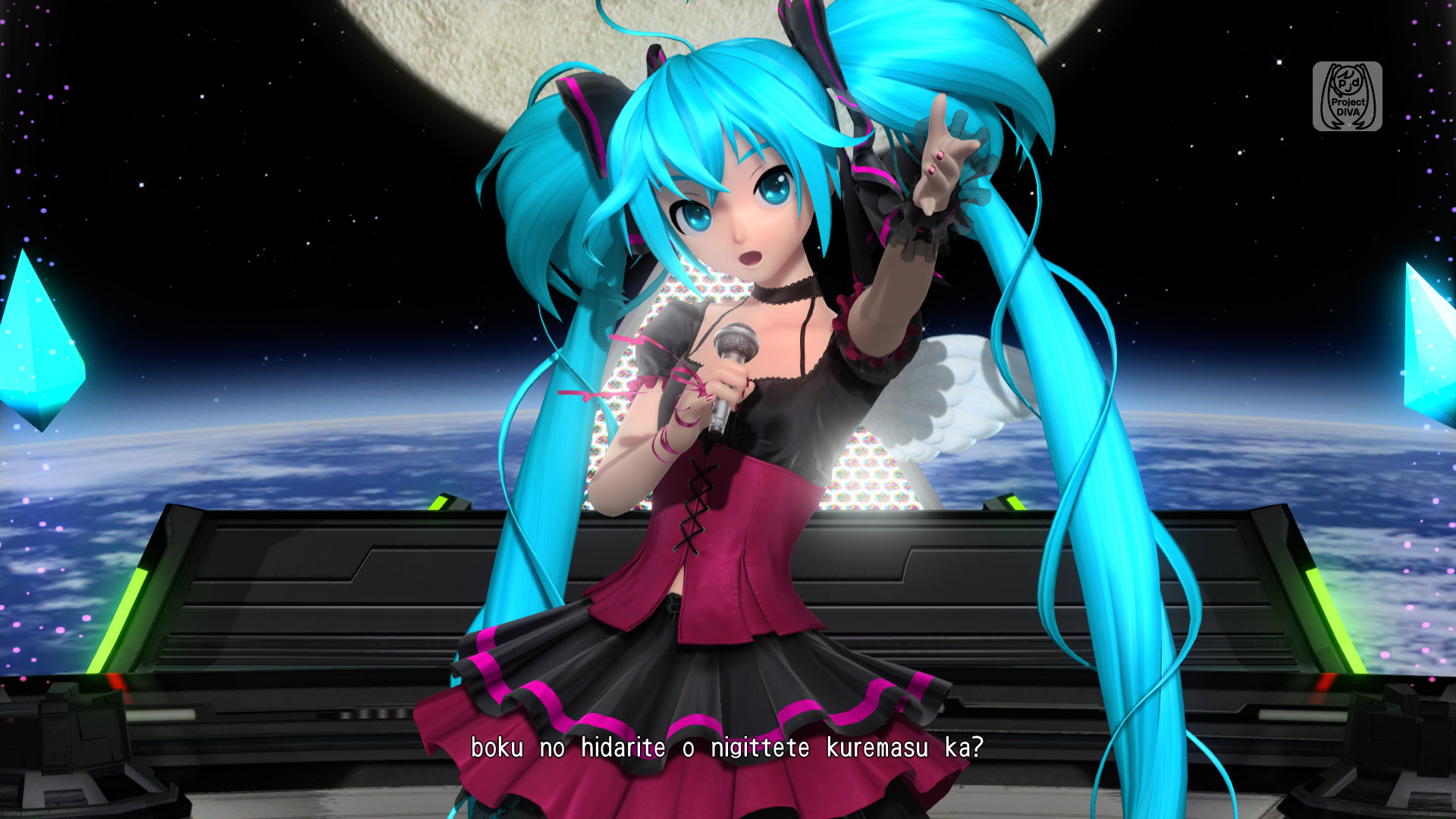
04 Hatsune Mikue: Project DIVA Future Tone

Hatsune Miku: Project DIVA Future Tone was the culmination of a love affair I’d had with Sega’s Vocaloid-focused rhythm game series since its debut in 2009. The original Project Diva mixed two things I adore—pressing buttons to a beat and virtual J-pop idols—and over the course of the next eight years, the series had some amazing highs (and frustrating lows) with each successive release. In Future Tone, I got a game that gave me pretty much everything I’d loved gameplay-wise from past releases mixed with the better framerate that consoles provide and a selection of music far beyond anything we’d gotten before. Future Tone is one of those kinds of games that I could still see myself playing 10 years from now, sitting alongside other beloved rhythm games in my heart.
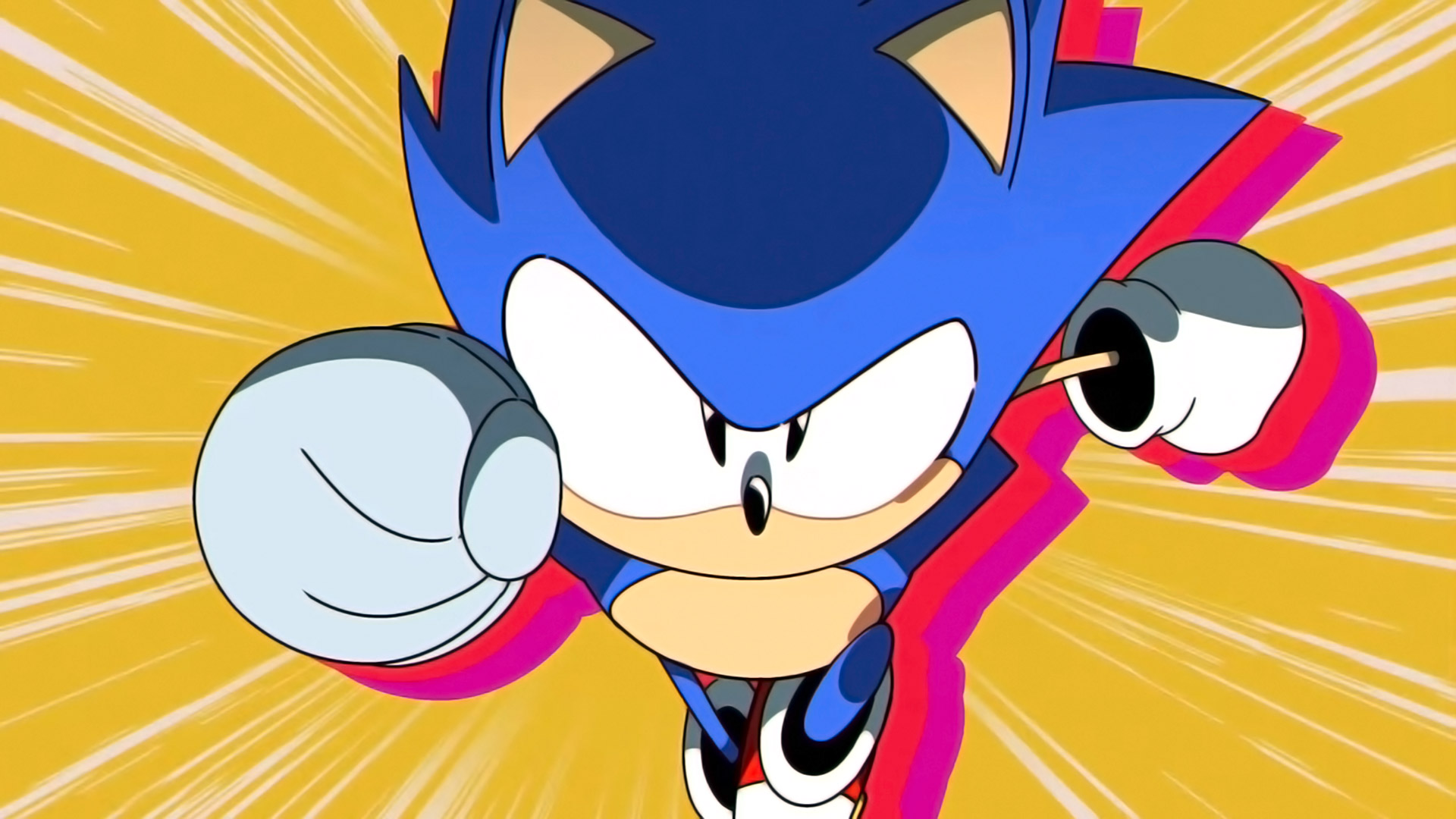
03 Sonic Mania

Had you told me a few years ago that I’d be putting a Sonic game into a list of my five favorite games for 2017, I’d have fallen onto the ground laughing. And yet, here we are, in a world where a ragtag team of Sonic fans has given us Sonic Mania, the best thing to happen to Sega’s spikey mascot in (console) generations. Sonic Mania at once feels both fresh yet familiar, like returning to a place you’ve long loved and discovering things there you somehow never noticed before. Nearly every element of the game works wonderfully, from the far more open (and interesting) stages, to its slavish devotion to proper Sonic physics, to a soundtrack that couldn’t be more perfect for our favorite hedgehog’s return to his past self. Congratulations Christian and crew, not only did you bring more life back to a franchise than its own creators might ever hope to do, but you’ve also—somehow—got me actually waiting for news on future Sonic games.
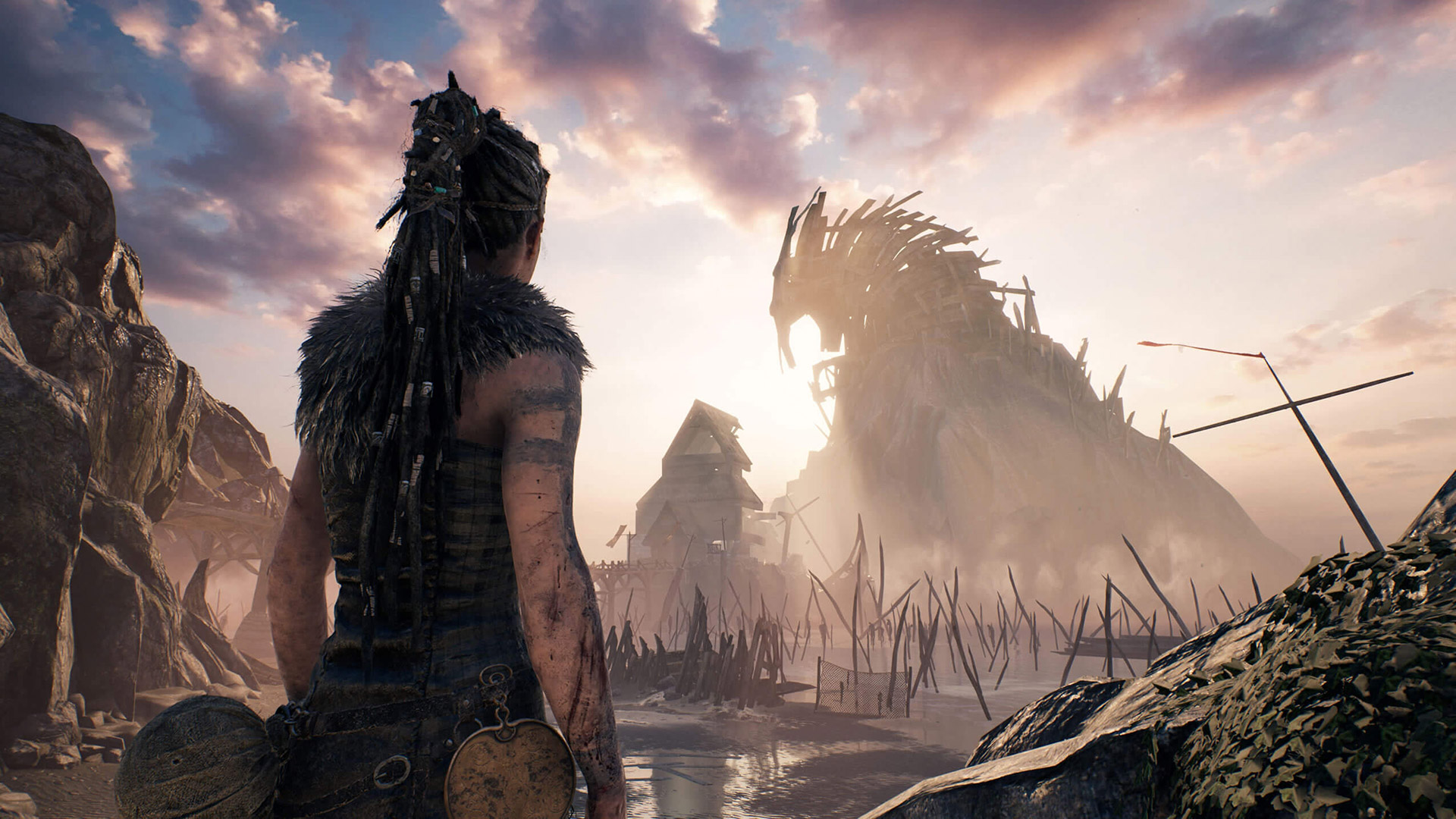
02 Hellblade: Senua’s Sacrifice

Hellblade was a game that I was outrageously curious yet terribly worried about. I’d loved Ninja Theory’s efforts in DmC: Devil May Cry—no matter what some longtime fans may have thought—and wanted to see what the team had up its sleeve next. The story of a young girl’s adventure through both a cruel landscape and an even crueler fight with mental illness seemed utterly compelling, and yet the studio’s decision on things such as camera placement and battle engine just filled me concern. Then, I got my hands on the final release—and boy oh boy did all of the pieces fall into place like they needed to. The daring camera and combat styles worked beautifully in practice, but far more than that, Senua grew into a compelling character on a level that few other gaming protagonists are ever able to achieve. At times brutal and unforgiving, at times tender and almost uncomfortably intimate, Hellblade: Senua’s Sacrifice may not have been the biggest or loudest game this year, but it was damn sure the most gripping.
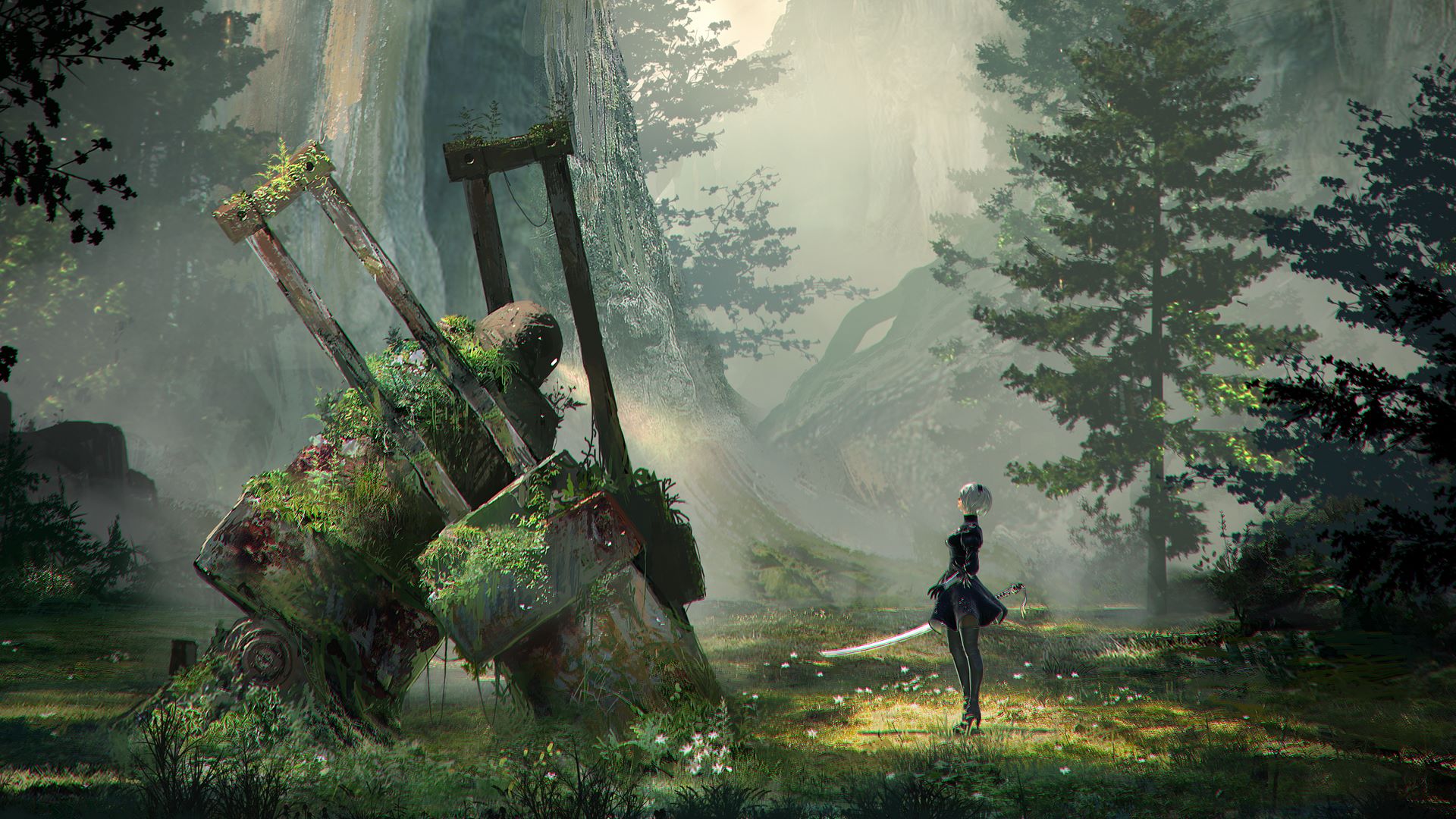
01 NieR: Automata

Hellblade could easily have taken the crown for me when it came to offering up a compelling, engrossing, emotional roller-coaster of a ride this year had it not been for a man named Yoko Taro and the team at Platinum Games. I went into NieR: Automata loving the concept but unimpressed with its demo, and later walked away feeling like I’d just played something truly special. It’d be easy for a cynical person to pick apart the adventure on various technical and design levels, but Automata is no one individual piece or part—it is the coming together of every element into a complete whole that reminds of of why we fall in love with games in the first place. 2B totally stole my heart as one of my favorite Japanese heroines since Kat (funny, then, that they’d see some official cross-promotional moments together), and helping her slice through her robotic foes just felt so satisfying and empowering—all done to the sounds of one of the most masterful soundtracks in recent memory. The best part? NieR: Automata wasn’t just the weirdo Japanese game that Mollie won’t shut up about but no one else has even heard of—the game found a following around the globe that it so rightly deserved. If 2016 was about the temptations of Western offerings for a Japanese game-loving weeaboo like me, NieR: Automata was a platinum-haired black-clad maiden extending her hand to show me the way back home.
EX In Memorium
Xbox Live Indie Games

While it’s possible that many of you will have no idea what the Xbox Live Indies Games program was, Microsoft’s effort to provide an open and community-managed way to get indie games onto the Xbox 360 was something I’ve cared deeply about since it launched in 2008. When the program began, indie games were still trying to find their footing outside of PCs, and the idea that any developer could just make a game and get it published onto a major console like the Xbox 360 seemed an unbelievable idea. Sure, over the years the service ended up loaded down with a lot of garbage, but it also played home to games such as I Made a Game With Zombies In It, Protect Me Knight, Techno Kitten Adventure, Breath of Death VII: The BeginningMimi in the Sky, Chiebura, LaserCat, and other fantastic releases—some of which will sadly disappear along with the service itself. The loss of PlayStation Mobile in 2015 was hard; the loss of Xbox Live Indies Games is heartbreaking.

EX The “I Love You, I Hate You” Award
Horror Games

If there was any singular thing in gaming that caused me the most confliction this year, it was horror games. 2017 started with the much-anticipated Resident Evil VII coming out, and when I finally got my hands on it, I found my biggest fear coming true: that I’d not enjoy it just like I’ve not enjoyed every other first-person attempt at horror that I’ve played. (The same crushing realization also hit me when I played the Korean-developed thriller White Day.) While fans new and old hailed it as the rebirth of the series, I see REVII as the catalyst through which a franchise I’ve loved dearly for twenty-one years will now become a party to which I’m no longer welcome. Then, we were given another horror game that went through a bit of a transformation—The Evil Within 2—and where I had been let down by its predecessor, I legitimately enjoyed the experience when I had zero expectations for doing so. How did 2017 put me into a position where I was utterly disappointed in Resident Evil yet quite satisfied with The Evil Within? Horror games are scary, man.
EX The “Don’t You Dare Call it Dead” Award
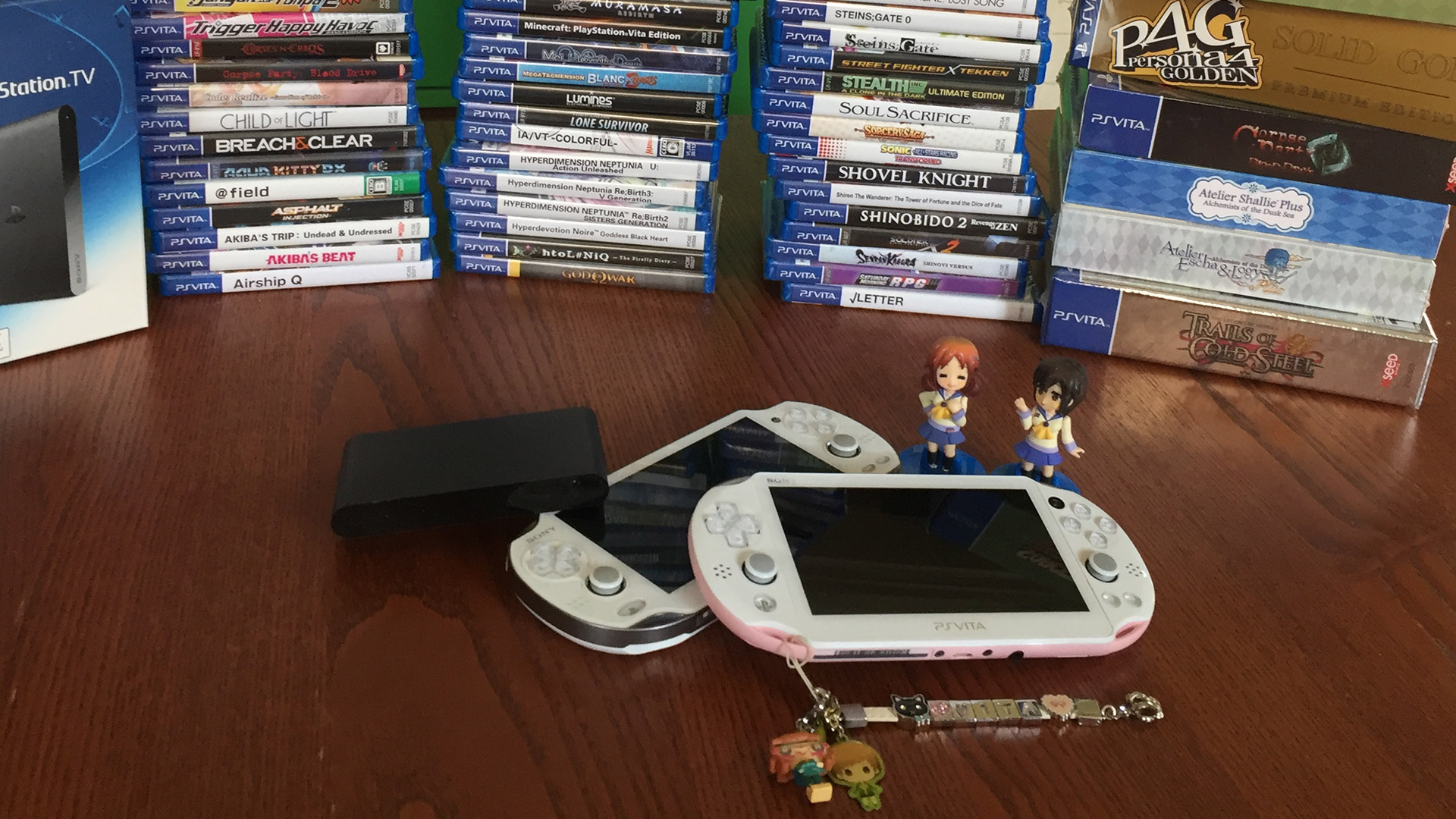
PlayStation Vita

Wait, didn’t I have this exact same award—and exact same winner—last year? That’s right bitches, but it’s back! Gaming vultures (especially you Switch people who think the system “deserves” everything) have been circling the Vita for years now, every month proclaiming the system dead so that they can pick its bones clean of games. And yet, the little handheld that even had its parent leave it to die in a gutter continued to soldier on in 2017. Here in North America, that “dead” system received over 150 games over the course of this year, and there’s still games being announced for 2018. As well, the platform continues to break new ground genre-wise, as it played host to releases such as Nurse Love Addiction—the first “Girls’ Love” game to ever drop in English for a console or handheld. Look, I’m not dumb—I know that the releases are going to be drying up next year, and that, unless a miracle happens, I won’t be able to repeat this award a third time in a row. Still, the PlayStation Vita provided those of us who still believed in it some fantastic handheld experiences all throughout this year, and I refuse to let it go quietly into the night.

The Evil Within 2 Review

When Bethesda revealed The Evil Within 2 at the pre-E3 press conference earlier this year, to say that I was surprised would be putting it mildly. Shinji Mikami’s return to the genre he helped pioneer in the Resident Evil series was highly anticipated by many around the world, but once the game was actually in players’ hands, reactions were extremely mixed. Some loved The Evil Within, some hated it, but the result was a compelling-yet-flawed game that seemed like it would be both the beginning and the end of trying to get a new franchise off the ground.

And yet, somehow, we’ve now gotten a sequel in The Evil Within 2.

We catch up to (now ex-detective) Sebastian Castellanos three years after the events of the first game, and he’s definitely the worse for wear. His experience at Beacon Mental Hospital left him a broken man, and since then his daughter Lily died when their family home burned down while his wife Myra subsequently left him. Things couldn’t seem worse when a familiar face walks back into his life: Juli Kidman, his former partner who was previously revealed to be working for the shadow organization Mobius. Kidman shocks Sebastian when she tells him that Lily isn’t actually dead—instead, she’s being used as the Core for an all-new STEM.

Or, at least, she was being used for that. Something has happened to Lily’s virtual self inside STEM, and Kidman needs help in finding out what’s going on and making sure the young girl is safe. So, once again, Sebastian must step into a world created by linking the consciousness of multiple people together, this time the Mobius-crafted “small town” of Union. Unsurprisingly, things on the inside are far worse than anyone on the outside could have predicted, and it’s up to Sebastian to do what he can to stop the simulation from completely collapsing before he can find and rescue his daughter.

Right from the beginning, The Evil Within 2 feels different from its predecessor. Those changes are small at first, whether they’re in the overall atmosphere, how the game feels, or the conversations taking place between characters, and I couldn’t shake the sense that the team had looked to infuse a little more Western gaming influence this time around.

And then, about an hour or so in, I hit Chapter 3—and every expectation I had needed to be re-evaluated. At that point, the game turned into an open-world horror experience, a far cry from the more focused and linear style of the original. In fact, there were moments that I swore I was playing some sort of later-era Silent Hill game because of how it felt to run around a small American town, exploring and searching and fighting demons, reminding me over and over of games like Silent Hill Downpour.

The Evil Within 2 has some really weird pacing, starting there with Chapter 3. Given my “I need to do everything” nature with horror games of that structure, I wouldn’t let myself move on until I had finished all of the side missions in that section of the game. (Plus, I was having a lot of fun simply exploring the town and seeing what awaited me around every corner.) By the time I finally cleared Chapter 3, I had been playing it for five-and-a-half hours—following that, Chapter 4 took me around 15 minutes. From there, the game wildly swings back and forth, sometimes putting you into situations that can be cleared in record time, while other moments dropping you back into open-world segments of Union.

I really thought I was going to hate The Evil Within 2 at first because of this, but there grew to be something comforting about that uncertainty. While it still falls into the trappings so many other survival horror games also succumb to, the Tango team took some interesting chances here with being more fluid in how things should unfold or how expectations should be met—and it was nice not being able to always predict what was going to happen next. For example, there were a few side missions I undertook where the conditions for what I had to do completely telegraphed that some big monster would show up and muck up the plans. In a lot of other games, that’s exactly what would have happened—but here, there was just calm. Going back to Downpour for a moment, as flawed as that game was, I appreciated how it allowed situations to be presented to the player where simply experiencing what was happening could be enough. There didn’t need to be a monster fight every time, or a jump scare always awaiting in the dark—it was okay to reveal that part of the world without needing to make it be overly dramatic. The Evil Within 2 lets itself have those same kinds of moments, and I’ll argue until the day that I die that horror games that let the player feel safe and comfortable more often end up having the stronger potential for real fear when the time is right.

There’s also—at least from how I understood things in my singular playthrough—a surprising amount of content that players can miss if they don’t go looking for it. I probably could have easily shaved 10 hours off of my 25 hours of playtime had I taken a more direct route through each chapter, but there’s a number of pretty important events or items I know I would have never encountered had I done that. While much of those optional pieces of the story come in the open-world segments, there’s also examples to be found in the game’s more linear chapters—and I give the dev team a lot of credit for being brave enough to make those things optional when it would have been easy to make them part of the required questlines. Even without those side stories, The Evil Within 2 feels like a far more focused and soundly structured game. I understand what the original was trying to accomplish by having location and story jumps feel chaotic, but it didn’t always work in execution; here, you always feel like you’re moving forward, and you know how you’re doing so and why.

At the same time, The Evil Within 2 also has its share of failings in this department—and although they’re not nearly as impactful as the positive aspects, they also can’t be overlooked. Just like my earlier comments about how it seemed as if I was playing a Silent Hill game instead of an Evil Within one, there were numerous other moments where I swore I was seeing or doing things that I’d encountered in other horror games—be it an enemy, or a location, or a situation, or a narrative beat. While that was a criticism I shared to some degree with The Evil Within, even for everything I thought it got wrong, it still had a level of personality and uniqueness to it that’s sadly been lost in many ways in the sequel.

What it’s gained may be far more important, however: characters. I mean, the original also had characters of course, but they weren’t developed anywhere close to as well as they are here. In my review for The Evil Within, I wrote of its protagonist, “Even after all the time I’d spent with him, I still knew little about Sebastian and cared about him even less.” That couldn’t be further from the truth this time around. I came out of The Evil Within 2 genuinely liking Sebastian as a character and caring for his plight, and the same could be said for nearly the entire supporting cast. While the game’s villains got the job done but weren’t overly exciting, everyone that Sebastian ran into added something tangible to the story, leaving me to genuinely worry about their fates. Giving that depth to the cast substantially raised the narrative of The Evil Within for me—not to mention some of the other horror games I’ve played over the years.

No matter the genre, all of those elements usually succeed or fail depending on the gameplay, and this was another area in which I felt conflicted on The Evil Within 2 at first. I’ve honestly become a little mixed on the proliferation of stealth in horror games, both in the god-awful trend of first-person titles where you’ve got zero recourse for fighting back, or third-person adventures where you’re given a variety of guns but only a limited amount of ammo. Not to name-drop Silent Hill yet again, but that series showed you could have horror games where the player felt at a disadvantage and firearms weren’t always a problem solver, but without making players spend half of the game crouched or hidden behind cover.

The Evil Within 2 definitely does the latter, but I came to terms with that fact over the course of the game. At first, I was totally frustrated with any sort of enemy encounters, because the monsters here tend to be bullet (and damage period) sponges, and I’m not sure the last time I’ve seen a character move slower than this version of Sebastian (those three years must have been hell on his body). While his default movement speed is given no upgrades through the course of the game—seriously Tango Gameworks, what the hell—other unlockable abilities for Sebastian make being less Leon S. Kennedy and more Solid Snake a viable, and actually fun, option for dispatching enemies. When you need to dip into your ammo supplies and engage in more direct combat, however, that frustration can kick back in as you fight against Sebastian’s lumbering nature and the game’s sometimes questionable hit tracking. By The Evil Within’s final hour, both the gunplay and the focus on stealth were elements that I’d come to be (mostly) comfortable with, and neither was negatively affecting my enjoyment of the game. Still, absolutely, I think Sebastian should move faster, weapons should have better accuracy along with more potency, and the reliance on stealth should be toned down a few notches.

At the end of the day, I think The Evil Within 2 is a far better, much more focused game than its predecessor, from execution to storyline to gameplay to characters. In gaining those improvements, however, it’s also lost some of its charm. This is a legitimately good survival horror experience, and I don’t disagree with most of the changes it’s undergone in the hopes that it would be more welcoming and enjoyable for a wider audience of fans. Still, it’s kind of like seeing your eccentric artsy best friend get a haircut, buy a new wardrobe, and find a more “respectable” way of making a living. In the end, you know the change is better for them and for those around them, but you kind of miss the quirkiness they once brought to your life.

Blue Reflection Review

When I think of “staple” genres that exist in the world of Japanese anime, one that instantly comes to mind for me is the magical girl story. From groundbreaking early-era releases like Creamy Mami and Fancy Lala, to later big-name franchises like Sailor Moon and Cardcaptor Sakura, to more recent (and daring) looks at the idea like Puella Magi Madoka Magica, countless manga and DVD volumes have been filled over the years with girls (either on their own or as a team) being granted the power to save the world from evil—and doing so while looking stylish as hell in the process.

Gust’s latest game, Blue Reflection, is their own spin on that beloved idea. We catch up to our main heroine Hinako Shirai as she’s about to begin attending Hoshinomiya High School after an extended absence. Hinako’s life seemed on the road to stardom, as she had grown into a ballet prodigy destined to win a prestigious competition—until she injured herself bad enough that she could no longer dance. With her one love in life gone, Hinako disappeared from society for a while to deal with the pain. Now, as she returns, many parts of her have yet to heal—not just those physical, but also mental and emotional.

Nothing could have prepared her for her first day at school, however. Upon arriving at Hoshinomiya, she runs into Sanae, a former classmate of hers who had been wondering what happened to Hinako. As the two girls talk, Sanae suddenly beings to go crazy—and, next thing she knows, Hinako is whisked away to a beautiful fantasy world in a body (and clothing) not quite her own. Our heroine comes to meet a strange pair of sisters named Yuzu and Lime who explain that she is a Reflector, a type of magical girl who has the power to enter a dimension of humanity’s collective consciousness called the Common. There, Hinako must rescue the emotional Fragments of the other girls at her school, both to help them in their own personal struggles, and to strengthen herself in order to defend the real world against the coming attacks of beings known as Sephiroth.

Thus, both Hinako’s new life at Hoshinomiya and the game proper kick off. In concept, Blue Reflection could be described as sort of Persona-lite. At school, Hinako can talk to other students, craft friendships with a group of twelve other girls (who grow in importance as the story progresses), complete missions, delve into the Common to find Fragments and battle monsters, or partake in a small amount of activities at home every night.

Unfortunately, Blue Reflection cannot begin to compare to the latest batch of Persona titles when it comes to depth—and that is the game’s single biggest flaw. Relationship-building is minimal once you meet each friend, as hanging out means either a short conversation with a choice that may advance the friendship, or travelling to a random place and watching a cutscene unfold with zero interaction. Completing missions for the other girls at school usually involves solving their emotional problems by finding and purifying their Fragments, and they can get somewhat tedious due to the small amount of variety found in them (typically either killing X amount of a particular enemy or finding Y amount of item orbs). At-home choices like studying for a test, making a lunch date for the next day, or relaxing in a nighttime bath seem to serve no purpose in the bigger picture—they exist more to give players the sense of Hinako living a proper everyday life.

On a gameplay level, combat is where Blue Reflection shows the most depth, and I’ll say that I probably enjoyed the technical aspects of battles here more than I have in any of Gust’s modern-era Atelier games. Things start simple at first—you see an enemy, you attack and kill it—but the complexity grows at a natural and enjoyable pace. While you’re waiting for your next character’s turn, you can do things like burn “Ether” you’ve collected to restore HP/MP, or speed up when your next turns will come while slowing turns for the enemy. With enough Ether, you also have options like going into Overdrive, where Hinako, Yuzu, or Lime can then perform multiple actions on the same turn.

As well, as you solve the deeper issues of the game’s twelve main NPCs, you can bring them in as supporters for key fights, where each will perform a technique specific to their individual personalities. Those girls also assist in battles in another way: through their Fragments. Every time the bond between Hinako and another girl grows, you’ll gain a new Fragment of their emotion, each of which gives a particular type of boost when slotted into one of the main trio’s skills. (For example, one of Sanae’s Fragments will heal a character when they use the particular skill that Fragment is attached to.) In fact, deepening relationships is the only way Hinako, Yuzu, and Lime can level up—no amount of grinding in the Common will get you any closer to your next boost in stats.

I like a lot of aspects of Blue Reflection’s combat, especially those last two points. You’ll always have way more skills and skill slots than Fragments, so knowing what to use where—and which Fragments to buff once that ability opens up—is a nice mix of strategy and customization. I’m also a sucker for games that take a different approach to character progression beyond simple XP, and Blue Reflection makes me think back to other games like Chrono Cross, where I could just play at whatever pace I wanted and not worry if I’d be too low- or too high-leveled. Sadly, combat here is easier than it could have been, no doubt because this simply isn’t meant to be a knock-down-drag-out kind of RPG. So, if that’s what you’re looking for, definitely plan on bumping the game’s combat difficulty up to hard in order to offset that somewhat.

Blue Reflection is the kind of game that tempts you as a reviewer to knock it for its faults, give in a middling score, and call it a day—but doing that would make me feel like a horrible person to some degree. Yes, a chunk of what Gust attempted here either didn’t go far enough or came out a bit underwhelming, but there’s also some legitimate wonderfulness waiting below that unpolished surface. While this is the story of three magical girls trying to fight back an approaching evil, much more than that it’s the story of a regular everyday girl trying to fit in at her school and make those around her happy. Blue Reflection is far more engrossing in its quieter moments, when you’re learning about the other students at Hoshinomiya, who they are, and what problems they’ve buried deep inside themselves. I always cared about the other girls as I set out to find their Fragments, and I came to like every one of them as they integrated themselves deeper into my everyday life—including the ones I was certain I’d never get along with.

Blue Reflection reminds me so much of Japanese shoujo (girls) comics, even down to the way that each chapter is structured and the progression of the overall narrative. As a longtime shoujo manga fan, I understand why people may not like the stuff: stories can feel overly dramatic yet simplistic, characters can come off like stereotypes, and it can seem like more time was spent on drawing pretty pictures than coming up with ways to hold a wider audience’s attention. That isn’t actually the case with a lot of what I’ve read, however, and there’s more to it all if you just open your heart to what the story is trying to do—and the same can be said for Blue Reflection. That shoujo manga feel also heavily comes across in the game’s visuals, which are some of the most impressive I’ve ever seen come out of Gust. Now, let me be clear: on a technical level, I still think the developer is sorely behind many other teams in putting together anything I’d truly call impressive. Visually, however, the manga style they’ve gone with here works so perfectly, giving everything a softness and beauty like hand-drawn artwork that you don’t see a lot in other titles. Also, while they won’t put any fear into the folks at Atlus, user interface and menus are also extremely attractive. Its that blend of simplicity and style that I’m always so fond of.

Honestly, I’ve no clue how Blue Reflection ever got localized. It baffles me that Koei Tecmo even decided to take a chance on this one in the West, and while I’d love to complain about the missing Vita version or the at-times messy translations, the fact that this even exists in English—and in physical retail form, no less!—is kind of a miracle. This is a game that will definitely not be up the alley of a whole lot of players out there, and even for those who do like the idea of what’s essentially an interactive girls’ comic in RPG form, its weaknesses may be off putting at times. And yet, for that niche of people to whom Blue Reflection seems tailor-made, I encourage you to at least give it a chance at some point. I could write 1500 more words going into minute detail on everything I’d change or fix about what I played, but I would still be just as glad that I had played it rather than not.

Danganronpa V3: Killing Harmony Review

Three and a half years ago, I fell in love with Danganronpa: Trigger Happy Havoc, a quirky Japanese Vita game about students being forced to kill one another. I’d first heard about it from its PlayStation Portable release years before, and found that not only had the begging and pleading for the game to be localized been worth it, but that it took the top spot on my list of favorite games for the year.

So, Danganronpa V3: Killing Harmony is a bittersweet release for me. To basically spoil my review—since I’m going to try hard not to spoil the story itself—this is a game that’s both a heartfelt attempt to breathe new life into the Danganronpa franchise, and a third entry that I think really needs to be the last.

As we’ve learned from two previous chapters, a side project game, and a TV anime series, Danganronpa revolves around a killing game where sixteen students are given an ultimatum by a bizarre half-black half-white bear named Monokuma: the only way to regain your freedom is to kill one of your fellow captives and get away with it. Doing so won’t be easy, though. Every time someone is killed, the other students set out to investigate and hold a class trial, and if you’re found out as the murderer, then you’ll be executed as well. The familiar elements of past Danganronpas begins to play out here. Our latest group initially tries to come together as one cohesive unit, that unity slowly gets chipped away, and finally a body turns up to kick things off proper.

In Danganronpa V3, however, we get a few twists on that familiarity right from the start. One is the game’s protagonists, Kaede Akamatsu—who exists as the series’ first female protagonist outside of the side project Danganronpa Another Episode: Ultra Despair Girls. We also meet Monokuma’s “children,” the Monokubs, a quintet of brightly-colored bears each with their own very distinct personalities. These set us down a path during the game’s prologue and first chapter that feels like what you might expect from the third outing for a series like this: similar to what we’ve had before but with a few natural tweaks.

Then, things happen. A major event occurs in the story right there in Chapter 1, something that came as an emotional gut-punch since I didn’t know it was coming. That event is combined with another surprising development, one that left me not really sure how things were going to progress. At this point, I think it’s hard for Danganronpa to be surprising—that’s hard for any series whose origin feels extremely different and special—but Danganronpa V3 legitimately threw me for a loop, and I loved it.

From there, the narrative was a roller-coaster of amazing highs and unfortunate lows. When Danganronpa V3 is trying its hardest to betray the player and their expectations, the game is at its finest. While even saying this may be too much, as an example, there’s a point at which it feels like the killing game itself is beginning to fall apart, and for me it was one of the single most enthralling moments that has existed in Danganronpa. Previous killing games have been about a group of students who desperately try to gain the high ground but can’t, and a sadistic mastermind who was in control at every moment. What happens, however, if even the person who’s running the show is no longer determining the fate of its participants? It was a seriously freaky thing to consider.

The problem is, I could feel the dev team pulling back at times—and that’s a shame. Some of the ideas introduced to mix things up played out beautifully, while others weren’t given the chance to have the full effect that they could have. Some story beats fell back into a level of predictability that contradicted the overall theme of growing chaos, while others were given the room they needed only to be lessened later on. Danganronpa V3 is a game at war with itself, at once trying to please some fans by legitimately finding its own way while also not disappointing others by straying too far into uncharted territory.

Making their way through all of those twists and turns is Danganronpa V3’s cast, a pretty strong line-up of colorful characters in a franchise that’s already seen plenty of such examples. It’s hard to supplant the original 16 students for me since they were the first class I experienced an emotional journey with, but the V3 team really dug their way into my heart. There wasn’t a character I didn’t like here—including the ones I was sure I wouldn’t care about—and by the end, each felt like an irreplaceable piece of the story. Hell, I even ended up liking the Monokubs—and I was certain that they were going to be a huge mark on the game after dealing with them during the first hour. (I even messaged a friend who had played the Japanese version to ask if I’d ever be able to stand them, only to be met with a “no comment” in reply.)

Unfortunately, there’s something far more sinister than Monokuma threatening Danganronpa V3’s cast: the script and localization. As someone who has been playing translated Japanese games since the days of the NES, I’ve experienced countless terrible localizations over the years to the point that I’ve come to not even notice such things at times. However, I found myself unable to ignore V3’s failings in this regard on at least a few occasions. As tends to be the case with far too many Japanese games that are heavily storyline-focused, at least one-third of the dialog probably could have been cut out with no immense hit to the narrative, as conversations are at times filled with over-explanation, repetition of already-discussed points, or conversation that does nothing to progress or enrich any storyline beat, character, or investigation situation. There’s also times where the localization feels way, way too literal, resulting in chunks of dialog feeling stilted and almost robotic.

Here’s a quick snippet as an example of how conversations can flow, to show how unnatural the script can read at times. To prevent spoiling anything in the story, I’ve changed key words and terms that were used, but the sentence structure of every line has been completely retained:

Ray: It’s about the relaunched EGMNOW that we were browsing.

Josh: What about EGMNOW?

Mollie: There’s no doubt that the 7 of us are editors at EGMNOW.

Mollie: We heard it had been relaunched, and was accepting applications for talented editors again…

Mollie: And so, we got jobs at the brand-new EGMNOW.

Josh: Since EGMNOW is large, we are all in separate divisions…

The truth is, neither the script nor the localization break the game in the end. My frustrations with how things translated into English were intense, but occasional. And, given that it’s obvious from the start that a game like Danganronpa V3 is going to be overly wordy, it didn’t come as a shock when it was. Both of those things could and should be better on both sides of the ocean, though, especially for a franchise like this that deserves it. (I also take some issue with the way NIS America localized the character Gonta Gokuhara, but I didn’t play using the Japanese vocals for long enough to do a serious amount of comparisons.)

Of course, buried under all of the story and characters and lengthy conversations is some actual gameplay. Like its predecessors, most of the “game” in Danganronpa V3 shows up during the class trials in the way of arguments, testimonials, and contemplation. Once again, key portions of the trial will play out as character statements show up as floating text on the screen, where you’ll need to shoot “truth bullets” (aka facts or evidence) you’ve collected during the pre-trial investigation at statements in order to prove they’re truths or lies—or to perjure yourself, a new option in V3, in order to swing the trial in a different direction. Two of the biggest changes in these sections are both great additions: Mass Panic Debates, where three characters all talk over each other and you need to determine which to pay attention to, and the Debate Scrum, where the students on each side of an issue face off against each other, and you’ve got to match up the proper counter-points to the other side’s statements.

Deducing what truth bullet to use when remains a little frustrating at times, but this bulk of the class trials is also still as fun as ever. Detective-type games have been and probably will always be hard to pull off, because you have to provide enough hand-holding for those players who just aren’t catching on to key concepts or possible scenarios, while building in the flexibility required for players who have already gotten things figured out. There’s no way to truly make it work smoothly for all players without hugely complex A.I. routines that can literally rewrite a story’s progression on the fly, but the Danganronpa series remains one of my favorite attempts at crafting such a complex type of game. Mini games are also still around for those times when you need a moment to put the pieces of the trial together in your head, such as the returning Mind Mine and Hangman’s Gambit (the latter to the delight of not a single human being), or the all-new Psyche Taxi, where you drive down a road Outrun-style collecting crystals that reveal trial-related questions to be answered.

It was in those mini games that I started to feel like I might be done with Danganronpa. They’re a tiny part of the overall experience when you consider how much time you spend playing them versus doing literally anything else, but they existed as a symbol to me of how the core concepts that once built this series might not have the longevity that I hoped. Along a path of daring directions and bombastic revelations, Danganronpa V3 also seems to quietly be putting the piece in place for this to be a resolution to what’s come before, until that goal becomes (in my mind) completely obvious in the game’s final act. Maybe it’s not just me who felt that Danganronpa had done most of what it set out to do—maybe the members of the development staff came to that conclusion as well.

I know that some of you will read that and think I’m saying that Danganronpa V3: Killing Harmony was a bad game, and that’s not what I’m saying, because it wasn’t. I think it’s a solid new chapter in what’s been a pretty fantastic series. It delivered twists and surprises that really did catch me off guard at times, I appreciated most of the new gameplay elements outside of the mini games, and I came to like the cast much more than I was expecting to given their seemingly weaker overall designs.

And yet, the entire time I played, I just couldn’t shake the feeling that both the game and I were simply going through the motions a little too often—and that’s not what I want from Danganronpa on either side. When I first fell in love with Danganronpa: Trigger Happy Havoc, I did so because there was a fiery passion burning inside both of us, and it made me feel things as a gamer that I hadn’t felt in a long time. Now, being honest with myself, I don’t want to see something I’ve come to love become a long-past-its-prime shell of its former self. Spike Chunsoft’s sadistically satisfying series either needs to greatly evolve for its next chapter, or it needs to gracefully head off to find its own freedom—and if the latter is what happens, then Danganronpa V3 was a most fitting way to say goodbye to this world and its dual-toned host.

Marvel vs. Capcom: Infinite Review

Back in the heyday of sprite-based 2D fighters, I remember friends playing what I thought at the time was a really bizarre Sega Saturn release: X-Men: Children of the Atom. As someone who had no care or concern for the Marvel universe in those days, I simply couldn’t understand why—of all things—Capcom would pick that to base a new fighting game around. However, things would soon get even weirder, when a few years later the paths of those two companies properly crossed in X-Men vs. Street Fighter.

Seeing characters like Wolverine and Ryu face off against one another seemed like the stupidest idea I could think of, but over time I’d end up bearing witness to many other ridiculous-on-paper gaming crossovers. (I’m especially looking at you Kingdom Hearts.) Something about those two worlds clashing clicked with a whole lot of gamers, and just over 20 years later, we’ve now been given the franchise’s latest chapter.

Admitted, it hasn’t been an easy road to this week’s release. While the game’s reveal during Sony’s PSX keynote last December caused huge excitement both in the fighting game community and outside it as well, Marvel vs. Capcom: Infinite has been as underwhelming as it’s been impressive in every reveal or announcement since.

There are two major points that have caused feelings of trepidation, and let me start with the bigger in terms of how it affects gameplay: Marvel vs. Capcom: Infinite’s launch cast of 30 characters. To be fair numbers-wise, that’s honestly not that far off from Ultimate Marvel vs. Capcom 3’s final selection of 50 choices, especially when considering that rosters often reset to smaller numbers with the first version of any major new iteration (MvC3 began at 36). The problem is, those thirty boxes are filled with far too many familiar faces given the six years we’ve been waiting for this game. Excluding what we can expect from DLC, only five members of the roster are completely new to the Marvel vs. Capcom series, while 24 were last seen in Ultimate Marvel vs. Capcom 3.

Curious, I compared that to how Street Fighter V faired at launch. Before any DLC characters, there were four totally new additions, four that were returning after some amount of absence, and eight that we’d previously seen in Street Fighter IV—or half of its roster versus 83% of Marvel vs. Capcom: Infinite’s. Whereas SFV’s character selection felt fresh, here it can seem like we’ve experienced all of this already. Honestly, a lot of Marvel choices probably have to be here, either because of who is popular or who’s currently being pushed in their comics or movies. (Which then, of course, leads to the conversation on those that deserve to be here but who might never arrive due to Marvel not wanting them promoted.) The Capcom side, however, feels especially lazy. This version of Bionic Commando’s Nathan Spencer hasn’t been relevant since 2009—why is he still here? Did we really need two Ghosts ‘n Goblins inclusions at this point? And seriously Capcom, why are you torturing me by forcing meathead Chris Redfield on the world yet again—especially when you just had a brand new Resident Evil that has fresh faces who could provide for a unique twist? If we were a few DLC batches in and already had a fleshed-out roster, that’d be one thing, but the Capcom side especially comes off like this was a lower-budgeted project that had to re-use previously-created work as much as possible.

I know hardcore Marvel fans will argue the superiority of “their” universe of iconic heroes and villains, but as someone who has loved Capcom’s characters since the days of the NES, there are so many great choices from the company’s long history that I would have loved to have seen here. Let me clarify, though—the Marvel side doesn’t fully escape my ire. There’s a level of inconsistency to the representation of those characters that bugged me a bit, as if there were three different schools of design at play: movies Marvel, comics Marvel, and Capcom Marvel. Iron Man couldn’t be any closer to mimicking Robert Downey Jr. unless you got the man himself, yet Thor comes off like an awkward mix of old and new representations—and then you’ve got heroes like Captain America and Spider-Man who are bulked up to almost laughable levels considering their modern-era interpretations. (And, really, there’s no reason that there couldn’t have been a better character selection on that side too—even if the X-men and Doctor Doom aren’t on the table at the moment.)

Of course, what doesn’t help those designs any is the game’s visual style. Very reminiscent of King of Fighters XIV before its launch, people all across the internet have been pretty brutal when talking about how Marvel vs. Capcom: Infinite looks. While some elements—like Chun-Li’s previous and rather unfortunate face—were fixed by launch, my secret hope that Capcom was holding a fancy new visual filter close to their chest sadly wasn’t to be. It’s not really that the game is ugly, because it isn’t—it’s just terribly boring. After the more cartoony visual style that Marvel vs. Capcom 3 received, MvC: Infinite looks shockingly plain, more like some throw-away Marvel free-to-play mobile game than a major title from one of the masters of fighting game graphics.

In fact, almost everything here is extremely average visually, with UI and menus that more resemble placeholders than a finished product, and backgrounds that serve the storyline but don’t live up to the more lively locations of previous outings. It really doesn’t help that, in between when MvC: Infinite was announced and when it was released, a little game called Dragon Ball FighterZ would come along. I’m not sure there’s been a wider gap between two directly-competing games in how they present beloved characters popularized in comics and animation, and that comparison makes what Capcom has given us here look even more embarrassing.

The thing is, those two elements didn’t end up being as important as I expected them to be. Yes, the launch roster is disappointing, but there have been plenty of great fighters over time with that exact problem—and the cast selection here isn’t outright terrible. I’ll never think the visuals are anywhere near what they should have been, but again like The King of Fighters XIV, they start to fade away once you’re in the heat of battle.

And that, really, is where Marvel vs. Capcom: Infinite shines. As someone who’s never been a super fan of this franchise, my still admittedly brief pre- and post-launch playing has won me over. The craziness that the series has been known for is still alive and well here, but it’s done in a way that does legitimately feel friendlier to dig into. I know that’s always a sensitive subject—leading to fears of “dumbing down,” especially given Capcom has made decisions such as changing a number of dragon punch motions to down-down motions instead—but I think (hope?) that it’s a good compromise between something that’ll be satisfying long-term to the more hardcore and pro players, yet also be welcoming to those who can find fighting games too intimidating to even take a chance. In saying that, I think back to Marvel vs. Capcom 2—my personal favorite from the franchise—and how I’d play that with friends who were usually not the fighting game type. That was a perfect example of a game that could walk between both of those worlds, and we need more games like that, not less. (Of course, I say that while knowing full well how easy it is for pros to find ways to “break” games and make them less newbie-friendly over time, so I might be eating those words later.)

The biggest and most obvious change present in Marvel vs. Capcom: Infinite are the Infinity Stones, which serve as one big, sweeping replacement for previous elements like X-Factor and assists. It’s easy to get flashbacks of Street Fighter X Tekken’s Gems when talking about them, but they’re really two very different things. First, there will be no Infinity Gems sold as DLC—thankfully—and as opposed to the wide variety of combinations you could have depending on which Gems you and your opponent used, here there are six set Stones where you instantly know what to expect from each. Given that teams are now two characters instead of three, and assists (and assist types) no longer come into play, the Infinity Stones are a way to introduce a bit of variety and “spice” to matches while still lessening the elements that players need to worry over and manage. So far, I like them—and at least as of now, I’m not worried about them causing the game to become an unplayable mess anytime down the road.

Of course, it’s hard to fully know what a fighting game will evolve into a year after release, let alone a few months or weeks later—a point that always makes them so challenging to review—but I really do have a good feeling about the core of Marvel vs. Capcom: Infinite. At the end of the day, this early in the game, you just have to ask yourself these questions: is it fun to play? When I lose, do I want to dust myself off and try again? Does the experience offer me something I can’t get from any other fighting games? Do I think I could put it down for a few weeks and still have interest in coming back to it later? For me, right now, all of those answers are a solid yes.

What’s also solid is the rest of the package in terms of modes. I had no problem with launch Street Fighter V—the absence of single-player content bothers me little in most fighting games—but I’m glad to see Marvel vs. Capcom: Infinite be better off on that side of things for those who do care. Yes, there is an arcade mode here, along with a narrative-driven story mode that is humorous at times but overall kinda mediocre. The expected local versus options (CPU or human) are included, as are your standard Capcom training mode, missions both general and character-specific, and a gallery that features artwork, audio, and videos as you unlock them.

Online is where things get a bit more interesting for me. Marvel vs. Capcom: Infinite offers up a new type of lobby system that, offhand, I don’t remember seeing before in any Capcom games. After entering a lobby, there are four virtual “stations” where you can jump into fights, and players not currently active in a match can queue up at any of the stations to either wait their turn or simply sit back and spectate. It isn’t as complex as the crazy stuff we’ve seen Arc System Works or some other companies turn out, but it’s a nice option that should come to Street Fighter V as well. There’s also the Beginner’s League, a place for new or less-skilled players to compete with other such players without getting totally steamrolled by higher-level opponents while they’re still getting the hang of the game.

Options like this are really important in releases such as fighting games, because it can be so easy for players to get instantly stomped by pro-level challenges and lose all drive to keep playing. The downside to the game’s online, conversely, is that SFV offered up some niceties that could (and should) have also been included here. First, you can’t register a Fighter ID like in Street Fighter, which was a hugely-appreciated option for many (including myself). Profile cards also feel lacking, and there’s not enough presentation of players stats for my liking. Thankfully, in playing online in the few days since the game’s launch, I’ve had only the occasional laggy match here and there—so, so far, the netcode seems to be holding up just fine.

Marvel vs. Capcom: Infinite has a lot of elements working against it. It comes off like an under-funded project that desperately needed more of a budget, it’s got one of the worst visual design choices I’ve seen in a game on this level in some time, Capcom doesn’t deserve to get off without harsh criticism over the lackluster launch roster (no matter the reasoning), and I can’t shake the feeling that some of the goofy-yet-charming fun of previous games has been stripped away this time around because Marvel is now actually paying attention and wants it to “align to current branding” or some other nonsense like that.

However, the biggest point that I need to stress is this: what’s more important than what Marvel vs. Capcom: Infinite got wrong is what it got right, and I think the positives here outweigh the negatives enough to make some of those failures forgivable. It’s easy to go into a review like this and just knock off “x” amount of points from the score for this thing or that thing, but reviews are far more complicated and nuanced than just a point-by-point breakdown—and dragging a legitimately good fighting game down too far because of elements (like visuals) that don’t legitimately harm its gameplay feels a bit pedantic. Yes, the game will no doubt remain ugly throughout its lifetime—but as the roster fills out and players find more subtleties of its gameplay, the foundation that Capcom has built in Marvel vs. Capcom: Infinite looks to give us a pretty great new chapter of a still-kinda-ridiculous fighting game series for years to come.

Sonic Mania Review

Long before gamers argued over the internet about whether the most powerful console around has “PlayStation” or “Xbox” in its name, schoolyard battles were waged between those who pledged their allegiance to Sega or Nintendo. When it came time for the 16-bit era, my loyalty was squarely with the Genesis, and nothing the Super NES could offer would change my mind. The one thing we were really missing on the Genesis, though, was a proper mascot—and then Sonic the Hedgehog came along. Years prior to him spawning a number of terrible games (and questionable fandom circles), Sonic was daring, he was fast, and he was way cooler than that mushroom-eating plumber guy. Unfortunately, those terrible games were indeed looming like dark clouds on the horizon, and once Sonic’s 16-bit glory days were over, so too was most of my love for him and his adventures.

While he’s gotten a handful of “not bad” games over the years, Sonic has longed for—and, more importantly, deserved—a return to form. While I don’t mean to personally insult all of the fine people working for the developer, I don’t think Sega has much of a clue as to what to do with the most popular and influential franchise they’ve ever created, and even their attempt to revive Sonic’s origins in Sonic the Hedgehog 4 was an awkward mess that just helped prove that point. When Sega once against promised last year that they’d be “going back” to Sonic’s roots for the latest game in the franchise, it seemed like yet another chance to let us down.

This time, however, would be different.

Handing the fate of your property over to fans is an utterly terrible idea in most cases when it comes to entertainment, but Christian Whitehead is no ordinary fan. Christian—otherwise known as The Taxman—was a creator of Sonic fangames who then created the Retro Engine, a platform upon which past Sonic games could be re-created with additional features, proper widescreen support, and more. Using the Retro Engine, Christian worked with Sega to re-release Sonic CD, Sonic the Hedgehog, and Sonic the Hedgehog 2 on various platforms—eventually leading Sega to then entrust Christian, along with developers Headcannon (who have their own history with Sonic) and PagodaWest Games, to work on a new project called Sonic Mania.

It’s important that you at least understand some of the details in what lead up to Sonic Mania’s existence, because it helps explain just how daring of a release this is. While Sega isn’t pinning Sonic’s entire near-future on a game created to be an overload of retro nostalgia—that’ll be the job of the more mainstream Sonic Forces when it hits later this year—it’s still shocking to see something like this be an official, canonical part of the series.

Sonic Mania exists to satisfy two questions: what could a team who cares passionately about the Sonic of yesteryear put together in the modern era, and what would Sonic the Hedgehog have been like had it continued on in 2D on the Sega Saturn? (Anyone saying this would’ve been a Genesis game doesn’t actually remember what the Genesis hardware was capable of.) The answer to both is a game that looks, feels, and plays like the 16-bit Sonic titles—just a little bit tighter in the controls, a little more precise, a little more polished. Jumping into Sonic Mania was like riding a bicycle; I haven’t played any of the 2D releases in years, and yet it felt like I’d never stopped playing moments after picking up the controller.

Part of that has to do with the fact that Sonic Mania is about bringing together a variety of elements from the 16-bit Sonic games and mixing them with new ideas, and that’s definitely true of its gameplay. New additions like the drop dash (which lets you go rolling off at high speed the moment you hit the ground) blend together seamlessly with returning power-ups like Sonic 3’s elemental shields (which now offer additional environmental functions) and Knuckles’ Chaotix’s Combine Ring. The result is a game that truly feels like what it’s supposed to be: the combining of years of gameplay into something that now stands as probably the best-playing Sonic game to date.

Of course, a good Sonic game is nothing without great worlds in which to make use of all of his abilities, and here Sonic Mania especially shines. Eight previously-seen stages arrive together with four completely new ones, but all of those that are returning—from Sonic the Hedgehog’s Green Hill Zone to Sonic 2’s Oil Ocean Zone—have seen some massive reworking or remixing. I know that many of us have been through Green Hill countless times at this point, but it can be hard to appreciate through words alone just how expanded it (and its counterparts) now are. Reminding me at times of Sonic CD’s zones, Sonic Mania’s stages now stretch far higher and lower than before, and routes that you once had memorized may lead to completely new challenges or dangers this time around. The biggest concern, really, was the newly-created stages, because it can be easy for those coming from the fan side to think they know what makes good Sonic stage design but hard to have their creations live up to the official classics. Honestly, most of Sonic Mania’s original stages were some of my favorites in the game, to the point that I wouldn’t have minded seeing a wholly original adventure instead. Thankfully, both in the new and the reworked old, there was a great sense of momentum all throughout, giving players the chance to slow down and explore when they felt like it, or speed up and go tearing through the terrain to satisfy the need for speed. Only two of the game’s 12 stages felt weak to me: the newly-created final area that’s based around an obnoxious concept, and a certain Sonic & Knuckles inclusion that feels weirdly weak in design. Neither of them come close to ruining the game, but both were low enough points for me to noticeably stand out from the rest of the game’s high level. In one other smaller point of uneven quality, some stages have really cool transitions to explain how you’re getting from one area to the next when they previous had no direct connection. Others, however, are notably missing such cutscenes—making me wonder if they were simply unfinished and could perhaps come later.

Probably my favorite part of playing through Sonic Mania’s various zones is something that can be said about the entire game: a heightened level of creativity. All stages are split into two acts, but the difference between those two halves can be surprising at times. As you transition from Act 1 to Act 2—which happens seamlessly without any break in the game—the visuals change, the music is altered, and new gimmicks (in a good way) or gameplay components are introduced that didn’t exist in the stage’s first half. A wide variety of concepts have been crafted simply to be used during only one particular act, which seems crazy and kind of wasteful, but which also makes playing Sonic Mania so much more enjoyable than its sources of inspiration. Seriously, it’s going to be hard for me to go back to past Sonic games at this point and return to that sense of apathy that can set in when you feel like you’re just running through the same section of world for a second (or third) time.

That creativity on display throughout the game’s various zones is often just so completely refreshing and wonderful, and it also includes the game’s wide variety of new bosses. Some of them are a little under-utilized, some a bit too easy, but others are exactly what they needed to be—with one in particular coming in as possibly the most awesome boss encounter ever in a Sonic game.

We also really need to talk about the game’s soundtrack, which is completely fantastic and fitting—and somehow feeling nostalgic and totally fresh both at the same time. Music has always added a lot to the Sonic games, and that’s still true here, especially in the way the tracks change and expand along with the Acts.

It’s hard not to just continue gushing about how much care and effort went into Sonic Mania, because that’s part of what makes it so great. I know the term “love letter” is somewhat overused at this point when it comes to video game reviews, but it’s nearly impossible not to have that phrase pop into your head while playing. This is a game that was built by fans who care about Sonic for fans who care about Sonic, and this crazy project that Sega somehow approved for development ended up being far more successful than any of us could have imagined.

There were moments when I took what I was playing for granted because my brain couldn’t see this as anything but the next logical continuation of the Sonic series. It was almost as if no time had passed between the 16-bit era and today, and that’s a testament to how “true” of a Sonic game the team was able to put together here. Had this felt like a sloppy nostalgia cash-in or well-meaning-but-poorly-executed fan project, Sonic Mania could have ended up as another misguided attempt by Sega to find a place in the world for their beloved blue mascot. Instead, this is Sonic as sure of who he is and what he wants to be as he’s been in countless years, and is what people like me once fell in love with in its purest, most genuine, and most honest form.

Hellblade: Senua’s Sacrifice Review

For years, I’ve heard people lamenting the death of the mid-budget movie—you know, those experiences that used to exist in between the huge blockbuster releases and the smaller art-house indie films. That problem hasn’t just existed in cinema, but also other entertainment mediums as well, such as our very own world of video games. It used to be that games of all sizes and budgets could exist alongside one another on store shelves, but as consoles advanced and player expectations rose, we’ve increasingly seen games migrate more and more to one of the two ends of the spectrum.

The thing is, there’s still plenty of opportunity out there for the mid-tier game, especially with that area now feeling so barren. This year provided us a number of great examples of those types of projects in the flood of stellar Japanese titles we’ve seen over the months of 2017, and we’ve now been given another game crafted specifically to tap into such a market in Ninja Theory’s Hellblade: Senua’s Sacrifice.

The best way I can sum up Hellblade is if we look at it as a game that’s been stripped of all but its barest essentials, until it becomes nothing more than the core elements it needs to be to produce a compelling adventure. There is a beginning, and an end, and our heroine Senua must deal with whatever stands in her way as she travels between those two points. There’s no open world to become lost in (thought the team does find ways to disguise the game’s linearity at times), no collectable trinkets to scrounge for, no experience to gain or skill tree branches to complete. In fact, even the user interface is missing, leaving Hellblade to feel like a journey I could easily have taken back on my Genesis rather than my PlayStation 4 (were it not for its visuals or sound).

And yet, even as much as I love these types of games, and have always gravitated toward that middle ground of gaming, I felt myself longing for more at first. In my initial hour or so with Hellblade, it seemed like an experiment that would be good but not great. Side paths produced nothing beyond more pieces of the story, and combat felt far from Ninja Theory’s fantastic effort in DmC, needing more enemy types or combo styles or something. With so few included elements, if those that did exist weren’t all bringing tangible value to the overall game, the entire idea could easily have ended up being mediocre at best.

When the final credits rolled some nine or so hours after I’d began, though, there wasn’t any piece of Hellblade that I hadn’t fallen in love with. Senua’s quest is a “simple” one: travel to the Northern lands, breach the gates to Helheim, find Hel, and ask her (with words or sword) to return Senua’s slain love. For most of the game, the young Celtic warrior maiden is the only character we see, so on her shoulders rests everything else that is to come in the game. Like many protagonists we’ve been given in gaming, Senua harbors within her a certain amount of weakness, but unlike so many of her peers, hers is not physical or emotional—it’s mental. Senua suffers from psychosis, manifesting in ways such as visual hallucinations, delusions, and a stream of voices continually talking in her head. The team at Ninja Theory worked with a number of outside sources to make their best attempt at portraying Senua’s condition in a serious and realistic way, and while I can’t speak to that side of things from personal experience, I can tell you that I was legitimately affected by her condition at times. Playing a good portion of the game with headphones on, quiet moments were often broken by the never-ending chatter of those other selves conflicting in their thoughts, with some wanting to help their host in her quest, and others constantly telling Senua (and you) that she was wrong in her choices, that she was destined to failure, or that it was all hopeless. It’s hard to explain how powerful those words can be, even as a player detached from Senua’s condition, and it was one of many elements that helped form a bond between us. (Oh, and kudos to the audio team and their fantastic work in bringing all of the game’s aural elements to life.)

Initially, Senua is almost a pitiful character. Her condition is mistaken for an evil-born curse (”the darkness” as many call it), she is blamed for the ills that fell upon her home, her beloved was sacrificed, her family estranged, and her heart determined to undertake a journey that can’t possible be successful. She took me back to the infamous “[you’ll] want to protect her” line uttered about modern-era Lara Croft—I did want to protect Senua, to pull her from this world and find a place where she could just exist and hopefully find peace. Senua is not a person in need of pity, however. Throughout the game, we see that she is instead a young woman of immense strength and courage, and the depth to which the dev team fleshes her out to become a character full of personality and richness is commendable. Those out-of-the-way extra bits of narration and exposition become worth the time spent finding them, because learning more about Senua and her world was something I longed for—and I hope many of you will feel the same. In the beginning, I saw her as weak; by the end, I revelled in her unrelenting determination as she sliced through foe after foe.

While a good chunk of Hellblade is leading Senua through foreign lands and soaking up the storyline, there are two more traditional infusions of gameplay along the way, the first of which are those battles. Of the many things Senua is, she’s also a warrior, always ready to unsheathe her sword when monsters escape the darkness and manifest in the real world. When I played an earlier version of Hellblade a few years ago, the combat was intriguing but somewhat clunky—not what I was expecting from a studio like Ninja Theory. Thankfully, things improved quite a bit between then and now. Senua is always portrayed pretty large on-screen—possibly some of the biggest framing seen in an over-the-shoulder third-person game—and when enemies appear, battles take place as if she and her opponents are always locked on to one another. It’s still an awkward feeling at first, and the simple control scheme—light attack, heavy attack, block/parry, and dodge—seemed to not offer a huge amount of variety in encounters.

There’s just something so satisfying and engaging about Hellblade’s combat, though. It feels brutal, and violent, and raw, and when the enemy count starts rising deeper into the game, battles can feel immensely tense and almost desperate. This is especially true given a unique twist to the game: every time Senua dies, the darkness in her right arm inches closer to her brain. If it reaches its goal, the game is over, and you’ll have to start all over again from the beginning. That fear of permadeath can exacerbate what was probably the game’s main weakness in my eyes: since Senua is perpetually locked onto enemies, it’s not hard to find yourself in some situations where you simply can’t escape getting overwhelmed. Senua has a dodge, but it’s far from the get-out-of-jail-free card we’re used to in things like the Souls series. Instead, her biggest asset for survival is her parry, which is the key to unlocking the true joy of battles. If you get good enough that you can switch between enemies constantly, attacking and parrying and attacking and parrying, the game’s combat just becomes so intensely satisfying. Though, I still can’t help wishing that the game had had a bit better variety in enemy types. It’s not that I was left unsatisfied with what we were given, more that the few examples of less humanoid encounters in the game show some interesting further potential.

Battles can often be predictable in their arrival, because Hellblade tends to only unleash them on you in very obvious combat-friendly locations. The game’s other more traditional gameplay element of puzzle solving, meanwhile, feels better integrated into the adventure as a whole. The most basic of these is that Senua will need to find Nordic runes hidden throughout the world in order to unlock doors and barriers that stand in her way. Senua has the power to focus her mind and see things that others can’t see, and using that ability, those runes will often be found by lining up objects or light in the environment in just the right way to have them form that desired shape. Other situation-specific challenges appear along the way as well, but I don’t want to get too deep into their explanation in fear of venturing into the realm of spoiler territory. There’s part of me that’s tempted to say that I wish there had been more puzzle elements spread throughout the game, but I also really appreciate that they weren’t forced into places they shouldn’t have been, and that the team were willing to let certain ideas exist where they belonged without repeating them in later areas in order to squeeze out more length.

There’s one last point I want to make about the game, and it’ll serve as the lead-in to wrapping up my review: Hellblade is beautiful. On a base level, I mean that in terms of what Ninja Theory has produced visually. The studio put a lot of work into creating their own low-cost solutions to things like motion capture, and that effort has paid off immensely. Senua herself is just stunning to look at, from her character model, to her design, to the way her face and body act or react. The world around her is equally gorgeous, from the quiet calm of wooded groves to weather-wracked ruins, and in everything from design to texture detail, it’s not hyperbole to say that this is a game that made me feel my original PS4 could actually be a Pro in disguise.

On a much larger scale, however, I’d say that “beautiful” is the best way to describe the entirety of Hellblade: Senua’s Sacrifice. There’s not a moment when you don’t feel the love and care the team put into this project, and that passion shines through in so many ways both big and small. It’s fair to say that Hellblade is more an experience than it is a gamer’s game—and I know that’s going to earn it some mixed reactions along with accusations of being a “walking simulator”—but in existing as what it is, it crafts a story that simply couldn’t be told in any other way. If you can let go of your expectations and assumptions when you meet Senua, and let her take you along with her on her journey no matter where it may lead, then you might end up like me in thinking that Hellblade could be one of the most engrossing and emotional games that this year has to offer.

Splatoon 2 Review

Just a little over two years ago, I reviewed a strange new Wii U game from Nintendo called Splatoon. As my review concluded, I wrapped things up with the following final thought:

“Nintendo’s newest cast of characters leaves their mark on the third-person shooter genre in Splatoon, one of the freshest and most exciting competitive multiplayer experiences so far this year. It’s just a shame that we’ll need to wait a few more months for some of the game’s basic functions to be fully implemented.”

A lot has changed since I wrote those words. Splatoon went on to become a blockbuster franchise for Nintendo, with almost 5 million copies sold, the Inklings showing up in other games, the series has comics and even an upcoming anime based around it, and the pop-idol Squid Sisters entertaining crowds in real-world concerts.

It’s also funny how much hasn’t changed at the same time. Sitting here, now giving my thoughts on that game’s sequel, I could repeat almost all of those words verbatim about Splatoon 2. While Nintendo’s ink-splattering third-person shooter isn’t new anymore, it still feels surprisingly fresh and unsurprisingly exciting. The folks in Kyoto really hit it out of the park on this crazy attempt at creating a new franchise, and I’m glad to see how well it’s held up and how much life it still seems to have in it. This is still a fantasy game to play, immensely enjoyable for its mix of familiar shooter ideas and unique Nintendo twists, and it remains one of those games where you’ll be saying “just one more match” for an hour or more.

Which is a good thing, because I’m going to be honest here: I’m on the side that says Splatoon 2 is really more like Splatoon 1.5. Yes, there are new things to be found here—which I’ll get to momentarily—but it’s hard to deny how much this feels like the original game with a fresh coat of ink. There’s a lot that could be done here, from a far more ambitious main plaza, to deeper Inkling customization, to a more Mario-esque open-world campaign, to other potential ideas. At the same time, I actually didn’t mind so much that this wasn’t a huge upgrade over the first game. I’ve made no secret of my loathing of the Wii U as a gaming platform, and I think it’s in the best interest of Nintendo (and us players) to rescue as many of that system’s great games as quickly as possible in order to get them onto the Switch where they can have a proper chance. Honestly, I would have been pretty happy at this point had we gotten nothing but a straight port of Splatoon, so the freshening up and extra additions are icing on poor Pearl’s loser cake. Now, if Splatoon 3 doesn’t offer some real advancements in aspiration, then we’ll really need to talk.

One of the places where Splatoon 2 feels its additions the most is in the form of new weapons (in every class), gear, and maps. Part of the problem of simply giving you a list of what’s unique to the sequel is that we’re far from knowing everything that goes on those lists. Much like the original Splatoon, Nintendo is taking a “roll things out over time” approach to Splatoon 2, promising new content in a variety of areas over the weeks, months, and years ahead. When I reviewed the first game, I was reasonably hesitant to give Nintendo credit for its promise until we saw how things panned out; now that we know how it all went, it’s much easier to give the team the benefit of the doubt. Even as I write this, the game has already received a new weapon—the Inkbrush—that it didn’t have right at launch. So far, new options like the dual-wield Splat Dualies (that even allow you to roll out of the way of danger) and the special weapon Splashdown (which sends you up into the air before crashing down in a burst of your personal ink color) fit in perfectly with the game, already feeling like elements that are more familiar than not.

Easier to detail are the changes to the modes that we’ve been given in Splatoon 2. If you’re up for some competitive multiplayer, the standard Turf War and Ranked Battles are now joined by League Battles, where—if you’ve achieved a high enough rank—you can enter as a crafted team to take on other teams to climb the leaderboards showing which group has the best synergy. If you’d like to keep things a little more local, the options for playing with friends in person is way above anything we ever had in Splatoon. You can now engage in proper 8-player battles locally in Turf War, Rainmaker, Splat Zones, or Tower Control matches, no matter if you’re wielding your Switch as a handheld or have it plugged into a television. The other choice you’ll have for local play is the all-new Salmon Run mode, Splatoon 2’s co-op horde-style experience where up to four players try to survive through increasingly difficult waves of enemies while collecting golden salmon eggs. Salmon Run is probably the biggest singular addition in Splatoon 2, and not only is it legitimately fun, but it’s also surprisingly hard.

Maybe it’s unfair, but when I think about a Nintendo-produced horde mode, I don’t expect a decidedly hardcore experience—yet that’s what we got. Salmon Run can also be played online, but be warned: the mode is only open at set times, so you’ll need to check to make sure the option is active before jumping in. (I know some have derided the decision to run it that way, but I honestly don’t mind—the series has built itself around things constantly changing whenever you log in, so I see going the limited-time route as fitting in with that.)

On the single-player side, Splatoon 2’s campaign is pretty close in concept to that of the original game—which is a positive or negative depending on how you felt about it the first time around. As before, I wasn’t hugely hot on burning through the solo stuff, but I did enjoy myself more here than previously thanks to some fun new gameplay gimmicks and the ability to replay stages with any weapon once you’ve cleared it with the default choice. Surprisingly, another thing that made me like this campaign (and the game as a whole) better was the updated visuals. While Splatoon on the Wii U never looked bad by any means, things look even better now on the Switch—especially when it comes to far better lighting that can really change how a particular stage feels, or the improved ink effect that makes one of the game’s main “characters” pop like never before. (Thankfully for my sanity, the blue ink doesn’t look as nightmarish this time around as it did in Splatoon.)

There is one part of the campaign that legitimately let me down given my expectations, though, and it involves how the storyline plays out. I don’t want to spoil anything for those who have yet to play, but given the set-up going into Splatoon 2—built off of the previous game’s final Splatfest—I think Nintendo really wimped out. They could have done something really fun and interesting with the potential that existed, yet instead they went with a very stereotypical and, at least for me, unsatisfying resolution. Along with that, the narrative and main characters aren’t really set up well for newer players, and it’d be nice to have more proper storytelling in the campaign other than just what comes along with the end boss. On a happier topic, you can’t talk about the fate of Callie and Marie without also mentioning the game’s new singing duo, Off the Hook. Spunky little Pearl and soulful Marina captured the attention of many when they were revealed, and as much as I came to love the immortal Squid Sisters, I almost think I like Off the Hook better. Their tracks so far have been fantastic, and I adore the chemistry between the two—and yes, I’ve come to love Pearl just as much as her Octarian partner.

Finally, we need to talk about Splatoon 2 from a more technical standpoint. In playing multiplayer matches both before and after release, as well as having spent a few hours taking part in the pre-launch Splatfest—damn you Team Ice Cream—I’ve had a consistently great experience. Every now and then I’ll be kicked out of matchmaking, but I’ve had almost no noticeable lag issues nor failed games mid-match. I can’t quite be as positive when it comes to getting into those matches, however. On a basic level, Splatoon 2 does what it needs to do for finding or making lobbies, typical to Nintendo’s usual basic-but-not-fancy level of multiplayer matchmaking offerings. However, how in the world—two years later—can I still not be allowed to back out of a lobby search that’ll obviously go nowhere, or change my default weapon at any point other than sitting at the main matchmaking level? How is that possible Nintendo? How do you not understand that people might want to cancel a search, or realize they want to run a different weapon?

My befuddlement continues on to the Nintendo Switch Online smartphone app, which has received heaps of scorn without even being out for a week at this point. The good news is that a good chunk of what you’ll want to do for matchmaking can be done directly from in the game. If you want to have a private lobby with invited friends and the ability to voice chat, however, not only will you have to get your smartphone involved, but—at least as of now—you’ll have to leave it sitting active without switching to any other app in order to stay in the voice chat. I’m not ready to chastise Splatoon 2 for the failings of Nintendo’s misguided app, but it is an early warning sign of just how messy the Switch’s online functions are going to become unless the company takes a drastic change in direction. Last but not least, Nintendo has made a curious change to gyro controls for those who use them, where you can still use the right analog stick to look left and right, but not up and down. Speaking of that stick, it became clear to me pretty quick that the standard Joy-Con analog sticks just aren’t up to the task of a shooter like I hoped they might be. Not to say the game isn’t playable with standard controls, to be clear—it is, and I’ve gotten used to it decently well at this point. The problem is that those sticks just don’t have the travel distance or size to be as precise as I’d like them to be, so if you’re very serious about your Splatoon playing, you may want to invest in a Pro Controller if you haven’t already.

It’s easy to say that Splatoon 2 isn’t a huge upgrade compared to its predecessor, and on a certain level, that’s a fair criticism. And yet, this is still a better version of an already fantastic game, one that’s really going to shine now that it’s on a more worthwhile (and soon to be more popular) platform. While there are small cracks in the game’s shell, none of them ultimately taint the heart or soul of Nintendo’s best new franchise in years. If you were a fan of the original Splatoon, then Splatoon 2 has enough new or tweaked to get you addicted all over again. If you’re coming into the game fresh, then congratulations: you’ve got some fantastic and addictive gaming ahead of you.

Final Fantasy XII: The Zodiac Age

When listing games that never got the chance they properly deserved the first time around, Final Fantasy XII would be near the top of my list. When it originally arrived on our shores for the PlayStation 2 back in October 2006, it did so one month before the launch of the PlayStation 3, and almost a full year after the debut of the Xbox 360. Thus, the game came at a time when many were wanting next-gen experiences—and FFXII’s fate wasn’t then helped any given it was a game that proved to be rather divisive for fans of the franchise and RPGs alike.

Though I’ve always wished we could have seen the true Final Fantasy XII that original director Yasumi Matsuno had wanted to give us, I still fell in love with what we got in the game upon its release—though not everyone agreed with me. FFXII was a daring mix of the single-player RPGs that had made the franchise a household name and the MMORPG elements of Final Fantasy XI, an idea that pushed away a number of fans who had never asked for peanut butter to be mixed into their chocolate. Other things it did would also prove controversial, such as its move to a more seamless open world, combat that was heavily automated by using player-created rulesets, and an equipment / magic / skill system that required characters to learn how to use everything in the game and then buy access to those options.

I’ve long wanted Square Enix to bring Final Fantasy XII back, and when the publisher announced that it’d be doing just that with The Zodiac Age, my excitement was mixed with fear over the realization that the game might not live up to my memory of it. And—to my dismay—a few hours into this HD remastering of the twelfth Final Fantasy, that was seeming like it might indeed be the case.

Part of the problem is that the first handful of hours of Final Fantasy XII are a slog. That tends to be a common thing to say about Japanese RPGs, but it’s especially the case here because the handful of dungeons you’re forced through as things kick off—one after another—are all dark, depressing places. While the game seems to have a love for such locales a majority of its length, it’s especially bad in the beginning, enough that a lot of new players could decide to just give up and never come back. It also doesn’t help that, in that early going, you’ll have few options available to you, as battle techniques and spells are still locked away, your party won’t be properly formed, and you’ll not yet be able to give any of your characters a proper class.

The more I pressed on, however, the more memories of the good times I’d had with Final Fantasy XII started flooding back. At the lowest levels, that starts with Ivalice, a land shared in other titles such as Final Fantasy Tactics and Vagrant Story. This world and its characters feel richly crafted, offering up cities, races, and events that are easy to care about. There’s a beauty to this world, not only in design but also atmosphere and attitude. Even though it does focus on certain elements a little too much at times—such as the aforementioned dungeons, or the ridiculous love for desert areas the team seemed to have—it’s so easy to become attached to the slice of Ivalice that we’re served up here that you won’t want to leave it.

Of course, once you have a world, you need a story, and again I connected with what Final Fantasy XII has to give us—even with (or despite) its flaws. It’s funny to have Final Fantasy XV as the last game in the series I played before returning to this chapter, as there’s numerous similarities: Both feature a smaller kingdom invaded by another in a quest for magical power; both offer up would-be royalty that have lost their kingdom and who now struggle to get it back. Oh, and there’s something else both games share: criticism from fans in how they tell their stories. Admittedly, FFXII does indeed dole out plot advancement in smaller, less “intense” chunks, but I actually like its narrative style. When cutscenes happen, they seem meaningful to me, and rarely was I left feeling like there was a whole lot going on that I wasn’t privy to but should be—unlike with the adventures of Noctis and pals.

Where the story most succeeds—and where it sees its biggest failure—is in its cast. Much has been made about the game’s main character Vaan, who it’s been said was never intended to be part of Final Fantasy XII until some within Square Enix decided the game needed a hero that would better appeal to female and younger gamers. It’s painfully obvious how out of his league Vaan is when compared to the most of the rest of the cast, and even in his role as the outsider giving us a look into the drama that’s unfolding, he seems woefully under-used. And yet, in getting a chance to be re-acquainted with Vaan here, he’s honestly not that bad. Yes, he’d be ten times better if he was Final Fantasy Tactics Advance 2 shirt-wearing Vaan, but at this point in my life I’ve seen so many way worse plucky male protagonists. It’s also easy for me to not stress over Vaan because I’m then given what I think is the best cast of main characters the series had seen since Final Fantasy VI. You’ve got princess Ashe, the true main character of the story who will make you wonder how, in the span of simply one game, we went from her to Lightning; Basch, a disgraced captain that just oozes coolness and badass-ary every time he comes on screen; and the duo of Balthier and Fran, who are the greatest characters we’ve ever been given in a Final Fantasy and I won’t allow you to disagree with me on that. Mix in a collection of bad guys that feel threatening yet also down to earth, a handful of guest characters that you’ll actually want tagging along with you, and a collection of races that all belong as playable choices in Final Fantasy XIV, and it really is impossible for me to over-stress just how much I adore the cast of this game. Or, even more importantly, say too many things about how nice it is to go back to a more old-school feeling cast like this after where the series has been heading as of late.

(For those of you who are yelling that I missed Penelo, I know—the game’s six and final party member isn’t as notable for negative reasons as Vaan, yet isn’t on the level of her four other companions. I like Penelo, but she’s yet another in a line of “cute young-ish girl” tag-alongs the franchise has had a long line of. She fills her role quite well, and that’s that, really.)

Before I dive into the differences this new HD remastering brings with it, there’s one final area of the game I really want to hit on: combat and character advancement. In plenty of ways, Final Fantasy XII feels like your typical RPG, as you explore the world, fight monsters, take up quests, defeat bosses, buy and sell items and equipment, and all of that. For those who never played the game the first time around, however, there are some seriously big chances that were taken compared to almost anything else that’s come along, before or since.

First is combat. All enemies can be seen directly in the open world, and once you engage in battle—either through your initiation or theirs—everything plays out exactly where you were just standing. While you can directly control your three party members in what they’re doing at any given moment, the real way to play Final Fantasy XII is to set up Gambits. Think of Gambits as situational rules for what actions you want your characters to take which then play out automatically without your needing to be involved. However, unlike other RPGs that let you choose between different A.I. “strategies,” every Gambit you make only covers one specifically-defined action—and if no Gambits are set up, a character will do nothing on their own unless you use more traditional menus to tell them what to do. For example, a very simply way to start would be to create a Gambit that tells your characters to attack the enemy the party leader is targeting—then, by having your active leader target a foe, all three party members will concentrate on them. Next, you might set a character that can cast Fire to use it against foes weak to that elemental, or a party member who knows Cure to heal any teammates when they drop below 30-percent of their maximum HP. Gambits are set into a list, and where on the list they sit is the priority they’ll be given—meaning you’ll want to put rules for healing or resurrecting higher up than based combat options as one example.

One of the criticisms levied against Final Fantasy XII at times has been that it “plays itself,” and in a way, that’s actually kind of true. It’s entirely possible to set up all of your party members to attack enemies the moment they come into range, and with the right planning, you could literally set the controller down and just watch the action unfold until your team is victorious. In reality, the Gambits system isn’t flexible enough to come up with pre-set tactics that will keep you out of trouble 100-percent of the time, and getting anywhere close to that point will also require a lot of time, experience, and money (more on that last one in a moment). I see Gambits as more of a technique through which to better personalize the roles you want your party members to play, and as someone who has long loved having A.I.-controlled teammates in RPGs, this is one of the best realizations of that ideas that I’ve ever seen. If anything, I think the Gambits idea doesn’t go far enough, as the rules require pre-set conditions that aren’t always as flexible as you’d like them to be. (If Square Enix were to ever try the idea again, I’d love to see deeper “if-then” conditions come into play.) Even so, coming back to FFXII these eleven years laters, man have I missed how this game plays. Trash mobs and random encounters are usually nothing but an annoyance to me, but I enjoy even the smallest fights here thanks to this system. I love not having to micro-manage everything—though if that’s your idea of a good time, you absolutely can. The combination of more MMORPG-like combat and programmable A.I.-controlled teammates is just so up my alley, and I wish more developers would directly ape what the dev team did here.

There is, however, a rather sizable barrier that makes the Gambits system hard to either enjoy or properly use at first: pretty much every option you’ll have for setting up rules has to be purchased. If you want to target an ally who has their Hit Points below 50-percent, you’ll need to run to a store and buy that Gambit choice—as well as the same condition at 40-percent, or 60-percent, or any of the other conditions the game offers up. You’ll also have to purchase any spells or techniques that you want to utilize as part of a Gambit, because neither is learned simply by levelling up a particular character. Simply buying a spell doesn’t mean any of your characters will be able to use it, though, unless they’ve learned how to do so on their Licenses board.

In the original release of Final Fantasy XII, every character started off in a specific spot on a gigantic chessboard-like grid that held a vast array of purchasable “Licenses” specifically assigned to each spot on the board. If, for example, you wanted to equip and use swords, you’d need to use License Points obtained from battles to unlock different Swords Licenses that would grant you the ability to use each specific sword in the game. Meanwhile, other spots might hold Licenses for armor or shields, white, black, or green magick spells, additional Gambit slots, bonuses when using items, and more. The Licenses Board was very much an evolution of Final Fantasy X’s Sphere Grid, but—much like that game—with enough invested time and effort, you could have characters travel enough of the board that party members could potentially all end up feeling the same.

Absolutely one of the biggest changes returning players will find in The Zodiac Age is the introduction of the Zodiac Job System, which first came about in the Japan-only (and ironically-titled) Final Fantasy XII International Zodiac Job System. Here, twelve different Licenses boards were offered up, each relating to a specific job (such as Knight, White Mage, Archer, etc.), and each character could be given any one of the jobs. That proved to be a little limiting in how players could spec out their parties, so for the West’s first introduction to the Zodiac Job System, characters can now run dual jobs, setting up some interesting and diverse combinations while also making sure everyone won’t end up feeling similar. Be warned, though, that there’s one factor to the new system that might cause a little panic in you: once you’ve picked a job for a character, you can’t ever change or remove that job from them. It took me a good 15 minutes of thinking to make that commitment the first time I did, and every time after, part of me wondered if I might end up regretting my choice. In the end, my advice is this: give the characters the jobs you think you want them to have, and don’t stress over it too much.

Other gameplay improvements will be scattered throughout the game that those playing Final Fantasy XII for a second (or third, or multiple) time will especially appreciate, originating either from that Japanese reworking that we never received or new to this PS4 re-release. Both guest characters and summoned Espers can now be directly controlled, which can be a huge plus during especially dangerous battles. You can now increase the speed of the game to either 2x or 4x normal (for burning through battles or traversal quicker), with other very welcome changes being a new auto-save system to help avoid progress loss, and the ability to keep the current area’s map on-screen at all times for easier navigation. A decent amount of additional content has been added since the first PS2 release, including Trial Mode, a special survival gauntlet offering up bonuses that can be taken back into the main game. And, yes, the Zodiac Spear—one of the most infamous weapons in RPG history due to how ridiculous the means of acquiring it was—is now obtained through far more sensible means.

Get past all of the gameplay changes both big and small, and there is of course one more immensely important benefit gained in The Zodiac Age: improved visuals and sound. One of the great parts of the original Final Fantasy XII was that it was a beautiful game—not because of how it looked technically, but because of its design. It was an art style that I knew would benefit greatly from getting a high-definition reworking, and that’s exactly what’s happened. Character models, NPCs, and monsters look fantastic now, while both cities and wildlands come to life with renewed vigor. Things aren’t perfect—there are times when some of the upgraded textures can look really rough—but this is the closest we’ve been to really seeing the game in the way it was meant to be seen all of those years ago. Audio also gets some love, as the soundtrack is offered up in both Original and 7.1 channel Reorchestrated flavors, all of the dialog has been remastered to help lessen the quality issues the original suffered from, and both English and Japanese vocals are now available. As much as I appreciate that last addition, I could never play Final Fantasy XII in Japanese; this stands as one of the best RPG localizations we’ve ever received, and I cannot accept a world where Fran has any voice other than her English one.

For years I’ve defended Final Fantasy XII as one of my favorite moments of the series, and going back to it again all this time later, I’ve been reassured that I wasn’t mistaken in doing so. This was—and still is—a bold, daring, different, divisive, and hugely ambitious chapter from one of the biggest names in role-playing games, yet it’s also a softer, beautiful, and more personal experience as well. Even while I can understand why some would dislike it or even consider it blasphemy, Final Fantasy XII: The Zodiac Age stirs feelings in me similar to what Final Fantasy VI did so many years ago—and is probably my second-favorite adventure in the franchise after that 16-bit classic.

RPG Maker Fes Review

Play video games for long enough, and it is inevitable that you’ll reach a point one day where you say to yourself, “I could make a game better than this.” Over the years, there have been game-creation tools that have challenged us fans to do just that, and one of the longest-running has been Japan’s RPG Maker series. While we haven’t gotten too many releases from the franchise here in the West, we’ve now received the latest non-PC entry in the form of RPG Maker Fes on the Nintendo 3DS.

I’ve long wanted to make my own RPG using one of the RPG Maker games (or otherwise), but what you quickly learn—and what I was reminded of while using Fes—is just how hard it is to do so. Even if tools such as these are nowhere close to true game development, trying them out can give you an appreciation for just how much thought and planning go into the titles we play.

In Fes, RPG creation is broken down into three main categories: Maps, Events, and the Database. At first, making maps seems easy, as you add forests, mountains, deserts, towns, caves, and other landmarks to your overworld. Then, however, you remember that for any of those things to actually go somewhere, you’ve got to create their destination. Put a couple hours into crafting one fancy town, only to then have it be little more than a Hollywood prop set until you make the interiors for all of the buildings. The Database seems equally easy at first, as that’s where your most important goals are coming up with the game’s cast and roster of foes. Ah, but characters need items, and professions, and spells, and you have to come up with enough of each to keep your adventure fresh and the player constantly gaining something new. Meanwhile, you can throw together a simple mob of enemies really quick, but then realize your game is unplayable because the balance is all out of whack. How will your party’s equipment loadout, experience level, and spell set face off against the attacks, hit points, and potential number of monsters at any given point? And will those foes, once defeated, drop the proper amount of XP and gold? It all quickly becomes a whole lot to juggle.

Neither of those sections compare to creating Events, however. These programmable actions are how RPG Maker Fes tells your game to do most things, and there’s a lot that goes into them. An event can be a cat that wanders around your town, an NPC that will talk to you when investigated, a door that takes you from one location to another, a character who asks to join your party, an innkeeper that heals you when given money, and so much more. If there’s any one part where I think players will want to give up on their aspirations of RPG creation, it’s here, because you have to put aside the fun of building or designing or writing and get into the nitty gritty of what makes the game actually tick.

Sadly, in all three of these areas, RPG Maker Fes’ limitations become more and more apparent. Creating maps is a ton of fun, until you realize that certain types of location graphics, world items, or building structures you want to use just aren’t there. A nice selection of options are included, but there are a few specific themes running through what’s offered—grasslands, snowy areas, deserted towns, and “Arabian” style architecture being the main focus—that lock you in to some degree for what you’ll be building. Fes also has a number of pre-created sprites for characters and monsters, but the selection of choices is pretty small even with pallete swaps, and racial diversity in the party options are sorely lacking. Even though the 3DS with its built-in touchscreen would be perfect for letting users make their own graphical pieces, there’s no such options, but the ability to download DLC (should we get it here in the States) will hopefully give you at least some choices should you want to make anything but your standard fantasy fare.

Things get worse when it comes to Event creation. At first, the variety of what’s offered in terms of what can be done seems decent, but I was continually butting my head against things that I wanted to do, but which seemed impossible to pull off. Even if you stick to the mindset of what 16-bit RPGs were, even simple things can be far more complicated than they have any right to be. A huge part of the problem in this is that RPG Maker Fes desperately needs an in-depth instruction manual or tutorial, but none exists here save for a woefully brief digital manual. The game does offer some “easy create” choices for making things like treasure chests, weapon shops, or doors that open and close, but the available list is pathetically small, and some of the provided choices don’t even make sense. (For example, innkeepers didn’t seem to work if I put them behind a counter—like almost every RPG across time has done—without some extra coding.) To get very far in RPG Maker Fes, you’re going to need a lot of determination, and have the ability to figure out things on your own. The more I progressed, the more little cheats or workarounds I started to find, yet “I guess this can’t be done” still remained a common end to some of my bouts of trial and error. And seriously: how is there no “run once” options for events?

There’s a lot of ways in which I can tell you that RPG Maker Fes either gets things wrong, doesn’t go far enough, over-complicates things, or is just too obtuse for its own good—and yet I loved every minute that I spent with it. Using one of the RPG Maker releases on the PC where options are vast and custom creations can be added into the game with little hassle is one thing, but there’s just something really special about doing all of this on a platform—the 3DS—that does not at all seem like it should be allowing us to. It’s kind of like back when the Xbox Indies came to the Xbox 360 or PlayStation Mobile brought self-published games to the Vita—there’s a thrill in having your content on a platform where it usually couldn’t go that just doesn’t exist on the PC side of things.

Also, while there’s limitations to what Fes can do around every corner, there’s a strange sense of freedom that comes along with that fact. The more robust game-creation tools can be overwhelming and intimidating, but here, the smaller scope of what’s possible helped me focus in and better concentrate on the things that really matter. I feel like I could actually make and finish a game with Fes, which I think is a fantastic first step for anyone wanting to dip their toes in the game-creation pool without having to commit to diving into the deep end. And, again, I’m just thrilled that I can not only now do all of this on a device that I can throw into a pocket or purse and work on everywhere and anywhere, but also that there’s a legitimate—and easy—way to share my creations. You can upload your RPG to the game’s server for free, or check out the creations of others, which can be played either through Fes itself or a free app a 3DS owner can download.

RPG Maker Fes is limiting, it’s smaller in scope than you’ll wish it was, and it’s about as easy to decipher at times as long-dead languages. If you can get past all of that, however, along with the desire to give up when making an RPG isn’t as fun as you had envisioned it to be, it’s also a pretty awesome tool that stirs up a special kind of joy in all of us who have dreamed of one day making our own games. Bringing to life your epic adventure will take a lot of patience and a whole ton of compromise, but it’ll also be a journey that could be as fun to take as it will be for others to play.

Nex Machina Review

A few days shy of 10 years ago as I write this, I was introduced to Housemarque through its PS3 release Super Stardust HD. Both the game and its development studio were totally unknown to me at the time, and it was just random curiosity that led me to trying the team’s modern homage to the classic arcade shooter Asteroids.

After playing Super Stardust HD, the name Housemarque was forever burned into my brain. I fell in love with the game, which just so fantastically provided me an intense and exciting score attack experience that felt so far beyond so many other similar releases that I’d tried. That success was again replicated in Housemarque’s PS4 launch title Resogun, which took inspiration from 1981’s Defender and was, in its own ways, equally fantastic.

I’m now not sure that the team from Helsinki, Finland, can do any wrong when re-imagining the days of gaming gone by, and that’s been proven once again in Nex Machina. The foundation this time around is build on top-down dual-stick shooters such as Robotron: 2084, with that game’s creator, Eugene Jarvis, even serving as a creative consultant on this project.

There are the basic threads of a story here, with a tale of humans who became complacent and their robot servants rising up to fight for control, but none of that matters seconds after you begin your very first playthrough. All you need to know is that classic set-up: kill the enemies that swarm you, save the humans, keep yourself alive. Even the controls don’t ask much of players, with the left stick moving your character, the right shooting, the left shoulder buttons dashing, and the right shoulder buttons using whichever of the six special weapons you have equipped (if you’ve picked one up, that is). That may sound simple, but Nex Machina throws hordes of foes your way without giving you time to catch your breath, and the action only lets up once you’ve defeated each world boss, allowing you to savor a few moments of rest thanks to the score results screen. Even on Rookie, the game’s supposed “easy” mode, you’re going to have to think fast and shoot even faster as you struggle to survive.

Each member of Housemarque’s arcade homage trilogy have drenched players in sensory and action overload, but I actually think Nex Machina may be the most stress-inducing of the three for those who are serious about score. There’s a lot to mentally juggle here, from not only saving the humans that appear in most zones and keeping up their combo bonus, to destroying all of the special robots that pop up before they get away, to discovering and completing a number of secrets that I won’t spoil. (And, much like before, don’t look for instructions explaining everything that’s going on—discovering what everything means for yourself is part of the fun.) This is in no way a bad thing, as I definitely enjoy the pressure Nex Machina puts on the player, reminding me a bit of the “one little screw-up ruins everything” nature of my beloved Pac-Man CE. However, I do think some players might end up feeling a little too overwhelmed, unless they’re willing to go for less impressive high scores.

Beyond the standard Arcade mode, which takes you one after another through the game’s worlds, there’s a Single World option for focusing in on one special world (once you’ve unlocked them), an Arena mode where you can earn in-game customization credits for high scores, and Local Co-op that—after Reviews/Previews Editor Ray Carsillo and I tried it—we both agreed was neat, but not as fun as going solo. Finally, a Feats option gives players a longer and more specialized achievements list of sorts, for those who really love digging into and completing gameplay requirements. Visually, Nex Machina builds on the voxels ideas we previous saw in Resogun, and both the enemies and backgrounds are fitting if not a tad uninspired (and/or chaotic) at times. There’s no disappointment in the soundtrack, however, which is both fantastic and perfectly suited to the game.

It took me a few extra days to review Nex Machina because I really needed to process how I felt about it, and after doing so, I think it’s my least favorite when compared to Super Stardust HD and Resogun—but that’s like saying I prefer to be given $110 or $105 dollars for free instead of $100. This is no way a bad game in any regard, it’s simply the case that, in terms of gameplay styles, those previous two games were more aligned to my personal tastes. Nex Machina is still a game that is simply fantastic, and one that I’m having a ridiculous amount of fun trying to perfect as I reach for some of the impossibly high scores gracing the top of its leaderboards.

If you easily panic due to high-pressure gameplay situations or screens filled with enemies, then Nex Machina probably won’t be for you. This is a game that requires skill, patience, and some quick thinking on your virtual feet, with enemies that are ready to humble and embarrass you in every level of every stage. If you enjoy that kind of punishment, however, then Nex Machina is one of the best twin-stick shooters in recent memory—and another reason to be paying close attention to the men and women of Housemarque if you aren’t already.

Donald Mustard + Darren Sugg + Zak Phelps – Fortnite

Leading up to spending some time with Fortnite ahead of its official early access launch on July 25th,  I had the chance to sit down and talk with three members of the team behind the game: Donald Mustard, the worldwide creative director of Epic Games, Darren Sugg, the game’s creative director, and Zak Phelps, executive producer on Fortnite.

Mollie: So as you were joking, this is not the first time we’ve seen Fortnite, nor is it the first time I’ve seen Fortnite. I’ve played it a few times. I was trying to remember how many times I’ve played it, and I’m not even sure at this point.

Donald Mustard: Probably two or three.

Mollie: At least two.

Mustard: Yeah. That sounds about right.

Mollie: And so, when I watched your presentation, I kind of felt like this looks pretty similar. I was trying to see the things that I could point out were different. The first one, and I could be completely wrong, is I think the characters are different than what they were before.

Darren Sugg: They are.

Mustard: They’re totally different.

Sugg: Totally different.

Mollie: Yes, I though it was a different set of characters previously. But other than that, I was having trouble figuring out what was different, so my first question is: What is different? What has happened with this game since I played it last time?

Mustard: That’s a great question.

Sugg: Let’s see. I’m gonna have trouble remembering everything to different between two years ago.

Mustard: Let’s start with one of the biggest ones: what you played two years ago was more of a survival mode. And we love that mode. We love the idea–

Mollie: I loved it.

Mustard: We love the core concept of build, defend. Well, harvest, build, defend. Right? That is like the core of the game. But then, on top of that, we were like—and this literally probably started two years ago—was, “No, let’s put an entire, like, RPG meta game on top of it.” It’s all the crafting. It’s all the looting. It’s all these deeper RPG mechanics.

Sugg: Yeah, I think the biggest difference from two years ago, is that we’ve fully converted over to a card system. Basically, everything in the game is a collectible card, everything from the schematics, all the weapon types, traps—they’re all leviable. They all have evolution mechanics, like you expect in a sort of Pokémon game. You can level them up to 10, and then you evolve them, and put them onto a whole other progression level, where they get more properties. There’s a lot of RPG depths that just didn’t exist two years ago, basically. We were like, “What’s the overall meta of this game structure gonna be?” And I think before, we had a super simplified class tree, I think probably when you guys played, so now, all those things are just Hero cards like you see in sort of a MOBA, where it’s like, “Oh, this character comes with these abilities and I level them up and they fulfill this role.”

I think that’s one of the major gameplay system pieces, and all the things around it, so now there’s a compendium of every card in the game exists there so players can say, “Hey, I want that,” or “I like this gun.” There was none of that in the original game. We’ve got—well, what else do we have? We have-

Mustard: Skill tree.

Sugg: Yeah, the skill tree is massively different from back then, too. Now, it’s like—I don’t know. How many nodes like 300?

Mustard: 300.

Sugg: 300, yeah. Now there’s like a 300-node skill tree, so it’s pretty deep. There’s beginning, advanced, and they continue to grow up from there. I think that another feature that we put in, definitely from the last time, is the outpost. We had people who were saying, “Hey, I want to be able to have my building space that doesn’t go away, where I can go and sort of fulfill my nesting instinct and challenge myself by fighting waves of creatures all in an area that I sort of more or less control.” And so we added the outpost feature, and that basically is an area where the player comes, brings resources, builds, and then they run wave-based combat. The more successful they are, the more area of the map that they unlock, and that feature didn’t even exist back then.

But almost from the very beginning—from now five years ago, from my timeline—it was something that we always wanted. It was just technically more complicated at the beginning, so we went through the evolutionary steps to sort of have a persistent base, where people can then go and upgrade. I was trying to think what else—I mean, there’s tons of stuff.

Mustard: Yeah, they essentially took the game from probably a 20 to 40 hour experience to a 300-plus hour experience.

Sugg: Yeah, we added tons of new mission types. We have ones with like mine carts that deliver ammunition to a giant cannon, and like, the players build this rail system. There’s a ton more mission types than there were to begin with. There wasn’t a quest system, actually, before—there was no narration. Now we have a multiplayer quest system you can go through, and there’s a whole narrative that’s fully voiced, which feels more like a typical RPG experience on top of all the gameplay that we had before.

Mustard: Yeah, we’ve always loved the core. Now there’s just meat on the bones, and it’s polished up enough that it’s ready.

Sugg: I’m trying to think what else. Defenders, they weren’t there, and now we have them.

Mustard: I mean, saving all the people, just like, kind of the core–

Sugg: Saving all the people, like there were no NPC’s in the game world two years ago.

Mollie: I remember that.

Sugg: Yeah, that’s all new. So now one of the major components of the game is rescuing the people—there’s lots of refugees out there that you kind of have to go out and rescue. They have a bunch of different plights that you have to go save them from, and then on top of that, some of those survivors can become Defenders, and those Defenders are NPCs that can help you defend your fort. And you can deploy them on missions, you can set them up, or you can use them in the outpost and they defend your base in addition to you while you’re on your rounds. It’s just more stuff. We found that players were like, “Hey, people really like pets, go figure.” So we’re like well, we have a game about saving people, so why don’t we just give people guns and then you can level them up and make them part of your–

Mustard: So Fortnite, make people into pets and give them guns.

Sugg: Yeah, right? Well, it’s the same thing-

Mustard: Please don’t say that’s what the game’s about. [laughs]

Mollie: [laughs]

Sugg: In the end, Pokémon is merely capturing wild animals and then forcing them to fight in gladiatorial combat, so I mean.

 Mollie: If you can’t keep yourself alive, you become a pet.

Mustard: That’s right. [laughs]

Sugg: I mean, people like the ability to sort of adopt things, and so there you go, it’s no different here.

Donald Mustard: Okay.

Mollie: So was it a mathematical kind of thought of there’s not enough content in here for 2017, or was it more just when you guys looked at the game, it’s like, “We just want this to be more”?

Sugg: I don’t know. Actually, it’s kind of funny, because we just had a lot of people that wanted to tell more of a narrative in the Fortnite experience. There’s a ton of guys on our team that were like waiting and waiting and waiting, and we were in the two-years-ago version, and were like, “No, we really just want to establish what the core of the game is, and get all the mechanics really solid, and building system.” And then basically around that timeframe, we had an idea like, great, we know we need to build a meta—That’s the stuff we start talking about. Then our content team is like, great, now we can tell the story of the IP of what Fortnite is.

And so, at that moment, we started building it. And since previously we had spent time on systemic development, we knew that we could amplify all this stuff by simply interweaving a story at the same time. So it wasn’t quite—it wasn’t just math, it was literally a passion for people who were like, “This world is really cool and we want to spend more time in it.” So yeah—I’m talking too much.

Mustard: No, it’s great.

Mollie: Okay, so we started saying that it used to be just kind of a survival idea of like building and surviving. Is that still there, though, if I liked that from what I played previously?

Sugg: So, the core DNA of what you played before is definitely still in the game. You still need to harvest materials, craft guns, craft weapons, and basically level up, get tougher, and get more schematics. All of that is definitely still in the game, and basically the same thing is true of where we drifted in terms of the IP has remained fairly consistent. Back then, we had sort of the idea of hopeful survival. We didn’t want the player starving to death and worrying about freezing to death, and if they don’t wear a coat, they’ll die.

Mollie: I like that, though.

Sugg: Yeah, but there’s a ton of great games like that on the market.

Mollie: You say that in the future you might add more modes, so personally I would love to see that.

Sugg: So actually, it’s funny that you bring that up. There’s a design for many things in the infinite Fortnite. There are designs about how we could go about doing it. But, we just always wanted to stay with the idea that Fortnite is sort of a hopeful game. We always ask questions, even internally, like, “What happens if they could bring back all the people?” Like, they could have a big hoorah moment, which is a little bit different that the Walking Dead style game where it’s like, “No, once Johnny gets bit, he is done,” right? So we kind of still maintain that side of it, because we want people to play 100 hours in the game world, and one of the downsides of having a world that’s very repressive—

Mustard: It’s too bleak.

Sugg: It becomes too bleak, and like, “I don’t want to live in that world.” But Fortnite is sort of colorful and fun, but still heroic. We always talk about mixing the idea of the heroism of the Avengers with the sort of survivalist genre.

Mollie: I completely understand the idea of getting to the point where you want this to be more than it was before, and that you wanted to build onto it, tell more stories and things like that. But were there pieces that weren’t working? Were there things where you were like, “This just isn’t going the right way?”

Sugg: Definitely. Absolutely. One of the interesting things that we had to really work through early on in development is probably—again, 20 months back—where we had to decide, “Did we want to make a full-on MMO style of Fortnite,” which meant 50,000 pieces of gear. Do you have an avatar that you create and then assemble? And the skill-tree that you saw two years ago was sort of the structure of that. And that was a lot of my background, in that style, but we very well could’ve gone down that road, but for various reasons—though iteration and through the type of scope of the game we wanted to build—we sort of backed away from that, and changed that whole system into the unified skill-tree system we have right now. So yeah, there are definitely pieces we’ve learned from. We’ll be like, “Yeah. We could go down this road, but let’s not.” And then we make a right turn and find our way through, so that’s one of them.

Zak Phelps: I think the other thing was that, early on, two years ago when we had the game setup, each player owned their own area of the game. So one of the big changes that we made, and what we found, is that players had a hard time playing together, because when you join my world you didn’t come with anything. You didn’t have anything in my world. You would just drop in and I’d have to drop resources and other things for you.

So one of the things that we really thought deep and hard about was, is that we really wanted the game to be great for players to play with others, with their friends or with other people. And so at that point, one of the biggest shifts that we made was to shift it to a shared world where everybody’s participating the same world. They have their inventory all the time, and so it’s easy for them to go and play with their friends. So that was a big shift, and that’s part of what pulled us into the RPG experience that we pulled together, along with everything around it. There’s a lot of work in making that shift, but ultimately the players now love it. Right now we’re getting good feedback.

Mustard: What I think is interesting about this, this isn’t actually atypical game development. What’s kind of atypical with Fortnite is that you’ve known about it for so long, right? But this is making games, right? Like if you had played a version of Spyjinx from 6 months ago or a year ago or a year and a half ago, and the version of it today or any of our other games, you’d be like, “Oh my goodness. It’s such a different game.” Because, as you iterate, and as you really try to find the fun and find the audience, you evolve. You evolve from the core idea.

To me, what’s so beautiful about Fortnite is that that core idea that excited us so much still rings through today, right? That core is the beating heart, is the same, but now it’s just surrounded by all these other great systems, and all this learning, and it feels like a fully fleshed-out game.

Mollie: So you say that, but let’s say from my perspective, if I’m a regular fan, I see the reveal of Fortnite and I see what it looks like and the style you showed, and then I play a few years later and I’m like, “Well, this kind of feels a bit different than what it was before and it looks a little bit different.” And then I see your re-reveal, and it’s like, “This looks a little different and feel a little different than what I thought before.” For you guys making it internally, you know all these things and you know how it’s going, but how do you feel about what the fans from the outside are seeing and feeling? Because we are only seeing these pieces and it is easy, sometimes, to think, “Wow. This game is in trouble, because it just goes away for a long time, and then comes back and it’s kind of different, then goes away for a long time, and then comes back and it’s different.”

Mustard: So that is a good question as well. I think we’re entering this interesting vector of time in games. Fortnite‘s an interesting case study, and I think we’re going to see this a lot more. Right now, we’ve got a few thousand very early closed-alpha players that are playing the game, and have not just had to momentarily see that evolution that you see, but live through it. Live through it like, “Man, I was playing a totally different game a year ago. And then they wipe my account, and then they give you this whole other game, and I’m living through that.”

And we won’t wipe accounts anymore, but come July 25th we’re going to have millions of people playing the game, right? And then a few months later, we’ll have tens of millions of people playing the game. But I promise you, our intent is that the game, three years from now, will feel very different than the game you get on July 25th, because we’re going to continue to work on it and evolve it in front of everybody, right? And not just because that’s what we want to do, but because we know that’s what our audience wants as well. And man, that is the challenge of being a game designer nowadays.

It’s not like you can just be like, “I made Pac-Man and I put it in a box and I hope you like it,” or, “I made Shadow Complex and put it in a box and I hope you like it.” Now it’s, “No, no. Let’s try and build a framework that, over time, with our community, we can evolve.” And that’s where it’s interesting, because our intent is to actually let go a little bit of our authorship. If the community is like, “No, no. We really want to wear coats and freeze to death,” then we’ll be like, “Okay. We will give you that and we’ll play it together and we’ll see how that works out.”

Sugg: If they think it’s fun, I’m sure we’ll make it.

Mustard: But the challenge with that also is to say, as creatives, we still have to be good Gods of the world, right, and help shape it in a way that doesn’t alienate the audience. So, this is the challenge of game design in this decade, and none of us of have it all figured out yet. Our hope is to make a game that’s great, that people love, and then evolve it with them in a way that doesn’t alienate the people that made it great with us. That’s the challenge.