Ikaruga Review

Of all of the potential that I saw in the Switch when Nintendo first unveiled it last year, never once did I think it would quickly grow into a home for retro Japanese shooters (of the shoot ‘em up, not first person, variety). And yet here we are, a little over a year later, and the Switch’s eShop is filled with classic titles from SNK, Psikyo, Nichibutsu, Yumekobo, Video System, and more.

Now, thankfully, that list includes a new name: Treasure. When making a rundown of the companies that have helped define or advance the genre over the years, you can’t not include Treasure and its high-action bullet-dodging efforts like Radiant Silvergun, Bangai-O, and Ikaruga.

It is that final game that now serves as the studio’s first effort on the Switch (or on any platform at all in years), and it’s an absolutely fitting place to start. Ikaruga has something of a legendary status among shooter fans, in part because it was such an interesting idea that still feels unique to this day. Basically, the concept is simple: enemies come in two “polarity” types, white or black, and you can switch your ship’s polarity at any time. If you’re the same polarity as an enemy, their bullets can’t hurt you—and, in fact, collecting them builds up your special attack meter. If you’re the opposite polarity of an enemy, your shots will do more damage to them.

When I first tried to get into Ikaruga back on the Dreamcast, I found it to be one of the hardest games I’d ever played in the genre. Compared to some of its other “bullet hell” competitors, enemy and projectile patterns can be easier at times to avoid—but the problem comes in training your brain on what to avoid. Your natural inclination is to stay away from every bullet your foes have spewed, but that’s simply impossible. So, you then have to remember which color is safe at what time—but that can sometimes lead your subconscious into telling you that every bullet is safe.

Going back to Ikaruga now on the Switch has been an interesting experience, especially given the greater amount of time and effort I’ve put into the shooter genre in the 16 years since. The game clicked with me now far more than it did before, and once it does, it’s quite an incredible experience. Ikaruga really is unlike every other one of its peers, and if you can get over the initial learning curve—which I admit can be brutal—there’s so much depth to be found. That’s, in part, because the difference between simply surviving every stage and getting a respectable score is miles apart here due to the combo system. In order to add a tick to your combo chain, you have to destroy three enemies of the same polarity in a row. If, say, you only kill two white foes but then destroy a black one, your combo is broken; if you kill four, you’ve then got to make sure to target two additional while ones to satisfy the new combo you’ve started.

So, Ikaruga becomes a game of three main tasks: managing what polarity you are when, being sure to collect one color of bullets while avoiding the other, and keeping track of which enemies to kill in what order. It’s a juggling act that can keep you stressed from the very beginning, but it’s a stress that turns to pure, unadulterated joy when you’re having that run where you’re getting everything right. However, the harsh truth is a lot of players—maybe most, in fact—are simply never going to know that joy, even when trying to play on the game’s easy setting (which, due to the lack of special weapon build-up you’ll get, I actually find harder than normal).

There is, though, one complaint I have with Ikaruga, and it’s that I think the game might be too hard for its own good. That difficulty isn’t in trying to handle all of those gameplay elements at once, but in the game’s small but challenging selection of stages. While the initial stage isn’t particularly overwhelming, the difficulty cranks up considerably in stage 2 and continues to ramp for the remainder of its three stages. I’ve come to have a real appreciation for “short but hard” gaming experiences, but good lord, later situations can just get utterly sadistic if you’re trying to do anything more than simply survive.

In terms of the technical side of things, I think a good job has been done in bringing Ikaruga to the Switch. Admittedly, I’ve barely touched the game since I first dug into it back in the Dreamcast era, but outside of a bit of inconsequential slowdown when a boss is destroyed, I didn’t find anything off about how the game played, looked, or sounded. As expected, you can play Ikaruga not only in handheld mode or on your television, but also rotated on the Switch’s screen when separated from the Joy-Cons, and two players can tackle the game together in any of these three forms. There’s the usual types of options that you’d find in your typical shooter, including some nice HUD customization, an appendix of production and promotional artwork, a music sound test, and both leaderboard and replay support.

Ikaruga can be a punishing test of both your shooter skills and mental clarity, but that’s what has made it the cult classic that it deserves to be. I know there will be those early moments where giving up seems like the only reasonable choice to make, but if you can dig in your heels and keep trying, there’s a wonderfully rewarding game waiting for you. If you’re a Switch owner who has been collecting other genre titles then Ikaruga is a must-own, while if you’re a shooter fan who has yet to pick up a Switch, this is another great example of why it’s looking to be a platform to really pay attention to.

State of Decay 2 Review

At some point, anyone who has played video games for long enough conjures up images of their dream game—that one idea above all others they desperately hope might someday be released. For me, that dream game is the perfect zombie adventure. While “zombie games are played out” continues to be a much-expressed sentiment, I keep longing for that one project that’ll satisfy me in terms of survival, exploration, scavenging, and community building (should I get tired of going it alone).

I’d certainly never say that Undead Labs’ 2013 release State of Decay was exactly what I’ve always wanted in my dream zombie game, but it did tick many of the same boxes. The game dropped you into an open-world section of rural America, where finding a location to establish a base, searching abandoned shops and homes for supplies, and helping out other survivors in need were just as important as taking out roaming zombies hordes with a baseball bat, rifle, or the front end of a car. All of that was part of a larger gameplay focus of seeing how long you can last (versus carving your way through a complex storyline), which I’ve always thought lent itself better to the zombie apocalypse scenario. Then, on top of that, State of Decay delved into territory few previous games had attempted to tackle, most notably its concepts of building up a community, never having one central character, and the risk that—at any time—any (or all) of your group could die for good. Though I had beefs with some of the things it did, I really fell in love with the game—especially as an idea that could (and hopefully would) be improved and expanded upon in future iterations.

Which, of course, leads us to State of Decay 2. I went into this sequel not only as a reviewer looking to attempt to make a fair judgement on what Undead Labs had been working on over the last handful of years, but also as a fan wanting to see if all of that time would produce something that felt like a worthy advancement of previous ideas.

The good news is that if you enjoyed the original like I did, State of Decay 2feels like a more polished and expanded version of what we played before. In fact, at times, it’s easy to think of this more like a reimagining of the first State of Decay than an actual sequel. Before pointing out any singular change or upgrade being offered up here, the one statement I could make that would sum up State of Decay 2 is that it has noticeably less jank. I don’t think there’s anyone out there who wouldn’t use “jank” in describing the original, and while there definitely still is some present here, there’s a noticeably higher level of quality to everything you’ll encounter.

One area where this is quickly evident is combat. While fighting zombies previously featured some amount of “mash buttons and hope things work out,” I not only felt like I was more in control and had greater options for dealing with any given situation here, but I was also having a lot more fun in the process. Your community’s members certainly still feel more like average, everyday people than action heroes, but their increased combat capabilities will result in fewer situations where you’ll proclaim a particular death or disadvantage as “cheap bulls**t.” (Let’s be clear, though: You’ll still absolutely be accusing the game of being that at times due to some of the ways you can get yourself stuck on the environment or enemies, which inevitably happens at the worst possible times.)

Though it doesn’t affect gameplay nearly as much as the upgrades to combat do, I think the improvements I most appreciate are those to your base. In State of Decay, my base felt like somewhere I went to drop off or pick up supplies—and that was it, really. It never seemed like there was much to see or do when at home, and the various optional expansion (like an infirmary or workshop) were always accessed through menus and not the physical areas themselves. While they still don’t offer as much function as I’d like to see, you’ll now be interacting with these areas of your base directly, and there’s better presentation in terms of them being used by your community members. One side effect of that—and building additions in general—is that your base can now also be a source of noise for attracting the undead (along with previous factors like fighting other zombies or honking car horns). It’s a logical change that will make you think longer and harder about what you build when, and I really appreciated having to consider that. Of course, there’s an increased amount of depth in what kinds of services you can add to your base and what benefits they’ll provide your people, along with the ability to add mods that further customize their capabilities. Funny enough, the single biggest addition that made me happy were the candles your survivors light once you’ve gotten properly settled into a particular location. After cursing how dark our first base was for the initial couple of days, coming home to find rooms lit in a soft glow made it feel like human beings were actually living there and trying to make a tough situation just a little better.

Another seemingly small change ends up having a pretty profound effect on how you approach the game: the need to refuel vehicles. Unlike the original where cars or trucks would run until you’d caused enough damage that they literally exploded, here they’ll also shut down once they run out of gas. What initially seems like an extra step to keep in mind becomes a life-or-death situation because—like me—you’ll eventually start taking this need for granted. Maybe it’ll come in the form of “I’ll just find gas along the way,” or perhaps “Eh, I’ve got enough left in the tank to make it home.” And then, that fancy sports car you’re driving comes rolling to a stop as a horde of zombies descends upon it. Like the noise your base now makes, gas is an addition that makes life harder for players—but in a positive and satisfying way.

Of course, there’s also a number of “back of the box” type upgrades in State of Decay 2 that either improve upon what we had before or which offer something new. Your community’s survivors can now specialize in the various attributes (like Wits or Shooting) that each character has, and their individual personality trails (say, gardening) can provide benefits to your group or open up base upgrades that wouldn’t be possible without them (like raising higher-yield crops in a garden). And, unlike before, you can now assign someone as leader of your crew, versus just role-playing as if there’s one. Depending on what style of leader they are, specific base additions and campaign missions will be available. Dealing with other NPC survivor factions has expanded as well, as relationships can improve or worsen depending on what you do to help (or hurt) them.

That, I suppose, brings me to one of the two biggest things players will find new in State of Decay 2: co-op. The ability for up to four friends (or strangers) to work together in taking on the zombie apocalypse has been heavily hyped by Undead Labs, but I’ll be honest in saying that it is the least-exciting piece of the game for me. I just don’t care all that much about co-op in games like these—and never once thought I’d like to see the mode added when playing through the first game. Now, that said, my time teaming up with a friend was admittedly fun, as I helped him look for materials for his base while he aided in my desperate search for medicine. One of the biggest concerns about this feature has been that it only lets you get a limited distance away from the host player before snapping you back to their location, but in practice, I didn’t really find that to be a serious concern. Sure, guest players can’t just run all the way across the map on their own, but the allowed radius is big enough that you shouldn’t really feel hampered by the boundaries.

Finally, State of Decay 2’s headlining, love-them-or-hate-them stars are the plague zombies. Scattered throughout whichever of the game’s three maps you choose to inhabit are giant, pulsating “hearts” that turn normal zombies into far deadlier plague zombies. Unlike your regular foes, plague zombies can infect you through prolonged contact and bites, and if the plague builds up too much in a particular character, a timer will literally count down how much longer they have to live. At that point, you’ll need to either administer the plague antidote, keep them in your infirmary until you can, or put them out of their misery before they turn. I’m now going to contradict myself by saying that I bothlove and hate them. On the upside, they provide a really interesting escalation of threat that, honestly, all zombies in the game could offer. On the other hand, they don’t have as much of an impact as one might hope, and once you’ve taken out a handful of plague hearts, the thrill can start to wear off.

I suppose that leads me into the bad of State of Decay 2: It feels like a more polished and expanded version of what we played before. No, that’s not a mistake—the exact same sentiment is both the success and failure of what Undead Labs has given us here.

The harsh reality is that, having gone back to replay the original again for a handful of hours before jumping into State of Decay 2, I couldn’t shake the feeling that I was playing a new expansion to State of Decay with a fresh menu system. Get into the rhythm of the standard gameplay loop—explore new areas, search for supplies, build up my base more, take out some zombie threats—and the familiarity can at times be overwhelming. One example of how this hits especially hard is when it sunk in that a large number of the buildings I was exploring were built upon the exact same structural models that were used in the original game. I was finding the same houses, the same bars, the same fast food joints, the same clinics, the same garages. It seems like there’s been a definite increase in the amount of buildings and structures you can enter overall—which I definitely appreciate—but seeing places I’d long become familiar with pretty disappointing.

More than that for me, however, was a bigger lack of a sense of forward progression. While I know a decent amount of that disappointment comes from my being a fan of the original game and having a lot of personal hopes for its sequel, another cause was something Undead Labs itself created: State of Decay: Lifeline. After the first game and its initial expansion Breakdown set the tone and level of expectation for what players would be getting, Lifeline (the second and final DLC) came along and shook all of that up. Instead of being out in a countryside sparse with civilization, we found ourselves downtown in a major city. Where as before there was more focus on shallower dynamic storytelling events, suddenly we had a deeper narrative there when you wanted it. Lifeline felt like a tease of the bigger ambitions the team might have with a more robust budget and deeper development experience under its belts, and that was incredibly exciting to me.

And yet, State of Decay 2 came to remind me of recent-era Apple and their handling of macOS. As someone who’s been using their computers since the Mac Plus, I’ve been frustrated as it’s increasingly felt like the company is concerned more with OS additions that make for good marketing bullet points while core features stagnate or improve only at a snail’s pace. As nice as things like plague zombies or co-op are, I wish we could have gotten more quality of life improvement to strengthen the game from the bottom up.

For example, being offered the choice of three very sizable maps sounds great on paper, but all three of them return us to that “out in the country” scenario with only minimal differences in the surroundings. I’m tired of spacious surroundings—give me instead one denser, more complex city map that shakes up the gameplay in fresh ways. Or, take the deeper relationships that we were promised. When you start the game, you’re given the choice of four character pairs to initially play as. I picked an on-again-off-again couple, and throughout the tutorial, the pair bickered about how to survive, how long they’d actually been broken up, and what to do next. It made for some great moments of personality between the two—but as soon as I got to the game proper, that mostly went away. An occasional random line would pop up that had the two talking, but there were next to no signs of them having any deeper connection than any of the other characters had. Then, I got one of the women killed in a moment of overconfidence, and from her ex-girlfriend came—nothing. The history that selection screen talked about, the relationship I saw flashes of during the tutorial, it was now gone without much more than a shrug. And, if you’re hoping to be able to build up relationships with the other survivors you meet along the way past that initial duo, you still only get two main options 95% of the time when talking to them: recruit them to tag along with you, or switch control to them. Of everything that Undead Labs has build in the State of Decay series, there’s nothing making it stand out from everything else out there more than its community aspect. I’m not asking for The Sims 4–levels of relationships and emotional expression—in part because even that game doesn’t go far enough—but there’s just so, so much untapped potential here for making something really special. (That increased human element is especially needed in a game like State of Decay 2 given there’s so little structured storyline to speak of.)

There’s also a handful of smaller things that the dev team could really improve for a better overall experience. The game can really be bad at times at explaining what’s happening and why, with things like stamina and health penalties sometimes being way too cryptic. It doesn’t help that the game can also be bad at conveying what’s going on. For example, directly telling characters to rest in bed is an important part of having them recover faster, but when I did that, I never actually saw the character resting—which at first made me think that choosing that option had no real meaning beyond swapping control to someone else. There are also numerous technical issues that can occur, from parts of the environment simply refusing to load, to character models and your flashlight’s beam distorting in some freakish ways when engaging in multiplayer, to framerate drops if you’re inhabiting certain bases when zombie hordes show up, to zombies literally falling out of the sky when they load into the game. Keep in mind that I was playing a pre-release build of the game, so I’m sure some of these things will be fixed in the first couple of patches that hit. But, you know—it just wouldn’t be State of Decay without that jank I talked about before, so I won’t really be bothered if they aren’t.

When trying to condense all of that into a singular opinion about how good or bad State of Decay 2 is, there’s two things that come to my mind. First is that, a long time ago, I was taught to review the game that you got, not the game that you wanted to get. The other is that, as I talked about in my Hellblade: Senua’s Sacrifice review, the video game industry has seen a drastic reduction in the number of mid-tier games that exist between indies and triple-A projects—and it’s nice to see games like this that still try to fill that hole.

In sweeping aside everything that I wish State of Decay 2 was, and focusing solely on what it is, I can’t help but have a deep appreciate for it and Undead Labs’ efforts. Given how engrossed I got into the first game despite its faults, getting a better version of that experience with some new additions, fresh takes on previous elements, and a change of scenery really can be enough to satisfy me on a certain level. And yet, I can’t ignore the fact that this doesn’t really feel like five years of progression, even when remembering it’s not something that’s trying to directly compete with the big boys. New players who crave some zombie-slaying satisfaction should have a lot of fun, longtime fans will likely get sucked in again while appreciating the improvement, but both may likely find themselves where I do—unable to stop looking toward the horizon, wondering how life might be better in the next city down the road.

Dragon’s Crown Pro Review

As someone who grew up during the heyday of 2D gaming, I’ve got a special place in my heart for developer Vanillaware. Under the watchful eye of president (and infamous artist) George Kamitani, the team from Osaka, Japan, has been hard at work keeping the spirit of non-polygonal gaming alive and well in an era when such projects are usually considered too costly or time-consuming.

One of the Vanillaware’s titles that perfectly exemplified that dedication to its craft was 2013’s Dragon’s Crown. Born in part from Kamitani’s time working at Capcom on games such as Dungeons & Dragons: Tower of Doom, Dragon’s Crown blended the traditions of arcade-style side-scrolling beat ‘em ups with deeper character progression and exploration elements. While the game caused a bit of controversy that’s long since become exhausting to rehash, its true legacy was that of an ambitious and beautiful adventure, albeit one that could have used a few tweaks.

Now, almost five years later, that adventure returns in Dragon’s Crown Pro, a slightly updated rerelease of the game for the PlayStation 4. My use of “slight” is fitting because—to just get straight to the point—this will be pretty much the exact same game that those of us who played it before remember. The “Pro” part of the game’s name comes in the fact that its visuals have been upgraded to look better on 4K televisions when played on the PS4 Pro; those hoping for a major upgrade in that regard, however, should temper their expectations. Really, there wasn’t a whole lot that this game could gain in the jump from one resolution to the next, beyond an increase in finer details and sharpness. The original Dragon’s Crownalready resembled an ancient painting come to life, and the inherent differences between 2D and 3D games will always—past a certain point—lead to the latter seeing bigger improvements the more pixels there are to work with. The one other major difference here is that the entire soundtrack now comes in both original and fully-orchestrated forms. It’s definitely nice to have that choice, but the option certainly isn’t worth the cost of upgrading for those who already own the game on PS3 or Vita.

And—well, that’s it really. Otherwise, Dragon’s Crown Pro—for good or bad—is the same game you may have played all of those years ago. That original product was something that I don’t think needed upgrades or additions in order to remain relevant in 2018, and yet, five years is a long timein video game lifespans. It’s hard not to think that we shouldn’t have gotten something after all that time—a new character, maybe a new location, a rework of gameplay (more on that in a moment), or so on. Given the lack of updates, the nearly-standard priced release at $49.99, that price tag becomes a little hard to swallow—I mean, even Nintendo at least gave us an ape on a flying surfboard when the did the same recently.

So, Dragon’s Crown Pro has to be taken simply for what it is (and was), and that’s an experience that I think still holds up incredibly well. Of course, there’s no questioning the game’s utterly gorgeous art, from its detailed and distinct character designs to its backdrops that whisk you from one fantastical location to another. This is all of your favorite Dungeons & Dragons module covers come to life as seen through a Japanese lens, and it’s hard for me not to fall in love with this world all over again. The gameplay of the original Dragon’s Crown remains intact here, and it was interesting how jumping back in felt both familiar yet fresh at the same time. The uniqueness of what the Vanillaware team put together continues to shine through, and still feels different than what gaming typically tends to give us.

Dragon’s Crown Pro’s failings are those it carries over from its predecessor, and while none do any serious damage to the game, it’s hard to get past that nagging feeling that an even better game is only an extra bit of polish away. While the repetition didn’t bother me even after going through all of this yet another time, the game’s requirement for replaying stages and bouts of mandatory level-grinding can definitely wear on some. Going online to play with others is still locked away until around the game’s halfway point (though kudos for making this cross-play with the PS3 and Vita versions), and filling out your character’s skill tree remains a frustratingly slow process. Finally—in the one complaint that does rub me a little raw, and which really could have received a rethink in this rerelease—I’m still not a fan of how the game handles AI partners. If you’re journeying through Dragon’s Crown Pro solo, at some point you’re going to have to add some CPU-controlled allies or risk things becoming an utter slog. Such companions are plentiful in the game (once you find and resurrect them), but—similar to my personal nemesis, Dragon’s Dogma’s Pawn system—these teammates are basically disposable, as they can’t level and you can’t alter any of their equipment. I really, really think there was a chance here to offer you the ability to use your created characters as companions, and then have them level and mature alongside whoever you’re currently using as your main. This would have given your team more of a personal connection, and would also have alleviated the problem of having to run through earlier parts of the game all over again if you want to try out a different main character choice.

It’s easy to come back to what I played years ago in Dragon’s Crown and revisit the nitpicks I had with the overall experience, but the far more important thing that I remembered was how great of a game this is once you get past any misgivings. It’s certainly not for everyone—mostly due to its style of gameplay, but, sure, also because of some of its artistic choices—but those with the patience and passion for games like this will find a lot to dig into. I’m glad to have what Kamitani and Vanillaware put together return for the modern era, though I’d also be remiss if I also didn’t admit that Dragon Crown Pro’s value can be broken down into simple if-then statements. If you loved the original and want to have it playable on the latest PlayStation platform, then picking this up is an easy choice. If you’ve already played through and enjoyed the game but would need something new to encourage you to go back for another playthrough, then you’re probably better off passing. Finally, if you’re new to the world of Dragon’s Crown, then I absolutely encourage you to take a chance on it if it seems like your kind of game—so long as you appreciate that experiences like these have only gotten more niche as time passes, not less.

Remembering Andrew Fitch

Up until mere weeks ago, I knew Andrew was waging a battle with cancer, but I had reason to be hopeful. A week and a half ago, his current situation was finally made public, and I was given more cause for concern. Days ago, his situation suddenly seemed to take a turn for the worse. And then, just a little over 24 hours ago, I found out he was gone.

Some of my first memories of my time working with Andrew Fitch at EGM were not really knowing who he was when we first met, and then being pissed off at him for the way he had edited a preview I’d written for our latest print issue. Fast forward a bit, and he’d become one of my best friends in the office as well as one of my closest confidants.

While we never bonded over passions of his like baseball—I left that to our sports-loving ex–Reviews Editor Ray Carsillo—Andrew and I shared a deep and long-running appreciate for Japanese gaming. Being into that specific segment of games from across the ocean often feels like a world unto itself, separated from much of the rest of the industry’s goings-on. Andrew was someone that I could quickly tell not only actually cared for Japanese gaming’s bad along with its good, but also someone who’d had a history with the various games and their creators that was similar to my own.

As someone who came from a gaming media background very different from (and sometimes directly at odds with) Electronic Gaming Monthly, I’m not sure I would have survived joining the new era of EGM nearly as well had I not had Andrew around to make me feel like a welcome part of what we were trying to accomplish. He was someone who could advise me on the “EGM way” in those times when I needed some help with that kind of thing, but who also supported me and my writing even when it strayed from the way things had always been before. Where as once I had feared him touching any of my work in the copy editing process, I came to appreciate the ways in which he helped me shake off the rust and better hone my craft.

Andrew was a very private person who didn’t always let people get too close, while I’ve often shied away from being too social for my own personal reasons. Because of that, he and I never really had the friendship outside the walls of EGM that we could (or probably should) have had. Even so, I came to consider him a very close friend and someone that I cared about, and it hurts to know that he’ll no longer be a part of my life—not to mention the incredible hole now left in lives of his family, friends, and loved ones.

I’m sorry that you left us so soon Andrew, but I’m also thankful that I had a chance to be a part of the adventure that was your life while you lived it.

Penny-Punching Princess Review

Play video games for long enough, and you’ll start to discover something that I’ve become particularly fond of over the years: sub-subgenres. There’s a fascinating world waiting players when they start to dig into the incredibly specialized (and weird) gameplay types that not only crop up, but sometimes actually become established ideas. Say, for example, a personal favorite of mine: the “princess who breaks the rules of the world to bend things to her will” theme that emerged in Japan. One such release was Global A Entertainment’s Nintendo DS game My World, My Way, and we’ve now been given another in Nippon Ichi’s Penny-Punching Princess.

While My World, My Way’s Princess Elise accomplished her goals by demanding that even the very earth itself follow her orders, our princess here takes a more direct (and modern-era) approach: monetary bribes. The world of Penny-Punching Princess is one where money has become the one true power by which everything is run, and unfortunately, our princess now has little to her name. Thanks to her father’s bad investments and huge debt to the Dragoloan family, both he and his kingdom fell, leaving the princess with no home, no father, and no real hope for the future—only a burning desire for revenge.

As Penny-Punching Princess kicks off, the princess and her stag beetle butler Sebastian stand at the outskirts of their fallen castle, forming a plan to return the kingdom to its former glory. With no money in her pockets, the princess uses the one resource she has left: her fists. Penny-Punching Princessplays out as a top-down dungeon-crawling brawler, and one of the things that most attracted me to the game initially is its combat. While the princess’ moveset never quite gets as deep as I wish it would (even after unlocking a few extra options), combat is still incredibly satisfying. It’s extremely easy to create fighting systems that quickly get boring in these types of games, but here, I was still enjoying pounding away at my 100th enemy just as much as I had my first. When those enemies are defeated, they drop a handful of money, but the real secret to making big bucks comes in exploiting a creature’s “break” point. When you’ve done enough damage to reach the preset marks that each monster has on its lifebar, they temporarily fall into a stunned state. In that moment, physically tapping the enemy on the Vita’s or Switch’s screen (or using the right analog stick) will send even more money flying, a necessity for making real progress in the adventure.

This leads to the game’s main gimmick: bribery. At any time—so long as its automatically-refilling battery is charged—the princess can pull out her magical calculator. When she does, price tags show up not only on any monsters in the nearby area, but also on “relics” like traps or locked doors as well. By entering their fee on the calculator and touching what you want to bribe, that monster or object will switch to the princess’ side. For enemies, this means that you’ll be able to summon them a limited number of times to help you in battle; for objects such as traps, they’ll have a set amount of uses to hurt foes instead of yourself. The princess can also use her calculator to offer up monetary offerings to the God of Money, Zenigami, in exchange for Coin Miracles, which can range from things like fullscreen AOE attacks to a much-needed refilling of your HP bar to even resurrection from the dead. The more money you have the princess hand over to Zenigami, the more powerful those Coin Miracles will be.

Penny-Punching Princess is built on a really interesting set of ideas, and when it works, it’s a pretty enjoyable B-tier type of game. The problem, however, is that there are also some not-as-good moments to wade through in the search of that enjoyment—and those issues are certain to turn off some players. At times, encounters here can be wonderfully chaotic, with gates locking the princess into small spaces, numerous traps all posing hazards, and a variety of enemies all out for blood. While many of these moments can be exhilarating, others are downright frustrating, in part because o the game’s unpredictable difficulty swings. It can also be tough to juggle fighting, avoiding danger, and bringing up your calculator to bribe just the right monster or trap—especially when it’s super easy to touch the wrong target, or have your calculator blocking what you need to get to. All of the game’s touchscreen interactions can be switched to button/D-pad/analog stick functions instead, but even as someone who usually hates touch-based games, going that route seemed to just cheapen the experience to some degree.

The other major issue here is that the game can be tedious. Now, as someone who has played numerous dungeon crawlers over the years, tedium is something that goes hand-and-hand with the genre. Still, Penny-Punching Princess could (and should) have done more to freshen up the adventure over the course of its numerous chapters. It’s also easy for things to feel like a grind because the game’s upgrades system—where you can craft Zenigami Statues to boost your XP or develop armor to give you stat increases and new extra skills—is fueled by both money and bribed monsters. You’ll find yourself constantly needing to go back to previous-played stages to snag as many extra copies of creatures as possible or to beef up your kingdom’s coffers, and those stages can be long (and complicated) enough that doing so isn’t quick. (Thankfully, a second playable character, Isabella, does offer up some variety via her different moveset once she arrives.)

It’s hard for me not to have a soft spot for Penny-Punching Princess, as it’s a game full of some creative ideas, enjoyable beat ‘em up combat, charming characters, and beautiful 2D sprite work (which look especially great on the Vita’s screen). It’s also impossible for me to not recognize the game’s faults, and acknowledge that it could have been a much better experience than it turned out. If you’re curious about a princess who has to punch (and spend) her way to reviving her kingdom, then my best advice is to tackle Penny-Punching Princessin shorter bursts a few stages at a time—versus, say, jumping in for an all-afternoon weekend session that’ll leave you exhausted and less likely to go back for more.

Atelier Lydie & Suelle: The Alchemists and the Mysterious Paintings Review

While my memory gets a bit hazy for the games prior to its release, one of the earliest titles in Gust’s long-running Atelier saga that I remember reviewing for a major publication was 2009’s Atelier Annie: Alchemists of Sera Island on the Nintendo DS. Even if I never passed judgement on any of the chapters we got here in the States prior to that, I’d been following the series in its Japan-only form since its inception nearly twenty-one years ago.

The reason it’s important for me to say all of that is because, nineteen mainline games and numerous side-story projects later, I may finally be done with the series.

I still love the core around which all Atelier games are built, and those concepts are alive and well here in the franchise’s latest addition, Atelier Lydie & Suelle: The Alchemists and the Mysterious Paintings. Instead of being about saving the world from a doom-bringing god or reclaiming the stolen crown of a conquered kingdom, these are instead slice-of-life stories about a young girl trying to find her place in the world—and make it better the process—through her growing skills in the arts of alchemy.

Or, as we have here in Atelier Lydie & Suelle, plural girls. The Marlen twins once made a promise to their now-deceased mother that the family business would become the most popular alchemy shop in the entire Adalet Kingdom. Unfortunately, their father—the shop’s head alchemist—would rather invest his energy in painting and lazing around, so keeping that wish falls upon the shoulders of sisters Lydie and Suelle. While the goal of becoming a world-famous alchemist is a common theme in the Atelier series, the game offers two twists to the forces that propel those desires forward: the atelier ranking system and a collection of Mysterious Paintings.

Soon after the game kicks off, a representative of Lydie and Suelle’s hometown of Merveille announces that alchemists will now be tested and graded—meaning those who can rise through the ranks will also raise their notoriety as an alchemist. Our heroines see this as the perfect route to their end goal, and for us players, it’s also a way to give a new twist to some old ideas. In order to take the tests required for advancing to each successive grade, Lydie and Suelle must increase their influence by accomplishing tasks, making particular items through alchemy, or other set requirements. One of the really nice aspects to this is that you are given enough things to do in earning that influence that not all of them will ever need to be accomplished. One of the sticking points in the Atelier games is how hard it can be to craft certain items depending on what materials you’ve found or new recipes you’ve learned, so I was glad to see that even running into multiple instances of that setback won’t necessarily be a huge hindrance to progressing through the game. While taking alchemy tests isn’t an idea foreign to the franchise itself, it still feels fresh here due to those tests not just being the same kind of “make this item” challenge over and over.

Get a few chapters in, and an extra incentive for completing those tests is added: Mysterious Paintings. Created from the combining of artwork and alchemy, Lydie and Suelle are able to actually hop inside these pieces of art, where the worlds depicted come to life as if they existed in the real world. While I wasn’t sure about the entire idea at first—it felt a little more “fantastical” than I tend to like in my Atelier—I ended up appreciating what they bring to the game. Basically, since every Mysterious Painting is its own singular thing, the development team was able to use them to add different types of worlds without having to rationalize why such places would exist together. How do you explain a spooky Halloween-esque graveyard being in a more down-to-earth kingdom? You don’t have to! How do you work out why there’s a land covered in ice so close to a place with searing-hot lava flows? It doesn’t matter! And, when you have such a diversity of locations at your disposal, you then gain the ability to also present a wide variety of materials for use in alchemy.

Speaking of that, the traditional Atelier gameplay loop is the same as it usually is: collect ingredients, fight monsters in turn-based combat, discover new recipes, return back to the atelier to drop off your finds, craft new items and equipment, rinse and repeat. Of course, each new release in the series tends to bring a smattering of smaller tweaks or new elements to the table, and Atelier Lydie & Suelle is no exception. The most enjoyable part of any Atelier game is digging into its complex item-synthesis systems, and now, new enhancing agents can be used alongside catalysts to better control ingredient properties for upping specific bonus stats (such as item price, healing ability, or overall quality) on your creations. Meanwhile, battles in Atelier Lydie & Suelle play out with six characters on the field: three in the front that you directly control, and three in the rear providing automated assistance depending on what their partners in front of them just did. Unfortunately, the biggest game changer that combat receives, Battle Mixes, doesn’t come close to living up to its potential. This new option lets you perform synthesis right on the battlefield, and what could have been a gigantic shake-up to the Atelier formula ends up being more of a sometimes-useful gimmick, given that you can only perform it under specific conditions and after key preparation. It doesn’t help that understanding the rules for both of those points—such as Lydie and Suelle needing to be set to back-line support before the Battle Mix option can be used—may end up being impossible for a lot of players due to the utter lack of proper in-game explanation. (Seriously, if I hadn’t dug through Japanese message forums to find detailed instructions provided by other players, I may never have known myself.)

In nearly everything that Atelier Lydie & Suelle does, the game and its offerings are good—but they’re also kind of “good enough.” While I’ve dipped my toe into a handful of the Atelier games that have come since, my last proper playthrough of the franchise came with 2013’s Atelier Ayesha. In the five years that have passed between now and then, I’m hard-pressed to tell you how this series has grown, advanced, or changed. The same things that pulled me into the PlayStation 3 era of the series are still here, but so too are most of the complaints I had with those games. We’re yet again given overly-cutesy-and-clumsy-at-alchemy protagonists in Lydie and Suelle, and while their supporting cast are inoffensive and serviceable, I can’t name a single one of them I had any real emotional connection to. Alchemy remains engrossing, but also lacking in a grander gameplay purpose and still potentially intimidating due to (again) a lack of rich tutorials. Battles remain enjoyable, but come across as very old-school in a time when even Japanese RPGs are looking to make combat either more dynamic or more cinematic. And oh my lord, Gust, can you please start putting even just a little more effort into building your worlds? I’m tired of locations that look a generation (or even two) behind, ridiculous invisible barriers, and other issues of development “cheapness” that just refuse to go away. Also, those playing on Switch (as I did) will have to deal with what seems like lower-quality lighting when compared to the PlayStation 4 version, which certainly doesn’t do those visuals any favors.

The Atelier series seems stuck in a situation that far too many Japanese franchises have found themselves in: selling to smaller and smaller audiences over time, and both becoming afraid of alienating those loyal fans who still shell out money while also not having the financial means to attempt something that could gain it wider success again. It’s a trend that I, as a longtime fan of Japanese gaming (and the Atelier series itself), have grown both frustrated and depressed by, because I’ve seen some great franchises end up stagnating before being totally outclassed by Western projects with the creativity and drive to become big successes. (A perfect example of this being Stardew Valley sweeping in and doing in one game what both Harvest Moon and Story of Seasons weren’t getting done release after release.) At the same time, the Atelier games also face a very Western-game-developer problem: an insistence on releasing a new iteration year after year after year without any sort of break. I’m sure the idea might be heresy to both Gust and publisher Koei Tecmo, but I’d love to see the series take at least a year off so that more time could be spent crafting a game that would make more of an impact when it arrived.

Atelier Lydie & Suelle: The Alchemists and the Mysterious Paintings is an enjoyable game in what it is, and if you consider what it sets out to accomplish, those goals are for the most part met. I know a lot of longtime Atelier fans who should be satisfied with this latest chapter just as they were with previous ones—well, outside of those furious over Koei Tecmo deciding to release Atelier Lydie & Suelle sans English dub. And, if you’re coming to the series for the first time, there’s nothing here that would cause me to recommend a different entry point as your introduction to modern-era Atelier. For me, though, I’ve just grown tired of seeing Gust’s alchemists settle for being C students. Now that the “Mysterious” trilogy of games has come to a close in Atelier Lydie & Suelle, I hold faint (but misguided) hope that the development team will want to do something more ambitious in what comes next. Honestly, though, I don’t expect that to happen—and as much as I love (and want to love) this series, I’m now not sure I can spend any more emotional or mental energy caring when it doesn’t.

DropMix – Six Months Later

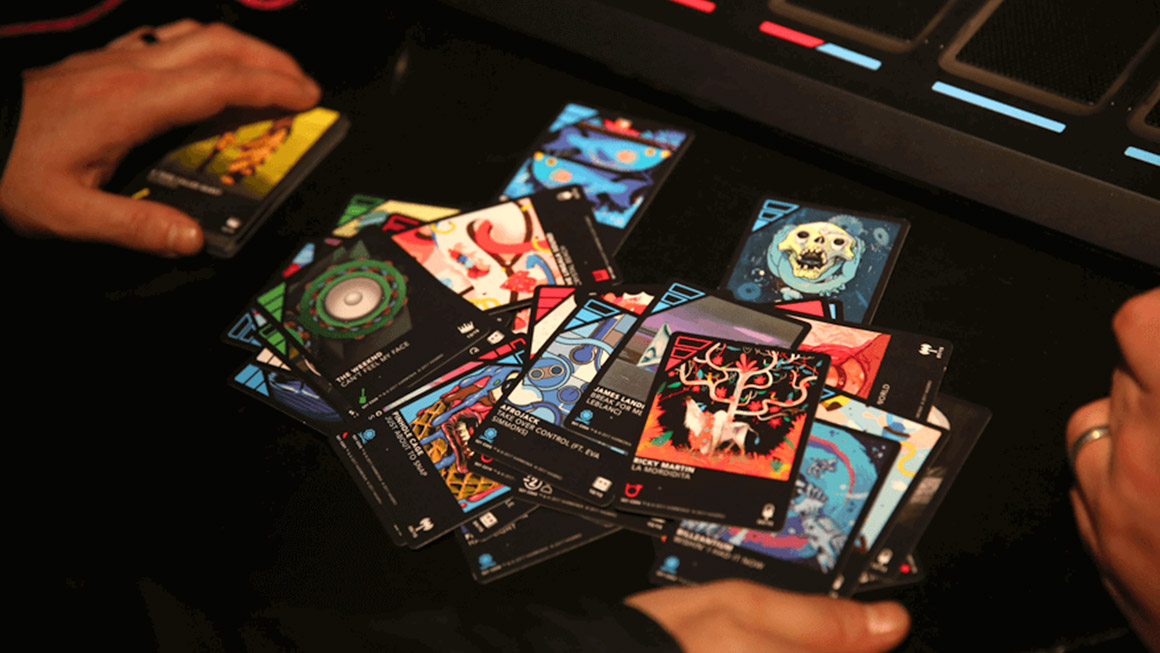
A pre-E3 event last year was the first time I got to check out Harmonix and Hasbro’s crazy new project called DropMix. The idea, for those of you who may never have seen or heard of the collaboration, was the combining of a physical plastic deck, software running on a smart device of your choice, and RFID-powered cards to create a cooperative or competitive game out of mixing together different tracks from popular songs.

I walked away from my hands-on with the game having legitimately enjoyed it—but also holding a number of concerns over the idea and if it’d be a hit with gamers. When DropMix launched in late September of last year, the slew of major releases and other work projects meant that we weren’t able to give it a proper review. So, instead, I’ve decided to do something that we’ve often talked about doing with a number of other games that have come out over time—return to DropMix six months after its launch, and see where it stands at this point.

Basically, I had four major concerns for DropMix and its potential future: longevity, music selection, the technology itself, and finally, the price of entry. So, let’s look at those four points, and see if my mind has changed—or not changed—in these past six months.

Point #1: Longevity

The problem that faces any sort of entertainment that brings with it a level of “gimmick” to its execution is how long that gimmick will remain feeling fresh, and if you’ll still want to return to whatever it is after some amount of time has passed. We can look back to the era of Bemani/Rockband/Guitar Hero/etc. for perfect examples of this: there were plenty of people who stocked up on plastic instruments to rock out with with friends, only to see those costly peripherals collecting dust soon after.

My opinion of DropMix from the beginning was that it’d be something that you’d probably not play all of the time, but which would be fun to break out every now and then for a party, a family gathering, or just in a moment of boredom. I continue to feel that way at this point—and I say that as a good thing. I still legitimately have fun with DropMix, and I think it has the chance to live on longer than other similar “real device + digital game” ideas that have come out over time. I see the DropMix more as a board game, something you have on your shelf that you can pull out now and then and enjoy with a group that doesn’t require the dexterity to hit numerous buttons in various patterns or other deeper video game knowledge.

There is one major threat to that potential longevity, of course, which leads to…

Point #2: The Music Selection

Both the strength and weakness of DropMix is its music, and that’s where the game could end up running into trouble months or years from now.

The problem with games based around music is that music is such a personal thing, and what a particular artist or song means to us today might not be the same tomorrow. One of the reasons I think DropMix works better as a “play now and then” kind of game is that helps its music selection not wear out as fast, yet that happening still seems to be an inevitability. Plus, any time you include the music of a popular artist, you run the risk of that artist’s value fading in the not-too-distant future. Looking back at the original pack of cards, we had eternal safe bets like the Jackson 5, Gloria Gaynor, Rick James, or Beethoven, while we also had artists that may not age as finely such as Bruno Mars, Ed Sheeran, Fall Out Boy, or—as much as I currently love her—Carly Rae Jepsen.

So, I think DropMix needs a steady stream of new card packs, both to keep the game from feeling like you’re just crafting the same remixes over and over, and to keep its musical library a little more up to date with smart choices. Thankfully, there has been a decent stream of new cards released since the game’s launch, both through the 16-card Playlist Packs—which have given us new Pop, Hip-Hop, and Country cards—and the 5-card Discovery Packs, bringing their own assortments of more random genre additions. Those most recent expansion cards have featured a mix of new songs from artists we already had cards for, additional tracks that were missing from previous songs, or artists we didn’t have before, such as The Black Eyed Peas, Technotronic, Fifth Harmony, Anderson .PAAK, Joliet, and the Zac Brown Band.

I admittedly worried that DropMix would be released and then no new card packs would come out if it wasn’t a hit right out of the gate. While I don’t know how the game has done sales-wise, I’m at least glad that we have gotten some expansions beyond the initial base set. The big question now, of course, is if we’ll get more from here. I do know for sure that at least one additional Playlist Pack is announced as coming—”Chiller,” which focuses on dance/electronica tracks—but we’ll need to see how support keeps up from there. If there won’t be many more new cards coming going forward, anyone who has been holding off will need to decide if the current selection of music will be enough to keep their interest in the long run.

Oh, and I might also mention that the most recent hip-hop Playlist Pack is exclusive to Toys ‘r Us—so, you know, that’s probably something you’ll want to pick up ASAP if you’re interested.

Point #3: The Technology

While you might think the selection of music is the most important thing to worry about for a music-based game, being the type of person that I am, I actually had more concern over DropMix’s technology and hardware when trying to decide if it was something I’d recommend.

When I previously wrote about my thoughts on the game, I said the following:

“I think DropMixneeds one of three different revisions to really give it a chance: either drop the price of the main package, give it the proper built-in hardware and display to not require a separate smart device, or give it the tech needed to output the game to a TV without needing any additional hardware to play.”

I’ve softened a bit in how big of a deal I think that is when it comes to actually having and playing DropMix, but I also still believe that I’m right in that assessment. First of all, the main deck being battery-powered only is a huge pain in the butt, especially if you’re someone like me who already has their rechargeable batteries fueling a whole host of other devices, controllers, and remotes. Really, even just having a standard USB port where I could plug in a generic USB-driven wall adapter would have been a huge help. However, doing something like that could have then opened us up to an even better solution: something that would let us power both the required smart device and the deck together at the same time. I really don’t want to use my iPhone when playing DropMix due to how small its screen is (even with owning an 8+), but like many people (I’m sure), I don’t use my iPad enough to ensure it’s always got enough of a charge for even a game or two.

Really, the absolute best solution we could have had for DropMix—and this might be the sort of thing someone out there has put together—would have been to slap in a cheap computing device (like a Raspberry Pi or whatever), a cheap LCD display (because, really, you’re not showing anything all that complicated), give it ports for power, video, and audio out (which something like the Pi has), and you’ve got that all-in-one device. I’d be far more forgiving of a smaller screen if it were built in, and while a cheap (or no) speaker wouldn’t be the best solution for a music-based game, you kind of already have that given most smartphones aren’t really meant to pump out high-quality audio at any decent volume.

As it is, I do still think DropMix is a bit of a hassle if you want to play it properly, but it’s not an unmanageable one, nor is it a deal-breaker. It just feels like an experience that you have to plan to have, versus something that you can break out at a moment’s notice should the occasion arise.

Point #4: The Price

The single biggest hurdle DropMix had going against it in my opinion was the price, and that’s actually one of the areas in which things have gotten better in the past six month. Paying $99.99 for the deck and 60 cards—while still needing additional hardware like a smart device—just seemed way too expensive for me, and if anything was going to kill the potential that DropMix held, I was pretty sure it was going to be its price tag.

Pricing DropMix at various retailers today, however, I’ve found many—including Amazon, Target, and Walmart—that have it new for $79.99, which I think is a much more reasonable entry price. Gamestop, meanwhile, has it new for $49.99, a price that I consider to be perfect “impulsive buy” territory. It’s pretty easy to avoid paying full price for the main DropMixpackage at this point, which is good, because I think that extra $20 (or more) would be better spent getting yourself more cards to help build a more enjoyable experience.

And now, of course, I’m going to say something to totally contradict myself: I think I could have been okay with paying $129 or even $149 for DropMix—given, of course, that we got all of those technology inclusions I talked about above. I know why Harmonix and Hasbro wouldn’t want to slap a five-digit price onto the device if that was the range they were going to end up in, but DropMix would have had more value to me as a self-contained deck versus one I need extra devices, speakers, cables, and/or batteries for.

Given what it is, however, DropMix is in a far better place in my mind now that many major retailers seem to be giving it some level of discount. The question will be if that lower price helps give the game a bigger player base, or if it came too late to miss the initial wave of interest consumers would have had.

Final judgement

When I first played DropMix in the early part of summer last year, I thought it was fascinating both as a game and an idea, and I still feel that way today. What was put together here is something legitimately cool, and Harmonix’s tech for mixing together pieces of different songs remains seriously impressive to this day. The core idea of DropMix was never in question for me—it always came down more to the way that idea was executed.

Six months later, some of my concerns seem justified, while others have proven to not be as big of a deal as I thought they might. It’s easier for me to recommend checking out DropMix to those curious about it given the lower price of entry and the more expanded music selection, but that recommendation would also come with a bigger caveat of not knowing what support will be looking like another six months from now.

Yakuza 6: The Song of Life Review

No matter how many movies they’ve seen, or albums they’ve listened to, or video games they’ve played, every fan dedicated to a particular genre of entertainment has their points of shame—those specific things that they’ve never experienced when it seems like everyone else in the universe has. In the thirty-plus years that I’ve loved Japanese gaming (since first being introduced to the country’s efforts on the NES and Sega Master System), I’ve played countless releases, series, and franchises—but, somehow, have never played a single Yakuza game.

Given that Sega’s long-running franchise based around Japan’s criminal underworld has been one of those things that people like me have talked about, begged for, and obsessed over across the years, I knew at some point that I’d have to make things right by finally sitting down with one of Yakuza’s chapters. However, where I had thought that would come from with what seemed to be the most sensible place to start—last year’s Yakuza 0—that experience would instead come from the complete opposite end of the saga with Yakuza 6.

Initially, this might seem like a bad place to start for newcomers such as myself. When the game kicks off, we’re obviously deep into a saga that’s been rolling along for years, and our protagonist Kazuma Kiryu is just getting out of jail for—something? Finally freed, Kiryu looks to have a life away from the yakuza down in Okinawa with the kids from the orphanage he owns and the young woman he sees almost as a daughter, Haruka. Of course, retiring to a more tropical part of Japan wouldn’t make for much of a story, so it’s quickly revealed that Haruka has been missing for three years, only to show up right after Kiryu’s release as the victim of a hit-and-run—where’s she found clutching an infant son.

Thus kicks off Kiryu’s adventures in Yakuza 6 as he tries to piece together who was targeting Haruka, where she had been during his time in prison, and who is the father of her son Haruto—all while attempting (and failing) to avoid becoming re-involved in Kamurocho’s seedy underbelly. (He doubly fails at this attempt to just be an “average citizen” when he also crosses paths with the yakuza of Onomichi, an area of Hiroshima that serves as a secondary setting in Kiryu’s search for the truth.)

At first, I had planned to use the “catching you up with the Yakuza series” option that’s offered on Yakuza 6’s main menu, but I couldn’t even make it through the recap of the original Yakuza. For a series that’s so known for its cinematic nature and cutscenes, why would such an option be little more than just page after page of text? When you’re presenting so much backstory, so many characters, and so many other details to try to remember, I think this was an incredibly poor way to go about doing so. Instead, I decided to just dive straight in—and ended up having little problem doing so. For most of the characters or narrative beats that connect to past chapters, it really only took a few lines of dialog or a quick cutscene to hammer home why they were important. Other than that, Yakuza 6—at least from every impression I got—tells a mostly separate, self-contained tale that sees Kiryu put into an almost outsider’s position when placed in this more modern world.

And that, really, was one of the most compelling elements to Yakuza 6 for me. The Kamurocho we see here is one that’s moved on without Kiryu during his time away, and Onomichi is a place that has little reason to care about who the “Dragon of Dojima” is in the first place. In fact, Kiryu is generally treated as an old man past his prime—both in terms of his physical and leadership power—and that makes him a fascinating character to me. Kiryu is a legend in this world, but not one that has any direct place in it at this point, and as a newcomer, it’s almost more interesting (for now) to hear of his legacy through other characters in the game without having actually seen it. Rather than being a man I’ve helped to reach this point over many, many long years, Kiryu is instead a myth, something almost larger than life.

In that, I came to love Kiryu far more than I could ever have imagined. He’s just so damn cool—someone who walks that delicate line between being relatable and being untouchable. Kiryu is of a character type that’s so easy to get wrong, because it’s hard to give someone the “badass” personality that he has without them feeling disconnected from those around them on an emotional level. It’s also very dangerous to create an “unbeatable” hero due to the fear that your story will become boring from the lack of any sense of real threat or potential loss. (See the later Die Hard movies as a perfect example.) And yet, I loved knowing that Kiryu would always win. The thrill didn’t come in wondering if he could beat the next major challenge or not, it came in wondering just how many of Kiryu’s punches would land on his foe’s faces in reaching the fight’s conclusion.

Kiryu does have one weakness, but it has nothing to do with the man himself: Yakuza 6’s fighting engine. To be clear, I’m not saying that it’s bad, and I enjoyed pummeling enemies from the lowest thugs up to the most dangerous of bosses all of the way through my 27-some hours of playtime. The problem is, most of the time, the combat just doesn’t display the level of style or attitude that the rest of the game exudes. In a tale of criminals waging war with one another, where street punks battle sharply-dressed hitmen for control of the streets of Japan, Yakuza 6’s combat isn’t nearly as raw or as brutal as it should. This is a game where I feel like combat should both satisfy me on a primal level while also bothering me a bit on a more civilized one, yet that feeling just isn’t there.

This also comes into play because the game’s combat lacks the necessary amount of weight and complexity to make you feel like you’re fighting for your life against men who are seriously out to stop (or even kill) you. While playing Yakuza 6, two other games came to mind—The Last of Us and the new God of War—and I kept wishing the team at Sega had crafted something that blended a more dynamic combat system, where how Kiryu hits his opponents can vary greatly on things like positioning and the surrounding environment, with punches and kicks that have more weight behind them. In most others games, I’d just happily mash buttons in a combat system similar to Yakuza 6’s without any real complaints; here, I just wanted something more.

Speaking of more, while Kiryu shines brightly as the center of Yakuza’s story, nearly everyone around him had a valuable part to play—and it’s rare that I’ve come to love an entire supporting cast as much as I did here. From old friends like Sky Finance’s Akiyama and Detective Makoto Date, to newcomers like Onomichi’s Hirose family and bar “mama” Kiyomi Kasahara, nearly every side character endeared themselves to me not because that’s simply what the game wanted, but because their personalities and stories made them compelling. Heck, even little Haruto won me over in those times that he was in Kiryu’s care, when having to look after a virtual baby could have been a miserable experience. (Of course, in my case, it probably didn’t hurt that I’m just four months into being a new parent.)

Backing up the cast in Yakuza 6 is a narrative that had far more of an emotional impact on me than I could ever have expected. I came into the game expecting your typical yakuza drama, and while it certainly is that on some level, the story also has many more layers to it, giving it a surprising amount of depth. Saying that Yakuza 6 is about Japanese mafia families is like saying that Star Wars is about the Jedi—sure, they’re a central part of the story, and the driving force behind the events that are taking place, but there’s much more involved than just people running around with lightsabers. What added to this for me was that each of the game’s chapters plays out very much like a Japanese television drama, with the same kinds of storyline beats, revelations, characters, introductions, and episode cliffhangers. As a longtime J-drama fan, I really couldn’t get over the feeling that I was back in Osaka watching the latest season of a show play out, which especially hits home for anyone who recognizes the real-life acting talent that voices—and lends their faces with amazing results to—the cast. Oh hey, I’m sitting here talking to Beat Takeshi while he eats ice cream! And now I’m in a back alley beating up Hiroyuki Miyasako from Japanese comedy duo Ameagari!

And this, really, is where I think the Yakuza series can lose people (such as my coworker Nick Plessas when he reviewed Yakuza 0)—and I completely understand why. Yakuza 6 often feels more like story interspersed with game than it does game interspersed with story, and when those long cutscenes play out, they’re very Japanese not only in theme but also narrative style. I think it could be easy for some to find them boring, or drawn-out, or overly dramatic, but as a J-drama fan, man did I love every minute of them. I was so invested in what was going on with the events of the story and its characters, and there were numerous times where I had real emotional reactions to what was taking place, from being on the verge of tears during a few key scenes to feeling legitimate hatred for particular characters in others. (And boy could I say a few things about how JRPGs could learn a lot from Yakuza when it comes to presenting a lot of storytelling while also not wasting my time with unbearable drivel pretending to be exposition.)

There absolutely is gameplay in Yakuza 6—more than just that fighting Kiryu and company will get into—but what I found was that the game only gives you as much as you work to get from it. If you want to beeline through the streets of Kamurocho and Onomichi as you rush from one storyline beat to the next, you should be able to do that without too much trouble. Take time to stop and look around each area, though, and you’ll find a lot more to see and do. One of the things I expected coming into Yakuza 6 was a diverse roster of mini games, and they’re definitely here, from helping out a baseball team, to net cafes where you can engage in some hilarious “adult” chat with camgirls, to working with a personal trainer on specific diet and exercise routines, to the at-one-point-in-time “too hot for Americans” adventures at the local hostess club, to even overseeing large-scale clan-based street battles. On one end of the spectrum, I ended up being kind of disappointed with my trips to sing some karaoke; on the other end, my brain still cannot comprehend the local arcades offering up a roster-complete two-player version of Virtua Fighter 5 Final Showdown for no extra real-world cash.

Of course, there’s also the various missions you’ll find scattered between both cities, which can range from the typical kind of side quest you’d find in a game based around the yakuza, to some truly fantastical situations that I won’t spoil here. What I really appreciated was that missions aren’t just offered up to you—you have to find them, or sometimes even understand that you’re seeing the start of a new mission once you do. There’s a lot hidden in the streets of Kamurocho and Onomichi if you go looking for it, and to be honest, there’s still a few things that I know lead to a mission or new mini games that I’ve yet to figure out how to properly unlock.

On that, though, there were a few scattered moments where I felt like there was supposed to be something more that I might be missing, something that I either just didn’t understand or hadn’t discovered in all of my time playing. One of the biggest signs of this for me was, after about the first hour or so, I seemed to almost never need money. I mean, there definitely were things to spend yen on for side reasons—making my cute Japanese cabaret club sweethearts Erina and Hikaru happy doesn’t come cheap, you know—but my bank account seemed to be growing exponentially faster than I could spend it. To be fair, though, I’m the type of person to not use a lot of recovery items in games, and I found almost no reason to muck with most of the equipment offered up in Yakuza 6, so maybe that’s where all of my money was supposed to be going.

There’s one final point that I’d like to touch on, but it’s one that I’ll admit I can’t talk about as much as I’d like to: the game engine as a whole. From my understanding, Yakuza 6 is running on new tech called the Dragon Engine, which brings upgrades such as, for example, being able to seamlessly enter and exit buildings without encountering any kind of loading screen. Having not played the previous games, I can’t confirm that they had those points of loading when going from outside to inside (or vice versa); I can say, however, that I never had to give a second thought to darting in and out of buildings, as if everything did just exist there as one giant open world. While things seem to run great for the most part, I did encounter moments here and there where issues like screen tearing would pop up (which was especially prevalent indoors)—outside of a few instances of feeling a little queasy, though, for the most part those issues didn’t greatly affect my enjoyment of the game. Also, in doing some research, it seems the move to a new tech engine may explain why some previous mini games (such as bowling) are non-existent, while others rely more on quicktime-style button prompts versus direct input.

If you’re a long-time Yakuza fan, it’s nearly impossible for me to tell you how Yakuza 6 compares to the previous games in the series, or even be able to judge what you’ll think of it at the end of the day given the hopes and expectations you’ll no doubt bring with it. Let’s be real, though: hardcore fans have already pre-ordered their copies, and will be swayed little no matter what I (or any other reviewer) say. So, then, let me speak to those out there who have never played a Yakuza game, or those who have a casual interest in the series but weren’t sure if jumping back in with this seventh chapter was the best idea.

After somehow avoiding the series for 12-plus years, I’m really kicking myself for having taken so long to play my first Yakuza game—but I’m also kind of happy that I did so with Yakuza 6. This tale of the legendary Kazuma Kiryu in his later years was as captivating for its story of a man’s struggle against the pull of the criminal underworld as it was touching for its tale of a man fighting to protect the people in his life that he cares most about. It’s a movie as much as it is a video game, and while neither of those pieces are perfect, each is made stronger by relying on the other for support. Even though it tells a story that comes late in the Yakuza saga, it’s still a perfect place to have your first experience like I did—except that, like me, you may walk away from it torn on if you now want to go back and play all of the previous games as well, or if it’s better to leave them as the legend you’ll have now built up in your head.

Dissidia Final Fantasy NT Review

If someone were to ask you to think about fighting games, there’s a number of names that would instantly come to mind for most people. If you’re more into the 2D side of the genre, you might give examples such as Street Fighter, The King of Fighters, Mortal Kombat, Guilty Gear, etc.; for those who prefer the 3D variety, there’s Virtua Fighter, Tekken, Soul Calibur, Dead or Alive, and so on.

While those two types of fighting games tend to be the bread and butter of the genre, we’ve seen other titles take some daring risks with gameplay concepts over the years—and this was especially true on the PlayStation 1. With that system’s ability to render fully polygon worlds that could be explored on more than two axes, a new type of fighter was born: the 3D arena fighter. In games such as Taito’s Psychic Force and Omega Force’s Destrega, players could fly around an enclosed section of the landscape in three dimension, tossing out long-range projectiles or rushing in for melee combos while being automatically focused on their opponent.

In late 2008, Square Enix gave the subgenre another addition with Dissidia Final Fantasy, a new project that saw heroes and villains from across the Final Fantasy franchise battle one another. The game stood out as one of the unique and exciting exclusives for Sony’s PlayStation Portable, but throughout both it and its sequel, Dissidia 012 Final Fantasy, it was hard not to feel like the ambition on display was being hampered somewhat by its choice in platforms.

And that’s where Dissidia Final Fantasy NT comes in. Back in 2015, Square Enix teamed up with Koei Tecmo’s Team Ninja division to develop an arcade game based on the Dissidia series, one which retained many of the core concepts of the PSP games, but while also amping up the action and visuals thanks to the combination of more powerful hardware and a far bigger screen.

One of the biggest changes to the game is what makes Dissidia Final Fantasy NT so wonderfully chaotic: the switch to a three-on-three format, where you and two teammates (either human- or AI-controllers) face off against three rivals (again, either human or CPU) in one big melee. Moving away from the one-on-one battles of previous Dissidia games now means having a lot more to think about in any given moment—from where you are in relation to the position of the opponent you’re targeting, to what your teammates are doing, to what your foe’s teammates are doing (and if any of them are sneaking up to attack you). It’s a change that was quite appropriate for an arcade release, but does that mean it was also what the next generation of Dissidia home releases should be built around?

That change is probably Dissidia Final Fantasy NT’s biggest (but not only) barrier of entry—and it’s going to be one that turns at least some players off. When battles were still one-on-one, the slower pacing and bigger window for considering strategy meant a friendlier game to lower-level players. Here, with the changes that have been put into play, defeat can be utterly brutal.

NT now features four character class types—Vanguard, Assassins, Specialist, and Marksman—and I was determined to learn Final Fantasy VI’s Terra, who fills the longer-range Marksman role. For at least the first few hours of playing, I was sure that the class was broken, because I was getting crushed. It can take a while to have the gameplay fully click, and while I was going through that initiation period, the losses my teams were being handed (in part due to my lack of skill) were downright ugly. At times, I’d be trying to focus on sniping a particular enemy, and then suddenly a melee-focused character would rush in, attack me, and it seemed like I simply had no offense or defense that would stop them. So, I’d give characters like Lightning or Cloud a try—and get completely controlled by members of the class I’d nearly sworn off. (The game’s netcode also spelled my doom at times, with some matches almost being slideshows; thankfully, though, I’ve had way more stable matches than bad in my time playing.)

Even now, I’ll still have matches where my team gets decimated, or where I struggle a bit with the controls. (Some of the moves require pressing a button plus direction, and there can be a disconnect between what you think you’re hitting and what the game reads you as hitting as both your character and the camera are moving around). And yet, I’m finally at a point where I can hold my own or even dominate a satisfying amount of the time—and in that, Dissidia Final Fantasy NT can be absolutely magical. Different doesn’t always mean better, but the uniqueness of this experience compared to most other fighters out there at the moment really can be refreshing. It’s the kind of game that you play when you want to feel like a god trying to bring order to chaos, offering up a power-trip rush that’s just oh so good. Although, I don’t think NT could ever replace Street Fighter V or the other genre staples that I love spending time with as my usual go-tos; instead, it’s the kind of game that you love knowing is there waiting for you, and that you go to when you want that escape from the norm. It’s something to get obsessed with, and then put down, and then come back to later after a bit of time–sort of how I see PlayerUnknown’s Battlegrounds or Fortnite compared to the tried-and-true third-person shooter offerings.

However, Dissidia Final Fantasy NT then has another accessibility problem that’ll cause some players to be unable to slip into that level of appreciation I describe above. The game’s arcade roots are absolutely apparent here, and one of the ways in which that manifests is a dearth of modes or things to do for those with little interest in going online. The main content for single-player sessions is the story modem, but it’s so bad that it’s almost hilarious. Across five different paths, you’ll find out why the game’s 29 characters have been brought to this land, but that tale is told in disjointed pieces that can feel incomplete or almost nonsensical—even after you’ve unlocked the cutscenes of every path. Unfortunately, to unlock those clips or story-focused battles, you need Memoria points, which you only get for levelling up characters outside of story mode.

When you start the game, you have only enough points to get through the opening cinematic, and then need to unlock at least four more cutscenes before getting near your first fight. I can’t at all understand what the goal here was; most of the cutscenes aren’t interesting enough to warrant such work being put into unlocking them, and the kind of players who usually prefer solo content—more casual fighting fans—are often the type who prefer to stick to one singular character in the early hours of playing (which will slow down the rate at which you earn Memoria). The story mode should have been the same five paths interspersed with more battles to serve as what needed to be accomplished to unlock the next storyline piece—as it stands now, what’s presented just comes off as a disappointingly lazy and misguided effort.

Outside of that, there’s only a few other options to keep players satisfied offline. The first is Gauntlet Mode, an enjoyable side excursion which pits you against a series of rival teams that get higher in skill level with rewards waiting at the end. There’s also Sparring Match for setting up fights against CPU opponents, which benefits from having far more potential than it’ll first seem. While you can set up typical three-on-three matches, you can have any of those six slots be vacant, meaning you can instead run handicap matches or even revert back to the older one-on-one days of Dissidia. This could be the sleeper hit mode of Dissidia Final Fantasy NT in my eyes, but there just aren’t enough settings to give it its full potential. For example, I set up a three-on-one battle against the computer, but even pumping that one enemy’s AI level all of the way up to max, there was still no possible way it could have won. Had there been, say, attack and defense multipliers that could be applied, and other variables like maybe gravity sliders or changes to gameplay speed or random afflictions or whatever, this mode could have carried more of the burden for those seeking single-player content. Also, why aren’t these team balance options available for online play? Having the choice to run one-on-one, three-on-one, or two-on-three matches with all human players would have added even more life to the game. Still, NT could easily have locked us into nothing but three-on-three fights period, so I’m glad to see the ability to shake things up for local play. (Sparring Match is also, by the way, where you’ll need to go to have a proper Training option—no idea why it wasn’t included in the separate Tutorial portion of the game.)

After that, the only other real longevity Dissidia Final Fantasy NT offers is building up your characters. This is divided into two different focuses: the character’s level and abilities, and cosmetics. Levelling up characters earns you new buff and debuff EX Skills can than be used by all characters, along with HP Attacks (the techniques used to actually down opponents) and chat messages that are unique to each individual character. Along with EX Skills and Memoria, you’ll also receive Treasure, non-microtransaction loot boxes that give you three items from a selection of chat messages, profile icons and titles, battle music, or character skins and weapons. (Cosmics and music can also be purchased with Gil earned through playing—EX Skills cannot.) There’s a nice amount of things to unlock, but the cosmetics suffer somewhat from the same thing that ails the cast of characters they’re intended for: it all feels very safe. There’s nothing inherently wrong with the roster available here, and we get an amount of choices that feels perfectly reasonable pre-DLC. It’s just, they’re all obvious choices. Of course we get Cloud and Sephiroth from Final Fantasy VII; of course it’s Noctis from Final Fantasy XV or Lightning from Final Fantasy XIII. I just hope, with whatever upcoming DLC arrives, that we get some fun additions to go along with those safe bets—I want Fran, and Barrett, and Celes, and other choices outside the defaults.

Dissidia Final Fantasy NT reminds me a lot of where Street Fighter V was when it was released—just without the assurance that the overall package would be beefed up with time. If you can accept this game as something you’d find in a local arcade, or simply don’t care about single-player content in fighting games most of the time (like I don’t), then the larger-than-life power fantasy presented with this roster of beloved Square Enix characters can provide hours of entertainment simply from its scant selection of modes. If you want something more—or are looking for a more casual fighting game experience that you can ease in to—then the reality of this fantasy may just be too harsh. As much as I adored the PSP, I think this is the first time that the Dissidia series has truly gotten a chance to shine—but if it’s going to attract a wider audience going forward, it’s going to need a whole lot more polish.

Sky Force Reloaded Review

Even when every hour of your job is dedicated to video games, it’s still impossible to be familiar with all of the releases that come out on any given day/week/month/year—and that was true for me with Sky Force Reloaded. I knew it was a top-down shooter (of the “shoot ‘em up” variety), and I knew some version of the game (or a predecessor) had recently received a limited-run physical release, but that was about it.

Delving into the game felt a bit like being tossed into a lake and being told to learn how to swim on my own, in part because I didn’t realize a non-repeatable intro segment was going to play out the moment I started the game (which I quickly failed because I was off getting something to drink). Still, with years of shooter experience under my belt, I was ready for the challenge.

What I wasn’t ready for—in part due to that exact experience—was how pathetic my ship felt as I descended into the game’s first stage. Sky Force Reloaded is built upon a complex upgrade system, and before you embark into exploring it, your ship only has a laughably weak single-shot main cannon, no additional weapons of any kind, and zero special attacks (such as bombs or whatnot). After not making it very far into that first stage, a “hanger” option begged for my attention back on the main menu, and I started to understand my first set of goals. By collecting stars that are dropped from defeated enemies, crates, or other destroyed background objects, you can beef up your main cannon and health, add secondary wing cannons and homing missiles, or unlock three manual-activation bonus tools: a focused laser, an energy shield, and a screen-clearing bomb.

Shooters have long been built around the idea of upgrading and adding new weaponry and options, and Sky Force Reloaded’s deep dive into those idea makes it feel like something legitimately different from most other entries in the genre out there. Instead of trying to go for the one-credit run, you take each of the game’s many stages (which play out more like Raiden or other slower-paced experiences and less like Japanese bullet hells) as something that you’ll be playing over and over more for the personal progress. Of course, score is definitely important, and stages provide specific goals—such as saving all of the hostages or beating the stage without taking any damage—to help boost your numbers, but there’s also that RPG-esque attitude to everything. As one example, dying before downing the stage boss doesn’t mean you’ve failed, because you’ve inevitable still earned stars to use to make your next run just a tad easier.

In fact, Sky Force Reloaded’s dedication to giving players a wide array of things to do when playing each stage is by far its best feature. In addition to gradually upgrading your ship, you can also find ship parts to unlock additional planes or complete overall missions (like downing X number of enemies throughout the game) to earn Technicians, selectable crew members that’ll give you bonuses (such as increasing the amount of stars in a stage or letting you take a bit of damage without losing the “no hit” bonus). Joining Technicians are cards, which randomly show up on stages that then give passive benefits, directly affect certain aspects of specific stages, or give a limited amount of “bonus time” that will give you some specific upgrade so long as the countdown is still active. All of these things come together to craft a game that really feels like it’s had a lot of thought put into it, and it gives players an experience that sits somewhere between the quarter-munching cabinets from the glory days of arcades, and far deeper, more strategic home console-focused releases.

Unfortunately, the thing that sets Sky Force Reloaded apart from its competition is also the element that ends up weakening it.

That realization began with a very simple action: my unlocking the Mega Bomb. Bombs are a staple of the shooter genre, so it seemed like the best bonus weapon to start with. When I began my next run, the game added a UI element showing which button bombs are attached to—but then, for the life of me, I couldn’t figure out how to use them. I played a handful of stages still confused, feeling like a bit of a moron for not understanding such a simple aspect of the game. Then, it finally dawned on me: if I wanted bombs, I had to spend stars to get them. All three extra weapons require stars in exchange for each charge of said weapon every time you enter a stage, and if you die before using up your stock, it’s gone. I found the notion of spending the precious credits I needed to upgrade my ship on those weapons ridiculous, so I simply didn’t—I focused instead on upgrading my main weaponry as much as possible. (As you progress, you’ll encounter additional ways to earn charges, making this system seem even more out of place.)

And, through that, another frustration began to grow. Each piece of your ship takes ten upgrades in order to reach one additional “level” to the power of that item, and I was quickly realizing that as I sunk more and more stars into powering up my ship, the benefits I was feeling from each upgrade felt absolutely miniscule. Most shooters have trained us to feel a real change in our capability from each power-up we grab, but here, I was just continually grinding out stages in order to inch along at a snail’s pace to see similar results. To compound that, the base set of weaponry was getting to be boring—I still only had the same straight-shot main cannon (which does finally started to spread after numerous level increases), the same kinda-sorta useful secondary wing cannons, and the same singular homing missile. I’ve also been going back to two classic shooters via my Switch in recent weeks—Strikers 1945 and Gunbird—and the variety that those games offer up compared to what Sky Force Reloaded was giving me seemed miles apart.

As I got deeper and deeper into Sky Force Reloaded, I was legitimately having fun, but was also increasingly seeing it as a game that had tried some interesting ideas that sadly ended up being misguided. And yet, I just couldn’t shake the feeling that there was something deeper going on. So, I finally decided to do some research on the game—and that’s when I discovered that its origins were that of a mobile-based free-to-play title.

After downloading the iOS version of Sky Force Reloaded and spending a quick bit of time with it, things became a lot clearer. This is a game that was built with the purpose of being a time sink, where the frustration of how long it’s taking to get your ship upgraded to the level you’d like it to be at can easily be solved by spending money to buy stars. The lack of weapon variety that I was feeling? That’s answered by unlocking those additional ships. And yet, in the week that I’d been playing, I hadn’t even gotten close to getting all of the parts for even one new choice to be selectable. In an environment where you can just pay to beef up your default ship off the bat, and then farm the higher-difficulty stages hoping to snag those pieces, however, you could no doubt open up those new planes far quicker.

Sky Force Reloaded is disappointing—not because it’s a bad game, but because it’s a good game buried under some other-platform baggage that it shouldn’t be saddled with. Developer Infinite Dreams really needed to rebalance the game when putting it on console—and if they did, they didn’t go anywhere near far enough. As much as I’m not a fan of microtransactions, the Switch version (and I’m assuming other consoles) not having any option to pay for stars means an upgrade system once based around a free-to-play economy now feels even more out of balance, and most players are probably going to either give up or feel finished with Reloaded long before they’ve unlocked things that can genuinely make the game better.

Had the weapon upgrades taken less time per level, and we been given more ships unlocked at the start for a better sense of variety, Sky Force Reloaded would have been a more enjoyable console-focused experience. As it stands, there genuinely is a fun game here if you can put aside the frustration of the game’s heritage—but it’ll probably only be fully appreciated by those who are the type that love to sink hours and hours of efforts into the titles they play.

Street Fighter V: Arcade Edition Review

As part of getting ready to write this review, I went back and re-read what I’d had to say about the original Street Fighter V—and it’s almost crazy to think about how much has changed in those two years. When the latest chapter of Capcom’s legendary fighting franchise launched back in 2016, it had a roster of just 16 characters, was missing numerous chunks of the content that had been promised for the game, and had omissions that many found unbelievable for a modern release in the genre.

While the story of Street Fighter V is far from over, Street Fighter V: Arcade Edition feels like a culmination of sorts of those first two years, the moment when those efforts have finally resulted in a game that feels “complete” sans-roster (which obviously will be ever-evolving).

The argument, however, is if those first two years were “wasted” time for the game—and I’ll still fight tooth and nail to say that they weren’t. Street Fighter V captured my heart when it was first revealed, and it felt to me like the game I’d always wanted Street Fighter IV to be but always kind of knew deep down that it couldn’t become. While SFIV was a sort of “best of” look at the series at it had existed up until that point, SFV has more of that “let’s do something new” flair that Street Fighter III had once given us—just in a safer and less controversial package. It didn’t take long for SFV to ruin a good chunk of the fun I could have with SFIV, which now seems more like a knock-off Street Fighter project to me than the real deal.

Still, I’m not delusional: Street Fighter V was greatly lacking in its early days, especially if you’re someone who cares greatly about single-player content (which, admittedly, I don’t). While I’ve enjoyed the game the entire time, I knew that it could and should be better, and that bringing more players into the fold would benefit everyone by helping to secure Capcom’s support going forward.

So, unlike the upgraded versions that Street Fighter IV received, Street Fighter V: Arcade Edition feels more like a repackaging and relaunch than it does a simple expansion. It points to the interesting time we’re in with video games, one where online connectivity and upgradability means that a release that disappointed at launch isn’t necessarily doomed to stay failed. We’ve seen plenty of examples of that in recent years—from Final Fantasy XIV to Diablo III to The Division—and one can only assume Capcom’s hope with Arcade Edition is that it’ll serve as a “please come give us another try” olive branch extended to those who wrote off SFV and never looked back.

That group of players are going to really find a lot to see and do in Arcade Edition, which combines all of those things that have been added over the past two years with some new inclusions coming along with this release. Given the name of the game itself, probably the biggest to point out is the new Arcade mode, the single loudest area of argument for the “there’s not enough to do” solo-skewed crowd up until now. Yes, Arcade mode is finally here, and with a twist: it’s broken down into six unique paths, each of which is based around one of the major chapters of Street Fighter. As opposed to the “pick a character and go through a singular linear set of opponents” type of setup that’s common in fighting games, this is a fun way to mix things up while celebrating the history of Street Fighter—even if there are a few “that character wasn’t in that game” or “these stages don’t belong here” moments us longtime fans can get super nit picky about. Arcade mode offers an impressive 85 paths to take if you’re just looking to beat each era with each character, but if you really want to dedicate time to the mode, there are a number of challenges that’ll give you some pretty cool artwork in the new Gallery once completed. With Arcade mode alone, those who prefer to go solo will have way, way more to do here than they ever did in vanilla Street Fighter V.

Capcom’s efforts to boost that single-player side of the game have included some more dynamic options such as Missions, and now, adding to that, is what I think is one of the more interesting arrivals in Arcade Edition: Extra Battle. In exchange for gambling a small portion of your Fight Money, you can try your hand at special fights that will net you prizes such as extra XP or even pieces of exclusive new outfits. I can be a sucker for that kind of risk-vs.-reward type of scenario, so I’m really curious to see where Capcom is going to take Extra Battles in the coming months. There is one downside to risking your FM, however: the fact that earning that virtual currency is now harder due to it no longer being rewarded in some of the modes where it previously was.

Not all of the new options are only for solo players, of course. Another great addition is Team Battle, where you can set up two teams of 2 to 5 fighters and then battle it out elimination style a la The King of Fighters. Sadly, Team Battles aren’t playable online—which is a huge shame—but it’s a nice new option to have when playing locally, especially given the selection of settings that can mix up how each match plays out.

All of these additions will of course be welcome for longtime Street Fighter V players as well, but there are then some other changes that those new to the game won’t appreciate as much. The game’s overall look and user interface has gone through a serious overhaul, which has been liberally plated in gold and given a bit more of a “TV Pay-Per-View” kind of feel. At the end of the day, these changes don’t drastically change the game, but they do give Arcade Edition a freshening up, and some of the little tweaks delight my visual designer side (such as the revised infobar that now shows what stage you’ll be playing on the versus screen).

Another long-overdue change is the ability to bring up a 3D viewer in the Shop (in order to get a proper look at new costumes and color variants before purchasing them), combined with the option to filter certain purchasables (such as outfits) only for certain characters. In general, I still think the overall Shop interface is kind of terrible—especially given just how much DLC there now is for the game—but these additions make the browsing experience far more pleasant over what it was before.

The single-biggest shift that Arcade Edition brings, however, is the change to providing every single character two V-Triggers now instead of one. Street Fighter V’s V-Gauge, and the gameplay systems built around it, were one of the top things I pointed out in my original review in terms of what gave the game its personality. In SFV, Capcom has set out to build a game where every fighter has something truly unique to them, and V-Triggers (along with V-Skills) were the driving factor in that. So, giving the entire roster a second unique trait was no small task, and—I’d argue—harder in concept than the idea of characters having two different supers that’s been tried in the past.

Like the base Street Fighter V, Arcade Edition has both good and bad when it comes to the results of that effort. Two years ago, I worried that too many of the V-Triggers were simply “make moves more powerful,” which I find pretty boring; the game’s latest cast addition, Sakura, is still an example of that, where literally both of her V-Triggers are based around beefing up a different selection of her specials. On the other hand, with twice as many V-Triggers now existing in the game, there’s just naturally going to be a larger amount of ones that are creative and potentially character-defining. Some, like my main Karin, regain yet another piece of their previous selves, as she can now break out her counters from Alpha 3 while triggered; others gain absolutely crazy new techniques, such as Juri’s ability to drain her opponent’s Critical Gauge in order to feed her own. (Although, the actual effectiveness of Juri’s V-Trigger II remains to be seen.) Personally, I’m really happy that Capcom went this route—I think giving characters a second V-Trigger gives players more of that “customization” feel in a way that’s far more interesting than just tossing everyone a second super.

Reviewing Street Fighter V: Arcade Edition is an interesting situation, because in a way, I’m not just reviewing what’s come in this release—I’m also considering the two years of work that were put in to get the game to this point. I fell in love with Street Fighter V when it first came out back in 2016, and yet, I both acknowledged that it definitely felt like a rushed release while also being nervous about what it would become as it got more years of updates and content under its belt. Now, two years later, I can honestly say that I’ve been almost totally happy with Capcom’s handling of the game—even though that handling has admittedly been a bit awkward, sloppy, or slow at times. Unlike Street Fighter IV, I’ve got almost no complaints about SFV’s roster as of now, as it has simultaneously: avoided becoming too bogged down with “classic” Street Fighter II characters; provided a really nice selection of totally new faces; tried to avoid adding new characters unless they offered something unique to the game; and truly given pre-existing fighters the freshening up that most were desperately in need of. (Seriously Capcom, thank you so much for finally putting Sakura in something other than her school uniform.) The core combat engine still feels so much better and more enjoyable than SFIV’s did to me, and the fleshing out of modes and options over time has reached a point where we’ve now got a fully-featured experience that should satisfy almost any type of player.

There’s still things that I’d like to see added to or changed about the overall game, but in Street Fighter V: Arcade Edition, Capcom has given us a release that truly shows off the potential and promise of the latest chapter of the Street Fighter saga. If you’re someone who has avoided SFV due to what’s been missing or concerns over a lackluster set of options, this really is the time to finally jump in and give the game a go. Arcade Edition feels miles away from Street Fighter V in terms of the overall package, and for its $40 price tag (which includes the first two seasons of characters for free), you’re getting a game that’s made up for nearly all of the sins of that disappointing first release. If you’ve fallen off from playing at some point over the past two years, then the combination of what’s been added since you left plus what’s come along with AE should hopefully offer enough to re-ignite whatever passion you previously had for the game. And, if you’re someone who’s been here the entire time, then this free update (excluding the character and other DLC that comes bundled with the stand-alone SFV:AE release) feels like a welcome freshening up as we enter the game’s third year, with a nice mixture of a reworked UI, character rebalancing, and roster updates—at least until the next round of tier lists don’t go your way.

The Beautiful Horror of Gravity Rush

I think two of the most effective games at creating fear in the last few years were Gravity Rush and Gravity Rush 2.

…wait, before you think I’m totally crazy, at least hear me out here.

Games typically employ various methods for creating “fear” in the player: jump scares, feeling weak versus powerful foes, the lack of ability to fight back, darkness, confusion, bad controls/camera, or presenting ideas that cause reactions in us on an emotional/mental human level.

As a longtime horror fan, the problem I have is that too many games don’t understand how to employ those methods in a way that is both effective and creative—resulting in games that create unwanted emotional reactions versus fear. For example, you’ll see games that plunge the players into darkness for way, way too long, so that that becomes the “norm” for the player and thus not scary. (This is one complain I had about Silent Hill 3 in contrast to the first two games.) Or, you’ll make players fumble around dark, confusing environments, always running away because of a lack of tools to fight back while trying to hide under a system that’s not actually built for stealth. Aka, I hate you first-person horror games!

To me, the most effective horror games are the ones that make us scare ourselves by presenting situations or characters that hint at a terrible world just below the surface of what we can see. Two of my favorites—Silent Hill 1 and Silent Hill 2—were experts at doing that.

SoGravity Rush. At a base level, you might not think that there’s anything “scary” about the adventures of our beloved Gravity Kitten, but there’s a lot of that “under the surface” kind of stuff. (Not surprising as the games come from the creators of Silent Hill and Siren.) First is the foundation of Kat’s world itself, which builds upon one of the deepest human fears: nothingness. The world of Gravity Rush is literal nothingness, a bizarre void where pockets of civilization eke out existence but where, at any moment, you could be taken into the nothing.

The basic truths of our world don’t exist: there’s no ground, no clear determination of what is “sky,” where we could travel in any direction and just be lost in the nothing until we die. The security in getting lost in the real world, or even most video game worlds, is that you always have a chance to find something—but not here. Then there’s that world that does exist. It never feels comfortable, or safe, or secure. Even in its nicest areas, there’s just this heavy, overbearing sense of dread that lingers throughout the world. Something is wrong there, but you’re never quite sure what.

Gravity Rush‘s world reminds me in many ways of that of the Dark Souls games. It doesn’t feel like the home of mankind, but instead a place we’ve ended up, a temporary visitor to somewhere that perhaps never wanted us to be there. It tries to feel familiar, and like home, but it’s not. Also like Dark Souls, every action you take as Kat can feel wrong. Even more so as her—a girl who genuinely wants to help and be a good person—there’s something deeply unsettling about what you do throughout the games, even when those actions seem completely innocent. There’s always this underlying fear that the next move you make could bring the world crumbling down, or doom the person you’re trying to save, or other such results. You press on because you have to, but you do so tensely, always waiting for the other shoe to drop.

Then comes by far the most interesting part to me: how the games make the player feel almost powerless, even while Kat’s powers and abilities grow. The decision to make Kat “fall” instead of fly was such an intriguing one, and I think it conveys a lot that some might miss. Most importantly, it shows that Kat is never truly in control, and thus, neither are we as the one controlling her.

Try this: send Kat way up into the air, turn off her powers, and just let her fall. Even after doing it 100 times, it still makes your stomach clench, and your hands tighten on the controller just a bit—even though you know you can stop her fall or that nothing bad will happen. Again, it taps into basic human fear—that of falling—but it’s also deeper. Gravity Rush instills in you the fear that at any time Kat’s powers could just go away, even though you, as a gamer, know that’s probably never going to happen outside of a cutscene or special event.

When you send Kat flying through the nothingness from one island to another, you know she’ll be fine. If her gravity runs out, it’ll be quick to refill. If she falls into the abyss, the game will just bring her back. She’ll make it—she does every time. And yet, every single time, it’s still scary—because the “what if” never leaves the depths of your brain. We can’t help but put ourselves in Kat’s place, and from our real-world human perspective, what she’s doing is horrifically terrifying to think about. We can’t not be afraid. This is especially true when the game tasks you with going up or down the World Pillar. I don’t want to say to much about that as to avoid spoilers, but good lord, parts of those journeys are brutal in how confused and afraid they make you feel of where you might end up.

Gravity Rush and Gravity Rush 2 make us feel powerful yet weak, safe yet in danger, comfortable yet on edge. Two games that never call themselves horror out-horror so many games based on that genre, and in a way, that almost makes them ever scarier if you really think about it all.