Fist of the North Star: Lost Paradise Review

One of my first memories of Fist of the North Star was seeing an issue of the manga behind the counter of a local shop. It was the early days of Japanese comics arriving in America, and while I didn’t know what Fist of the North Star was, I did know one thing: it was mature. It was on that very shelf because it wasn’t meant for young eyes, and being young myself at the time, that was incredibly exciting to me. What might its pages contain? Unrelenting violence? Gratuitous sex and nudity? Unspeakably foul language? All of those things mixed together in one wonderfully decadent gateway to a life of sin?

When I finally read Fist of the North Star, it wasn’t anywhere near the levels of impurity my young mind had imagined. What it was, though, was an at times brutal but always compelling tale of a man named Kenshiro trying to survive in the apocalyptic hell our world had become post-nuclear war. Kenshiro is a master of an ancient style of martial arts known as Hokuto Shinken, and if you know anything about the First of the North Star series, you know the main technique behind his training: using the various pressure points in the human body to cause people to explode.

While Kenshiro’s adventures have thrived both in anime and manga forms, it hasn’t been easy figuring out what to do when it comes to video games—or knowing what to do with the games once they’re finished. While Fist of the North Star survived relatively intact on the NES, other attempts ranged from the still-kinda-recognizable-but-not-quite Last Battle on the Genesis to the rather baffling localization Black Belt on the Sega Master System. Later attempts have been better about retaining the Fist of the North Star branding in the West, changing the question more to what kind of game to make. The result? Everything from a fighting game to an Omega Force-developed Musou spin-off to even an arcade machine that you literally punch as you try to emulate Kenshiro’s trademark moves.

All of this leads up to Fist of the North Star: Lost Paradise. When Sega announced that the team behind its Yakuza franchise would be taking a stab at turning the long-running saga into a video game, it was surprising but also kinda not. Thirty-two years after the original game hit, there’s still no real consensus on what genre works best for Kenshiro and crew, and it’s not a crazy jump to swap Yakuza’s Kiryu out for Ken and replace Kamurocho with a random Wasteland town. At this point, anything still goes.

And, you know what? I’d call Fist of the North Star: Lost Paradise the best execution of a game based on the series. I, and undoubtedly others, thought Fist of the North Star: Ken’s Rage (the Musou spin-off) might finally be the game where everything properly clicked, but instead it served as a reminder that there’s actually more to this story than just punching (and exploding) a bunch of Road Warrior-esque biker guys.

One of the things Lost Paradise understands more than most of the previous games is that there needs to be a proper weight to combat. Fighting off a crowd of enemies certainly works, but they can’t be foes who come in by the hundreds only to then drop like they’re made of glass. Sure, Fist of the North Star can be pretty ridiculous in terms of its violence—I mean, again, Kenshiro touches people and makes them explode—but that’s always mixed with an undercurrent of somewhat terrifying brutality. Admittedly, punches could always hit harder, kicks could have more “oomph” behind them, but I got way more satisfaction from Lost Paradise’s combat than I had complaints.

Part of that success comes from the game’s fighting engine, which I actually think feels better than what we get in Yakuza. Even without unlocking any additional skills, the basic set of moves provides a nice variety of options for taking down foes, from throwing out a combination of punches and kicks to unleashing a wide variety of Kenshiro’s trademark executions. Watching cinematics of people’s insides exploding definitely might sound like it would get old quickly, but most of the time they remain enjoyable (as sadistic as that may sound). Kenshiro then has a variety of other options for taking on enemies as well, from unlockable techniques attached to four different skill trees, to engaging his power-boosting Burst Mode, to activating the various Destiny Talismans you’ve crafted. These time-rechargeable items are based around the various major characters from Fist of the North Star lore, and each grants a special ability, support skill, or attack fitting to that character’s personality. While some of these pieces are straight from the Yakuza games, they all—along with the original ideas—legitimately end up feeling like they belong to the Fist of the North Star series.

The overall Yakuza template is another reason Lost Paradise succeeds where many previous games have failed—because, really, Fist of the North Star has never only been about buff dudes fighting buff dudes. The story, the drama, the characters in Kenshiro’s life, these are all things that feel missing if you sweep them away to make a more action-focused game. Sure, Kenshiro talks more here than he usually does, but having those narrative moments is as important as making sure the combat is on point. The story was more interesting than I was expecting it to be, and that’s helped by a premise that’s genuinely intriguing once you get to the main town of Eden and things begin to kick into gear. There is a catch to all of this: Lost Paradise is basically an “alternate universe” story. If you’re a longtime fan of the series, a lot of very familiar faces will pop up during the game, as will some recognizable situations. However, how they come together, where they take place, and what their connection to the bigger narrative arc is have all been adjusted to fit this particular original storyline—which can be a bit weird if you’re used to the canonical events. On the other hand, if you’re not a fan of the Fist of the North Star saga, then you’ll miss out on both that familiarity and some of the game’s fanservice, but you really won’t be lost on who’s who and what’s what.

When not advancing through the core story, there are of course a lot of not-as-essential things to see and do all around Eden. Again, those Yakuza roots show through, as Kenshiro can discover a wide array of side quests that range from serious to silly. A lot of these challenges (and the mini games some connect to) help to give Lost Paradise a more lighthearted break from the chaos of the Wasteland, but I’ll admit that they didn’t all gel with me. Again, I’m well aware of how over-the-top everything about Fist of the North Star is, but there’s just something inside me that dies a little watching such a legendary badass beating up bad guys to a hip-hop remix of Symphony No. 9 via a rhythm-based minigame while wearing a doctor’s coat.

I know I’ve been talking a lot about “Yakuza this” and “Yakuza that” in discussing Fist of the North Star: Lost Paradise, and those comparisons are both inevitable and necessary. The nice surprise, though, is that this isn’t just “Yakuza in the apocalypse.” Even if you’re doing many similar types of activities or engaging in familiar gameplay sections, Lost Paradise quickly grows into its own experience, allowing Kenshiro to escape from Kiryu’s shadow and really be his own man. There are numerous examples of where the game breaks the Yakuza mold, from the aforementioned Destiny Talismans, to the fact that you can actually go out exploring the Wasteland beyond Eden’s looming walls in a cobbled-together buggy. While that open-world area isn’t gigantic, it’s big enough to do what it needs to do, and helps give the game a more authentic Fist of the North Star feel you wouldn’t get being stuck in a city the entire time.

While Kenshiro may have few known weaknesses, I can’t say the same for Lost Paradise. The biggest thing you’ll notice is that, compared to the various Yakuza chapters, Lost Paradise admittedly feels a bit cheap. As one example, the game’s visual style tries to convey more of an anime look, but it’s not as effective at doing so as numerous other examples of cel-shaded releases we’ve seen in recent years. From there, things get much more nit-picky. The game has an annoying trend of exiting a cutscene to mere seconds of gameplay before tossing you into another cinematic, with far too many of those cinematics both being unskippable and repeating every time should you die. As well, some dialog boxes having weirdly long pauses before you’re able to progress to the next one, and there’s a constant introduction of side quests at the most inappropriate of times. (“Hey Kenshiro, I know you’re finally about to learn the truth about something near and dear to you, but could you come help us manage this hostess bar first?”) Also, at times, the difficulty seems strangely uneven, as I’d be cruising through one section only to hit a particular enemy or mob that suddenly had me actually fearing death. If you die too many times, the game will give you the option to temporarily drop the difficulty level, but I implore you to be wary of using that too often–there’s one boss fight in particular that can have its twist ruined if you take the easy way out.

All of these things leave Fist of the North Star: Lost Paradise kind of feeling like the red-headed stepchild of the Yakuza family, which disappoints me both as a fan of the series and as a redhead. Thankfully, much like the game’s endless stream of cannon fodder foes, those issues are more minor roadblocks than major threats. Give Lost Paradise a bit more polish and production, and it could be a great Fist of the North Star game. Instead, it will have to live with being a pretty darn good one—and, given the track record of past attempts at interactive interpretations of the saga of Kenshiro, that’s still something to be proud of.
Capcom Beat ‘Em Up Bundle Review

Bringing old games back as either solo releases or combined together into bigger packages is nothing new, but one of the twists to that idea that I’ve loved as of late is the attention being given to retro arcade titles (especially those from Japan). For as much as we’ve been given offerings from the NES, Genesis, or Super NES over and over, there are still hundreds of past arcade games that sit untouched and sometimes even forgotten.

When Capcom released its Street Fighter 30th Anniversary Collectiona short while back, one of the interesting elements to the compilation was its focus specifically on the series’ arcade heritage. Capcom has a long and storied history with that side of gaming, and we’re getting another look at that legacy here in Capcom Beat ‘Em Up Bundle.

While Capcom didn’t invent the side-scrolling beat ‘em up action genre—nor did they provide the breakout hit that kicked it into overdrive, as that credit goes to Technōs Japan’s Double Dragon—they were still a very influential company in the advancement of such games. Easily its most popular genre offering came in 1989’s Final Fight, which actually started life as a sequel to the original Street Fighter but was then shifted in gameplay style to give the publisher more title diversity. Cody, Guy, and Haggar’s attempt to both save Jessica and clean up the streets of Metro City is now legendary, but far from all that Capcom had in store for players.

Capcom Beat ‘Em Up Bundle centers around five of Capcom’s best-known home-grown genre releases: Final Fight, Captain Commando, Knights of the Round, The King of Dragons, and Warriors of Fate. While we’ve been given each in various ways across the years on home platforms, it’s nice having them all together in one spot like this. It’s also impressive just how much they hold up to this day—though, depending on your personal tastes, which holds up the most will be a matter of judgement. For me, outside of Final Fight, I think Captain Commando remains my favorite, due to its mix of enjoyable gameplay and trademark Capcom weirdness. I mean, you’ve got a baby controlling a robot dressed like a human which can then ride a bigger robot. Come on.

If the collect was just those five games, it’d be nice, but admittedly a tad unexciting. However, the two final additions to Capcom Beat ‘Em Up Bundle’s roster are the real stars of the show: Armored Warriors and Battle Circuit. If those two names aren’t familiar to you, it’s because this is the first time that either has seen any kind of home release—and, in the case of Battle Circuit, a Western release period. Having never played either, there was a real excitement in my introduction to each, but what really caught me off guard after beating both was how legitimately good I thought they were. In fact, I think they’re probably my favorite two games in this collection, in part because each feels like the maturity of Capcom’s beat ‘em up efforts. (And they in fact are, given Armored Warriors was 1994 and Battle Circuit not until 1997, making them some of the company’s later genre offerings.)

Battle Circuit was my first stop, and it’s impressive how fresh and creative the game feels. Revolving around a group of bounty hunters tasked with taking down a variety of targets, Battle Circuit is colorful, it’s wacky, it offers some variety to break up the “beat people up, move right, repeat” gameplay loop, and players can even purchase new attacks with the money they earn. Also, Battle Circuit gives Captain Commando’s Baby Head a run for his money by introducing Pinky, a young girl who rides a sentient, eyepatch-sporting pink ostrich. There was one weird thing for me the entire time I played the game, though: I swear, in certain moments, that it feels more like a NeoGeo release than something Capcom ever would have produced. (That’s not in any way being said as a negative, to be clear.)

If it’s a shame that Battle Circuit had never gotten a proper home release before, it’s downright criminal that Armored Warriors was stuck in that same limbo. I’m sorry Final Fight, but this is the true best game of the collection. Armored Warriors kicks off with a gorgeous 2D art style and the twist of controlling giant mechs instead of normal humans (or aliens), and only gets better from there. What makes the gameplay so fantastic is that three parts of your mech—your main arm, your gun, and your bottom half—can all be swapped out with replacement pieces recovered from defeated enemies. Finding which pieces best suit your playstyle is a ton of fun, and the various combinations you can have legitimately change they way you approach fights. Combine that with stages that try to keep things fresh and a time-based system for earning bonus points, and Armored Warriors is a game that I think all fans of the genre absolutely need to play.

However, while the content in Capcom Beat ‘Em Up Bundle is definitely satisfying, the package surrounding those games falters a bit. On the plus side, all seven titles can be played either in their English or Japanese forms, there’s a nice little gallery of supplemental artwork, and all games can be played both online or off. That last point brings the first disappointment, though, as I’ve had no luck finding any games online that run without some massive slowdown. Online modes are often a crapshoot, and I’d rather have the option here than not, but finding a well-running room might be more based on pure luck than you’ll be hoping.

Also—in one of the strangest omissions I’ve seen at any point recently—there are zero display options offered up in Capcom Beat ‘Em Up Bundle. No choice for scanlines, no CRT filter, nothing. How in the world does that happen? Capcom’s last outing, Street Fighter 30th Anniversary Collection, at least had some amount of display options, as does pretty much any other retro collection (or even singular game release) released in recent years. Personally, I prefer nice, clear, chunky pixels in my classic games, so I’m not affected by this at all, but it’s a glaring omission. The one other complaint I’ve heard from a few folks is that the games all feature some amount of input lag, but I’m going to be honest here: I don’t feel it, at least not to any level that affects gameplay. So, if you’ve seen than mentioned and been scared off, it’s really not as bad as some are making it out to be.

The value of any collection of games can be tough to judge, because sometimes we get two games, sometimes we get thirty, and sometimes we get a decent-but-not-huge handful like we’ve gotten here in Capcom Beat ‘Em Up Bundle. For me, this is a package that feels satisfying and worth a purchase, especially given the inclusion of two games that make it feel special beyond your typical compilation. This is a great collection for fans of Capcom’s classic titles or those who love the beat ‘em up genre, and only leaves me feel wanting due to its few technical flaws. Well, that, and now (stupidly) hoping for a Capcom Beat ‘Em Up Bundle 2, featuring Capcom’s harder-to-revive licensed titles—such as the holy grail, Aliens vs. Predator.

Zone of the Enders: The 2nd Runner – M∀RS Review

Even having played video games for almost my entire life and having worked with them professionally for 20-plus years, there are still tons of titles and franchises I’ve yet to touch. One of the biggest that I’ve somehow missed until now was Zone of the Enders, the mecha-focused PlayStation 2 series that was the other project Hideo Kojima had a hand in back in those days.

Zone of the Enders is one of those names that now holds a cult status among certain segments of fans, and on a conceptual level, I can understand why. Though there have been plenty of games focused around giant robots fighting aliens, armies, or even each other across the years, many have been more serious sims, more light-hearted children’s fare, or simply crap. Zone of the Enders, meanwhile, feels like an experience that both pays homage to mecha-focused anime and has some actual care put into it.

As I said, I understand the series’ fame on a conceptual level—but maybe not a tangible one. Actually, finally playing Zone of the Enders: The 2nd Runner through this new “M∀RS” remaster, I’ve come away feeling really mixed on if that legacy is deserved. I know the best way to experience the game for the first time isn’t 15 years after it was created for the era it existed in, but as someone who lived through (and still plays) the PlayStation 2’s library, there are still elements here that I would have hated even way back then.

That leads me to one particular point in the game, and why my review of Zone of the Enders: The 2nd Runner – MRS has arrived so late. Without trying to spoil things too much, there’s a part where you need to traverse what is essentially an invisible mine field using only the spoken directions of a co-pilot. I tell you, with zero hyperbole, that it has been years since I’ve hated something in a game as much as I hated what awaited me there. It’s not even that that particular segment was all that difficult—it was just the absolute perfect mixture of frustration and annoyance. The navigation your co-pilot offers up is obnoxious (delayed by atmosphere-building comments that come every single time they give a command), many trajectory changes come from repeatedly having to make the most minute of course corrections, and following directions perfectly can still lead you off path to be killed instantly.

I fell into the trap many people fall into in other games, where the more frustrated you get, the worse you play, but the more determined you are to win, throwing you into a downward spiral of assured failure. I walked away for a few days, came back, and finally brute forced my way through to the next part of the game. There—still fuming over how much I hated that stupid minefield—I found two more stages that were just the epitome of tedium. I finally got through, completed an admittedly enjoyable boss fight, and then ran into an enemy I realized I just didn’t have the patience for at that point. Instead of choosing to continue when I died, I instead just exited out—which I almost instantly regretted as I remembered the game doesn’t auto save. I’d have to do everything I’d just accomplished all over again, including the minefield.

In that moment, I was ready to give up on Zone of the Enders: The 2nd Runner – MRS. I almost never quit a game once I’m committed to reviewing it, and hadn’t even considered doing so since Blue Estate back in 2014, but I just couldn’t take it anymore. The game had mentally, physically, and emotionally exhausted me in a way that games normally never do, and I knew I couldn’t fairly review it in that state. So, I just walked away for a week and half, putting The 2nd Runner completely out of my mind, so that I could come back to it with a clear head and calm heart.

And really, I’m glad that I did, because Zone of the Enders: The 2nd Runner – MRS does have some legitimately enjoyable and iconic moments to it. When things work, they work fantastically, and flying your mechanized Orbital Frame “Jehuty” around the battlefield in order to take out the forces of BAHRAM can feel incredibly unique on a gameplay level. Backing up that gameplay are some genuinely clever ideas, from specific mission objectives to the enemies that you fight to the long list of additional weapons that you unlock over the course of the game. All of that is then backed up by some of the most ridiculous, over-the-top, stereotypical anime-level storytelling and dialog, and it’s all so completely awful in the most adorable way possible.

It’s just, in contrast, when things then fail, they fail to a spectacular degree. Those fantastic core gameplay concepts are marred by problems like an awful camera and an incredibly frustrating lock-on system. When missions aren’t on the higher end of creativity, they devolve into “just throw a bunch of enemies at the player” tedium which gets really old really fast. As interesting as some of the subweapons are, there are so many times when it’s just quicker and easier to use the same few choices over and over—or simply grab enemies and keep chucking them at one another. I’m also not a fan of the game’s save system, as while it allows you to save at any time, you’re actually only saving your progress chapter-wise, not to where you’re actually at at that moment. Finally, while I appreciated the narrative side of Zone of the Enders: The 2nd Runner – MRS, it really is a complete and utter trainwreck that will turn off most normal players.

I’ve played many games—especially back on PlayStation 2—where I’ve overlooked huge flaws because I loved the experience they were giving me, and there was just nothing else like them out there to offer me better. I really think that’s the case with Zone of the Enders: The 2nd Runner. There are some legitimately good pieces of a great overall idea, but they’re accompanied by too much other junk, but there’s also not a lot out there that’s even like this in the first place. Zone of the Enders: The 2nd Runner – MRS gives longtime fans a better-quality version of the original game with some new bonuses (like VR support, which I admittedly didn’t try because I can’t stomach VR) to freshen things up a bit. If you’re one of those people who deeply love the game, then you probably already own this release. If, instead, you’re like me, someone who had missed out on the ZOE train for all of these years, then the tale of robot-fueled revolution might be better off remaining as the fantasy version you hold in your head.

Mini Metro Review

It was a handful of years ago that I first discovered Dinosaur Polo Club’s Mini Metro among the variety of offerings at IndieCade Festival here in Los Angeles. The premise was simple: manage a city’s public transit system via an interface that looks like an incredibly stripped-down version of Google Maps.

The game starts with nothing but three train stations, each represented by a different shape (circle, square, and triangle at first). By drawing a line from one train station to another, you connect the two via train track, which can then be continued on to connect other stations. At a core level, the game plays itself, as passengers appear at stations (shaped like the type of station they want to go to), and your trains run on their own, picking up riders so long as they still have room to spare.

Mini Metro’s gameplay comes from its management aspect, as you’ve got to juggle your limited number of train lines available, extra engines, passenger cars, tunnels, and other resources to keep everything running smooth. Every second that you play, the map slowly yet continually zooms out, making the potential play area grow larger and larger. The bigger it gets, the more stations pop up on the map, and the more congestion you have to deal with. If passengers have to wait for too long at a particular station, then it’s game over.

According to my Steam account, I first started playing Mini Metro back in October 2014 when the game was still in early development—and I’ve played it consistently since. If you look at it simply on a level of content and “accomplishment,” the game might last you an hour or so. That’s not the kind of experience Mini Metro is meant to be, however. Instead, it harkens back to the glory days of arcades, where you’d put in a quarter, see how long you could last, then start all over again. Almost four years later, the gameplay is still as fun to me as it ever was, because the core ideas and difficulty curve are just so wonderfully balanced. It’s not that there aren’t things to achieve here—you’ll need to unlock most of the maps, you can work hard to beat your old high scores, and there’s a daily challenge that pits you against the world—but Mini Metro never has to be about that. In fact, much like the original Pac-Man Championship Edition, I could probably stay completely satisfied only ever playing the game’s first map.

So why review a game that already came out so long ago? Because it’s now just made its first console debut via the Nintendo Switch. At this point I have four devices that I can all play the game on, but, you know, there’s something nice about having it on a proper handheld (and console). I was curious but concerned about the potential of such a port, and the news is mostly good. This is everything we’ve come to expect from Mini Metro at this point, without the need to toss in any unwanted gimmicks or alterations to make it more appealing in the wrong ways. Well, actually, there is one new feature that could potentially be called a gimmick: the ability for up to four players to work together on the same map at once. I admittedly didn’t try this option beyond some basic testing, and it really isn’t anything I personally want from my Mini Metro experience. That said—I do see some amazing potential from the mode when it comes to making friends and family want to kill one another once teamwork starts breaking down. It’s really strange that the option forces you to use individual Joy-Cons vertically instead of horizontally, though.

There is a “but” to all of that sadly, and it’s exactly what I was worried about: the controls. I first played Mini Metro on my old MacBook Pro, and using either the trackpad or a mouse, connecting stations, dragging train lines to redirect their path, moving trains from one track to another, and everything else I needed to do felt incredibly easy to accomplish. I remember Dinosaur Polo Club being worried about how all of that would translate to touch screens, but playing on my iPad Mini everything works equally great—and I say that as someone who utterly detests smartphone gaming due to touch controls.

Mini Metro on Switch offers three ways to play—either with the standard controls, using the touch screen, or via the Joy-Con’s gyro sensors—but none of them are able to completely capture the proper experience. Touch, unfortunately, is hampered by Nintendo’s decision to cover the Switch’s screen with plastic instead of glass, which just does not feel anywhere near as smooth when you’ve got to do a lot of sliding of your finger. Using the analog stick and buttons offers a satisfying level of precision, but with so many little pieces that can be moved or repositioned, the game needs to offer you a lot of points for your cursor to lock on to. Hopping across all of those steps between your current position and where you want to be can slow you down in times when you desperately need to fix something ASAP, making me wish there was an option—say, the right analog stick—that would just be linear movement without snapping to any of the game’s elements. You can get that kind of quick movement with the game’s final control scheme, where physically moving a Joy-Con directly moves the on-screen cursor. I’ve just never been a fan of gyro controls, so that option didn’t really gel with me. If you are a fan, though, maybe it’ll work for you. (That control scheme, by the way, can be hard to find if you don’t know it’s there. Take the Joy-Cons off of the base unit, and then click in the analog stick to turn on the gyro support.)

I’d say the controls in Mini Metro are about 90-percent of what they need to be, and at the end of the day, that’s really good enough. There’s nothing Dinosaur Polo Club or Radial Games (the studio handling the this port) can really do about the Switch on a physical level, but I do hope that maybe we’ll get a few more options to expand the potential of traditional controls. Even if we don’t, Mini Metro remains a fantastic experience for those who can appreciate these kinds of simple-yet-addictive games, and it’s an easy recommendation if you’re looking for something new for your Switch—just don’t expect it to be a replacement for the other copies of the game you may already own.

Fire Pro Wrestling World Review

If you were to ask me what my all-time favorite wrestling games are, I’d give you two answers: Aki’s efforts on the Nintendo 64, and the Fire Pro Wrestling franchise. Those answers haven’t changed for 20 years, and that’s because—to me, and many others—they remain the best examples we’ve seen of developers truly understanding the sport of wrestling and how to translate it to the world of video games.

My love for the Fire Pro series begin with Fire ProWrestling S: 6Men Scramble, an import-only title on the Sega Saturn that was incredibly intimidating to me at the time due to its crazy amount of options (not to mention kanji). As I slowly dug my way through the game using a printed-out FAQ and a lot of persistence, Fire ProWrestling S opened my eyes: I never knew wrestling games could be so in-depth, so satisfyingly complex, and so fun. There were no real wrestlers in the game (at least officially), no flashy entrance videos or theme songs, nor any real element that connected it to and brands or promotions I knew of. The thing was, it didn’t need any of that. Fire ProWrestling S, for me, was about using the versatile character creator to create my own federation and roster, and then coming up with the stories and situations that played out in that world.

With some knowledge of and experience with the series under my belt, five years later I moved on to Fire Pro Wrestling Don the Dreamcast, followed by Fire Pro Wrestling Returnson the PlayStation 2 in 2007. The latter of those titles is important for two reasons: first, because it was the only console Fire Pro game ever released in North America (the abomination that was the Xbox 360 “Fire Pro” game notwithstanding); and second, because it would be the last Fire Pro game anyone around the world would get for 12 years (see previous comment).

The good—and bad—of Fire Pro Wrestling World is that you’ll be very familiar with it if you were around for Fire Pro Wrestling Returns, as not a lot has changed on a base level. Exhibition match choices remain the same—standard matches, cage matches, barbed wire or landmine deathmatches, SWA rules matches, “gruesome” fights (MMA), or S-1 Rules fights (K-1)—along with options for tournaments, league play, or battle royals. The thing is, if I were to complain about Worldneeding more depth to its modes, I’m not actually sure what I’d suggest. For example, when setting up a tournament, you decide between its number of participants (4, 8, 16, or 32), the type of matches that it’ll run, and then if the tournament rules call for singles, tag team, 6-man, 8-man, or mixed competitions. When you stop to think about it, that’s a lot of options presented for just one mode, and there’s then so much more to be configured when jumping into the settings menu for any particular match. So, we’re not exactly left wanting for variety here.

There area few new additions in Fire Pro Wrestling World, however, the biggest of which is the ability to play online. Having an online mode in Fire Pro is strange and frightening to me, and unlike my crusade to get internet support into as many fighting games as possible, I’m not really sure I need it here. It’s nice to have though, and from my limited time with the mode (due to waiting for the day-one patch), it’s decent but limited. The main concern I had was lag, given how heavily gameplay is based around timing, but that hasn’t actually been a problem in my testing (though I know it has been for others). Instead, the issue I ran into was basic movement, as the game trying to keep things synced can cause it to feel at times like you’re almost walking on ice.

Jumping over to the offline portion of Fire Pro Wrestling World, your first stop should be the all-new Mission Mode. This option gives a much-needed introduction to how to play through a series of step-by-step tutorials, and then offers up challenges that reward you with some additional moves for your custom wrestlers. I really like the idea, but it admittedly could be more helpful than it is. The training missions don’t really tell you everything you need to know about the game’s required controls and techniques, and some of the challenges may be hard to decipher from the paltry explanations you’re given. The other big new feature Spike Chunsoft presents here is Fighting Road, which brings two things to the franchise that are nearly unthinkable to a Fire Pro fan like myself: the inclusion of licenced brands/wrestlers, and the offering of a more in-depth (not to mention wonderfully silly) story mode.

While Fire Pro hasn’t been completely devoid of real-world connections in the past—a few of the games have featured faces from the Japanese joshi(women’s) wrestling scene—this is the first time, to my knowledge, that any of the included male wrestlers have been official recreations. Sure, we’ve unofficially had the likes of Hulk Hogan, Terry Funk, Stan Hansen, Big Van Vader (rest in peace), and others in previous games, but they were always changed just enough in name and appearance to avoid legal repercussions. Anyone who knows Japanese wrestling knows New Japan Pro Wrestling (NJPW), and Fire Pro Wrestling World includes many of its biggest faces and factions, from the infamous Kenny Omega and the Bullet Club, to Kazuchika Okada and CHAOS, to Tetsuya Naito and Los Ingobernables de Japon, to Minoru Suzuki and Suzuki-gun.

The collaboration with NJPW for Fire Pro Wrestling World is honestly pretty awesome. Fire Pro has always excelled at giving players the options to recreate their favorite superstars as faithfully as possible, but obviously those custom creations can never be perfect. So, it’s nice to have the Sanada, the Taka Michinoku, and so on. Plus, if you’re a newbie to NJPW, then this game serves as a not-too-shabby introduction to the federation and its stars.

The problem—and, as of this moment, the only real disappointment I have with Fire Pro Wrestling World—is that that collection of official wrestlers comes at the expense of the unofficial ones. Whereas Fire Pro Wrestling Returns’ roster came packed with 327 members, here we’re given a paltry 69 (split between 39 NJPW members and 30 completely fictional “Spike Wrestling Association” creations). At the end of the day, given you can create any wrestler that you want, it’s not a devastating loss. Still, there is something nice about not having to put in the time and effort to add those random wrestlers yourself, and seeing how cut down the included roster is does make you feel like something is missing from the experience.

Thankfully, there is a fantastic solution presented to help with this problem: firepro-w.com. After logging into the official Fire Pro Wrestling World website using your PSN account (accessible either on a computer, smart device, or right in the game itself), you’re presented with an already-extensive collection of user-generated content, from real and fantasy wrestlers to logos and banners for use when making your own custom rings. With only a few clicks, the created content is linked to your account and automatically downloaded to your copy of the game the next time it’s launched. That would be a great feature in itself, but Spike Chunsoft takes the idea one step further by having you subscribe to those items. Under this system, if the creator of an item you’ve snagged later updates it in some way, that update will automatically download to your game.

And what a game it is. If the basic gameplay in Fire Pro Wrestling World hasn’t majorly changed in all of that time since its PS2 predecessor, it’s because it didn’t need to. Twenty-two years after I first experienced this particular style of wrestling game, matches are still incredibly fun, endlessly thrilling, and deeply satisfying. A huge part of that is the franchise’s dedication to timing over button mashing, where it’s not how rapidly you can move your thumb, but when you do so. A huge chunk of Fire Pro’s moveset happens after grappling with your opponent, and the player who properly times their button press with the finalization of the lock-up is the one to have their move executed. Well, it’s timing, and knowing when to use what strength of technique. The system rewards playing smart, as well-executed offense is the key to opening your opponent up to more damaging moves that’ll get you closer to a win. Fire Pro Wrestling World also requires some thought on another level at the same time, due to the fact that there’s no on-screen information presented beyond the time clock. What condition is your wrestler in? What about your opponent? Is now a good time to go for your finisher? You can only answer those kinds of questions by reading the flow of the match, which in turn helps you become a more competent player.

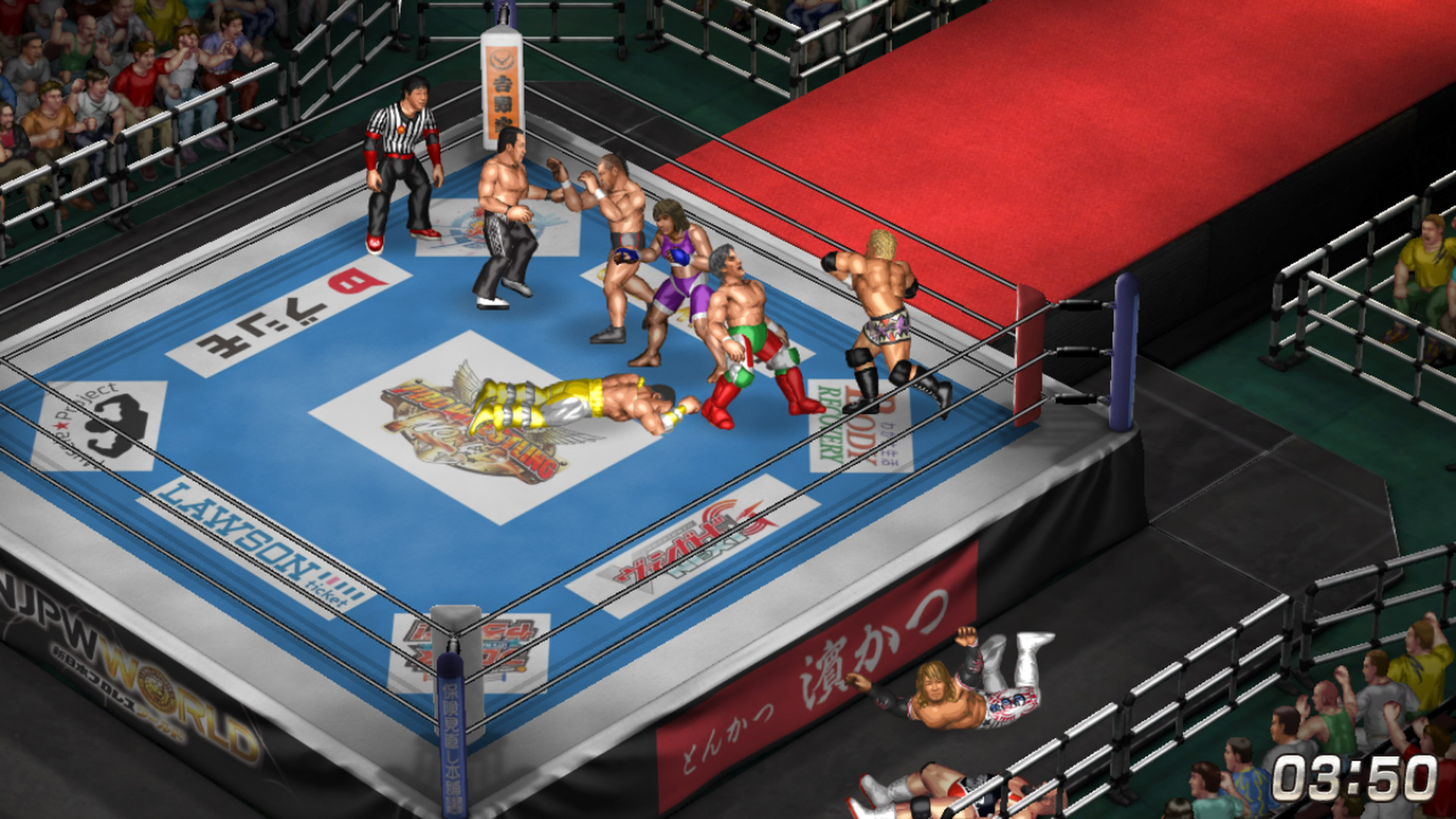
If Fire Pro Wrestling World’s seemingly simple gameplay system hides the true depth waiting below its surface, so too does its graphics. Absolutely, Fire Pro games will never sell themselves through screenshots, but they aren’t supposed to. Every graphical element that has been created exists to serve the game engine and its wealth of options, and I wouldn’t have it any other way. (I’ve played far too many wrestling games where amazing visuals were used to mask terrible gameplay.) And, you know, I’m not sure the series’ visual style will ever lose its charm in my eyes, as quality sprite work can still bring games to life in a way polygons never will. The game has also never looked as good, thanks to the team completely reworking the graphics for the jump to HD. I’m not sure the exact technique Spike Chunsoft used—as in, if these are old sprites run through some sort of process, or if they’re brand new assets—but the results are better than I expected. Bigger, too, at least in terms of the presentation of each wrestler on screen. All those little visual flourishes fans have come to expect are still there as well, from the cockiness of a particular taunt, to the animation details when performing actions like climbing the turnbuckle, to out-of-the-ring aspects like the crowds and commentators.

Another much-appreciated upgrade to the visuals in Fire Pro Wrestling Worldare its user interface. Going back and forth between this and Fire Pro Wrestling Returns really hit home just how much better things are now. The menu system of Returns already wasn’t what I’d call great, and then trying to rework everything for its English release resulted in a real mess. World, in contrast, is incredibly slick and usable, which is thankful given how often you’ll be digging into menus or jumping from one active window to another.

Which, of course, takes us to Fire Pro Wrestling World’s character creator. Across all of gaming’s genres, it’s hard to think of too many other titles that offer character creators as deep or satisfying as Fire Pro, because the sheer potential of what’s possible here really is unbelievable. After giving your wrestler some standard profile details—name, nationality, height, weight, things like that—you basically build them from the ground up, fully customizing their look, entire roster of moves, offensive and defensive parameters, their skill level at the various requirements of wrestling, and their behavioral settings for when they’re controlled by the CPU instead of a human. Like before, there are also other elements you can customize to your liking, from forming federations and factions, to designing your own rings and title belts, to—should it tickle your fancy—even making your own referees.

Fire Pro Wrestling World offers up a few revisions to character creation that make a world of different. For one, you can now have a wealth of options all on screen at once, giving quick access to the main presets, a preview of how your wrestler is looking, the edit pieces for their body, and which outfit choice you’re editing. (Yes, you can now have multiple outfits per wrestler!) You can swap between your character’s stance or rotate a particular edit piece from every possible angle, both of which greatly help in making sure things are looking right. Another update that is an absolute godsend is that—when looking through the sprawling lists of parts such as faces, torsos, accessories, and so on—there’s now a built-in filtering system you can use to drill down to only the specific kinds of choices you’re looking for.

The other major change in character creation is an incredibly expanded focus on layers. In previous Fire Pro games, many items (such as clothing pieces) came as singular edit pieces. Now, Spike Chunsoft has broken a lot of those pieces up into their individual components. In order to facilitate this change, the number of layers any singular body section can have at one time has been greatly increased to nine. I was a little shocked at this change at first, and wasn’t sure that I was liking all the extra work involved. It quickly became apparent, however, just how much more power I as a creator now have under this new system. For example, as you can see below, I picked a random mask in Fire Pro Wrestling Returns and then set out to create something similar in World. Instead of having hard-coded style choices with only two editable layers on the pre-built mask, the one I put one together has five (with the ability for more), and I can swap any of them out for another option to create an even more customized component.

The switch to this new layer system is incredibly powerful for those who love to dig into the character creator, but it also reminds me of how holy crap intimidating all of this can be. No matter how many other wrestler creators you’ve used, none of them will have prepared you for what it’s like in Fire Pro—and that difference can be completely overwhelming even for longtime players like myself. Making just one wrestler can be a commitment not of minutes but hours or even days, and it can sometimes feel like the effort just isn’t worth it. It is, though, I promise you. Every moment you spend with Fire Pro Wrestling World’s editor will pay dividends, either in experience, gained understanding, or a new addition to your slowly-growing roster. The more time, effort, and energy you put into the game, the more you’ll be able to get back out of it, and that payoff quickly becomes obvious.

Fire Pro Wrestling World is not a perfect game, and there are definitely areas that could use improvement over time. Some I’ve already mentioned, others I haven’t, such as some occasional frustration due to buttons being assigned to far too many actions (leading to times when you want to do one thing but instead do another). What it is, however, is the best wrestling video game experience we’ve received so far this generation—and it’ll still be the best next year, and the year after that, and probably the year after that. (I’ll be overjoyed if something comes along to make me eat those words, but I’m not holding my breath.)

If the game existed only as what we get on a disc or a download at this point in its life, those words would still be true. However, unlike all previous Fire Pro titles, Spike Chunsoft now has the ability to give players more in the days, months, and years ahead, which we already know will be happening at the very least a few upcoming DLC expansions. So, after 12 years of darkness, the soul of the Fire Pro series, and the wrestling genre in general, is now burning brighter than ever—and I couldn’t be happier.

Update: Literally as I was getting this review set up for posting, a new 1.03 patch was released for the game, promising fixes for the frame rate issues when playing on PlayStation 4. After trying a handful of more complex match types using this new patch, the issues I had previously experienced do seem to be cleared up. While I’m no longer including concerns over the game’s frame rate in my review, I do still want to note that I’ve not had extensive enough playtime post-patch to be 100-percent certain there aren’t any such issues still lingering.

Dragon Quest XI: Echoes of an Elusive Age Review

While it may not have ever been as big as Mario vs. Sonic or Street Fighter vs. Mortal Kombat, one of the battles that brewed during the earlier days of gaming was Square’s Final Fantasy vs. Enix Corporation’s Dragon Quest. Though the rivalry began on pretty similar terms—both were fantasy-based RPG franchises that sprung up in an era when developers were still trying to figure out what console RPGs were even supposed to be in the first place—time would see the two separate into opposing ideas: “serious” versus “lighthearted”.

My loyalty lay with Final Fantasy. It wasn’t that I disliked Dragon Quest or anything—heck, the original Dragon Warrior (our localization of Dragon Quest) was one of the first RPGs I ever played. Over time, I’ve gone back to Dragon Quest here or there, and while I’ve come to appreciate and respect what Yuji Horii and team have done with the series across those 30-plus years, I’ve always kind of been waiting for the one chapter that would really win my heart.

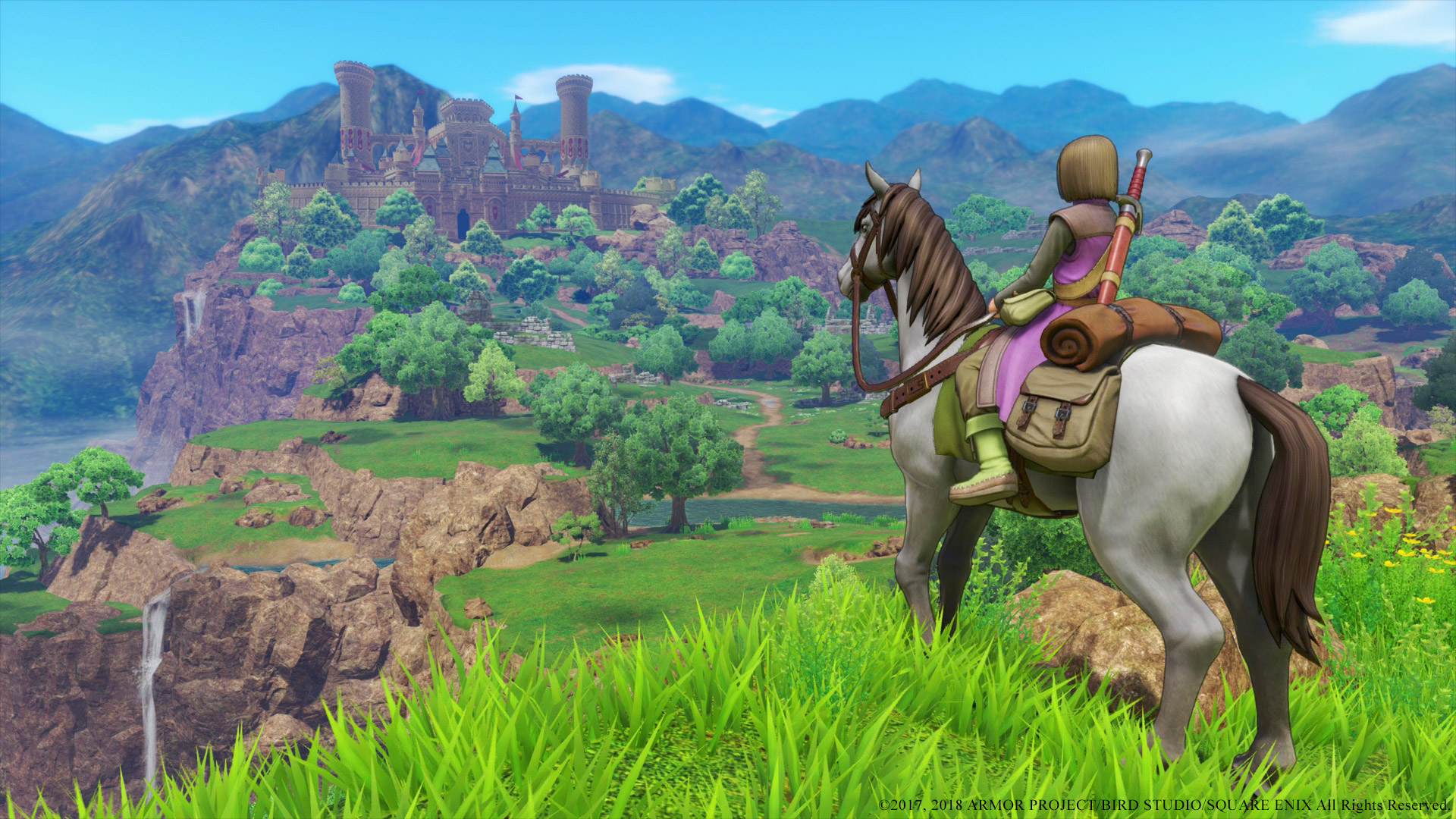
Although it hasn’t convinced me to jump to the other side of the fandom fence, Dragon Quest XI: Echoes of an Elusive Age definitely won me over in my time with it. Part of the reason is the game’s visuals, and while that might seem like an odd place to start when listing the virtues of an expansive, epic RPG, it’s an element of the experience that has been building to this day since 1986.

One of the trademarks of Dragon Quest right from its original chapter has been a collaboration with legendary Japanese artist Akira Toriyama, best known as the creator of Dragon Ball. Of course, the 8-bit era couldn’t even come close to representing his art style in digital form, and while later games have gotten closer to bringing his designs to life, they’ve still been lacking. Dragon Quest XI, however, is incredibly impressive in this regard. While we saw very decent translations of Toriyama’s work in the Dragon Quest Heroes games, DQXI is on a whole other level. Both teammates and NPCs now look almost exactly as we once had to imagine them, but it’s the roster of enemies where the game’s graphical prowess really shines. I’ve never completely been a fan of Dragon Quest’s sillier take on monsters—and I’m admittedly still not—but there’s no denying how they come to life here in a way many RPGs never accomplish.

A pretty face alone does not an RPG make, so thankfully there’s some great gameplay to back up those visuals. What I find really interesting about Dragon Quest XI is that, at the core level, it’s not really doing anything we haven’t seen countless times before. A young hero finds out that they’re the chosen one, sets off on an adventure, and collects a team of ragtag fighters as they inch closer to the inevitable encounter with the looming evil. Sometimes, in fact, the game falls into ridiculously repetitive patterns, such as: visit a town, learn of some local threat, head off to a dungeon to solve the problem, meet the thankful citizens so they can give you an item or open a path, head off to the next town, rinse and repeat.

And yet, it works. Dragon Quest XIfeels like years and years of polishing of classic RPG ideas—because, really, it is—and there’s something both enjoyable and comforting in that, even if you sometimes have those repetitive loops. The game reminded me that not everything has to be realtime combo-based battle systems or MMORPG-level world building or fancy Hollywood-quality CG cutscenes. Battles here shouldn’t be as fun as they are for how simple they are on a technical level, and yet I never got tired of them, showing that less really is sometimes more. DQXI’s world is neither fully open world nor completely linear, instead existing somewhere in between, making each area feel expansive and interesting to explore while also never causing stress over where you should be going next. I even enjoyed the item crafting here, thanks to a mixture of always finding new recipes and being able to not only craft worthwhile equipment but also improve even the store-bought stuff.

That’s not to say that everything about Dragon Quest XI feels out of sync with the times, however. While I know it’s not new, as it first made an appearance in Dragon Quest IX, I still really appreciate the “conversation identifier” system that the team at Square Enix has come up with. Every NPC in the game (outside of shopkeepers and the like) has a color-coded speech bubble above their heads: grey means they have no dialog beyond what automatically pops up when walking past them, blue means they’ll have something more (but not critical) to say if you initiate a conversation, pink means they’ll give you a hint as to where to direct your focus for advancing the story, and purple means they’re a quest giver. Speaking of quests, DQXI does the unthinkable in only offering up a small selection of side quests to undertake across a playtime that can hit the triple digits. With how often so many other such games inundate you with people asking you to find something, bring them something, kill something, or whatever else, having such a small possible lists of quests here actually makes each one feel more important and valuable—again going back to that “less is more” idea. There are a few times when the game swings way too far to the other side of the progress scale, such as how you can end up in random battles without any visual warning when travelling by boat, which violates both the game’s own rules and basic common sense. Thankfully, these elements do little to harm the overall game. Well, save one—but we’re going to get there shortly.

The true secret to Dragon Quest XI’s success for me is an element that I never expected to love going in: its characters. I’ve never really felt much for the supporting casts of past Dragon Quest titles, but DQXI might be up there with Persona 5 for my favorite RPG teammates of this generation. Each fits nearly perfectly into long-established Japanese RPG tropes, but through their actions, personalities, or quirks rise up to become something more. Credit for that must be given in part to the game’s localization and new-for-the-West voice acting. While a few of the localization decisions can be a little grating—I was thankful to leave the haiku-spewing village as soon as I was able—whether written or spoken, both story and dialog are wonderfully presented.

I think there’s no better sign to how well the support characters work than the “entertainer extraordinaire” Sylvando. The moment I met him, I feared for the worse, as he instantly comes across as yet another example of Japan’s embarrassing “wacky homosexual” stereotype. Japan’s handling of LGBT issues and characters can be incredibly disappointing, and we’ve seen plenty of examples of that over the years just in video games alone. However, while Sylvando gives every warning sign at first of where the character might be going, his path actually takes him in a far different direction. Sylvando can indeed be effeminate, and campy, and seeming like a blatant stereotype, but every time I worried he might cross that fine line, he never did. While he definitely is those things, he’s also powerful, and resourceful, and respected, and goddamned awesome. The rest of the cast never treats him in the ways that you expect (or fear), and if I was concerned with him as a cast addition five minutes after his introduction, I was already in love with him after 10. (Although, to be fair, it’s entirely possible that questionable aspects of Sylvando’s personality may have been softened in the Western localization.) I mean, my two favorite party members were the flamboyant is-or-isn’t-he-gay jester and the pint-sized child magic user—two of the character types I typically hate with a burning passion. If there was anything to convince me that Dragon Quest XIwas doing something right, they were that proof.

And yet, all of this praise I have for what the game is able to do with its cast leads us to the absolute worst character it has to offer: you.

In most cases, silent protagonists are a sham, no matter how many people will accuse me of being a moron for saying that. The idea behind the silent protagonist was to give the player a self-insert character, where we—not the development team—could decide who they were, what their story was, what they looked and sounded like, and so on. That’s great, except that hasn’t worked for years as character models have improved and storylines become more complex. The hero of Dragon Quest XI is a young man with a very specific physical appearance, who has parents and a past, and is then adopted by another family, and grows up in a specific village, and has a childhood friend, and even speaks when we see him as a child. There is nothing about this character that is me, not even one singular point that I can relate to him on on a personal level other than our both being human beings. What the development team has given us here is a specific person that exists on the exact same level of predetermination as every one of his teammates. Had I any choice in his existence—even a simple gender selection (like in Dragon Quest IX) or picking what kinds of weapons he can specialize in or even just determining what kind of haircut he has—I could have something to connect with him with. But there’s nothing.

If you look at a game like Dark Souls, it gives players a silent protagonist that can be customized in a wide variety of ways to make them feel like they’re the player’s character. On the other side of that is something like Final Fantasy XV, where in Noctis we get a fully predetermined character with a voice and personality and involvement in the happenings around him. I’m sick of these wishy-washy in-betweens, especially when the middle point between those two choices is something like Mass Effect’s Commander Shepard, not this.

Why am I harping so hard on this one element of the game? Because the decisions that were made for our main character in Dragon Quest XI actively hurt the story it tells. In scene after scene, the narrative happens aroundthe hero, or to the hero, but never with the hero. As your teammates talk about what to do next, there you are, standing there silent with a dumb expressionless look on your face. As your crew faces off against a terrifying boss and Erik or Jade passionately tell them they’ll never win, there’s your big dumb expressionless silent face maybe going so far as to give an utterly threatening nod. As—in the scene that most broke me in this regard—a character pours their heart out over a lost loved one, giving them absolutely no comfort or encouragement is your big dumb expressionless silent face. And before you say that DQXI is a more light-hearted, younger-audience RPG romp that never takes itself too seriously, so the character can just be a personality-less avatar? The problem is it is but it isn’t. The adventure is definitely all of those things at times, but then in others it gets incredibly dramatic, and serious, and mature on a really touching level. You simply can’t have it both ways—you can’t ask the player to become emotionally engrossed in a story while also giving them a vehicle for exploring said story that is themselves so utterly detached emotionally.

As much as I despise its main character, I want to be very clear: His failure does not irrevocably harm all of the other good that Dragon Quest XI: Echoes of an Elusive Age has to offer. Once you’ve come to terms that the main character of the story might as well be Rab, or Veronica, or any other of your teammates depending on the current situation, it’s possible to set that failure aside and go back to appreciating what the game does get right. This is an engrossing story, powered by a fantastic supporting cast, build upon some tried-but-true gameplay. It can be easy sometimes to look at “simpler” RPGs and feel like they don’t have a place anymore in today’s gaming landscape, but Dragon Quest XI goes a long way to remind us that we all need a dose of colorful, cartoony charm every now and then.

Shadow of the Tomb Raider Makes Us Question Lara as a Hero

Back in April of this year, when my fellow EGM editor Evan Slead and I attended the reveal event for Shadow of the Tomb Raider, we walked away with the same question: is Lara Croft a bad person? In the demo we had both played, Lara’s snatching of an ancient dagger unleashed a raging flood upon an unexacting Mexican city. Then, after our villain of the week shows up to take the dagger from Lara, he says something that we’re not ready for: that he must now use the dagger’s powers to stop the end of the world that Lara has helped set into motion.

That question was still fresh in my mind when I sat down to play the first handful of hours of Shadow of the Tomb Raider recently. Of course, I had other questions as well, such as what the team might do to keep the game feeling fresh in this third chapter of the rebooting of Lara Croft, and who Lara herself even is at this point in the story.

It was that last part—who is Lara Croft?—that I opened up with when sitting down with the game’s director, Daniel Chayer-Bisson, and lead writer, Jill Murray.

“When we go back to Tomb Raider in 2013, Lara’s not the ‘tomb raider’ yet. She doesn’t even know who she is period. And then when we go to Rise of the Tomb Raider, at a certain point, she comes back to Croft Manor. She’s saying, ‘Hey, now I understand my legacy as a Croft, and understanding what being a Croft means exactly,’” explained Chayer-Bisson. “And now in this third game, we still cannot yet say she’s the ‘tomb raider’ at the beginning of the game, but she is very capable. She’s a strong-willed woman, of course. She’s independent. She’s very efficient. She’s smart, even more than in the two previous games because she has a lot more knowledge.”

Playing Shadow of the Tomb Raider, it’s easy to see the growth that Lara has been going through. There’s still something about the Lara we saw in 2013’s Tomb Raider that I really appreciate, in part due to my love for the “origins story,” and in part because I think it gave a level of humanity to the character that she had never had before. However, I know that, for at least some people out there, she wasn’t the Lara Croft that they knew, loved, and wanted.

After stumbling her way through a world where she’s not sure who she is, what she’s become, or who she’s supposed to be now in Rise of the Tomb Raider, the Lara we get here in Shadow is definitely far closer to that of the classic era of the tomb raider. Though the handful of hours I spent playing the game is of course only a small slice of the entire experience, Lara feels so much more confident, determined, and self-sufficient now. In Tomb Raider, it always felt like Lara was reacting, not acting; she was trying to survive being pushed around by the world, finding a few chances to push back here and there. Now, it’s often Lara who initiates that pushing. 

That’s not to say that she’ll be doing things alone, however. More so than before, this isn’t just the story of a young girl left to fight for survival on her own in the wilderness. Even if she doesn’t always take their advice, Lara must learn that she is part of a much bigger whole, and that her brains and brawn alone can’t overcome everything. 

“We looked a lot at the relationship with her best friend, Jonah, as well as all the other characters that we need in the game,” Murray told me. “It’s a fairly small cast, but each of them is really the hero in their own story. They’re not just there as foils to her. It’s really about her kind of seeing herself now in relationship to the outside world, and these other communities, and wondering where she fit into everything. And maybe that her solutions to her problems, even though she is this extremely powerful agent, are not gonna be just about her anymore.”

Lara’s place in the world and the effect she has on those around her lead me back to that nagging question that wouldn’t leave my mind, however—and there was something that I left out of Chayer-Bisson’s earlier quote that brought those feelings back to the surface:

“But the most important thing is to really understand the consequence of your action.”

Consequences. That’s an idea that is dealt with to some degree in games such as Tomb Raider, or Uncharted, or even other types of similar media such as the Indiana Jones movies. What are the consequences of “adventurers” traveling around the world trying to dig up ancient civilizations and the treasures that may have been lost—sometimes purposely—along with them?

Have we truly asked that question, though? Time and time again, our heroes get into trouble, but then save the day by solving a puzzle or killing a bunch of bad guys and then smiling as a final cutscene fades out into end credits. The true gravity of those actions was something I had begun to feel during that early Shadow of the Tomb Raider demo, and it was something that I saw more of in the Lara Croft we’re given here.

Yes, this Lara is more confident and determined, but she also comes off as too confident and determined. At times, it’s subtle, but the more I played, the more I was feeling like Lara wasn’t as ready for all of the situations she was getting herself into as she thought she was. If you compare Lara to her rival dude raider, Nathan Drake makes terrible decisions and gets himself into sticky situations because he’s the brash, over-anxious fame-and-fortune type. Lara isn’t that, and her mistakes feel like they come from a deeper, more potentially dangerous place.

“I always use the analogy of a surgeon,” Chayer-Bisson explained as I started to press him and Murray on my thoughts on Lara’s current mental state. “A surgeon that fails a surgery, someone will probably die, especially if it’s a life threatening type of procedure. Lara Croft, what she does has a way of becoming bigger in terms of what her actions are. When you’re thinking about a tomb raider, she’s touching things that are supposed to be staying hidden because they will have a possible impact on the world.”

Which, of course, takes us back to Lara stealing a sacred dagger and setting off some kind of potentially world-ending apocalypse. So, I decide to just get right to the point and ask the question I’ve been wanting an answer to, which earned a laugh from both Chayer-Bisson and Murray: has Lara become the bad guy?

“For me, it’s not that she’s the bad guy,” Chayer-Bisson said, still smiling. “The interesting part, though, is that the bad guy also has a noble motivation. He has noble goals. And these noble goals are shared, but the way to reach them is very different. And they are both right in their ways. Without spoiling the story, this is something that will, I think, surprise the player constantly playing.”

“I think it’s that she’s made this mistake, and that it’s gonna be a challenge for her to figure out how to fix it,” Murray added. “And you don’t know if she is going to figure it out, which creates tension that helps pull you through the game. But you can see in the game mechanics many opportunities for her to try things different ways and change her mind. So change her mind.”

My mind, however, remained unchanged at that point, and it wasn’t long before a scene popped up to make me feel even more emboldened in my opinion. As I neared the end of our demo, I reached a small village in the forest, and among the people living there were a few villagers who offered up sidequests to give Lara a break from the main storyline.

One of those people was an older woman who had a sad tale to tell. At some point previously, she’d lost her husband and child, but said she’d see them at times shining in the night sky or sparkling in the river running along the village. Well, that was until recently, when she explained that the river had become too cloudy for her to see them anymore.

Using Shadow of the Tomb Raider’s new underwater gameplay mechanics to dive deep into the muddy river, I found the source of that sparkling: a vein of gold in a rock a bit below the water’s surface. Swimming up to the rock, I pressed a button on the controller, and Lara proceeded to take out her ice axe, chip away at the gold, and take it for herself to spend elsewhere—potentially even that very same village.

In almost any other game, I would have taken the gold and ran, but here, it gave me pause. Chayer-Bisson and Murray told me to think about the consequences behind Lara’s actions, and now that I was, I saw her in that moment as a villain of sorts, taking for her own desires without caring about what it’d mean for the old woman and her loneliness. 

That’s not to say that Lara actually is a villain in Shadow of the Tomb Raider, of course. But it does mean that I spent more time thinking about the actions of its heroine probably more than I ever have before—and that has me excited to play further into a game that could easily have just been a shallower tale of tombs and treasures.

Little Dragons Café Teaches Us Heroes Don’t Have to Do It Alone

I’ll never forget the first time I heard about the game Harvest Moon—because the idea made absolutely no sense to me at the time. As news was coming out through Japanese gaming publications about the new project, it was explained as a “farming RPG,” and those words held little tangible meaning in a world where such games had never existed before.

However, the more you get to know Japanese developer, game creator, and Toybox CEO Yasuhiro Wada, the more you learn that coming up with the unexpected or unexplainable runs in his blood. The man who helped launch an entirely new genre of games has gone on to either develop or produce a wide variety of genre-bending work, leading up to his latest, Little Dragons Café.

Little Dragons Café‘s premise offers a sense of familiarity to some of Wada’s previous works such as Hometown Story. The game begins with a pair of twins—brother and sister—learning the ropes of helping their mother manage the family cafe. Their duties initially start simple: gather ingredients, assist their mother in making simple dished, lend a hand in attending to the customers.

Of course, this wouldn’t be a Yasuhiro Wada game if there wasn’t something deeper than that, and those elements begin when the twins’ mother falls into a deep and mysterious sleep. They’re told that, in other for their mother to awaken once again, the pair must help raise a baby dragon while also keeping the cafe running smoothly. This sets up a number of more traditional gameplay systems and ideas that we’ve seen before from Wada, such as store management, cooking, and pet raising.

Don’t get the idea that you’ll just be doing all the same things you’ve already done before in his previous games, however.

“Games like Harvest Moon, Story of Seasons, those games already exist and can continue on with ideas like farming, dating, and marriage,” Wada explained to me at a recent preview event for Little Dragons Café. “I asked myself what I could make that wouldn’t have either farming or fighting in it that people could enjoy. There are a lot of games that are story driven, but they tell very ‘video game’ types of stories. I wanted to make something that would feel different than that, so that’s the reason I first came up with the idea of Little Dragons Café.”

One of the ways in which this story will feel less like your traditional video game narrative is that there will be no concept here of one young lad (or lass) rising up to save their mother from doom through their strengths and smarts alone.

“I really wanted to focus on the human relationships, together with having players realize that, even with weaknesses, you can still be a hero by joining efforts with others,” Wada said. “There’s a lot of things you can’t do alone, but joining together as a group effort, there’s many things that can be overcome.”

One of the most important paths to success here will be through something that’s often an afterthought: your customers. As opposed to other games where patrons exist to provide a challenge of speed and/or skill, source of money, or simply be seen as busywork, the people who walk through your door in Little Dragons Café will be people you’ll grow to depend upon.

First, however, you’ll have to grow to actually like them.

“All of the customers and guests you see come to the cafe are misfits, or have some sort of issues. From the moment you meet your very first guest, they’re very unlikable,” Wada admitted with a sense of glee. “But, as you progress through the game, your emotions will change, and you’ll want to hug all of the characters. You’ll see that a lot of them do have weaknesses, but by coming together and combining their abilities they’ll be able to help save the twins’ mom.”

As Wada spoke about Little Dragons Café‘s characters, I could see the sincerity in his face and hear it in his voice. One of the things I’ve always appreciated about his games—even in examples like Hometown Story, where I personally found the gameplay itself lacking—is that you can tell Wada puts his heart into everything he does.

That personal connection lead me to one of the most important elements to Little Dragons Café: its twin protagonists. When I first started up my brief hands-on with the game, I assumed what I’m sure many will—that there are two characters, boy and girl, to facilitate players choosing the gender of their playable character.

Talking to Wada, though, I felt that there was more to the idea than just that. At the same time, the brother and sister pair seem to be both completely separate individuals and also one singular entity. Each is a character unto themselves, having to deal with the sudden loss (of sorts) of their mother, the pressures of keeping the family business alive, and the unexpected task of raising a dragon. And yet, they’re in all of those situations together, working to solve problems and overcome obstacles together—even if it won’t be easy.

“Within human relationships, I feel that the mother and child bond is the strongest bond of all,” Wada explained. “The story starts off with a mother and her two kids, but once the mother is gone, the kids can’t really do anything for themselves. They realize how weak they are, but when people think they are weak, it’s actually not true that they can’t do anything. It’s just that sometimes there will be obstacles that you can’t overcome by yourself, or even as a pair, that you can maybe overcome with other people.”

There was one other question that I wanted to ask Wada about his design philosophy for both Little Dragons Café and his library of titles overall, and it stemmed from a connection I happen to have to those two main characters.

Nine months ago, my own twins were born, and ever since becoming a parent, I’ve at times looked a video games in a way I’d never done before. I still enjoy all different types of “mature” experiences—from the violent, to the gory, to the terrifying, to the sexy—but I’ve actually starting giving consideration to what kinds of games my daughters might play when they’re old enough. It’s easy to never wonder if good games are being made for younger audiences, because too often we seems to have the attitude that kids will just play whatever game you put into their hands.

So, after explaining my own situation to Wada, I asked a simple question: Why does he make the kinds of games that he makes?

“I too am a gamer. I do play violent games, or shooting games, or racing games,” Wada said with a laugh. “But there are plenty of good games in all of those genres. I love video games, and because of that, I want more and more people to play them. So, I wanted to make games that people who didn’t want to shoot or race or compete would want to play.”

I’ve Been Getting Street Fighter II’s Name Wrong for 26 Years

I’ve loved fighting games for as long as there have been fighting games.

In fact, I’ve been playing them since before there have been fighting games. I loved arcade releases like Karate Champ and Yie Ar Kung-Fu, both of which introduced us to the idea of competitive one-on-one combat either against the computer or another player. I even played Capcom’s original Street Fighter when it was new, at a point when the community still hadn’t decided that such games should have their own genre to call home. And then, of course, along came Street Fighter II, and I ate it up—just as I did its follow-ups and competitors from SNK, Namco, Sega, and many more.

So, it’s a little hard for me to now admit—as the biggest fighting game tournament in the world kicks off, no less—that, for 26 years, I’ve been calling one of Street Fighter II‘s most important revisions by the wrong name.

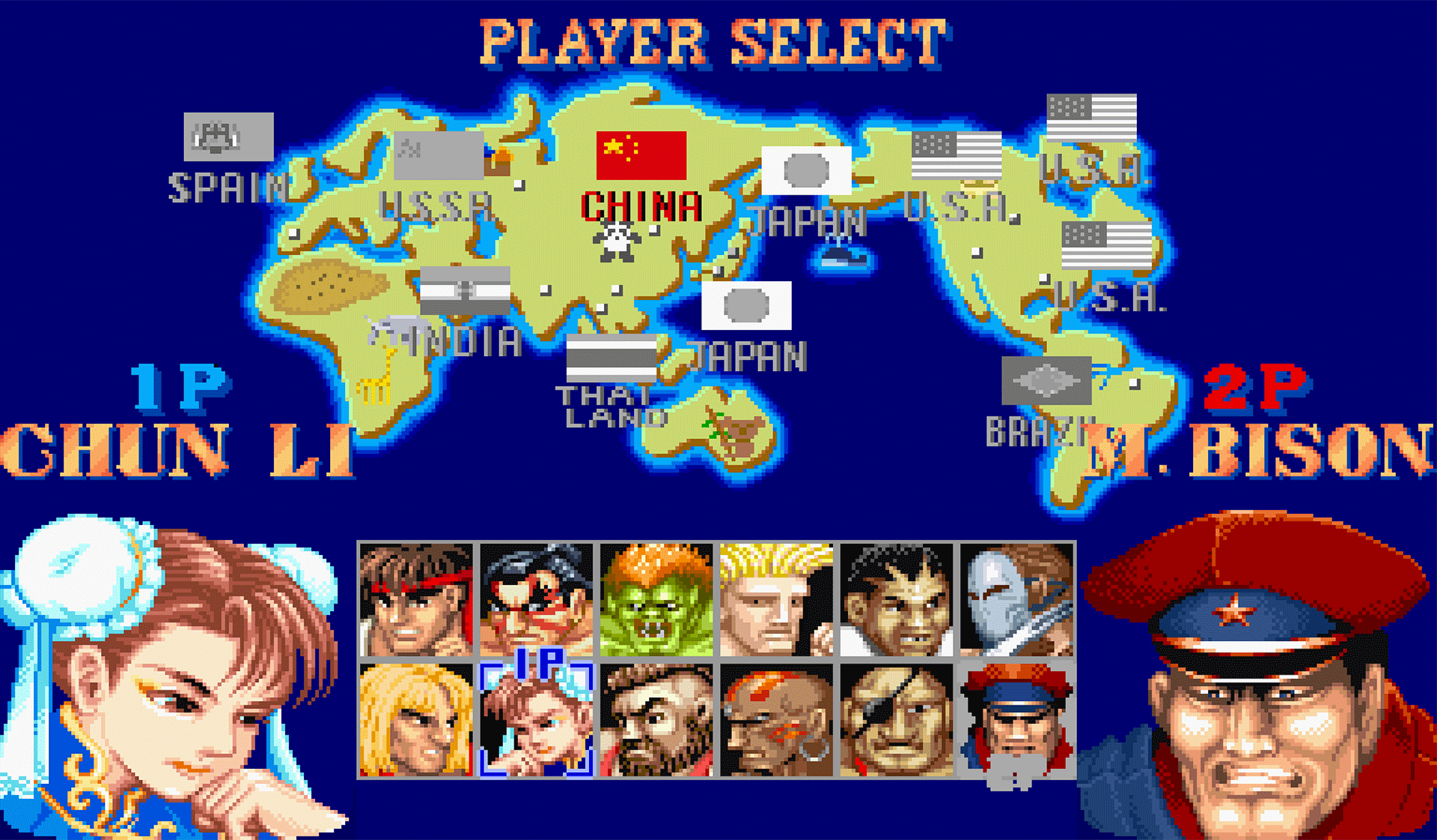
Last week, I was working on some text for one of the variety of projects we do at EGM. As I wrote a very brief blurb on the arcade history of Street Fighter II and its successive upgrades, I noticed a mistake in part of the text that someone else had written. There, on the screen, were the words “Street Fighter II: Champion Edition”—which was clearly wrong, as everyone knows the game’s name is Street Fighter II: Championship Edition.

In any other situation, I probably would have just fixed the mistake and moved on, but in that moment, something inside of me gave me pause. That is the name of the game, right? I asked myself. I mean, of course it was. The game originally hit arcades in 1992, bringing with it massive changes like the ability for players to pick the same character or play as the bosses—how could I have spent 26 years getting such a pivotal fighting game’s name wrong?

And then, I checked to confirm that it was indeed Street Fighter II: Championship Edition.

Except, it wasn’t.

To say that I sat there in a state of shock for a few moments is in no way an exaggeration. Yes, it’s just one name of one game being off by a few letters, but it was the official name I had known said game by for as long as it had existed. It’s like if I suddenly learned I actually live in the Unified States of America, or that they’re “handburgers” instead of hamburgers. How had I been wrong for so many years, and how had nobody ever corrected me throughout all of that time?

Desperate for answers, I tried to figure out what may have originally caused me to have “Championship” in my head. Then, an answer popped up: that had to have been the name of the special Street Fighter II release that was made for the Genesis, created to allow Capcom to avoid their exclusivity agreement for the original game with Nintendo. So, I check—but that wasn’t the answer. The Genesis version did have a slightly different name, but nowhere in Street Fighter II: Special Champion Edition could a “ship” be found. (Though I’m sure many fan fiction writers and fan artists will disagree with me.)

Enter the Mandela effect.

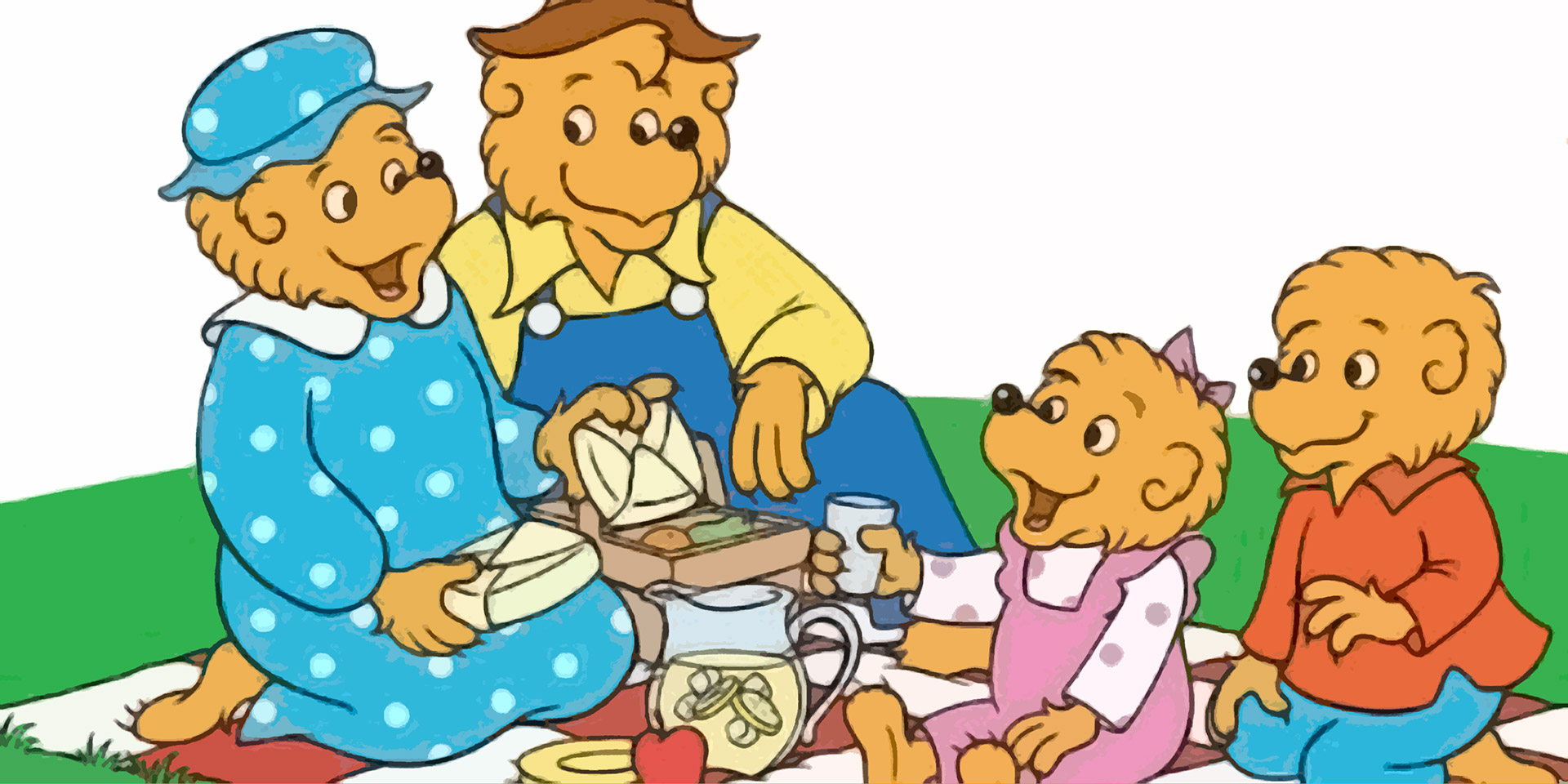
In 2012, “paranormal consultant” Fiona Broome coined the term “Mandela effect” for the “phenomenon of collective false memory.” Named after her insistence that thousands of people remember reports of the death of South African leader Nelson Mandela in the 1980s—which did not in fact happen—the idea is that, for one reason or another, huge groups of people can share the same memory of something that actually isn’t true. This concept was illustrated beautifully a few years ago when the internet became awash in people having deep arguments if the long-running children’s book series is the Berenstein Bears (with an “ei”) or the Berenstain Bears (with an “ai”).

Wondering if I was living alone in an alternate reality where “Championship Edition” was the game’s true subtitle, I brought up the topic on Twitter.

I kicked off a quick poll with a simple question: Without looking the answer up, just from personal knowledge, what was the name of the direct follow-up to Street Fighter II? The answers I got both shocked and reassured me. Out of the 160-plus people to reply to my poll, 39% said that the game’s name was “Champion Edition,” while 61% said that it was “Championship Edition.”

I wasn’t alone.

Unfortunately, my attempt to reconcile the confusion I’d found myself in had then lead to others discovering the horrible truth.

I now live in a post–Championship Edition world, and I’m not sure what that’ll mean for me on the road ahead. I’ve tried in the days that followed to train myself to say “Champion Edition,” but every time I try, it sounds so foreign and strange and wrong. At least now, however, I know for certain that I’m truly not alone. Even beyond my Twitter feed, search the internet, and you’ll find everything from forum posts to cosplay galleries to Amazon product listings to ROM sites to even coverage from older video game magazines all talking about “Street Fighter II: Championship Edition” without even a second thought.

I now no longer wonder about how I could have been wrong about the game’s name for so many years—and instead wonder how many more people there are out there like me, who will—at some point in the future—also question everything the know about reality when it comes time for them to learn the truth.

Sonic Mania Plus Review

As we close in on the one-year anniversary of its original release, I’m not sure there’s much need to reiterate how good Sonic Mania was. (You can always check out my review if you do want that, of course.) Coming as a collaboration between Sega and a development team comprised of talented longtime fans of the blue hedgehog, the game served as both an homage to the 16-bit era of the series and a path forward for those still wanting Sonic to stick to his 2D roots. Sonic Mania maintained an outstanding level of quality almost consistently from beginning to end, bringing smiles both to a whole new generation of Sonic players and longtime fans like me who had gotten lost along the way.

If there’s any game that really wasn’t in need of an expanded rerelease to fix or add on to what had come before, Sonic Mania would be near the top of the list. And yet, here we are, nearly one year later, receiving Sonic Mania Plus.

Before anything else, Sonic Mania Plus serves as a way to bring what was previously a digital-only title to store shelves, something 2D Sonic’s return without question deserved. However, Sega and the teams involved weren’t satisfied with just slapping the original game onto discs (or cartridges), packaging it with a mini art book and calling it a day, so Plus also brings us a handful of smaller—but really appreciated—changes. Funny enough, the one I was most looking forward to was the addition of the stage transitions missing from the original. Sure, they were a small aspect that had no real effect on gameplay, but they were part of the overall sense of care and attention given to Sonic Mania that then felt strangely incomplete. Well, they’re all here now, and I’m satisfied—mostly. There’s a transition or two that still feels kinda lazy compared to the others that we get, but at least everything is now consistent.

Stage transitions aren’t what’s most exciting about Sonic Mania Plus of course, so how about two brand-new characters instead? Joining Sonic, Tails, and Knuckles in this expanded version of the game are Mighty the Armadillo and Ray the Flying Squirrel. While they have elicited cries of “who?” from some, they’re pretty interesting additions given that—with their debut in the 1993 arcade release SegaSonic the Hedgehog—they are some of Sonic’s earliest, yet most forgotten over time, playable friends. Each brings his own unique twist to Plus: Mighty can drop out of a jump with an enemy-crushing ground pound, block projectiles while crouched, and survive one bounce on spikes; meanwhile, Ray—my personal favorite—can glide through the air without losing altitude (like Knuckles does).

To help encourage players to give the adventure yet another go with the duo, Sonic Mania Plus also offers up Encore mode. On the surface, Encore mixes up the game’s thirteen zones with tweaked visuals and environments, while also adding in Sonic the Hedgehog 3’s Angel Island. (Just, trust me, temper your excitement for its inclusion.) We also get an all-new type of checkpoint bonus stage: a sort of pinball-esque mini game, no doubt inspired by Sonic Spinball’s own bonus stages. Given how much I loathe the typical blue sphere challenges, I was stupidly excited when I first discovered this new alternative. After giving them a shot, I do feel like the idea is a tad underdeveloped—but I’d still rather have them than not.

Encore mode then offers up one other big gameplay twist. After starting off as Sonic, you rescue either Mighty or Ray (your choice) in the first act, and from there, you’ll always play as a duo, with the ability to switch between your two active characters at any time. Instead of additional lives, 1-up monitors will “rescue” one of the other characters which you can swap out of reserve and into your current playable pair through the use of special monitors. When one character dies, another jumps in to take their place, with a full game over occurring once you’ve killed off every member of your current stock. I wasn’t at all expecting this aspect when giving Encore mode a go, but it’s a neat idea which helps encourage replayability—even for those who have already played the original Sonic Mania to death at this point. It’s also nice to have a team option for those (like me) who may not be into the Sonic & Tails duo—or, uhm, that Knuckles & Knuckles nonsense either.

Beyond that, Sonic Mania Plus brings a number of other smaller examples of polish to make the original game’s shine even more brilliant. Time Trials now offer the ability to save and playback replays, Competition mode boosts the possible player count up to four, and Korean and Chinese have been added to the language options. Best of all, the previous “secret” gameplay options (such as unlocking the Sonic CD peel-out dash) are available even for your saved games. Oh, and—to the utter delight of some of you out there—there’s even the ability to completely turn off the stage time limits.

There is one change that appears in Sonic Mania Plus that I’m not a fan of, but it’s a change born from good intentions. One of the complaints about Sonic Mania was that some of the bosses were too easy, and while that hasn’t been fully addressed to my liking, I do think their level of difficulty feels better now. In rebalancing these encounters, though, one of the bosses was completely altered from what they were before, and it’s a move that feels lateral. Sure, the original battle was something of a letdown given the importance of the character in question, but honestly, so is this. The boss’ rework feels like a wasted effort to me, a comment I can’t make about any other piece of the game.

One iffy decision doesn’t even begin to negate all of the wonderfulness that Sonic Mania Plus brings with it, of course. Even as a game not in need of fixing, it’s hard to deny that it does now feel like a more complete and polished product. If you’ve been dragging your feet on picking up Sonic Mania or were waiting to see if a physical release would eventually come, then it’s time to finally experience the joy and splendor that Christian Whitehead and friends have given us. And, if you already own the game’s original release, I’d consider the $5 it’ll take to upgrade your copy a no-brainer.

The Sims 4 Seasons Review

It took me 17 years to finally sit down and play Maxis’ long-running The Sims franchise, a delay caused not from a lack of interest, but an absence of having a computer I felt could run it properly. When I splurged on a high-end MacBook Pro last year, I decided maybe it was finally time to give the series a shot, so I picked up The Sims 3 along with three expansion packs: Generations, Pets, and Seasons.

After a week and a half I’d already put 100-plus hours into the game, at which point I decided maybe I consider moving up to the more modern The Sims 4. (The Sims 3 had come out way back in 2009, versus The Sims 4’s 2014 release.)

The problem I had going into The Sims 4 was that I simply didn’t know a world without pets and weather and other features that had come in the post-launch expansions I’d purchased. Suddenly, I couldn’t have a cat, and the world outside my home felt like it existed in some weird kind of seasonal stasis.

It’s funny, then, that two of the biggest holes in my The Sims-loving heart have been filled one after another. Coming on the heels of The Sims 4 Cats & Dogs last November, EA and Maxis have now delivered The Sims 4 Seasons, which—at its core—could be reduced to one word: weather.

The thing is, you forget how much of an impact weather has on you until it’s gone. As a native Nebraskan now living in Los Angeles, it really hit me a few years in just how bizarre life felt without a proper changing of seasons. Seasons give us a sense of a passage of time, a direct connection to which part of the year we’re in, time-stamped memories of that summer day at the amusement park that was swelteringly hot or that winter night when you were outside playing in the heavy snowfall descending from bright grey skies.

As I loaded up my various The Sims 4 worlds now running Seasons, it didn’t take long to remember just how much the game had been missing. In one, the world outside came alive in autumnal colors, as leaves piled up under trees becoming bare. In another, rain poured down during a summertime storm, with my Sims showing a bit of fright at the lightning and thunder crashing outside. My biggest joy, unsurprisingly, came once I hit winter, as the snow piled up and a quiet peace blanketed the world.

It’s hard to really explain the importance of such things to those who might not appreciate what weather brings either real or virtual worlds, but for those who do, I can’t say enough about how much better of an experience The Sims 4 now is. Before any of the other things Seasons adds to the game, its titular feature alone would sell me on this expansion. It is completely frustrating, however, that it would take nearly four years for us to finally reach this point. To me, having something as basic as weather is a requirement for a “life simulation” from the start, and yet it’s once again been used a carrot to dangle in front of players to try to keep them waiting and wanting.

The Sims 4 Seasons is more than just weather and the effects it has on the world, of course. Right away, you’ll see some small yet major changes to the overall interface, with new icons that reveal the weather and general temperature, time of year, and a handy calendar filled with things like birthday reminders, work/school schedules, and new holidays. Well, new to The Sims 4 at least, because you’ll recognize obvious takes on holidays such as Christmas or Halloween, even when their more generic names aren’t familiar.

Holidays, like many things in The Sims, will only give you as much as you put into them. Seasons adds a ton of new items for getting your Sims (and their homes) into a festive mood for all sorts of holidays, so those willing to spend the time (and money) to decorate piece-by-piece can end up with some fantastically over-the-top results. Some things do provide for easier decorating: there’s a box of decorations you can use to dress up the outside of your home in just a few clicks, and tasks like decking out the not-Christmas-but-totally-is tree is also fully menu-driven. You can also help make your party a hit with the new grand meals, dishes of bigger proportional sizes—think things like Thanksgiving turkeys—perfect for feeding a family or group of guests.

If there’s a particular holiday missing, or you just want to be a little more creative with your festivities, you can even make your own holidays. The interface is pretty simple and easy to understand, as you pick when you want the event to occur, the overall theme of the holiday, and its traditions—such as barbecuing, drinking, attending a ceremony, or even the airing of grievances for those of you who observe Festivus. If there’s a pre-created holiday that you don’t like or want to tweak, you can even use that same interface to change them to your liking. A holiday will be considered successful depending on how many of its traditions each Sim partakes in, but the bigger take-away from each will be how things play out depending on your own personal hopes and planning. For example, in one of my worlds, New Year’s Eve ended with my main character drunkenly making out with another girl in front of her boyfriend—and I’d sure call that a success.

The Sims 4 Seasons brings in a number of other additions beyond the expected. Gardening is offered up as a new career path, younger Sims can now become scouts and participate in a slate of new activities, and you can now even win the lottery—should you want to receive big bucks the honest way (versus just cheating like the rest of us). Then there’s the usual assortment of customization content—from seasonal items like kiddie pools to some really great new clothing and hairstyles (at least for the women)—and new activities, such as playing in leaf piles or making snowpals. A lot of what’s been added is, of course, based around seasonal activities and/or needs, but there’s also some other fun things tucked away for players to find.

The Sims 4 Seasons feels like an expansion that really does justify its existence, but it’s also not one without some weird issues or questionable decisions. One of the new elements to the game is the ability to create outfits specifically for warm and cold weather, and I always love having more specialized choices such as this. The problem is, the cold weather option doesn’t seem to know what it wants to be at times. By default, it’s easy to assume that it’s “outside wear”—similar to the style choice we had in The Sims 3 Seasons—but it’s also kind of not. In my first experience of a The Sims 4 winter, my Sims continually complained about how cold they were when they were indoors, and I couldn’t figure out why. Their solution to this problem? Put on their cold weather clothes, which meant I had characters walking around their homes in coats, snow boots, and so on. I finally realized that The Sims 4 Seasons brought with it a major new item: thermostats. Once placed in a home, you can now set how warm or cool you want to keep your domicile (which comes with a monetary cost), and I think that’s a fantastic addition to the game. But—unlike warm weather outfits, where the same outfit can usually be worn both inside and out—cold weather clothing doesn’t work that way. I wish that there was some way to set where an outfit is appropriate to put on, together with a fix for how the game sometimes doesn’t switch to and from cold weather wear when it’s supposed to (such as when going outside or coming back in).

We’ve also lost some seasonal things we used to have that were nice little features, such as the way snow builds up more dynamically or how Sims can get sunburns. At the same time, though, other seasonal effects are much nicer now—such as environmental elements like trees swaying in the wind or the visual effects of heat on particularly hot days—so it’s kind of a toss-up. On that, Seasons does a nice job of changing how things like weather work depending on which region you’re living in, the most obvious example being that Oasis Springs will primarily get rain, not snow. Speaking of those regions, however, there are no new additions here for those looking for a new spot to call home—a disappointment given the potential the team had to create an area perfect for showing off the changing seasons. Another loss is the ability to specify how long each season should be individually, as now it’s one setting that make all of them range from a minimum of 7 days to a maximum of 28 days across the board. Sure, it’s not a big deal in the grand scheme of things, but the individual tweaking was nice for those wanting to replicate more specific regional situations.

I think out of every expansion The Sims 4 has or will receive, Seasons is by far the most necessary one. Seasons and weather are something that should be in the game by default, and their long-awaiting addition really does completely change how even the most boring of days in the Sims world feel. Even though I’ve only been around as a player for a few years and two major releases, I can totally understand the fatigue The Sims players can feel at the constant stream of expansions—especially given we live in a world that’s seen recent additions like Get Together, Jungle Adventure, and the utter nonsense that is Vampires. (Vampires were added to the game a year before weather was—seriously, let that sink in for a moment.) That said, if there’s one The Sims 4 expansion you’ll get, it should be this one—and if you still play the game with any regularity, I consider Seasons to be nothing less than a must-own.

The Awesome Adventures of Captain Spirit Had an Unlikely Muse: Hideo Kojima

Given the talk going into this year’s E3, many fans of the original Life is Strange(including myself) expected Square Enix and developer Dontnod Entertainment to reveal the proper sequel that we’d been waiting for.

Instead, we got something rather unexpected: The Awesome Adventures of Captain Spirit. Having a game that had no direct ties to previous main characters Max and Chloe wasn’t the surprising part, as we’d known to expect that. Instead, what wassurprising was that this would be a singular standalone game to get people ready for the proper Life is Strange 2—and that it’d be completely free from day one.

Thus, when I got a chance to sit down with Captain Spirit‘s two creative directors Raoul Barbet and Michel Koch, I had a number of question about what had been revealed (and which has now been released this week). First, however, I wanted to understand where the team saw both themselves and the series after the release of Life is Strange, given that would no doubt have had a profound effect on where they’d be looking to go next.

“When we were working on the first Life is Strange, we had no idea how it would work, or how the players would react to the story or the scenarios,” explained Koch about how things were during development. “We were trying to make something a bit different, talking about everyday characters facing everyday social issues.”

That focus on a smaller, more intimate “slice of life” story was of course one of the things that pulled players into Life is Strange. All of the pieces that Dontnod placed into the game gave it a distinct feeling—which can be both a blessing and a curse. While Life is Strange stood out from other games at the time, I suggested that it might also create a set of expectations for how any future Life is Strange games might look and feel from us fans.

“It was complicated,” Koch admitted. “On one side, you have the fan expectation of what they’d just played in the first Life is Strange. On the other, we wanted to try to bring some novelty and new ideas to the table. We didn’t just want to do the same thing over again.”

As someone who’d loved Life is Strange, one of the biggest complications to further games that I felt existed was Max’s time-shifting powers. Given how integrated her powers were into the core of the story that was being told, I wondered—and maybe even worried—where things could and should go from there. Would every Life is Strange game going forward have a protagonist with a superpower because they hadto, and would it go so far as to seeing Max’s time-bending abilities again?

“Max’s power made sense given the choice and consequences aspect of that particular game,” Barbet answered. “There was also the fact that, as a teenager, it’s difficult to face tough choices. You have to make them, live with your choices and go on.”

While it remains to be seen what direction Life is Strange 2will be going in the handling of some sort of superpowers, we’ve now gotten a taste of what kinds of alternatives the team could potentially bring us thanks to Captain Spirit. Koch and Barbet told me that they still wanted to have that connection between gameplay, story, and some sort of spiritual element. In Chris—as we saw in the reveal reveal, and are learning deeper in the release of the full game—that power is his imagination. Once again, we’re given a character and a world that feels incredibly grounded and familiar to us, yet which, at the same time, provides room for some fantastical things to happen. Of course, there’s a question that players will have going into Captain Spirit: Is everything we’re seeing only in Chris’ mind, or is there a bigger, reality-impacting situation occurring as well? No spoilers for anyone who hasn’t had the chance to play the standalone story just yet, but Barbet smiled and assured me that that question was one they wanted fans to be asking.

What of Chris himself, though? As much as some players (such as myself) wanted Dontnod to not feel tied down to Max and Chloe, creating such iconic and beloved characters and then essentially abandoning them for someone new always seems like an incredibly risky chance to take.

“We created Max and Chloe the way we did because we wanted to make characters with a story worth telling to the players. And, from that, those players went from having no idea who those characters were to falling in love with them,” Koch told me. “So, we’re working the same way for our new characters such as Chris. Of course, we’ll see if the community comes to love him and the other new cast members as much. But, if they could find that love for Max and Chloe, then we think that they can love Chris.”

“I really hope that players will be able to rely on Chris the way they relied on Max and Chloe, even if it’s in a different way,” added Barbet.

Chris is an interesting choice for protagonist due to a number of reasons, one of which is the difference in tone both his gender and age will give Captain Spirit versus the original Life is Strange. The jump from teenage girls trying to survive high school to a 10-year-old boy trying to make it with his now-single father may only be one of a few years, but the two situations feel miles apart. The team focused on those differences and what they could mean for both Chris and Captain Spiritas a whole, from the difficulties of living alone with your father to the possibilities for a child to escape that harsh reality through the power of imagination. While it was certainly a big shift from having previously focused on teenagers, Koch argued that it was easier at times to put themselves in the shoes of a 10-year-old.

“Working on Captain Spirit, there’s this big feeling of nostalgia, as we’ve all been kids,” he said. “When we worked on the game, a lot of what you can do with Chris—with his toys, with the way we built the house, his bedroom—it’s often relying on our own memories of when we were young.”

There was one other topic that I wanted to broach in regards to Captain Spirit, one that might at first seem to be of little relation: Hideo Kojima’s P.T.demo. Even thought Life is Strange 2has now officially been announced and even given a start date, I knew the secrecy that still existed surrounding how exactly Captain Spiritties into that upcoming proper sequel.

So, I took a different approach. I brought up P.T.while talking to Koch and Barbet, and as both men gave me sly smiles, I explained that while P.T.was meant to have a connection to Kojima’s now-cancelled Silent Hills, its real purpose was to be something that would get you into the mood for that rebirth of Konami’s legendary horror franchises, and not something indicative of what you’d actually be seeing or playing. Thus, I posed a question to the duo: was Captain Spiritthe P.T.of Life is Strange 2, or was it intended to be more of a direct look into what Life is Strange 2will actually bring?

“I think it’s really cool that you talk about P.T., because it was a huge influence,” Barbet admitted. “I would say Chris is a character from Life is Strange 2, but I think Captain Spiritis meant to put people into a certain mood. Because of what happens here, I think players will be ready to start Life is Strange 2in the best way—even though I can’t be clear on what that means.”

“More than just the spirit of Life is Strange 2, though, there are real connections that you’ll discover in Captain Spirit,” countered Koch.

“But again, it’s really a stand-alone game,” Barbet replied. “We wanted the experience of Captain Spiritto be playable as a whole, so that it stands alone. Even if you don’t want to play Life is Strange 2, you can still enjoy this story built around Chris. It was important for us to give this demo as a whole—not just as an introduction or first episode toLife is Strange 2.”

If you do want to try The Amazing Adventures of Captain Spirit, it’s available for free now for digital download on PlayStation 4, Xbox One, and PC. The first episode of Life is Strange 2, meanwhile, hits on September 27th.